by Maureen | Jul 30, 2010 | Featured Articles, Introspection, Journal, People, Photos, Quips
How often do any of us put ourselves in the position to meet so many people in so many ways in so short a time? How readily do we open our lives to the touch of strangers?
I came here to Italy wanting to have relationships and experiences, and to gather images. I have done all of that in greater ways than I could have imagined and I now carry the faces of new friends with me. Their eyes, their voices, our conversations and our laughter will follow me as I leave this place behind. Most I will likely not see again. Some I may. But they have all become a part of my life by stepping into my days here.
Please meet some of the people I’ve met since January.
On New Year’s Eve I wrote about the new friends from my first six months here in Milano.
It is harder to leave them than I had imagined.
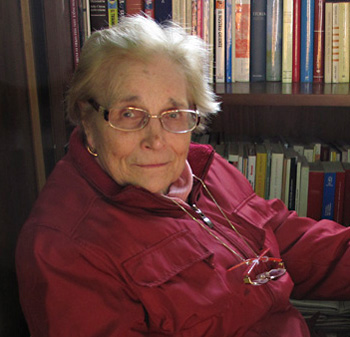
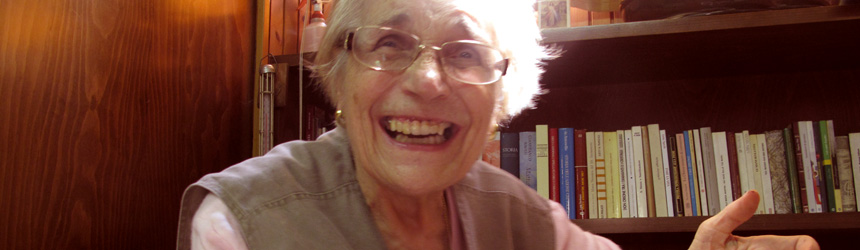
MARY – Italian. She’s 85 and has been working at the cemetery for 15 years. She works with the priest in the small chapel, preparing for the memorial masses. Her “Rotondo” handwriting started me on a quest for classic, Italian penmanship samples.
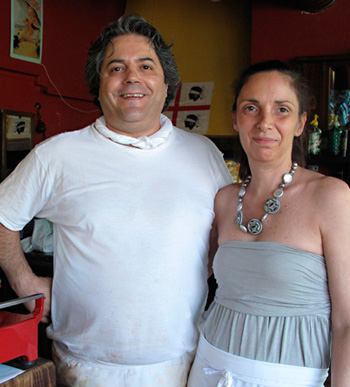
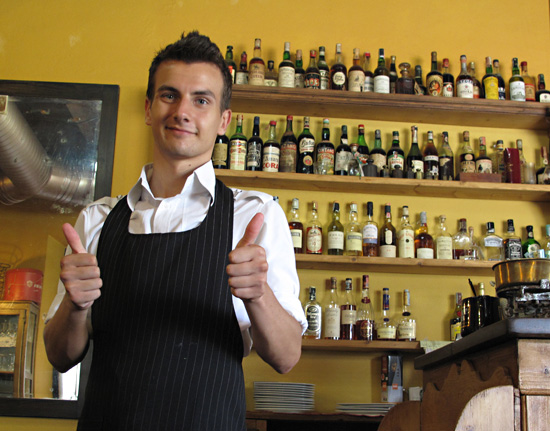
NINNI & AGNESE – Italians, from Sardegna. Dear-hearted, they own the Carlotta Cafe and serve memorable meals.
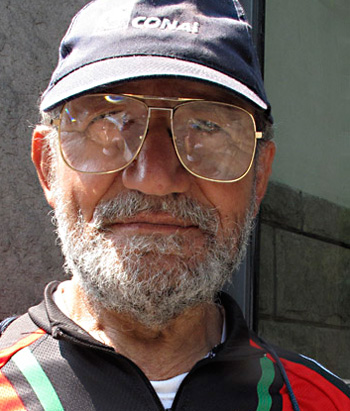
ANGELO – True Milanese Italian. My “History Buff on Wheels”. He showed me some of the one-lane farmland roads that have become my balm and my delight.
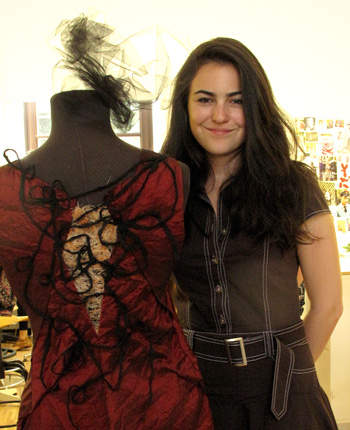
SARA – American. An artist, sculptor and creator studying fashion design in the Summer courses at NABA. Her work is poetic and rich and I anticipate very creative work from her!
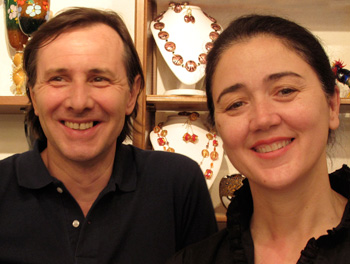
MICHELANGELO & TERESA – An Italian and an American, in Venice. They’ve been married for 15 (or more?) years and are the only sellers of the most beautiful glass beads in Venice.
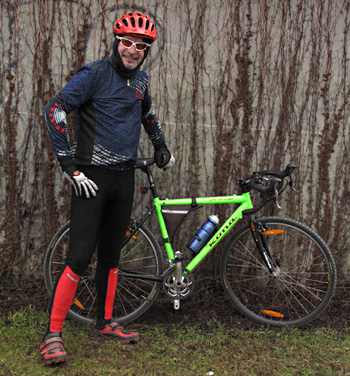
BRUNELLO – Italian. We had a freezing-cold bike ride together in the middle of January. Brrr!
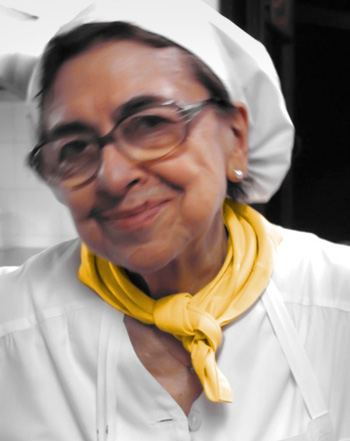
SIGNORA ADA – Italian, and Venetian restaurateur. She’s an imp with a sparkle in her eye.
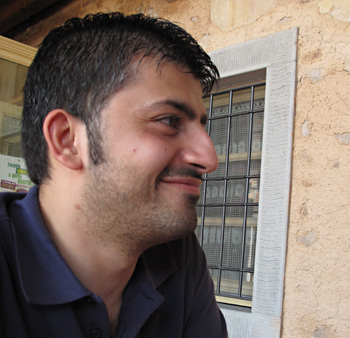
ALESSANDRO – Italian. He’d love to move to the U.S.
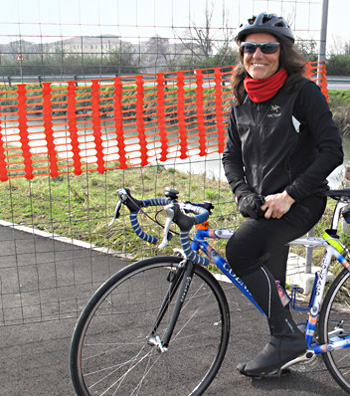
NICOLETTA – Italian. A WOMAN on the bike path! A rare sight, so we talked about it.
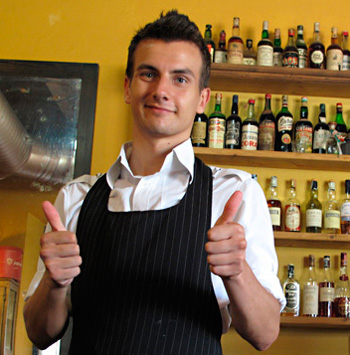
ERIK – Italian, with Sardegnan family roots. He served me octopus and potatoes several times.
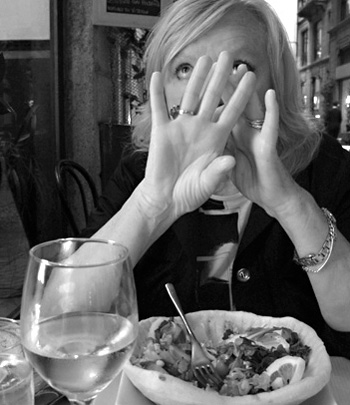
EWA – Polish. My first independent, spontaneous friend here in Italy.
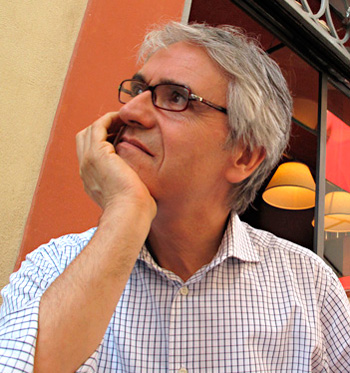
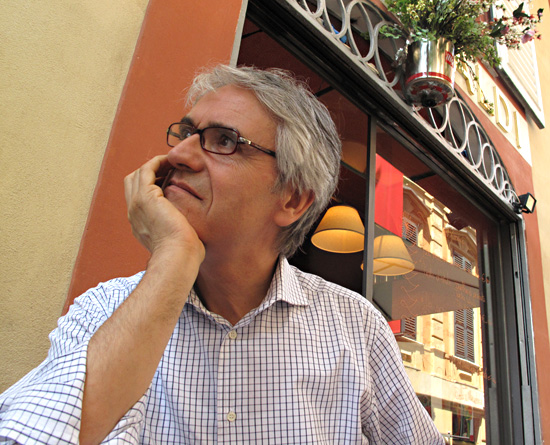
CLAUDIO – Italian, from Genova. He and his wife, Marina, hosted me for an impromptu city tour and lunch.
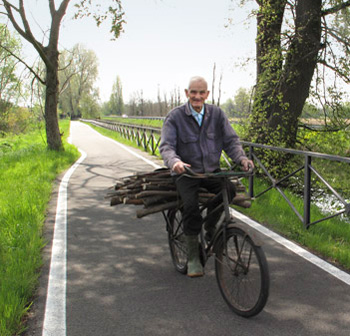
LUIGI – Italian. Industrious and resourceful, gathering firewood and compost along the canal to carry home on his bike.
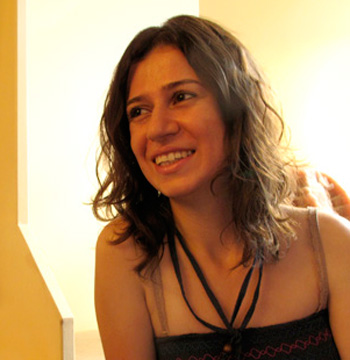
MELTEM – Turkish. One of the “Aperitivi Girls”, we know each other through the Italian language classes.
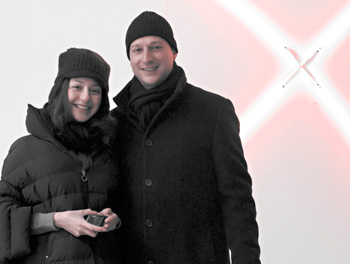
SANDRA & MATIA – Turkish and Italian. Sandra and I met, like many others, in our Italian language class. With our interests in Art and Design, we have much in common. We traveled to Bologna together, with Matia, for a wintertime, city-wide Arts exhibition.
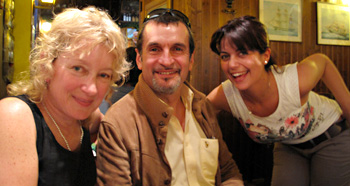
MAUREEN, BRUNELLO, NOEMI – 1 American and 2 Italians. Brunello and Noemi are with NABA, and there were several of us together at the Mayflower Pub, relaxing at day’s end.
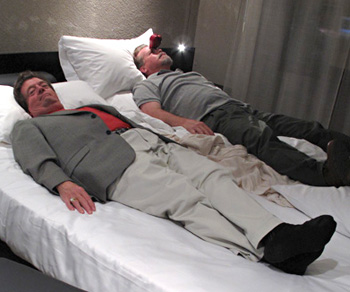
GERRY & CONNIE – Americans. Goofy cousins visiting Milano for one night before they move on to Venice.
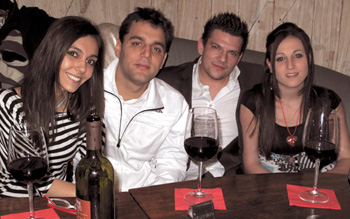
ANAIS & HER FRIENDS – French. Anais and I were in Italian language class together. Her friends came over for the weekend to celebrate her birthday.
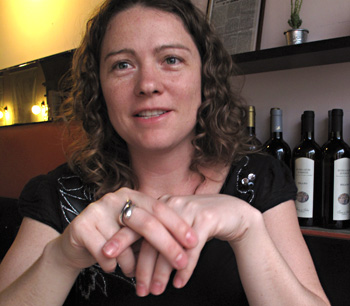
ASHLEY – American, from Chicago. She’s studying photography at a school nearby.
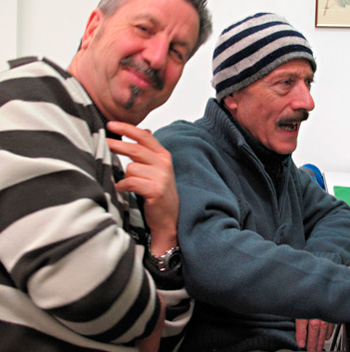
CARLO & VICENZO – Italians. Dressed like jailbirds and co-guests at an impromptu aperitivo.
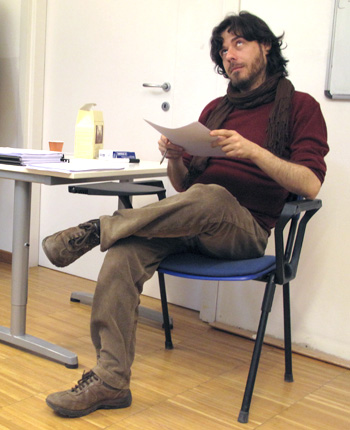
ROBERTO – Italian, from Milano. He was our beloved and silly Italian teacher. He made the 3-hour-a-day class a kick-in-the-pants. We all joked a lot.
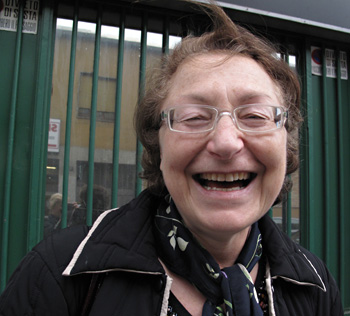
MARIA – Italian. We met at an ONAV gathering and enjoyed an animated conversation. She’s a dear.
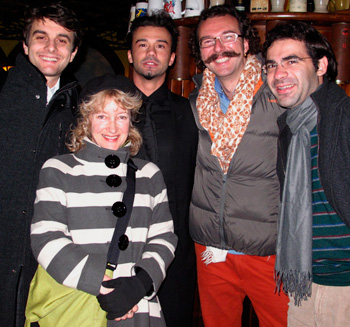
CESARE, MAUREEN, ROBY, VALERIO, ANTONIO – 4 Italians and an American girl. I was surprised to find that I had been seated at a table of men at a wine-tasting event.
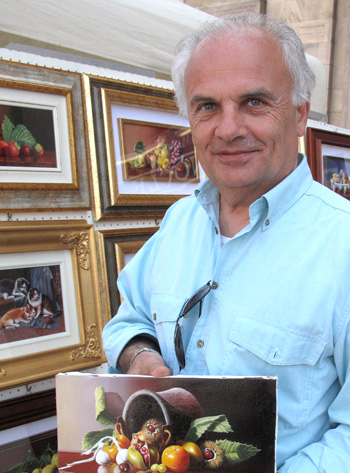
NINO – Italian. His oil paintings are exquisite and two of them will hang in my home in Seattle.
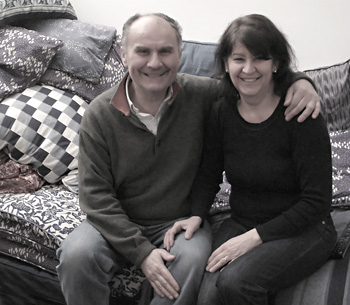
MARCELLO & RAFFAELLA – Italians, from Bologna. The three of us have an American friend in common. That bond alone opened their door to me. They invited me in and we talked for hours. A lovely couple offering cooking tours of Italy, through Bluone Cooking Tours.
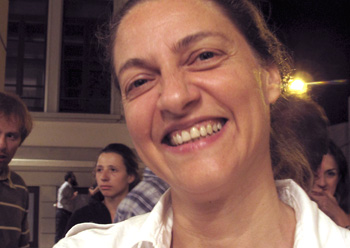
TANIA – Italian. Leader for NABA’s Fashion Design Program. A fine, bright woman that I’ve only caught a hint of.
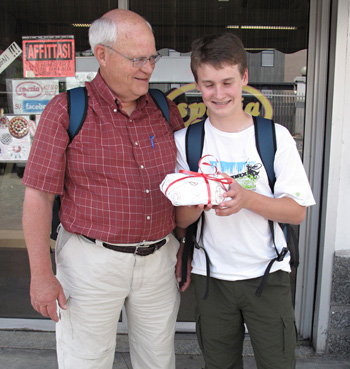
EARL & MATHEW – Americans. Long-time family friends, here for a whirlwind tour of Italy and lots of pizza and pastries.
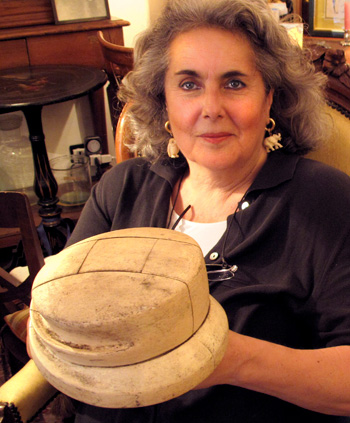
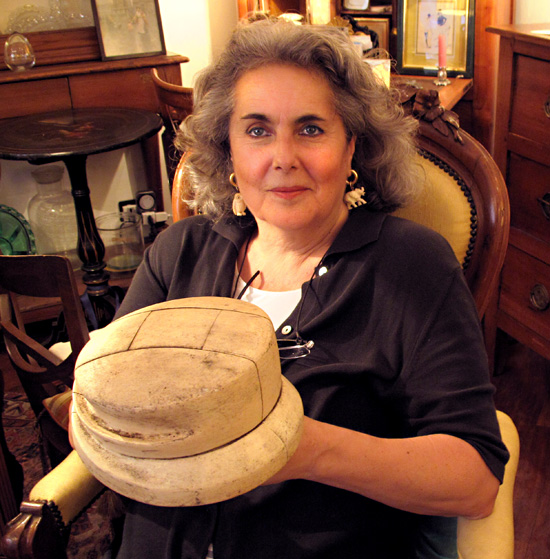
MARINA – Italian, from Genova. We met when I bought hat forms from her at the antiques market along the Naviglio Grande. Later, she and her husband hosted me for a day in Genova.
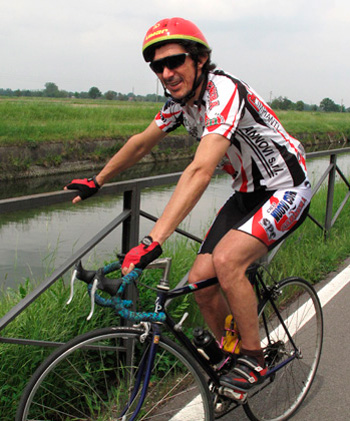
EMILIO – Italian. A friend from my cycling community.
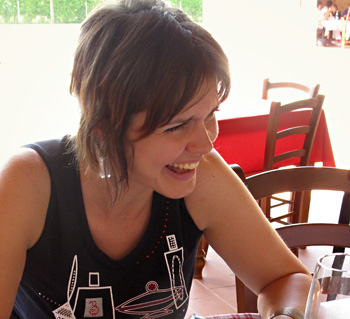
FEDERICA – Italian. A fellow student from the wine-tasting class.
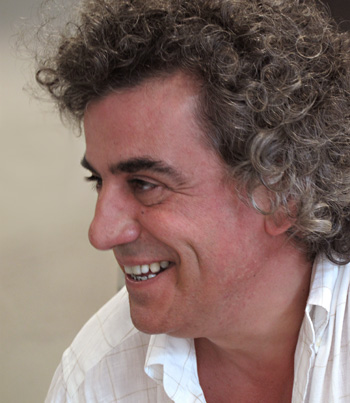
EUGENIO – Italian. The teller from my bank.
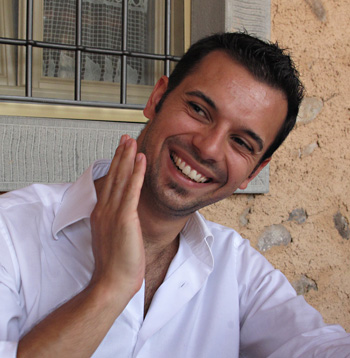
GIUSEPPE – Italian. Another ONAV wine-tasting student.
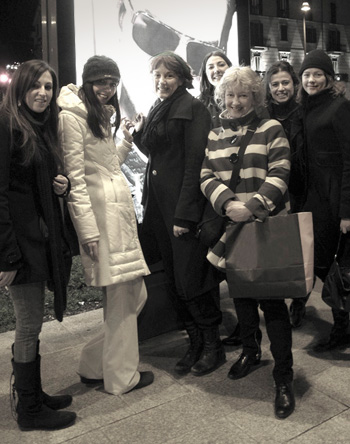
THE APERITIVI GIRLS – French, Australian, Turkish, American. We are linked by our Italian language studies and have gotten together once-a-month or so. We speak in multiple languages at our table.
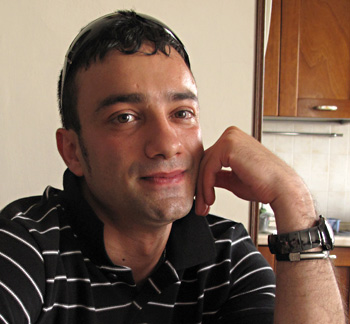
HASSAN – Iranian. A fellow language student.
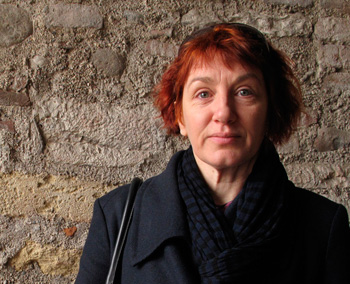
KERYN – Australian/New Zealander. Another of the group of women that meets for aperitivi now and then. We traveled to Verona together for a weekend.
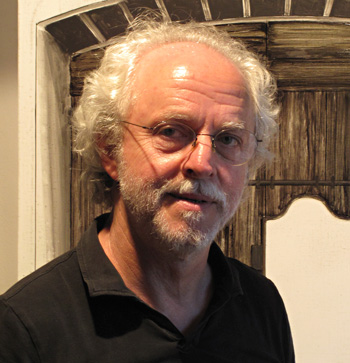
LOREDANO – Italian from Veneto. He’s a painter with a studio along the Naviglio Grande. If you scramble a few letters of his name, you get “Leonardo”.
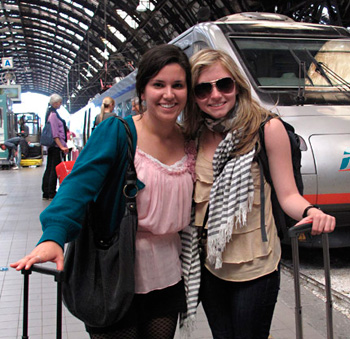
ZIBBY & HANNAH – Americans, daughters of friends back home in Seattle. We had less than 24 hours together, but they were full of conversation and curiosity.
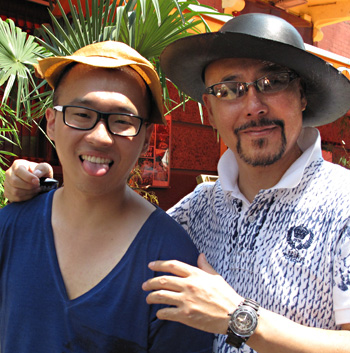
MAKO & QING SHENG – Chinese. We ate our lunches side-by-side, then strolled the antiques market together, 2 Chinese and 1 American speaking Italian, our common language.
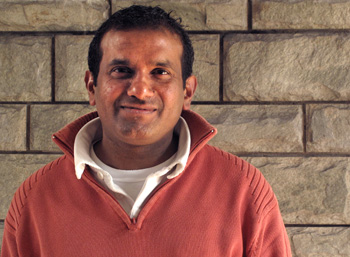
THUSHAN – Sri Lankan. Our “portiere”, Thushan keeps our office/apartment building running smoothly.
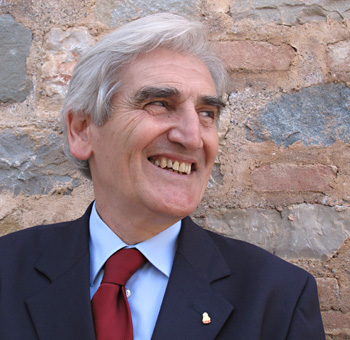
MARIO – Italian. One of the regional heads of ONAV, the National Organization of Wine Tasters.
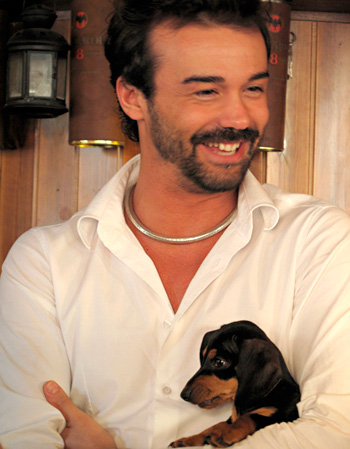
ROBY – Italian. “My favorite bartender”, which makes it sound like I’m always at the bar… but he hosts many of the student social evenings at his Mayflower Pub, so I’ve been there a number of times. Or sometimes, when walking by, I’ll stop just to say “hello”.
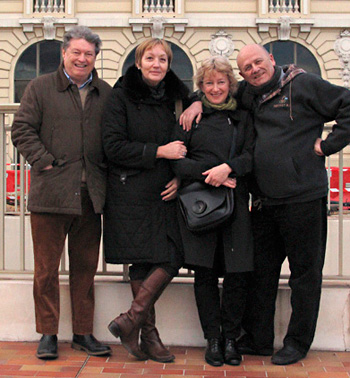
MAURO, SANDRA, MAUREEN, SANDRO – 3 Italians and 1 short American. My landlords and a friend of theirs, all from Sanremo on the Italian Riviera. We were in Monaco for the day.
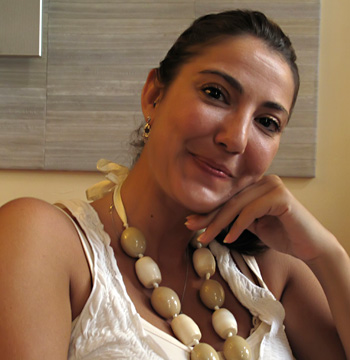
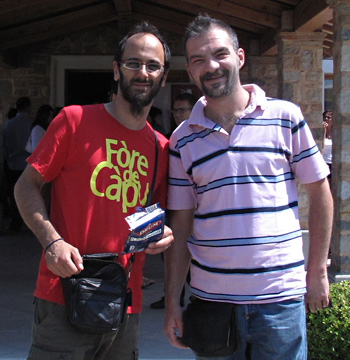
ROCCO & GIANNI – Italian. ONAV wine tasting students. One night, class was getting out very late, close to 11:30 at night, so several of us left early to head to the subway before it closed. Gianni had a nice red wine in his glass still, so he walked down the street, into the subway and onto the train, sipping his red. (Never in the U.S.!)
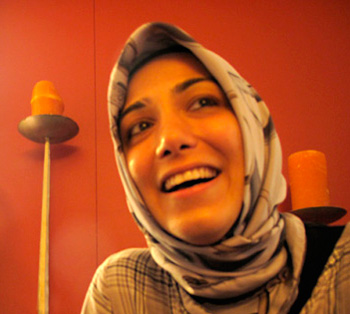
OZDEN – Turkish. Another friend from my Italian language classes and one that joins the group for aperitivi.
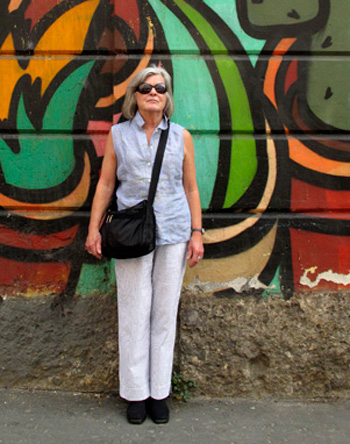
SALLY – American. A dear friend and art lover from Seattle that came for a visit and “Maureen’s Eye View” of Italy.
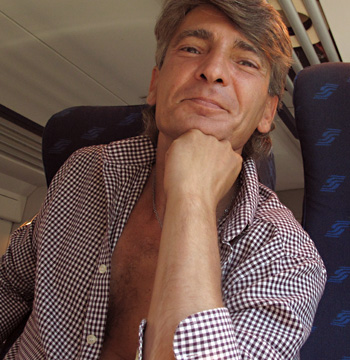
SALVATORE – Italian. Comically stereotypical while trying to “score” on the 2-hour train ride. He said it was a hot day and that’s why he was unbuttoning his shirt down to his navel. Yeah, right.
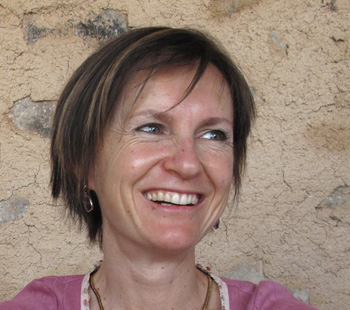
VALENTINA – Italian. Another friend from the ONAV wine tasting class.
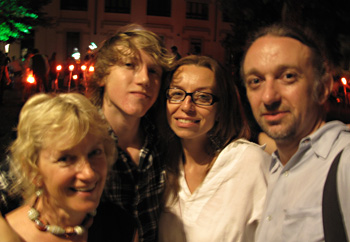
MAUREEN, QUENTIN, BEATA, PAOLO – 2 Americans, 2 Italians. We met at NABA and ended laughing through the evening and planning a cycling tour of Italy for the future.
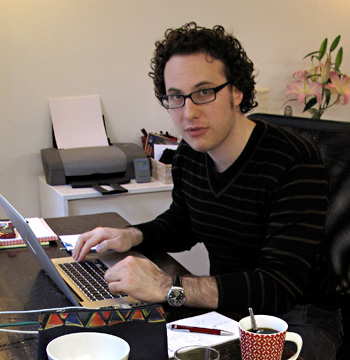
OMAR – Italian. Omar sat next to me in the ONAV wine-tasting classes and speaks a bit of English. If I didn’t understand what was said in class, I could glance over at Omar’s notes and see if I could understand what he had written.
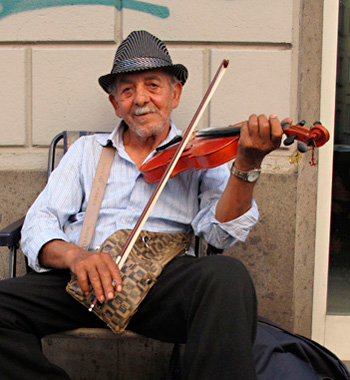
PIERO – Italian. We saw each other a couple of times along the street and exchanged a nod and some music.
by Maureen | Jul 30, 2010 | Introspection, Journal, Quips
Tourists don’t feel like this.
I came here wanting to have relationships and experiences, and to gather images. I have done all that… and my imminent departure, tomorrow morning, is harder than I had anticipated. I can’t count the number of people that have said they wished I weren’t leaving.
My heart moves so deeply thinking that, in just a year here, I have created friendships that stir me in such a way. I have made myself wiiiiiiiiiiiide open…and I’m really feeling it right now.
The only consolation is planning my return (whether it’s pretense or for real).
by Maureen | Jul 29, 2010 | Introspection, Journal, Quips
It’s Thursday afternoon. On Saturday morning a car and driver will meet me here at my apartment and drive me, with whatever I’m carrying home to Seattle, to Milano Malpensa Airport. Though I’m not much of a shopper, I still have too much stuff to manage the taxi-train-plane, with all the transfers, on my own. My flight leaves at noon.
Less than two days remain for me in Milano… for now. I’ve eased the panicked voice of “I didn’t go here! I didn’t see this! I didn’t taste that!” And I’ve come to a calm reconciling of all that I didn’t experience in these near-14 months, and am beyond grateful for all that I DID.
…And I’m already talking with friends here about my return sometime next year for a month or two. (Why not?) I’ve had offers of places to stay. I want to see friends here in the north. Travel and do design research in the south. And plan a bike-tour for a week or two in central Italy. (Why not?)
So in these days, as I’m seeing my friends, I give them an Italian kiss on both cheeks and an American hug. (They don’t do that much here.) We’re not saying “goodbye”, but rather “see you later”, or “until the next time”.
“Alla prossima.”
And sometimes I blink away watery eyes.
– – –
(I DID it! I packed up and moved to Italy for over a year!
And I have faces in my mind’s eye to prove it.
It wasn’t always easy, but it was oh-so-worth it!)
by Maureen | Jul 24, 2010 | Aosta, Cogne, Discoveries, Featured Articles, Food!, Journal, People, Photo of the Day, Photos, Shopping & Markets, Travel Blog
Journal Entry: 24 Luglio
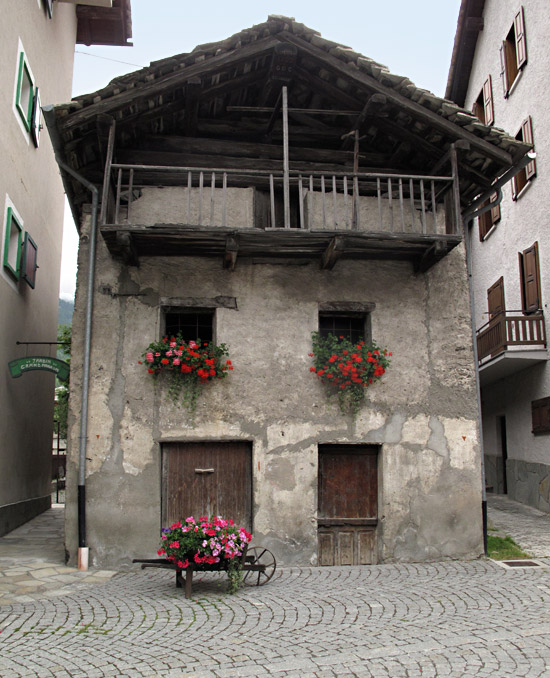
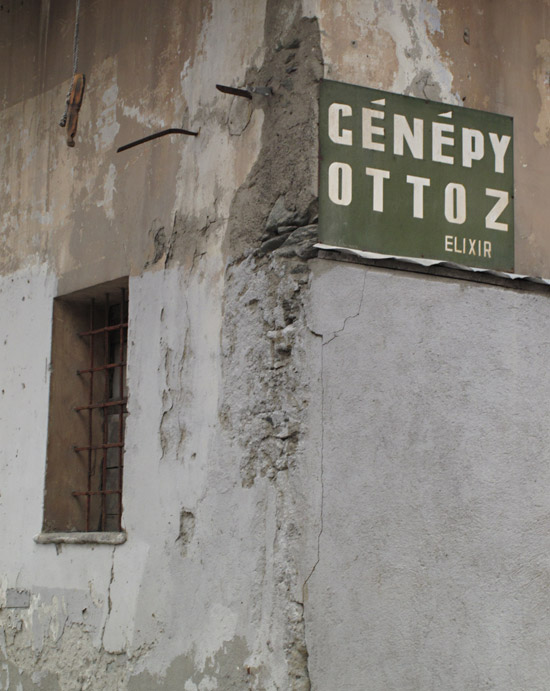
The bus just left Aosta, heading back to Milano. I have been visiting my friends, Ewa and Piotr, in Cogne for two days where the “uniform” is hiking shorts and boots, muscular, suntanned legs, and walking sticks. The street signs are in French [and Italian] and at any time I can hear a half dozen languages.
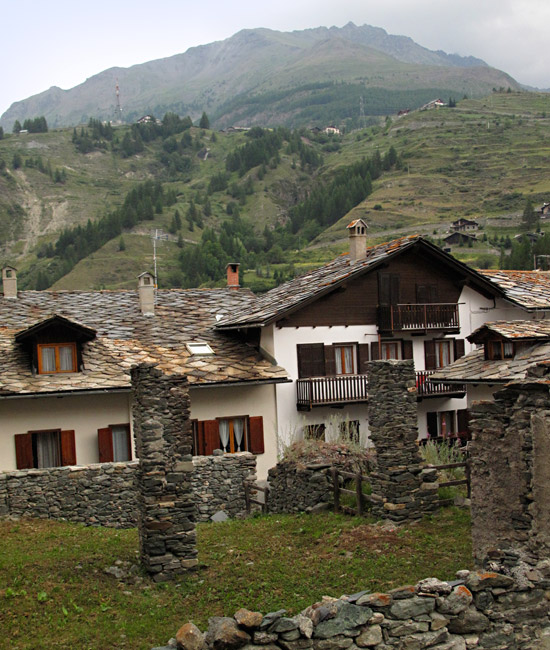
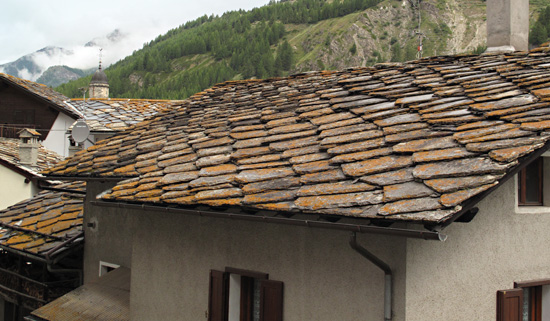
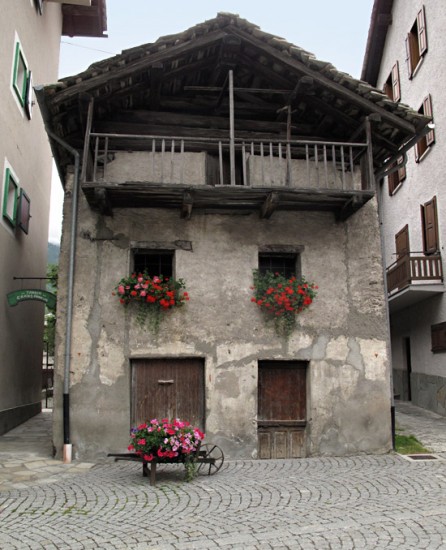
The buildings have fish-scale, slate rooftops, with an undulating alignment. They all look the part of a Hobbit’s house with stone, scroll-cut wood, lichen patches and shutters.
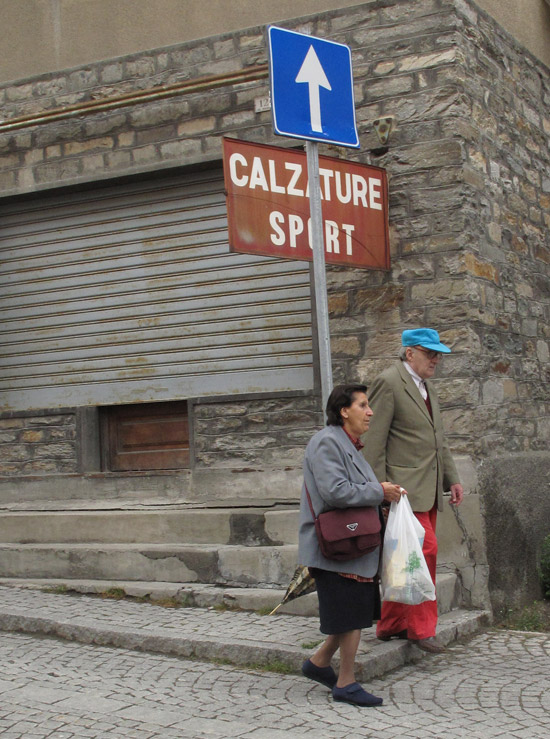
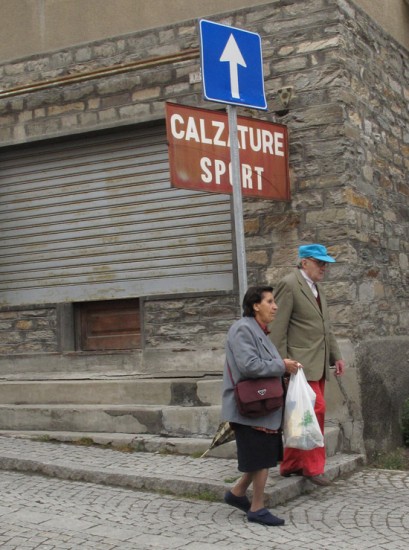
I like this old couple. I wonder how long they’ve lived in Cogne.
He’s not afraid of cherry red pants!
.
.
.
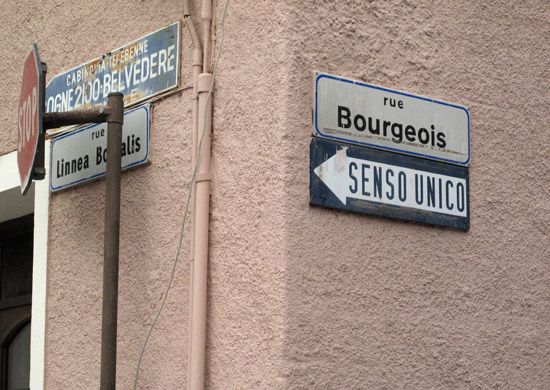
I have had to remind myself that this, too, is Italy.
– – –
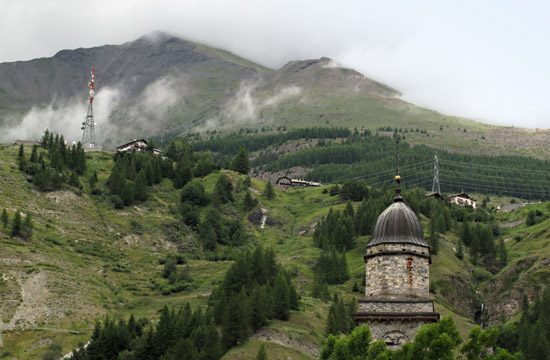
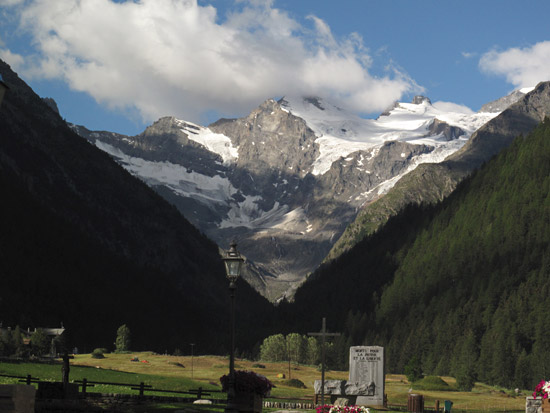
Cogne draws tourists from all over Europe, especially those interested in the many miles of mountain trails and climbing routes ranging from easy-to-difficult. The town is at the start of a valley that leads to the Parco Nazionale di Gran Paradiso, the National Park of “Great Paradise” Mountain.
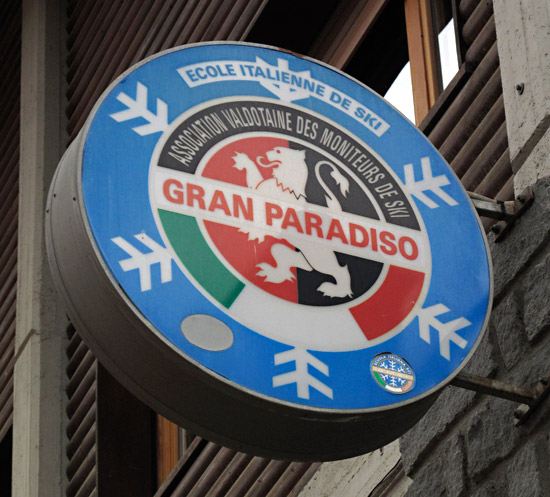
Attend the Italian School of Skiing here in Cogne.
The town center is a hub of cafés, food stores, services and gift shops. Aosta’s regional bus company, Savda, makes its loop in the area at villages along the valley between Aosta and Cogne. (It also runs to and from Milano.)
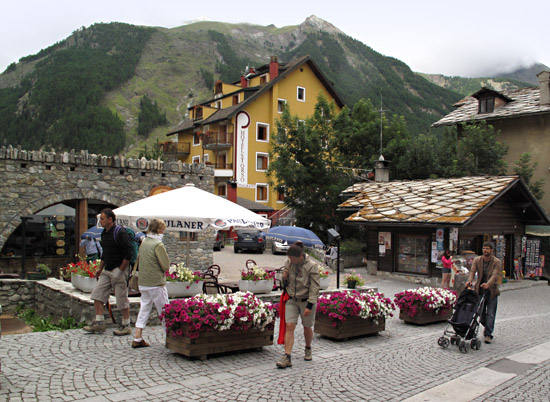
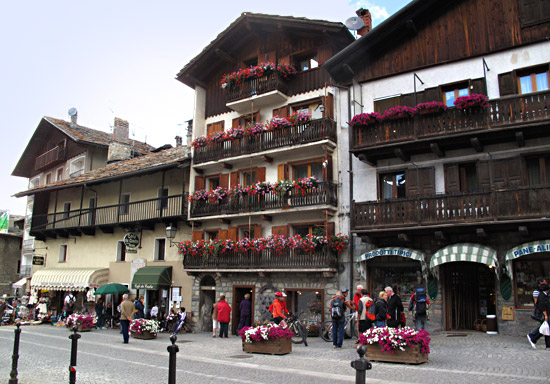
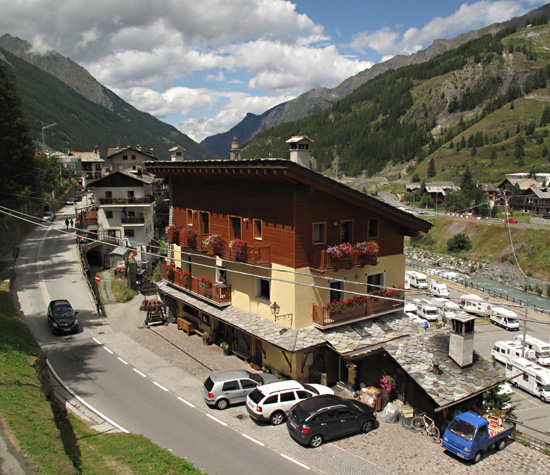
Looking north down the valley from our rented house, the view shows the one main road that passes through the few blocks of town. Parking is almost absent in the town center, bowing to the heavy pedestrian traffic, so a lower lot is available for cars and motor homes.
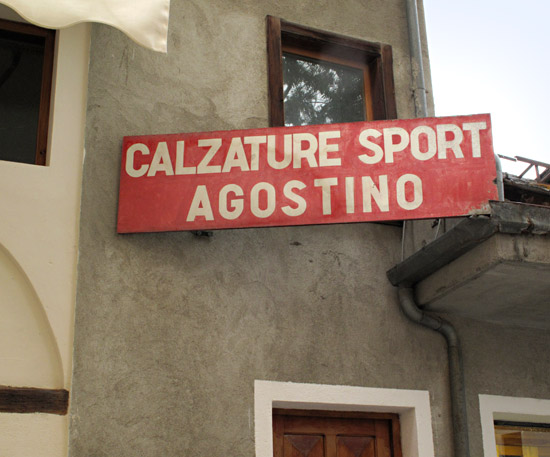
Not surprisingly, the shoe stores in town sell hiking boots and sturdy walking shoes.
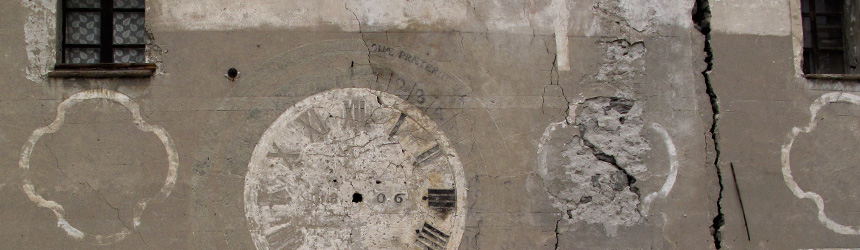
The date on the clock on the wall of the Casa dell’Orologio – Clock House – says “1806”.
And someone has an incredible salad garden going!
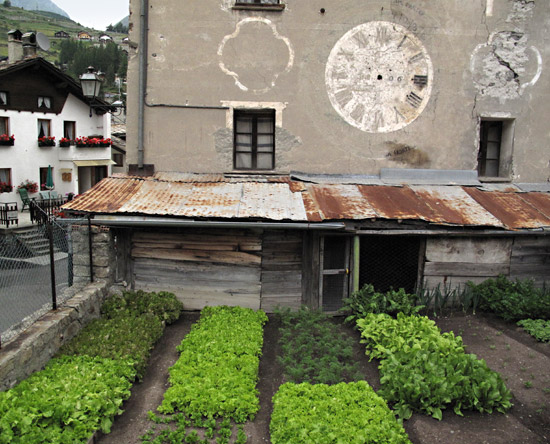
Here’s the backside of the clock building.
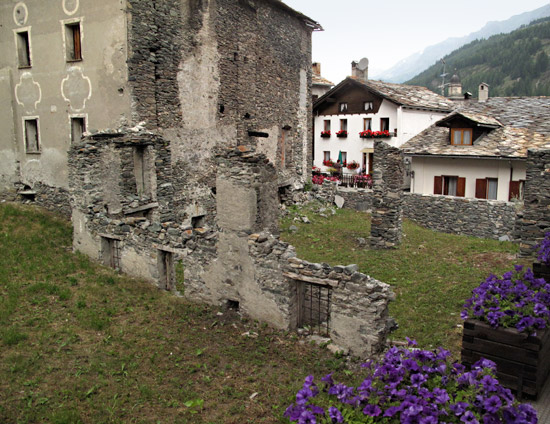
Though visitors fill the town, the locals seem to go right on with their daily lives in this mountain village, chatting with friends, sipping a caffé normale – a simple shot of espresso – or making their passeggiata – daily, walking stroll.
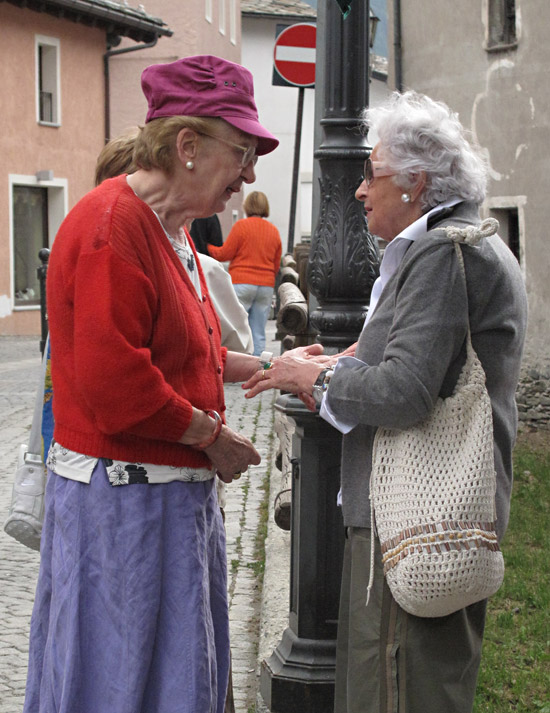
Two women were chatting outside of the small, local fruit and vegetable seller’s shop. They appeared to be locals and long-time friends.
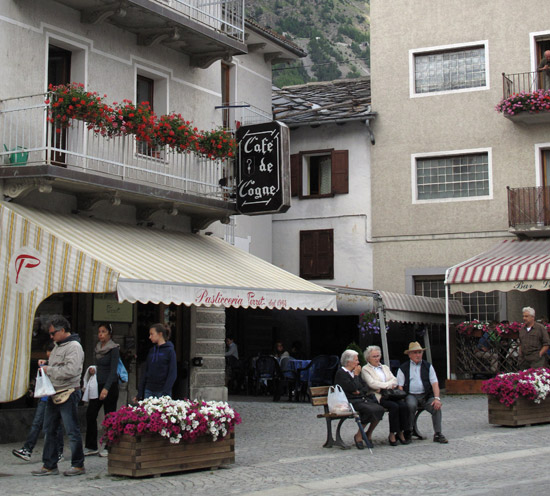
There’s plenty of lodging available, in the center of town and around its edges.
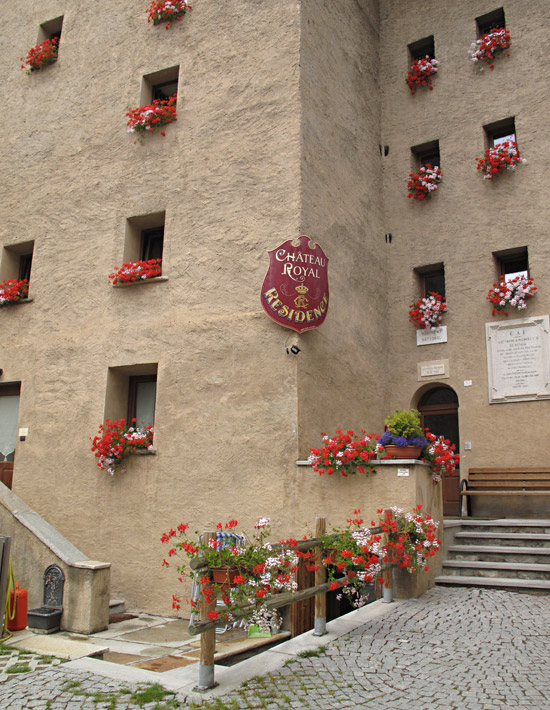
.
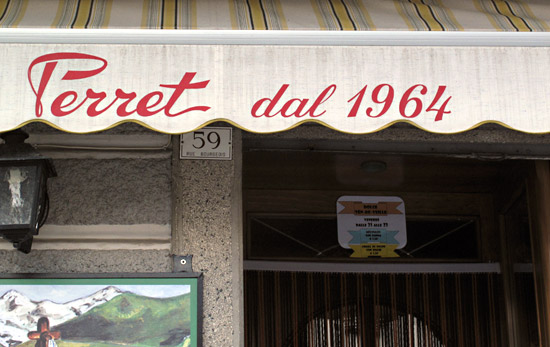
Though the town of Cogne is pristine and quaint, that doesn’t seem to be a show put on just for the tourists. I got the impression it’s always looked about like this. It’s not that Cogne is reminiscent of Leavenworth (WA), Leavenworth is reminiscent of Cogne (and other European regions).
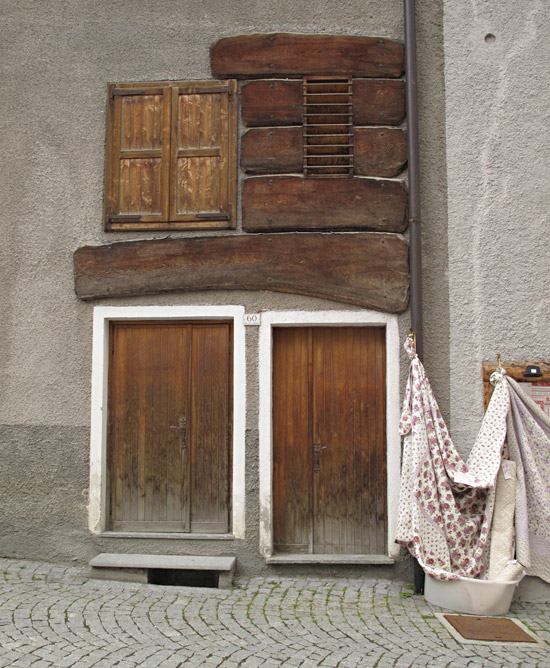
This older home is just up the valley in the village of Lillaz, gateway to local waterfalls.
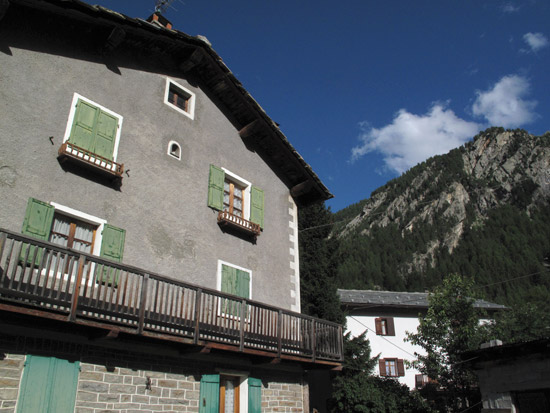
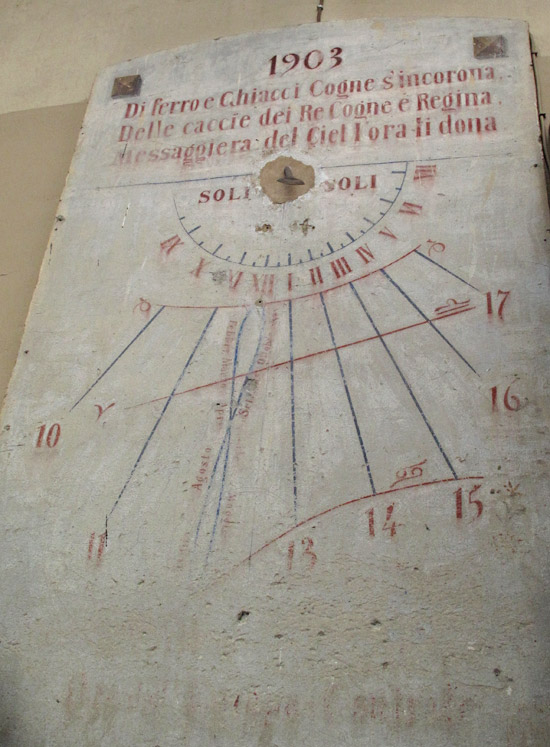
I have seen more sundials in the last year than in all of my life combined. Whether this is really from 1903 or not, it’s quite beautiful wearing its patina.
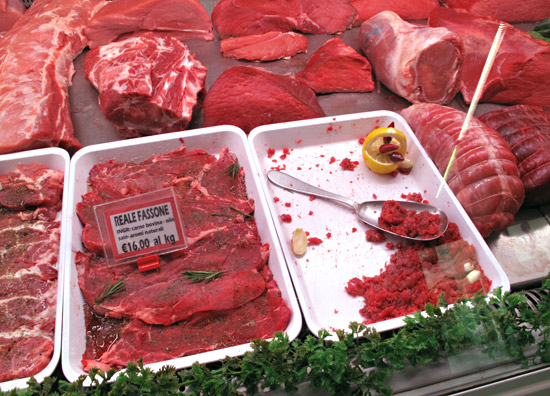
Ewa and I stopped into the local macelleria – the meat shop – to buy some meat for goulash. (She’s Polish.) The butcher scooped up a spoonful of ground, raw meat, much like a “steak tartare” and presented it to us for sampling. I reached out and grabbed a wad with my hands. It was delicious.
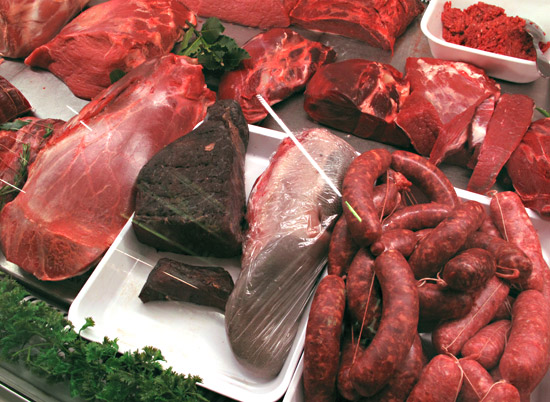
We also asked about the near-black meat in the center, (below), next to the wrapped tongue. The butcher gave us a sample, including a piece for Ewa’s 4-year-old grandson, Filippo. We LOVED it. The meat is raw, yet “processed” by being covered in hot salt. (I had wondered how it compares to Bresaola.) We bought a half dozen slices and Filippo and I fought over them as we ate the meat walking through town, licking our fingers.
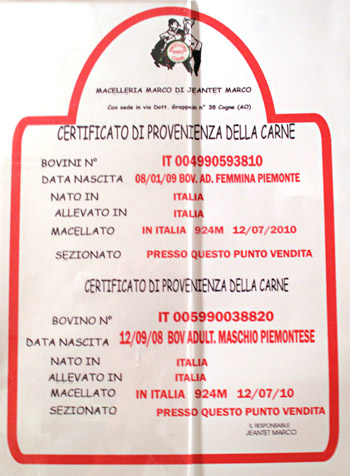
I appreciate that a “Certificate of Provenance” for the meat is prominently displayed on the counter. It tells the ID number for the animal; when and where it was born and raised; and when and where it was butchered! The next day I wanted to go back for more of the “salt-cooked” meat.
by Maureen | Jul 24, 2010 | Aosta, Journal, Photo of the Day, Photos, Travel Blog
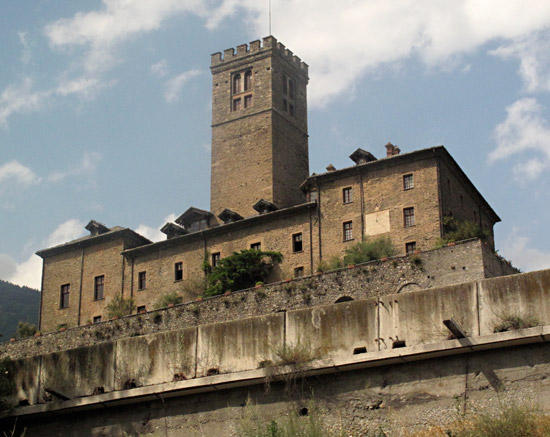
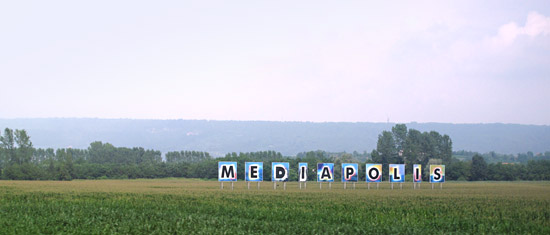
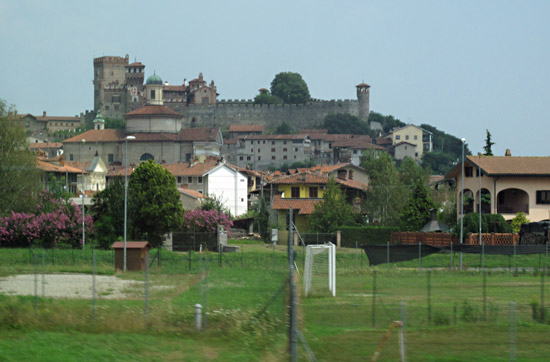
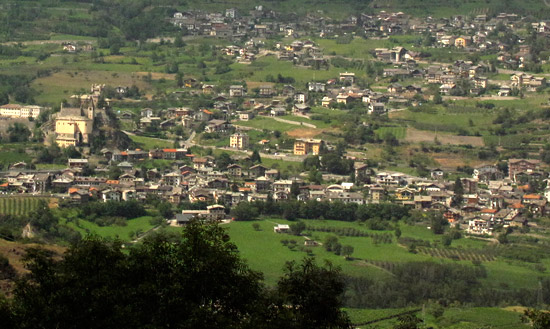
On Thursday, the bus pulled away from a 95 degree day in Milano and headed into increasingly blustery skies in the Valle d’Aosta at the far northwest of Italy. (Find it on the map here.) I shot a few crude images through the dirty, tinted bus window as we rolled along, watching the scenery and the weather change. We went from the corn fields surrounding Milano, to castles and mountainside vineyards.
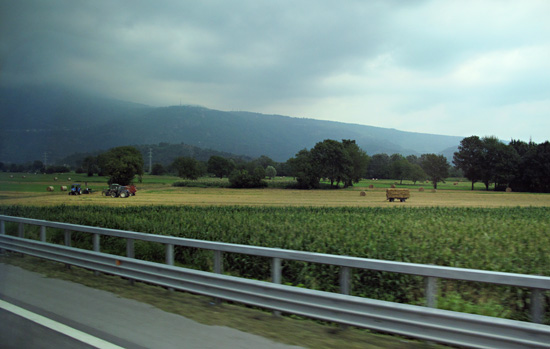
Today, two days later, on my return trip home from Cogne, the weather had changed and I sat on the north side of the bus to be out of the heat of the sun.
– – –
Some notes from my journal entries to-and-from:
22 Luglio, 1:00
Milano – Lampugnano. (One of the metro stops on the red line and a major bus transfer point).
Heading west to Aosta and Cogne to spend a couple of days with Ewa and Piotr. They were my first new friends here and I will say my goodbyes to them as they’re spending this month in the mountains.
The bus has just pulled away from the station.
From Aosta, I could throw a rock north into Switzerland or west into France. I could pitch it to the top of Mont Blanc. Great to have this opportunity to see another spot in Italy, one of its mountainous regions. This is part of my “Say Yes!” program: say “yes” to what presents itself.
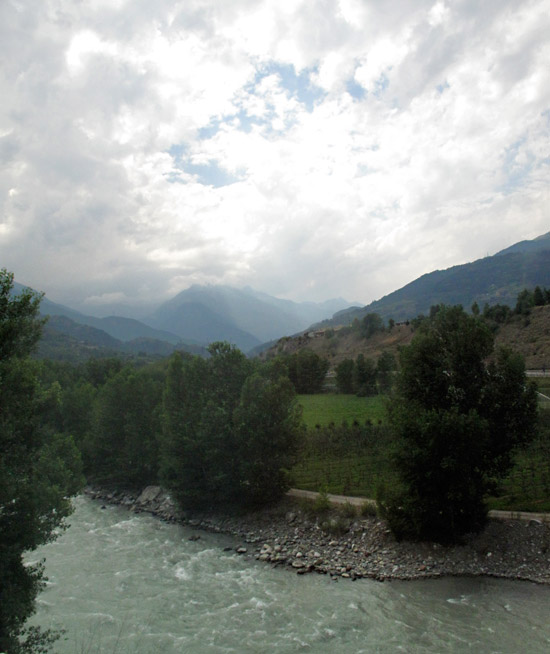
(Late in the ride, this is the closest I got to a view of Mont Blanc, obscured by clouds.)
2:30
As we head deeper into the Valle d’Aosta, the proximity to Switzerland is apparent. The architecture has changed. Rooftops bear flat, gray slate instead of red tile.
(This very old rooftop has lost its distinctive fish-scale pattern as the slate has broken up.)
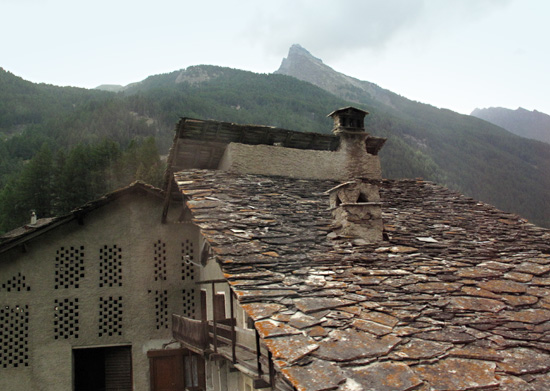
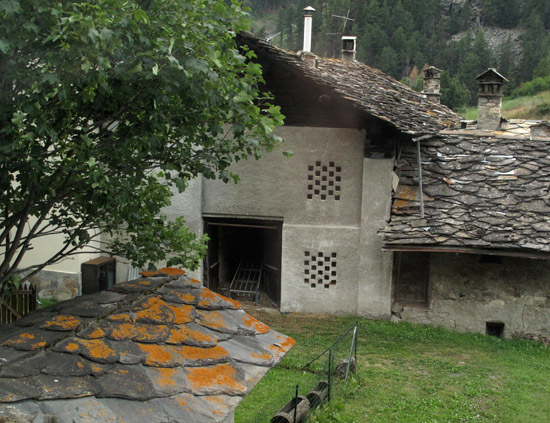
The mountains are steep at both north and south. Vineyards face southwest on steep slopes.
Castles sit atop high promontories. Lettering has changed to old gothic. I’m sure the language is different, too. The rivers are gray-green and opaque. (Language is the “secret, magic decoder ring” to other worlds.)
Aosta 3:15
Switch buses and then continue on to Cogne, (pronounced CONE-nyay) 50 minutes south, into the mountains. Signs are in Italian and/or French. Houses look like Americans’ stereotypical view of Swiss chalets, complete with decorations of gnomes and trolls. This is a different italy. Imagine how UNlike it is to Napoli and Sicilia!
This is a deep, narrow valley. Houses and farm fields climb the slopes to the north and south of town. An alpine community, certainly.
I think of their having united as one Republic less than 100 years ago (1946). About like binding New York City with Montana: separate worlds without commonality.
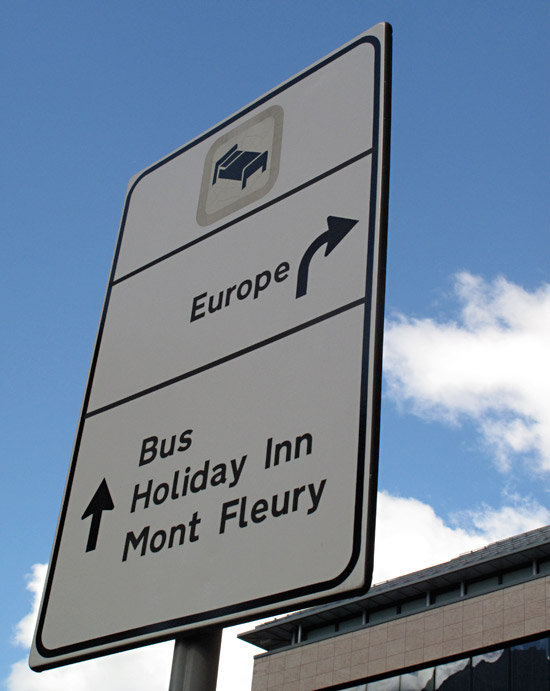
(“This way to beds in Europe.” Are Holiday Inns everywhere?)
by Maureen | Jul 24, 2010 | Introspection, Journal, Quips
One week from today, at this time, I will have schlepped my bags by taxi and train to Milano Malpensa airport; checked in, with machine gun carrying guards in the mezzanine above me; gone through security; waited; flown over the Alps to London two hours north; gone through security again; eaten an airport meal; wound my way through Heathrow; boarded, gotten settled and begun my 9 hour flight back to Seattle.
I just went grocery shopping. What favorite foods do I want to eat again (and again) before I go? I bought bresaola, and mortadella with pistachios, buffalo milk fresh mozzarella, fresh figs and sicilian tomatoes. One (or two) more meals of octopus? Who do I want to see and say goodbye to? How many more last hurrahs with my girlfriends? Where do I want to go? What will wish I had photographed?
As I buy groceries and supplies this week, I have to calculate how much I can use in six days. As I go for a bike ride, or subway ride, I have to realize it may be the last one (for a long while).
From a journal entry today:
“I have grown a sweet affection for this country. It’s not the starry-eyed, naive enthusiasm of a tourist’s love of the sights. But it’s a complex recognition of the quirks, an all-too-recent connection with individuals along my path, the creation for myself of a way of being, and as yet, merely a hint of who these people are. How can I stay away for long? I am leaving a part of myself here, and have lodged a part of Italy in my heart, to carry with me. Under what circumstances will I return, and for how long?”
by Maureen | Jul 20, 2010 | Church, Featured Articles, Introspection, Journal, People, Photo of the Day, Photos
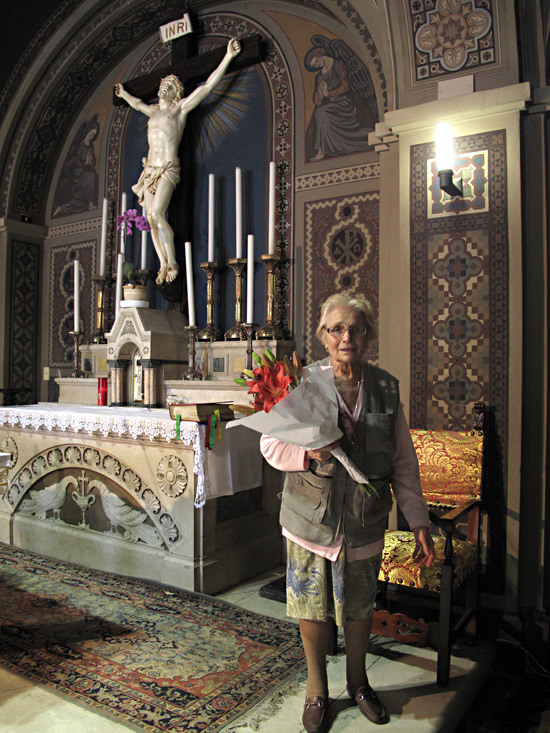
It would have been impossible to leave Milano without saying “goodbye” to Mary.
Our first meeting is a story in itself, finally happening last March after much anticipation. We’ve seen each other a few times since then, meeting in the little office behind the cemetery chapel.
Today I showed up in the afternoon, after the typical Italian lunch break, with red lilies in-hand for Mary. I found her at the altar, preparing everything for the next Mass. She lit up in surprise, and immediately went into the back room to split the lilies into 3 vases: 1 for either side of the altar, 1 for the Madonna.
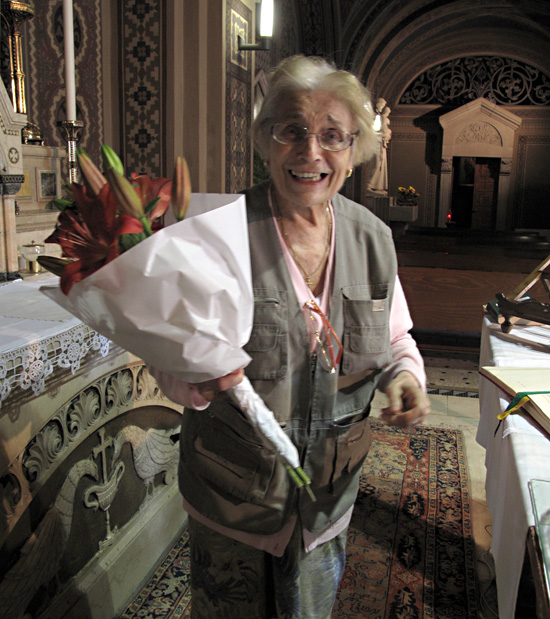
She’s the sweetest, and implored that I NOT move away from Milano. But as I’ve told her before, I have family, friends and work back in Seattle that pull me there, so I must go. Don’t think she didn’t try to convince me to stay though!
We sat at her desk and talked for a long time. We exchanged mailing addresses and I told her that, with the computer, I can call her for free. She was thrilled.
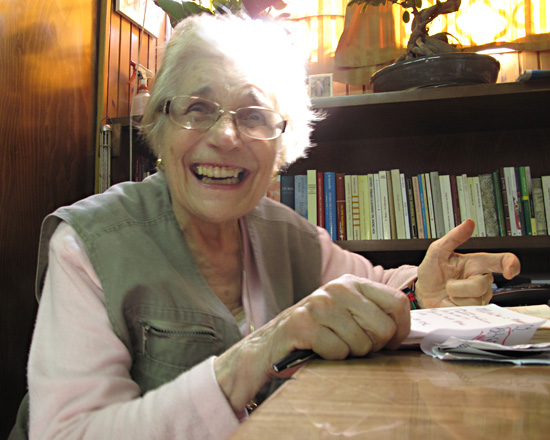
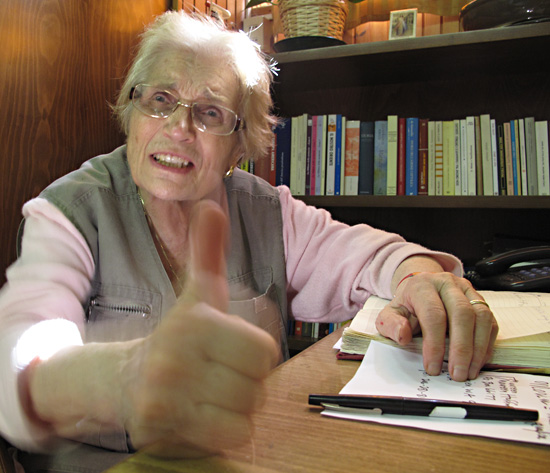
She rummaged through the cupboards, wanting to send me home with gifts. She found a bottle of Muscat sparkling wine produced by the friars, a bracelet with pictures of 12 saints, a rose-scented rosary, a little bottle of holy water and half a dozen copies of the photo of Don Giuseppe Gervasini, Milano’s very own protector. If I carry his image with me, he will protect me from all harms, she explained.
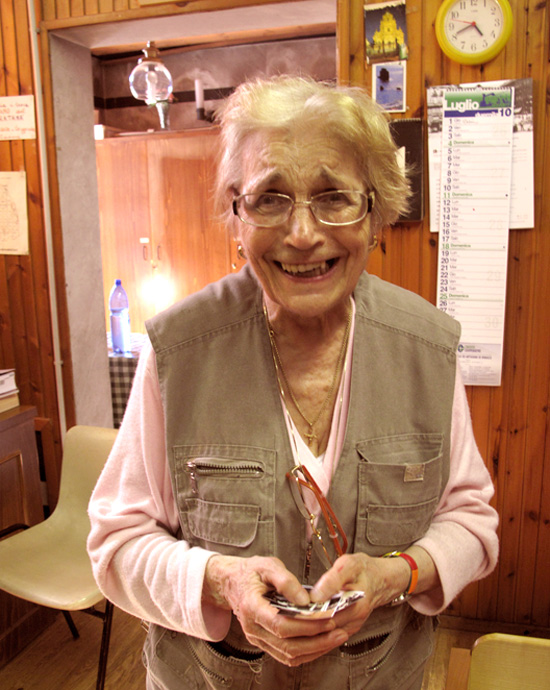
Mary also gave me a couple dozen pages on which she has written, in her “rotondo penmanship”, the names of the dead being honored at the chapel masses.
Father Francesco came into the office a few times. I had met him in my previous visits; during the last, Mary asked him to bless me for the answer to my prayers.
When we finally said our goodbye, I said “first, an Italian kiss, then an American hug”. We kissed on both cheeks, actually several times, then I gave her a big hug goodbye.
What a dear, dear lady. Meeting her has been one of the great treasures of my time here.
by Maureen | Jul 20, 2010 | Food!, Introspection, Journal, Meals, Photo of the Day, Photos, Quips
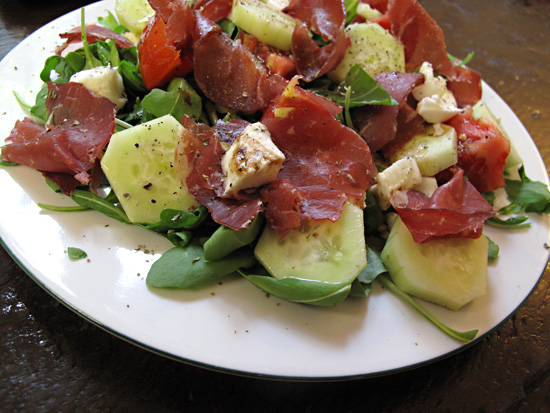
I’m going to miss my Insalata di Bresaola, my salad of dried, cured (raw) beef. Boo hoo. They can’t bring bresaola into the U.S. from Europe because of the mad cow disease X years ago…
But a nice salad with a bed of rucola (arugula), some bufala mozzarella (fresh mozzarella from buffalo milk), tomatoes from Sicilia, cucumbers, bresaola, some ground pepper, salt and oregano, drizzled with flavorful olive oil and a little balsamic vinegar… Be still my beating heart. Mmm, mmm good!
by Maureen | Jul 20, 2010 | Featured Articles, Journal, Photo of the Day, Photos, Quips
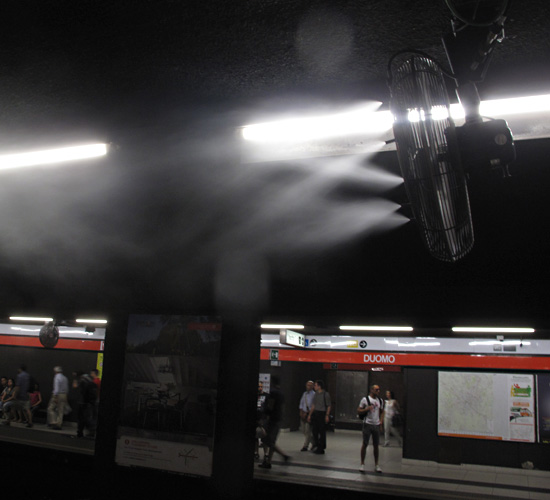
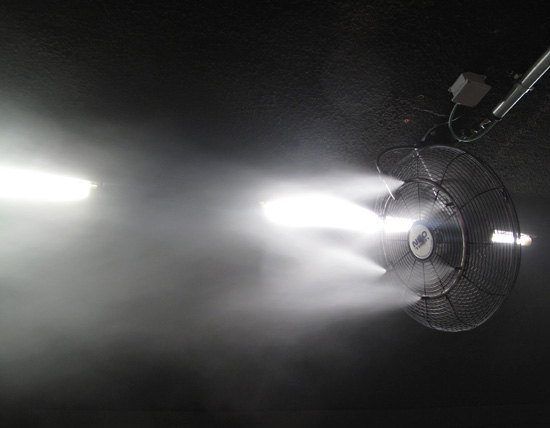
It’s been toasty-o here in Milano lately, with temperatures in the high 80s to high 90s, and humid. When I walk out of my apartment, it’s like walking into a sauna! I’m grateful to have air conditioning.
One solution I find at the major hub subway stations around town, is the installation of fans spewing a fine mist. It’s refreshingly cool…and mesmerizing.
.
by Maureen | Jul 15, 2010 | Discoveries, Featured Articles, Food!, Journal, Meals, People, Photos
Octopus as tender as a dream, served warm and simply, with potatoes, olives and olive oil. Fish and pasta prepared and presented with an expert hand. Warm-hearted hosts, all family, welcome their guests into an easy, comfortable dining room in their restaurant alongside the Naviglio Pavese canal: Carlotta Café Bar & Restaurant. If you want to eat at all in Milano, EAT HERE.
During my year here, I have eaten at the Carlotta Café 5 times, and each time I have swooned and savored my meal. The fish could not be fresher. The light seasonings could not be more perfected. The preparation of every dish has never been pretentiously grand; it is simple, pure and complete. It’s no wonder I keep going back.
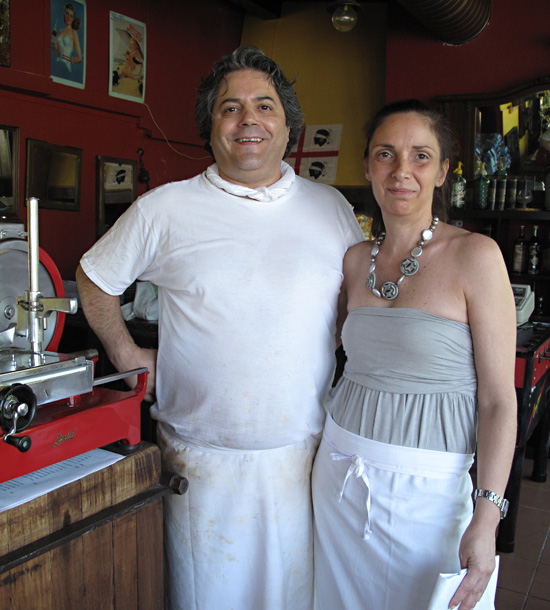
Carlotta Café owners, Ninni and Agnese, have had the restaurant since 1997.
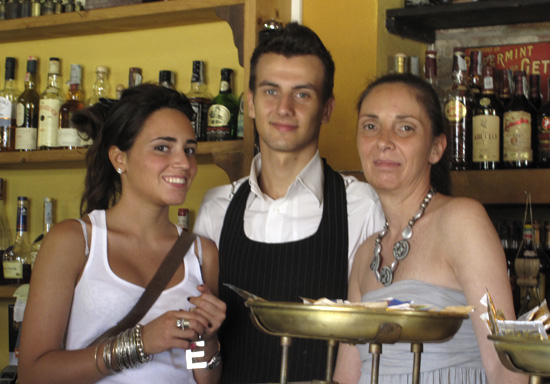
Daughter Carlotta (after whom the restaurant is named) works with her mother Agnese and Chef Erik, in serving the café patrons. Agnese is as attentive and welcoming as one could wish for when out for a nice meal.
Here are a few of the dishes I’ve enjoyed in my times at the restaurant.
(The photos were taken in varying lighting conditions, evening and daytime.)
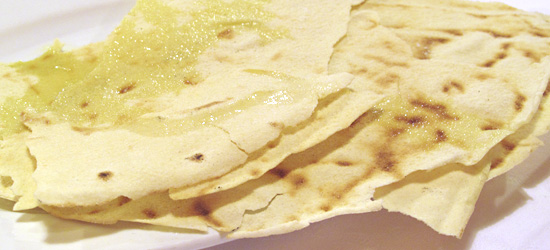
Pane Carasau, also called “Paper Music”, is a wispy-thin cracker served hot, generously drizzled with a flavorful olive oil and brightened with salt. This bread starts the meal and wakes up the mouth.
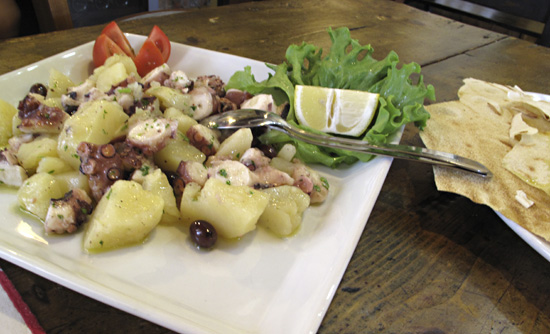
The dish that keeps bringing me back for more: Piovra con Patate – Octopus with Potatoes.
I can’t even descibe how delicious it is.
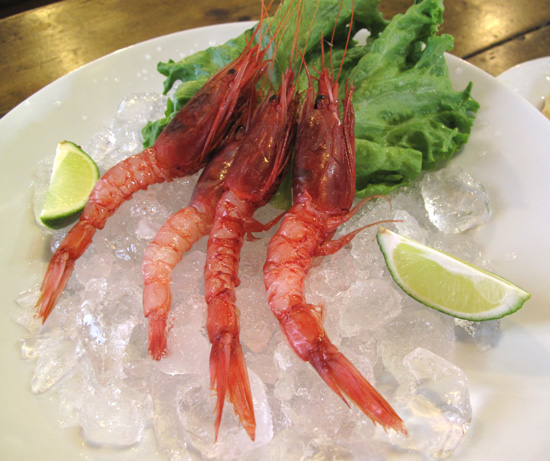
Gamberi Rossi Crudi della Mediterranea – Mediterranean Red Shrimp, served raw – are a delicacy and a gift to the palate.
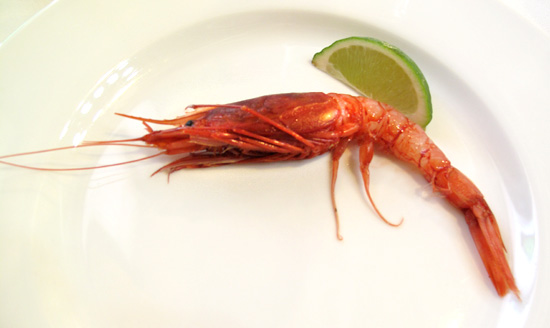
This shrimp will be splashed with lime and relished.
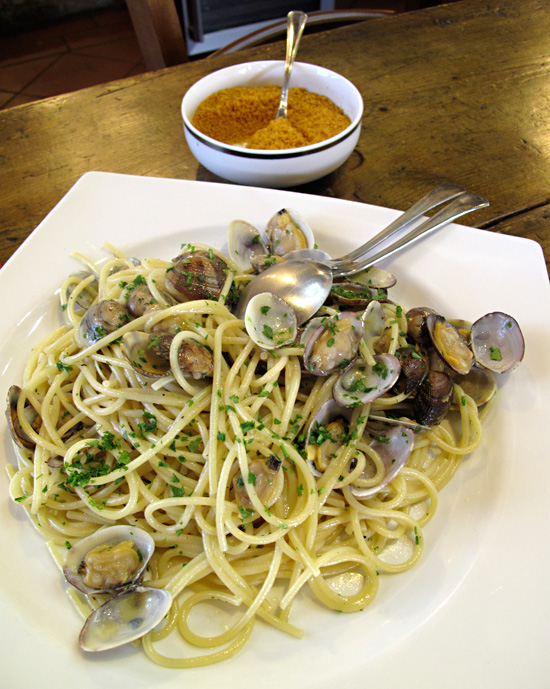
Spaghetti con Vongole e Bottarga – Spaghetti with clams and grated, dried fish roe.
Bottarga is a southern Italian gourmet specialty.
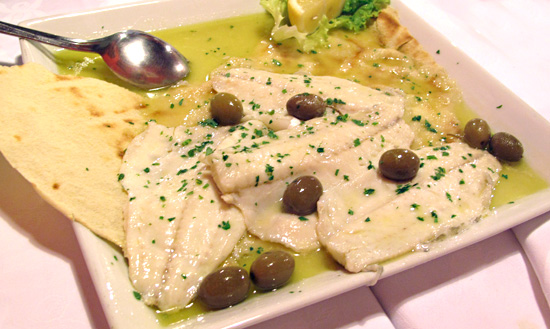
Branzino Vernaccia con Olive – Baked seabass with olives and olive oil.
Look at how beautiful those filets are. Ninni knows how to handle fish!
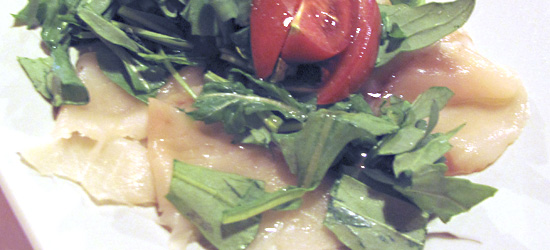
Carpaccio di Spada – Thinly sliced, raw swordfish, served with rucola – arugula – and tomato.
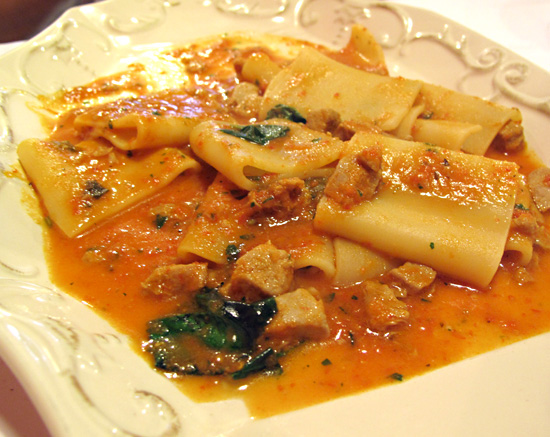
Paccheri all’Isolana – Paccheri pasta with tuna, basil and tomato.
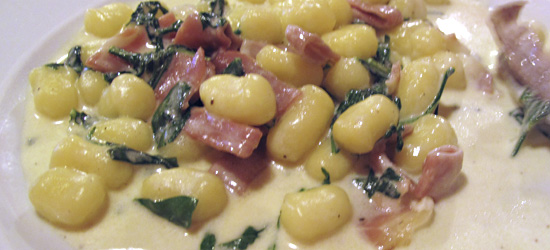
Gnocchi con Speck e Rucola – Potato Gnocchi with lightly smoked speck (cured meat somewhat similar to prosciutto), arugula and a creamy sauce.
The Carlotta Café offers a full bar, wine list and caffé. Order an ice-cold bottle of Mirto, a Sardegnan specialty from myrtle leaves and berries, as a digestif to sip after your meal.
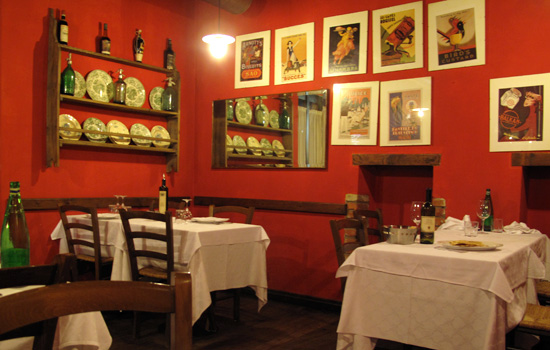
The Red Room is the quiet, more intimate room set off from the bar and main dining area.
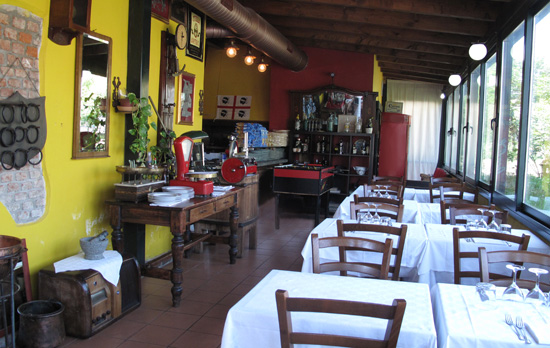
There’s also a north-facing Terrazo Room with it’s pleasant light.
The café is not in the central hub-bub of town, and unlikely to be found by tourists. It’s not close to a subway stop and, for me without a car or scooter, it would be a long walk on a hot day. So I gladly take a quick cab ride to the restaurant and it is oh-so worth it.
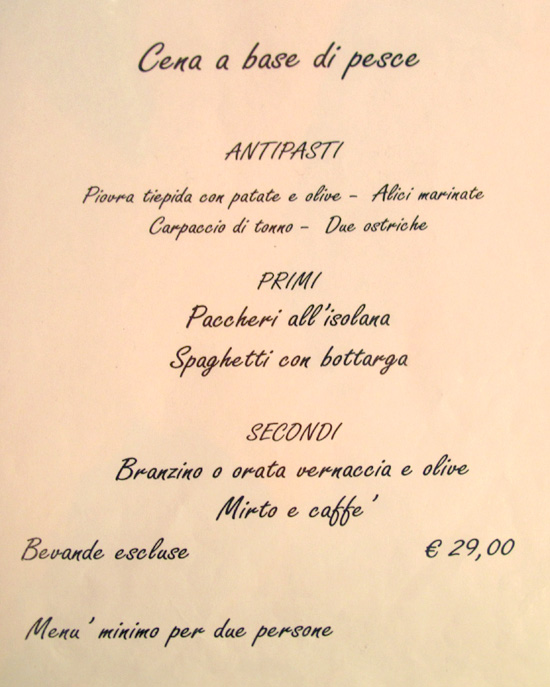
Ninni and Agnese offer a “Cena a Base di Pesce“, dinner based on fish, at an incredibly reasonable price. Make it simple for yourself: order this special dinner and a nice bottle of wine then sit back and enjoy the steady stream of expertly prepared foods that arrive at your table. You will go home happily satisfied. And you, too, will dream about the octopus. (Tell them “Maureen” sent you.)
(Check with them on their current pricing, since it may change.)
Carlotta Café Bar & Restaurant
Alzaia Naviglio Pavese, 274
20142 Milano, Italia
TEL: 02.89546028
E-MAIL: carlottacafe@gmail.com
by Maureen | Jul 14, 2010 | Featured Articles, Journal, People, Photo of the Day, Photos
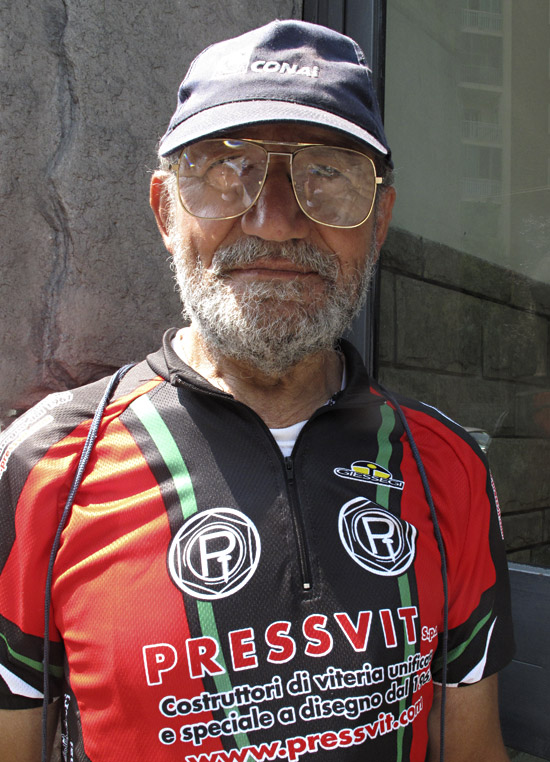
My “History Buff on Wheels“, Angelo, went rolling past me along the canal this morning. In a cycling daze and not recognizing him, I nodded and said the usual “ciao” as one cyclist to another. Mere moments later, he pulled up on my left, took my pace, greeted me and commented that it had been a long time since we had seen each other.
“Angelo! Ciao!”
What a great surprise to see him.
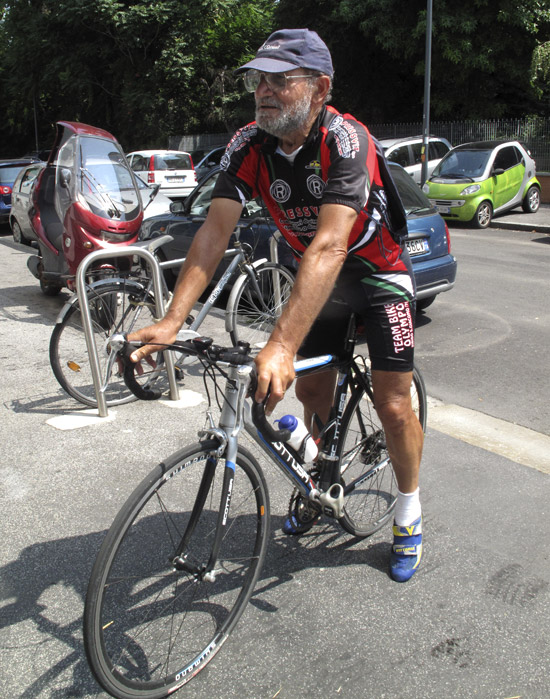
It had been January 11th, a very cold day, when we had ended up riding for 3 hours together, and all that time he had given me an historic commentary on Italy, Europe, the wars and politicians. It was Angelo that showed me the little back roads through the farmland that I have come to cherish so much. It was Angelo that first took me to Cascina Femegro, where I now go for the fresh ricotta cheese I savor.
Today, we rode for a half an hour together, all the way back to my place. We stood out on the walk under the scorching sun, talking about more history and geography, language and dialects. What a pleasure. We said a warm goodbye, but hoped to see each other another day on the bike path before I go.
“Ciao, Angelo!”
by Maureen | Jul 14, 2010 | Discoveries, Journal, Quips
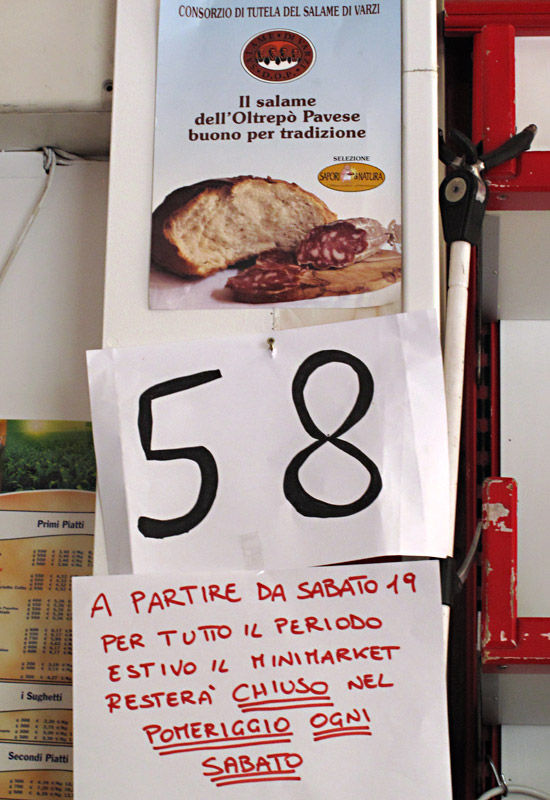
“What’s the 58 for?”
“You don’t know? It’s all over the internet. It’s supposed to repel flies. Two weeks ago I had flies all over the place before I hung that up. Now I just have a couple of flies. I heard about it at the café across the street. When the new owners moved in, they found a ’58’ and asked around to find out what it was for. It’s an ancient oriental trick.”
When I went into the little corner market and deli a few days ago, I had seen the 58 hanging on the wall, wondered, but said nothing. Yesterday, the place was empty of customers, so I asked my friend, Enza who owns the store with her husband. She gave me the explanation, and wondered why ’58’ didn’t work for the two remaining flies.
(It may be “all over the internet”, but this is the only post I could find about it.”
by Maureen | Jul 11, 2010 | Introspection, Journal, Quips
This is not a scholarly blog with a foundation in formal Art or European History. I’m the first to admit my ignorance in those realms. And on the web, one can find formal information and imagery on just about any topic. I have no desire to regurgitate what’s readily available out there, although I do provide links now and then to informative sites.
Rather, this is a collection of sometimes-knee-jerk, sometimes-thoughtful observations and responses to having plopped myself down in Milano for a year. I write about the jaw-droppingly beautiful, the quirky and questionable, the forefront, the frustrating and the fulfilling.
Living here is “the stuff of dreams”, but it is not “glamorous” as so many seem to believe. It is daily life in a place where they speak a different language and do things differently, all against a backdrop that sometimes takes my breath away from either beauty or cigarette smoke.
I write about ants in my kitchen and hardwater in my pipes. About an old lady in her pajamas on New Year’s Day, and an old man gathering fire wood along the canal. There’ve been stories about feeding fresh ricotta cheese to farm cats, buying old linens at the flea market, and eating pureéd rabbit livers and raw meat.
This blog is simply about what catches my eye, my mind and my heart. It is increasingly populated with stories of the people that have stepped into my days. I’ve filled my mind with enough imagery to inspire me for a lifetime.
This is no movie set. The Lombardia sun is usually obscured by haze. The winter was interminably gray. There is “dog do” on the sidewalks and no one else to handle the details for me. But the struggles have been authentic. The food is remarkably unlike an Italian restaurant menu in the U.S. The people have been slowly responsive. And I’ve started to “talk with my hands”, especially when in an animated conversation in Italian with a friend.
Having been here now for over a year, and facing an imminent departure and return to The States, I feel mixed and wistful… and deeply full.
by Maureen | Jul 11, 2010 | Featured Articles, Food!, Journal, Meals, Photo of the Day, Photos, Quips
I have caught and cooked a LOT of fish in my life and I cook it well enough that I’m a snob about eating fish at a restaurant. My friends know this about me. I’ve sent fish back to the kitchen when we’ve eaten together. If we’re at a restaurant that touts itself as a fish-cooking wonder, it’d damn-well better be.
Segue. I’ve eaten some incredibly delicious fish at restaurants here in Italy. Heaven on my plate. Divinity. But I’m still perplexed by something I’ve seen a number of times.
I have ordered, and seen ordered, succulent “pan fish”, either roasted or grilled: branzino, orata, trota, etc. After whatever masterful preparation, the tuxedoed waiter arrives at the table with the fish on a platter and presents it with a flourish to the hungry diner. He then steps aside with the fish and proceeds to mangle it in offering his services of deboning the poor beast. Ten minutes later, the fish is cold and lies in a heap looking as if it has already been masticated. It resembles little of a fish.
Fish snob that I am, it baffles me when I see this abomination of fish-delivery.
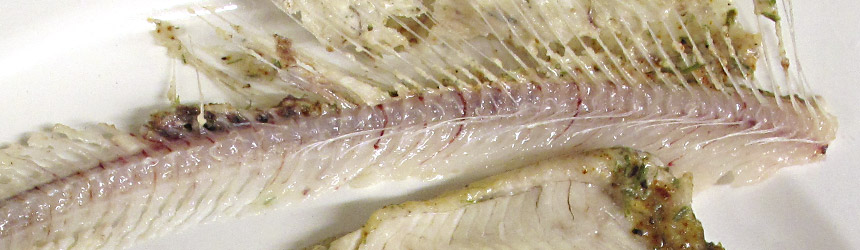
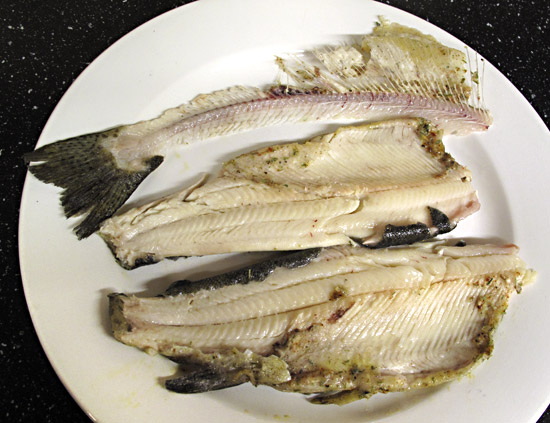
Please tell me, WHY doesn’t the man-in-the-tuxedo simply lift the tail and let the lower filet slip away from the bones? He can then flip the remaining filet over, lift the tail again, and have two entire, appetizing filets ready and waiting. The rib bones are all attached at the spine and lifted away in one piece. The whole maneuver, in experienced hands, can take just a couple flicks of the wrists and leave the fish still-hot and appealing.
My dinner tonight, granted, is of a finer-textured fish (trout) and hasn’t been cleaned of edges and fins for a beautiful presentation, but, boom-boom, it took just seconds to lift the bones away. Since the fish hasn’t been cooked ’til dry, the delicate meat lifts off the skin with a wisp.
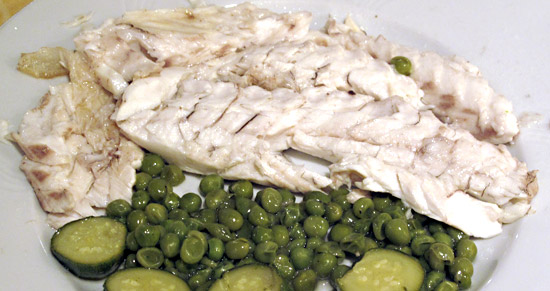
Last October I cooked a delicious branzino meal, my first time cooking that fish. Mmm.
by Maureen | Jul 11, 2010 | Discoveries, Featured Articles, Journal, People, Photo of the Day, Photos, Quips
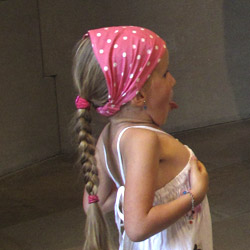
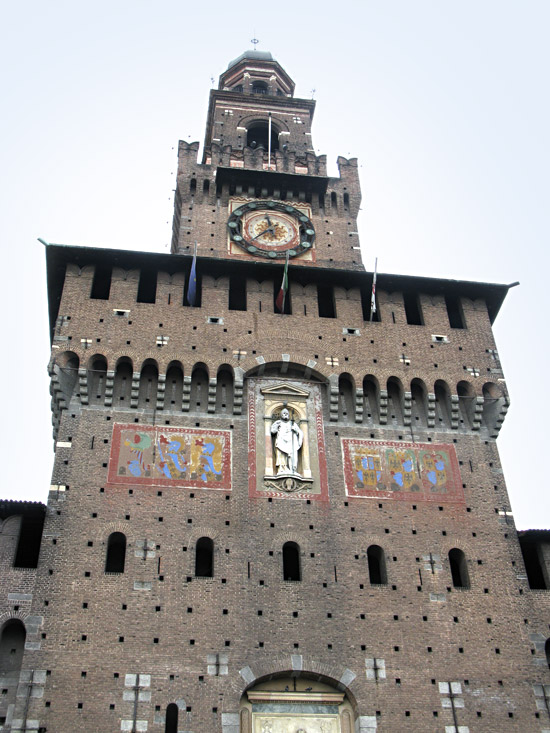
The little girl was unrestrained and so pleased with herself. She and I both saw the humor of her Minnie Mouse joining Michelangelo’s unfinished Rondanini Pietá. As I think about it further, I wonder which creator, Michelangelo or Disney, has had greater cultural influence? (Many would be aghast at my putting those two in the same sentence, but it’s a legitimate question.)
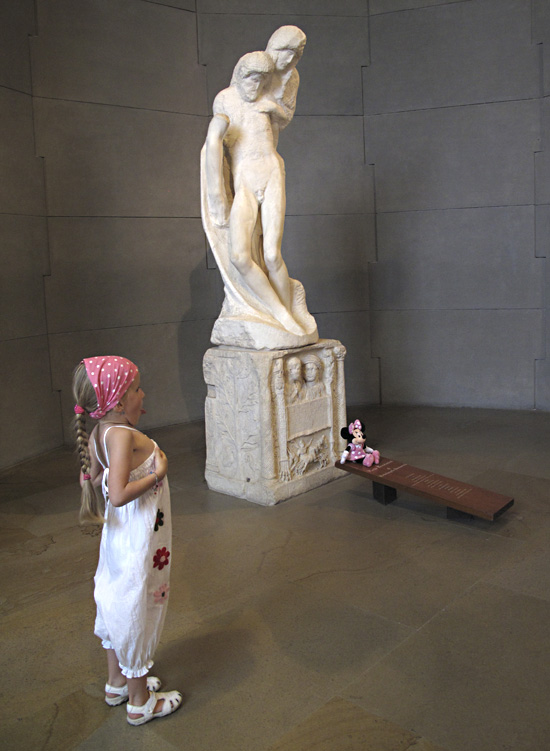
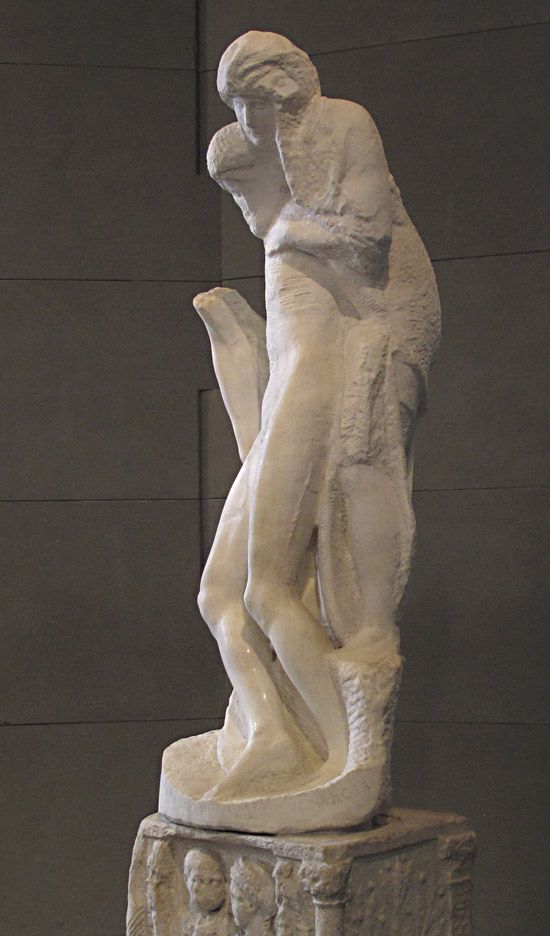
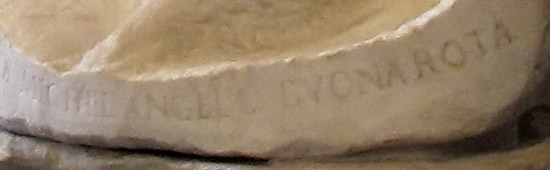
Though I’ve been in and around the Castello Sforzesco, one of the jewels of Milano, a number of times while here, I had not gone in to view the art and history exhibitions there. Before my departure, I wanted to “at least” see the Rondanini. Michelangelo had worked on this Pietá for many years and, they say, even up to a few days before his death in 1564. Here’s a video about the restoration done on the Rondanini Pietá (in Italian, but visually interesting, nonetheless, for those that don’t understand it).
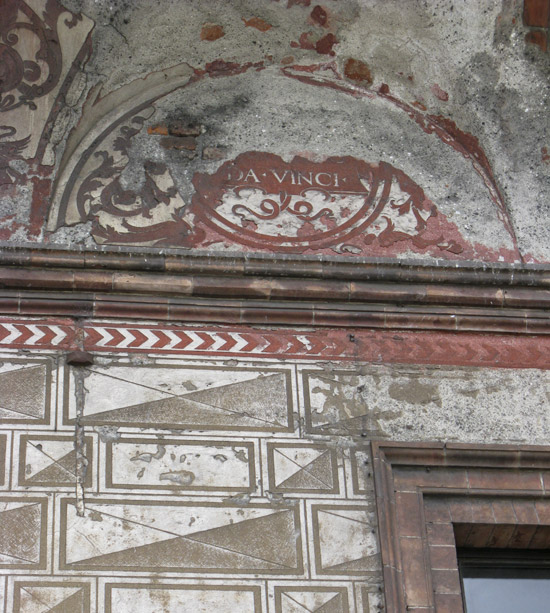
Leonardo da Vinci also left his mark in the city of Milano. He lived here for roughly 20 years and followed not only artistic pursuits, but also military and civil engineering efforts. (He designed water-flow “locks” on the Naviglio Pavese canal along which I ride my bike so frequently.) His world-renowned “Last Supper” is here in Milano at the monastery of Santa Maria della Grazie. Viewing tickets are sold months in advance, and the large salon hosting the wall mural has an atmosphere very carefully controlled to preserve what’s left of the dry fresco.
At the Castello, on the other hand, I readily walked in and bought a 3 Euro ticket to view the whole museum complex. I proceeded past stone remnants from centuries past.
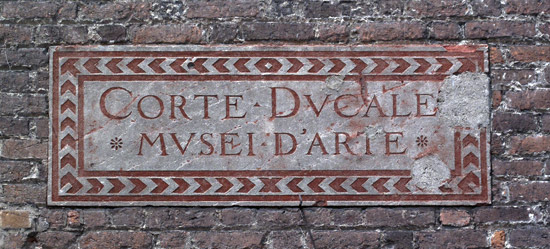
“Court of the Dukes Museum of Art”
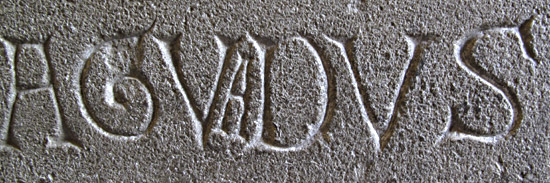
(This letter “P” is for my sister, by special request.)
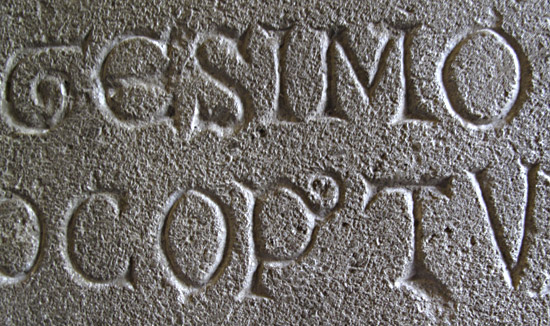
And I was amused by this type correction. (Ooops.)
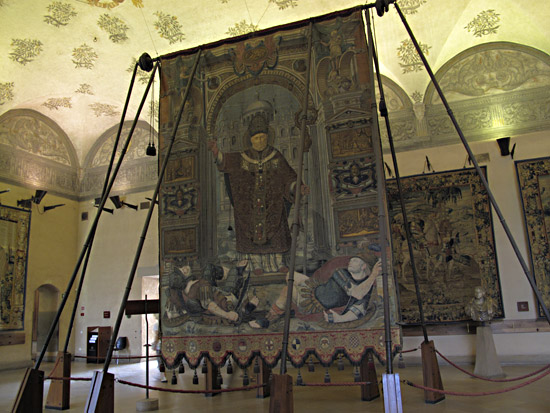
I walked into grand rooms with elaborately painted ceilings and draped with tapestries, this one of St. Ambrogio, the patron saint of Milano.
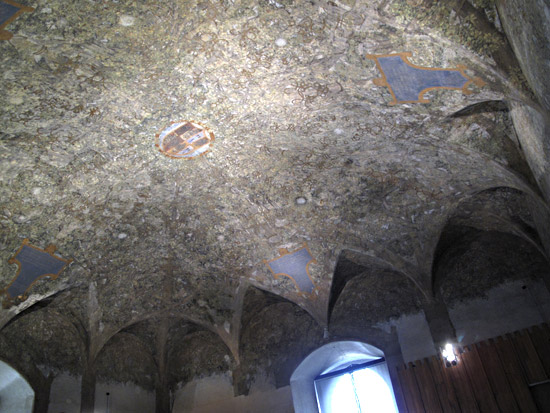
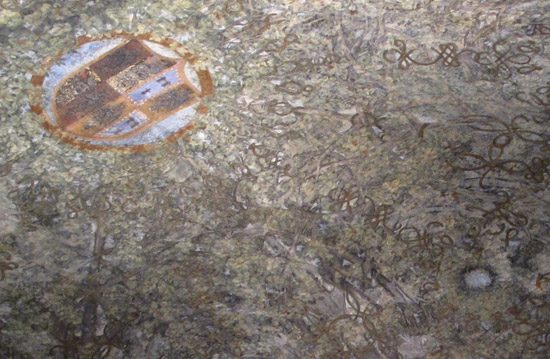
And then I walked into an entirely unexpected and very dark room. The “Sala delle Asse” was painted by Leonardo c. 1498 across the full expanse of its ceiling and down onto its walls. Quite unlike the iconic “Last Supper”, this canopy of foliage, trunks, stone and scrollwork creates a tangle of visual detail. At first glance it looks like a mess, as if the whole surface had been consumed by black mold over the years, with a few, still-vivid blue shields positioned at quarters.
The ceiling has an equally tangled history of “restorations”, including a complete whitewash covering, subsequent cleaning and color “enhancements”. The room was restored again in 1954, undoing the heavy-handed treatments it had suffered in centuries past.
It was a hard place to photograph, but you can find more images here. (Looking at some of them, I can’t believe we were looking at the same ceiling!)
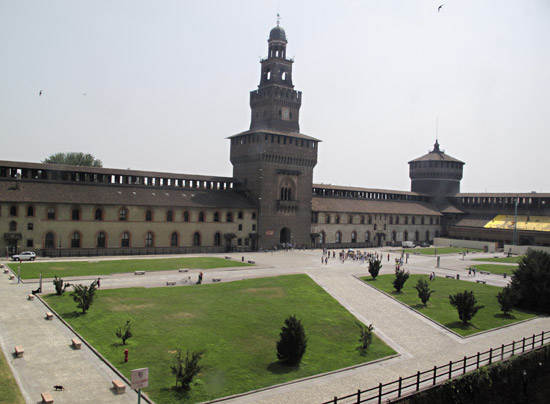
The Castello has a grand inner courtyard, with an interior moat home to dozens of cats! The museum sections are housed in the building ring around the courtyard.
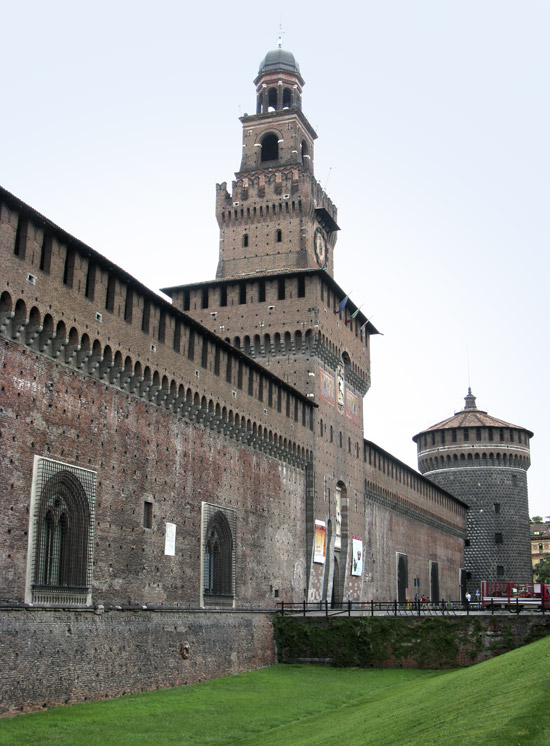
The Castello Sforzesco is a hub and a landmark for the city, stalwart and visible from a distance. One can make the short, straight walk from Castello to Duomo.
by Maureen | Jul 9, 2010 | Canals, Discoveries, Featured Articles, Journal, Photo of the Day, Photos
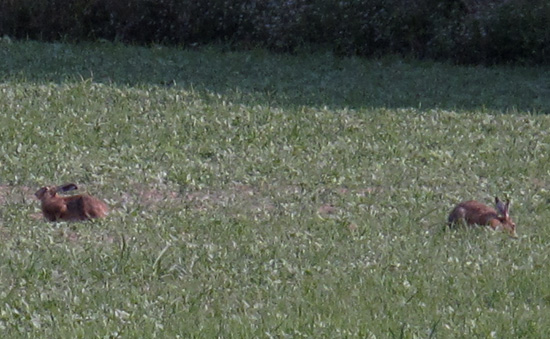
Since it’s been so toasty here lately, I took my bike ride in the morning today, heading out from the house just after 8:00. When I got to the field that had been full of rapeseed and red poppies a while back, I saw FOUR jackrabbits out in the field! This time I stopped. I maxed out the zoom on my little camera and got a couple of images for all those that were disappointed earlier not to see the “jackrabbit kangaroos“. It’s hard to gauge their size in this photo, but these bunnies are BIG!
by Maureen | Jul 8, 2010 | Featured Articles, Journal, People, Photos, Quips
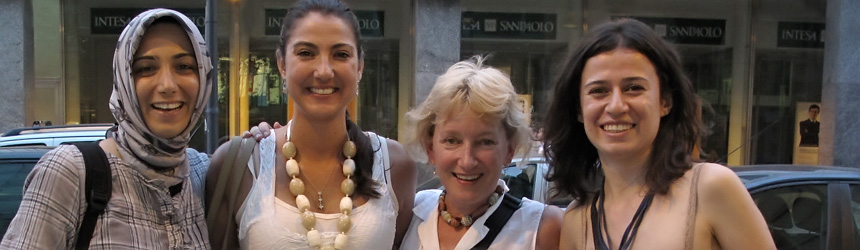
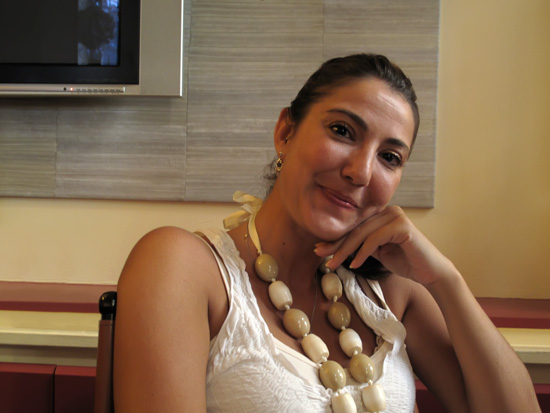
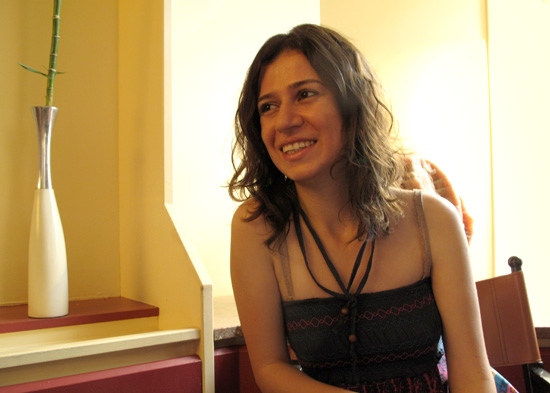
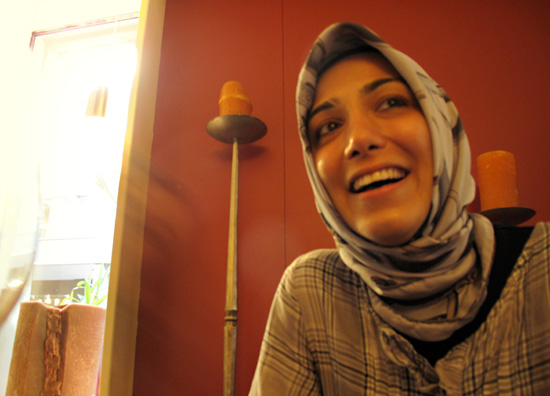
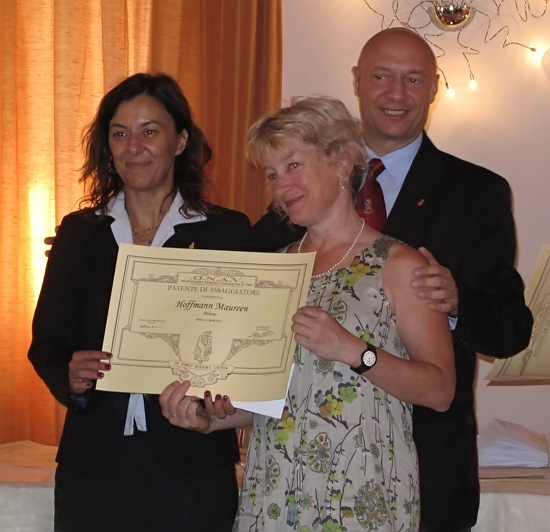
Megan and I met while struggling through Italian classes together in the winter. We had come here for different reasons, but found ourselves learning what we could together to communicate… and a friendship was born.
And now she’s leaving Milano and Italia!
Ever since our classes this winter, we’ve been getting together with other women just to keep up and keep in touch. And now she heads back to the U.S. to re-forge a life and vision for what she wants.
We got together the other night with Meltem and Ozdem, both from Turkey, for aperitivo and “Sex and the City” (the movie) and just to have some time chatting.
Meltem:
Ozden:
I send them all the best wishes, the greatest hopes, the dearest visions of what they hope for their lives. …and expect that, someday, they will show up on my doorstep in Seattle with a big “hello”.
by Maureen | Jul 7, 2010 | Featured Articles, Food!, Franciacorta, Journal, Meals, People, Photos, Travel Blog
The grape varieties and resulting wines here in Italy are numerous and quite different than in the U.S. What better way, then, to learn about the wine I’m drinking than to take a wine-tasting class. After attending intensive language classes last winter, I figured I was ready to enroll in the preliminary class series offered by the Organizzazione Nazionale Assaggiatori di Vino (ONAV) – the National Organization of Wine Tasters.
Some of my Seattle friends have joked that the class was a bunch of people sitting around drinking wine. “Hey! How do you like this wine?” “It’s great. Pass me the bottle!”
No. It was a series of 18 lessons, 2 per week, from 9:00 in the evening ’til 11:00 or so. It was held across town and I usually got home on the subway after midnight. (I started the class in February.) The course content was very technical, including discussions of chemistry, cultivation and fermentation processes, wine types and their characteristics, defects and regulations.
And all of this was in Italian. Each session was taught by a person with a different expertise… and a different manner of speaking. On good nights I understood 80% of what was said. (At least I think so.) There were a few nights when I may have understood only 10 -20%. Most lessons were complete with powerpoint presentations, charts and graphs. What I couldn’t understand by listening I could understand by reading. I felt I was learning more than I knew before, even though I didn’t get it all.
Most evenings, we had 4 wines to taste, being given a small sampling of each but not even taking the first sip until about 10:30. We used a complex table to judge each wine for its visual, olfactory and in-the-mouth characteristics, tallying a score for each wine on a 100-point scale. We judged on clarity, tone, intensity, frankness, fineness, harmony, body, persistence and overall ranking.
Taking the class did change my understanding of and appreciation for wine. And it probably spoiled me for drinking “cheap wine”, though here in Italy I can get a pretty nice, very drinkable wine for 4 or 5 euro. ($5 or $6)
When the class was ending in late April, we were told to prepare for the final exam. Yes. A final exam! I considered not taking the test; after all, I had attended the course simply for my own interest, not to become an official sommelier.
Having convinced myself to take the exam, I then considered taking the test in English, an option offered. But no. I took the 10-question short essay test in Italian. I had to understand the question; know the answer and know how to say and write it in Italian! We then had 5 wines to taste and judge; our judgments of the wine were expected to fall within a few points of the ONAV judgments. (ONAV was serious! They had several versions of the test. We had to sit with an empty chair between us. And we had to remain silent.)
I passed! It was a little, personal triumph.
Last Sunday we had our diploma ceremony at the beautiful Ferghettina vineyard high on a hill in the Franciacorta region east of Milan. Our class was joined by classes from other locations of the Lombardia region of Italy for one grand celebration.
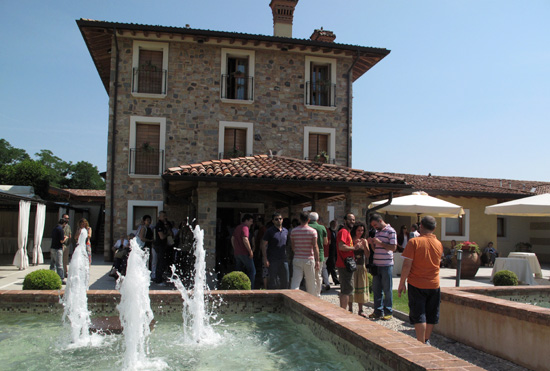
Not having a car, I could not have attended without the kindness of my classmate, Giuseppe, letting me ride along with him and Alessandro. Once there, we met up with Federica and Valentina from our class.
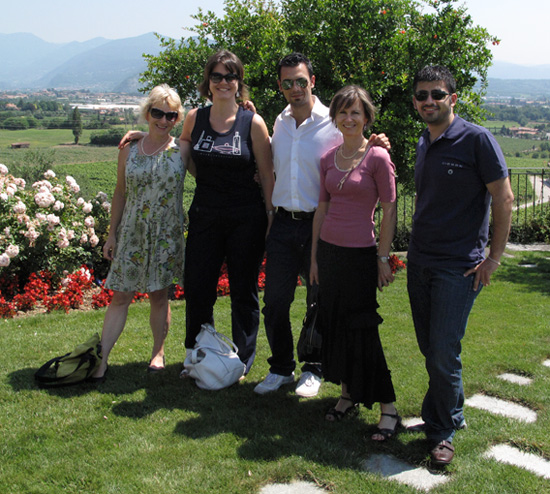
Rocco and Gianni were also there, as were other classmates.
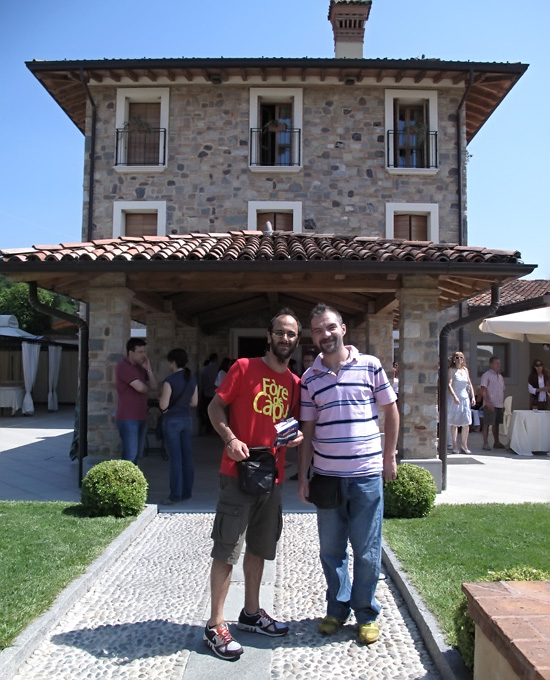
Our names were called out individually and we went to the front to receive our diplomas.
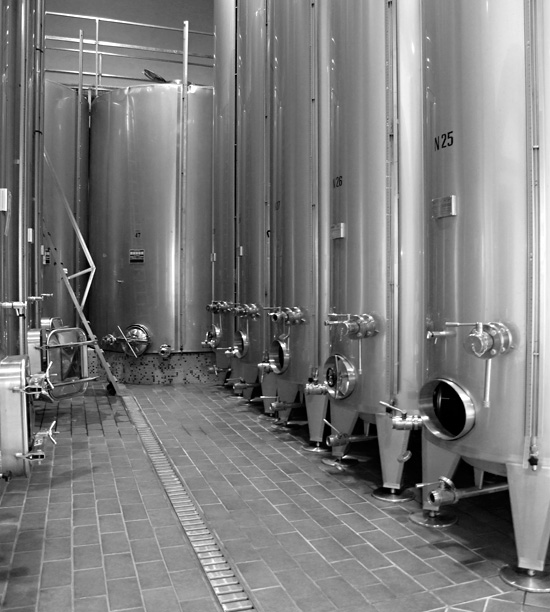
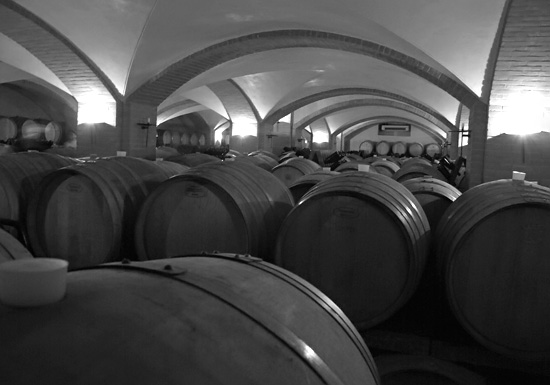
Afterwards, we were treated to Ferghettina Brut, along with typical meats, cheeses and breads. On that sweltering hot day, a tour of the winery’s cool, underground “cantina” was a refreshing break, and fascinating.
.
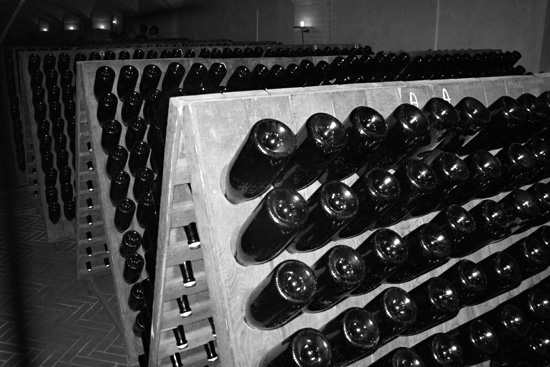
.
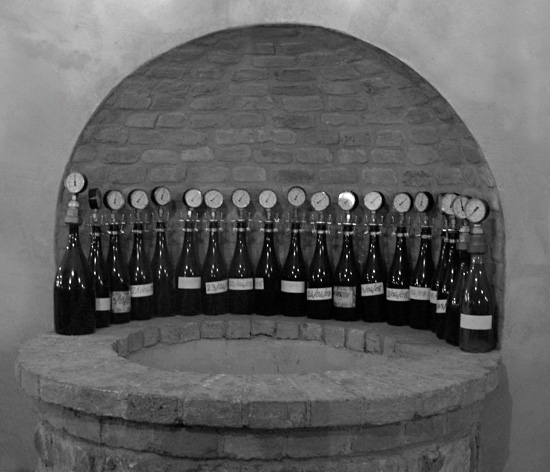
.
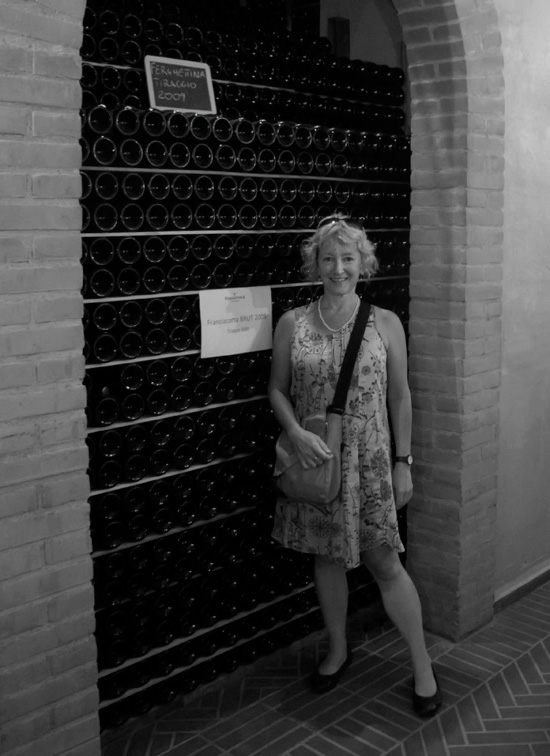
Ahh, nice and cool standing next to the 2008 Franciacorta Brut.
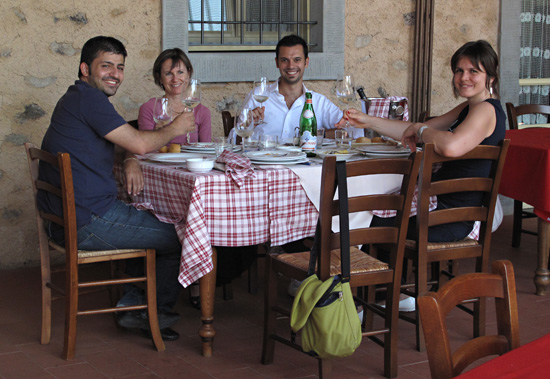
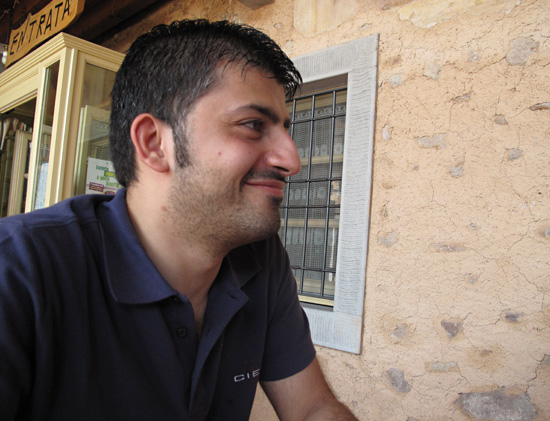
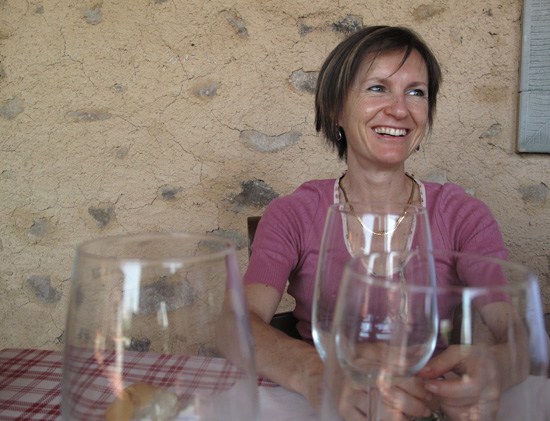
After celebrating with our other ONAV classmates, the 5 of us headed off in two cars to a place that Federica had heard about. It was a laughable, roundabout tour through the countryside of Brescia trying to find the agriturismo, Cá del Lupo. We enjoyed a light lunch on the terrace: Alessandro, Valentina, Giuseppe and Federica.
Alessandro.
Valentina.
Giuseppe.
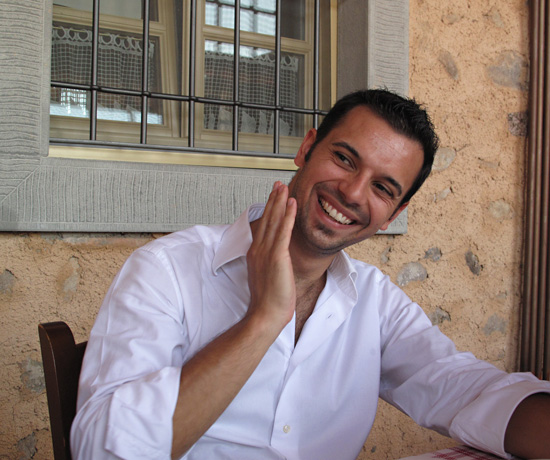
Federica.
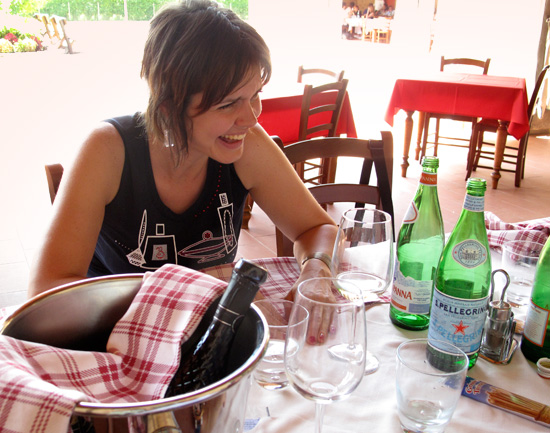
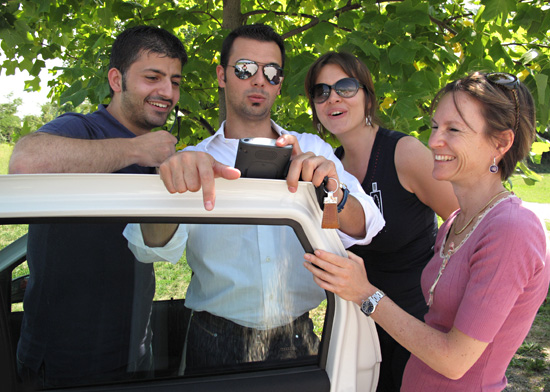
It took much hemming-and-hawing to decide whether to go walk along the shore of Lago d’Iseo. We consulted the GPS to figure out how to get there and how long it would take.
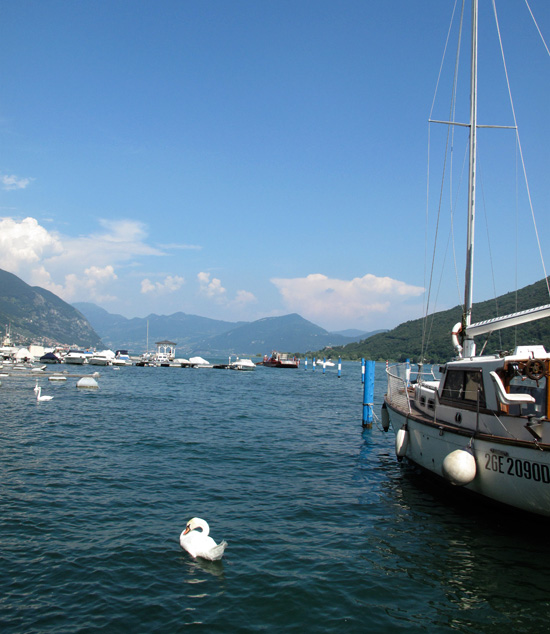
Lago d’Iseo is between Lago di Como and Lago di Garda, nestled in the ring of mountains to the north.
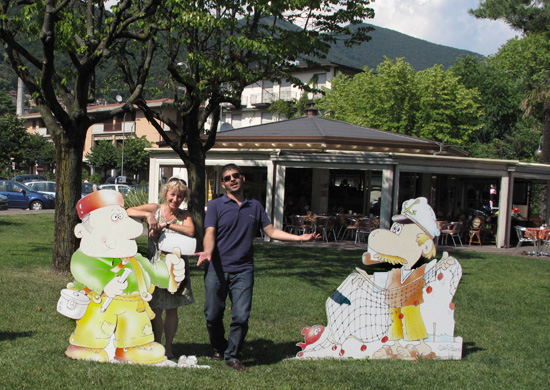
Alessandro and I goofed off at the cartoon characters on the lawn.
I spent my very hot Fourth of July at a winery, a farm and a lake, with 4 dear people I hardly knew. We had a wonderful time and laughed a lot. One of more of them may end up on my doorstep in Seattle some day!
by Maureen | Jul 7, 2010 | Food!, Journal, Meals, Photos, Quips, Sanremo, Travel Blog
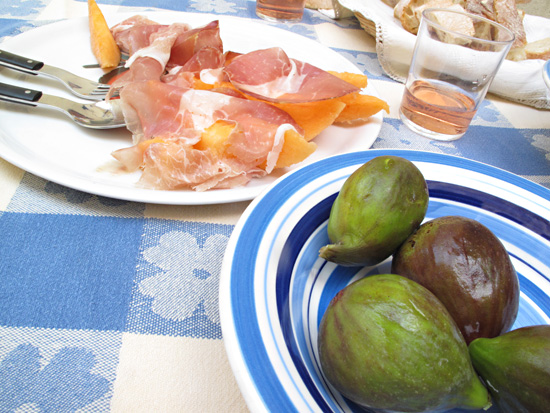
When it’s beastly hot outside, what could be a more perfect lunch than sublimely-ripe melon with culatello prosciutto, and some near-fist-sized, plump, fresh figs? Add artisan pasta dressed with flash-cooked summer cherry tomatoes, olive oil and basil, nibble some ciabatta and sip some rosé on the side. This is how to eat!
by Maureen | Jul 6, 2010 | Discoveries, Featured Articles, Food!, Journal, Meals, People, Photo of the Day, Photos, Sanremo, Travel Blog
Last Friday, after my whirlwind morning in Genova, I continued on to Sanremo for what was likely my last visit with my “landlady” Sandra and her husband, Mauro, before my departure from Milano. I had visited them a couple of times in winter and at my departure then it felt as if longtime friends were bidding “arrivederci“.
It was hot even in Sanremo, which is usually milder than the inland. Sandra and I sat in the cool of the house, and later on the porch swing, covering every topic from food and family, to health, spirituality, friendship and life approach. (Not bad considering it was all in Italian.)
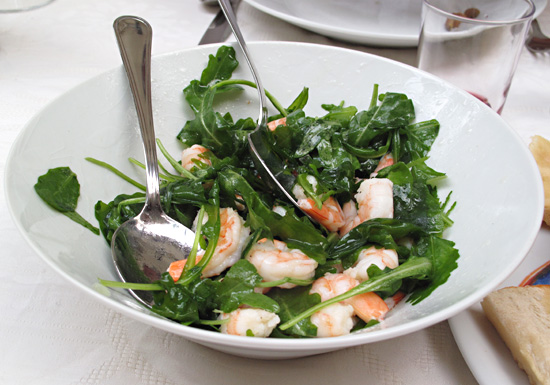
Mid-afternoon, it was time to start dinner: homemade Sardenara and Focaccia, carpaccio of Tuna (thin slices of raw tuna), and insalata di gamberi e rucola (salad of shrimp and arugula).
Sardenara is specific to Liguria, the part of Italy up north and west along the Riviera, approaching France. You can’t quite call Sardenara “pizza”, but rather a focaccia pan bread with very specific ingredients. Sandra made a dough of a specific semolina flour purchased especially for this recipe. A friend, Angelo, had shown her how to make this.
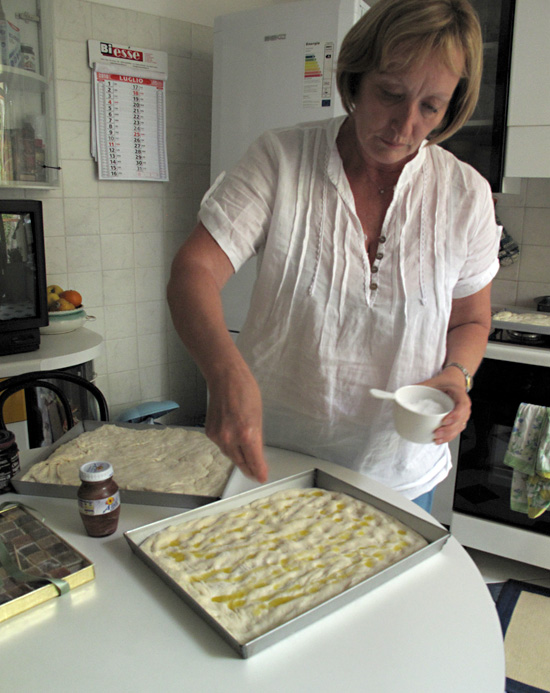
She rolled and formed the dough into the square baking pans, then set them aside to rise.
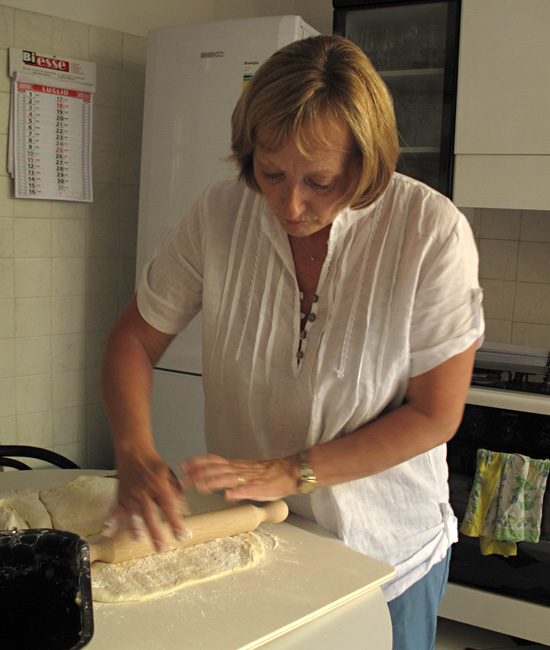
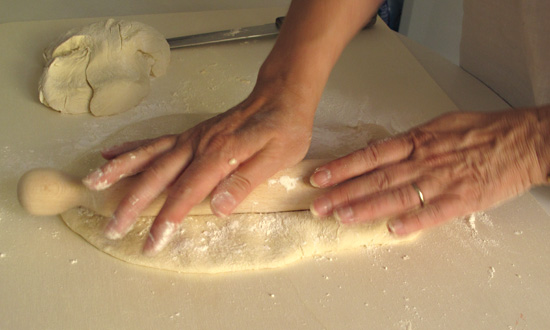
After the dough had risen, Sandra selected one pan for a simple focaccia with coarse salt and olive oil. The finger indentations in the dough, and more than a splash of water (!) poured on top before going into the oven, were two secrets important to the recipe.
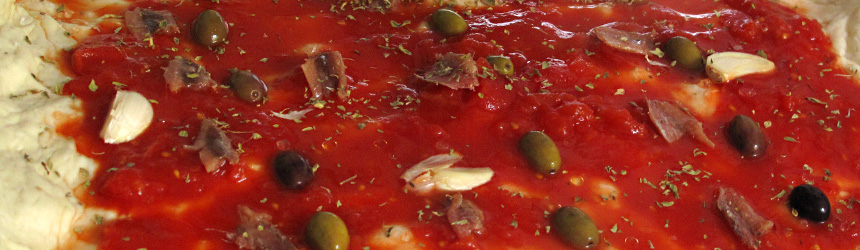
Next came the very simple, yet specific, Sardenara preparation: a base of peeled, cooked tomatoes; taggiasche olives, local to the region; salted anchovies; garlic cloves, olive oil, oregano, coarse salt, water.
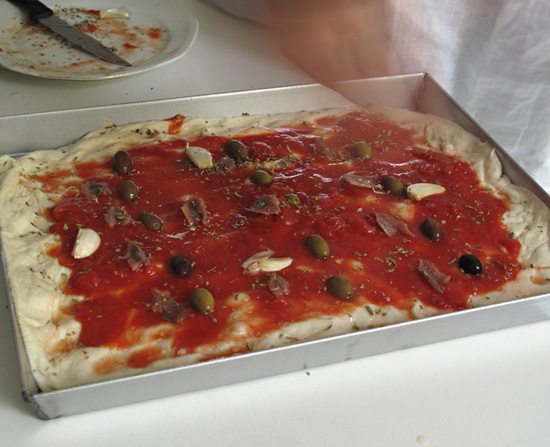
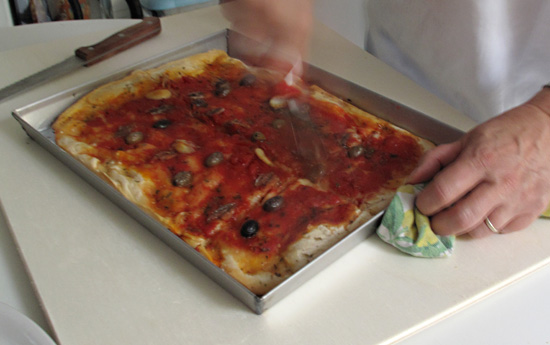
The Sardenara cooked up to a half-inch thick bread with a wisp of tomato and the pungency of olive and anchovy. It began our dinner.
Mauro, Sandra’s husband, was hungry and ready for dinner.
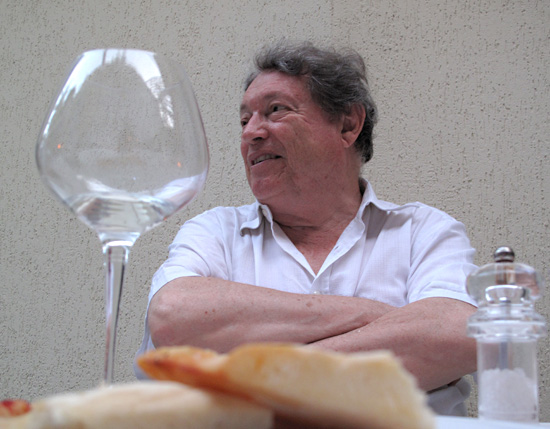
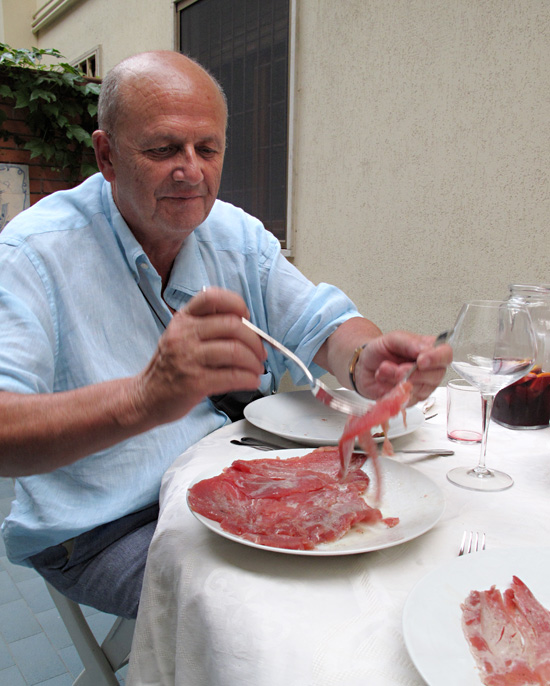
A perfect summer meal, begun with fresh Sardenara, and followed with a simple salad of arugula and shrimp, and tuna carpaccio. All light and delicious for a hot day.
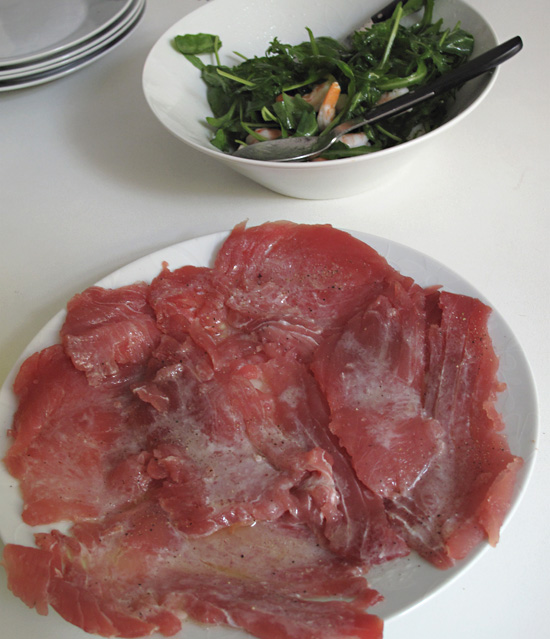
Sandra and Mauro’s friend, Sandro, joined us for the meal. We had all spent time together in the wintertime, (including our trip to Monaco and a meal of Sandro’s special pureéd rabbit liver sauce over freshly-made pasta). He dished up the tuna carpaccio, which had been doused with fresh-squeezed lemon juice and olive oil. It was fantastic!
The salad was dressed simply with lemon juice, olive oil, salt and pepper.
Dinner was a lovely time with my new “old friends”. And the making of it was as much a part of the pleasure, as was the conversation throughout it all.
by Maureen | Jul 6, 2010 | Featured Articles, Genova - Genoa, Journal, People, Photo of the Day, Photos, Travel Blog
It all started with hat forms on Milan’s Grand Canal.
Five weeks ago I went to the Mercatone Antiquariato – Antique Market – along the Naviglio Grande and saw hat bases made of coarse fabric. They are from the Bovone sisters that were making hats in the 1930s. The hats have asymetrical, sumptuous curves and show the “hand” of their makers through stitches and markings.
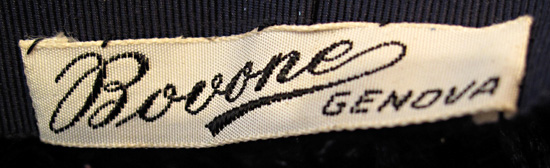
The hat bases harkened to the beautifully-sculpted wooden hat forms I did NOT buy in Florence in March but still thought about. I bought 3, chatted a bit with the woman selling them and asked for her business card.
A week ago, back at the antique market, the woman was there again and she had wooden forms this time! I considered them all and picked one to bring home. The seller, Marina Pavina, and I introduced ourselves and talked some more. She was insistent: “you should come to Genova!” I had already planned to go through Genova, her home town, on my way to San Remo a week later, so we agreed to meet there.
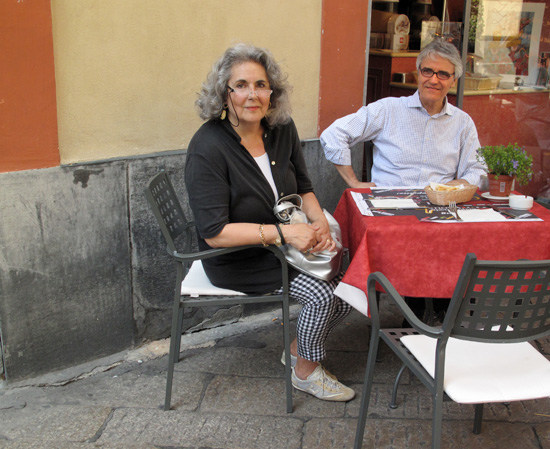
At the end of the train ride from Milano, I stepped out of the station into a 90-degree day and was met by Marina and her husband, Claudio. They took me on a city overview driving tour of Genova, port city and home of Cristoforo Colombo. There was much that reminded me of Seattle: the waterside location, the surrounding ring of hills, the elevated viaduct, the busy international port. Yet it is all tighter and closer in.
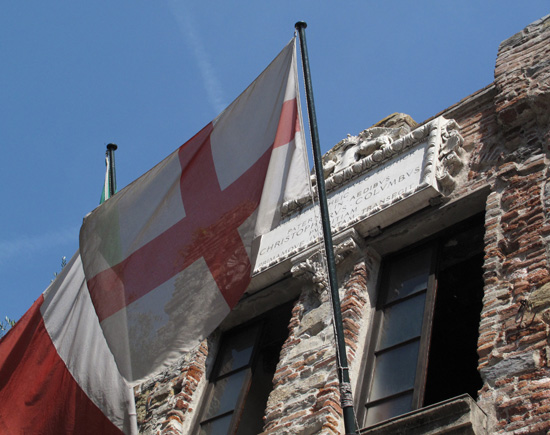
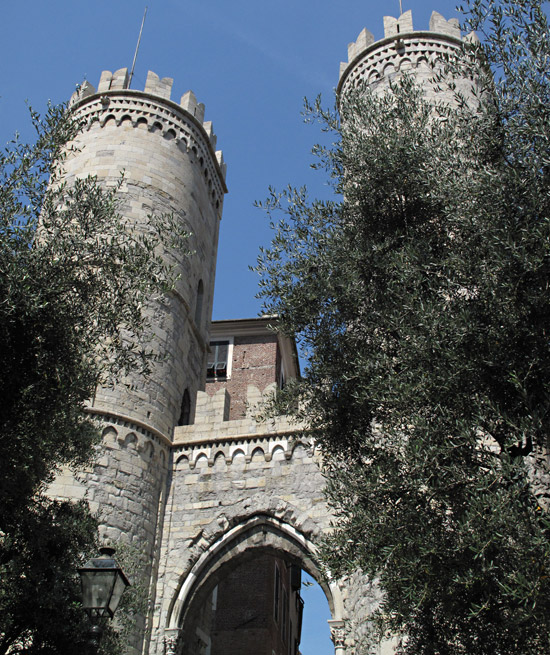
Claudio stopped long enough for Marina and me to get out and see the front of Cristorforo’s house, as well as the adjacent towered city entry.
Two towers create an arched entry gate into Genova’s Molo neighborhood.
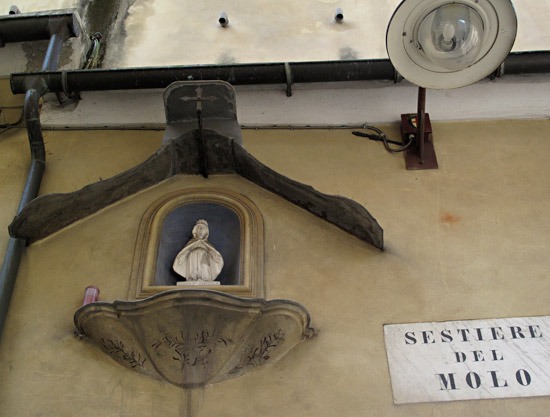
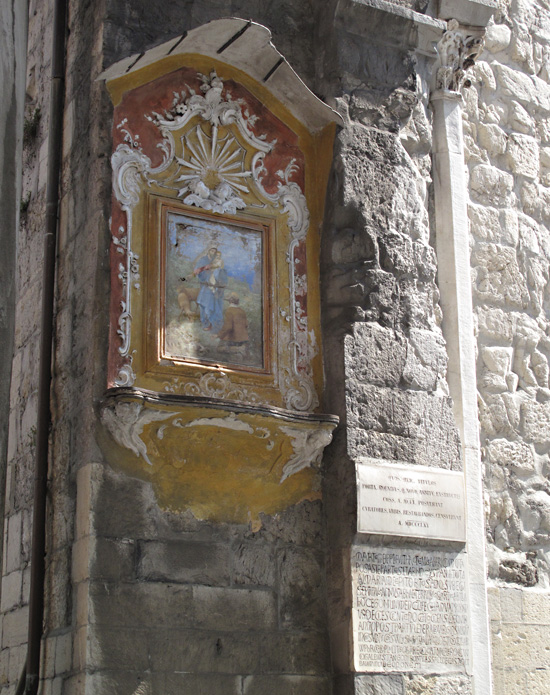
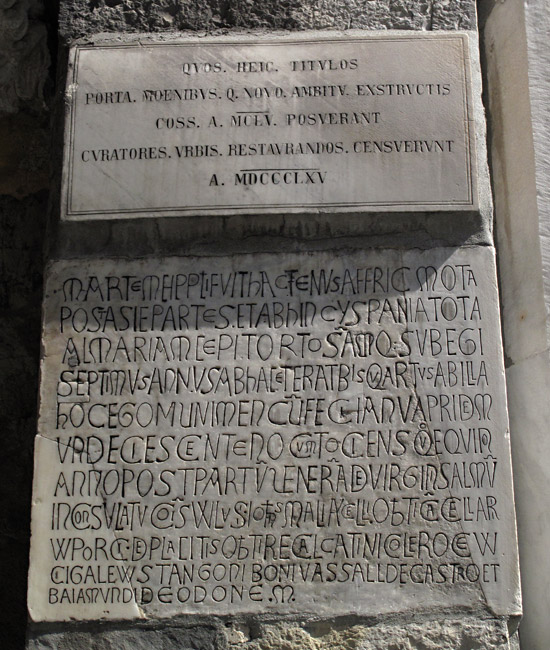
This madonna and two plaques are mounted underneath the arch. The top plaque is from 1865. (I’ve recently brushed up on reading roman numerals. It comes in handy here in Italy.) Madonnas and other religious niches like this are found all over Italy, reflecting the high number of Catholics in the country.
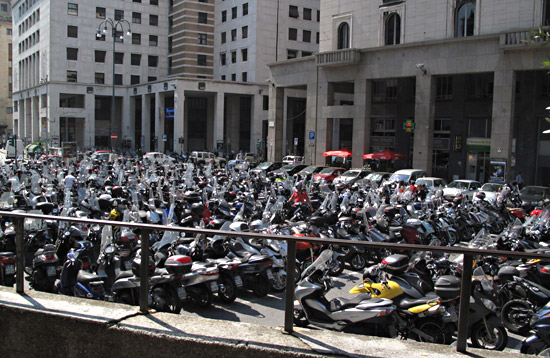
I’ve never seen such a concentration of scooters than in Genova, although I was told later that San Remo has more scooters per capita. In some places in the city, there are so many scooters parked along both sides of the street that there is just enough space for one car to pass between them, lane lines having no meaning.
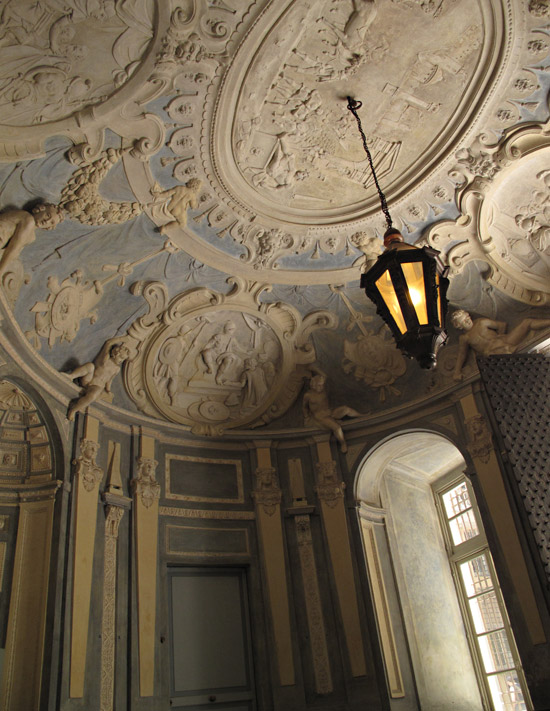
After our driving tour, we parked the car and took a stroll along the beautiful and historic Via Garibaldi. Genova has elaborately frescoed and decorated buildings like I’ve never seen (nor will) in Seattle. Just envision this building without its fresco painting!
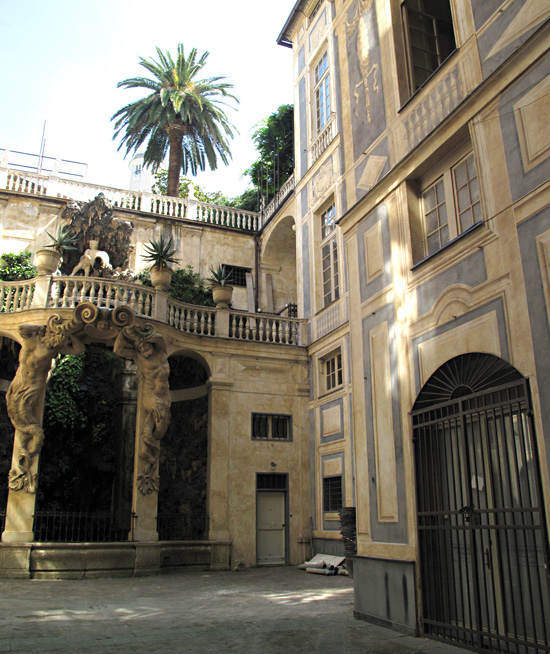
This is an interior foyer just off the street.
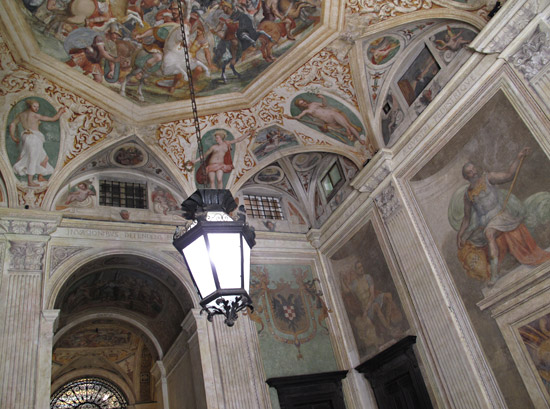
This ceiling reminds me of Wedgwood pottery.
Our next stop was Marina’s antique shop, “Marina Pavani Particolaritá D’Epoca”, just off Via Garibaldi near the museums.
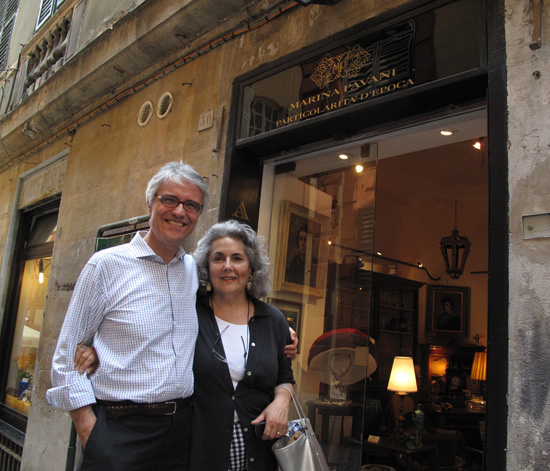
Marina offers art pieces, furnishings and decorative objets d’art covering a broad time period. Whether a person is looking for a large, prominent piece, or a small, visual detail, Marina’s collection piques the curiosity. She also does custom searches and display work.
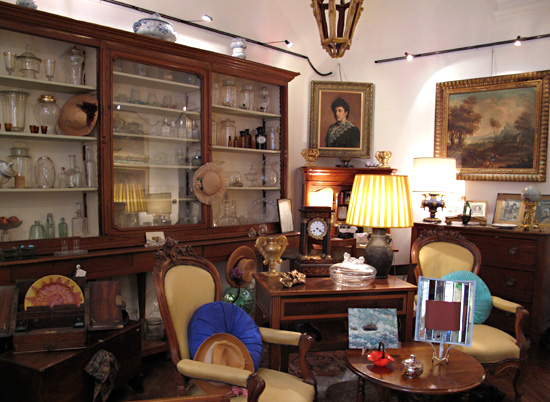
.
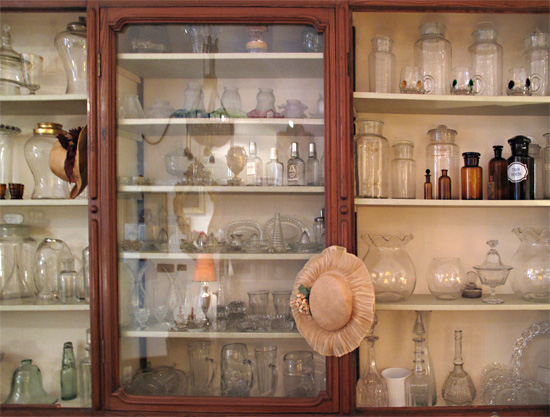
.
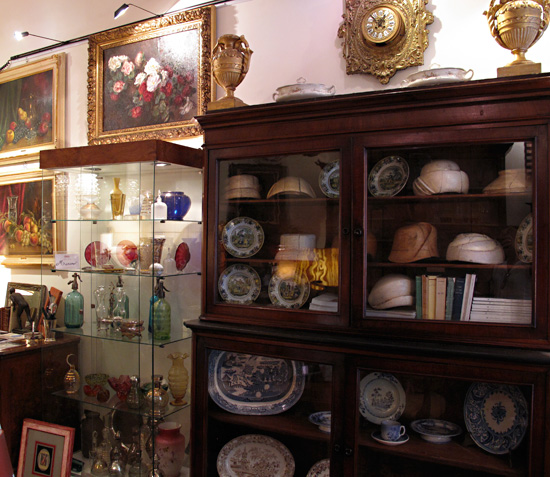
Here’s a sampling of some of the hat forms that caught my eye in the first place.
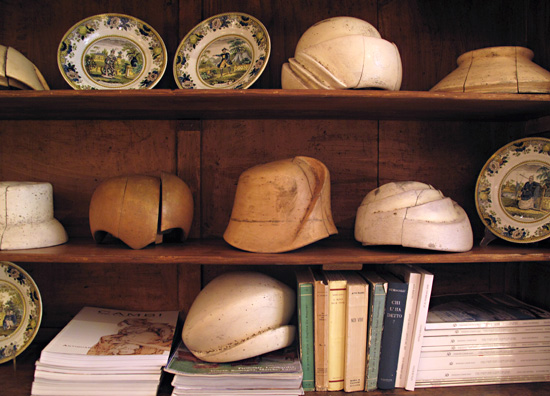
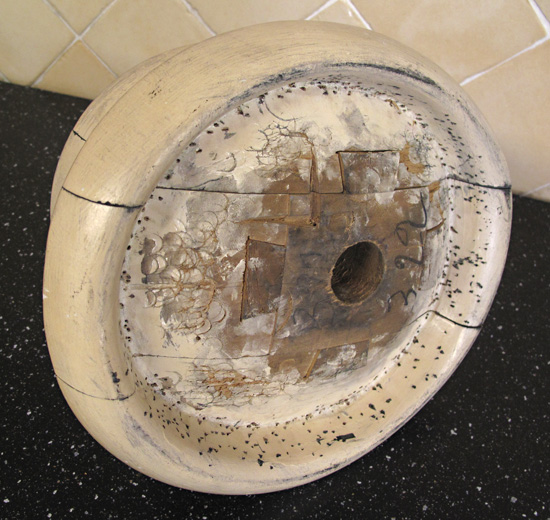
The hat forms are constructed of 5 wooden pieces joined with large dovetail joints, then sculpted and painted. Damp hat fabric, likely felt, is draped over the form, pressed and pinned into the depressions and left to dry. When removed, the fabric will have taken the shape of the hat form.
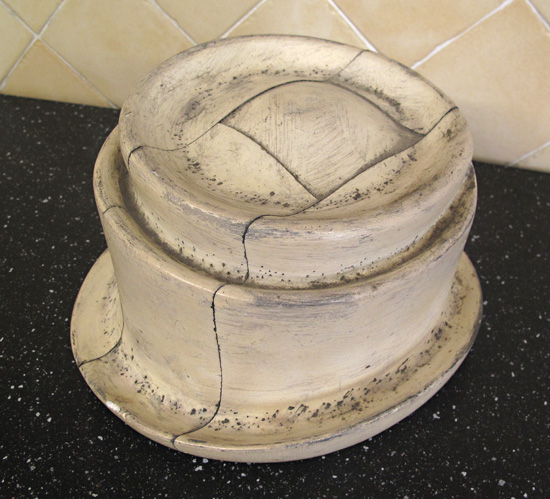
I bought this second one while in Marina’s shop in Genova. I like all the patina and pin holes as much as the lovely curves of the forms themselves.
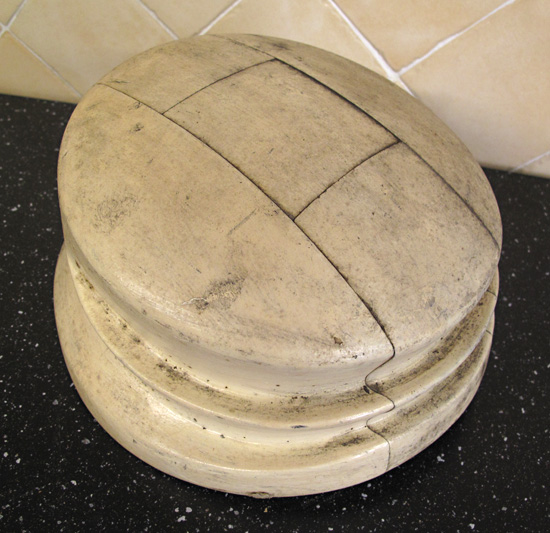
While looking at the underside, the dovetail joints and form numbers are visible.
After browsing the antique shop, Marina and Claudio treated me to lunch at a cafe nearby.
.
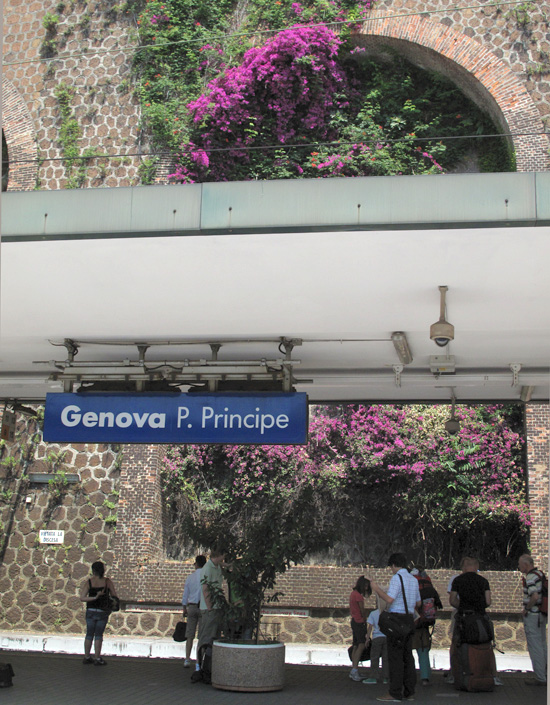
We rushed through our lunch and finished just in time for them to drop me off at the station and give each other quick goodbyes. I then waited on the platform for a half-hour-late train on a sweating-hot day.
What’s most remarkable to me, again, is the kindness of strangers that I have been encountering. I don’t know Marina and Claudio, and yet they hosted me warmly in their home town, and we chatted like long-time friends.
If you find yourself in Genova, step into Marina’s shop. See what catches your eye and enjoy a pleasant conversation.
Marina Pavani Particolaritá D’Epoca
Via Ai 4 Canti di San Francesco, 50 R. 16124 Genova, Italia
(Angolo Via Garibaldi)
Tel: 339-7461952
by Maureen | Jul 3, 2010 | Discoveries, Journal, Quips, Sanremo, Travel Blog
I just took my shoes off as it approaches midnight and I have turgid, little, sausage toes! It’s still 81 degrees out on these 90+ degree days and I’m so grateful for the invention of air conditioning. (I know that everyone in Seattle these days would love to have the opportunity to have turgid sausage toes from heat! But remember last summer?!)
I just returned from San Remo on the Italian Riviera (I know, that sounds so high-fallutin’) and it was hot and humid there, too. For being peak tourist town, the streets were surprisingly empty. Actually, not surprising at all. The shoreline is wall-to-wall beach umbrellas with bodies sprawled out underneath them. Come evening, the town will be hopping with all those bodies seeking food and entertainment.
In the meantime, now back in Milano, I’ll get some sleep and hope that my feet fit into my shoes by morning.
by Maureen | Jul 1, 2010 | Church, Featured Articles, Graphics, Journal, Photo of the Day, Photos, Travel Blog
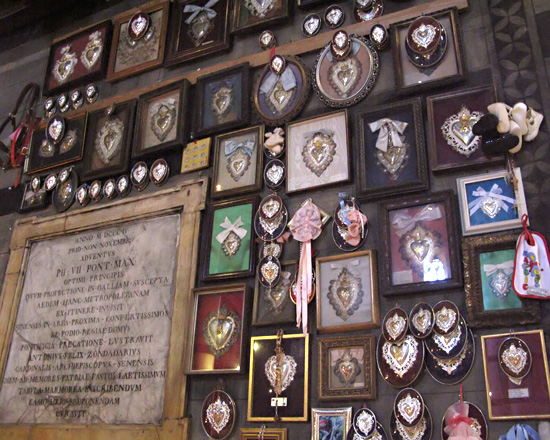
Two years ago, in exploring one church after another, I noticed cathedral walls laden with silver framed medallions bearing the letters “GR”. Some were tied with a pink or a blue ribbon. There may have been 50 in some churches, or hundreds in others.
Here’s a wall in the Duomo of Sienna (from 2008).
With an interest in symbols and icons, silverwork and folk art, I was intrigued. What were these? What meaning did they hold to those that posted them?
In Firenze, I went into a store selling Catholic statues, vestments, rosaries and other religious items and talked to one of the nuns working there. She explained “Per Grazia Ricevuta” – “For Grace Received” – this physical symbol of gratitude. The medallions are placed in the cathedrals at the birth of a child, the healing of an illness or injury, or other instances of great grace. (I bought one for my brother to acknowledge him, his wife and 5 kids.)
Two years later, now back in Italy, I continue to see the Grazia Ricevuta medallion. It moves me that the Italians have this tangible symbol for their gratitude . (I rack my brain trying to think of an American corollary.)
– – –
I feel such deep gratitude for the opportunity to be here. I have the means and the fortitude to have come for a year even in the midst of global economic crisis. I have experienced no mishap, illness or calamity. I have remained safe both when traveling alone and riding my bike amidst crazy, Milanese traffic. My family, friends and clients back home have been supportive and steady. New friendships and chance meetings here have kept me from loneliness and given me the highlights of my time. I have seen things that have filled my head with images to last my lifetime. THIS has been a great grace received and I am genuinely humbled by the gift.
– – –
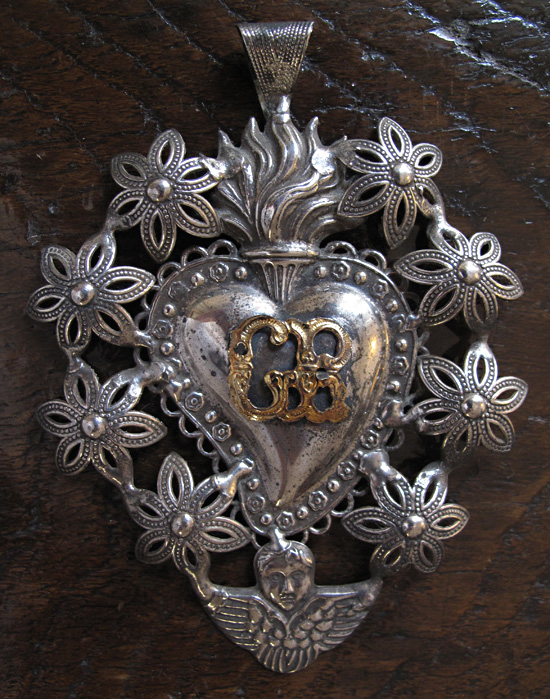
The Grazia Ricevuta has become increasingly touching to me as my time passes here in Milano. I purchased another framed medallion to hang in my home when I return. And I just purchased one (below) from the antique market which I will wear on occasion. When you see it, you will know its meaning to me.
by Maureen | Jul 1, 2010 | Featured Articles, Introspection, Journal, Quips
More often than not, when I’m talking to Italians and they tell me they want to travel to the U.S., they all say the same thing: they want to go to New York, Miami… and Niagara Falls. (Huh? Niagara Falls?) They tell me that TV and movies have influenced them; they’ve seen more mention of New York and Miami than any other place.
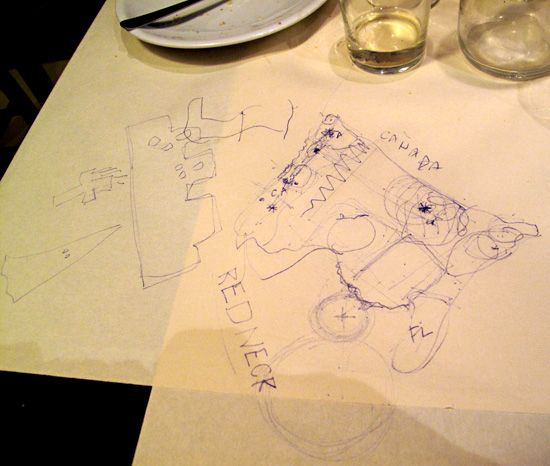
Yesterday, out for a late night dinner with an Italian friend, at a restaurant with paper tablecloths, I started sketching a map of the U.S. and talking about the regional differences across the country. In trying to communicate the tremendous variation in geography and culture we covered a LOT of topics! (Of course, all from my own point of view…)
Here’s a list of some of the things we talked about. How many can you find noted in the sketch below?
- Seattle, Portland, San Francisco, Los Angeles, Chicago, New York
- Grand Canyon, Cascade Mountains, Rocky Mountains, Great Lakes, Gulf Coast Marshes
- Pacific Northwest, West Coast, Southwest, South, Midwest, New England,
East Coast, Florida, border with Canada
- BP Oil spill and threatening Hurricane Alex
- Conservative, liberal, up-tight, traditional, racist
- Rednecks, Ku Klux Klan, cross-burning
- Cities, population centers, farm country, apples, pears, grapes
- The Adobe homes of the Southwest
- Where I went to school in California and Ohio
- My long, one day drive from San Jose to Seattle
- The “boot” of Italy and the cultural divide between north and south
The cultural divide between northern and southern California