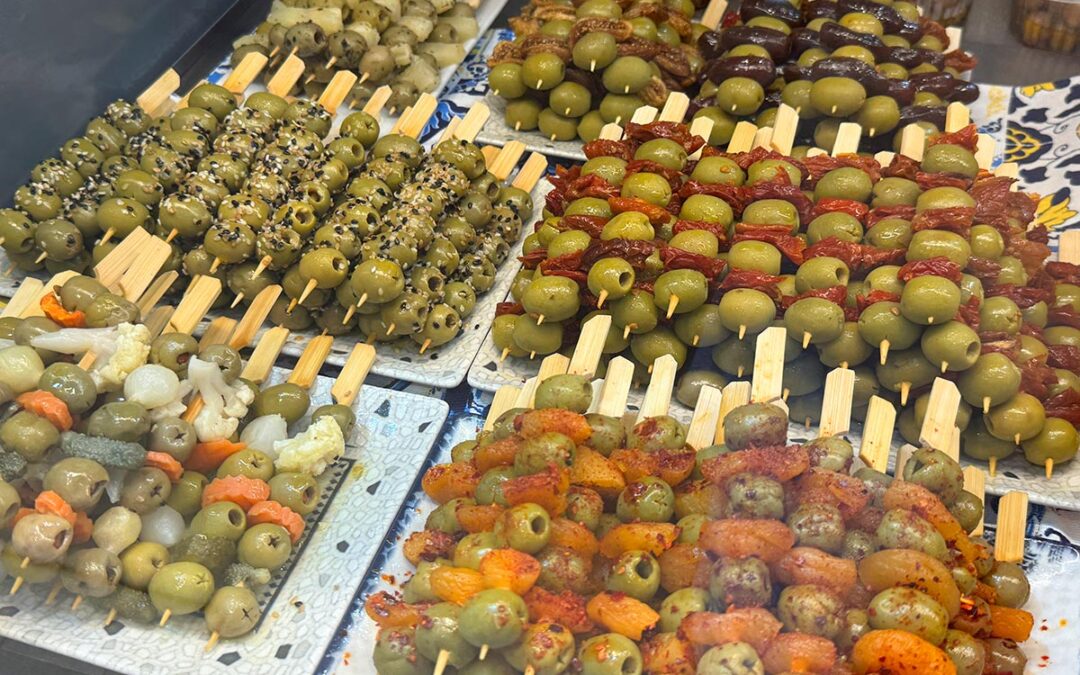
Olives I have known and loved

Olives I have known and loved

Once again, it’s time to celebrate World Olive Day, November 26, 2025.

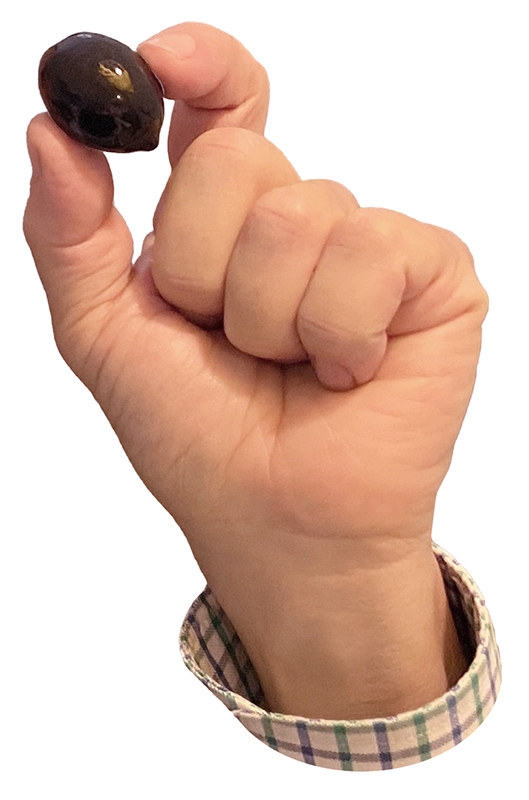
Somewhere, deep in our family archives, there’s a photo of me sitting on a picnic blanket, about age 6 or 7, with my 10 fingers splayed, each one festooned with a pitted Lindsay, black olive.

Fast forward seven years to my 13th birthday… My girlfriend gave me a gift-wrapped case of canned, black olives. The trend was surely set.

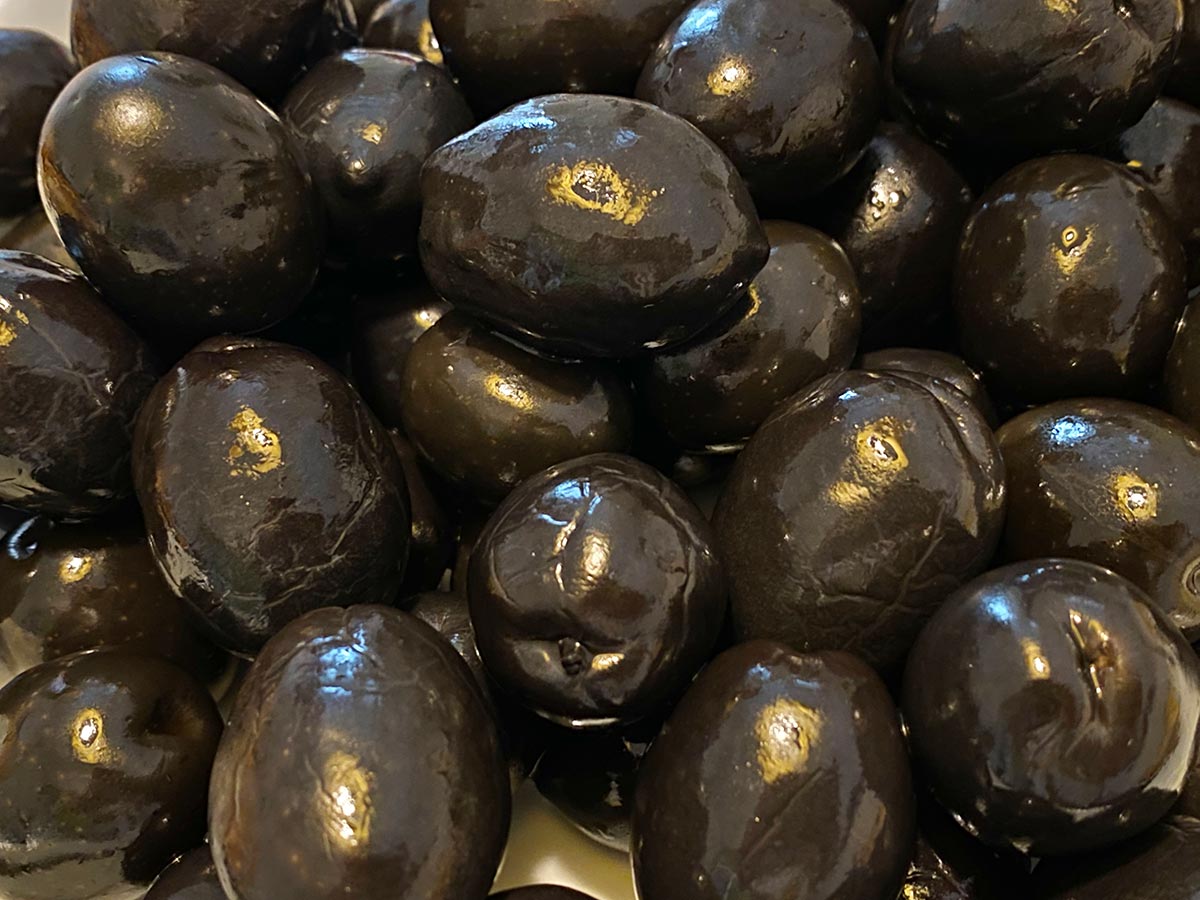
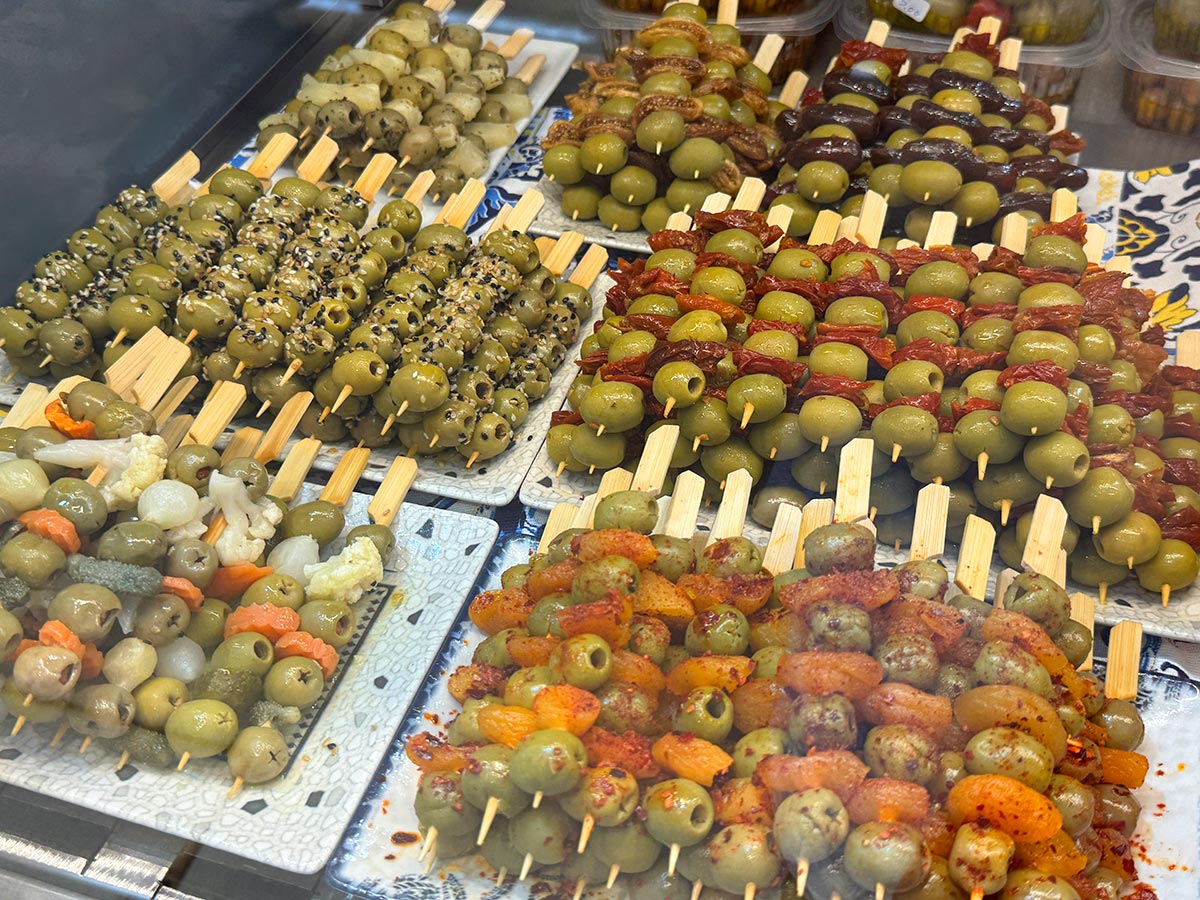
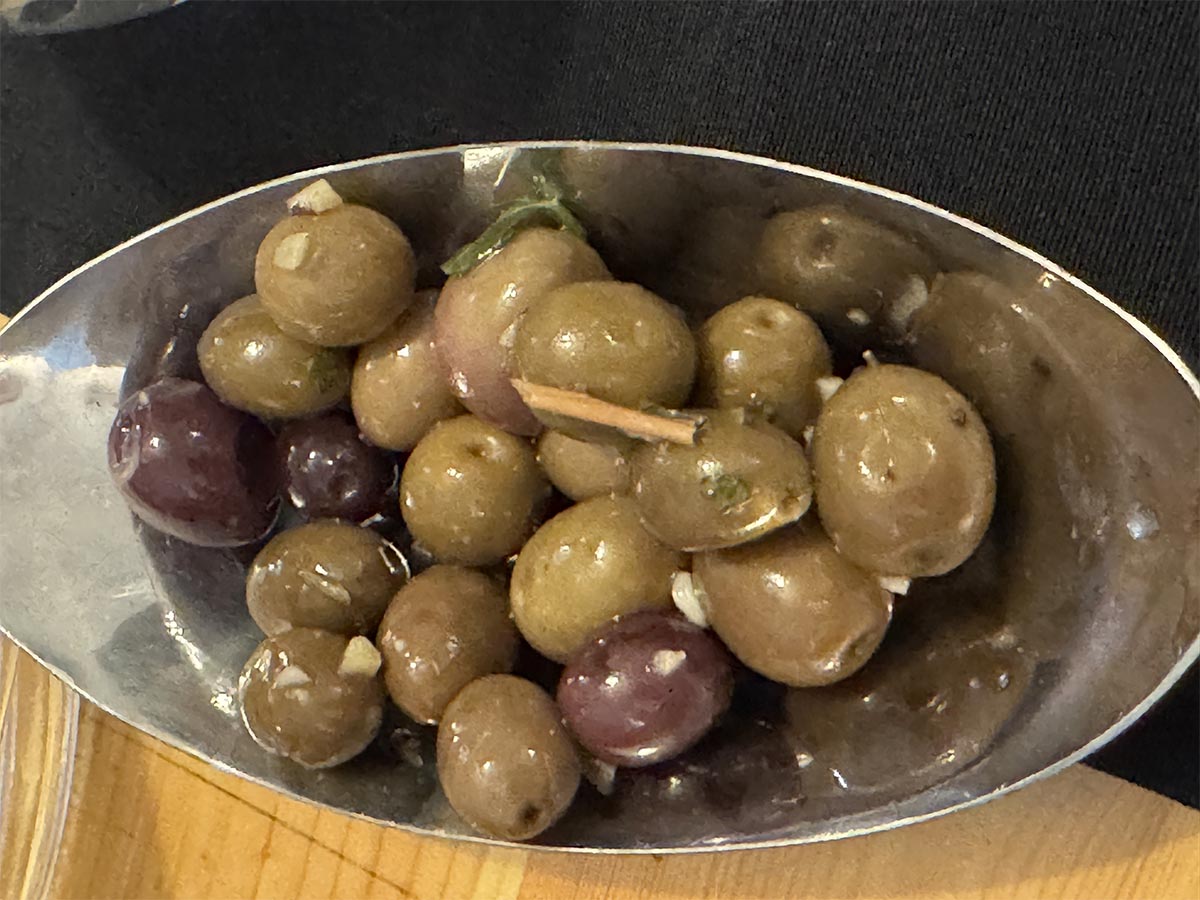
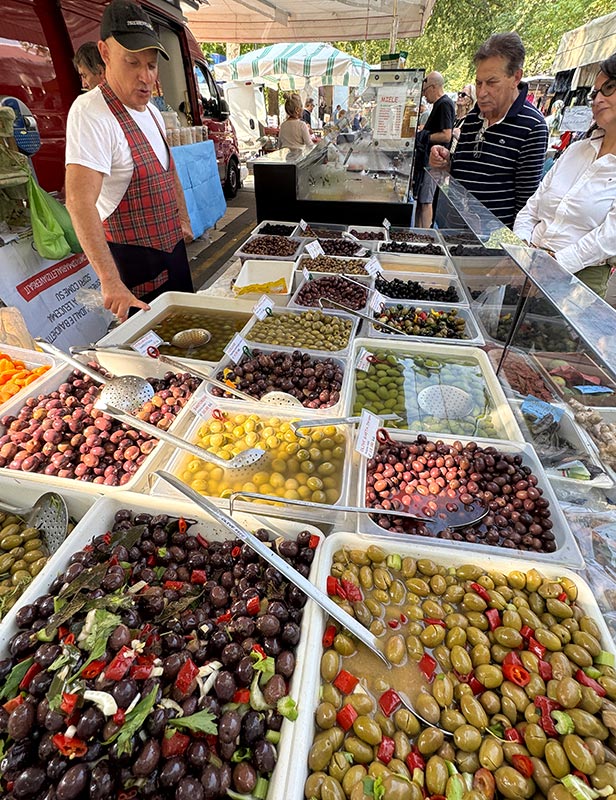
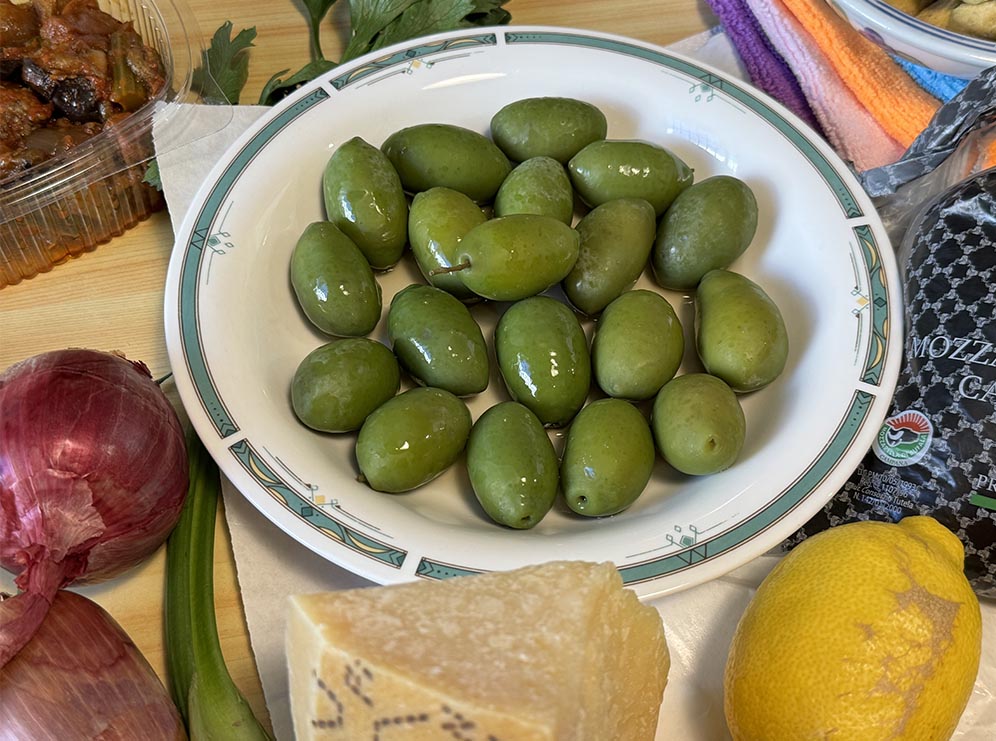
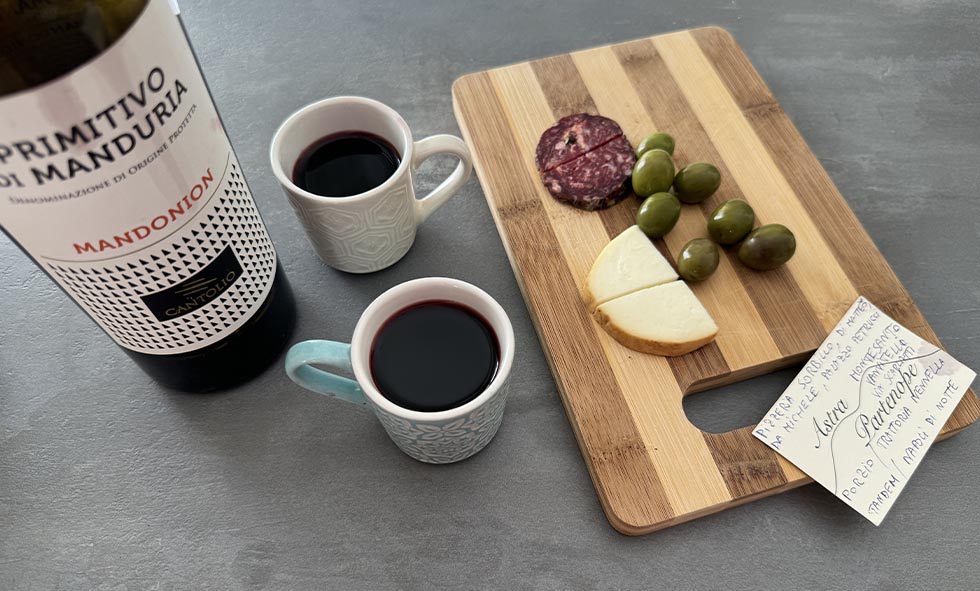
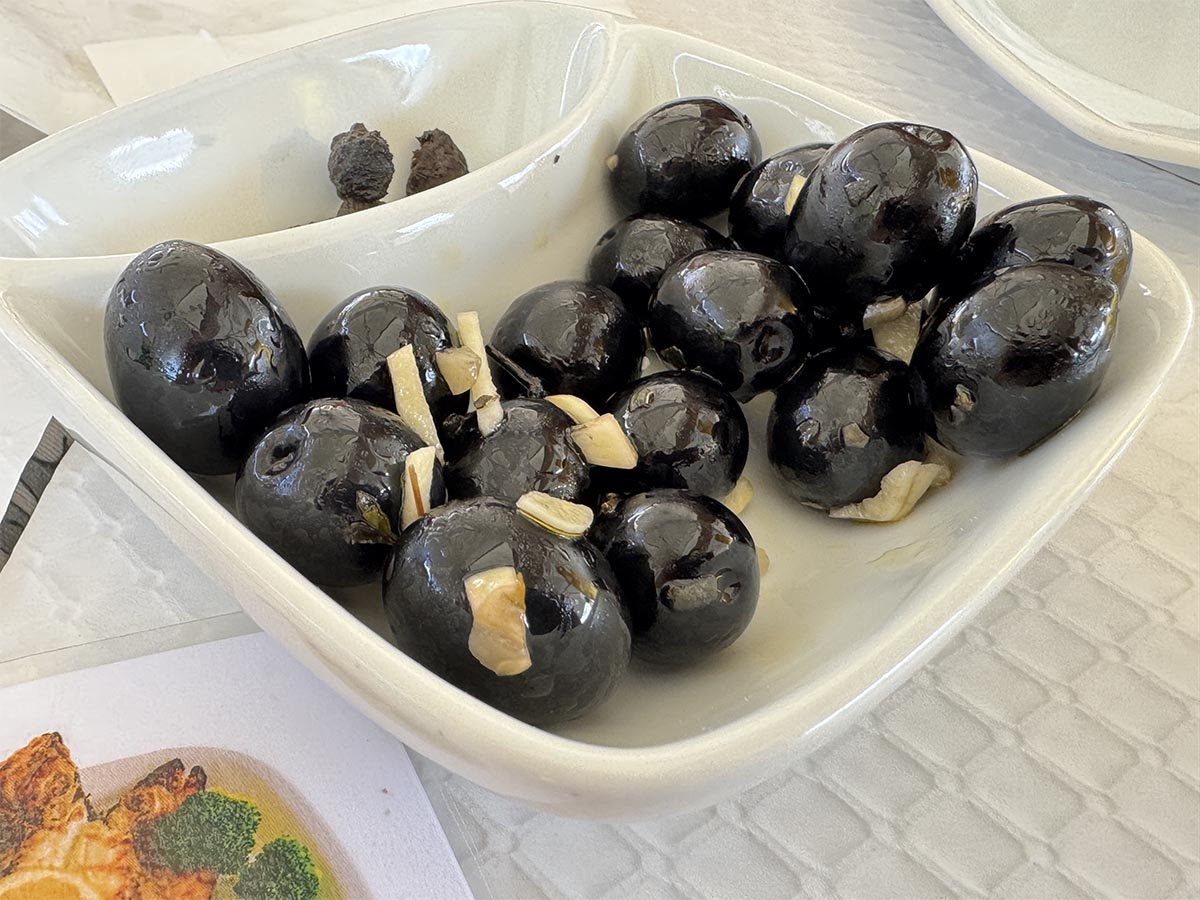
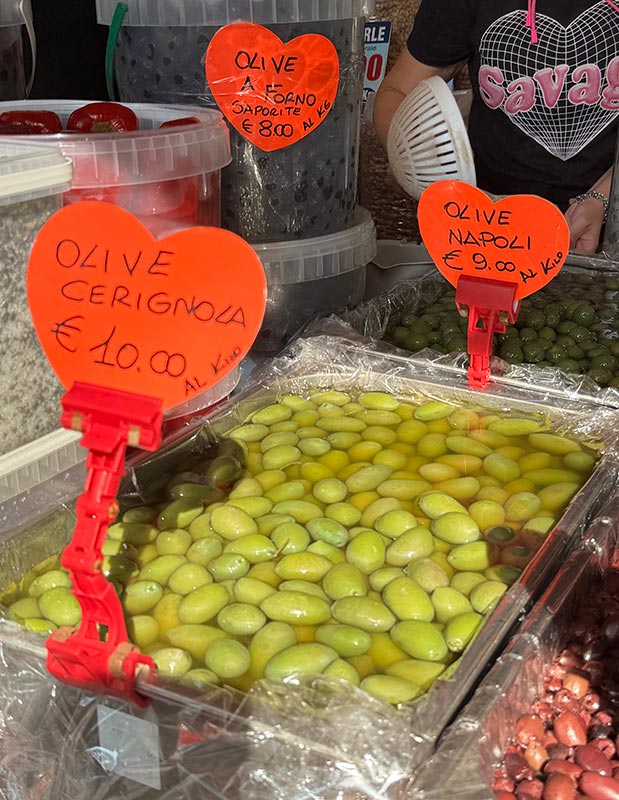
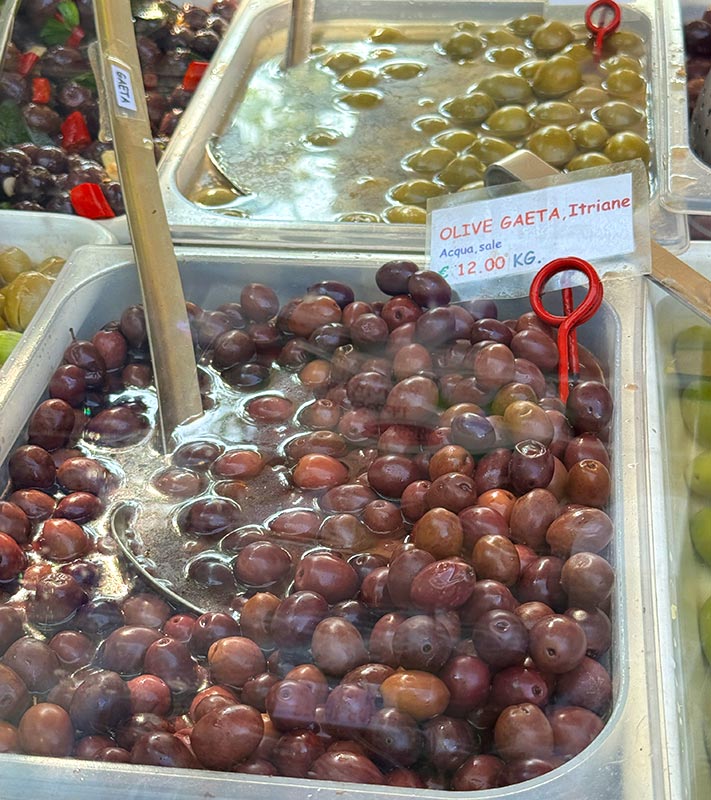
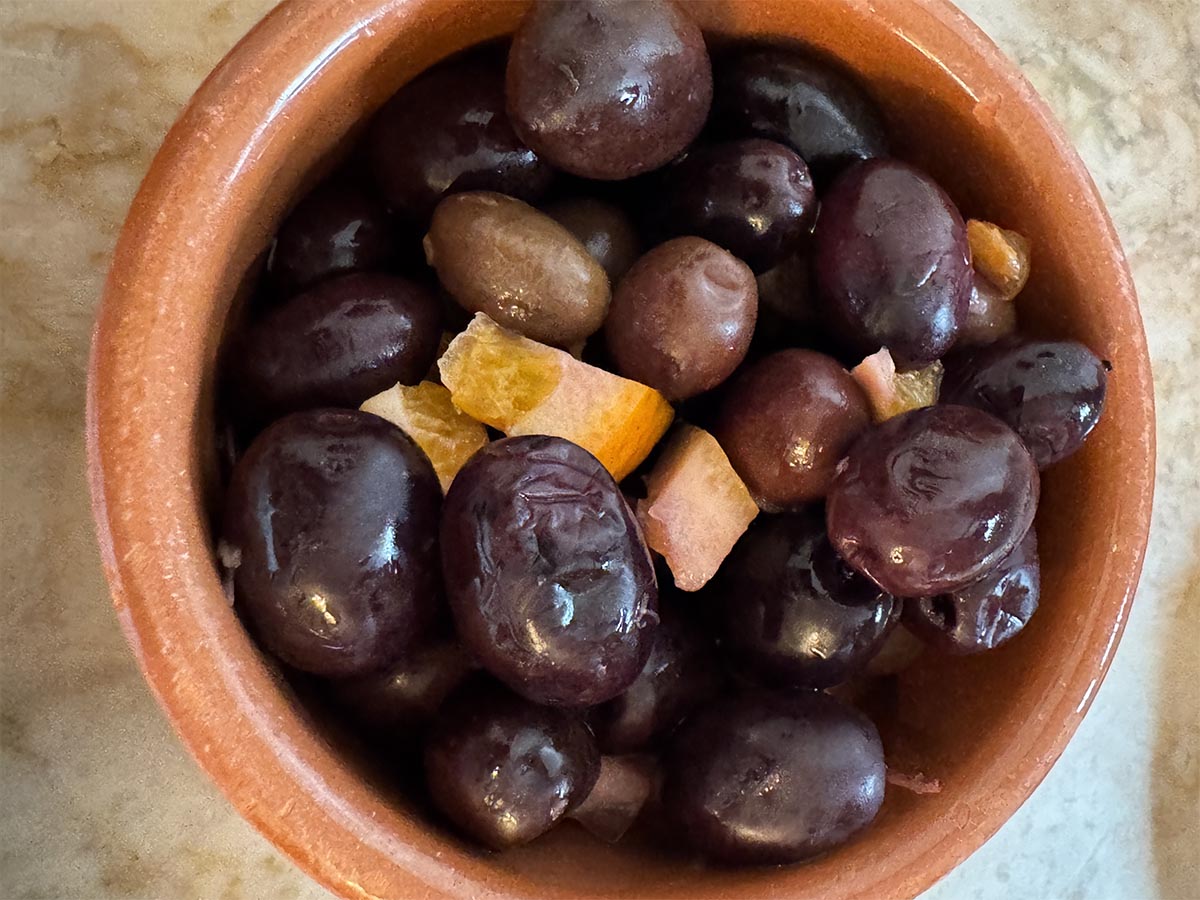
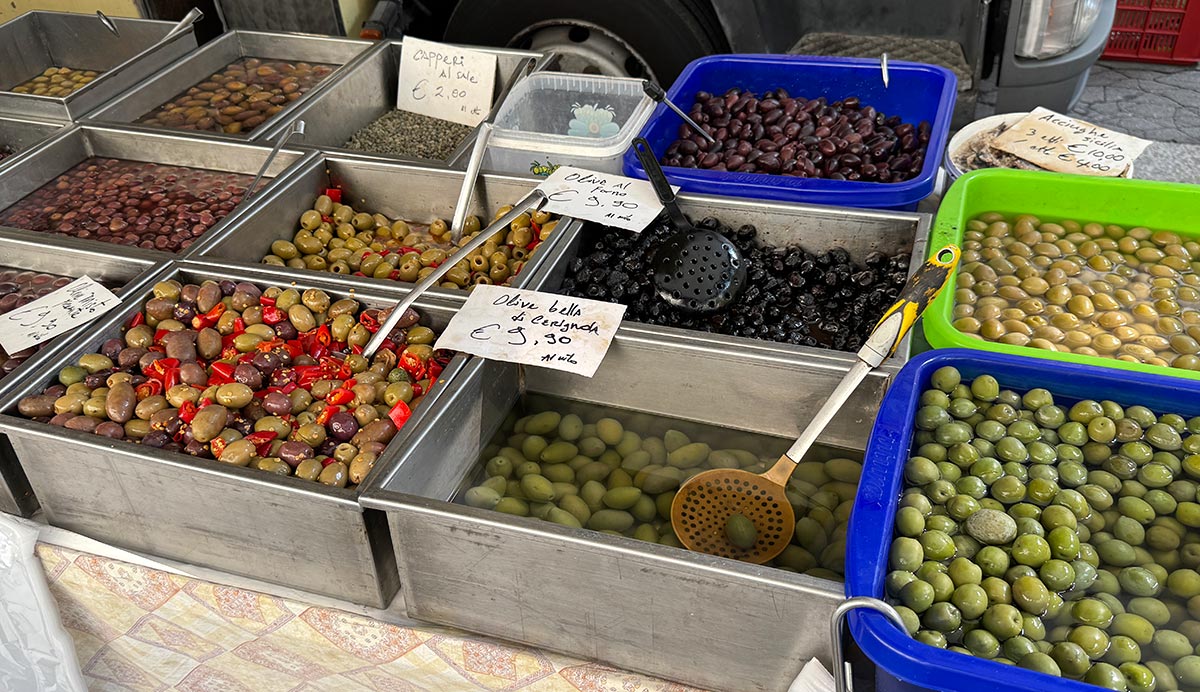
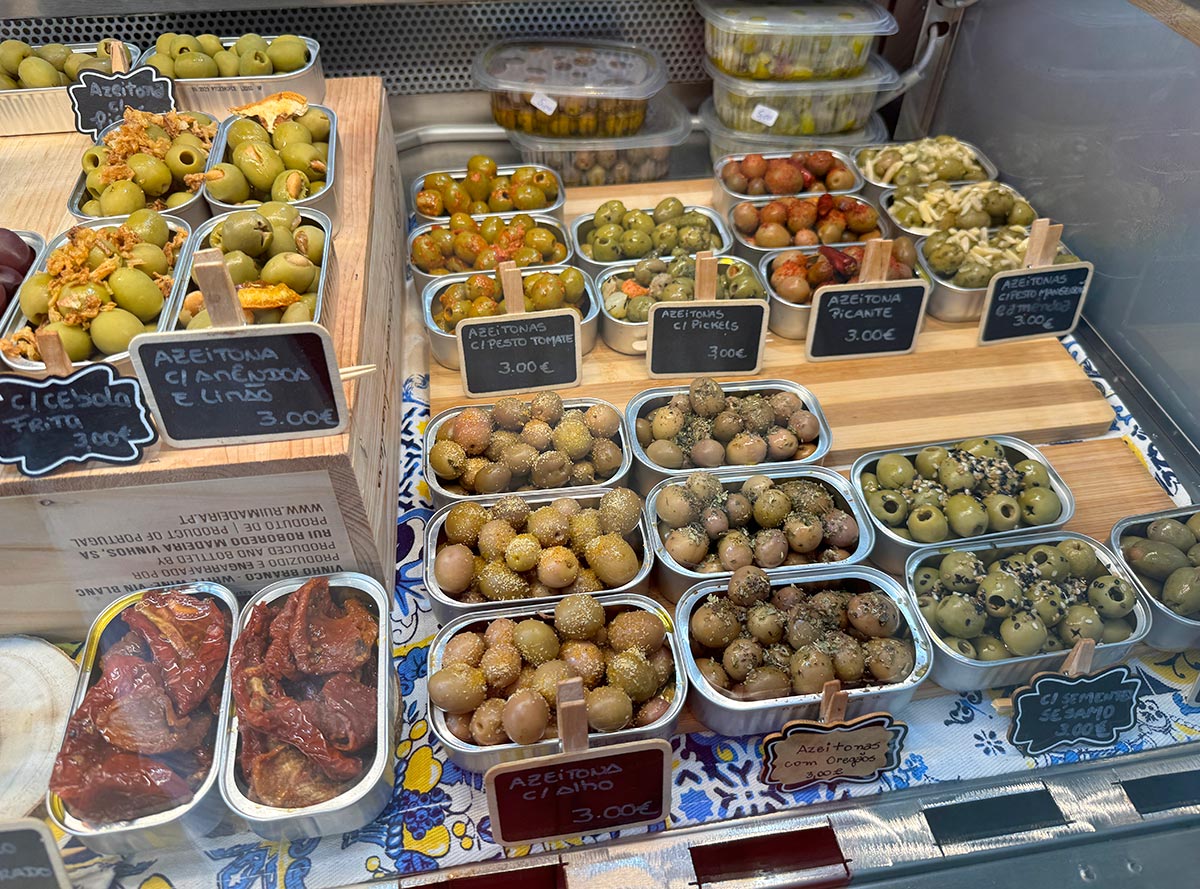
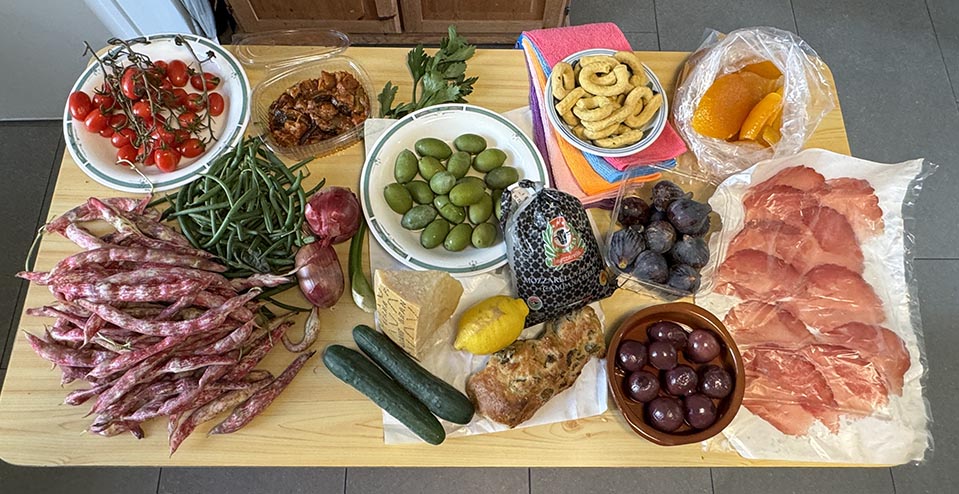
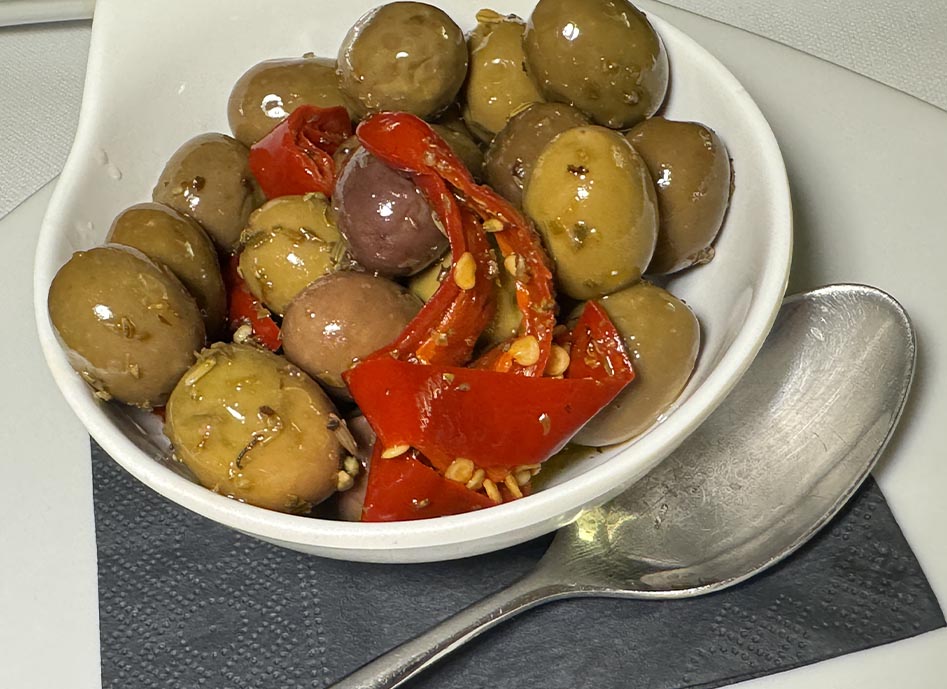
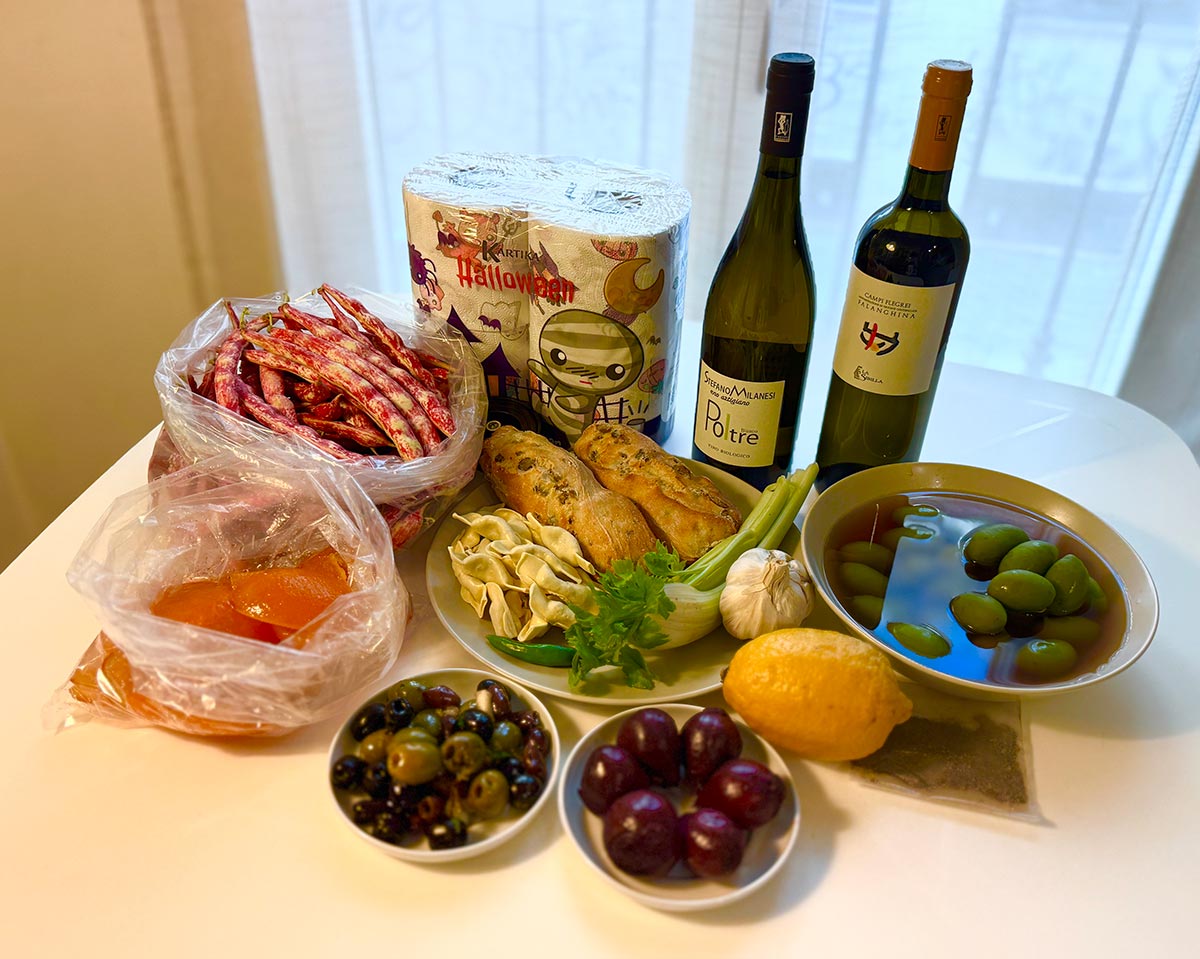
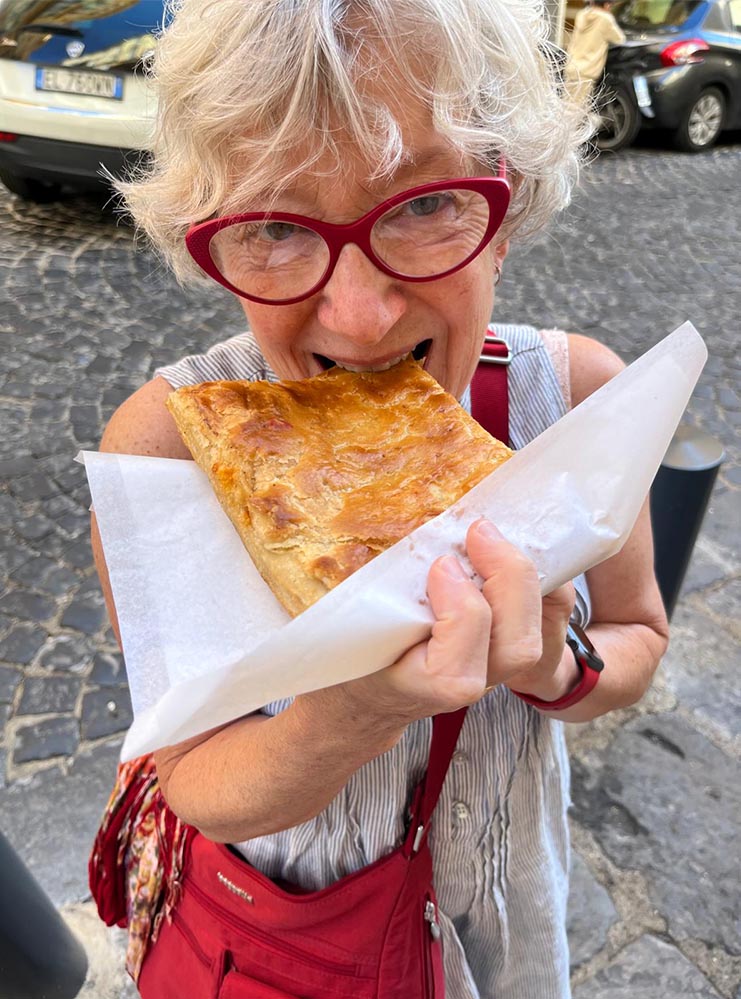
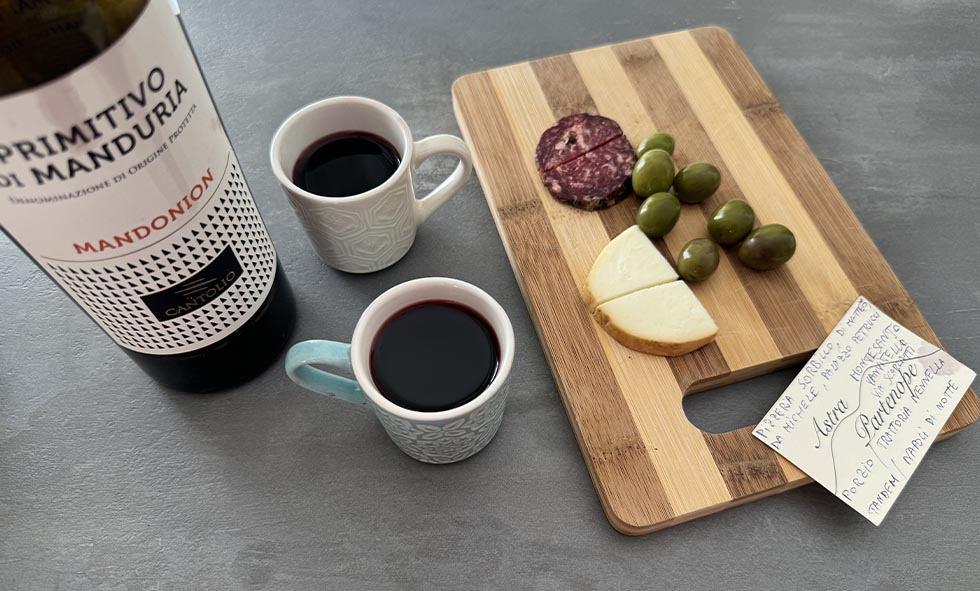
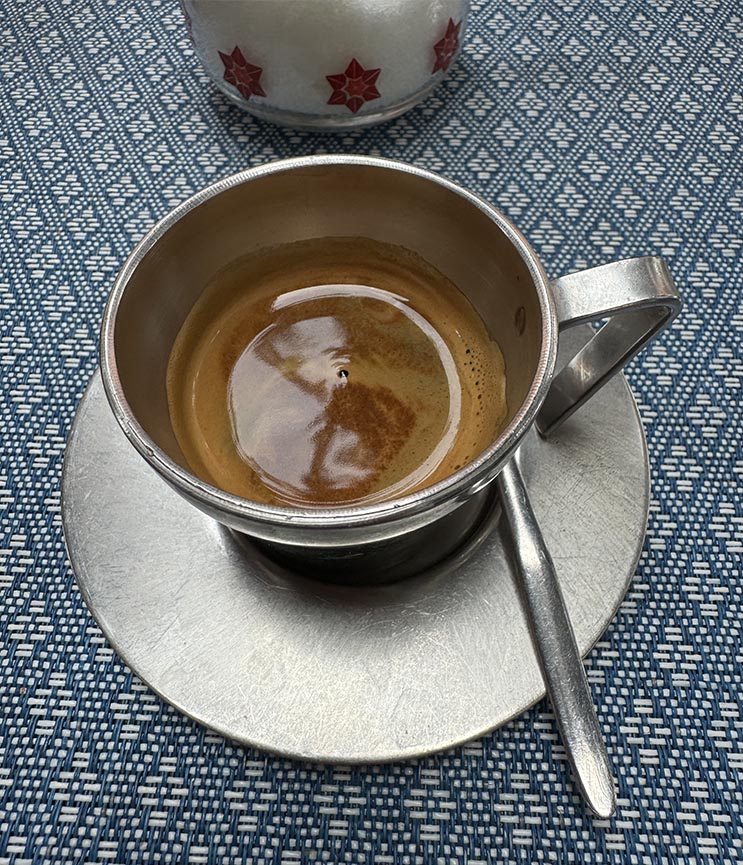
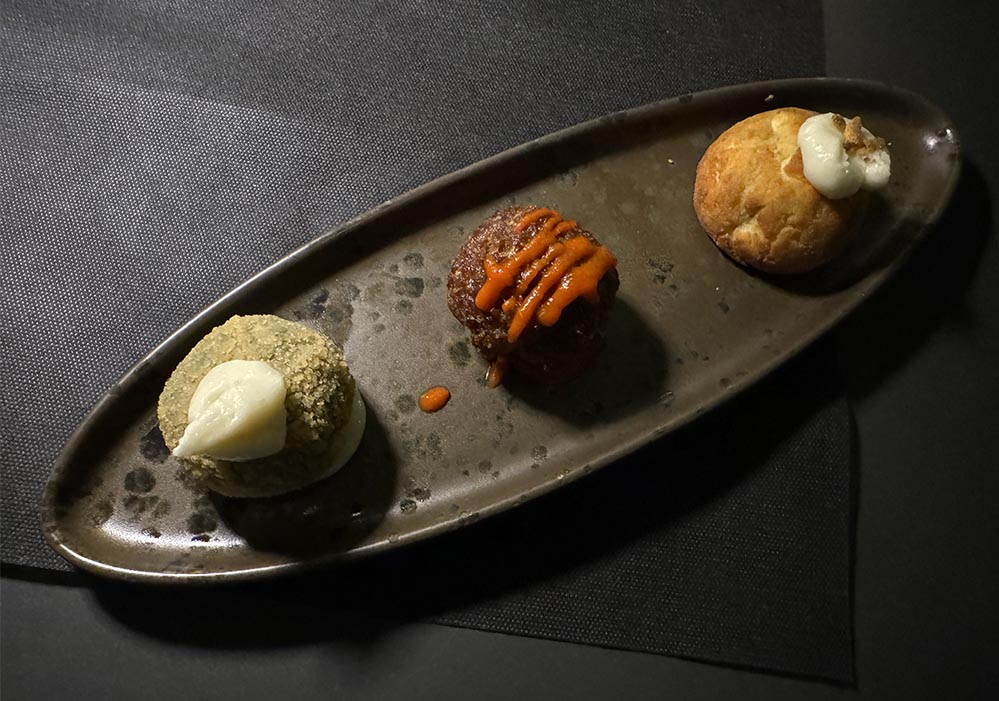
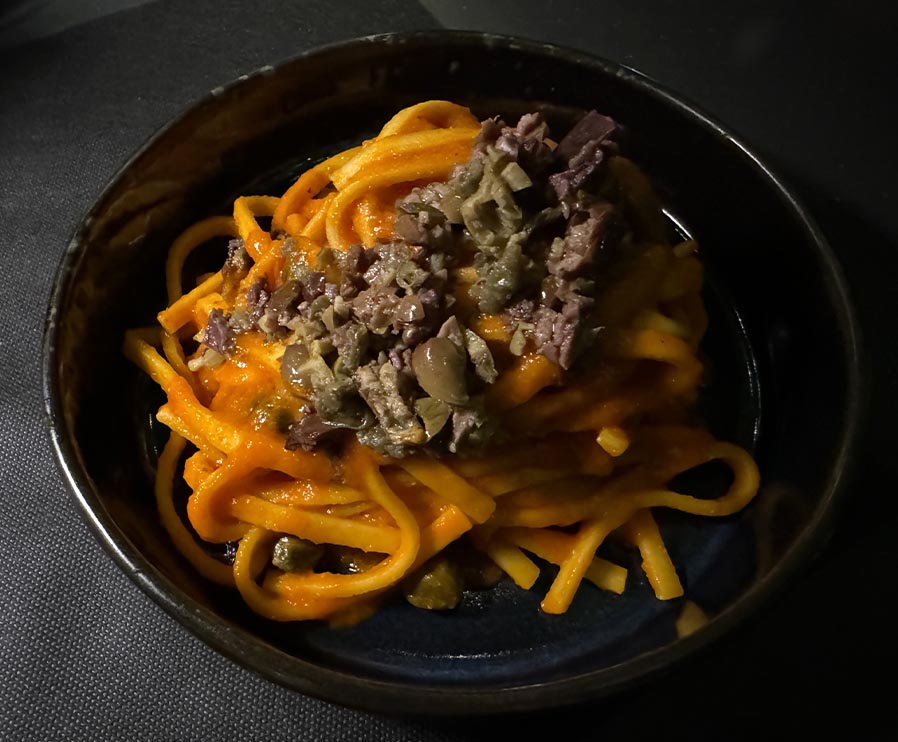
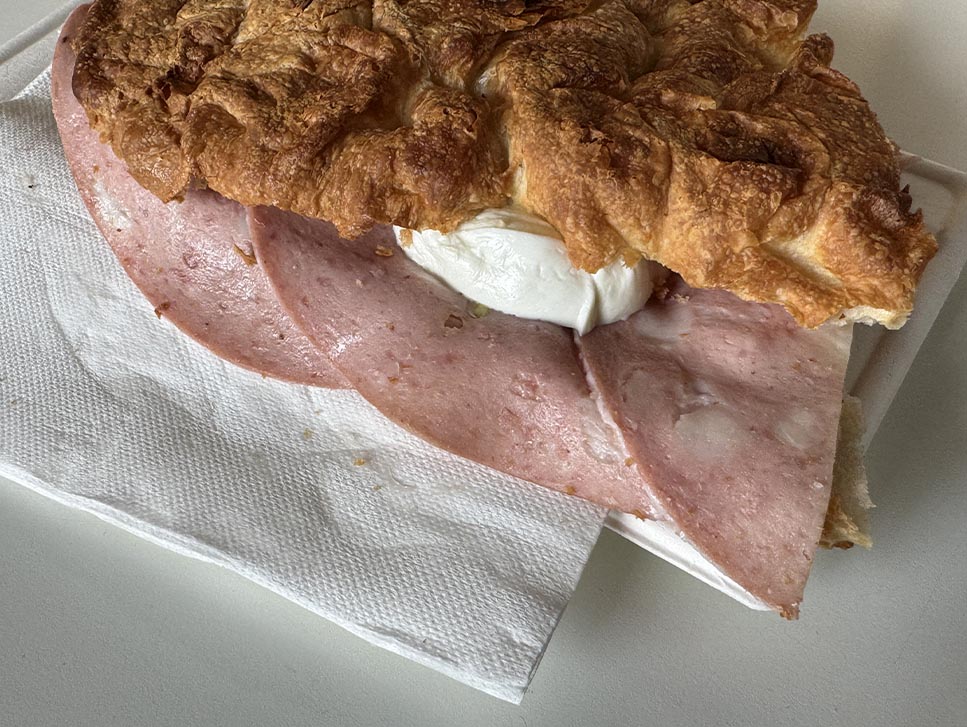
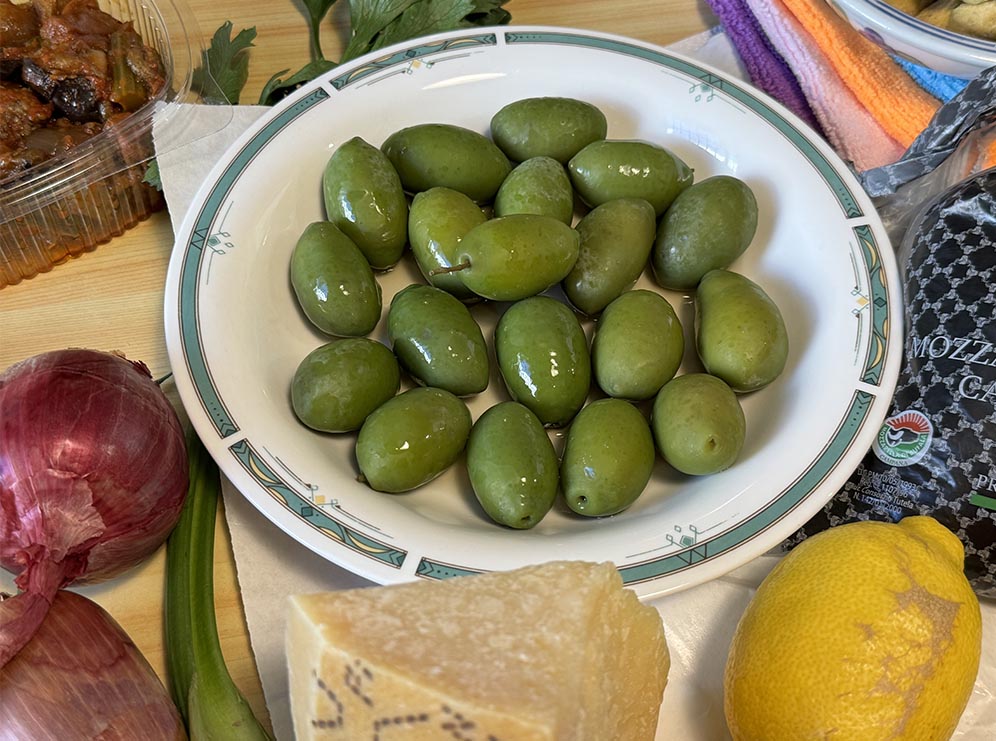
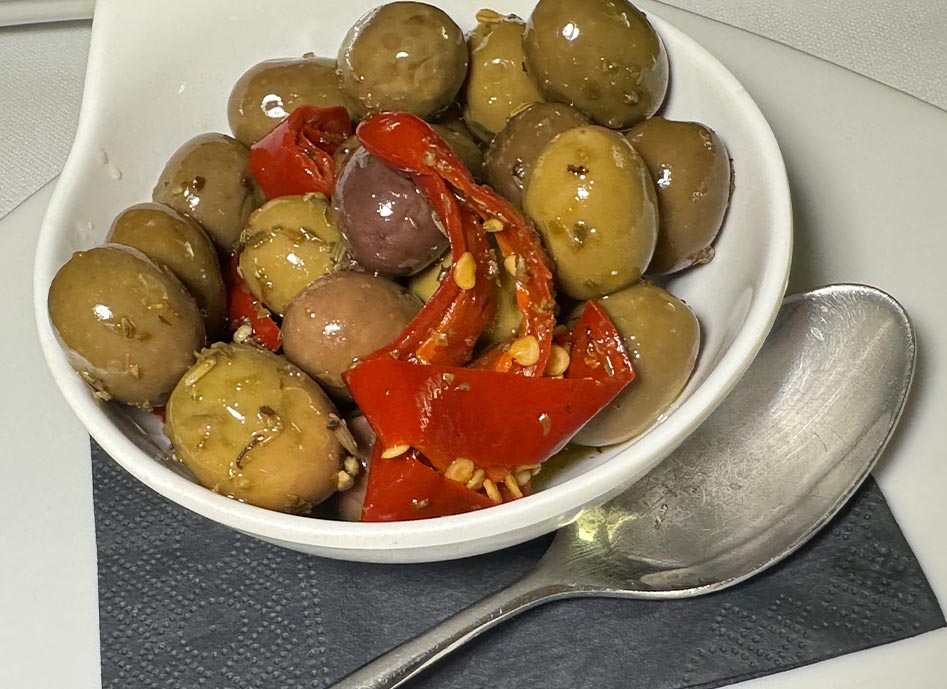
Now, all these years later, I swoon at the array of green, black and seasoned olives that I discover in my travels. I eat them all. I devour them large and small. I flirt with the olive sellers and sample each olive before buying a bagful to take home to my apartment across the world.

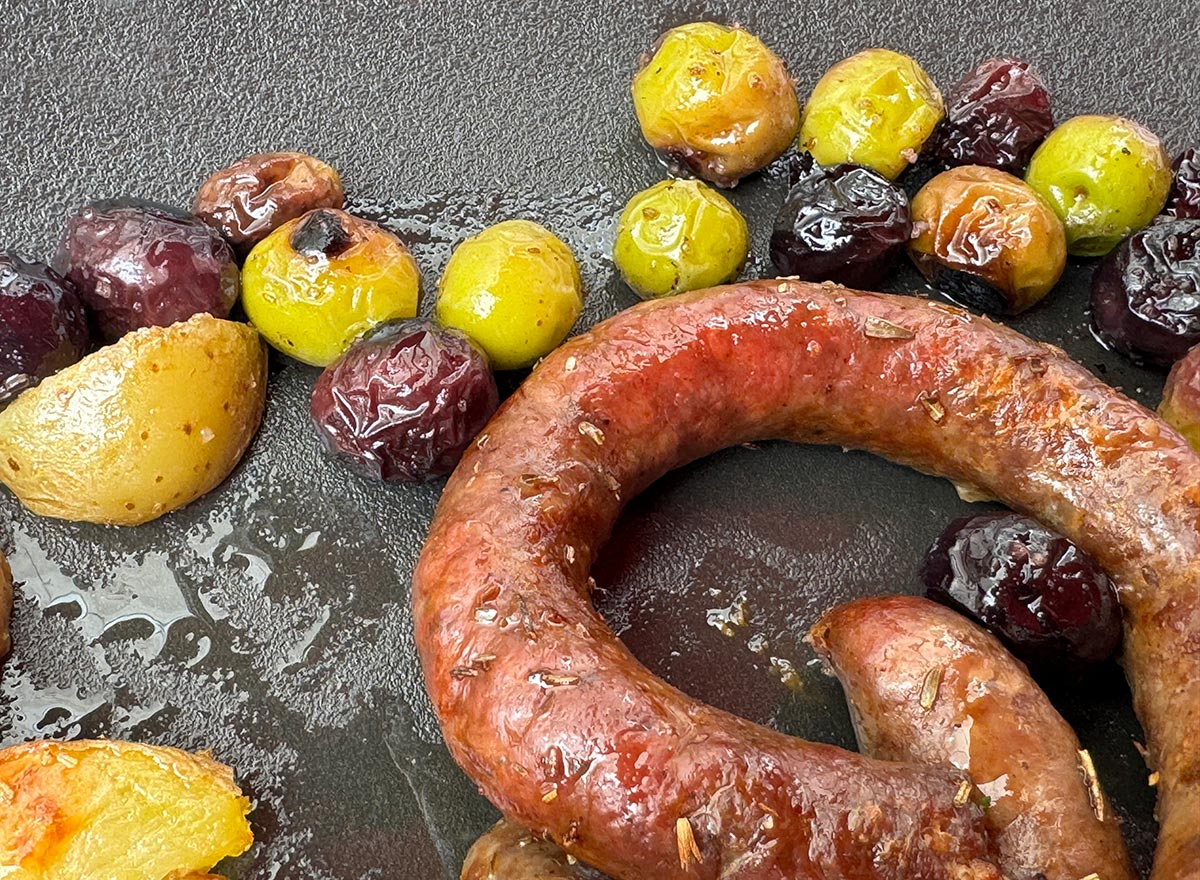
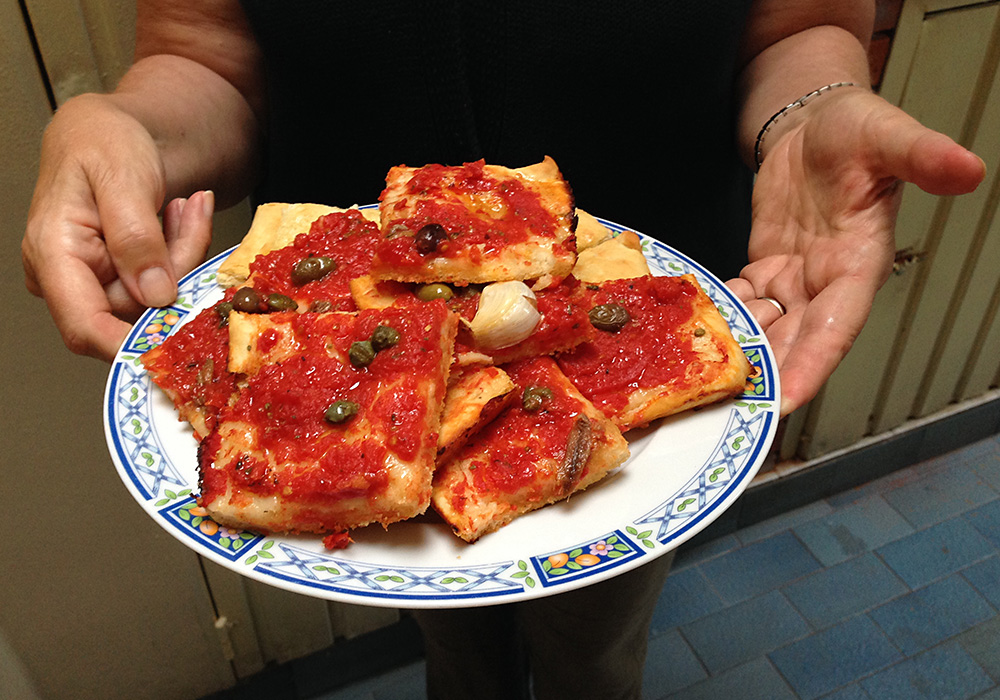
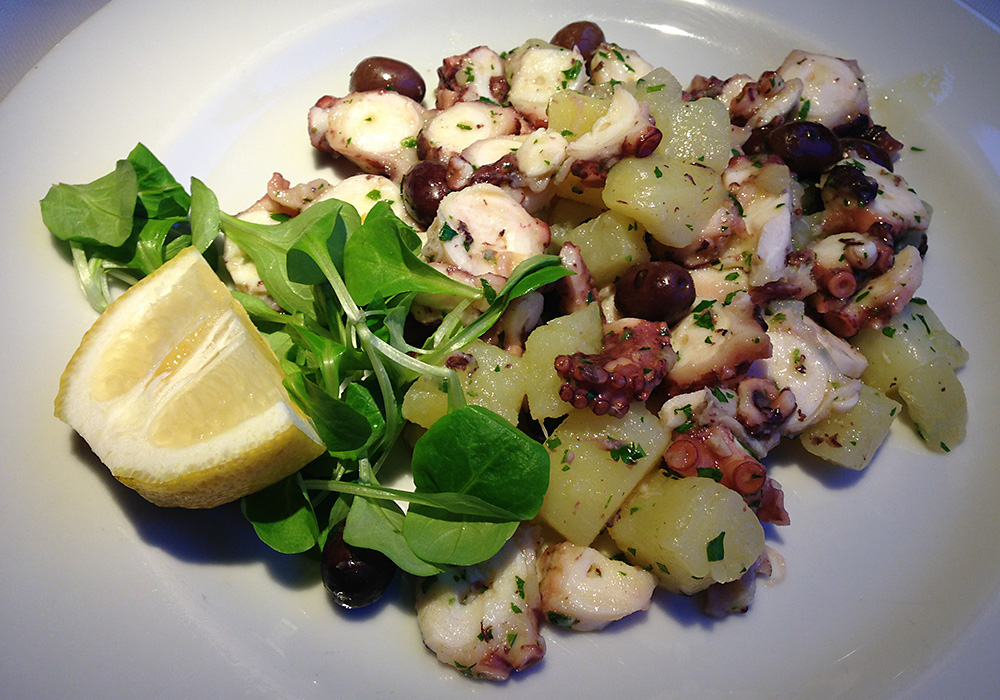
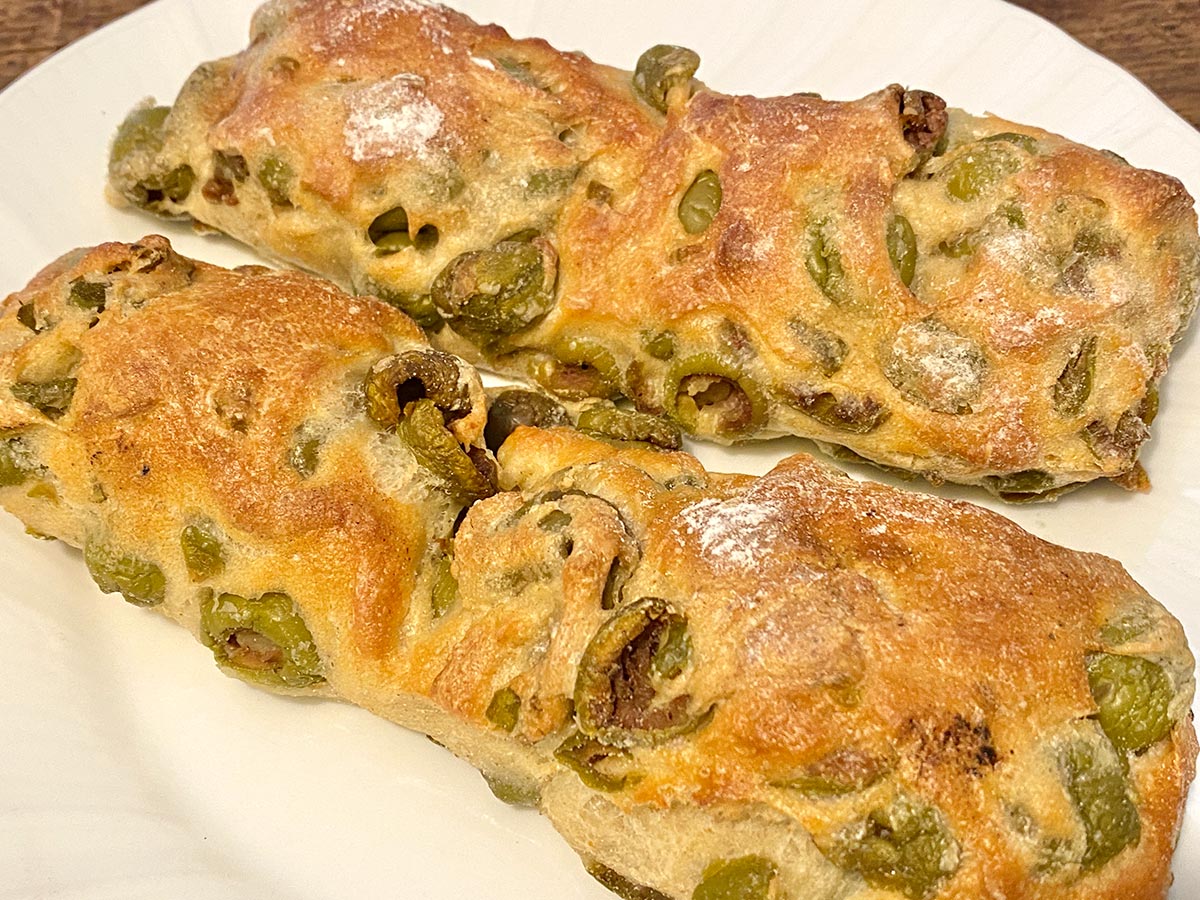
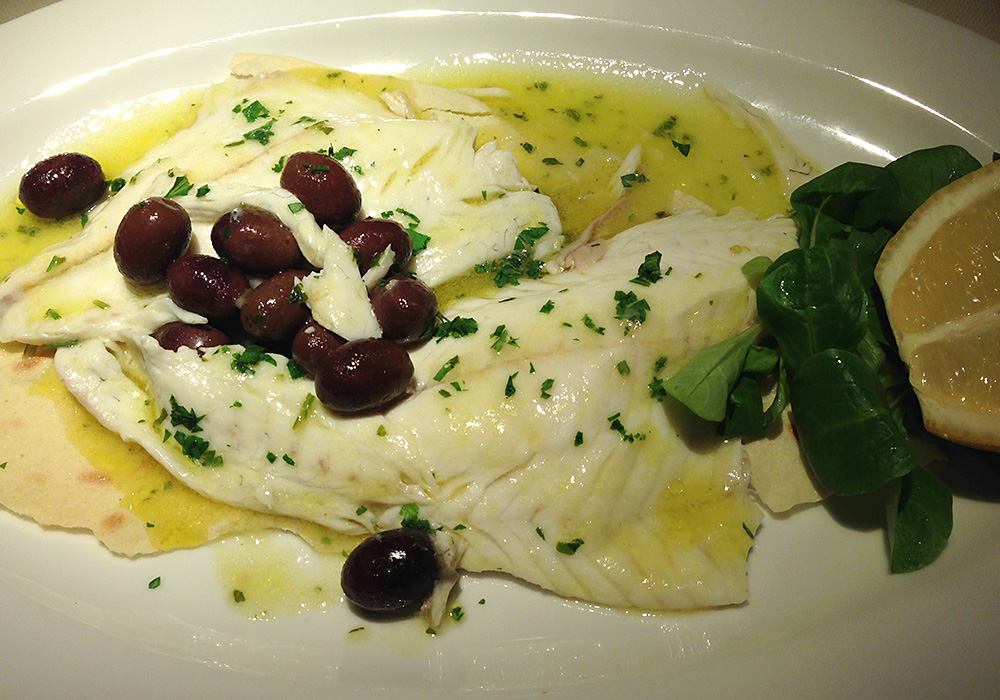
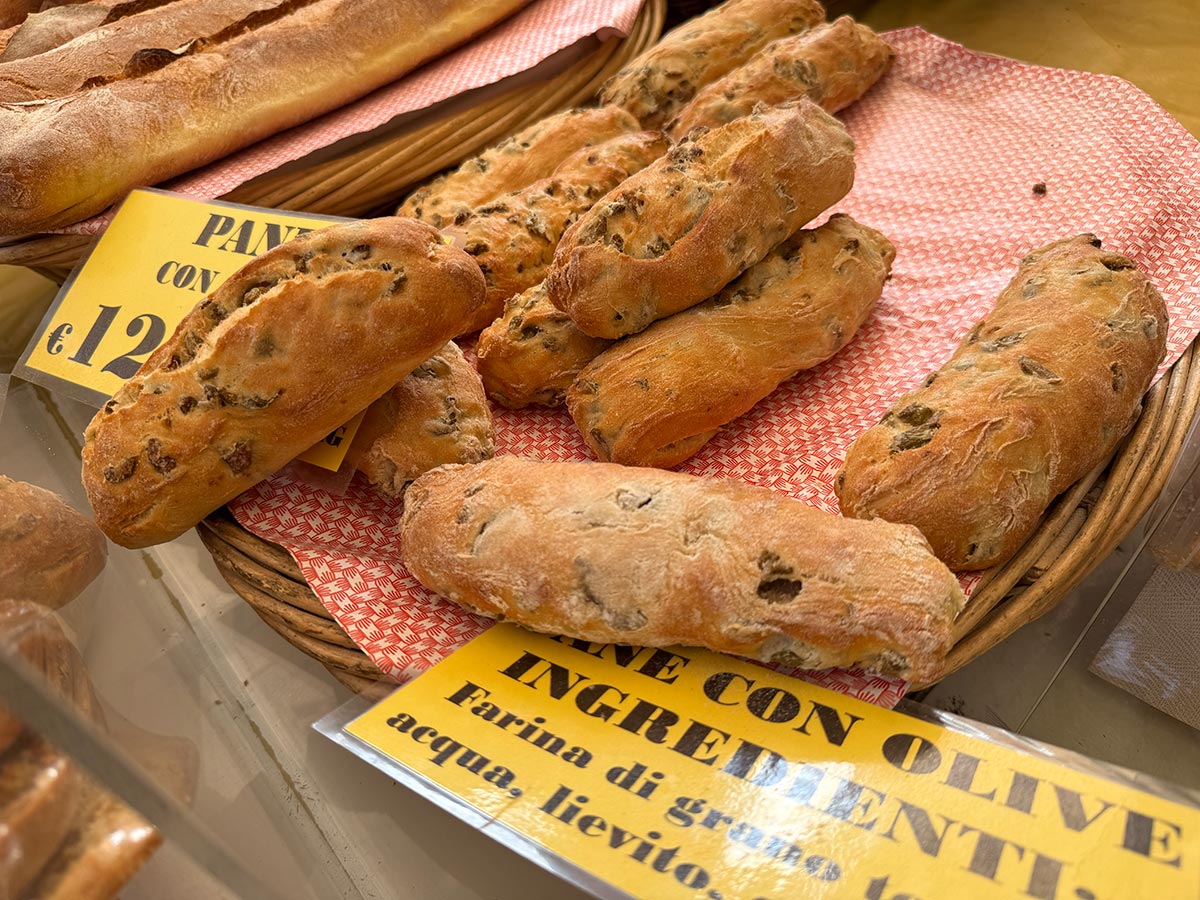
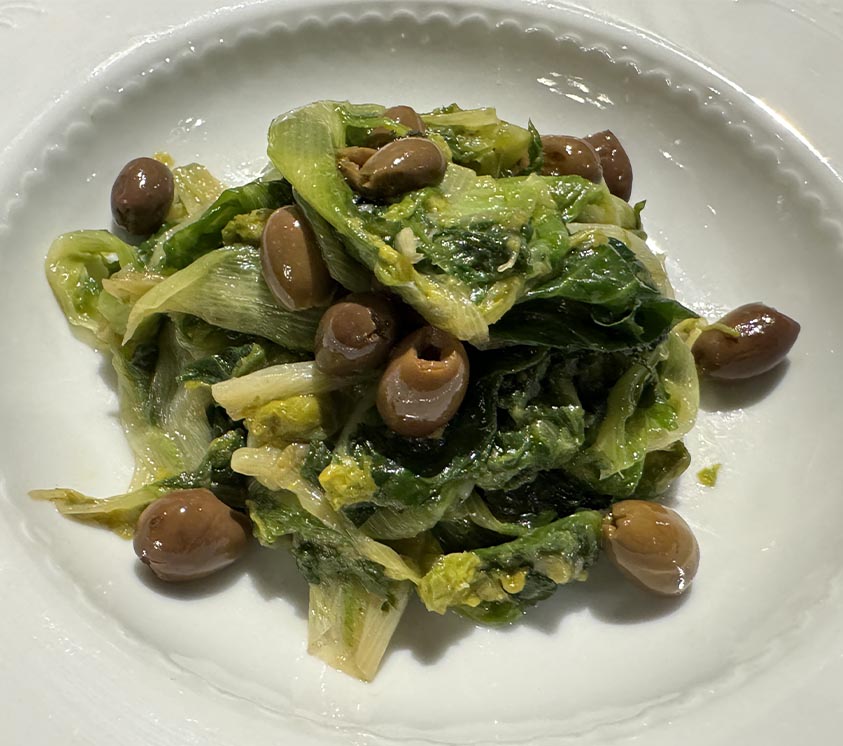
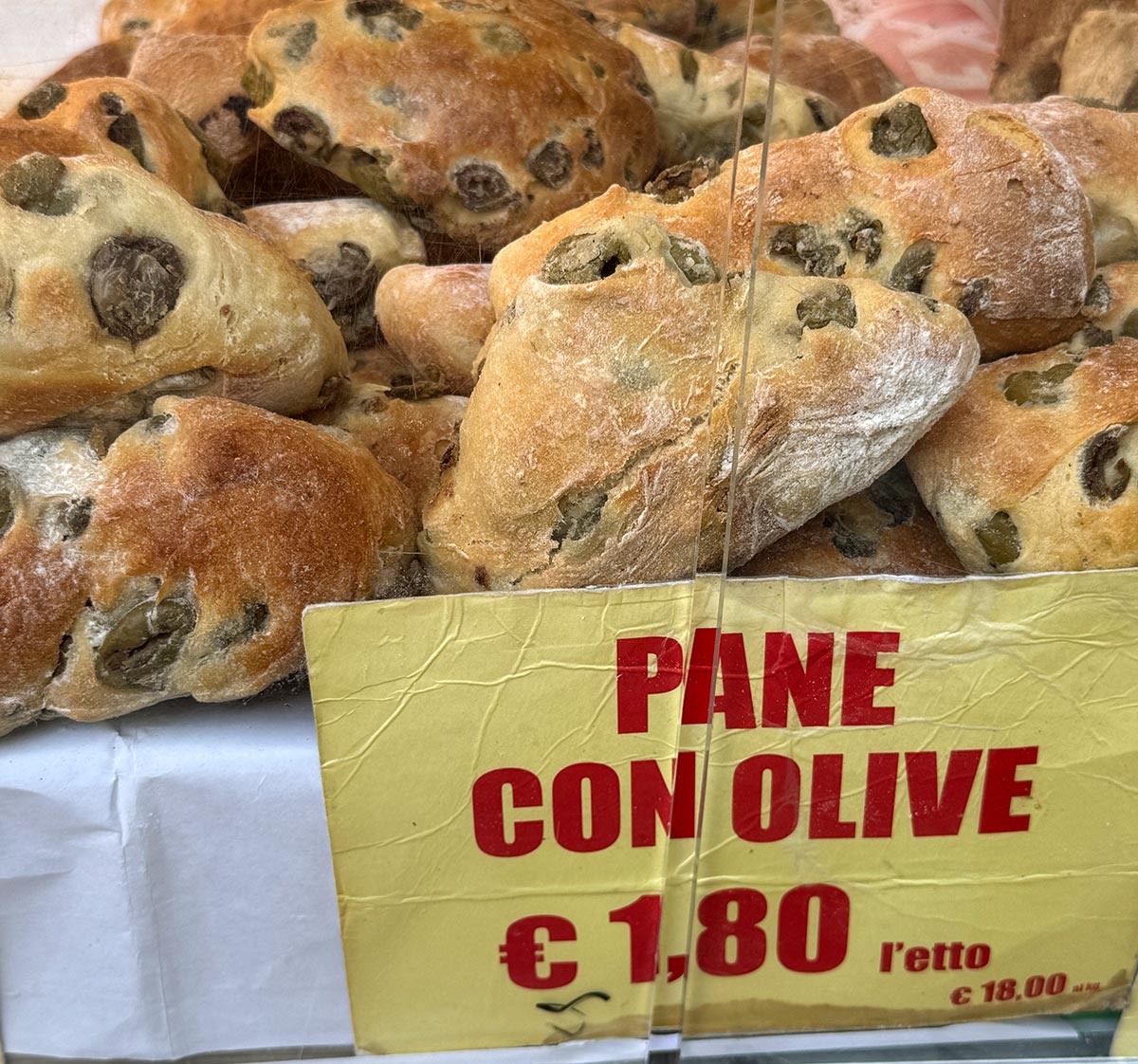
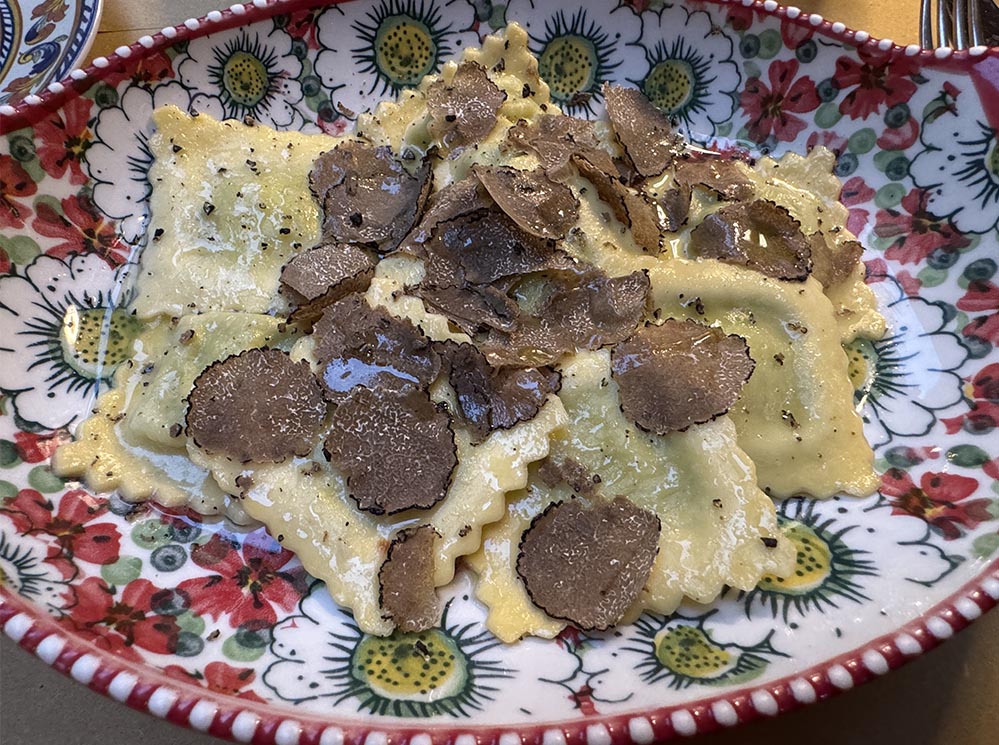
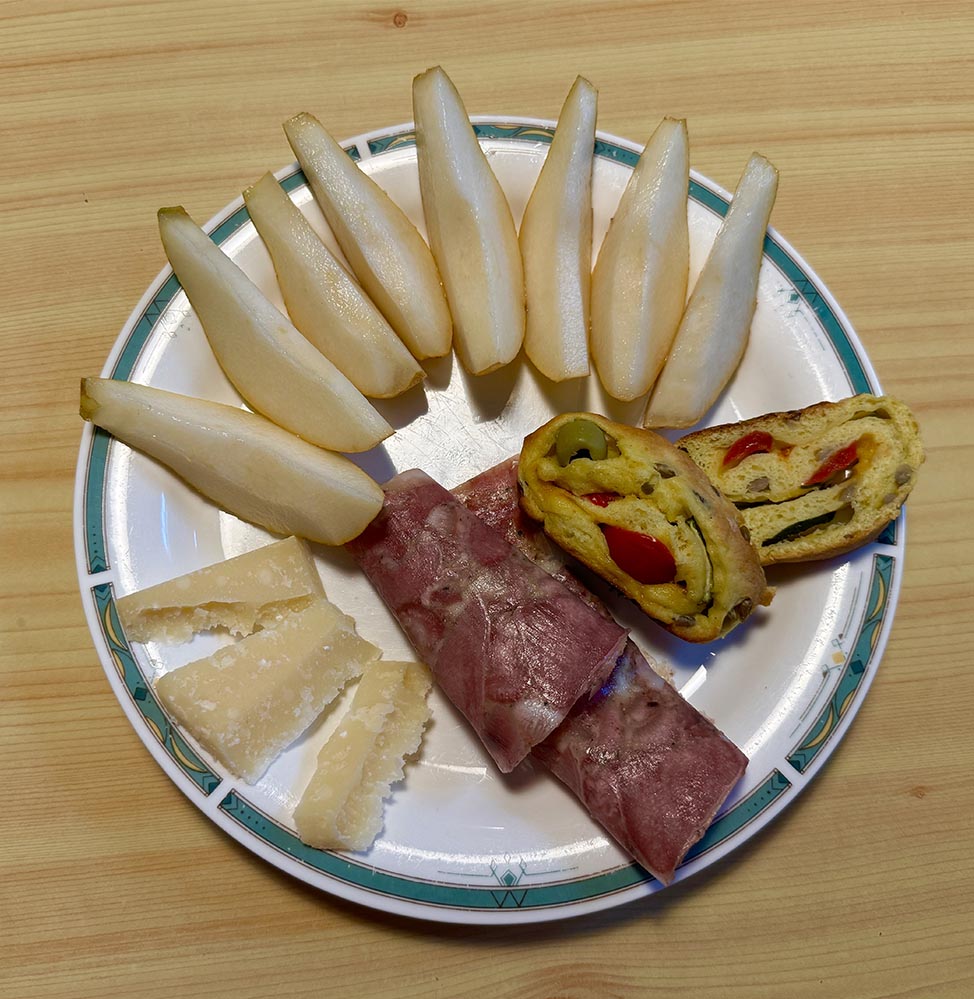
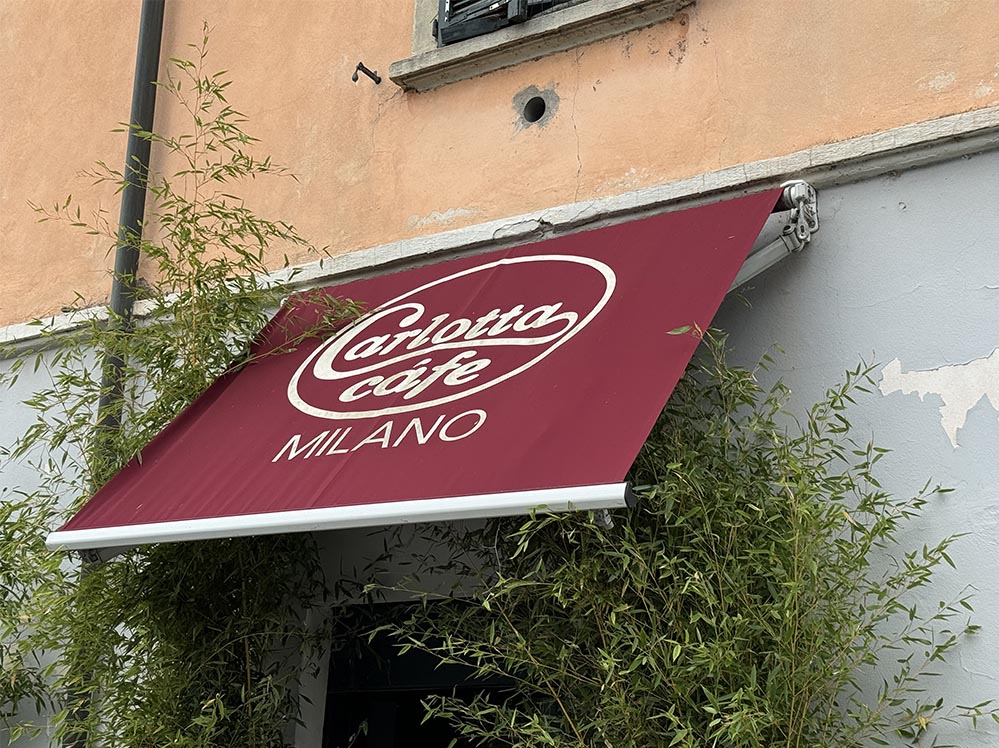
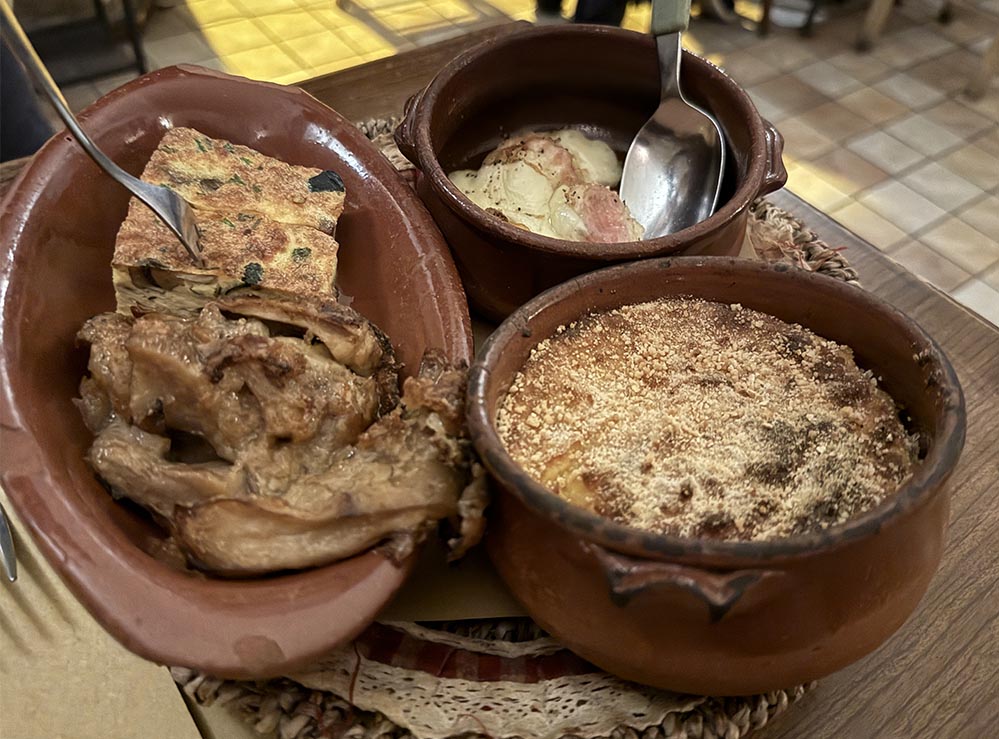
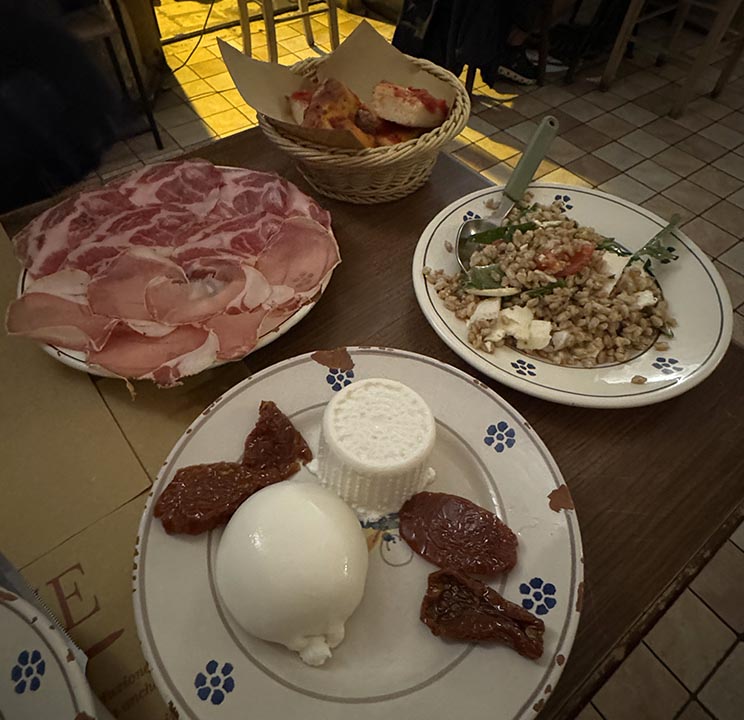
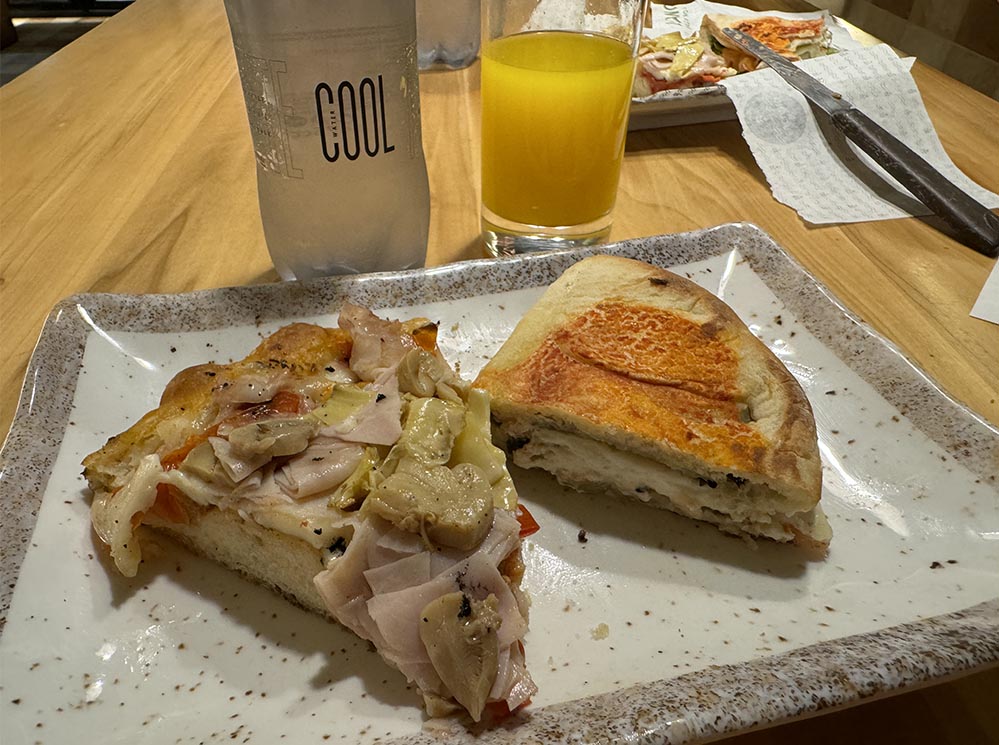
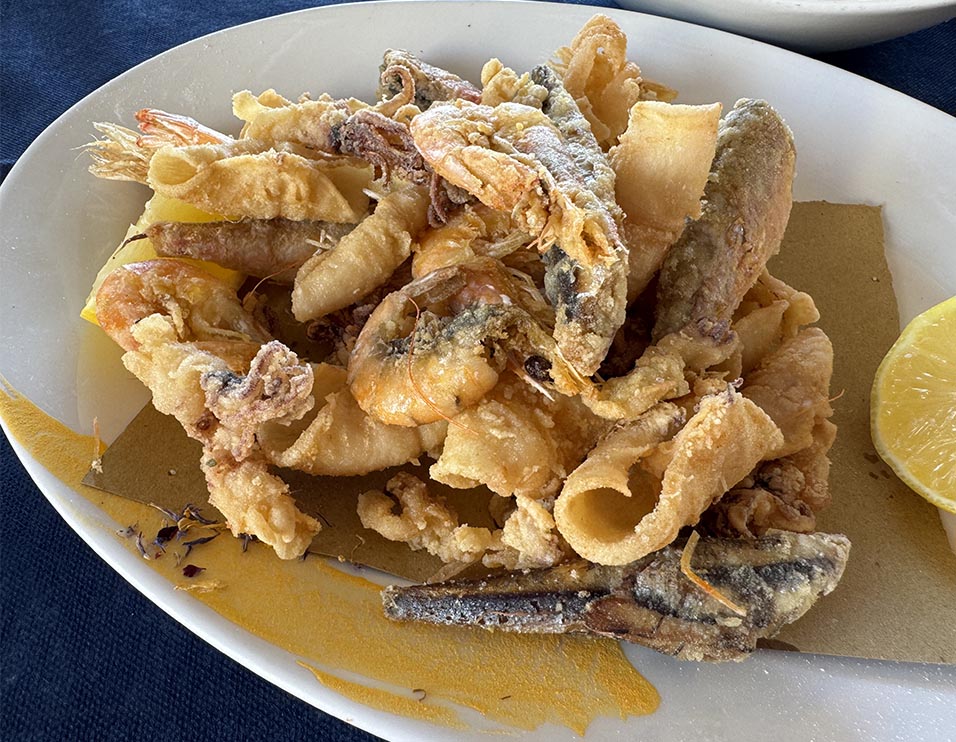
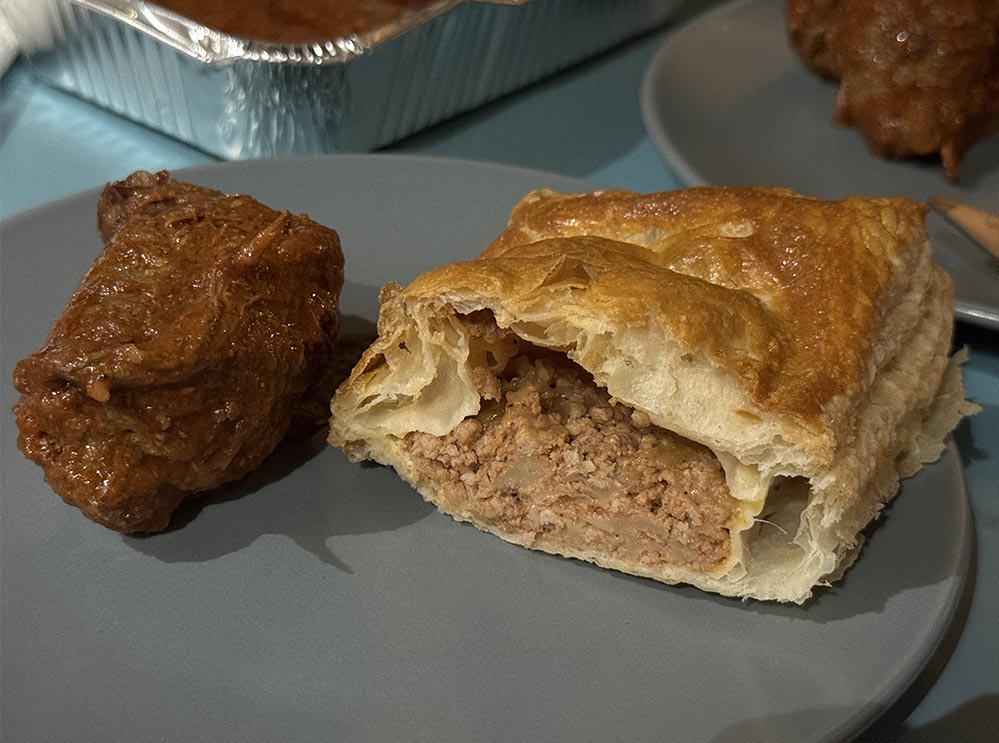
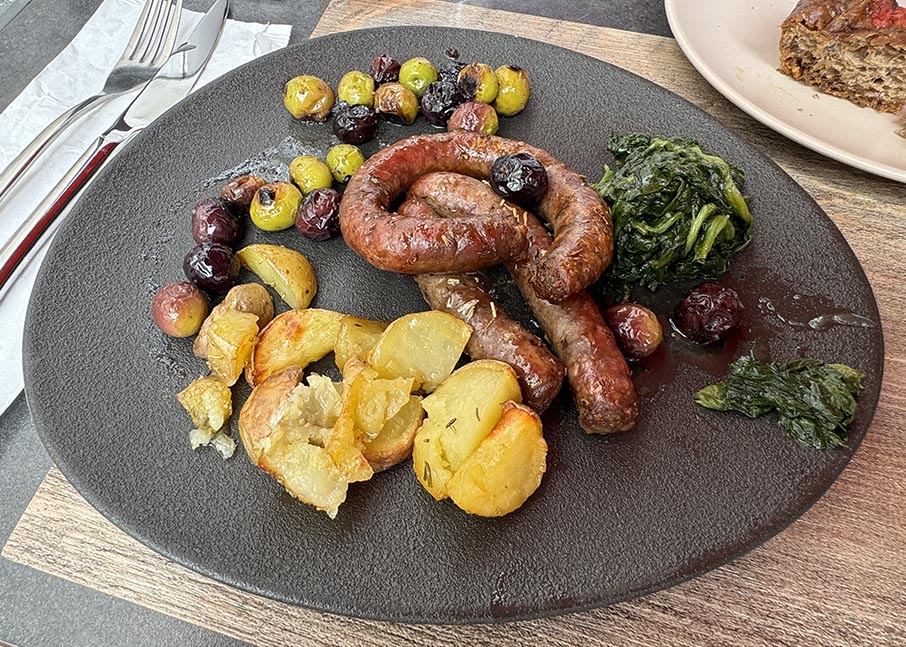
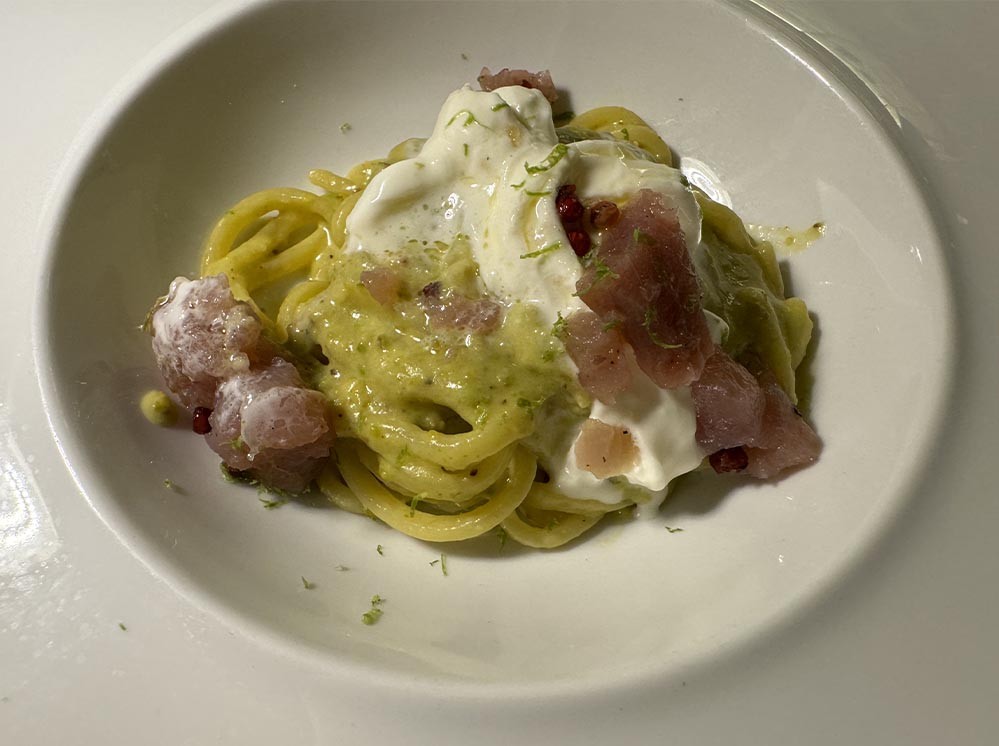
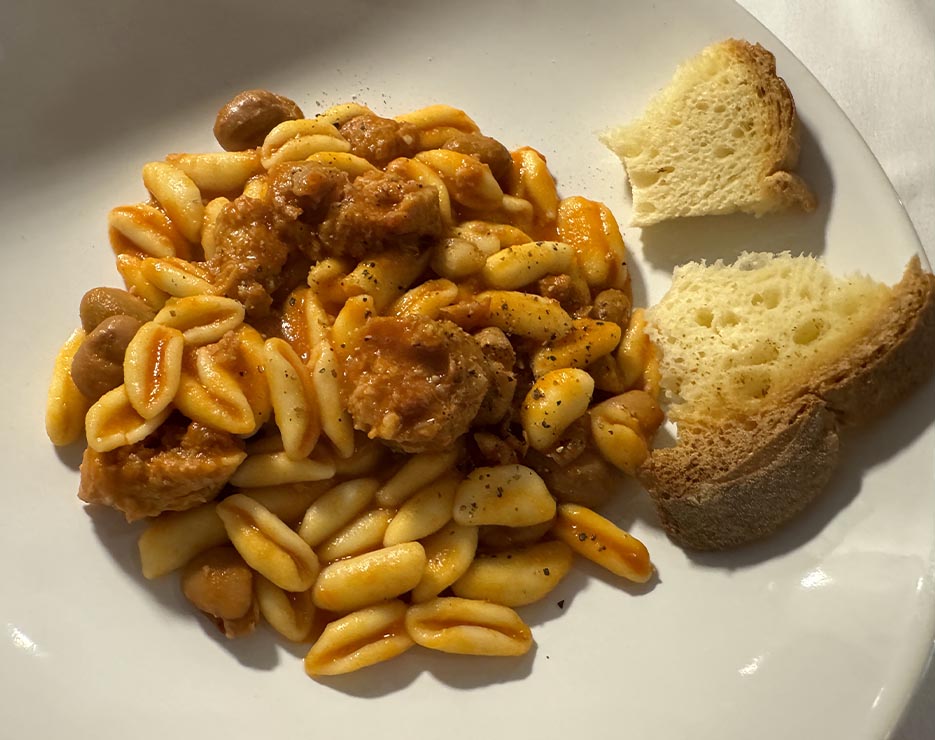
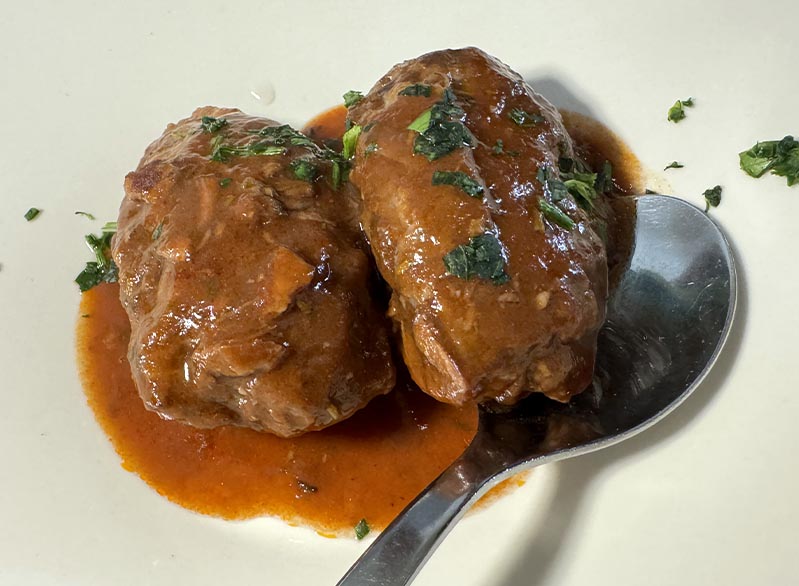
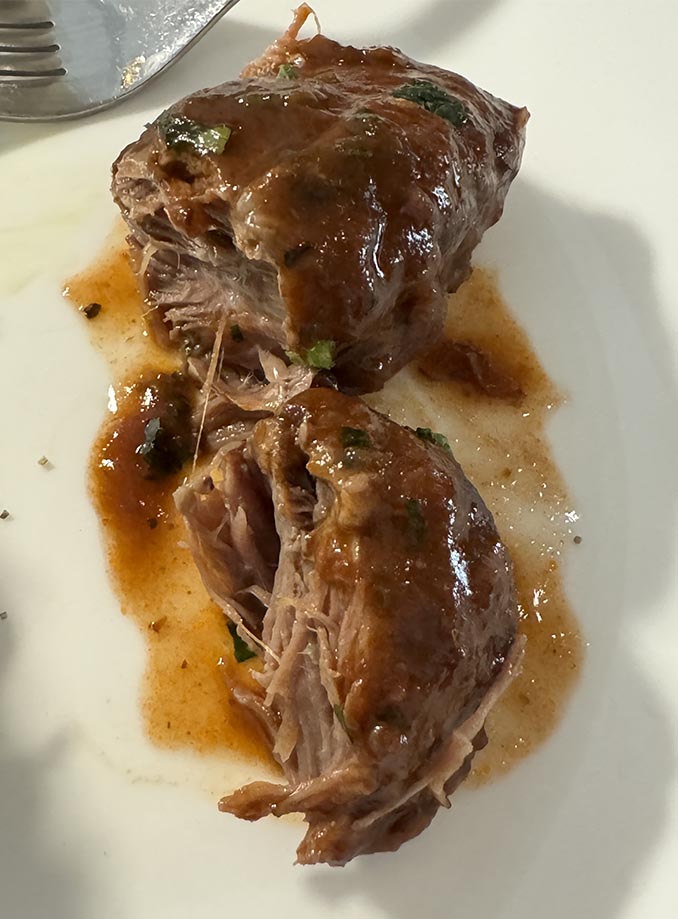
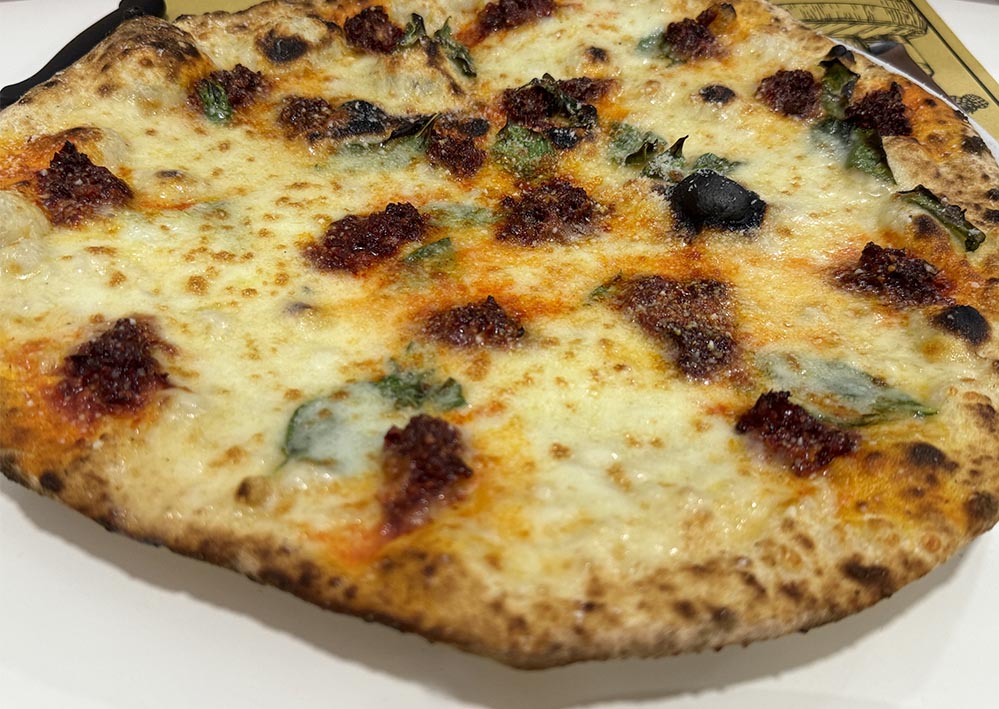
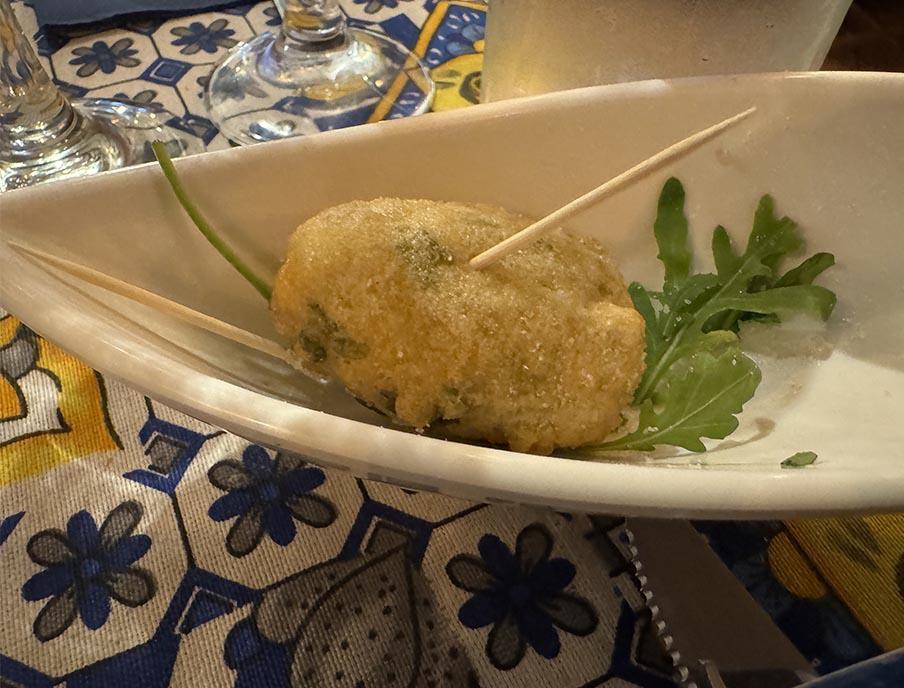
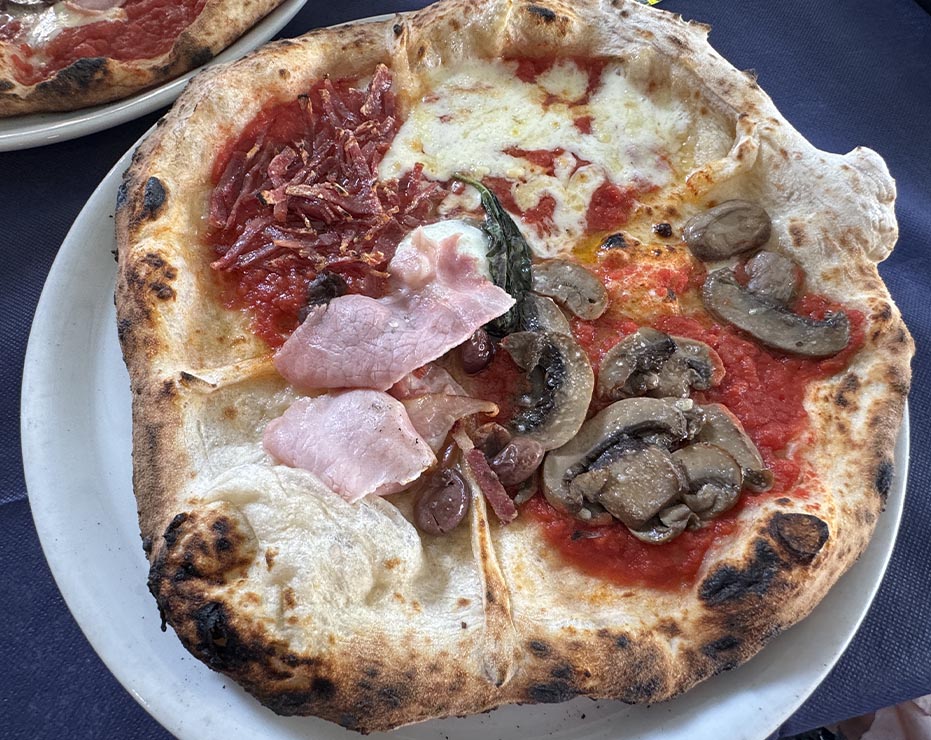
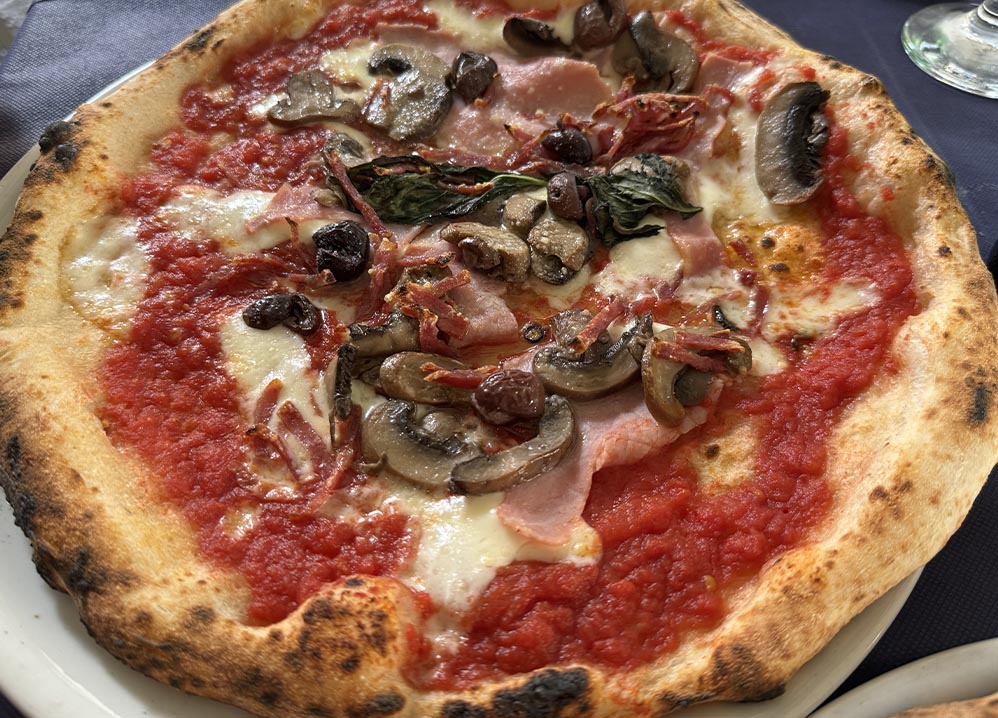
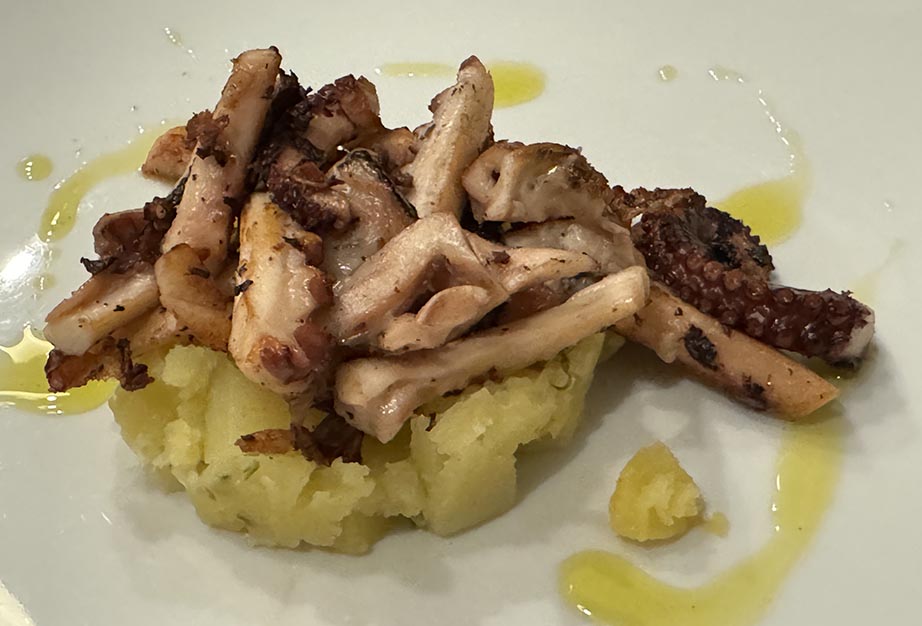
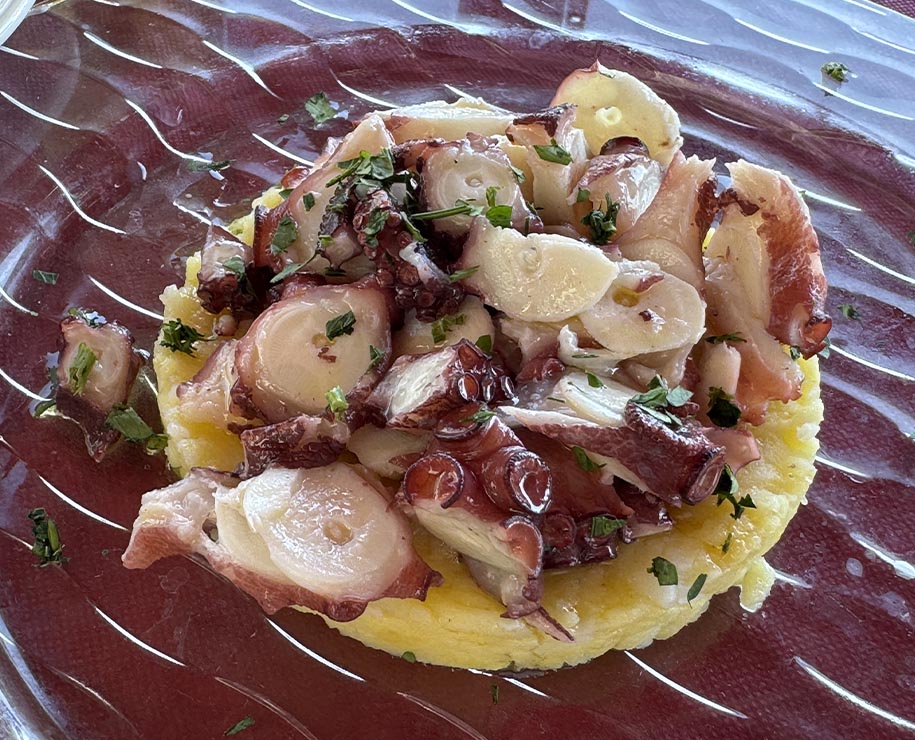
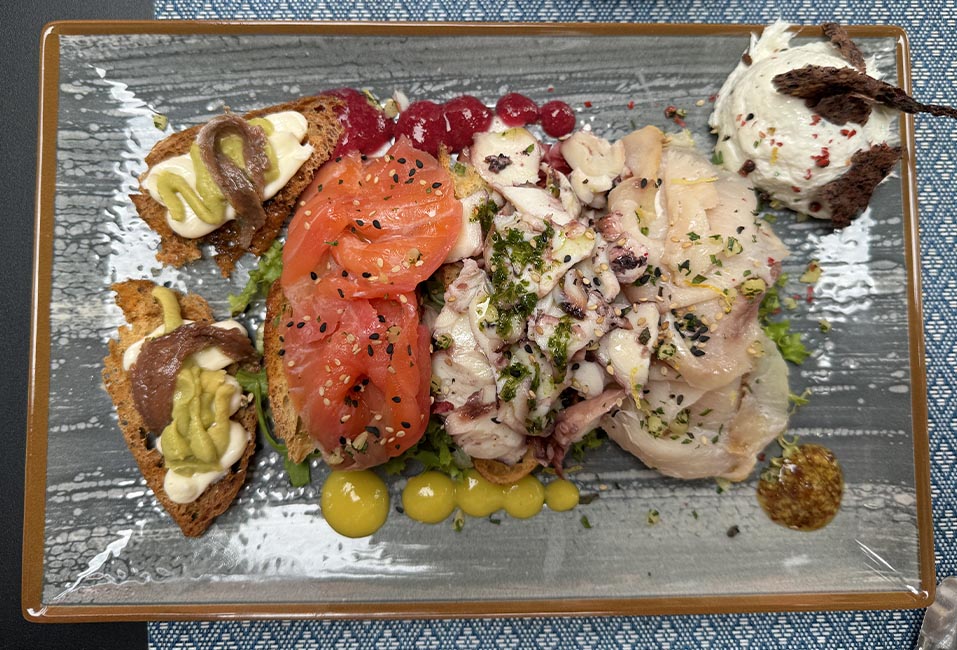
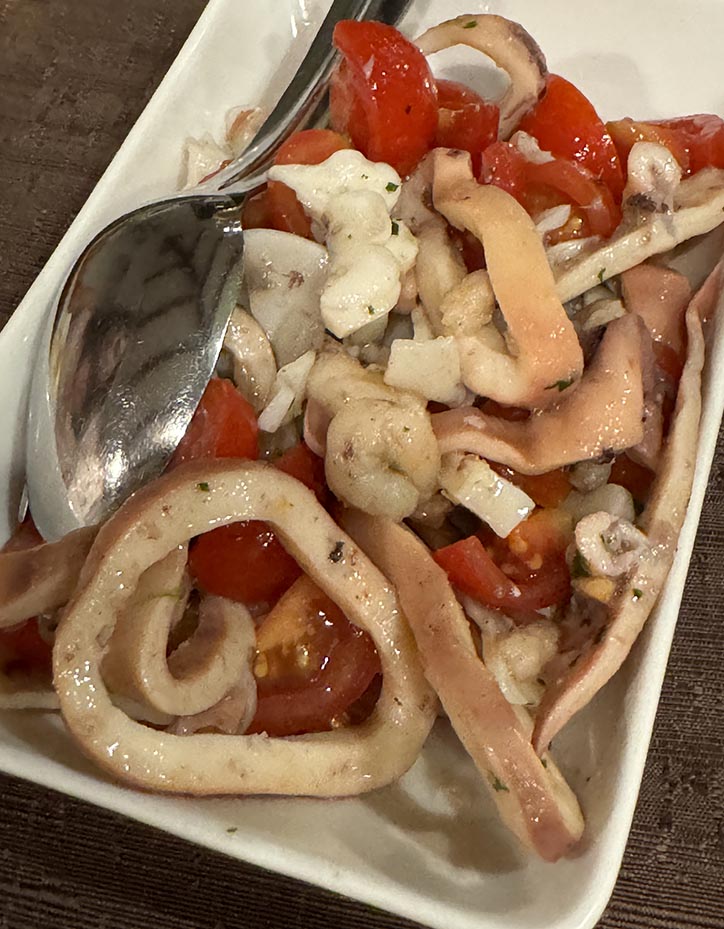
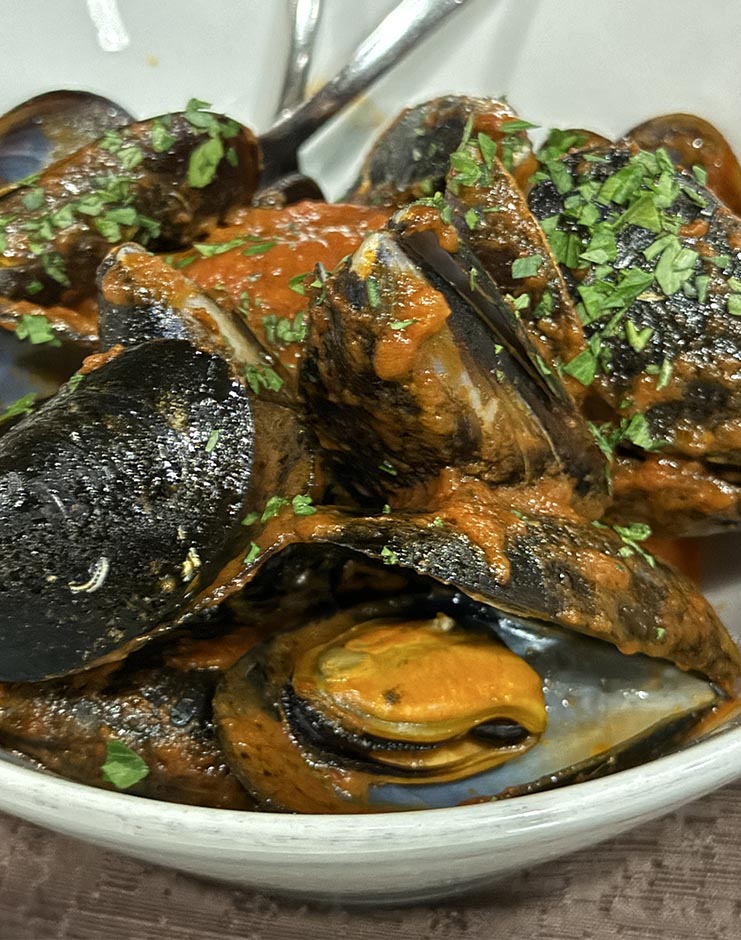
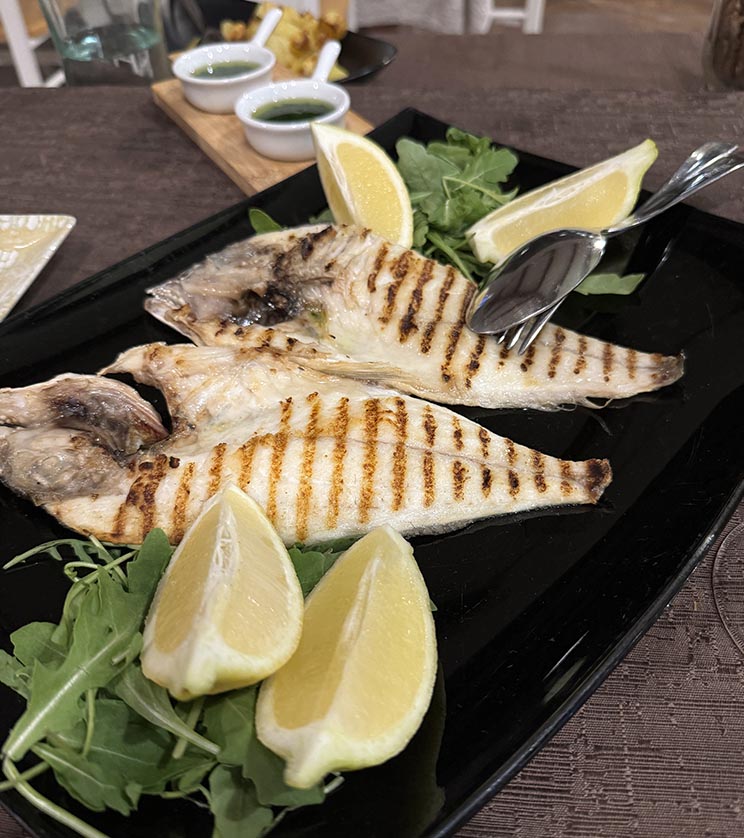
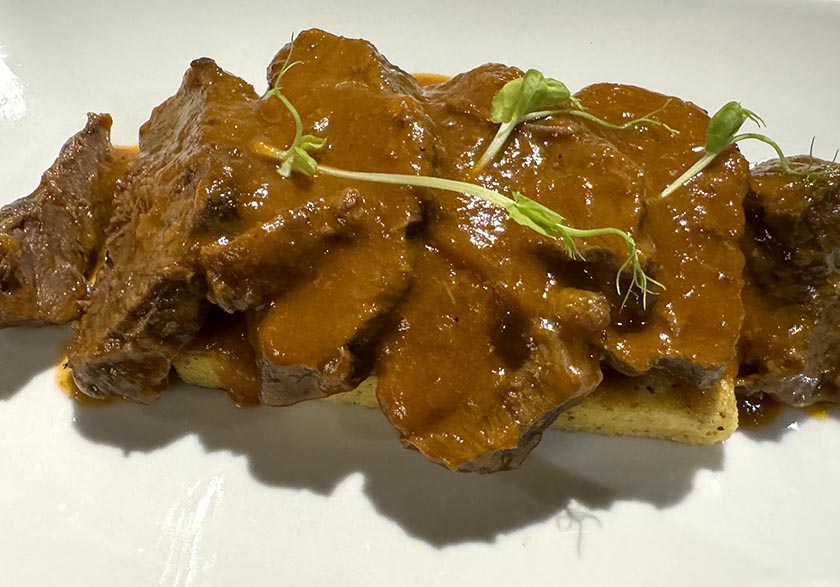
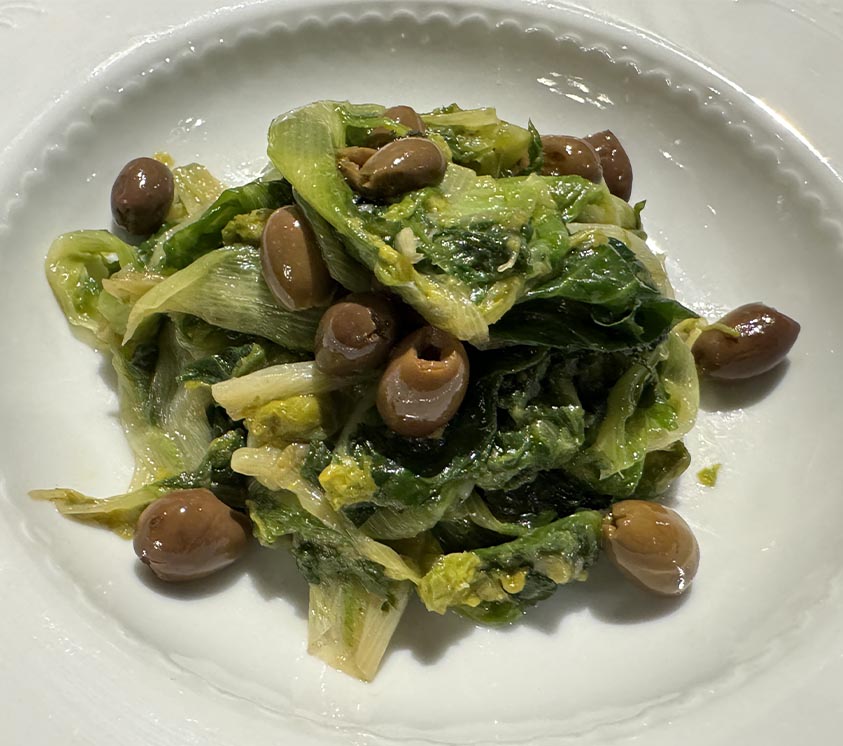
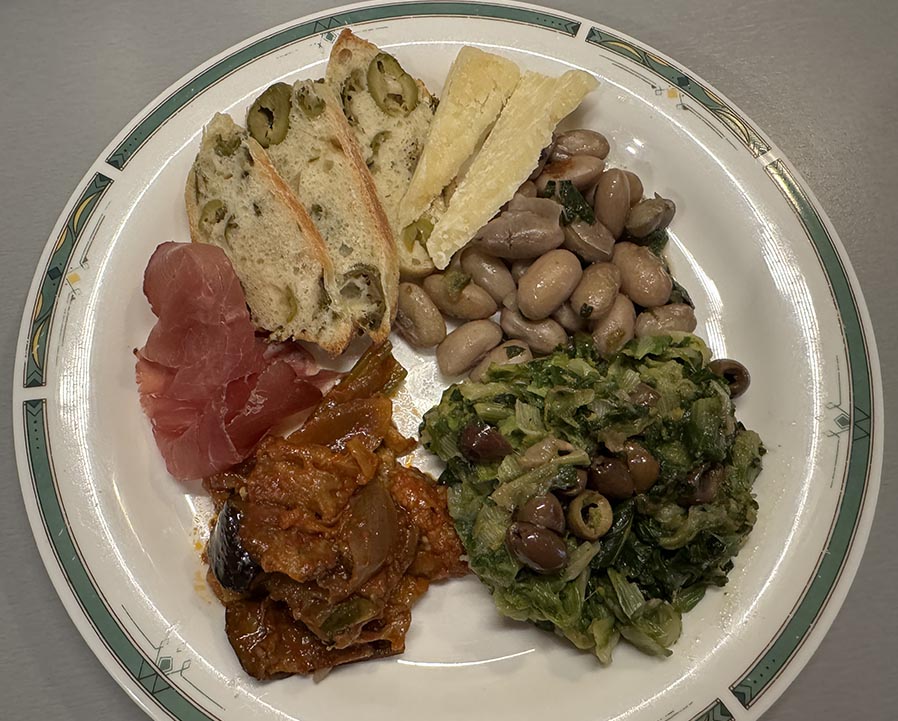
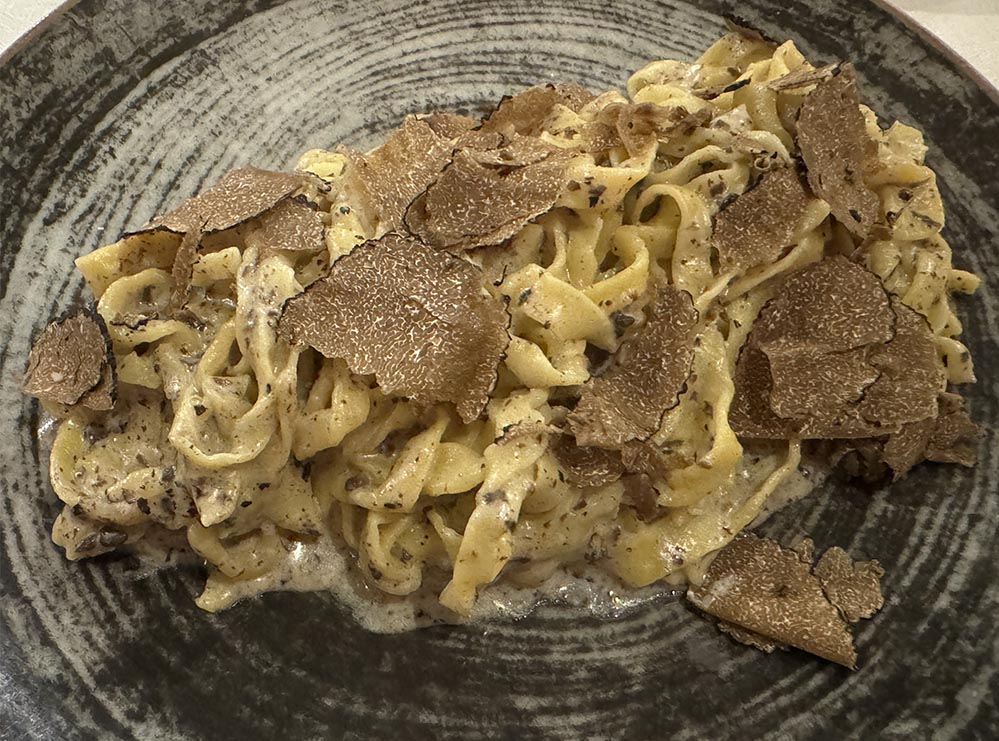
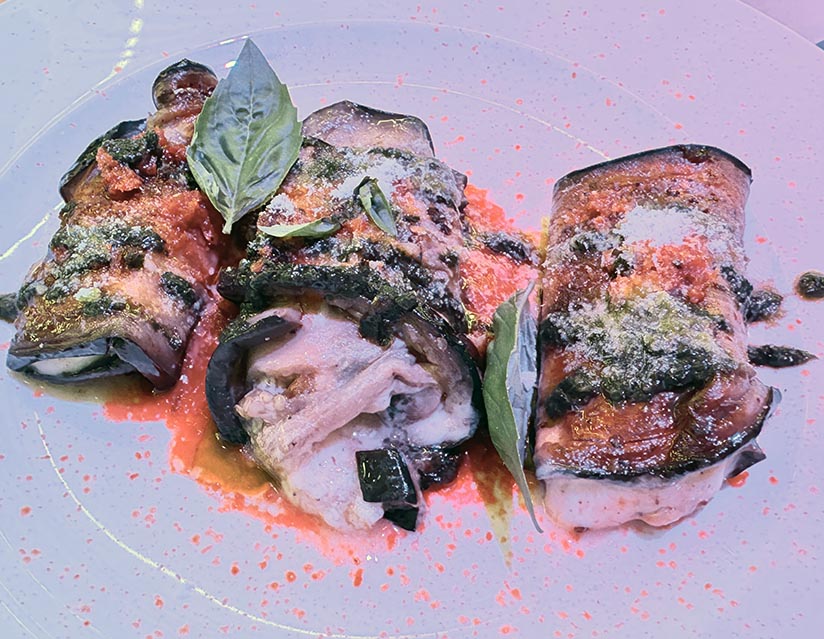
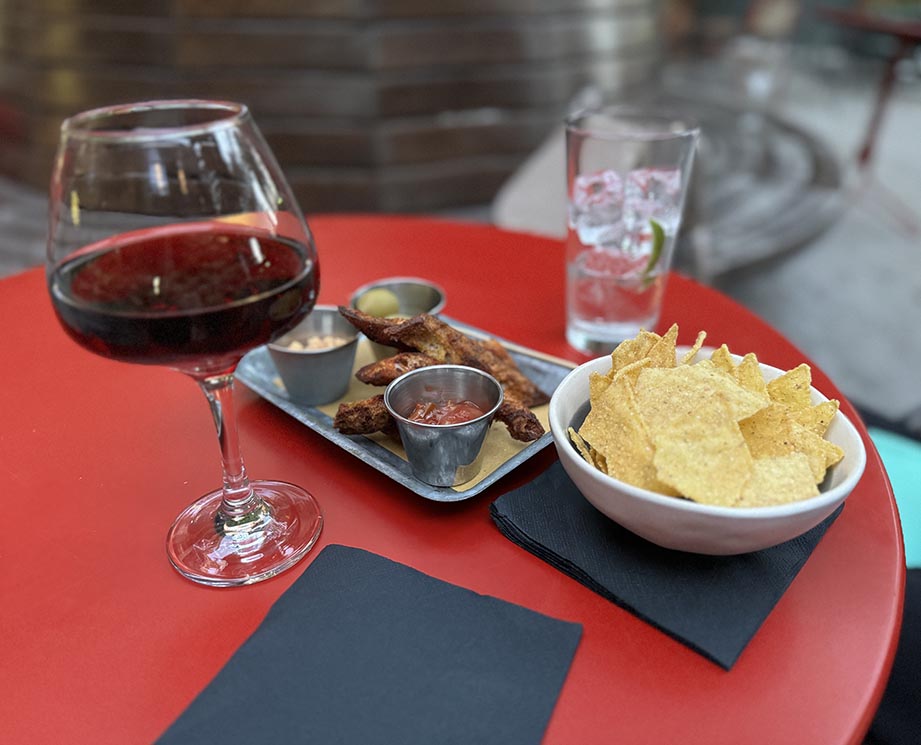
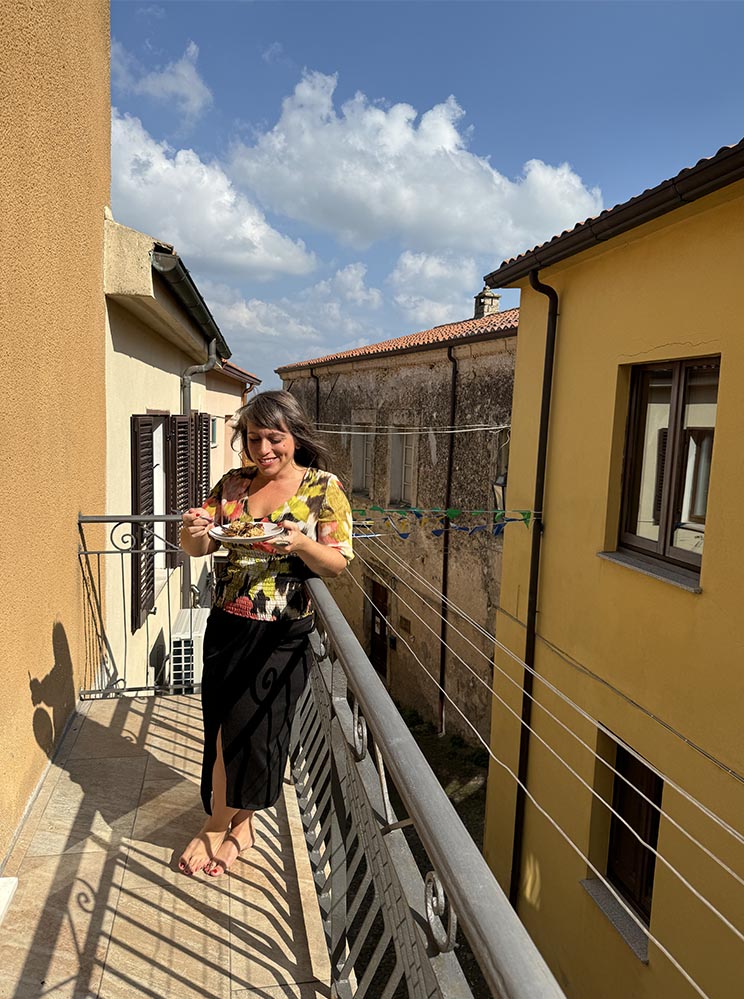
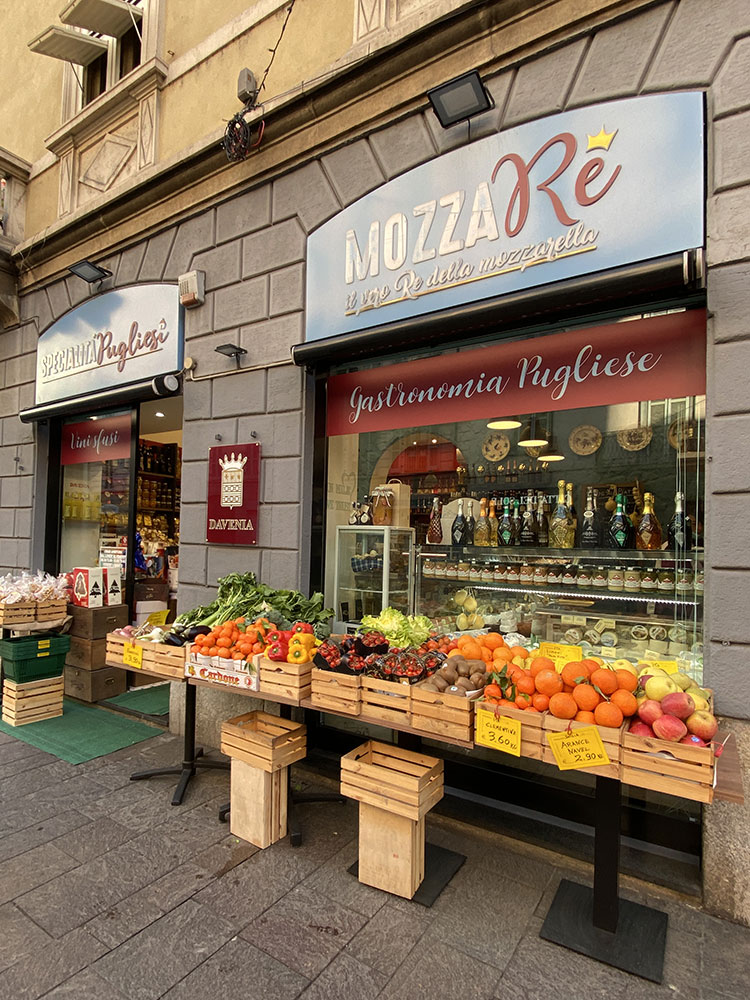
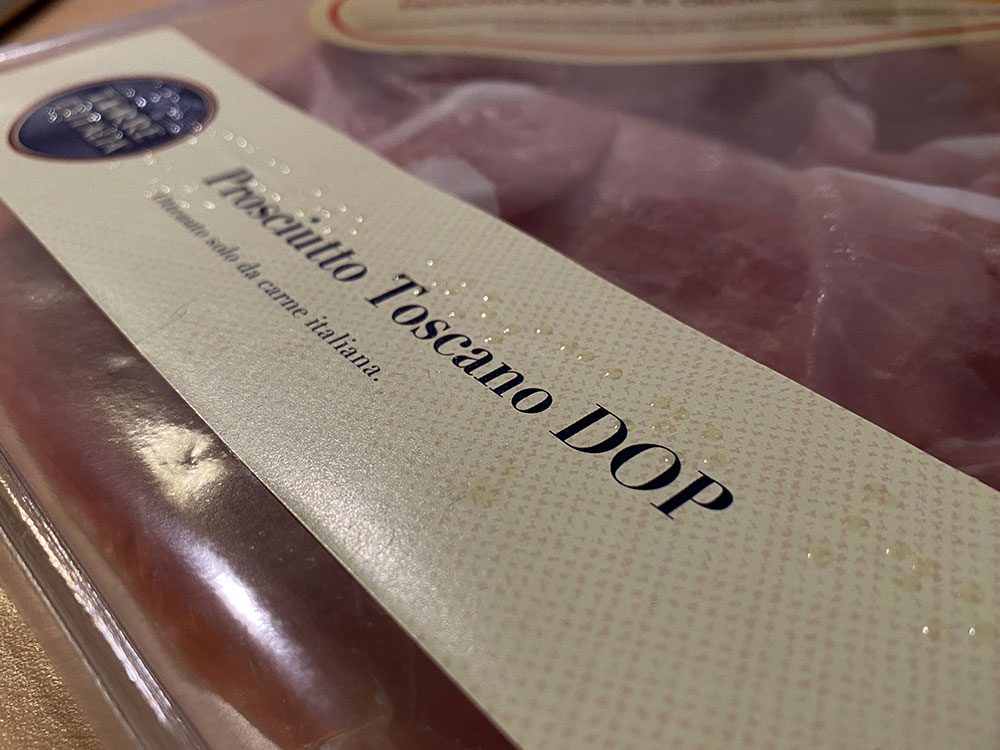
And of course, there’s olive bread with just enough dough to hold the olives together. There’s warm octopus and potato “salad” with taggiasche olives at the Carlotta Café in Milan. And Sandra’s homemade sardenara, a type of focaccia with tomato sauce, garlic, anchovies and olives. Baked orata with olives. Or when have you ever eaten freshly-picked-and-simmered olives and sausage… in the town of Cerignola, an olive name?!

So far, I’ve never met an olive that I didn’t like.

(…and then there’s olive oil… in my mind, the elixir of life. Don’t get me started…)

“Knock knock.”
“Who’s there?”
“Olive.”
“Olive, who?”
“Olive you, too.”

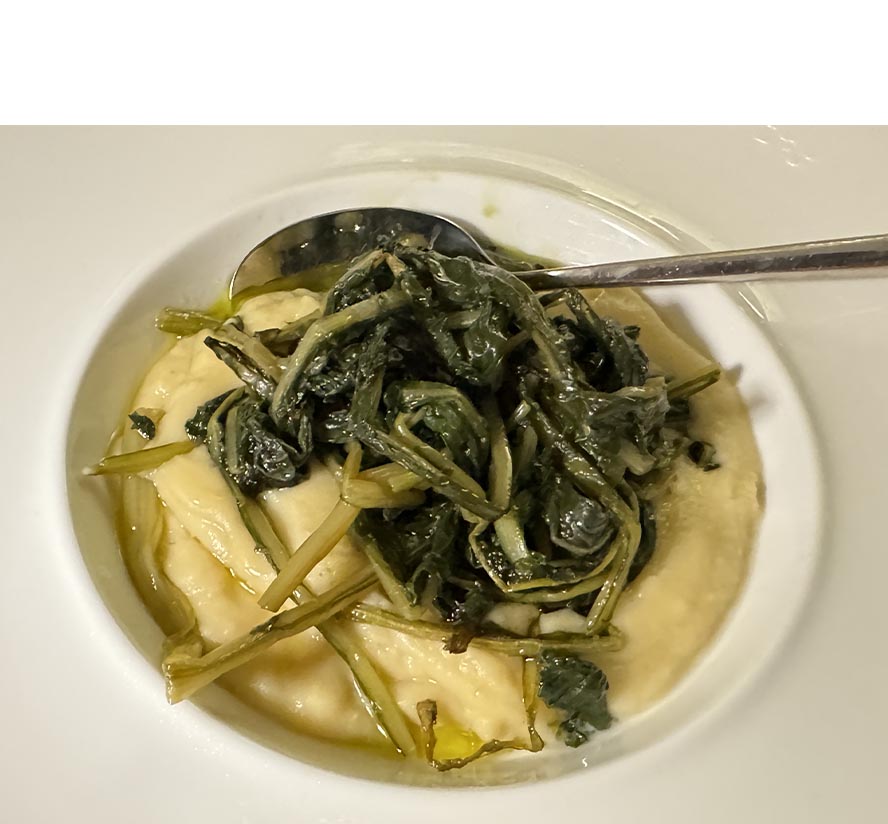
Click on the photos to view them plate-sized.

Ahh Milano

Ahh Milano

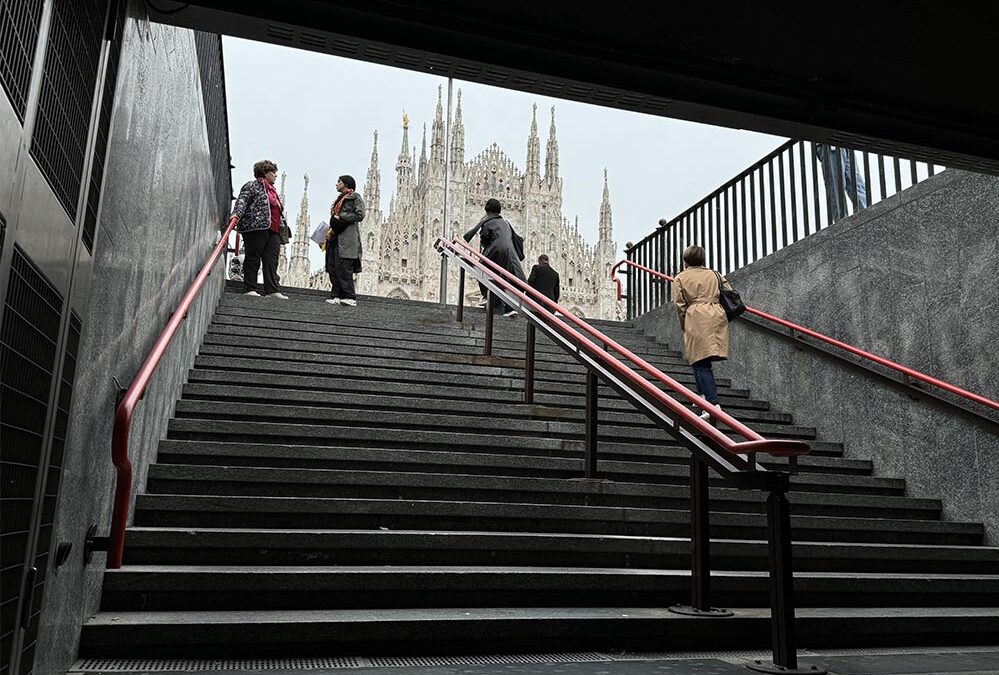
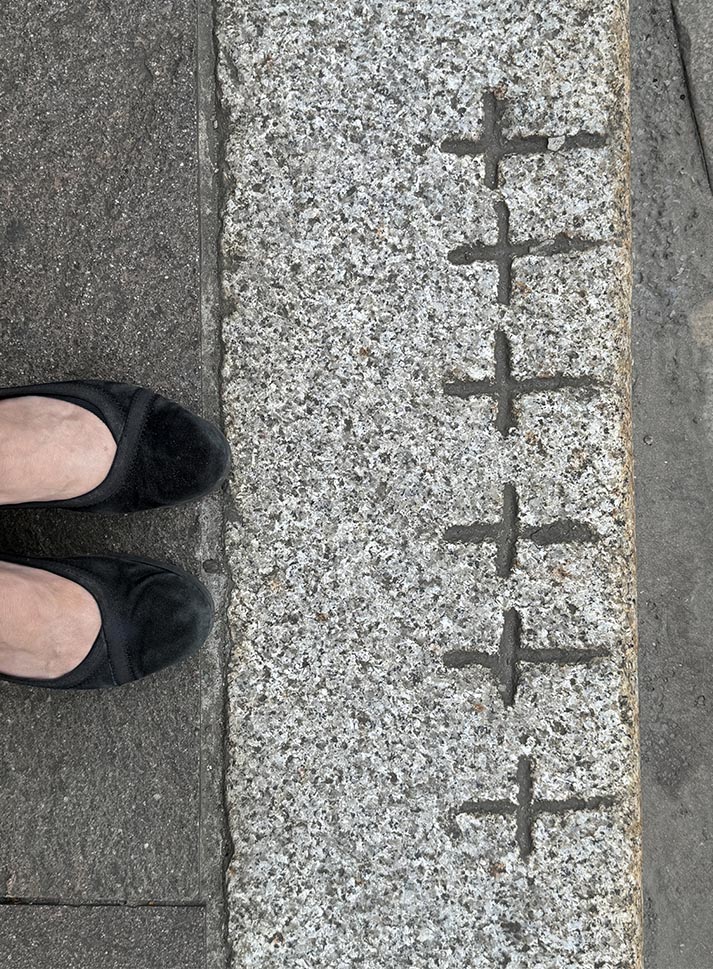
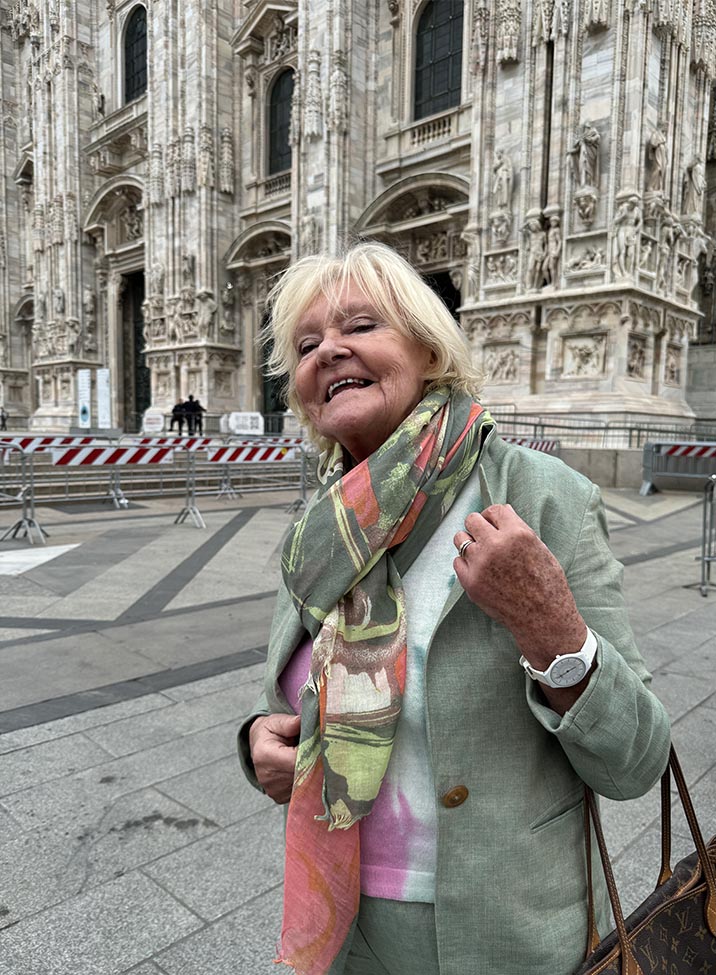
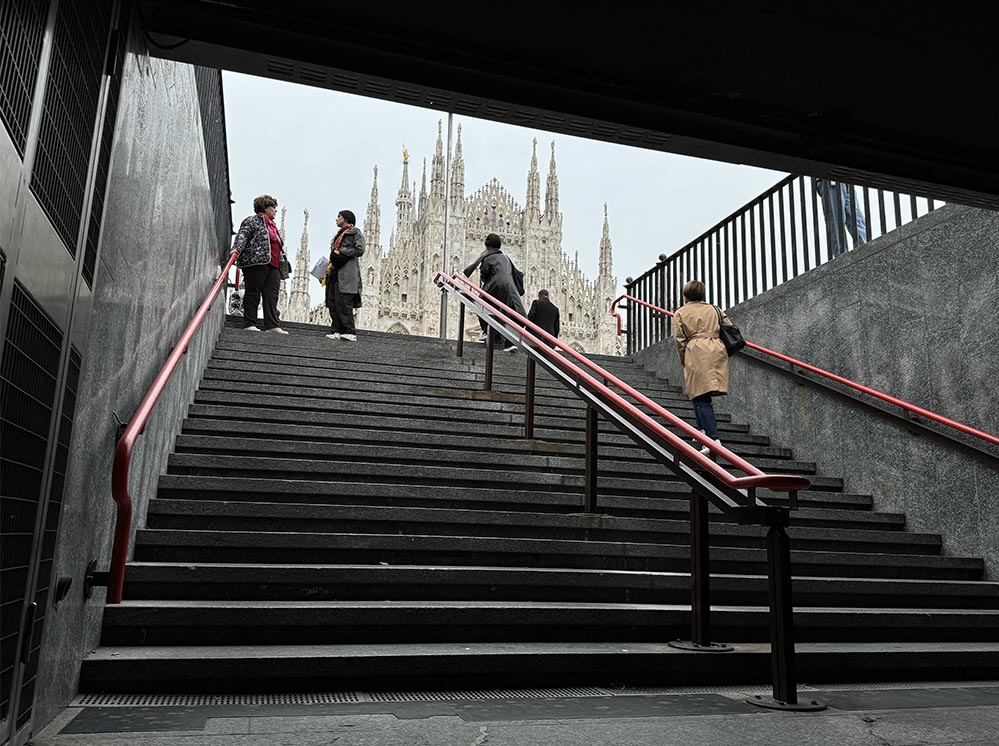
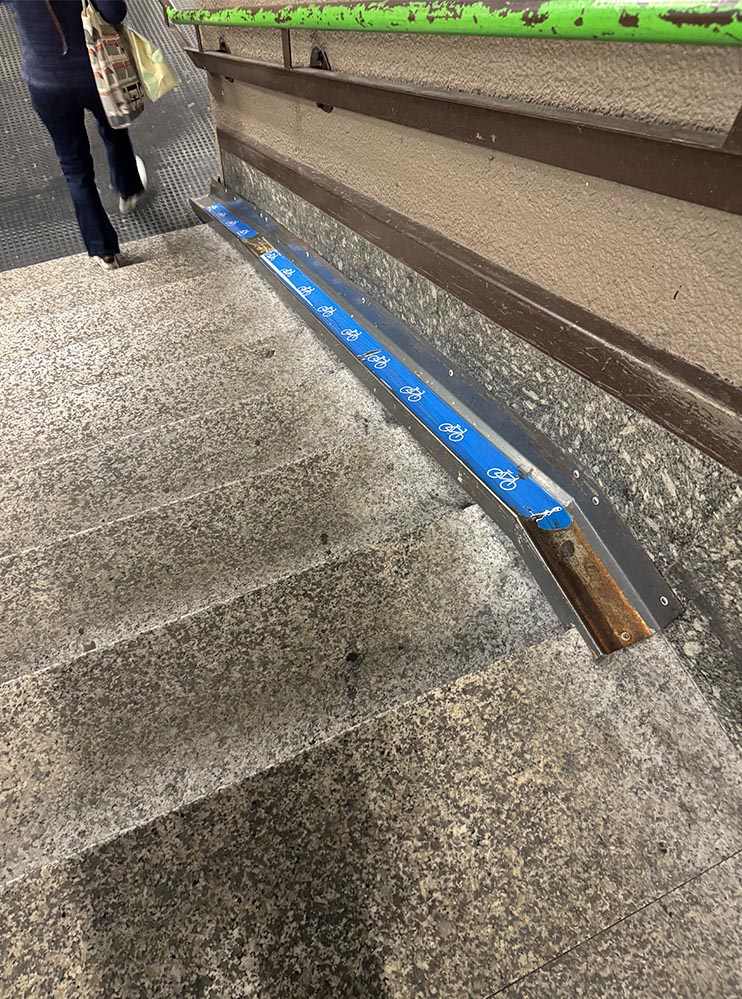
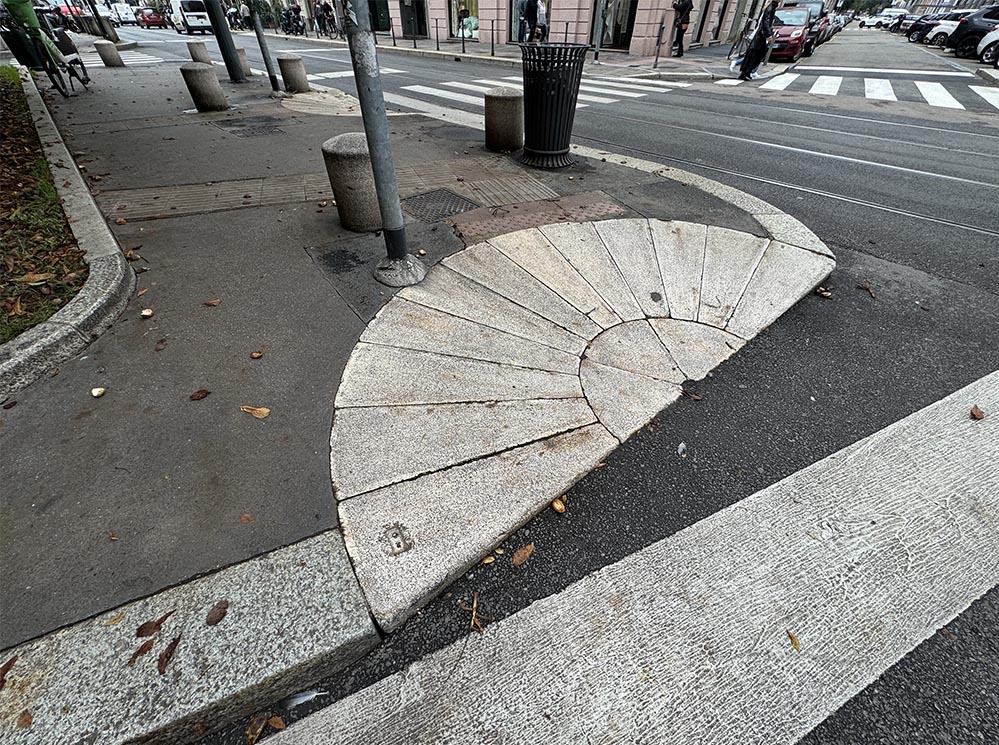
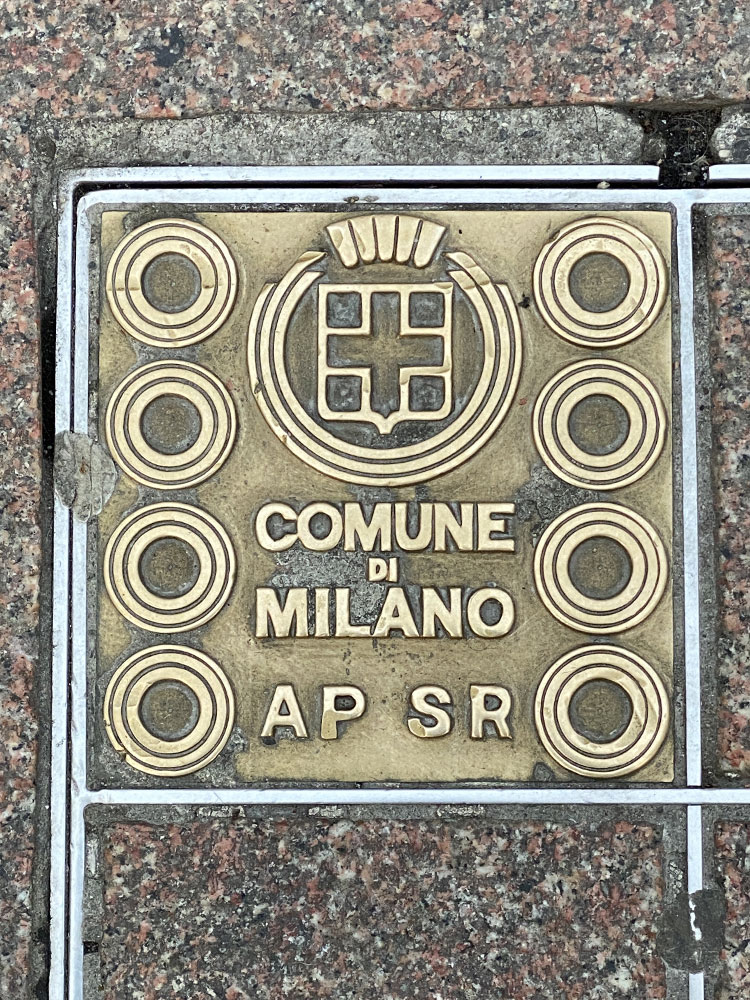
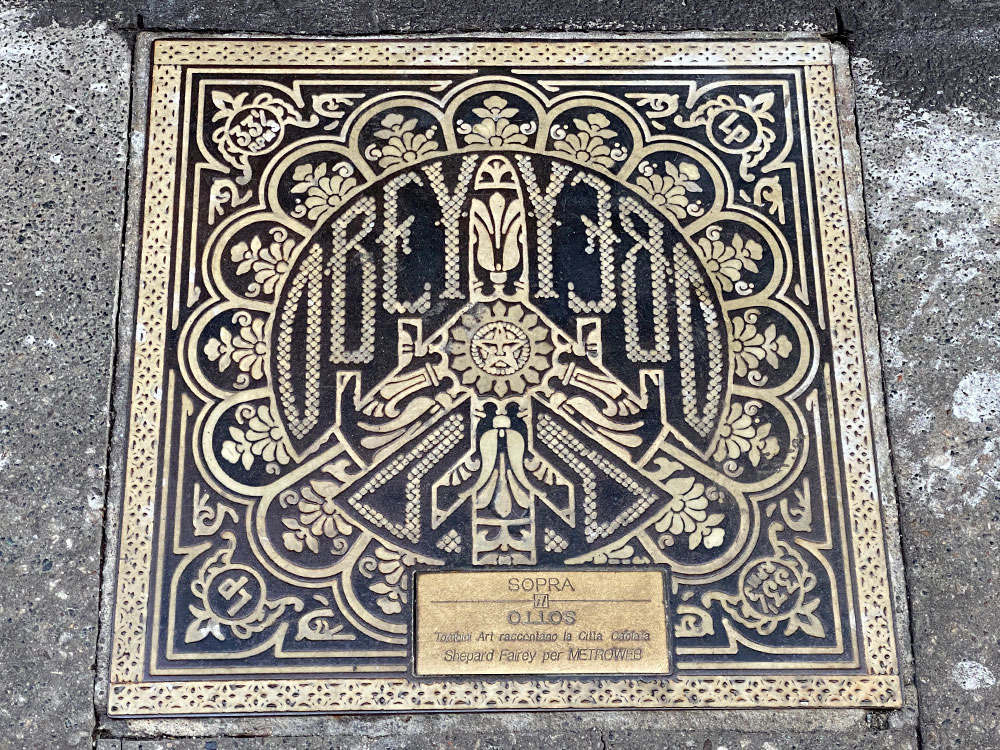
Ahh, Milano… She enchants me still… after 17 years. Though I’ve now been in all 20 regions of Italy, what keeps me going back to Milano? So much stimulation, inspiration, satisfaction. It’s one of the design capitals of the world, so, as a designer, it thrills me that even the curb-cuts are beautiful. There is history, architecture, design, art, culture, cuisine… and companionship. Milano “checks so many boxes” for me and fills me up.

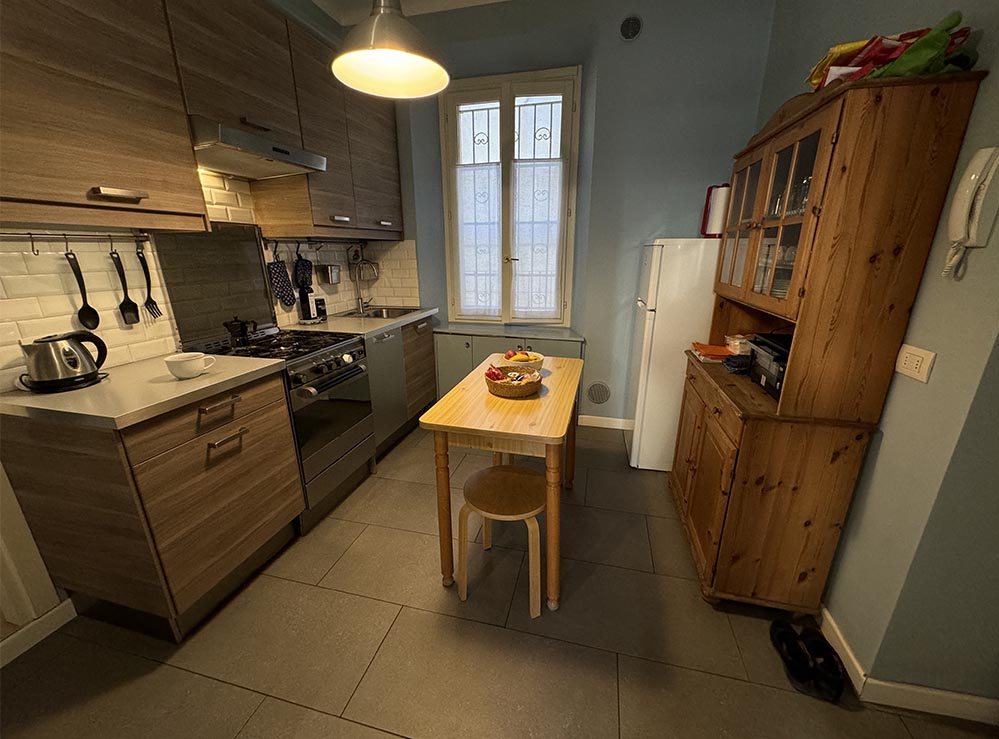
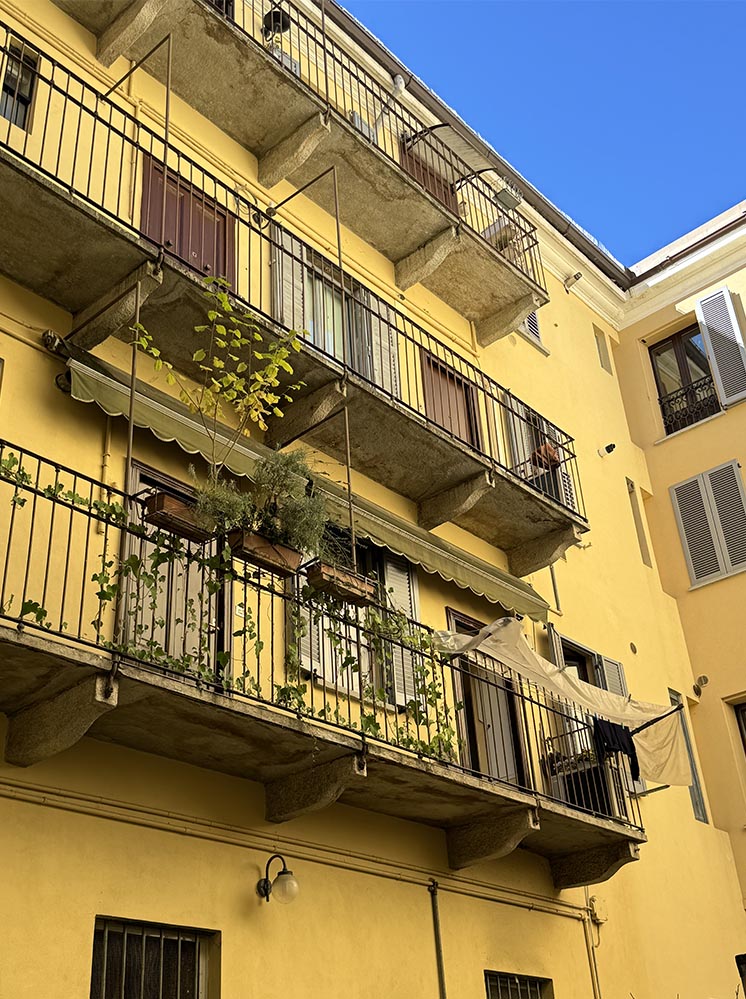
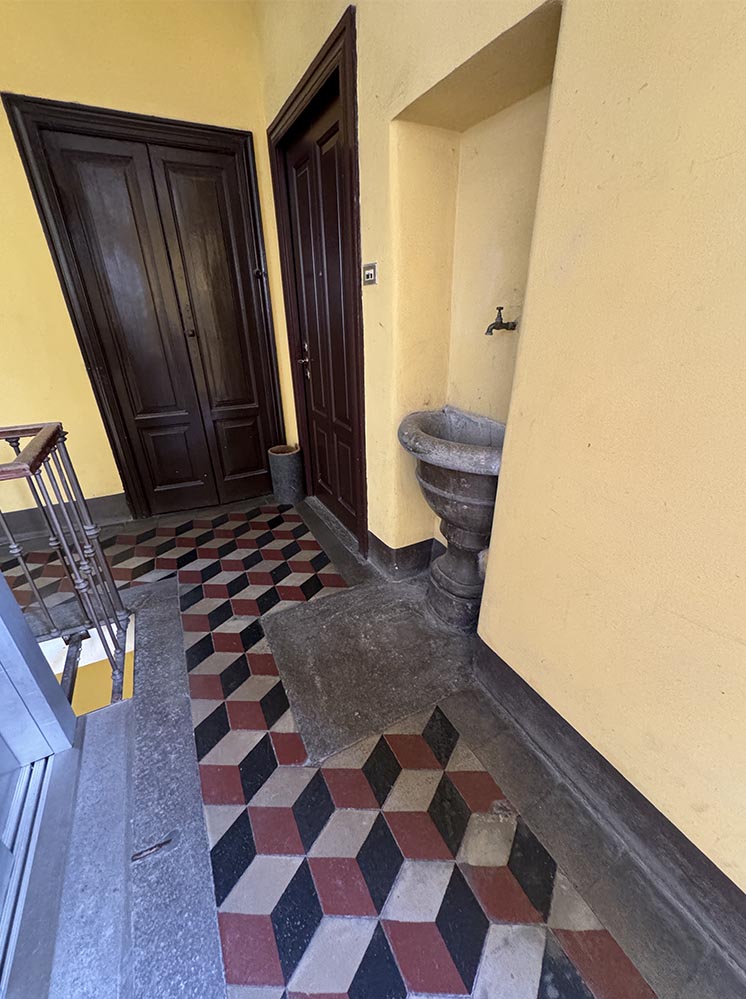
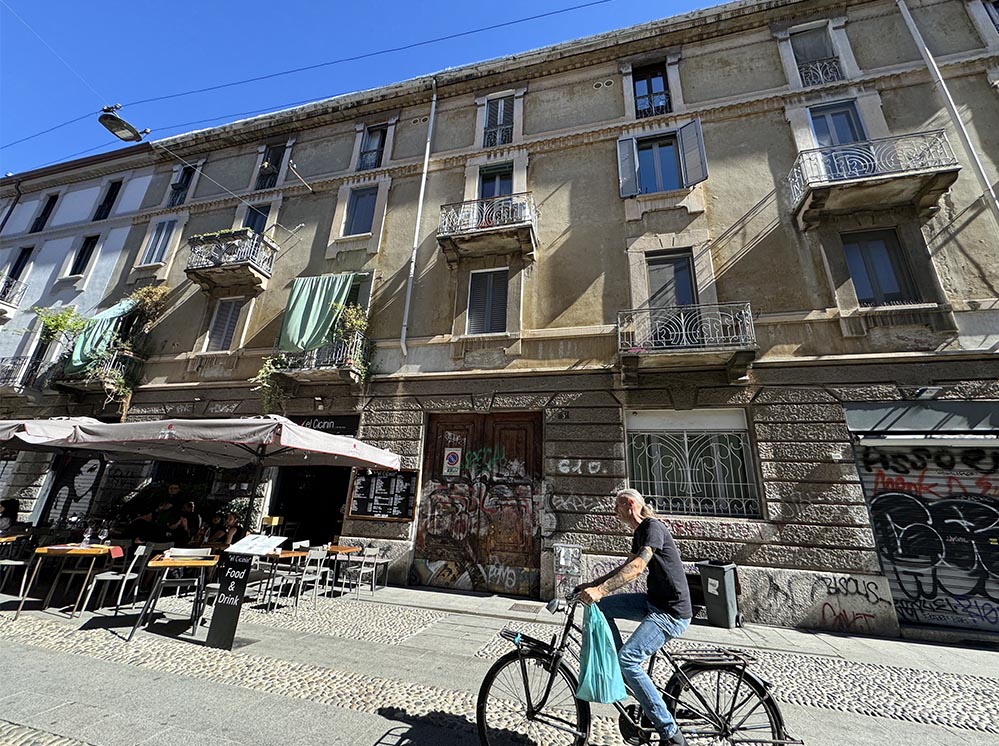
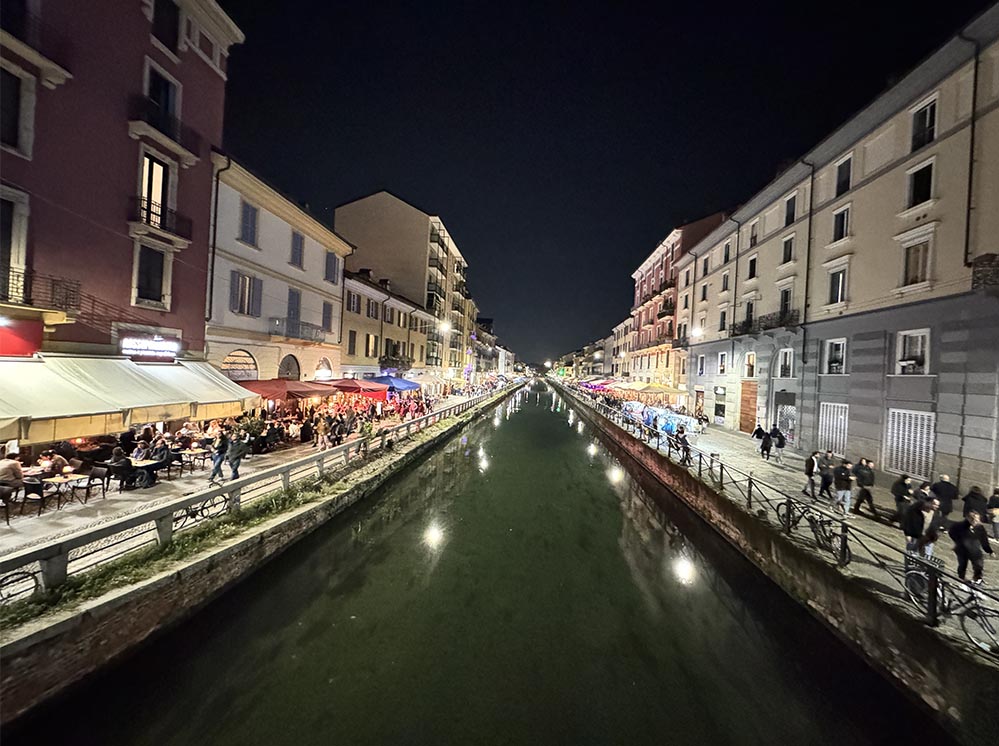
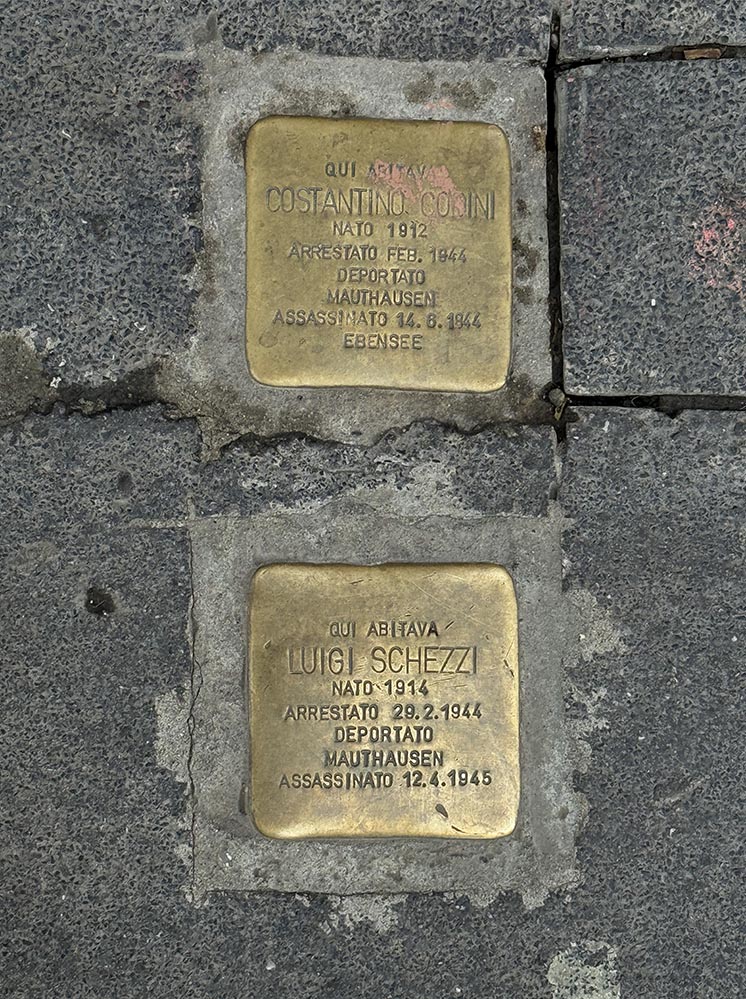
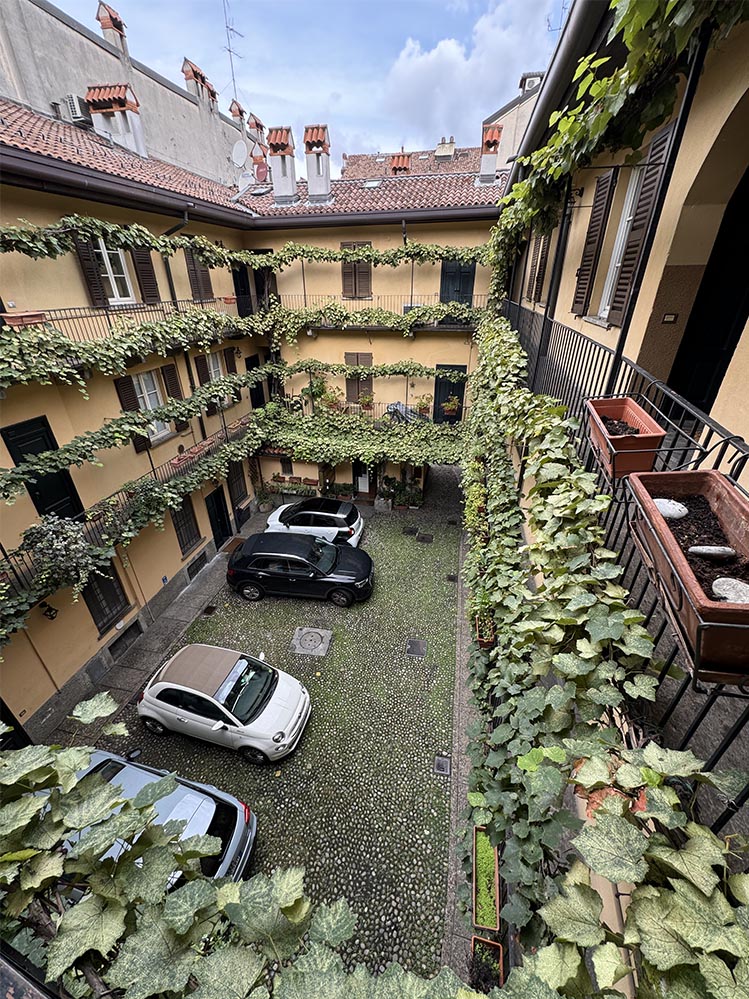
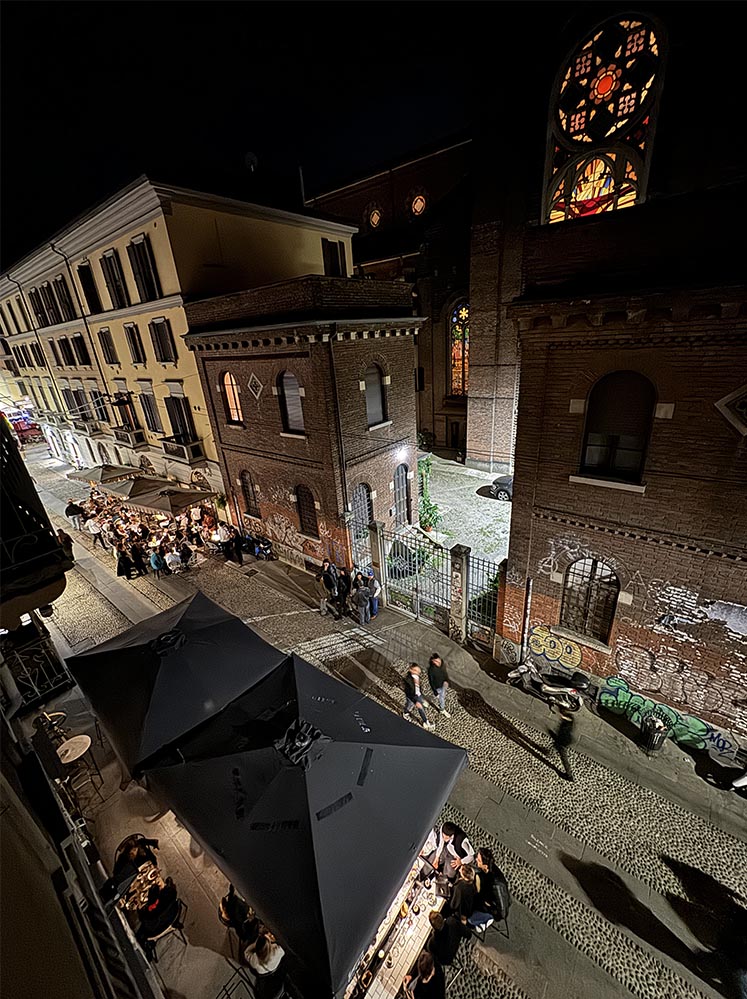
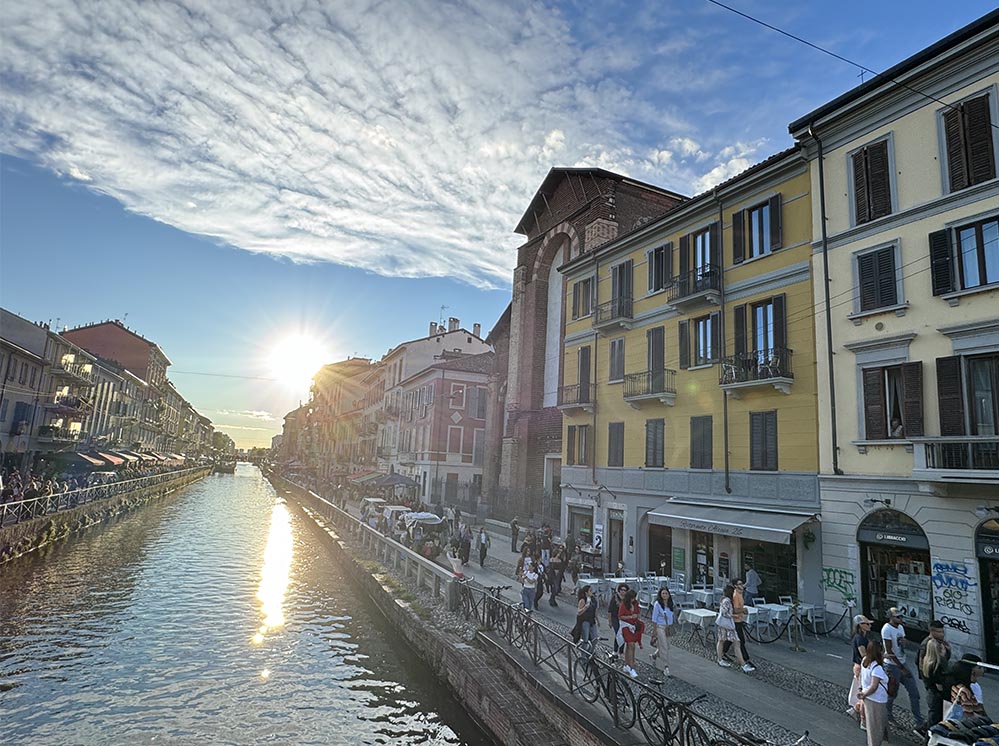
After doing a southern and island tour (Bari, Matera, Napoli, Sardegna), I went back to Milano for two-and-a-half weeks, to enjoy some of my all-time favorite people, places and meals… and to discover new ones. I had a lovely, spacious apartment in a classic, Milanese Casa di Ringhiera, with its interior courtyard and outer balcony walkways. This was in “my neighborhood”, the Zona Navigli – Canal Zone.

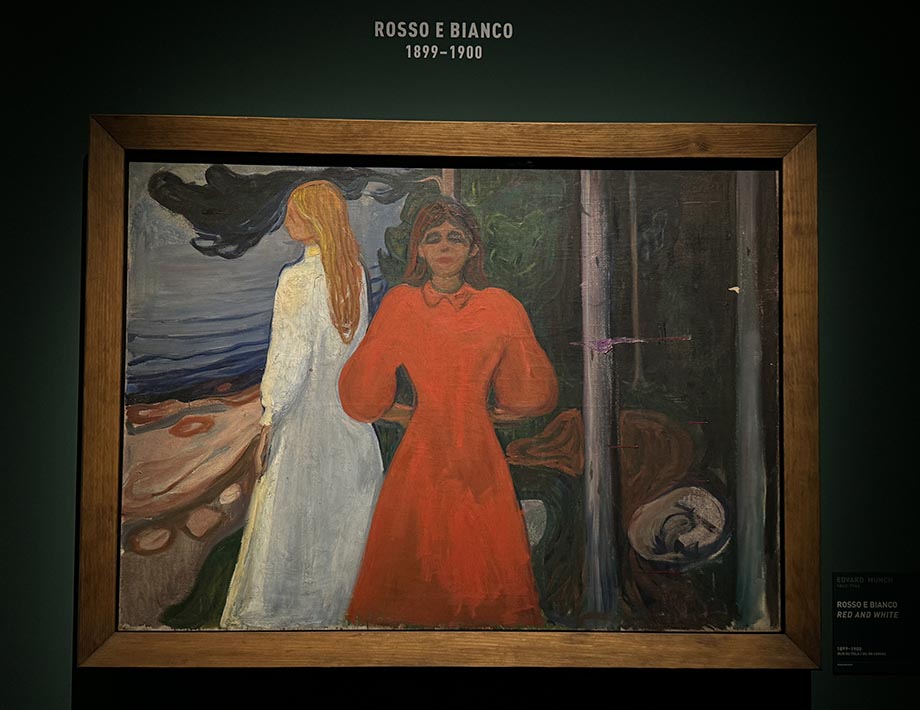
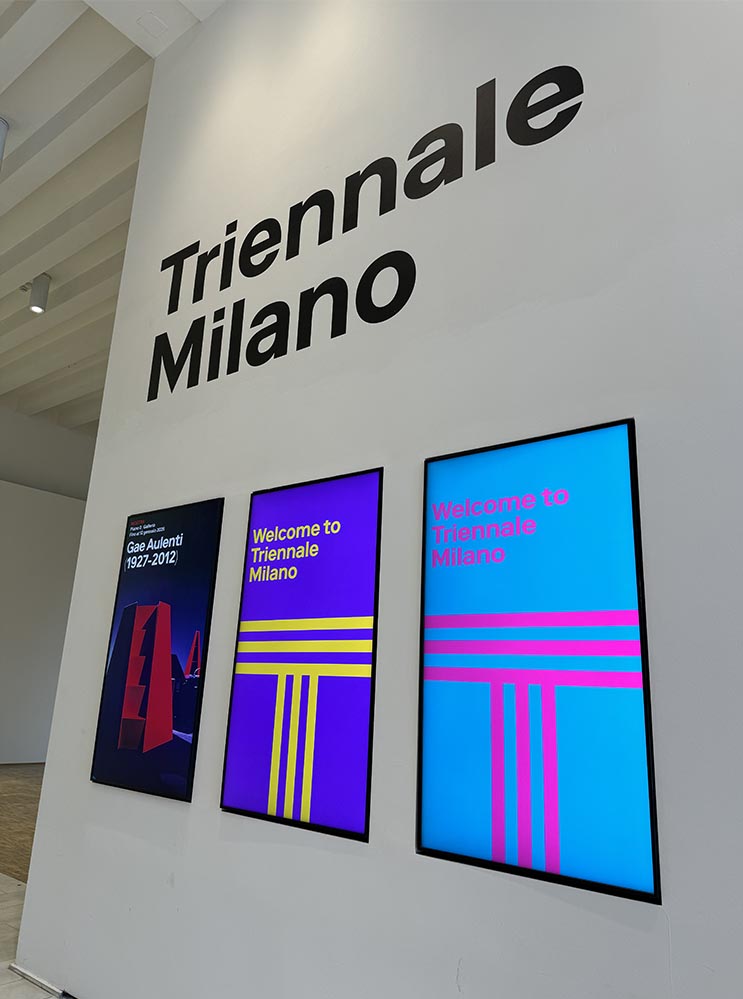
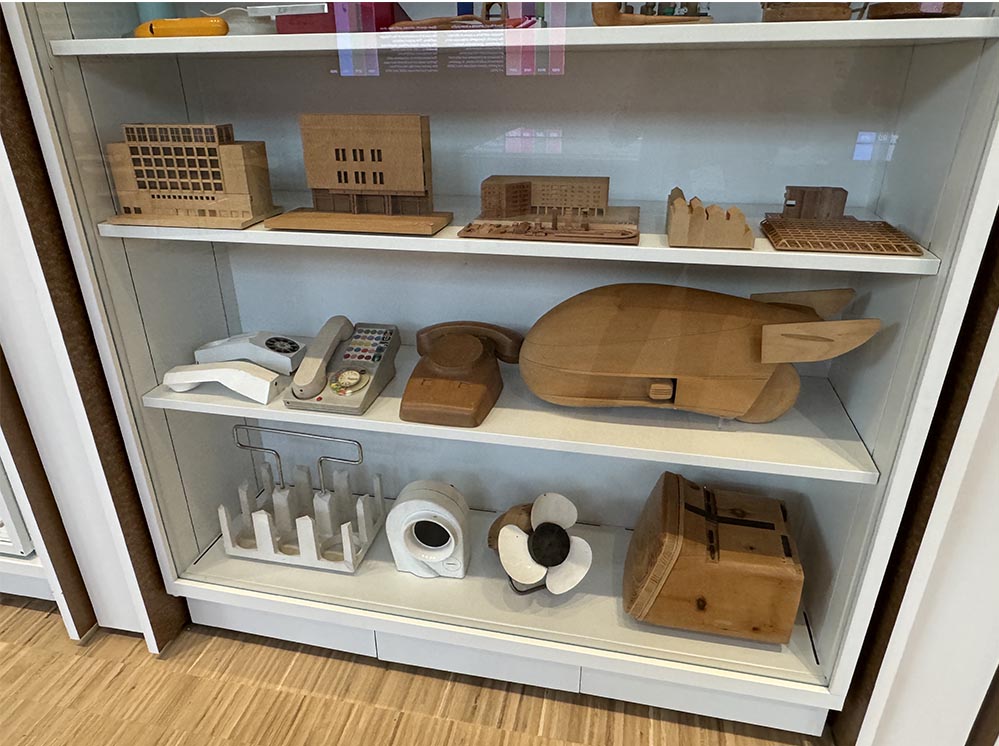
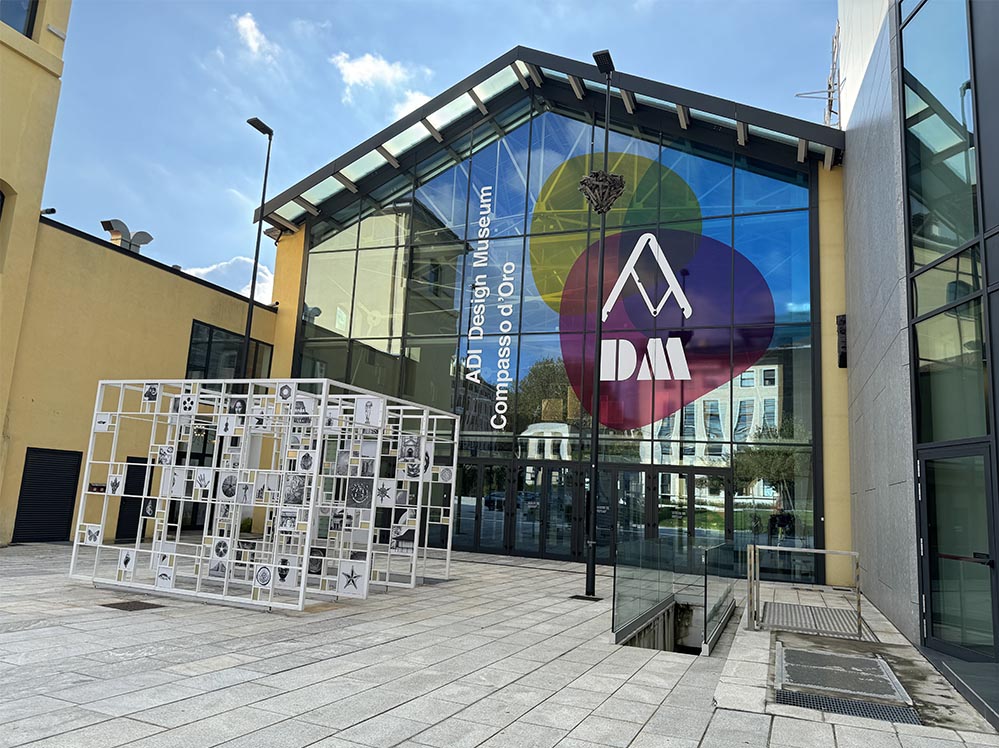
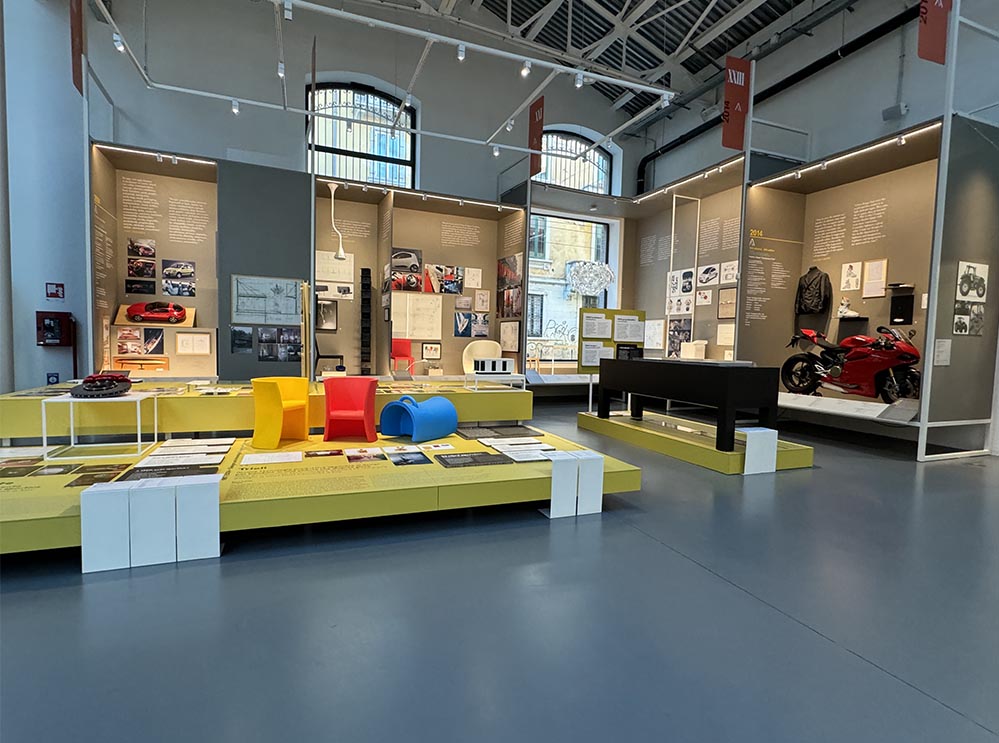
I always make a “pilgrimage” to the Trienniale Design Museum, and this year I (finally) discovered the ADI Compasso D’Oro Design Museum. It ignites my mind to see concepts, drawings, mockups and final products of all sorts. Italian design!

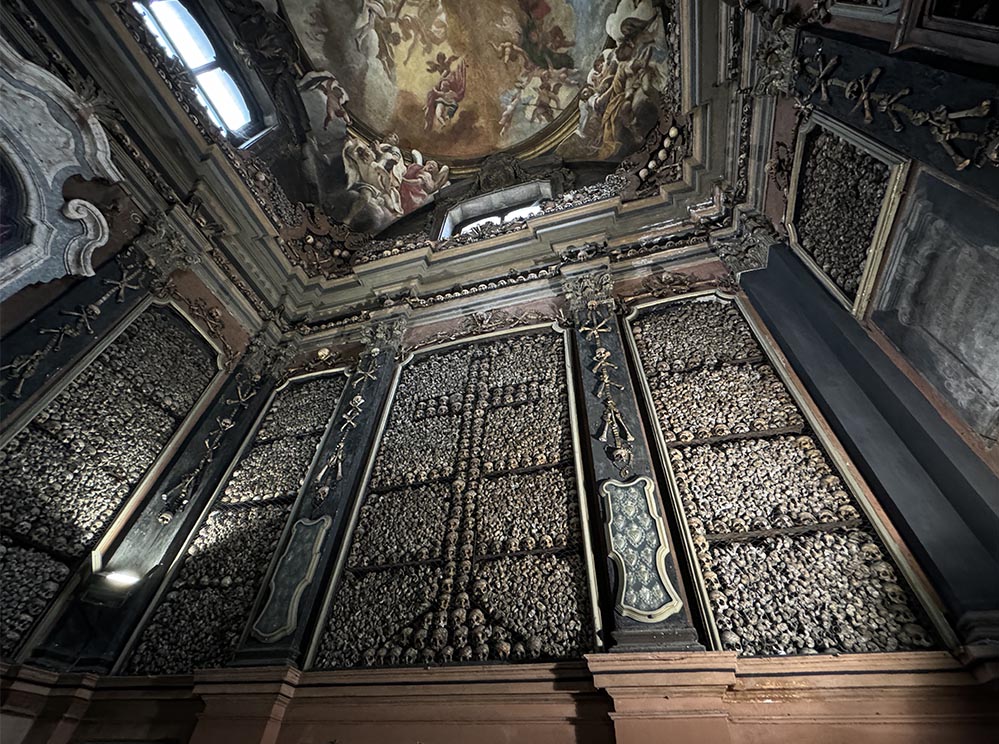
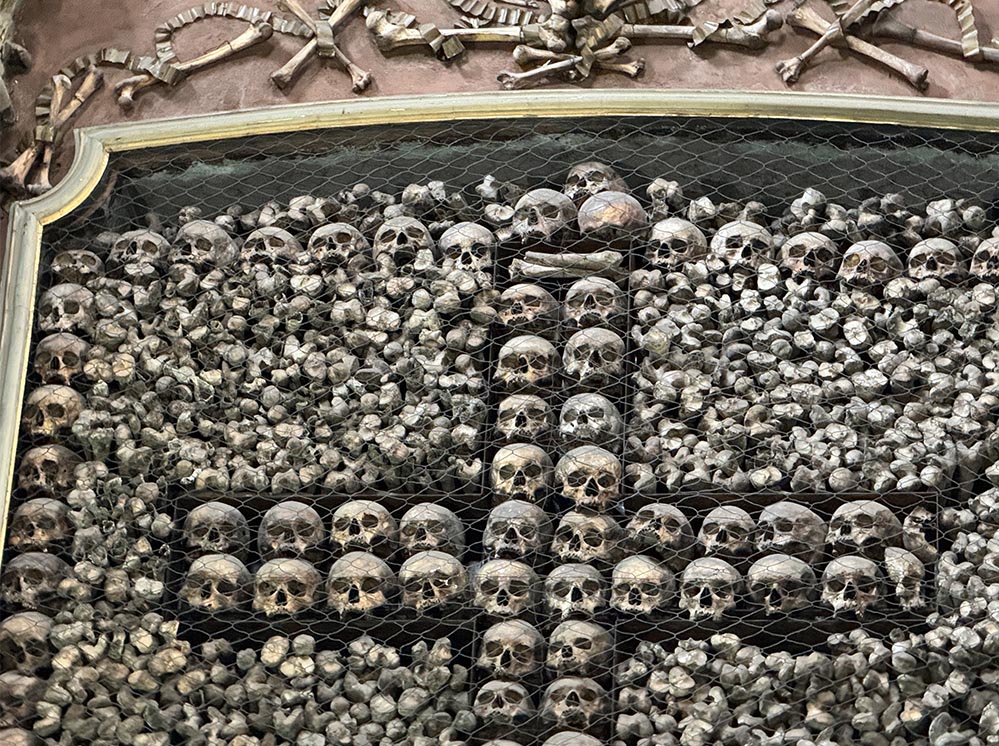
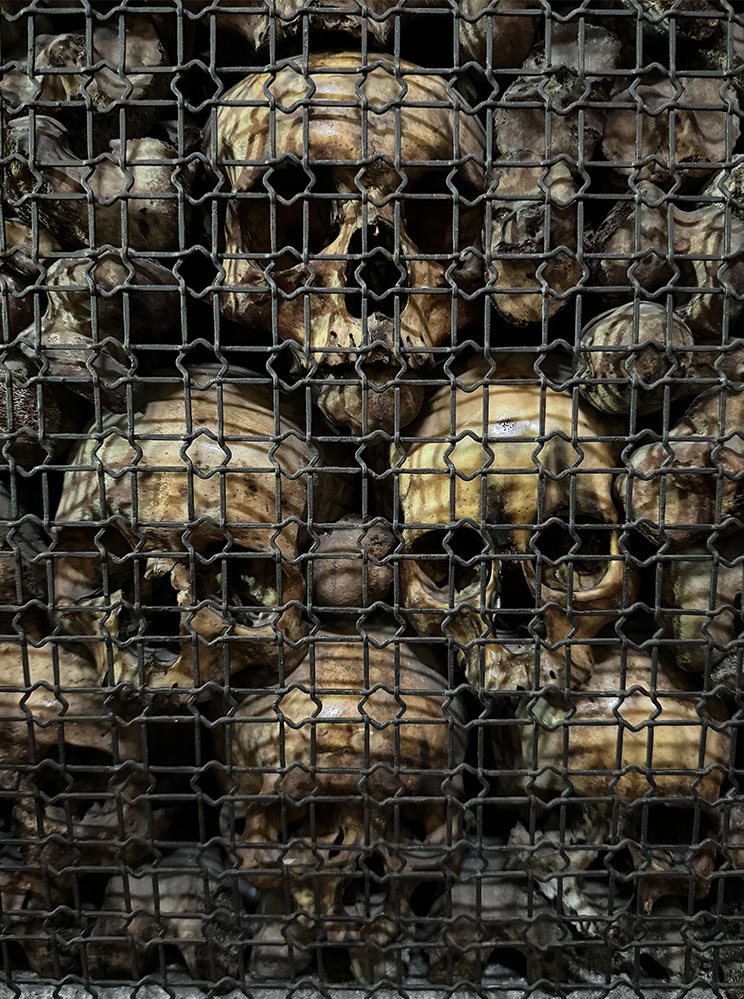
For the first time, I heard about, and then traipsed across town to gawk at the Sanctuary of San Bernardino alle Ossa (Bones)! This sanctuary is filled wall-to-wall, floor-to-ceiling with skulls… and femurs stacked like cord wood, creating patterns on the walls.

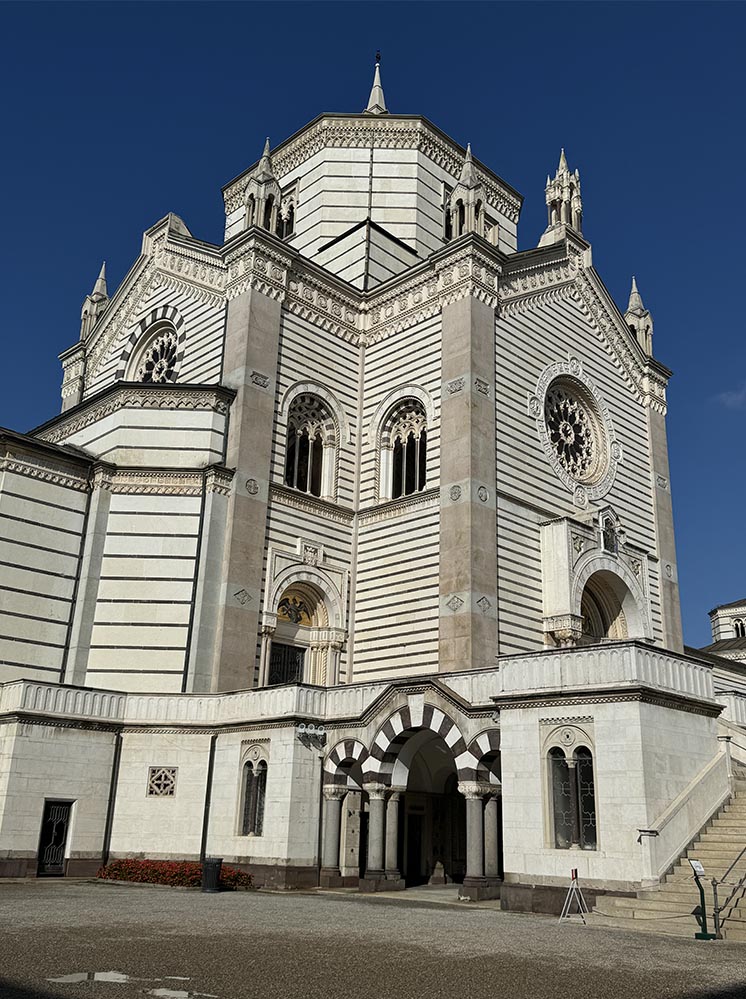
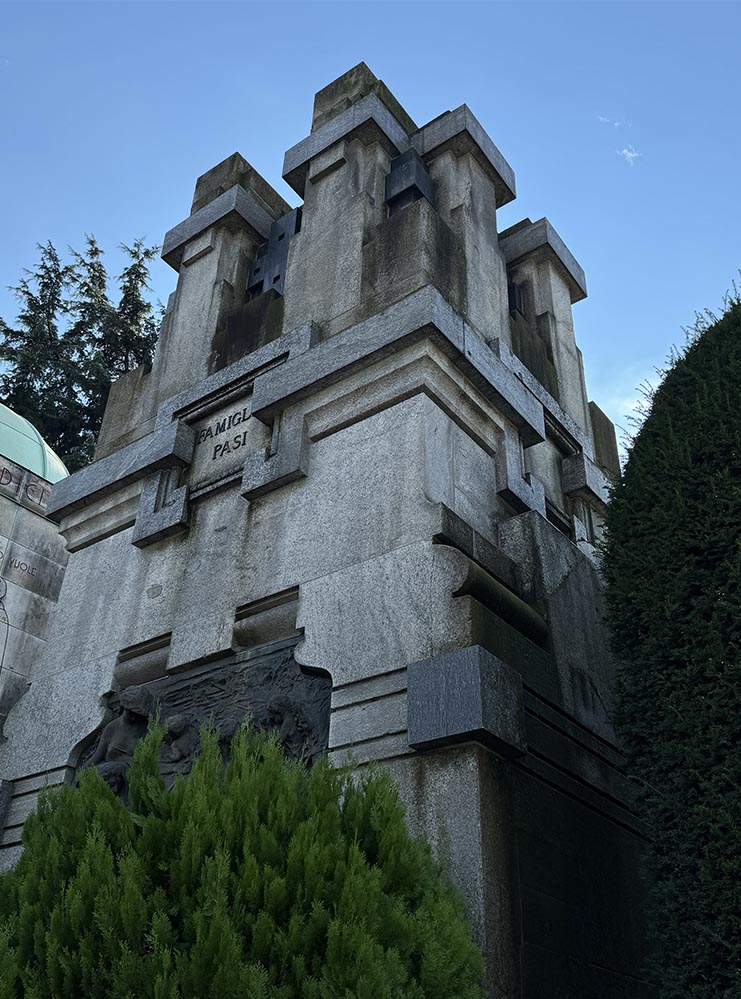
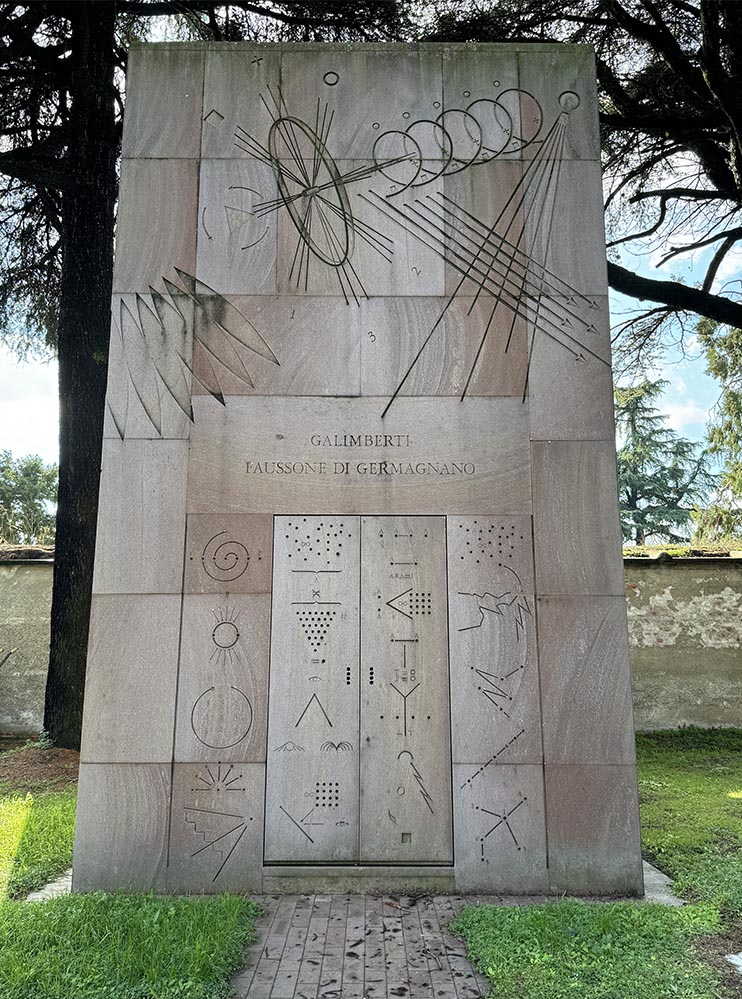
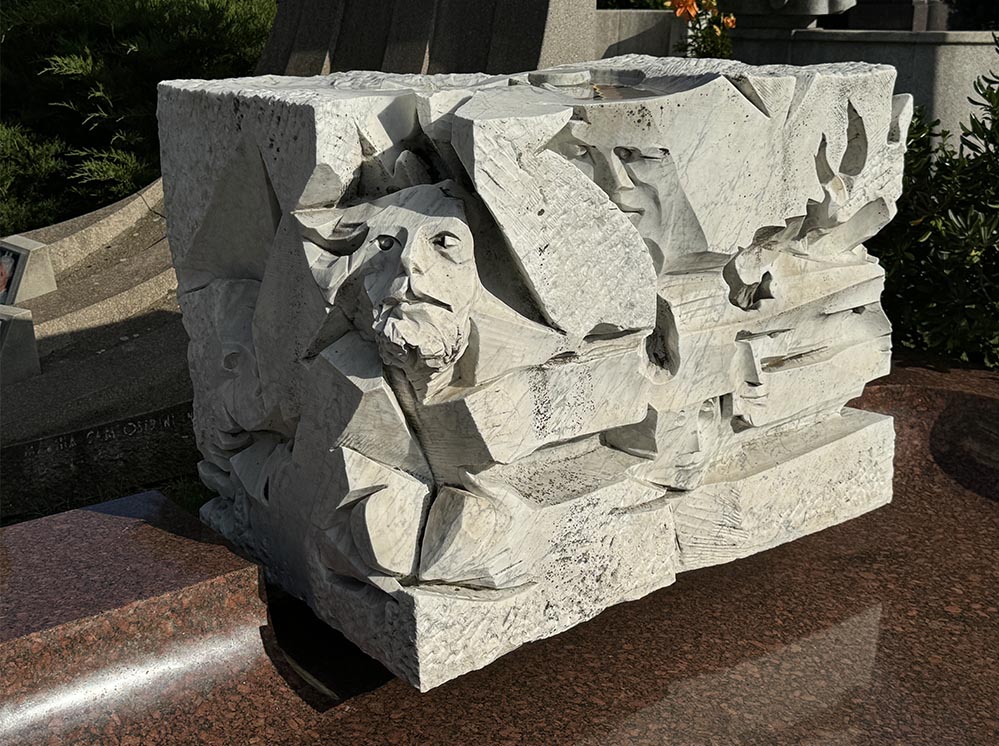
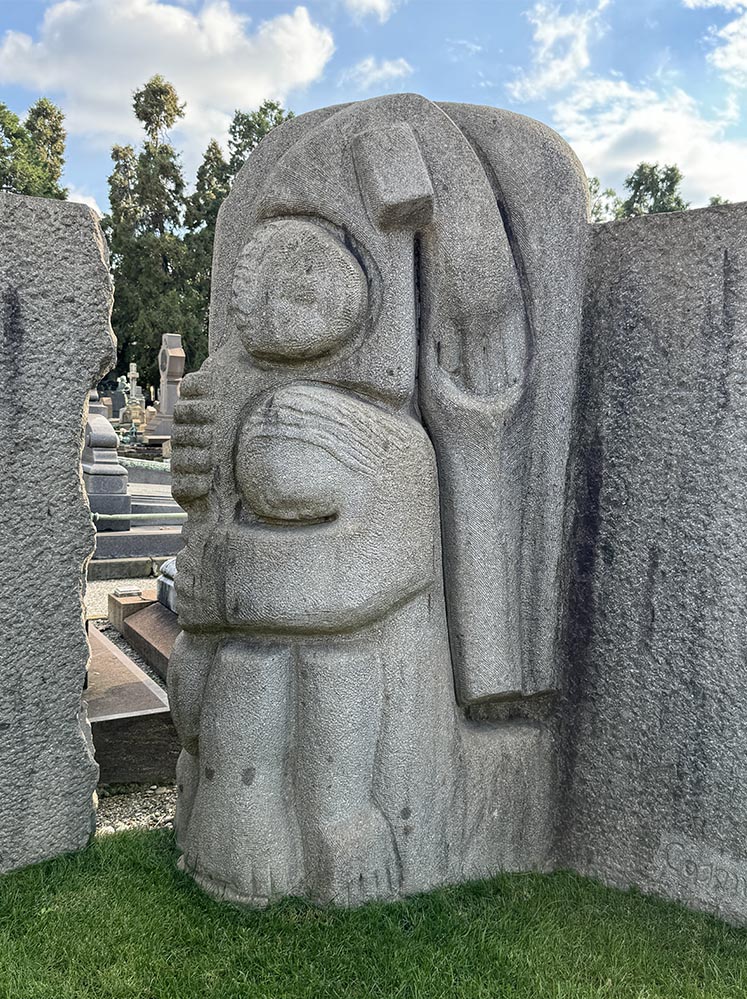
And every year, when in Milano, I go to the Monumental Cemetery and spend several hours. One could make this cemetery the focus of their studies of architecture, sculpture, typography. It’s a marvel! I went into a section I hadn’t visited before, and discovered some striking graves amidst the more traditional, religious-themed graves.

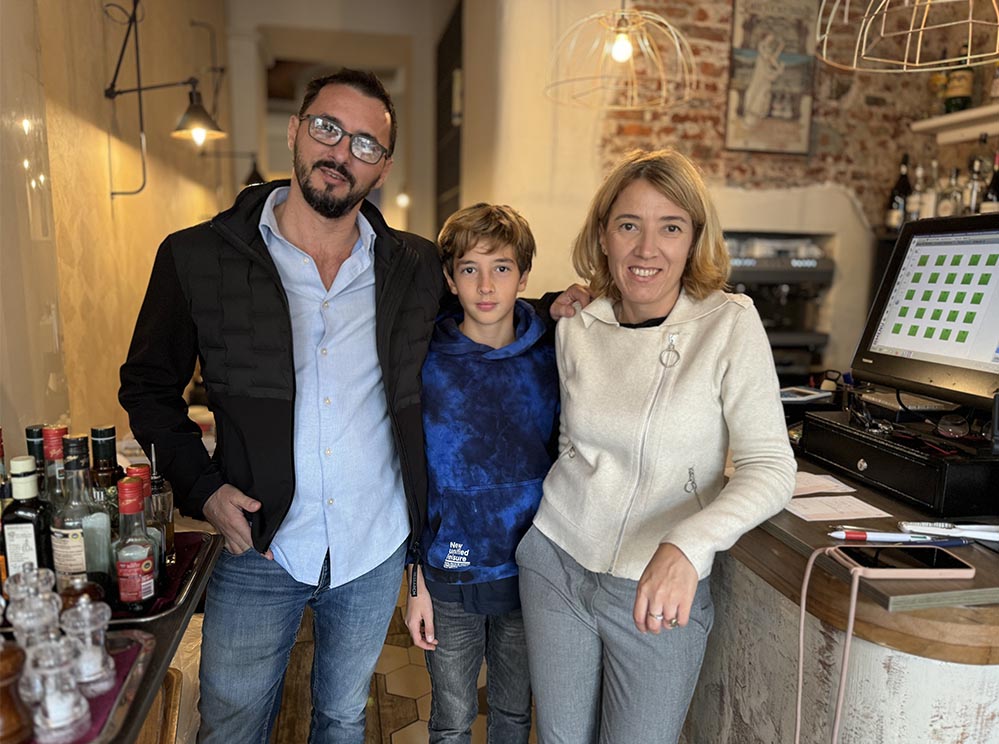
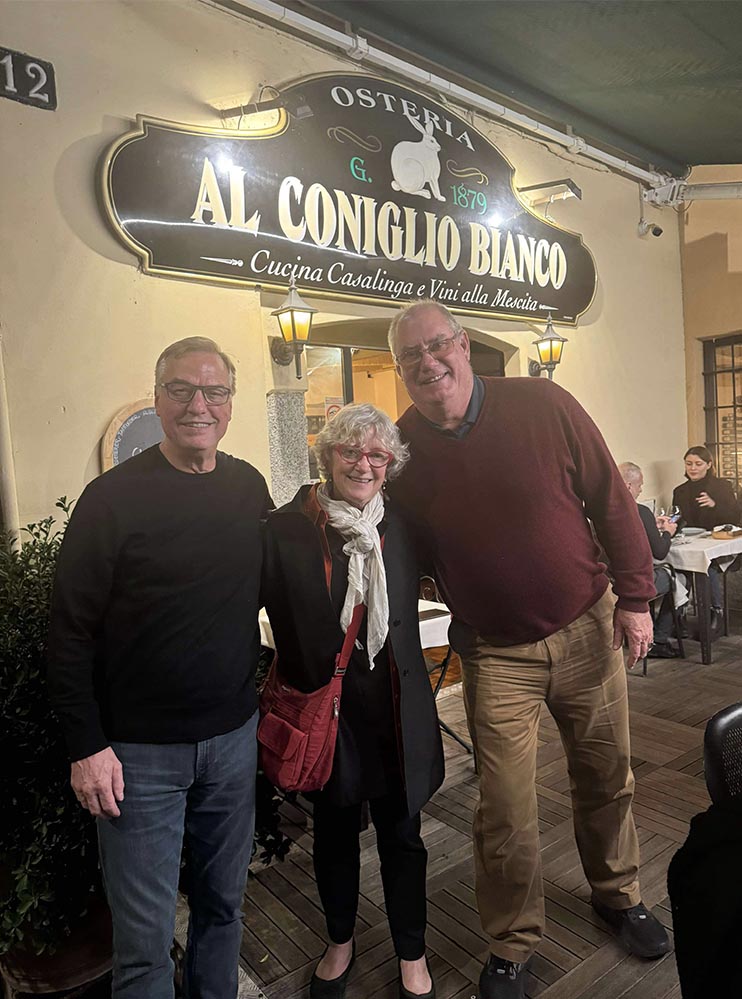
Of course, I just had to dine at my favorite restaurants, owned by friends: Carlotta Cafè, Trattoria Ponte Rosso and Al Coniglio Bianco.

There is so much I could say about each moment that caught my eye and forced me to stop for a quick capture. But I’m now back in Seattle (Burien, actually) having returned mere days ago, and I’m rushed right back into the flush of life here. So I’m posting random photos here before they slip away into the “I remember when…” moments. Enjoy… and imagine.

You can read my other blog posts about travels in Italy HERE.

(Click on any photo to enlarge it, and then you can progress through the series of photos.)

Italian Food: Eating in Italy

Italian Food: Eating in Italy

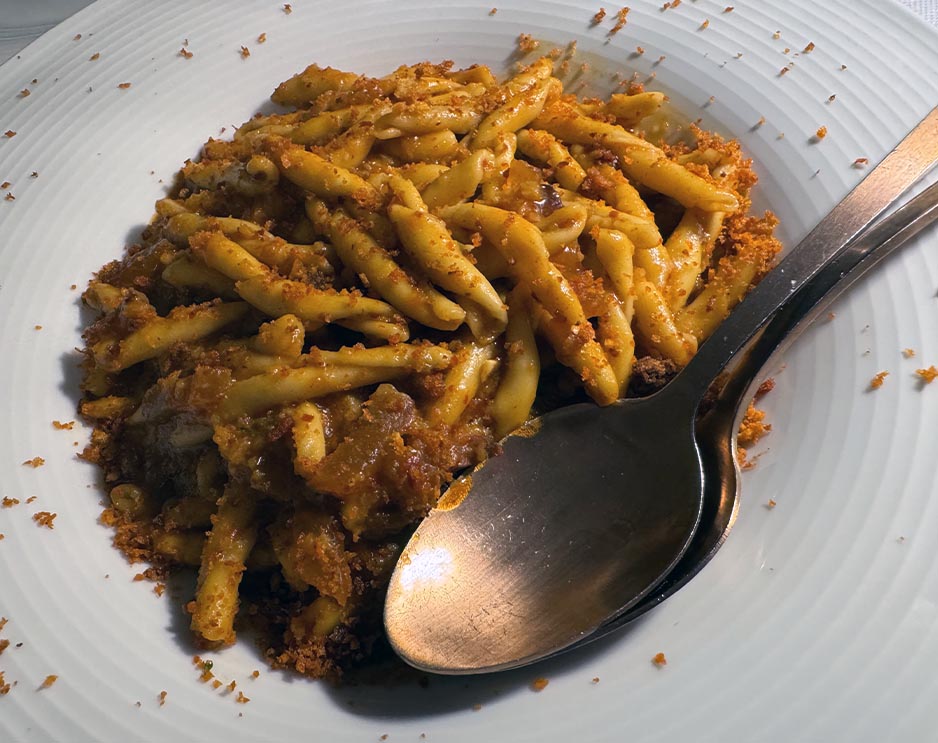
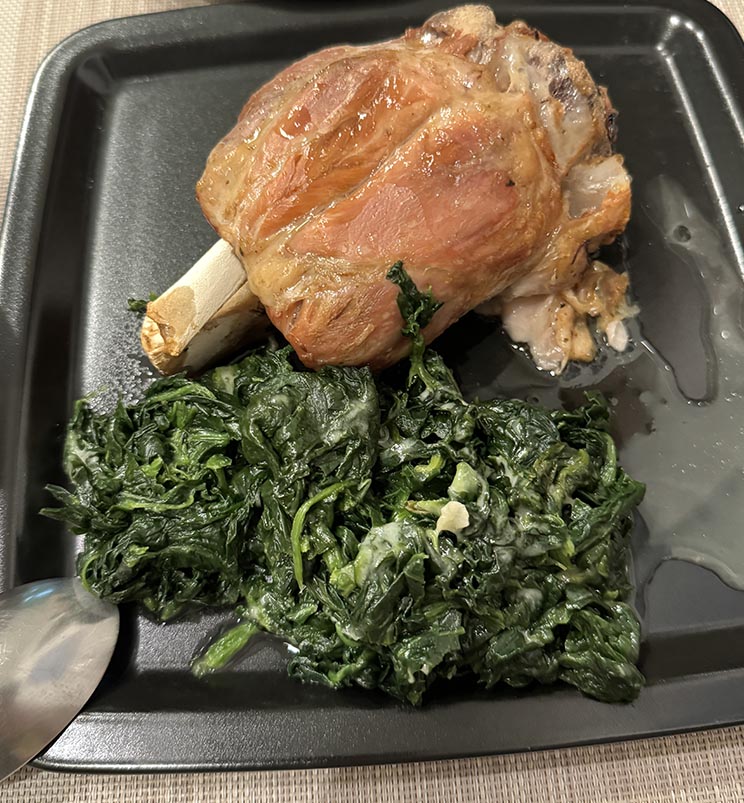
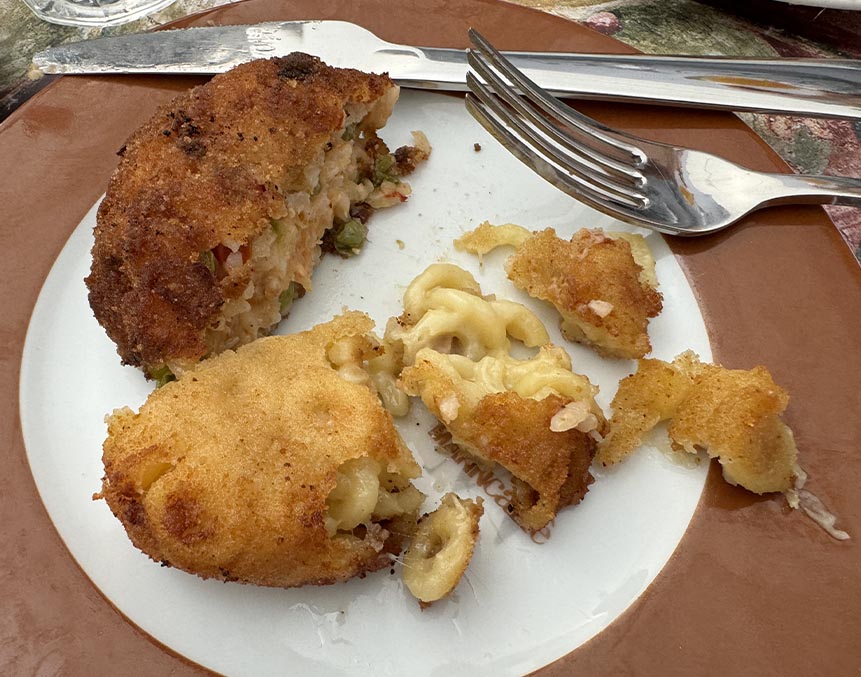
My number one recommendation when in Italy is to find out what the hyper-local food specialty is and choose that! There are foods you’ll find in one town, that are not available 50 kilometers away.

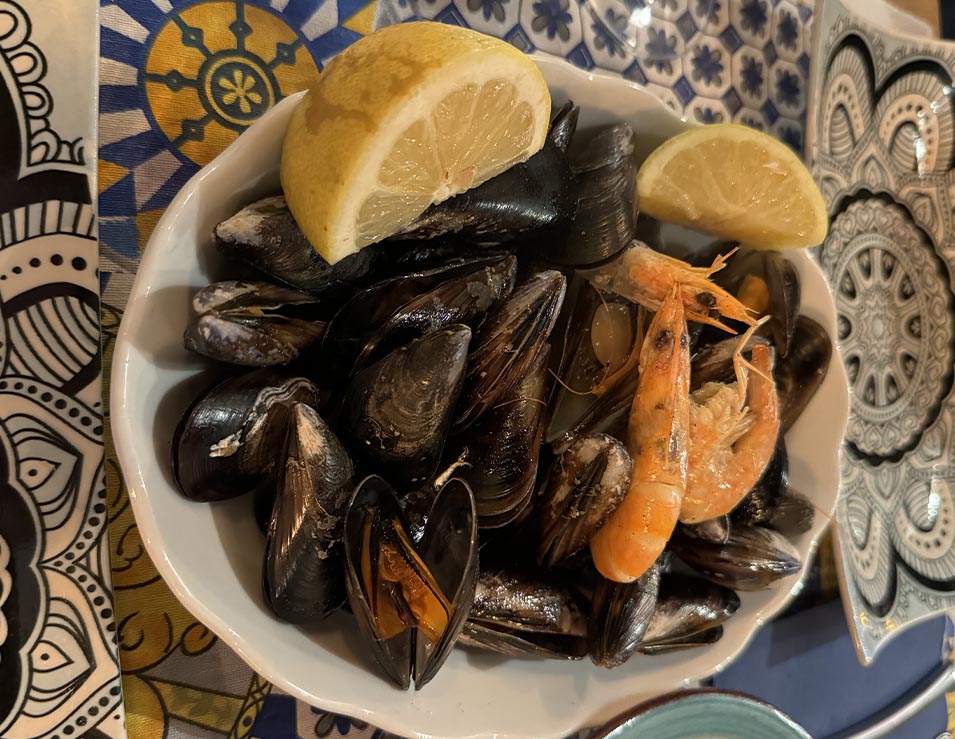
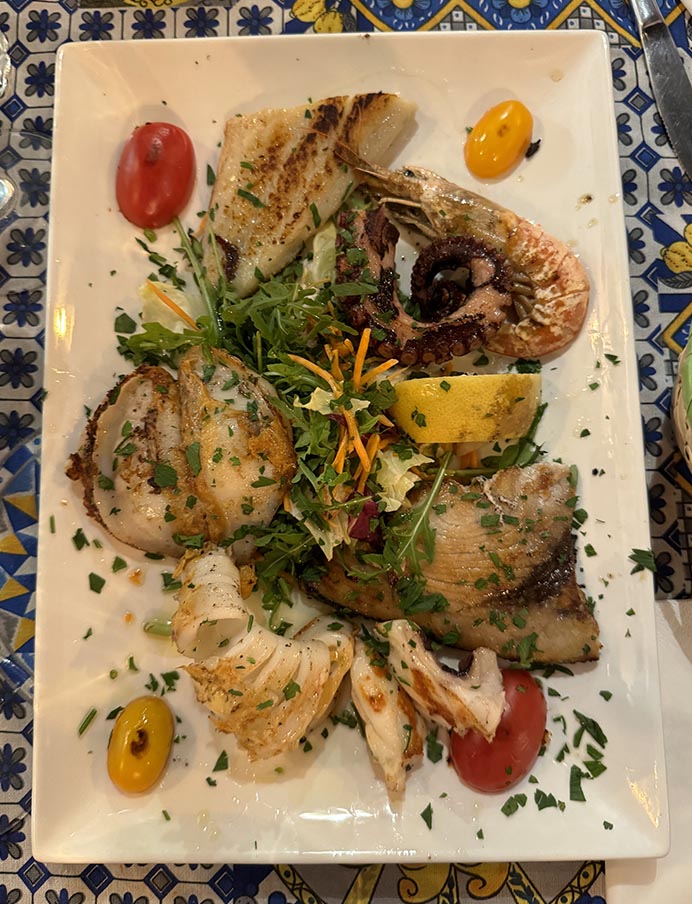
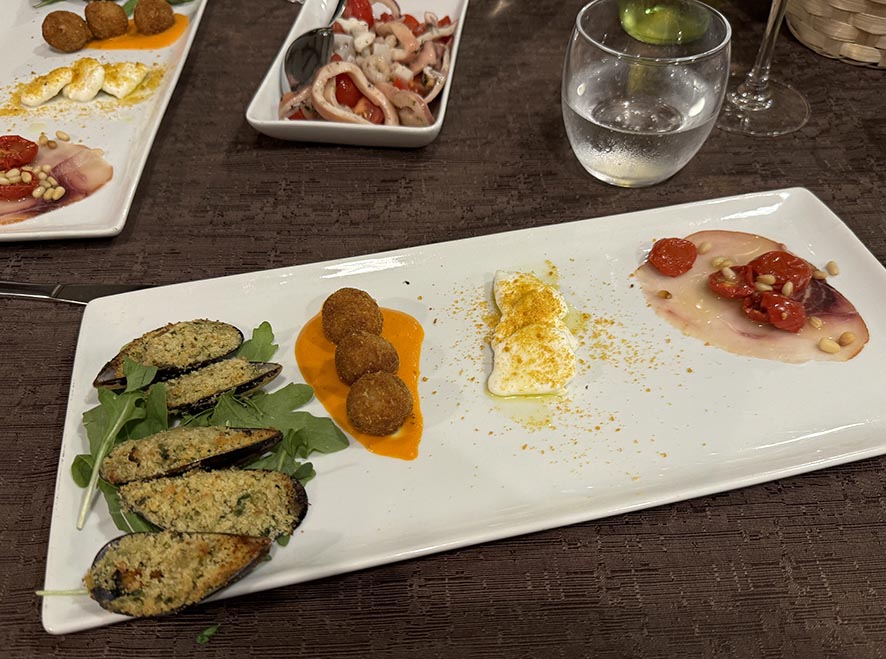
Why do I post pictures of what I eat? It’s to let you know that “Italian Food” is so very, very much more than “pizza, fettuccine and ravioli”! When you look at a map, you see that Italy is surrounded by the sea, thus, seafood is a very big component of what’s offered, in many different forms, both cooked and raw.

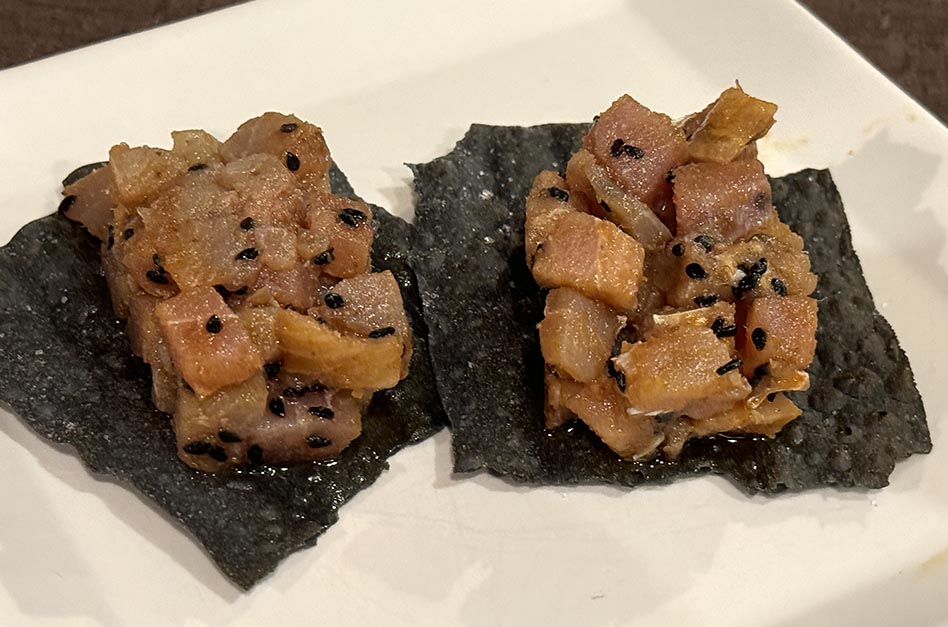
Also… be curious. Order something that you have no idea what it is. You might discover something that becomes your new all-time favorite… or not. But at least you tried it! I’ve ordered deep-fried brains, diaphragm tartare, kidneys, tripe, etc. Try it at least once.

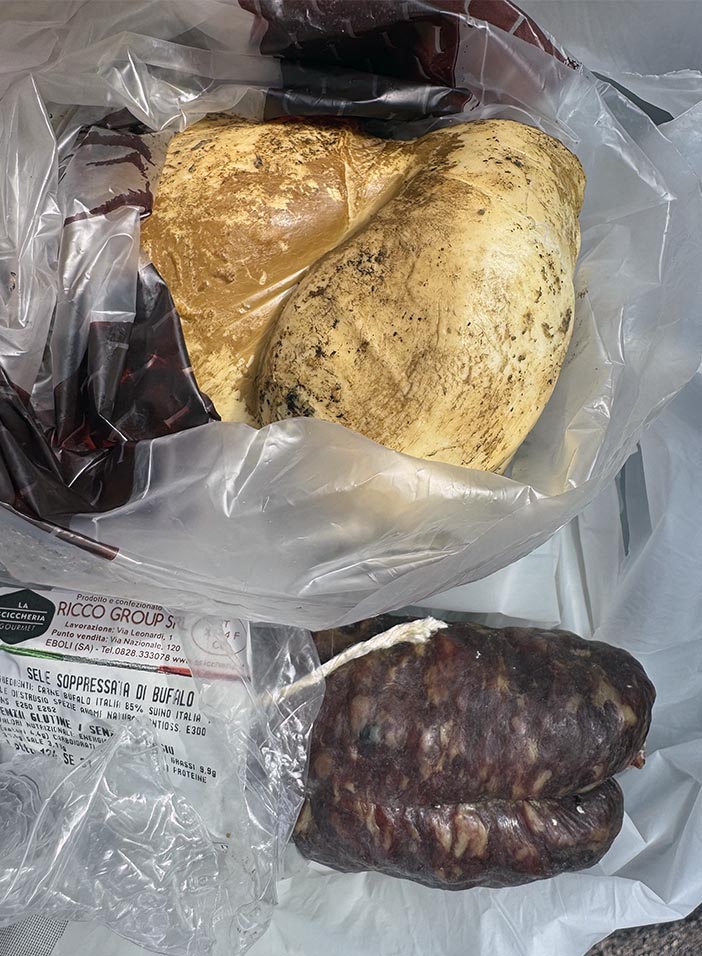
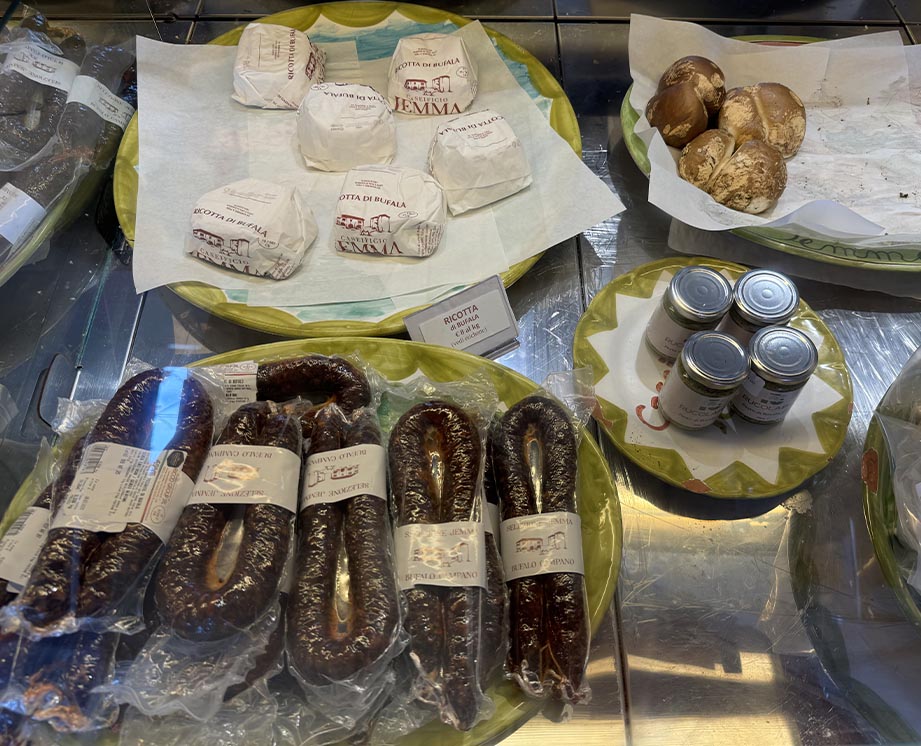
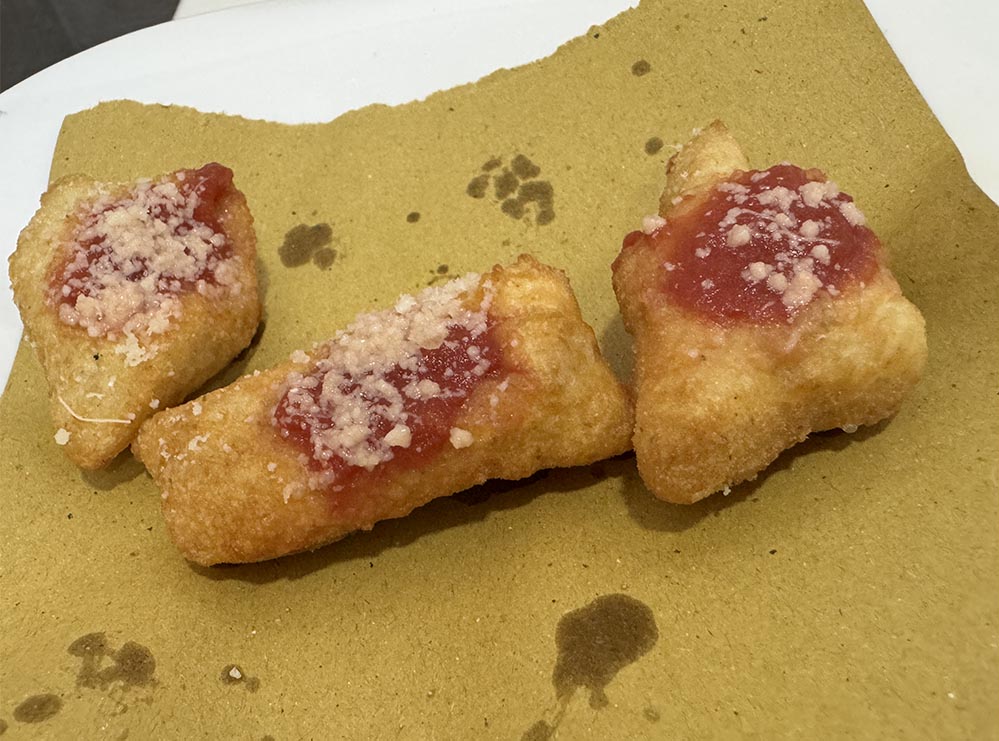
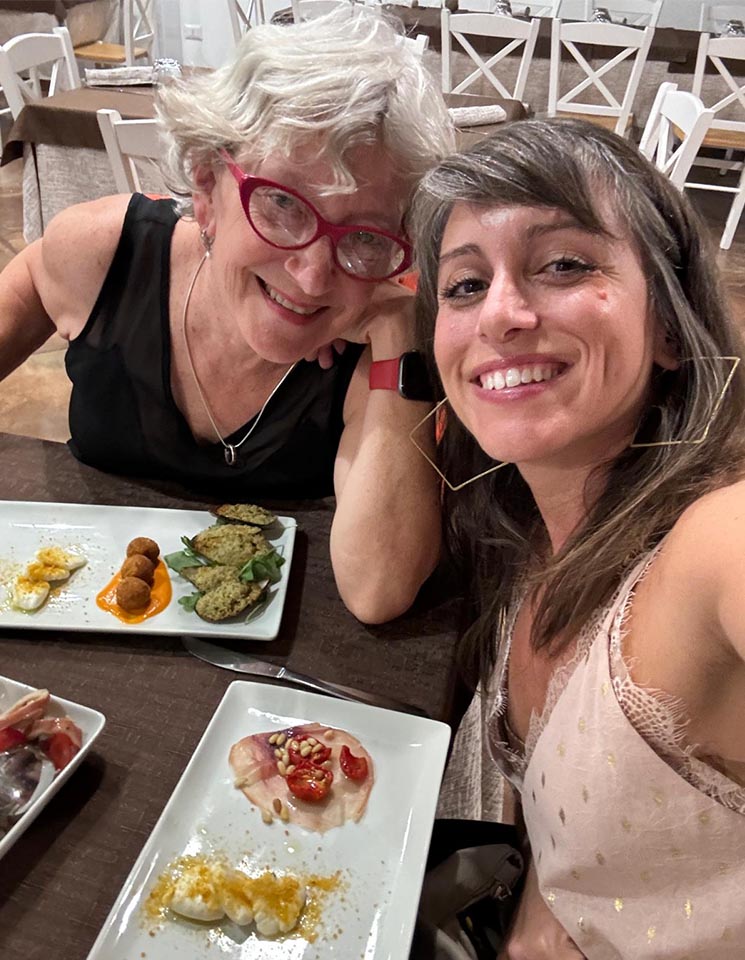
And it’s great to be eating with another adventurous eater, “un buongustaio… una buona forchetta”, egging each other on about what to order from the menu and sharing plates. In my travels this year, I’ve had David and Hannah accompanying me at meals, one and then the other. We sought the most local, traditional foods… and relished them. With them, I traveled from Milano, to Bari (Puglia), Matera (Basilicata), Napoli (Campania), Nulvi (Sardegna) and back to Milano. A WORLD of ingredients and flavors!

In Italy, in Europe, some of the food and agriculture regulations are very different, banning some components that are still allowed in the U.S. So I trust the food in Italy more than I do back home. (I would never eat raw beef in the U.S. unless I personally knew the producer!)

So, eating here is very different. And, besides the food itself, I’m walking A LOT when I’m here, therefore, I don’t impose constraints on what I consume.

When you come here, I invite you to arouse your adventurous nature and try something new and wonderful. Order something for which you have no translation, and revel in this big, wonderful world of “Italian Food”.

Check out these other food posts:

Italian Food: Hungry? Eat this!

Italian Food: Eating the South

Italian Food: Porcini and Brooms

The Hospitality of Sardegna

The Hospitality of Sardegna

Open-hearted people. I was welcomed with warm smiles and home-cooked meals… and they didn’t even know me! Sardegna. (Sardinia, if you speak English.)

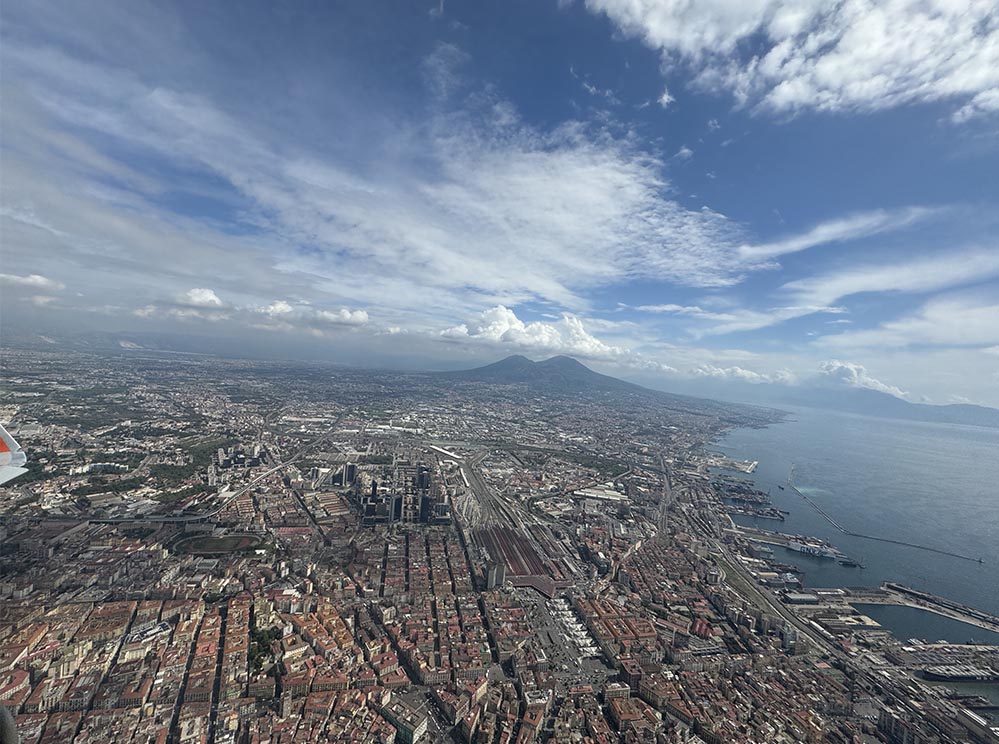
I flew out of Napoli (Naples), with a sight of Vesuvius, to Olbia, in the northeast of Sardegna along the Costa Smeralda – the Emerald Coast. Then I drove a combination of “main roads” and narrow lanes until I arrived in Nulvi. (My friend Hannah later told me that, driving in Sardegna, you go as fast as you can/want, drive wherever you want in the “lanes”… and just don’t hit anyone! I slowly adopted this driving practice during my few days there.)

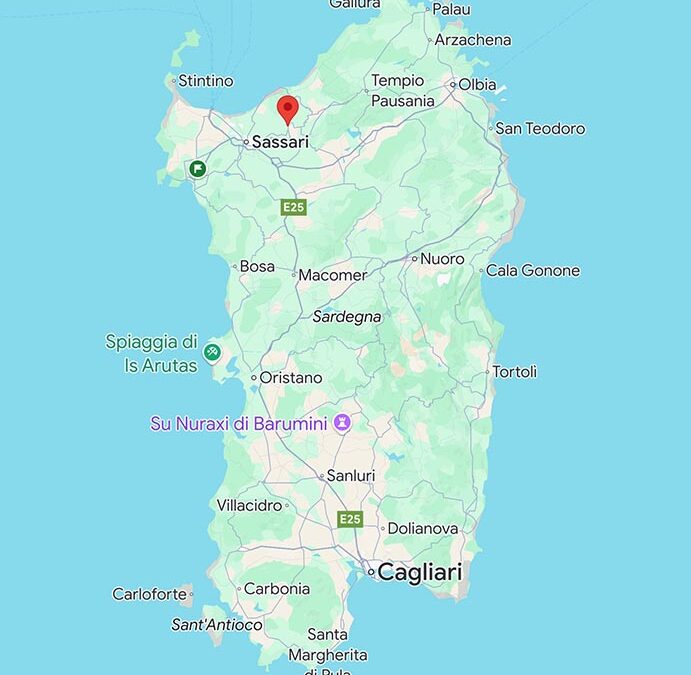
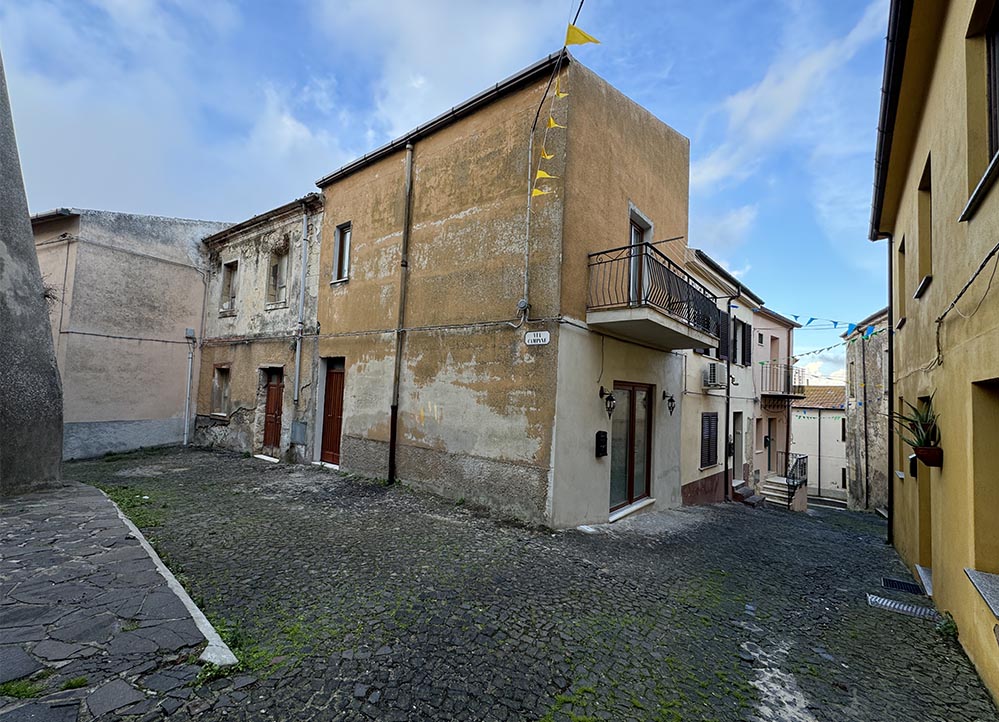
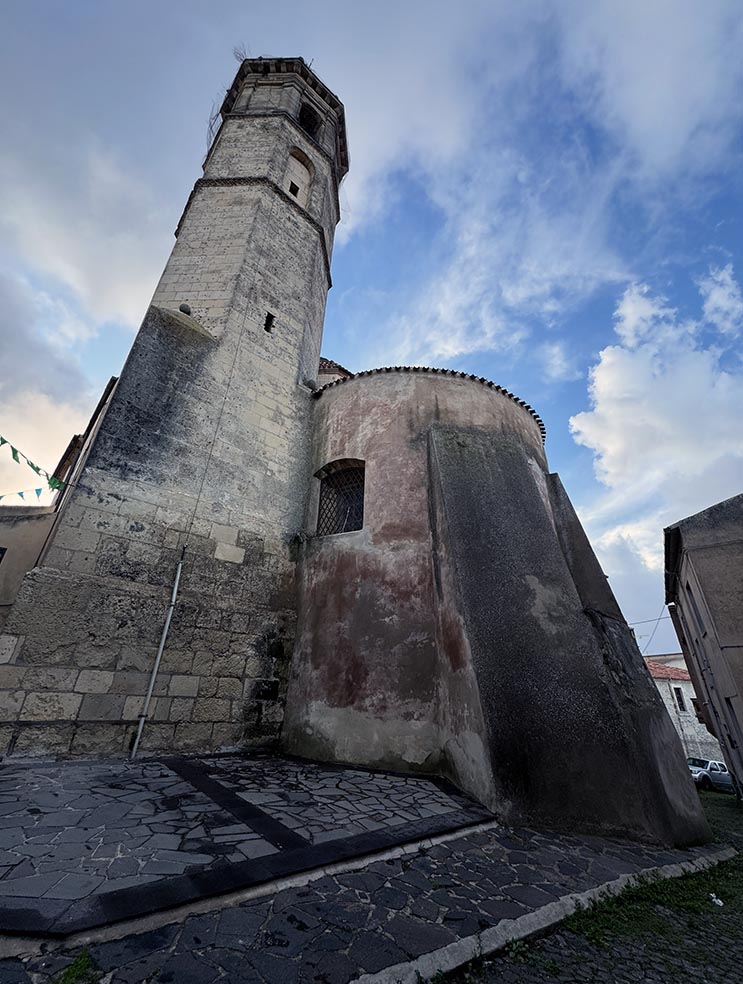
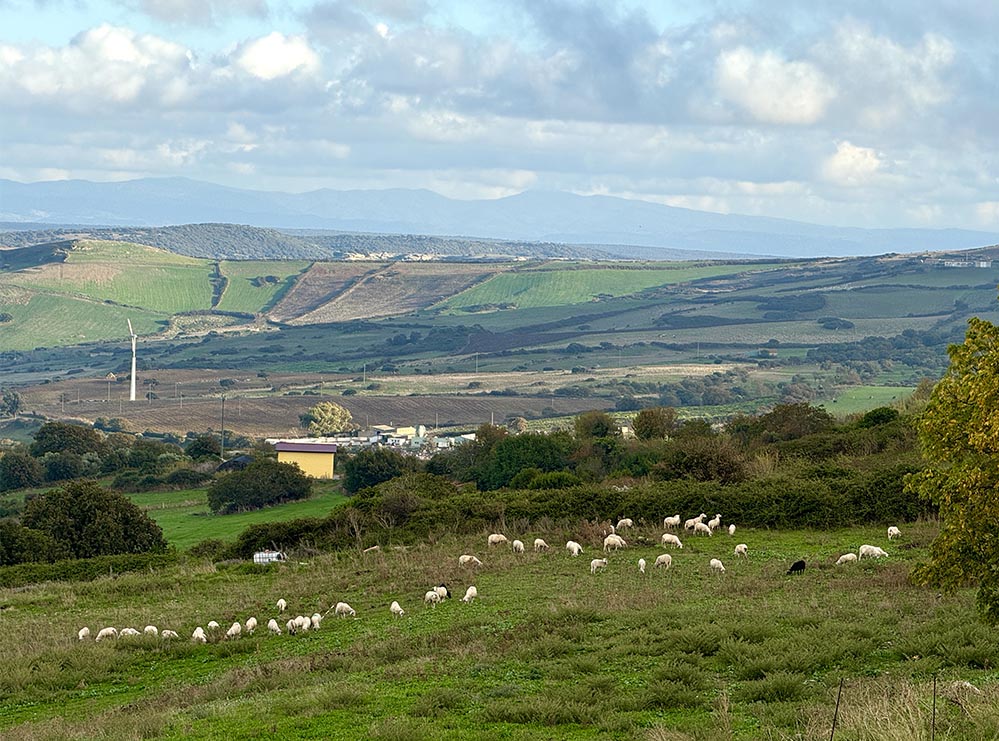
Hannah bought a place this year in the small town of Nulvi, not far east of Sassari, up in the north of the island of Sardegna, only about 20 minutes on one-lane-ish, winding roads from the northern shore. Nulvi is surrounded by pastoral green fields and grazing sheep. Hannah opened her newly refinished space to me to stay for a few days, and I relished seeing her new life, and meeting her new friends.

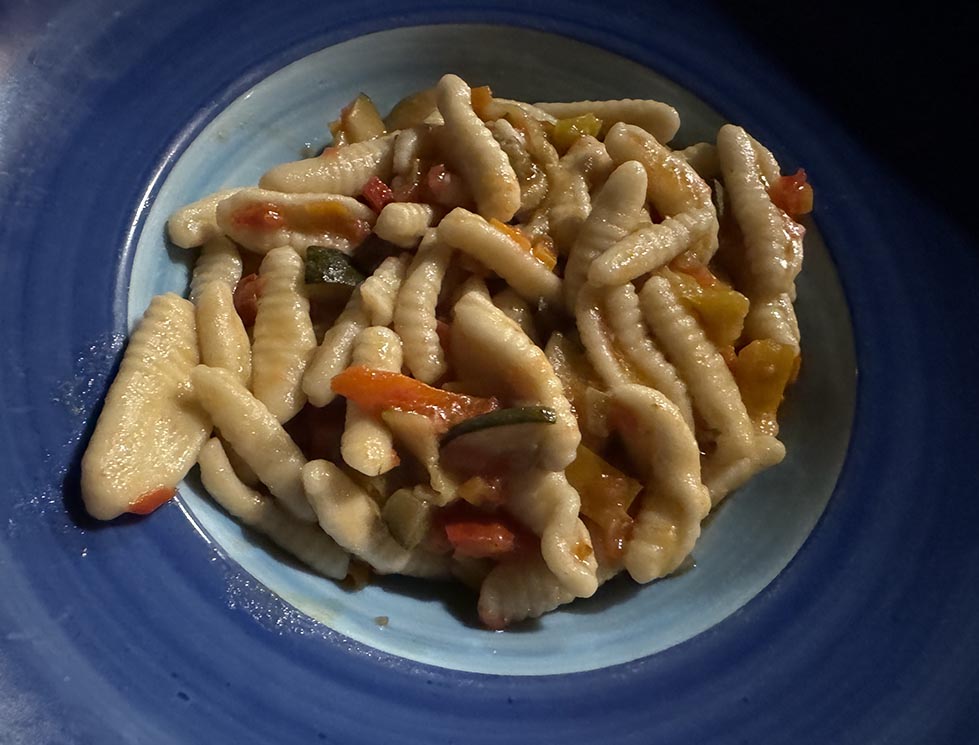
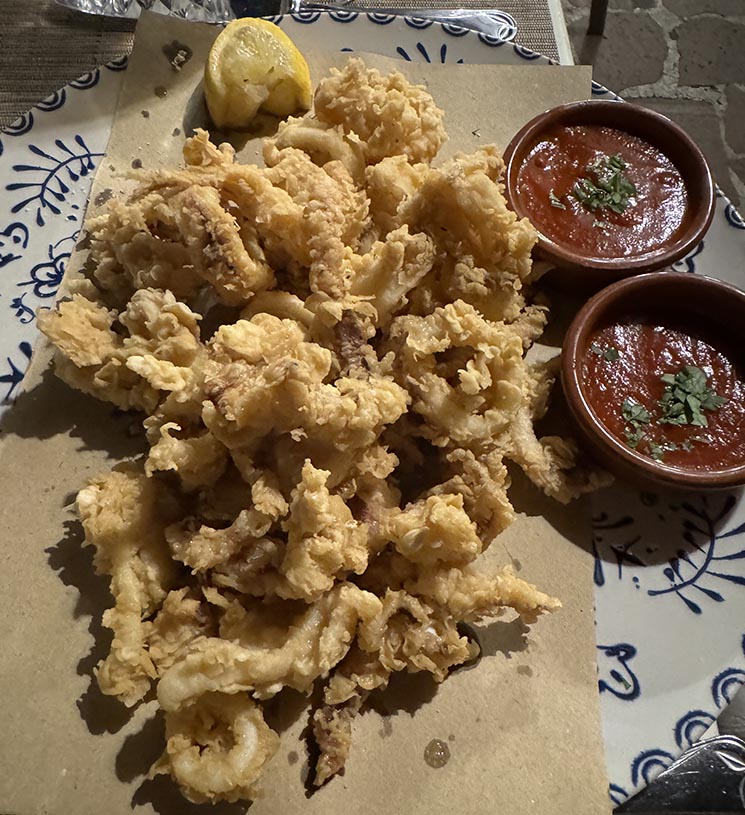
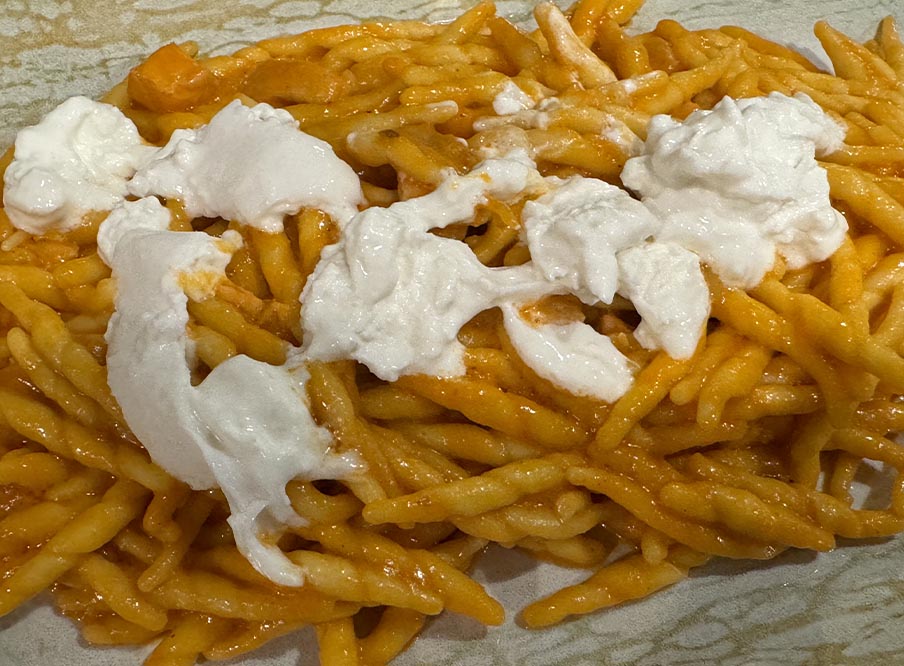
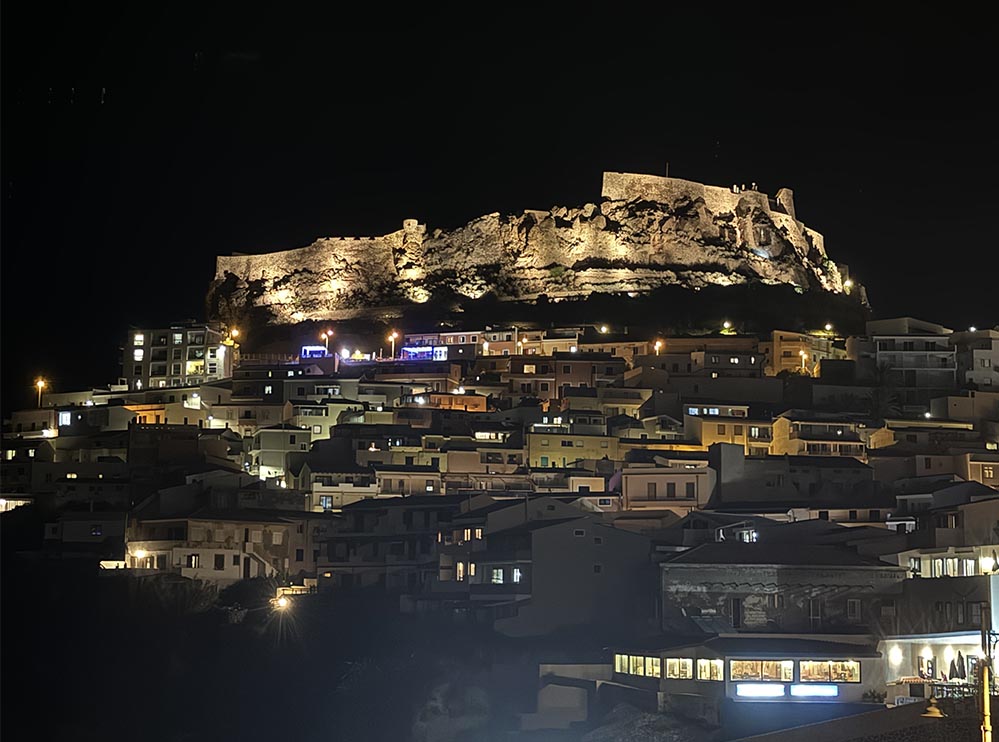
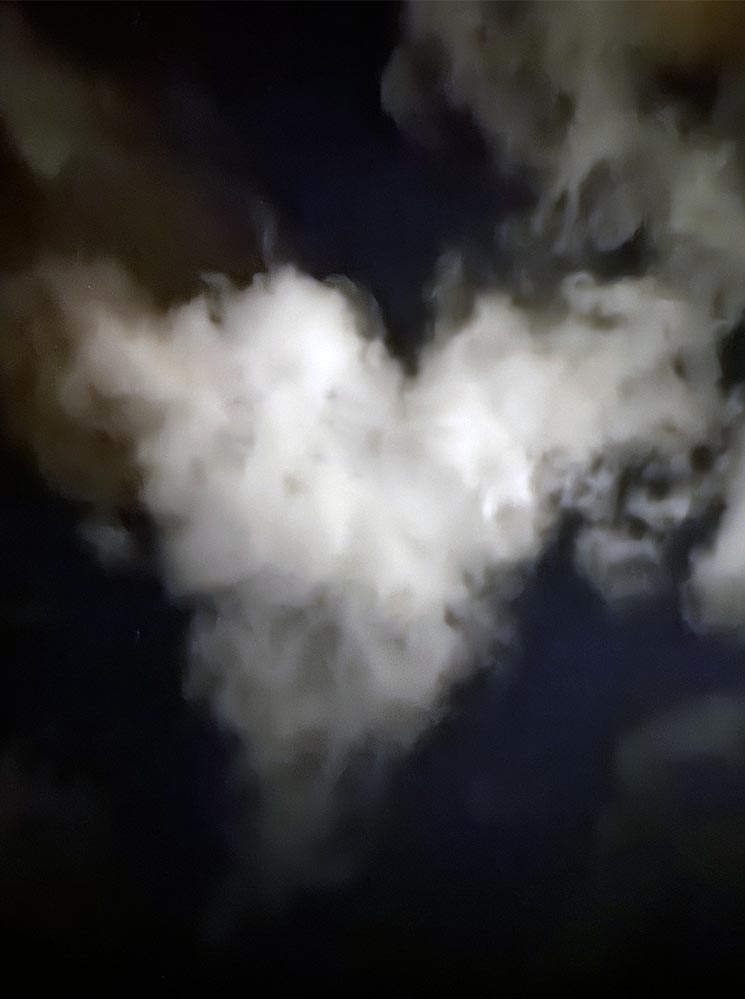
The first night, we drove on squiggly roads and ate with a view of the Castelsardo, high on the hill. We had fried calamari and Sardegnan pasta. When we left the restaurant late that night, our eyes did not see, but our phone cameras did clearly register a heart cloud in the sky! (Really!)

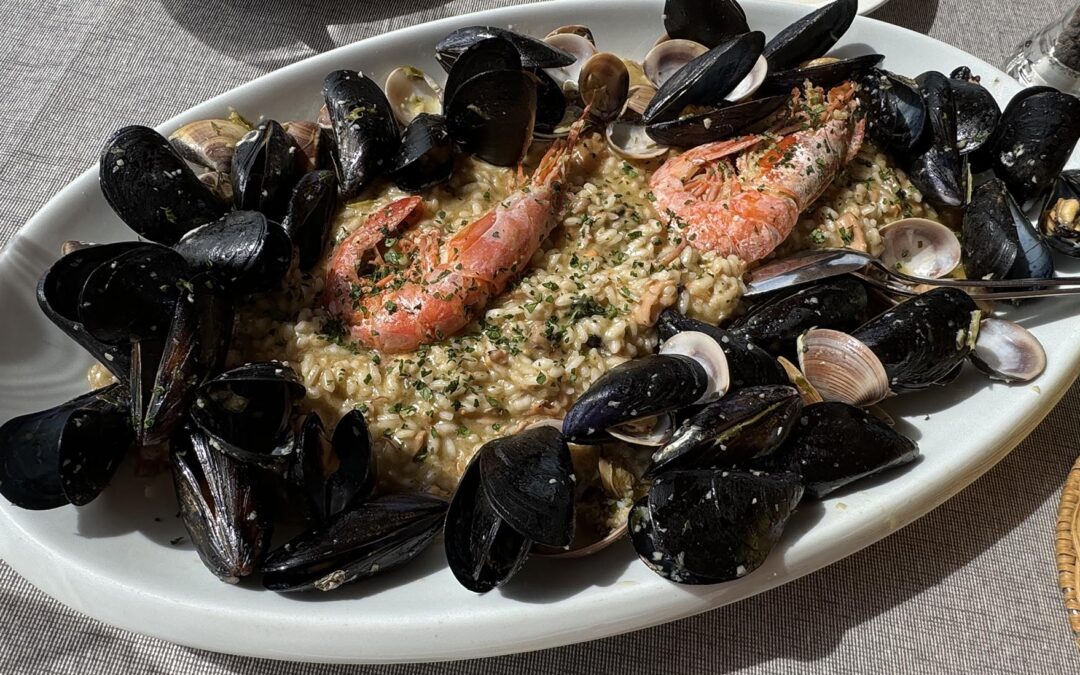
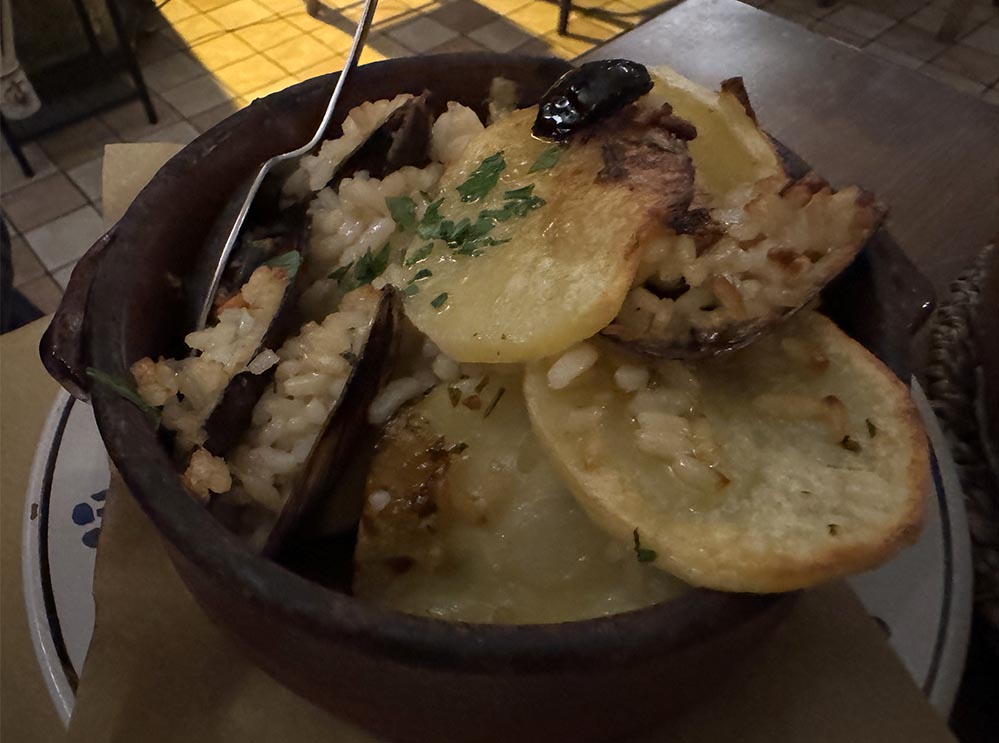
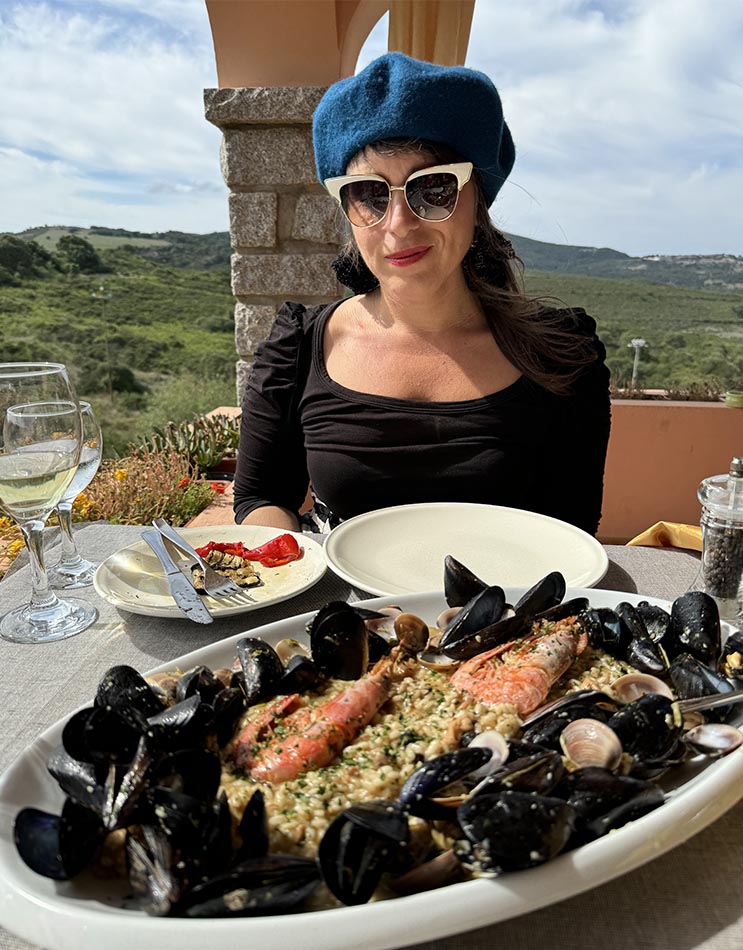
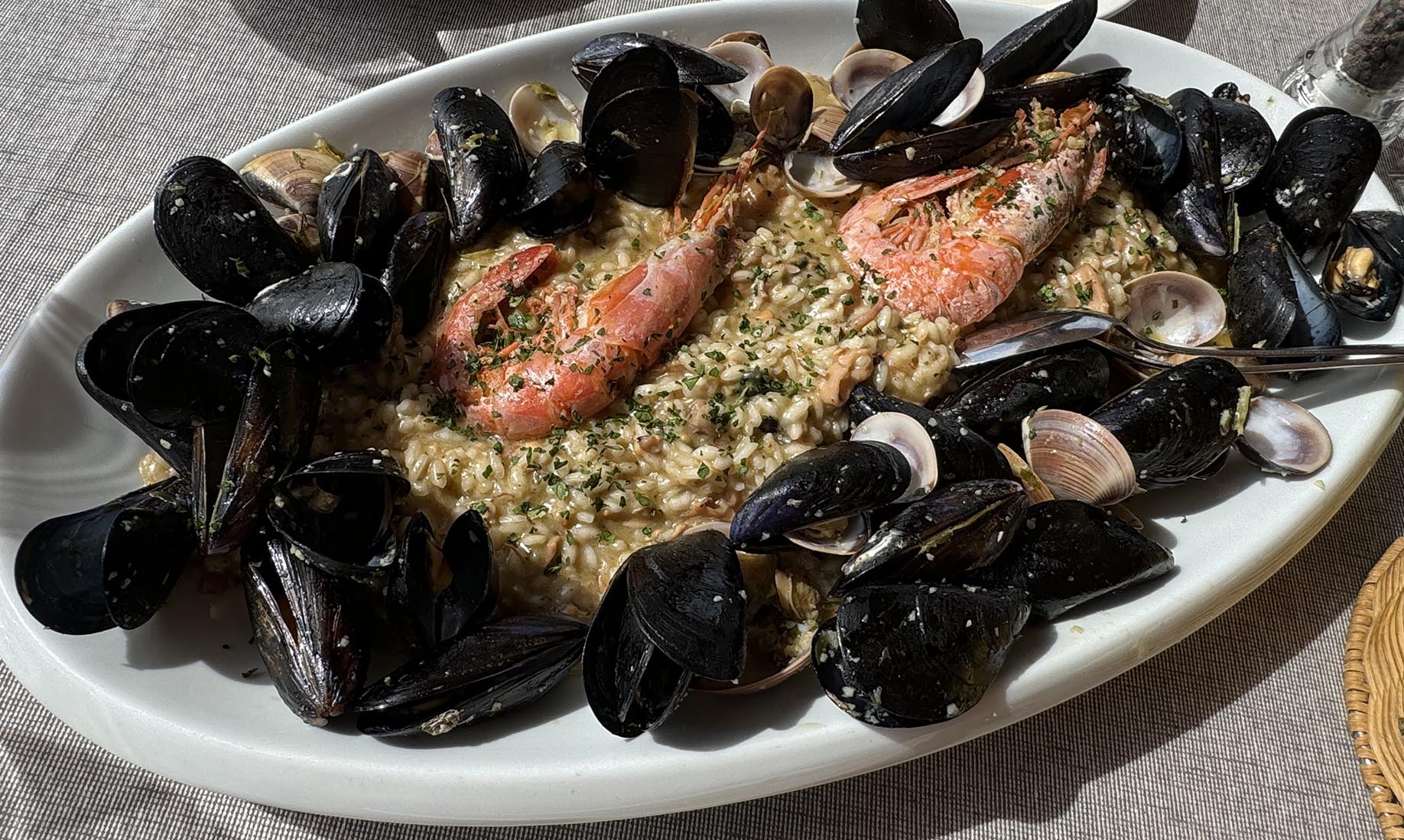
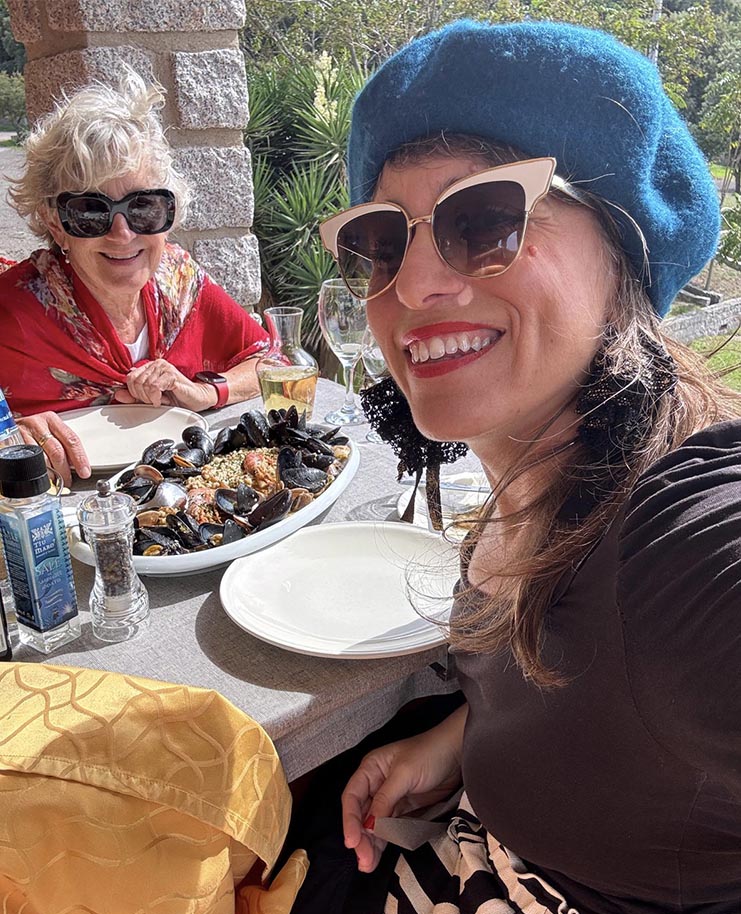
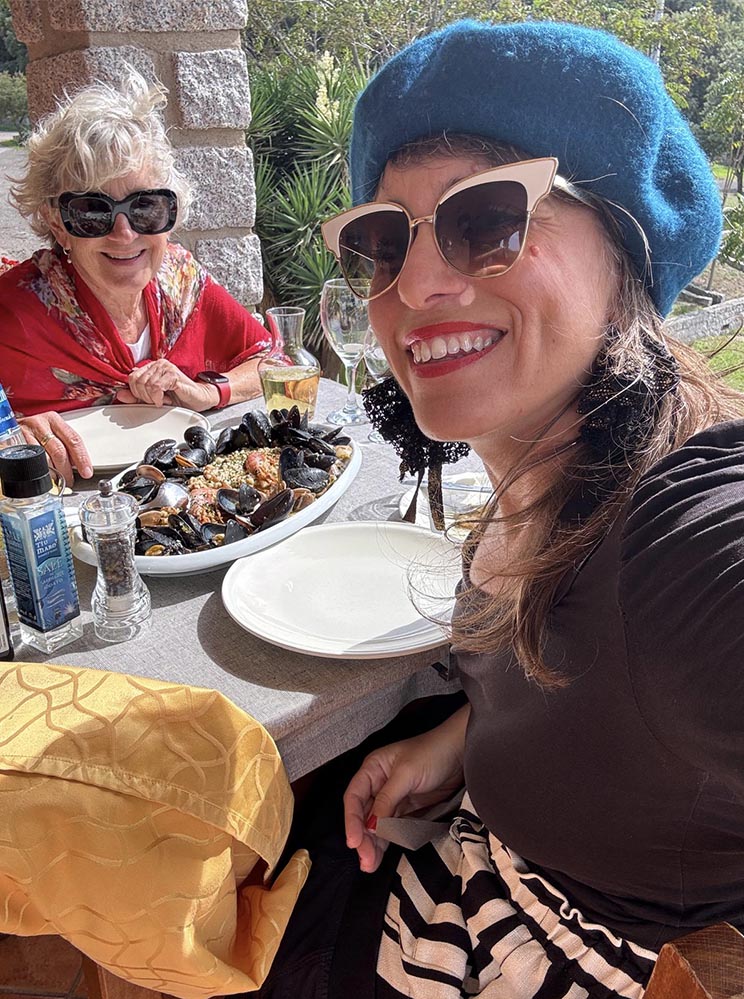
For lunch the following day, we drove more narrow, winding roads to “the risotto place”, Le Nuove Ginestre, for over-the-top seafood risotto, while we sat in the sun and the breeze in our sunglasses. “Tutto assolutamente buonissimo!” “Everything absolutely delicious.”

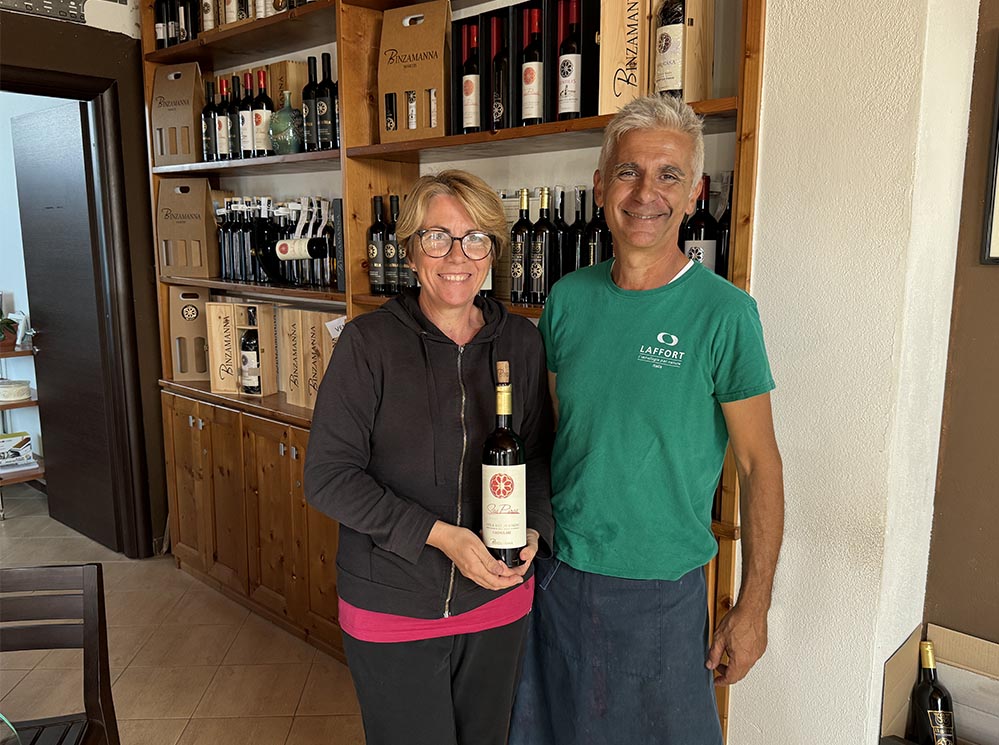
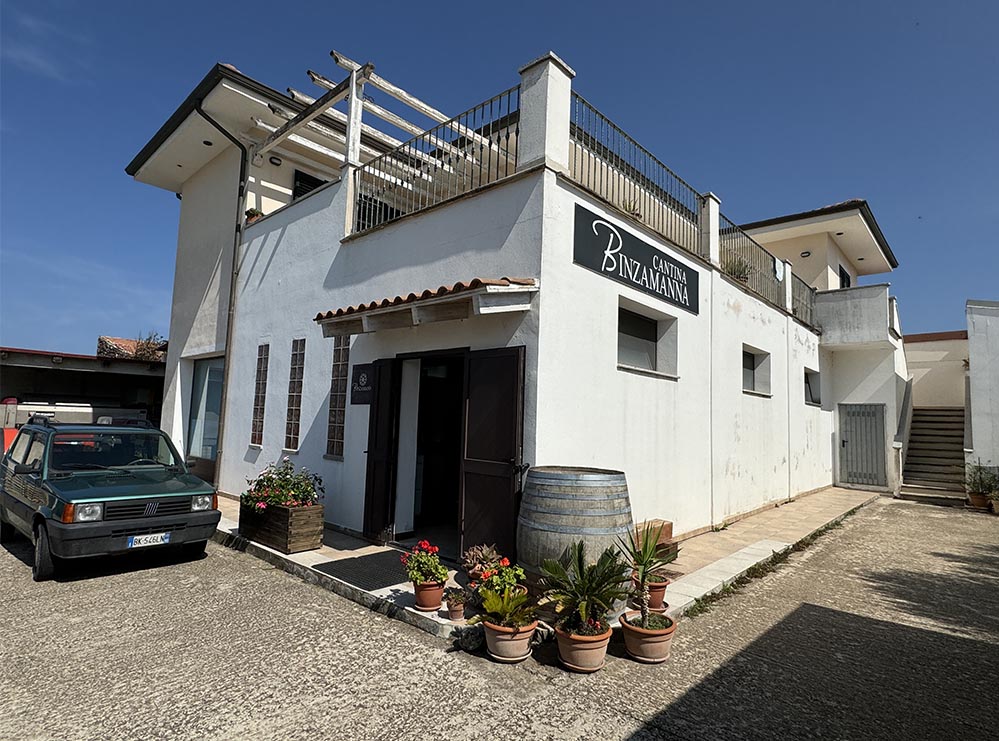
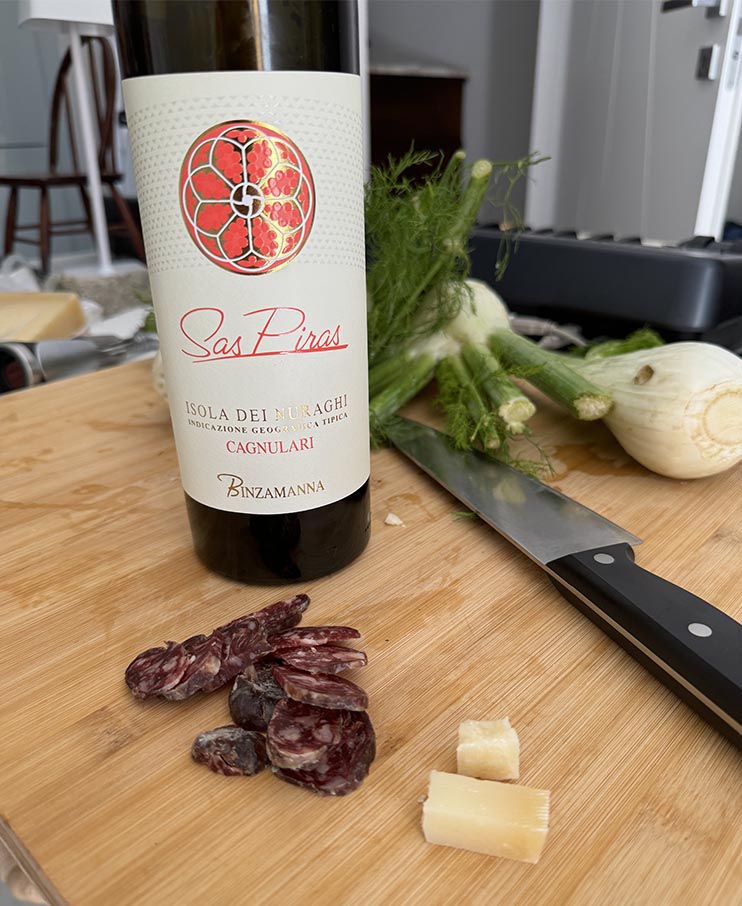
The next day, I drove east to Martis and went to a wonderful, small vineyard and had wine-tasting with Sara and Walter at their Cantina Binzamanna. Even though grape harvest was in full-swing, they welcomed me, chatted, gave me generous tastings of their wines, and we warmly shared stories of farming. I bought wine to contribute to the feast with friends, planned for that evening.

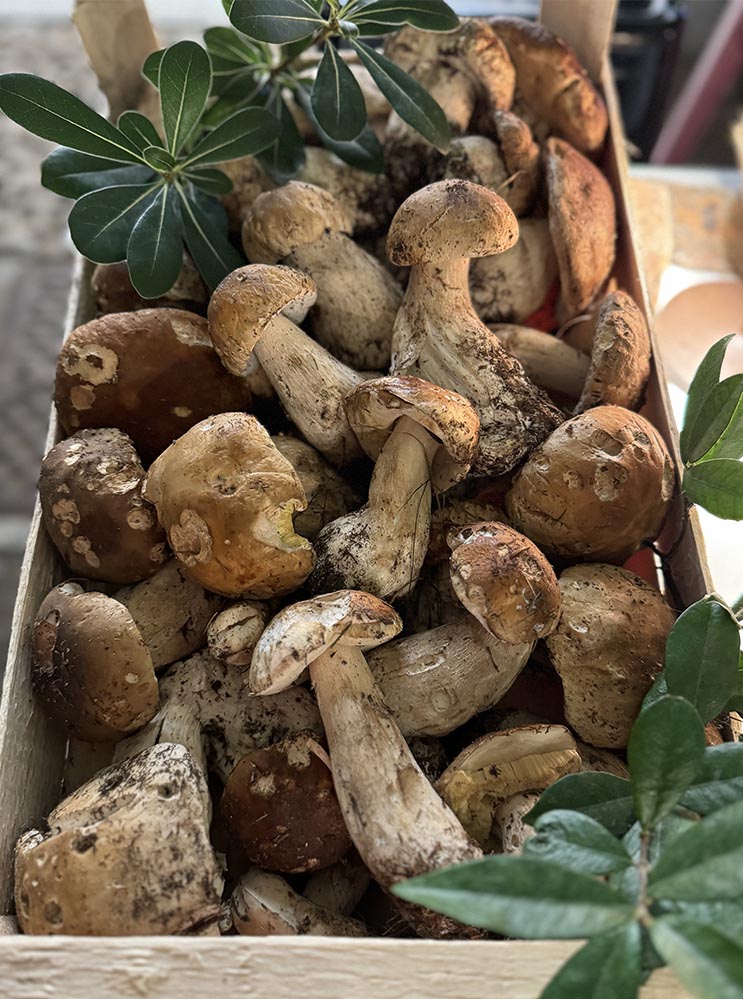
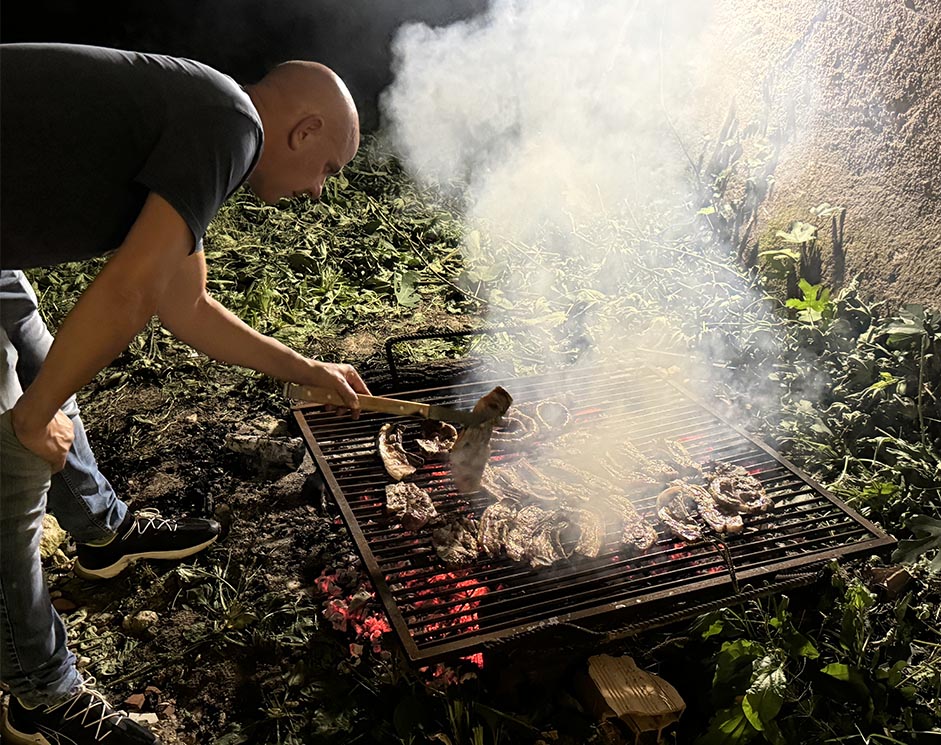
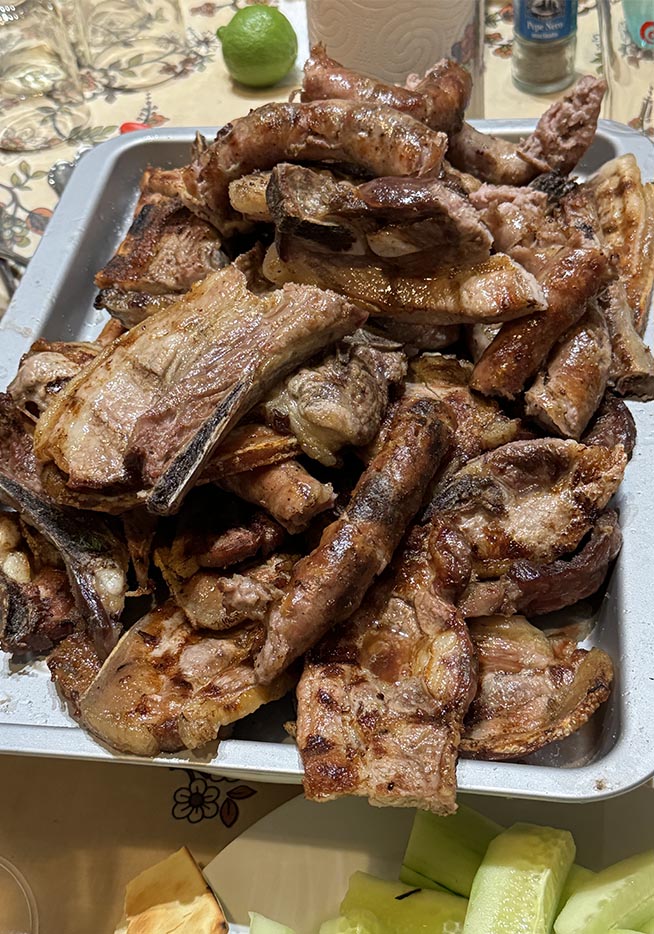
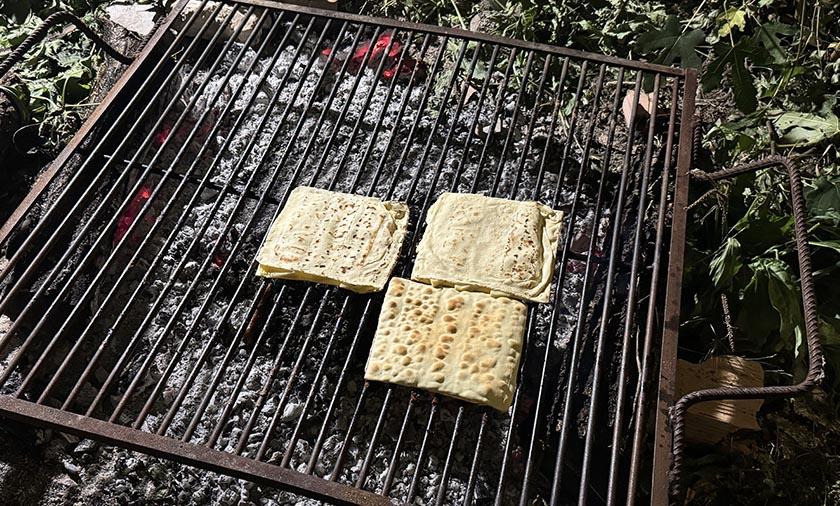
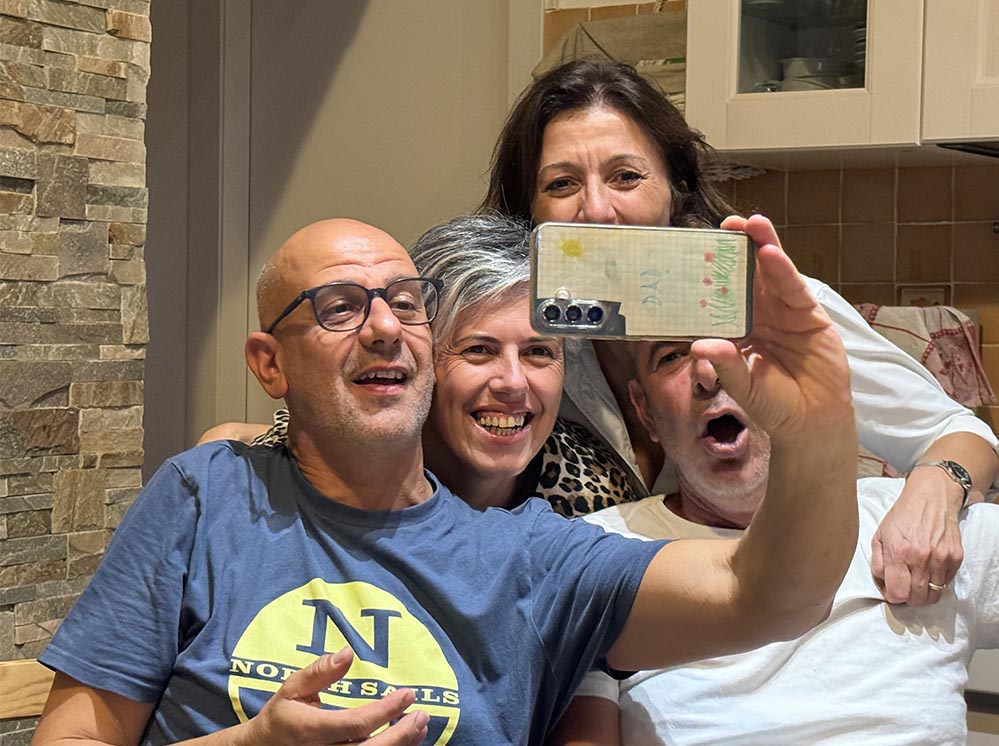
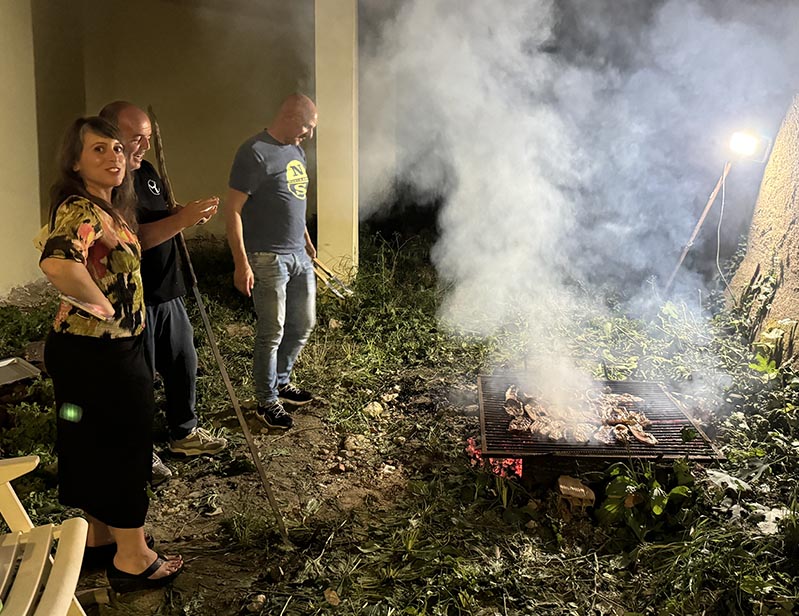
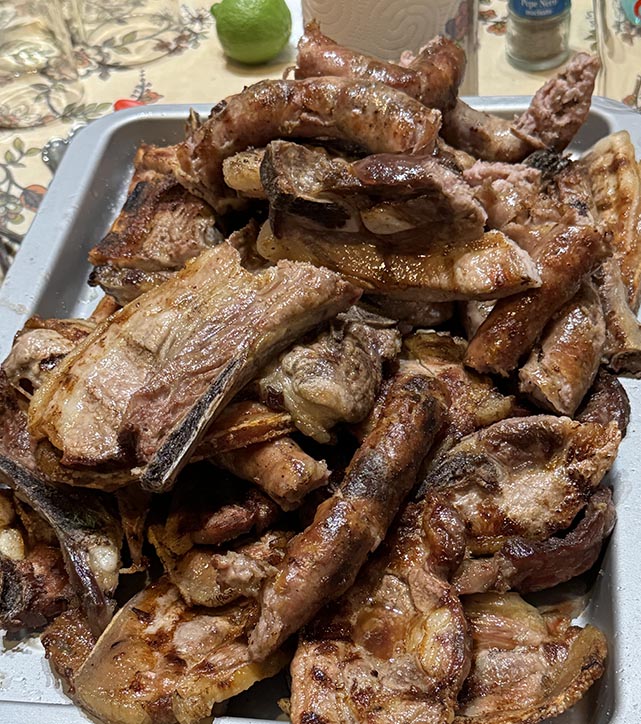
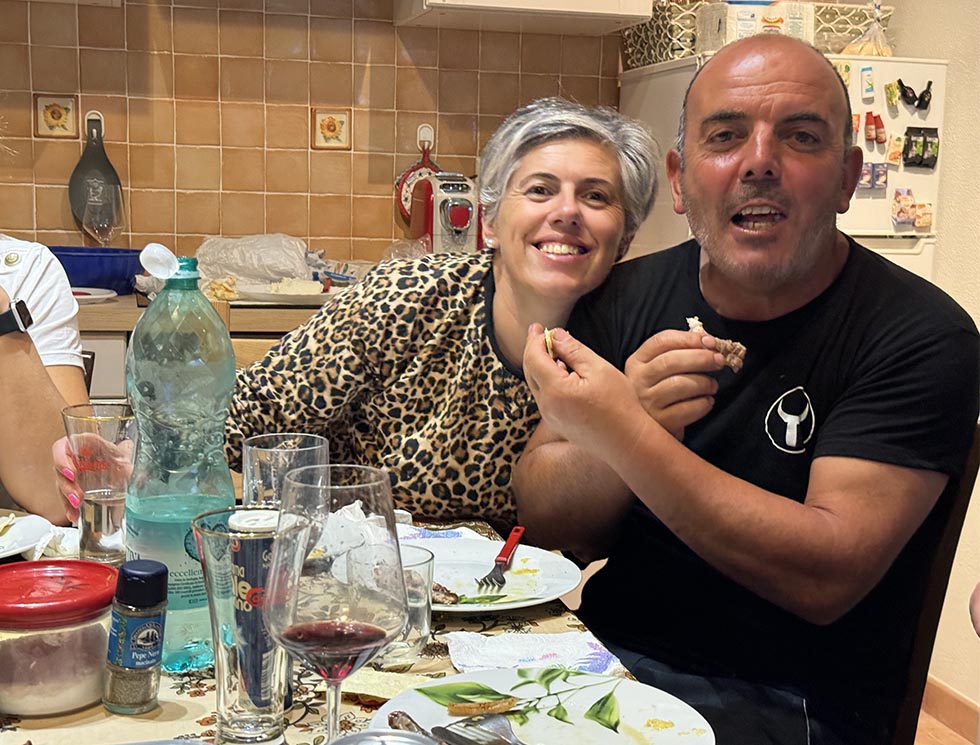
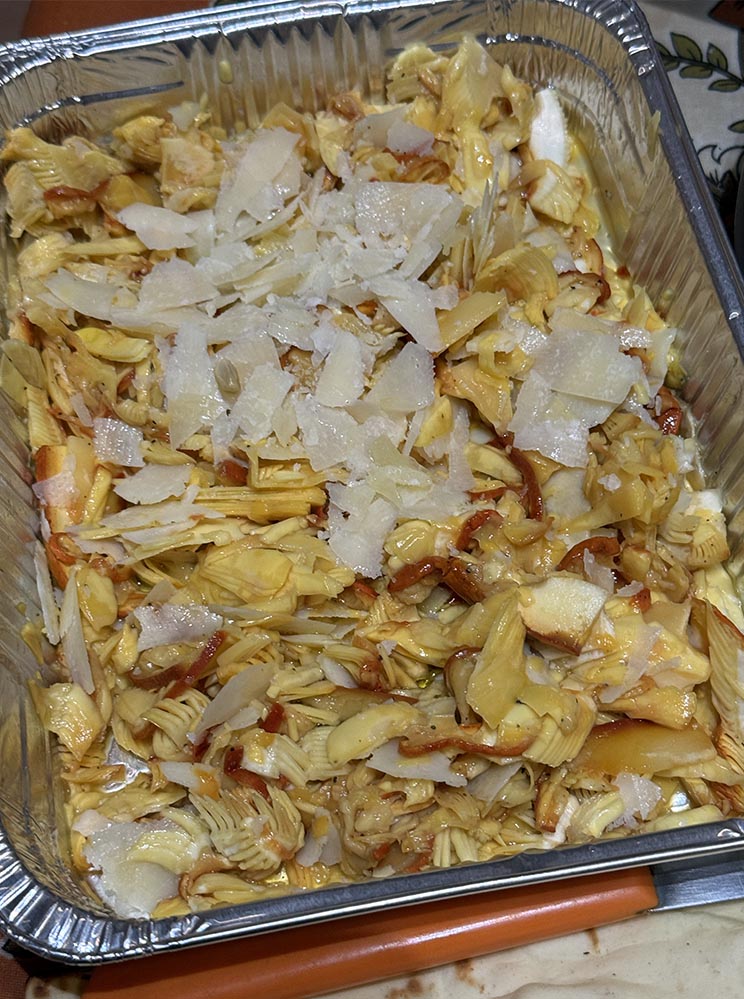
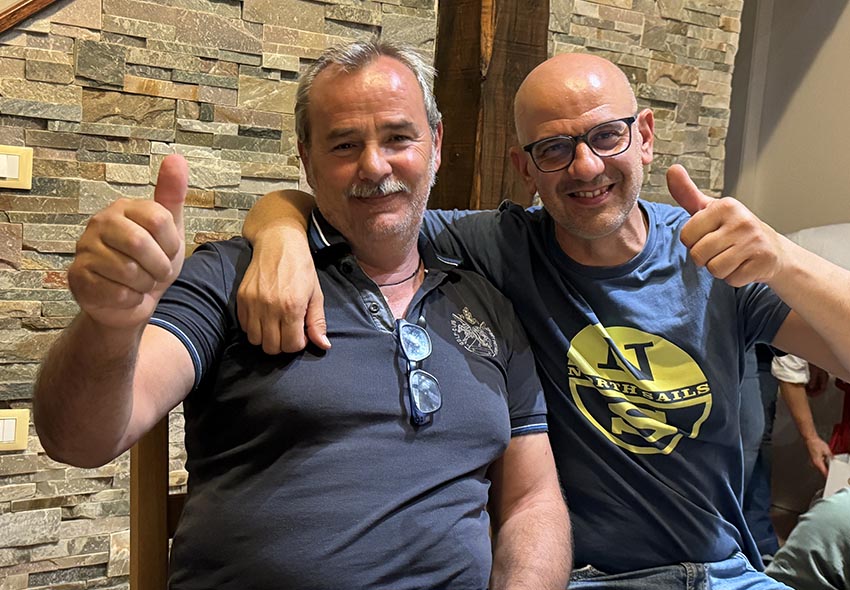
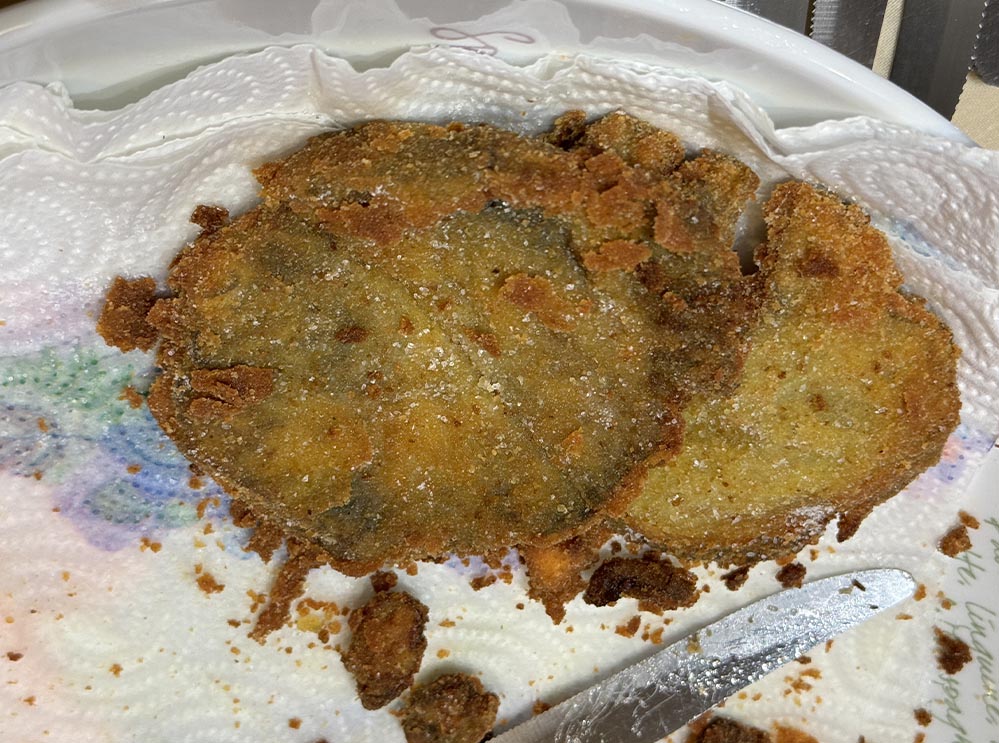
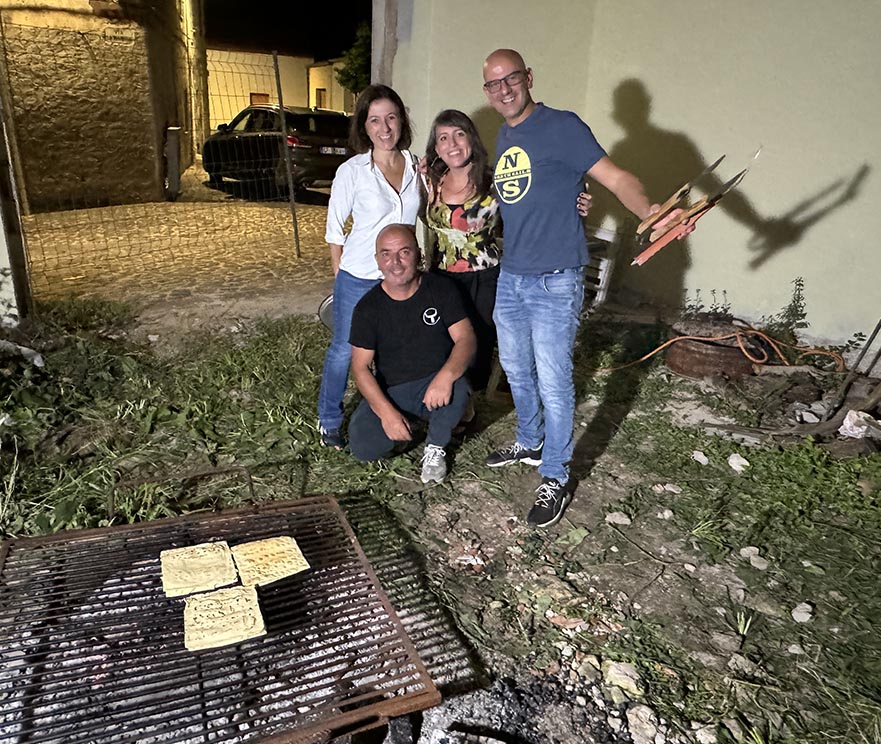
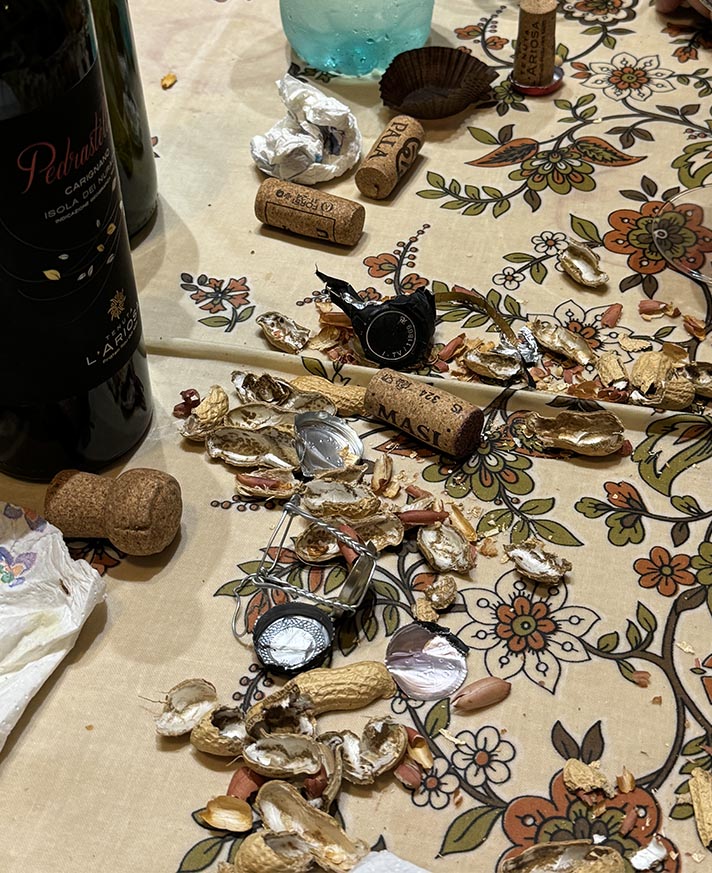
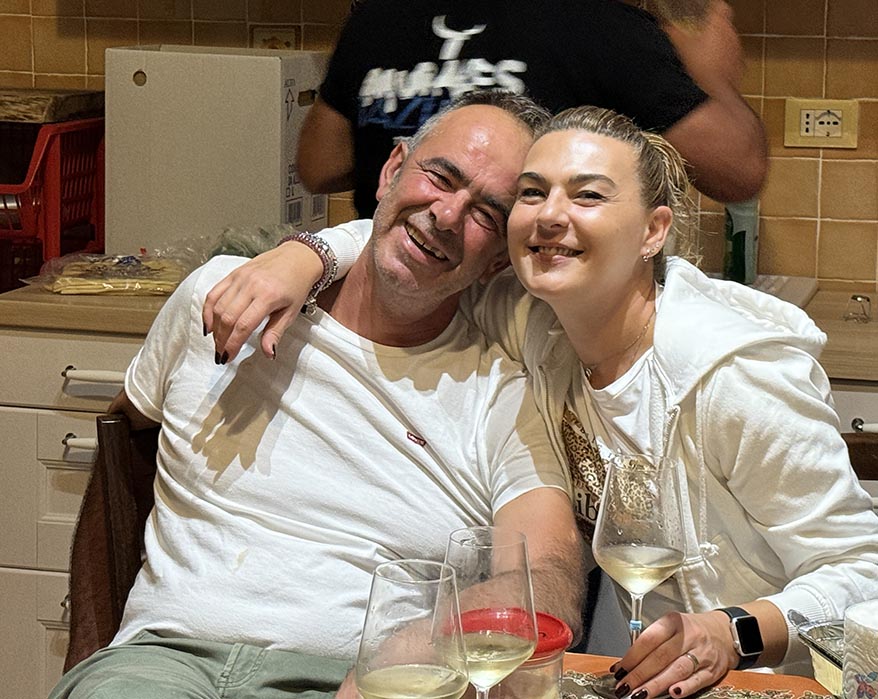
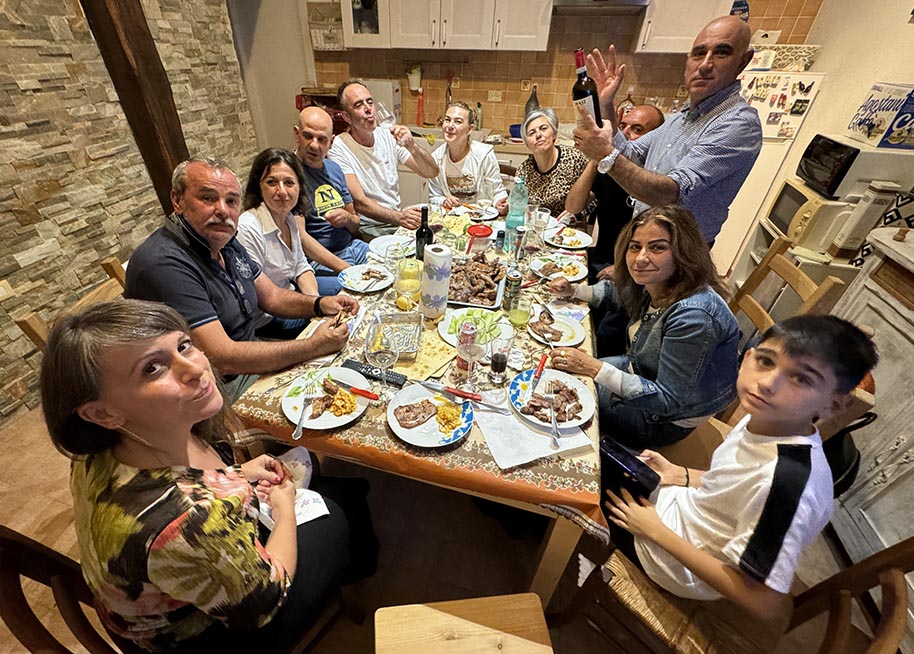
…And a feast it was! Ten long-time, local friends were gathering in Martis and invited Hannah and me to join them. A roaring bonfire was building hot coals in a little courtyard next door, awaiting the grill for sausage and meat cuts. Another courtyard had a pot of oil for deep-frying breaded, fresh porcini mushrooms. Italian chatter, always full of energy, filled the house as we filled our bellies. There was no counting the number of bottles of wine opened and poured. A “salad” of other mushrooms – thinly sliced and dress with home-pressed olive oil and lemon juice – started as an appetizer, eaten between pieces of flatbread. There was much laughter, singing and conversation as these friends relished each other’s company. I felt honored to have been included – “La Signora” – a warm example of Sardegnan hospitality.

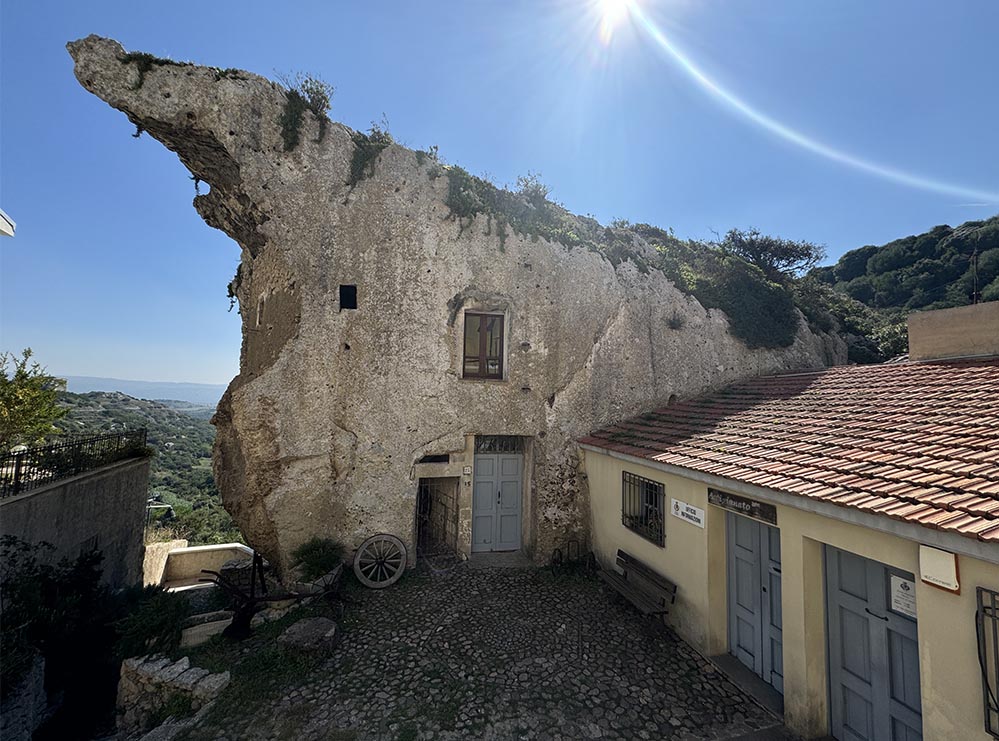
The day after our feast, I drove more curly, winding, squiggly roads to the town of Perfugas, to see Dalila for a perceptive and relaxing massage. (A great addition to any vacation.) Floating away from my massage, I returned to the one-lane, winding roads to get to the town of Sedini, meeting more friends of Hannah’s, Liliana and Fabio. They invited me into their home for a lovely lunch prepared by Fabio, and Liliana gave me a walking tour of the town, with its many homes built into the looming rocks.

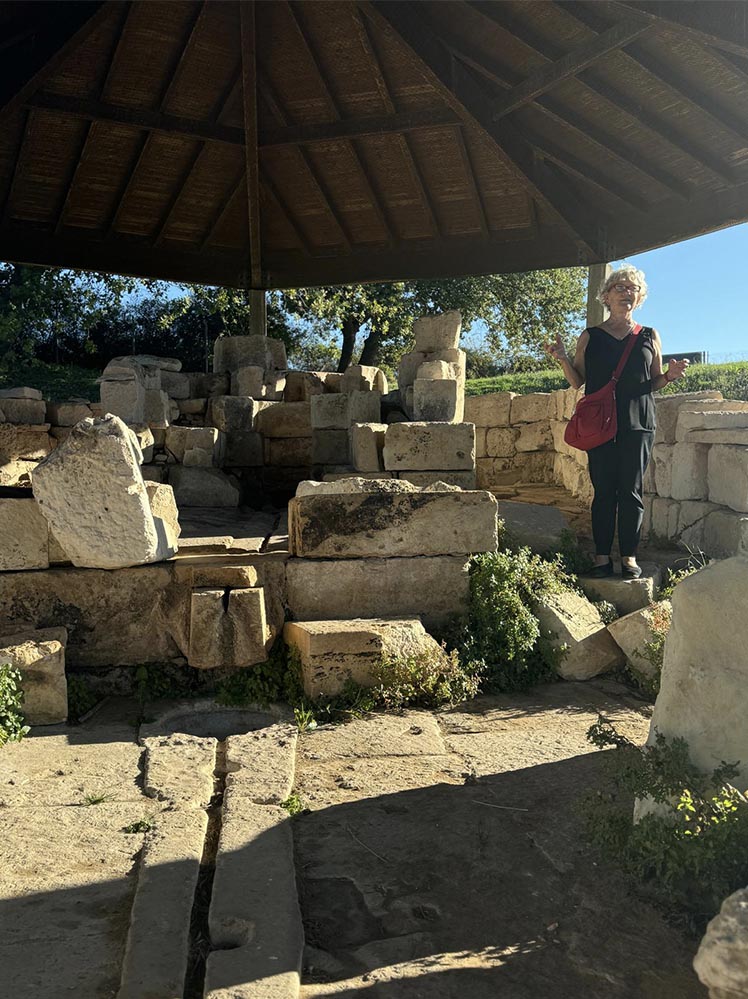
Leaving Sardegna the next day, Hannah and I stopped for a few minutes at Pozzo Sacro Irru, a holy well and  archeological site from the X – VII centuries B.C. The whole island of Sardegna is dotted with ancient nuraghi, often-cylindrical structures of massive stone blocks. 

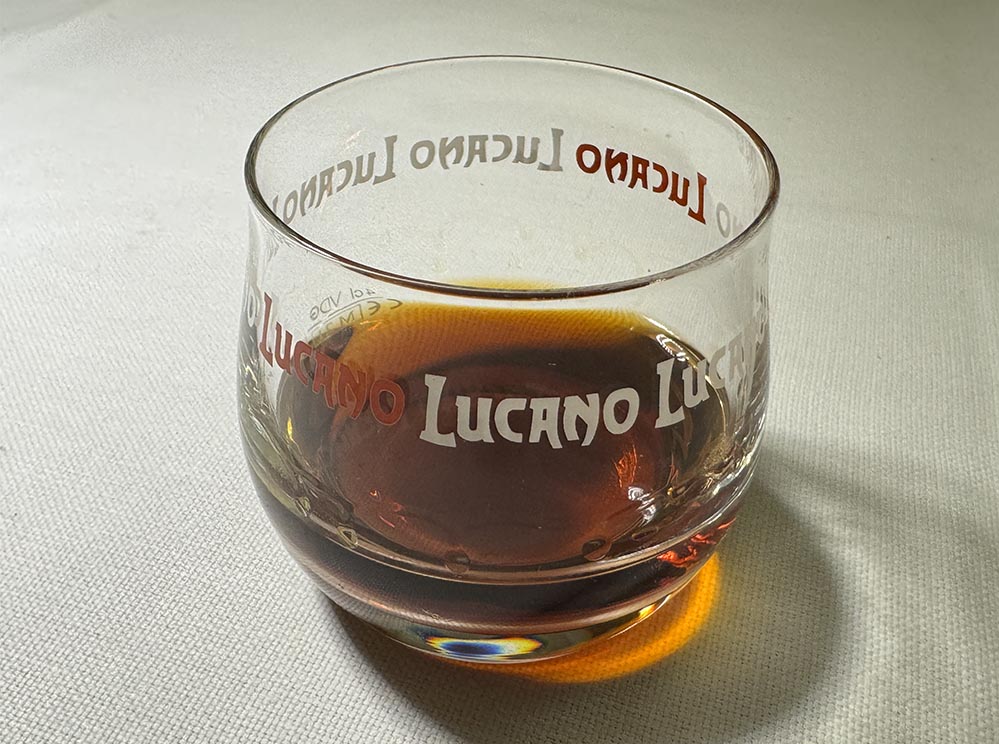
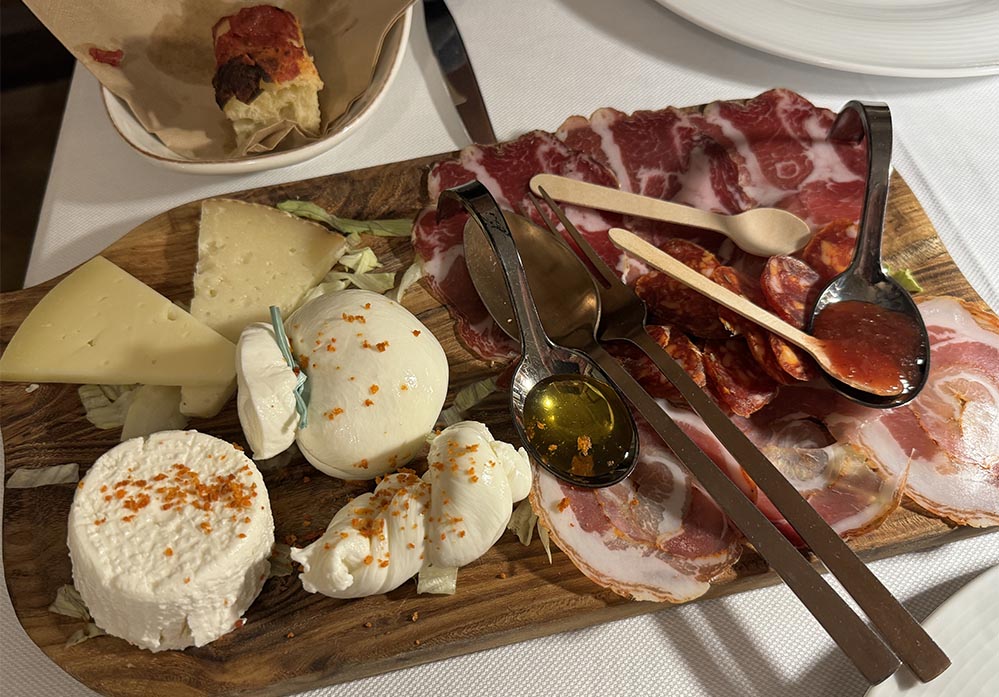
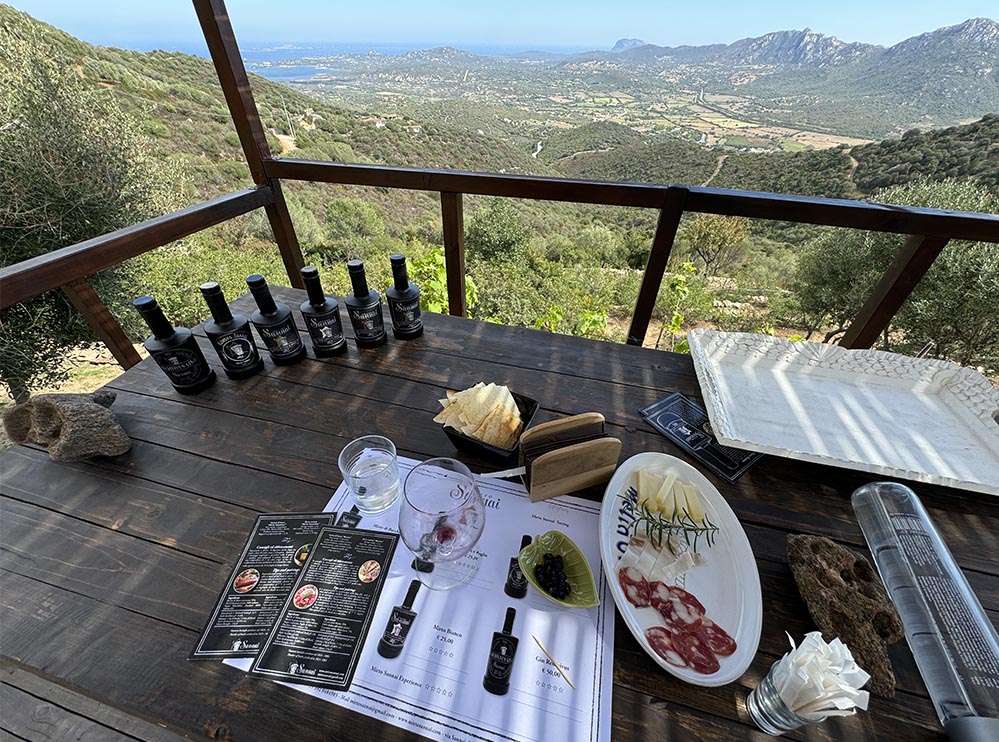
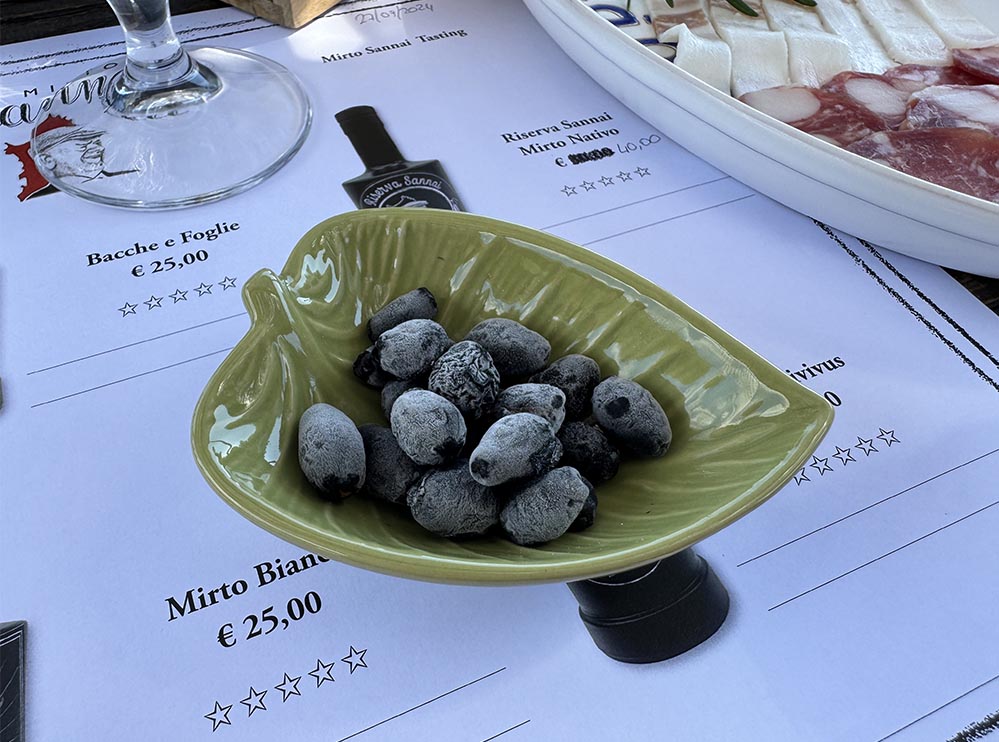
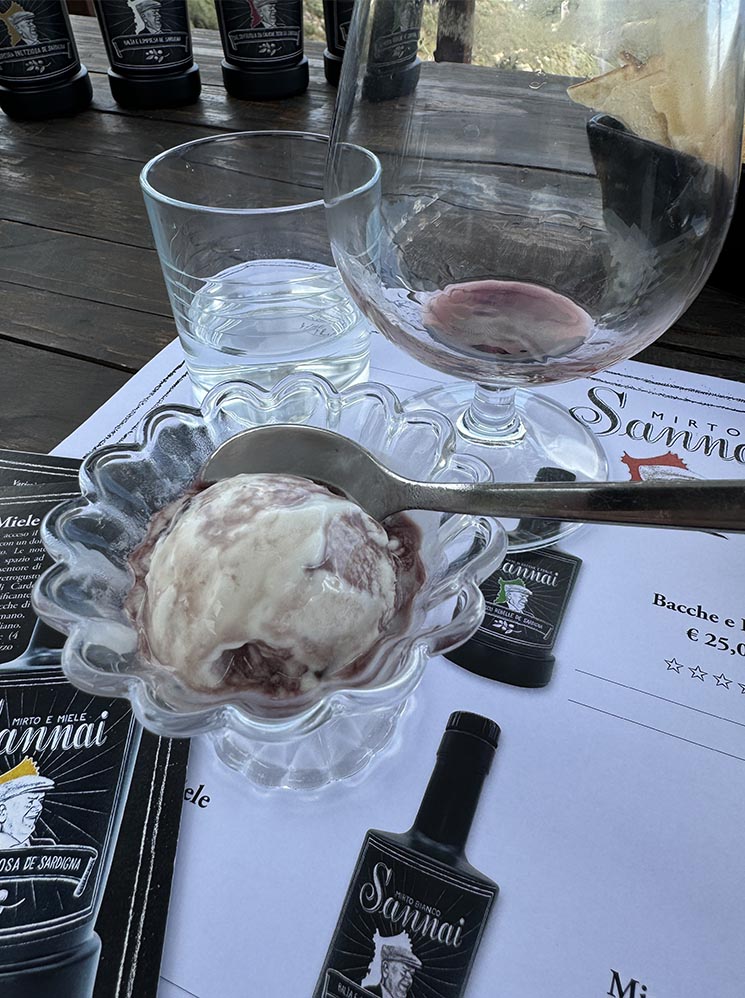
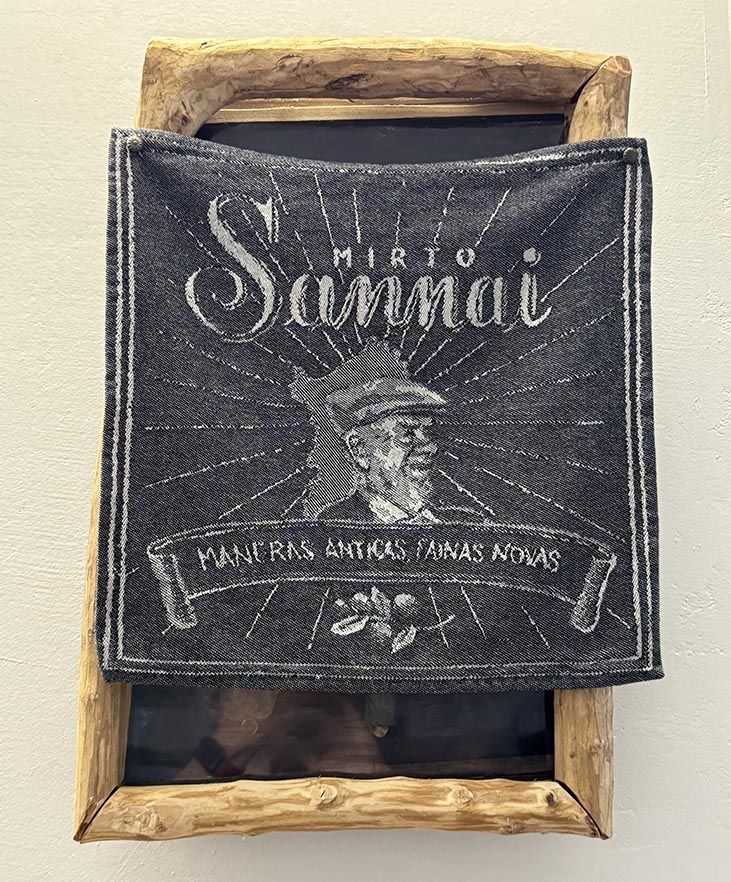
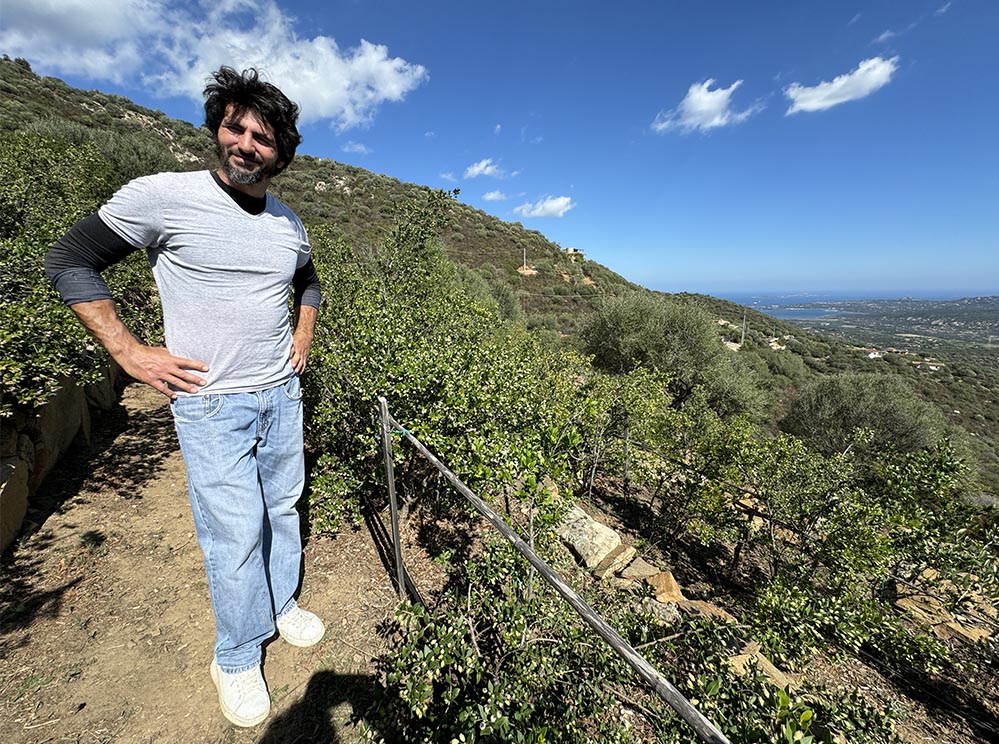
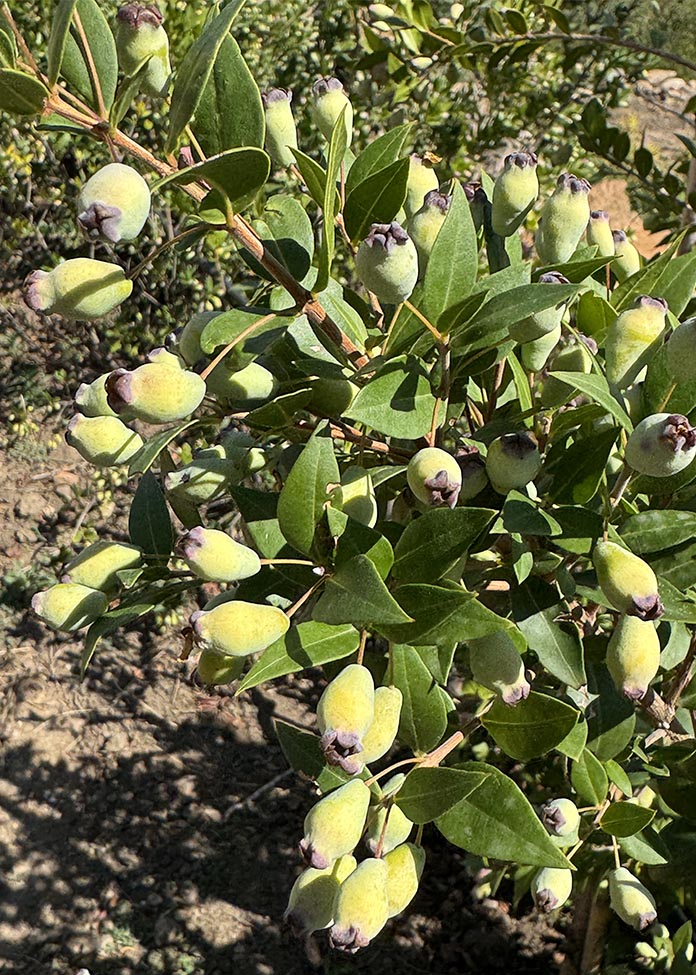
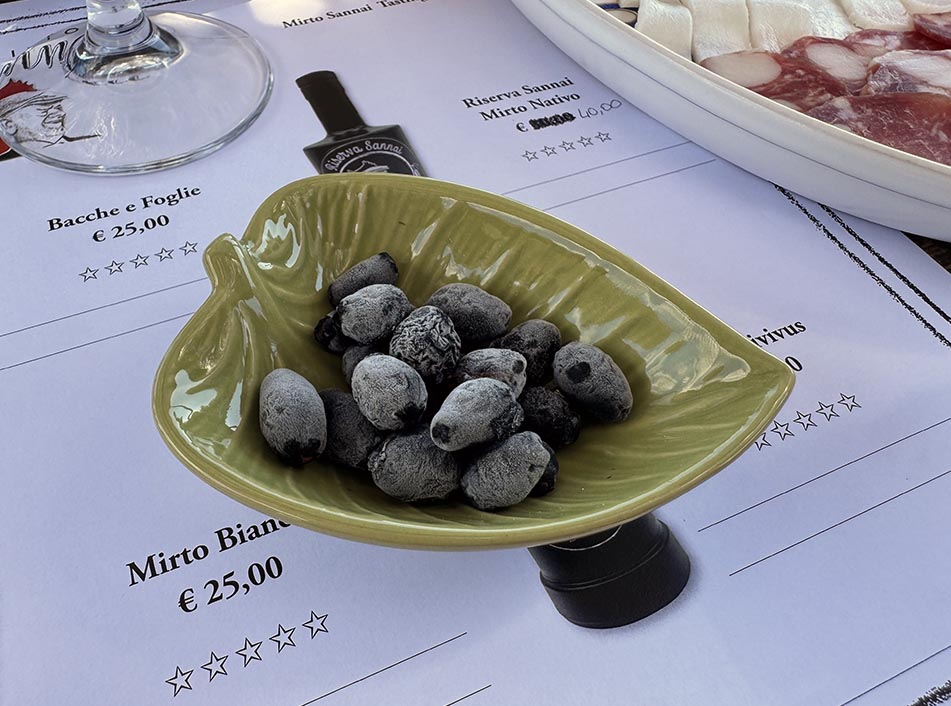
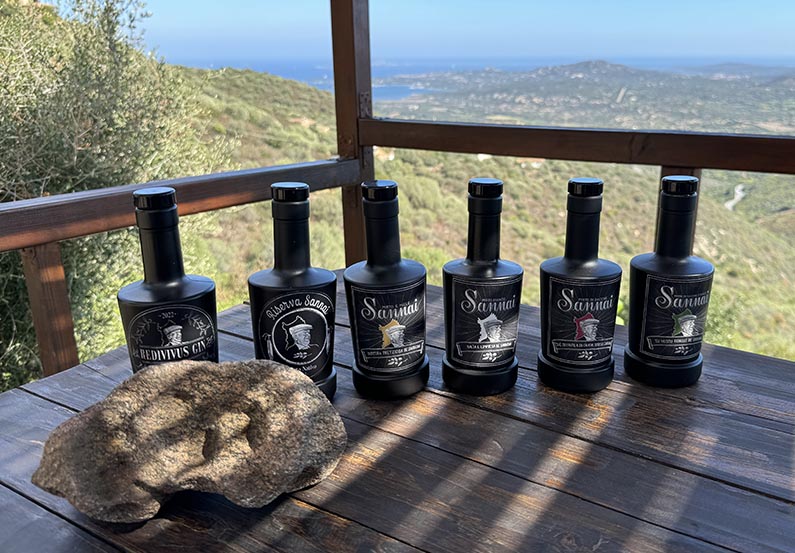
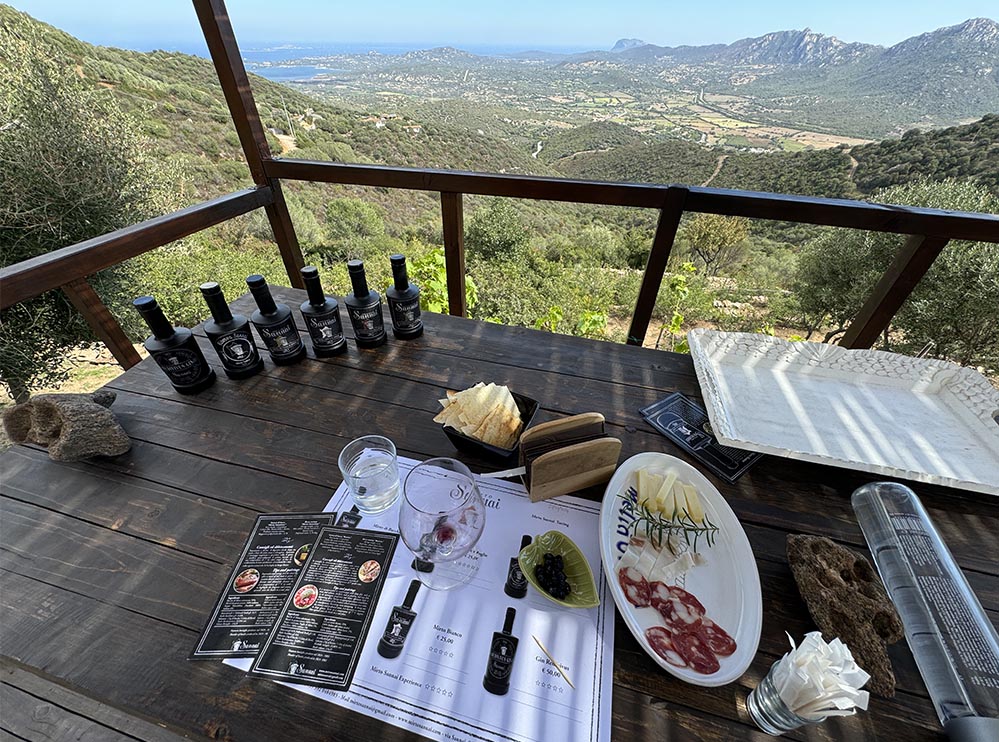
One of my favorite restaurants in Milano is owned by a family from Sardegna, the Carlotta Cafè. I’ve been going there on every visit since 2008, and always finish my meals with the classic Sardo digestivo drink, Mirto. How could I not go to a Mirto producer for a tour and taste-test? On the day of my departure, I reserved such a tour at the Sannai Distillery, started and run by Antonio Castelli. He produces artisanal Mirto liqueur, from the leaves and berries of the myrtle shrubs he planted high on a hill, up a rough dirt road, next to his beautiful home, looking out toward the sea. We talked about farming and Mirto production. He served me a small dish of frozen, raw myrtle berries to chew. Then came the sampling of his 5 different Mirto liqueurs, and his Mirto-based Gin. Each was accompanied by proper pairing of cheese, lardo (thin-sliced, aged lard), salami, or chocolate. Antonio was a warm and gracious host.

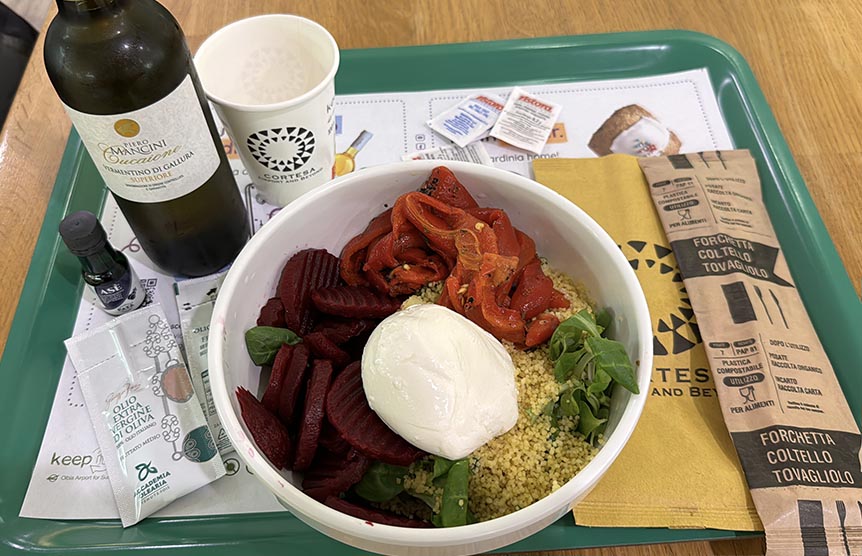
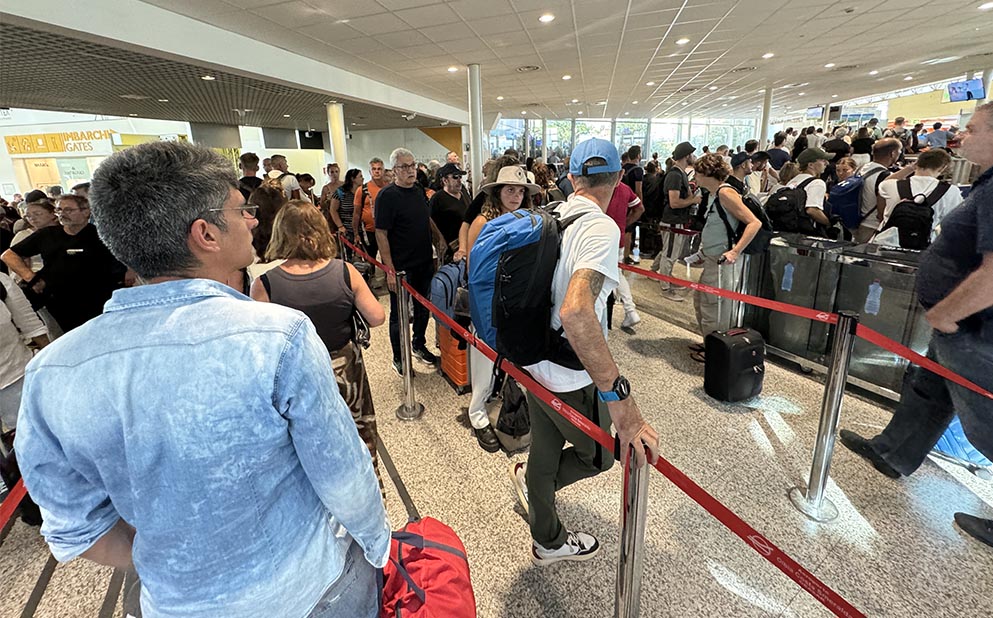
Upon leaving the Mirto tasting, I drove to the airport in Olbia, arriving very early at 2:00 PM for a 5:30 flight to Milano. There must have been 500 people in the security line (and TSA Pre-Check doesn’t work outside the U.S.) After security, I waited, and waited through the flight delays. Eventually, my flight left at midnight, and we arrived in Milano just before 1:30 AM!! I took a taxi from the airport into town to my apartment for €120, since the train and subway were not operating at that hour. I arrived at the nearest intersection (in this pedestrian-only zone) and was greeted by my Airbnb landlady’s son, at 2:30 in the morning, and was escorted to my apartment. Such kindness.

Yes, the food here in Italy is absolutely fantastic… but I’m always touched by the warm-hearted, dear people that I meet along the way. They are very much a part of what brings me back here every year.



Home again in Italia!

Home again in Italia!

Flying into Milano yesterday evening, (after a very long day of cancelled and delayed flights) I felt emotional and got a little teary-eyed. This is my seventeenth year of making this journey, coming back for a month or more to see friends, visit new and treasured places, and eat some of my favorite dishes as well as venture untried regional specialities.

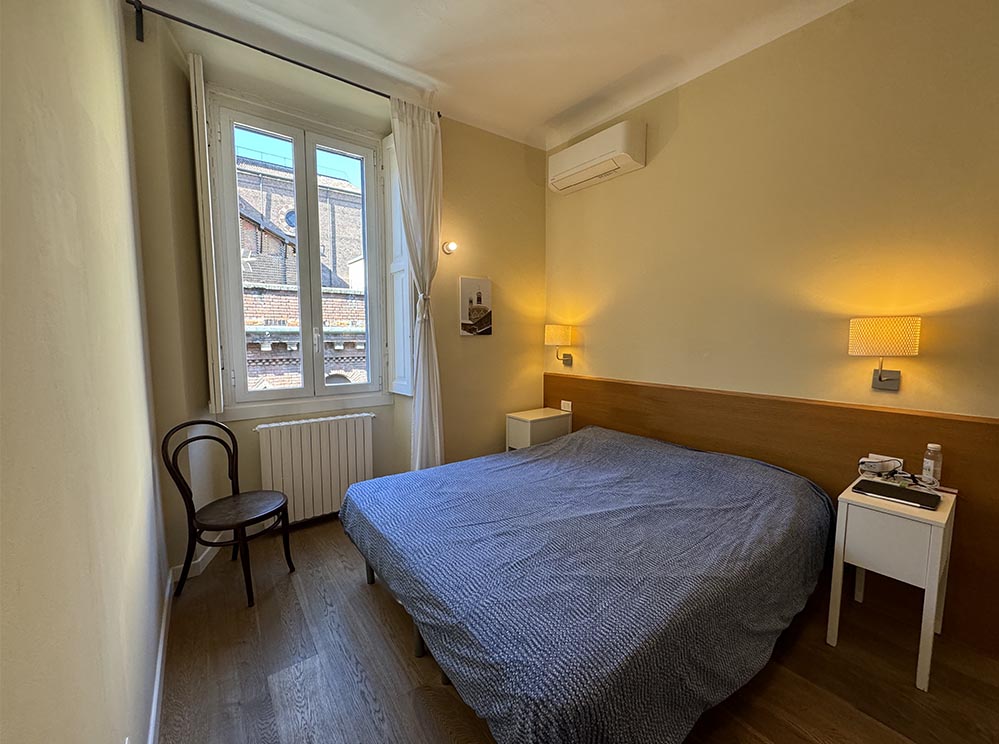
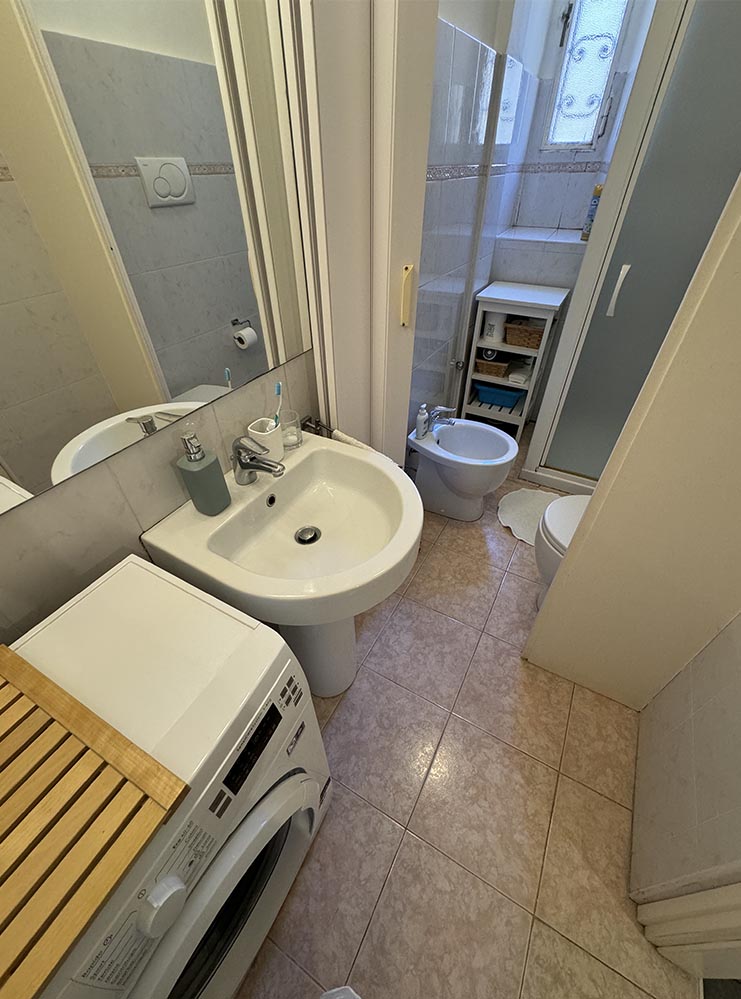
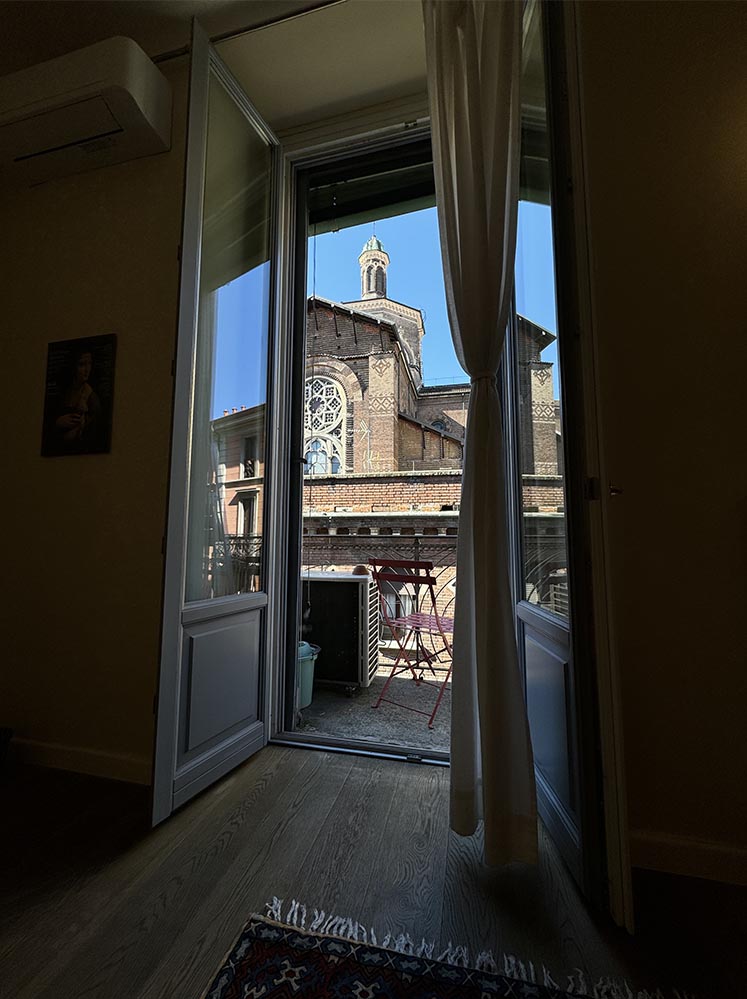
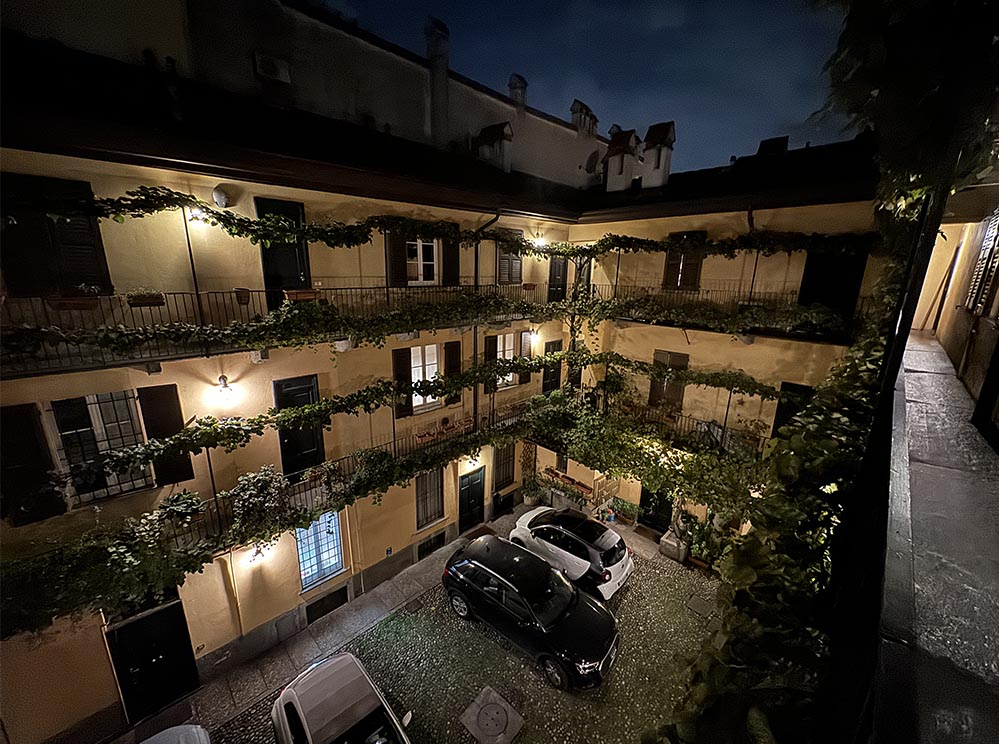
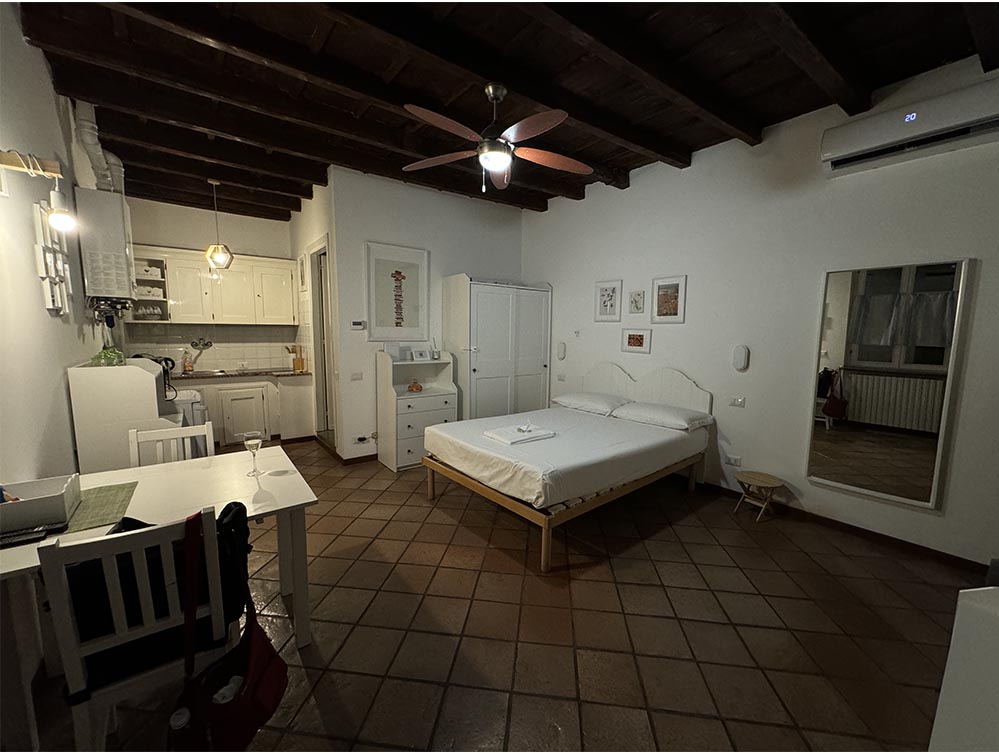
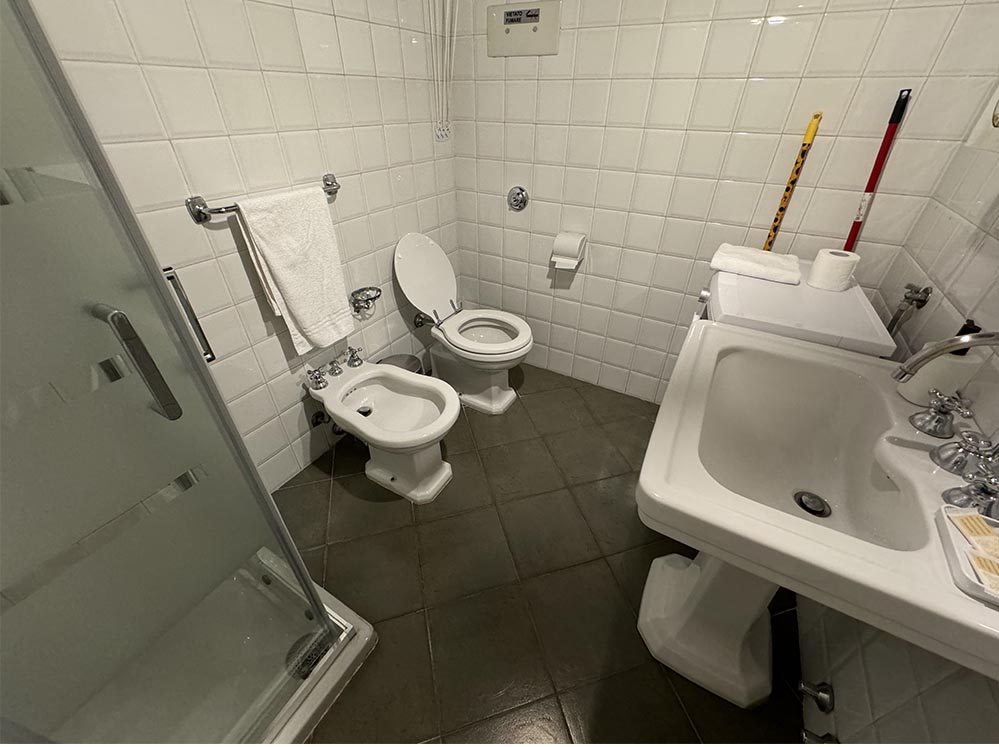
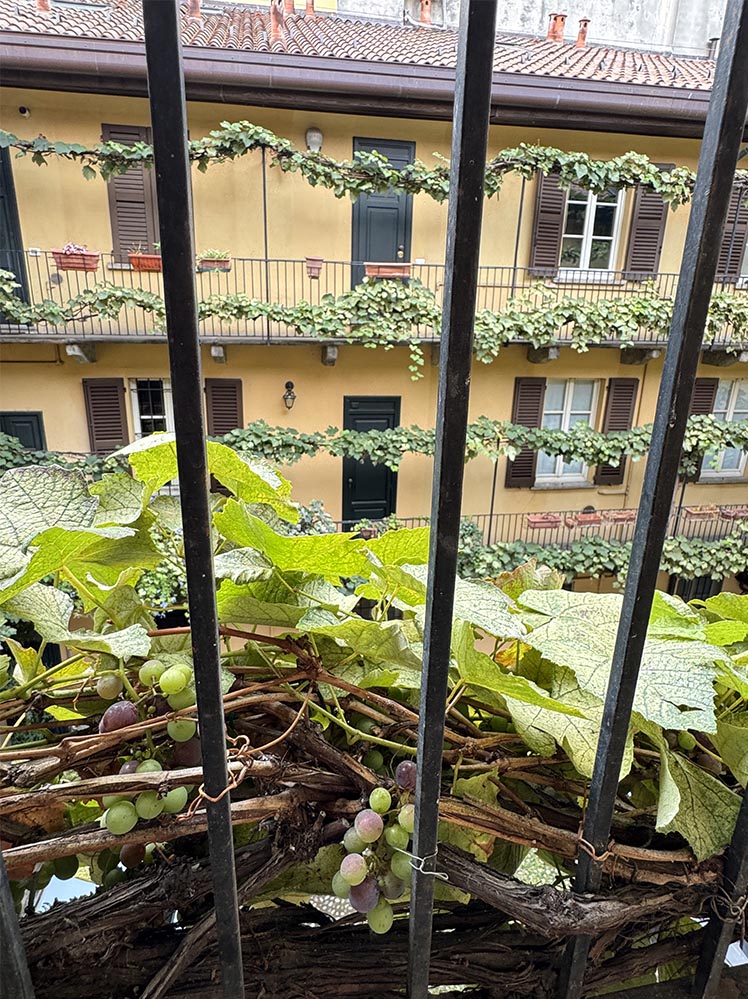
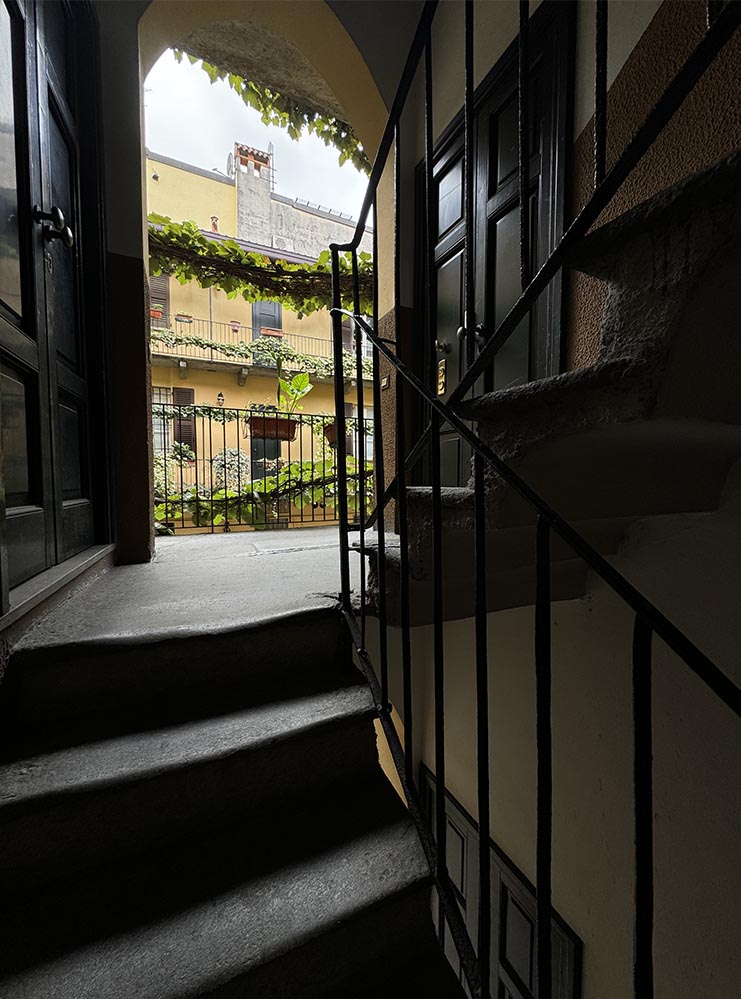
In the evening, I arrived at my rented apartment, a simple one-room studio with a bathroom and the “essentials”. Just right. This is in a classic Milanese “Casa de Ringhiera”, roughly 600 years old, in which there’s an inner courtyard, accessed by walking through a locked, wrought iron gate. I walk up a narrow, stone/wrought iron stairway to the “second floor”, (what is considered the “third floor” in the U.S.). Each floor is ringed with an outer walkway balcony. At this building, the balconies on all floors are laden with producing grape vines. It creates a beautiful effect.

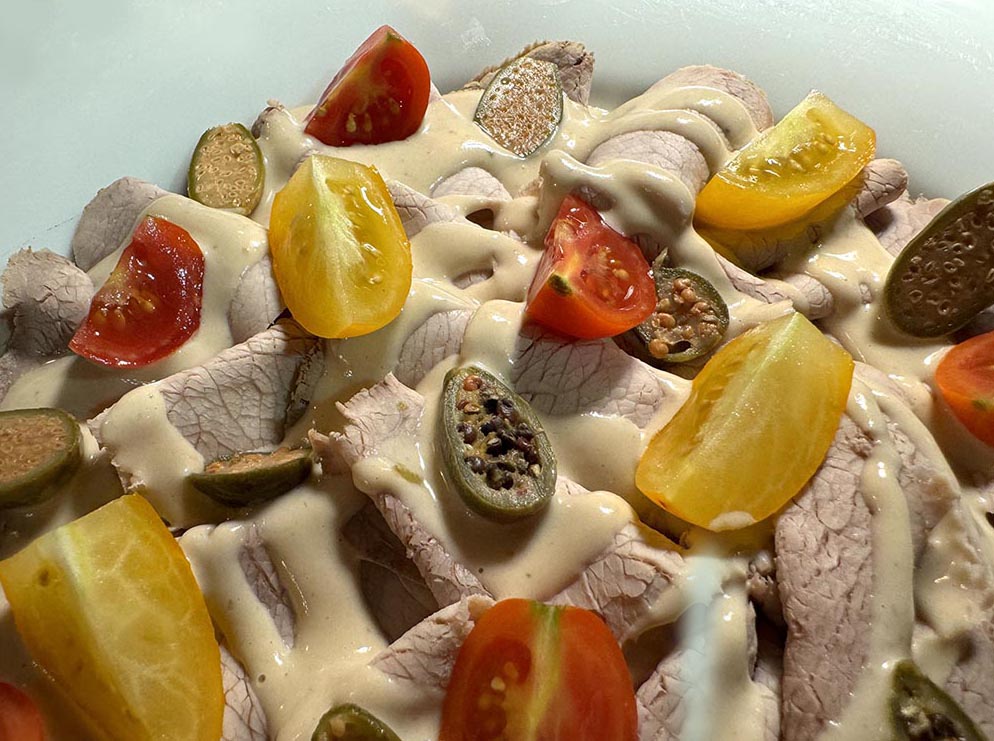
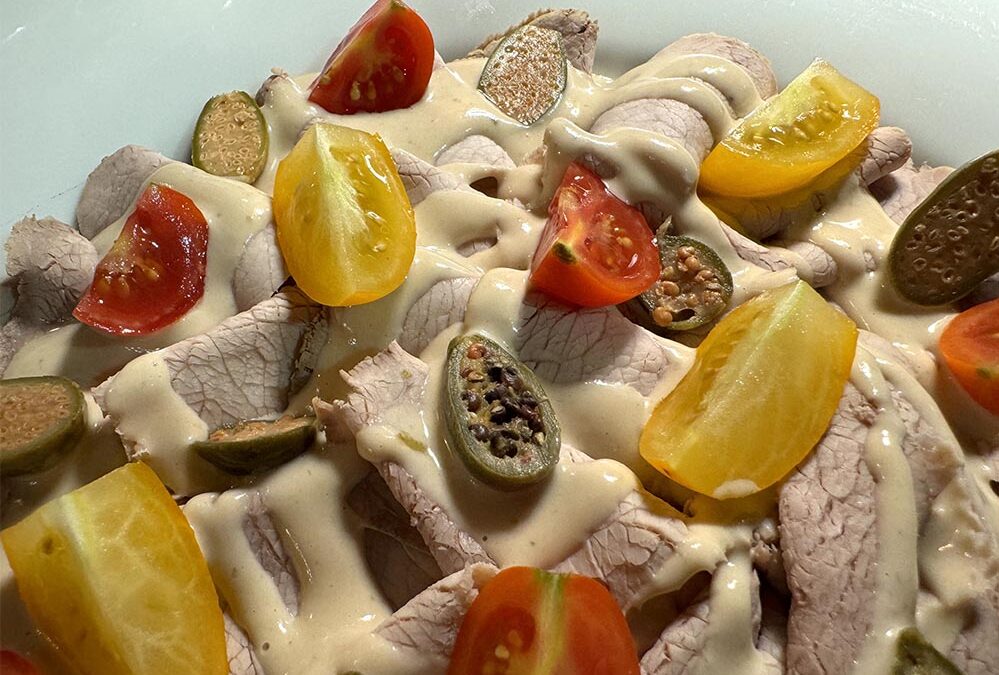
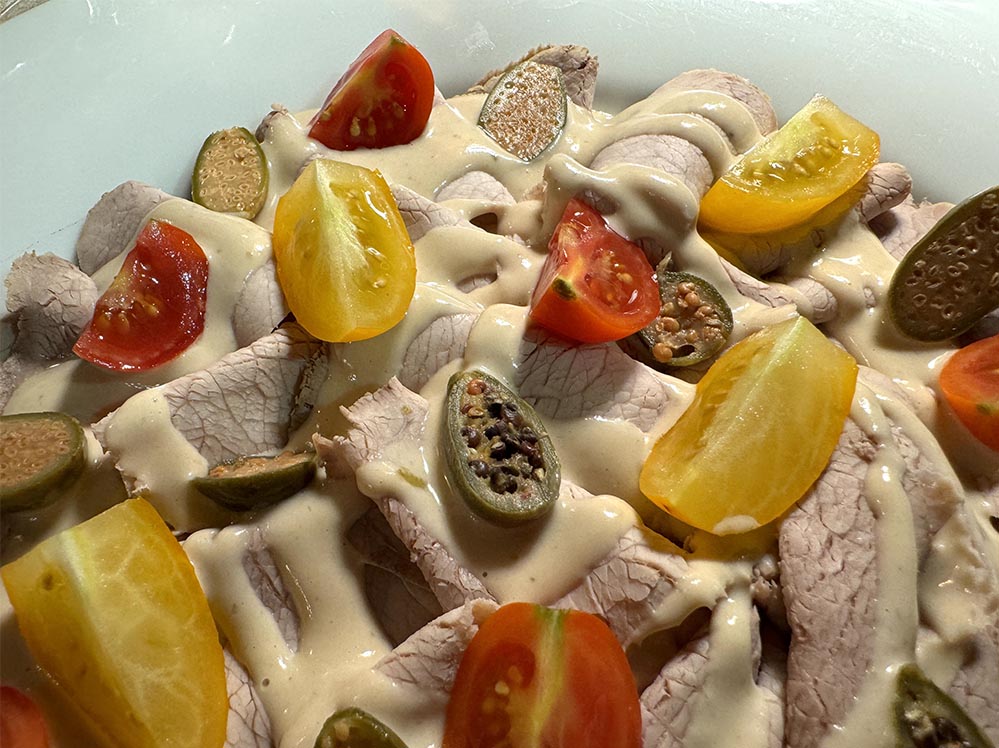
I arrived hungry and way off in my body clock, so I met up with my painter friend, Loredano, for a bite to eat, and we went to Trattoria della Darsena, a lovely, warm and welcoming little restaurant run by friends. They had “Vitello Tonnato” on the menu… one of my favorites and perfect for a warm-but-not-hot evening. It’s very thin slices of roast veal, topped with a smooth pureéd sauce of tuna and mayonnaise, plus cherry tomatoes and capers. I know… roast veal with tuna sauce sounds like an unlikely and odd combination, but it’s delicious.

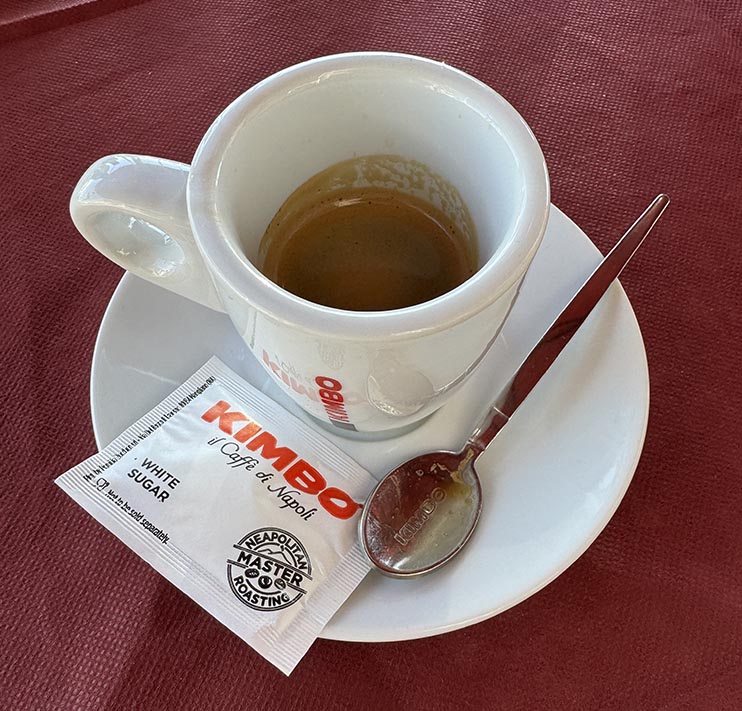
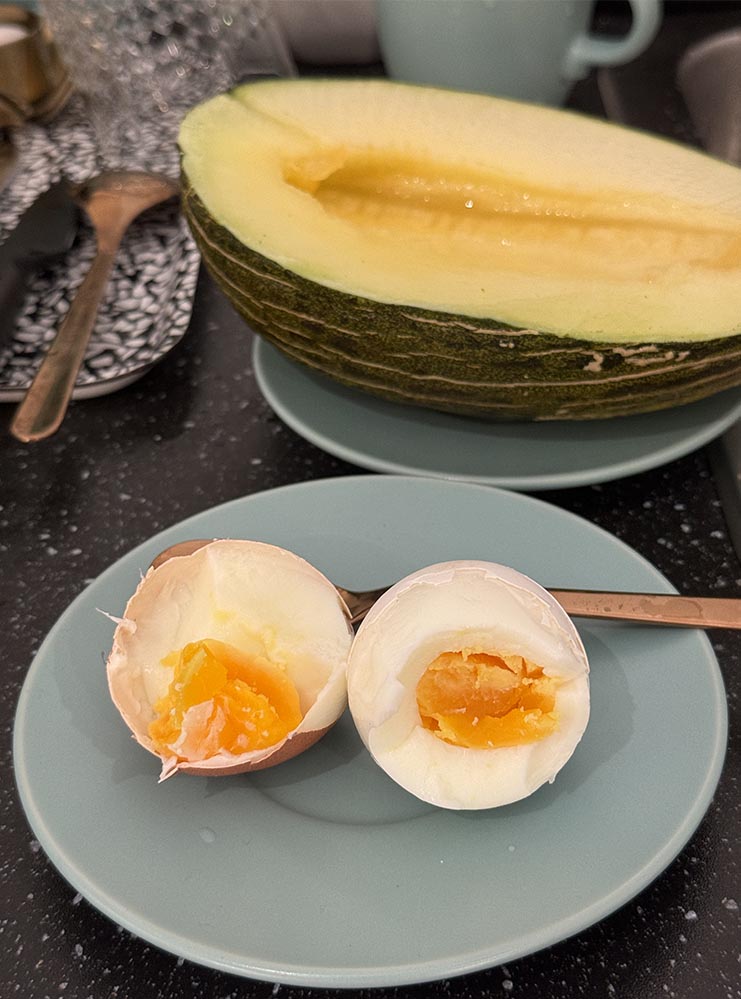
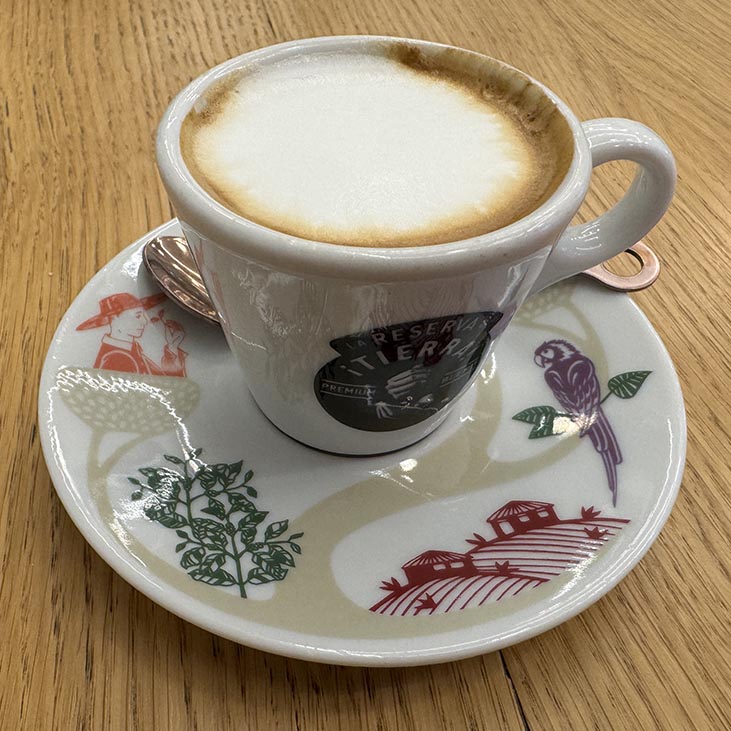
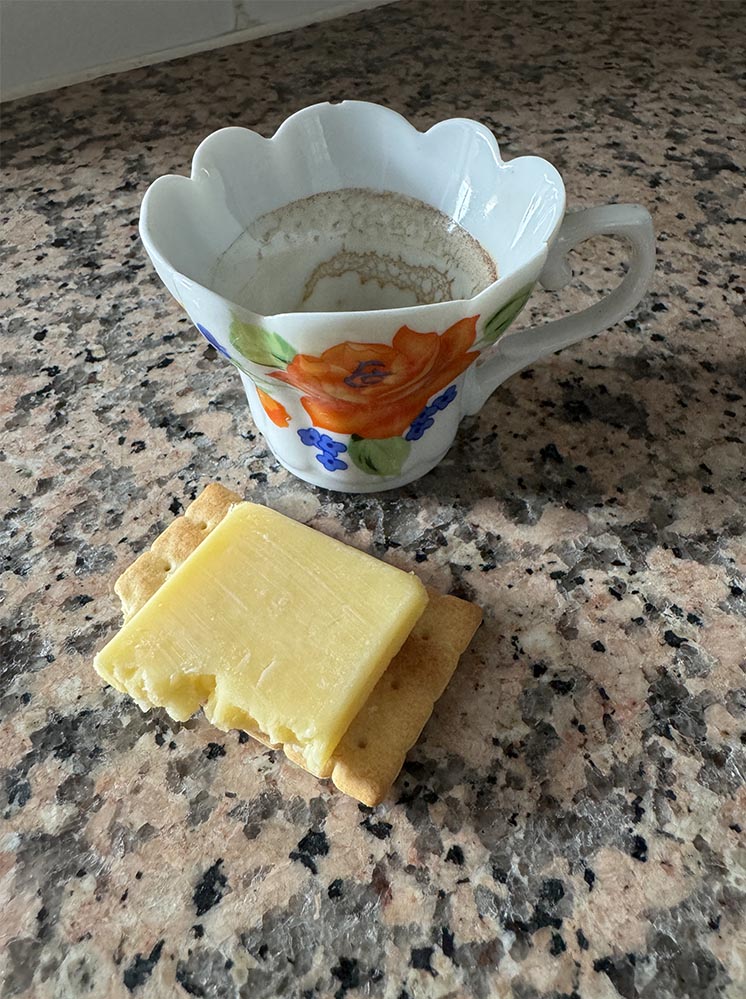
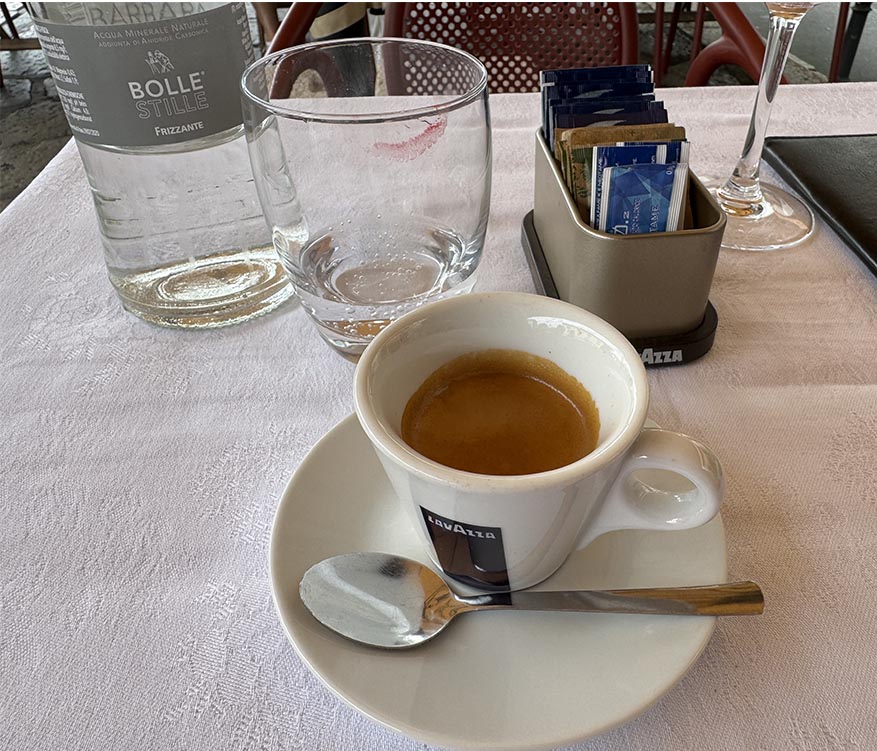
Having arrived late in the evening and having no groceries in the house, my breakfast this morning consisted of two crackers and a slice of cheese from yesterday’s plane flight, plus a “caffè normale” (one shot of espresso) and a few nuts. It tided me over ‘til my long-awaited lunch…

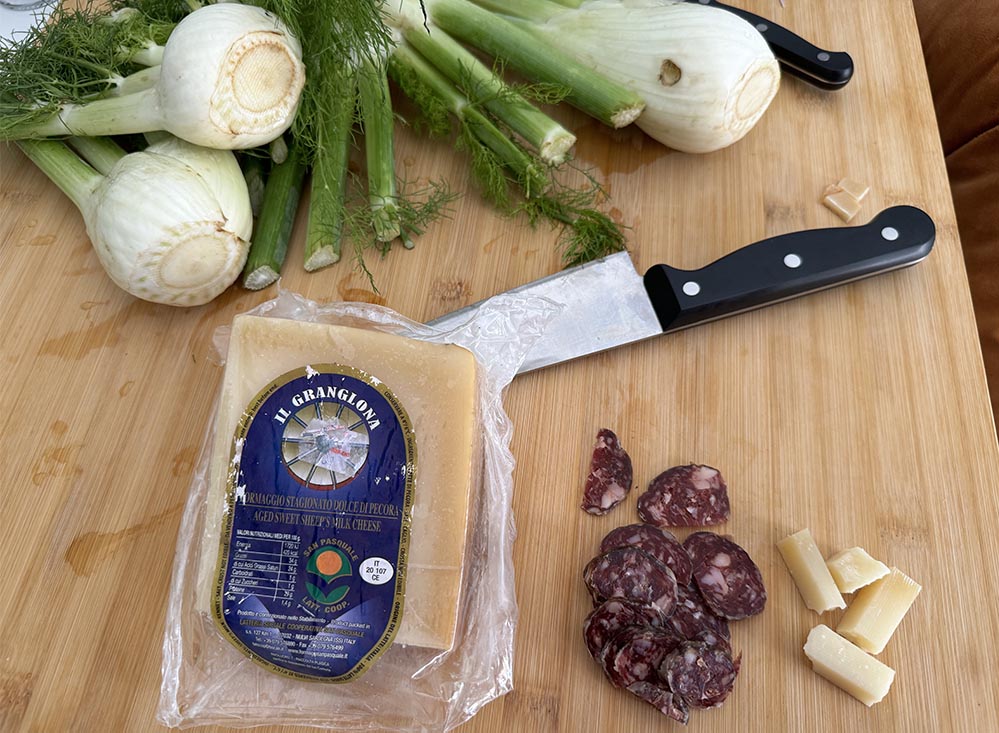
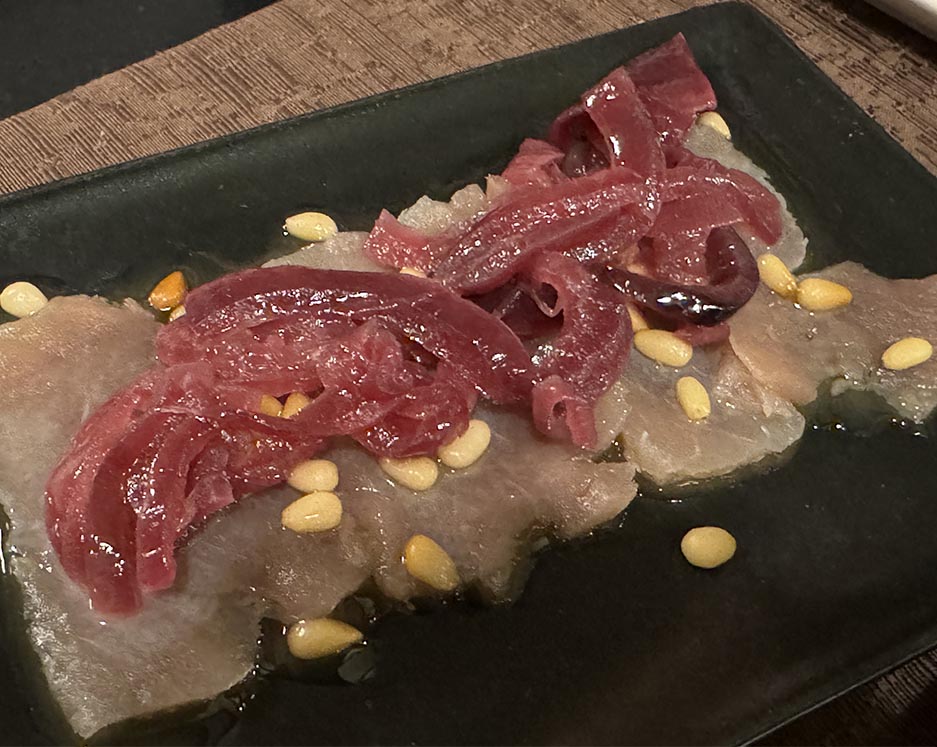
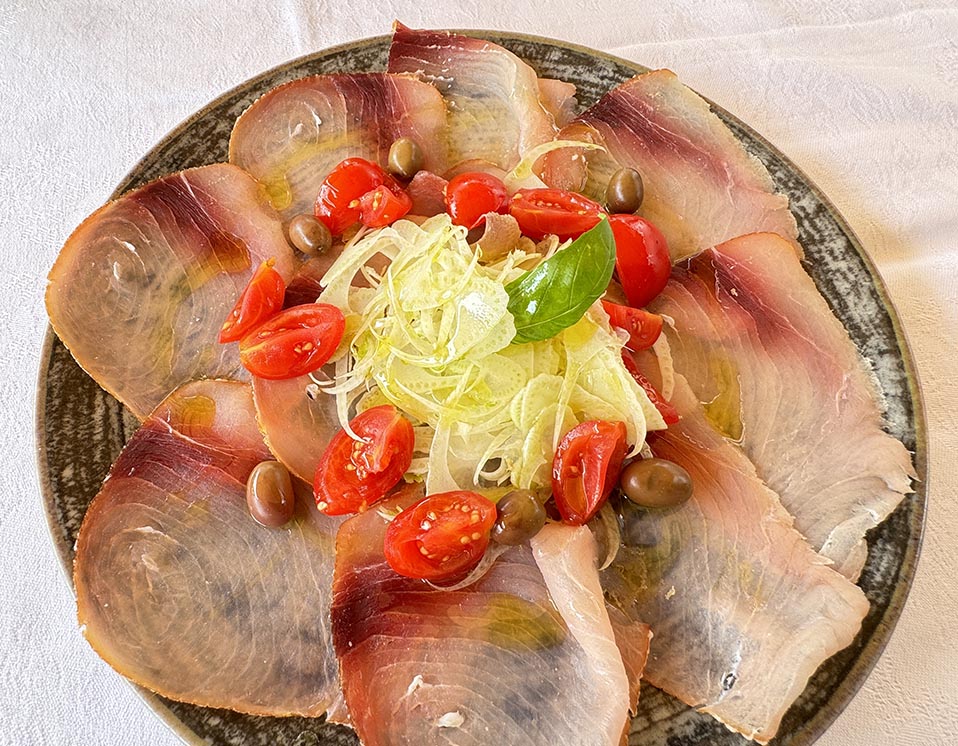
I walked up the Naviglio Grande – Grand Canal – to Trattoria Ponte Rosso, and affectionately greeted the owner, Luciano, with the classic two-cheek kiss. I’ve been eating in his trattoria for years now. I immediately ordered Carpaccio di Spada Affumicata – paper thin slices of smoked tuna, from Sicily. I had this a year ago and have been daydreaming about it ever since. It was topped with cherry tomatoes, shaved fennel and taggiasche olives (specifically from Liguria), then drizzled with a fine olive oil. I enjoyed some prosecco, then a cafè normale to finish off the meal.

A leisurely, relaxed, slow meal on an easy day. Perfect after 24+ hours of travel door-to-door yesterday. And now I’m sitting in the silence (except for the sound of the air conditioning) of my studio apartment. All is just right. Tutto perfetto. Tomorrow I fly south, to start a southern tour (last done in 2011!): Bari (Puglia), Matera (Basilicata), Napoli (Campania), Nulvi (Sardegna)… then back here to Milano (Lombardia) for two and a half weeks.

I recognize the blessing and privilege of being able to have such a sojourn in my life… and to do this every year!

As I sit here, 7:00 PM on my first day, the church bells are ringing one block away and their chiming fills the air. Home again.


Take Me with You!

Take Me with You!

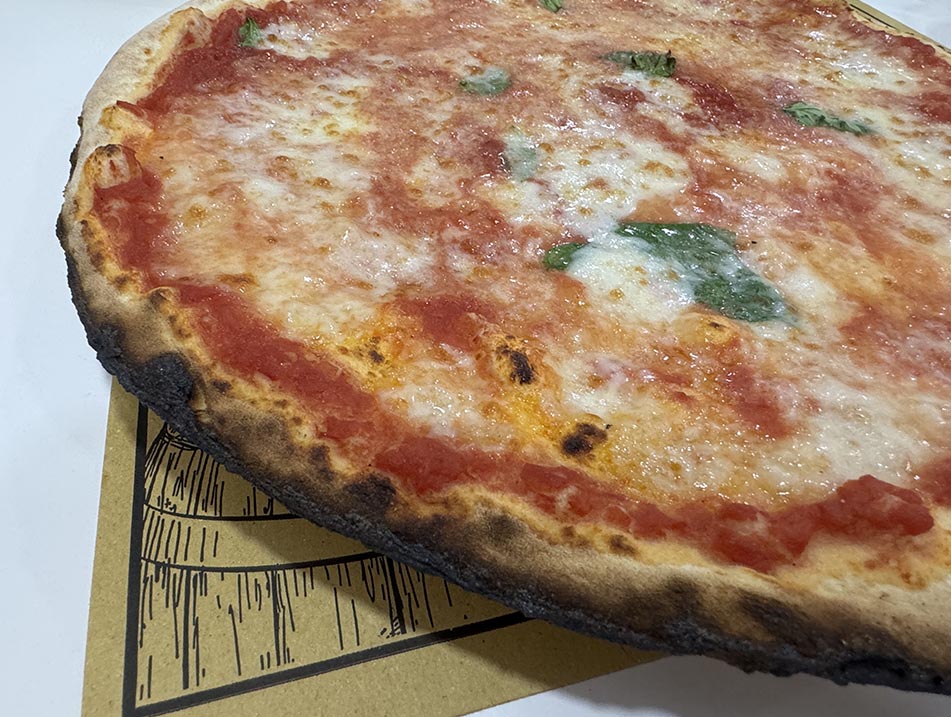
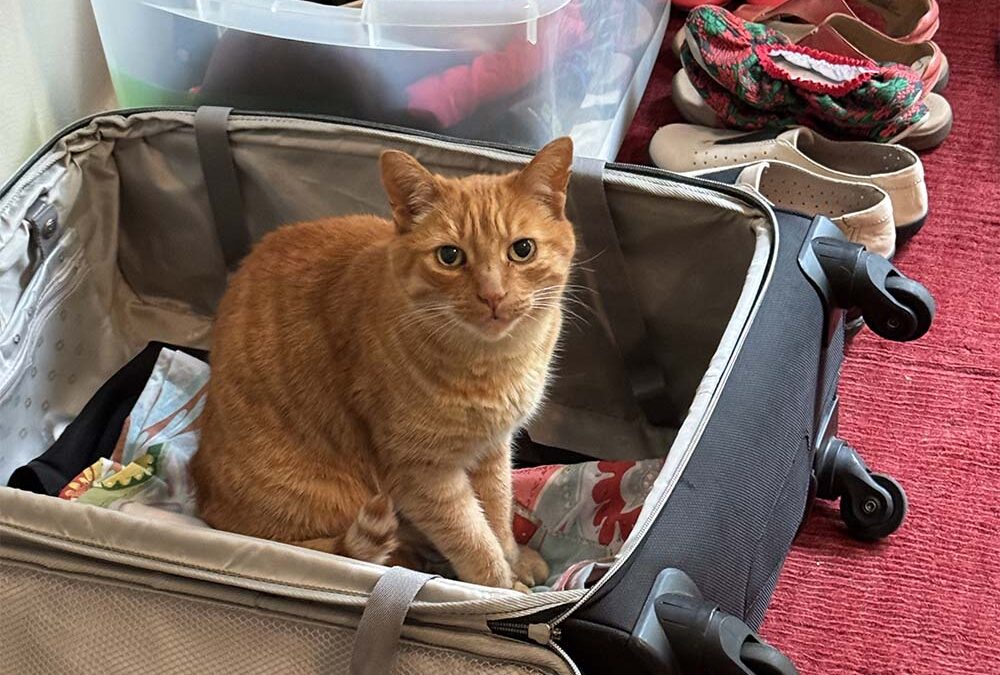
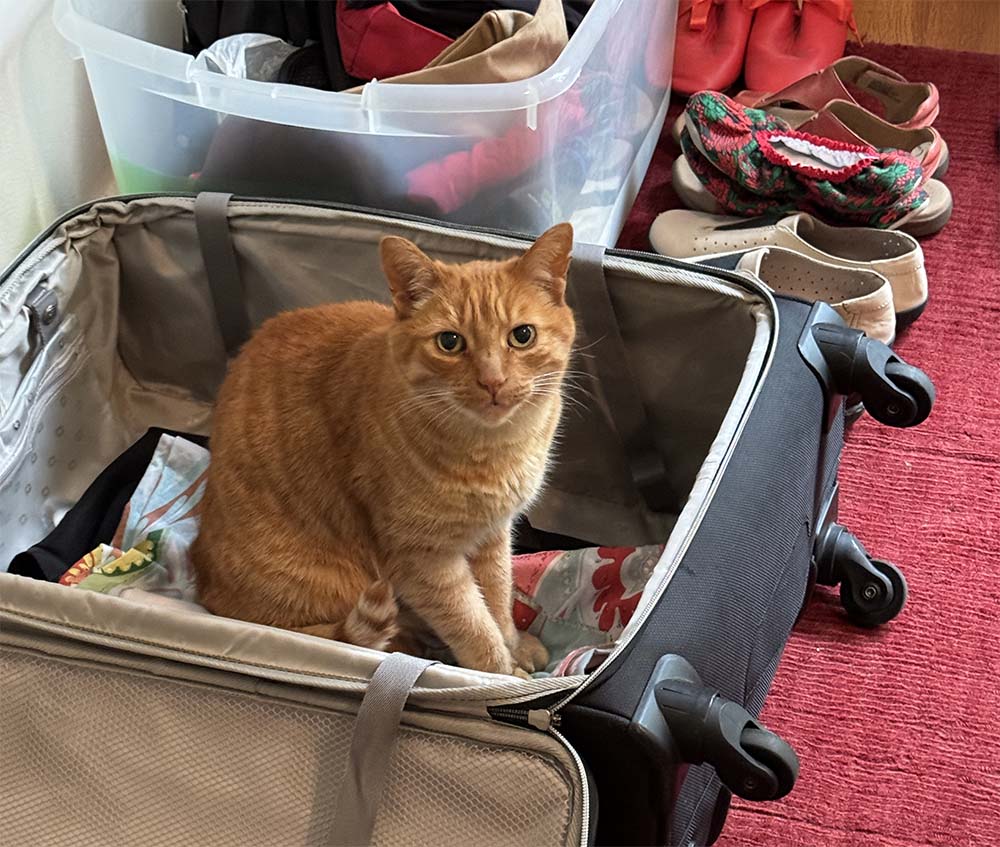
Uh oh. Tango sees the suitcases wide open on the floor. Something’s up. “Take me with you!” He pleads. No, the Kitty Cat is not coming along, but he’ll be well-loved while I’m away eating Italian regional specialties… and doing pizza taste-tests.
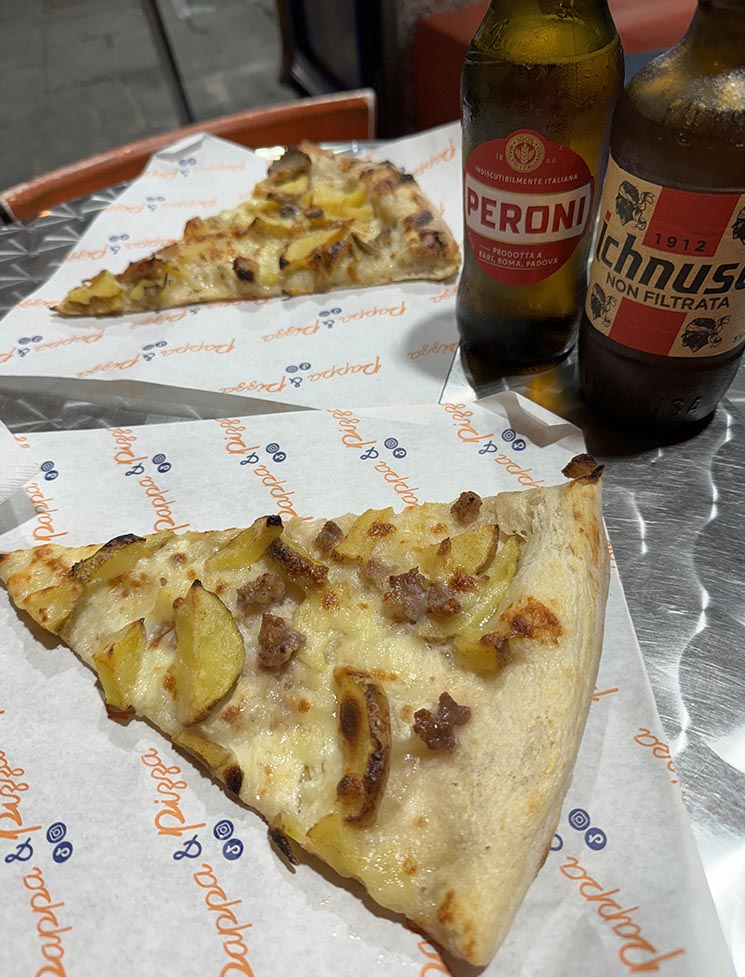
This will be my 17th year of flying off to Italy and wandering around its regions. This year I’ll do another southern tour. (It was 2011 when I last explored southern Italy. That was ages ago.) On this year’s itinerary: Puglia, Basilicata, Campania, Sardegna… then ending with time in Lombardia’s Milano!

Going “Home”. Ahhh.

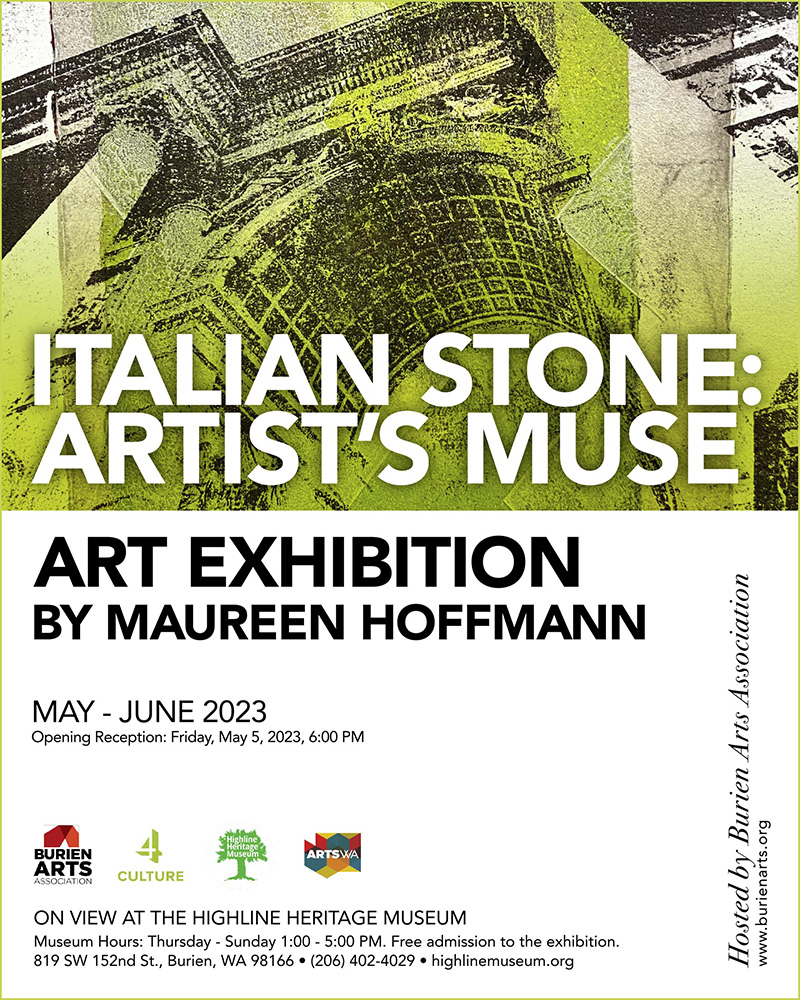
Italian Stone: Show of Fine Art Monoprints

Italian Stone: Show of Fine Art Monoprints

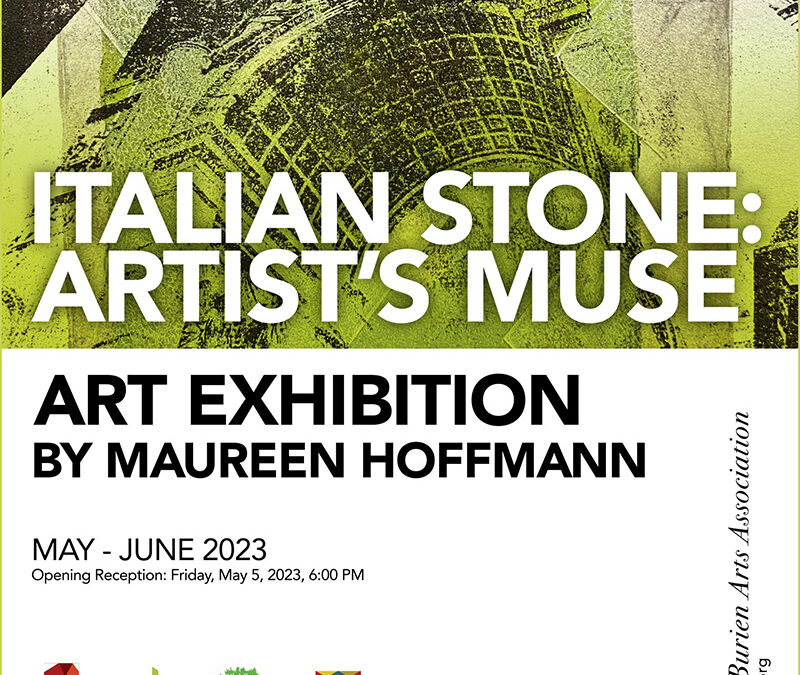
Merging my multiple loves for expression, I have pulled from my 15 years of travel and 60,000 photos in Italy, and combined them with graphic overlays for one-of-a-kind monoprints.

Milan, Florence, Venice… Monuments and cobblestones… Manuscripts and textiles… These are a few of the lush details that I’ve combined in the 27 pieces on display.

The artwork will be available for sale throughout the show, and will also be listed in an online showcase.

View the art HERE.

May 4 – June 30, 2023
Opening Reception:
Friday, May 5 at 6:00 PM
Hosted by:
Burien Arts Association

On view at:
Highline Heritage Museum
819 SW 152nd St.,
Burien WA 98166
Museum Hours:
Thurs. – Sun. 1:00 – 5:00 PM
Free admission to the exhibition.

Signage, Graphics and Street Art Around Milan

Signage, Graphics and Street Art Around Milan

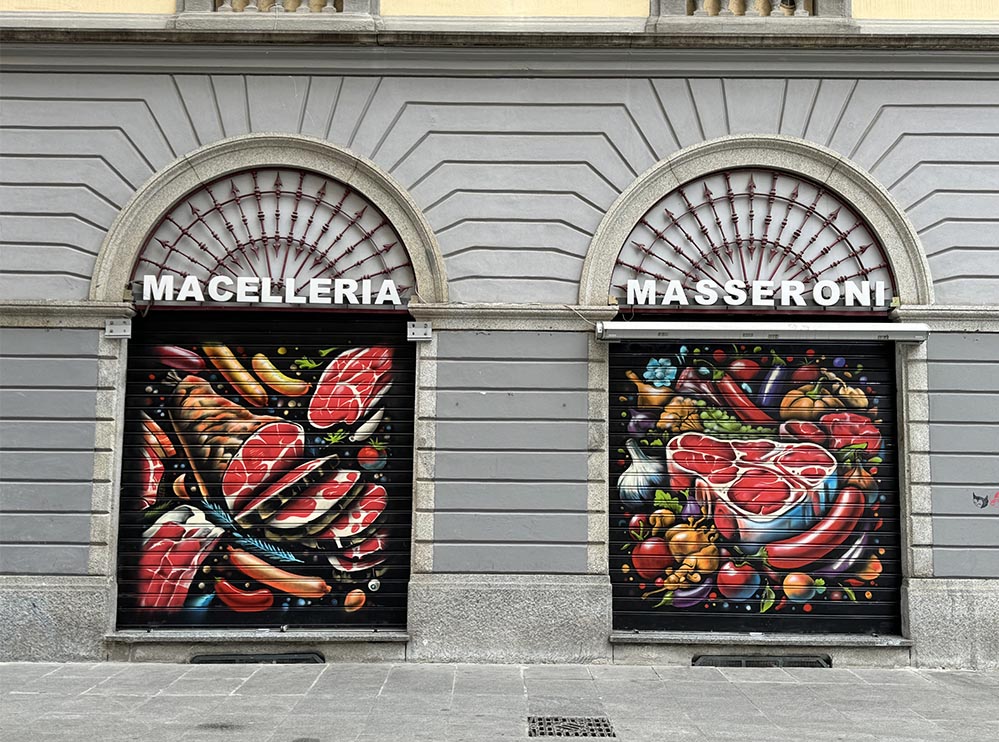
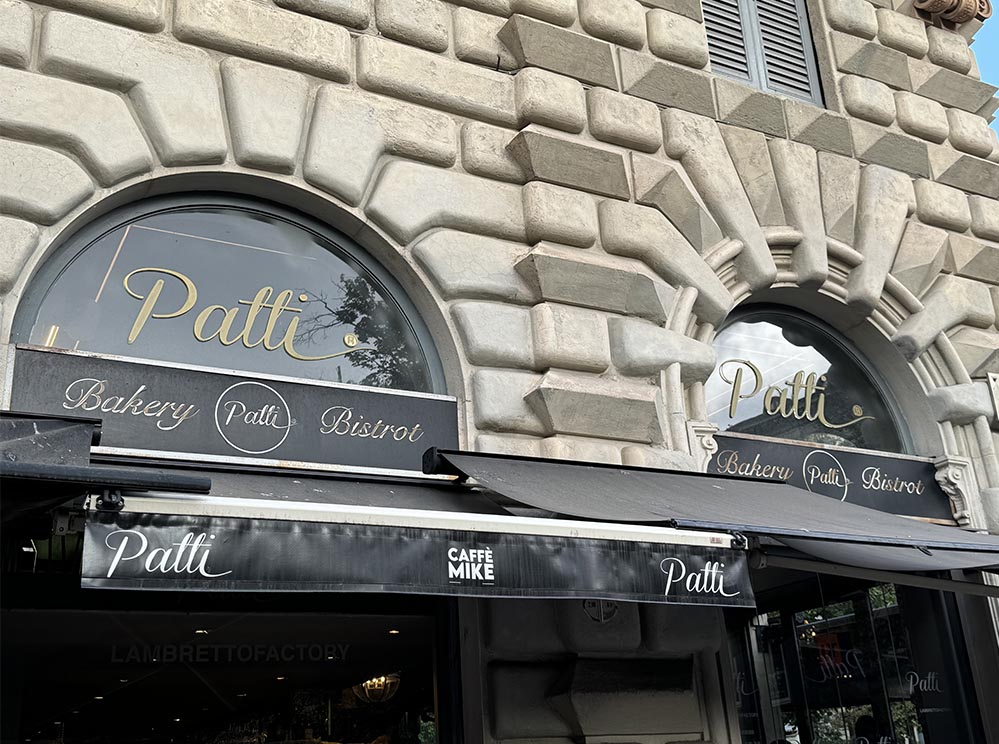
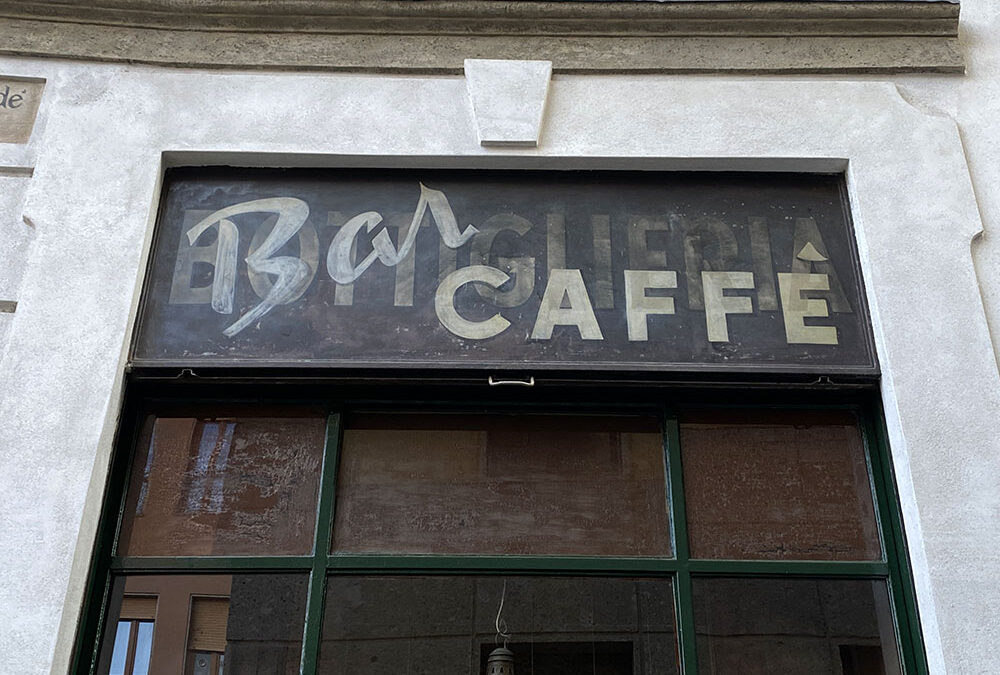
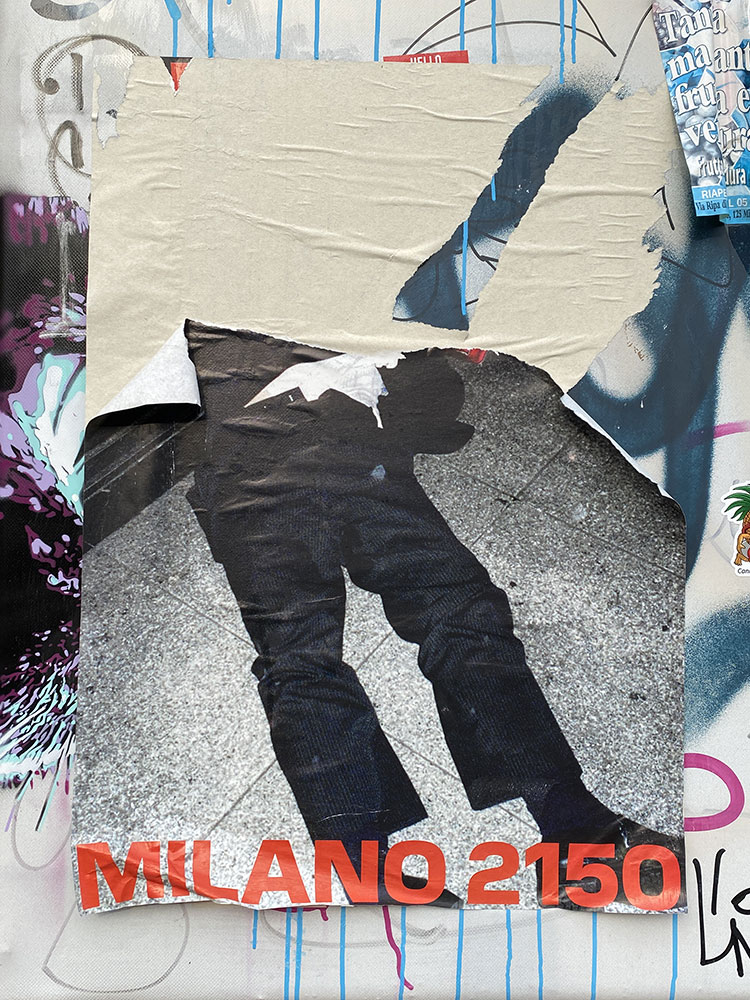
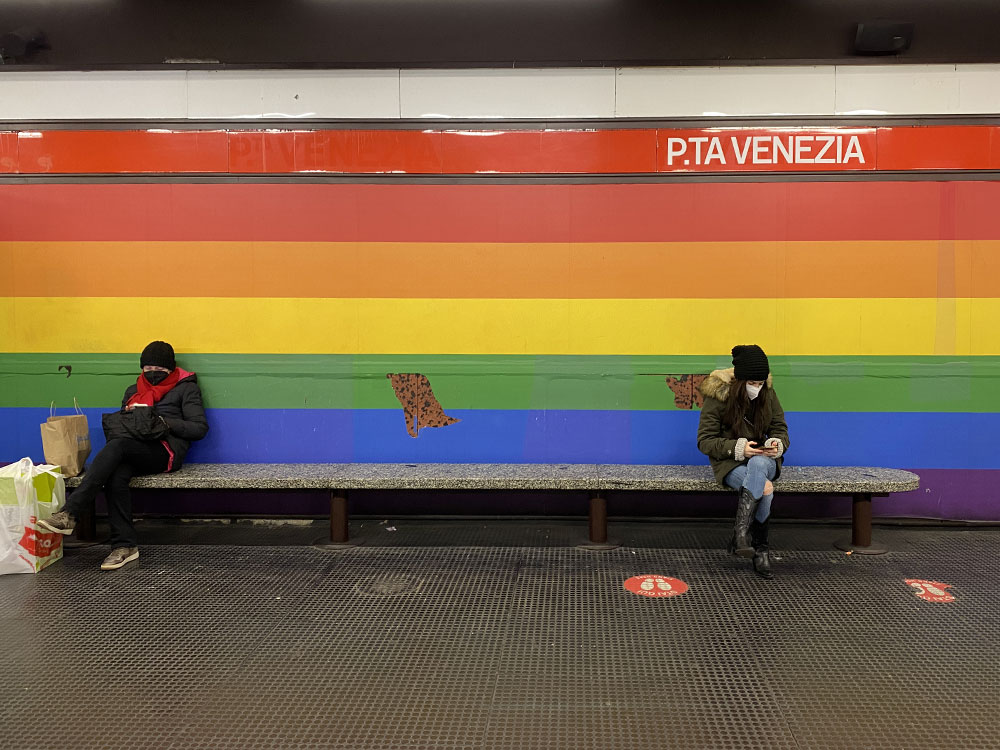
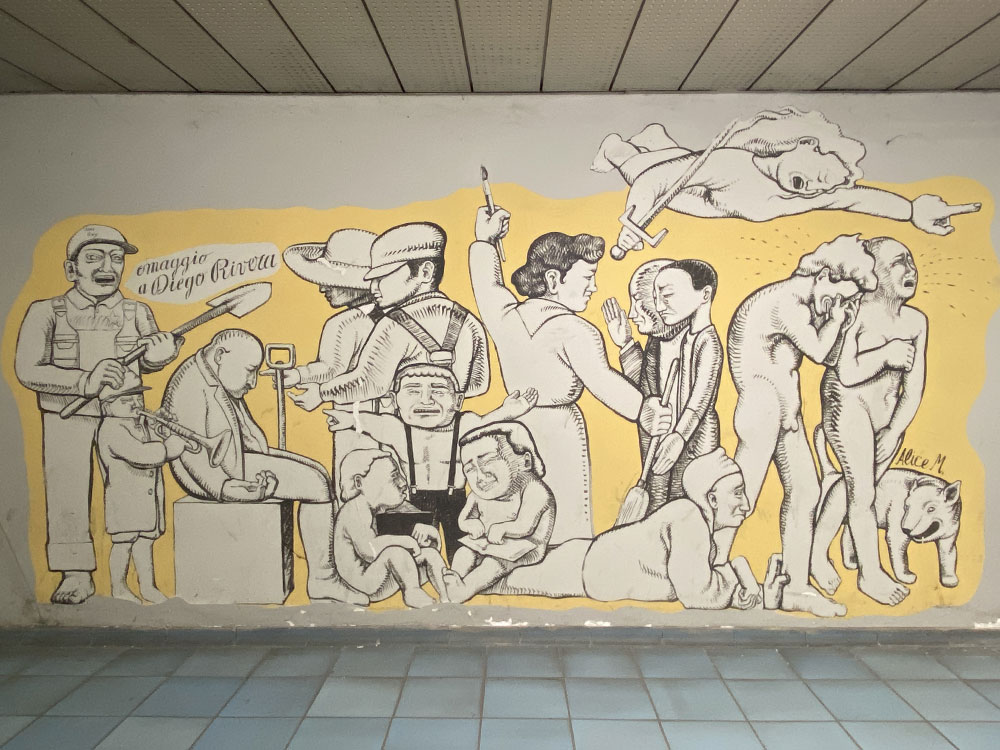
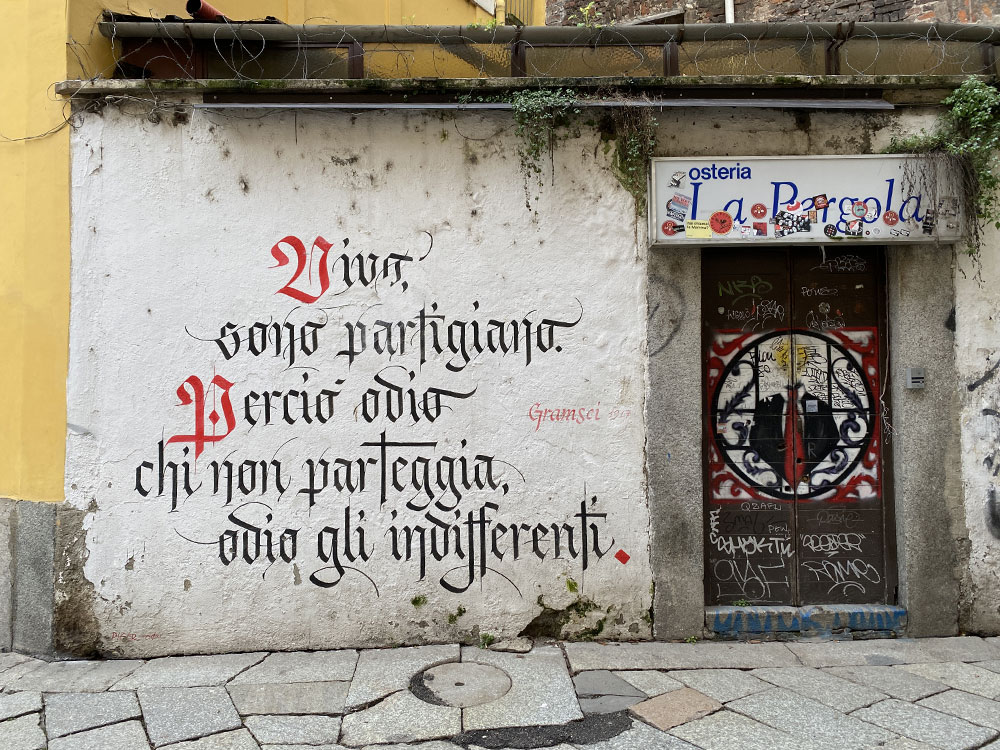
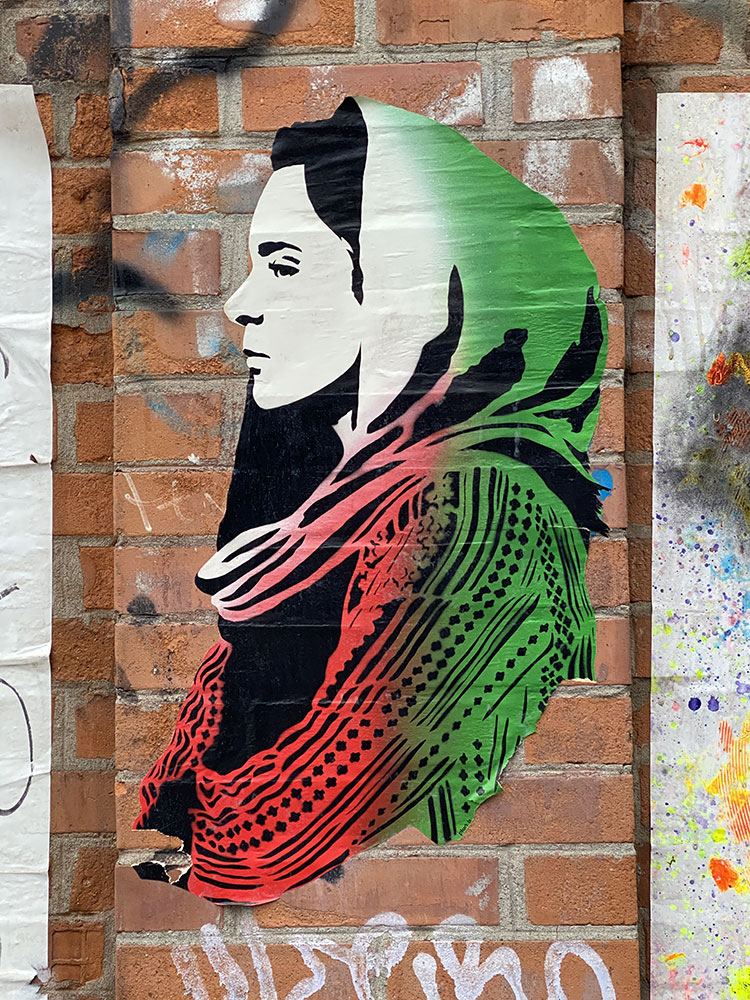
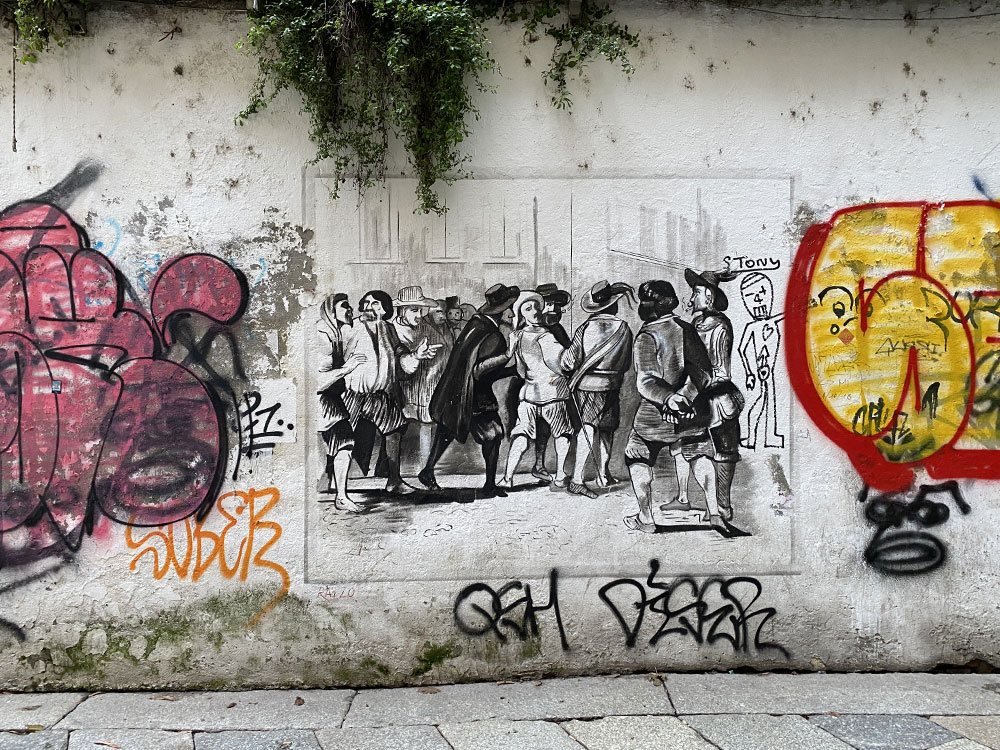
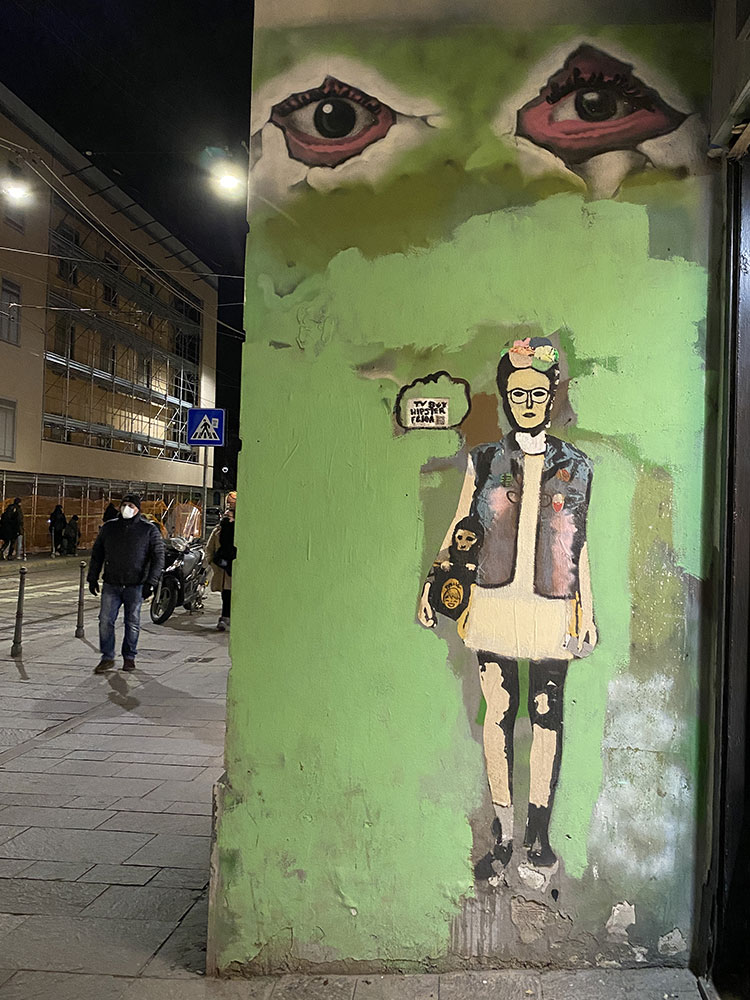
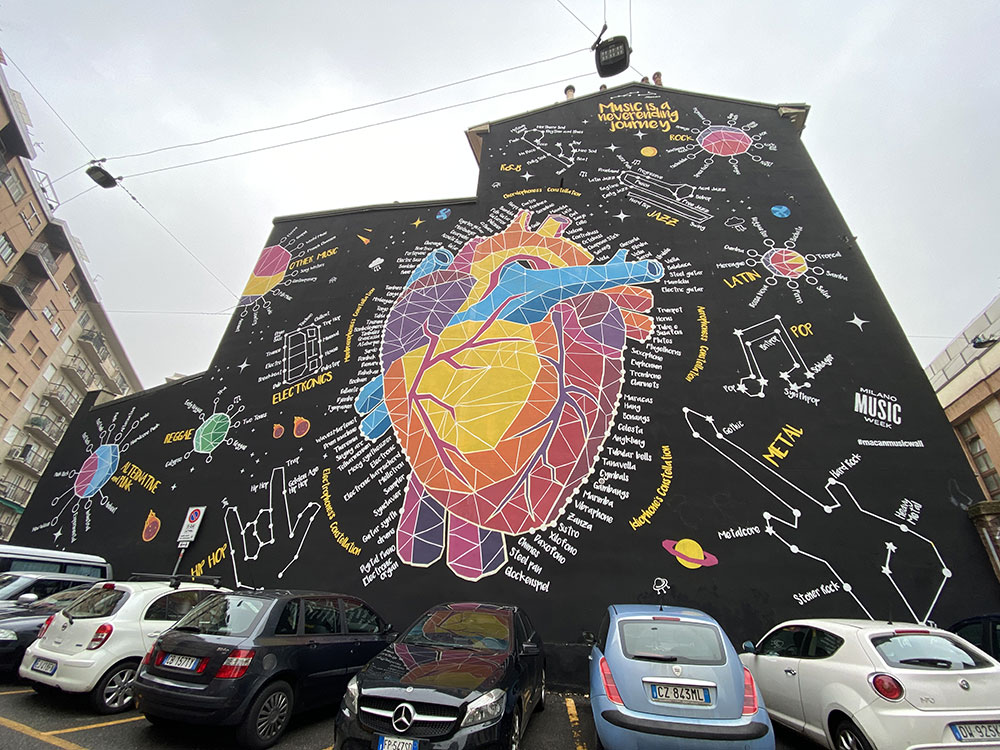
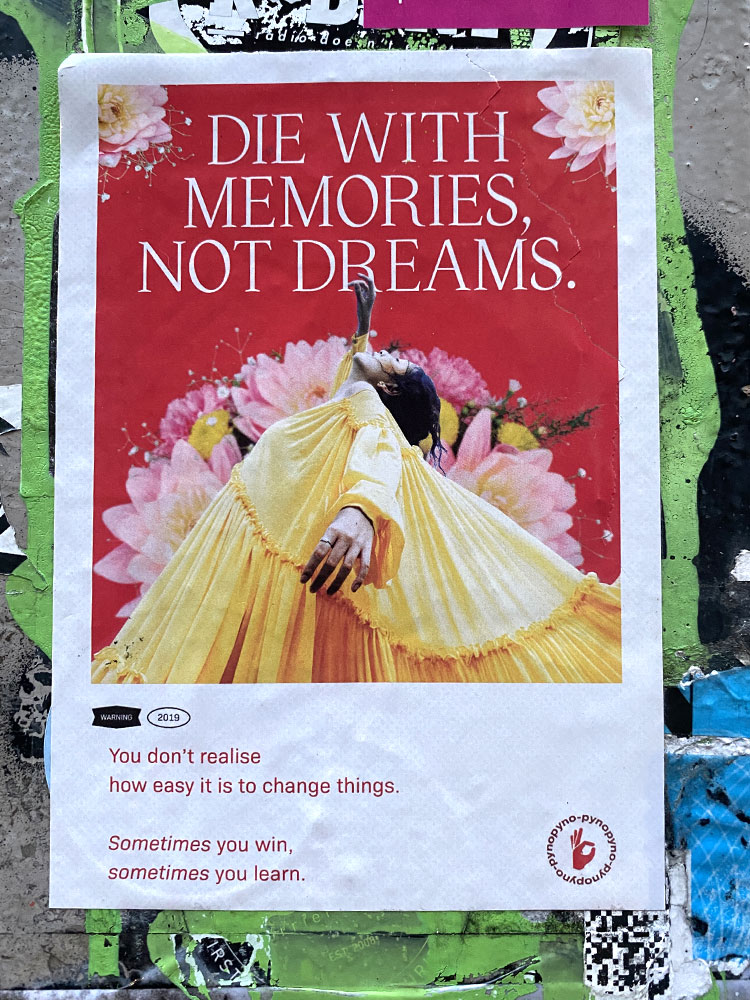
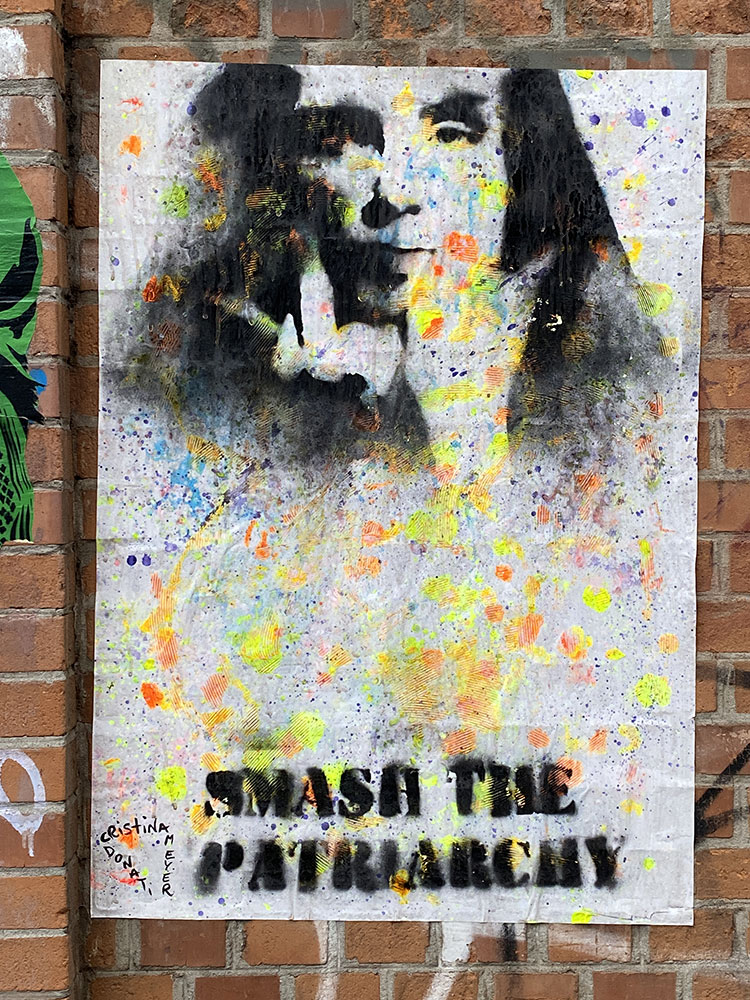
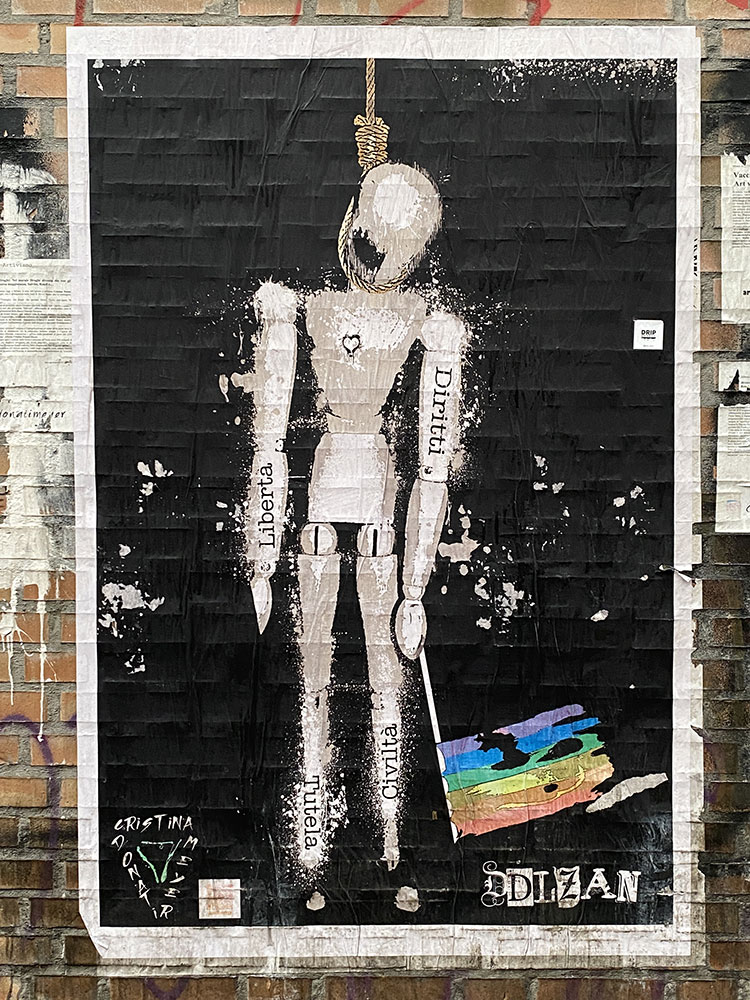
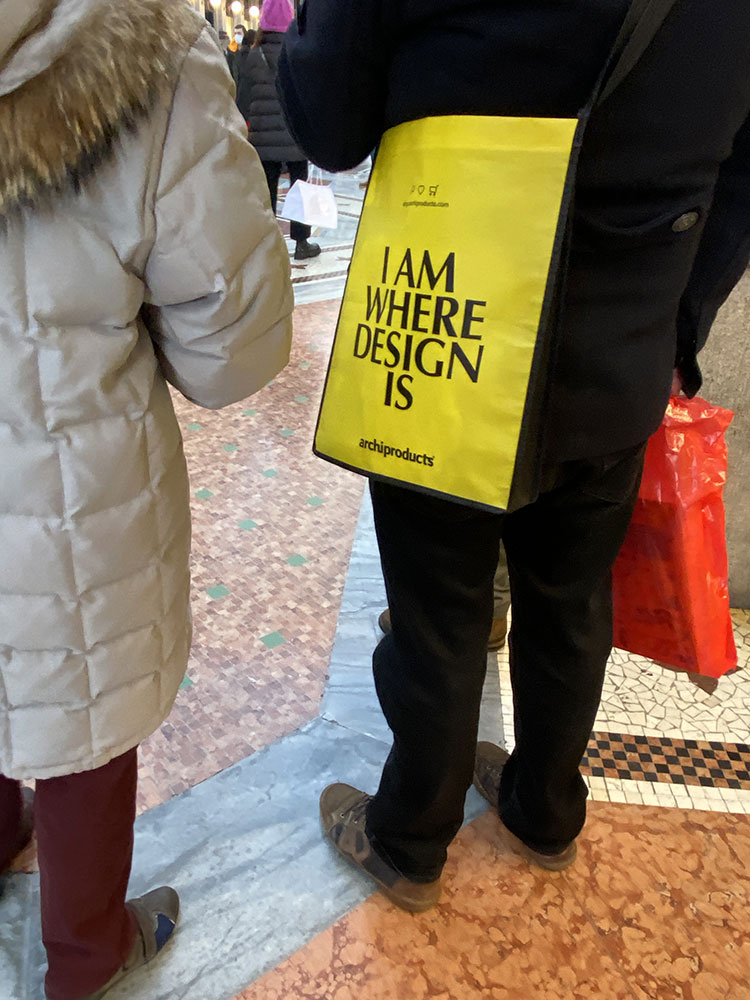
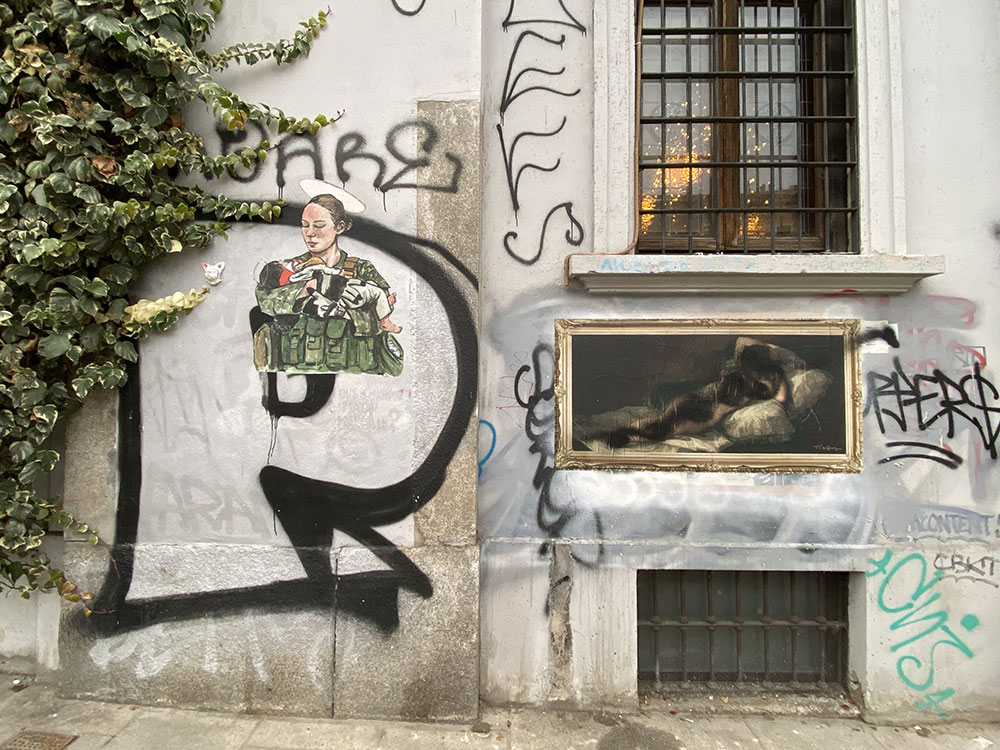
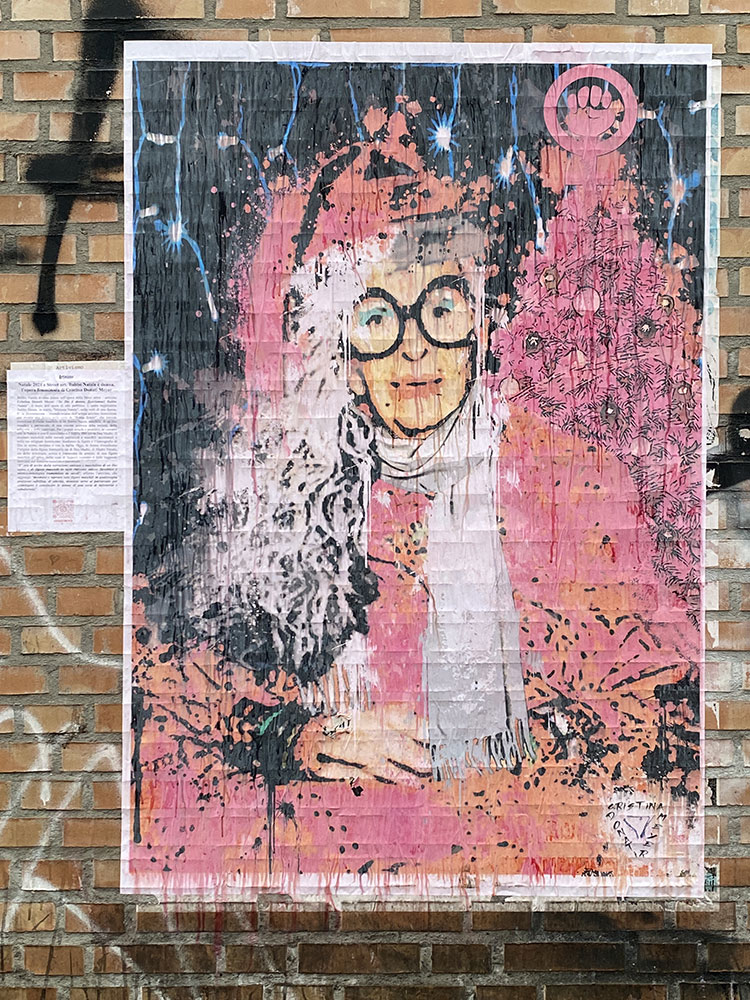
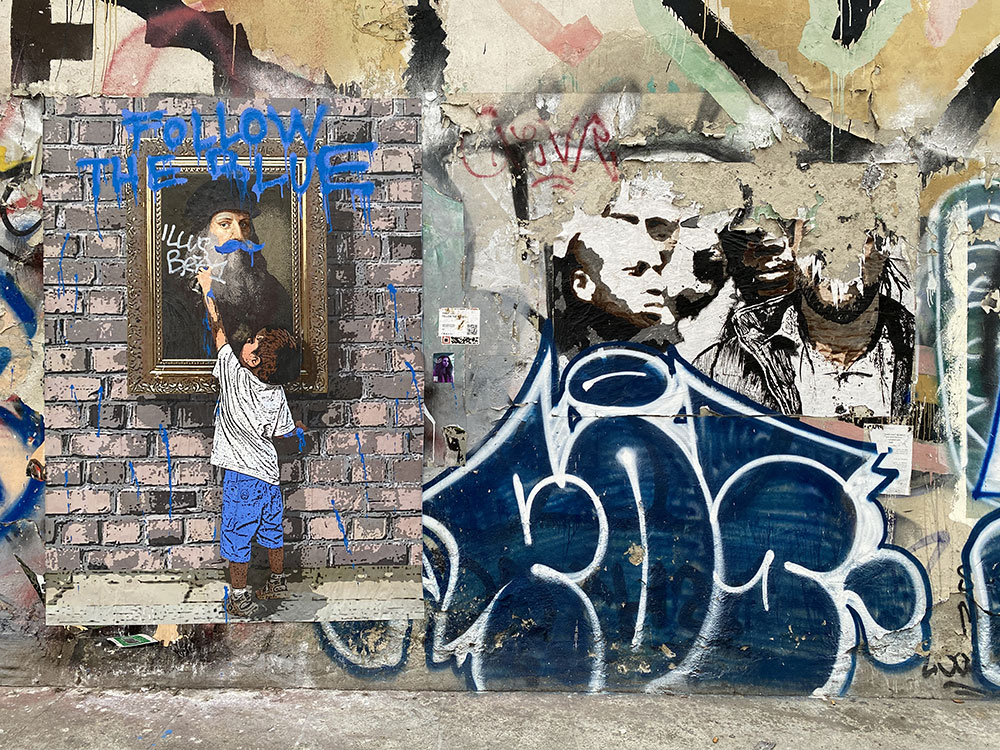
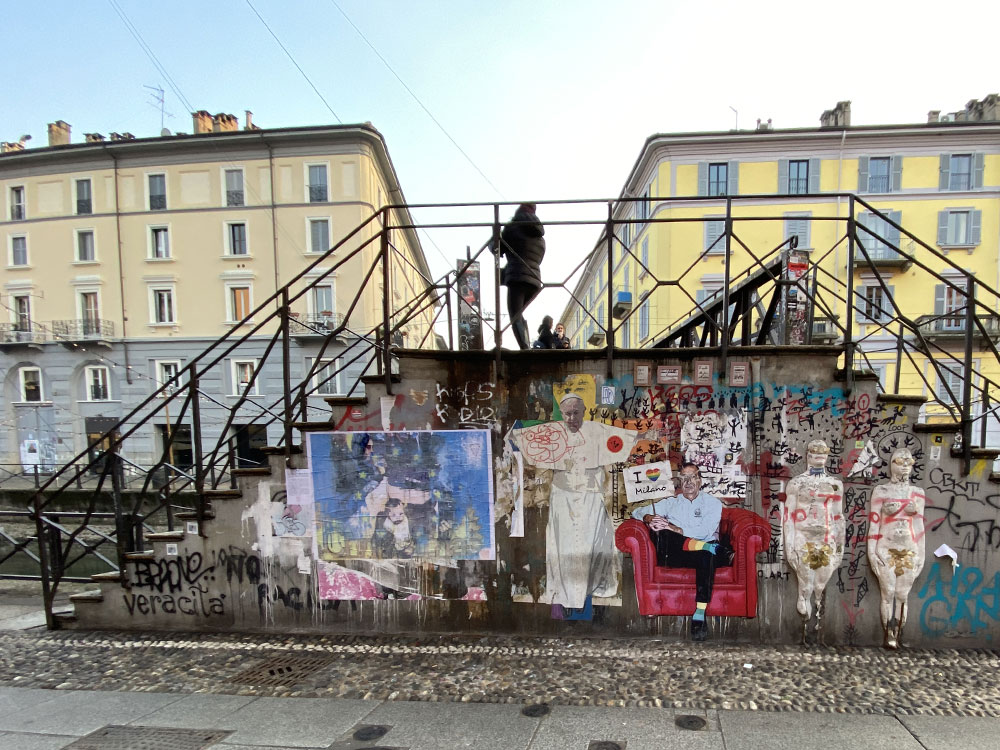
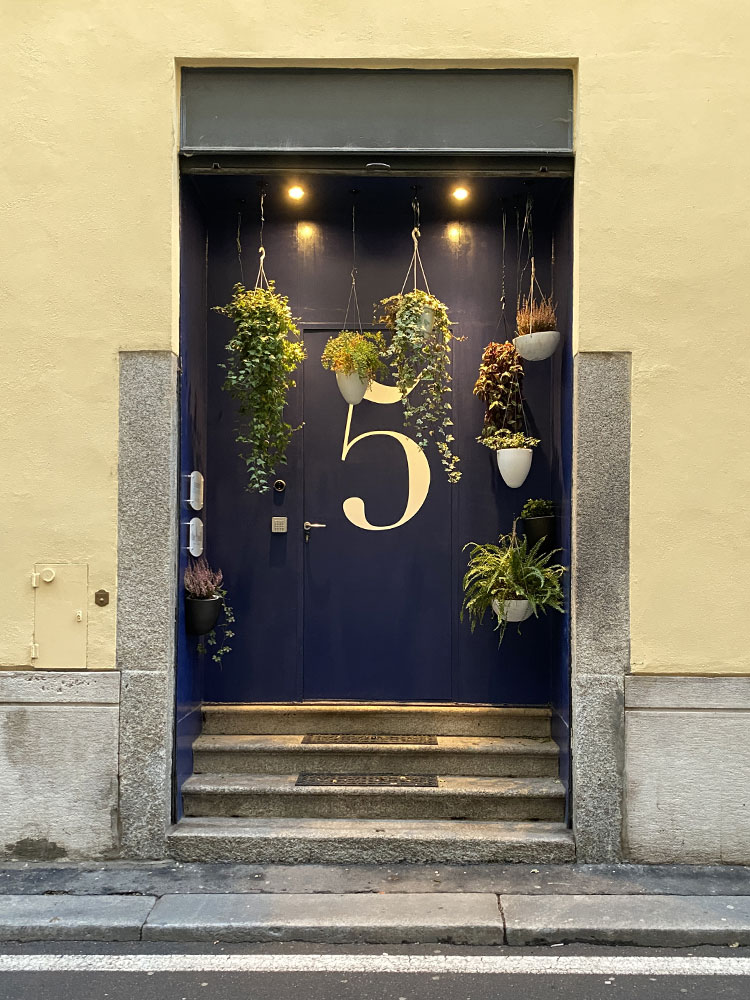
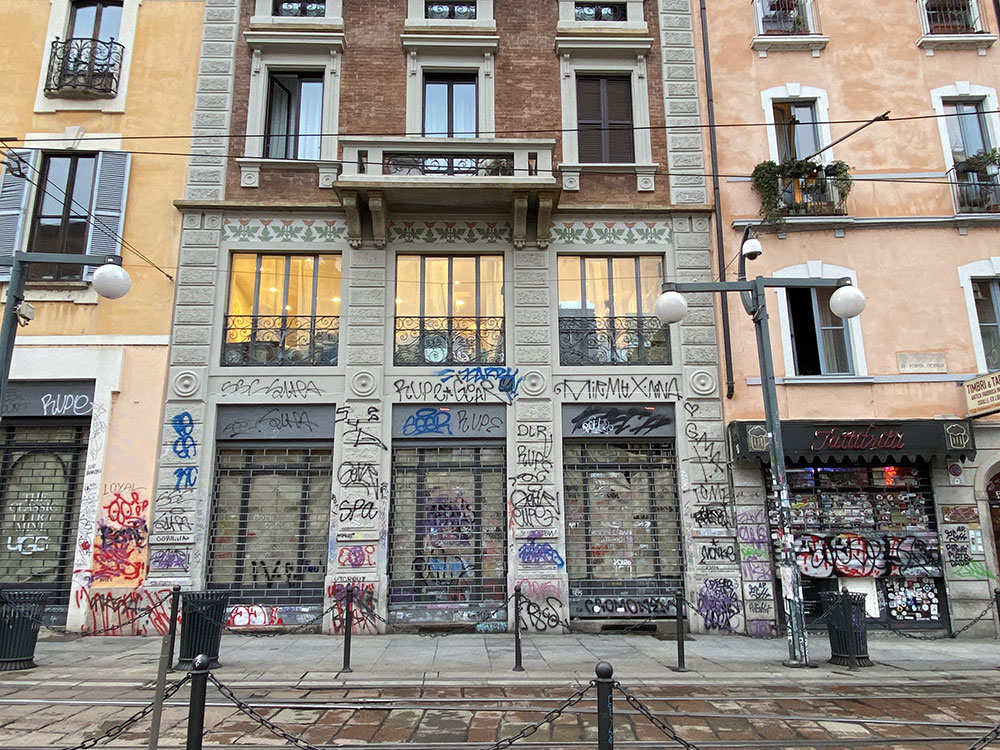
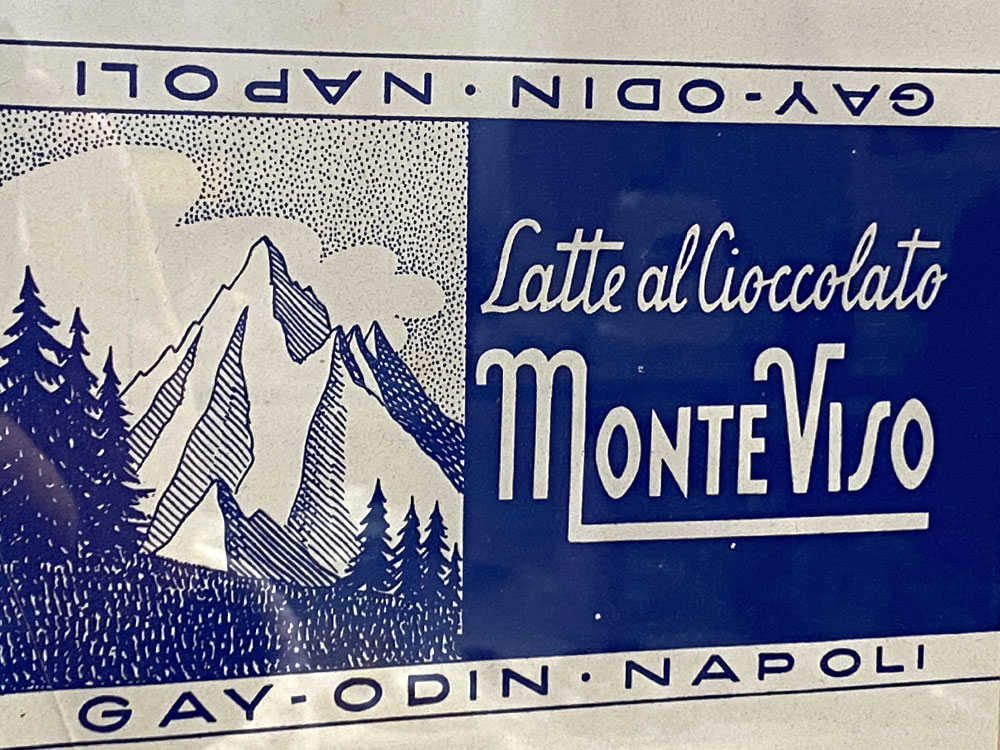
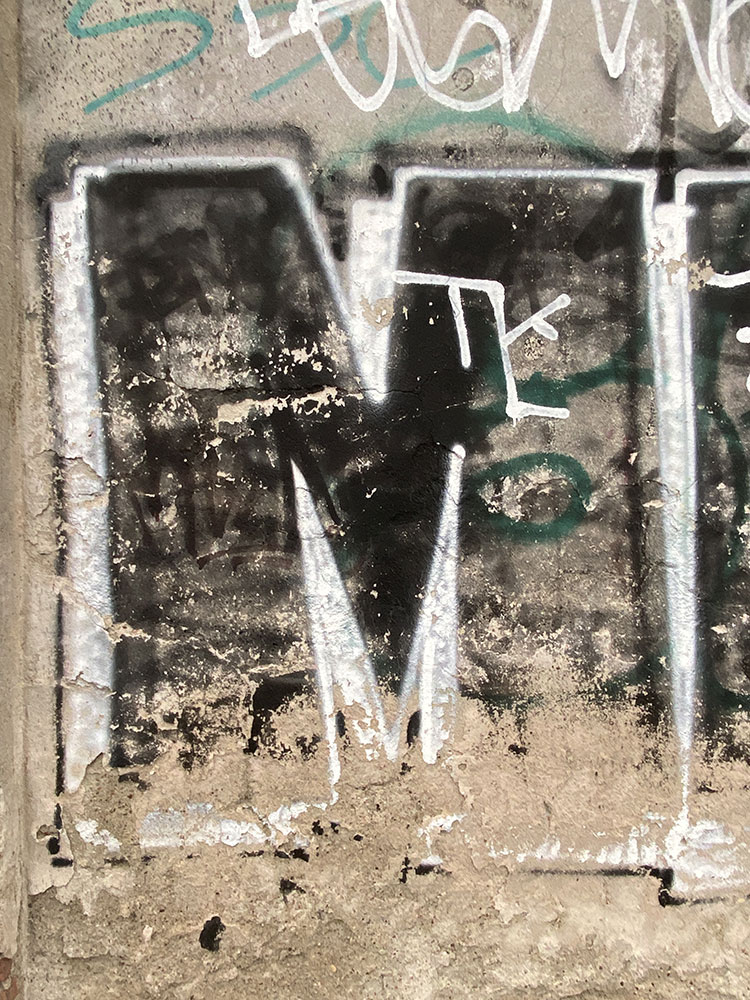
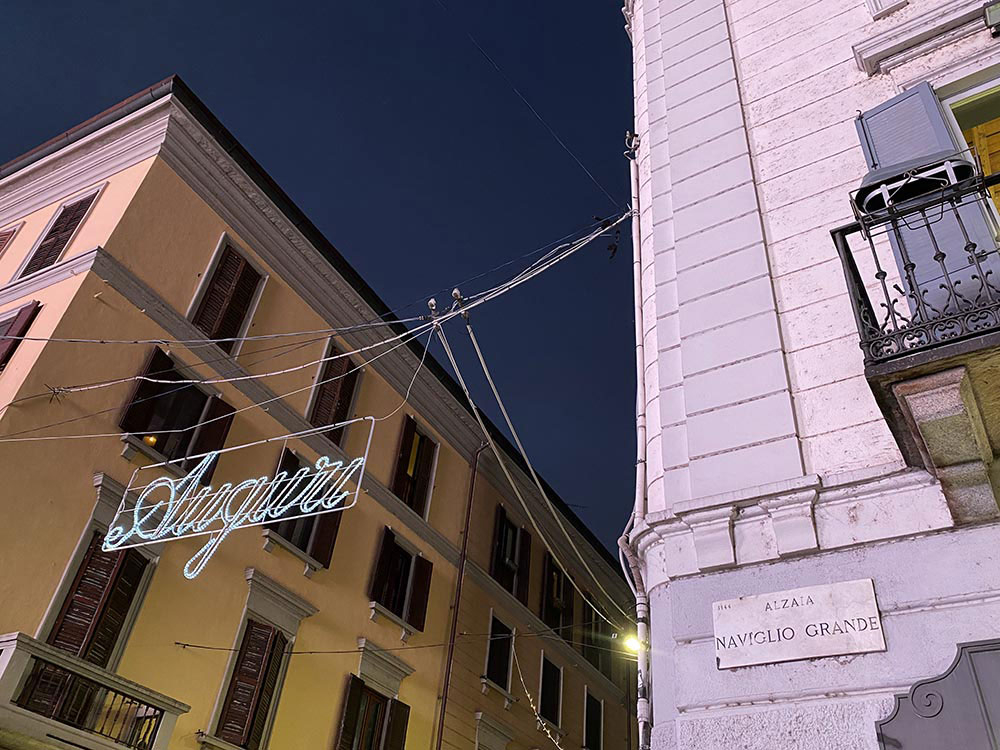
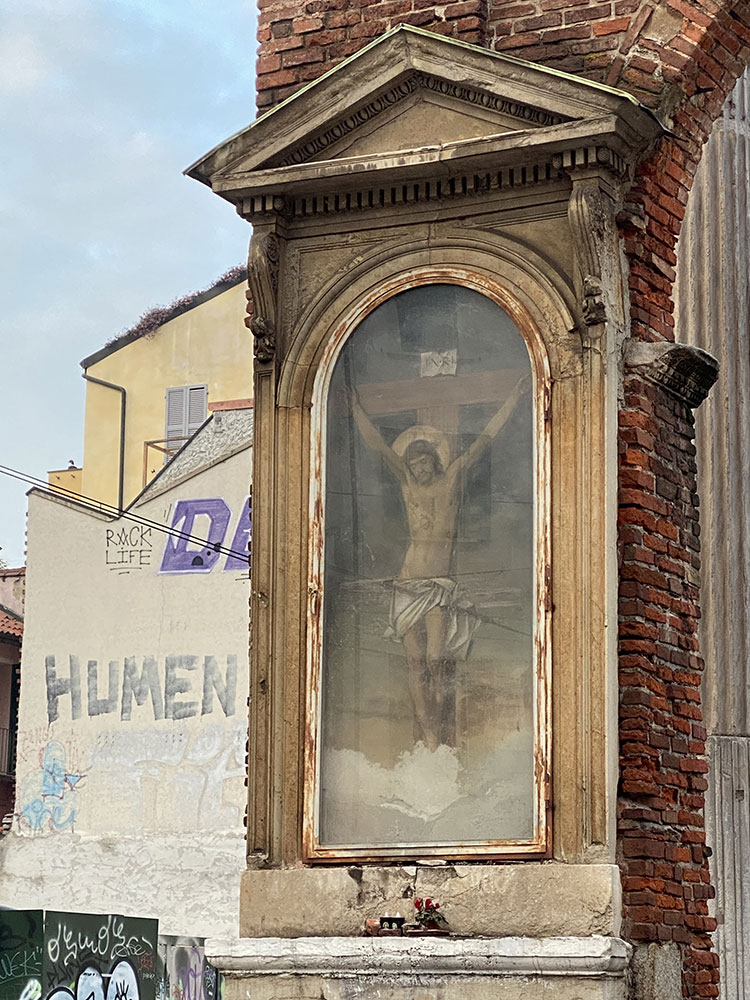
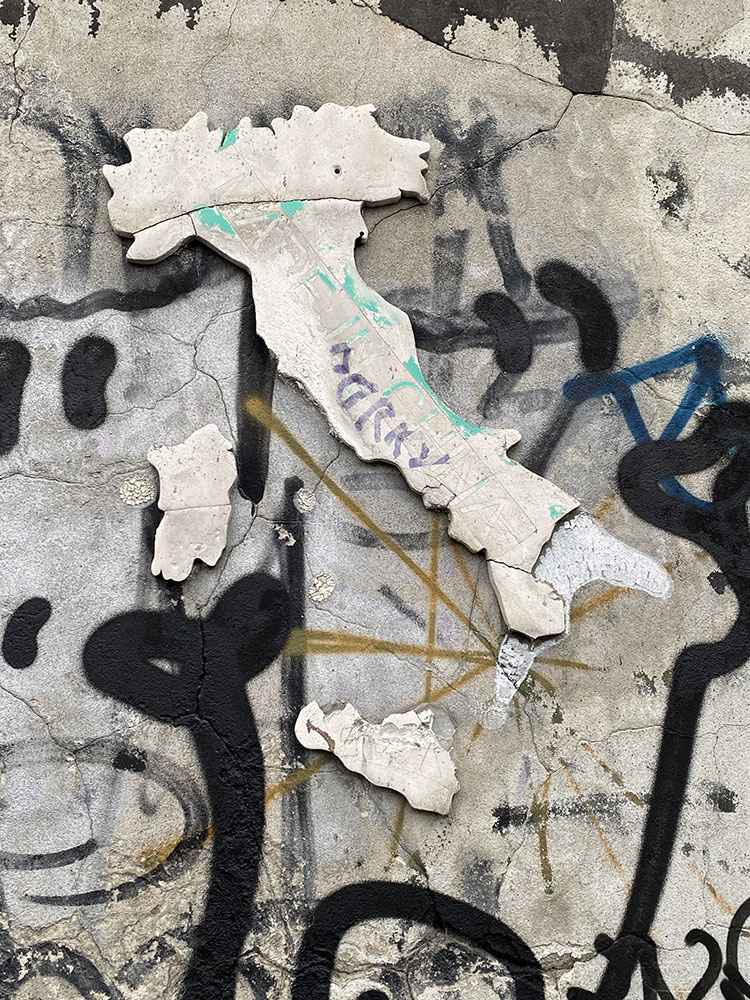
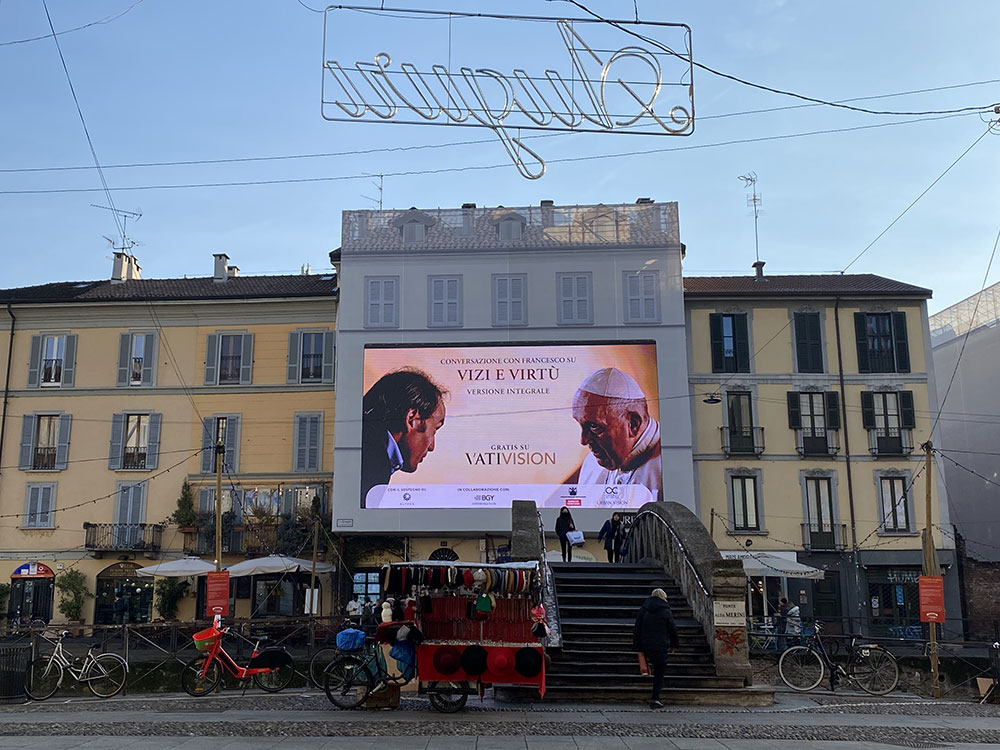
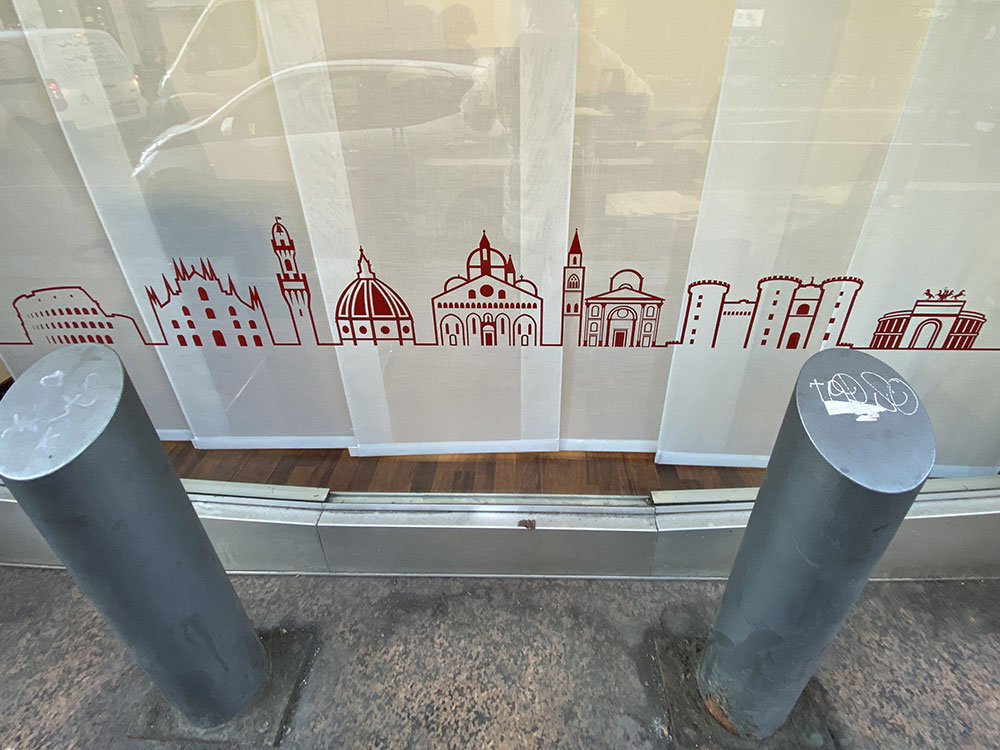
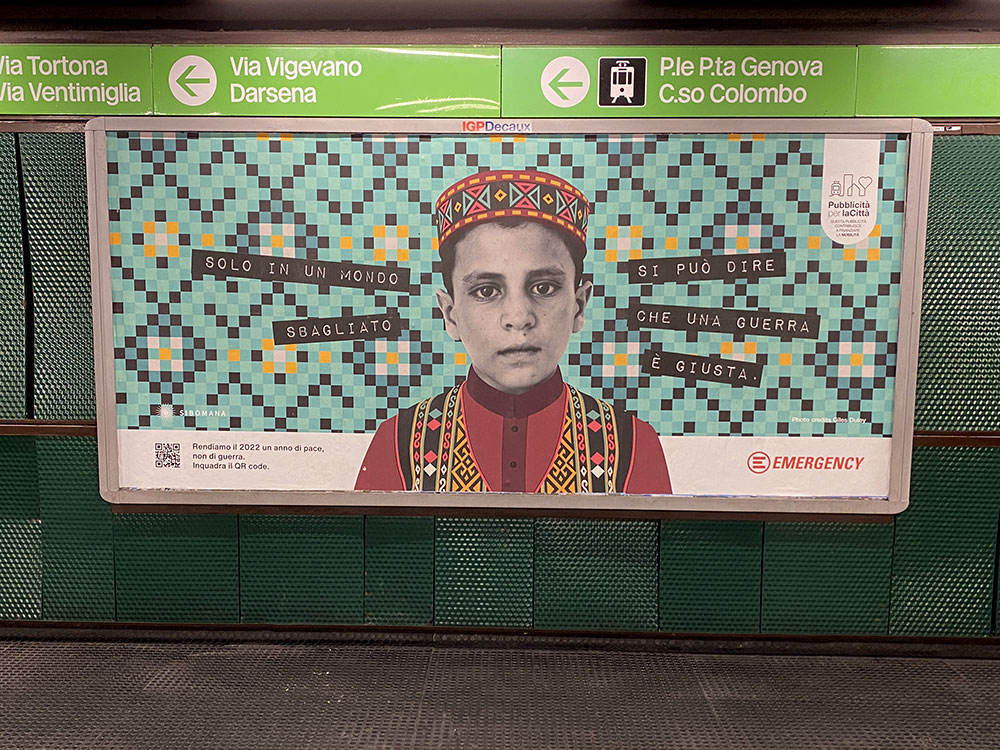
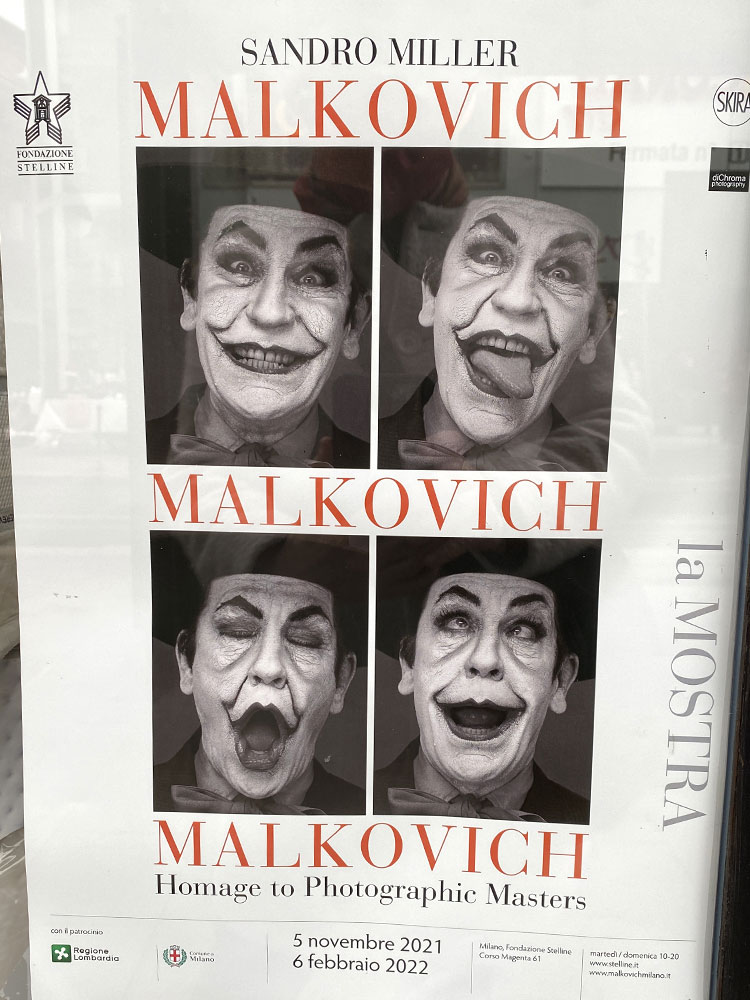
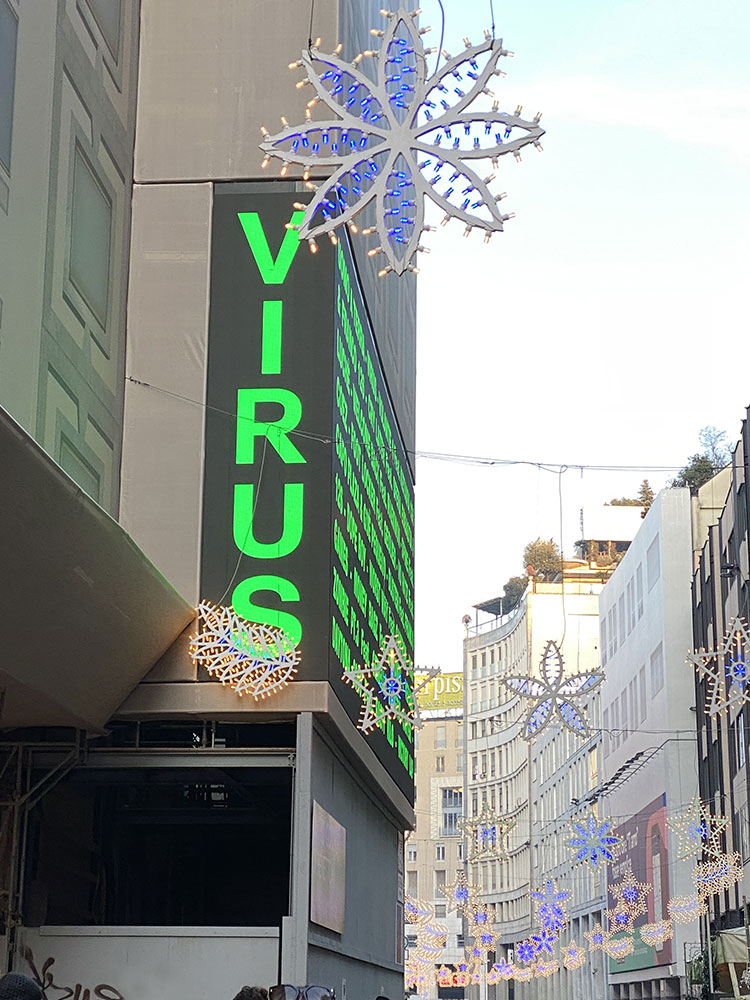
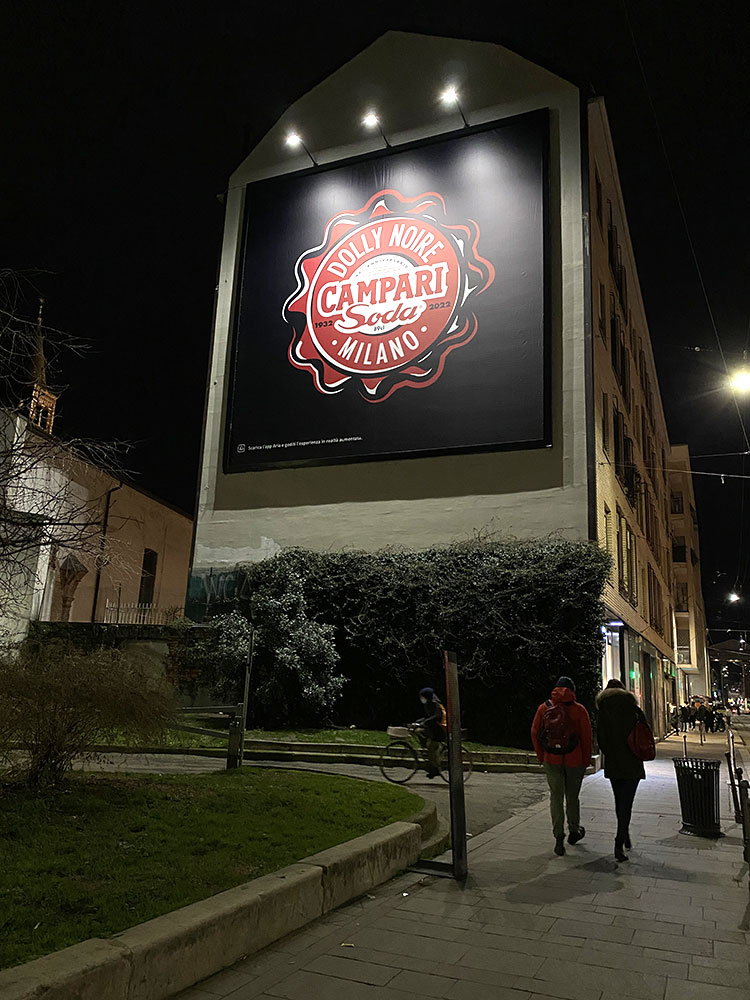
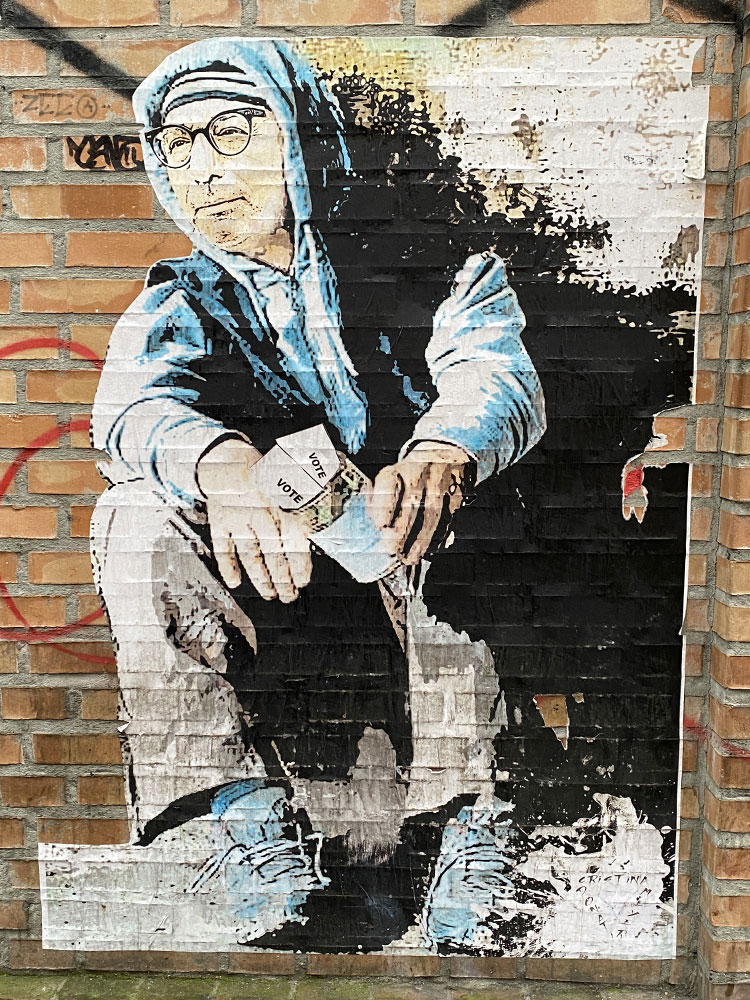
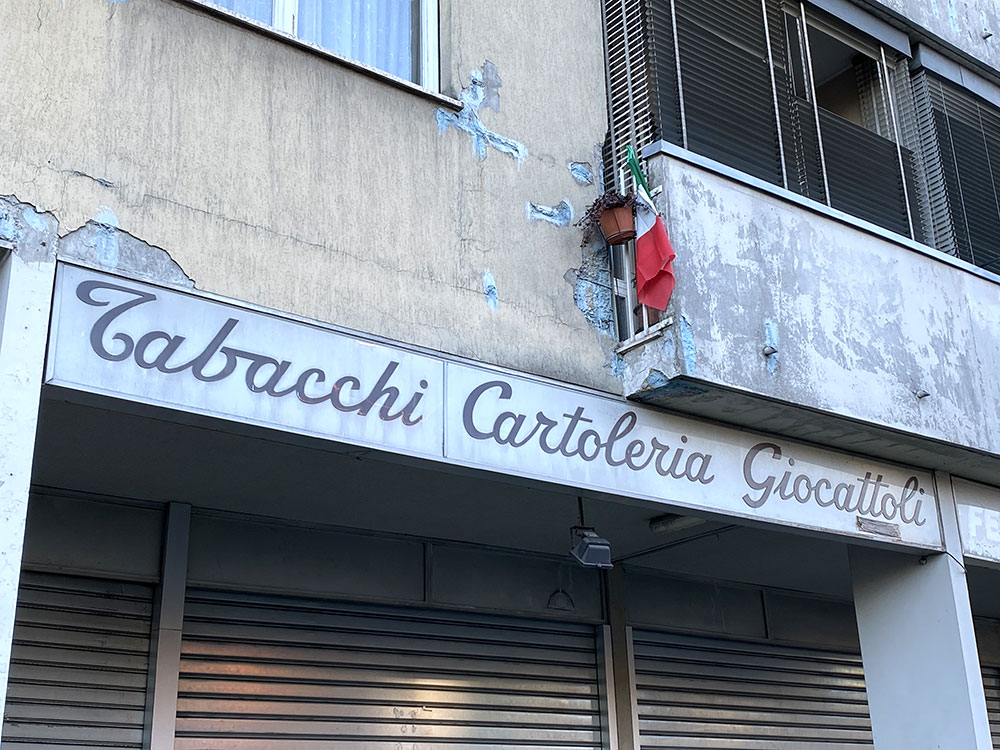
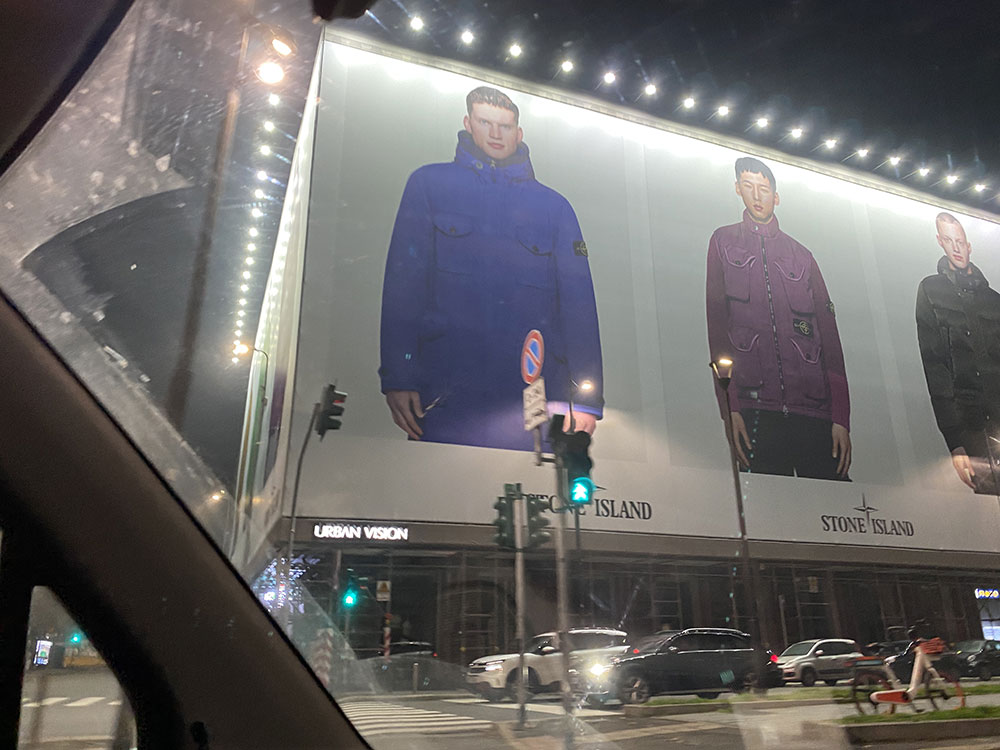
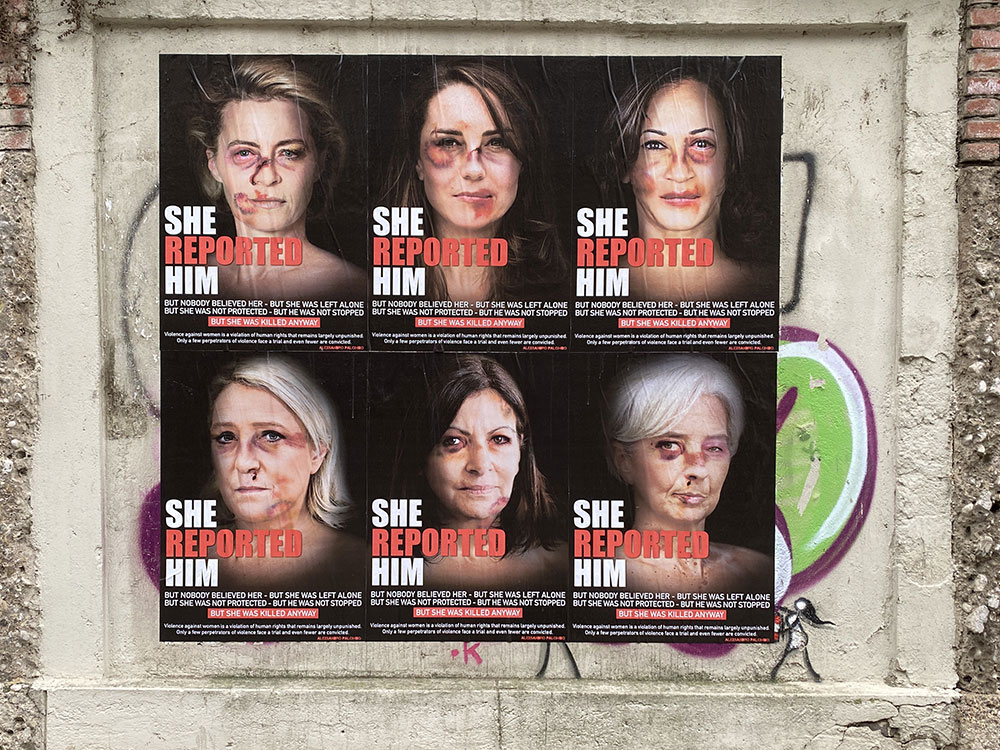
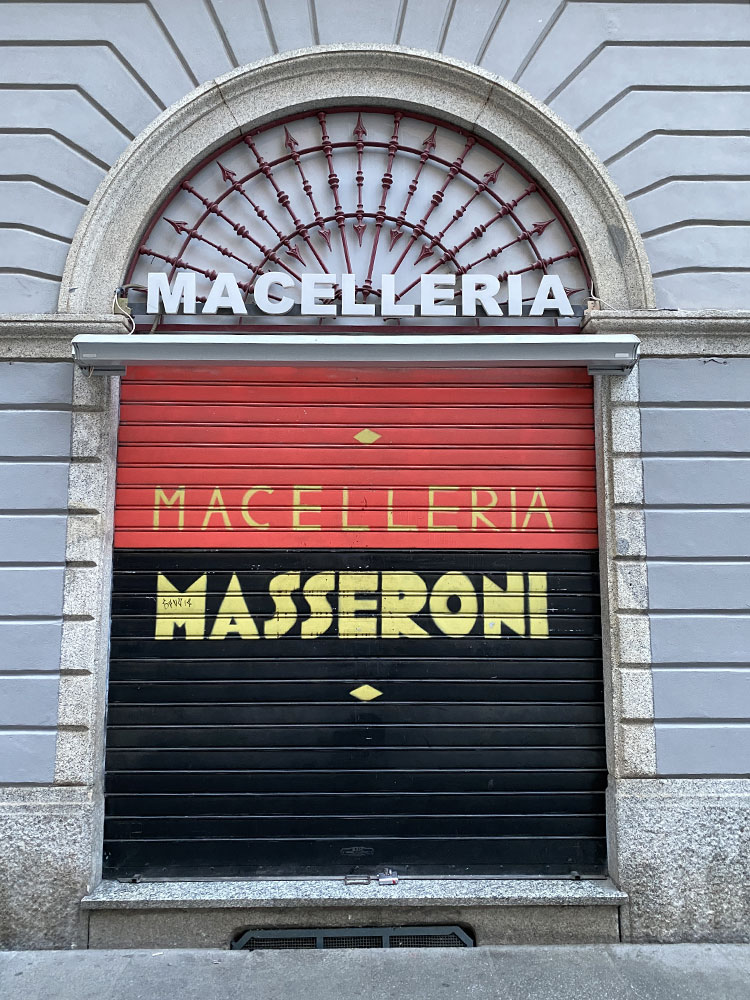
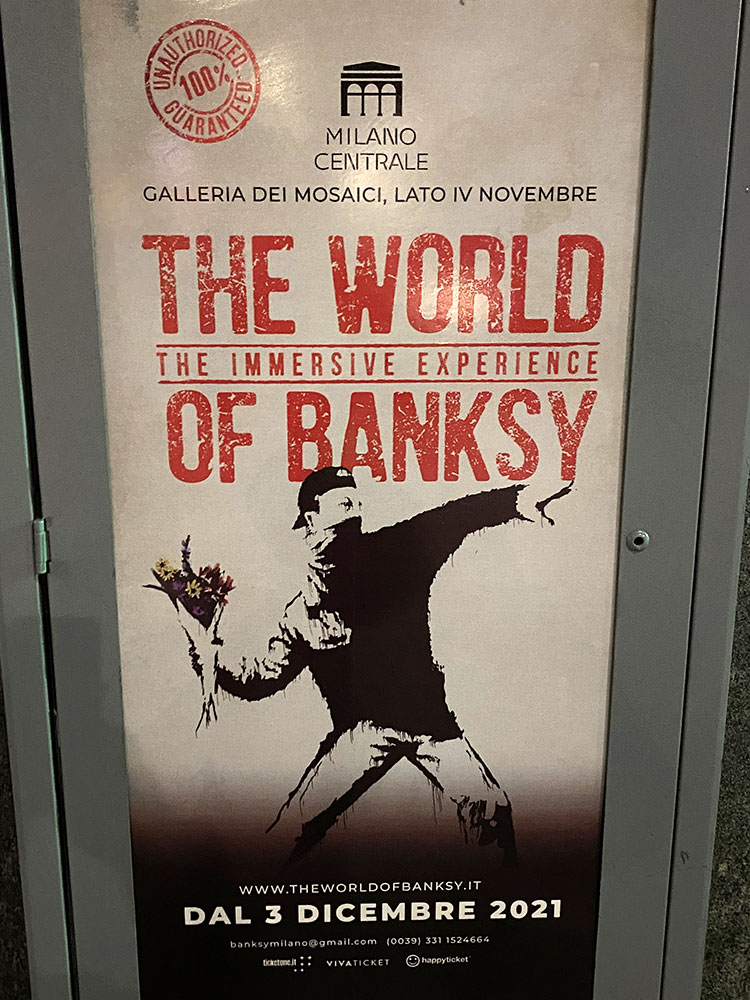
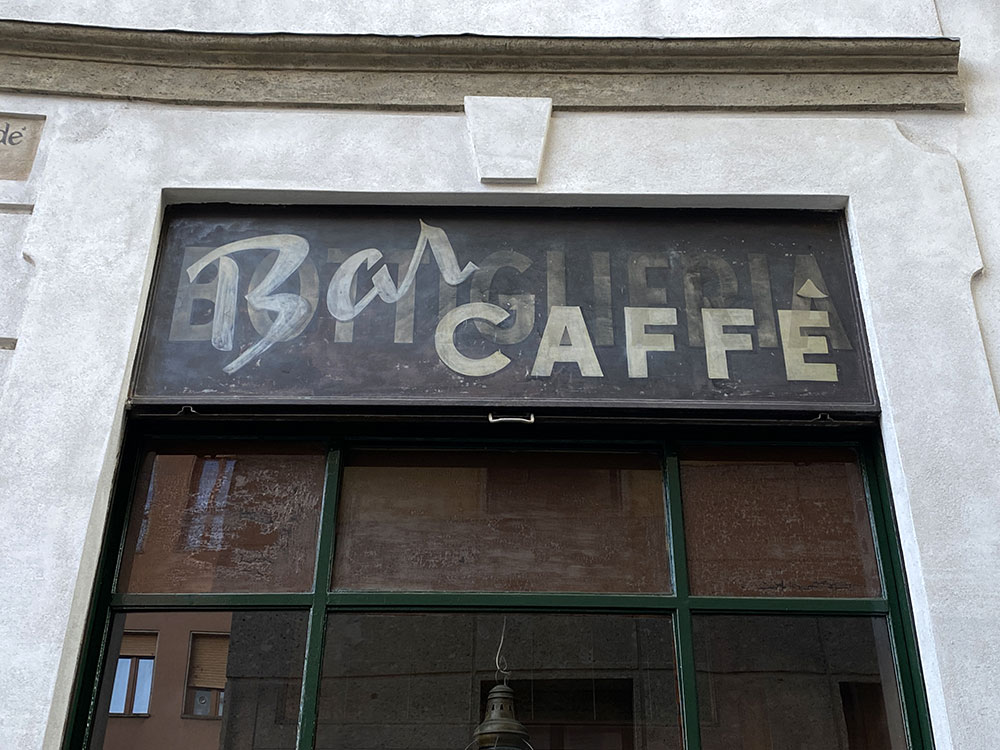
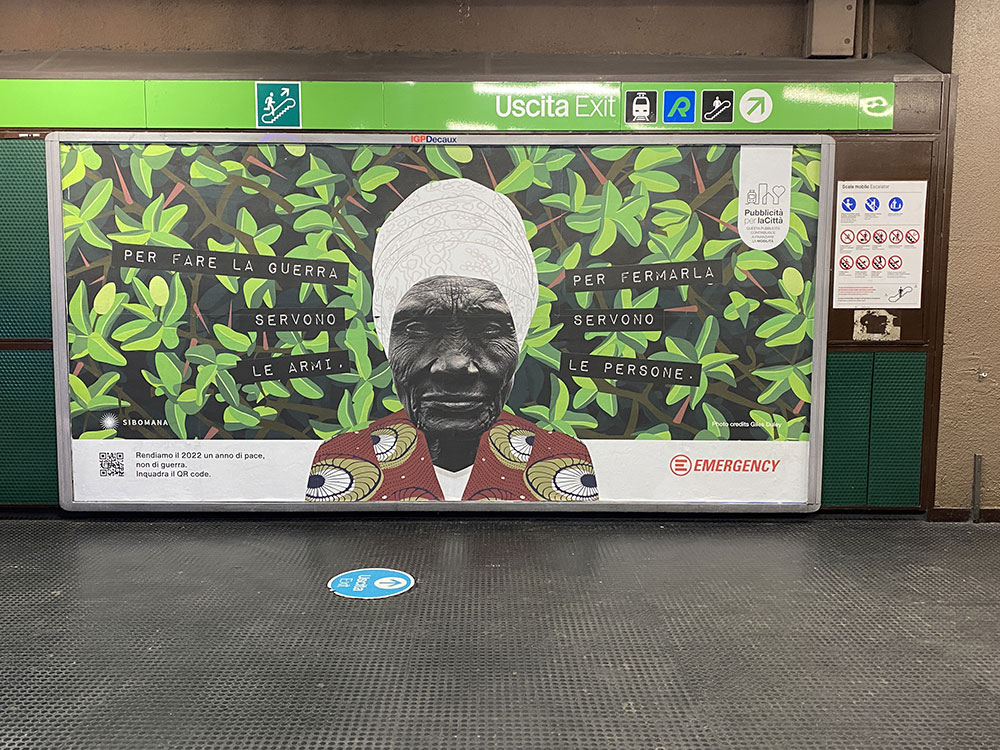
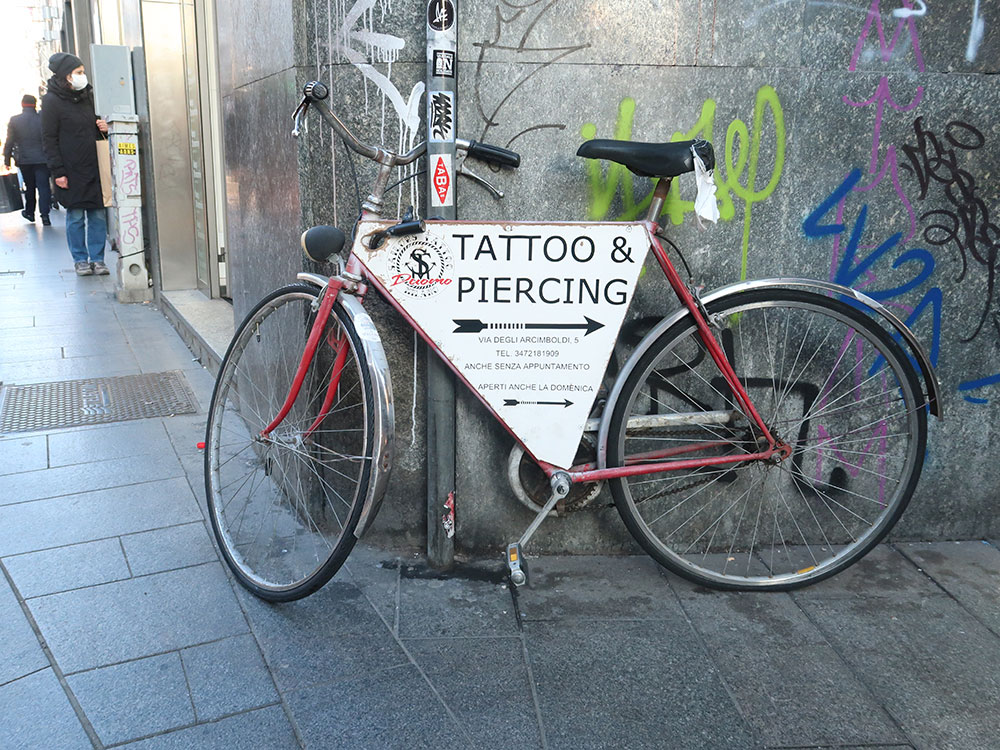
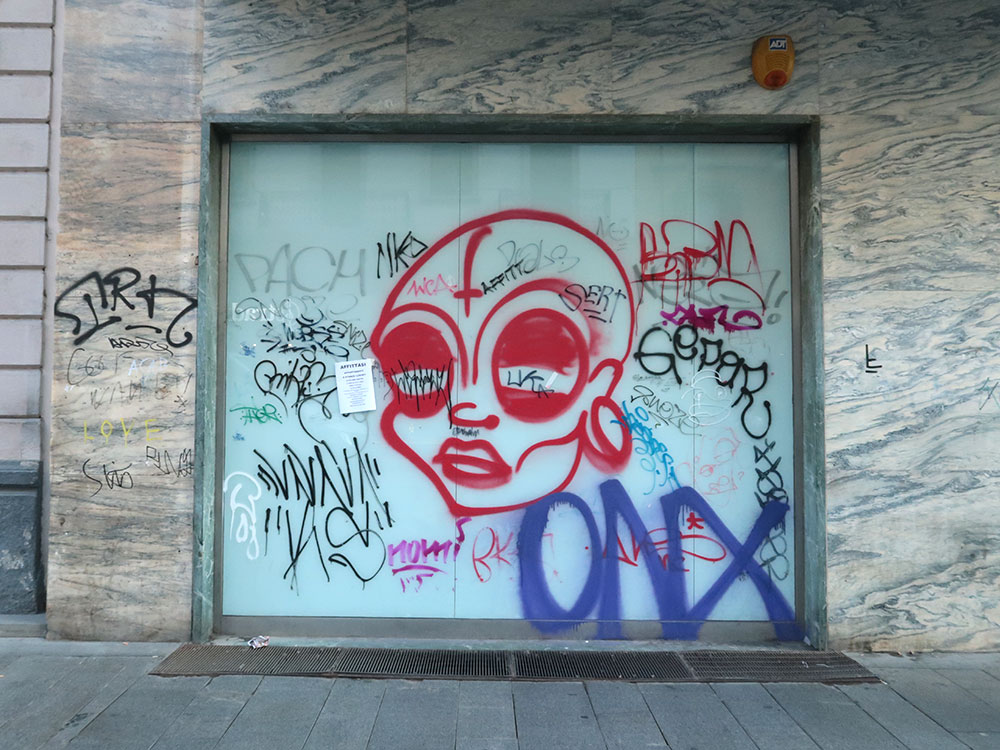
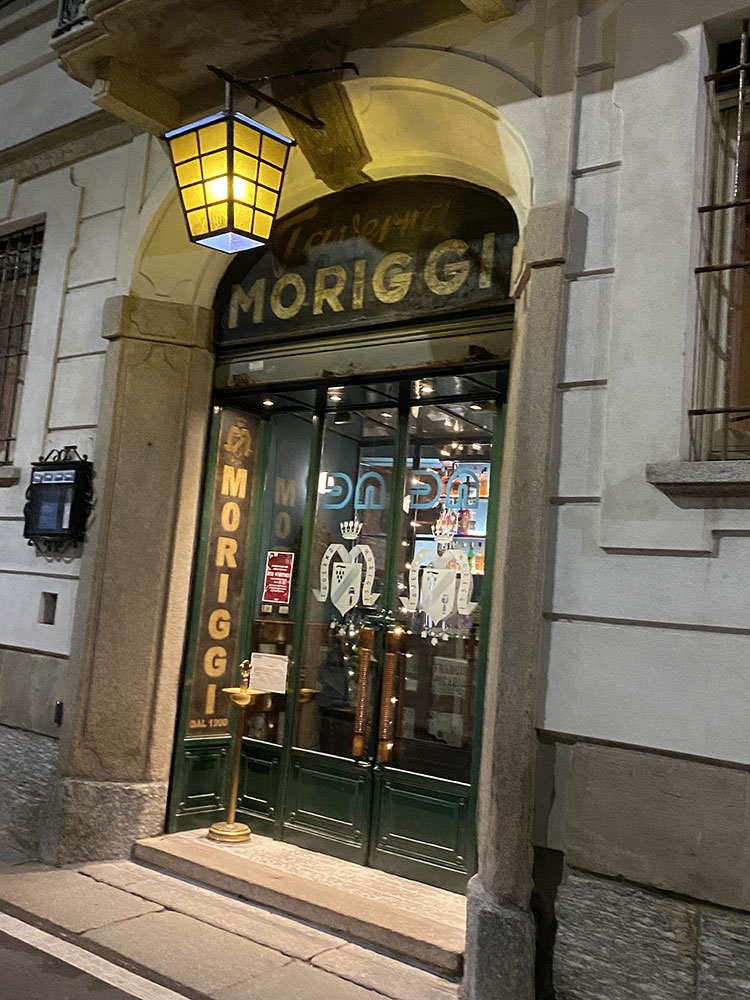
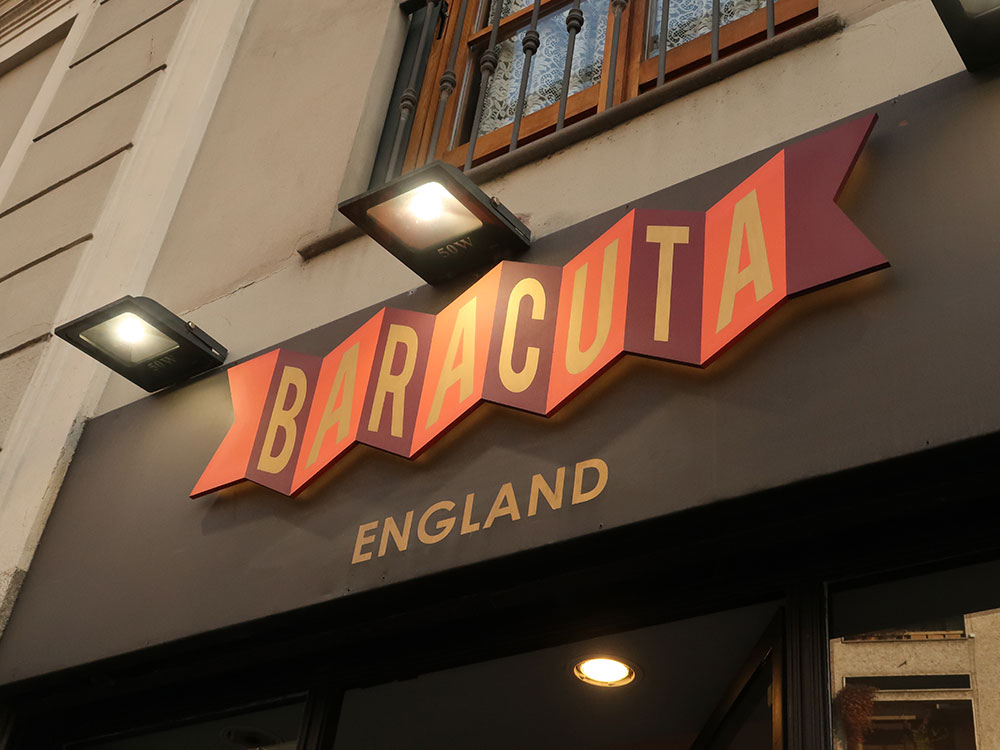
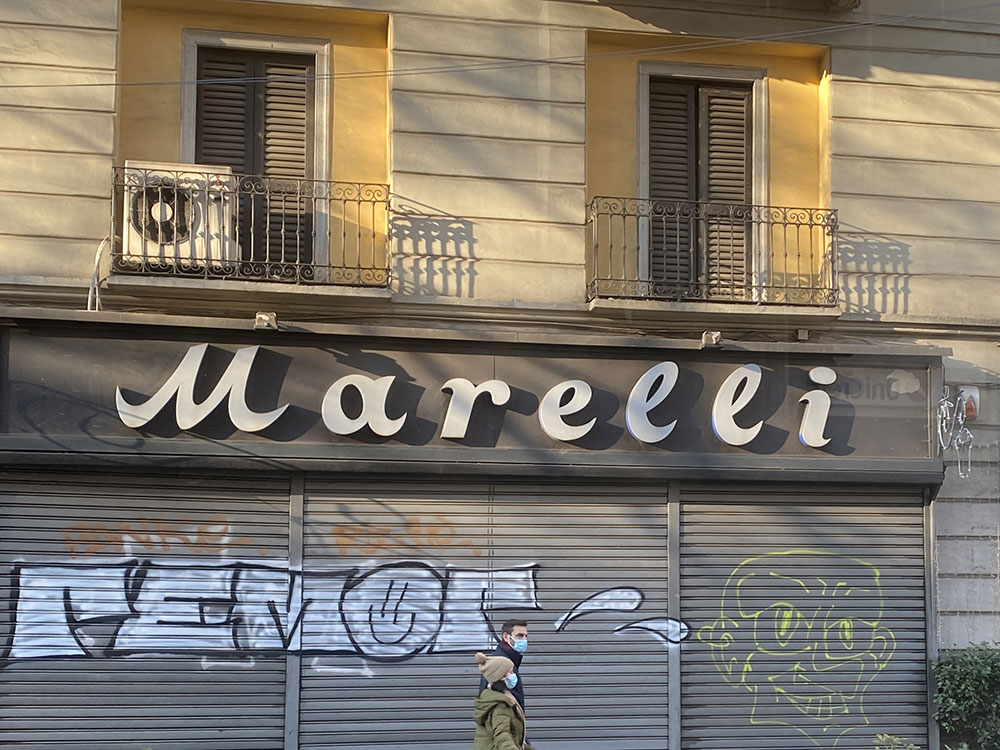
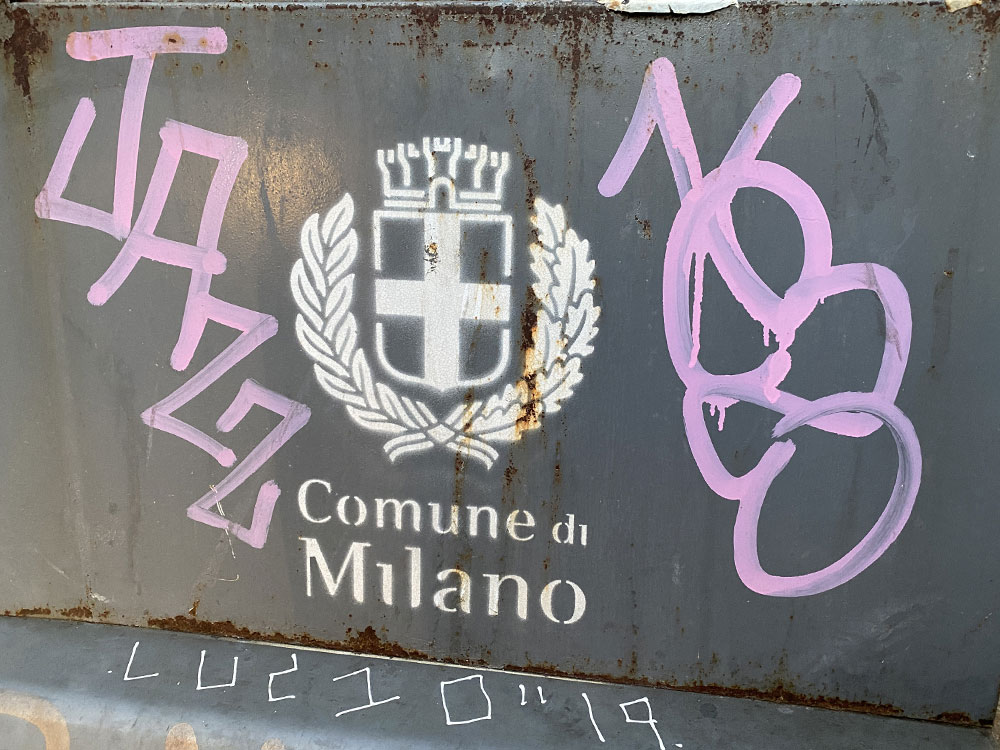
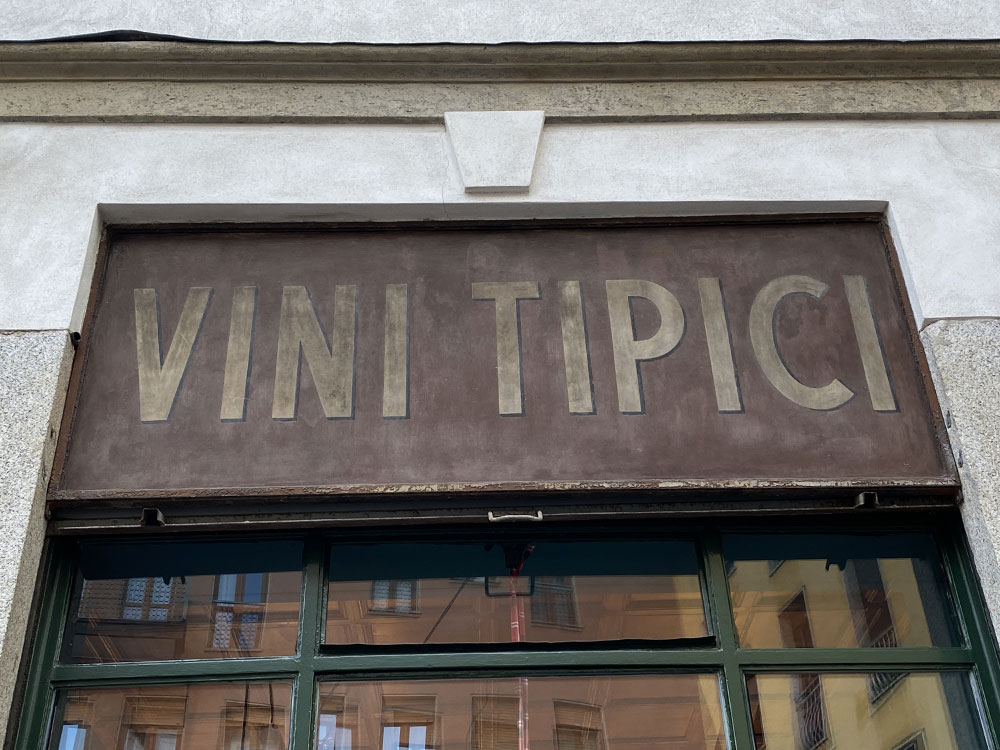
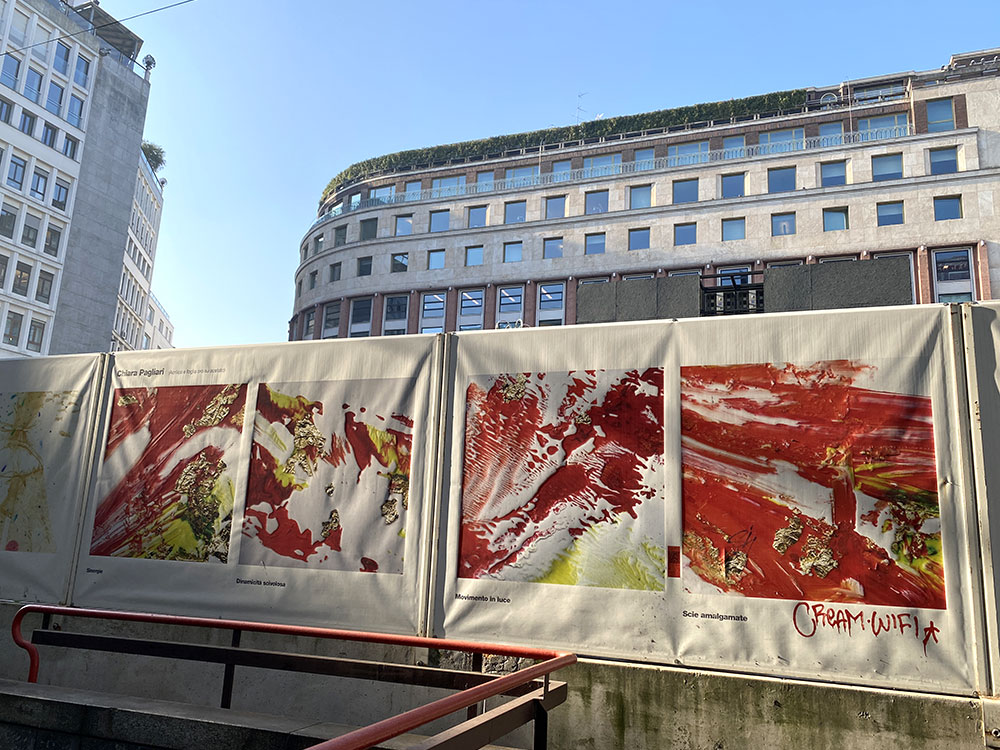
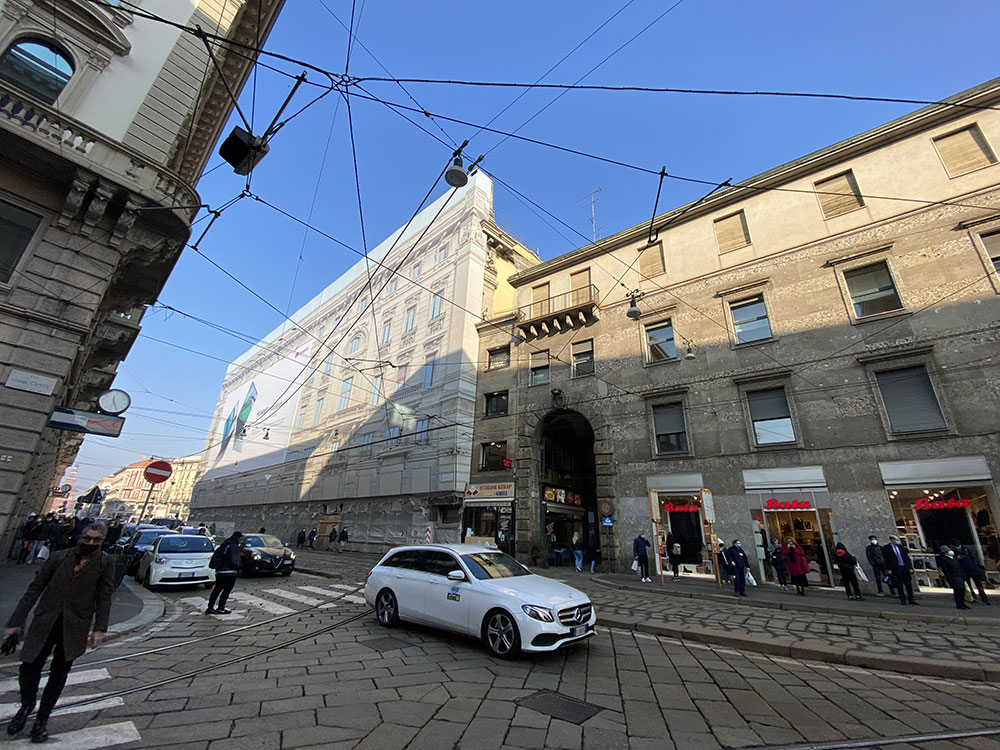
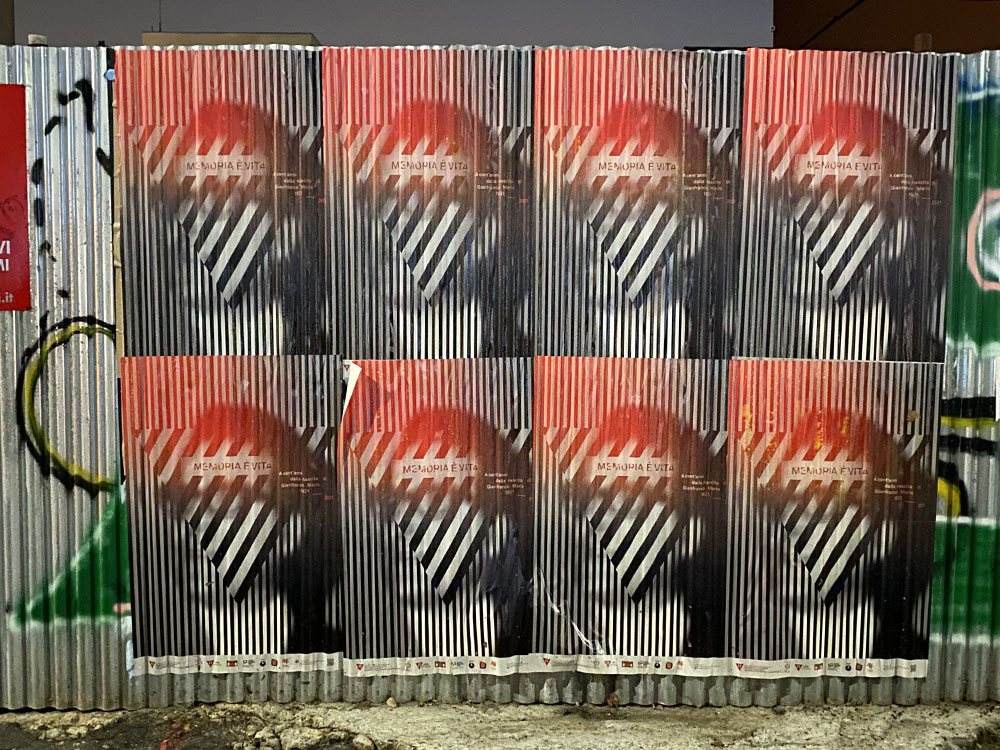
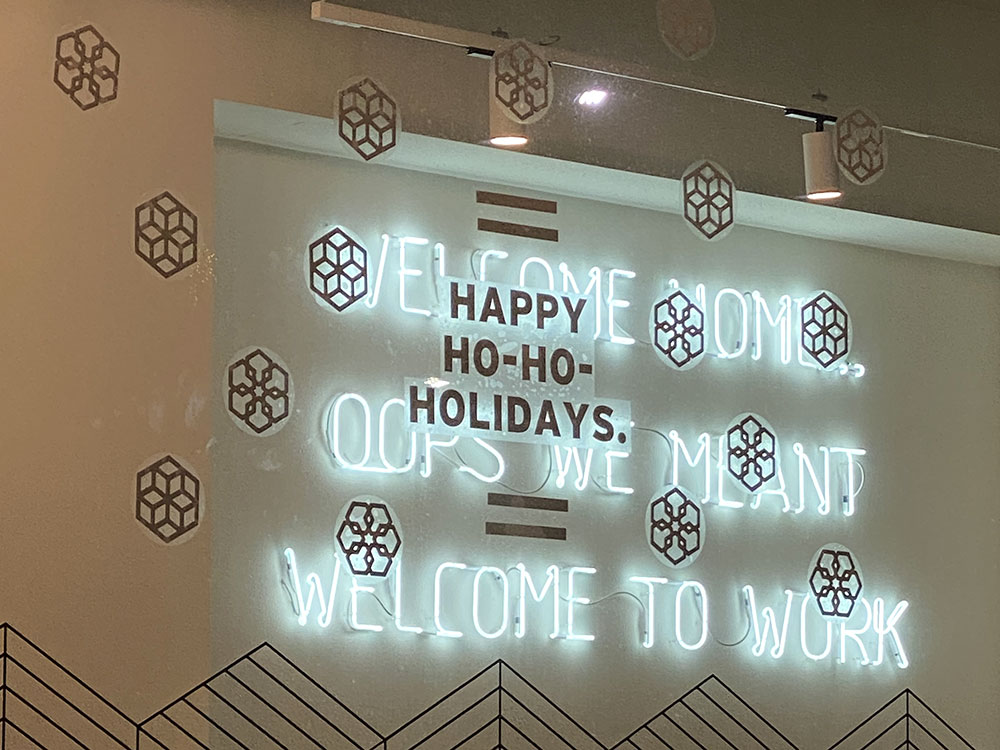
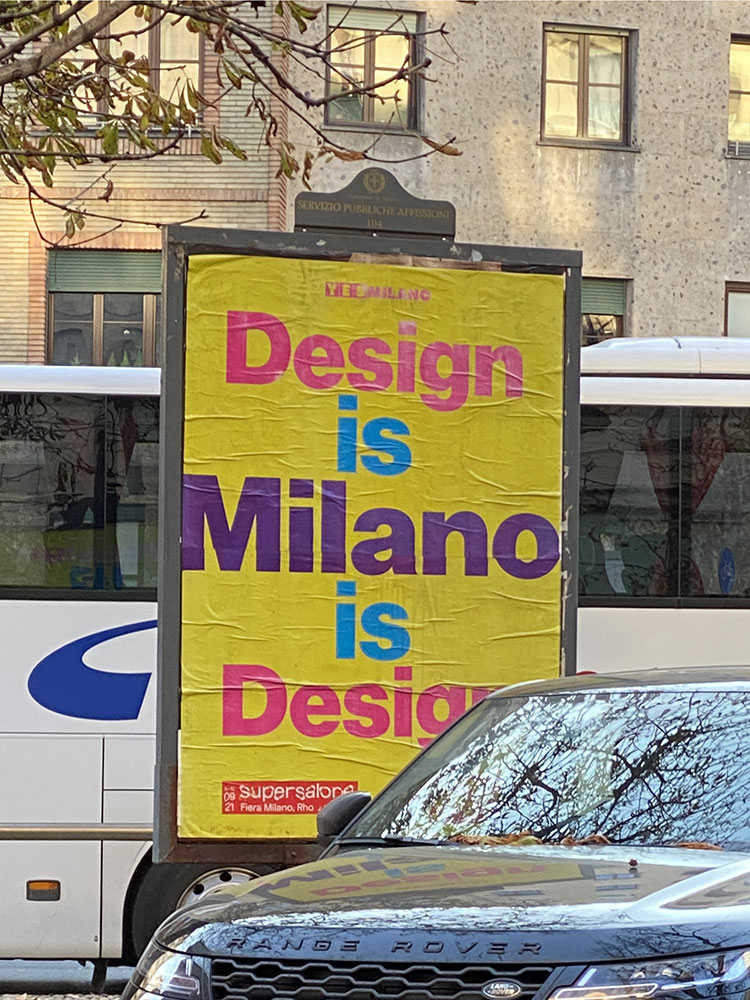
My Designer/Artist’s eye thrills at the strong visuals of signage – old and new – graphic elements and street art that I find in Milan and beyond. Whether polished, “high design”, antique lettering, or fresh-and-funky, it excites my brain and inspires me. I swoon over long-ago, hand-painted typography when I find it. Am stirred by powerful messaging. And am amused by juxtapositions and contrasts. These elements are personal draws that bring me back to Milan.

Window Shopping in Milan

Window Shopping in Milan

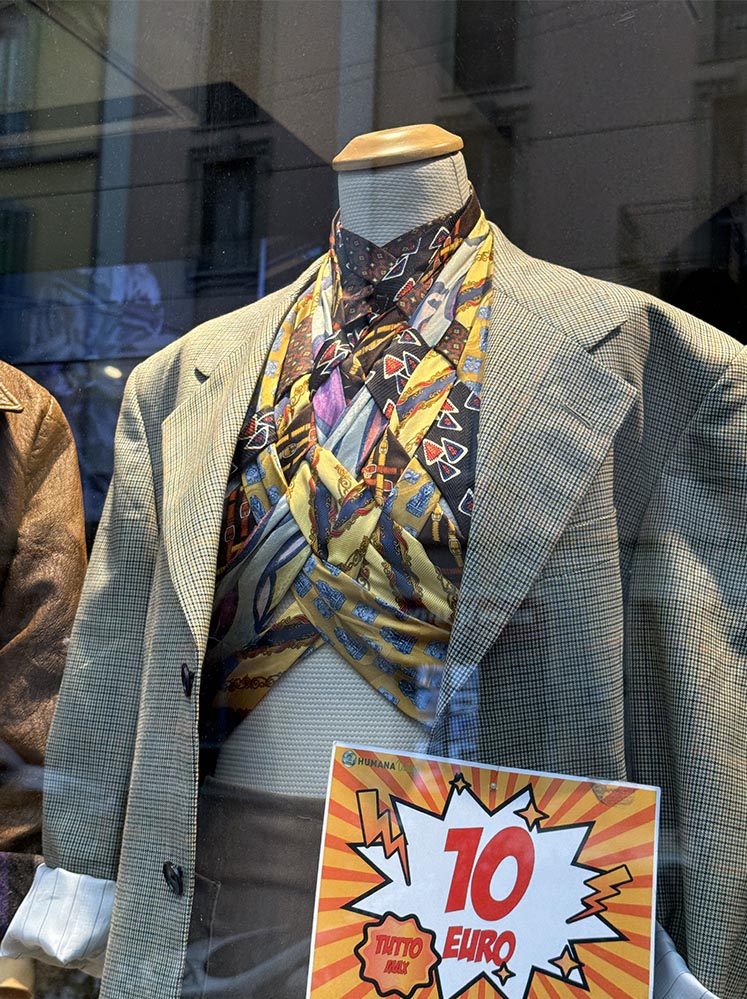
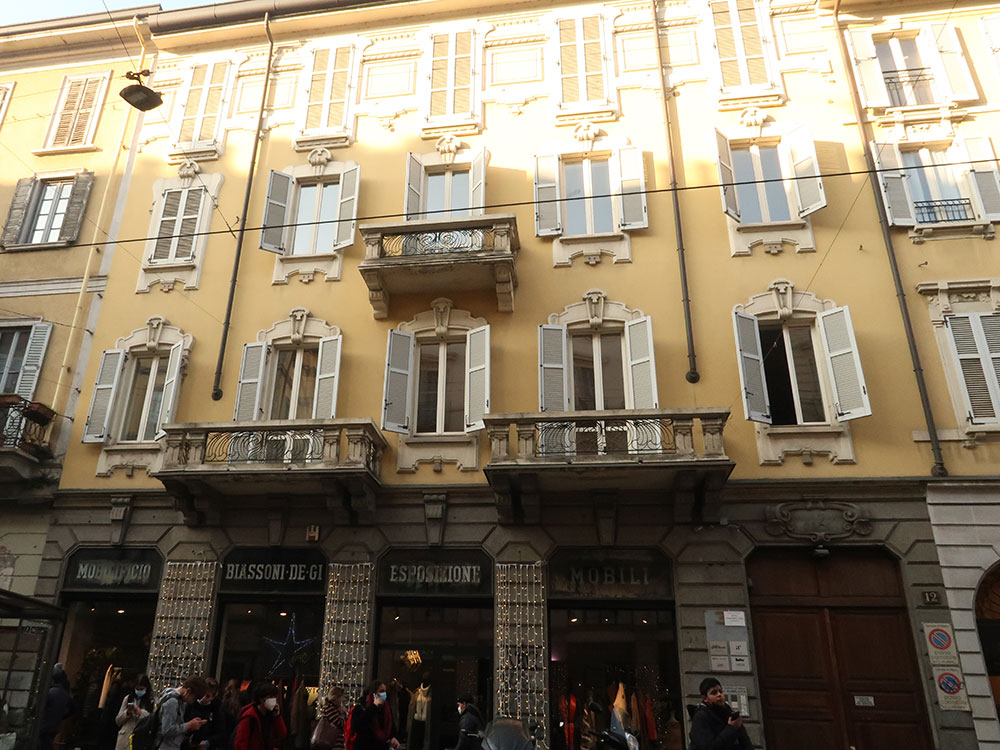
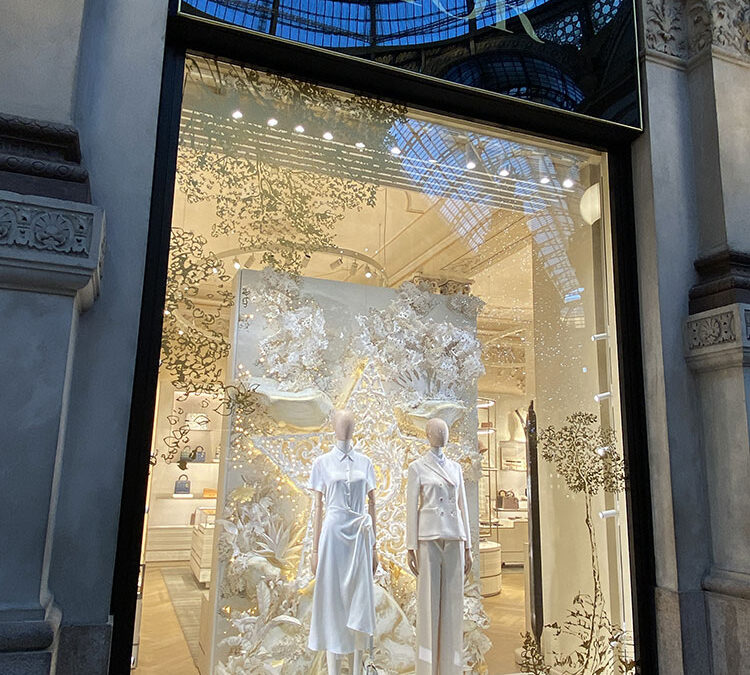
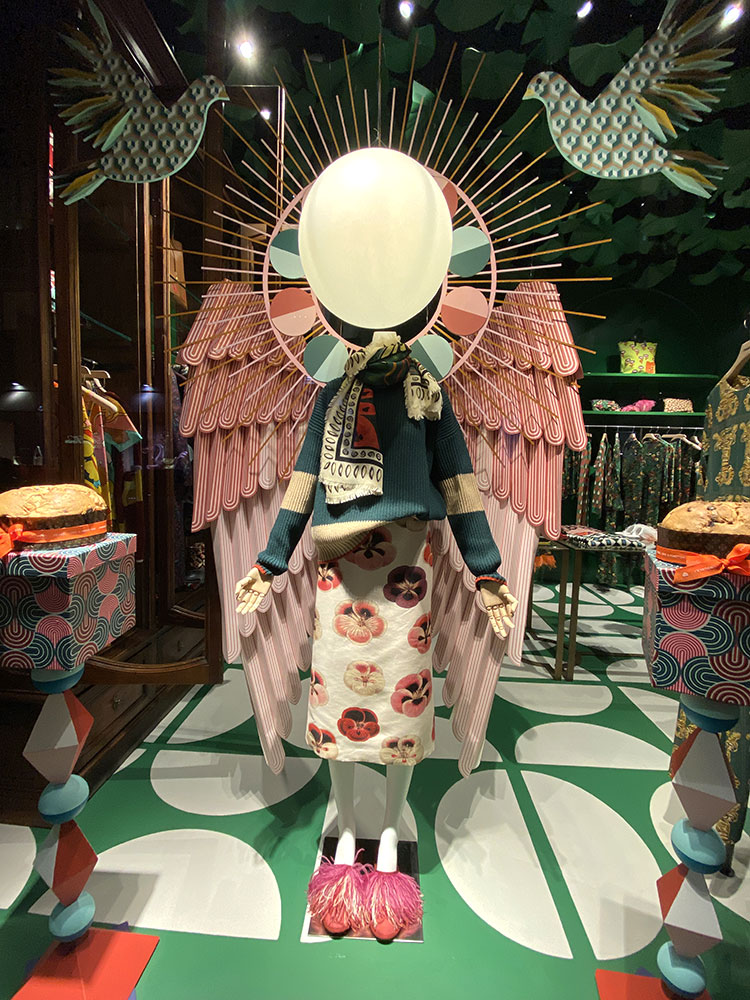
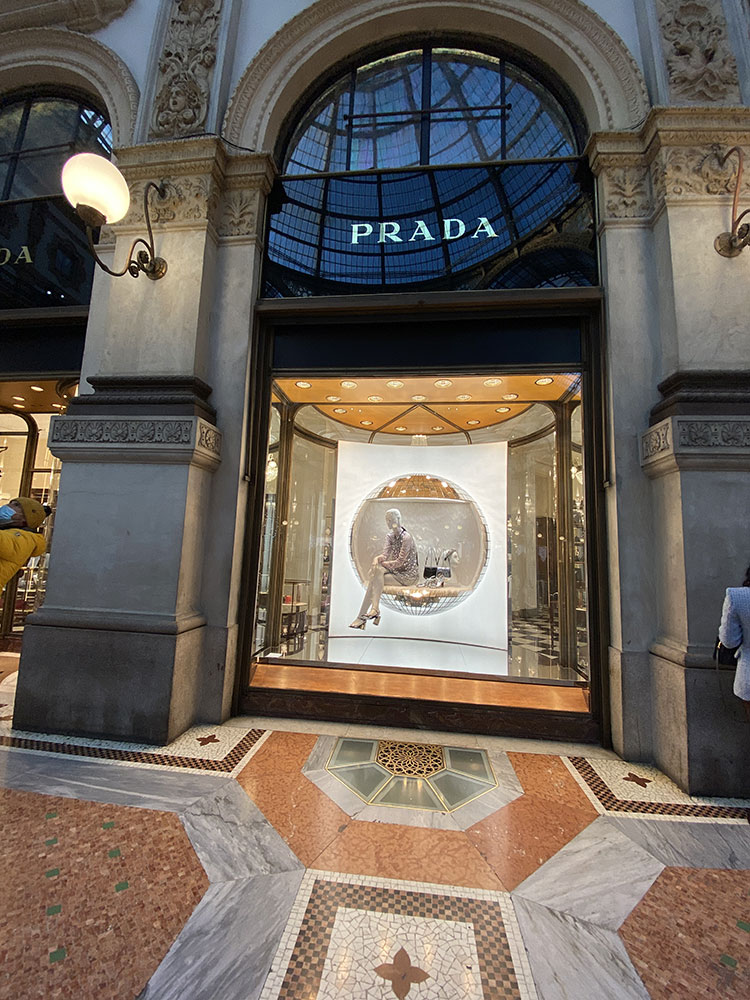
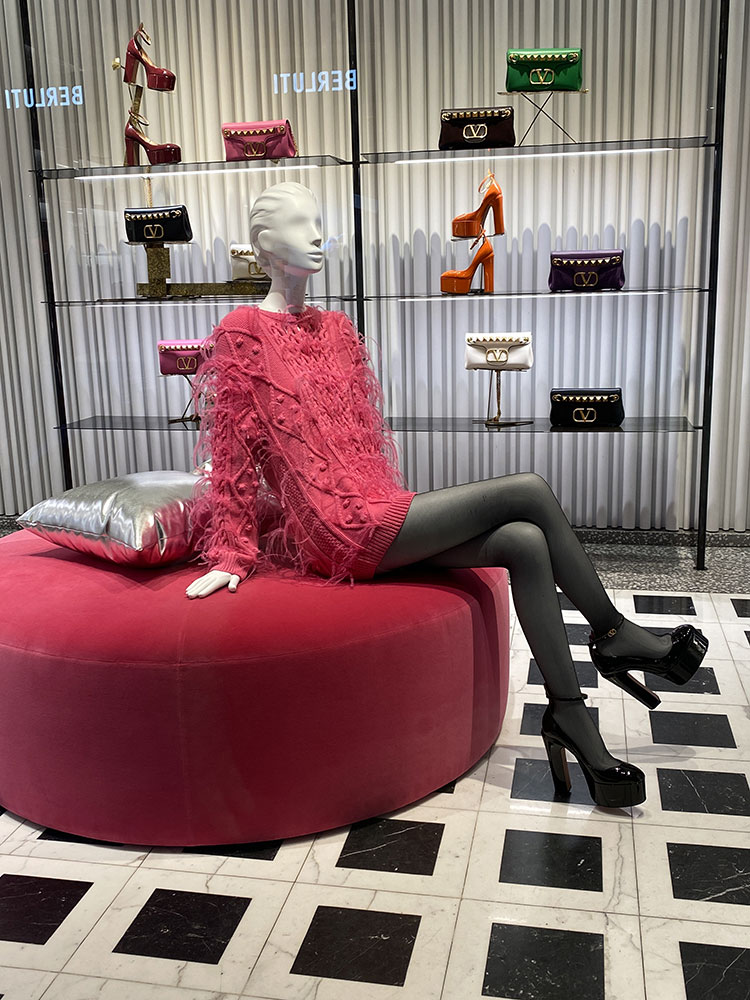
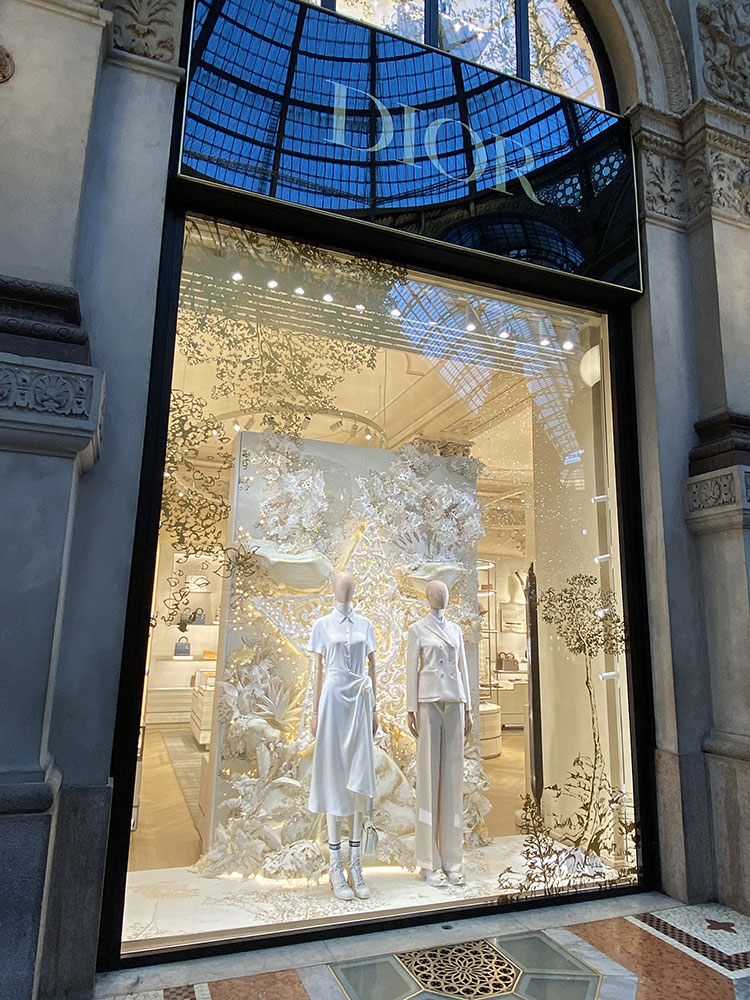
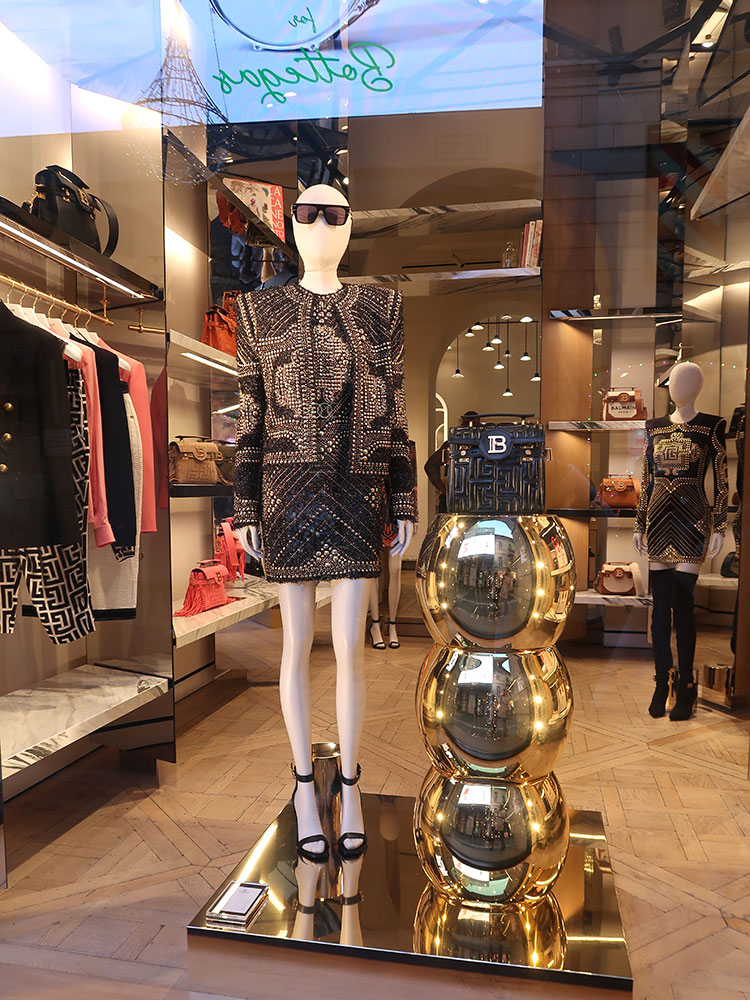
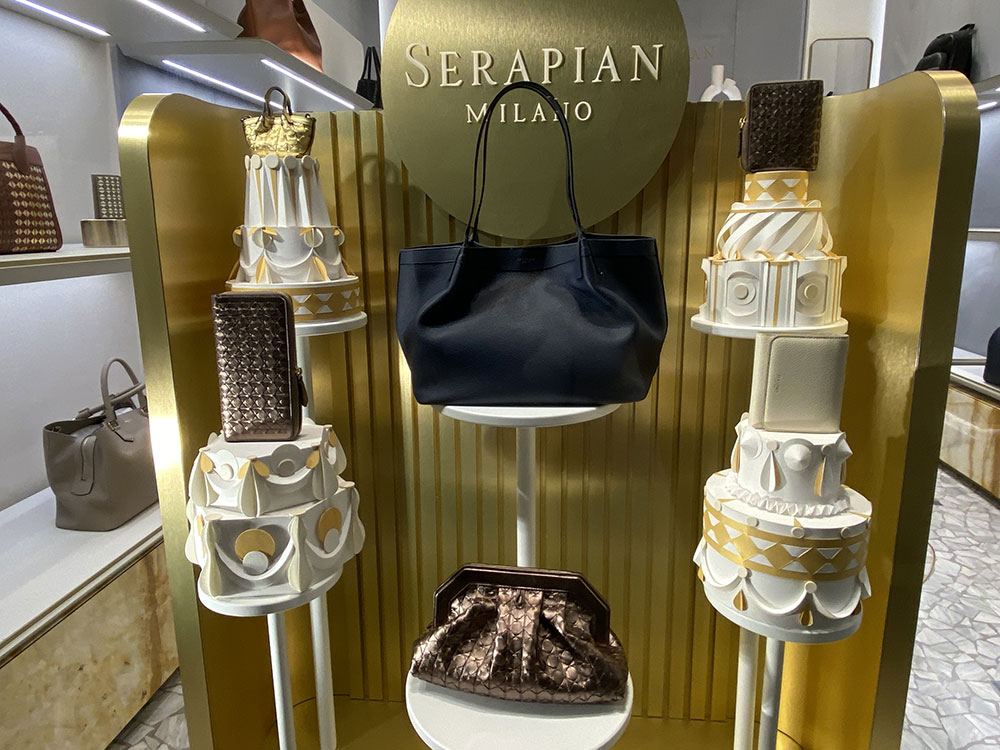
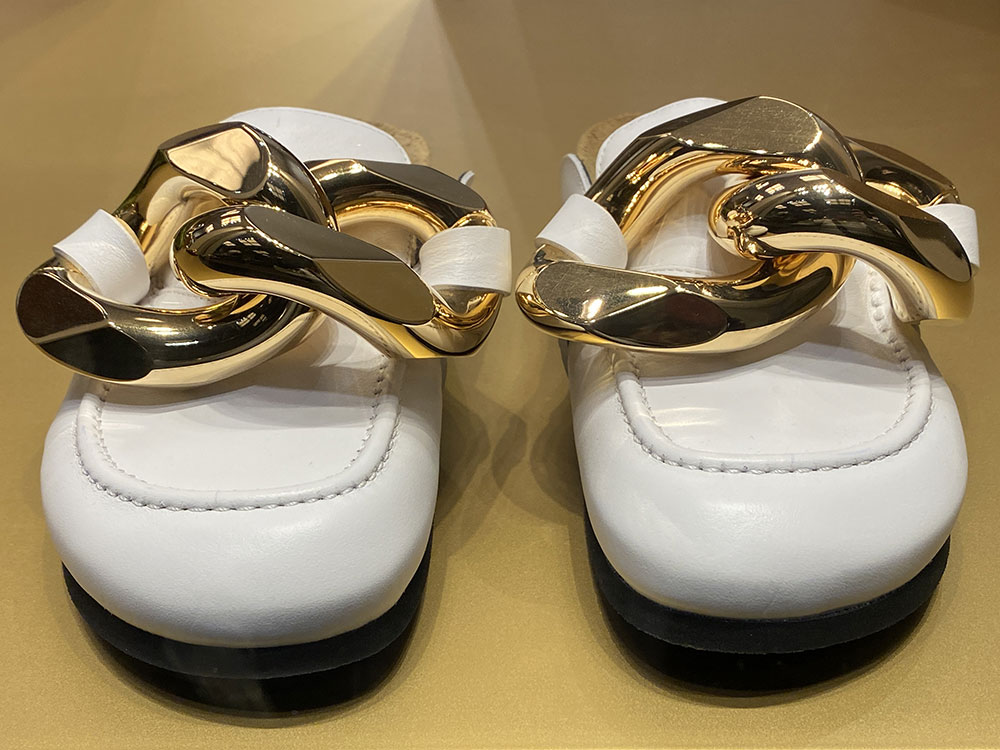
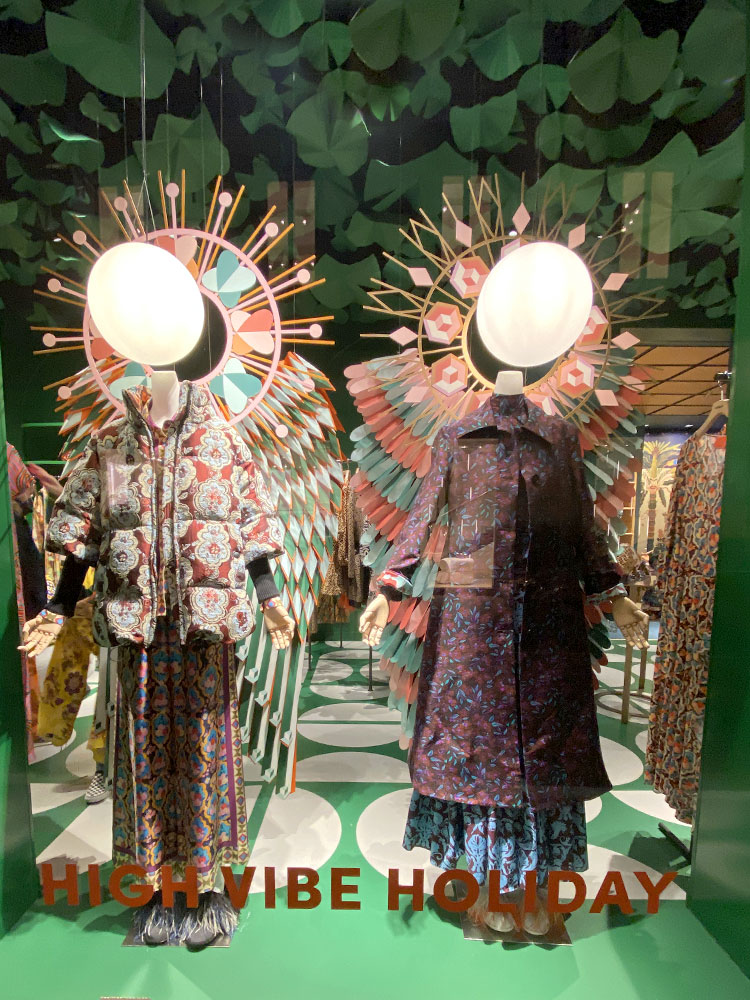
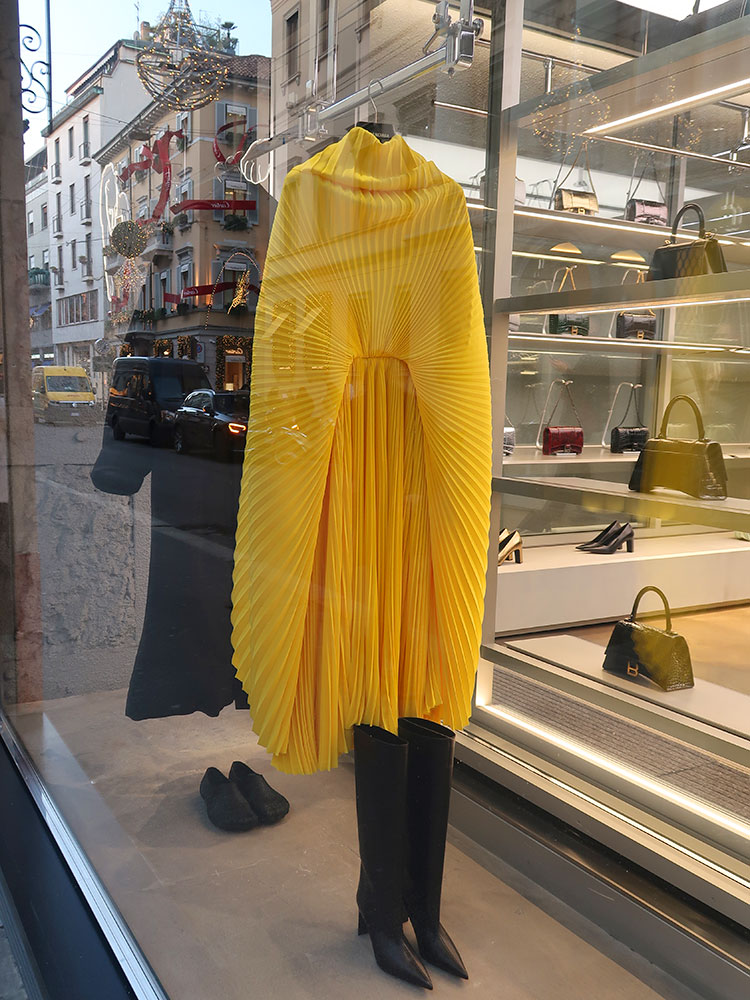
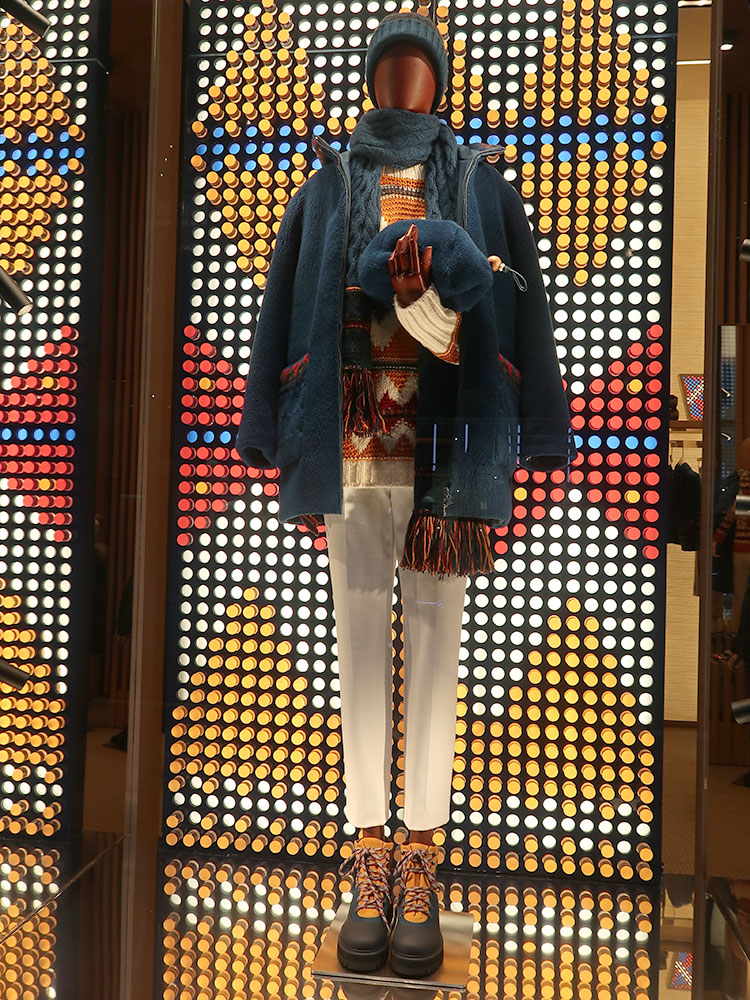
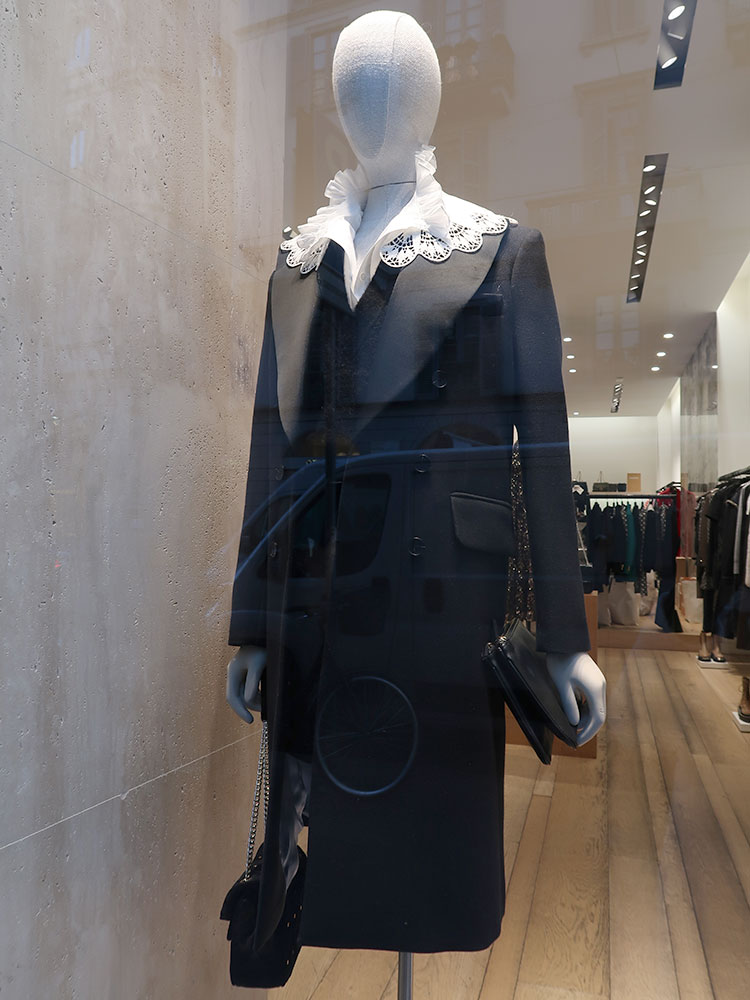
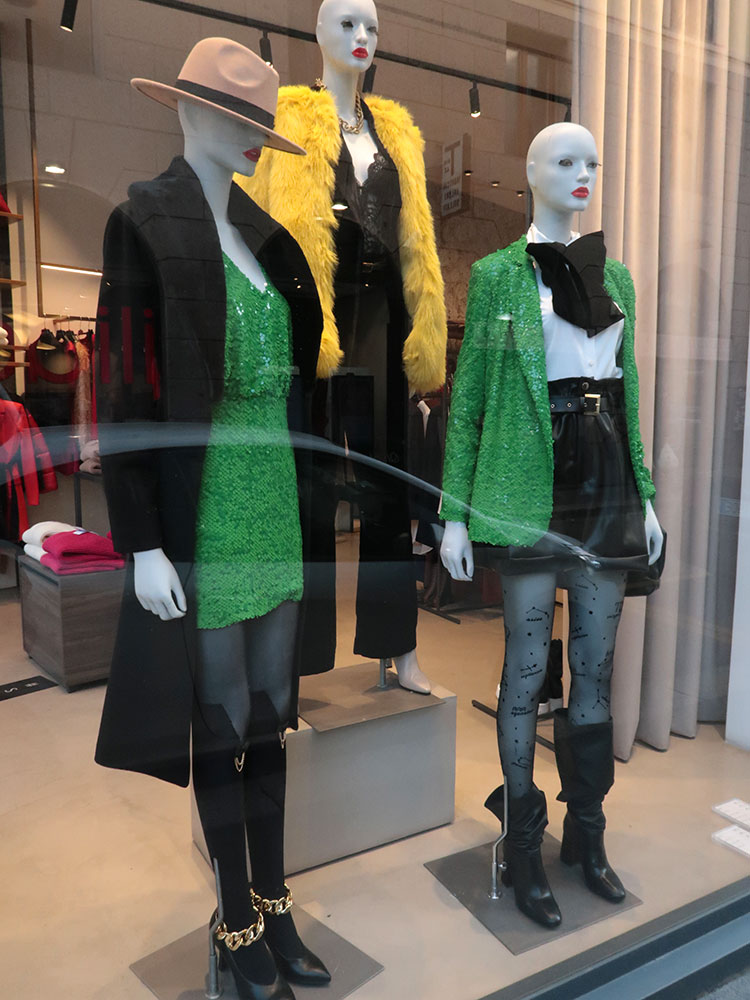
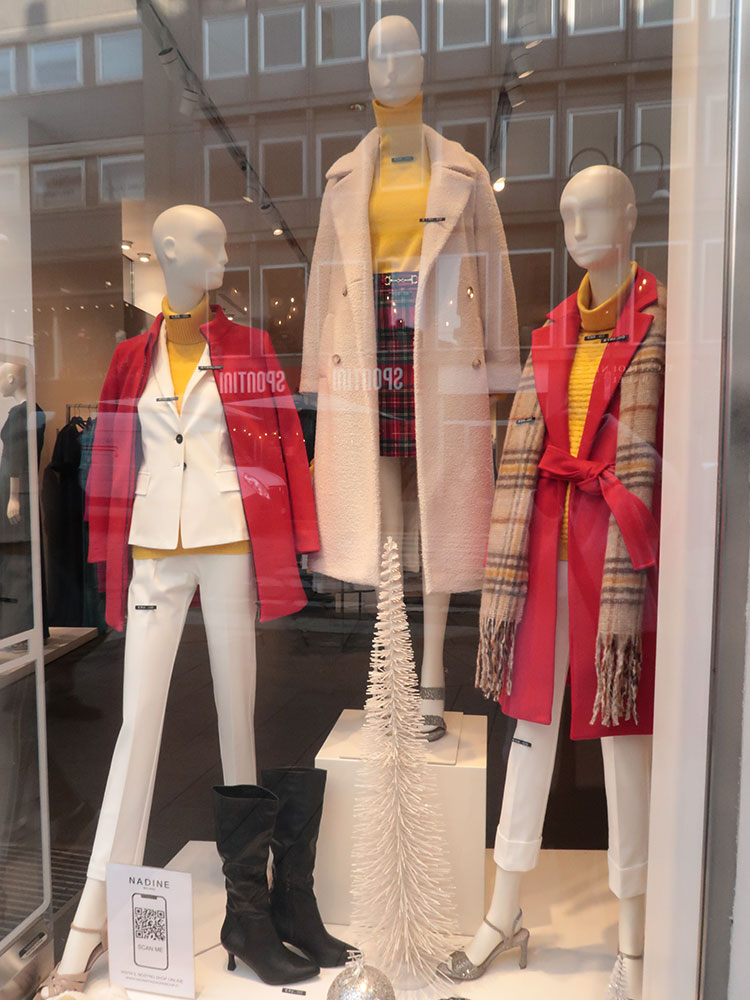
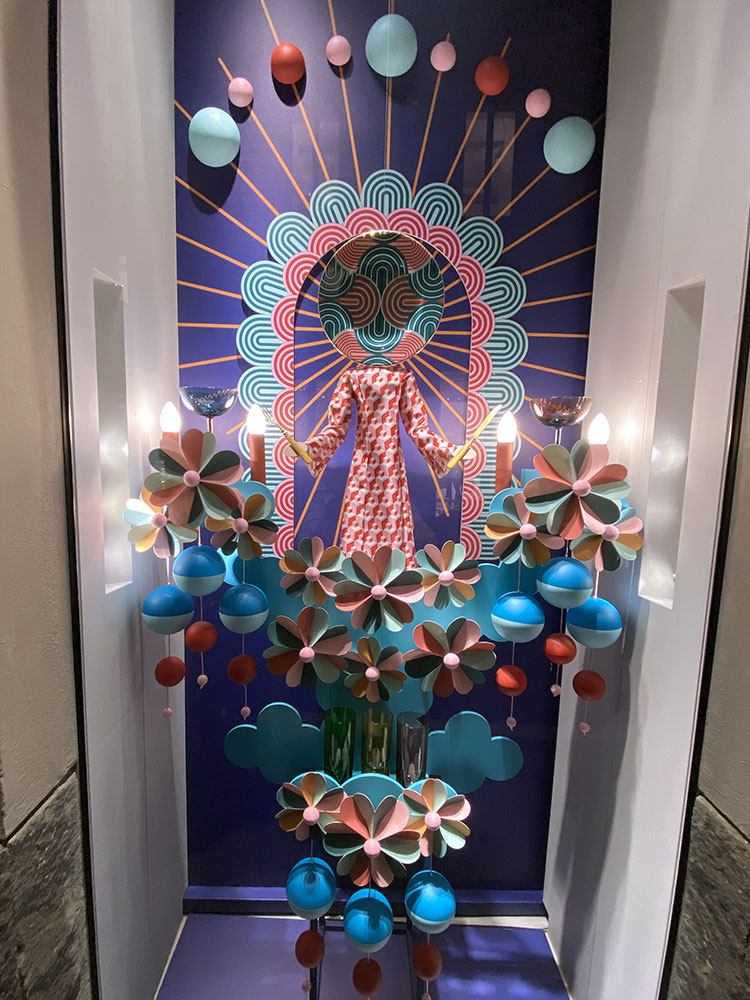
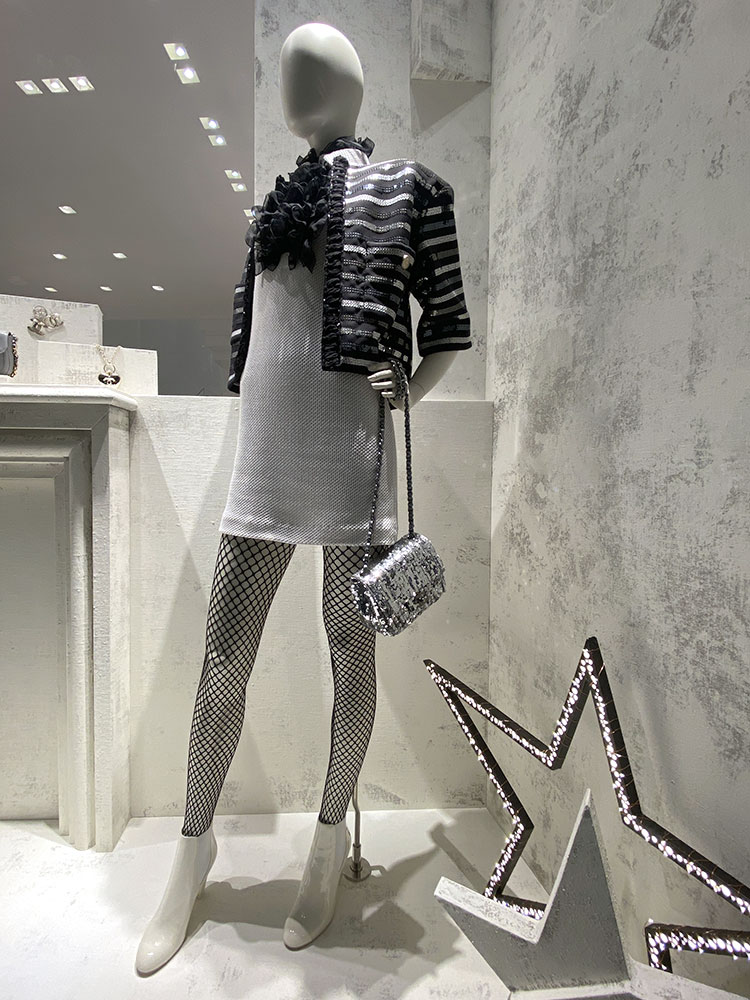
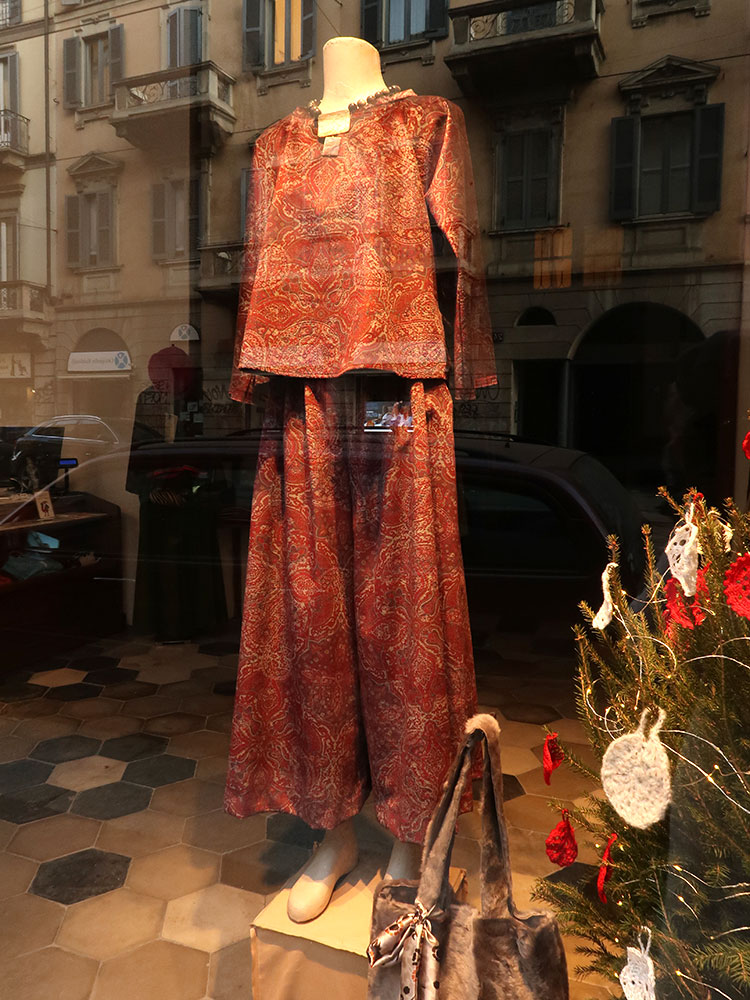
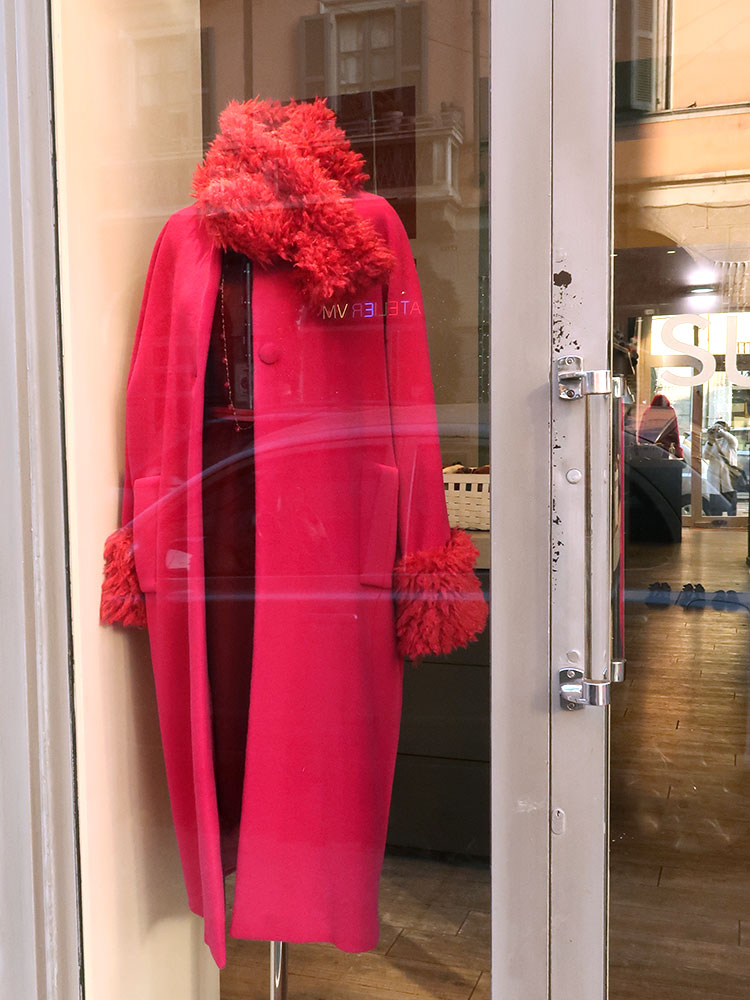
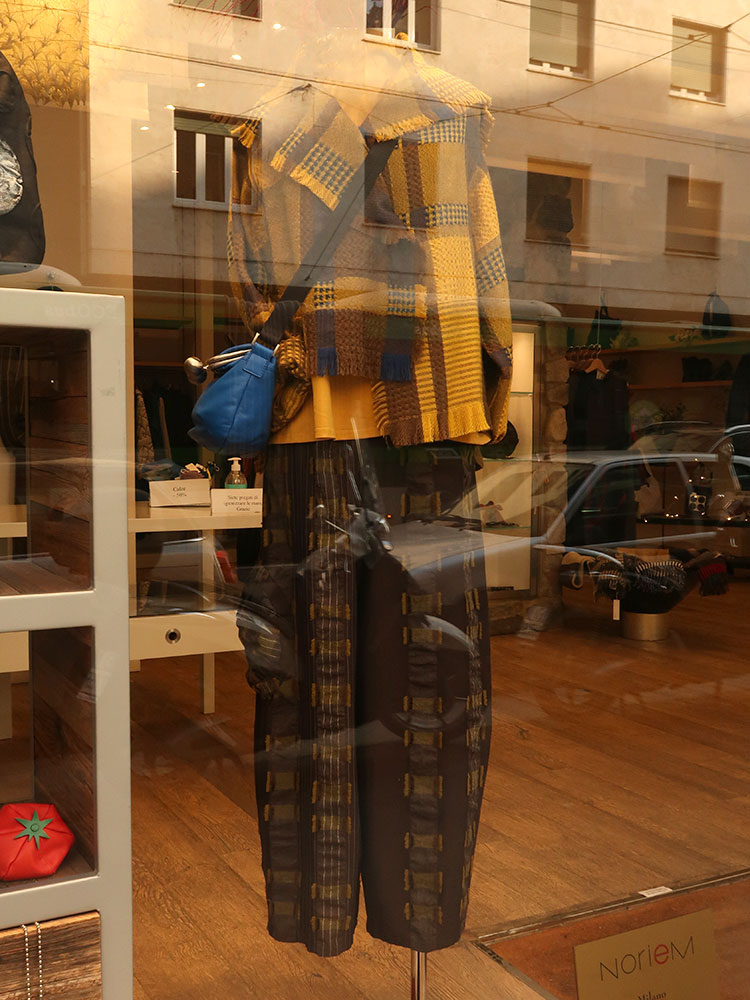
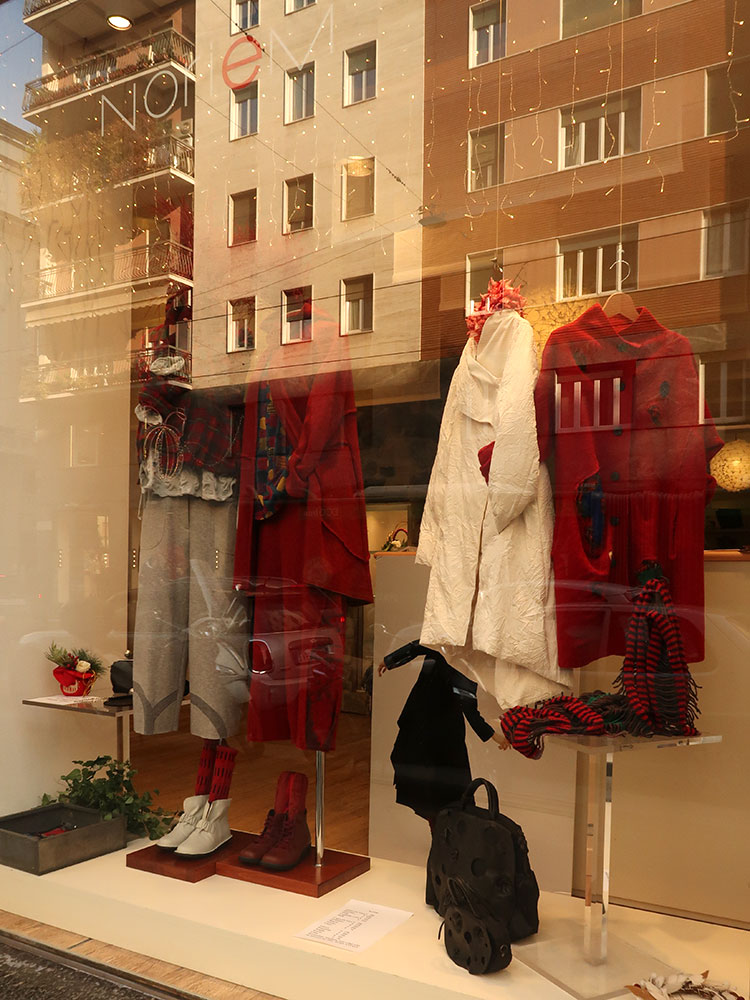
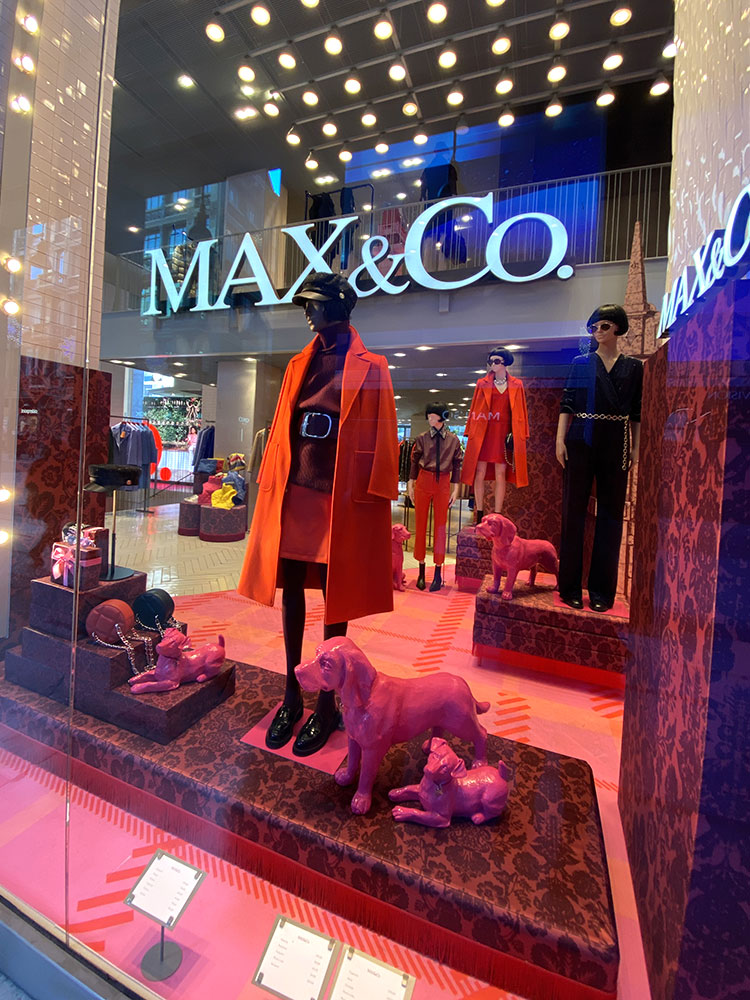
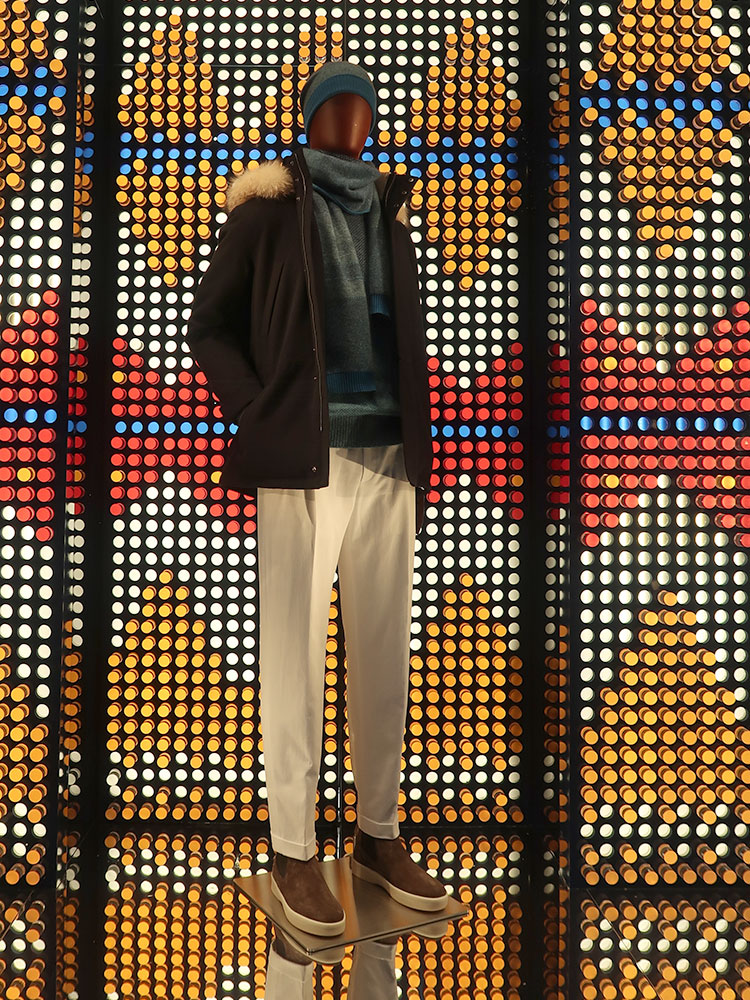
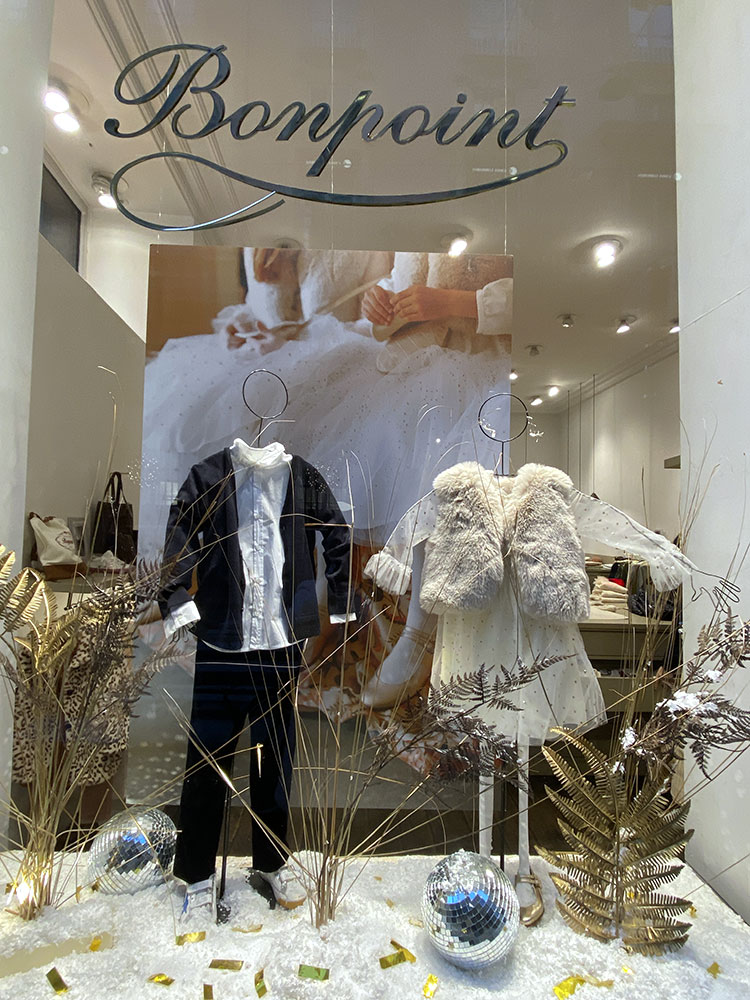
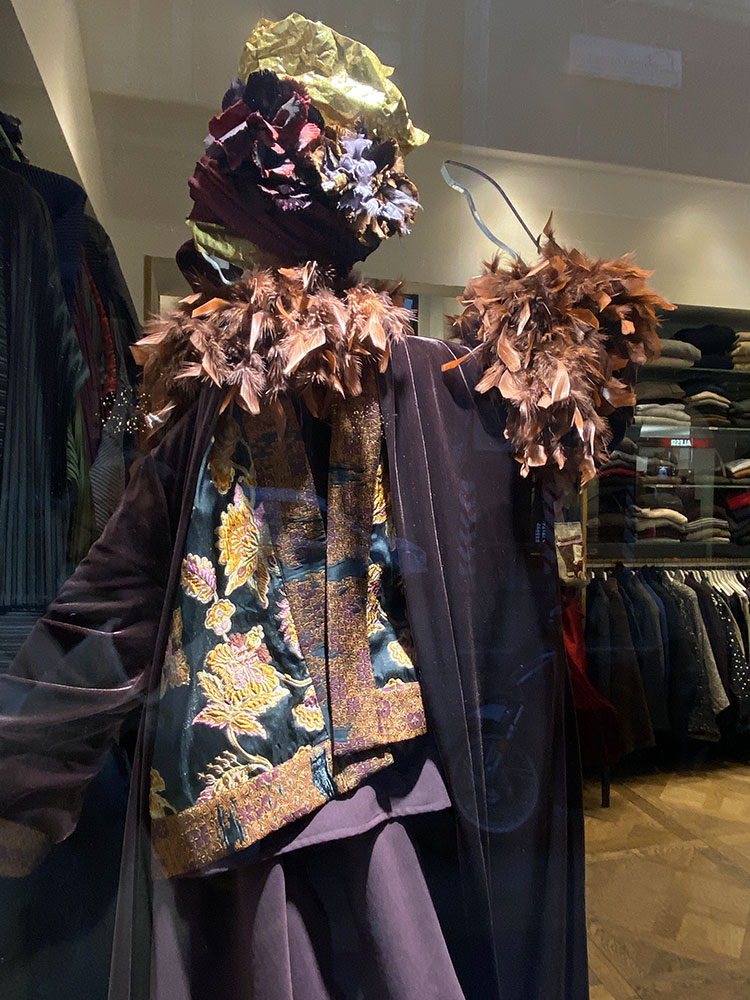
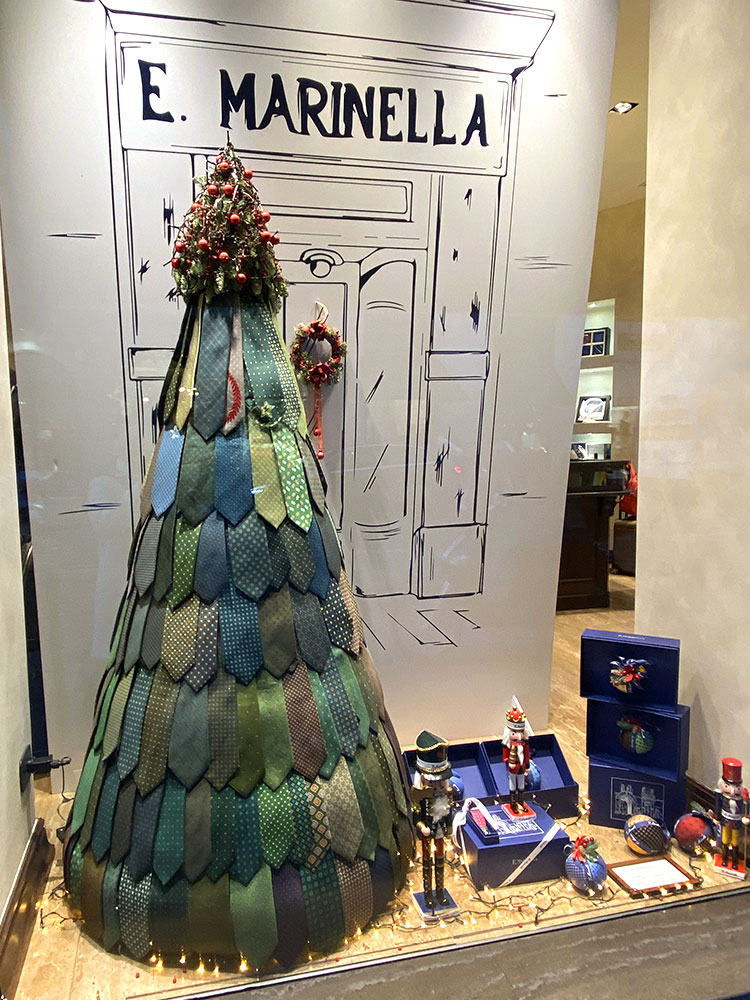
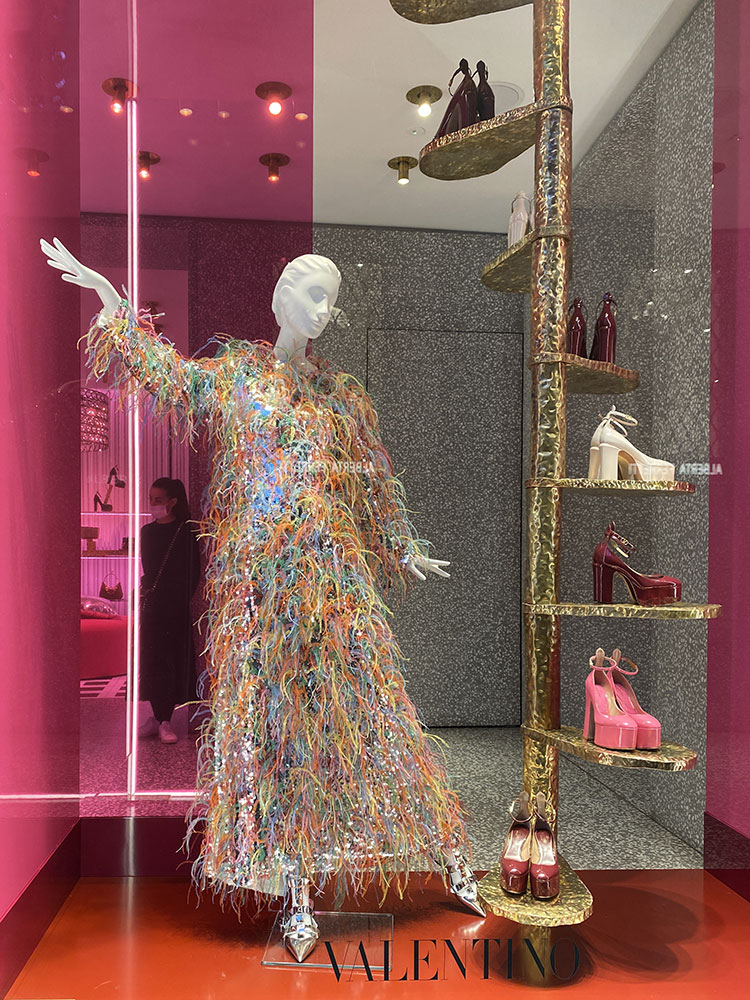
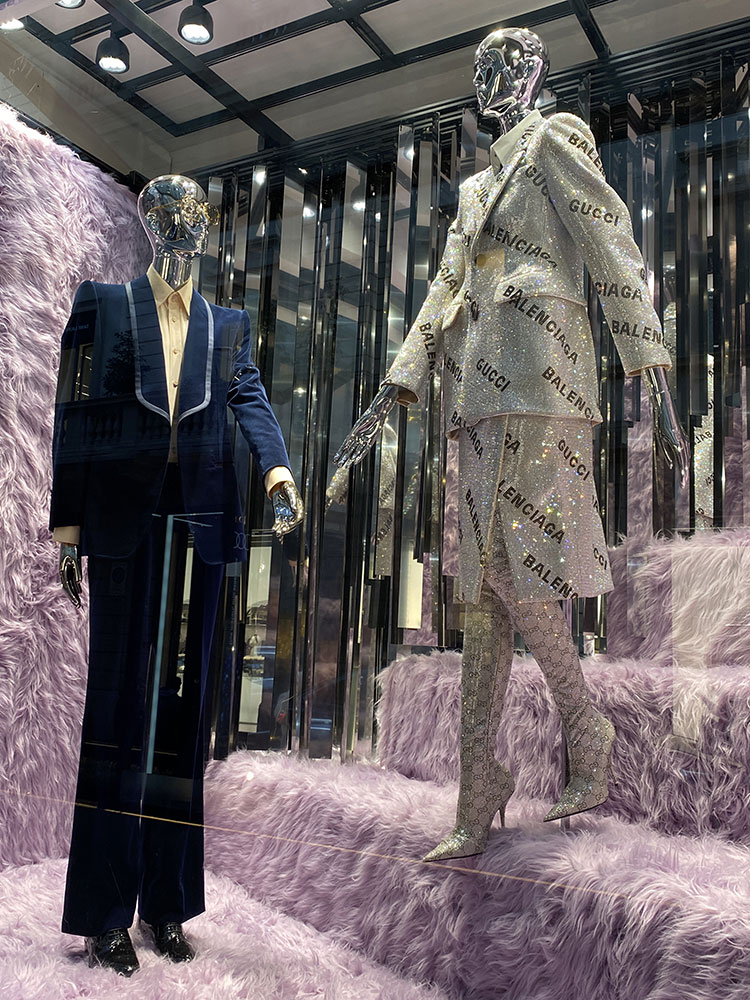
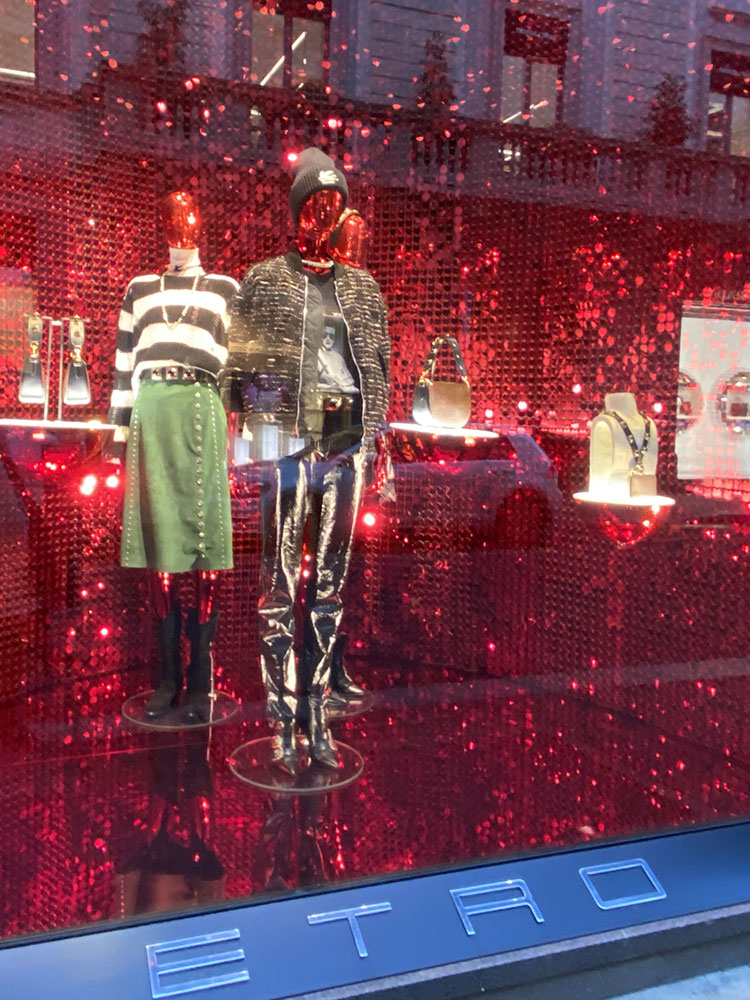
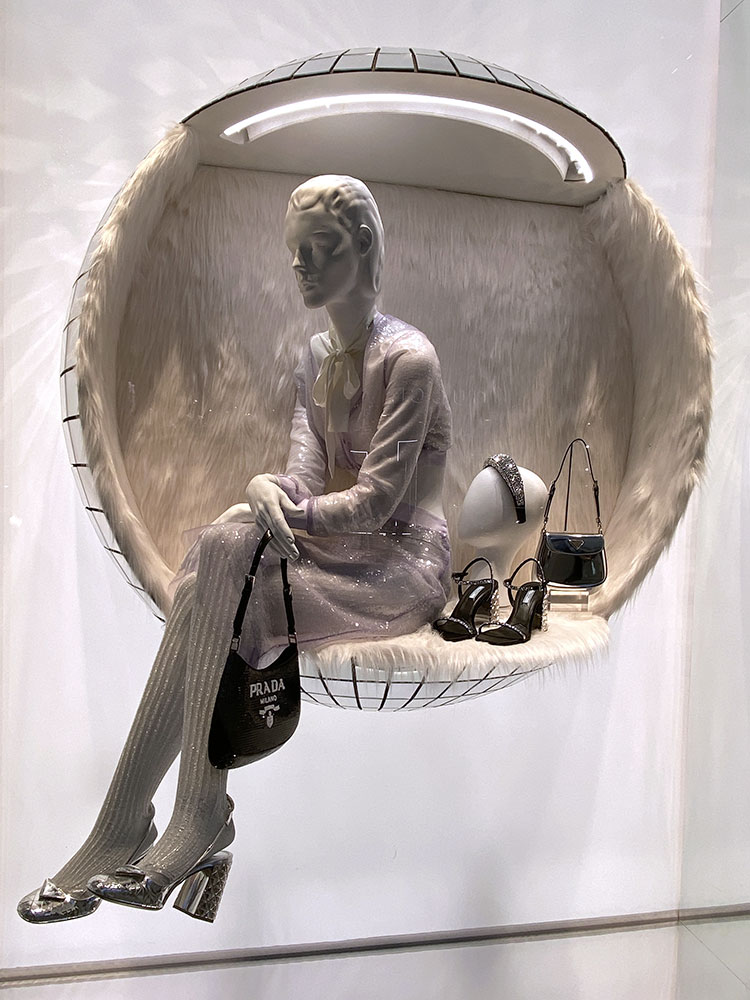
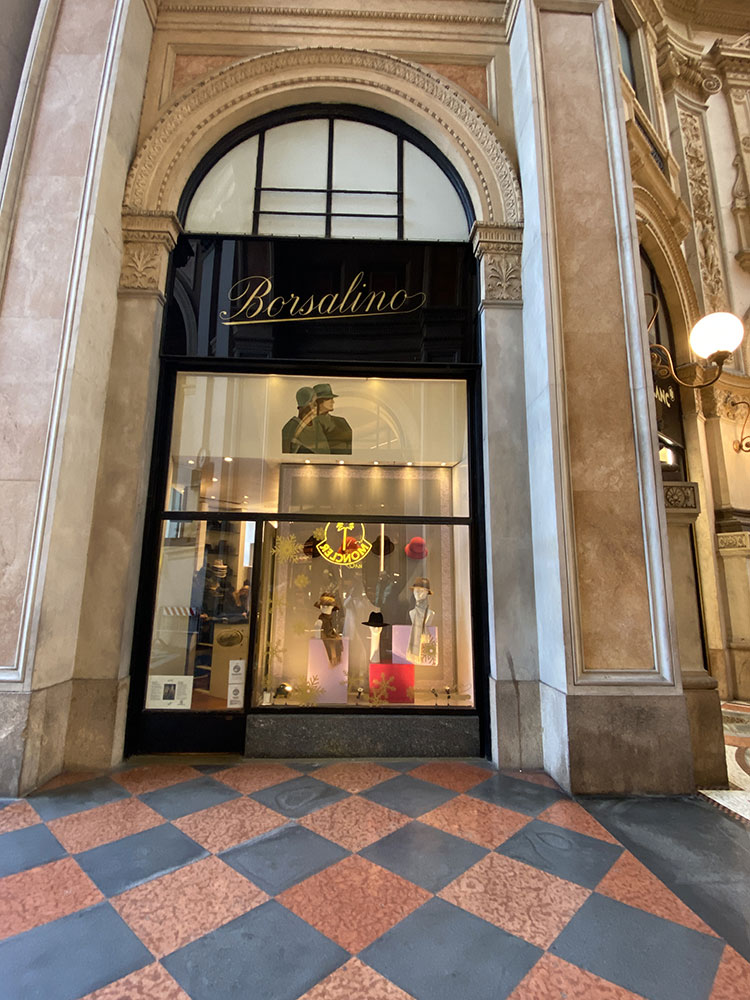
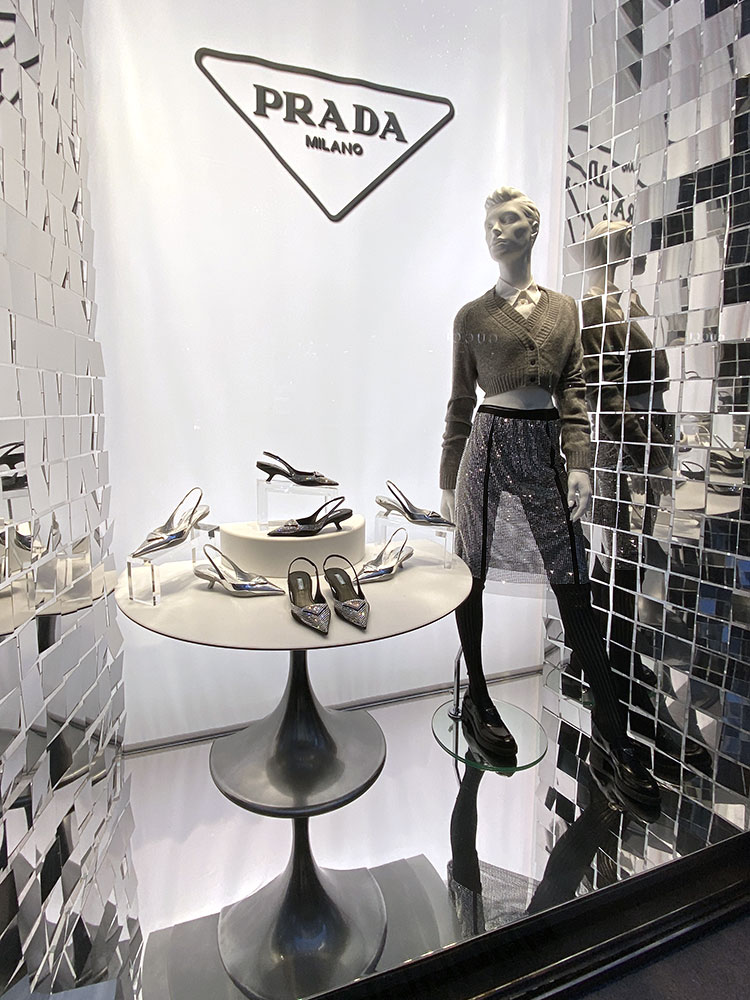
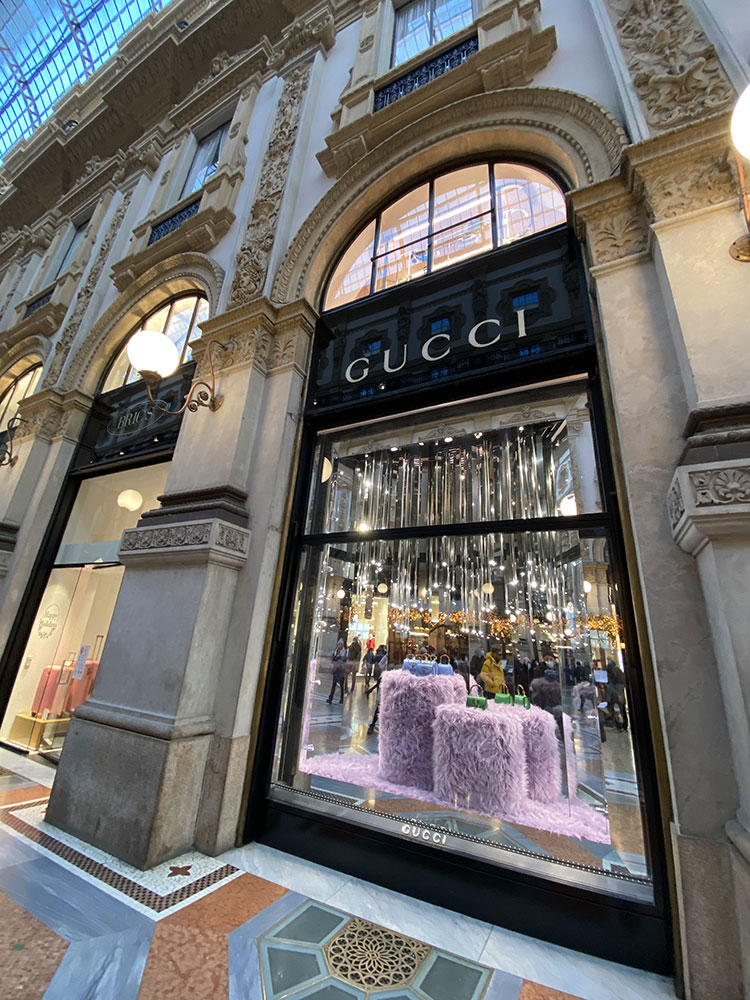
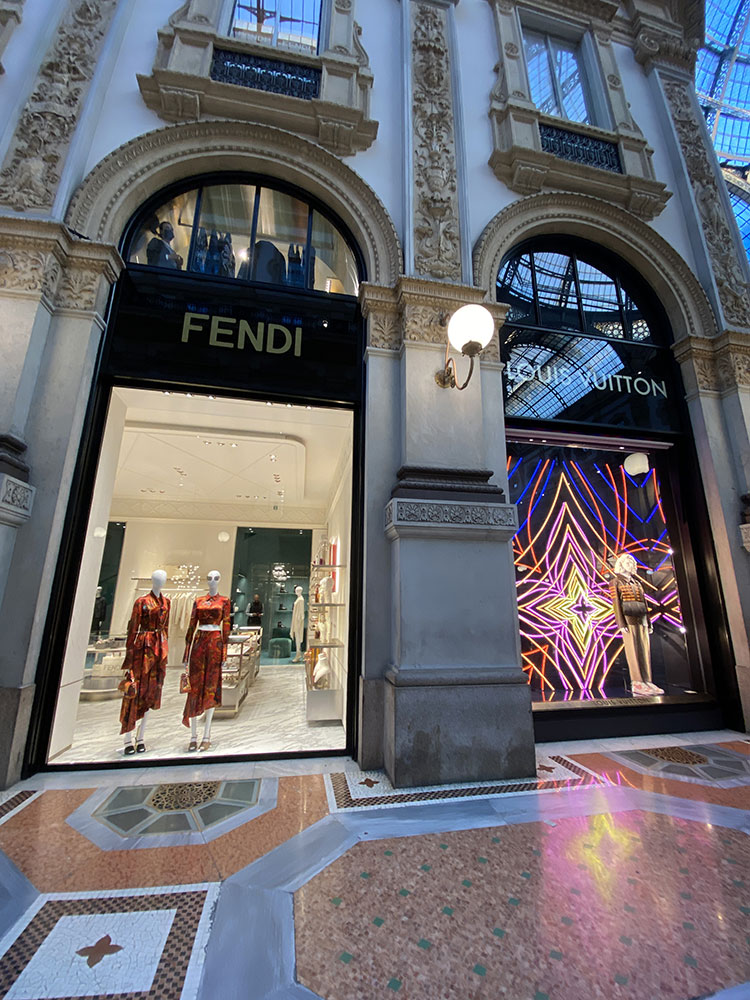
Milan – one of the fashion capitals of the world – has some knock-out, incredible, no-concept-or-cost-barred window displays! Walk along Via Monte Napoleone and Via della Spiga, the posh shopping streets, (especially during the holiday shopping season) and you will see imaginative, over-stated, grand, illuminated window dressings that make it worth the walk just for the show.

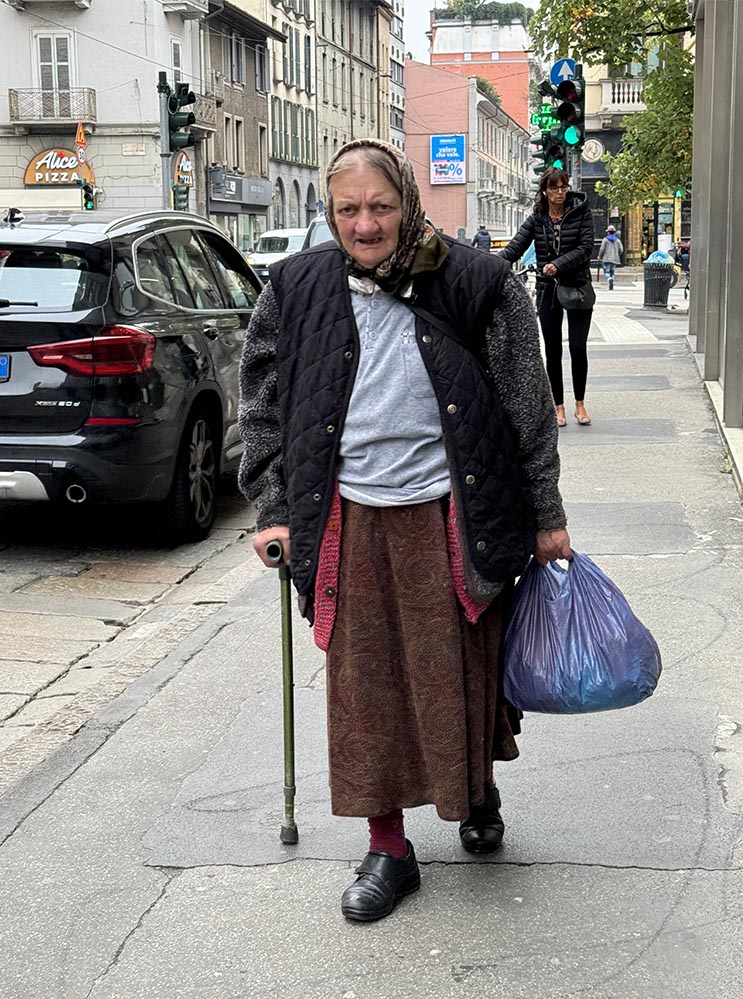
Are people dressing like this on the streets? No, they’re not. In the winter months, I see a LOT of fur coats, puffy down jackets and scarves on women and men, both.

Trattoria Villetta Bar

Trattoria Villetta Bar

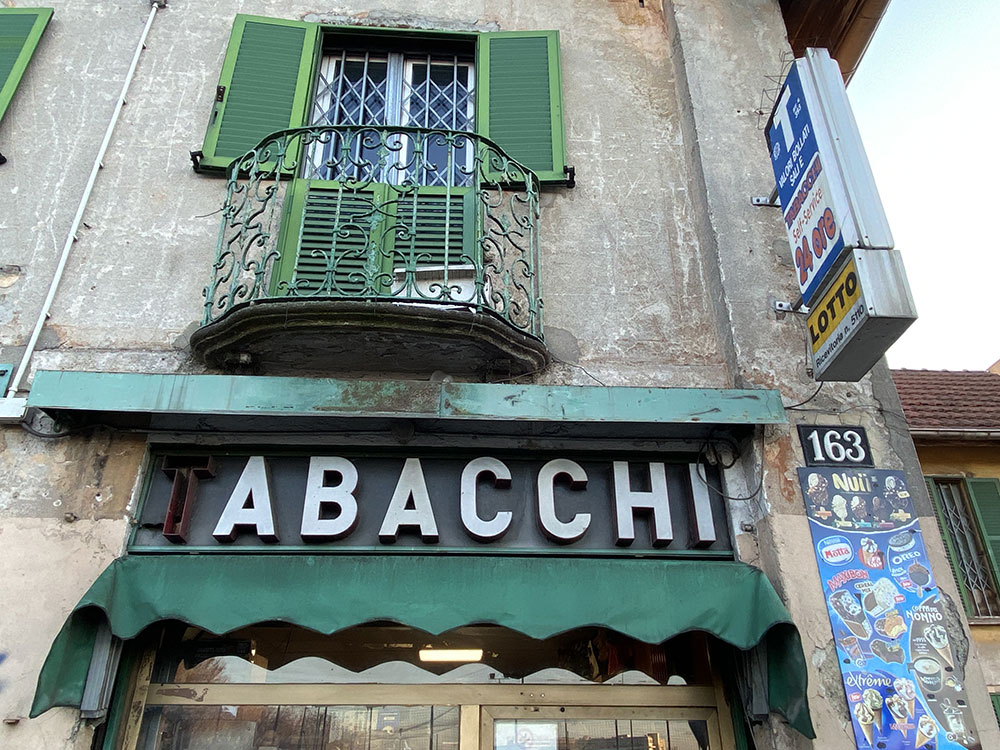
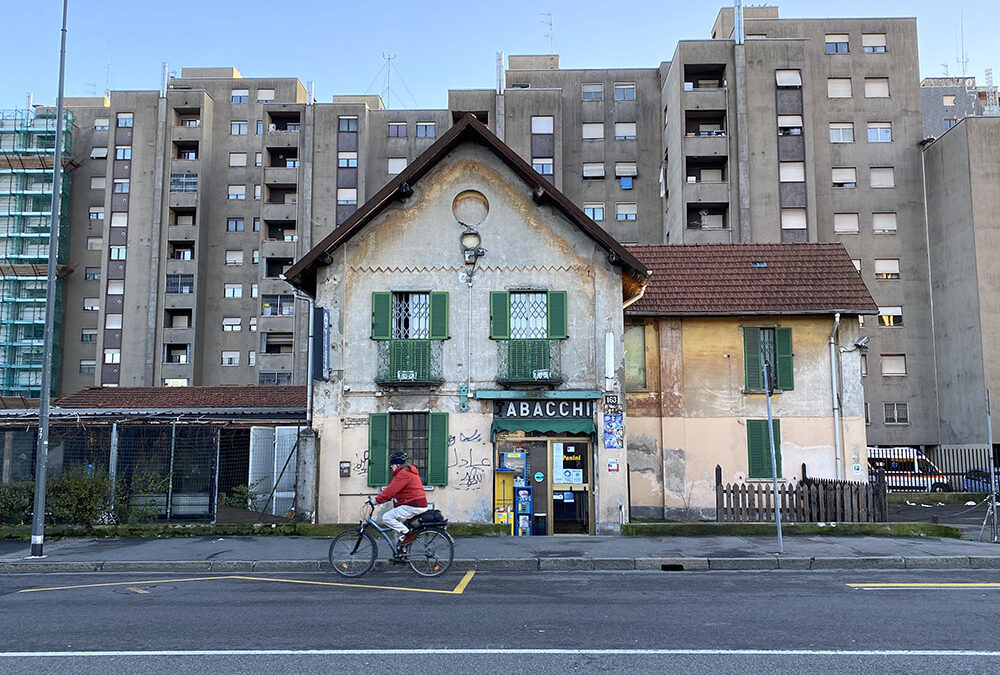
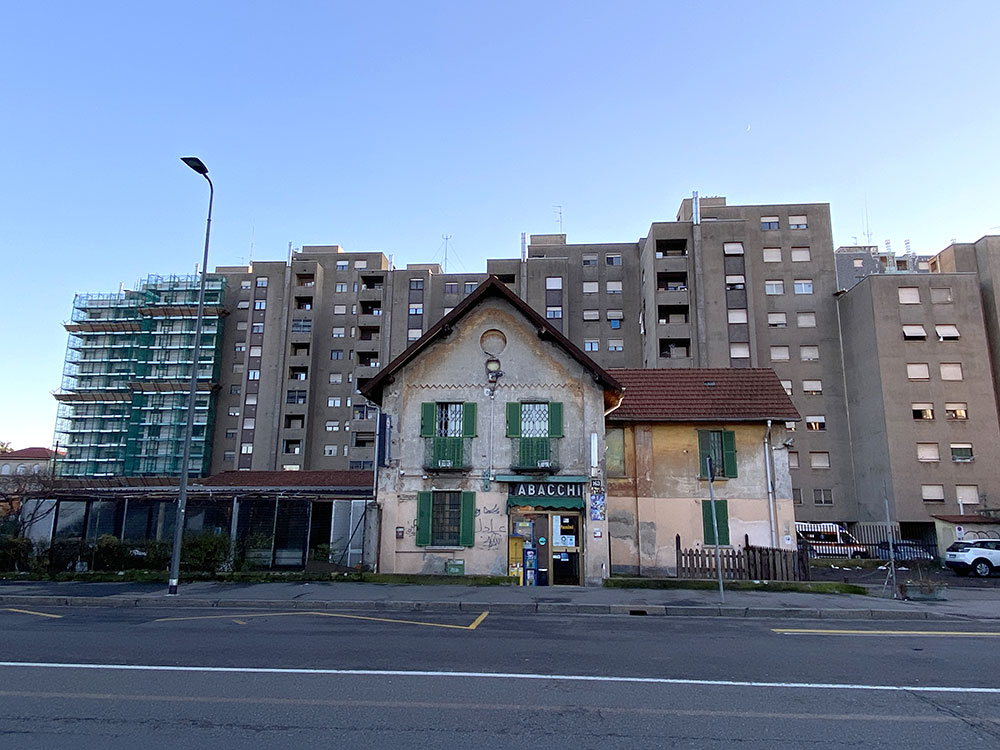
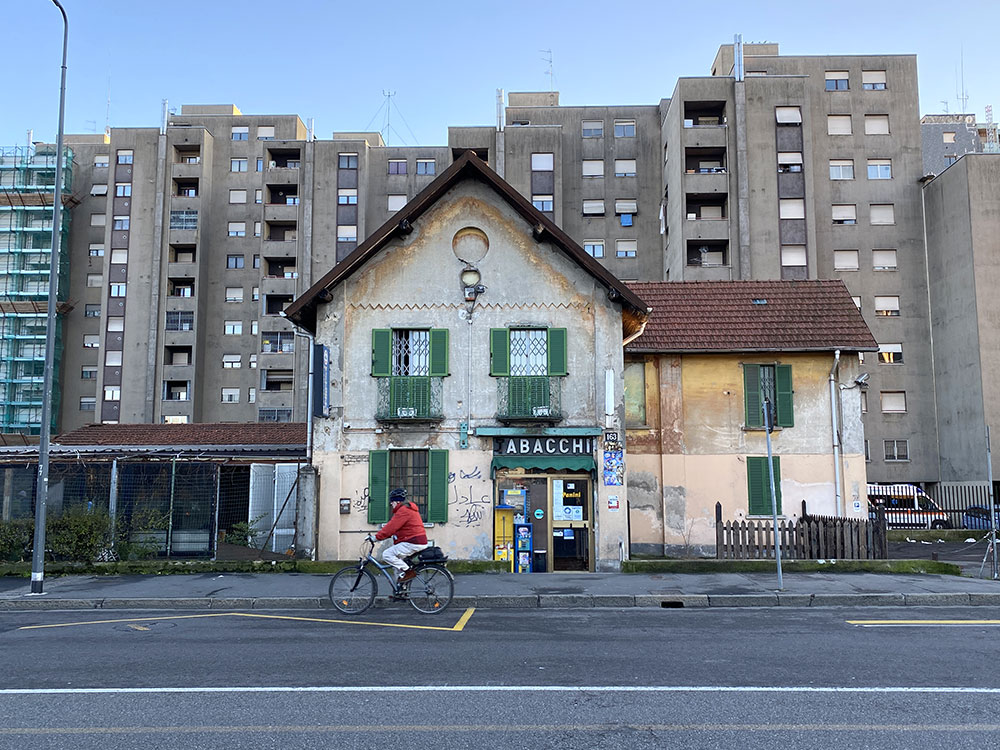
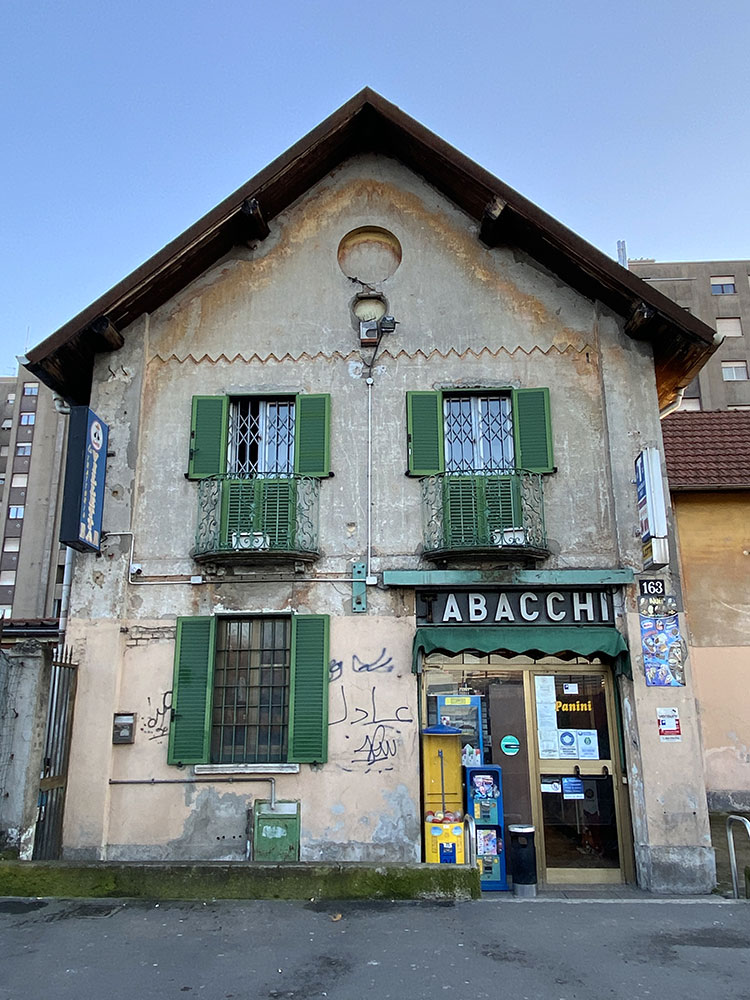
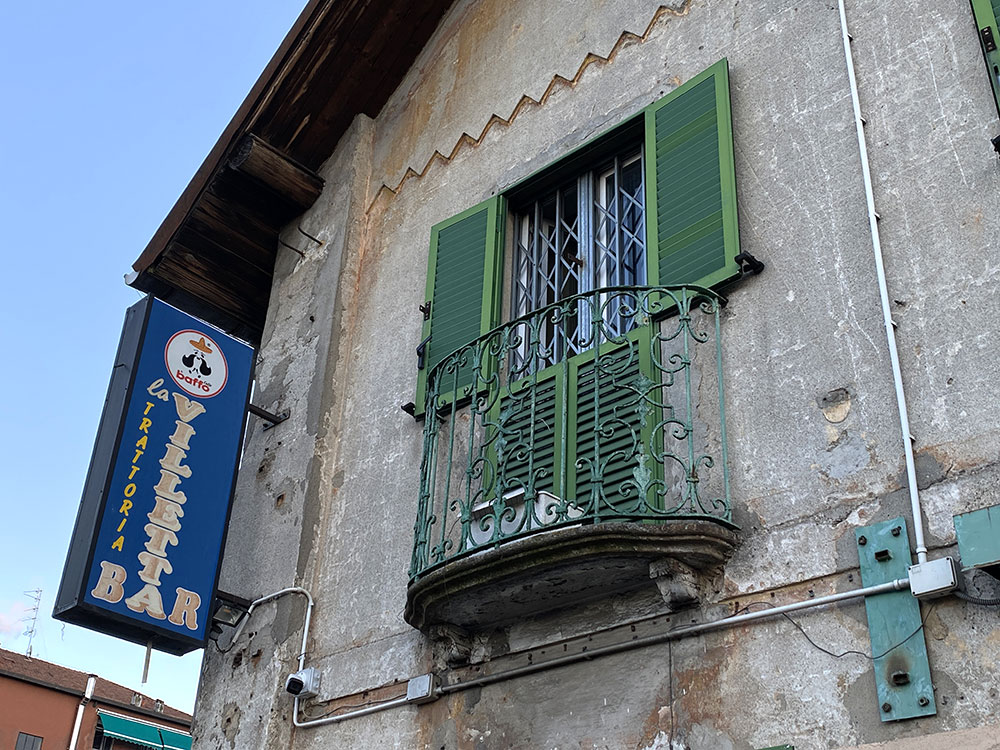
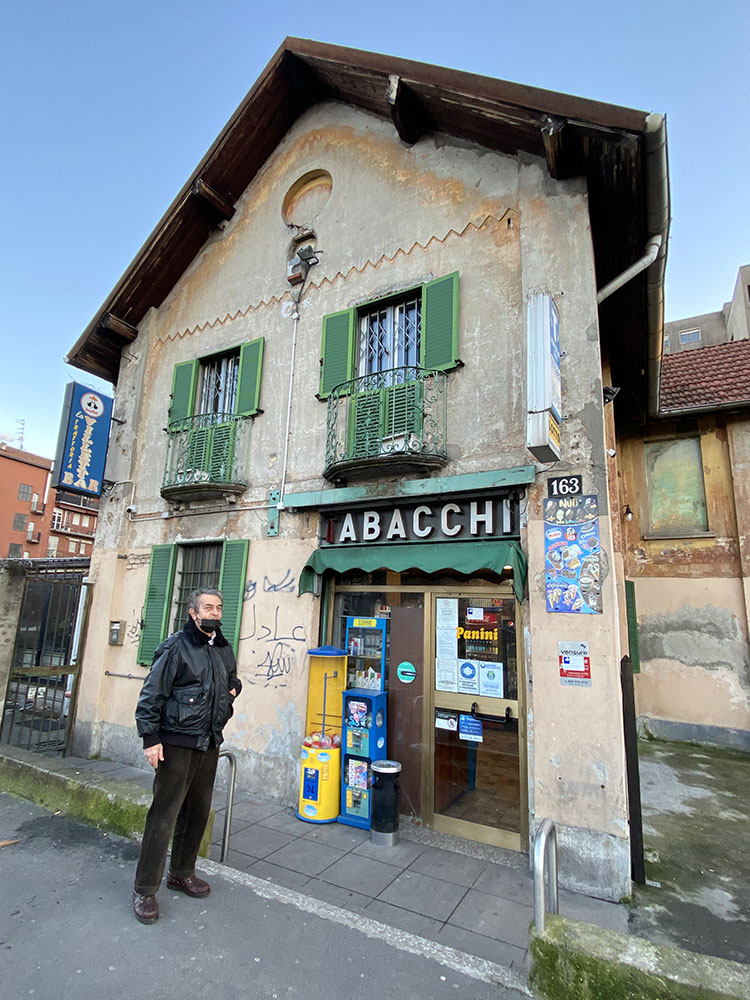
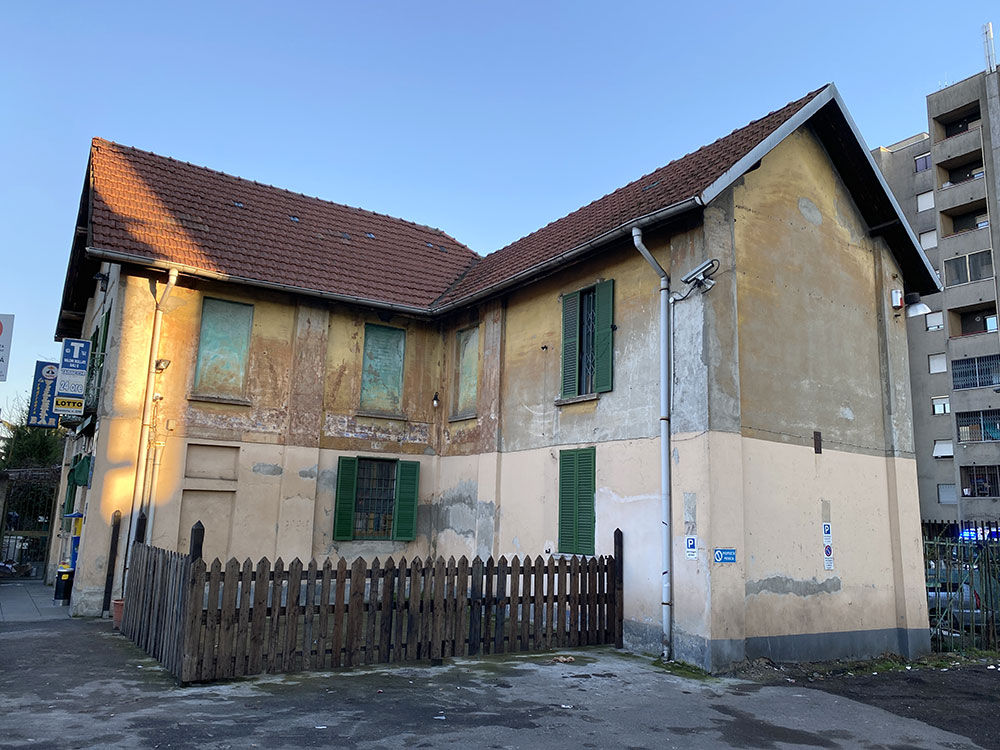
When a photo of this little building popped up on the Milano per Sempre Facebook page (Jan. 5, 2022), I thought, “I’ve got to go see that!” The age and “flavor” of the Trattoria Villetta Bar caught my eye.

The next day, I took the Metro out toward the end of the line, at Fermata Inganni, then mistakenly walked a very long loop until I finally arrived at my destination. (Google had misguided my walking direction, but in the process, I saw an area of Milan I had never been to before.)

There were several people at the bar, and we started chatting about the building’s history. Salvatore, a local, and I walked outside to chat. He has lived in the neighborhood for 50 years, and told me about his childhood memories of the surroundings.

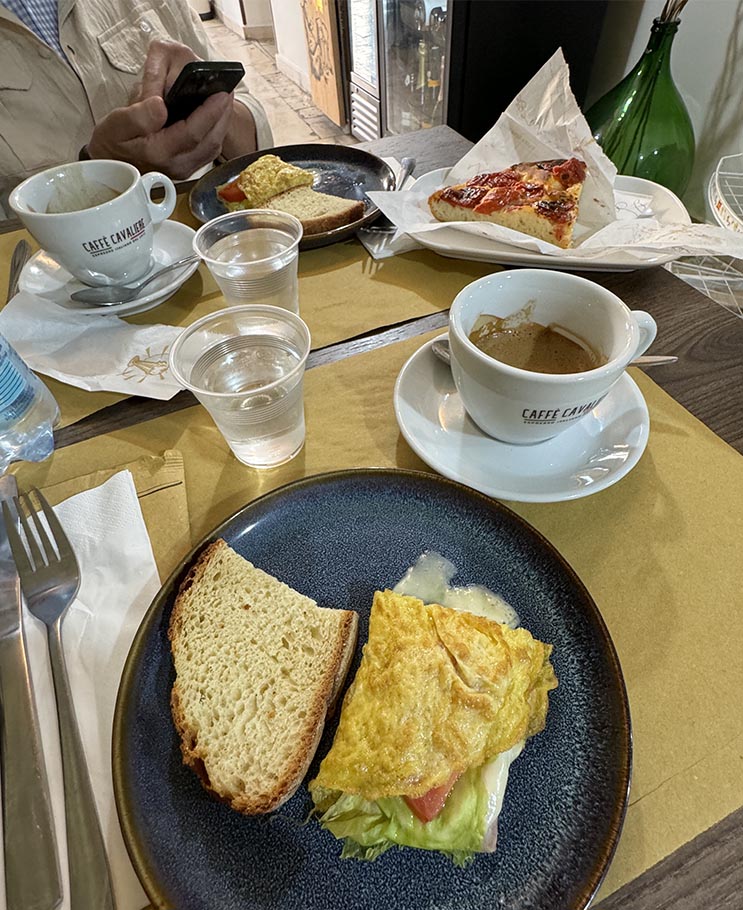
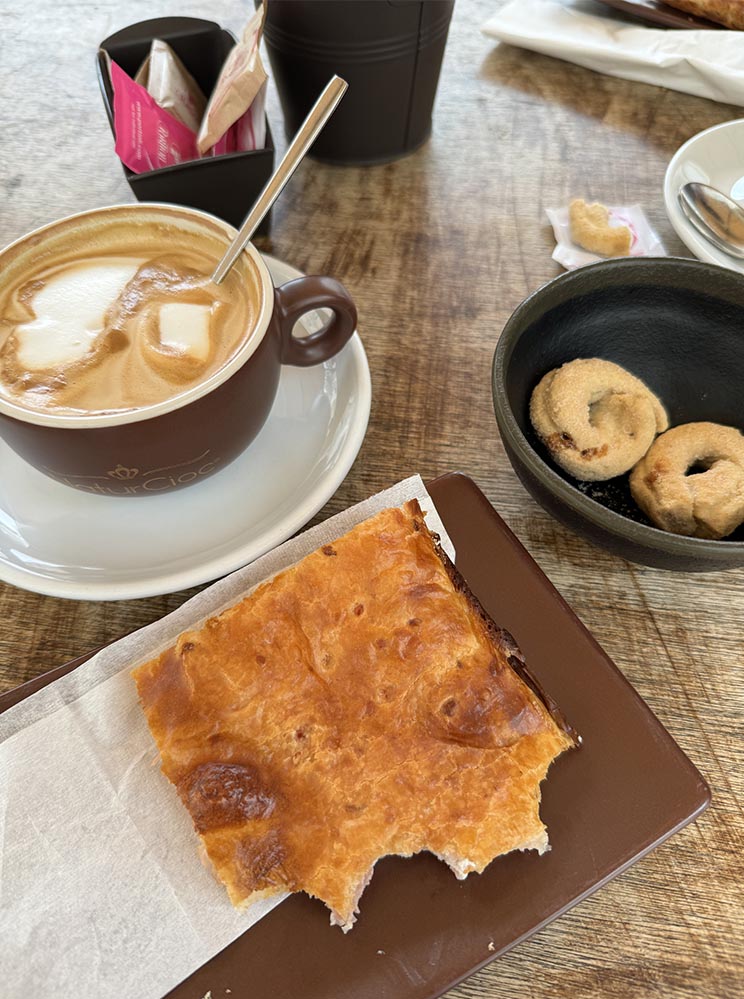
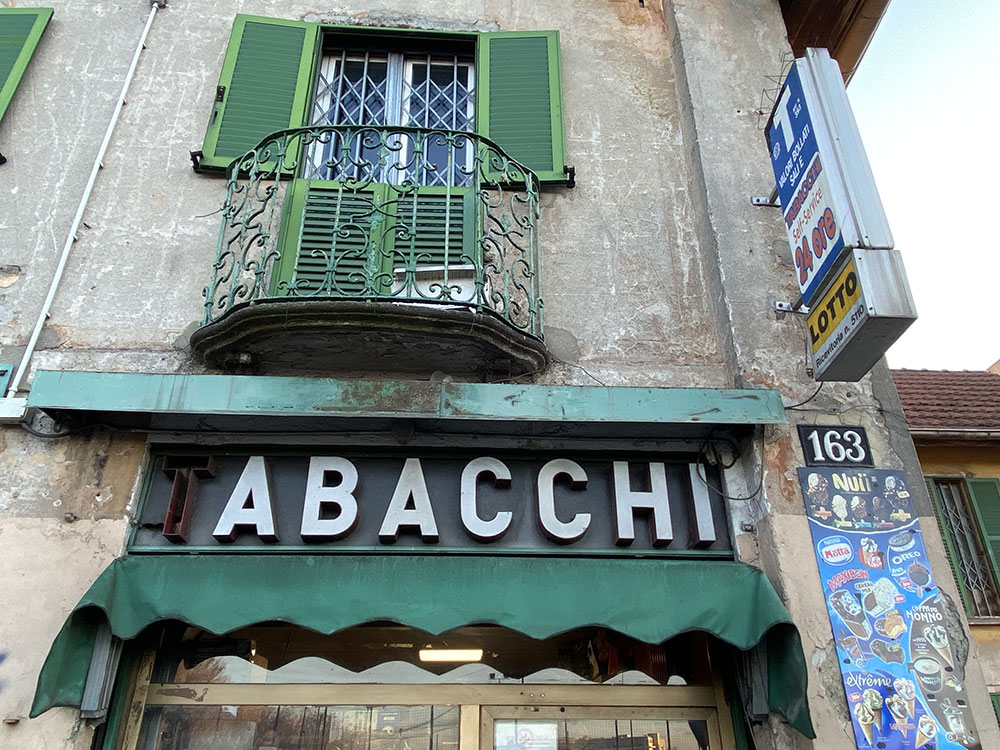
In Italy, a “bar” does serve alcohol, but it’s where you go for a “caffè normale” – shot of espresso – as well as a pastry and fresh-squeezed orange juice. It’s often combined with the “Tabacchi” designation, where you can also buy cigarettes, add to your cell phone minutes, or get transit tickets.

Read, below, the original post from Milano per Sempre’s Facebook page,
in Italian, and Google-translated into English.

Questa caratteristica e graziosa casetta adibita a trattoria/tabaccheria è un retaggio di ciò che riconduce a Cascina Creta (“La Crea” in dialetto),un antico casale le cui tracce compiano con certezza sulle Carte del Fieno del Claricio dal 1659, e che prese il nome stesso dall’argilla che si estraeva presso le cave delle campagne circostanti.

Il complesso rurale era circondato dalle acque del fontanile Marcione che irrorandone i campi utilizzati per le coltivazioni,permetteva alle varie aree di essere raggiunte solo tramite dei ponticelli,donando alla cascina un aspetto associabile ad una rocca fortificata.

Sul finire degli anni ’30,la cascina venne spostata in una struttura più moderna, denominata poi “Creta Nuova”.

Pressappoco ad inizio del Novecento risale anche questo piccolo edificio assomigliante ad una baita di montagna,eretta su quella che era la strada per Baggio,ora Via Forze Armate 163.

Il suo impiego principale ero quello di stallo per le carrozze ed i cavalli che dovevano raggiungere le fattorie situate nella zona. Provvista di due campi da bocce,oltre che un luogo di ristoro offriva anche uno svago per gli avventori.

Negli anni successivi cadde in disuso e dagli orti limitrofi,si passò ad un lento degrado della zona circostante,in cui si trovava anche un rottamaio (“rottamat” in dialetto milanese).

Ora rimane questa immagine architettonica tra le più iconiche, nonché da salvaguardare nel bel mezzo delle case popolari, per gli amanti della vecchia Milano e di ciò che riguarda la sua storia.

This characteristic and charming little house used as a trattoria / tobacconist is a legacy of what leads back to Cascina Creta (“La Crea” in dialect), an ancient farmhouse whose traces have been traced with certainty on the Claricio’s Hay Cards since 1659, and which the name itself from the clay that was extracted in the quarries of the surrounding countryside.

The rural complex was surrounded by the waters of the Marcione fountain which, by spraying the fields used for cultivation, allowed the various areas to be reached only by means of bridges, giving the farmhouse an aspect that can be associated with a fortified fortress.

At the end of the 1930s, the farmhouse was moved to a more modern structure, later called “Creta Nuova”.

This small building resembling a mountain hut also dates back to about the beginning of the twentieth century, built on what was the road to Baggio, now Via Forze Armate 163.

Its main use was as a stall for carriages and horses that had to reach the farms located in the area. Equipped with two bowling green, as well as a place for refreshment it also offered entertainment for the patrons.

In the following years it fell into disuse and from the neighboring gardens, there was a slow deterioration of the surrounding area, where there was also a scrap dealer (“rottamat” in Milanese dialect).

Now this architectural image remains among the most iconic, as well as to be safeguarded in the midst of public houses, for lovers of old Milan and what concerns its history.

@nebulosa_simonastucchi