Just arrived this morning after complex travel prep due to Covid-19, two days of almost no sleep, and 24 hours of travel. Door-to-door.
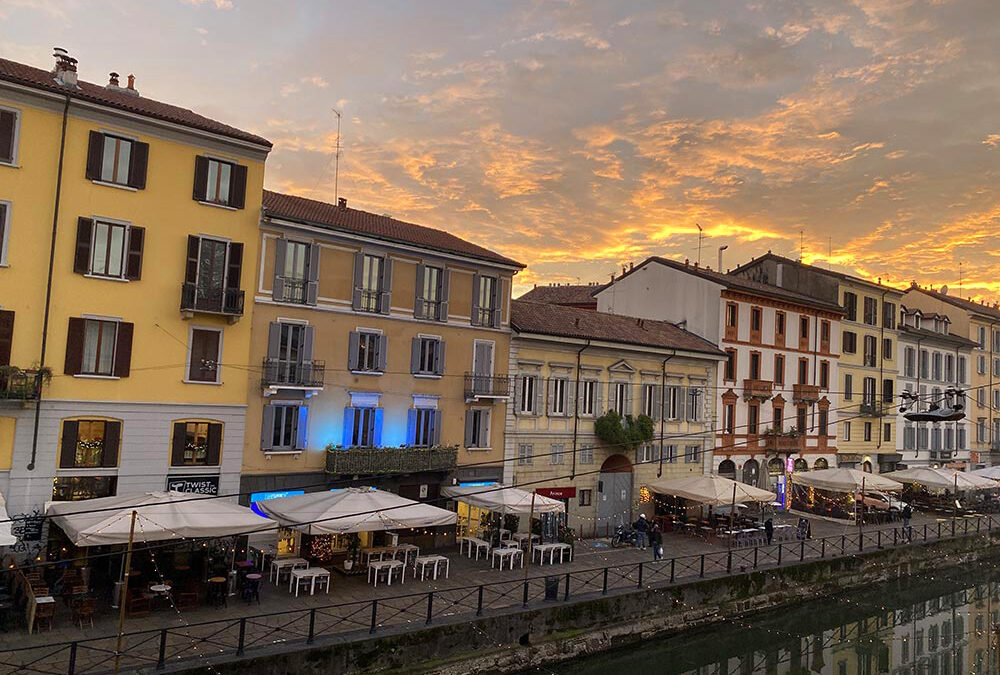
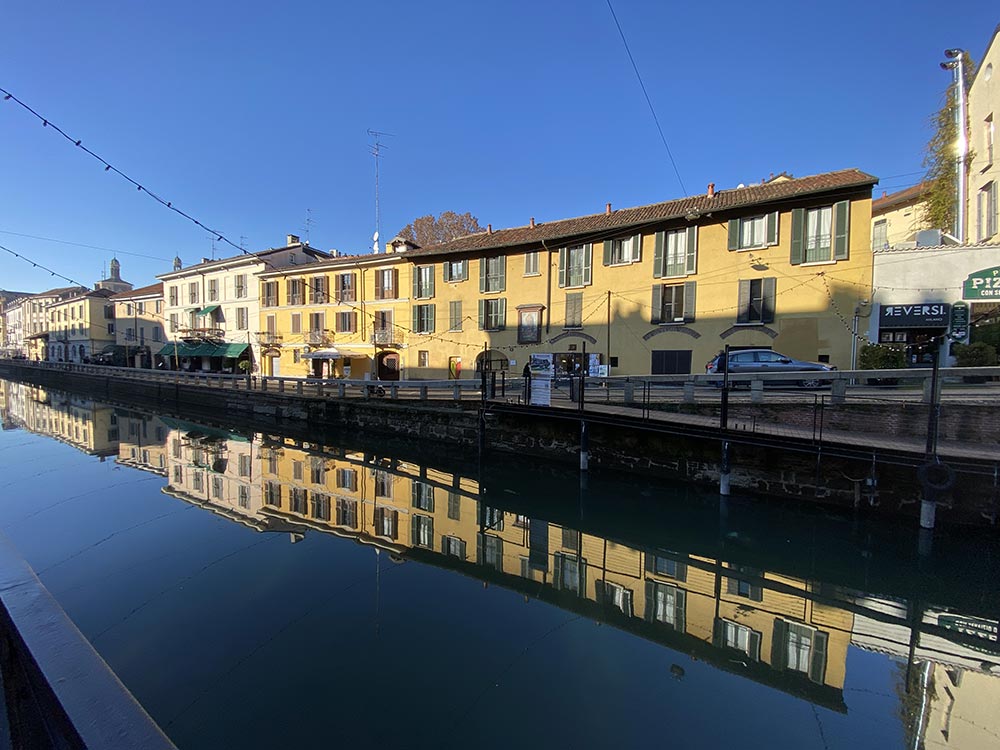
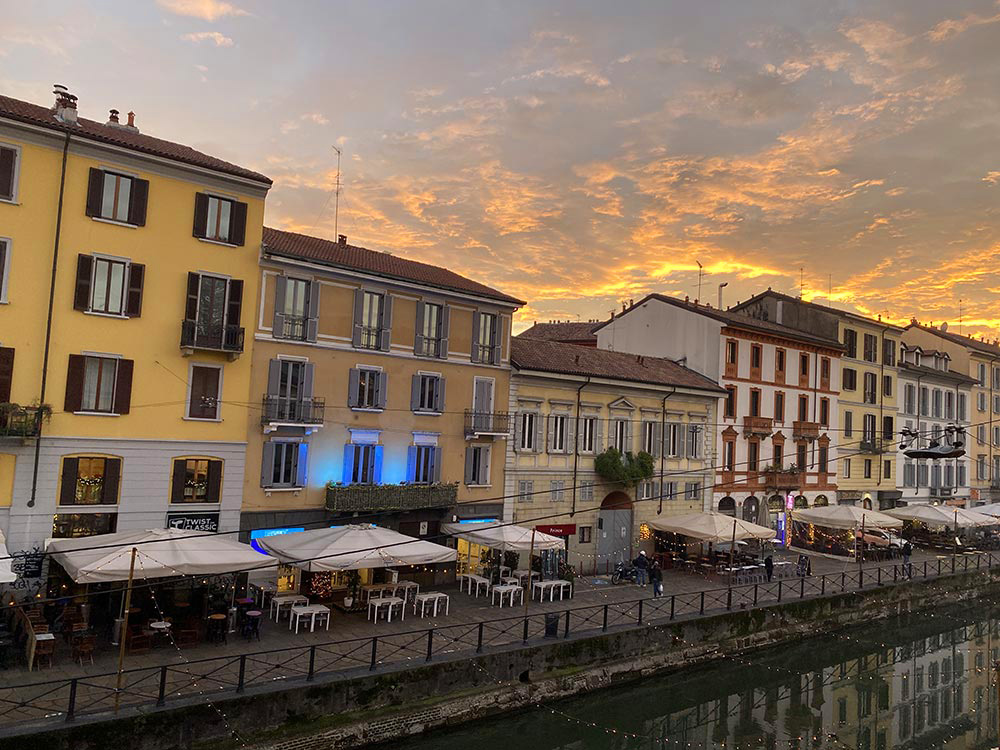
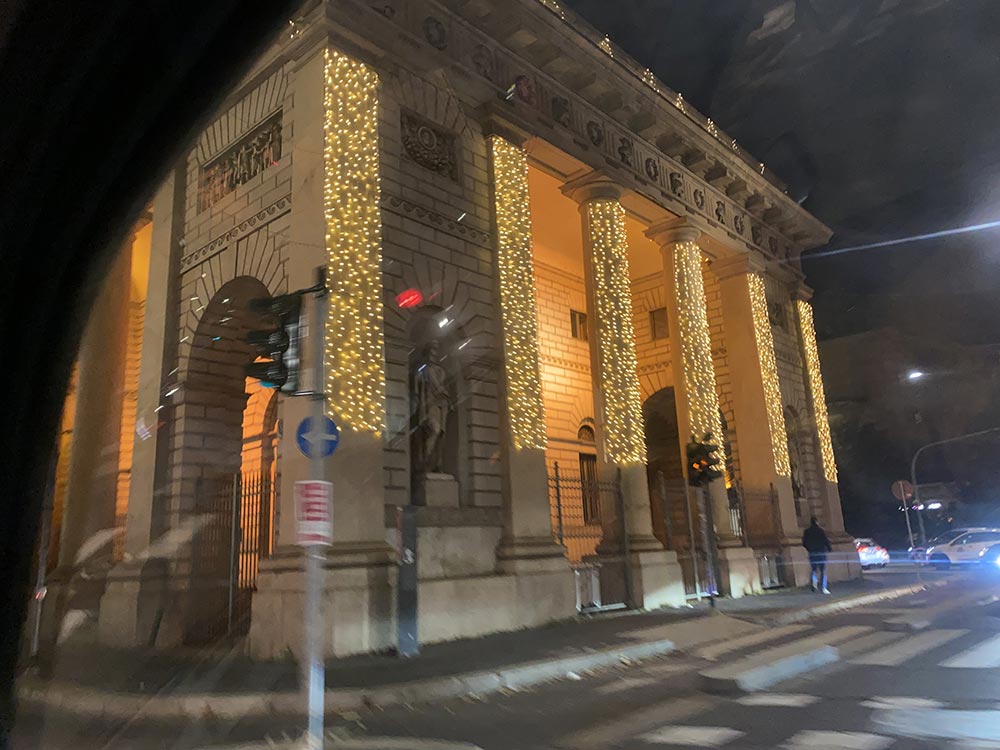
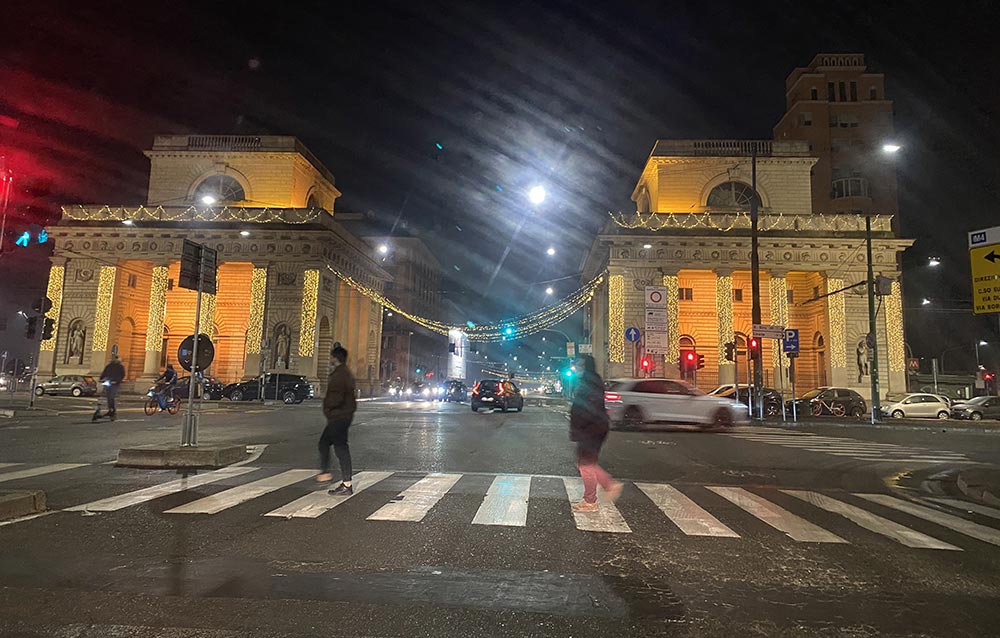
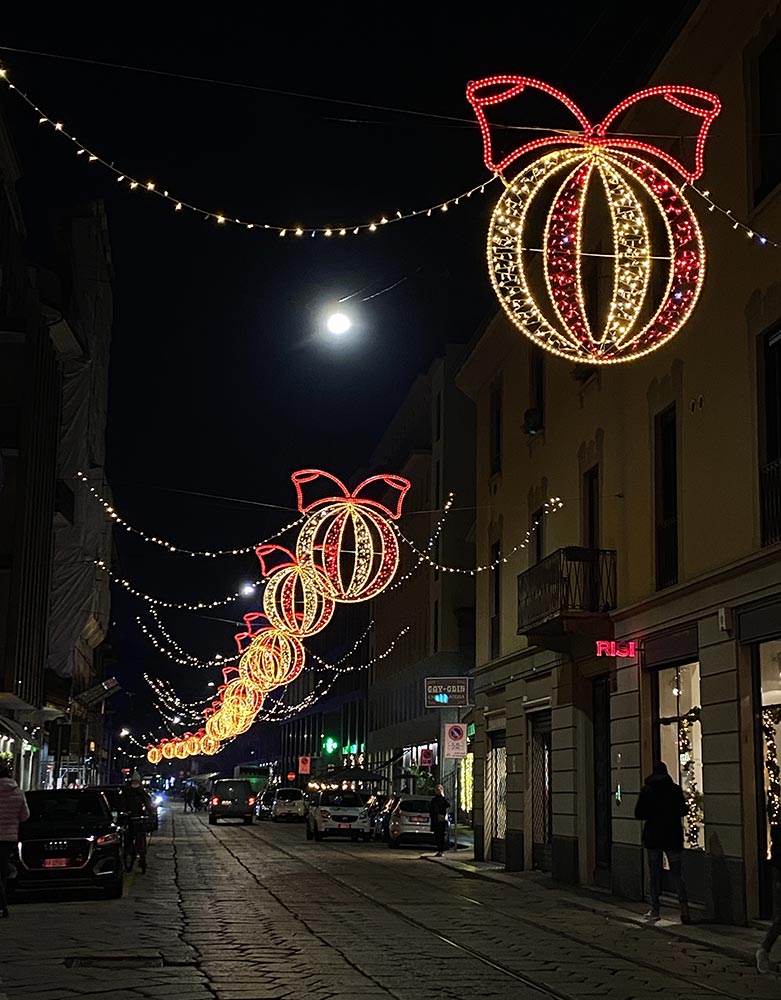
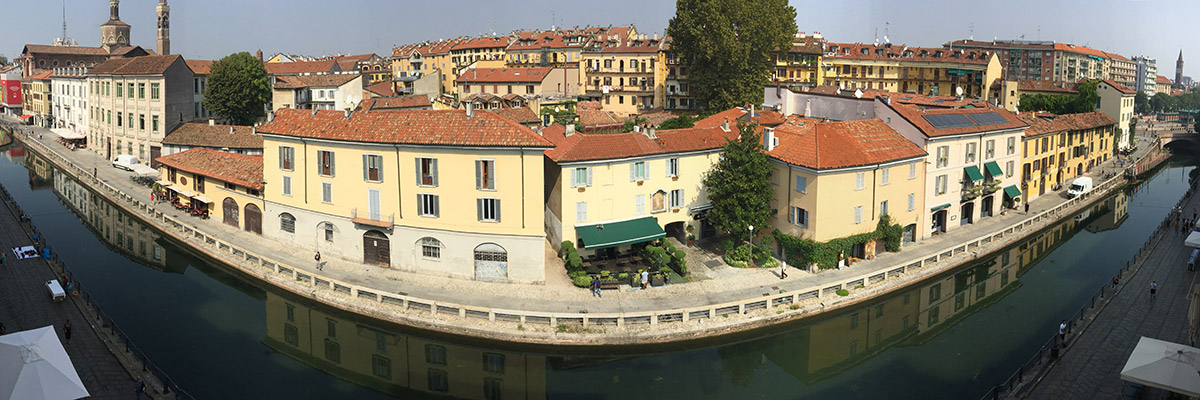
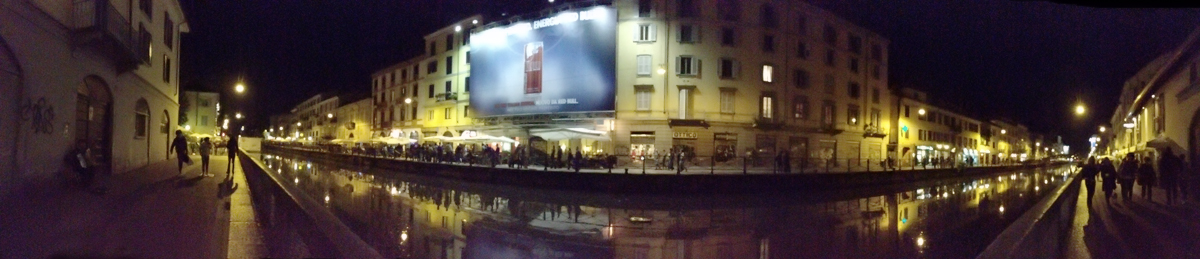
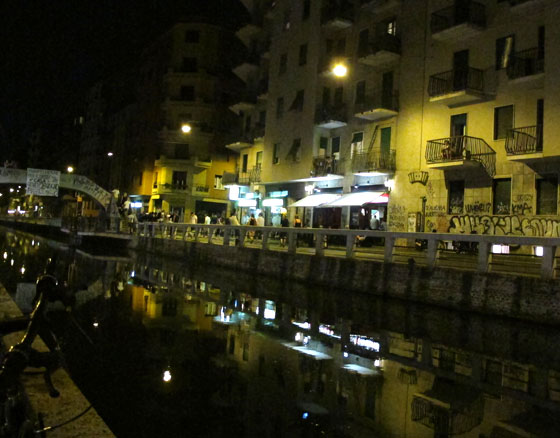
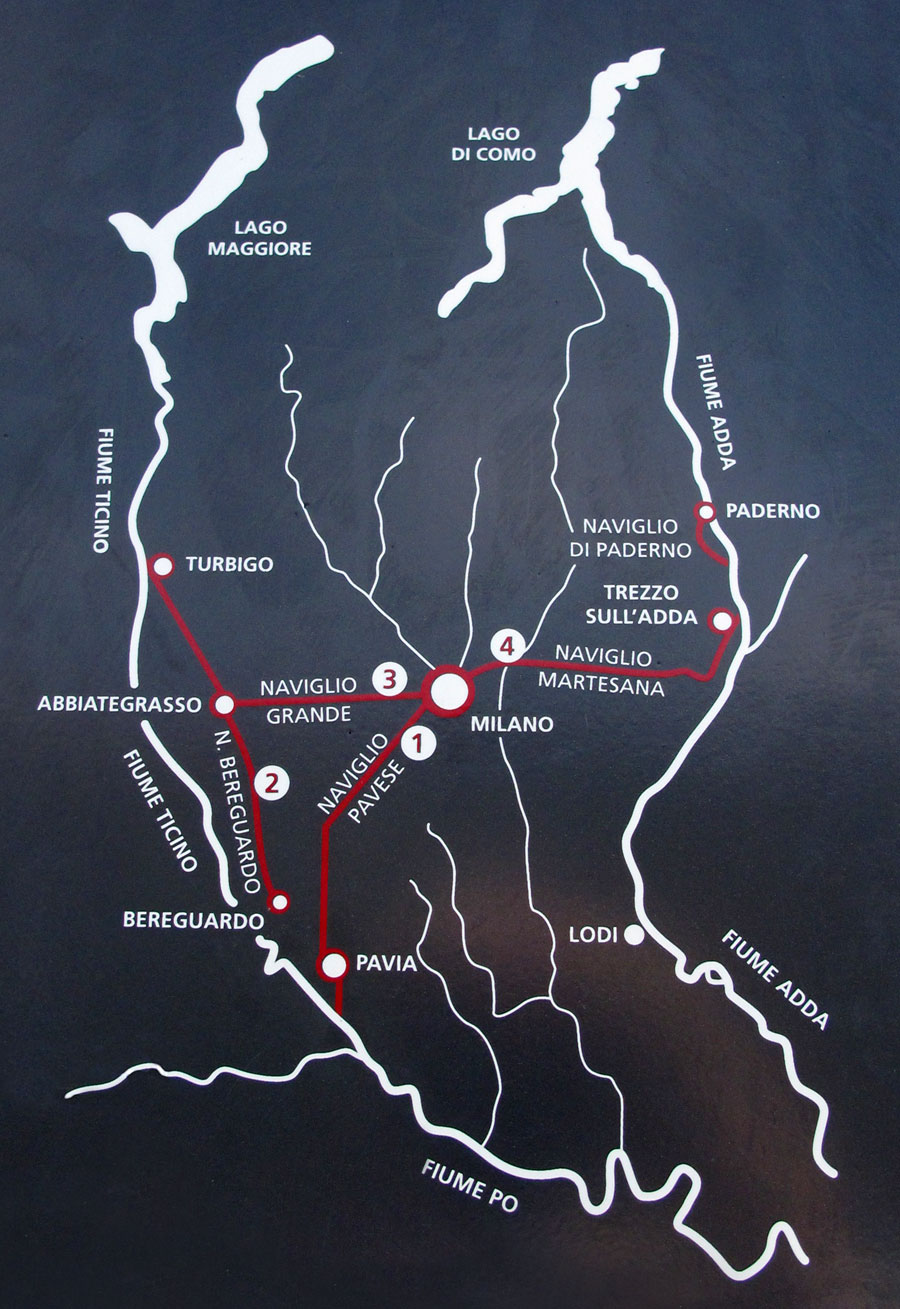
But so content as I sit here in my canal-side appartamento, hearing the apperitivo hub-bub along the Naviglio Grande (Grand Canal) through the double-pane windows. The Christmas light decorations illuminate my apartment.
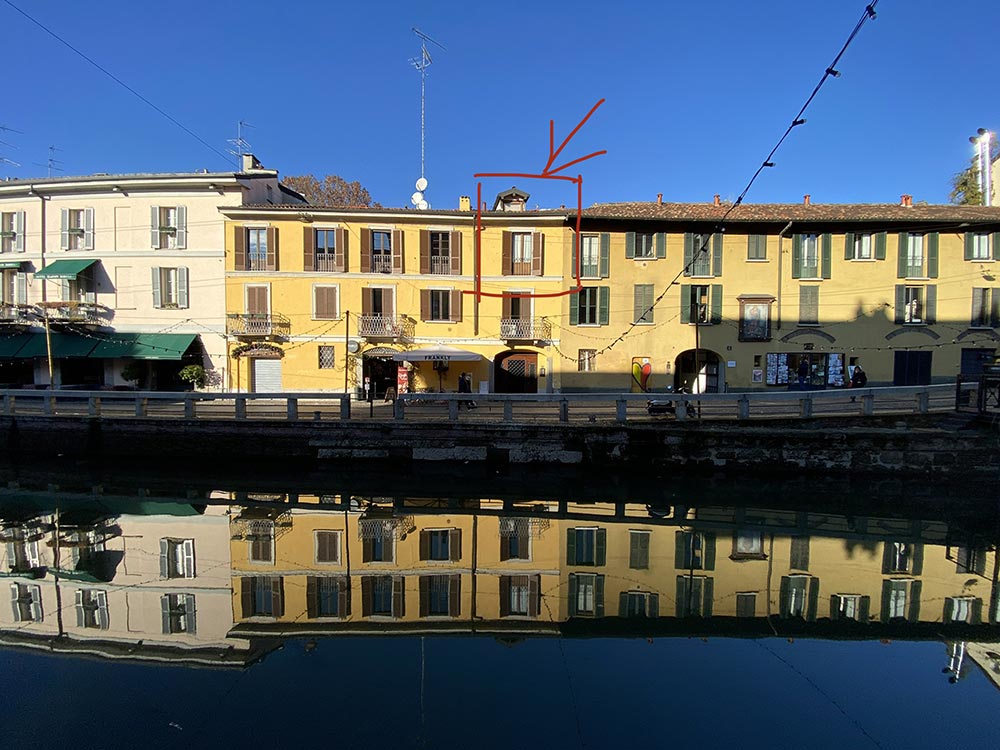
I’m on the third floor, as Americans would call it. “Secondo Piano” as Italians would say. What we call the first floor is the “terra piano“, the ground floor. The “first floor” is the floor up from that.
“Ho messo tutto a posto. Tutto in ordine. Sistemato. Organizzato.” I put everything just right. Everything in order. Systematized. Organized.
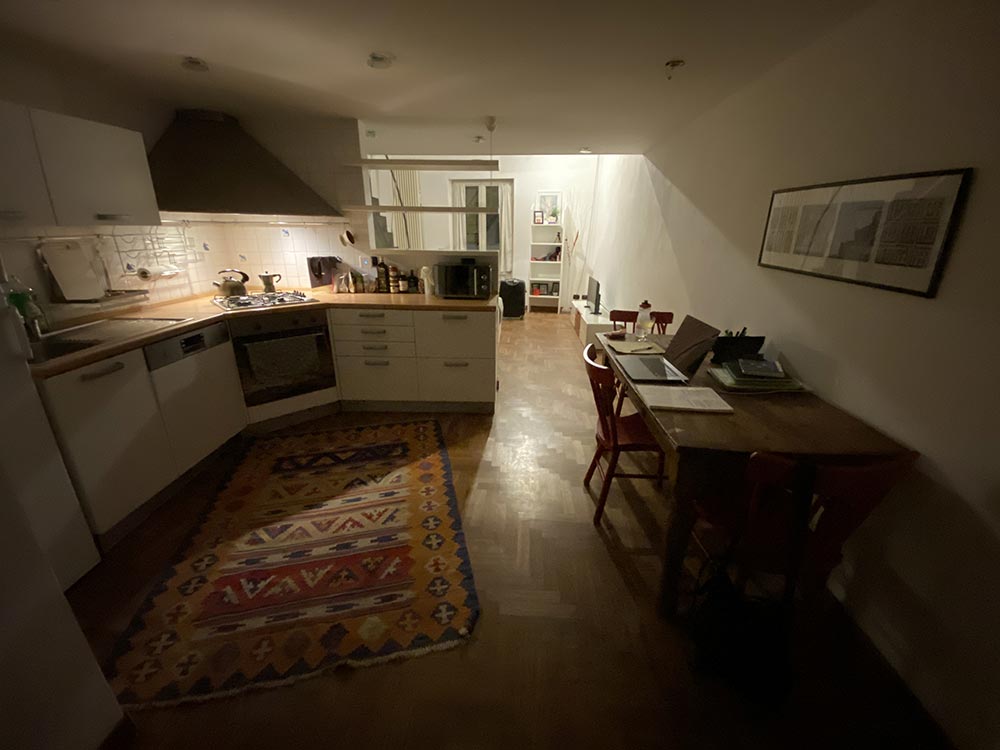
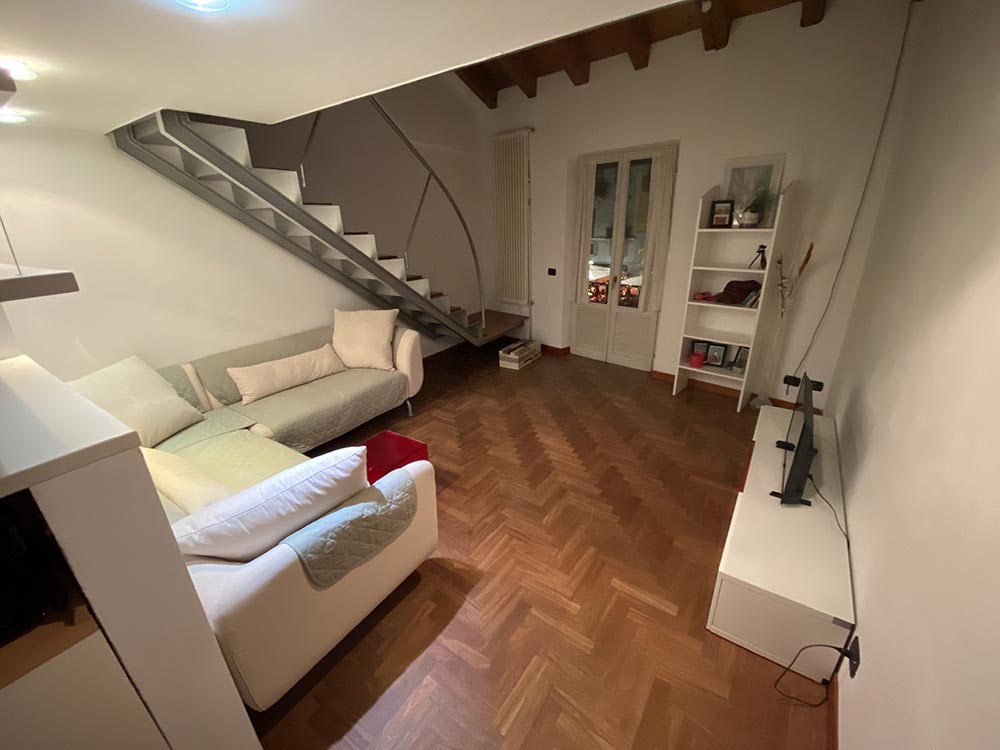
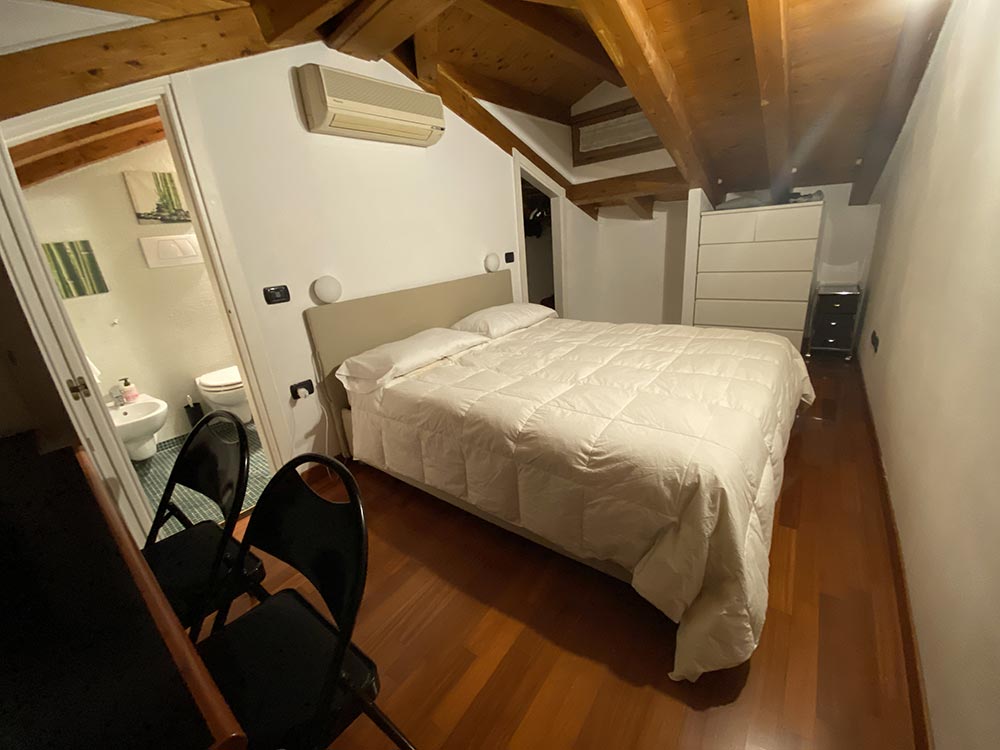
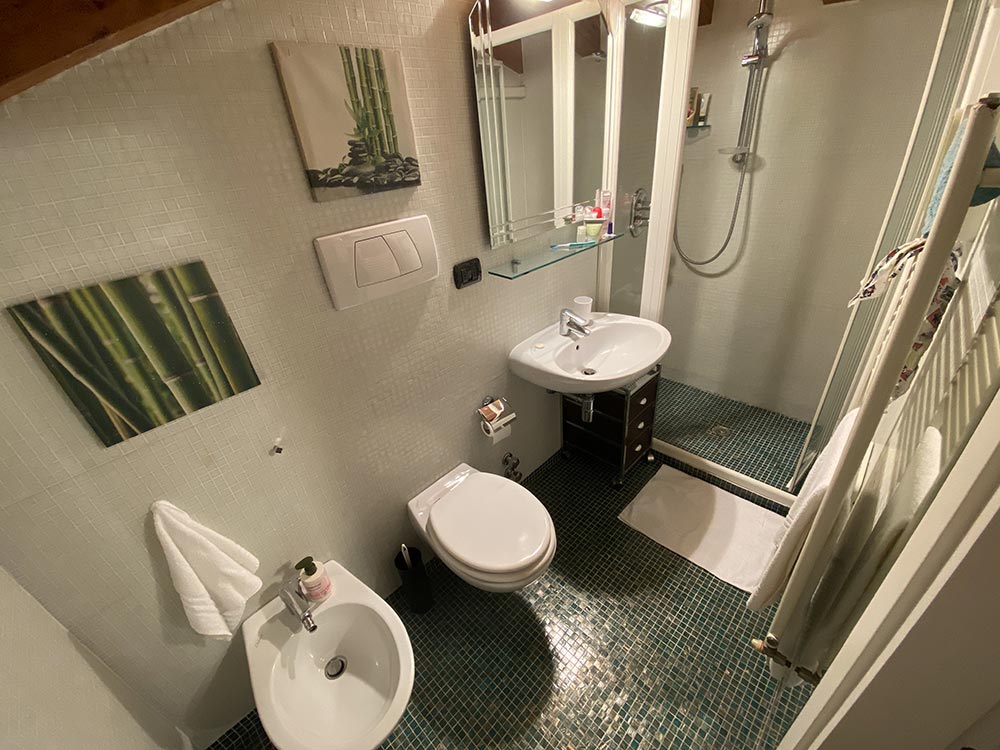
A great flat with a quite ample kitchen, dining table (desk), living room, and non-scary stairs that go up to the loft bedroom and bathroom. (Going up the stairs during the day to use the bathroom is better than having to navigate the stairs down…and back up…in the dark middle of the night.)
I’m on the north side of the canal, so I will get morning and daylight sun streaming in from the canal-side, tall, balcony doors. That thrills me.
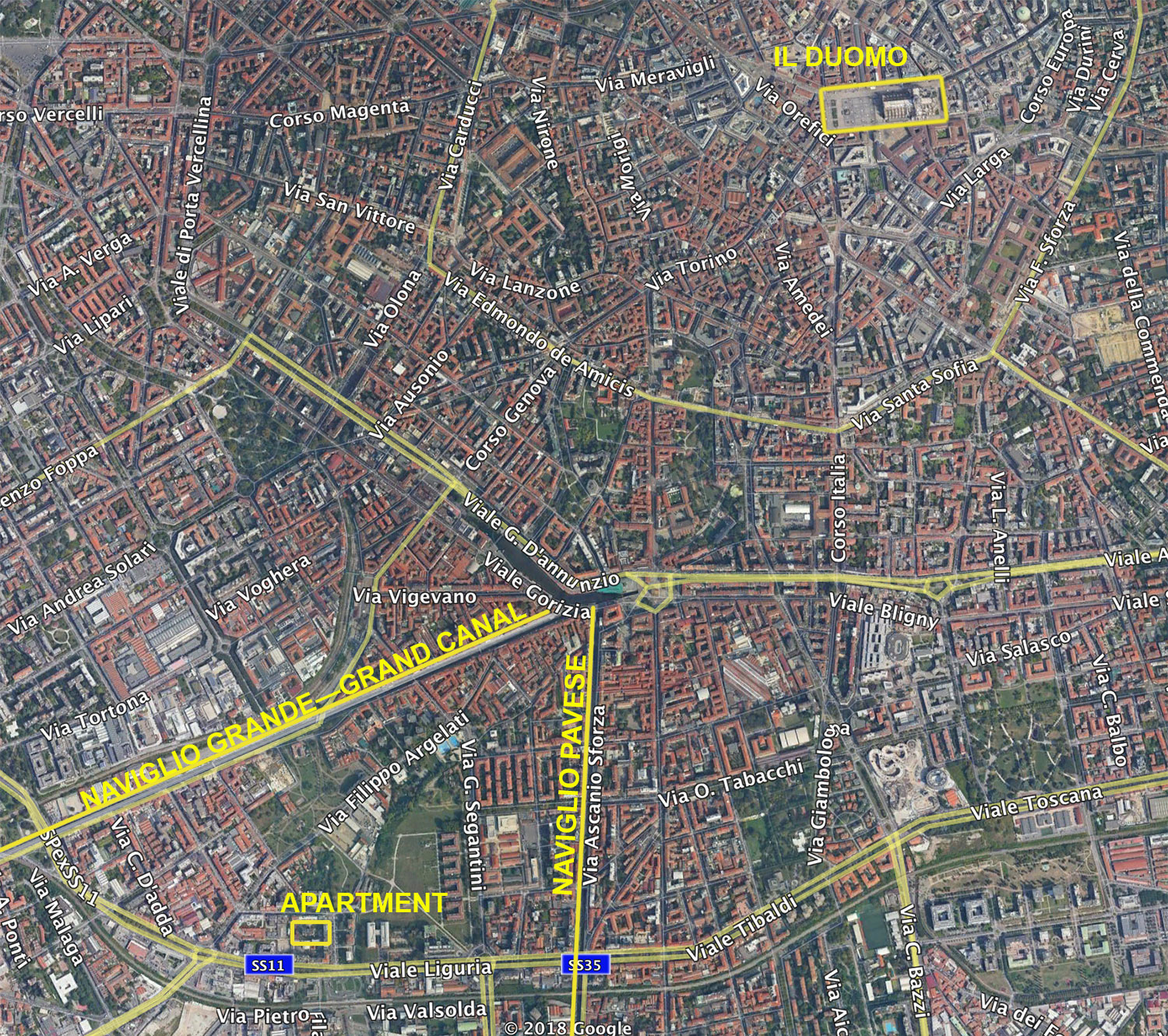
And I’m in my traditional neighborhood: “Zona Navigli“. The Canal Zone. I’ve always been in this area and it feels like home. Only a couple of times smack ON the canal, but this has become my default spot. I have friends, favorite restaurants, grocery stores, little shops that I frequent.
Two years have passed since I was last here. It feels like ages, but also like no time at all. Feels like almost yesterday as I move through town to get “home” to my apartment.
But also, the world has changed. Milano has changed. I’ve changed. Italy… and the whole world, bore horrible onslaught from the Covid pandemic… and we still bear it, and likely will for who knows how long.
Italy has “strict regulations” in place, not wanting to endure the loss they bore when the pandemic began. But I do see caution being set aside more than I imagined. So I have to navigate and create my own personal safety as I am comfortable.
I am so glad to be here. This place…Milano…Italia…has been feeding my heart, my brain, my soul, since 2008, every year adding to the bank of inspiration, reference and memory.
I just couldn’t imagine staying away another year. My time here feeds me. Feeds my being.
My Apartment Along the Grand Canal
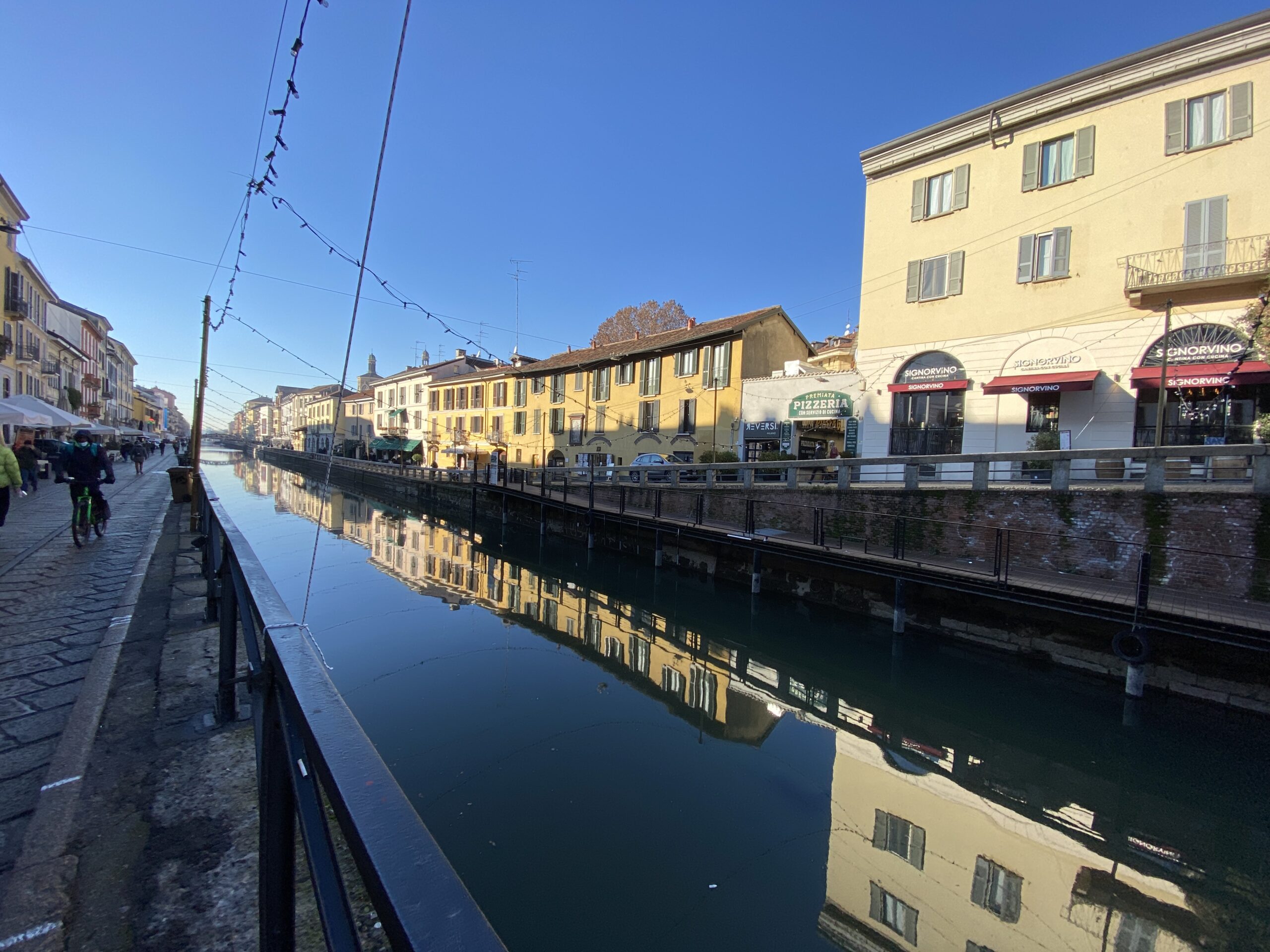
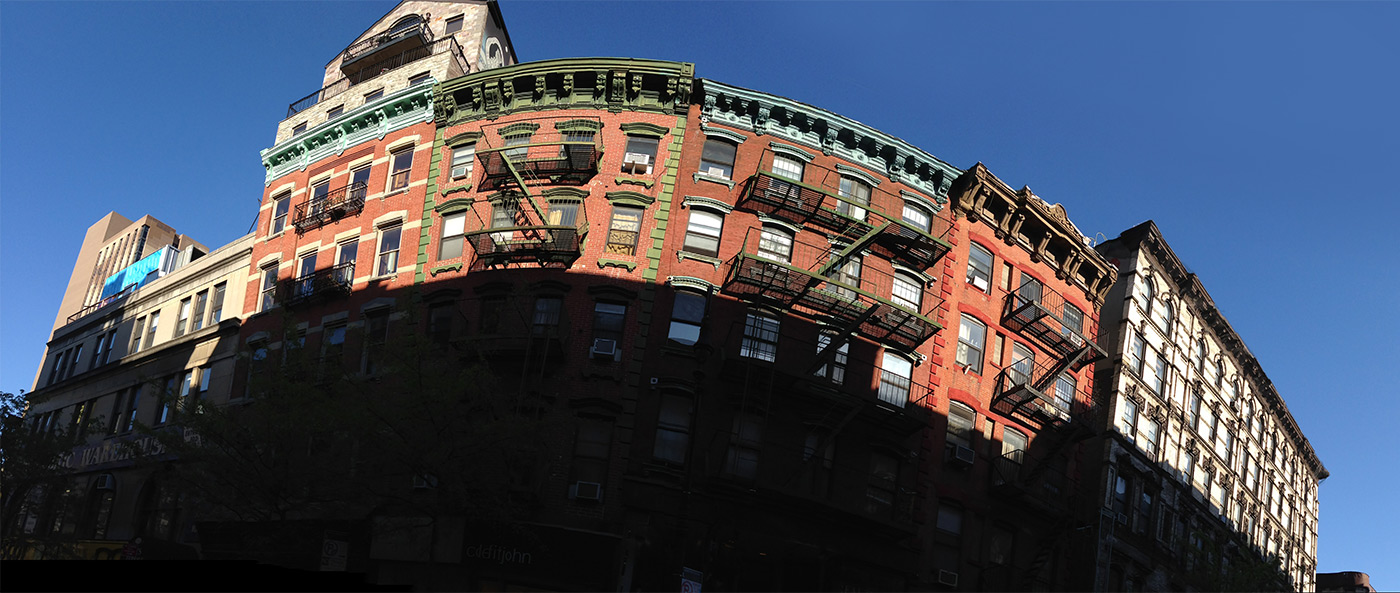
My “block” along the canal
My apartment along the canal, with it’s bedroom dormer
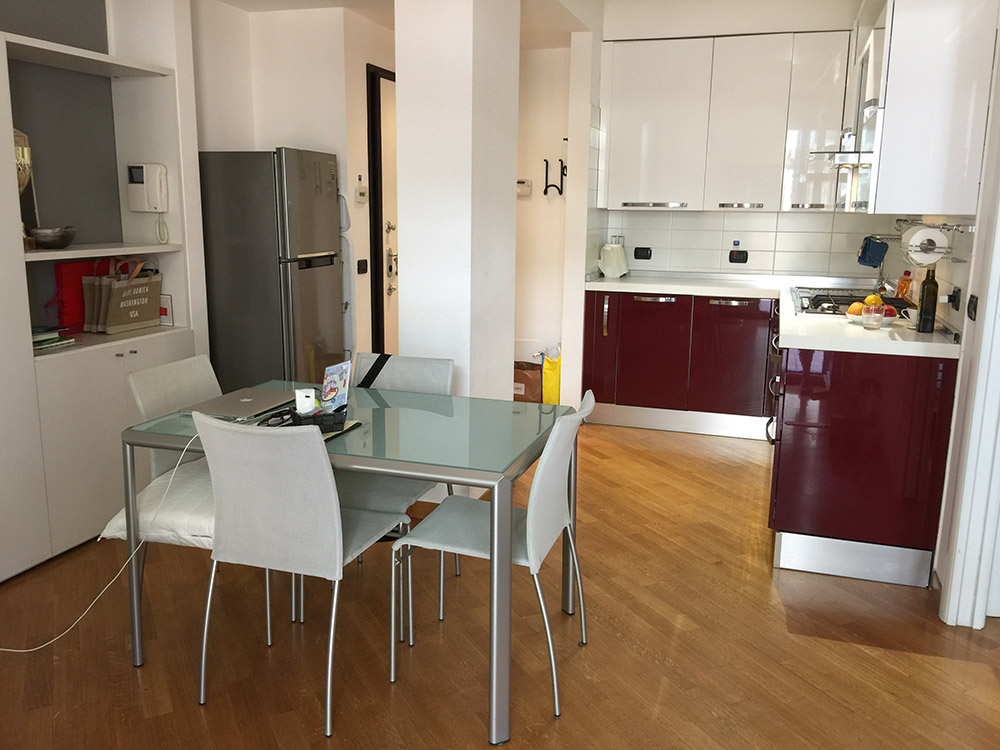
Entering my apartment, into the kitchen
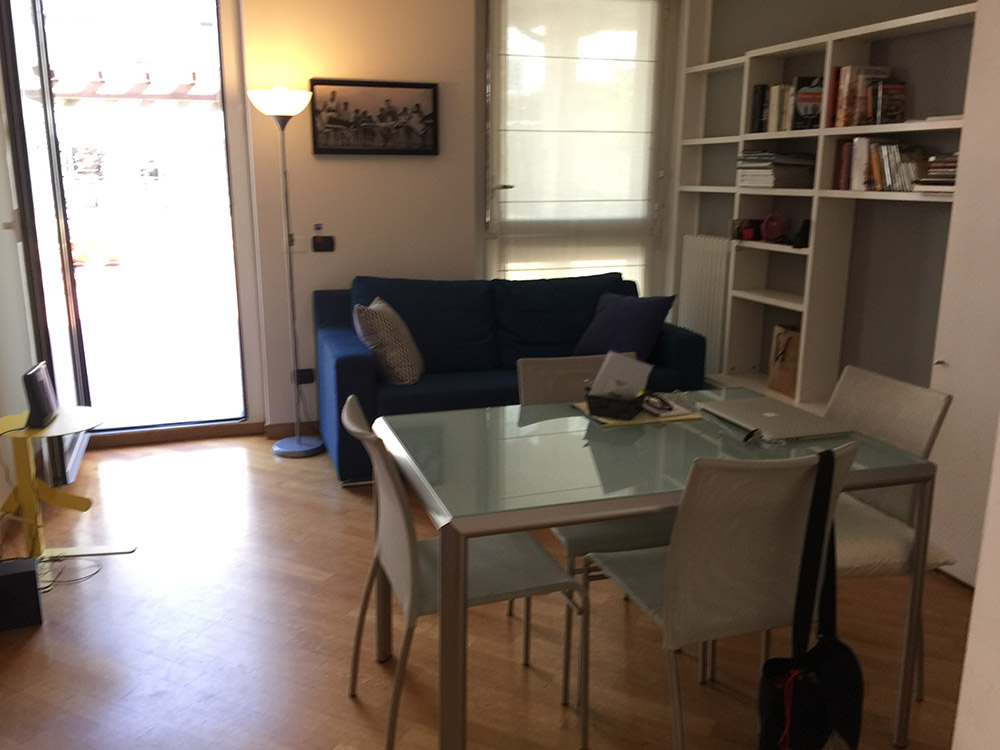
My living room with high doors that open to a balcony with the canal view
My loft bedroom
My bathroom, with a big shower
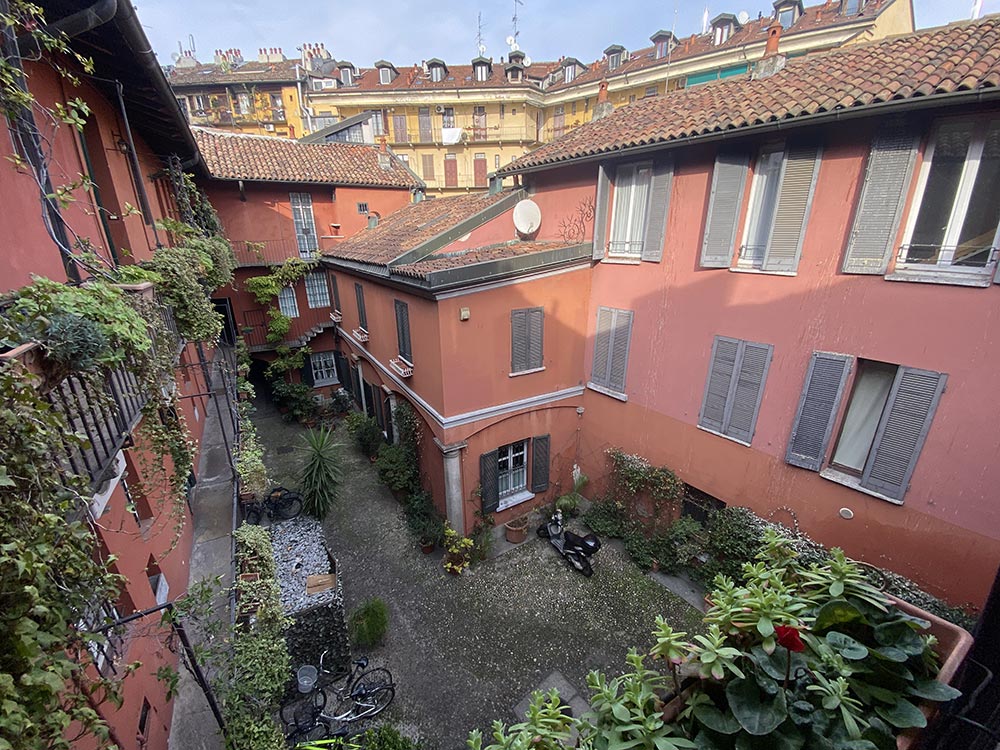
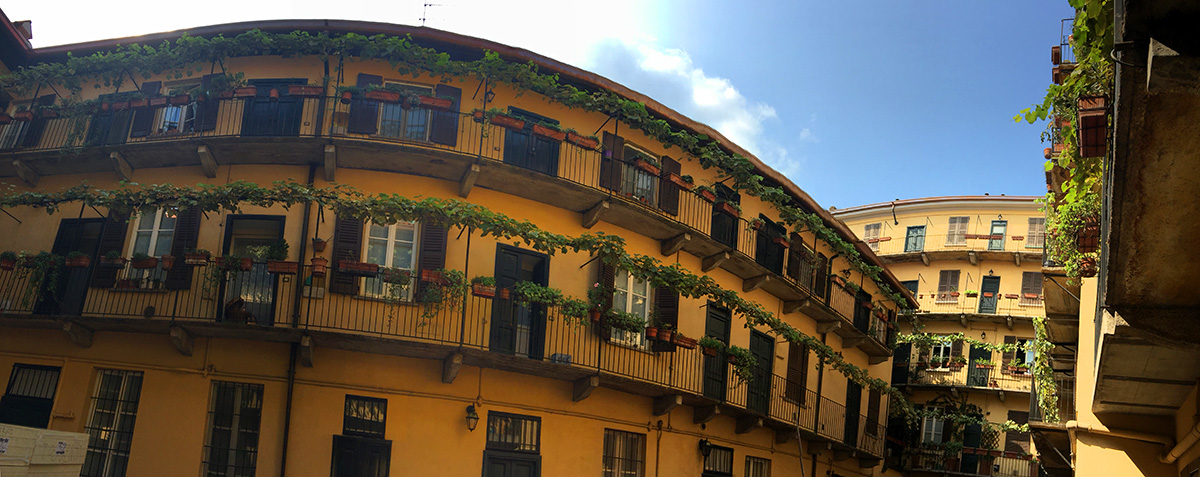
Classic “ringhiera” courtyard, outside my apartment
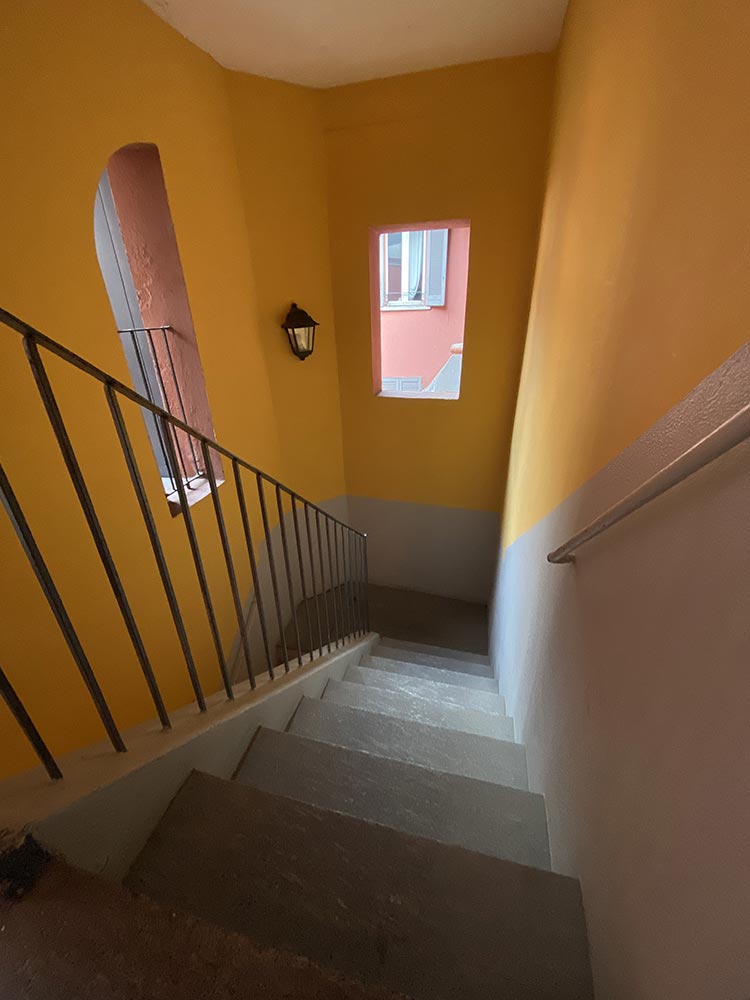
The stairway up to my apartment
My Neighborhood in the “Zona Navigli”, Canal Zone
The view from my balcony, looking out along the “Naviglio Grande”, the Grand Canal.
Looking west along the canal, past my apartment
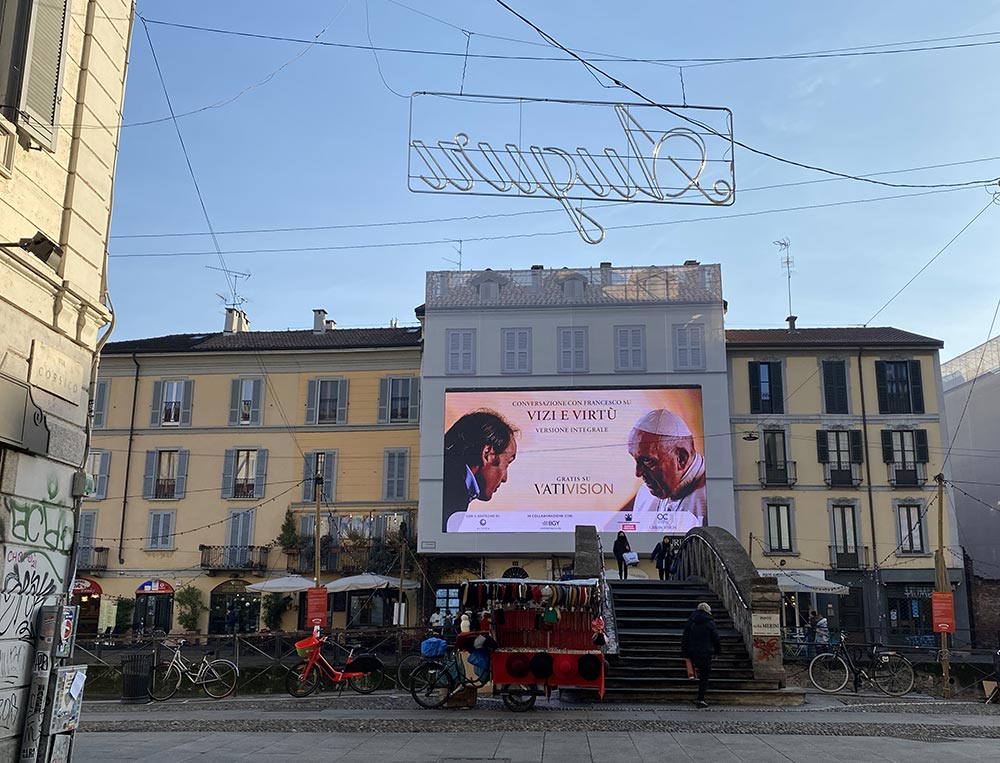
Auguri and Vativision
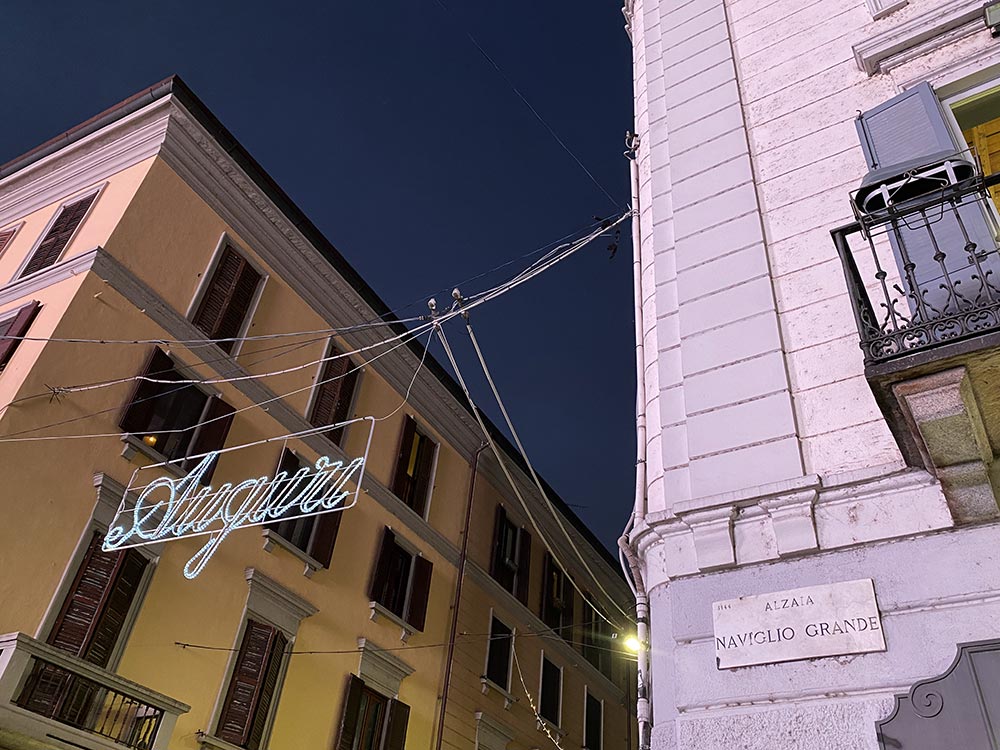
“Auguri”. Best Wishes
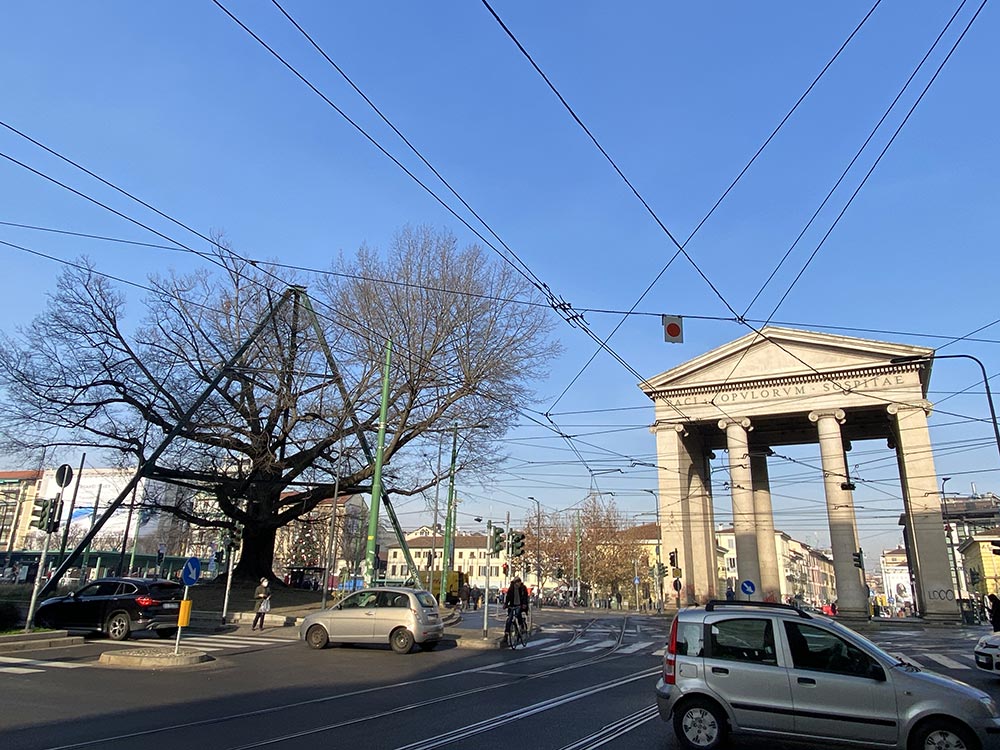
Piazza 24 Maggio
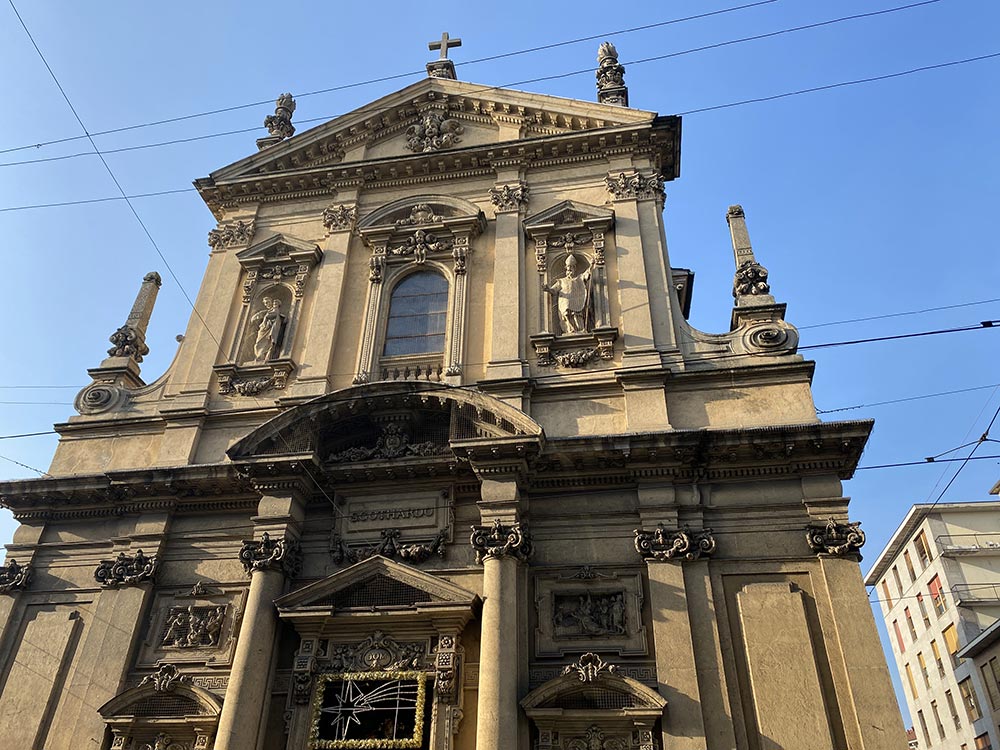
San Gottardo
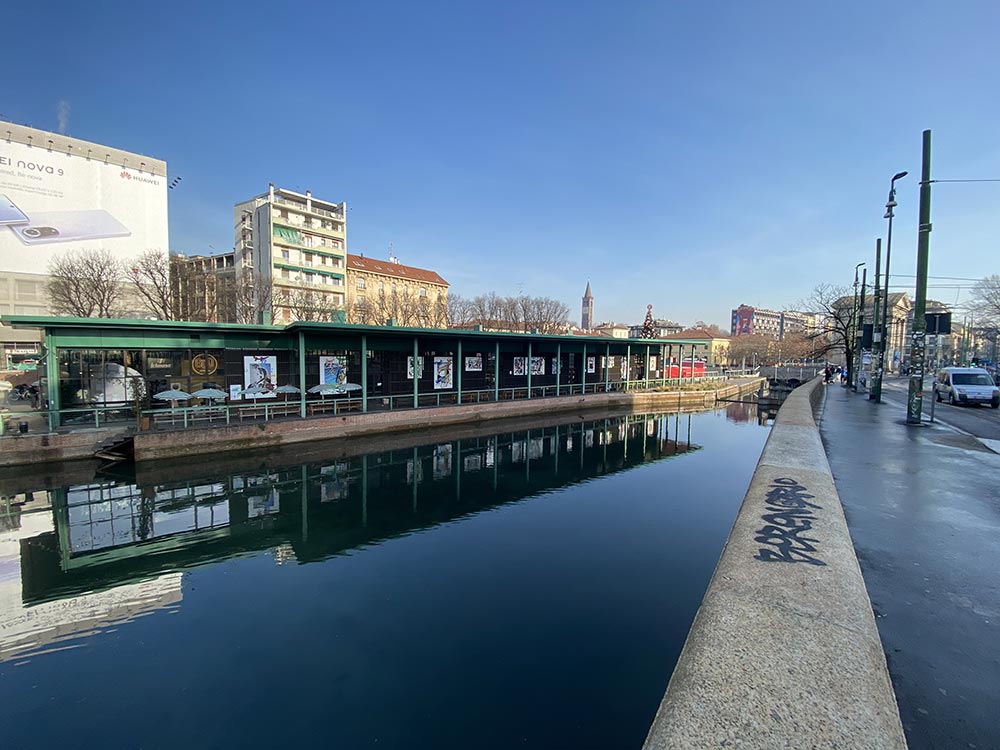
Market stalls at La Darsena.
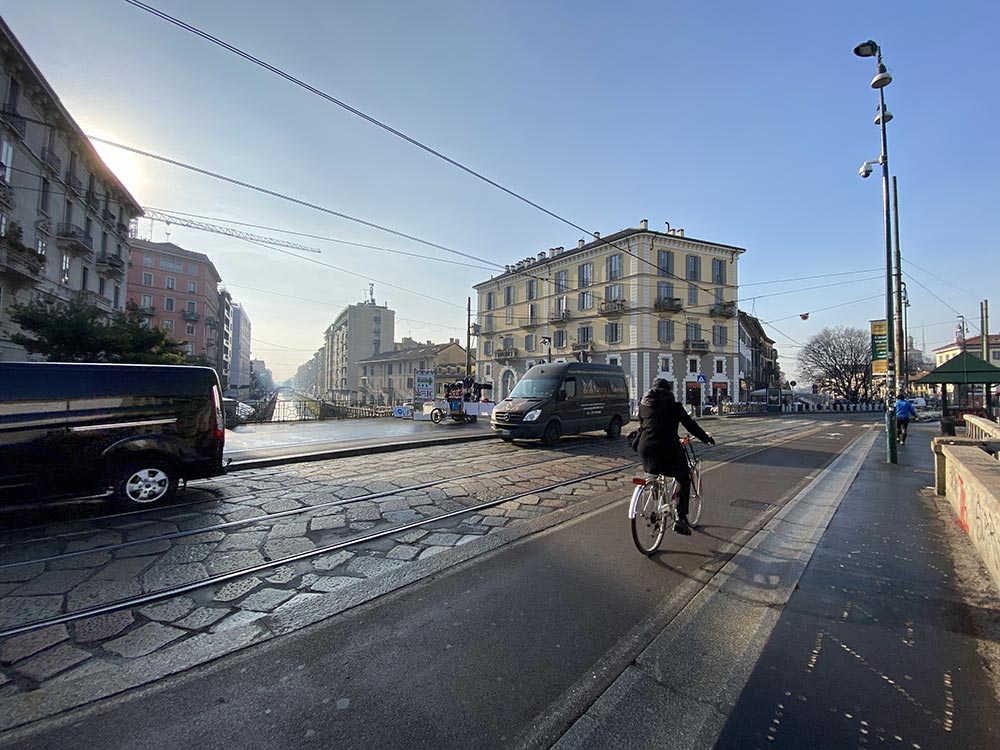
Looking south down the Naviglio Pavese.
I know how to eat!
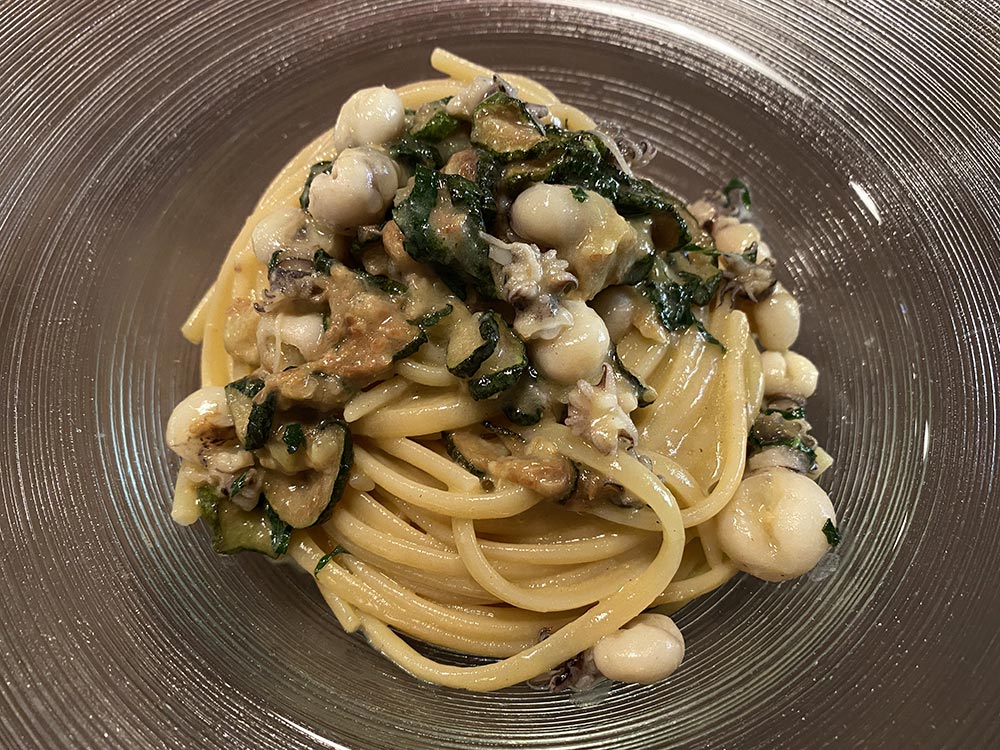
Linguine with teeny, tiny “seppiolini”, little squid
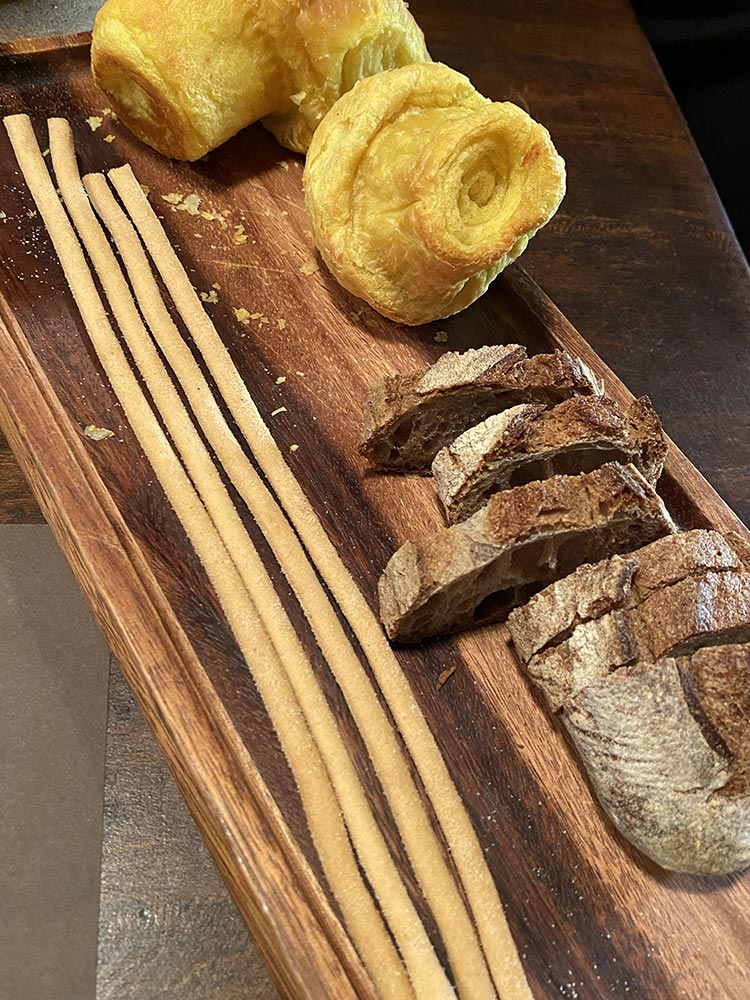
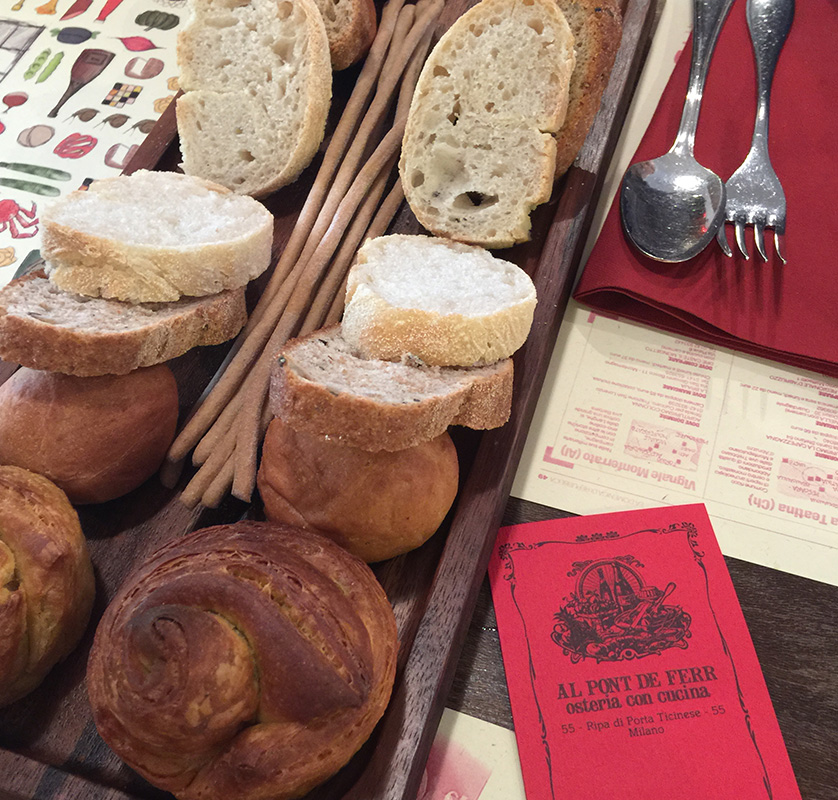
Bread platter at Al Pont de Ferr
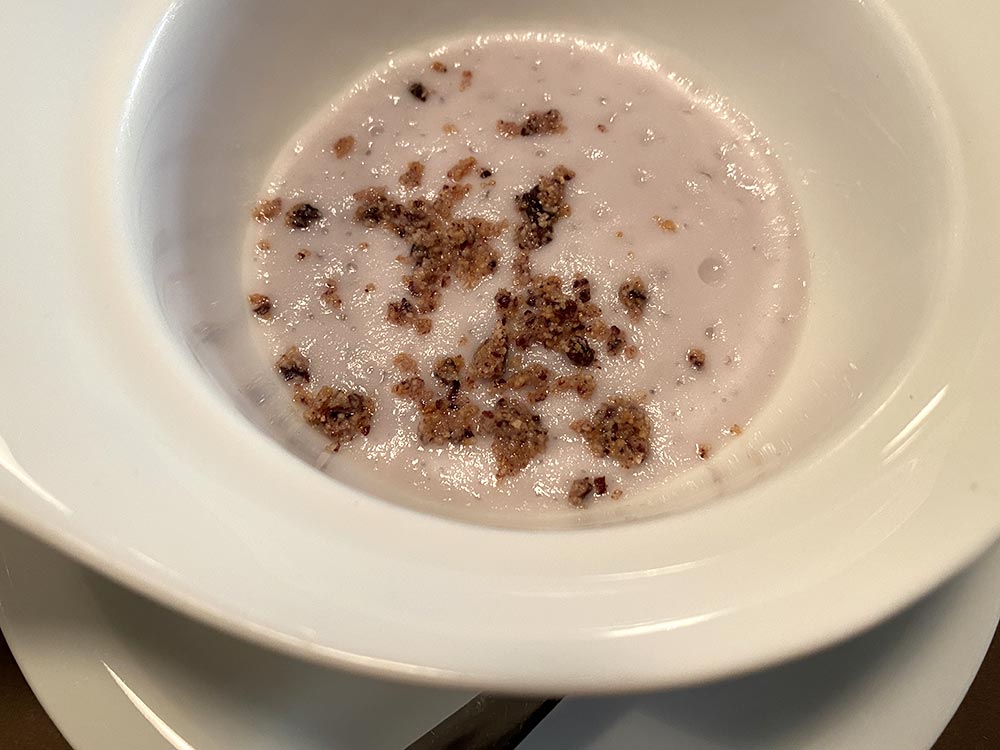
Cauliflower. Foamy, and neither soup
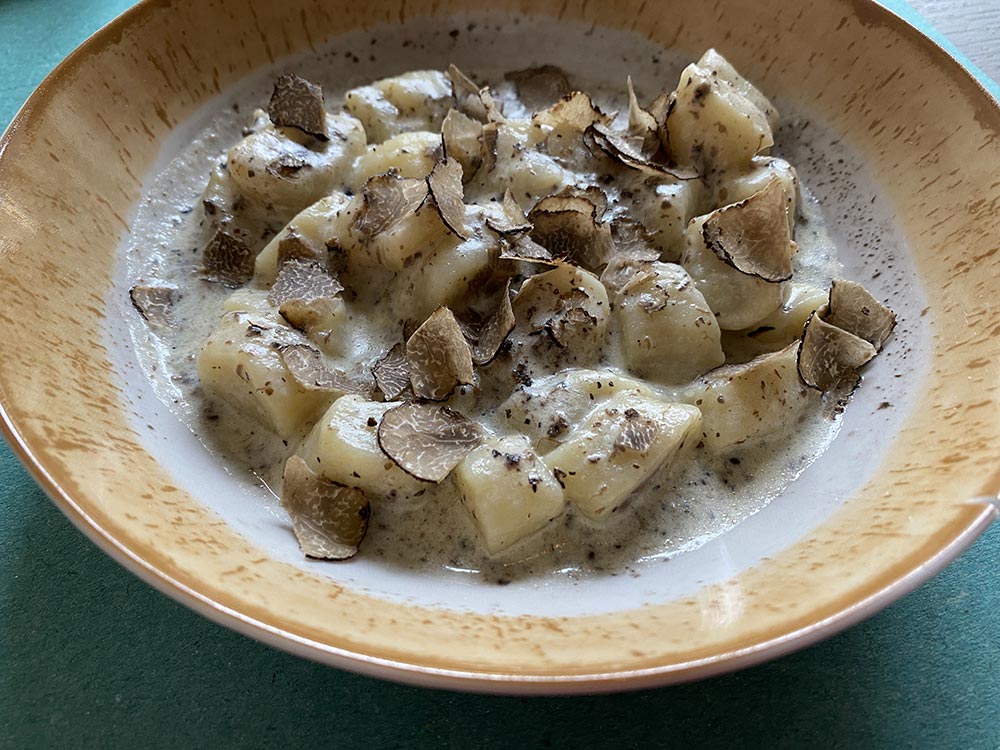
Gnocchi with black truffle
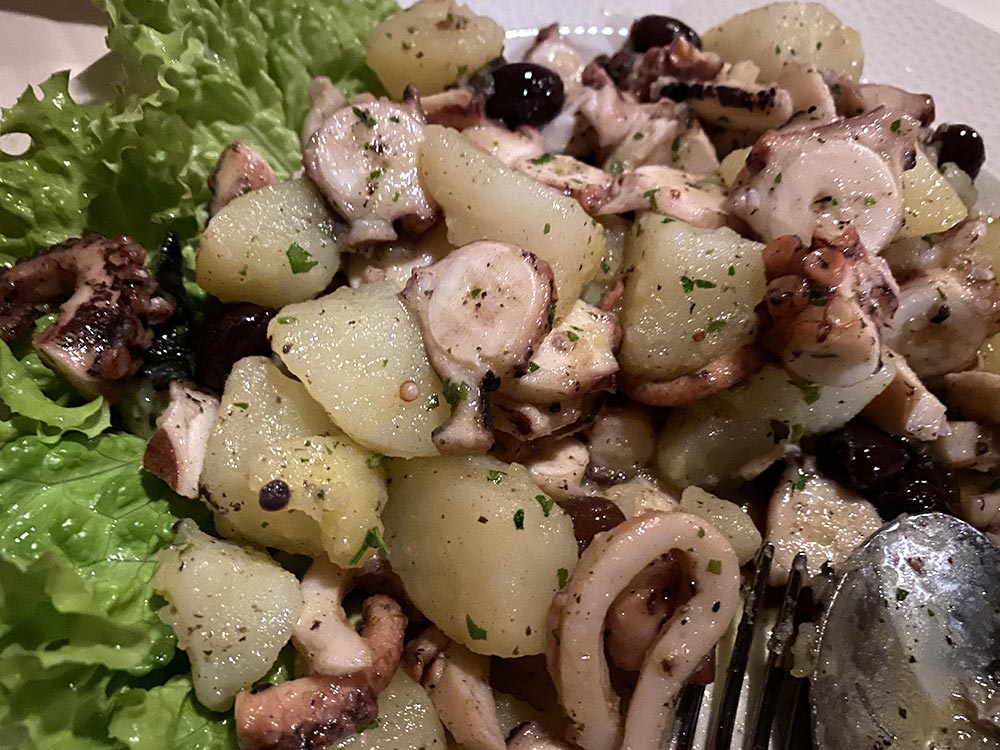
Warm “salad” of octopus, potato and taggiasche olives. My favorite
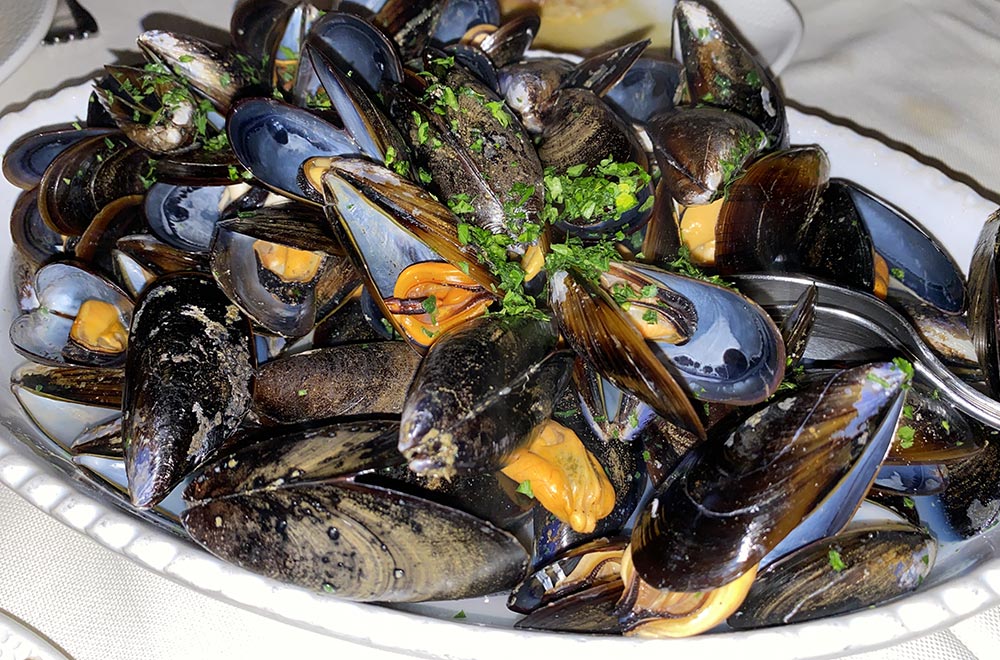
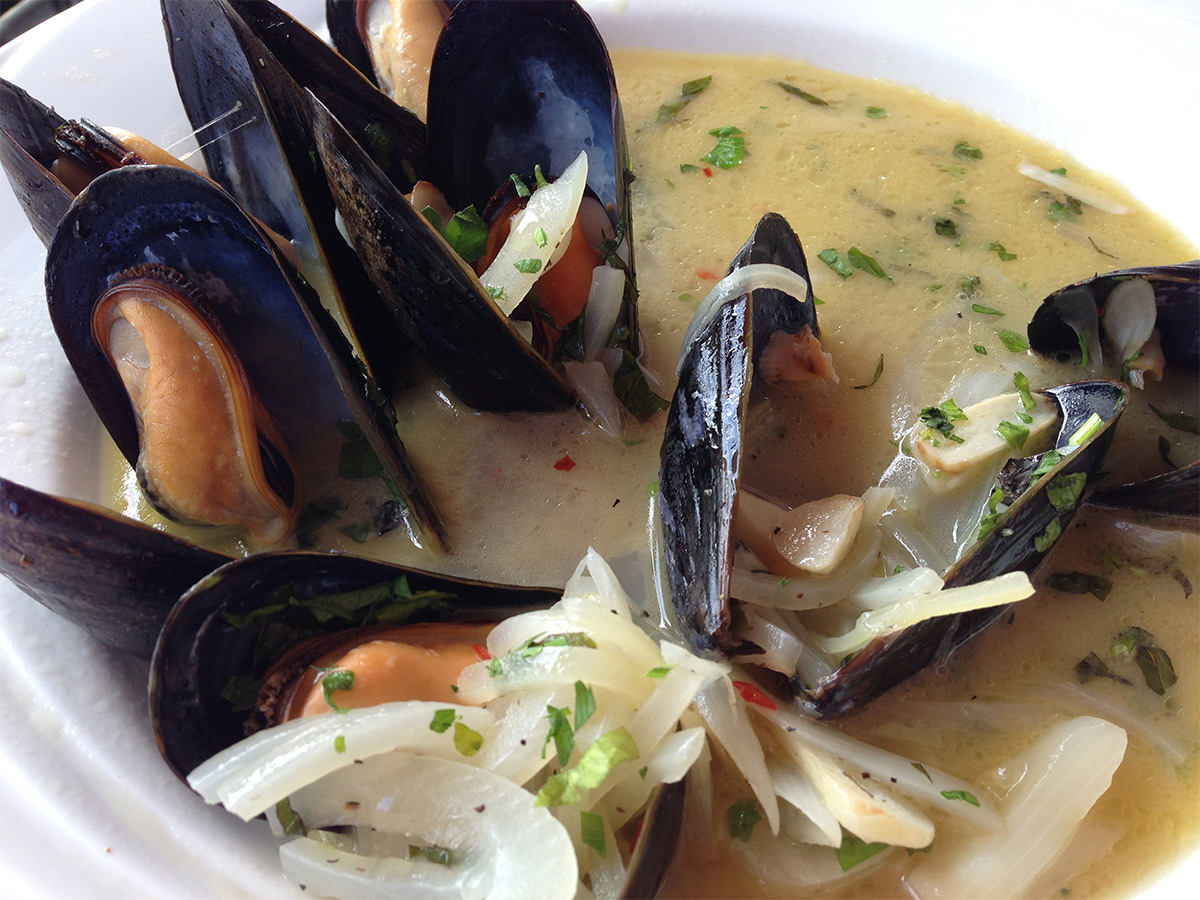
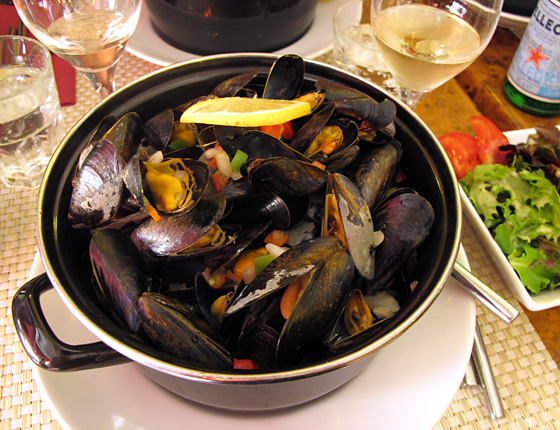
Mussels
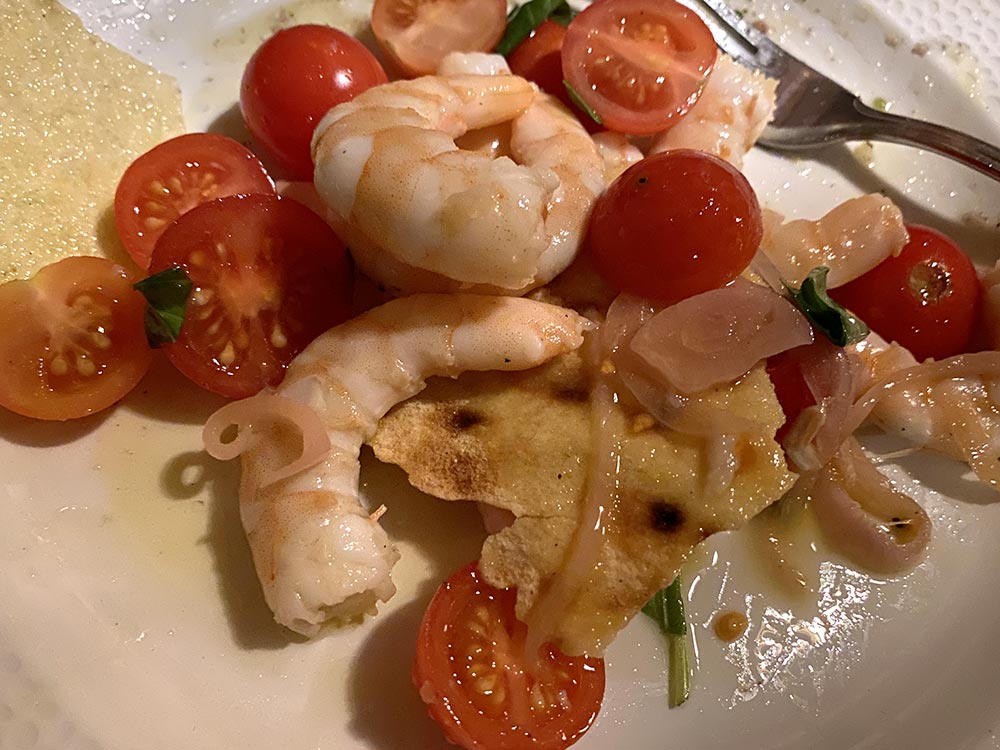
Shrimp, tomatoes, pane carasau
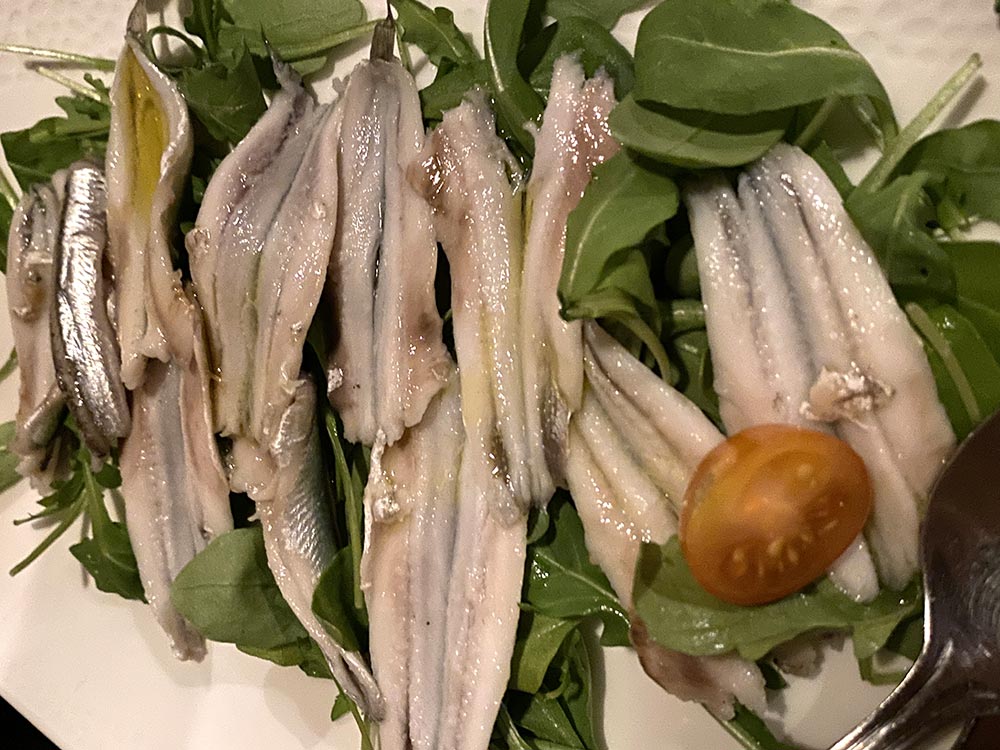
“Alici”, fresh anchovies with lemon juice and EVOO
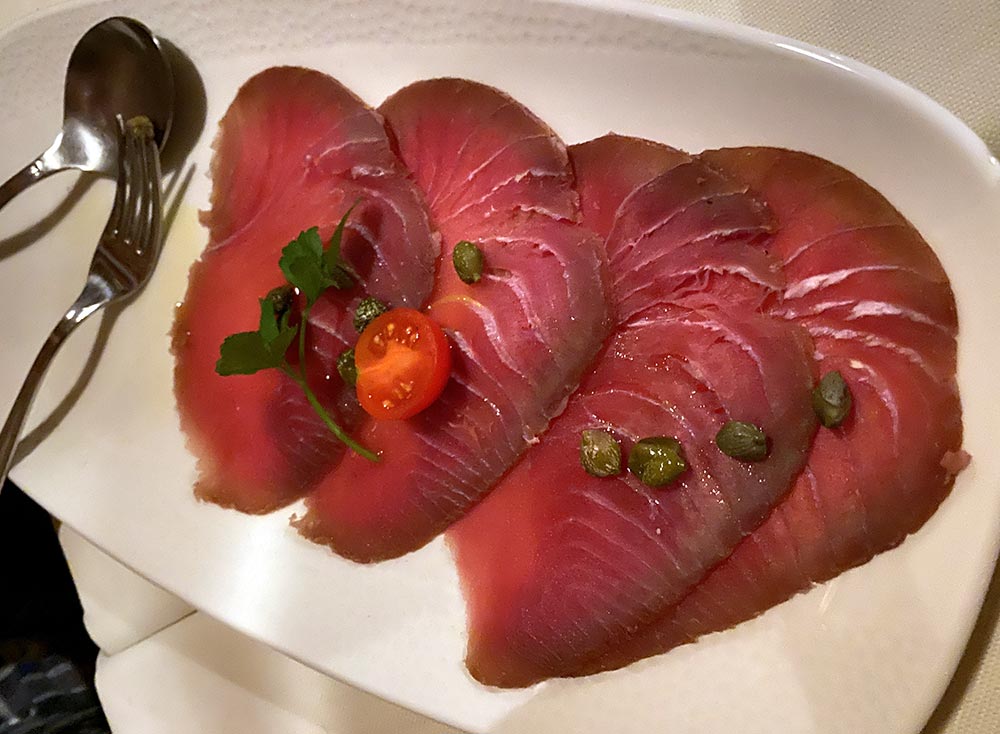
Smoked tuna
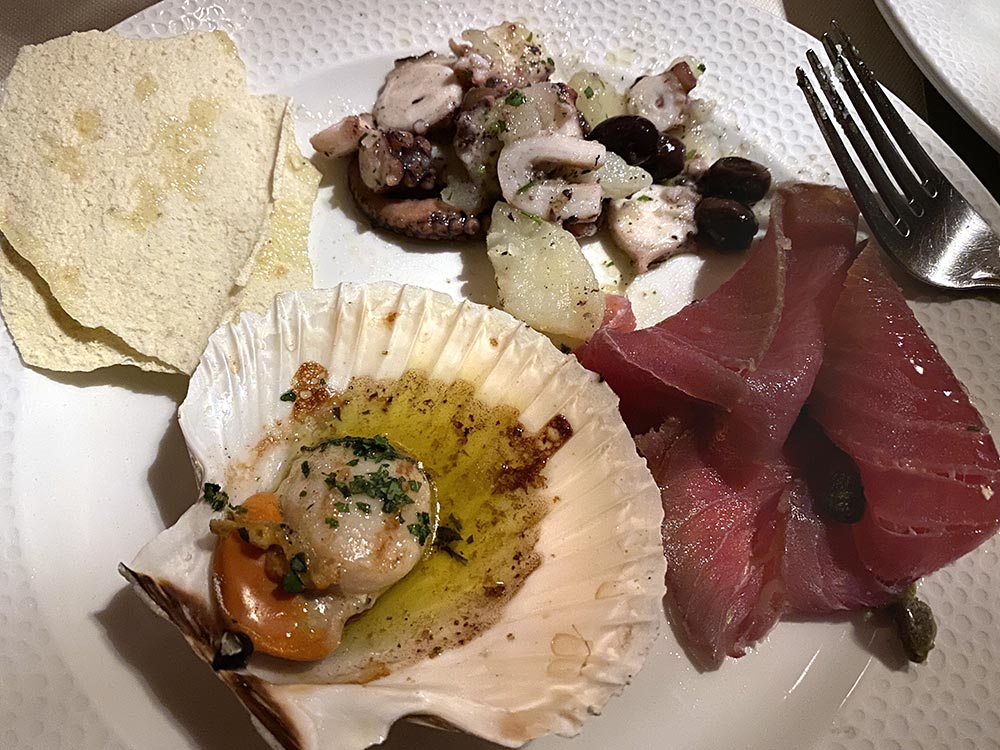
Pane carasau, octopus and potato, smoked tuna, scallop
We do our shopping and choose fruits and veggies to bring home without giving much thought to those who picked that produce.
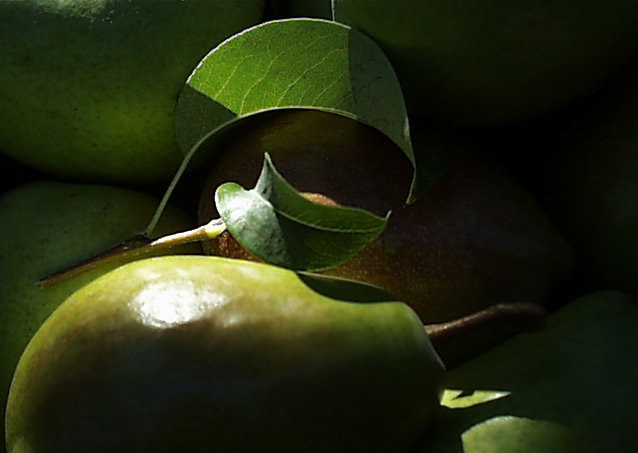
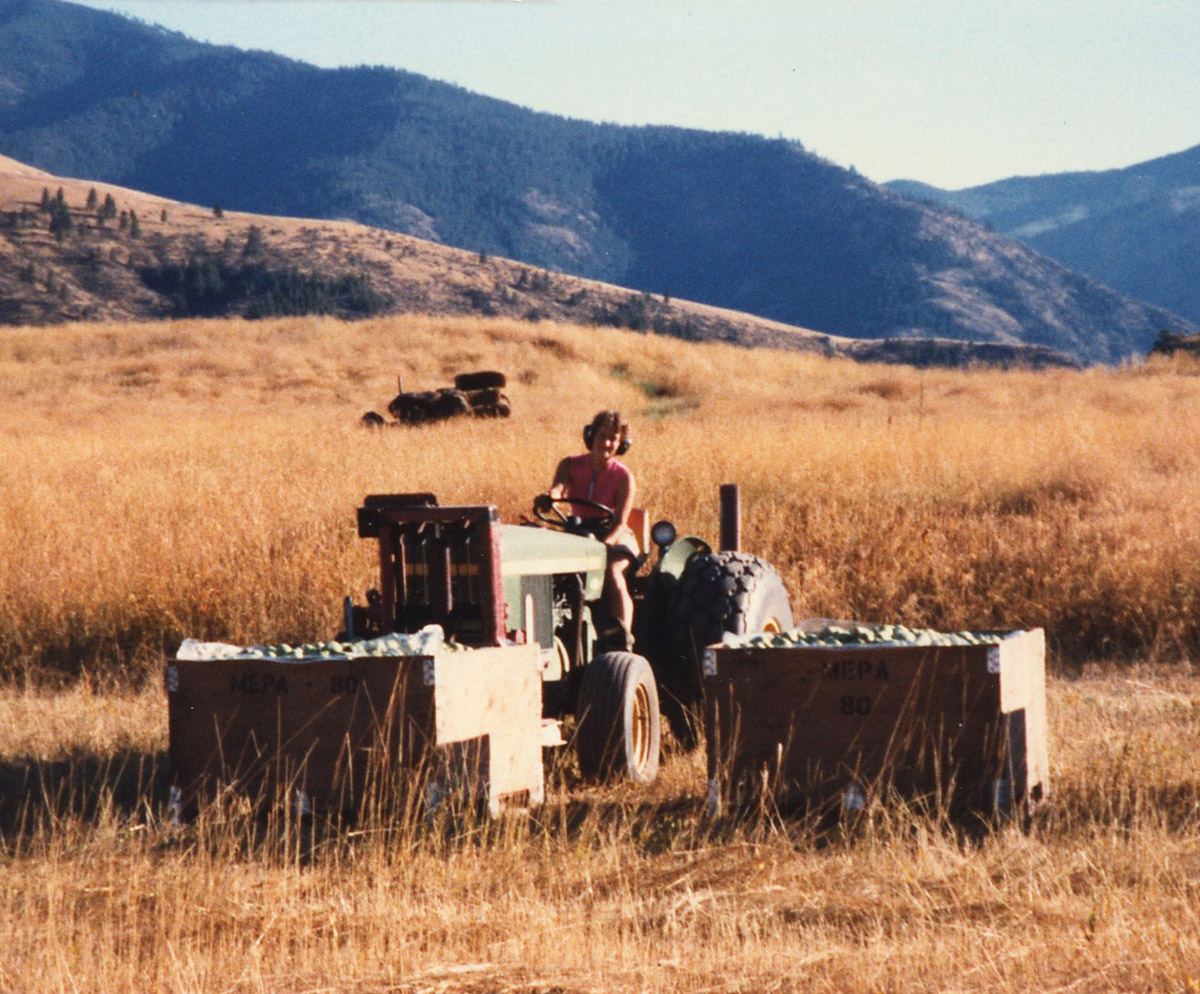
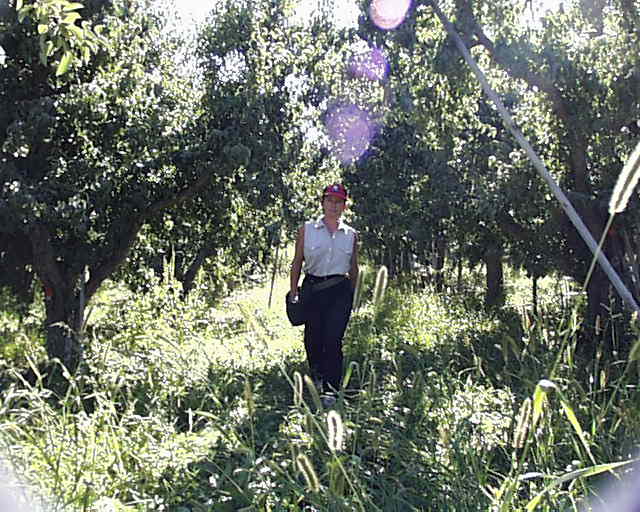
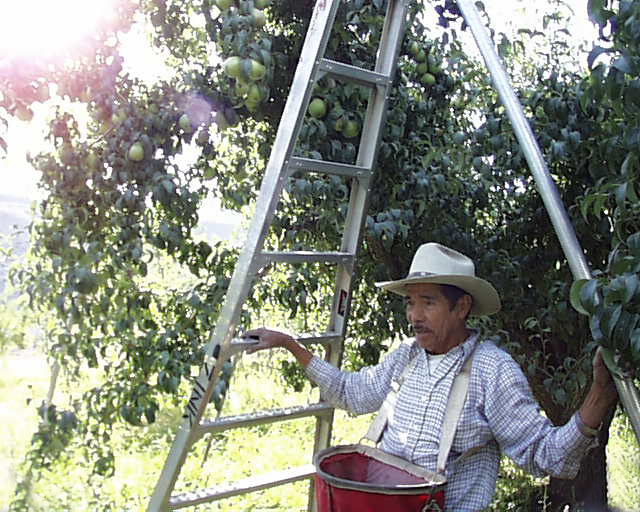
Long ago, for 21 years, I had been an orchardist in the Methow Valley of Eastern Washington with my then-husband. This was no “gentleman farmer” hobby endeavor. Though we weren’t one of the larger orchardists, at the time we grew about 450,000 pounds of pears per year, plus about 50,000 pounds of apples.
Speaking Spanish
My love of language came in handy. I had studied Spanish for 7 years in school and lived in Nicaragua as an exchange student when I was 14. I was the only orchardist in the Valley that spoke Spanish. Consequently, we often had carloads of eager workers that would drive up our dusty road for my help filling out their immigration and working papers.
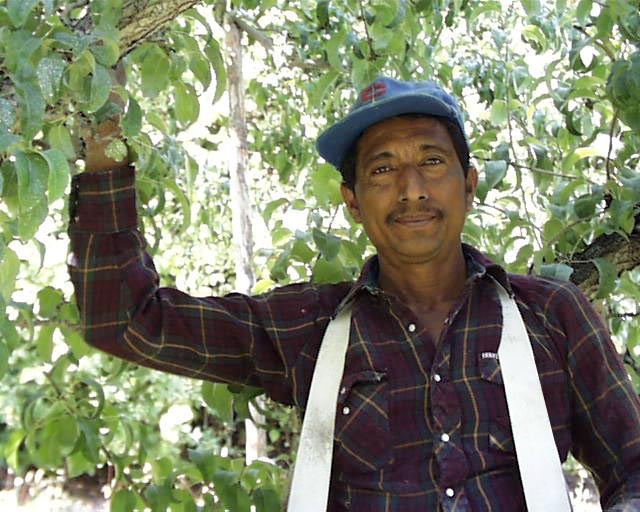
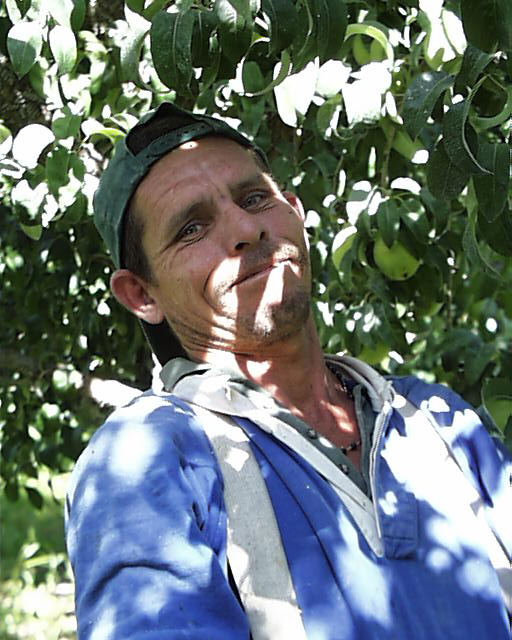
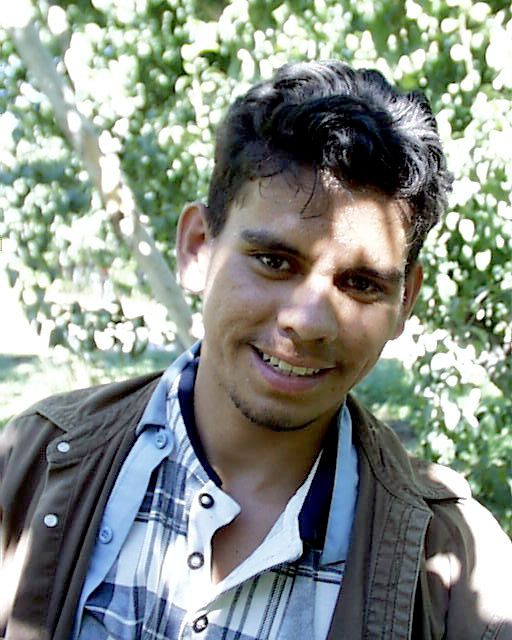
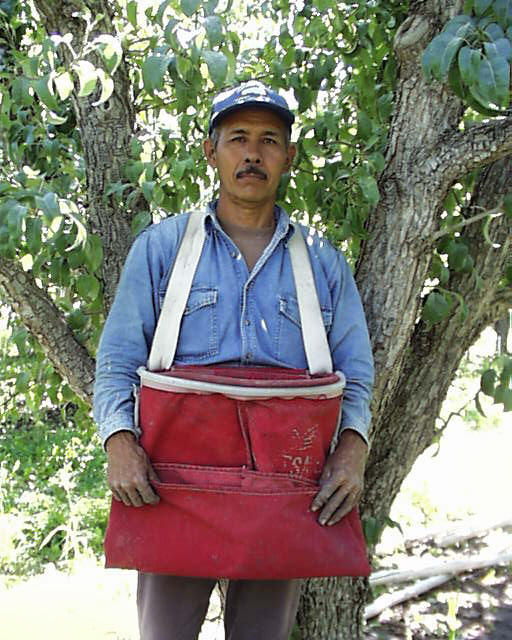
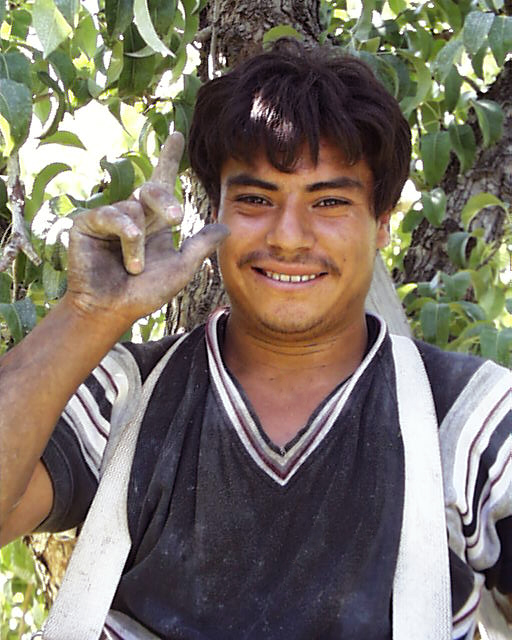
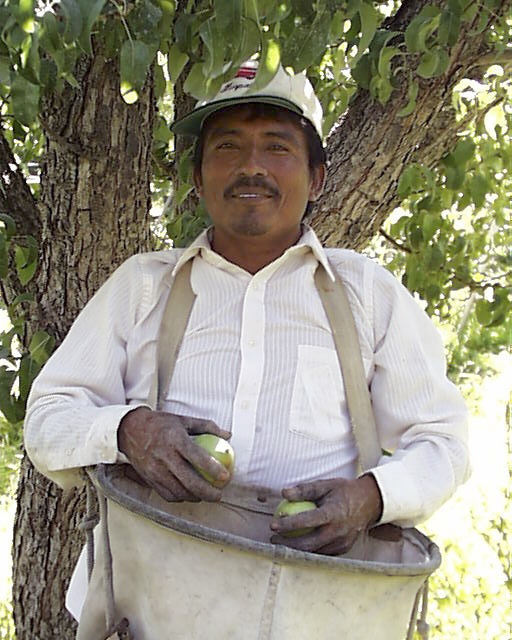
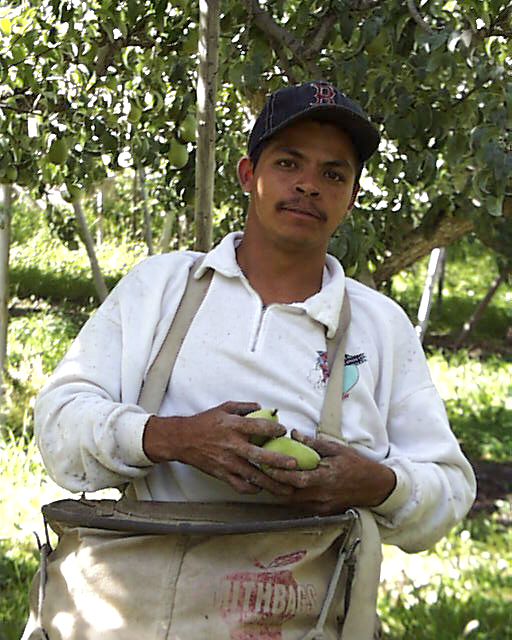
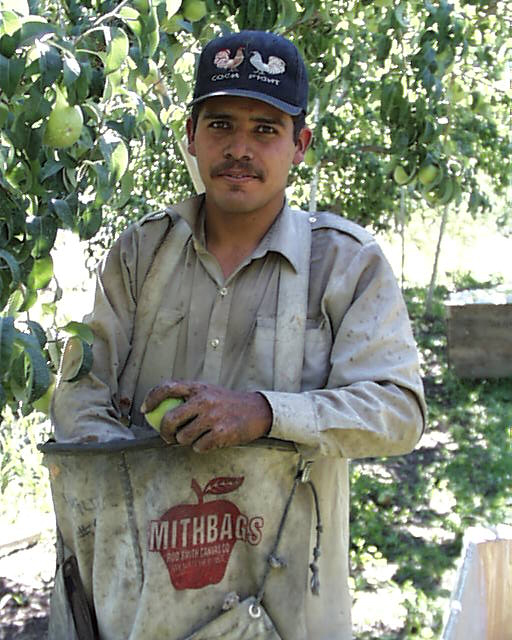
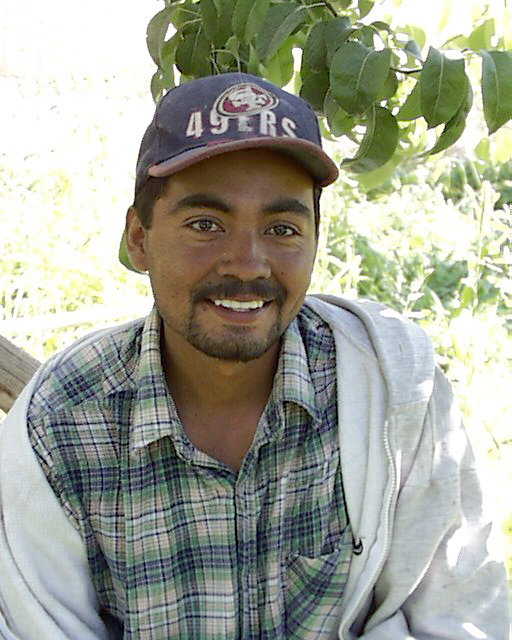
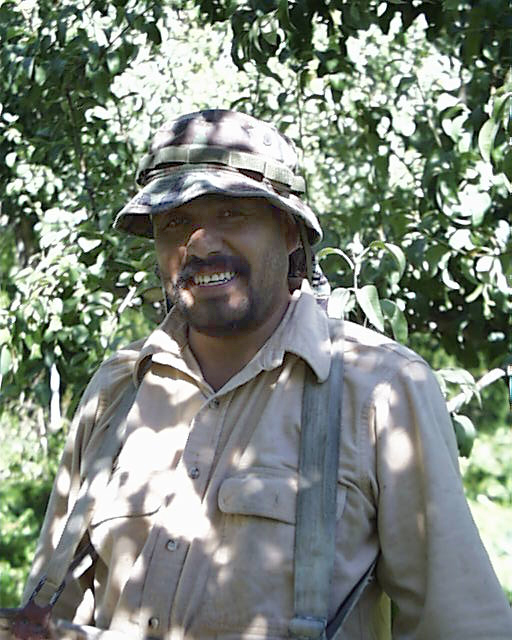
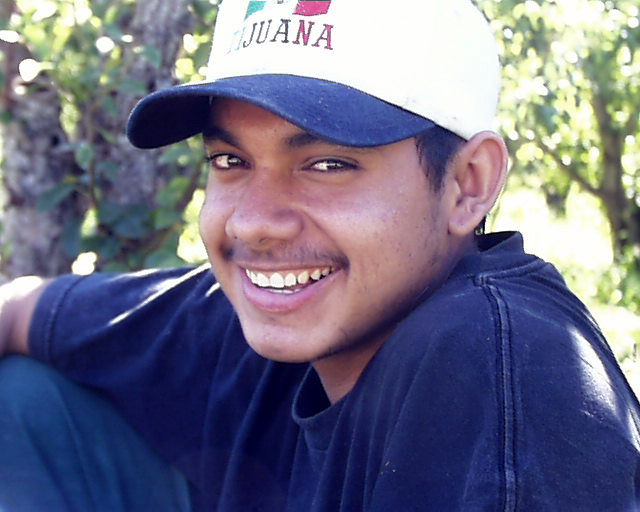
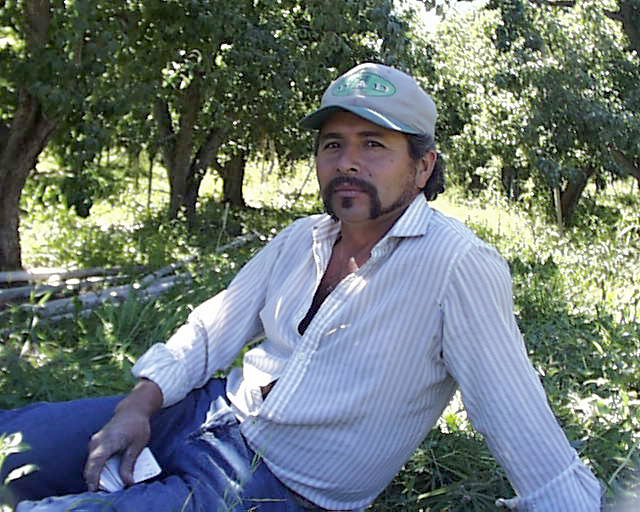
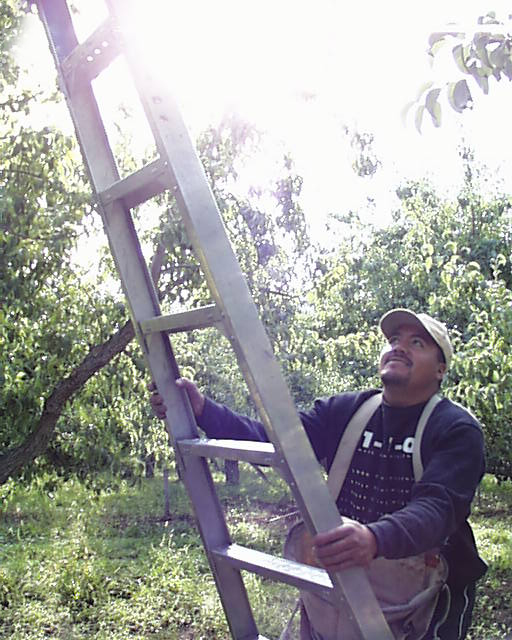
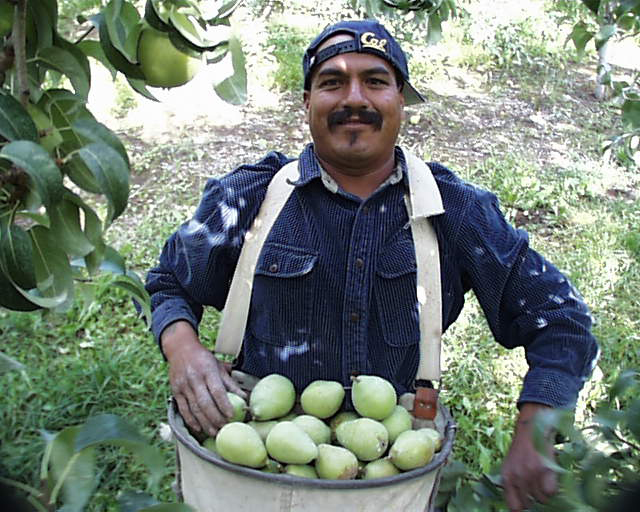
In 1999, at harvest time, I wanted to introduce the individuals that showed up early every day to pick d’Anjou pears, starting on those frosty September mornings, and ending with sweltering afternoons. Each day their hands became caked with chemical residues, sticky insect “honeydew”, aluminum from the ladders, dirt and sweat.
Each full bag of pears hanging from their shoulders weighed 40 pounds, the thick straps criss-crossing their backs. Many of the men bore telltale X-shaped open wounds and scars. It’s damn heavy, hard work, climbing up and down a 10 or 12-foot ladder with a 40-pound weight strapped on front, then leaning over to carefully unload the fruit into the bin. Some men would pick 8,000 to 10,000 pounds a day! For each thousand-pound bin, they earned 8 to 12 bucks depending on the orchardist’s generosity.
Crew Boss and Camaraderie
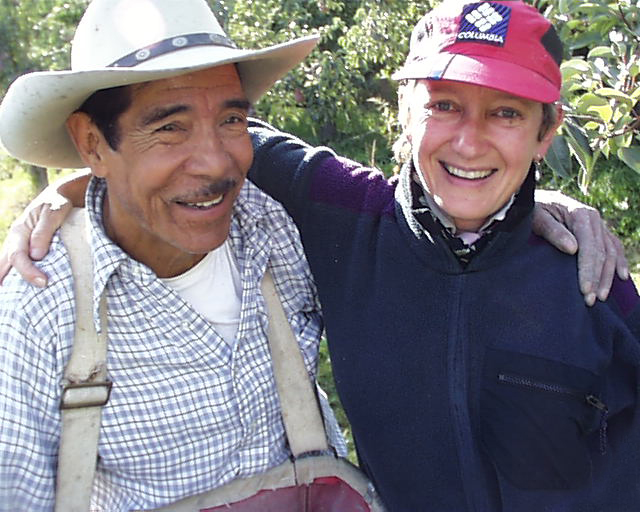
Some years, I ran harvest while my husband was back in Burien, south of Seattle, teaching his Chemistry students. On those chilly mornings, just past sunrise, I’d walk out into the clearing next to the orchard, size up and select from those wanting to work, and tell them that I was the crew boss. “Uh huh, yeah right”… I could see them thinking… almost a jeer.
Because I was fluent in Spanish, I wasn’t an orchardist grunting orders at them. I’d hustle through the orchard, check each man’s work, inspect the fruit and chit-chat as I went. We talked about symphonic music, art, politics, religion, culture… out in the middle of the orchard rows, of all places!
After 10 days of working hard, side-by-side, from early morning into the hot afternoon and sometimes early evening… After they saw me driving tractor, “humpin’ bins” through the orchard rows, and sweating alongside of them, we developed mutual respect and camaraderie. We worked hard together and we laughed hard together.
Introductions
I wanted to introduce the men that worked for us throughout the year, and especially during the intensity of September’s harvest. The orchardists that spoke no Spanish missed out on sharing real character and humanity with those they employed. I wanted to give them dignity by sharing their stories.
I asked the men for several things:
Name, age, birthplace
Length of time in the U.S.
Personal message in Spanish (which I then translated)
I received all or part of what I asked for. One man wanted to respond, but appeared sheepish; he was illiterate. One of his co-workers volunteered and wrote down his story to give to me.
At the time, the internet was still pretty new and quite limited. I told the men that I was going to put their photos and messages online, with the pie-in-the-sky idea that their families back home could see their faces and read their words. As it turned out, just the other side of the mountains from Microsoft, there were no public computers for the men to view their own stories, and their families back home in Mexico and Central America certainly didn’t have computers with internet access.
Postscript
Gathering these stories and images had always been meaningful to me. In light of the focus on immigration we’re (still) seeing today (2021), I wanted to repeat the post from 1999. It offers a brief intro to 15 of the men, (in random order), that I’m proud to have worked so closely with over the years. Their messages were copied from their own handwriting on September 15, 1999.
Read their messages. Some are so profound… some so touching. Armando Rodriguez Castillo “looks like” someone you “wouldn’t want to mess with”, yet read his message! It just about knocked me off my feet when I first read it:
“There is no greater loneliness than that in which there is no God.”
Armando’s written message was a lesson against stereotyping.
I look at these photos now, at the beginning of 2021, and realize that these men are now 21 years older. Where are they now? Eligio was 17 years old; he’s 38 now! And Baldo was 59; he’d be 80 now. I hope they are well.
(Only in the first two years of my involvement with the farm did we have even a couple of non-Latinos show up wanting to pick pears. And it was only once or twice that a woman showed up with her husband so they could pick together. Thus, I am introducing all Latino men.)
CLICK EACH PHOTO TO ENLARGE IT.
Armando Ruiz Tovar
38 Years Old. Born in Uruapan, Michoacan, Mexico. 1 Year in the United States.
“Con mucho carino. Escribo estas cuantas palabras para mi esposa, y hijos deciandoles lo mejor del mundo. Por que de casado tengo 16 anos y pienso de lo agusto que bibo como que fue ayer cuando me case.
“Con mucho carino para todos mis hijos que se llaman Rocio, Francisco, Rubi, Claudia y Irene. Mi esposa Estela Gomez C. y Armando Ruiz Tovar y Famila.”
“With much affection, I write these few words for my wife and kids telling them the best of the world. I’ve been married 16 years and I think of that August like it was yesterday that I got married.
“With much affection for my children named Rocio, Francisco, Rubi, Claudia and Irene. My wife Estela Gomez C. Armando Ruiz Tovar Y Familia”
Donato Campos Cisneros
18 Years Old. Born in El Tibor, Guerrero, Mexico. 1 Year in the United States.
“Quiero mandarles un mensaje a mi familiares especialmente a mi mama y a mis hermanos. Les quiere decir que no me he olvidado de ustedes que aunque este muy lejos, yo aqui los recuerdo todos los dias, y que yo aqui me encuentro muy bien echandole muchas ganas al trabajo y a la Escuela que me enscibi para aprender Ingles para cuanda vaya yo para alla para que digan que si lleve algode aqui.
“Y para todos mis amigos muchos saludos, y tambien le doy las gracias a la persona que me dio la oportunidad de poner este mensaje. No les digo Adios si no hasta pronto.Gracias.”
“I want to send a message to my family, especially to my mom and my brothers and sisters. I want to tell them that I haven’t forgotten them even though I’m far away, and I remember them every day while I’m here, and I’m doing well here and putting aside a lot of fun for work and school where I’m learning English.
“Greetings to all my friends, and also thank you to the person that gave me the opportunity to write this message. I’m not saying ‘goodbye’ to everyone but very soon ‘thank you’.”
Isidoro Sanchez Oregon
52 Years Old. Born in Guerrero, Mexico. 3 Years in the United States.
“De parte de Isidoro Sanchez y de sus hijos que se encuentran alla en Washington, les mandan saludos a la Senora Alejandrina Vivera que se encuentra en Zihuatanejo, Guerrero y sus hijas y familia. Esperamos que se encuentren bien.
“Bueno, nosotros estamos aca echandoles ganas a la chamba y esperamos ir pronto para alla si dios quiere.
“Bueno, nos despedimos de ustedes y portense bien. Saludos a toda la familia Sanchez Rivera.”
“From Isidoro Sanchez and his sons here in Washington, we send greetings to Mrs. Alejandrina Vivera who is in Zihuatanejo, Guerrero, and her daughters and family. We hope you’re well.
“We’re here putting aside our pleasures, and we hope to go (home) soon if God is willing.
“Well, we bid you farewell and be well. Greetings to all the Sanchez Rivera Family.”
Francisco Gomez Castillo
22 Years Old. Born in Agililla, Michoacan, Mexico.
“Este es un mensaje de Francisco, i dino alas drogas por que el que anda en las drogas anda en mal camino i todo el tiempo va a vivir escondido de los demas. Este es un caso de la vida real atontamente el charro.”
“This is a message from Francisco against drugs because he who is on drugs is on a bad path and all the time he will live hidden from others. This is a case of the foolishly lived life.”
Abraham Moreno
42 Years Old. Born in Guerrero, Mexico. 3 Years in the United States.
“Que todas las familias del mundo permanescan siempre unidos y en especial las familias mexicanas y se acabe la violensia. Familiar saludos a la familia Barrios Calderon,a la familia Onofre Garcia, Bridgeport, WA.”
“That all the families of the world remain forever united and especially Mexican families, and that violence would end. Greetings to the Barrios Calderon Family and to the Onofre Garcia family in Bridgeport, WA.”
Ernesto Proa
26 Years Old. Born in Guadalajara, Jalisco, Mexico. 2 Years in the United States.
“Hola. La vida es bonita aunque hay momentos en que nos sentimos que no nos comprende nadien. Siempre hay solucion. Nunca busque la puerta falsa. Sigue adelante y lucha por alcansar tus metos. Sonrie y se felix.”
“Hi. Life is beautiful even though there are moments when we feel we don’t understand anyone. There’s always a solution. Never look for the false door. Continue ahead and struggle to overcome your diffuculties. Smile and be happy.”
Anastacio Nuñez Rosales
21 Years Old. Born in Zacateca, Mexico. 3 Years in the United States.
“A toda mi familia, mis amigos, mis abuelitas, a mis primos, saludo desde aqui para todos desde aqui miren como esta aqui trabajando en las peras.”
“To all my family, my friends, to my grandmothers, my cousins, greetings from here. To all, from here, see how it is here working in the pears.”
Manuel Olivares Gonzalez
24 Years Old.
Armando Rodriguez Castillo
28 Years Old. Born in Salamanca, Guanajuato, Mexico. 7 Years in the United States.
“No hay peor soledad que aquella donde Dios no esta.”
“There is no greater loneliness than that in which there is no God.”
Eligio Torres Blanco
17 Years Old
Baldomero “Baldo” Valdovinos
59 Years Old. Born in El Tibor, Mexico. 10 Years in the United States.
“Un mensaje a todos mis amigos que me vean piscando pera en la huerta de mi patrona Maria y el patron Arturo y principalmente a todos mis amigos de mi rancho, El Tibor y a toda mi familia que me vea.
“Y es todo lo que les dice, su amigo, Baldomero.”
“A message to all my friends that see me picking pears in the orchard of my bosses ‘Maria’ and ‘Arturo’ and principally to all my friends at home in El Tibor and to all my family that sees me.
“And that’s all I say to you, your friend, Baldomero.”
Jose Suazo
39 Years Old.
Luis Alonso Barrera
43 Years Old. Born in El Salvador. 12 Years in the United States.
Sergio Rodriguez Mendoza
24 Years Old.
Efrain Mendoza Romero
32 Years Old. Born in Michoacan, Mexico. 15 Years in the United States.
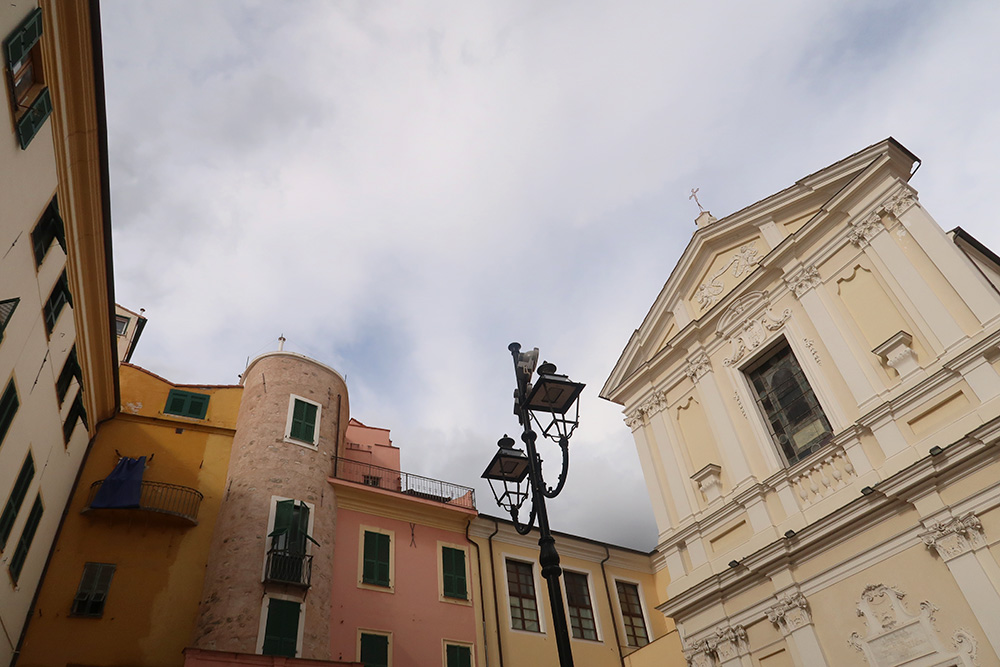
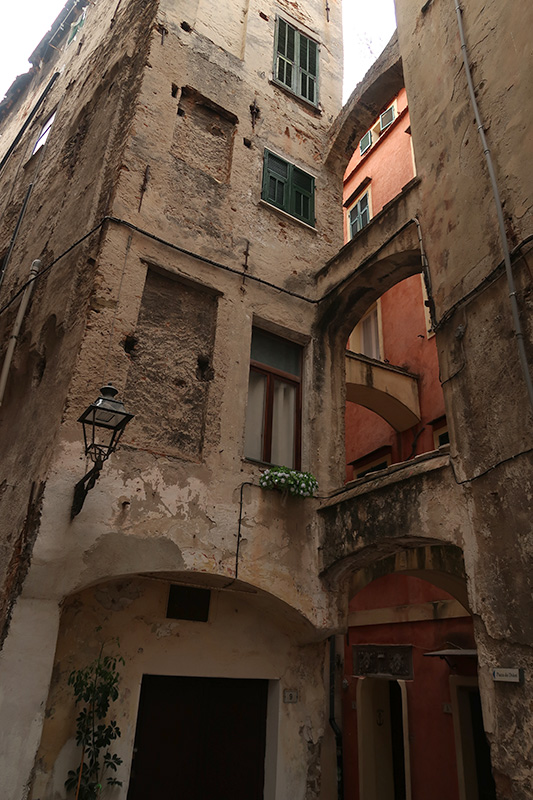
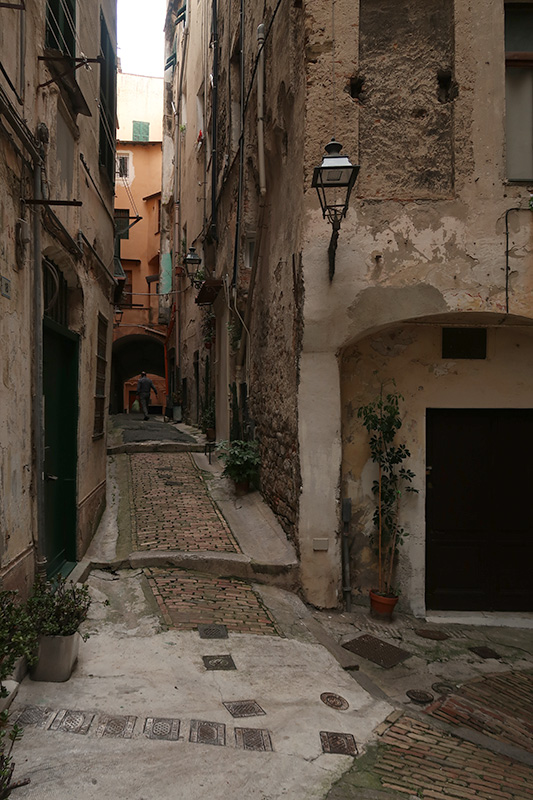
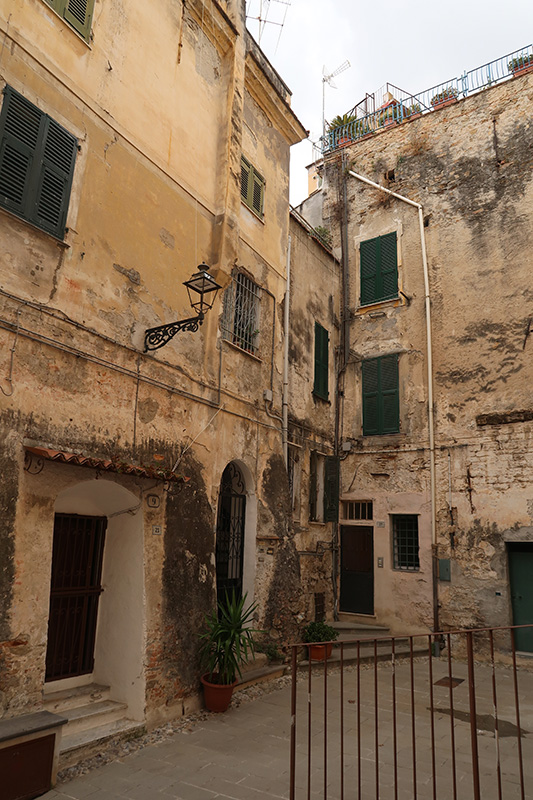
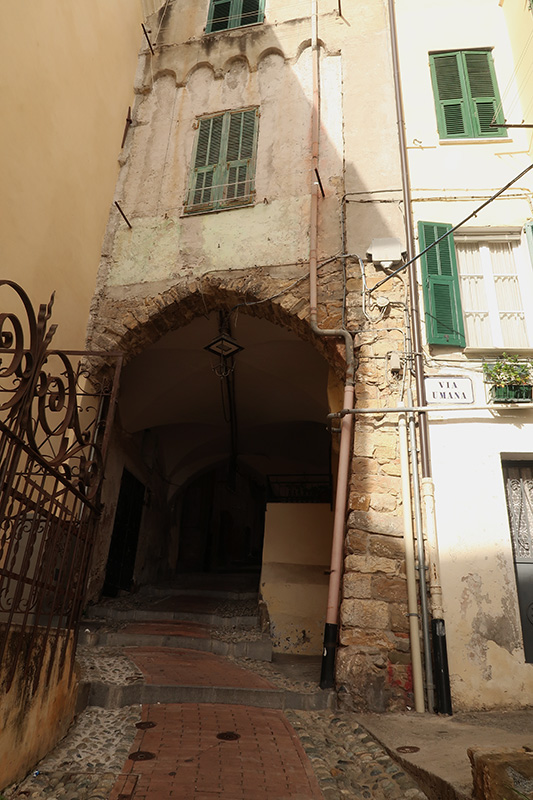
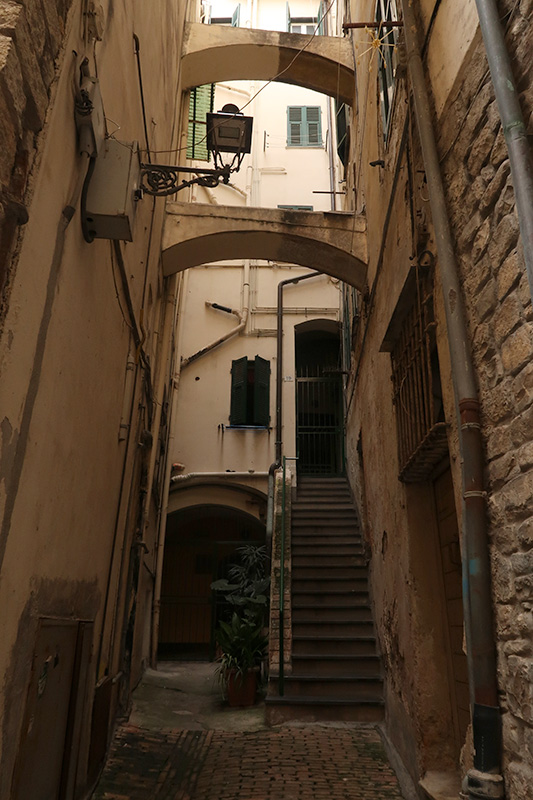
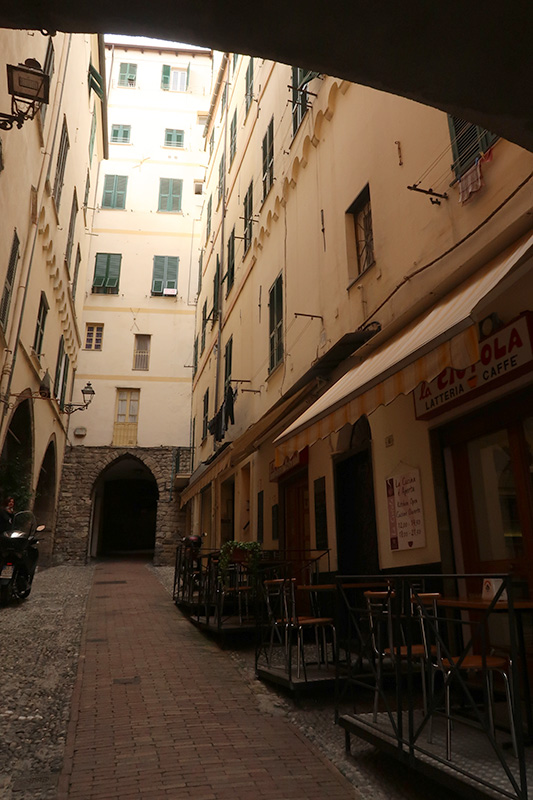
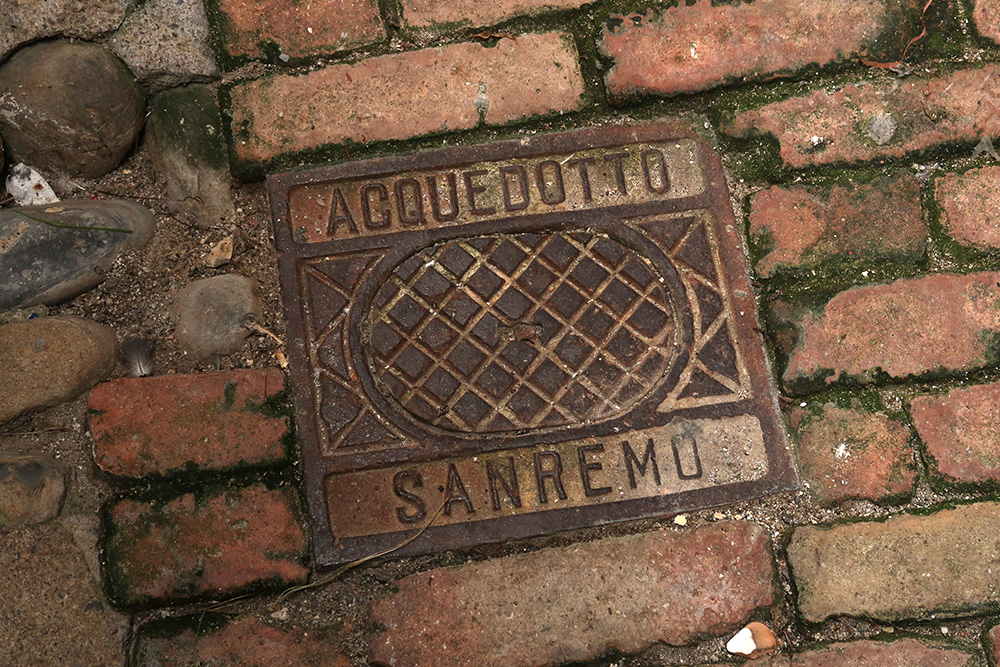
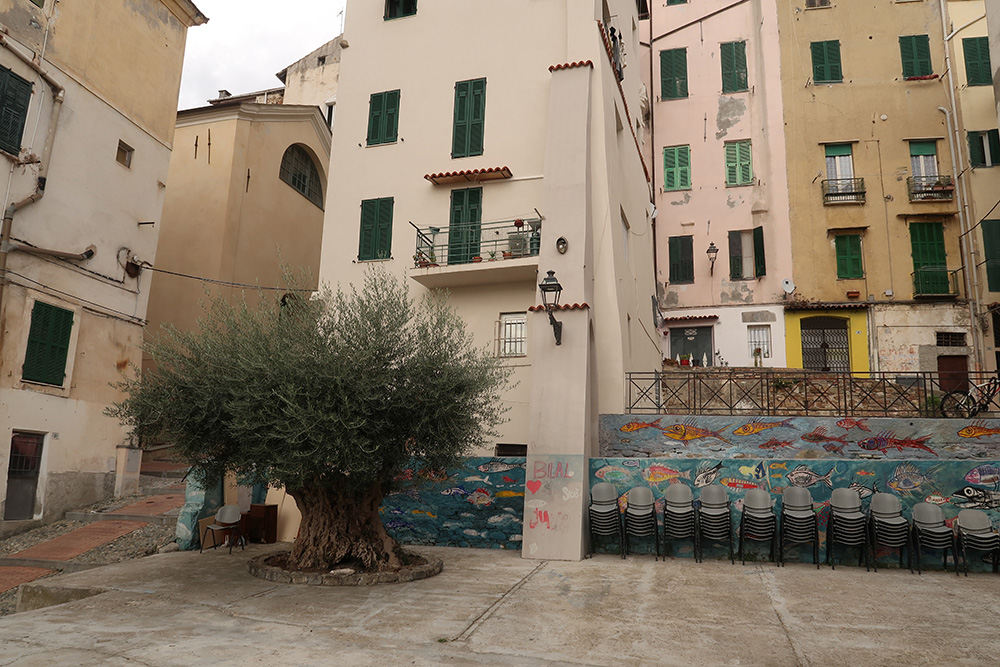
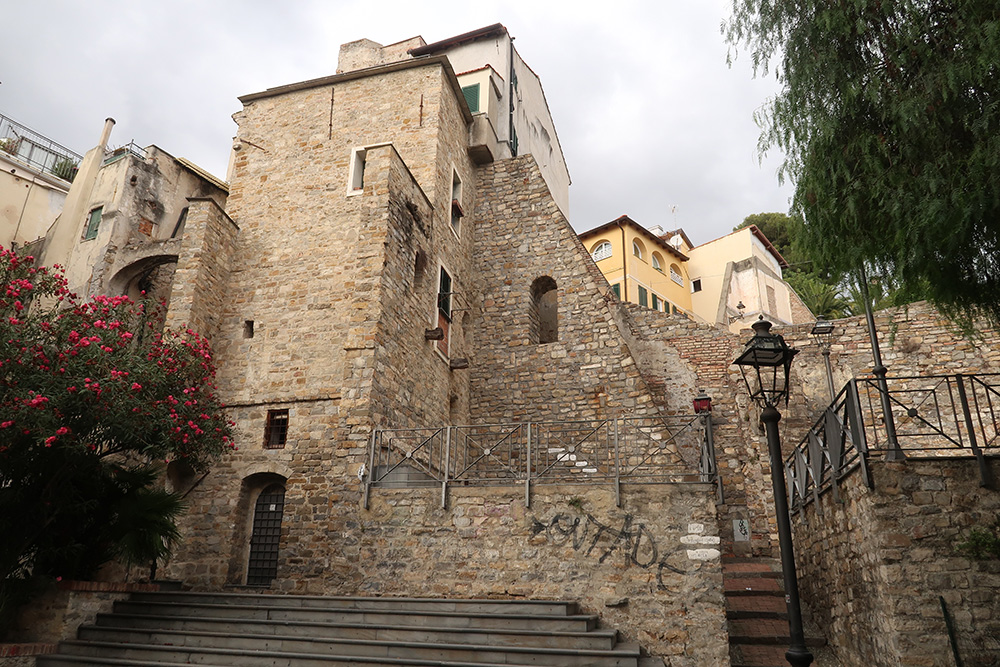
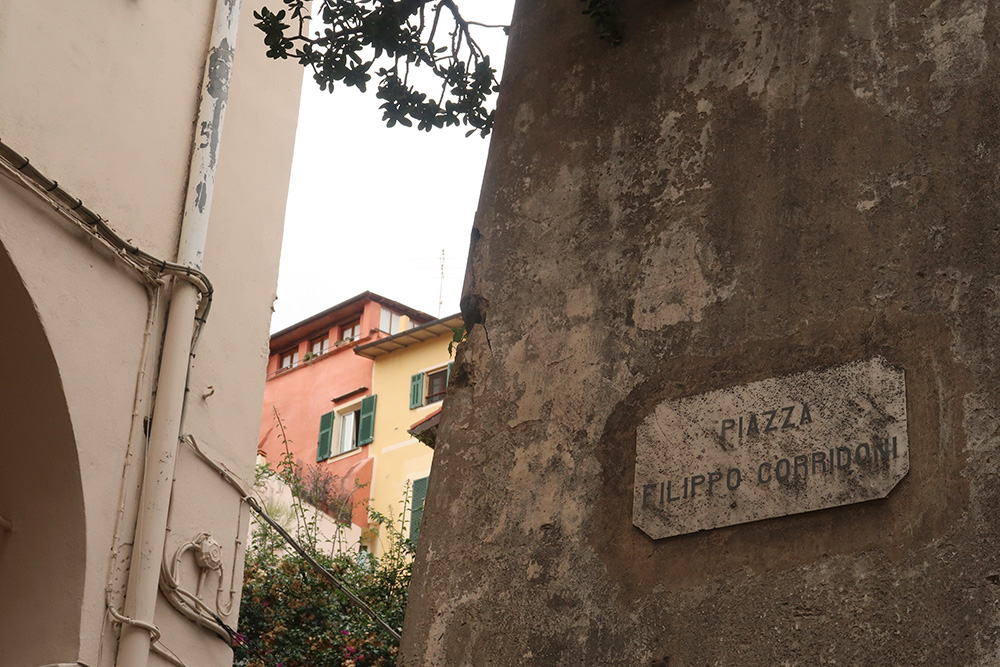
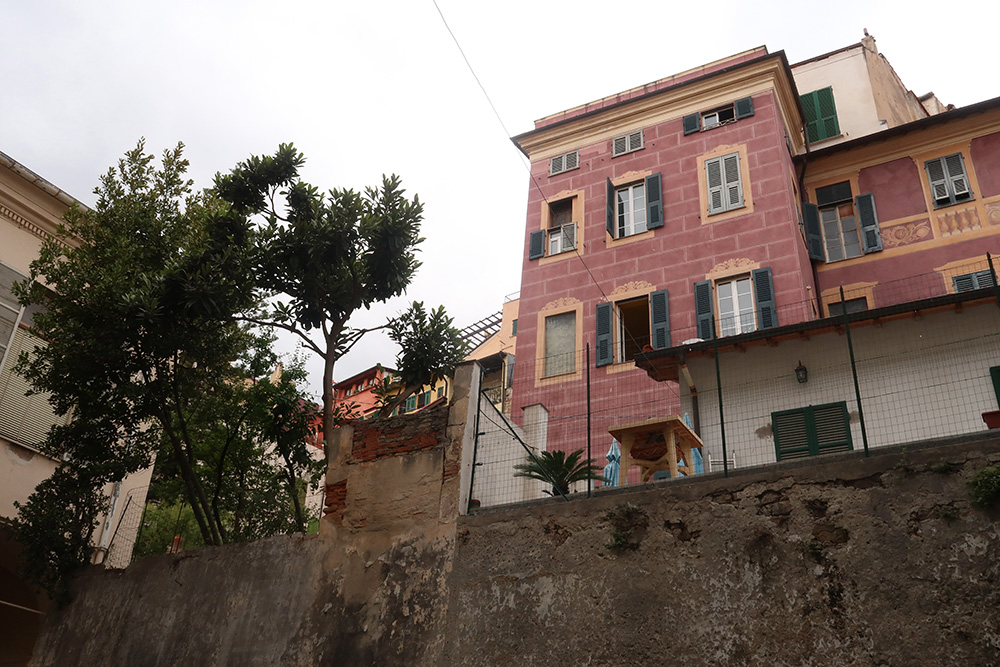
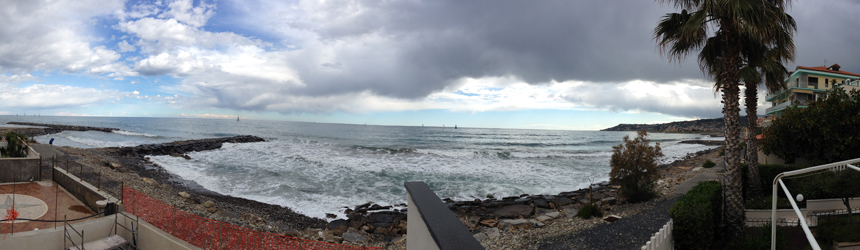
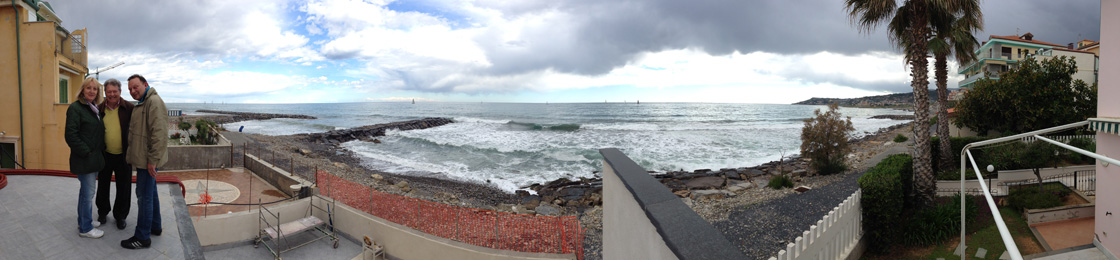
Sanremo. In the far, far northwest along the Italian Riviera, in the region of Liguria, roughly a 20 km stone’s throw from the border with France. Only about 42 km from Monaco. There are palm trees, blue skies, a beachside promenade and bike path, a large casino, a Saturday market that draws foreigners, and traffic that would make anyone swear off driving.
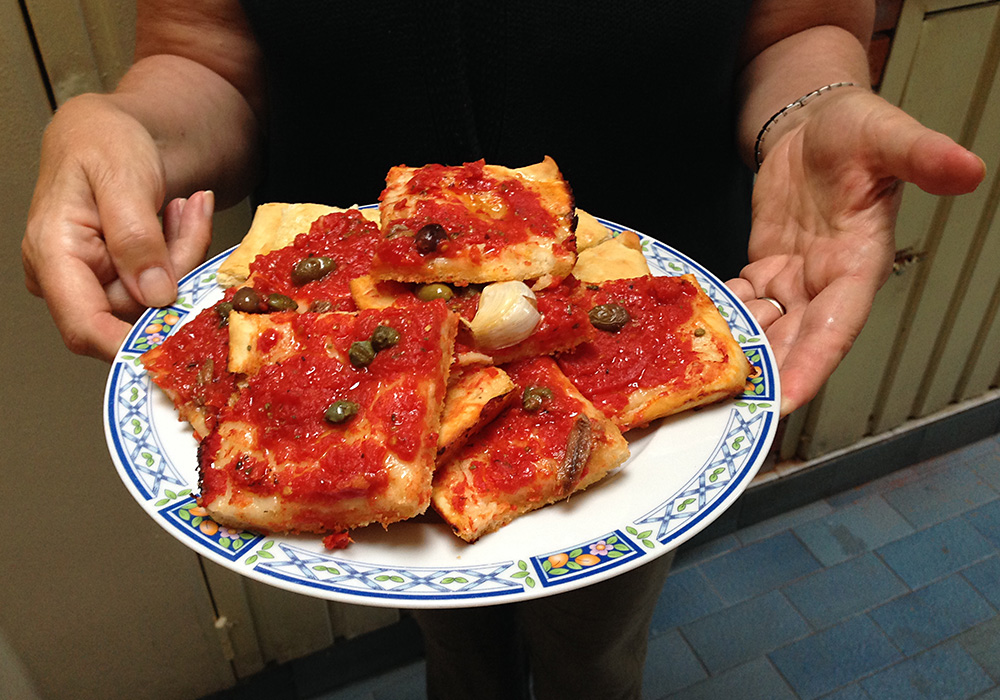
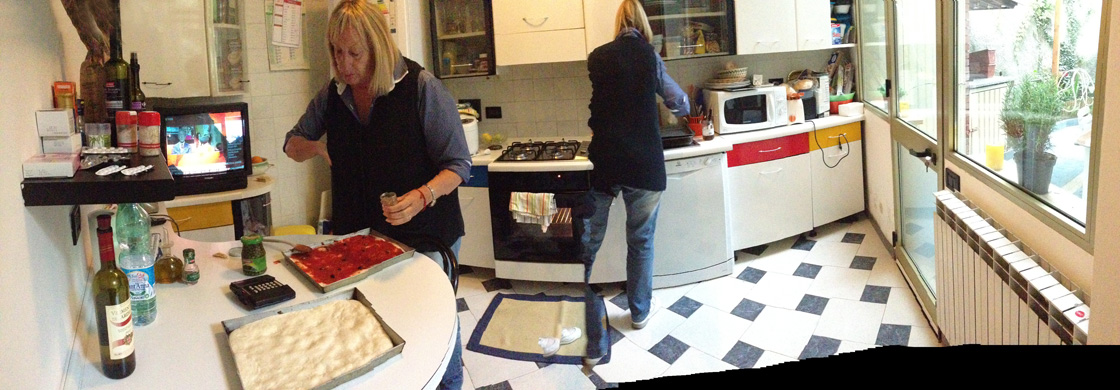
There’s also Sandra, my landlady when I lived here from 2009 – 2010… and our friendship. When I first met her, I had been here in Italy only a couple of months and could speak very little Italian. But I’m sure she was thrilled to be renting to a “mature woman” instead of rowdy students. She invited me to visit them at their home… and I’ve returned every year since then. I travel there with my apron, and we chat while we scrub mussels and clams for spaghetti, or she makes Sardenara—typical Ligurian focaccia topped with tomato sauce, anchovies, taggiasche olives and garlic cloves.
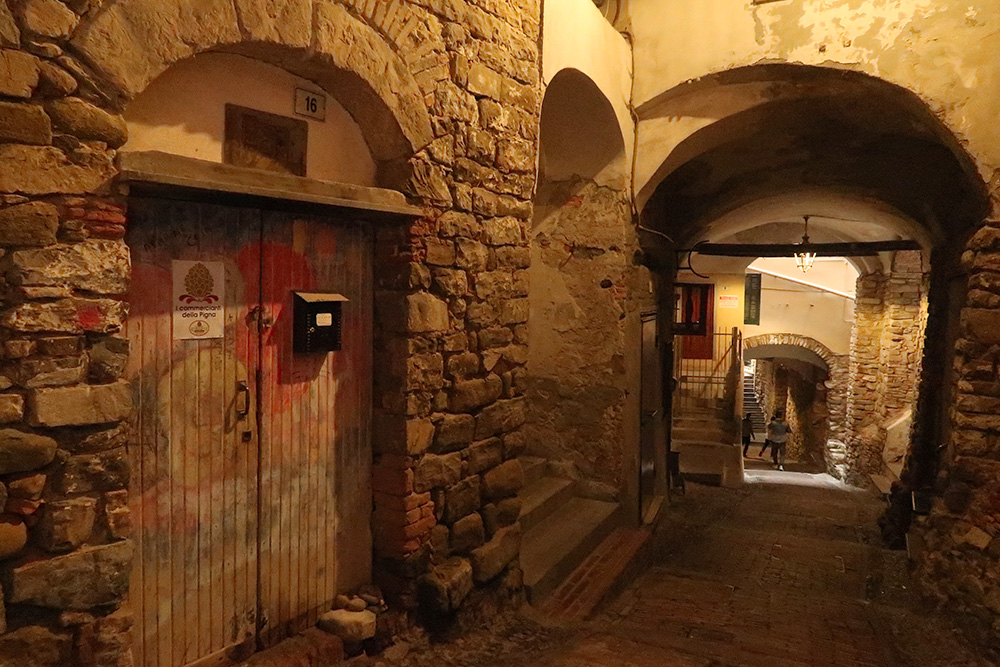
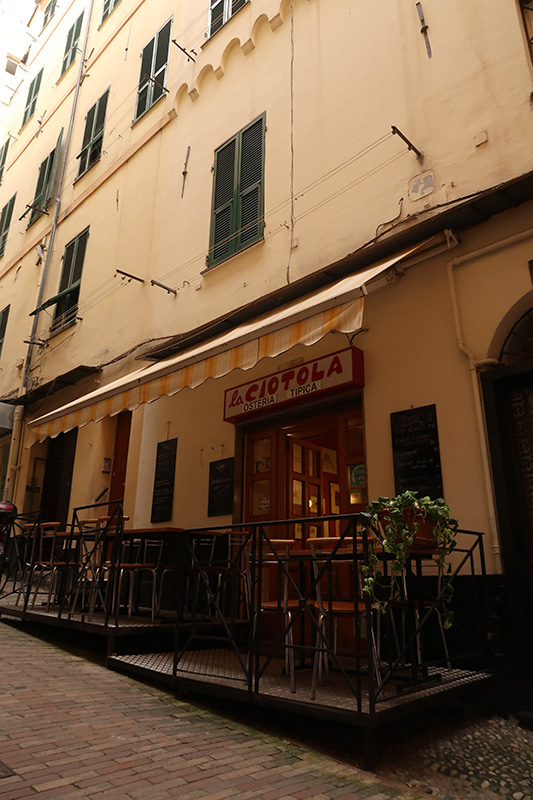
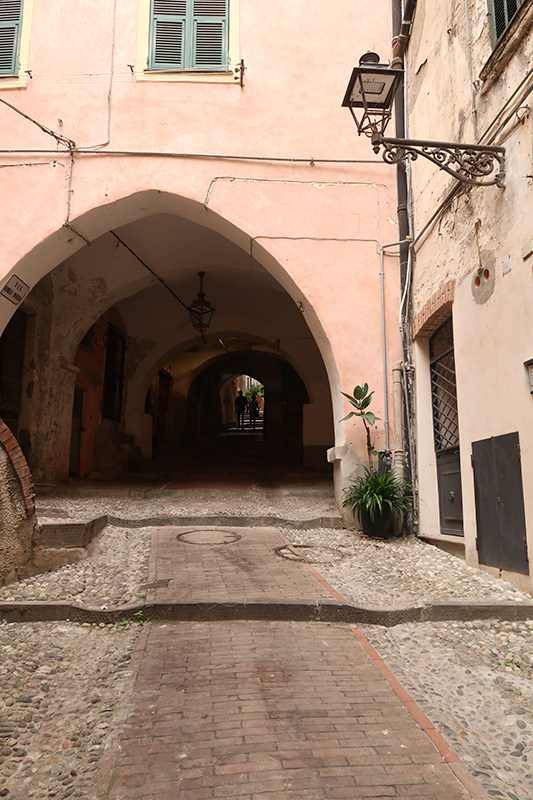
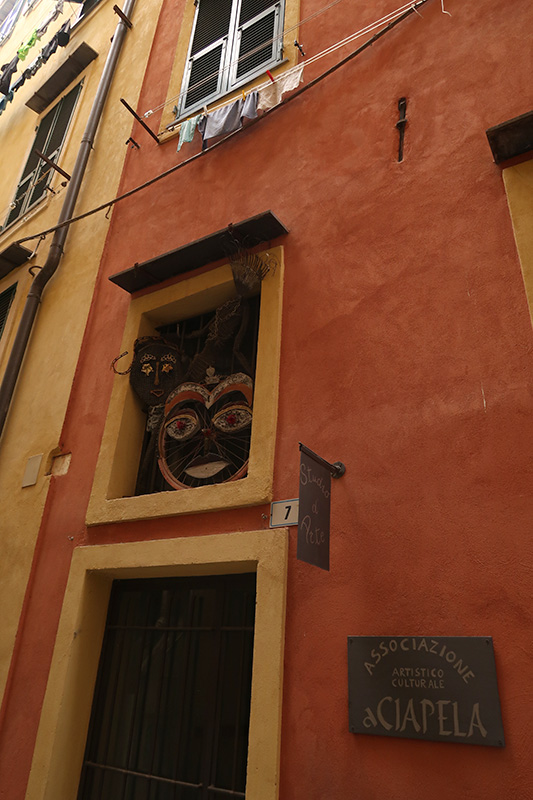
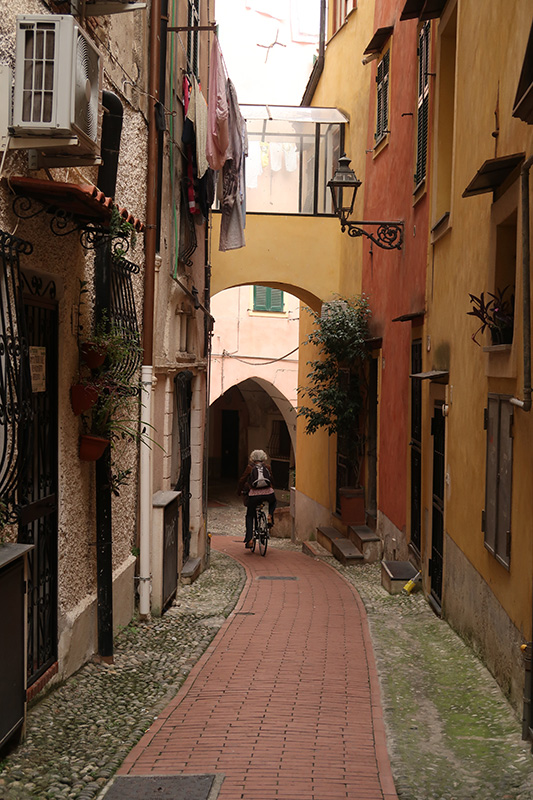
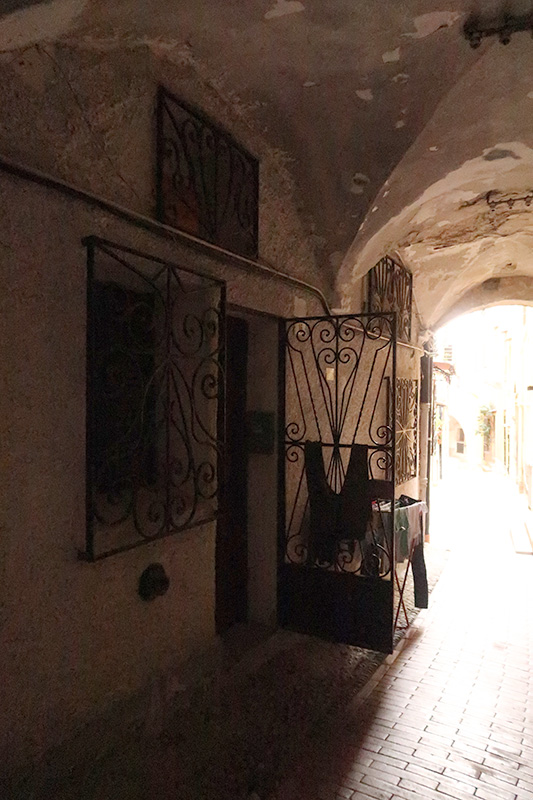
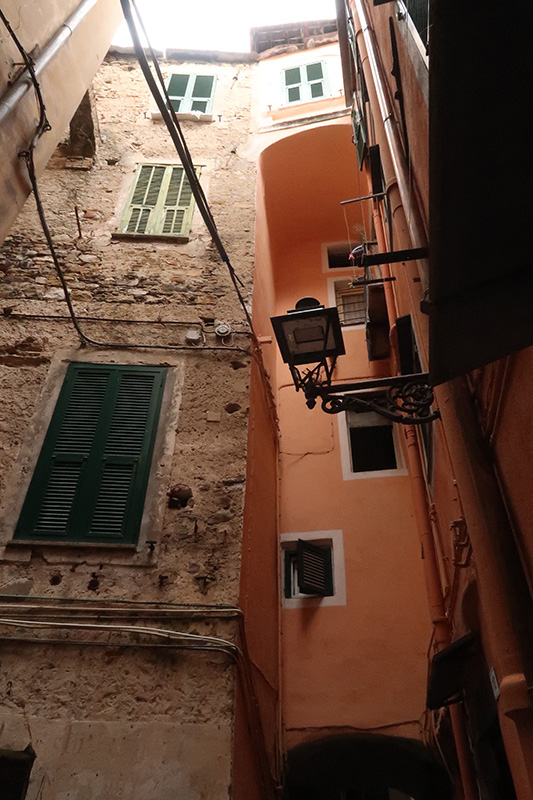
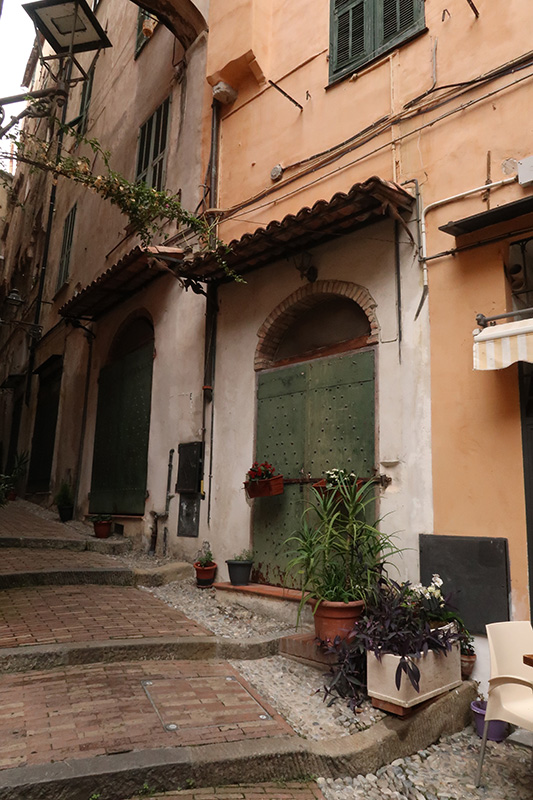
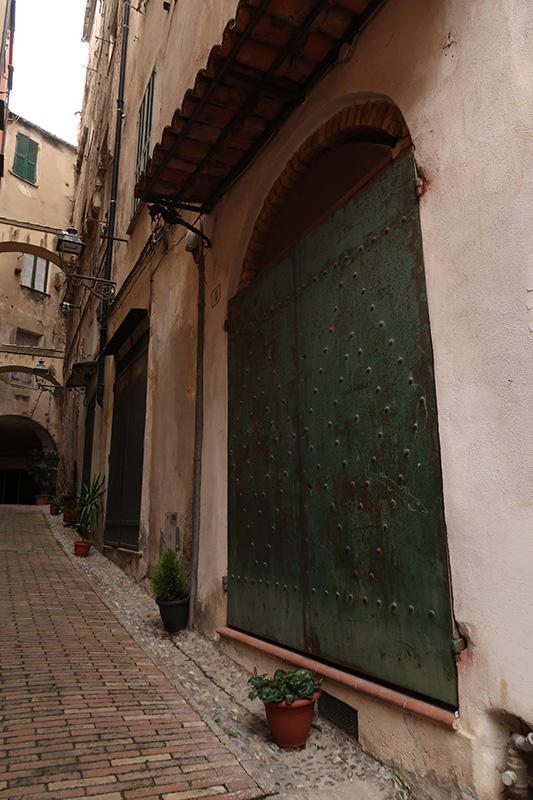
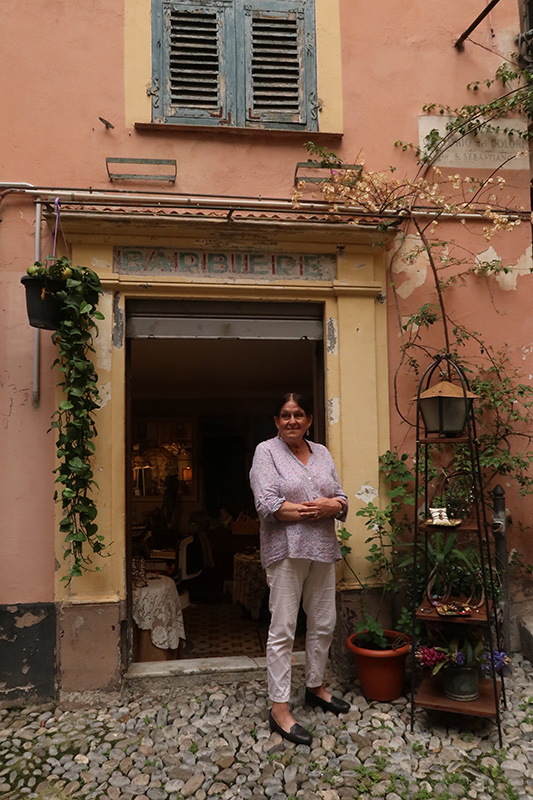
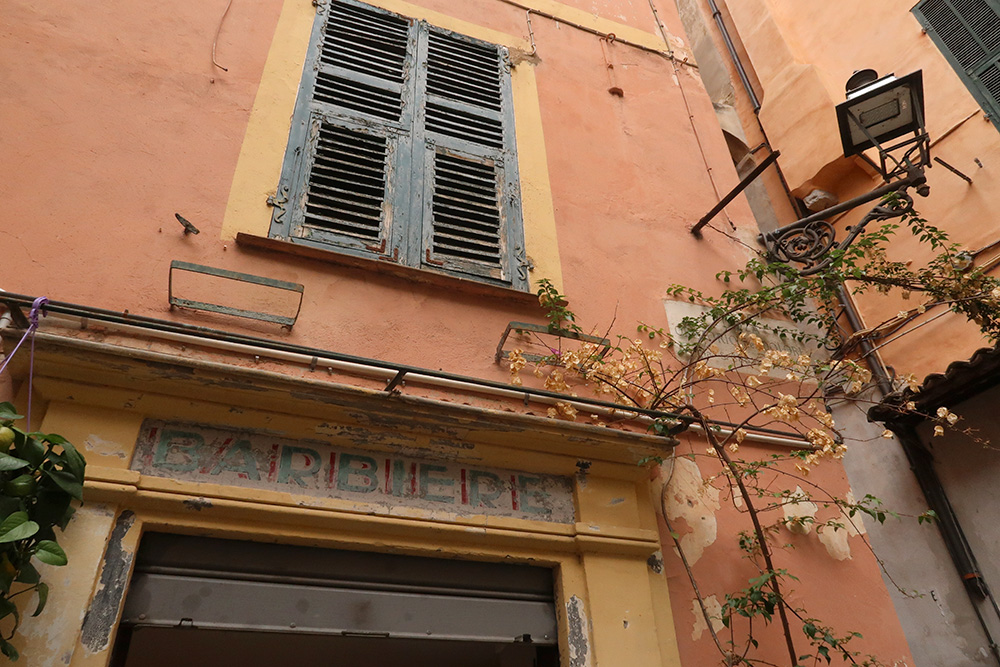
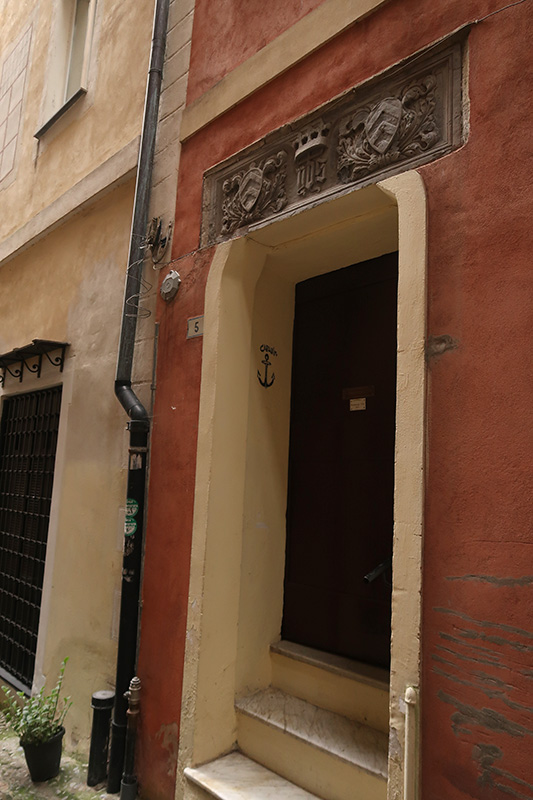
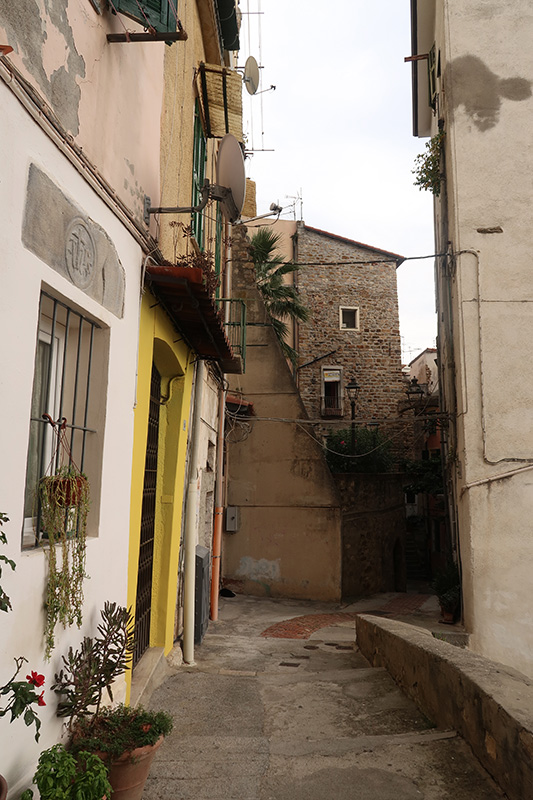
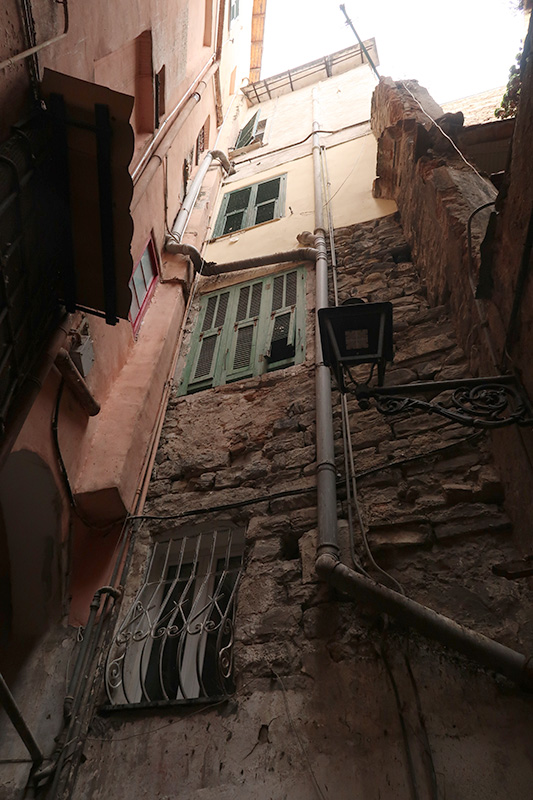
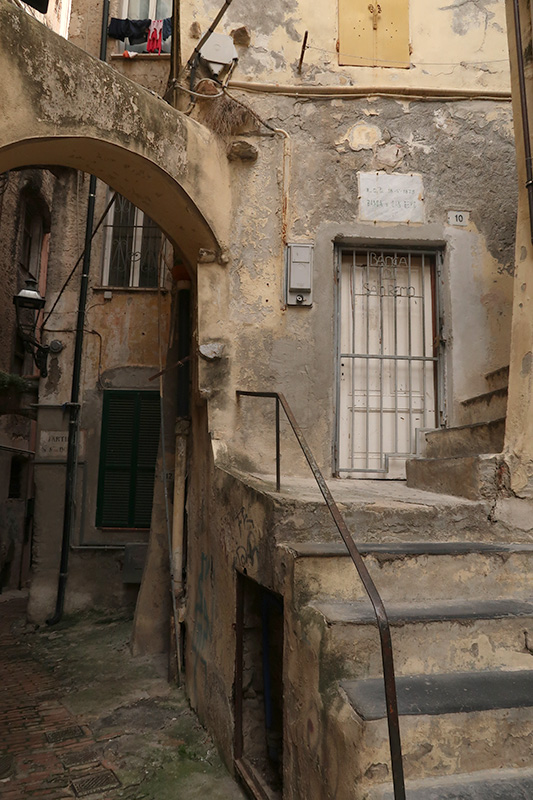
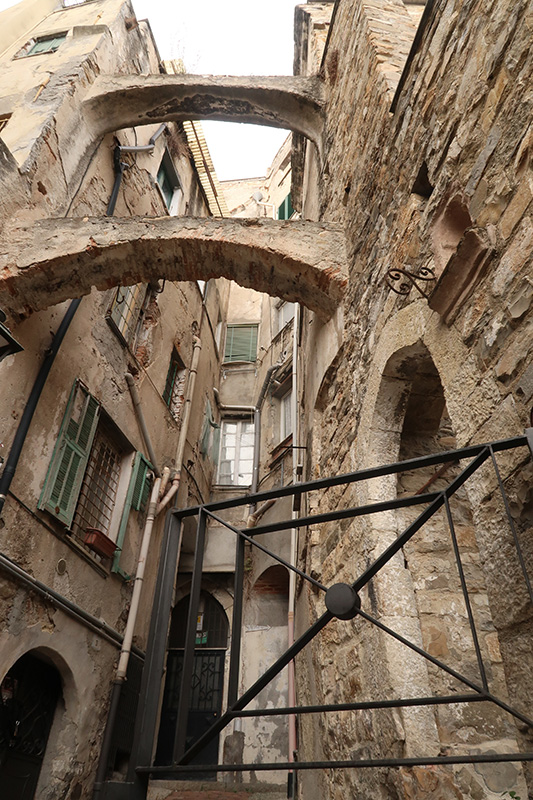
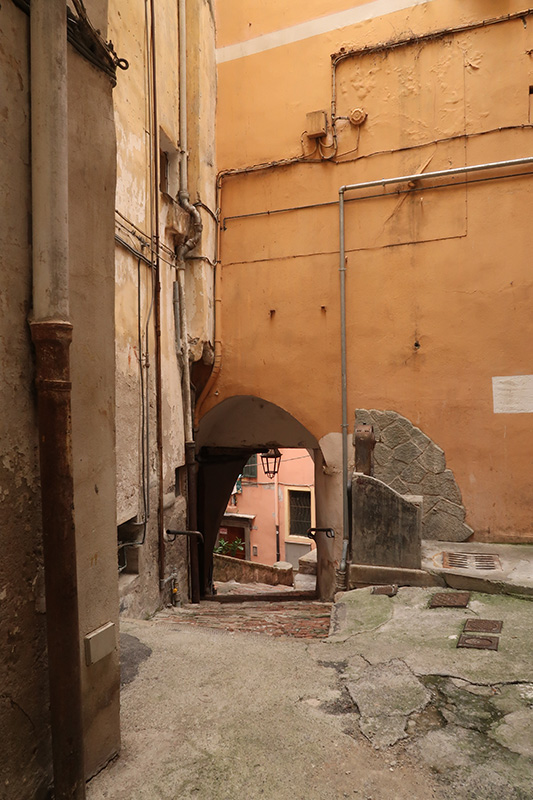
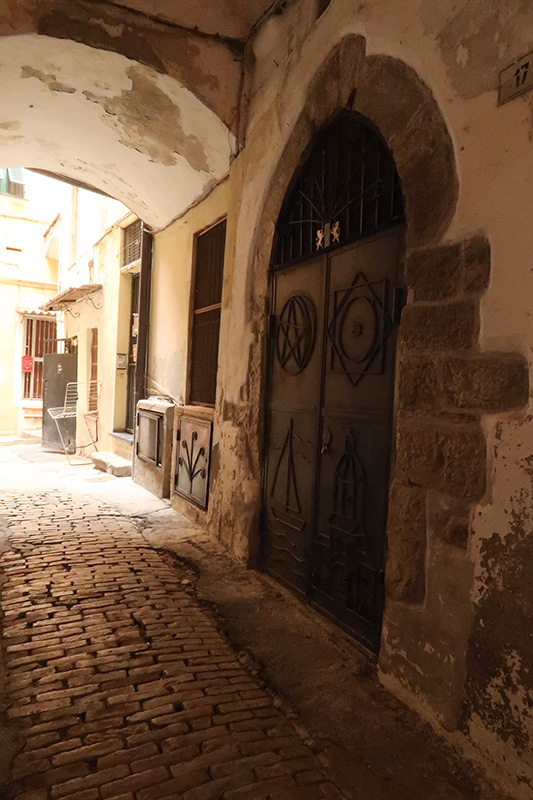
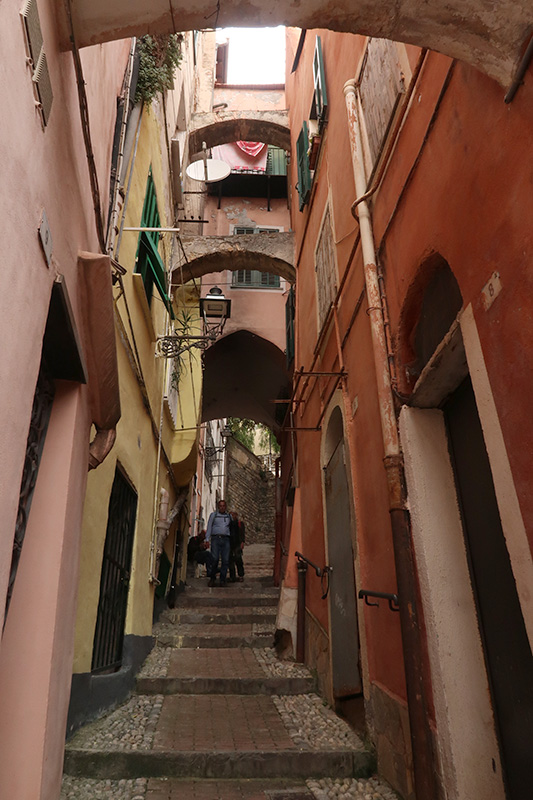
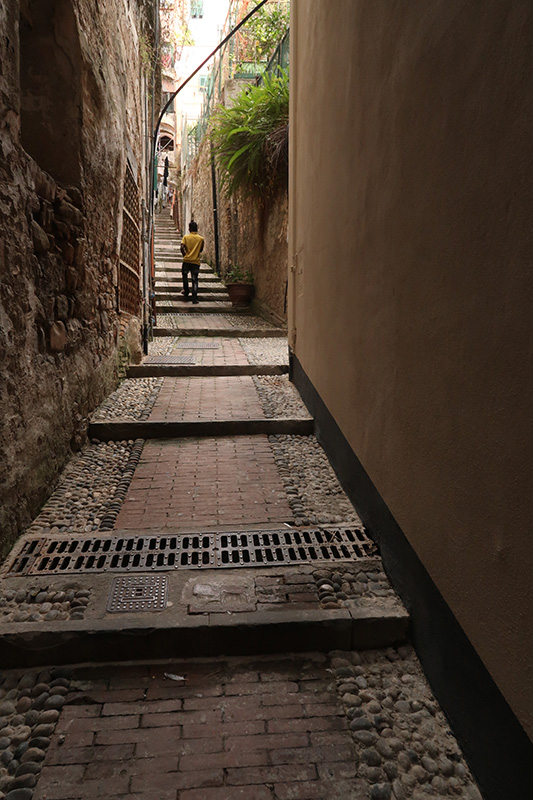
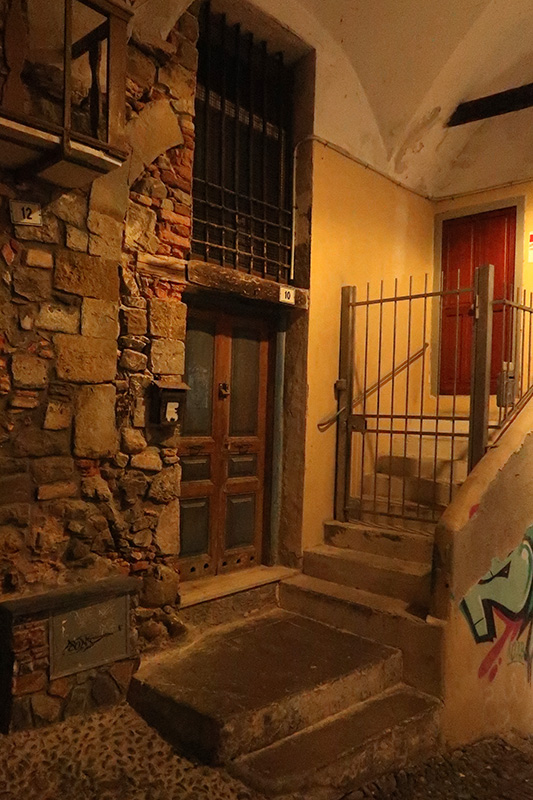
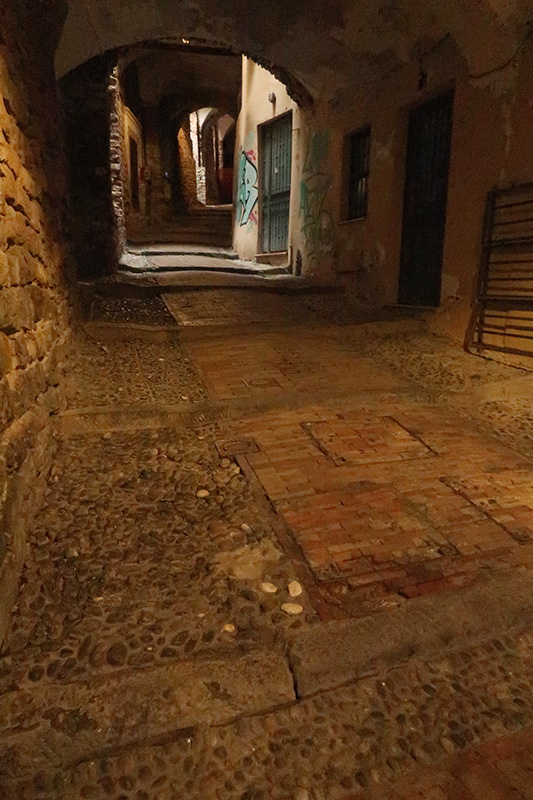
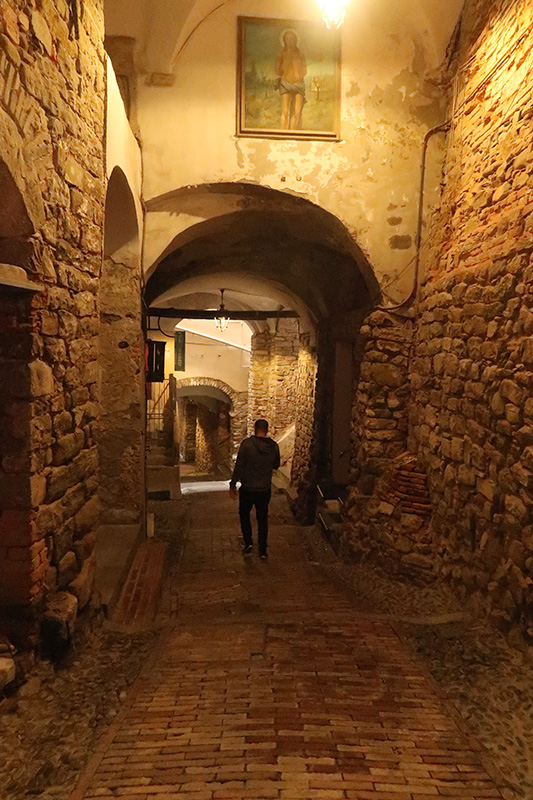
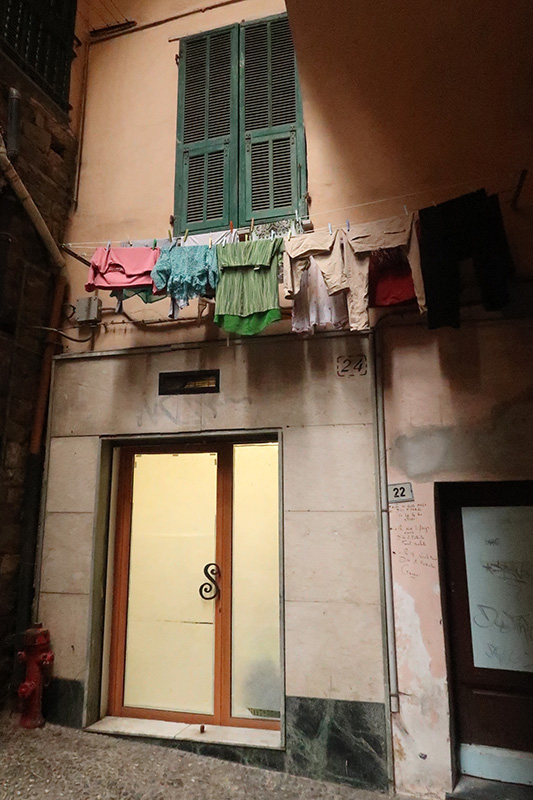
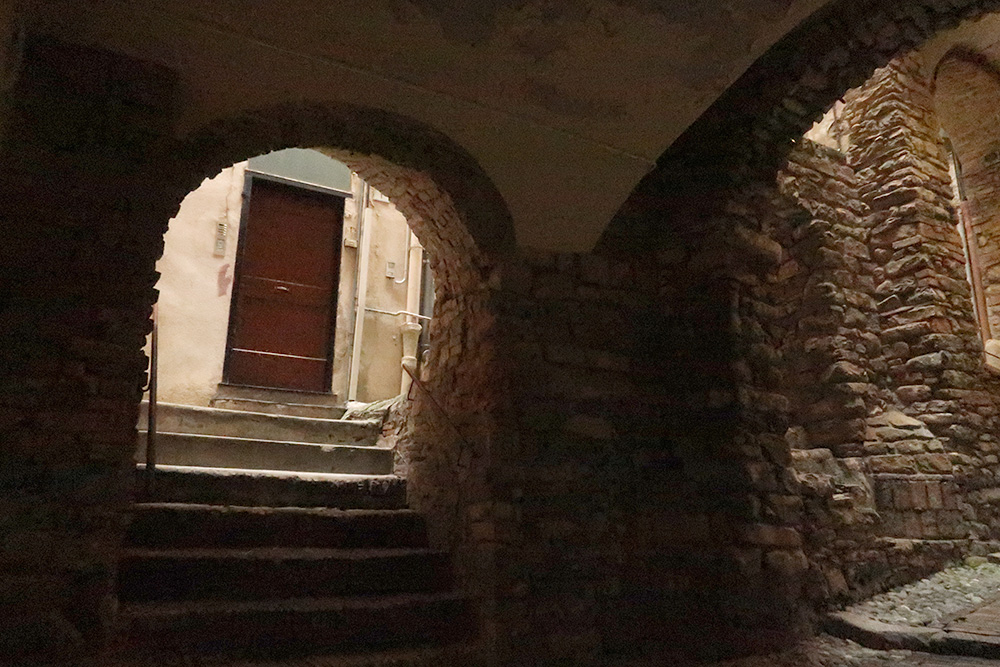
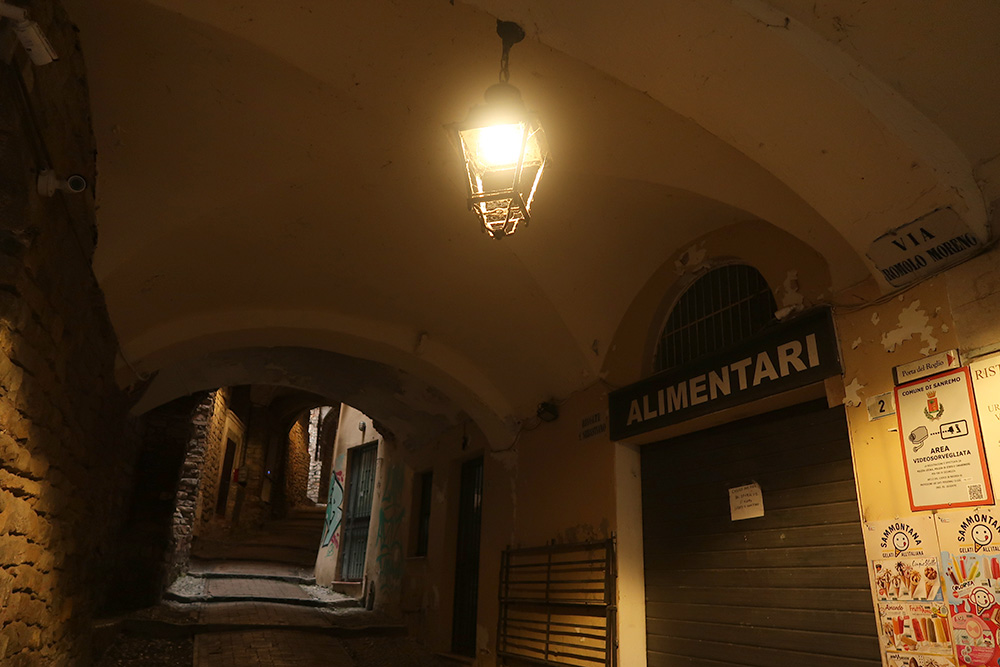
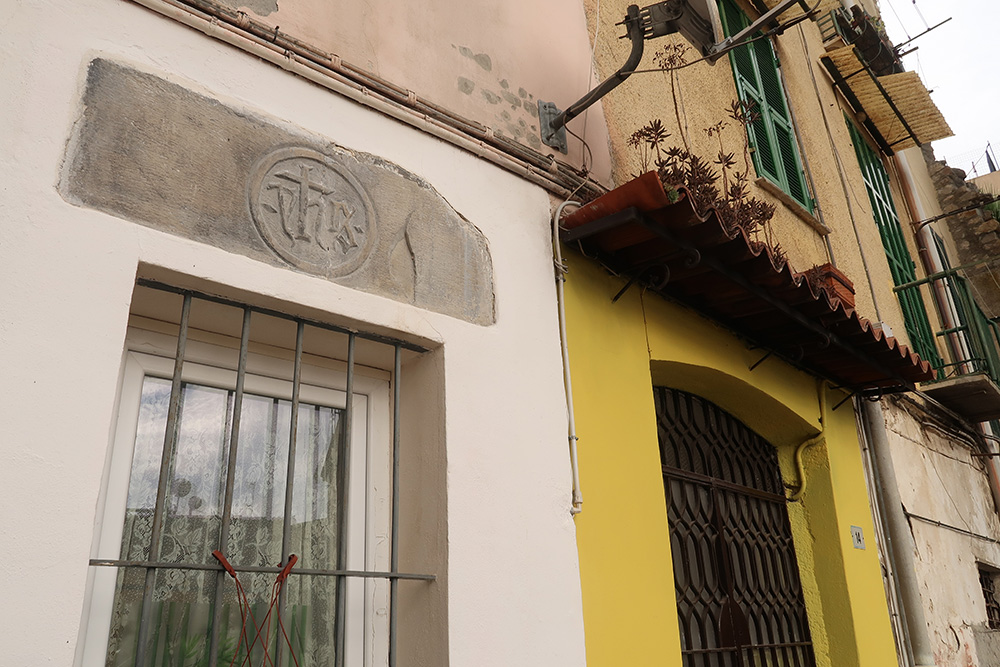
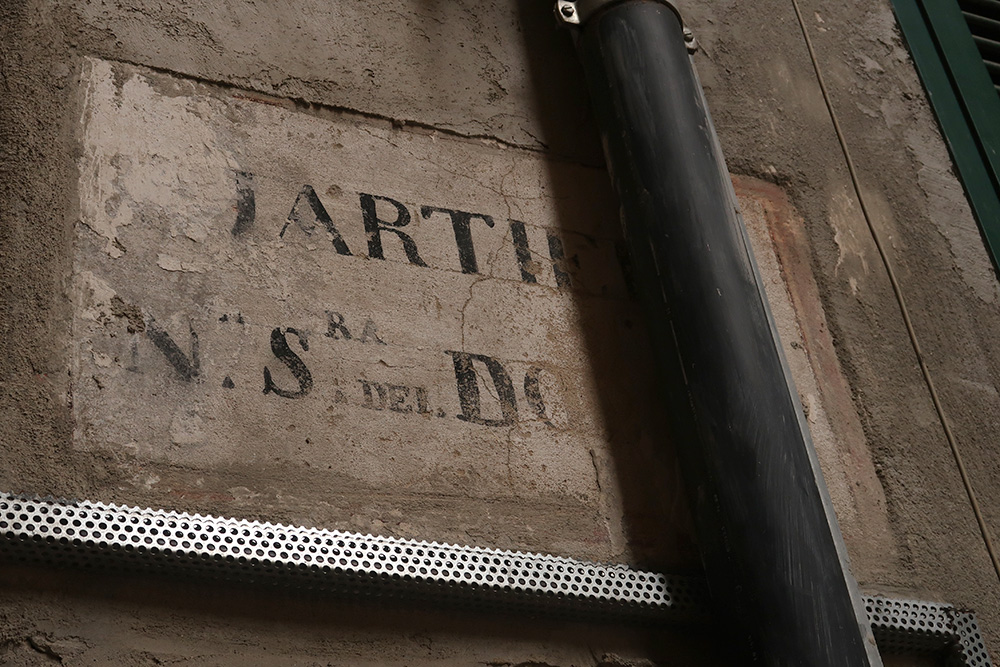
A few years ago, Sandra told me about “La Pigna”–PEEN-yuh–and dropped me off there to shoot photos while she went to an appointment. Wow. I wandered and gladly crisscrossed the rabbit warren maze of narrow passageways, tunnels, arches and tiny courtyards. I was amused and pleased to see elders as they scaled the upward sloping, irregular, stepped paths. They must know every path’s intersection. The place was fascinating.
Founded around the year one thousand, Sanremo Vecchia is called La Pigna due to its characteristic massed streets and its medieval fortifications in the image of a pine cone. The village was continuously expanded and reinforced until the sixteenth century to defend it from pirate attacks. La Pigna starts from the 14th century Porta di Santo Stefano, an arch of stone in Gothic style that constitutes a sort of connection between the modern city and the ancient one.
The inhabited core is completely clinging to the hill in concentric rings with covered passages, small courtyards, arches, fountains and stairways, in a succession of bold architecture. (Read more)
I generally seek out the the historic center—“centro storico”—of any town or city I’m visiting. Rarely am I seeking out the bright lights and polish. A place like “La Pigna” continues to fascinate me with its history, its wandering passages, its rough texture and intrigue.
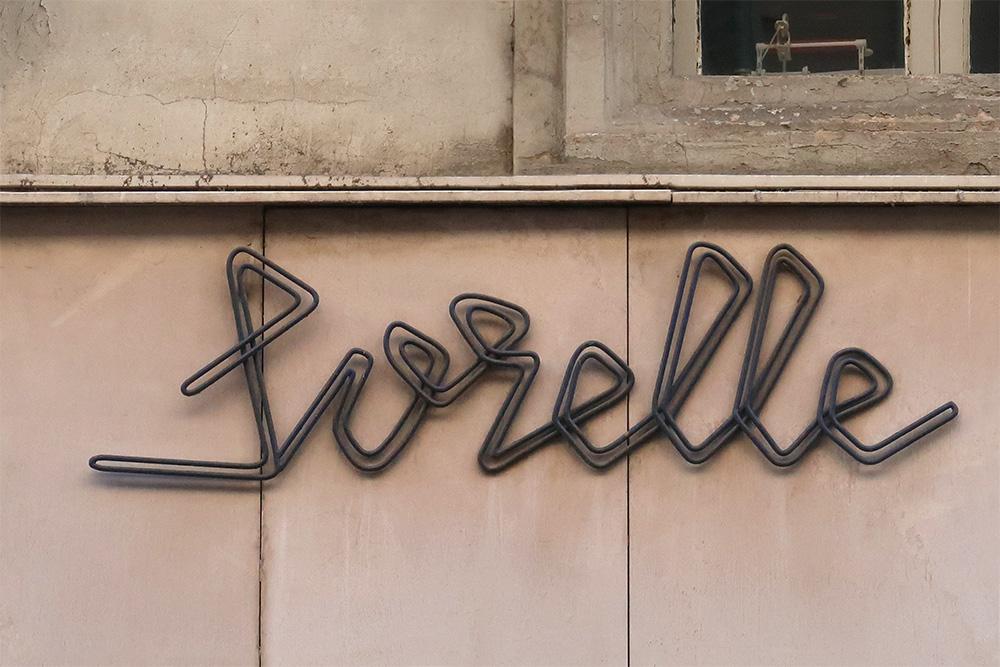
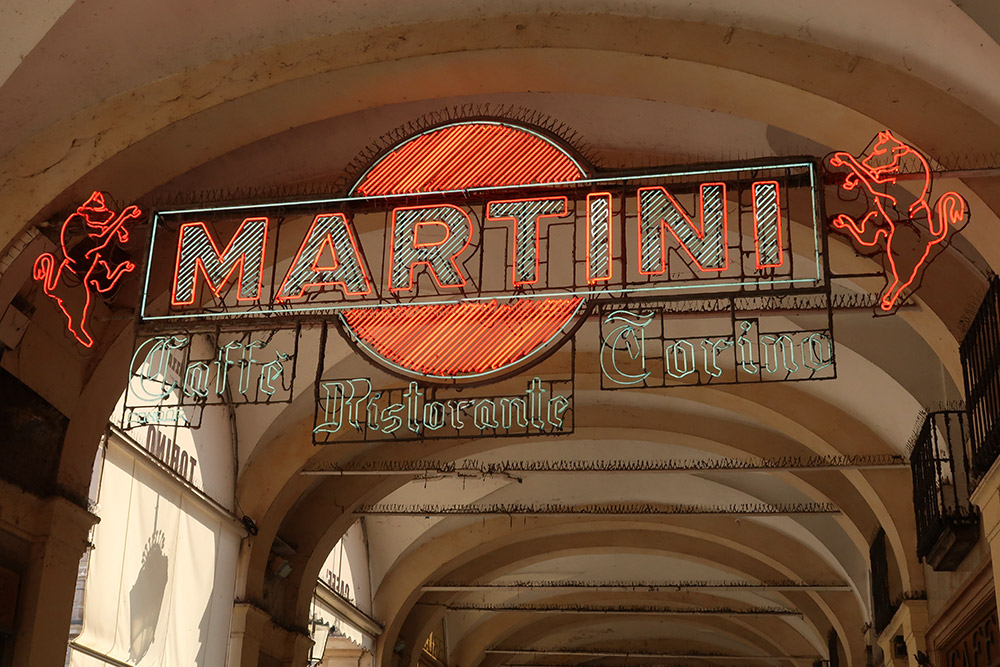
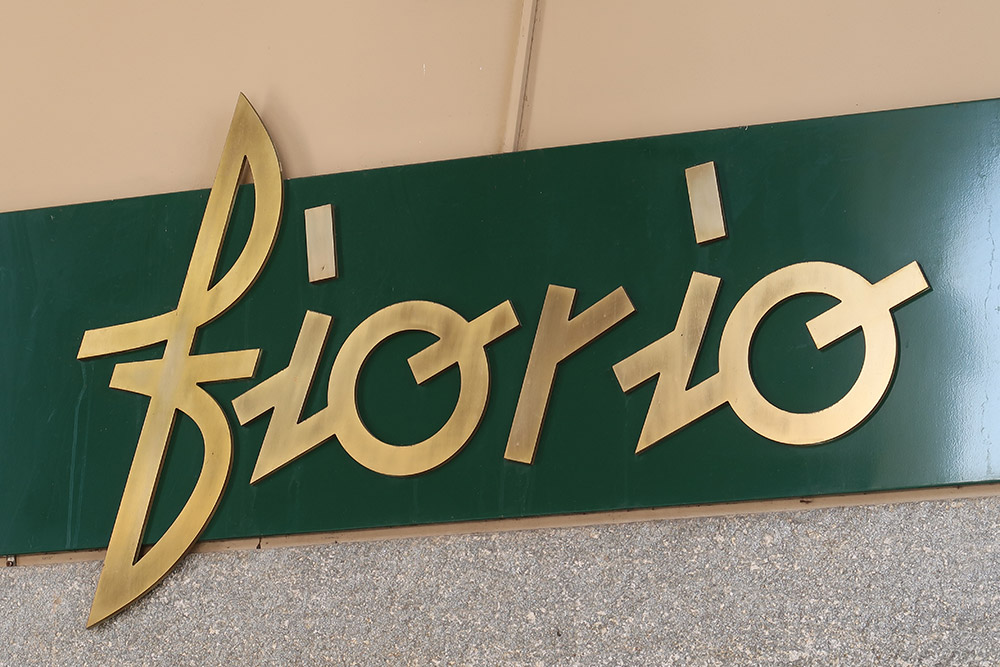
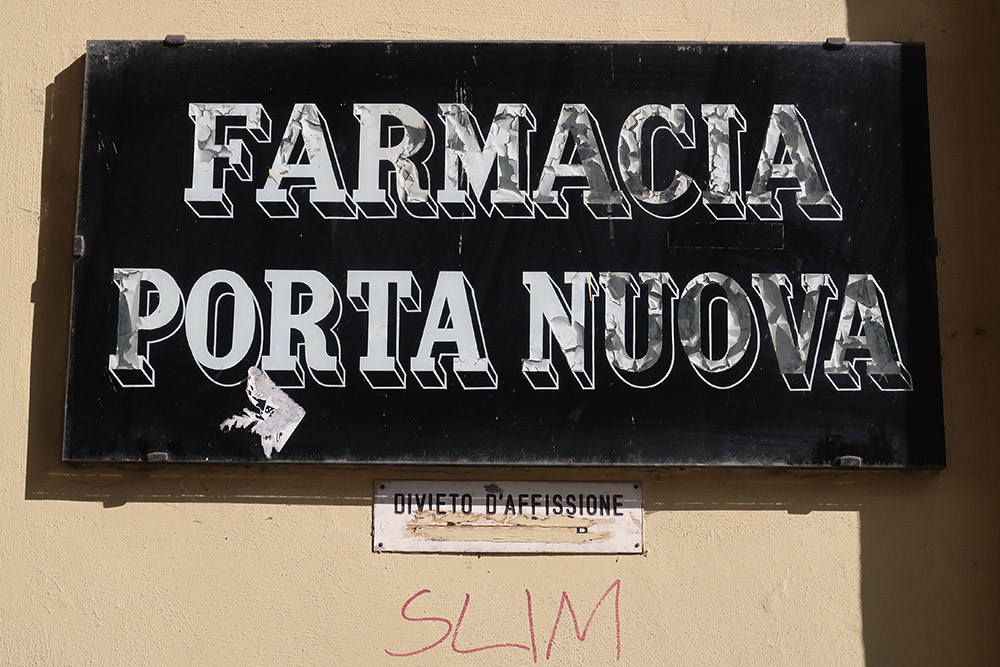
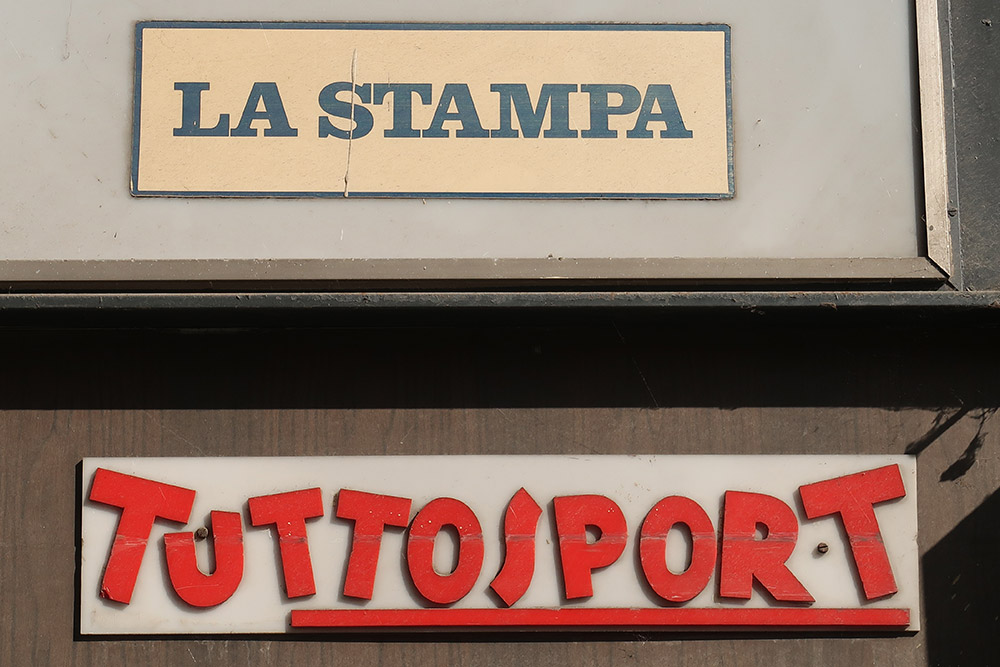
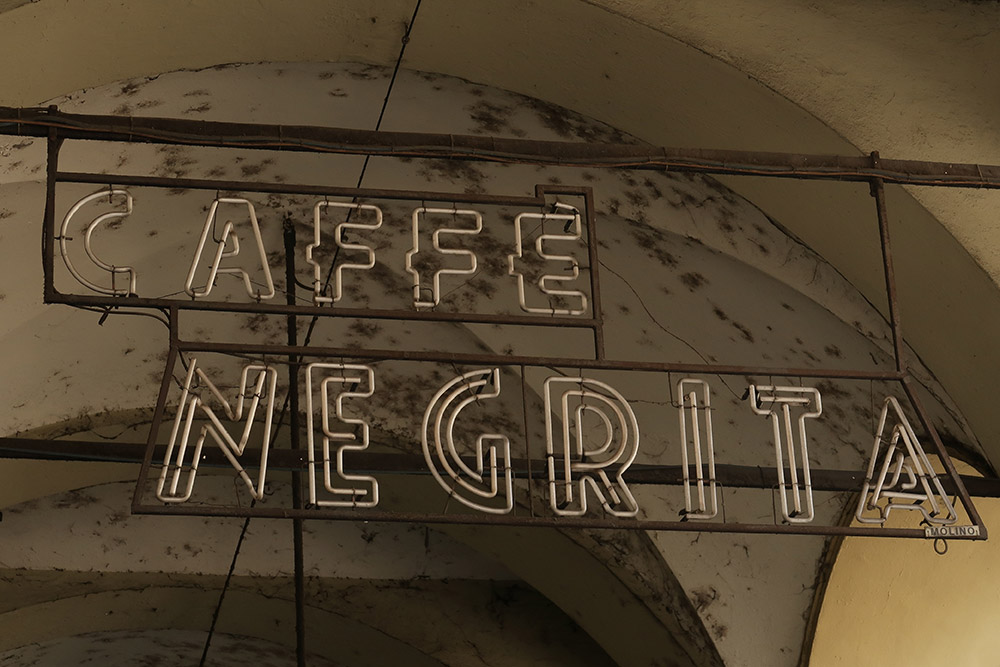
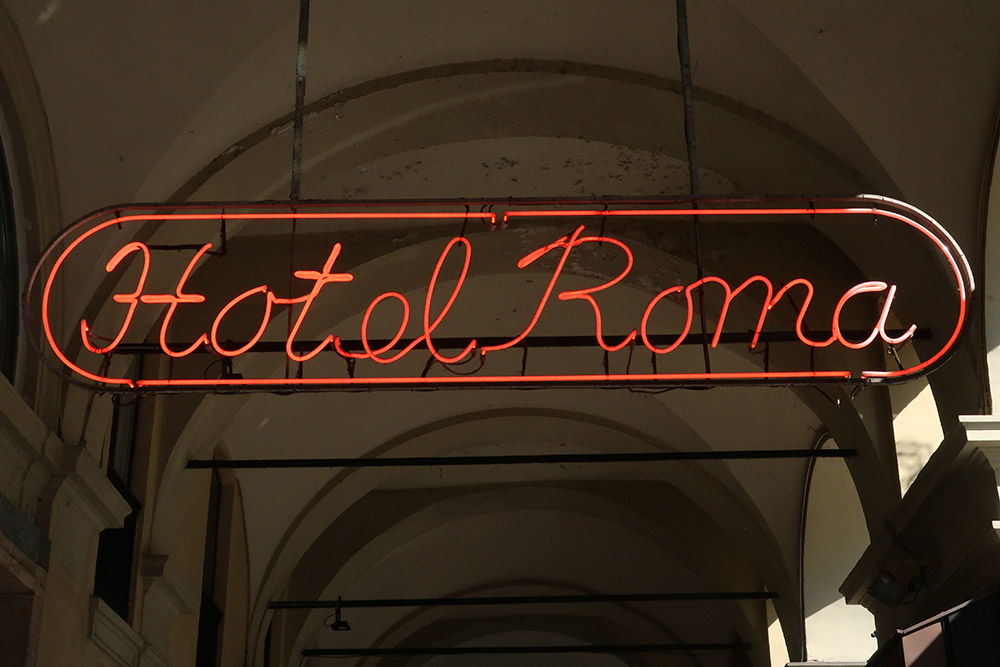
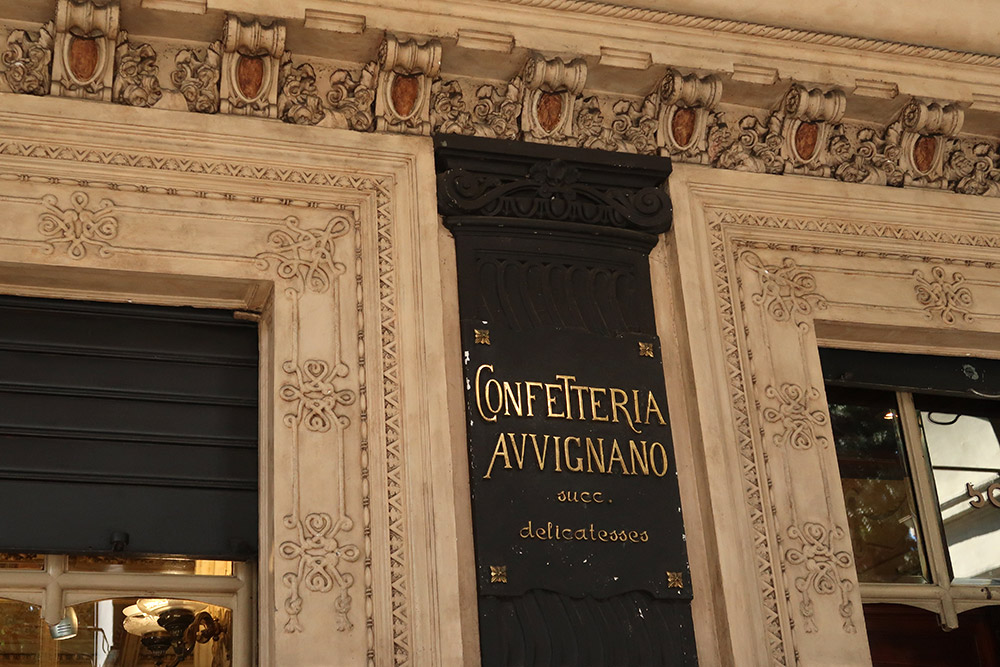
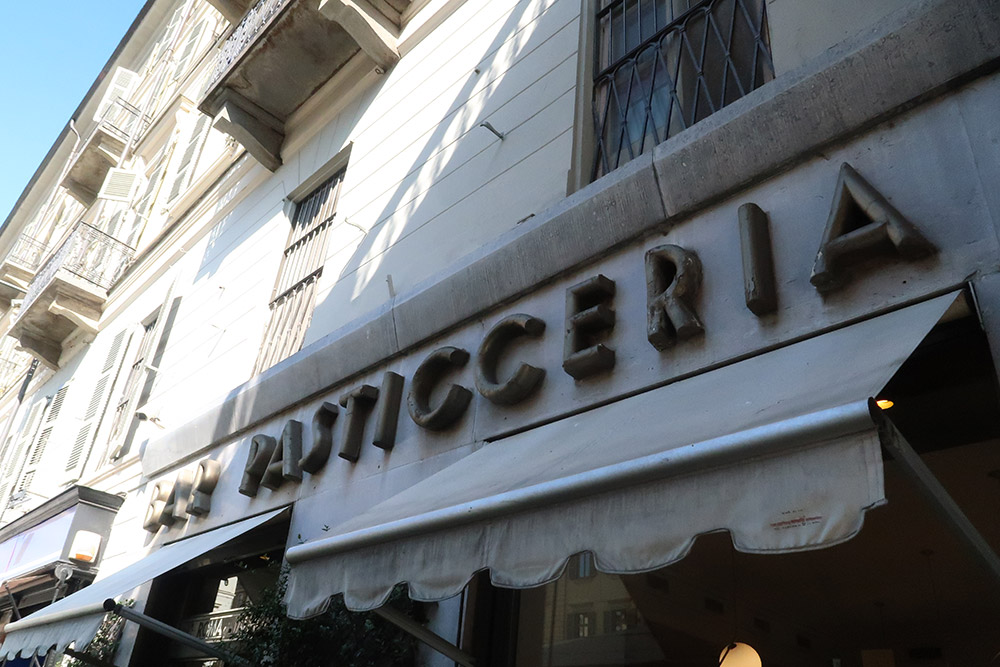
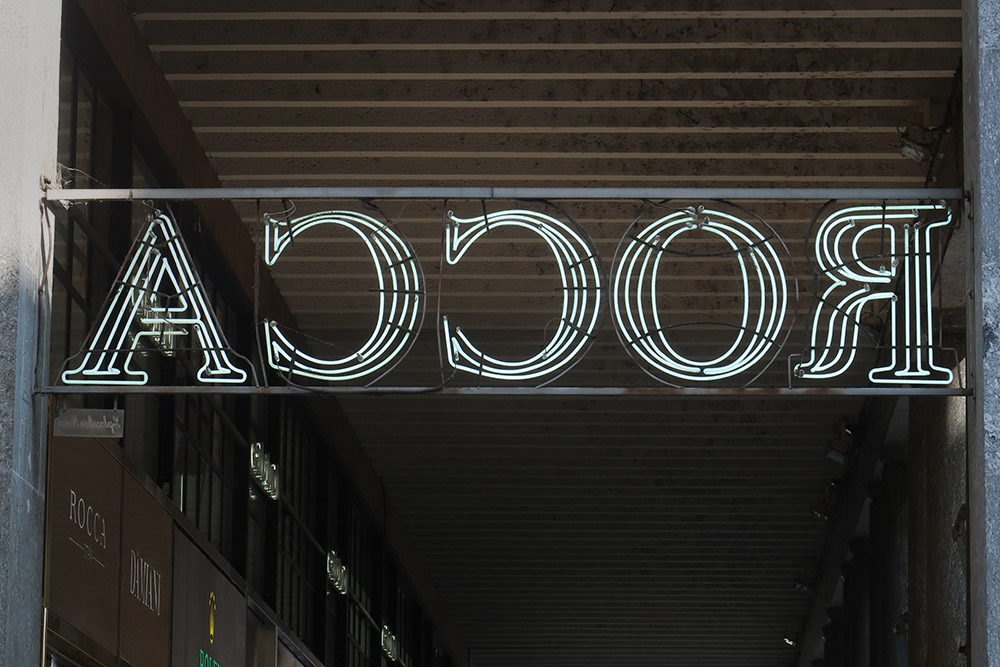
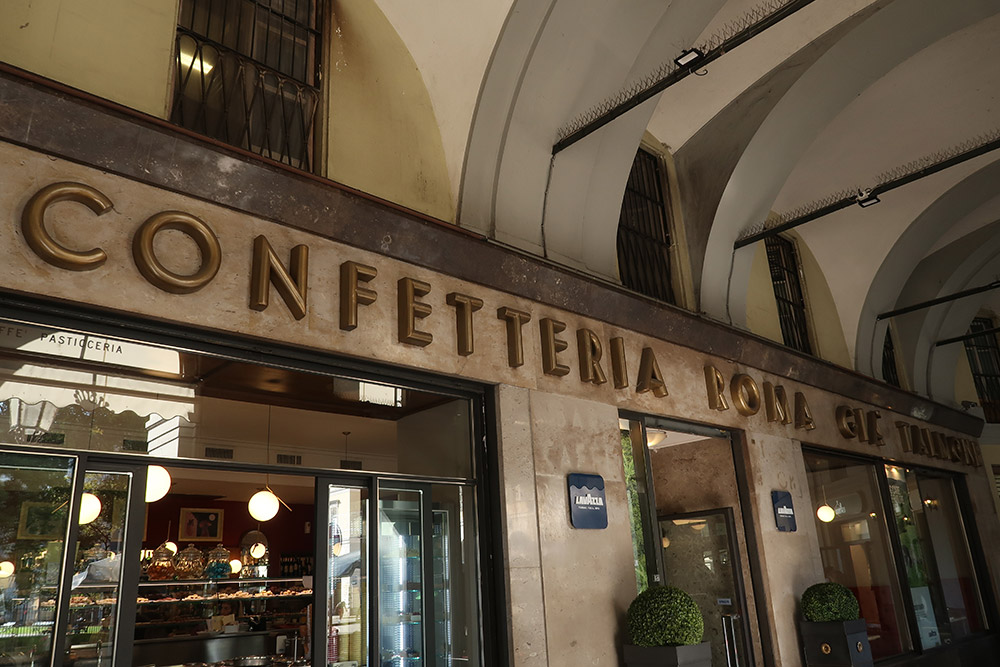
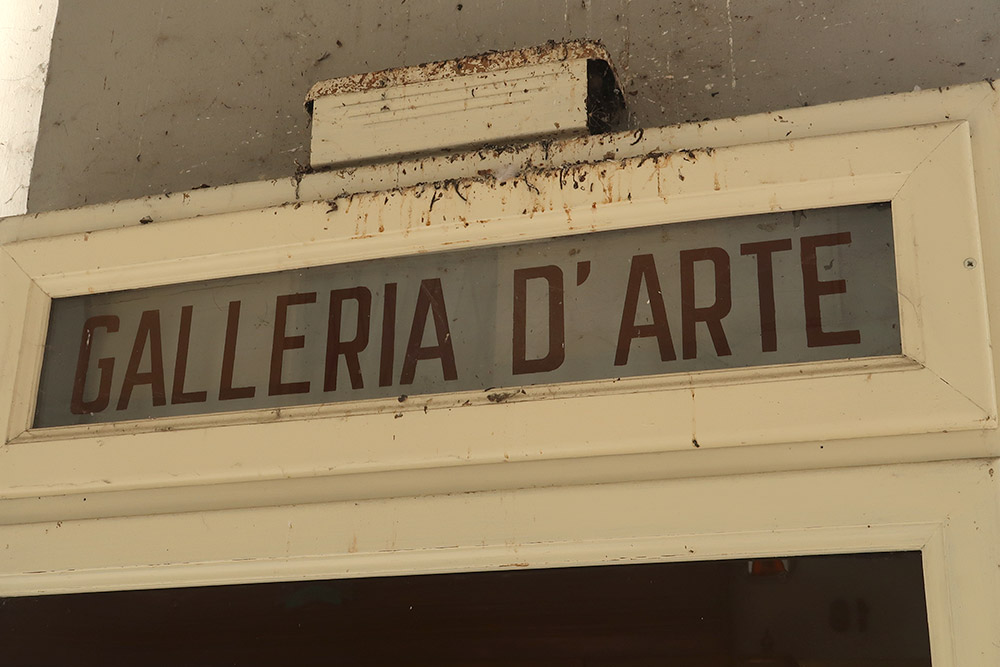
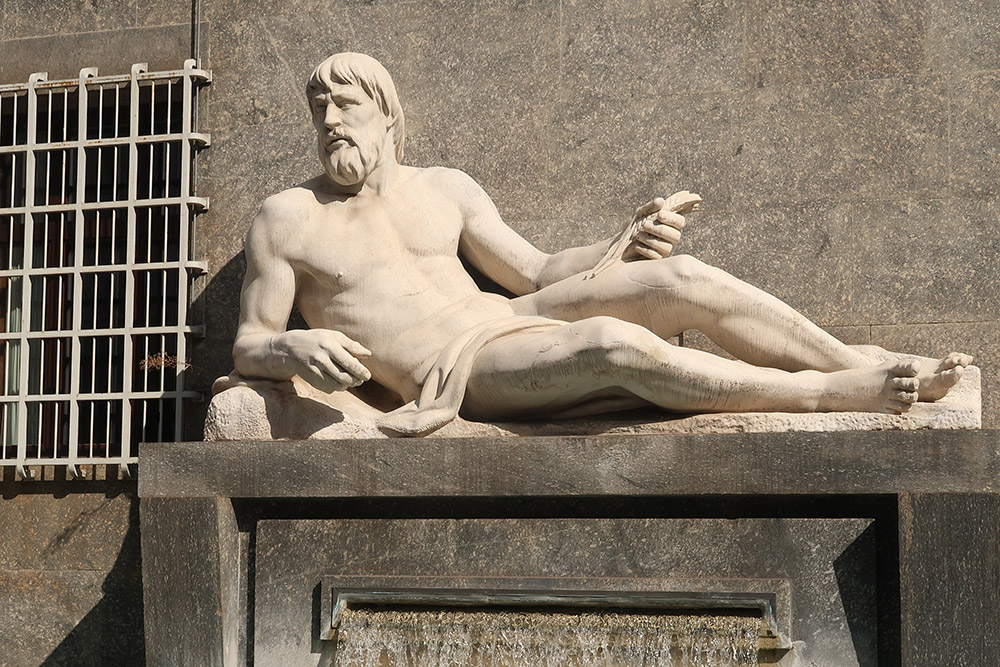
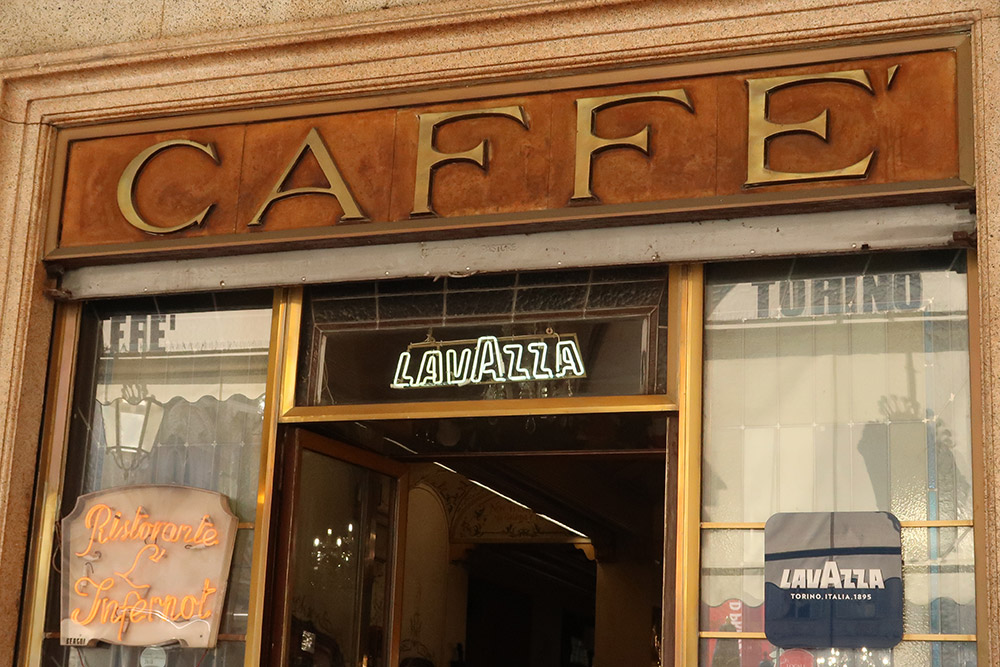
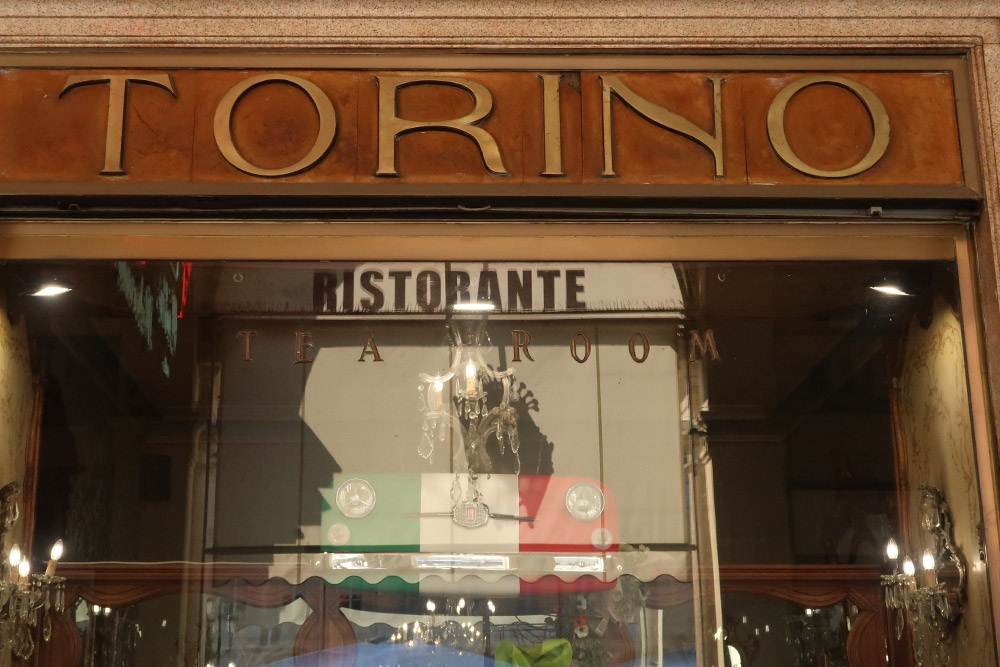
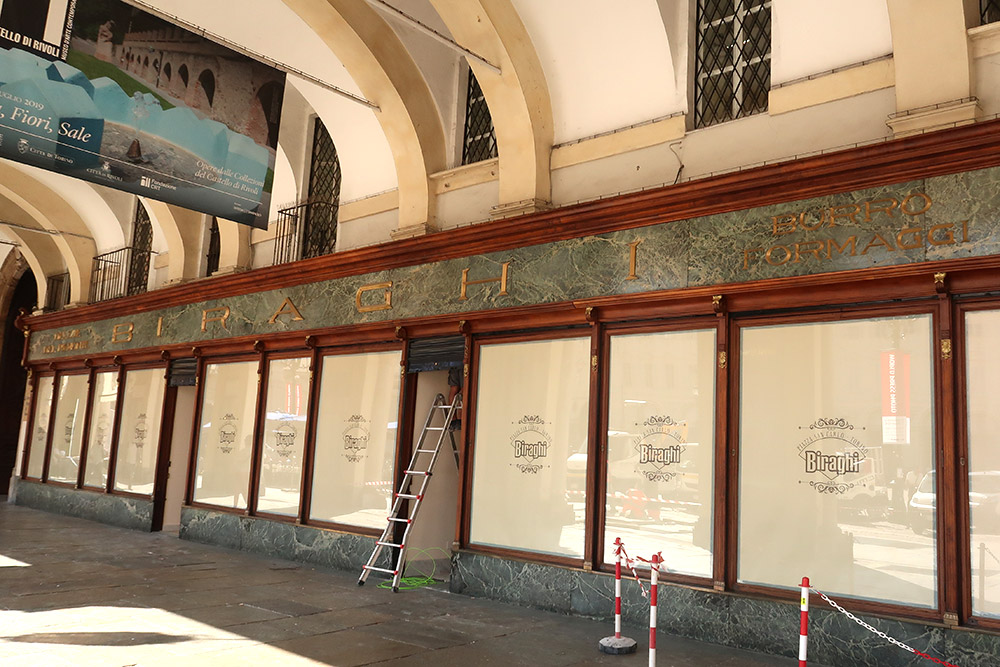
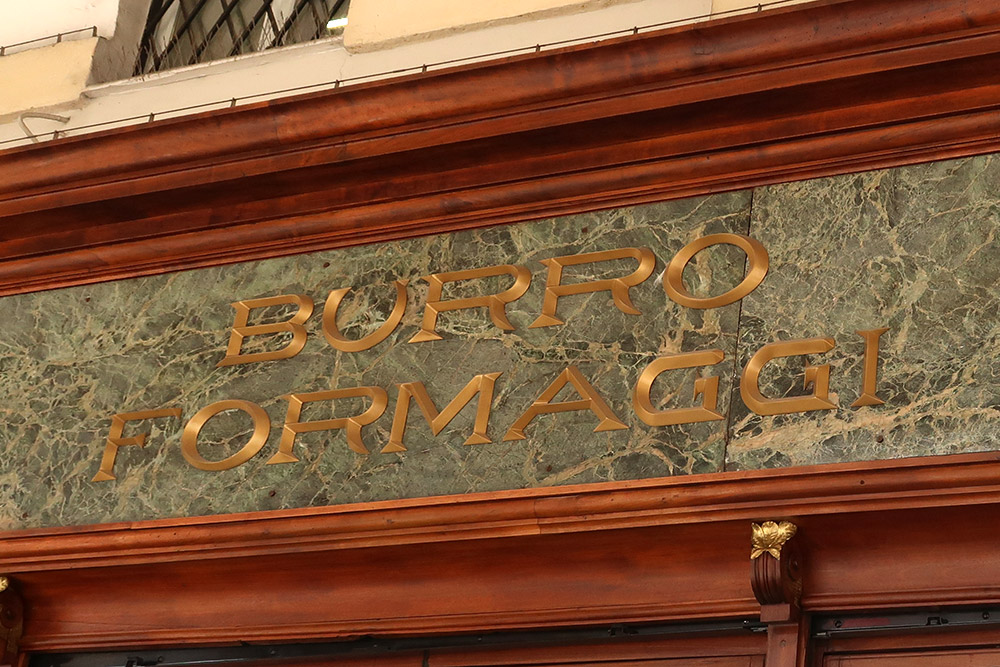
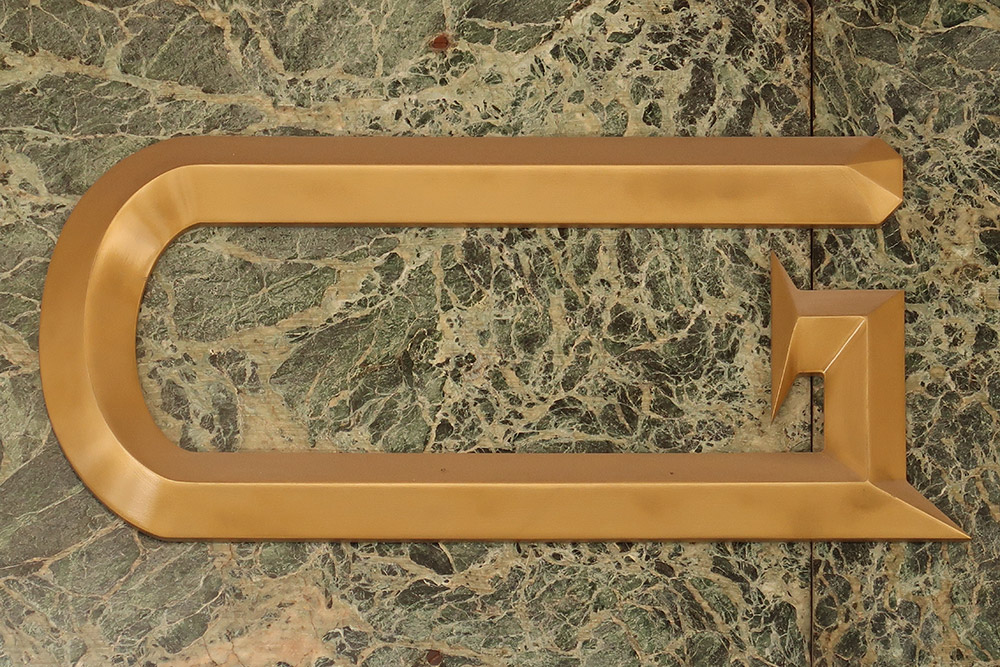
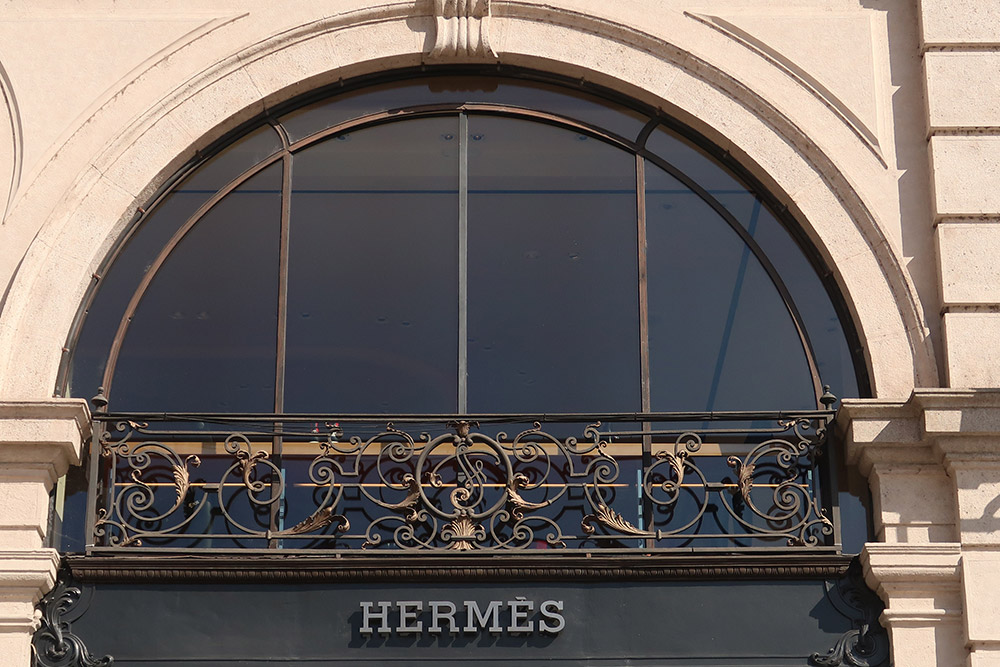
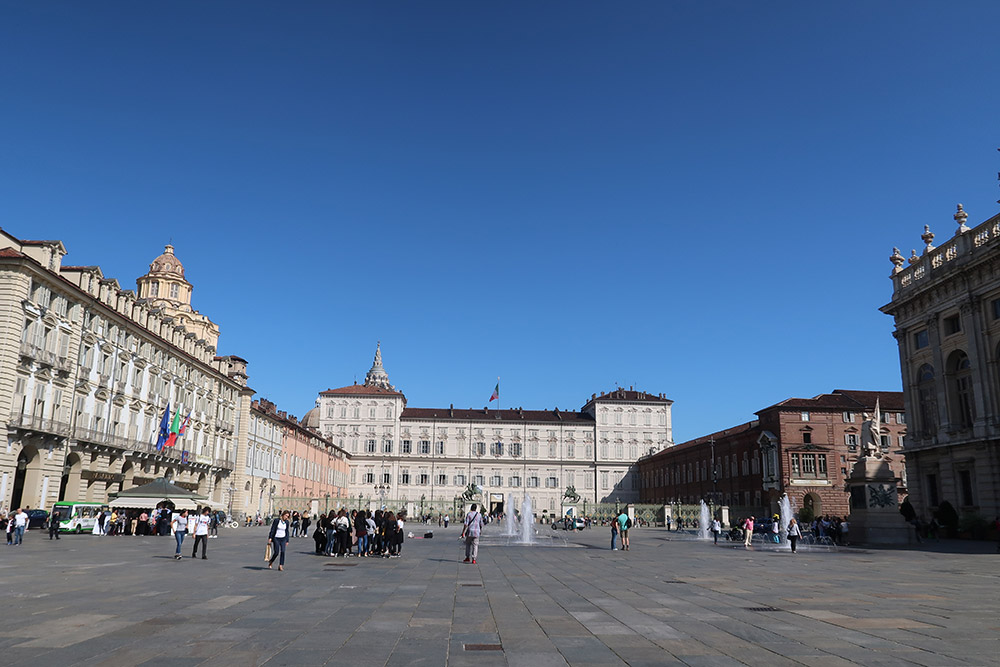
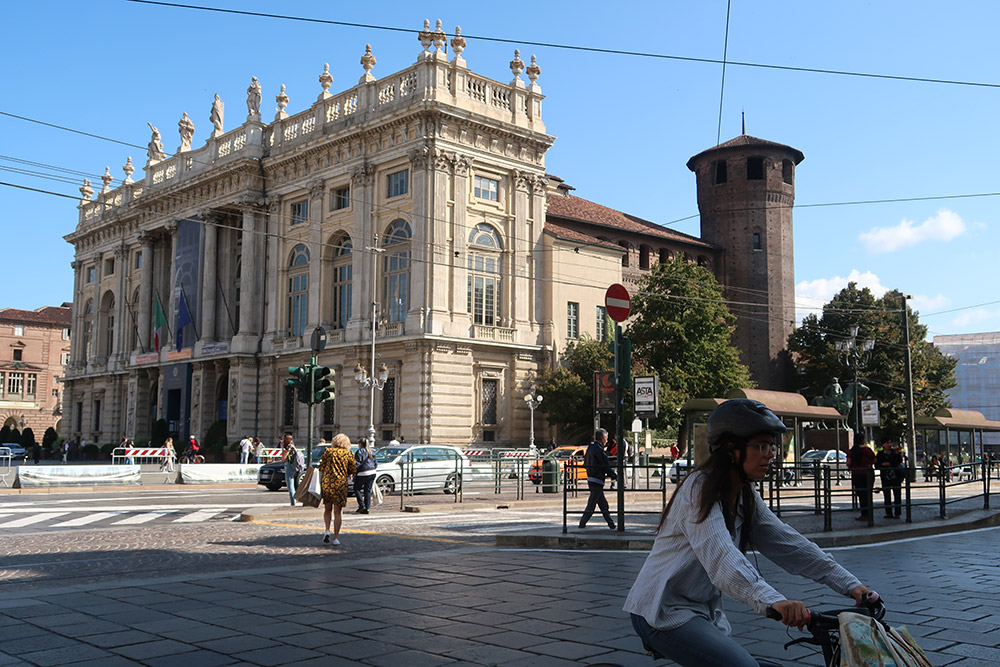
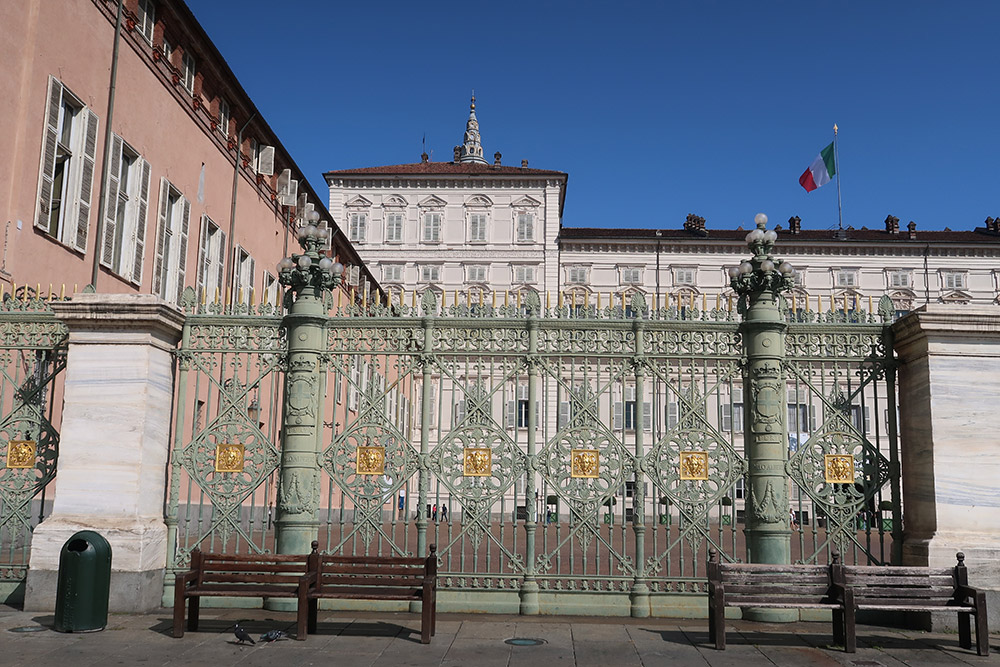
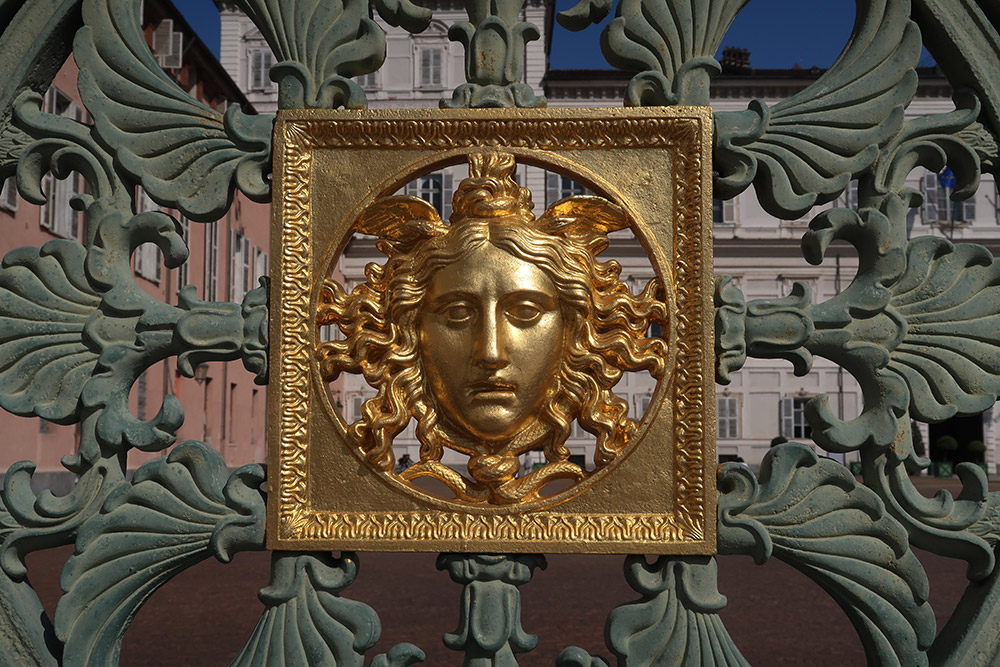
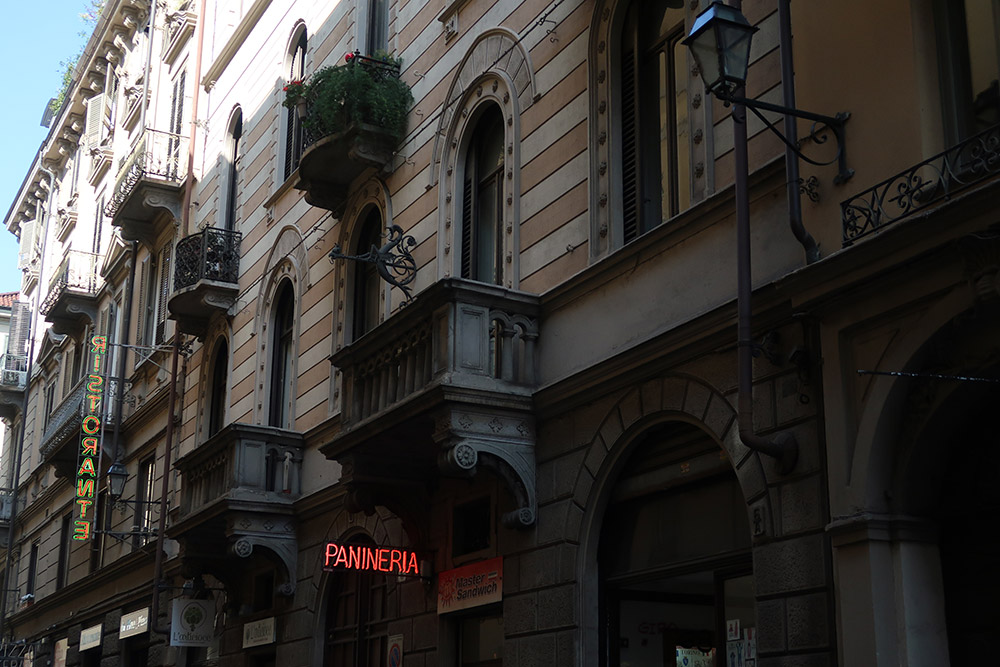
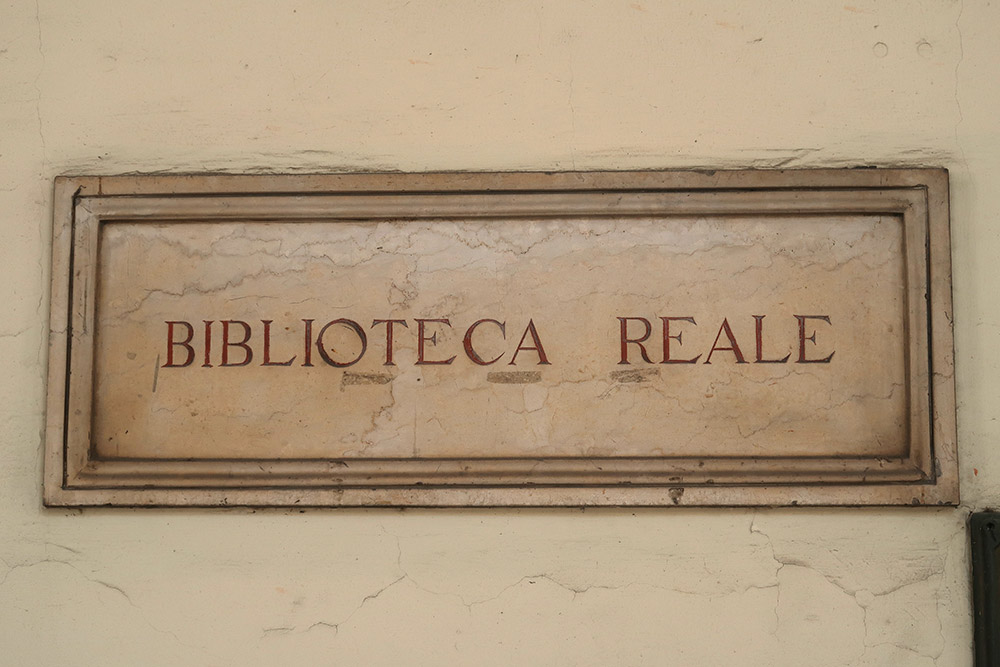
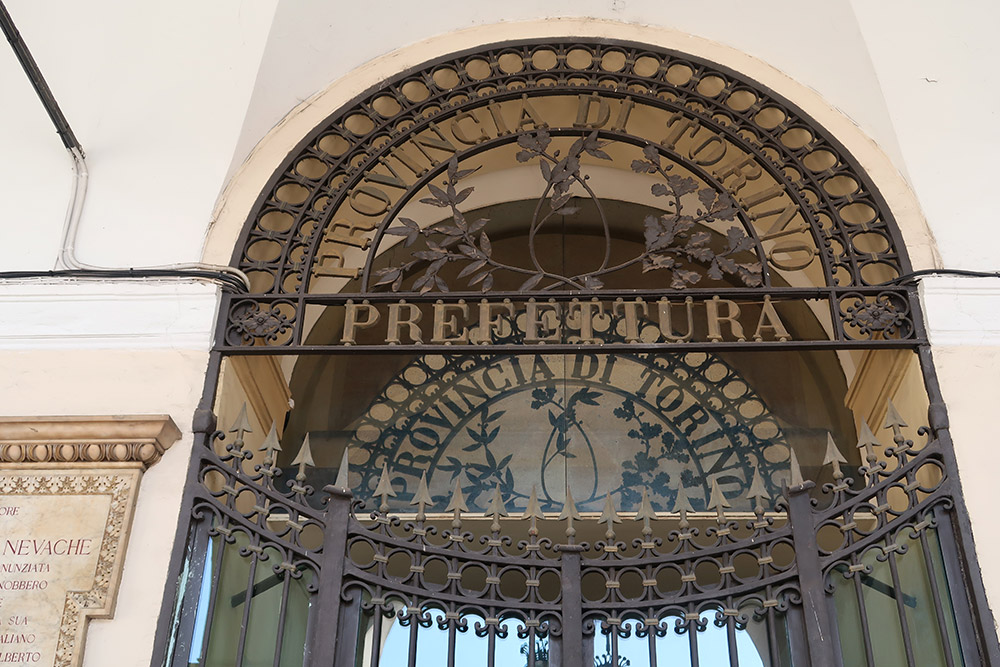
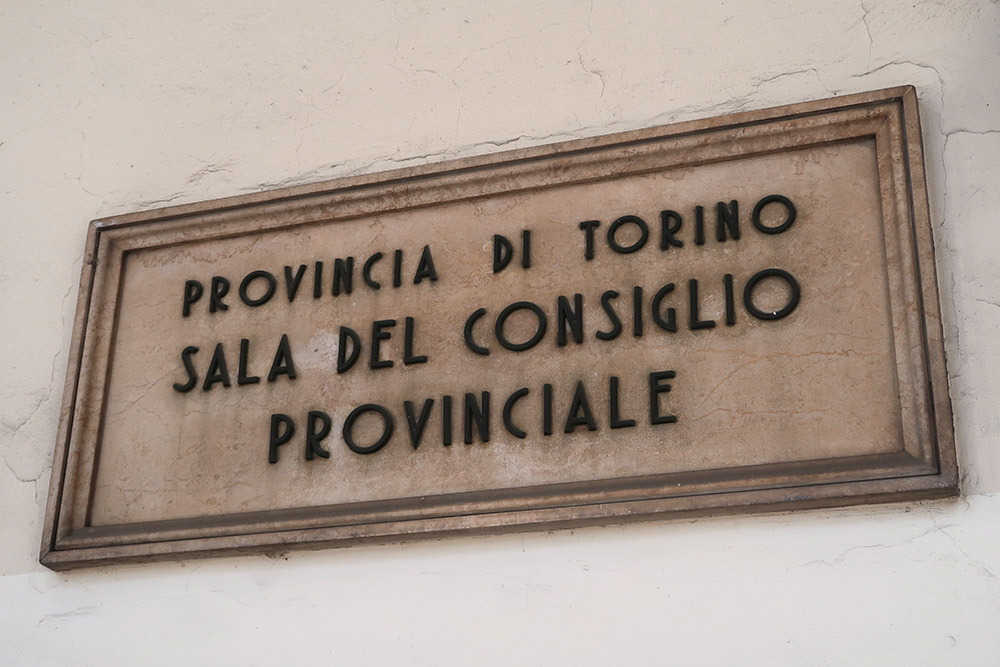
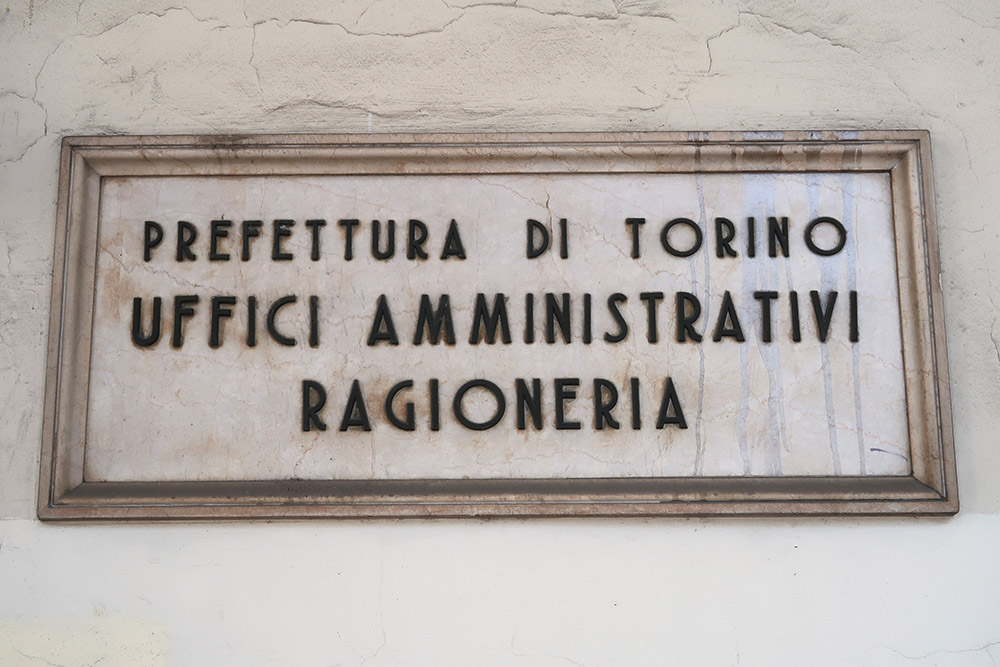
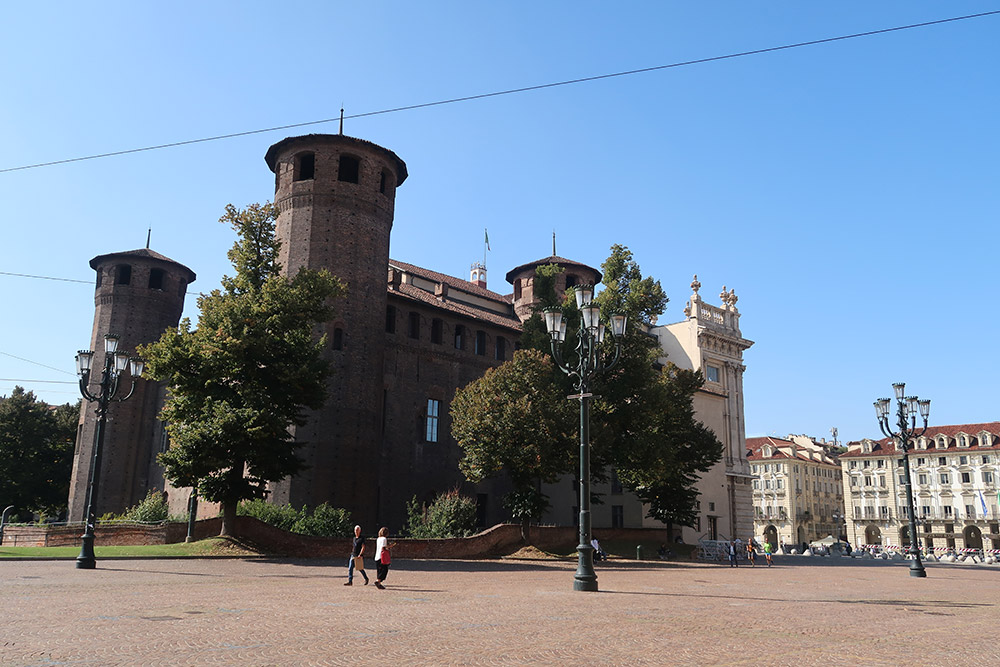
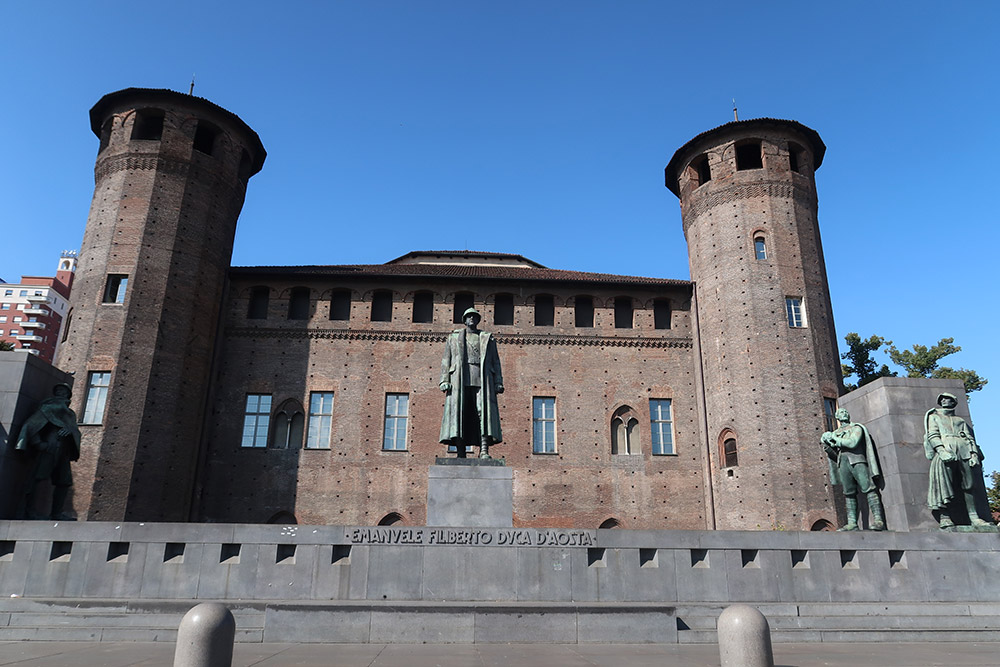
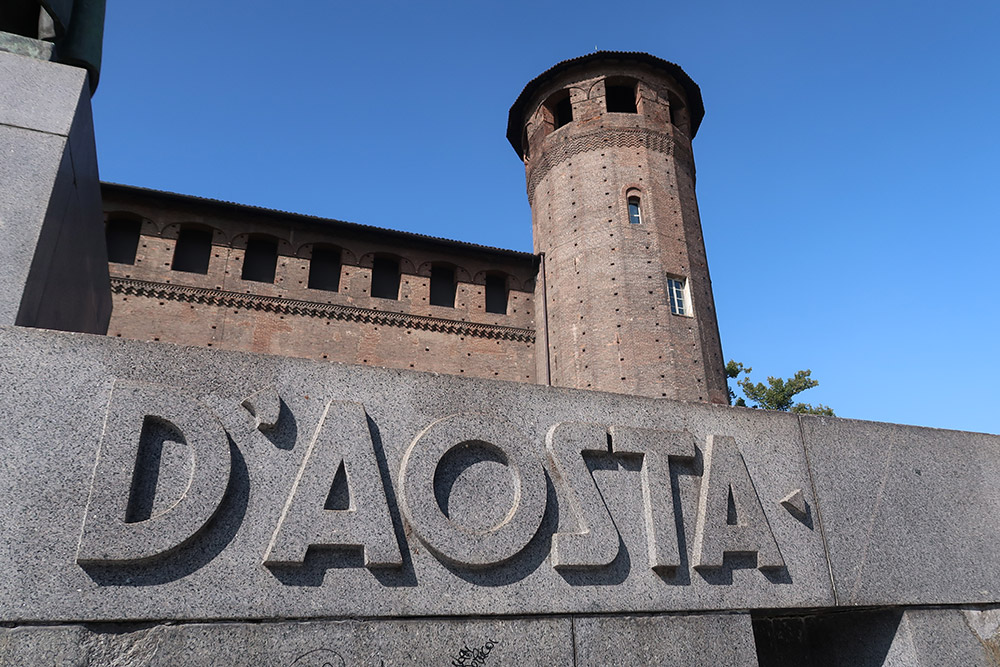
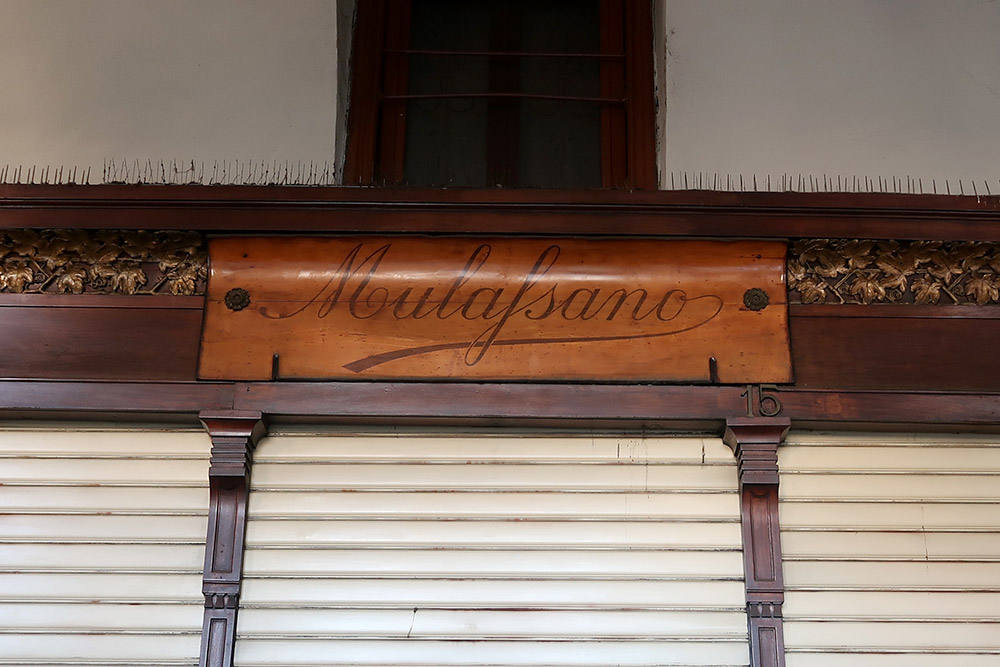
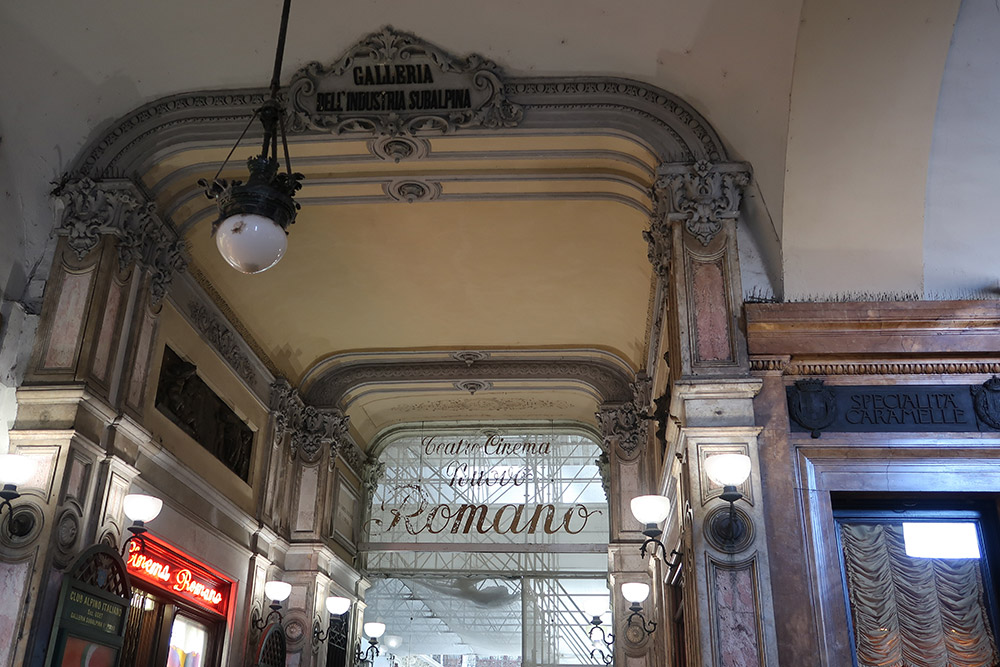
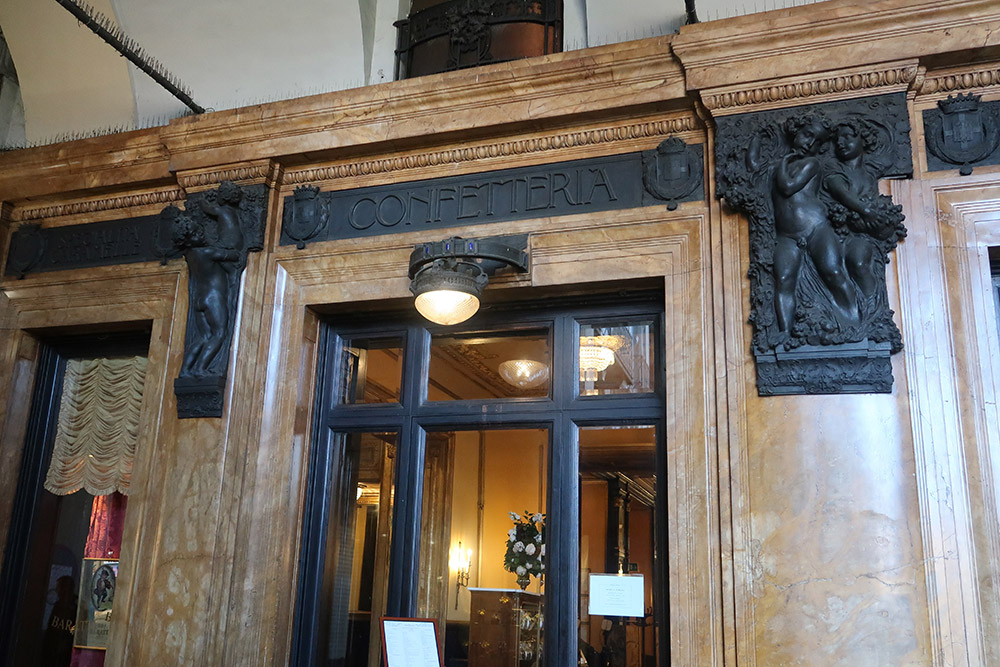
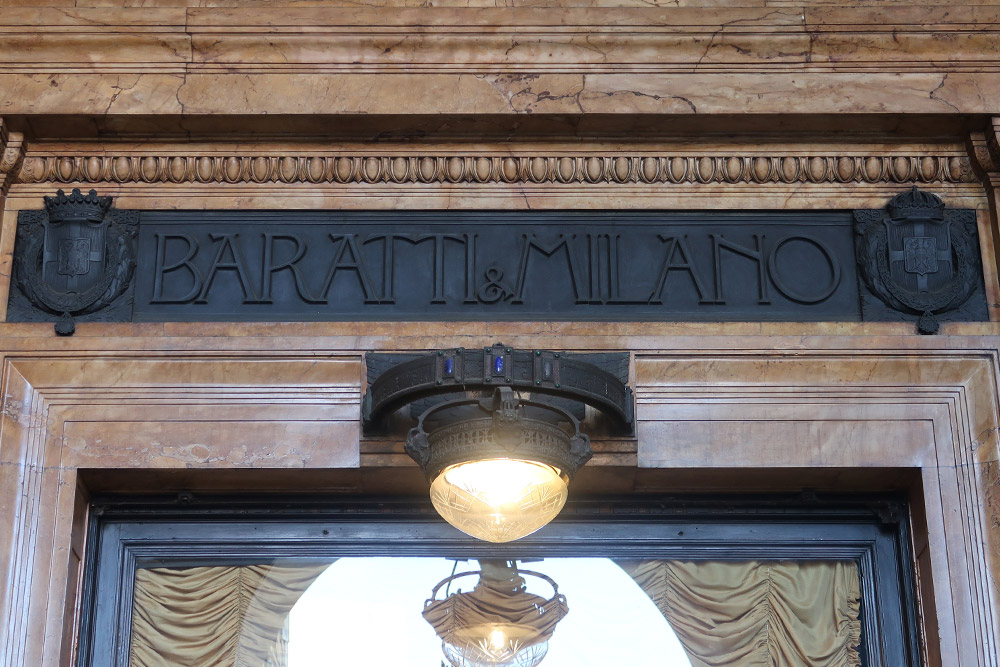
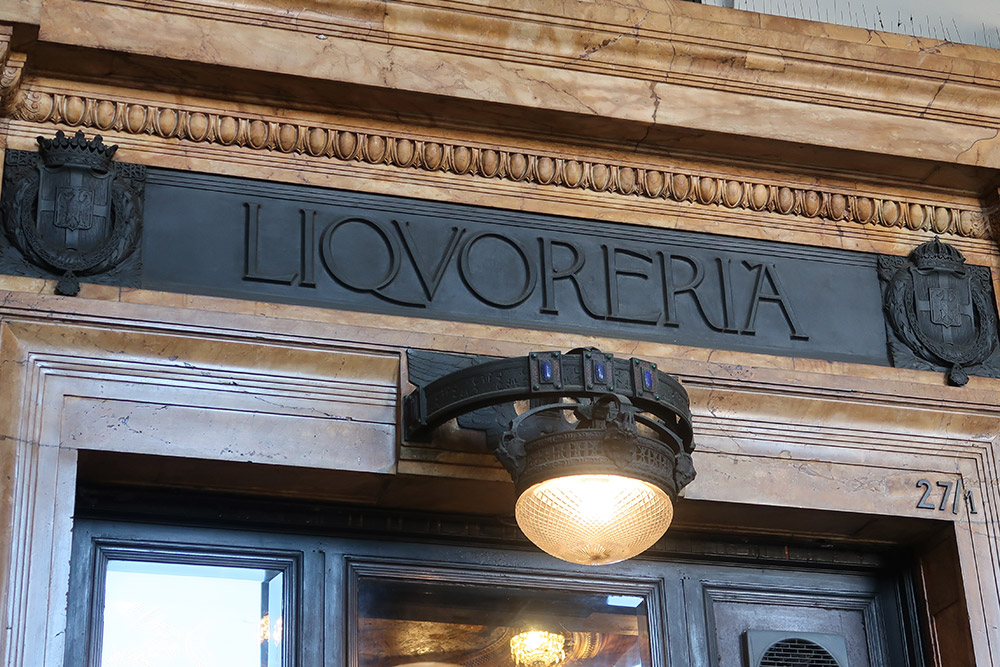
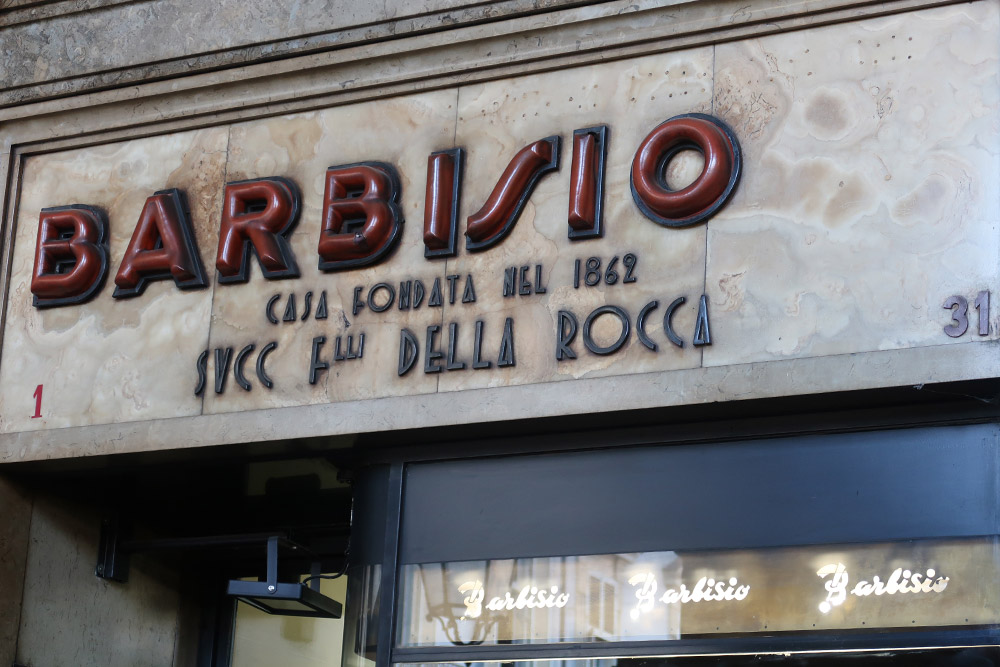
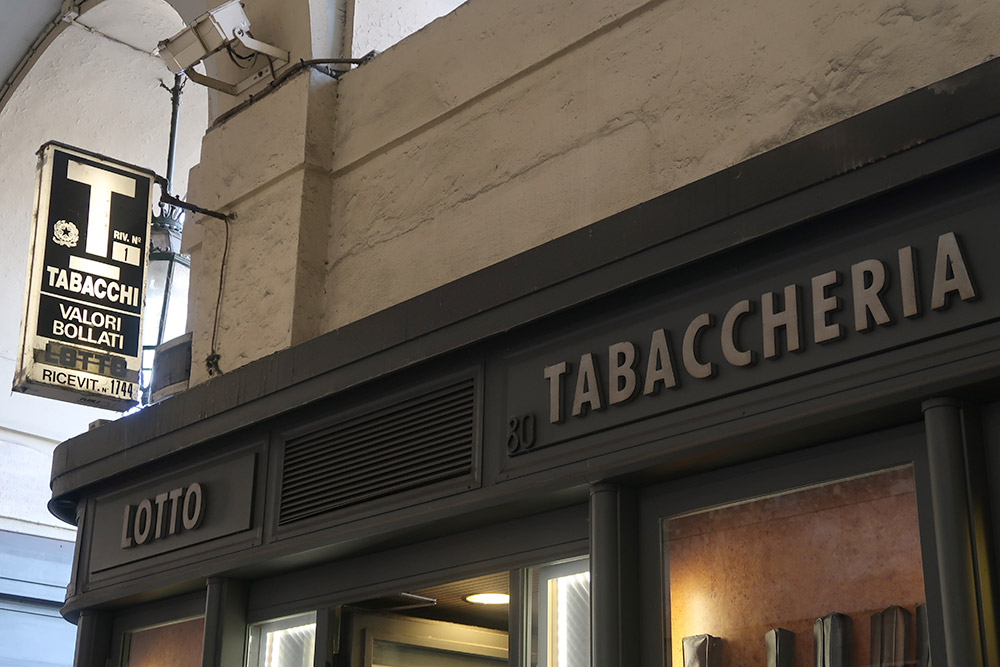
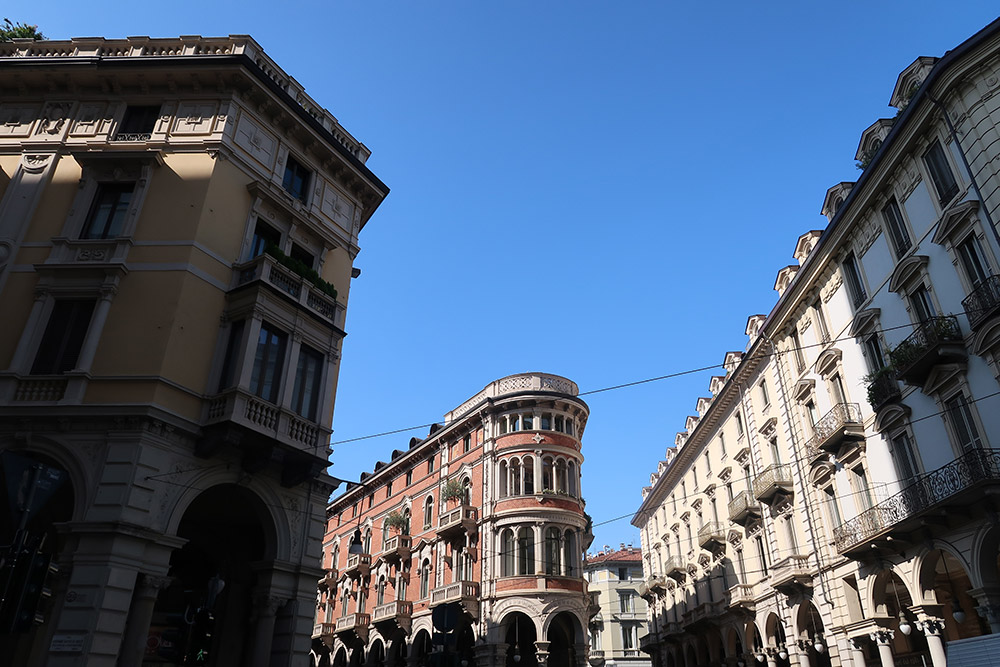
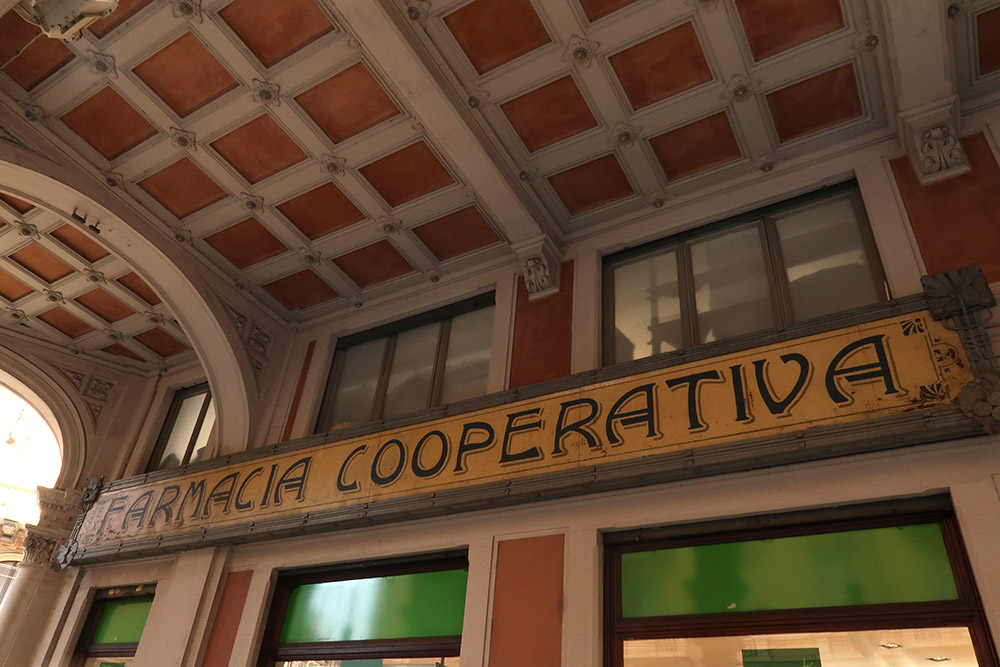
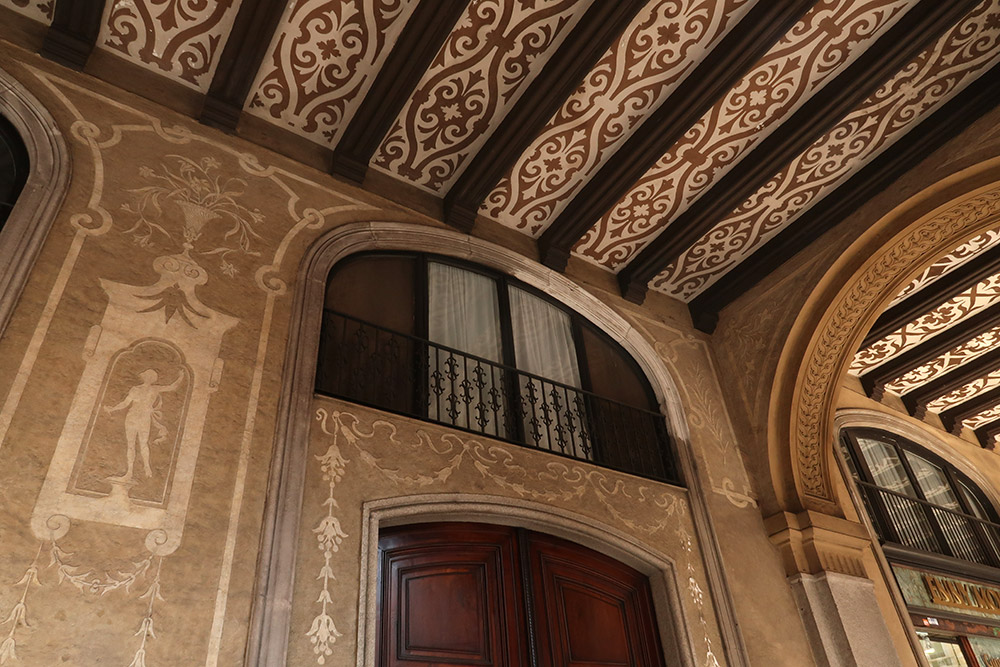
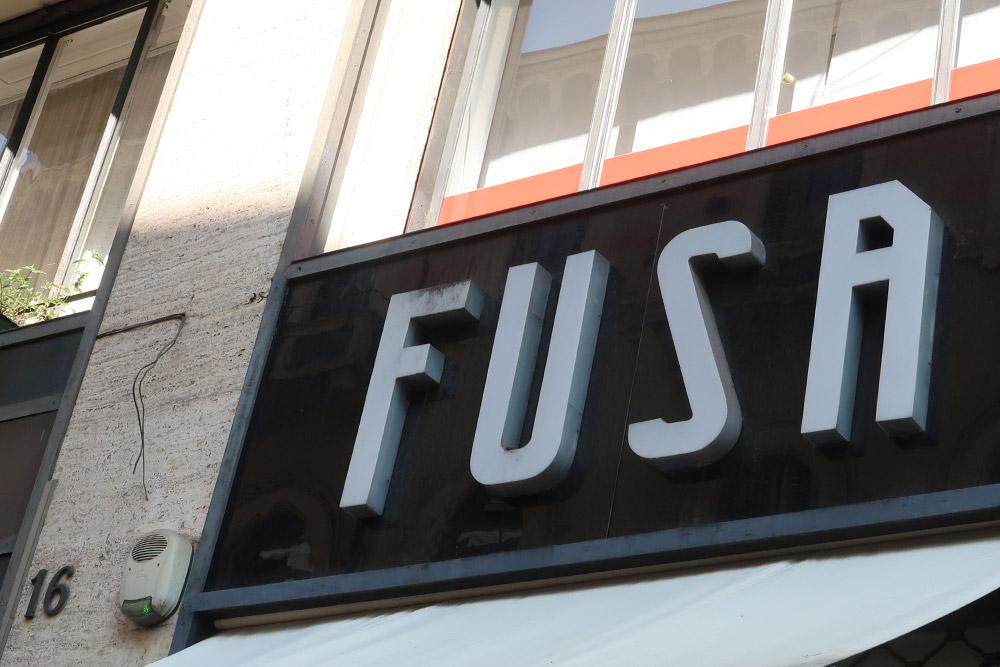
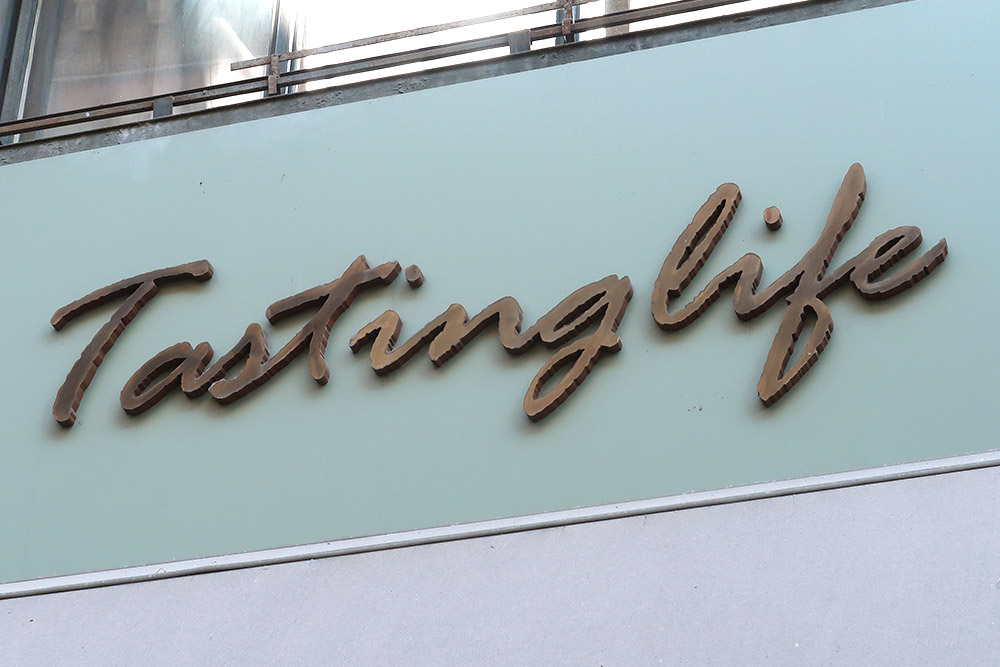
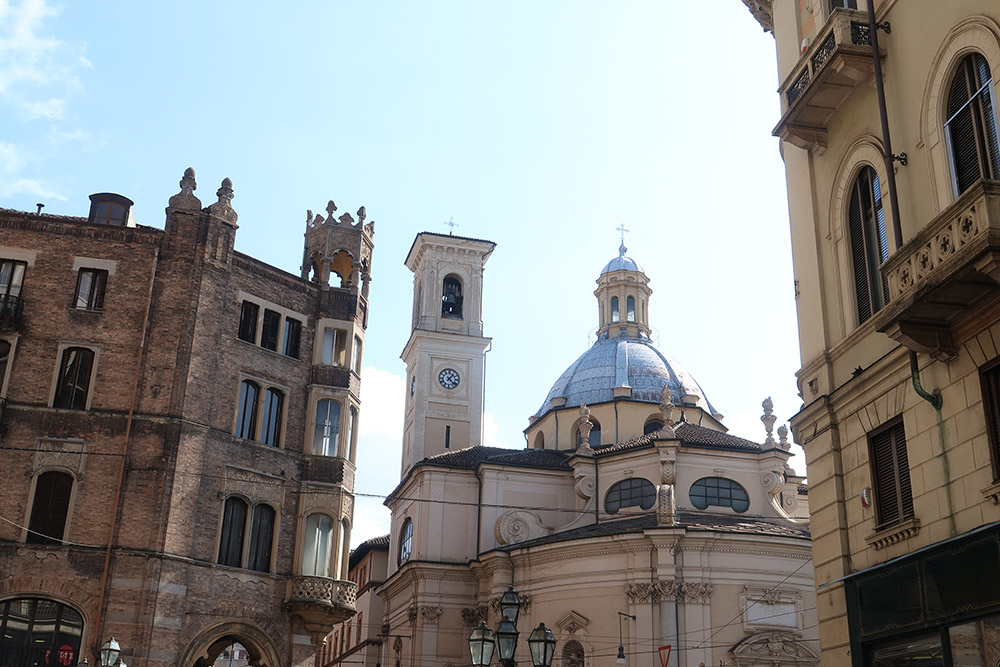
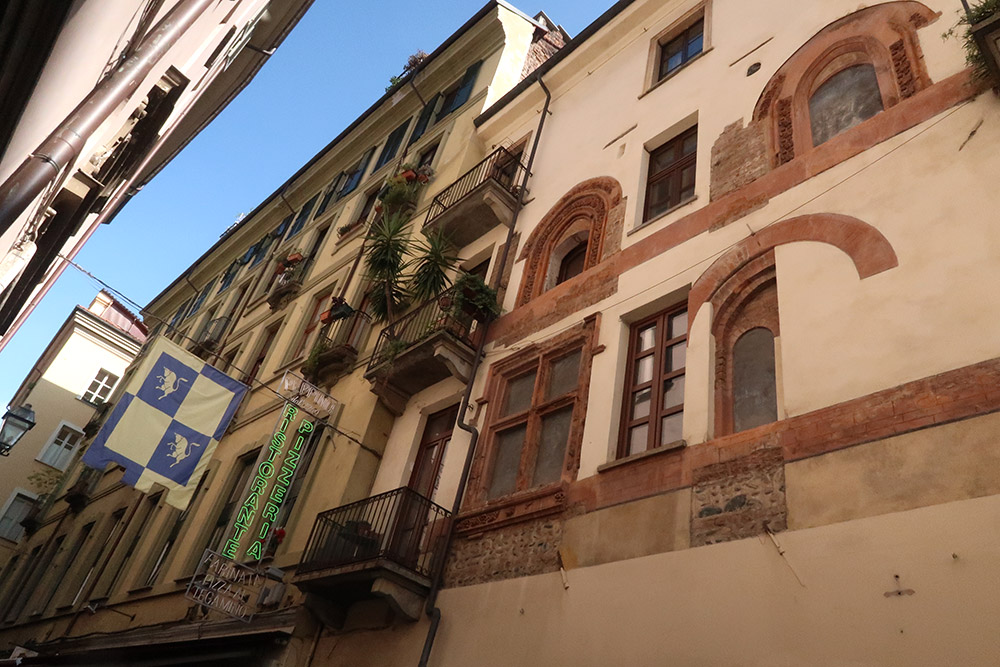
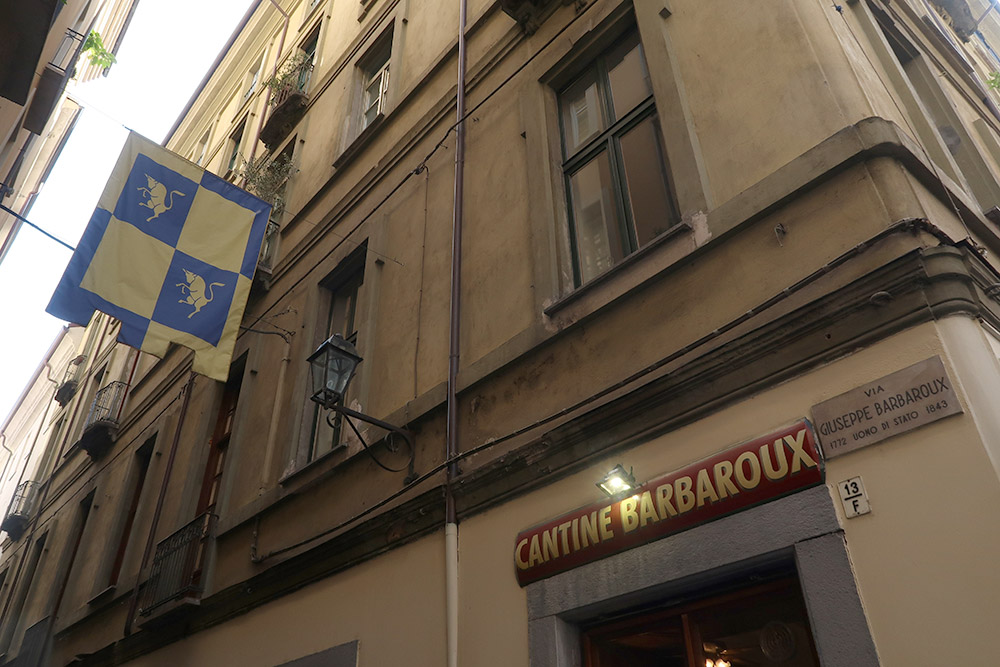
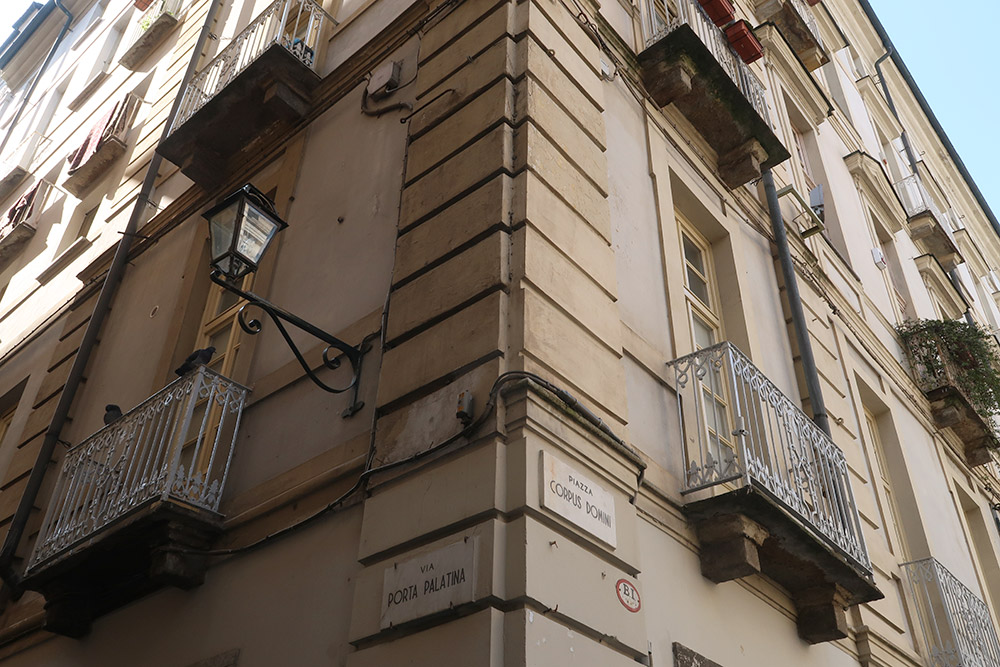
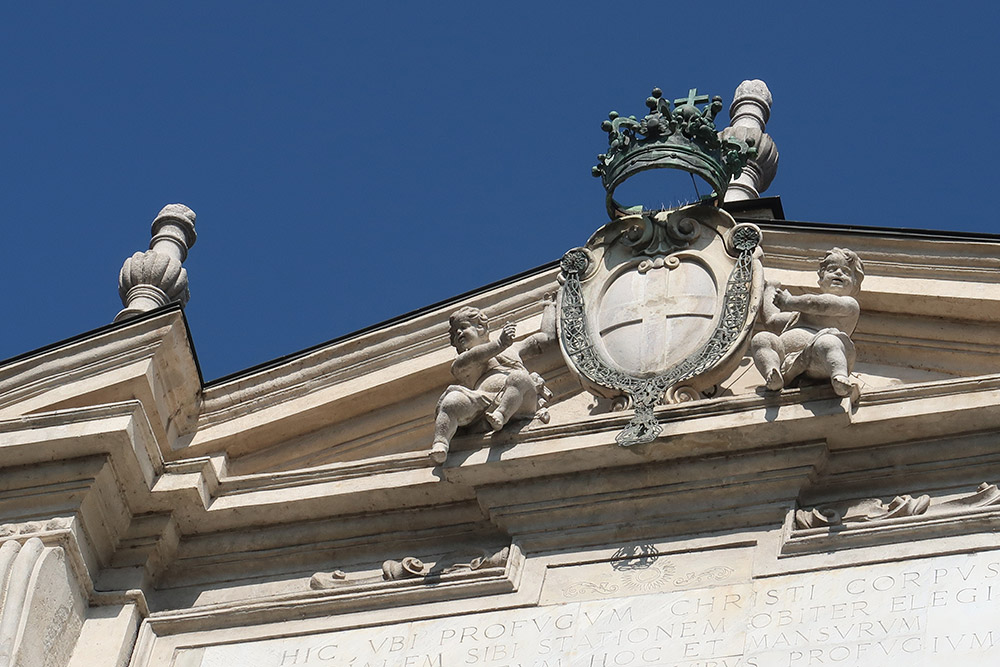
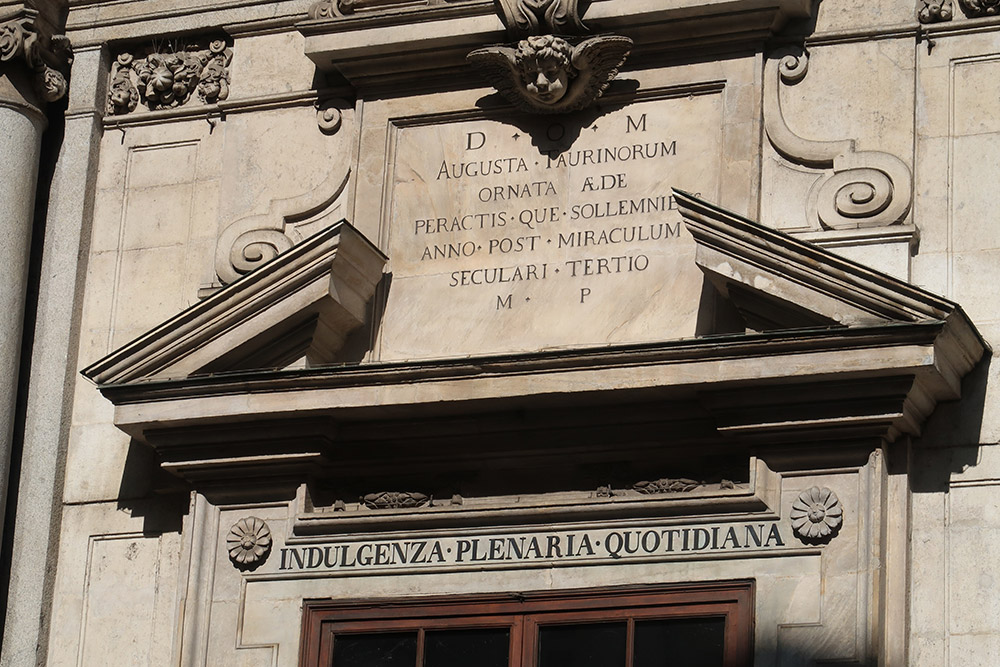
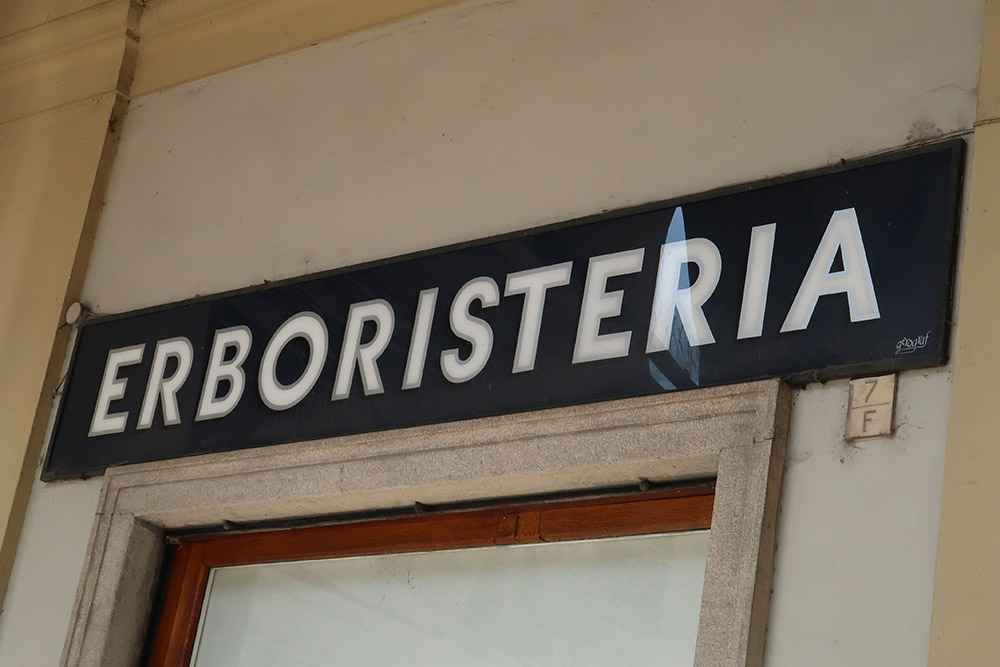
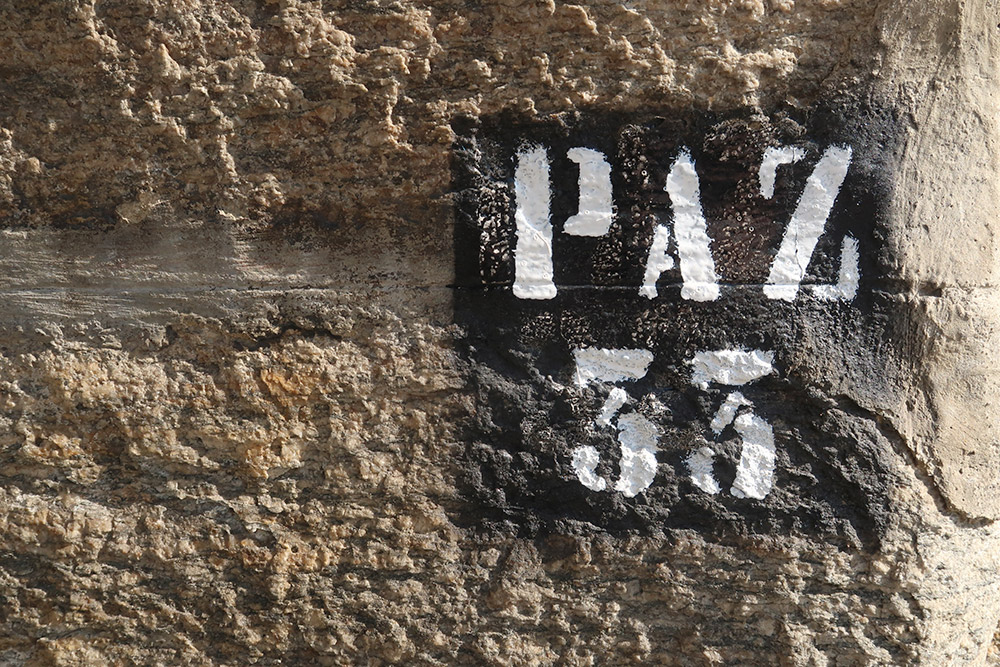
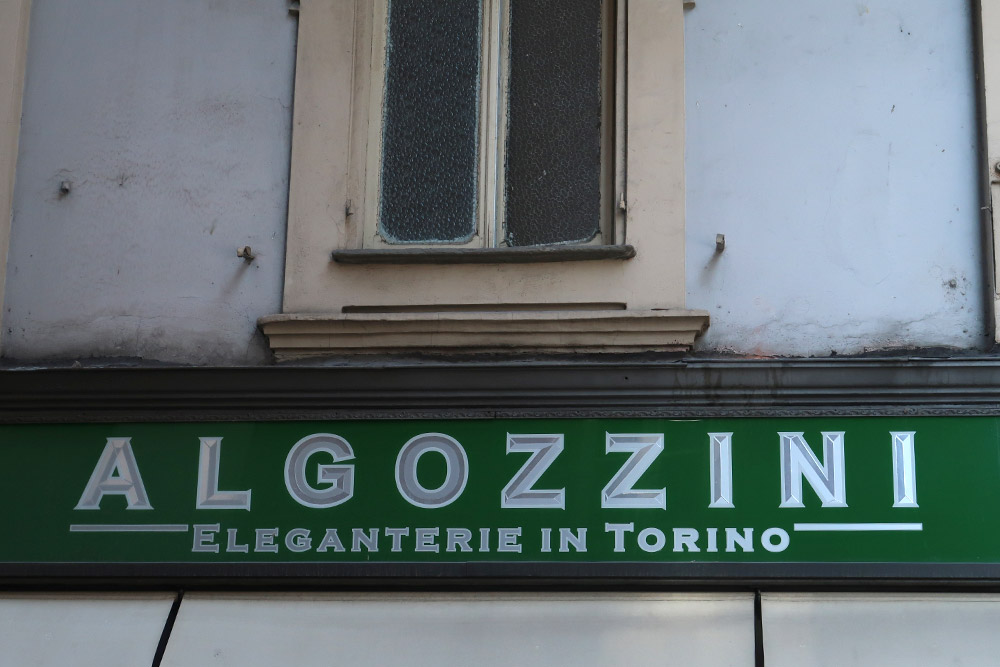
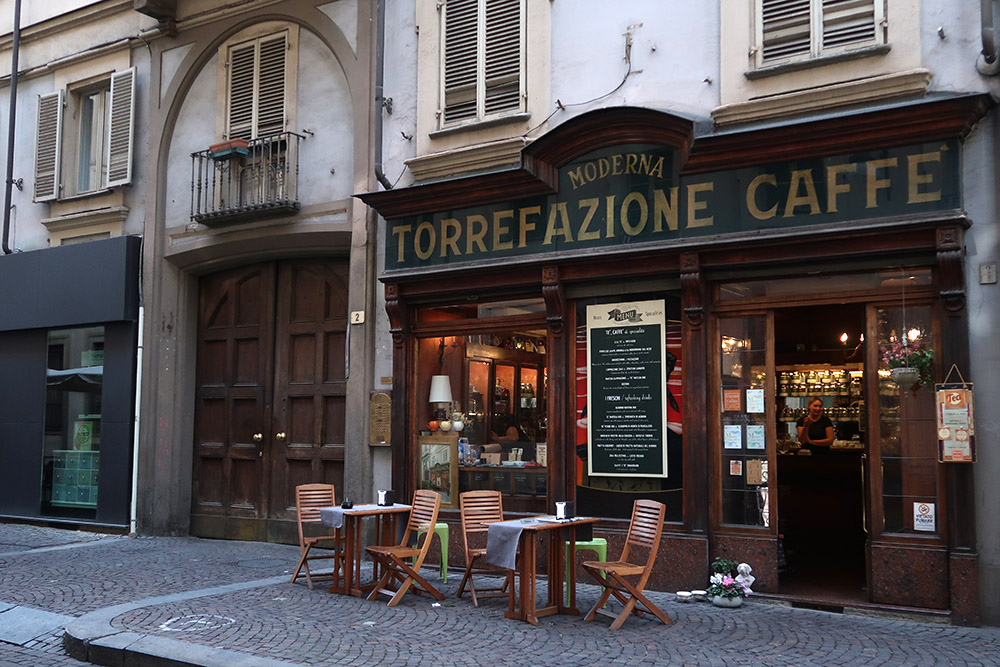
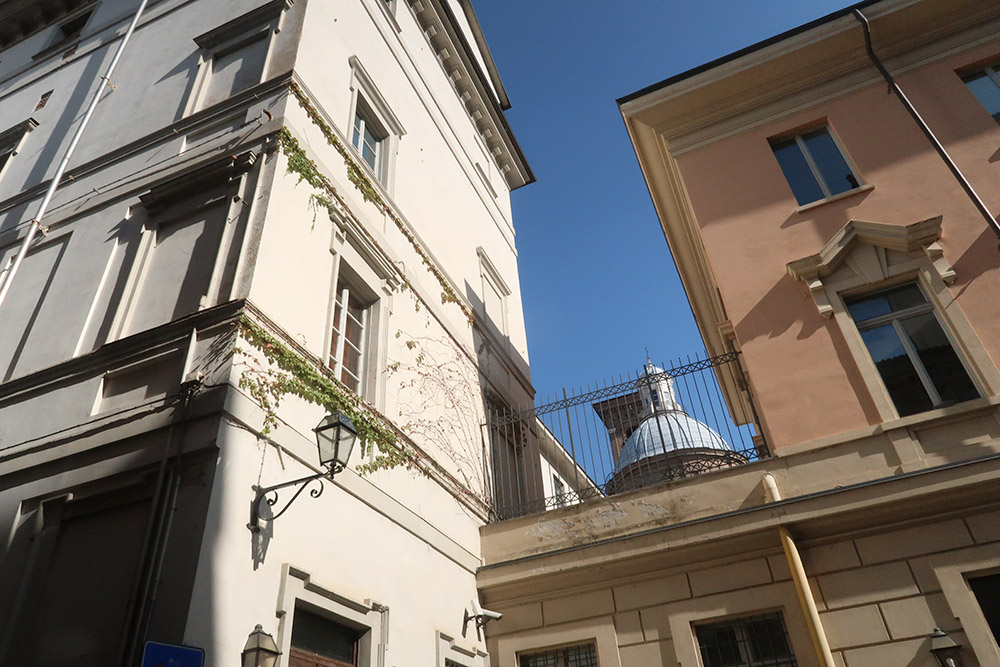
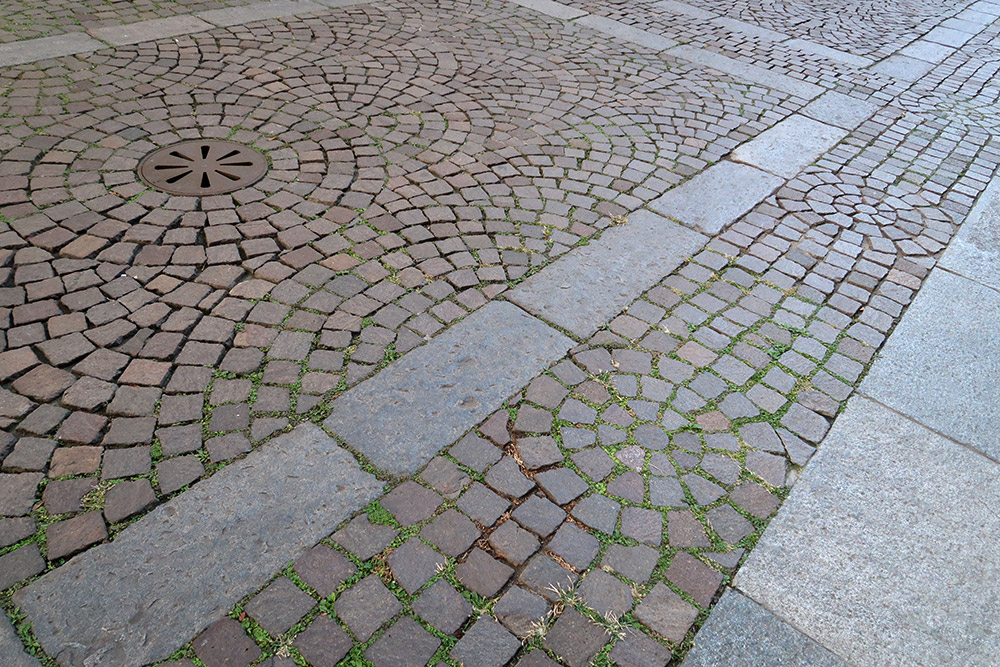
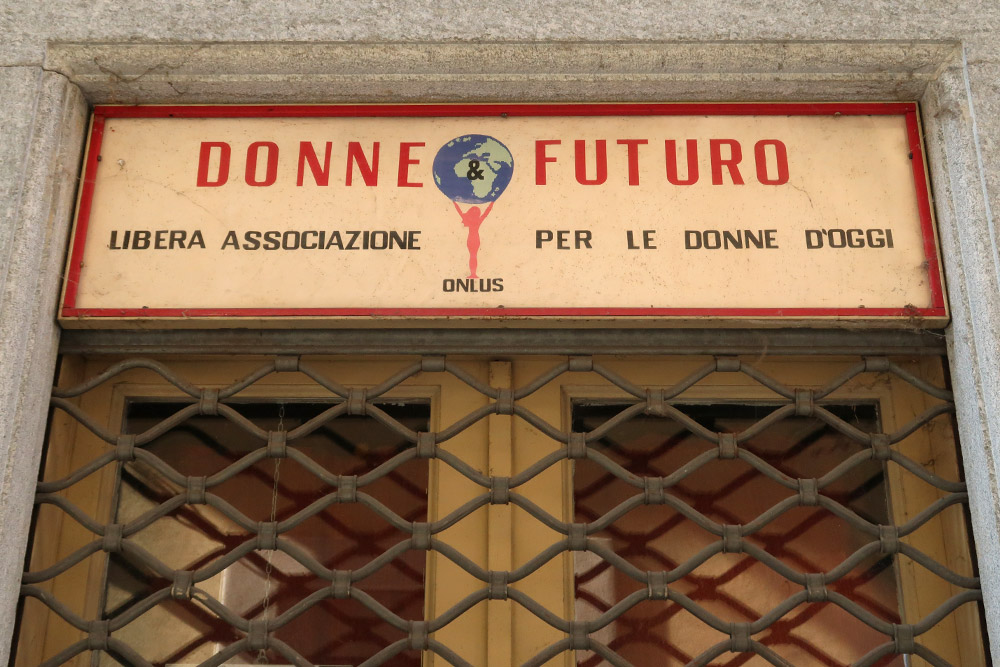
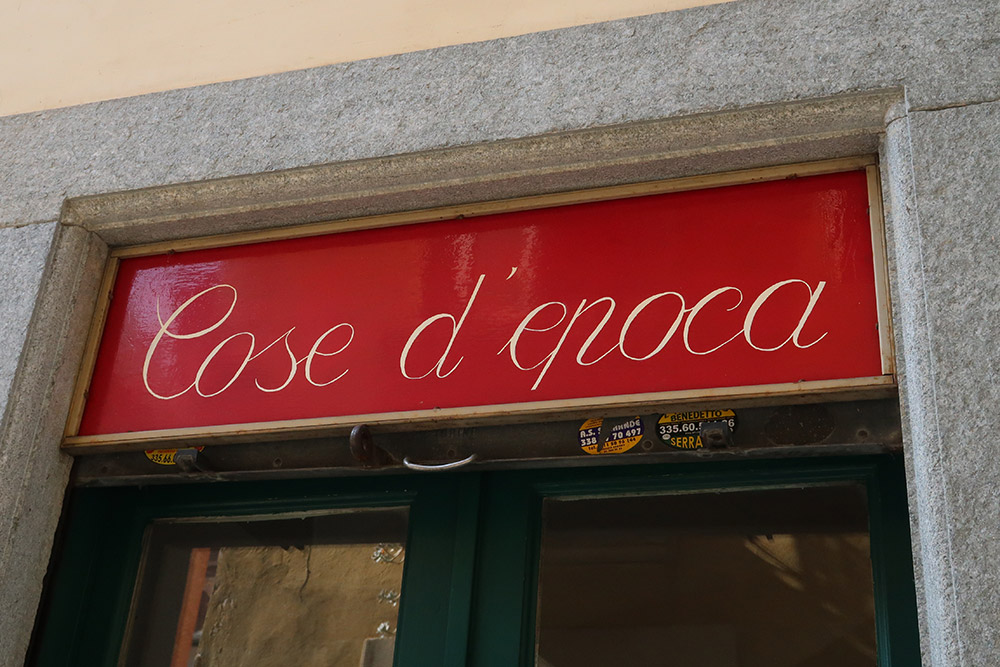
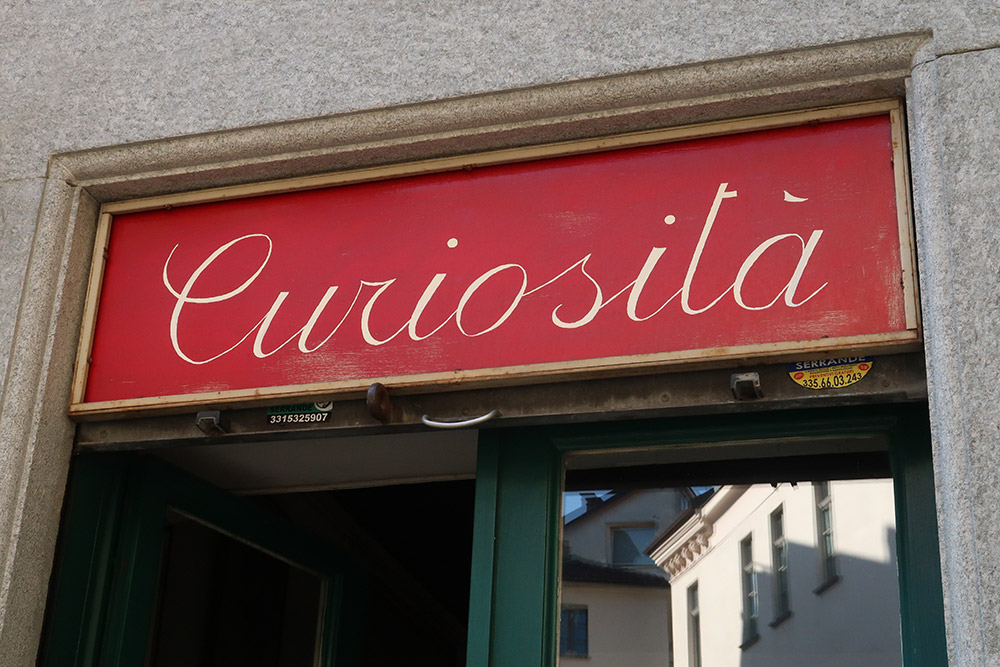
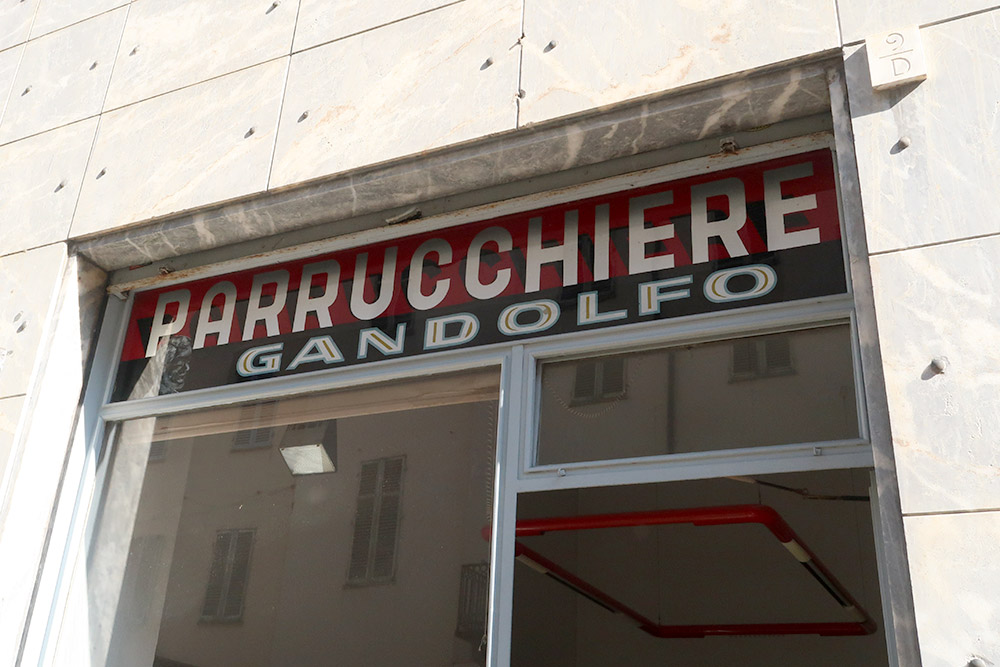
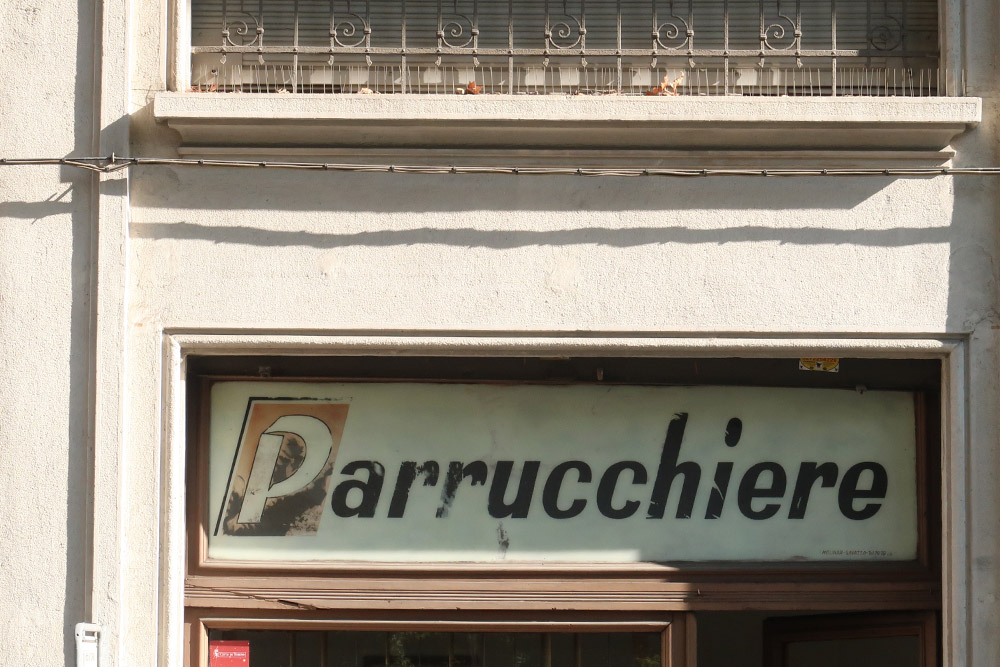
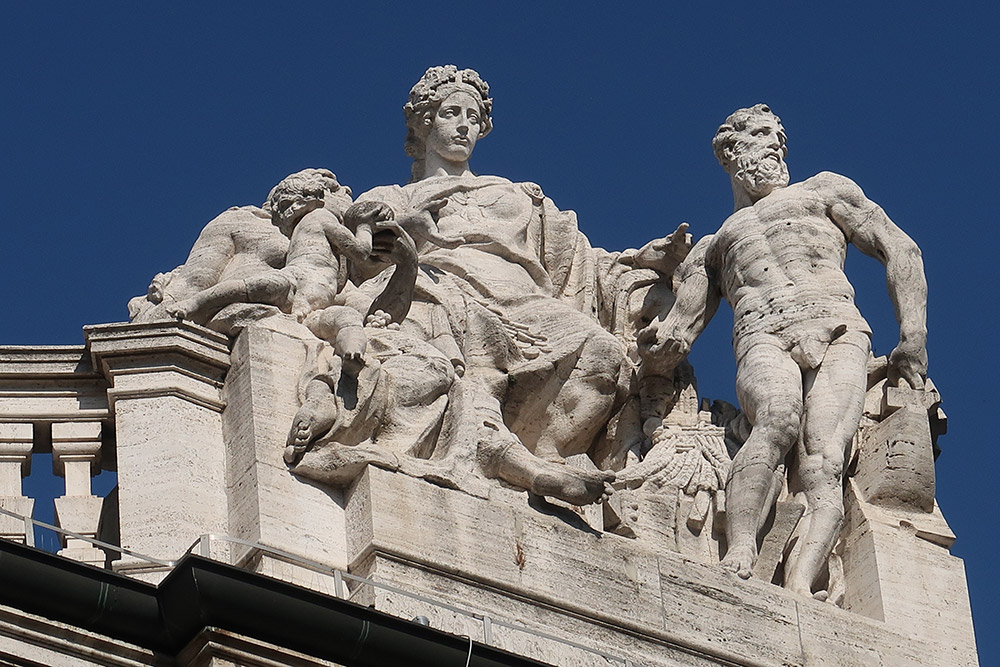
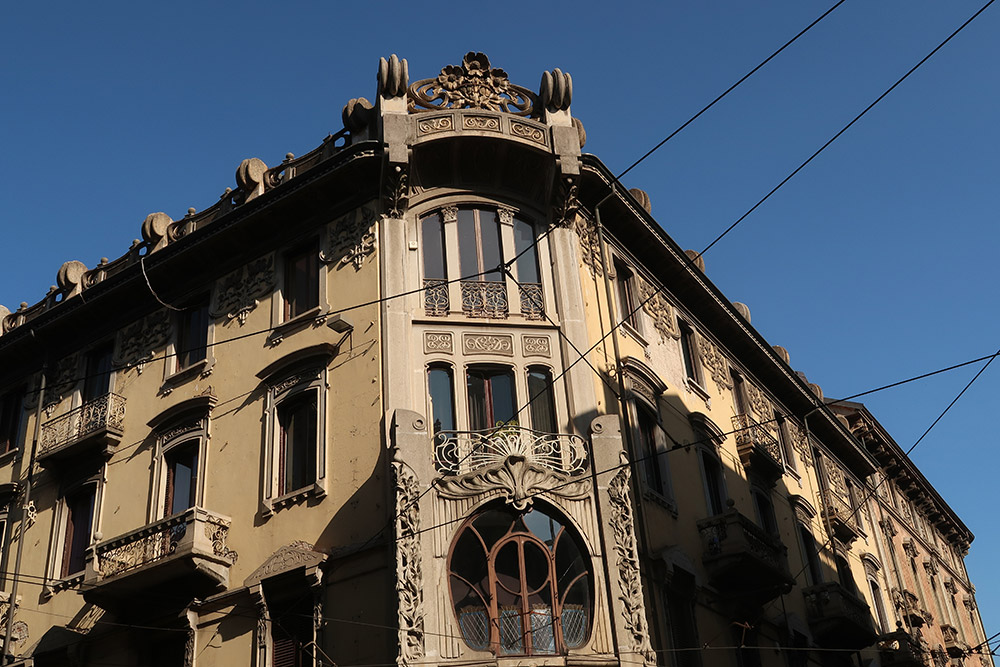
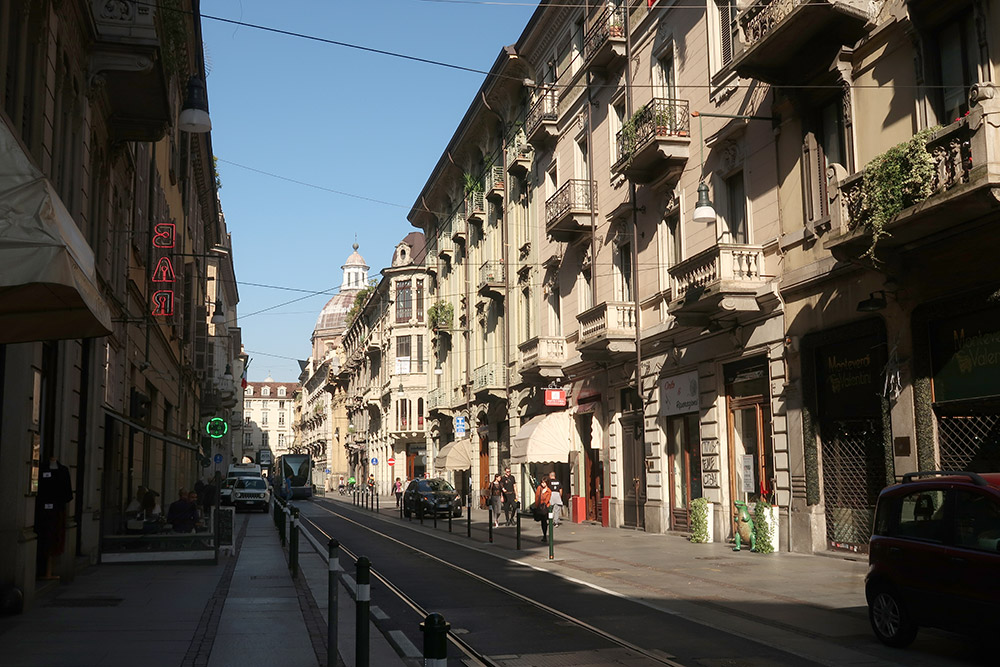
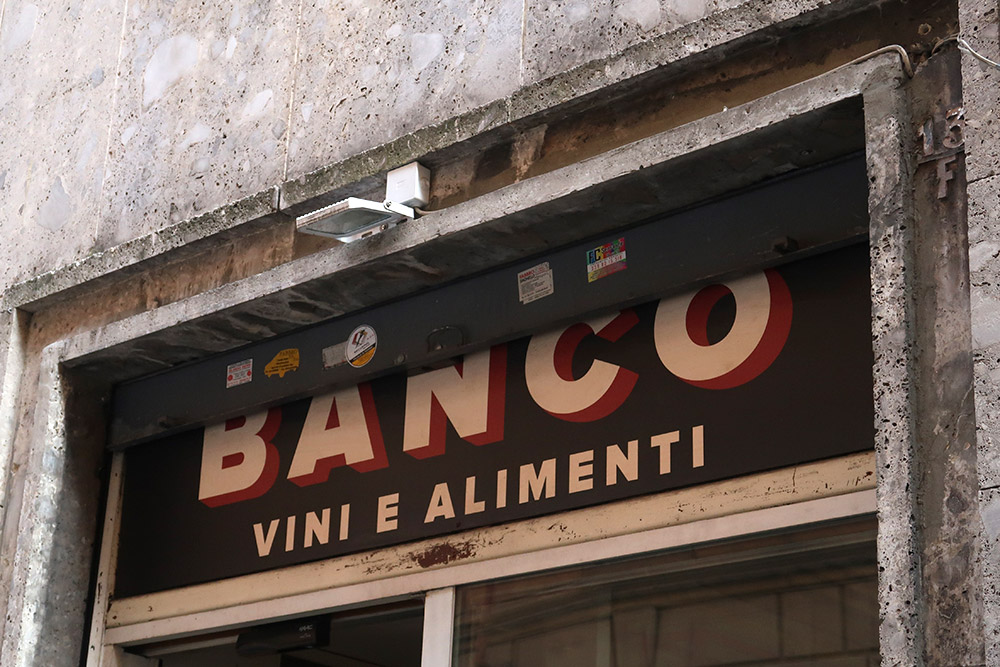
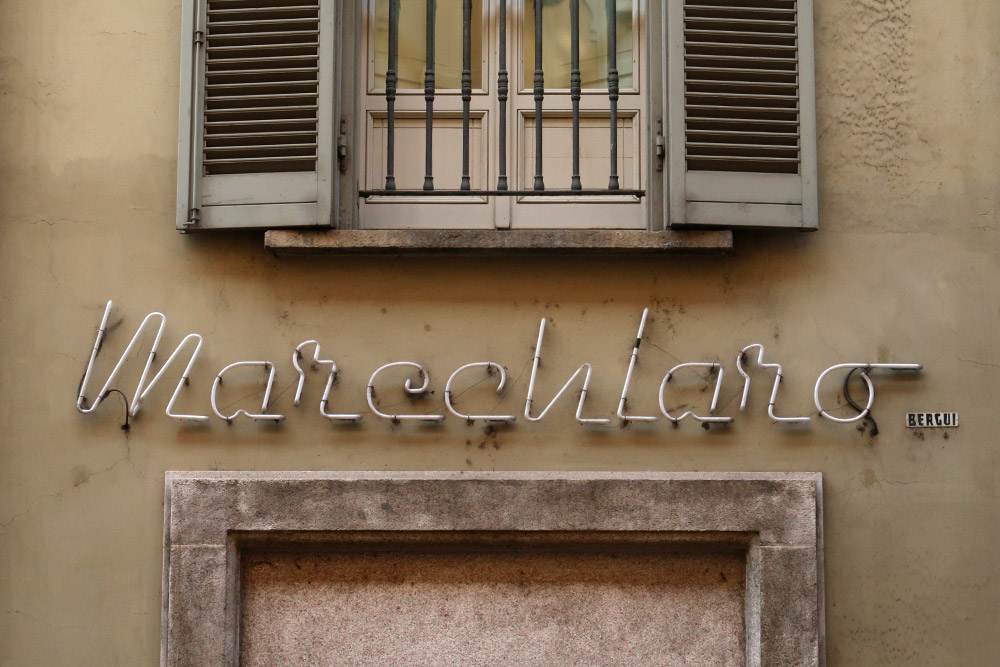
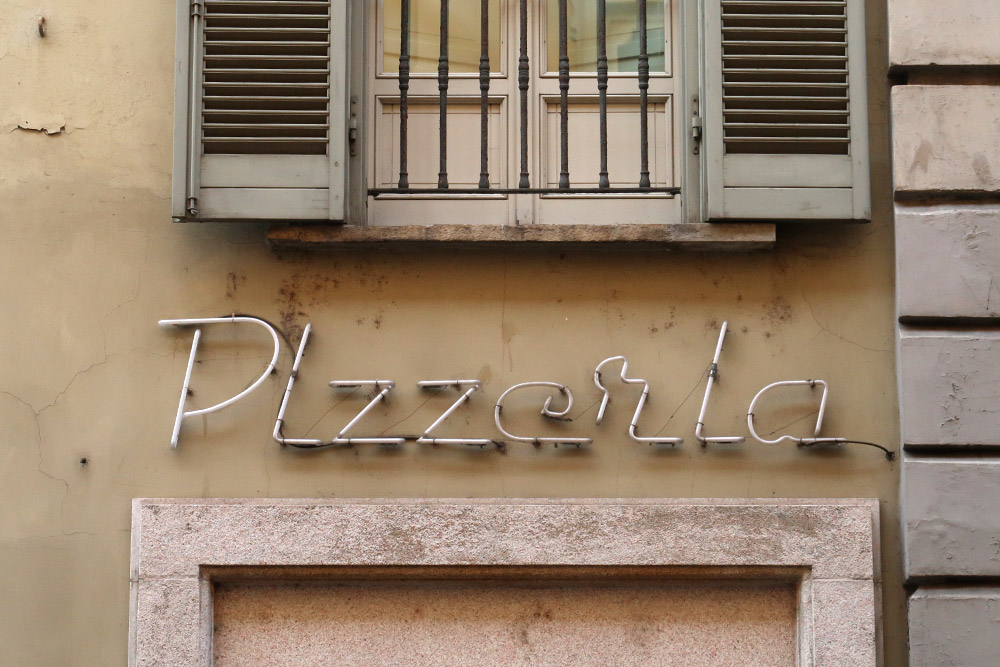
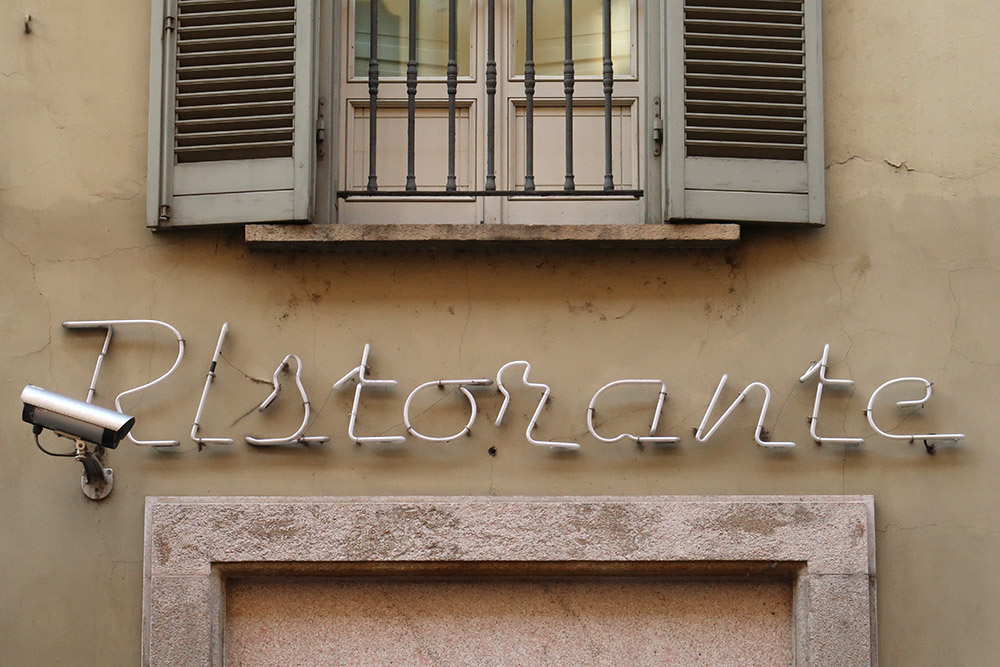
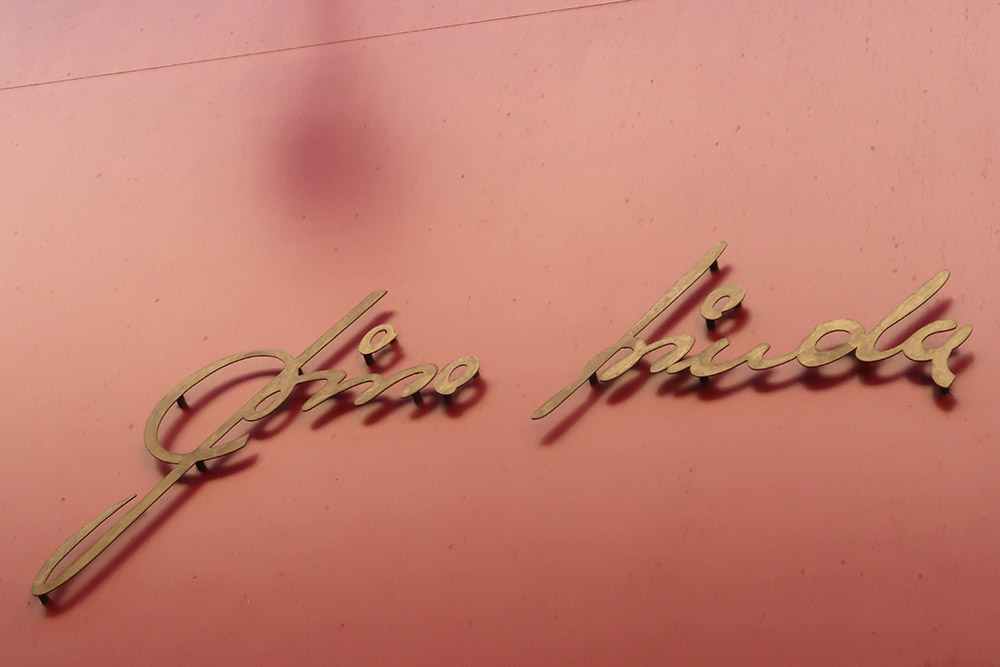
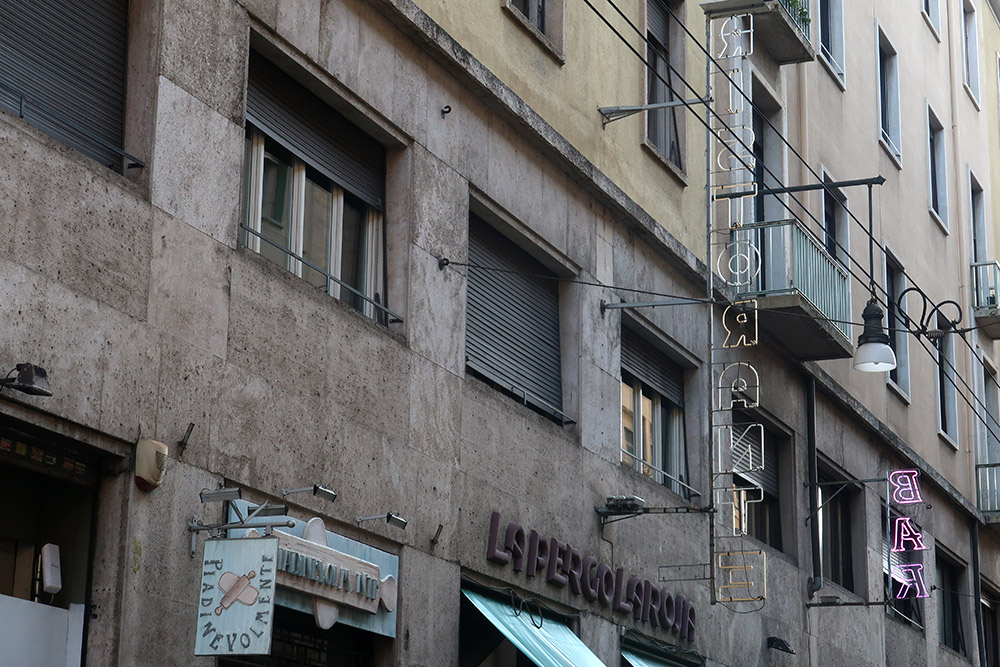
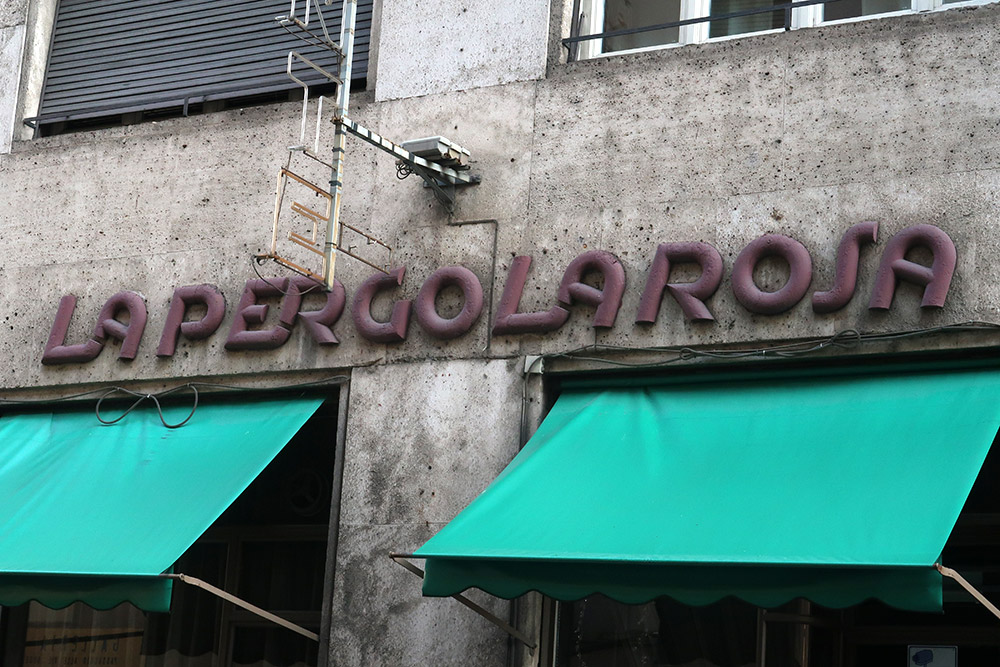
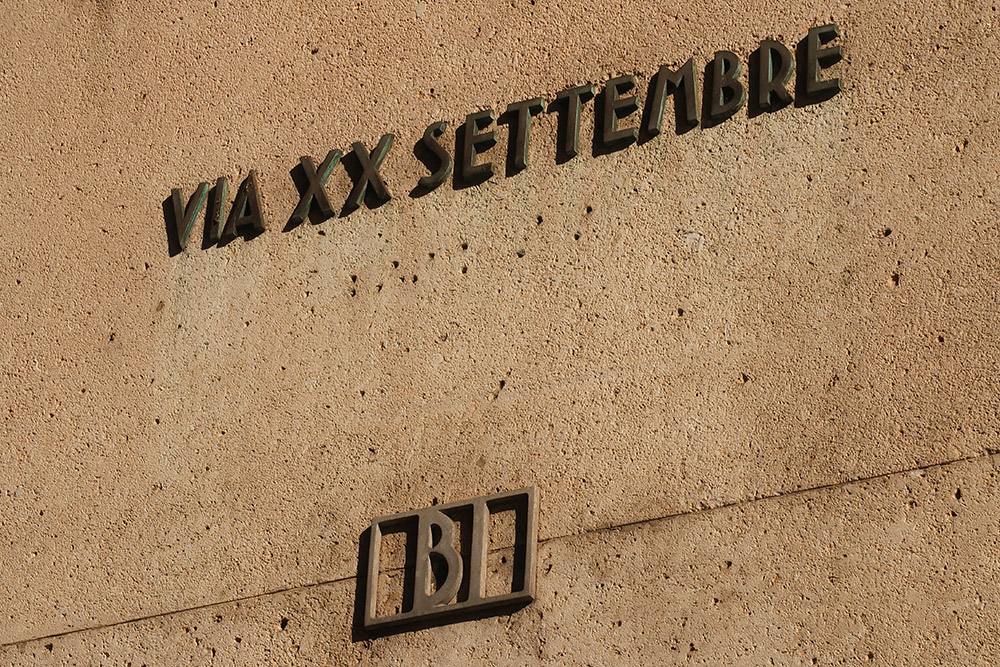
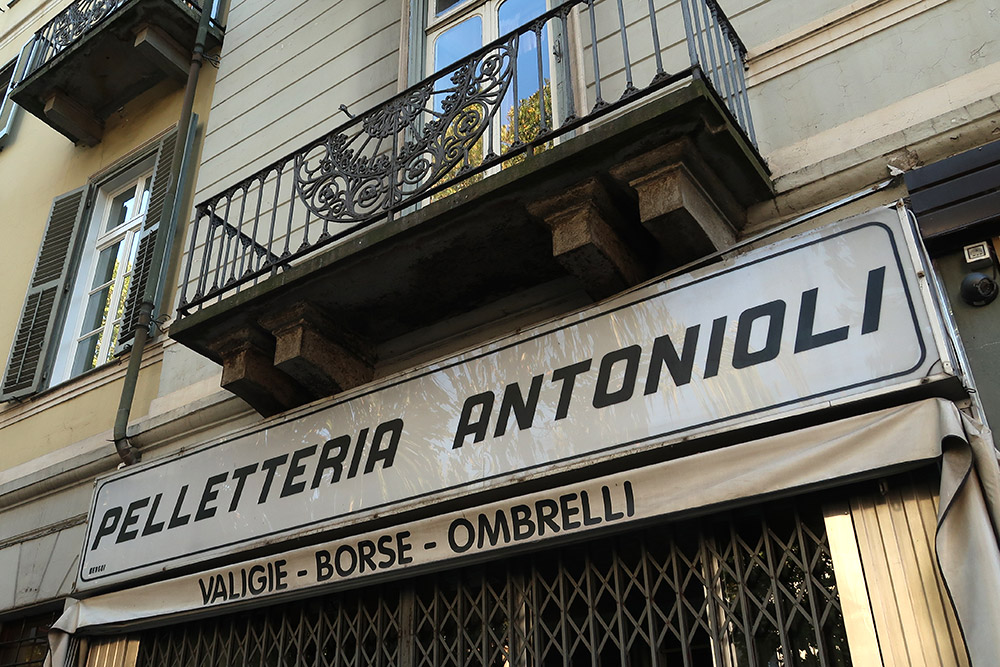
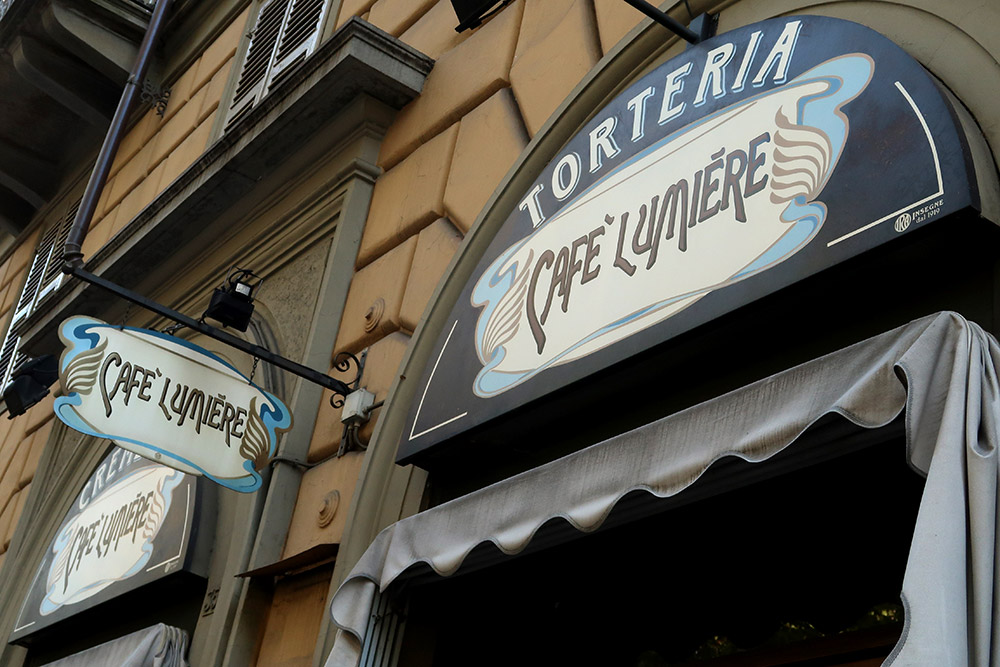
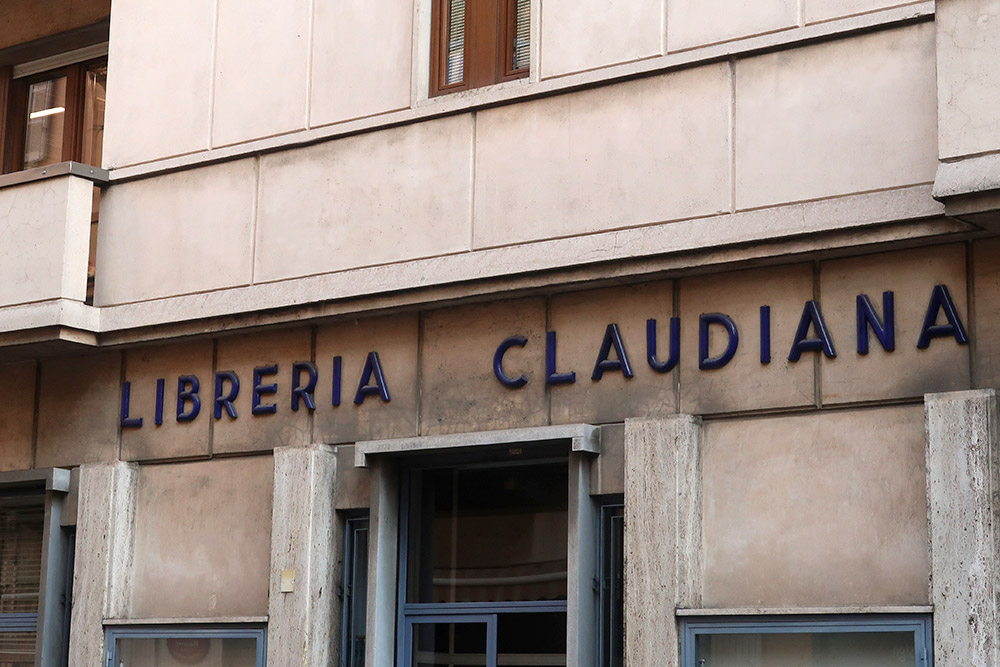
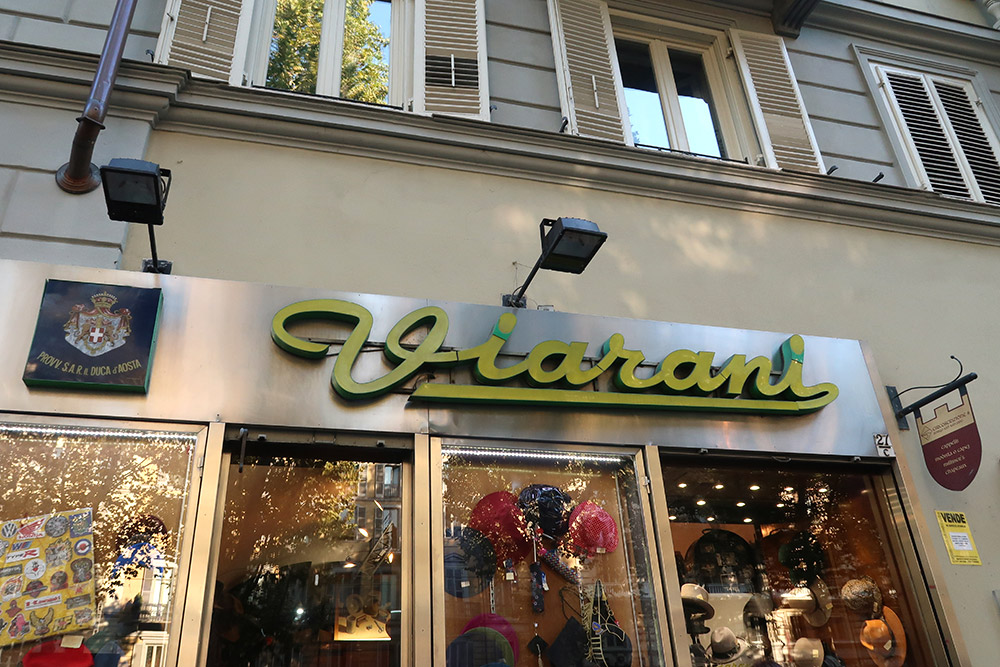
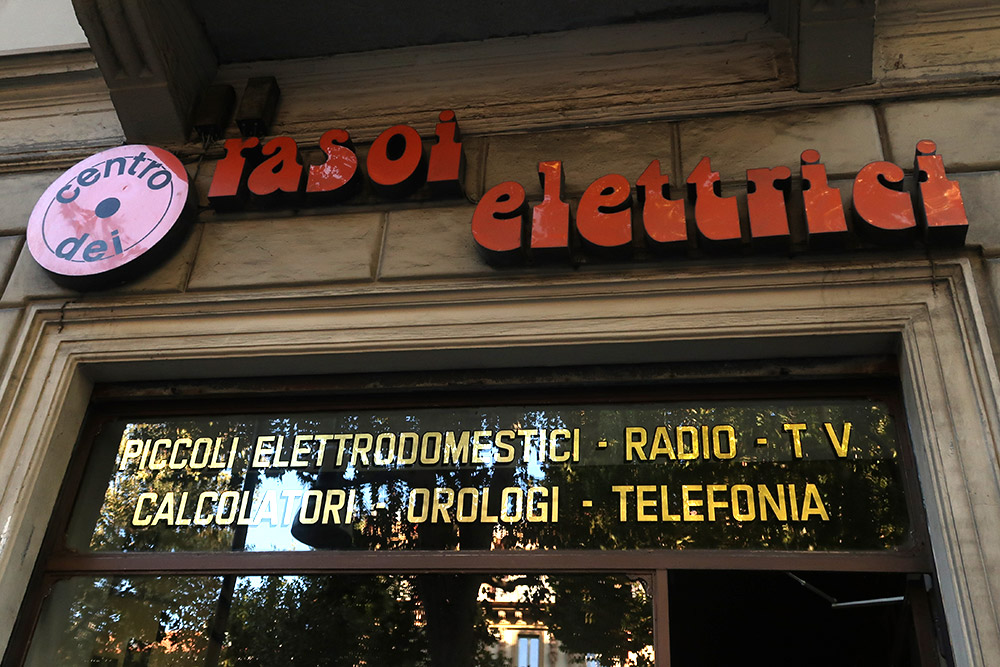
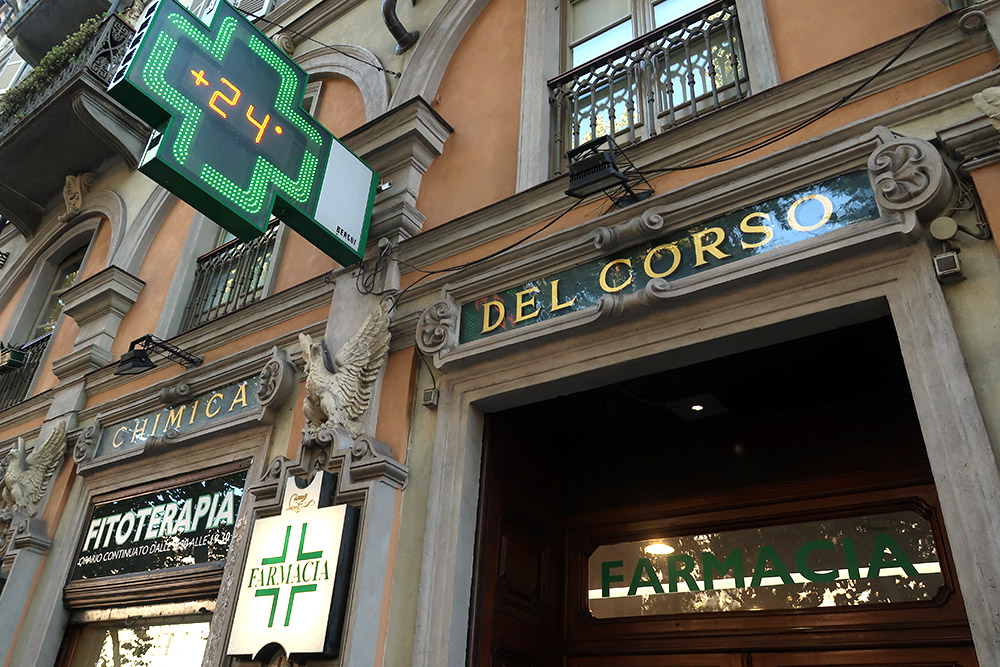
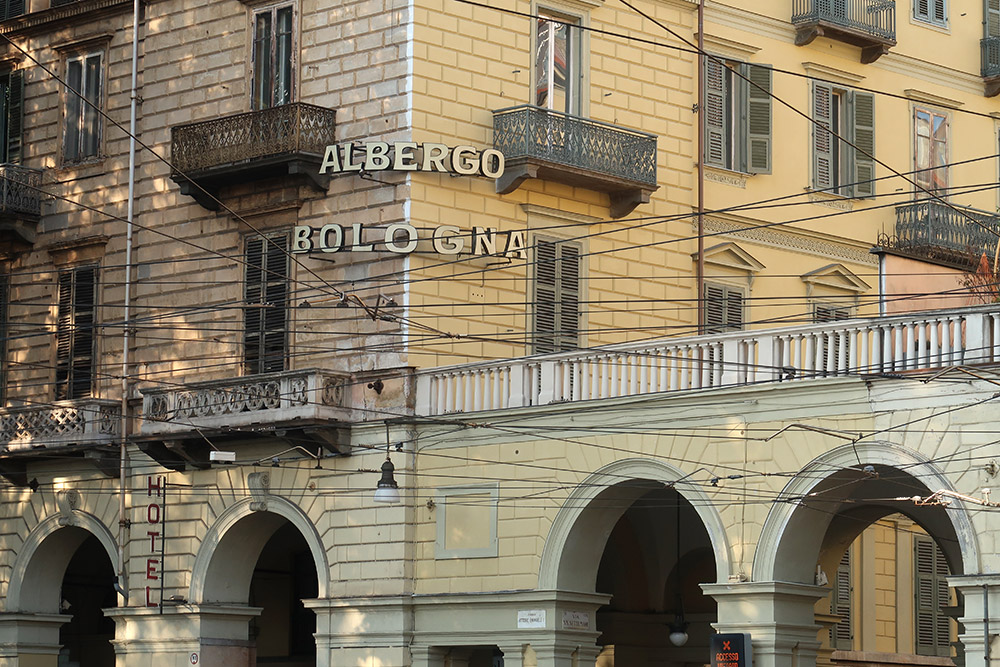
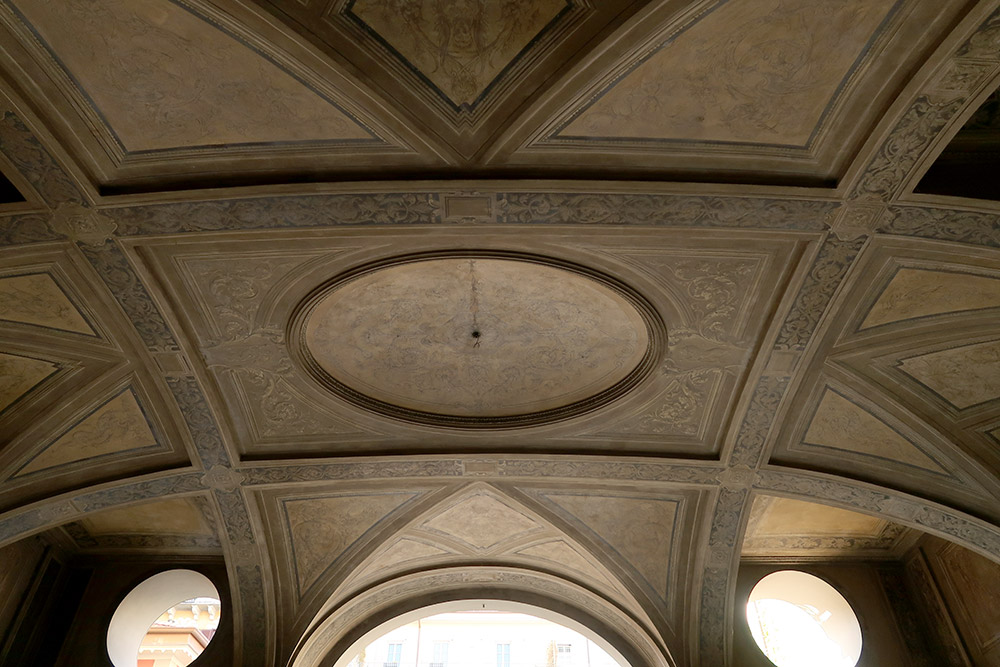
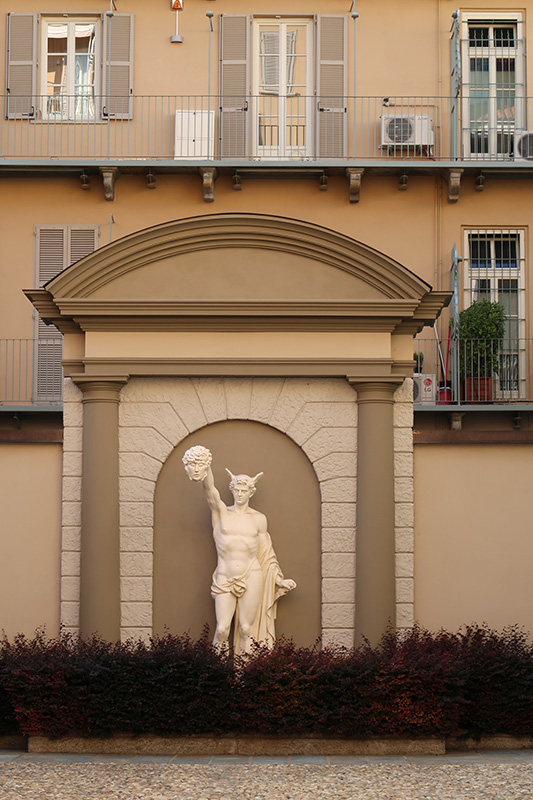
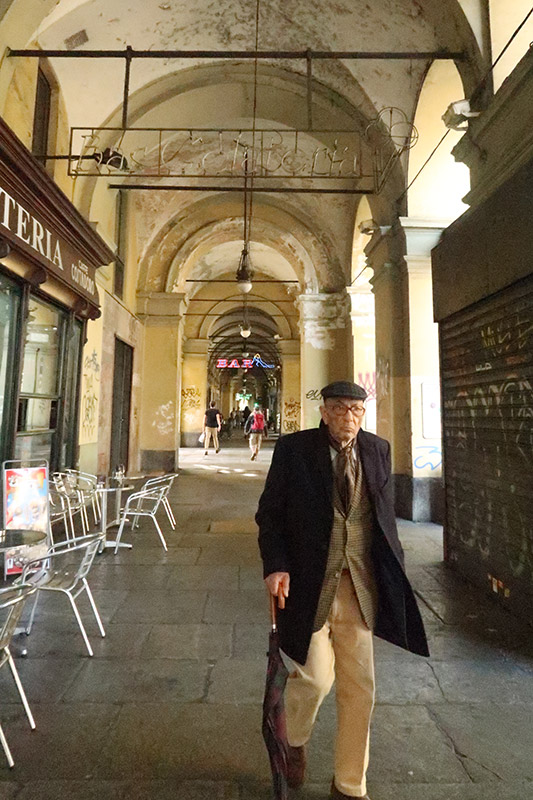
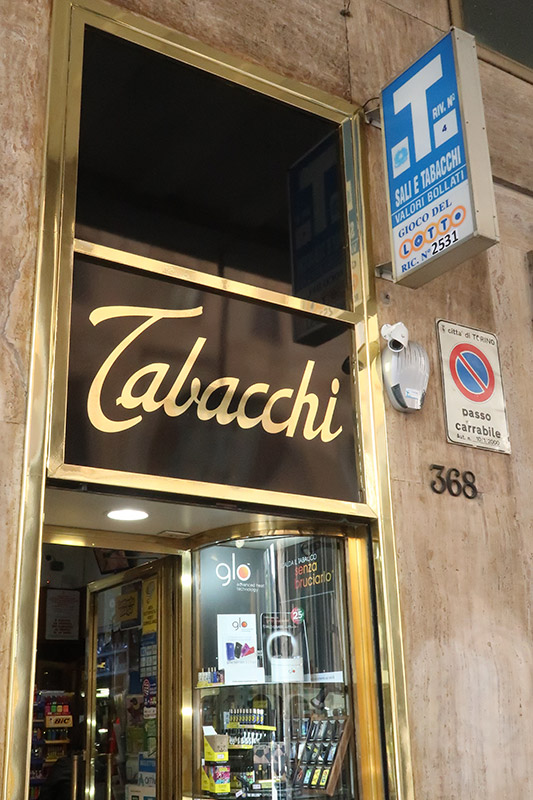
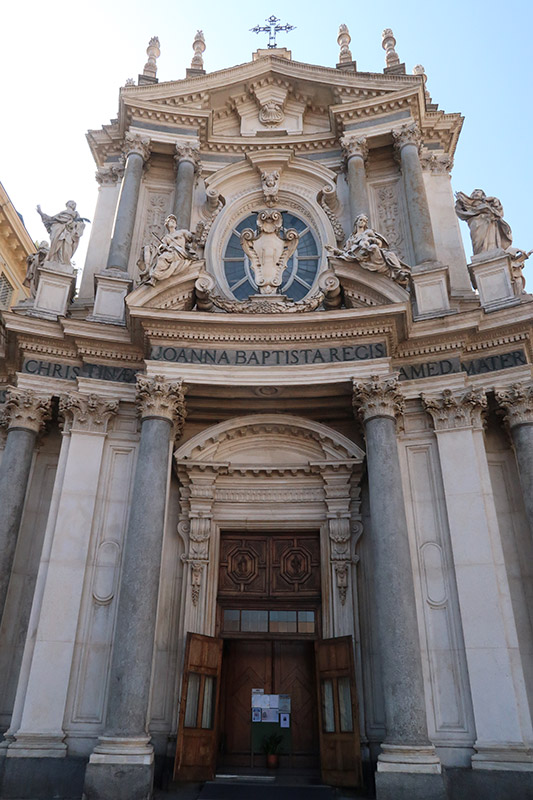
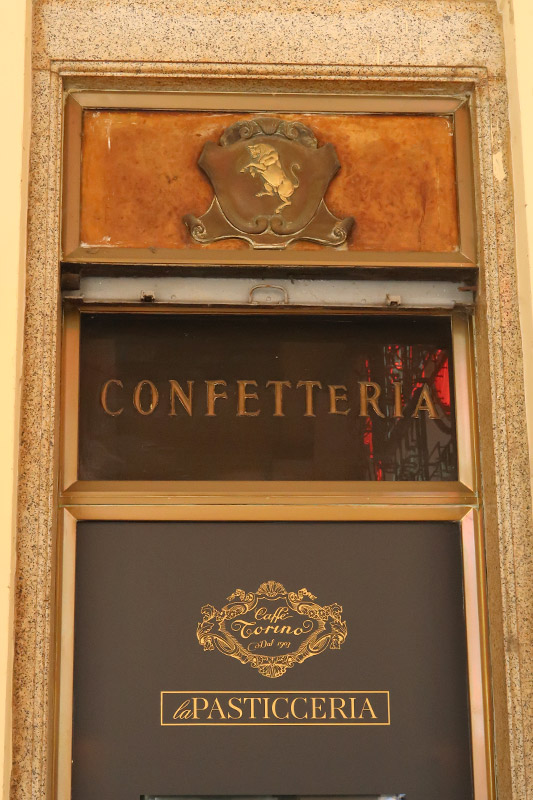
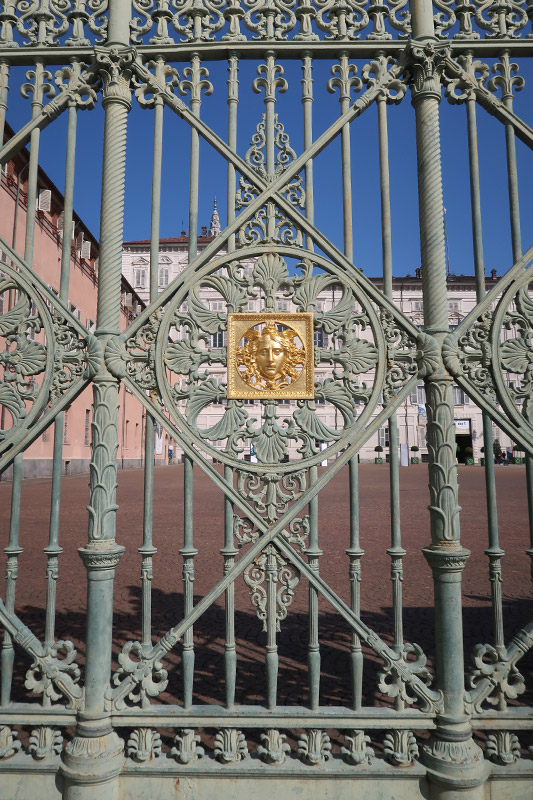
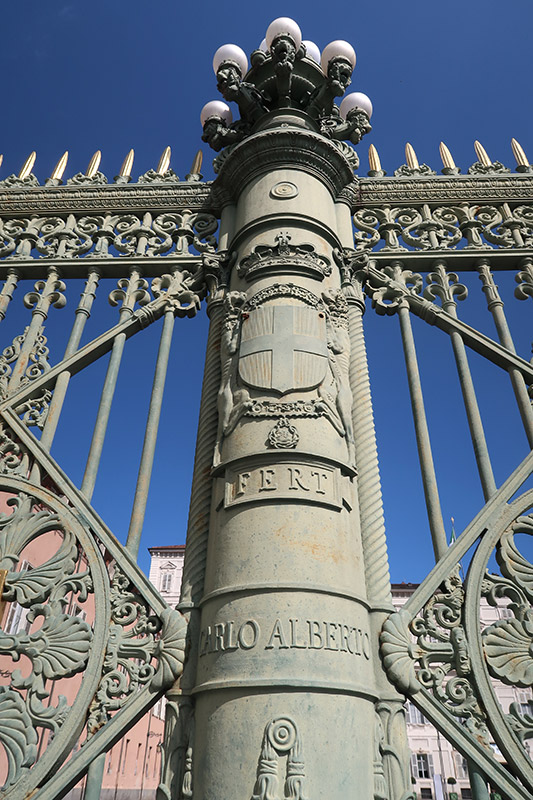
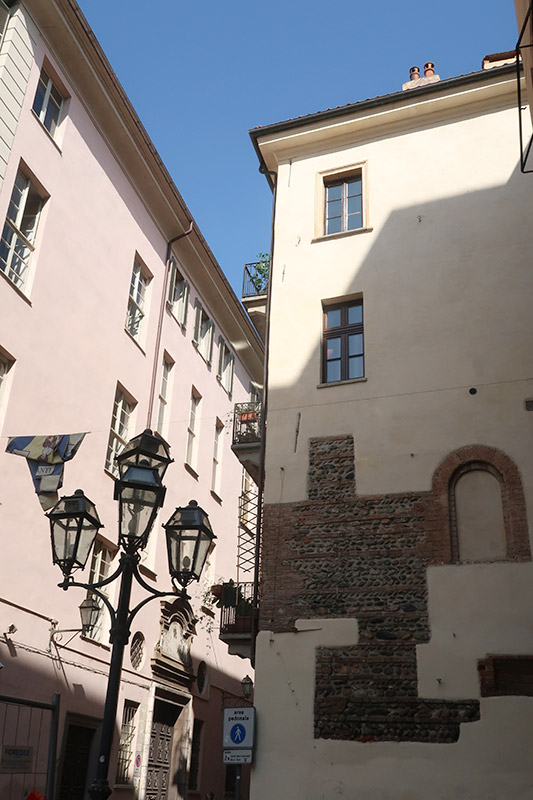
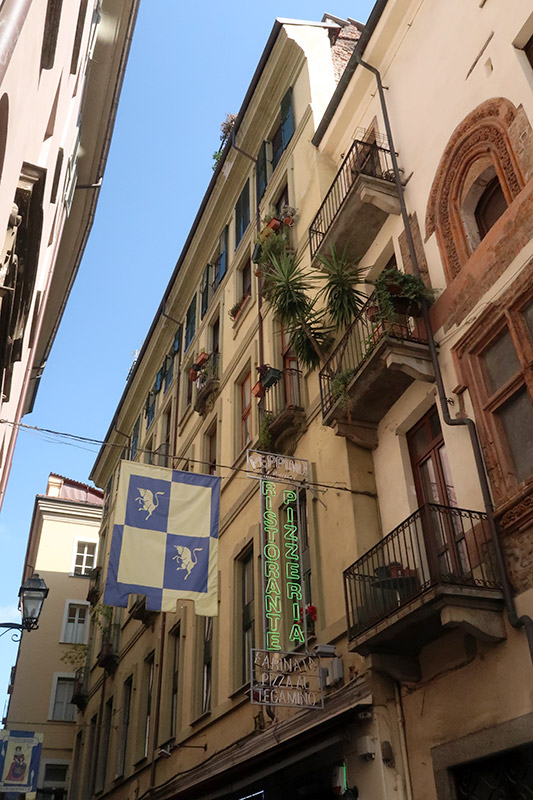
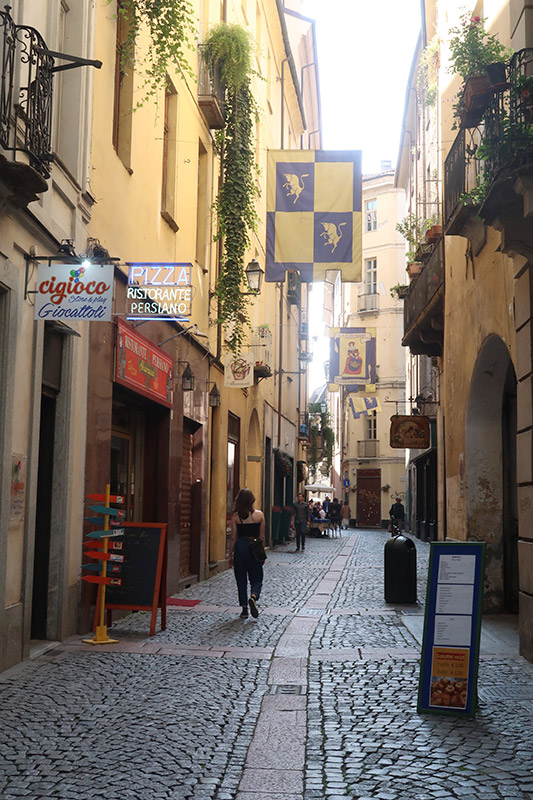
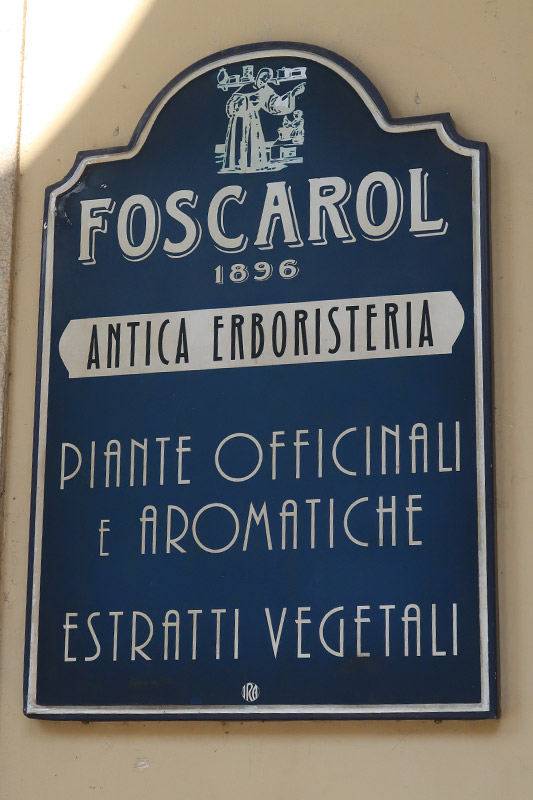
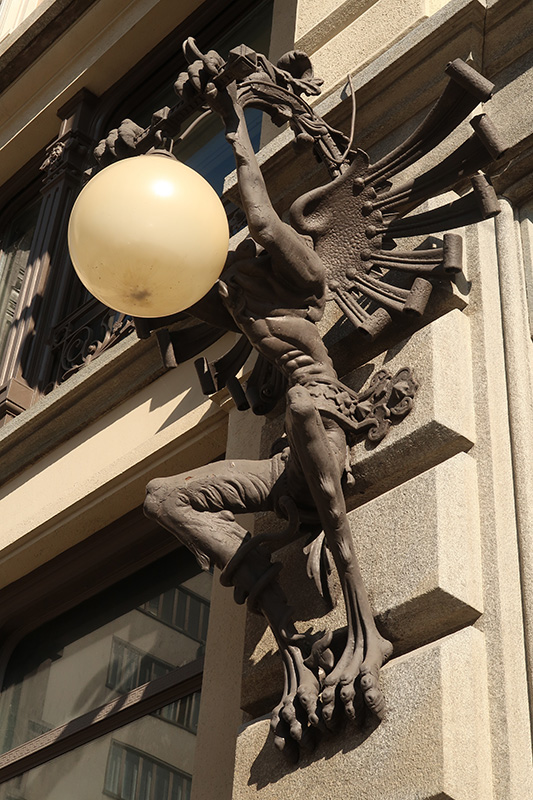
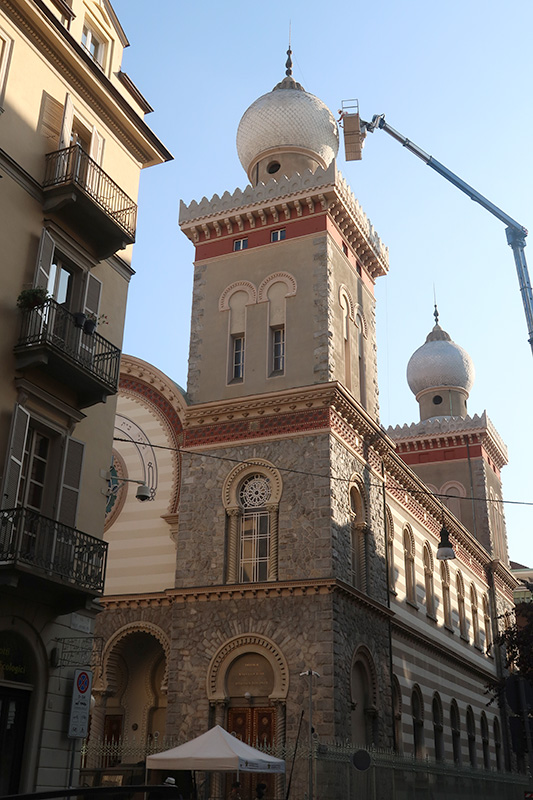
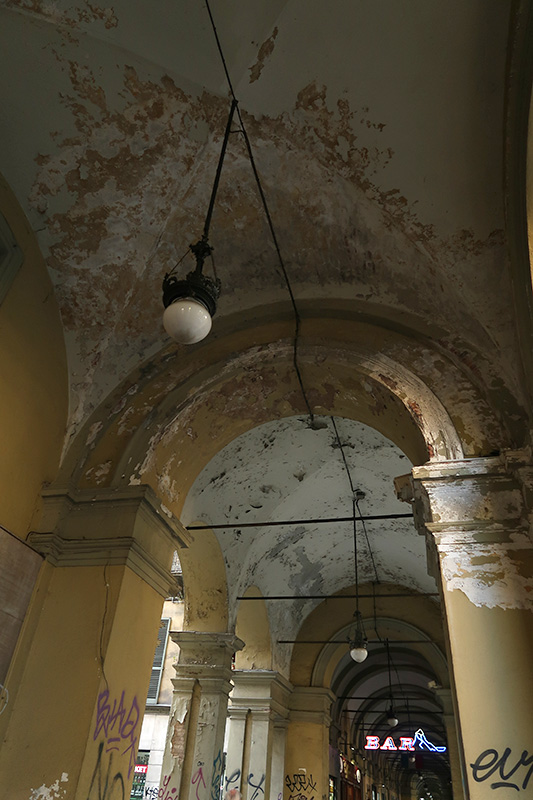
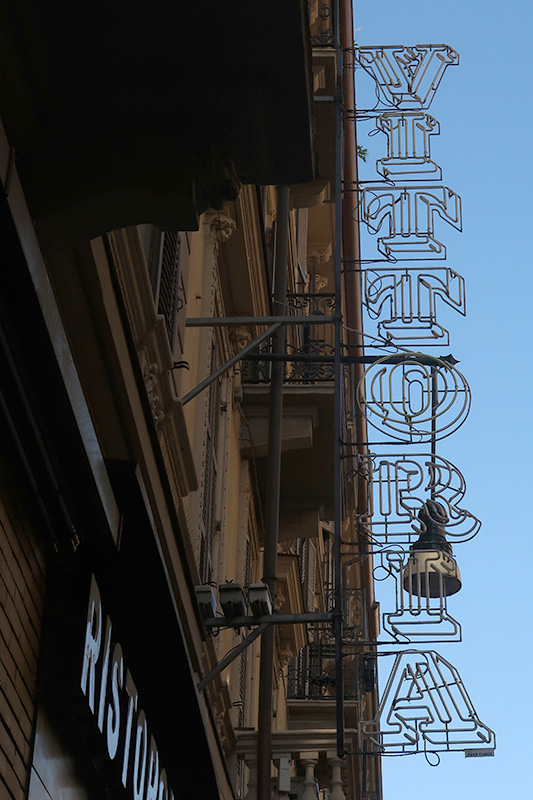
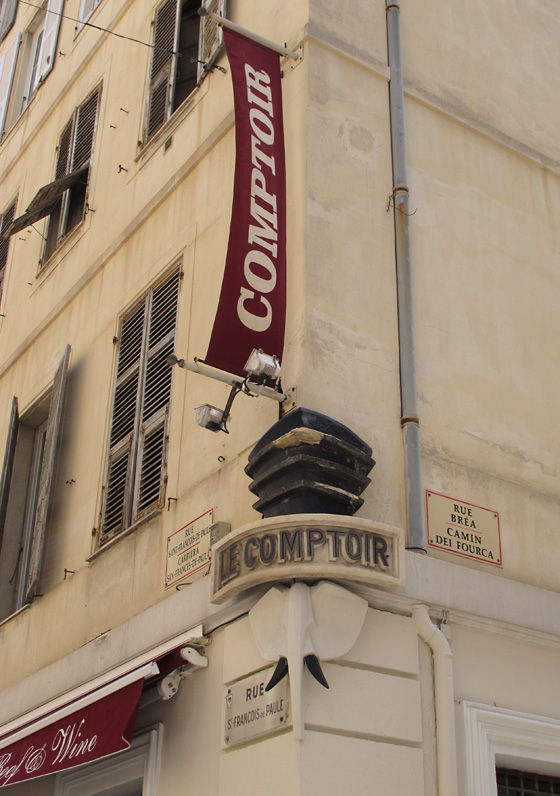
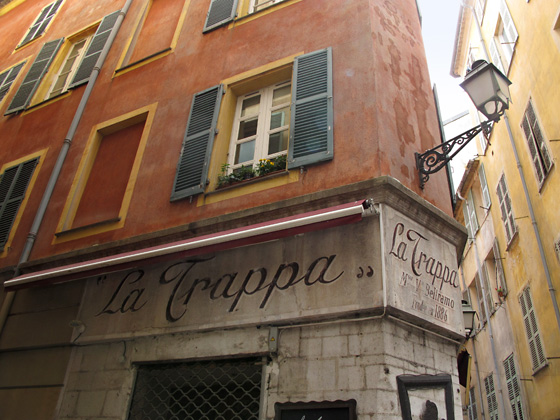
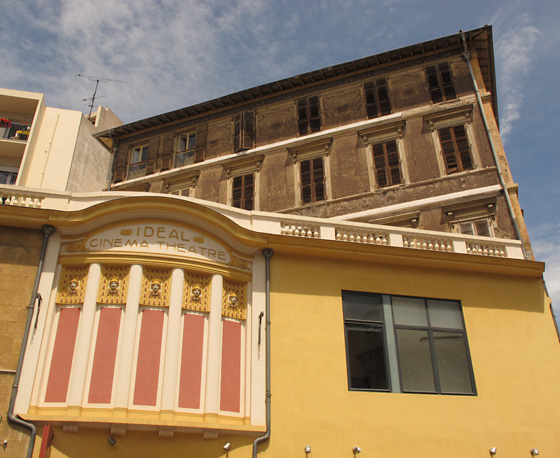
Torino. Turin. A lovely city in the far northwest of Italy, in the Piedmont region—Piemonte—an hour’s ride on the fast train, west of Milano. I had been there 10 years ago for a short afternoon and saw so little of it then that I wanted to go back. Lovers of letters swoon over the historic and vintage signage there, so I went specifically to shoot letterforms… and a few city sights as well.
The city used to be a major European political centre. From 1563, it was the capital of the Duchy of Savoy, then of the Kingdom of Sardinia ruled by the Royal House of Savoy, and the first capital of the unified Italy (the Kingdom of Italy) from 1861 to 1865.[7][8] Even though much of its political significance and importance had been lost by World War II, Turin became a major European crossroad for industry, commerce and trade, and is part of the famous “industrial triangle” along with Milan and Genoa. Turin is ranked third in Italy, after Milan and Rome, for economic strength. With a GDP of $58 billion, Turin is the world’s 78th richest city by purchasing power.
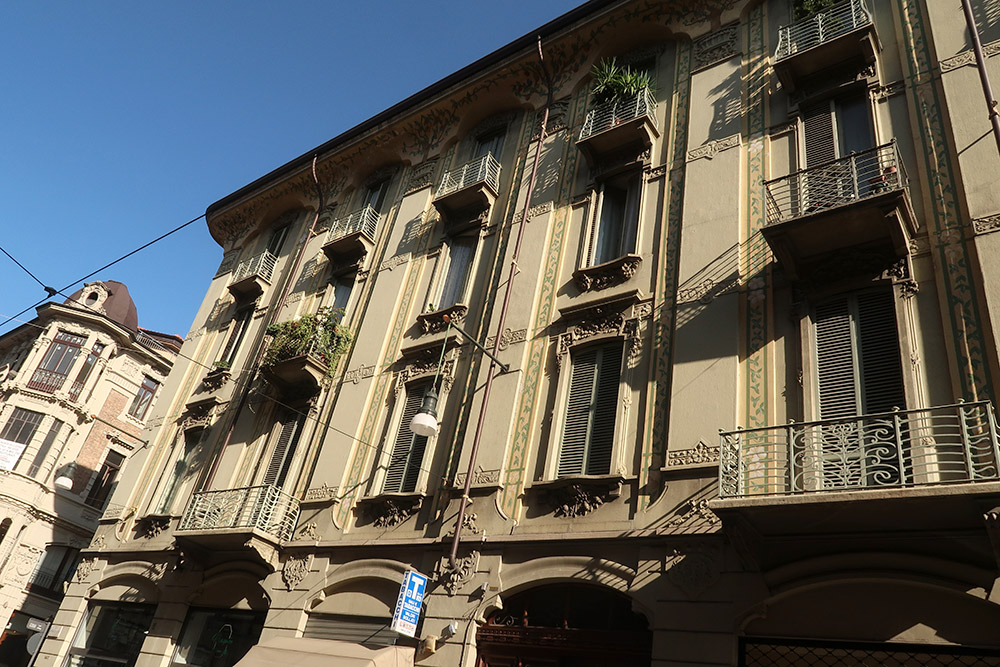
The city has a rich culture and history, being known for its numerous art galleries, restaurants, churches, palaces, opera houses, piazzas, parks, gardens, theatres, libraries, museums and other venues. Turin is well known for its Renaissance, Baroque, Rococo, Neo-classical, and Art Nouveau architecture. Many of Turin’s public squares, castles, gardens and elegant palazzi such as the Palazzo Madama, were built between the 16th and 18th centuries. Turin’s attractions make it one of the world’s top 250 tourist destinations and the tenth most visited city in Italy in 2008.
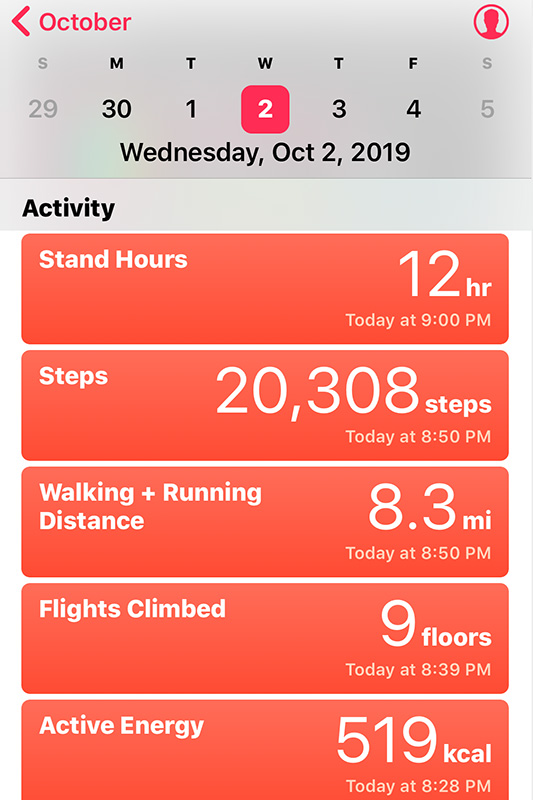
I didn’t go to any of the museums or exhibits, though there were, and always are, many. Instead, I wandered 20,000 steps, following my whims and my nose, until a blister formed on one toe. There really are some gem signs in Torino, and if that’s not what you’re into, there are plenty of other beautiful marvels to make you swoon.
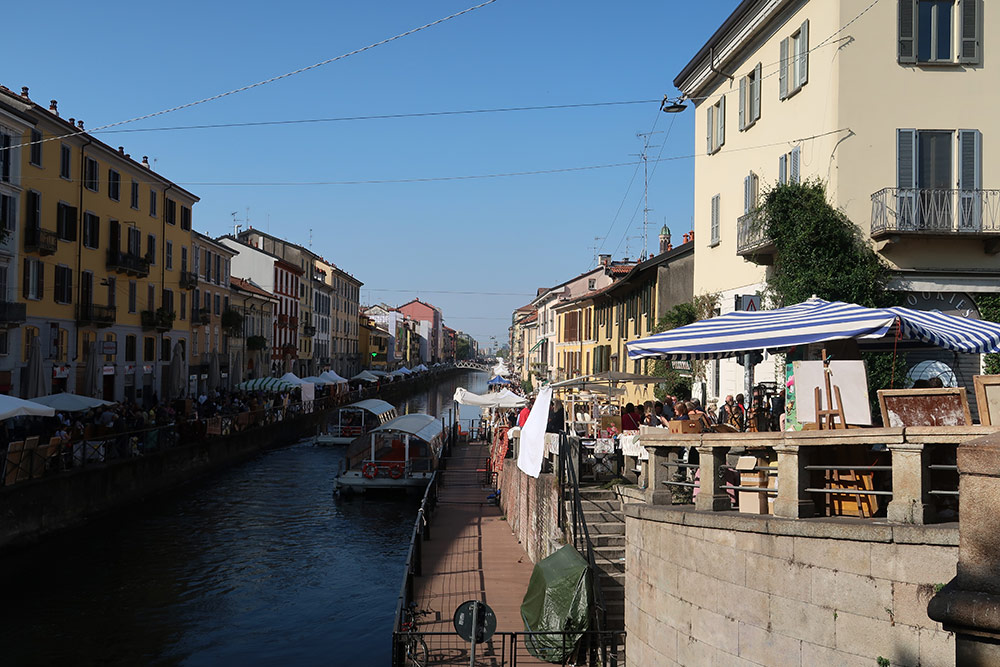
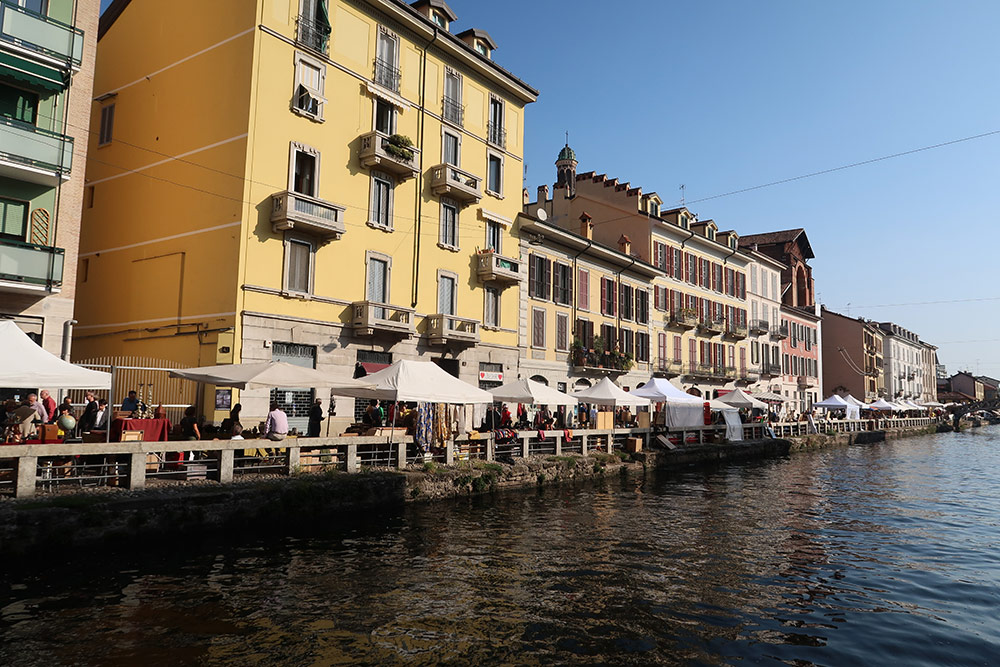
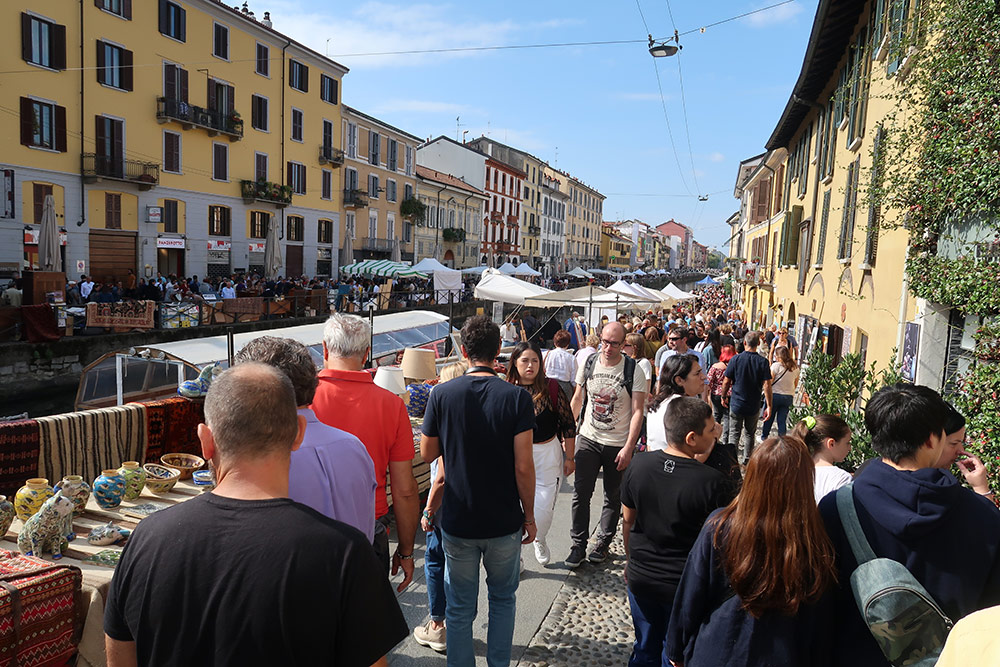
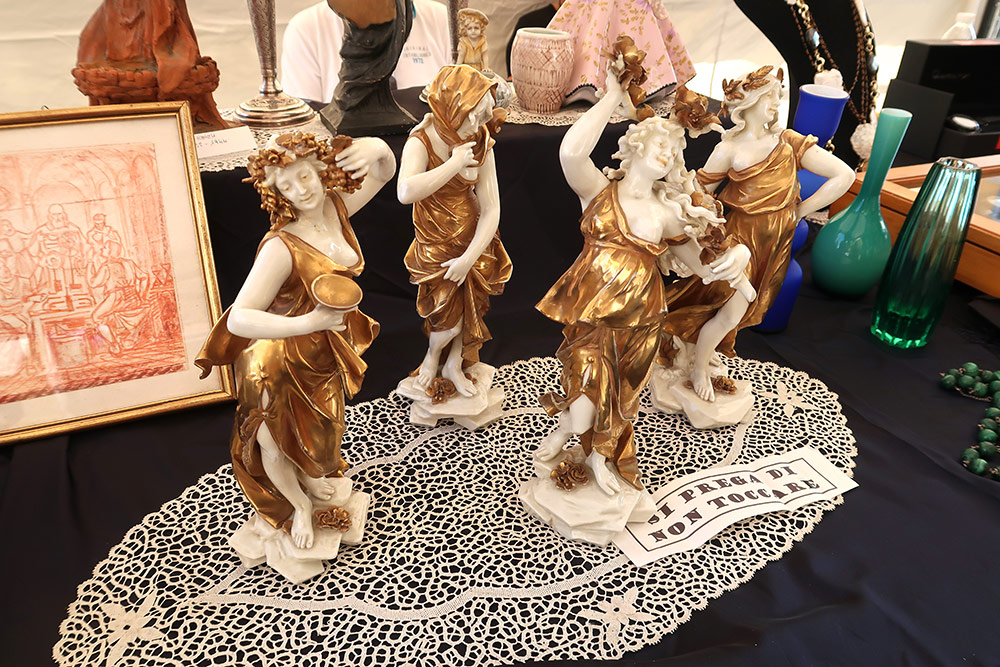
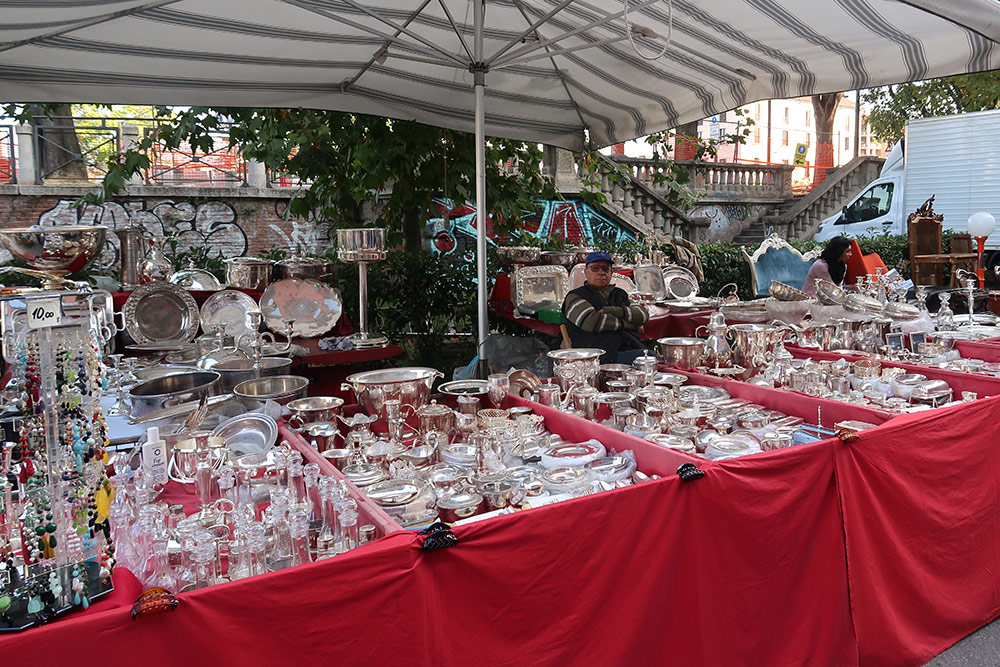
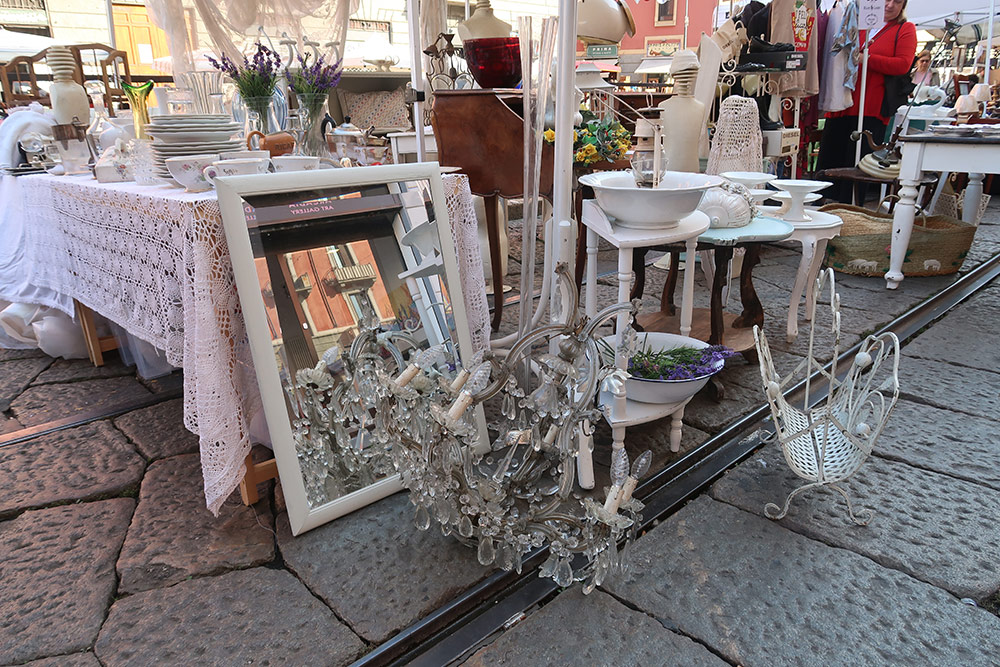
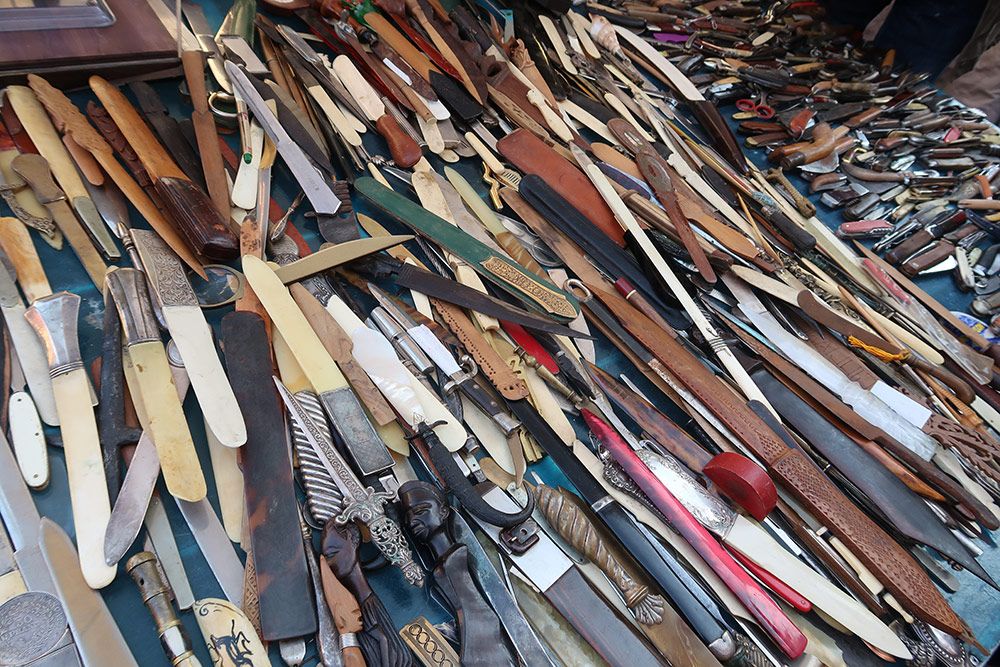
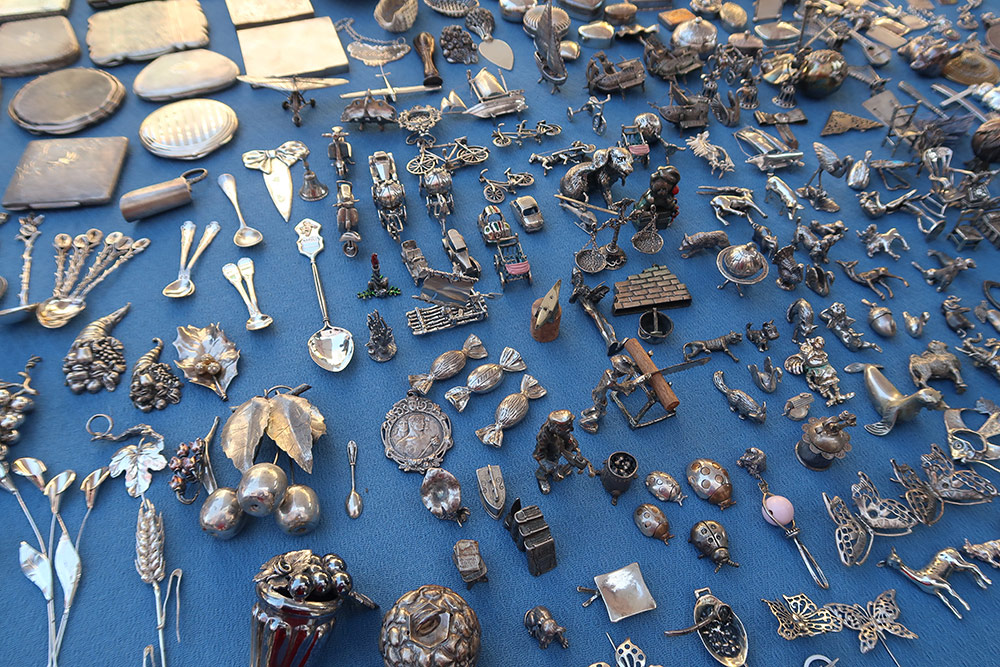
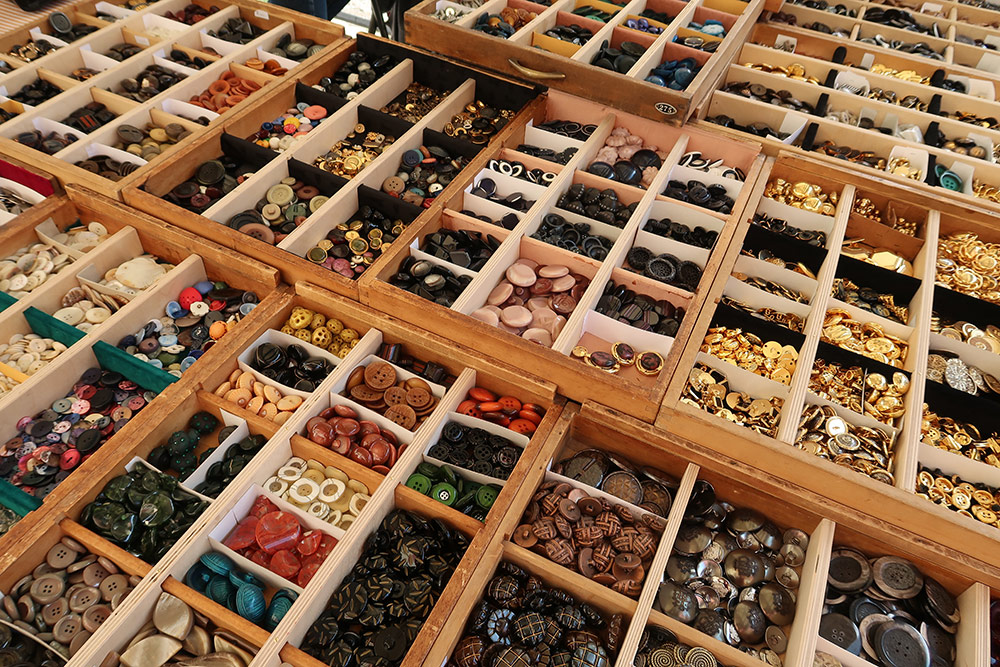
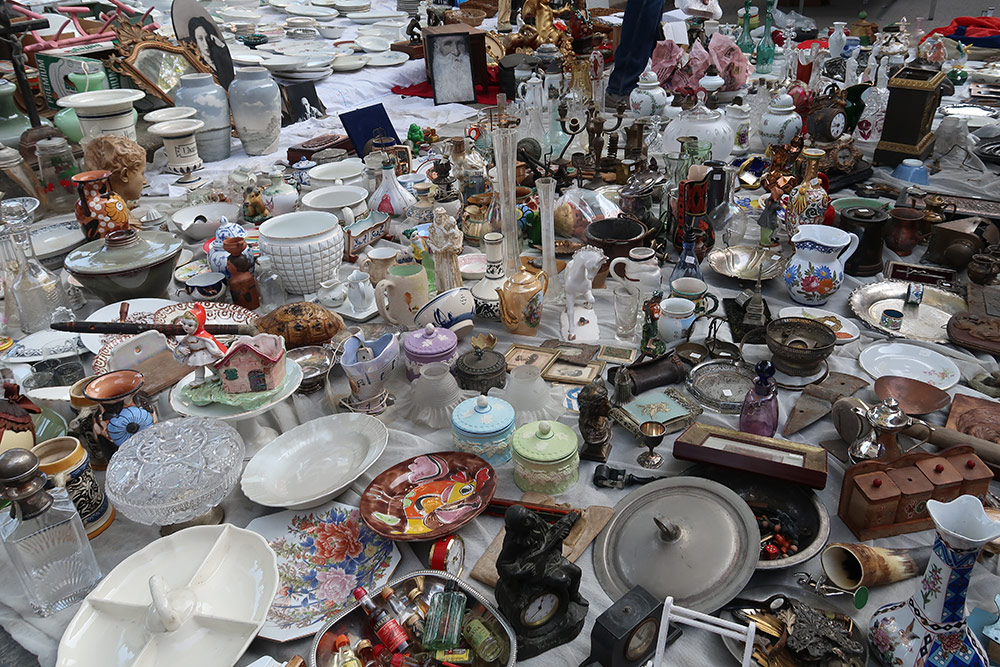
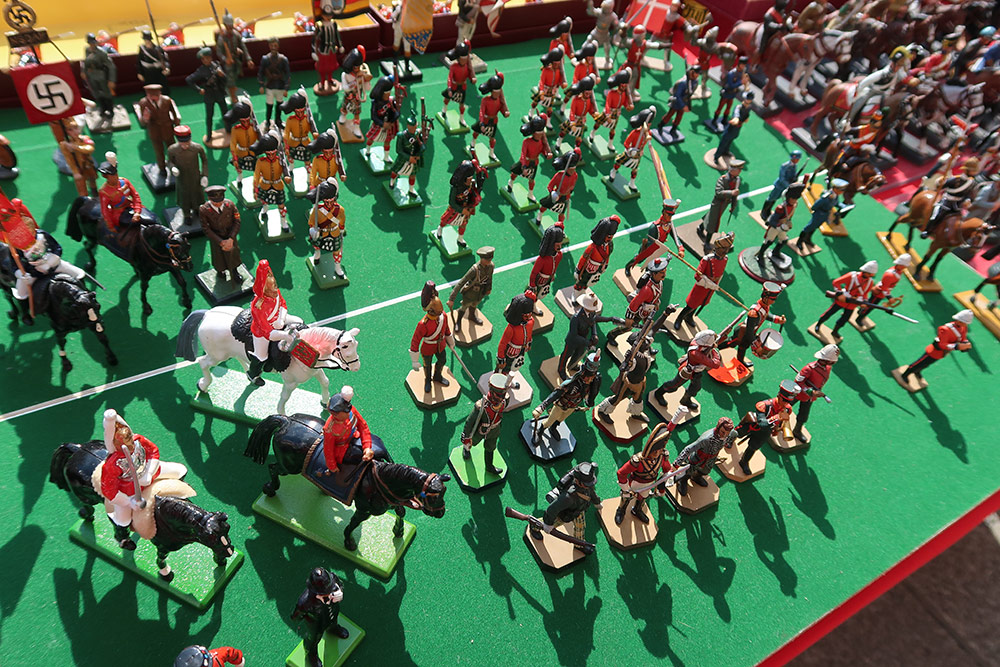
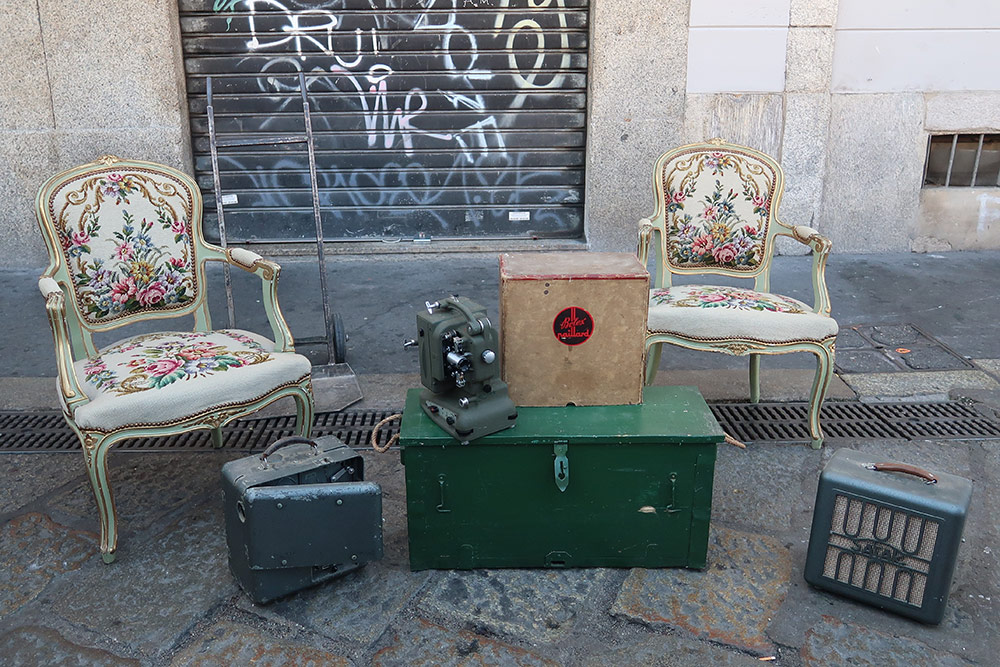
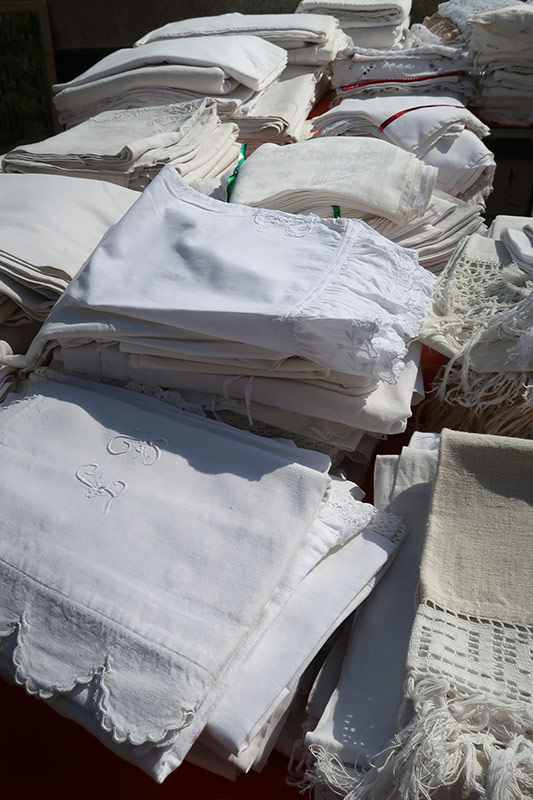
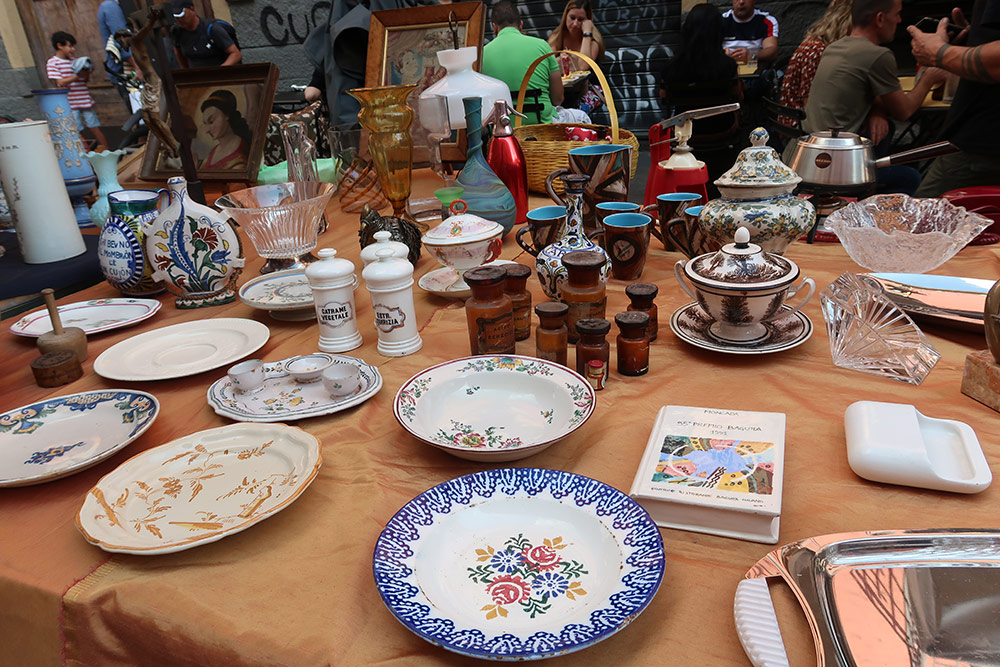
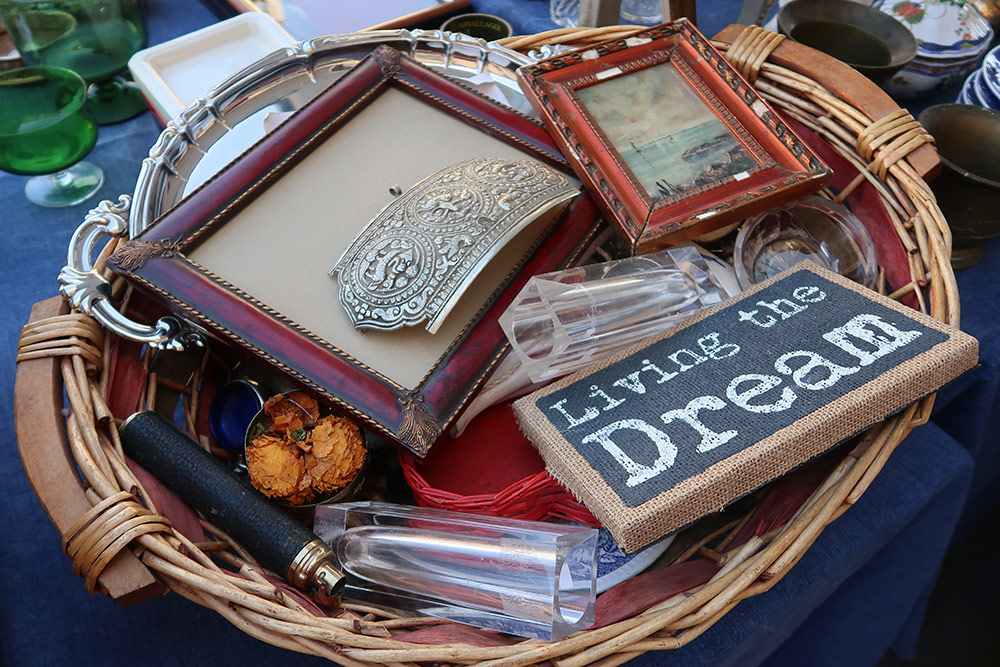
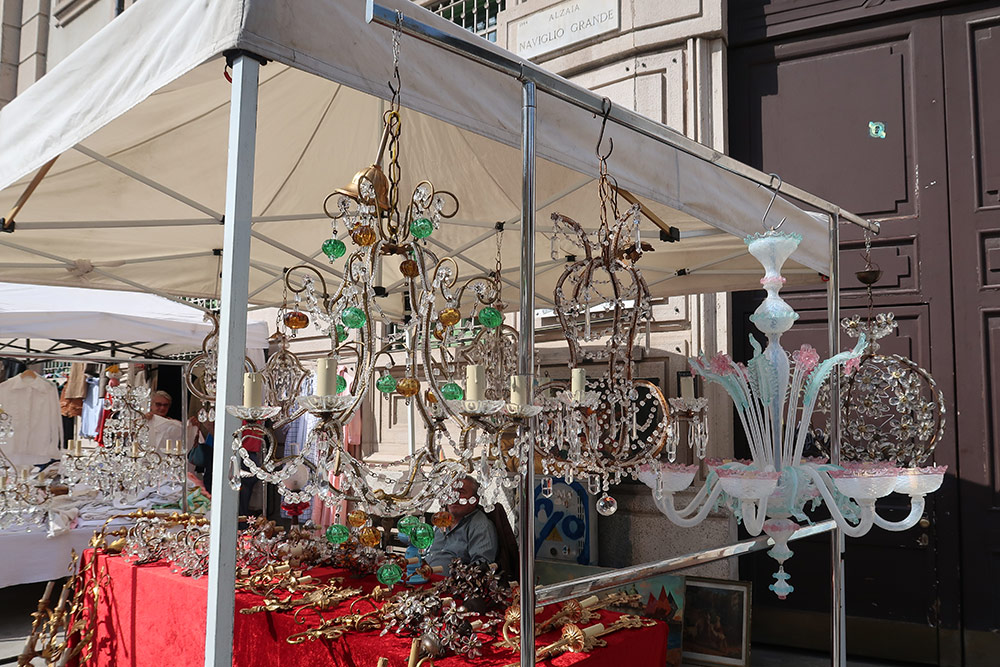
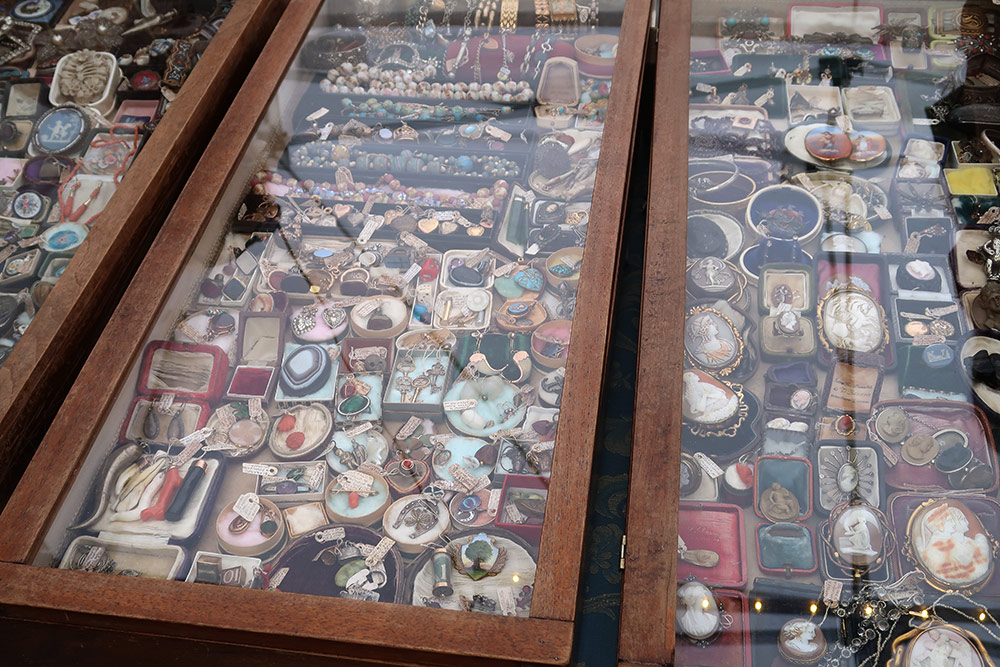
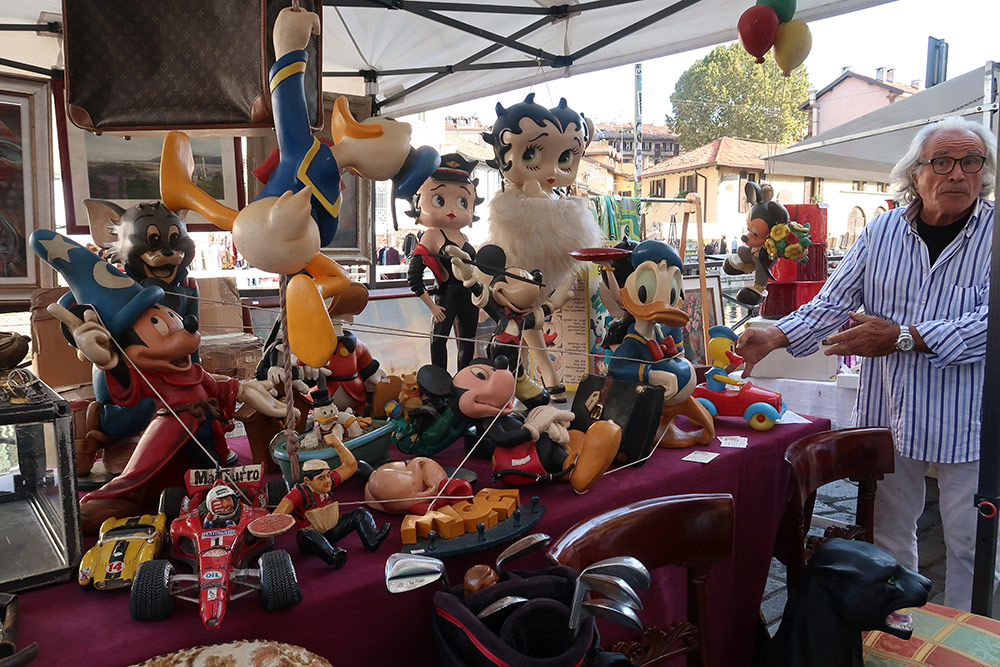
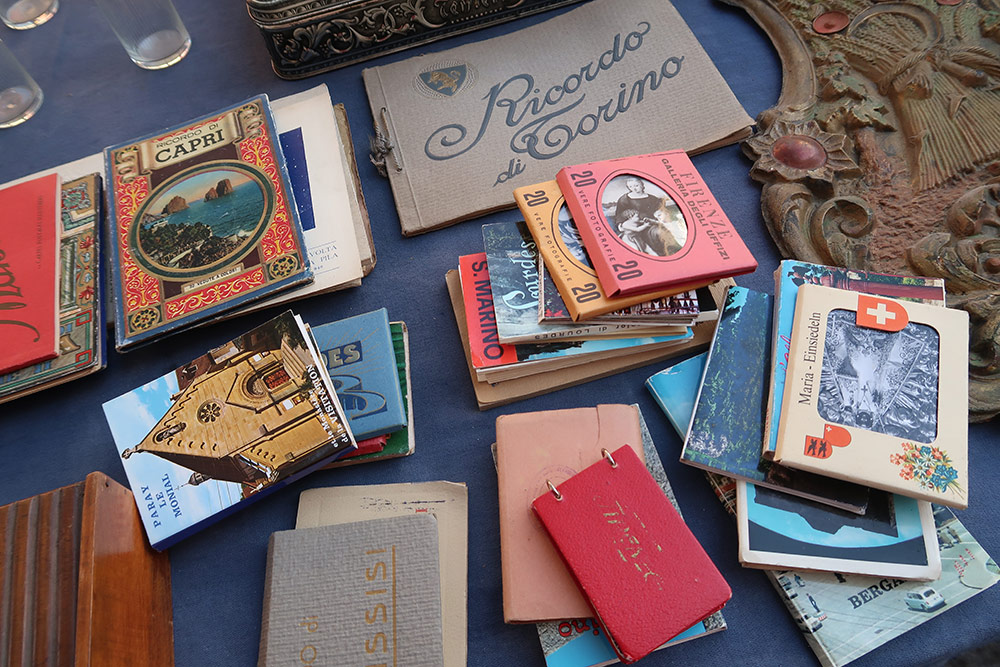
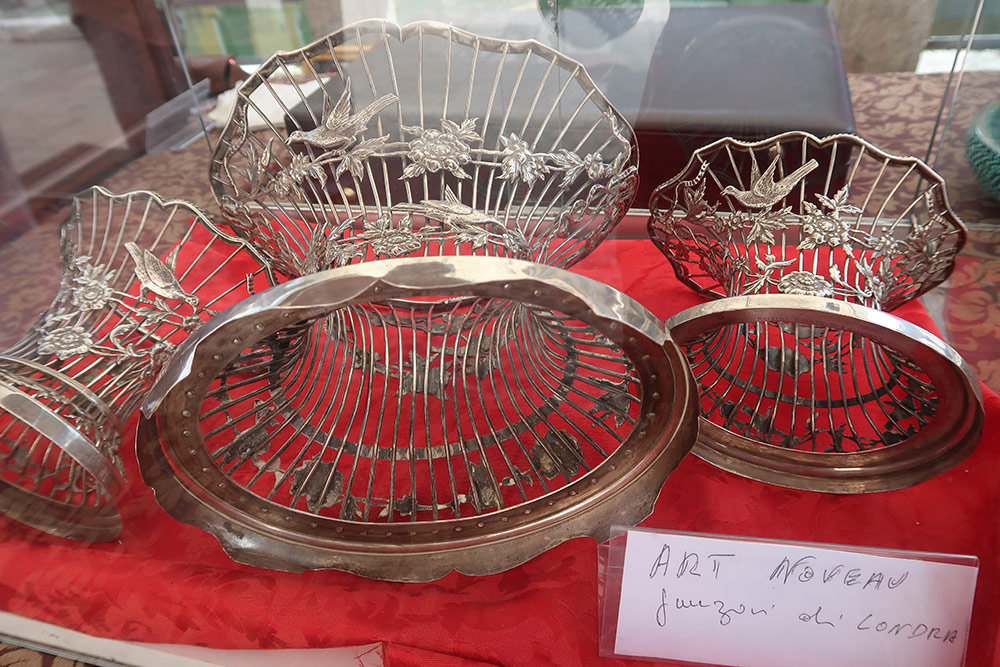
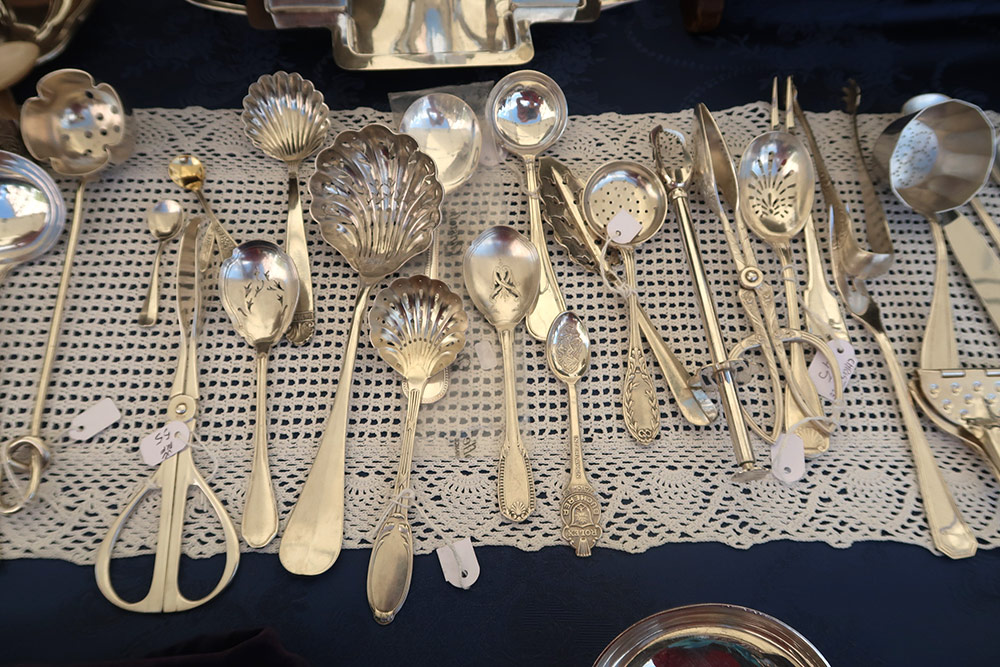
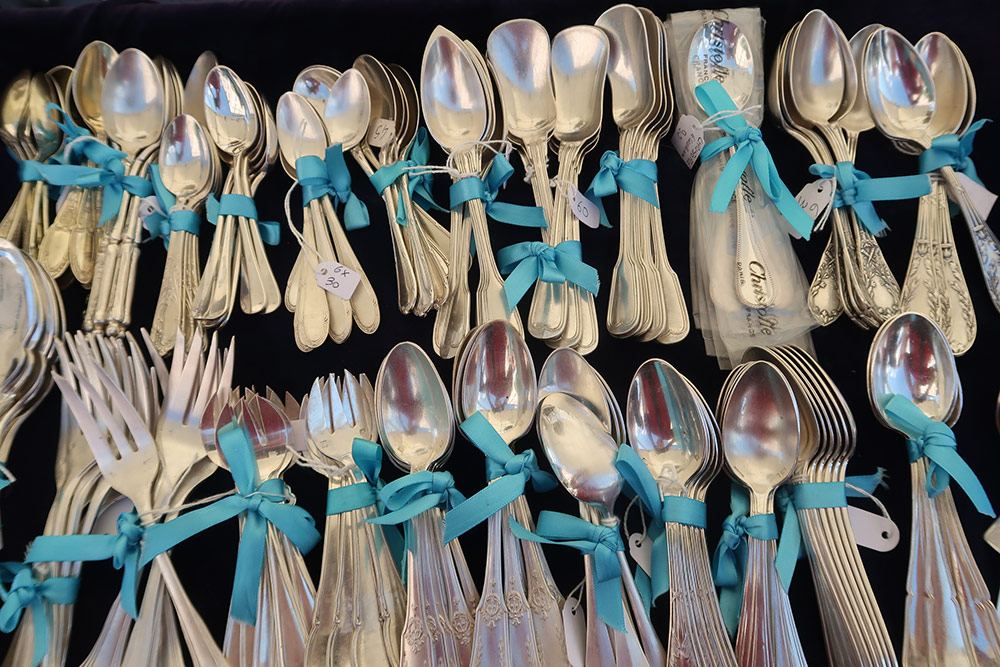
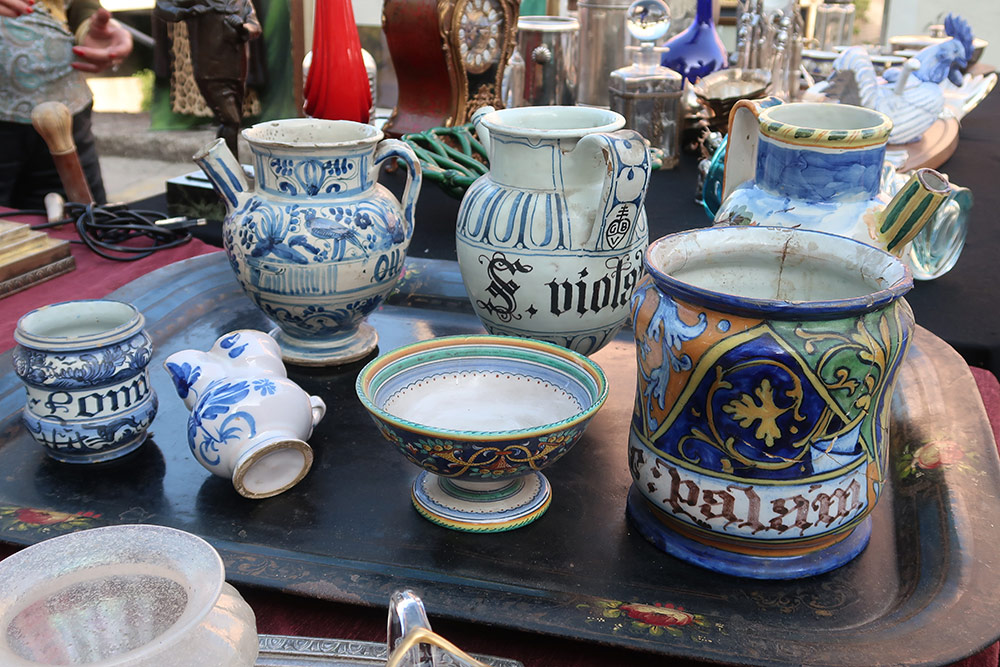
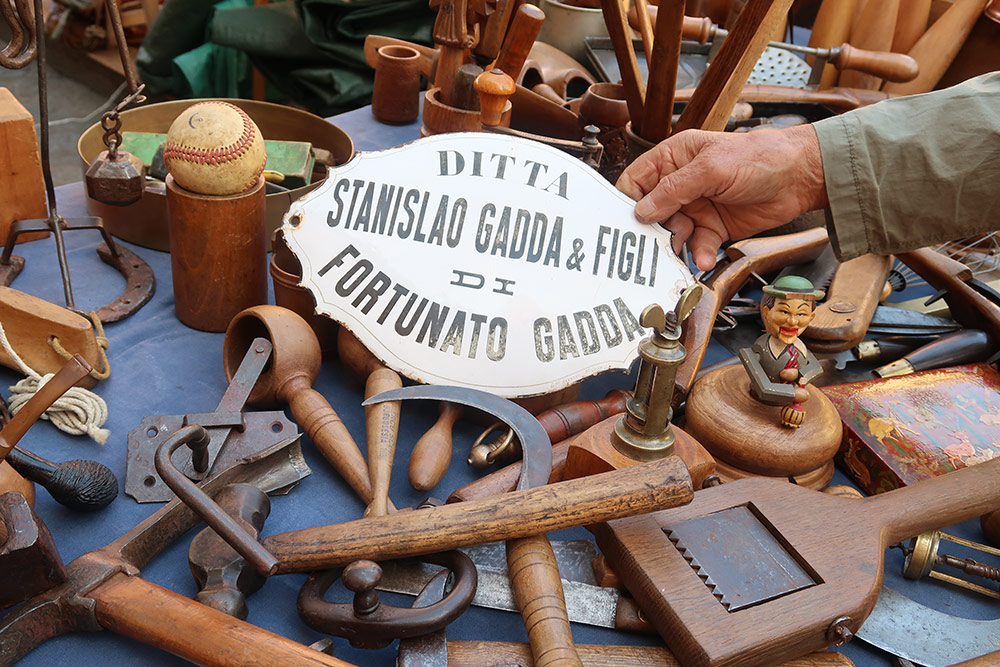
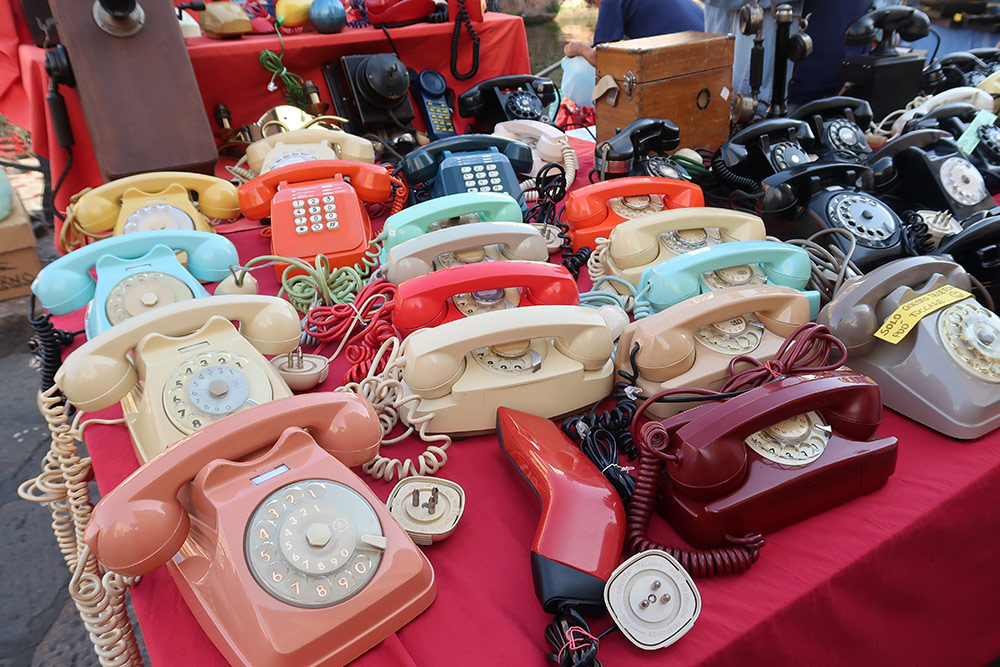
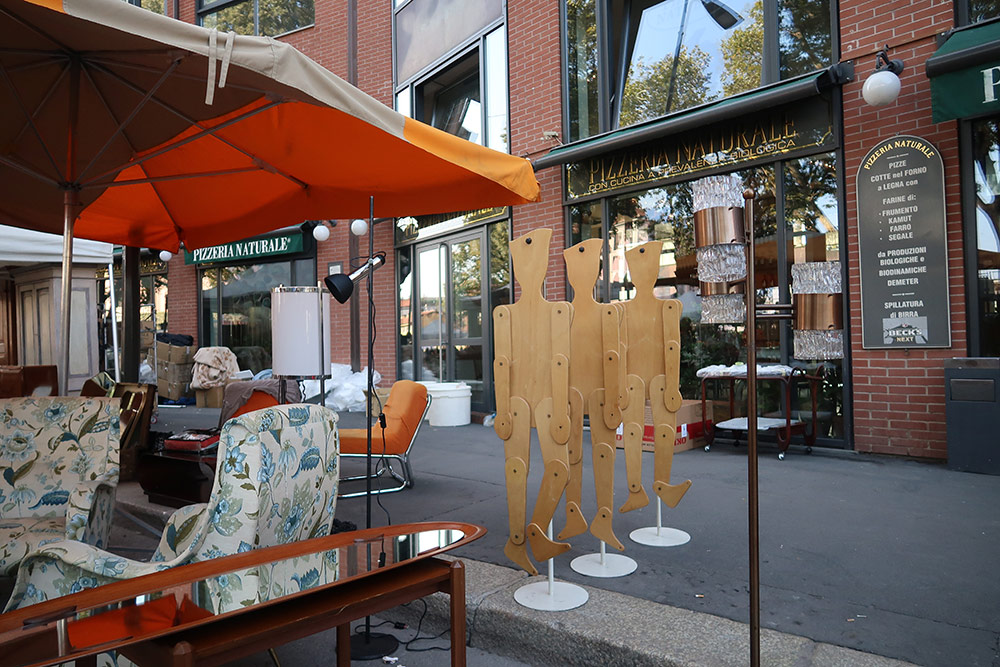
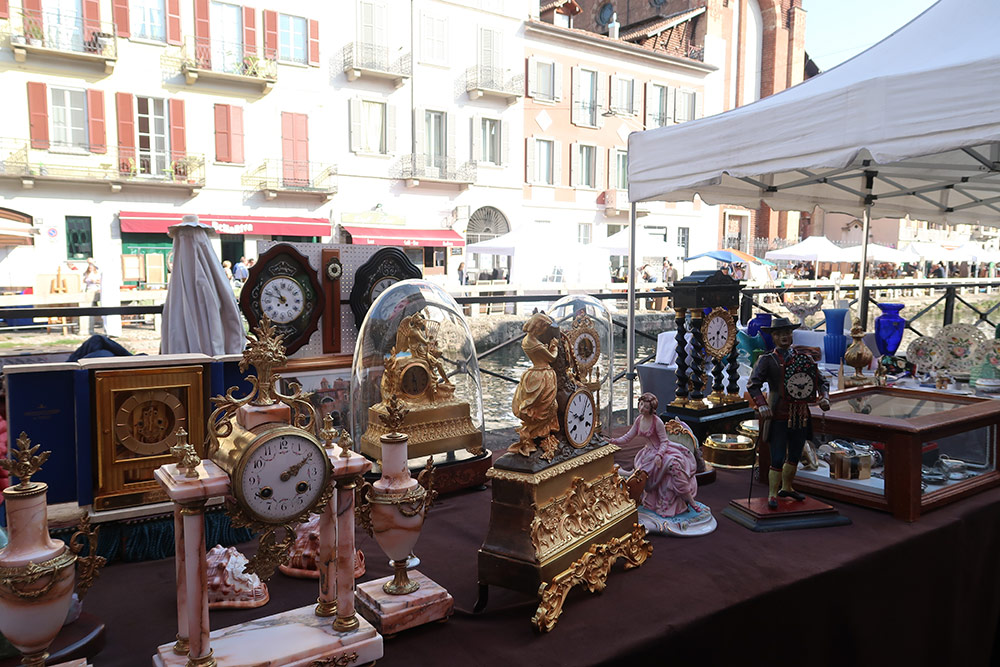
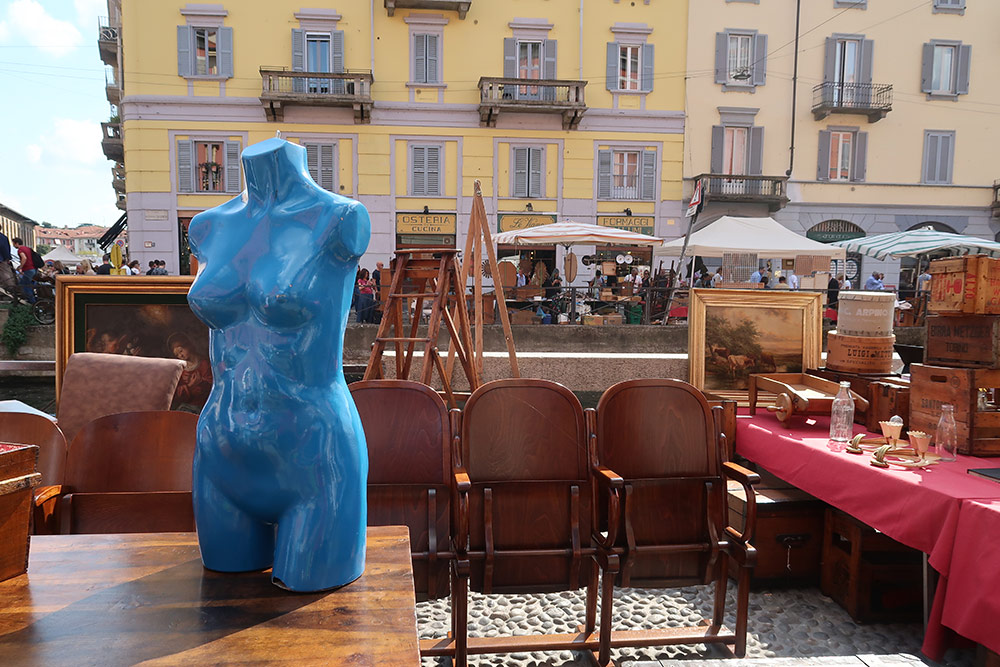
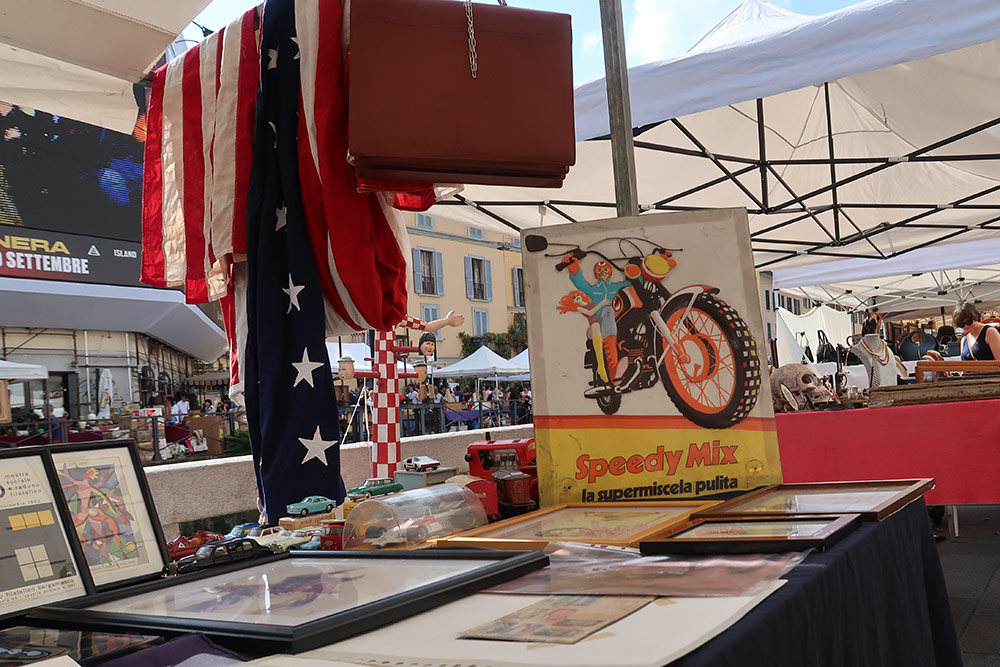
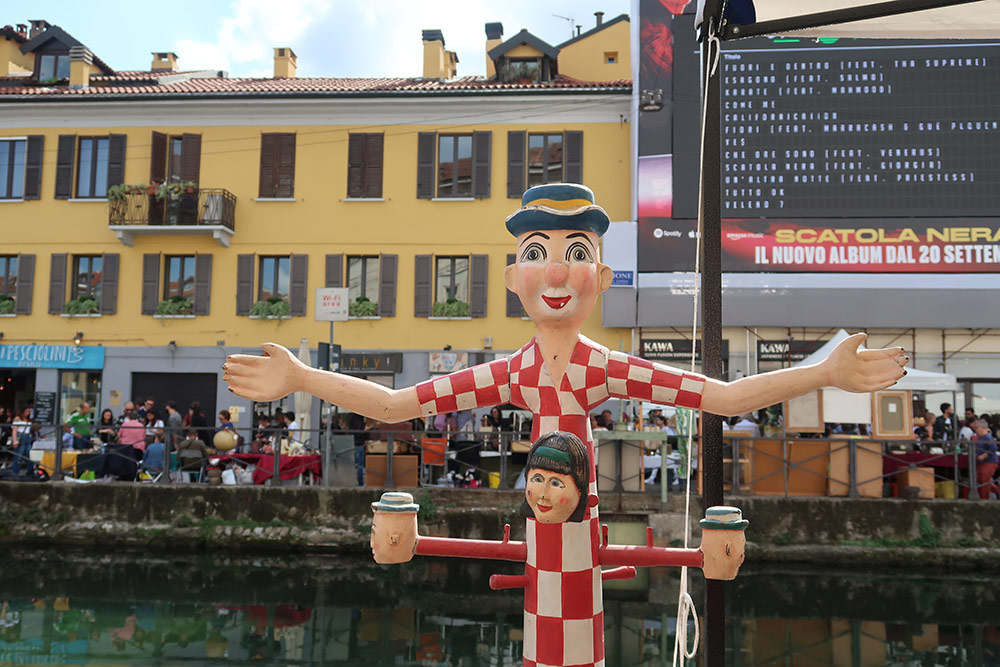
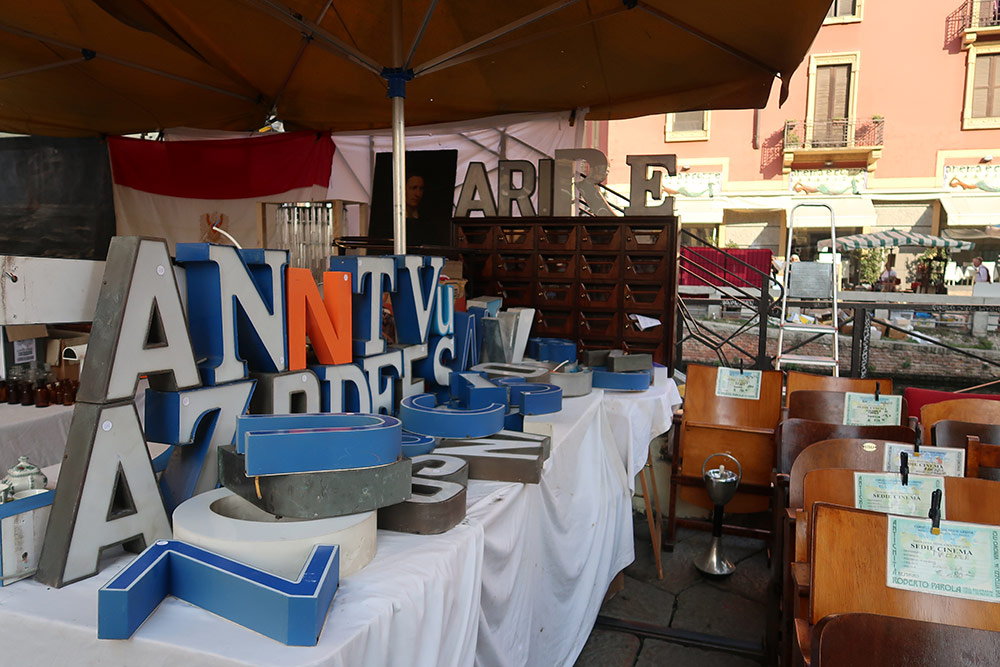
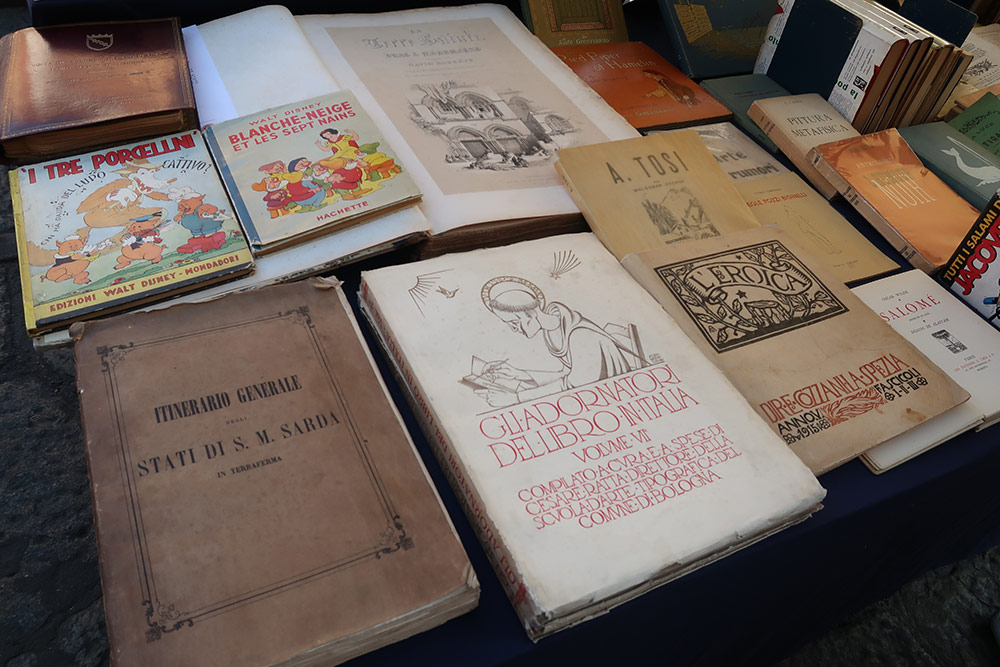
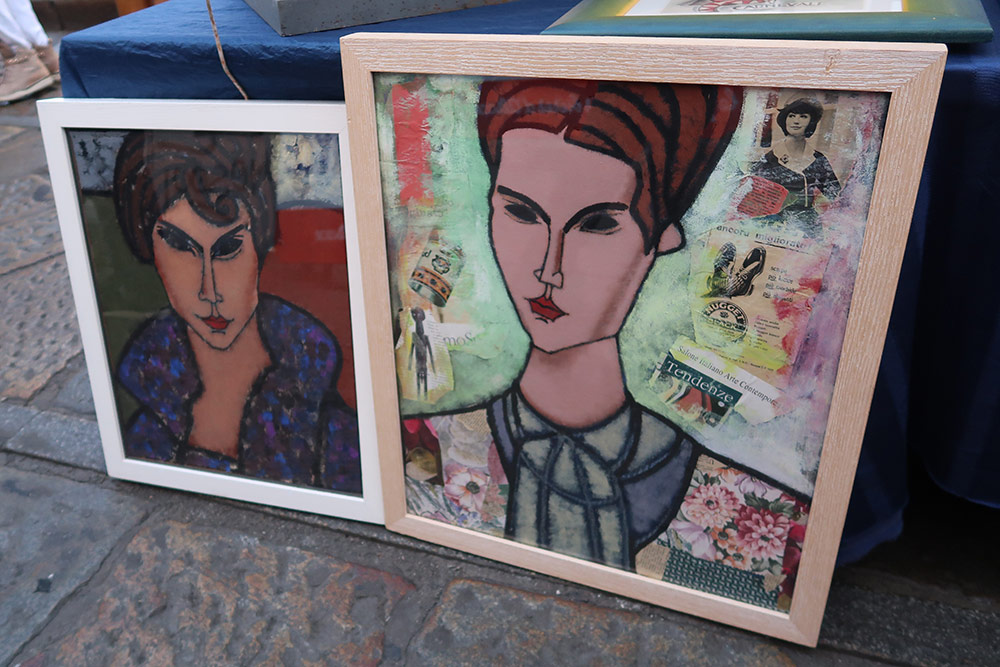
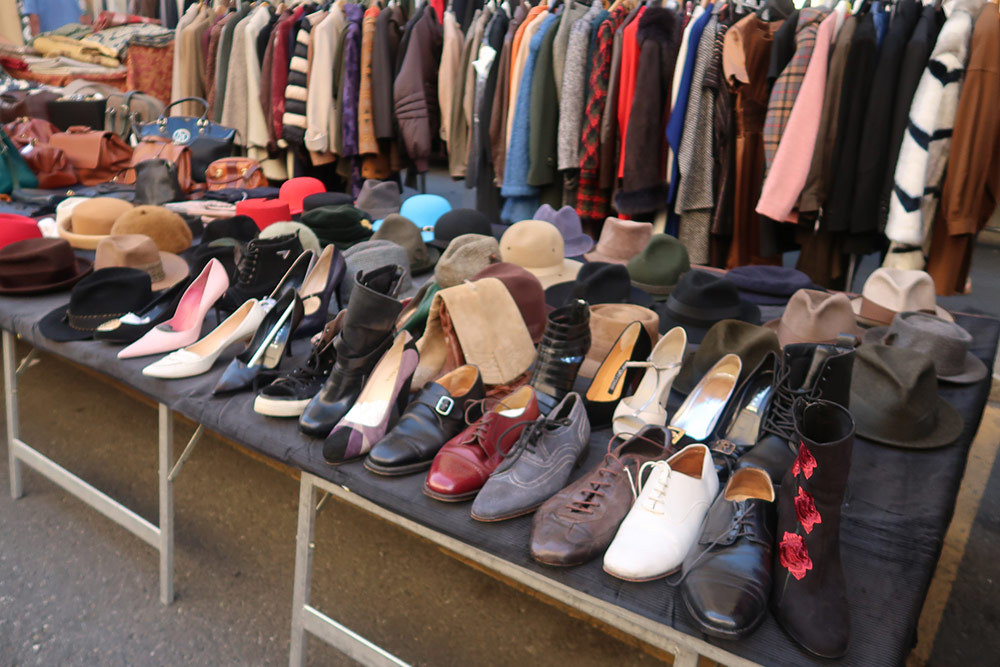
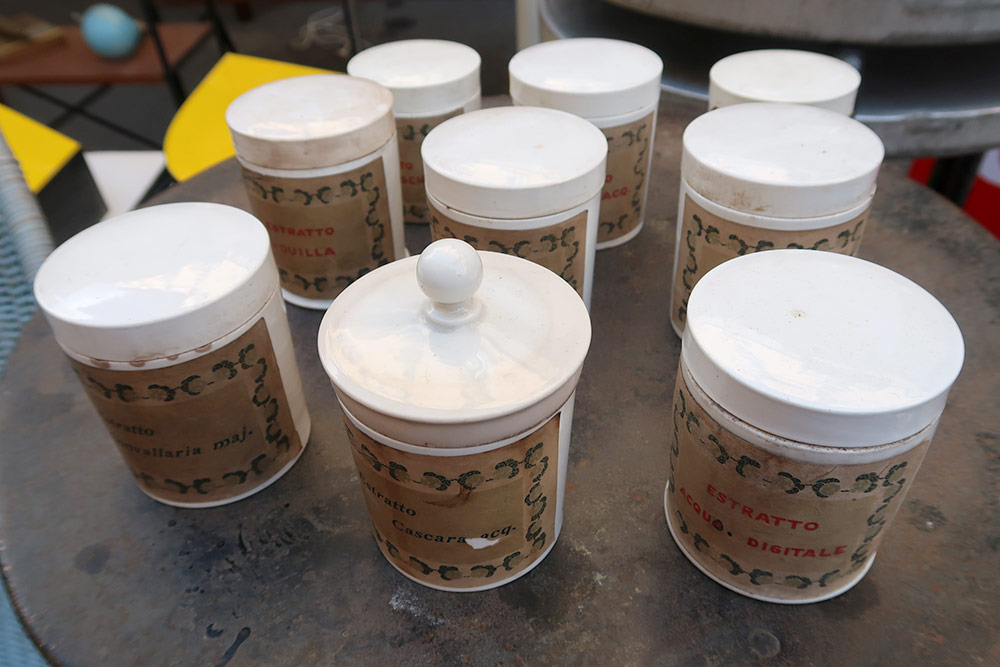
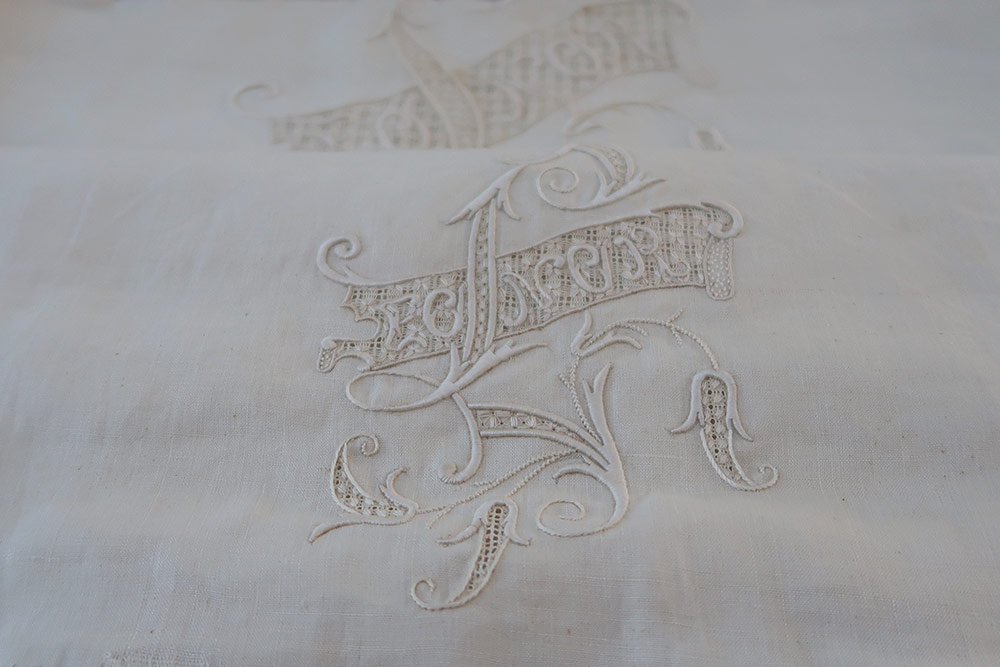
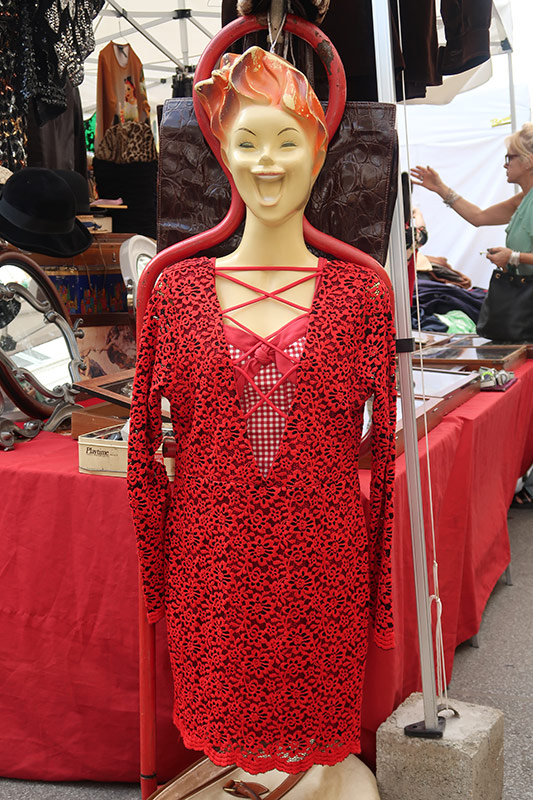
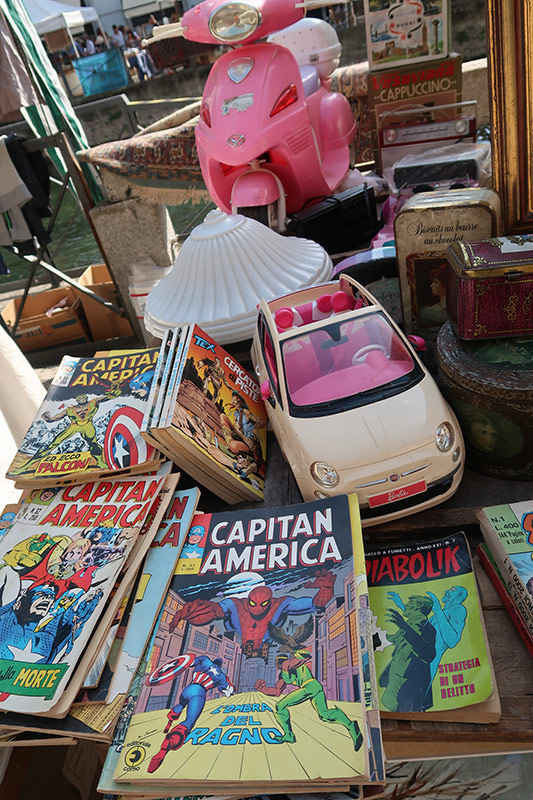
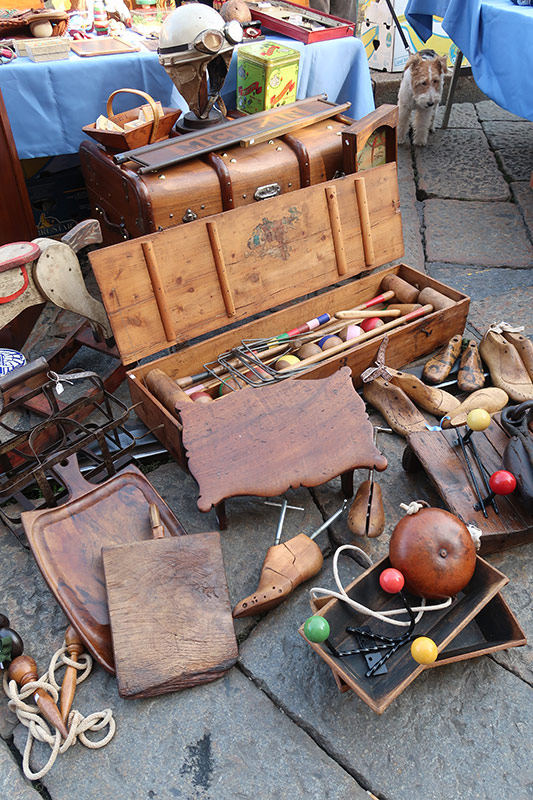
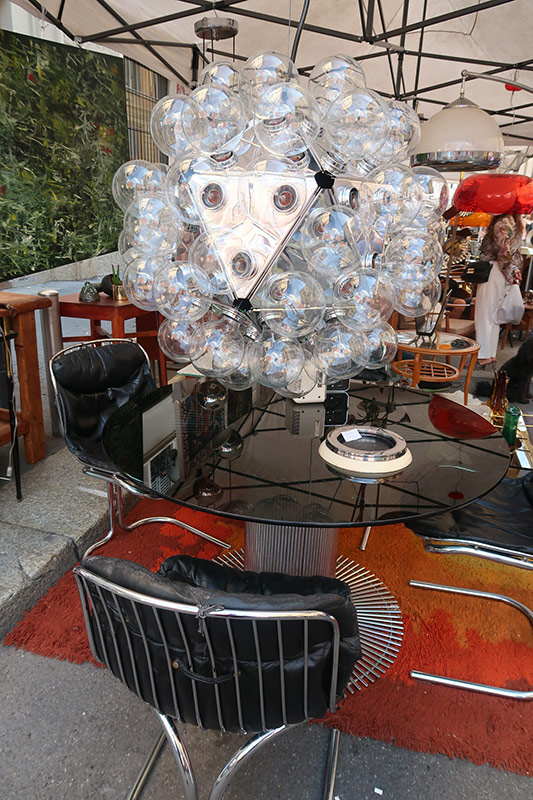
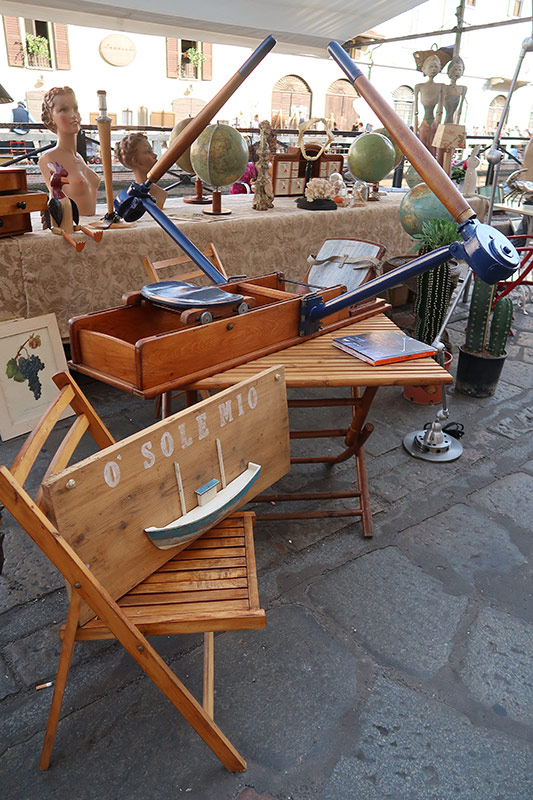
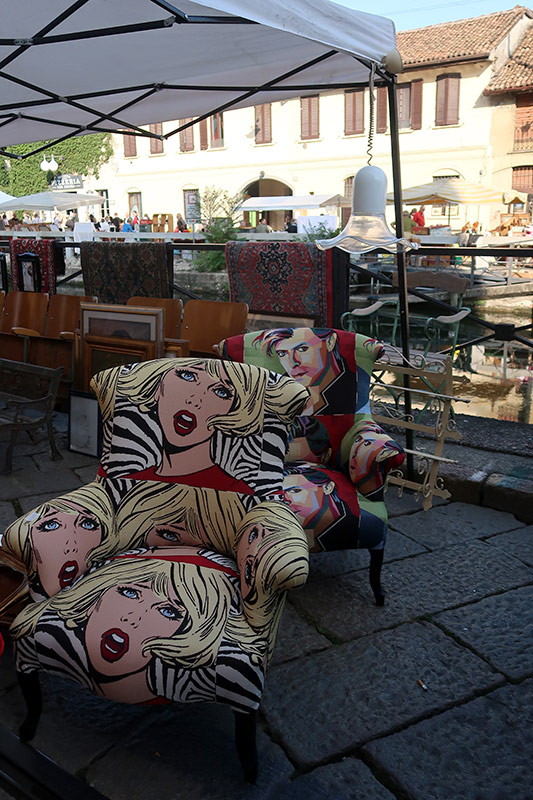
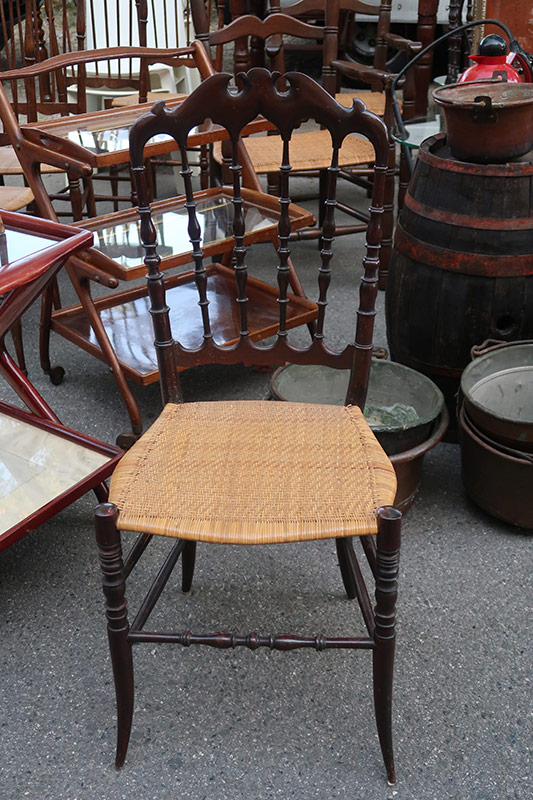
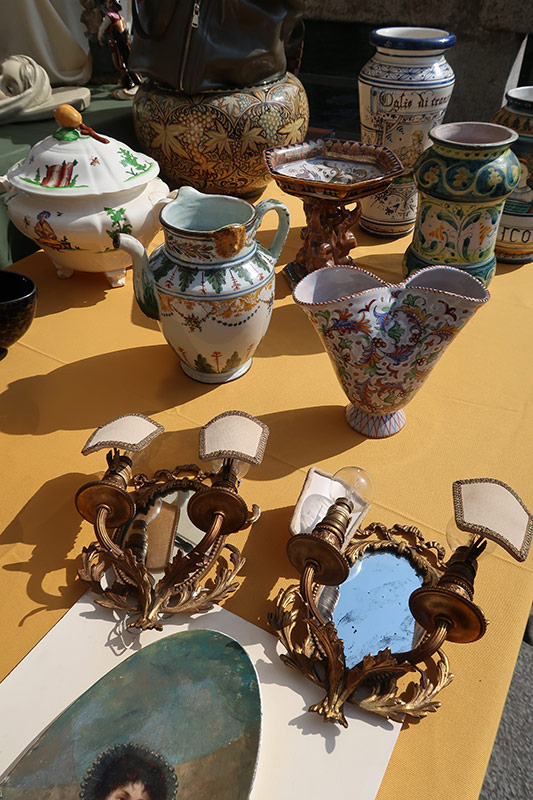
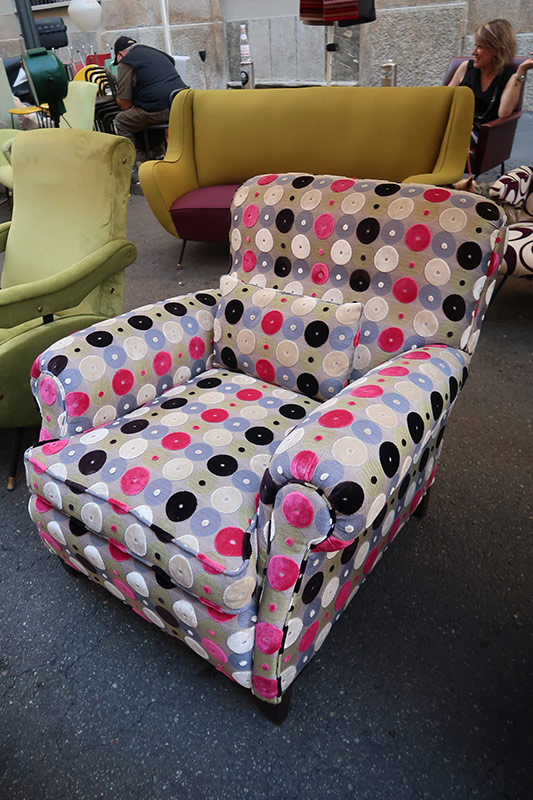
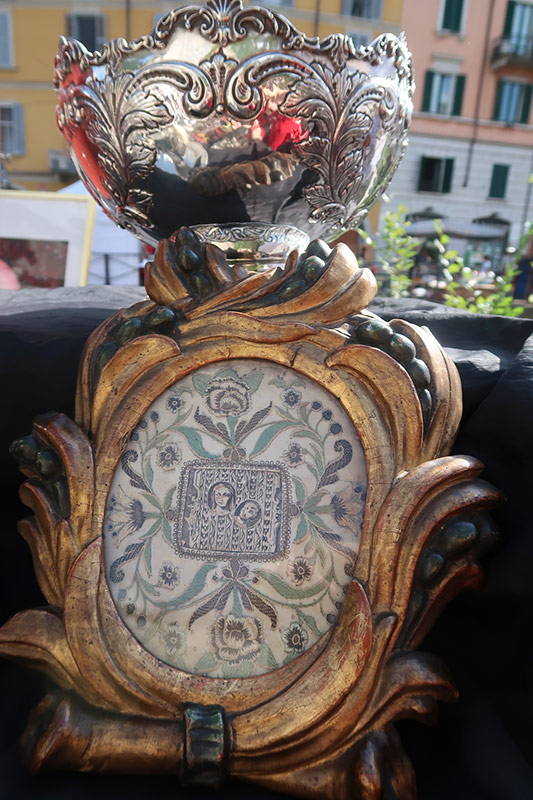
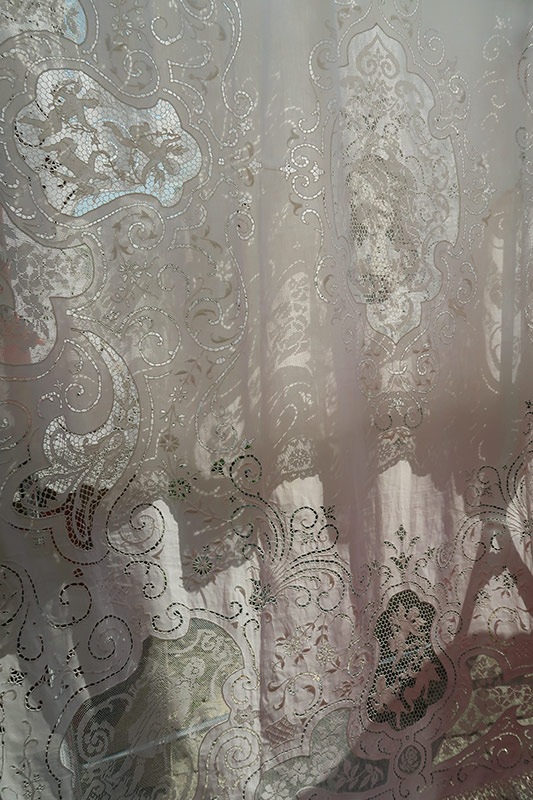
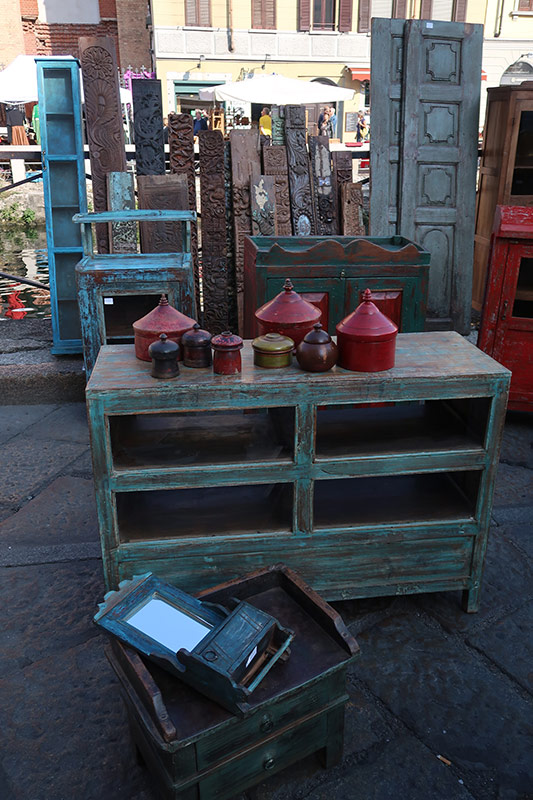
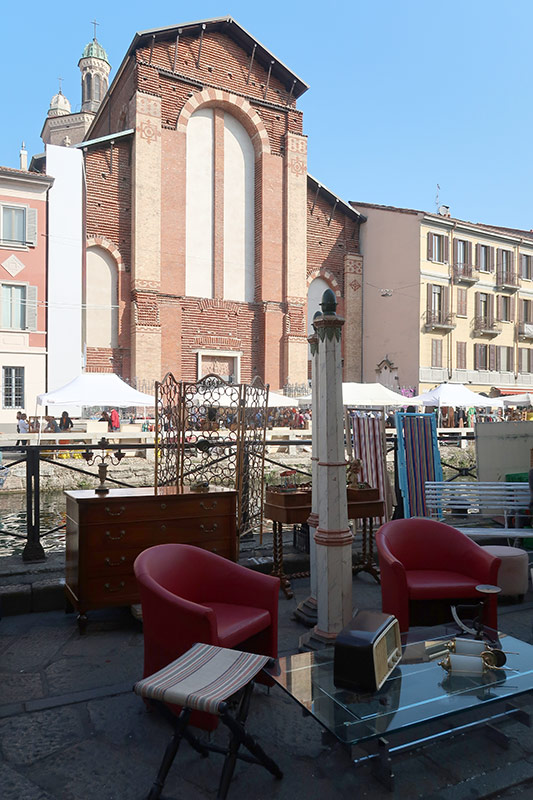
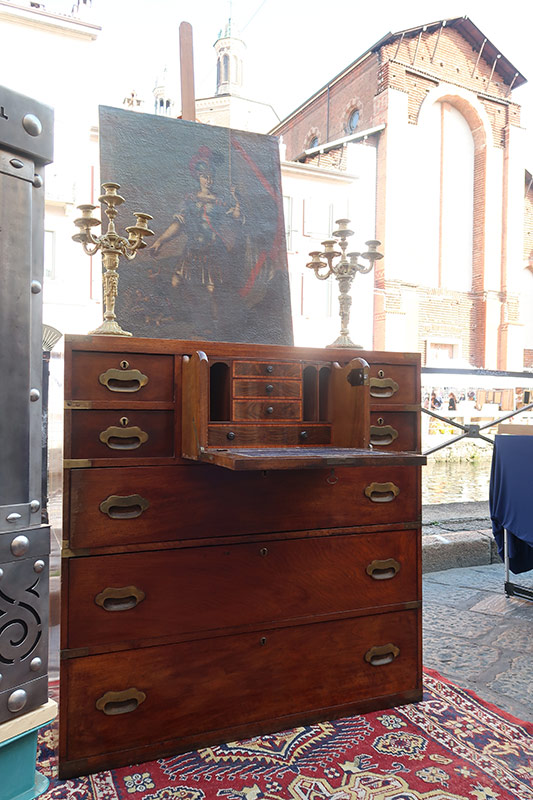
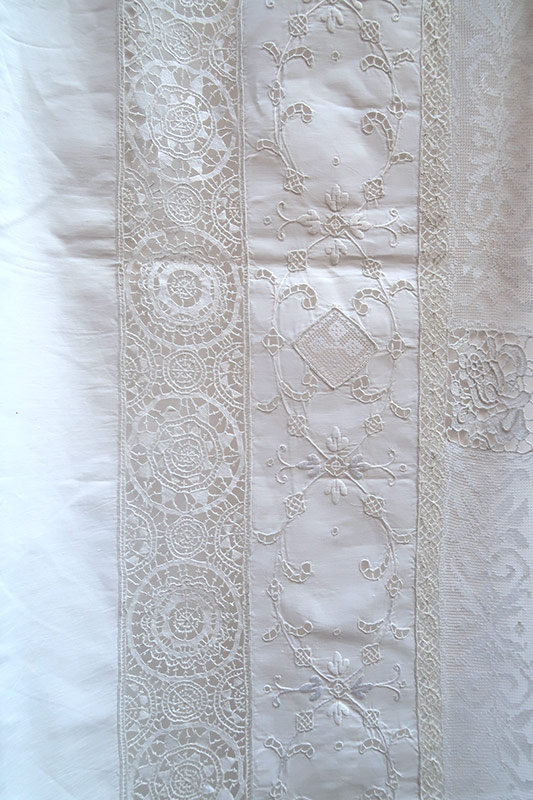
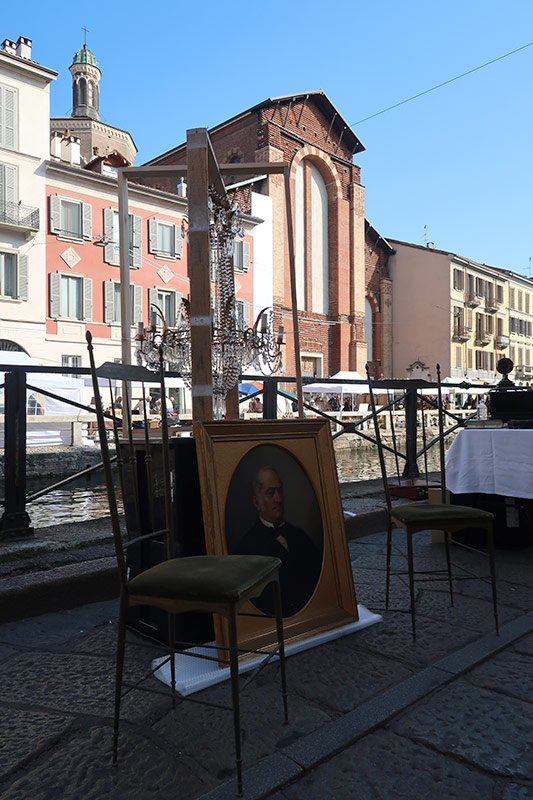
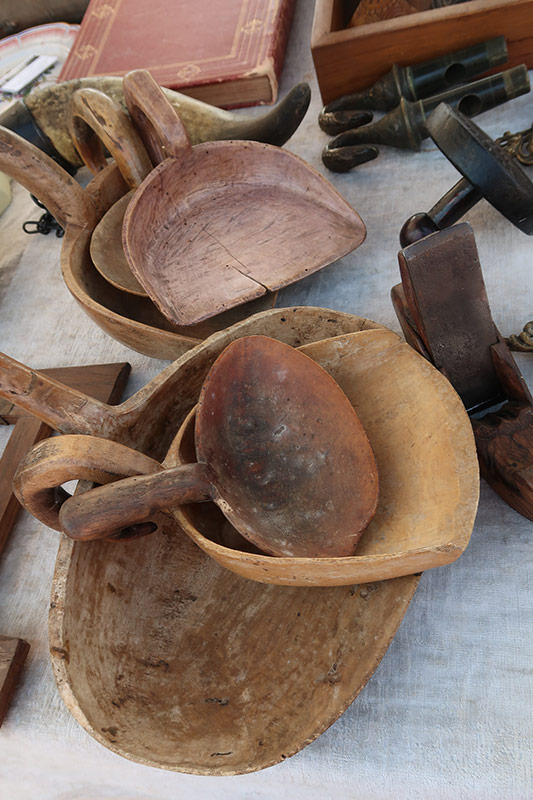
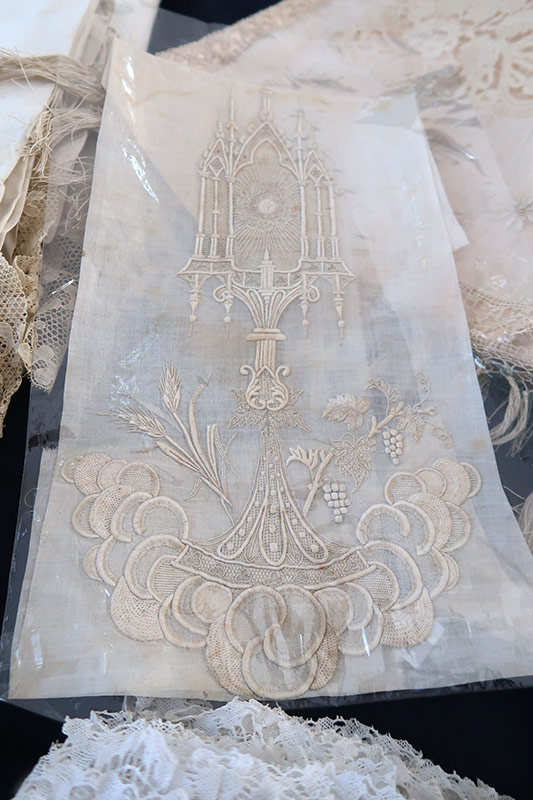
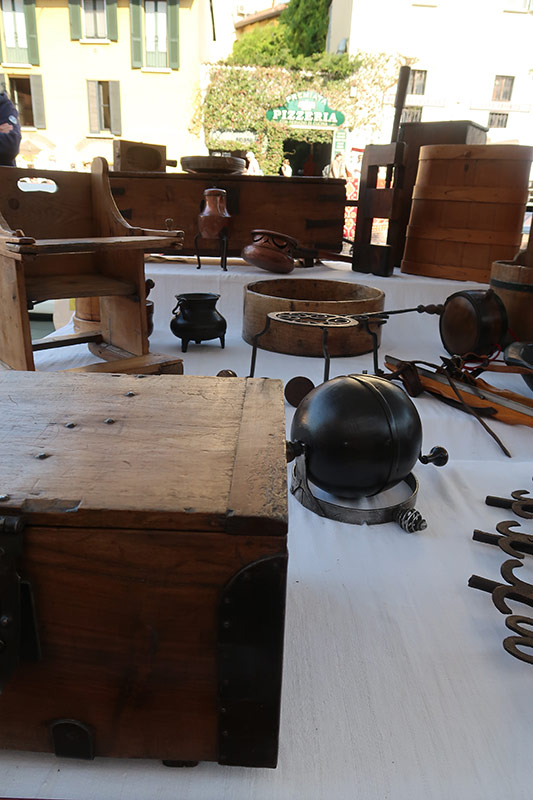
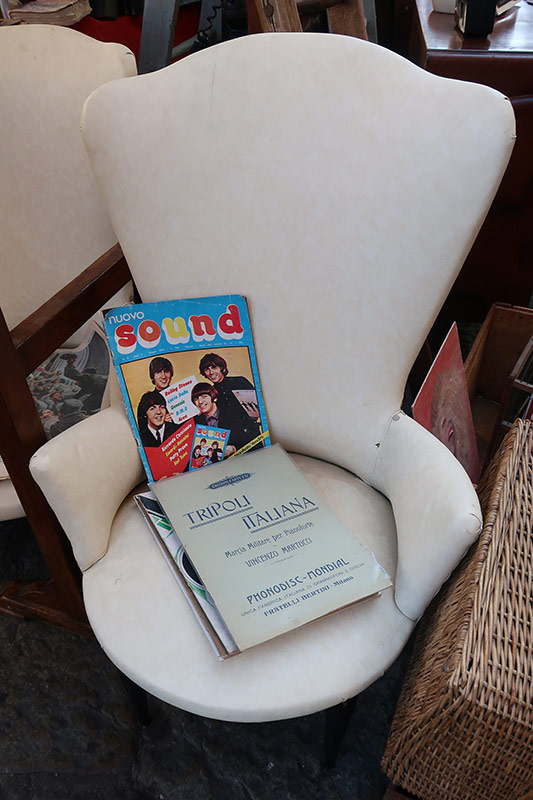
The day of the Mercatone Antiquariato—big, antiquarian market—here in Milano, stretching out along both sides and the length of the Naviglio Grande—the Grand Canal. Always the last Sunday of the month, and always attended by hordes, both Italian and foreign. It’s fascinating just to LOOK, whether you find anything to cart home with you or not.
I also go to the other, smaller markets with painter Loredano on Sunday mornings, bright and early. Vendors are out there setting up by flashlight, and buyers/browsers also come with flashlights, hoping to catch sight of some treasure before someone else snatches it.
Antiques are older here in Italy. I overhear “the regulars” discussing items: “Oh, it’s not very old. It’s only from the 1800s.” It’s very funny to me. In the U.S., if it’s 50 years old, it’s an “antique”, or thereabouts.
Another curious thing is how they note the centuries. They say “Ottocento“—800—rather than 1800. The same with 700, 600, etc. They drop the 1000.
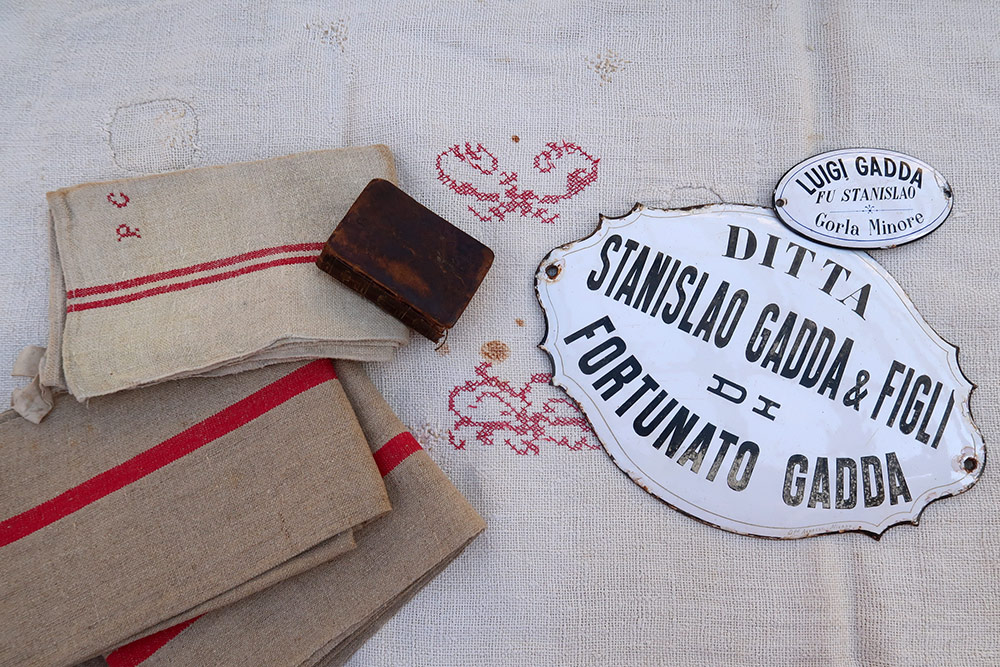
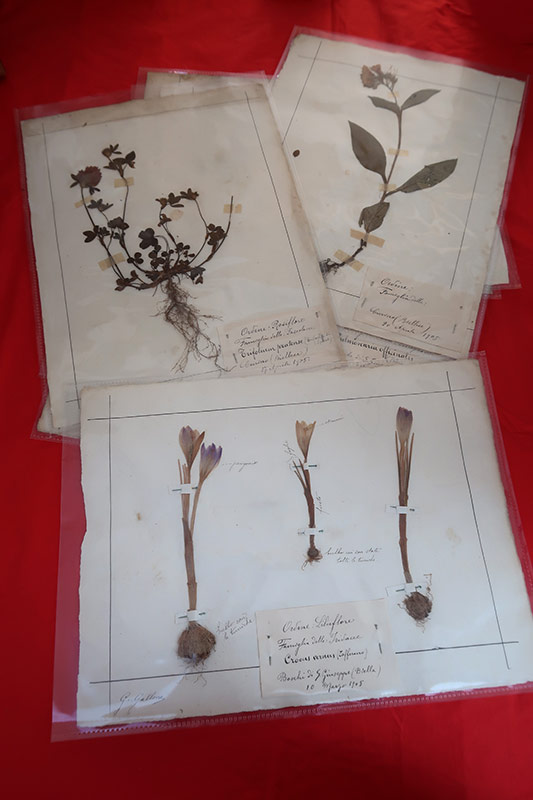
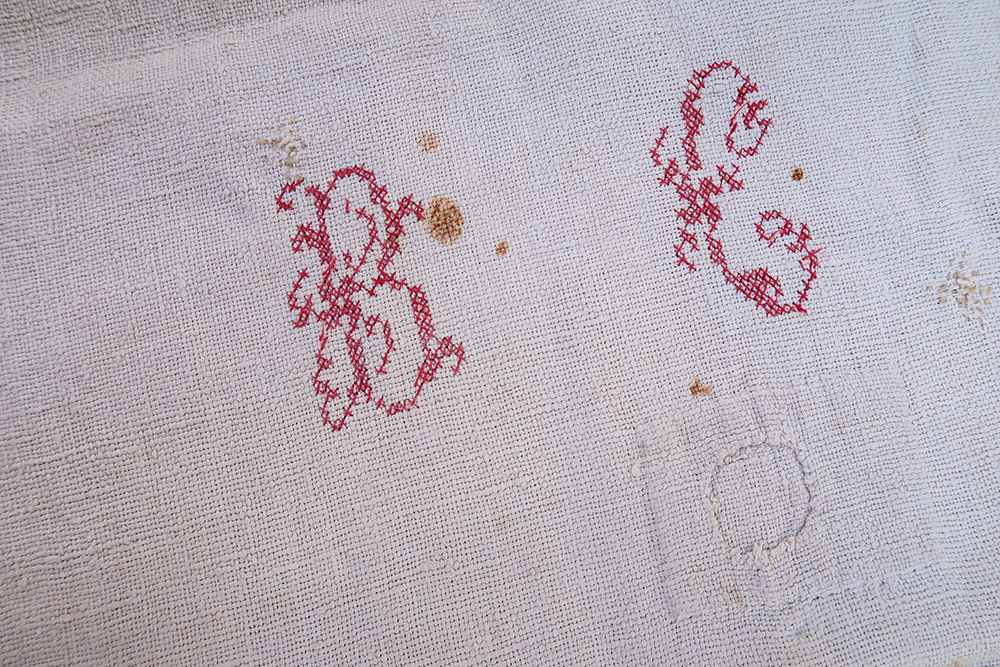
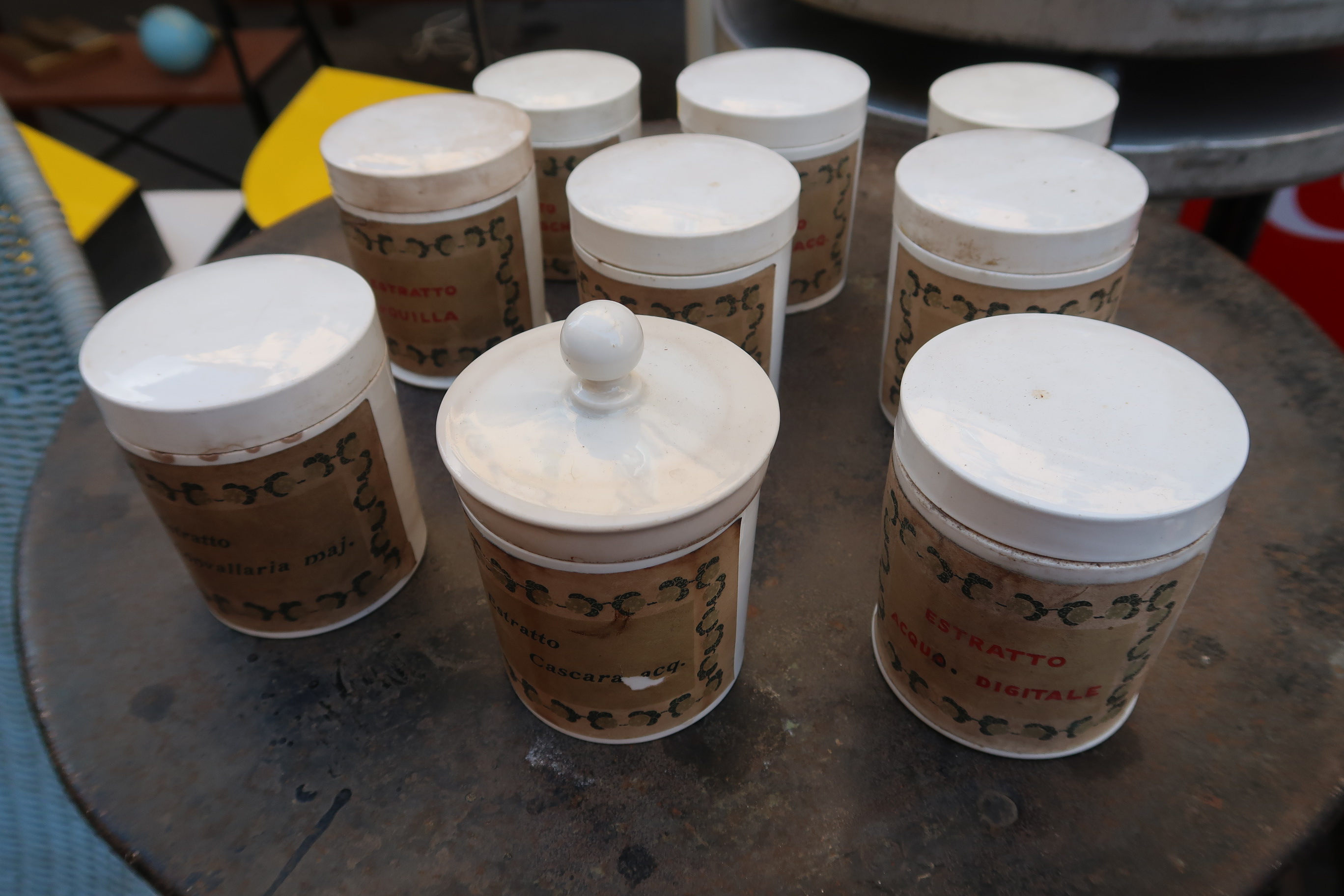
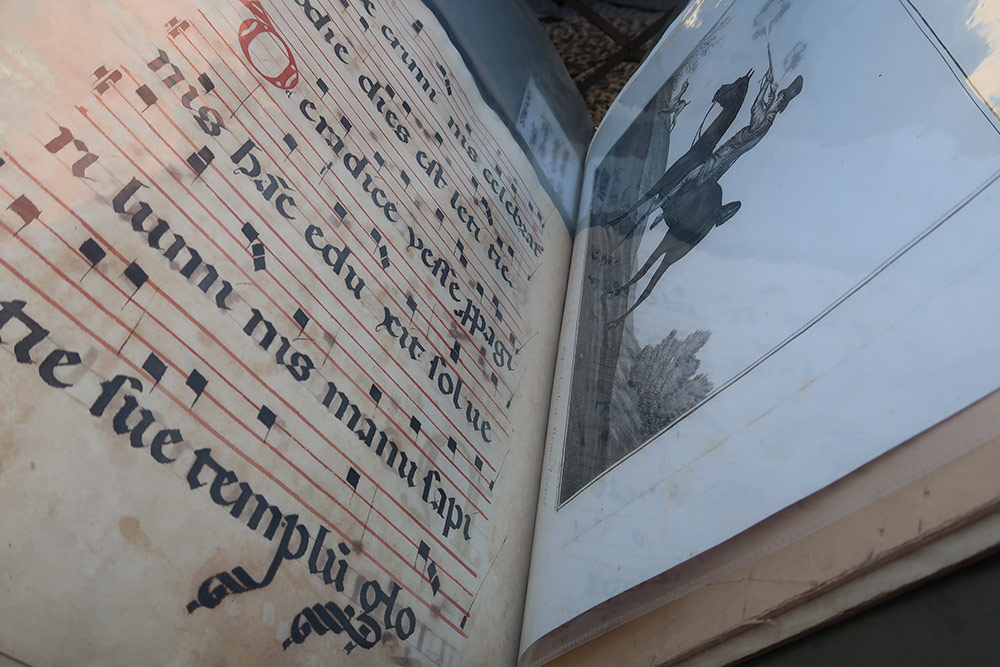
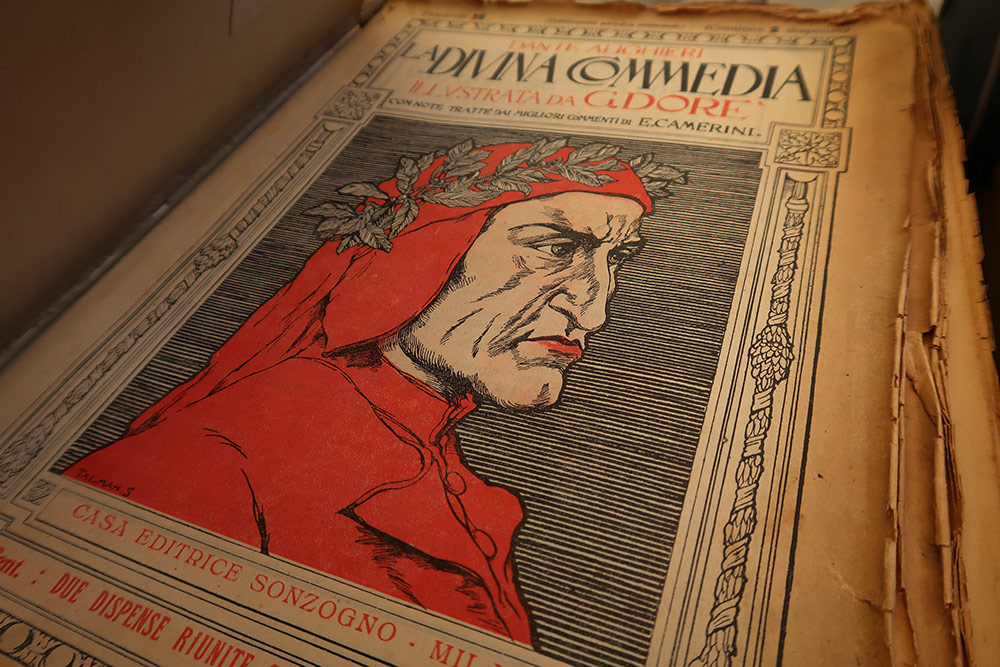
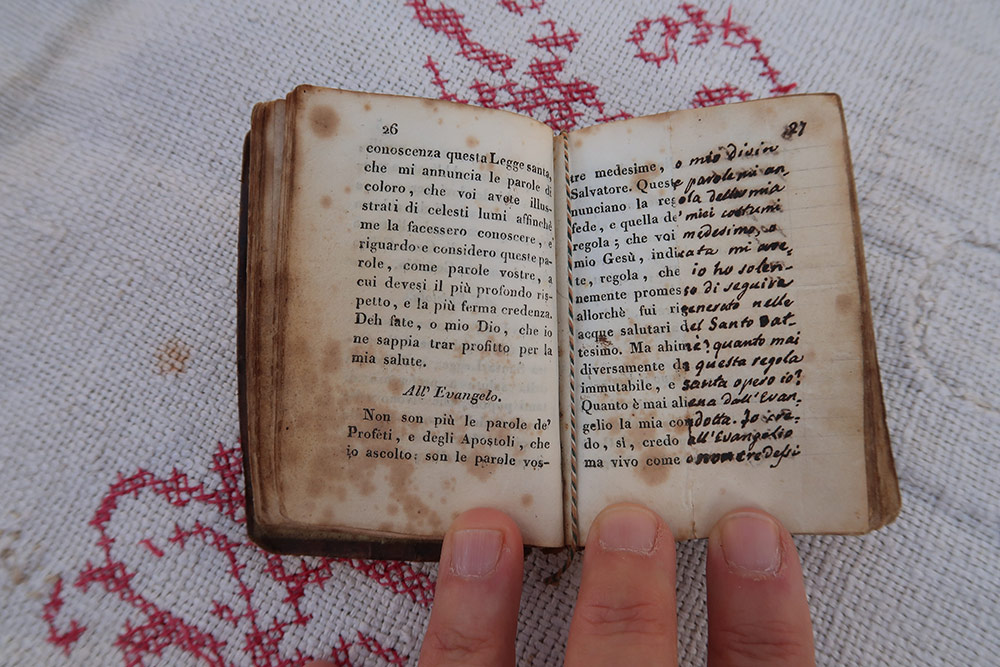
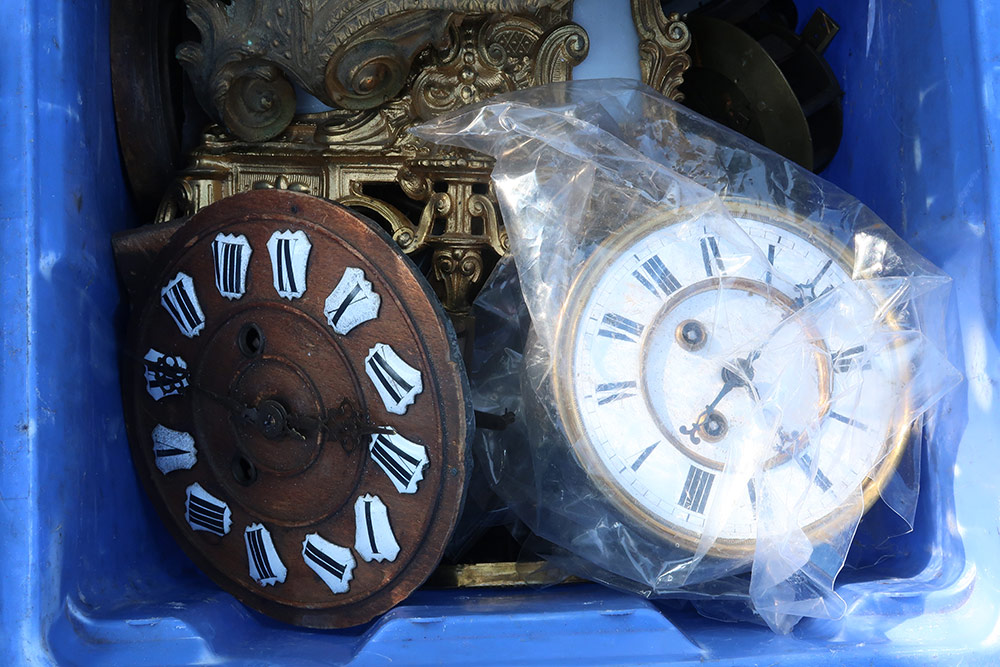
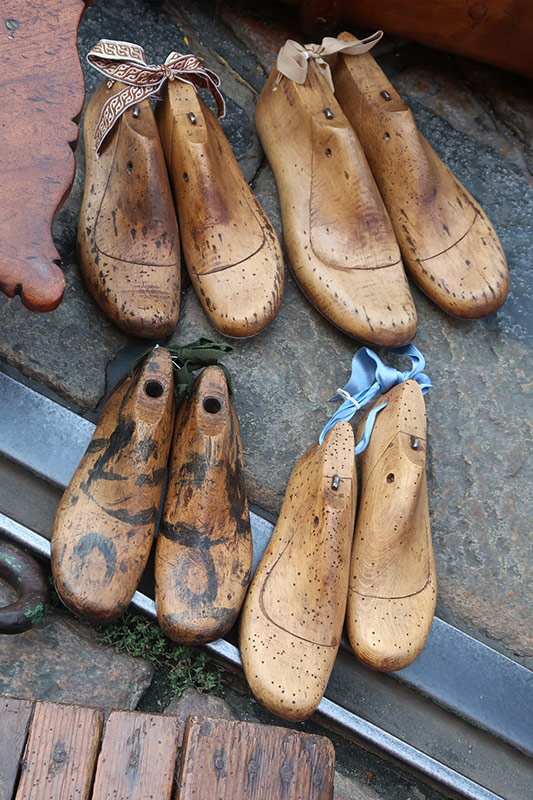
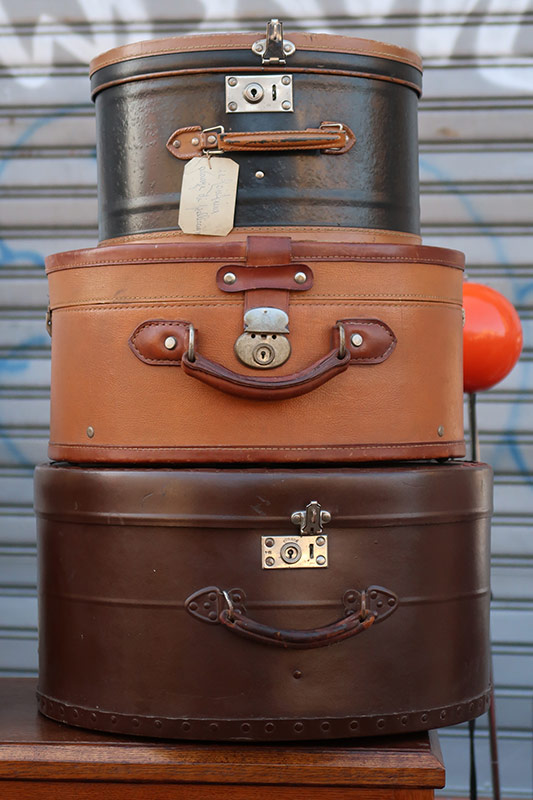
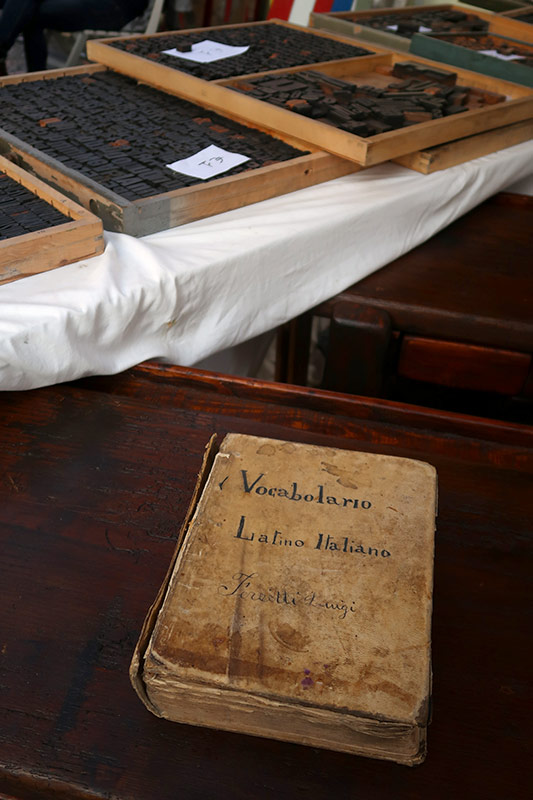
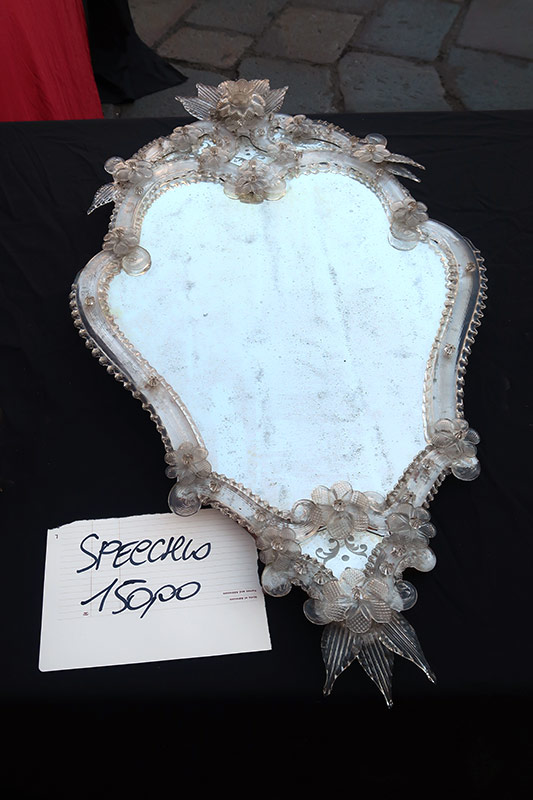
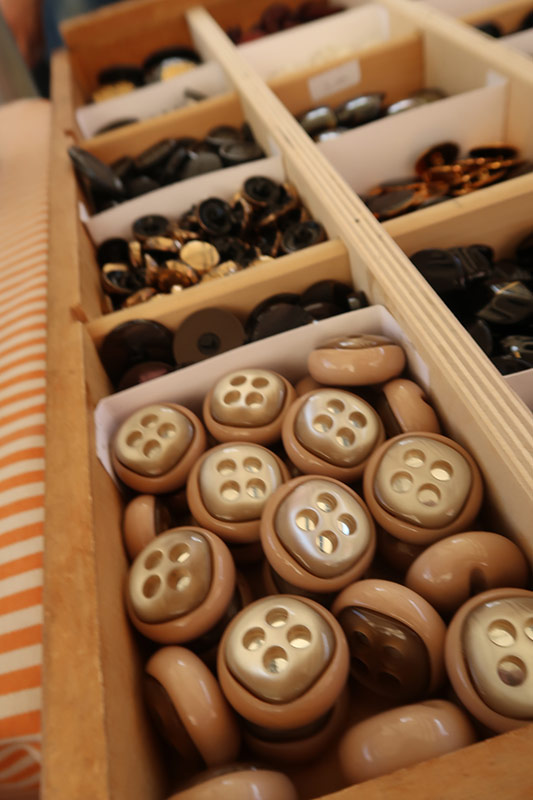
At the flea markets, I find things that are centuries old, that have traded hands who knows how many times, have ended up bouncing around in an old cardboard box in the back of some vendor’s van, and then displayed on the pavement. A select few of those things have ended up back in Burien with me. One notable treasure is the Big Old Book I brought home a couple of years ago that is a collection of documents with the earliest date of 1576. What a history these things have! If only I knew all the places they’ve been.
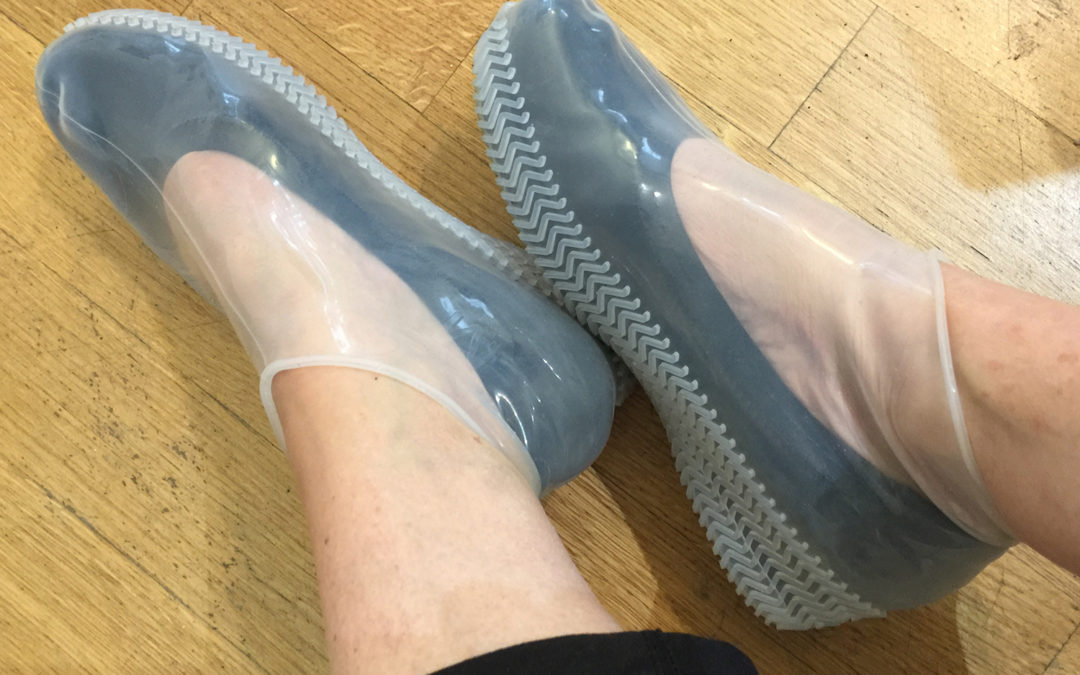
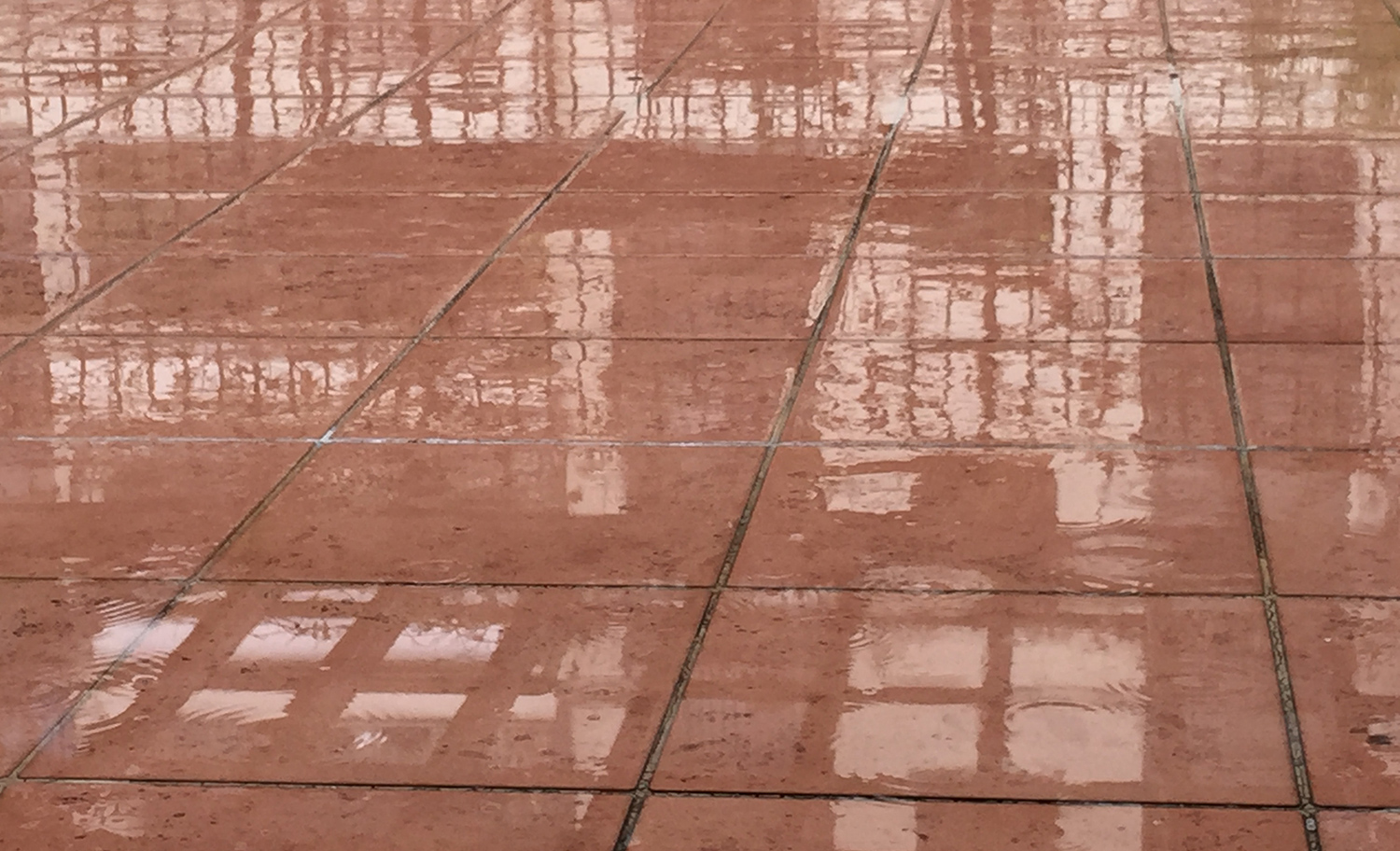
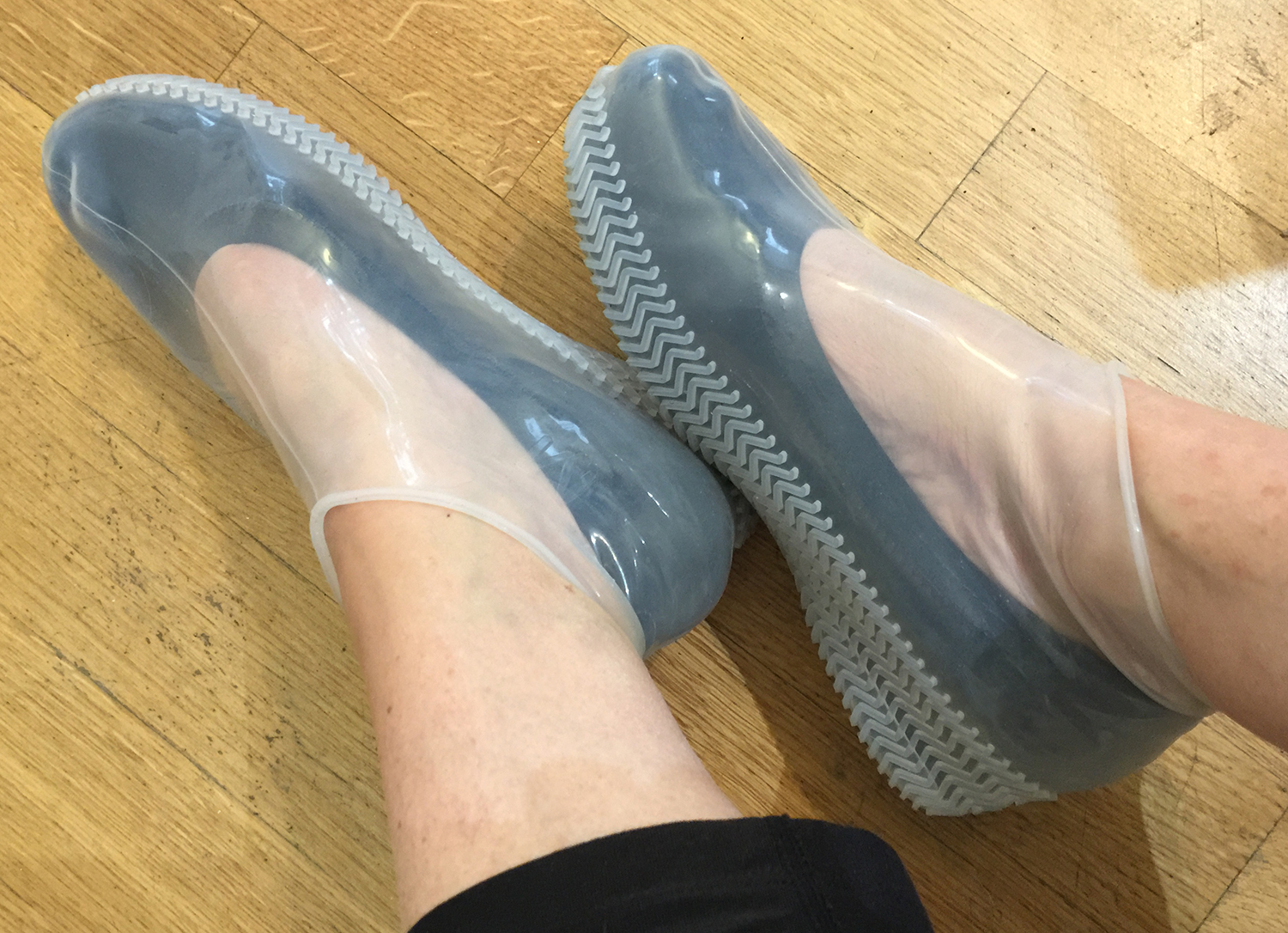
Here it is: Rain in Milano. I’ve been keeping an eye on the weather forecast and their prediction of rain for today and tomorrow. Why do you think I walked 15,000 steps in the balmy sunshine all day, both Friday and Saturday?! I knew this was coming. And when it rains in Milano, it really RAINS, with no mercy. I even bought silicone galoshes for this trip! These are new-fangled, super-stretchy things, not like old time galoshes we might envision.
So, picture this. You’re here in Italy for a week or four. You get caught in the middle of a rain shower and your shoes are now drenched. You’ll be walking around with wet, cold feet from now until you can get your shoes dried out. If it were sunny—but it’s not—you could put your shoes on a sunny windowsill to dry them out. If the condo building had turned the heat on—which they haven’t—you could put your shoes on the radiator. If there were a clothes dryer—which there isn’t—you could tumble them dry. Your only options are to let them sit for a week while they dry out—if you have another pair of shoes to wear in the meantime. OR, dry them out in the oven on low, assuming you have an oven.
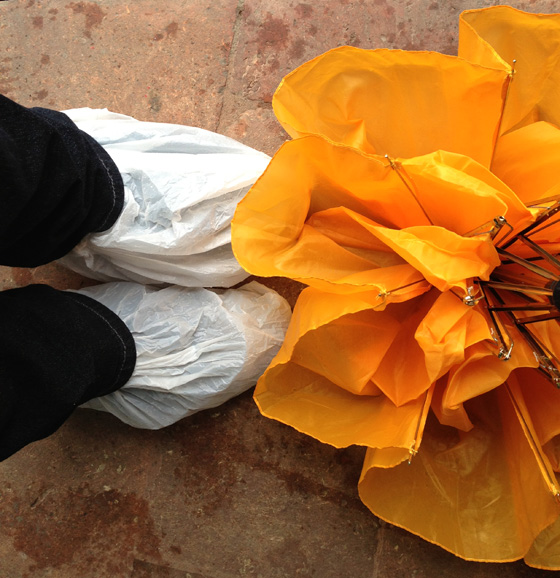
One time, (2013), I thought I’d be clever and beat the wet feet thing and I tied white plastic bags onto both my feet as I raced to the metro and train stations. Sure. Milan, Fashion capital of the world, and I had plastic bags on my feet, tied to my ankles. So chic! And still, they got wet.
Milano had been having a crashing, pouring rain all night and all morning, and I had to walk to the subway station to then get to the train station. I hate having wet feet and imagined having my shoes drenched and cold for 4 hours on the train. So I tied plastic bags onto my feet. So very chic. So high-fashion. (Somehow they got damp anyway.)
Yes, I do bring a pair of low, leather boots that I warmed in the oven in Seattle and slathered with mink oil and rain repellent. But there’s only so long until those seams stop repelling and let the rain come on in.
Wet feet can make you miserable, even if you’re on a dreamy holiday in Italy. Be prepared. Find a way to keep your feet dry and happy. The rest of the day will go well.
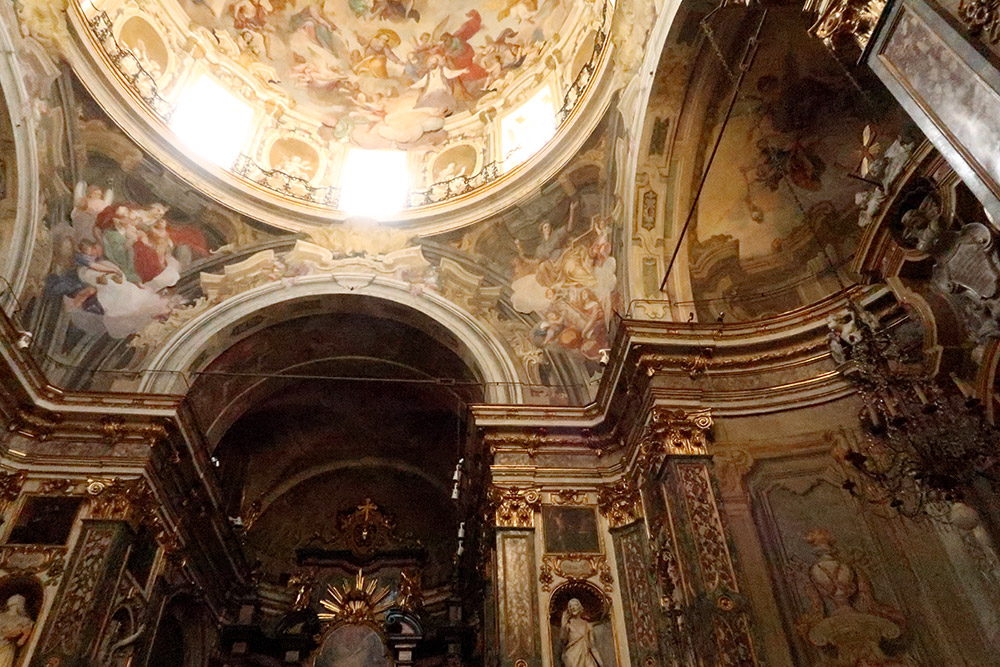
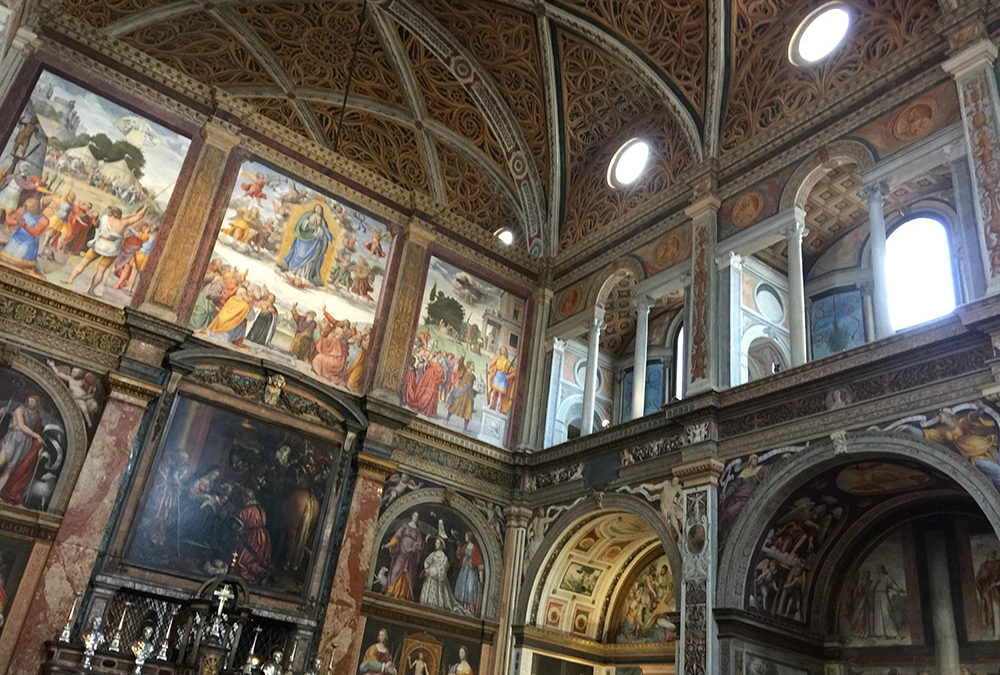
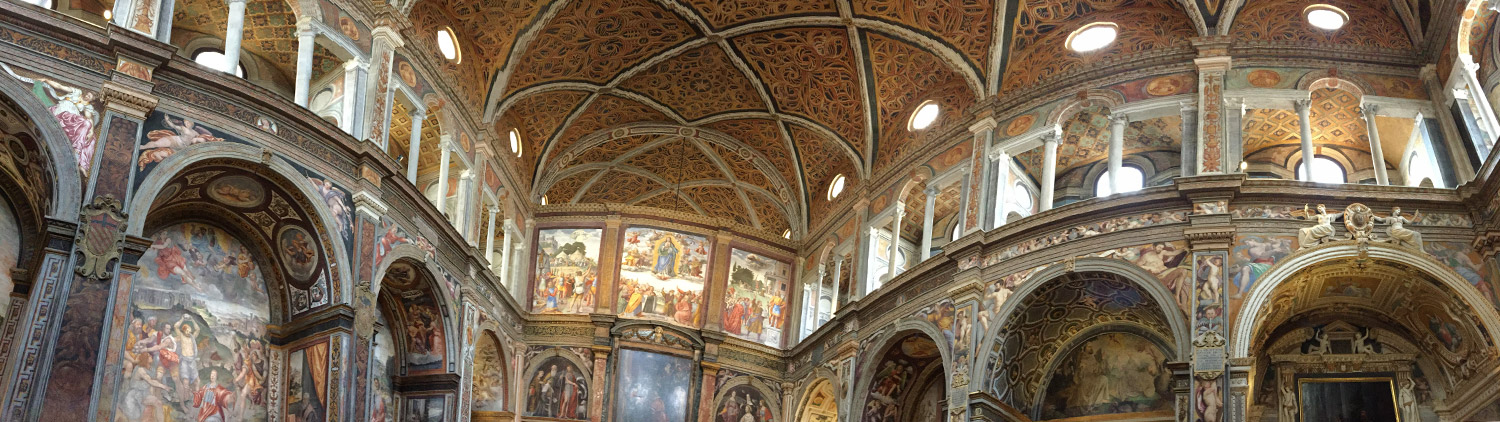
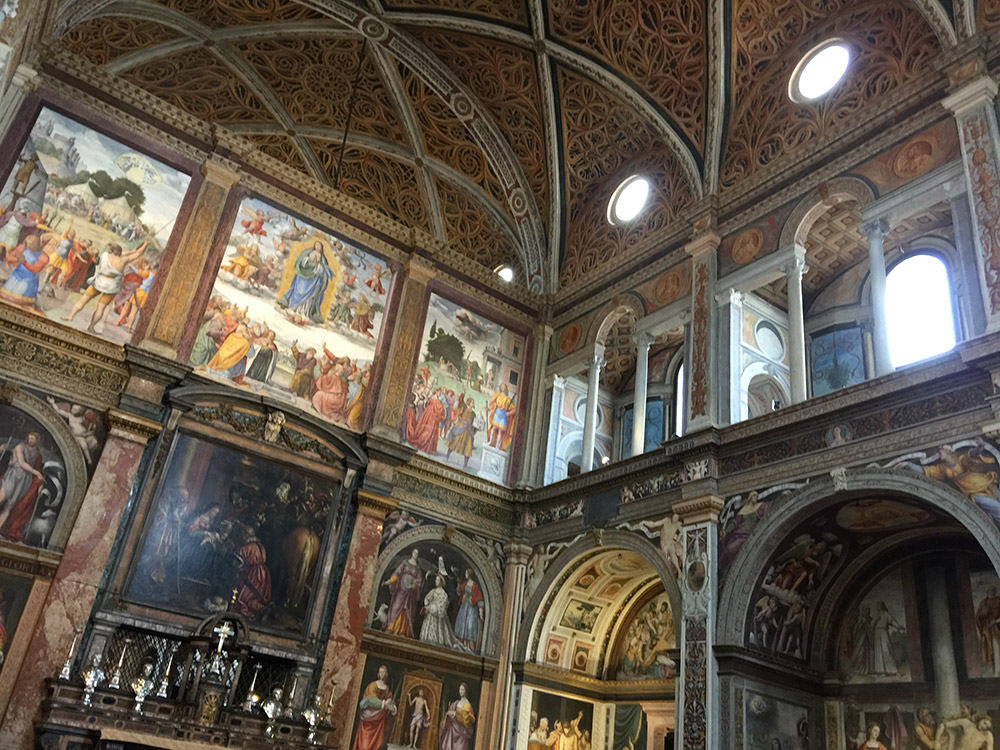
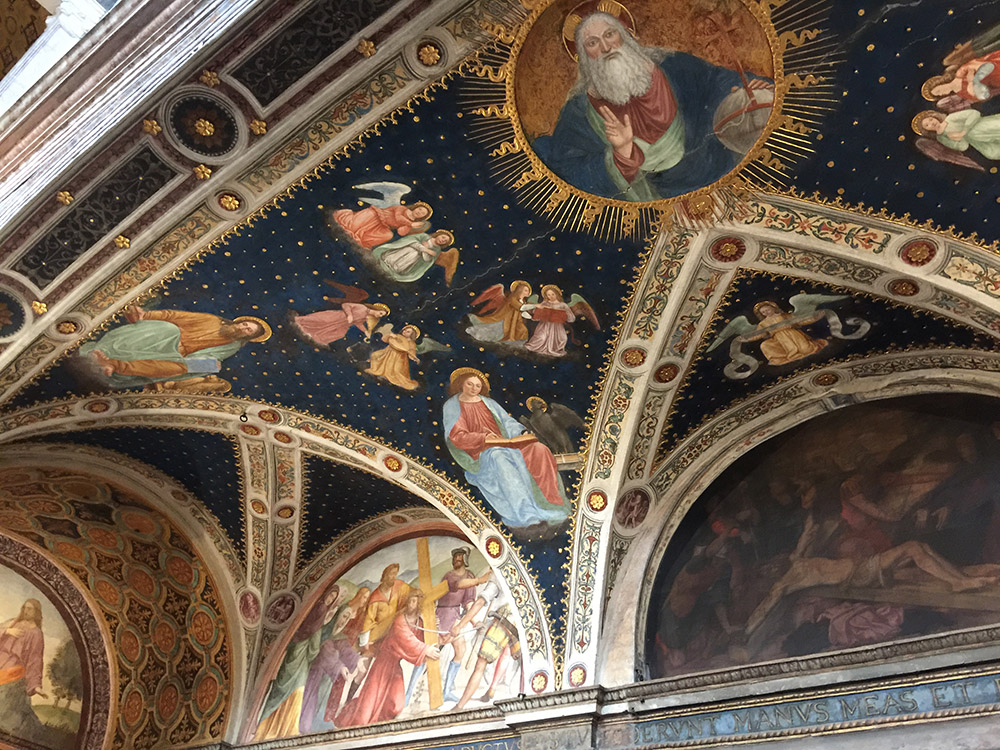
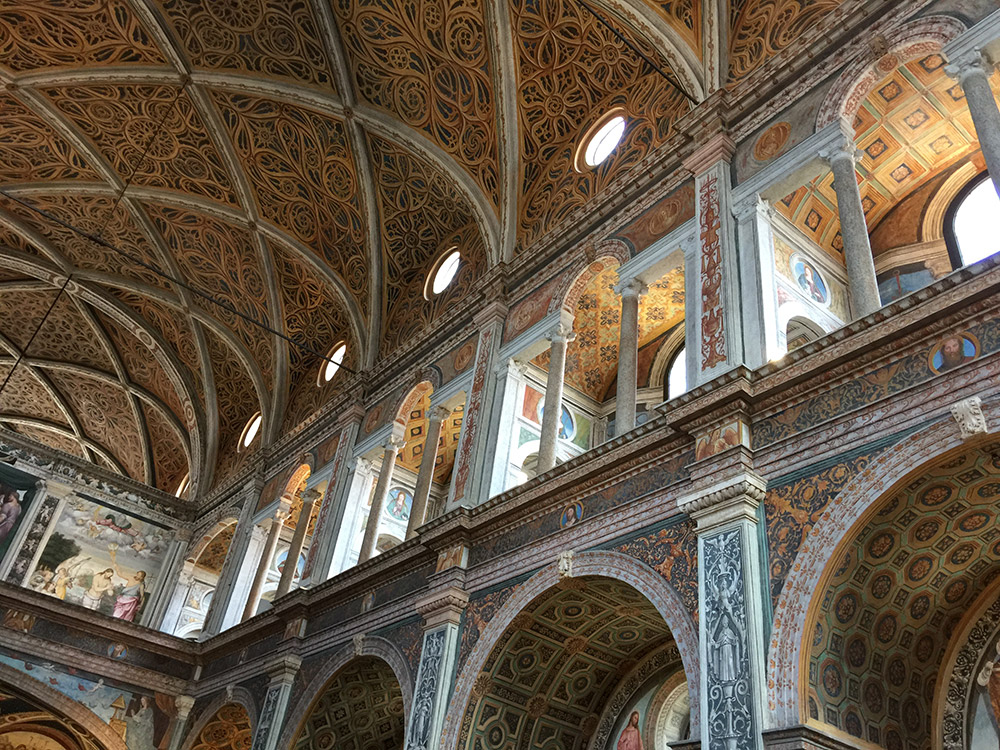
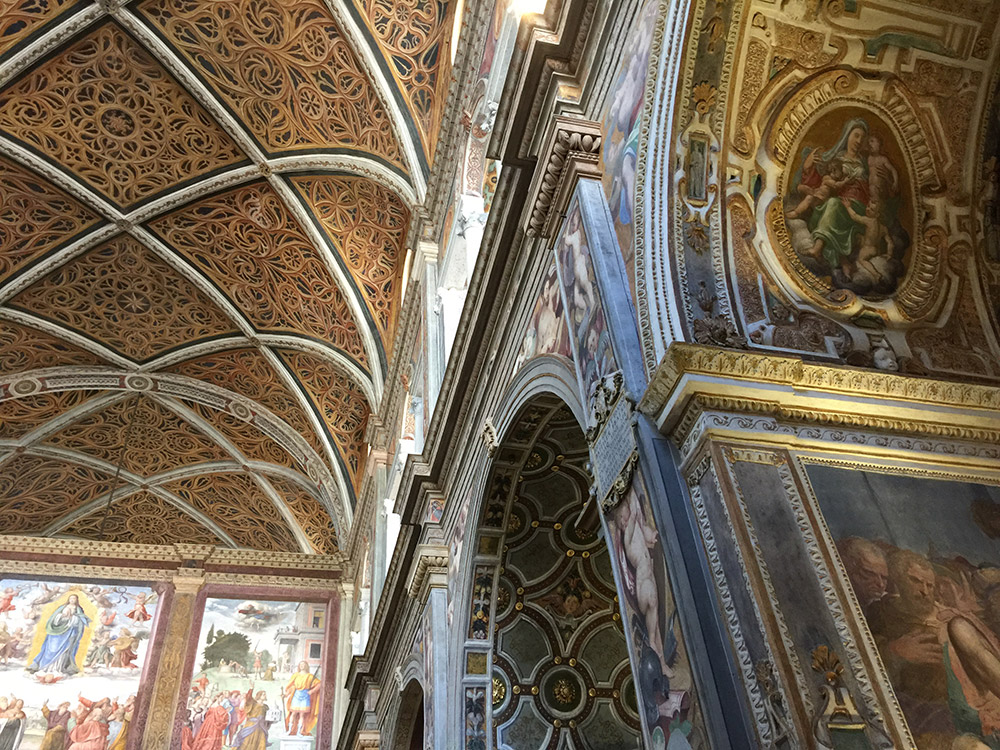
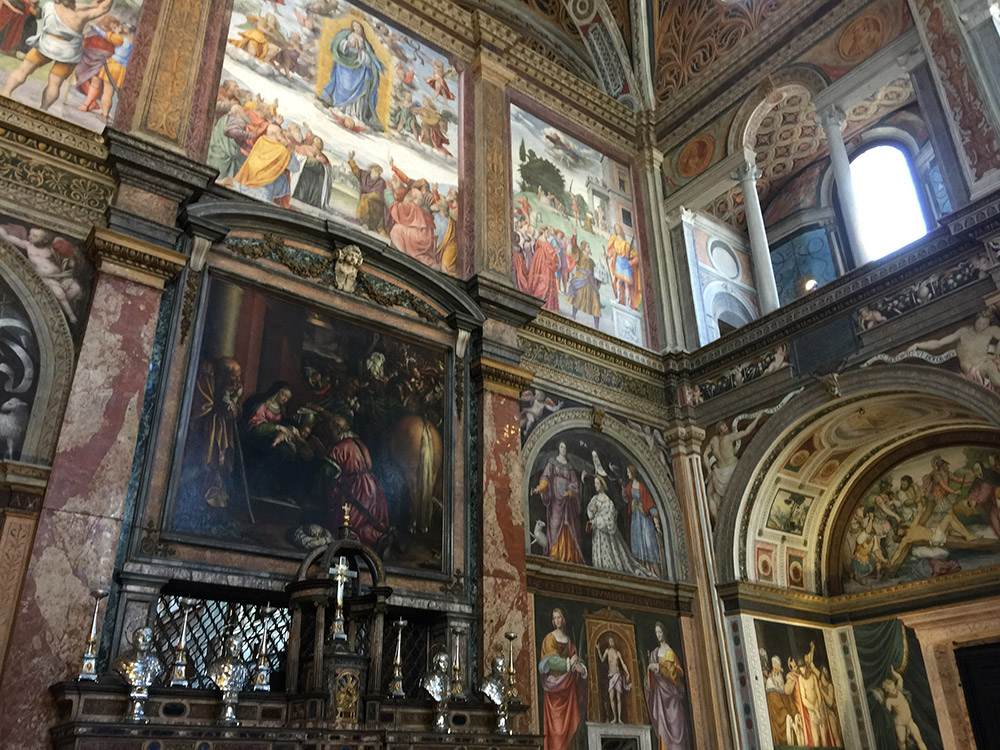
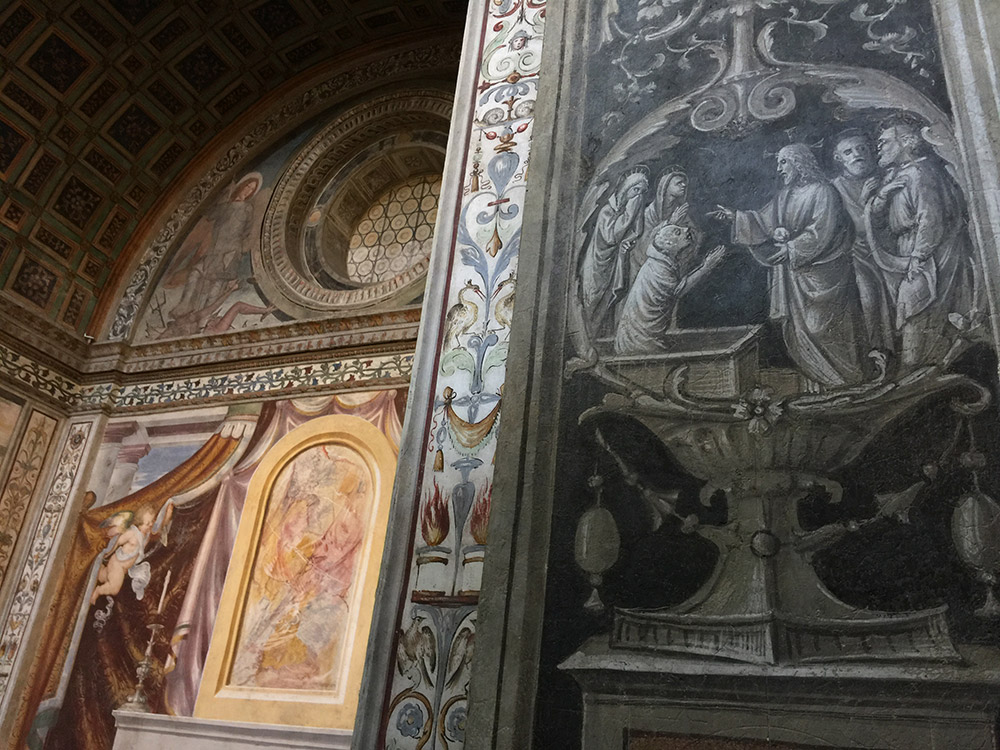
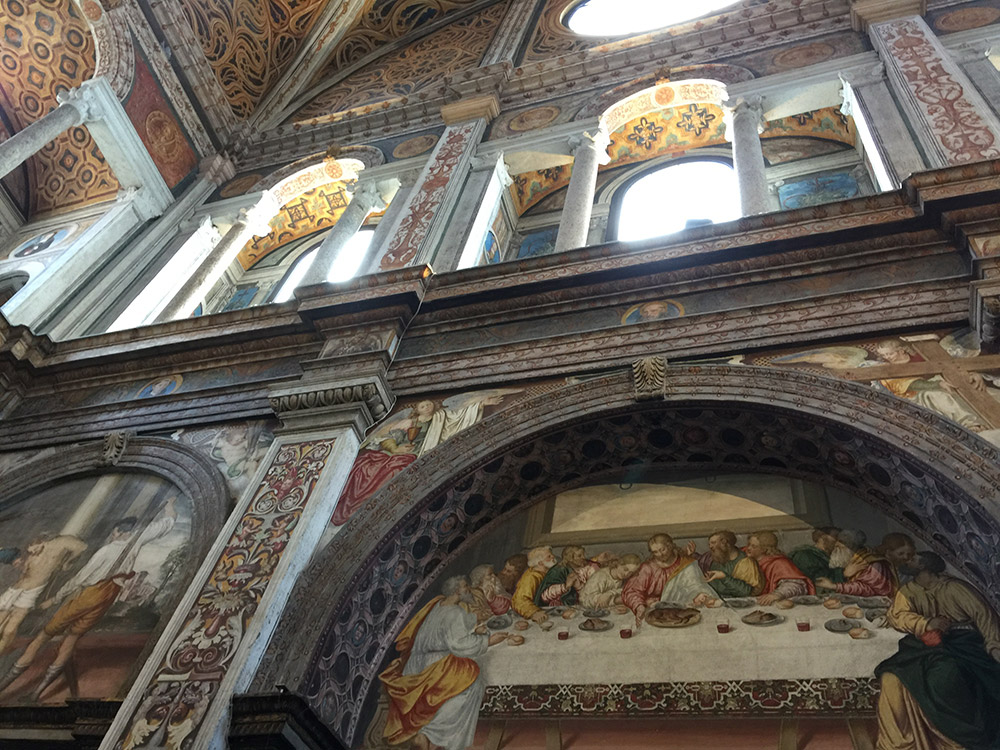
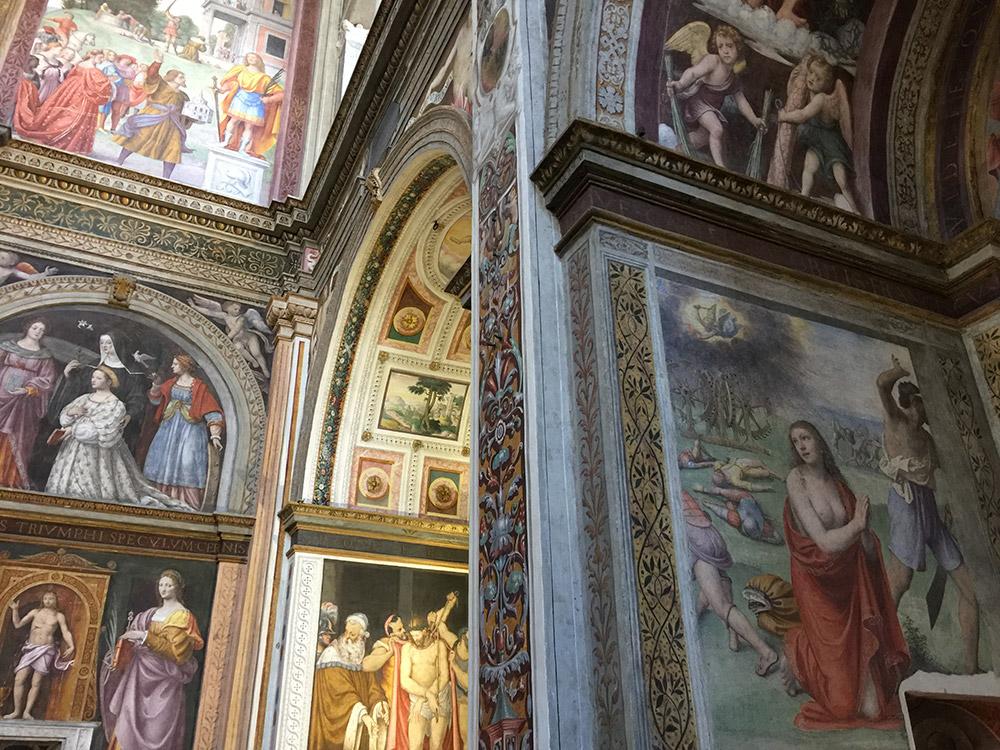
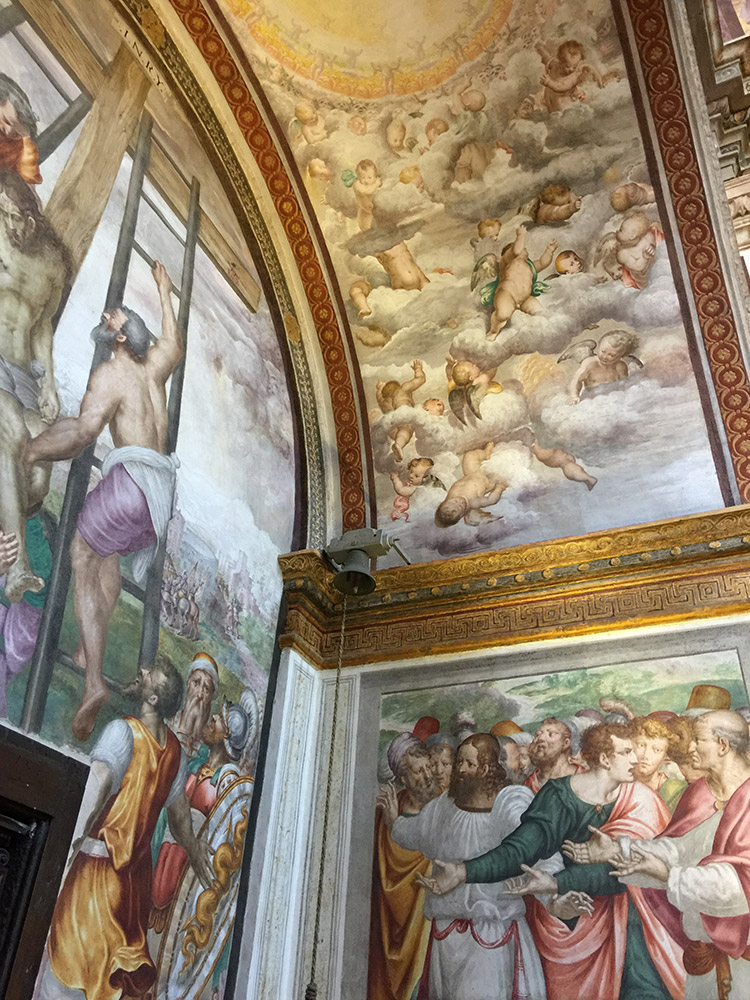
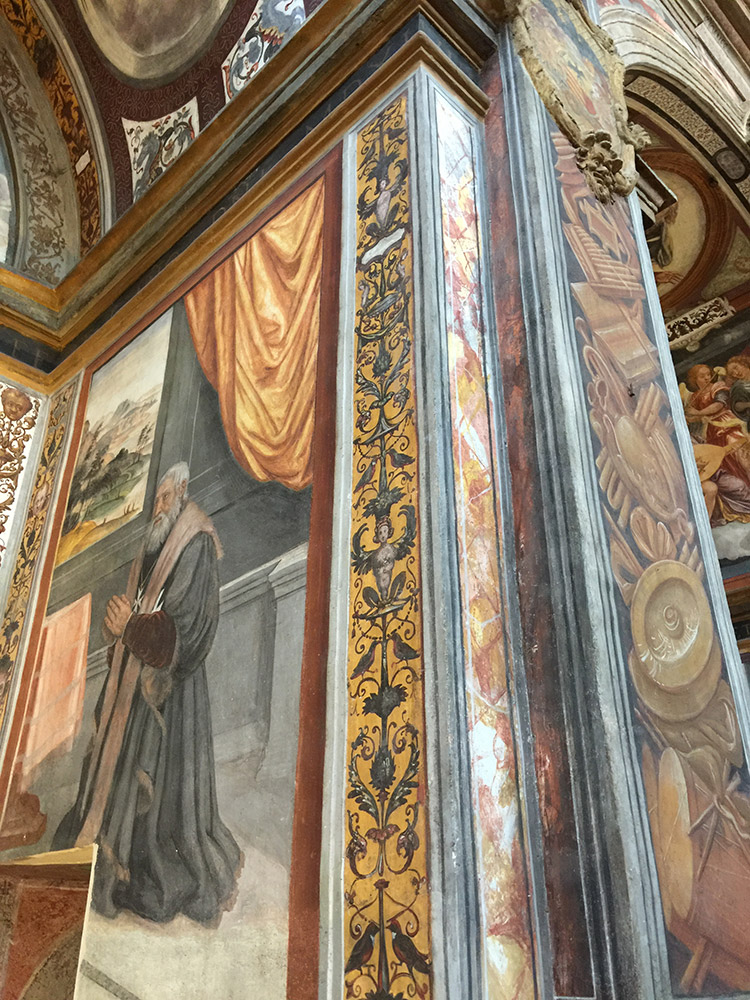
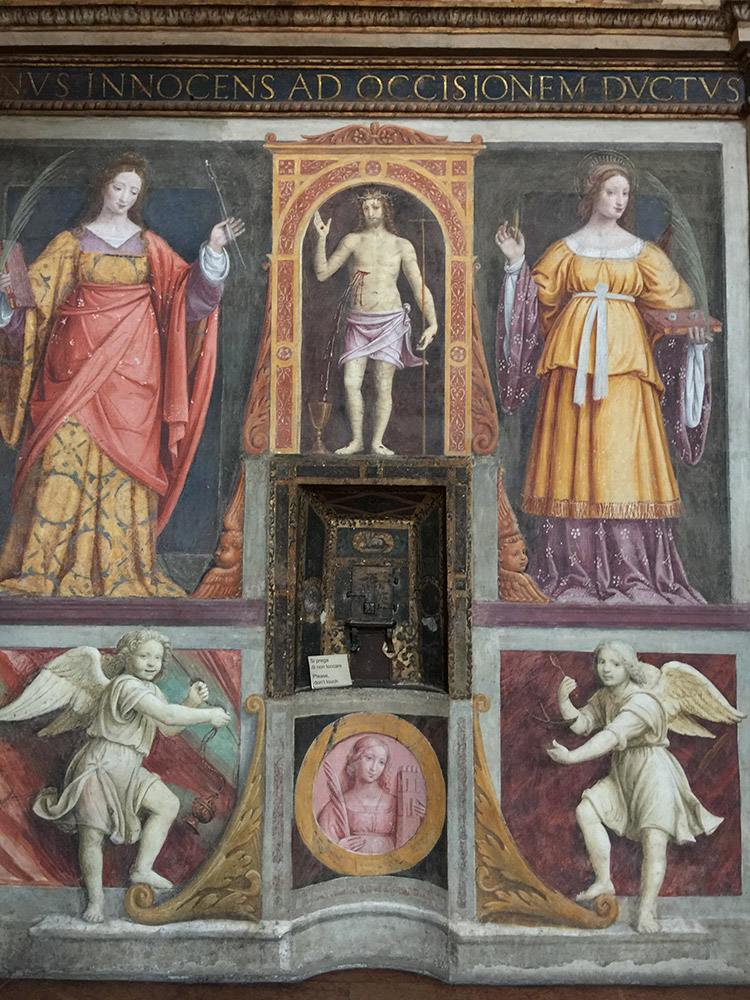
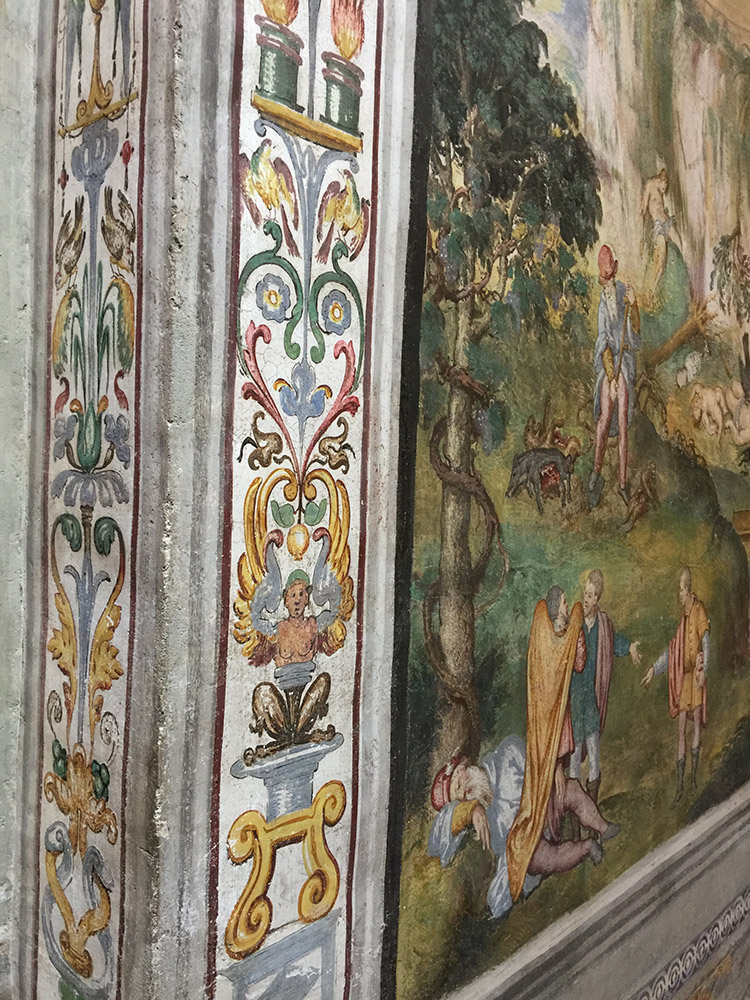
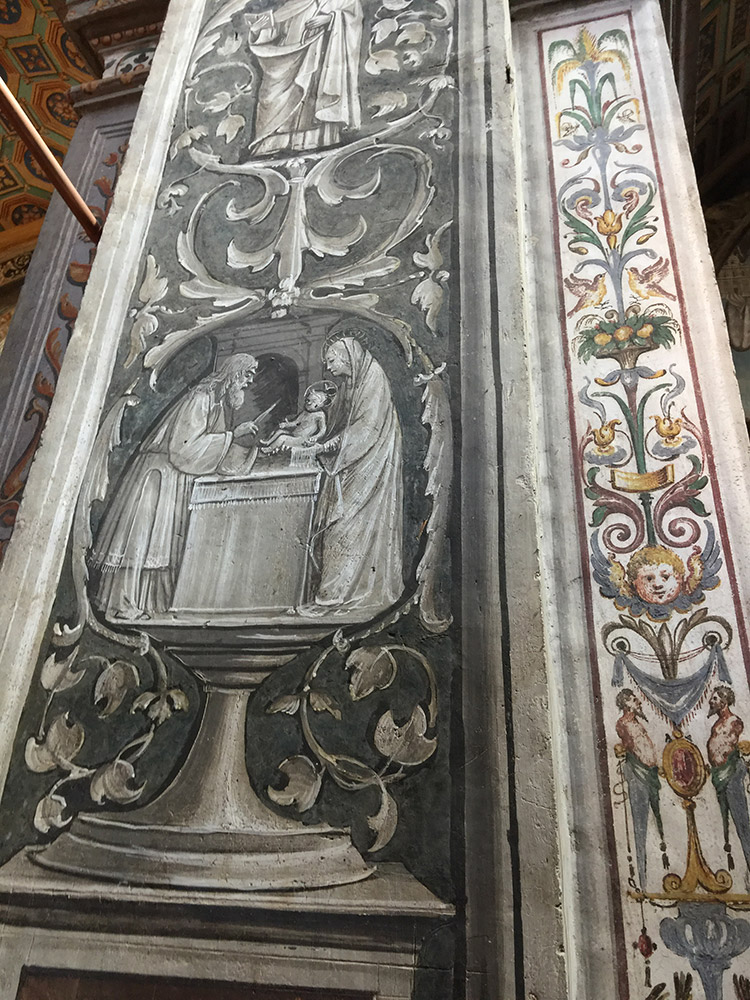
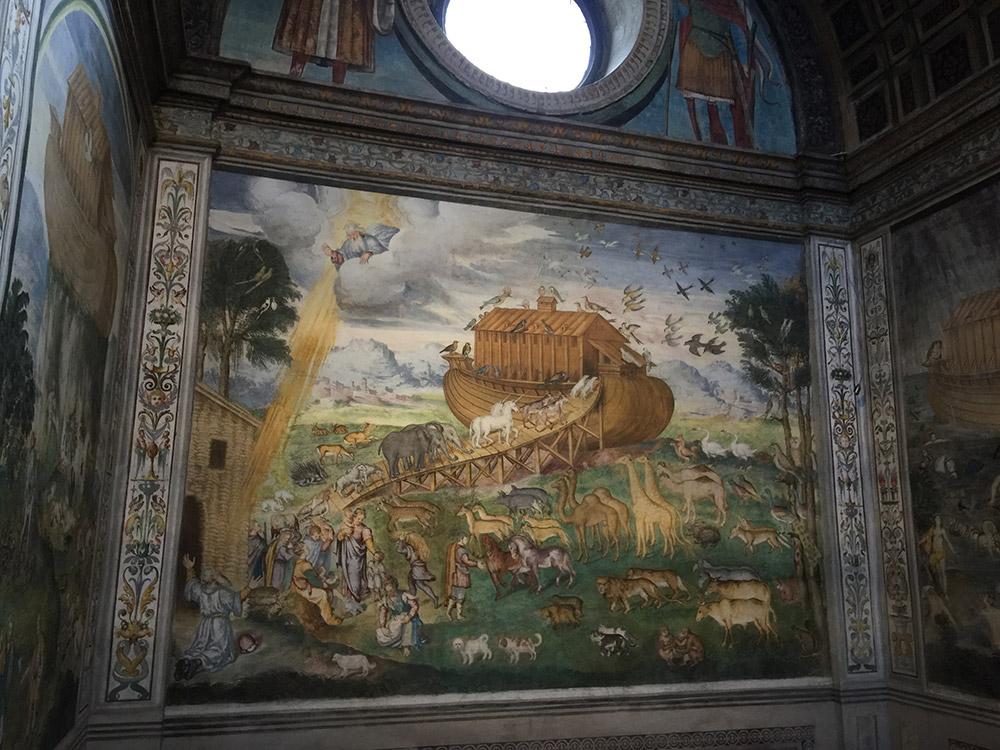
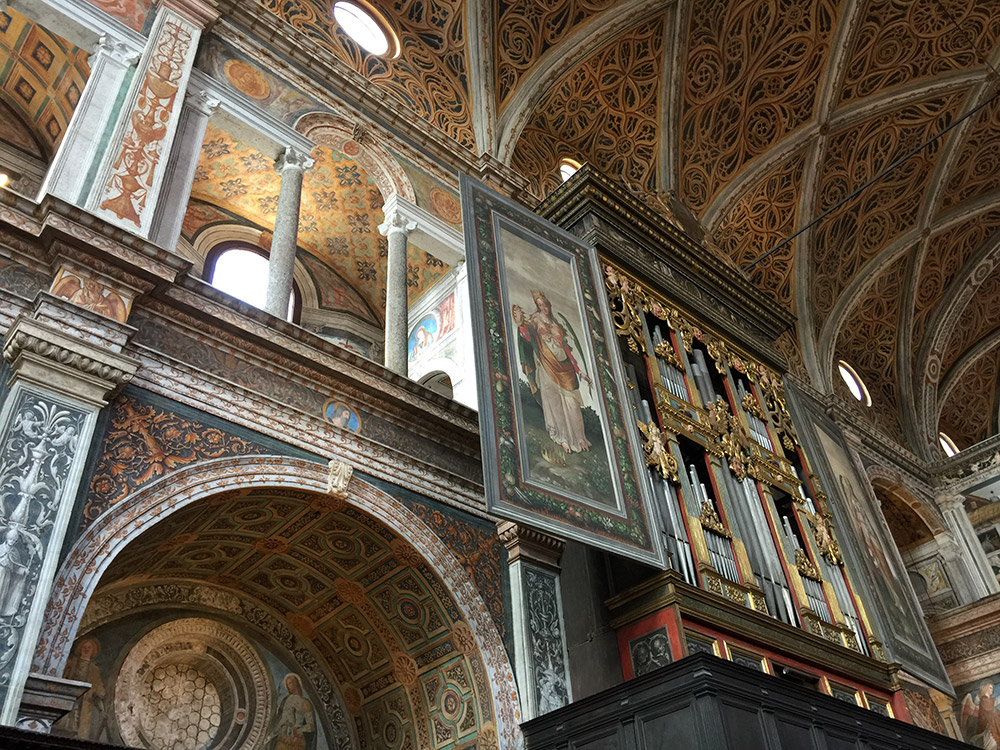
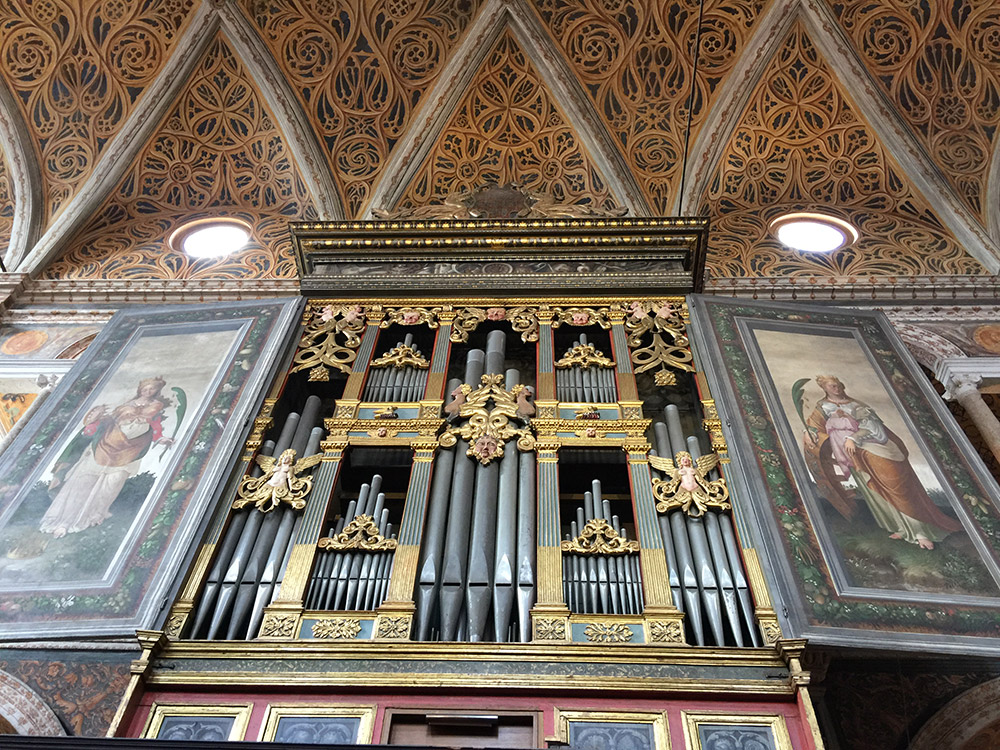
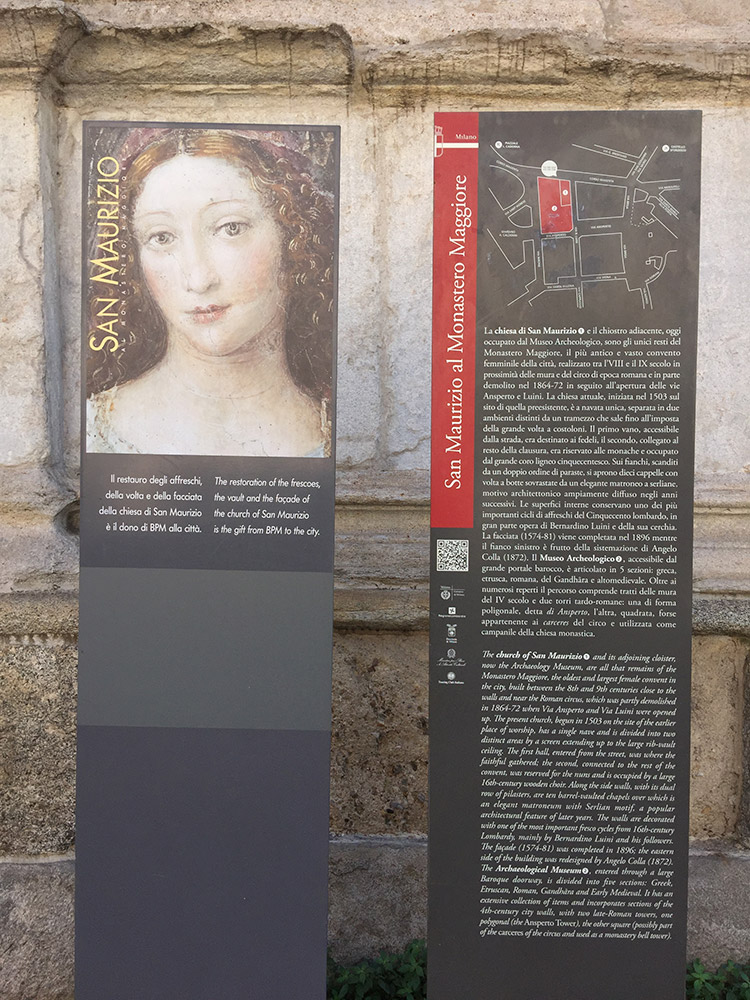
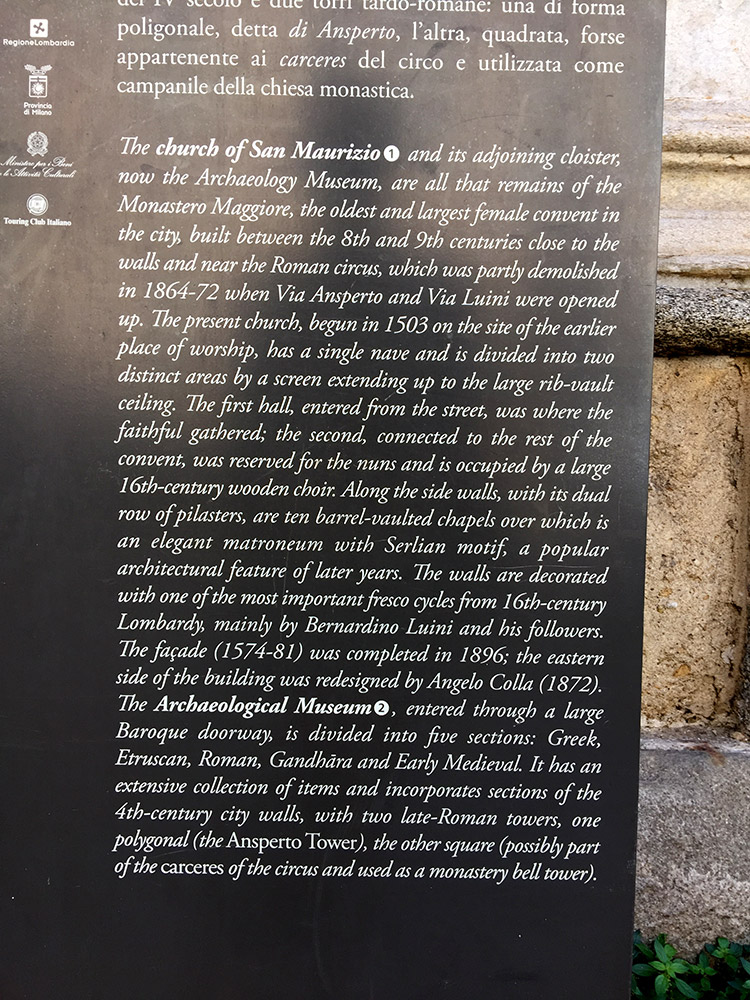
Absolutely stunning. The church looks unremarkable from the front, giving no hint of the splendor inside. Inside, however, every square centimeter, wall-to-wall, floor-to-high-arching-ceiling, is covered with frescoes of saints, scenes, fillagree… and even unicorns entering Noah’s Arc. I imagine one could spend a lifetime studying the imagery up close. Truly a marvel, whether you’re religious or not.
8:15 P.M. and someone out there is playing the violin. There are also sounds of dogs, kids and dinner dishes. Occasionally a baby’s cry and people sneezing. This inner courtyard is a neighborhood unto itself, and very typically Milanese.
As you walk around Milan, the sidewalks are all faced with storefronts and “portoni”, great big gates sized for car entry, with small person-sized doors included. Behind those gates, one finds a courtyard, a garden, a mini-paradise sometimes. Bikes have their spots. There’s a patch of grass, or more. Some trees. Parking stalls for those that venture having cars. But none of this would you know from out on the sidewalk.
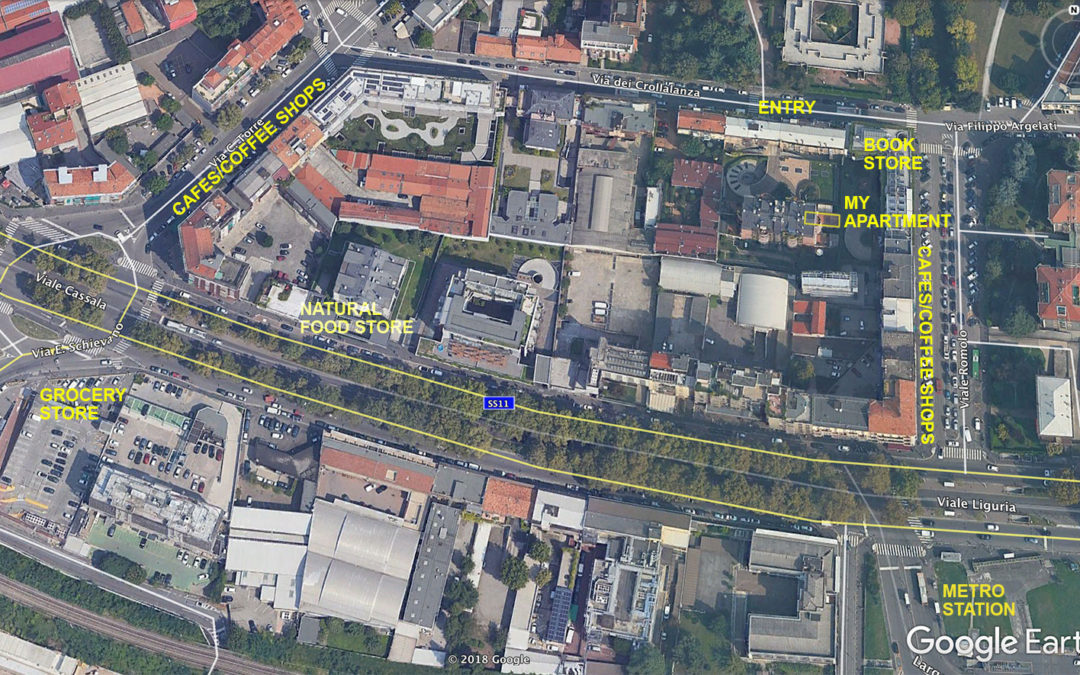
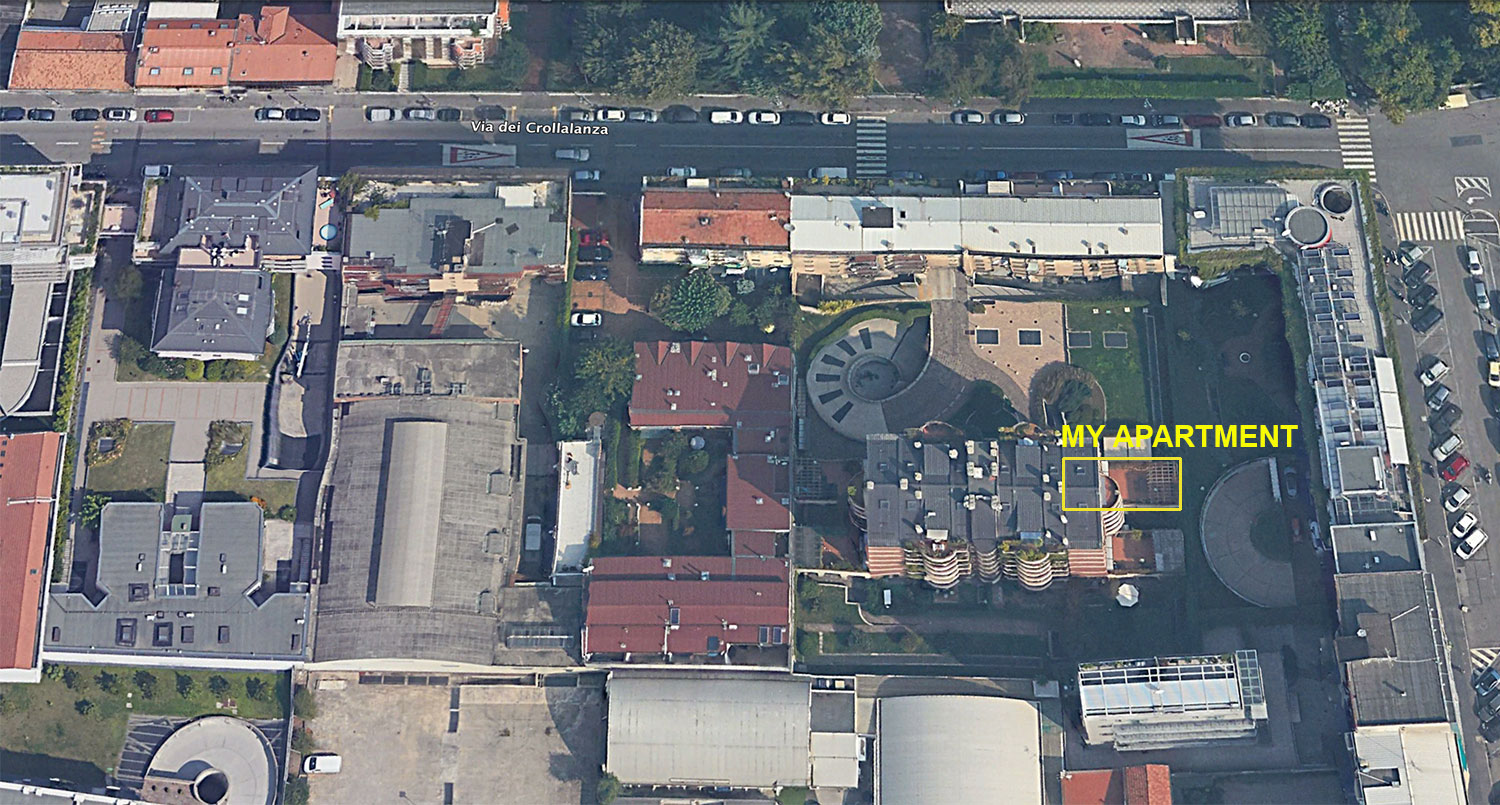
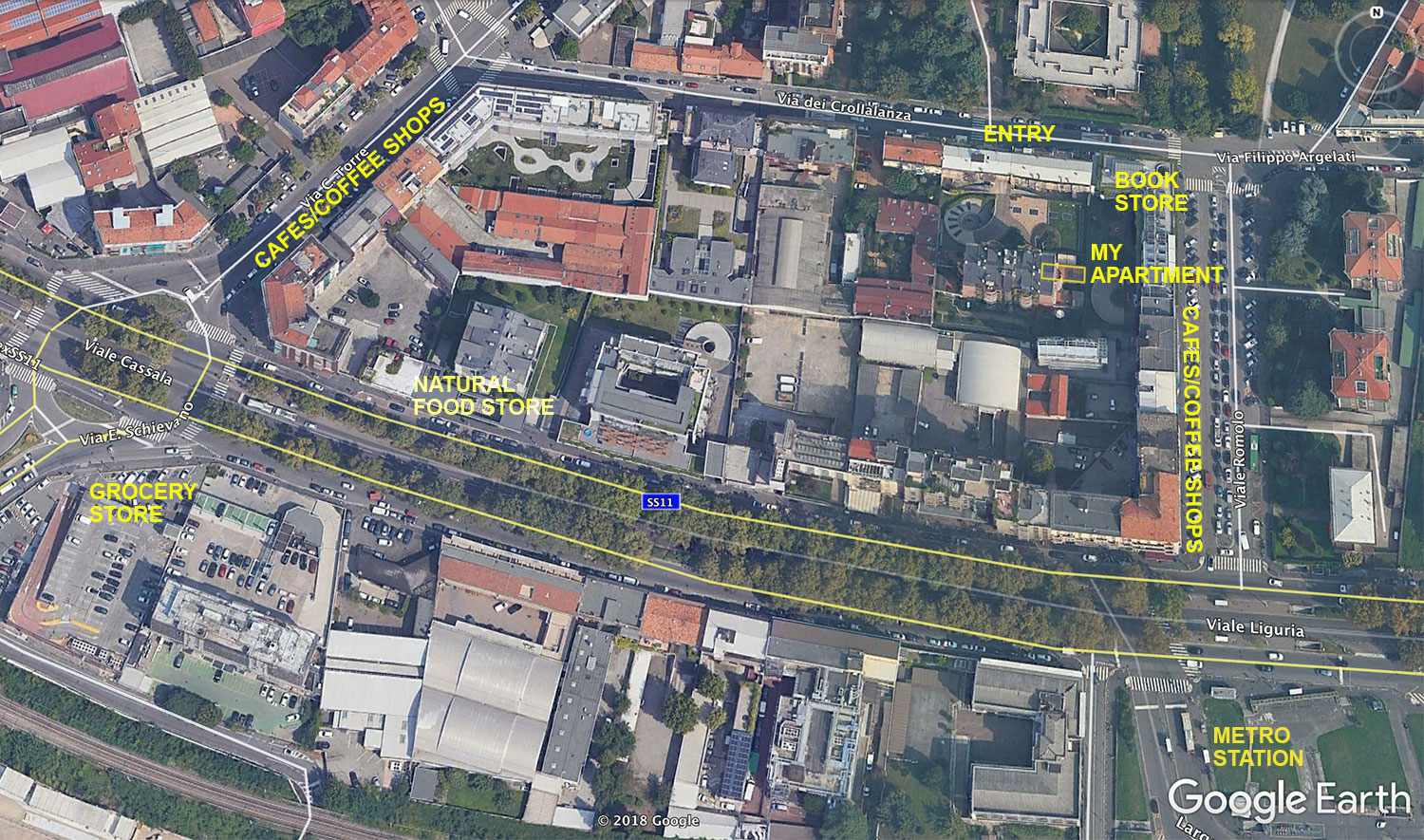
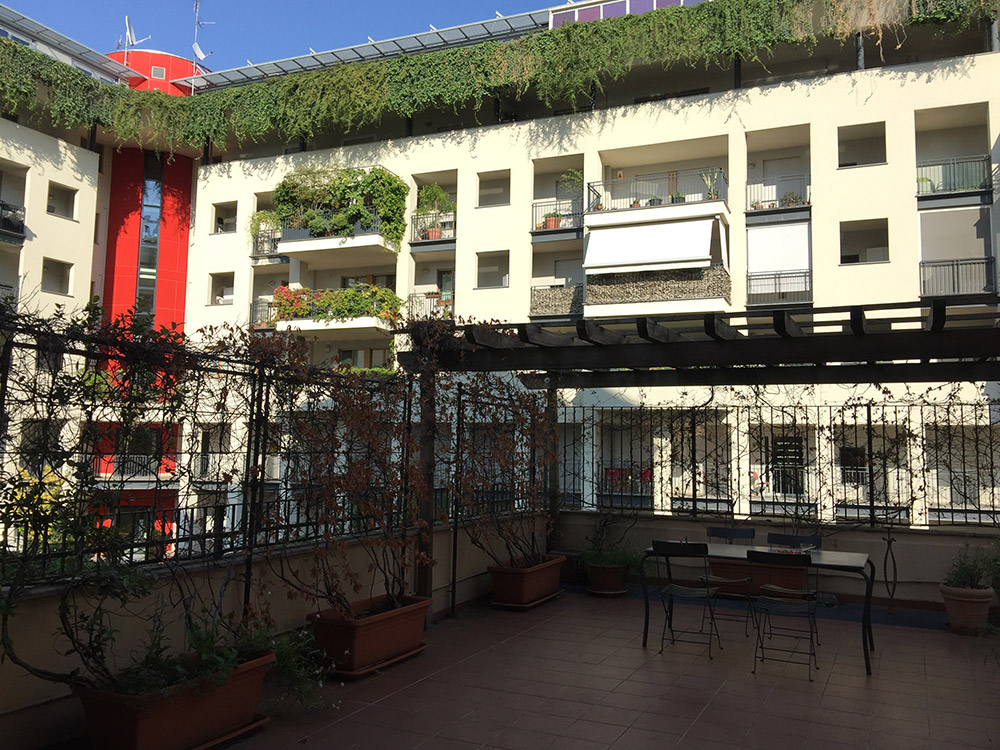
I’ve never been in an apartment with such a grand, expansive inner “courtyard”. That word seems hardly descriptive enough of the number of neighbors that must look out into this inner square of peace in the city. The multi-use buildings surrounding this enclosed space are 8 floors high. Out on the street around me, one finds a very large book store, cafés, bakeries, a kebab restaurant, a natural foods store, and a large grocery store, along with other smaller businesses. So much is all right here.
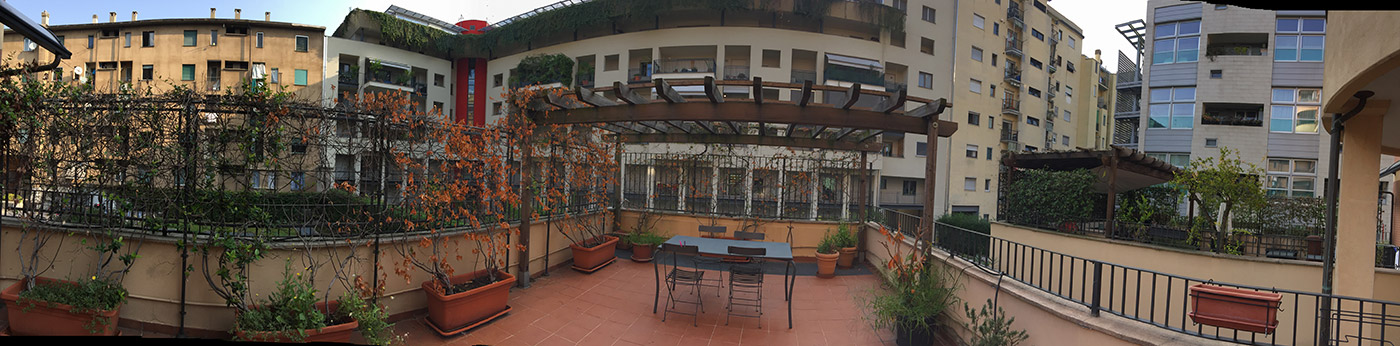
And my terrace! “La mia terrazza!” It’s bigger than my whole apartment! I could have a party with 50 or more out there enjoying the evening balm. (When I lived here for a year, my “terrace” was so small we called it “the shelf”.)
This really is a fabulous location. Because it’s encircled within this “courtyard”, it’s mostly shielded from city traffic sounds. For the most part, I hear the “neighbors”. Yet, in two blocks’ walk, I can be at the grocery store, or an even shorter walk to the metro. I can walk on the paths through two green parks to arrive at Leonardo’s Grand Canal, the Naviglio Grande, lined with restaurants, shops, artists’ studios and nightlife. I can easily hop onto the metro subway and get into the heart of town within 15 minutes, or rather choose to stroll and enjoy the sights along the way.
Che divino! How divine. Oh yes, it’s city life, but I did my stint on The Farm for 2 decades, so I’m not interested in “Under the Tuscan Sun”, renovating a dilapidated farm house. I want the hubbub and offerings of this big, international city. I want easy access to it all. I want the buzz and energy of it. But I also appreciate the peace offered to me by this giant terrace, jutting out into this enclosed space, private and yet oh so visible by all the other “neighbors”.
I agree, absolutely. And I think about EVERY single thing that goes into one suitcase or another. I think about its weight, its volume, its versatility, the ease of substituting something else for it, my desire/need for it, the “value” it will add to my trip. I get very analytical as I pare things down to a slim group of “to be packed”.
I end up arriving in Italy with a “small, personal item”, a carry-on rolling bag, and a larger checked bag when I come for a month or more. Milan is one of the Fashion Capitals of the world, and I’m here, with friends, for a month. It’s not like I’m here as a tourist, when and where I won’t be seen by anyone I know, going from city to city every couple of days. I have to/want to have enough variation to be “appropriate”…whatever that is, and to look “decent”.
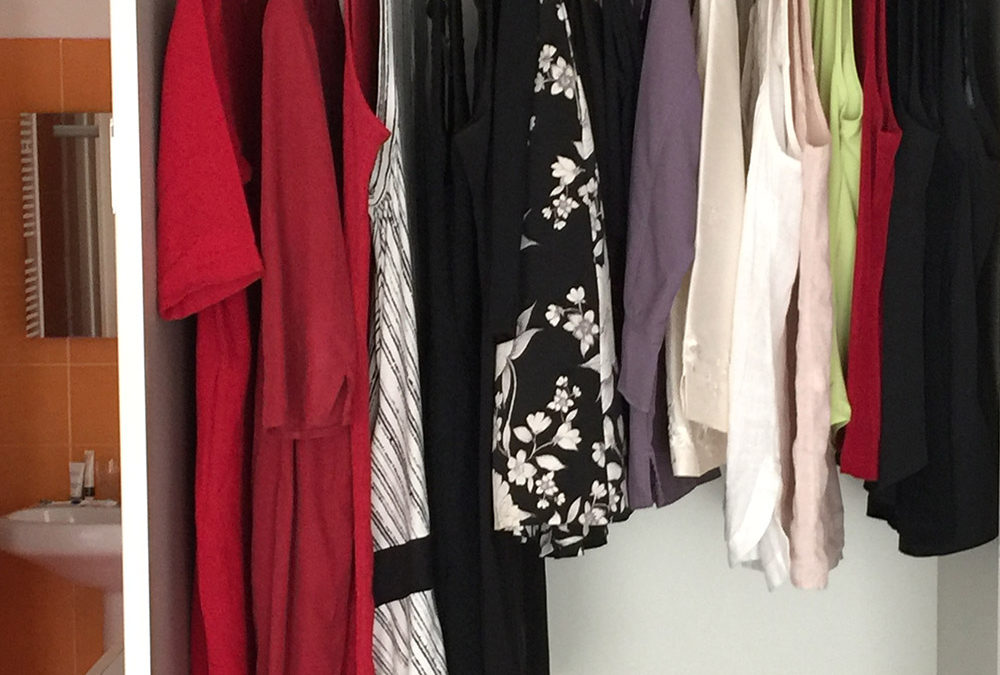
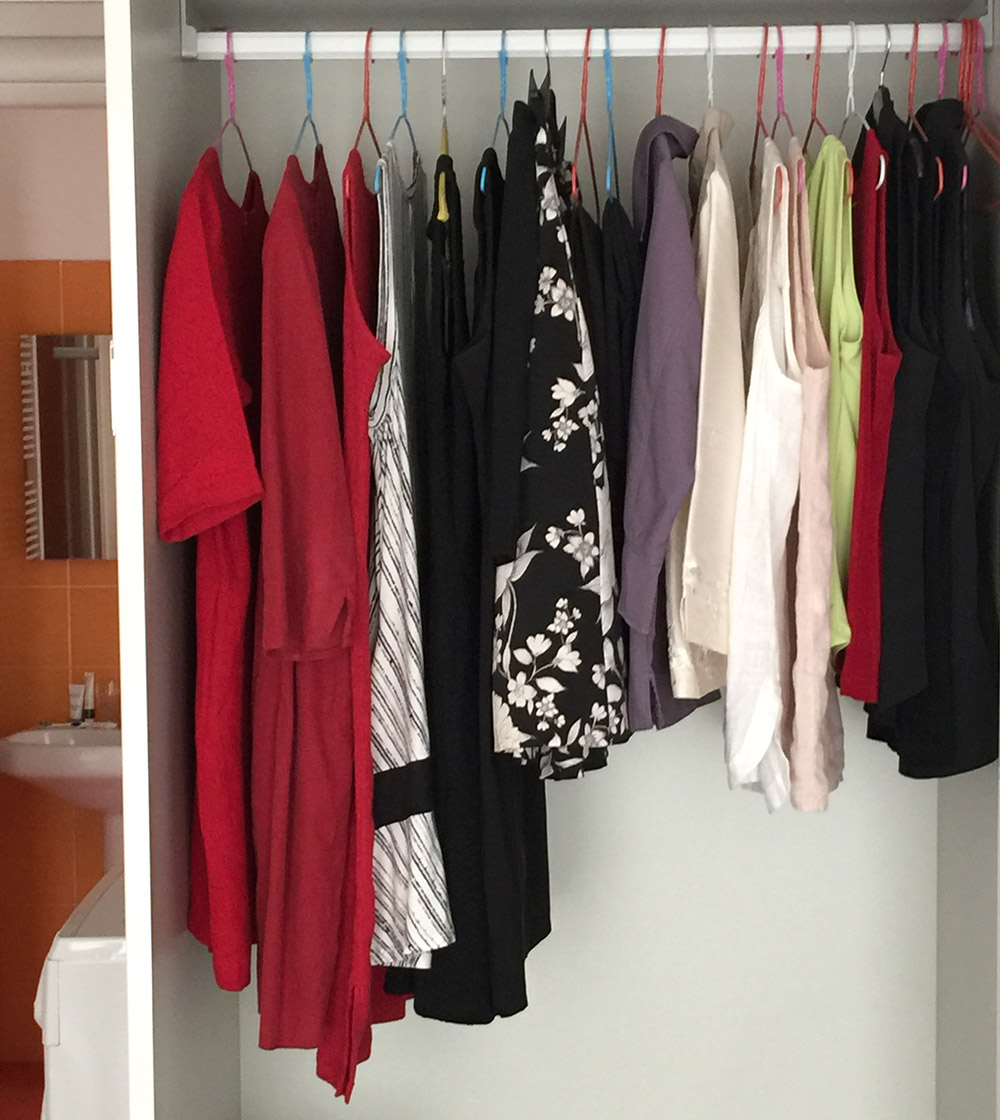
So, what did I pack?
Generally, I’ve narrowed everything down to black, white, red and a very specific green. That alone simplifies everything. I packed:
3 red dresses. 2 have 3/4 length sleeves, 1 is sleeveless.
1 black and white sleeveless dress/tunic
2 black sleeveless dresses. 1 “young”. 1 “classic”
2 skirts: 1 short black, 1 classic floral
2 pairs of black pants: 1 heavyweight, 1 lightweight
8 sleeveless tops: tanks/blouses, linen/knit, formal/casual. White, blush, green, red, black (each with a different “flavor”).
1 mid-calf pair of “sport” leggings for evening relaxation and under-dress/tunic look
2 red-patterned scarves
Plus underwear and a couple of t-shirts for layering when the weather starts to get cold.
I wear low boots on the plane, and change into “ballerina flats” upon arrival, with slippers to warm my feet against cold ceramic tile flooring in my apartment.
I have a “light” black jacket, plus a black rain jacket, and even some silicone galoshes to stretch over my shoes.
And since I live and WORK here for a month, I bring my computer, an external hard drive, a huge pile of plug and power converters, my pile of physical, paper client files, a few essential office supplies… Things that most “travelers” don’t need to haul.
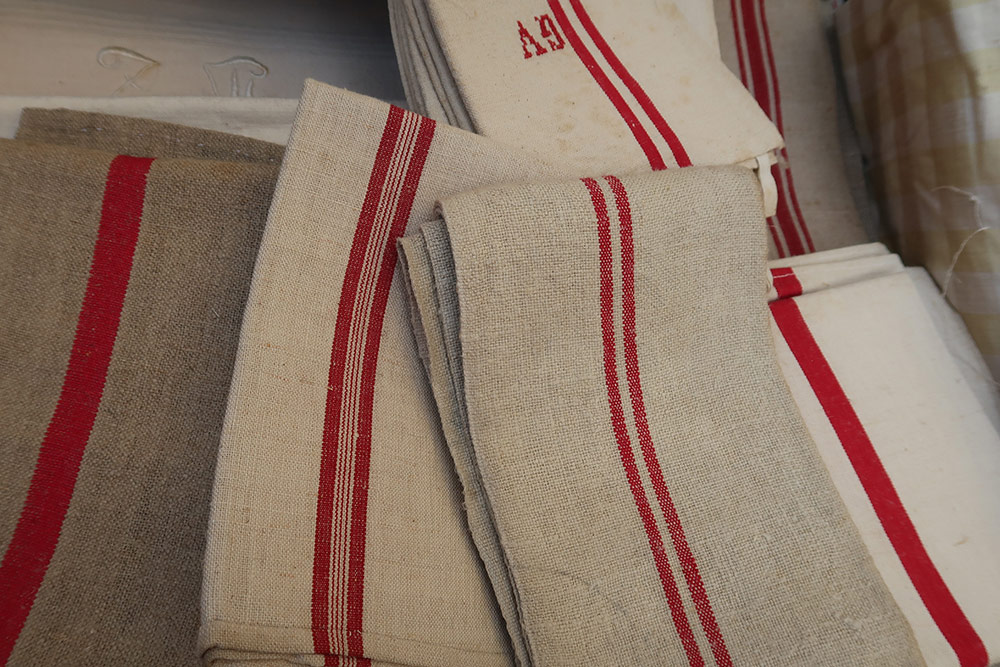
I also usually bring my own wash cloths (since they’re not common here), a couple of dish towels and dish rags and an apron (since I always wear one),
Sometimes I bring single-edge razor blades (for scraping calcium deposits from around the sinks), pliers and screwdrivers for fixing things, Bon Ami for scrubbing, since I’m often renting a “student-grade” apartment that needs a good cleaning when I get there.
I bring my Melitta coffee filter cone and filters because I JUST LIKE MY COFFEE THAT WAY. Waiting to go out to “The Bar” for a shot of espresso and pastry just doesn’t do it for me in the morning.
I bring some toiletries (buying others once I get here), basic “First Aid” items, and “In Case I Catch a Cold” remedies.
And I usually bring a few gifts over with me, then flea market finds on the way home.
Could I pack even less? Oh yeah, probably. My mentor Sara Little used to have her “uniform” and she wore it every day. She’d be aghast at how much I carry. But I’m here for a month, not switching cities every three days, see my friends many times, and carry my work materials with me. It adds up.
A few years ago, I was helping some friends plan their whirlwind tour of Italy. I went over to their house to review their proposed travel wardrobe. They had two giant suitcases out on the bed, and two heaps of clothes. I removed half the pile of clothes, and suggested smaller suitcases. When they returned home, they said “we wish we had carried much less!”
Pare down
Try to eliminate. Try to multipurpose. Pare down as much as you can… and then, even more. ESPECIALLY if you’re going to some place like Cinque Terre or Venezia where mobility is difficult. You’ll be walking up and down narrow paths and staircases, carrying your suitcases, often unable to wheel them along. And if you’re changing locations every few days, you’ll be packing, unpacking and hauling everything repeatedly. Ugh. If it comes to your wearing the same thing every couple of days, so be it. Minimize… and you’ll be glad you did.
(As I write this, some would look at my photo and say “Oh Maureen, you’ve packed too much.” But I KNOW what’s ahead as far as luggage handling, clothing needs/desires, and work requirements. What I pack is appropriate for my month living and working in one place.)
Home again. It amuses and pleases me that returning to Milano, Italia, is so known and so comfortable. This is my twelfth “dodecesimo”, yearly sojourn. (Included in those years is a period, early on, of 14 intense, amazing months living here, learning the language, the people, and the place.) At this point, I would hate to miss a year. I want to nurture the relationships and maintain the language ability I’ve worked so hard to build.
Here I am, in a lovely apartment in the “Zona Navigli”, the Canal Zone, my neighborhood. (Leonardo da Vinci had a decisive hand in these canals, and that history makes me smile.) My private terrace juts out into a grand, inner courtyard. Feels like a neighborhood all unto itself. I hear kids playing, families talking, eating. Lots of life around me. In this area are some of my dear friends. I have my favorite restaurants, my local grocery stores, the office supply store I frequent. I know where to find what I need.
I arrived Thursday afternoon (9/11) after 24 HOURS OF TRAVEL. Ugh. Dinner out, then to sleep…until 9:30 the next morning. (Tip: if planning a trip from the U.S. to Italy, don’t figure on being full of vim-and-vigor that first full day in Italy!) I awoke slowly, had last night’s leftover pasta for breakfast, unpacked and got organized, made a shopping list, went to the cell phone carrier to recharge my Italian cell phone number, went to the Euro Store (equivalent of the Dollar Store) for cheap stuff that I want/need for the next month, grabbed enough to eat for today, then carried that pile home. I relaxed a while, took a nap, and by evening had enough energy to go back out for grocery shopping to last me a few days longer.
Kitchen/Dining area.
Living/Dining area, with a door out to the terrace.
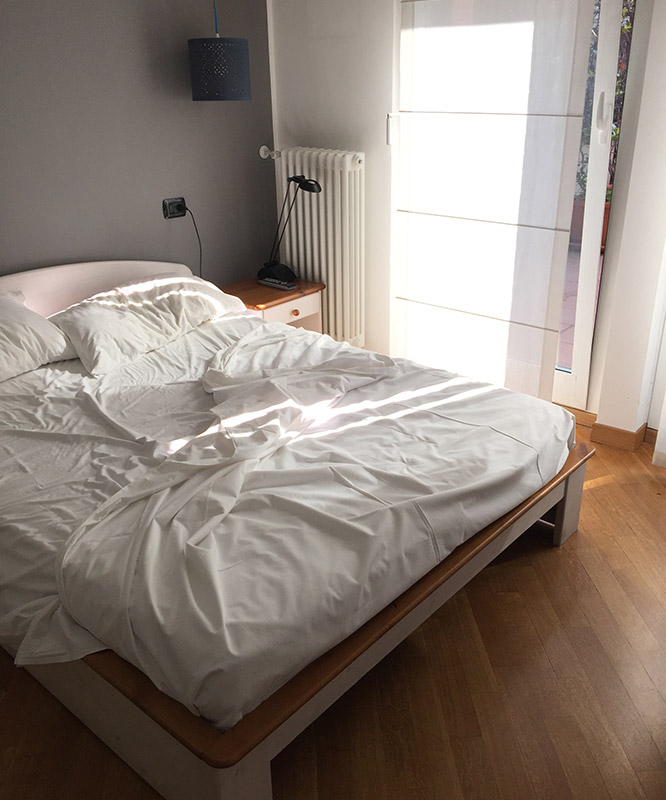
My bedroom, with TWO doors out to the terrace.
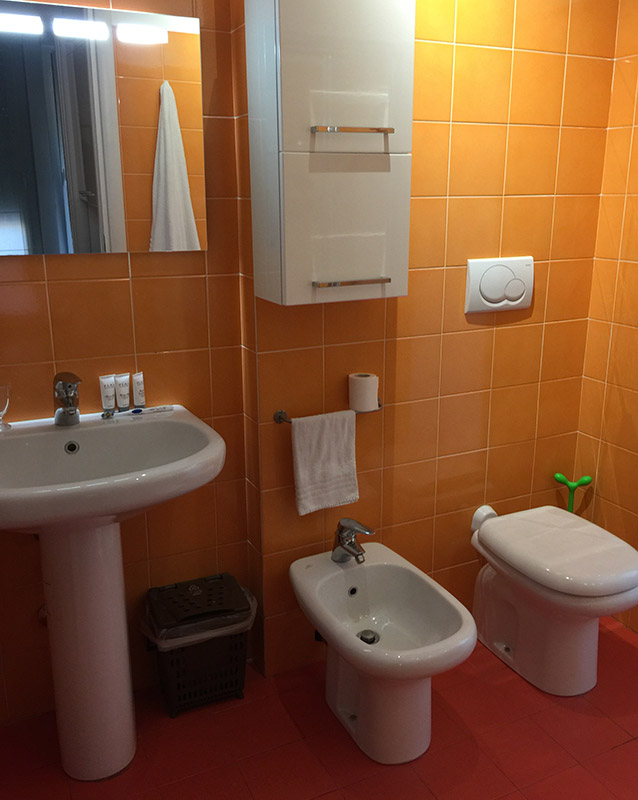
My very ORANGE bathroom.
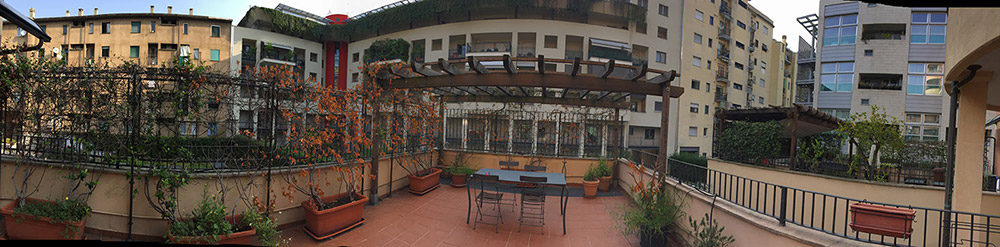
My terrace is bigger than the whole apartment!
Panorama view of my terrace and the surrounding condo/apartments.
I first came to Italy in 2008. I’ve now been in and through 19 of the 20 regions of Italy. I’ve seen a lot. Small, tiny, little towns. Touristic hot spots. Big cities. “Unknown” places that have all the charm and flavor that most Americans imagine when they think of Italy.
This place really does captivate me.
Milano seems to be hardly on anyone’s list. They all fly into Milano, and then keep right on going. But there’s so much here that thrills my mind, my eye and my heart. I guess that Milano invites one to look more closely, more deeply to be charmed.
Milano is one of the Design Capitals of the World. (One of the reasons it tugs at me, a designer.) In fact, we’re right on the verge of Milan Fall Fashion Week, September 17-23. There are very tall, very skinny women (models) walking around town, taking the subway and buying next-to-nothing at the grocery store. This is also the time when students check into the various schools in the area for the coming school term. The airport and metro station were FULL of people when I arrived on Thursday. And it’s a primo time to be wandering around Italy; the weather is beautiful.
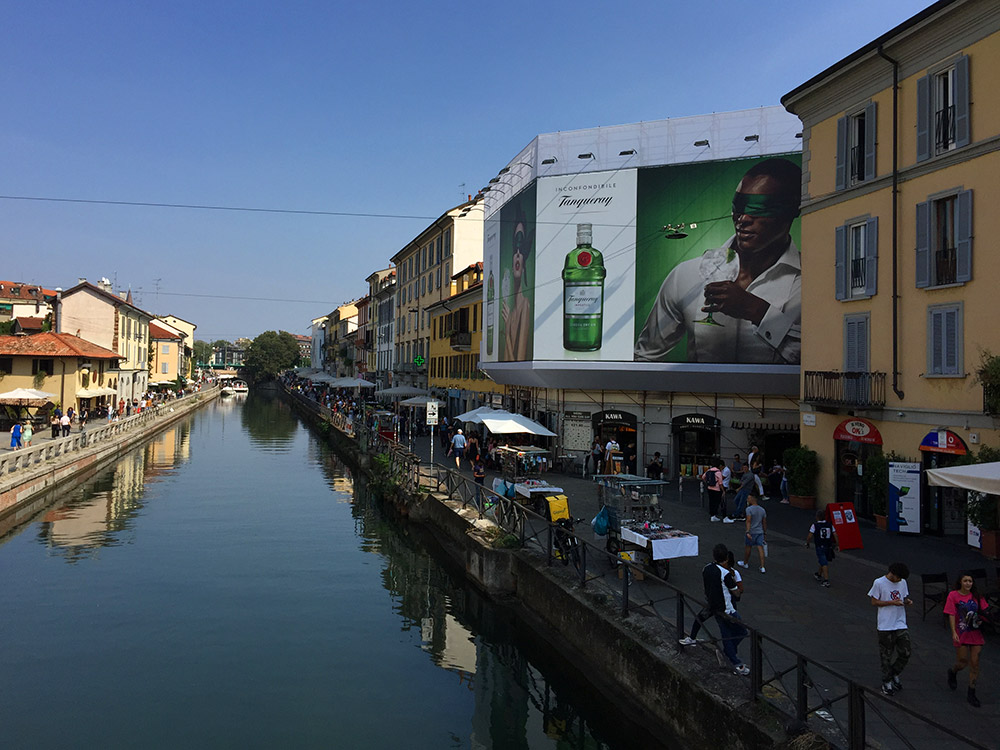
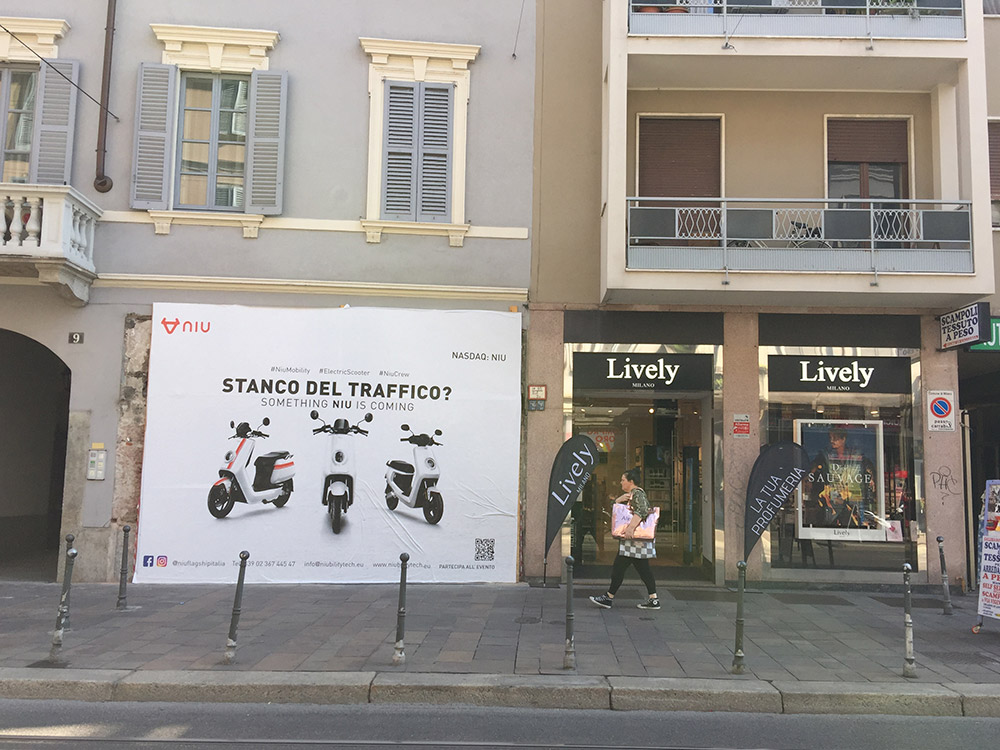
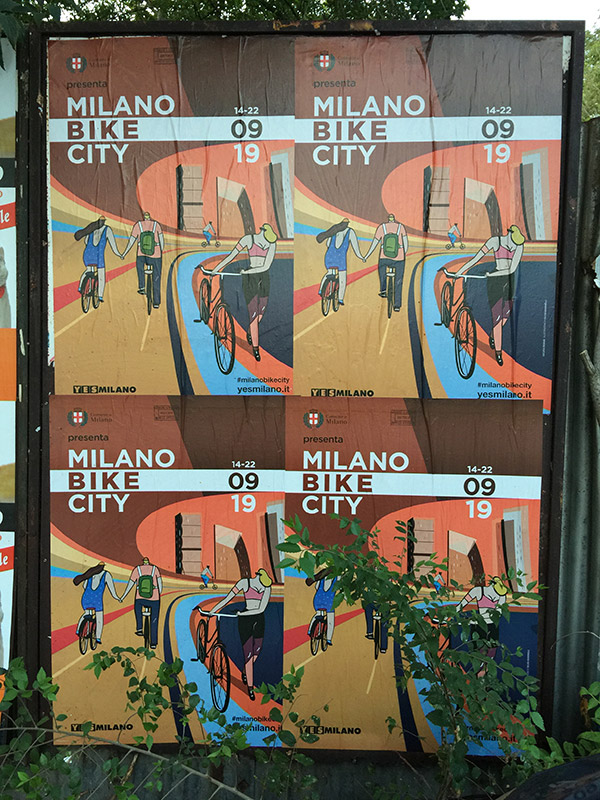
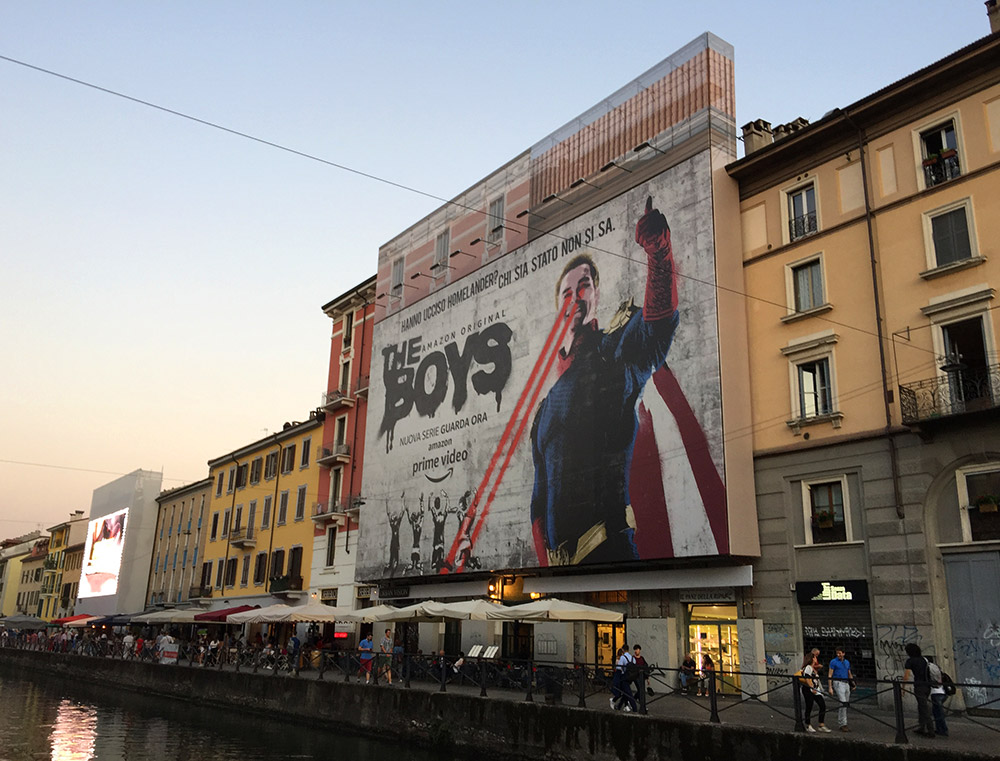
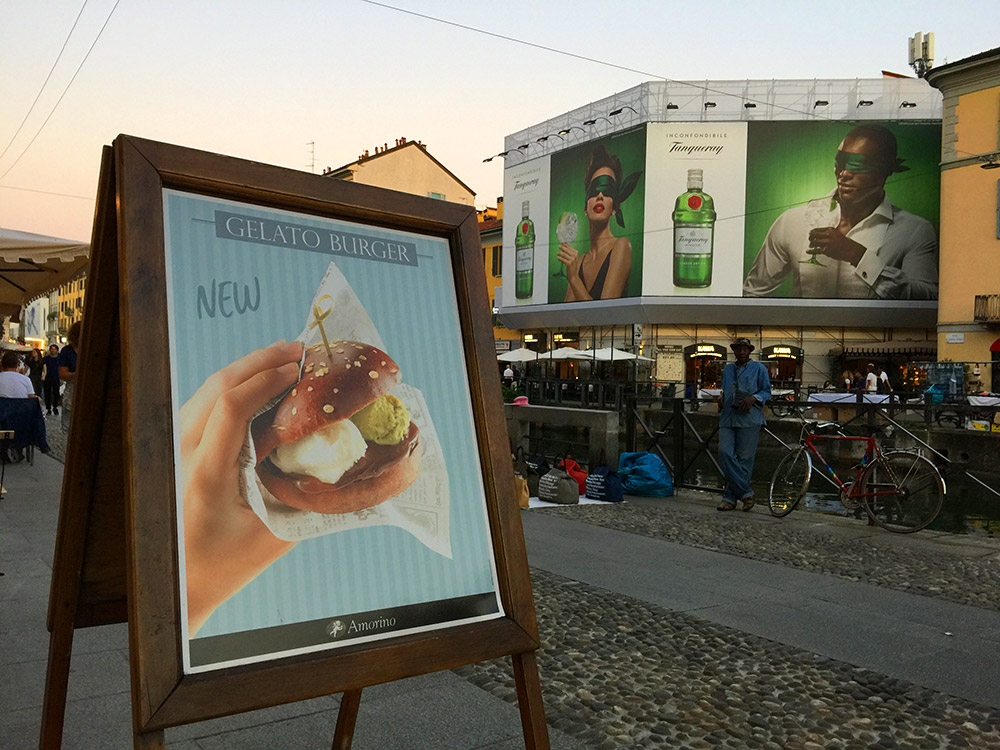
Supergraphic sampling from these last few days in the neighborhood.
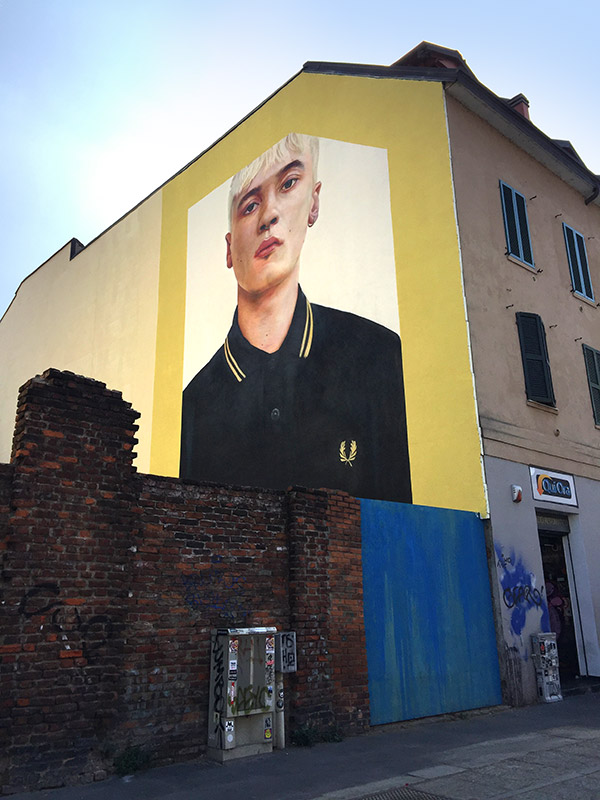
Supergraphic Blond Boy
Tanqueray Gin ad, 4 floors high.
Tired of Traffic?
Milano Bike City.
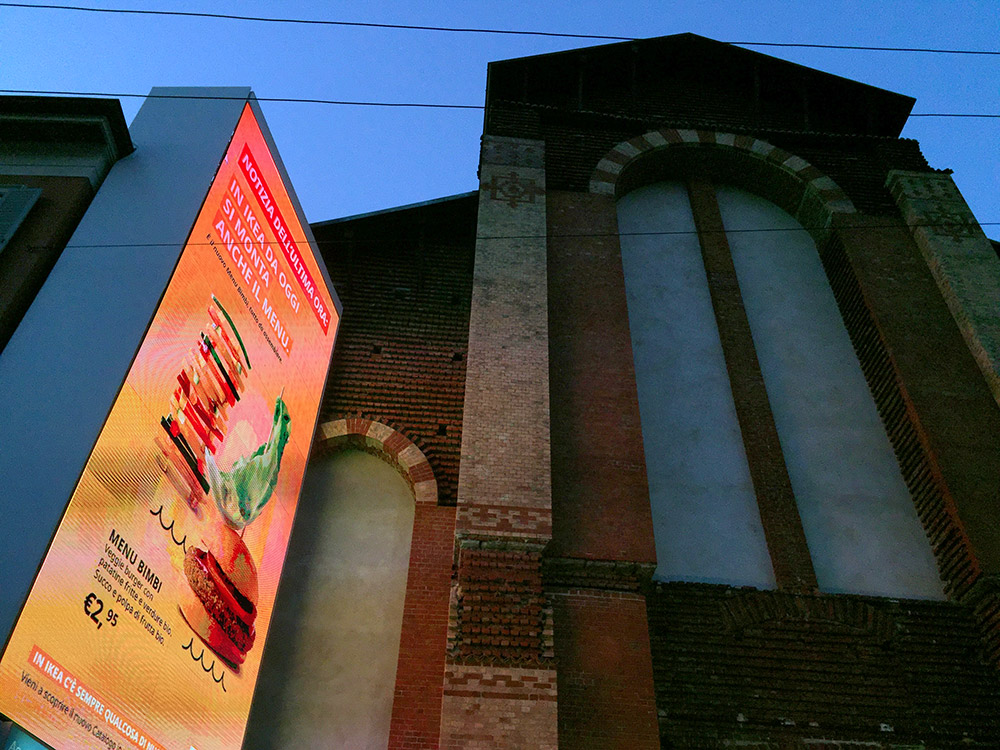
These ads are HUGE, and there’s a display screen just down the way.
Gelato Burger and Gin along the Grand Canal.
HUGE display screen with changing ads, (this one for IKEA—there are 5 in Milano) next to this historic church, S. Maria delle Grazie.
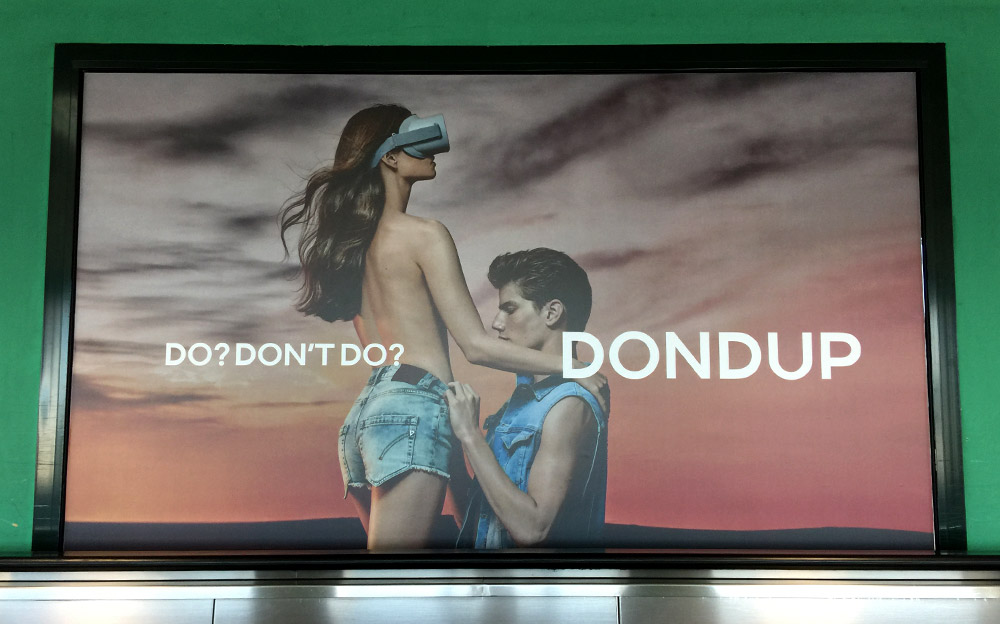
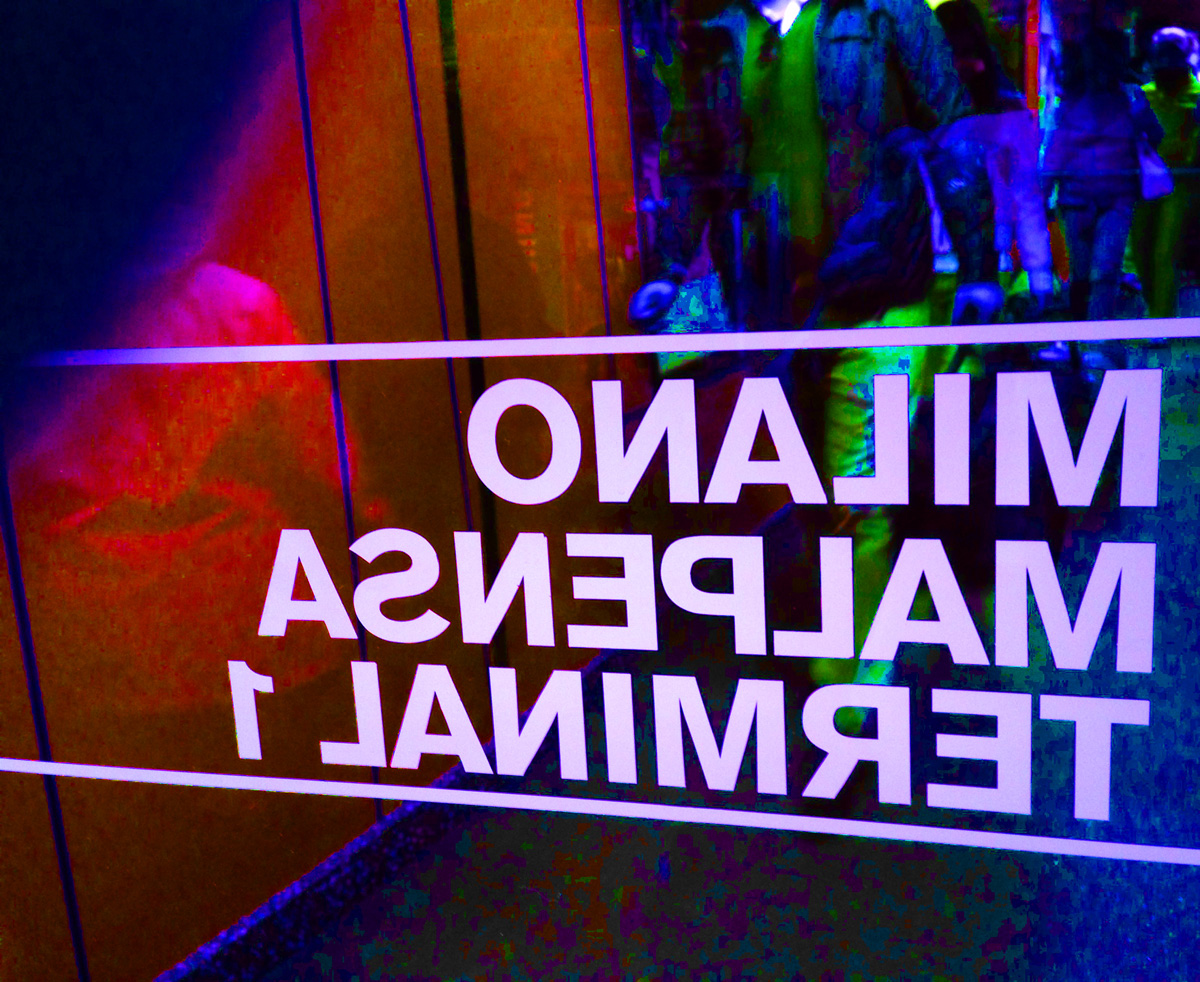
Super graphic ad in the Milan Malpensa Airport! What the hell?
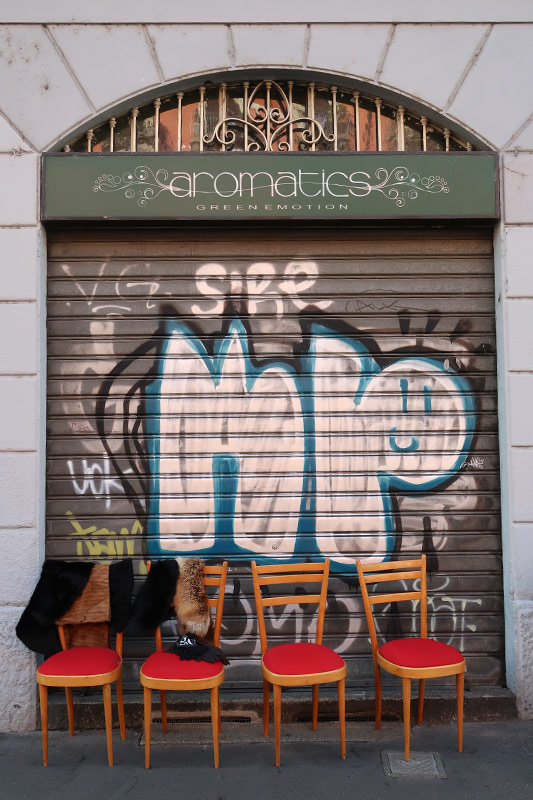
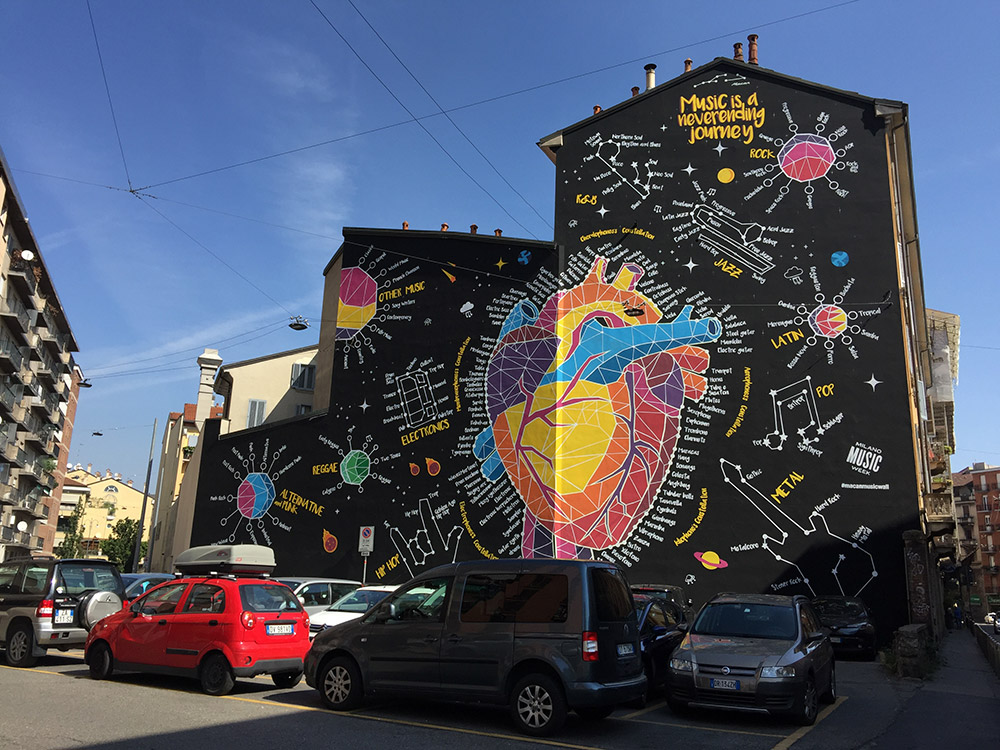
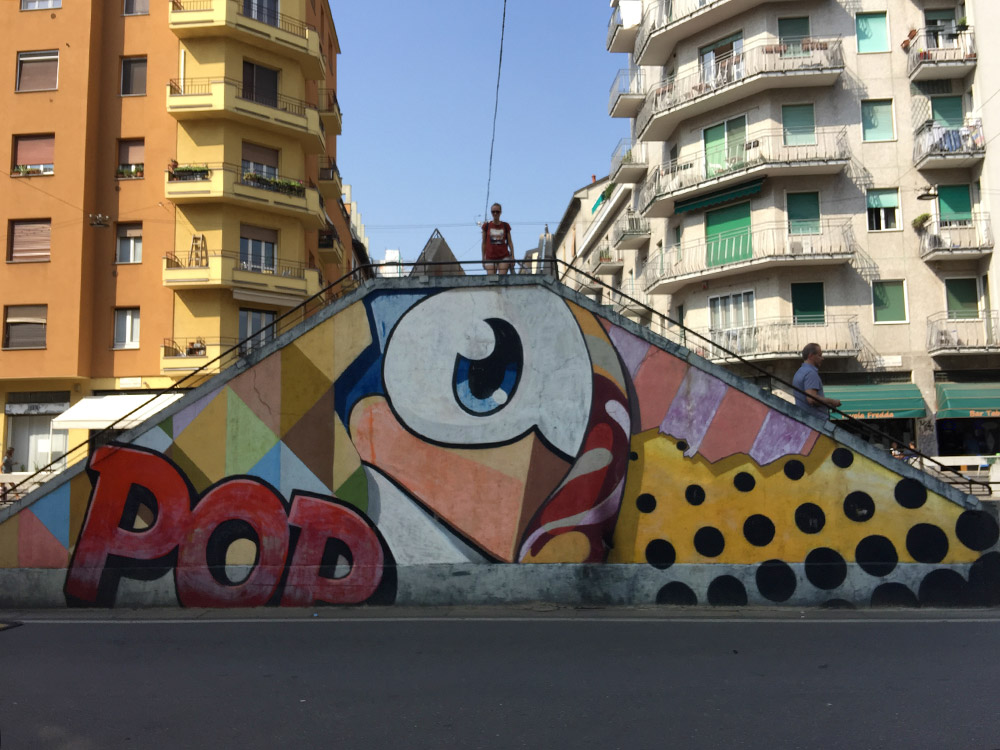
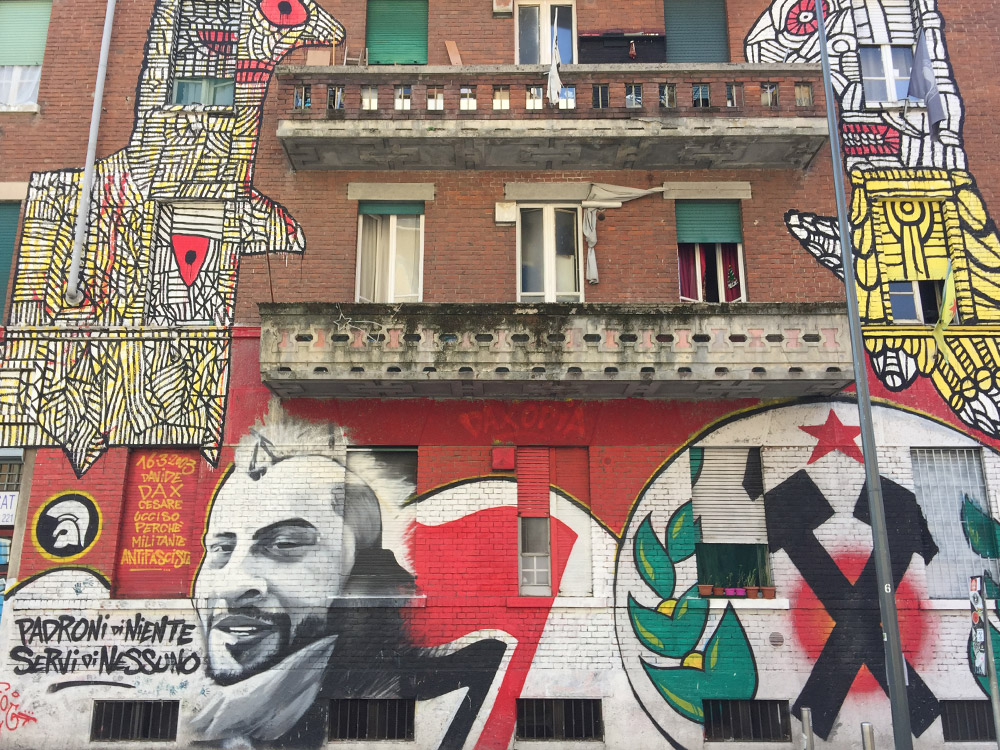
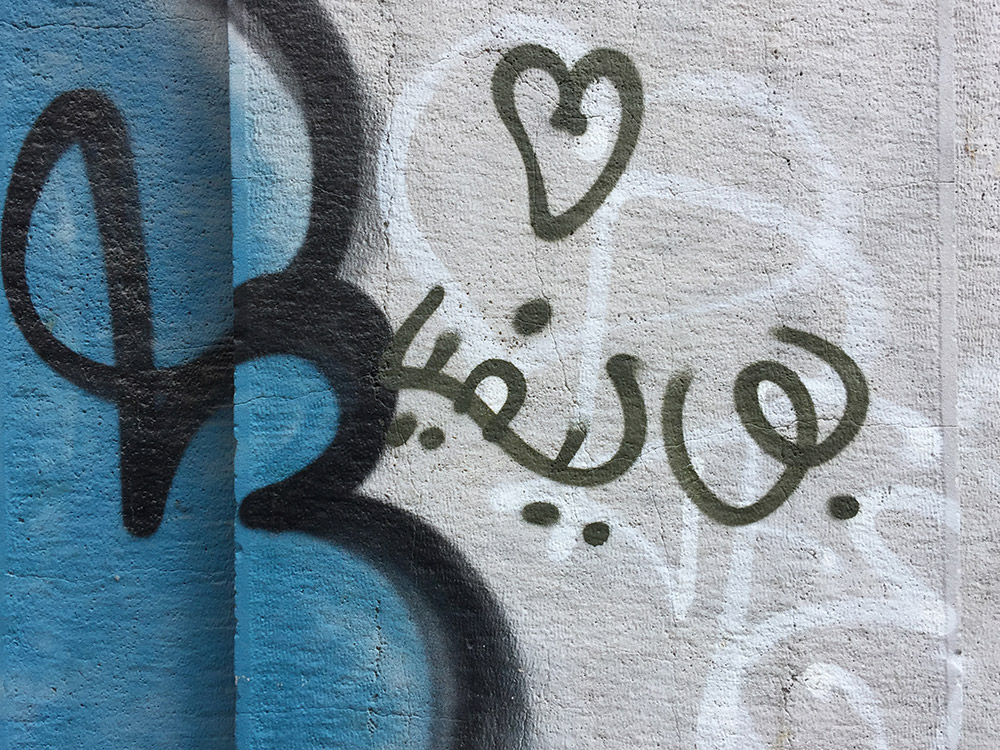
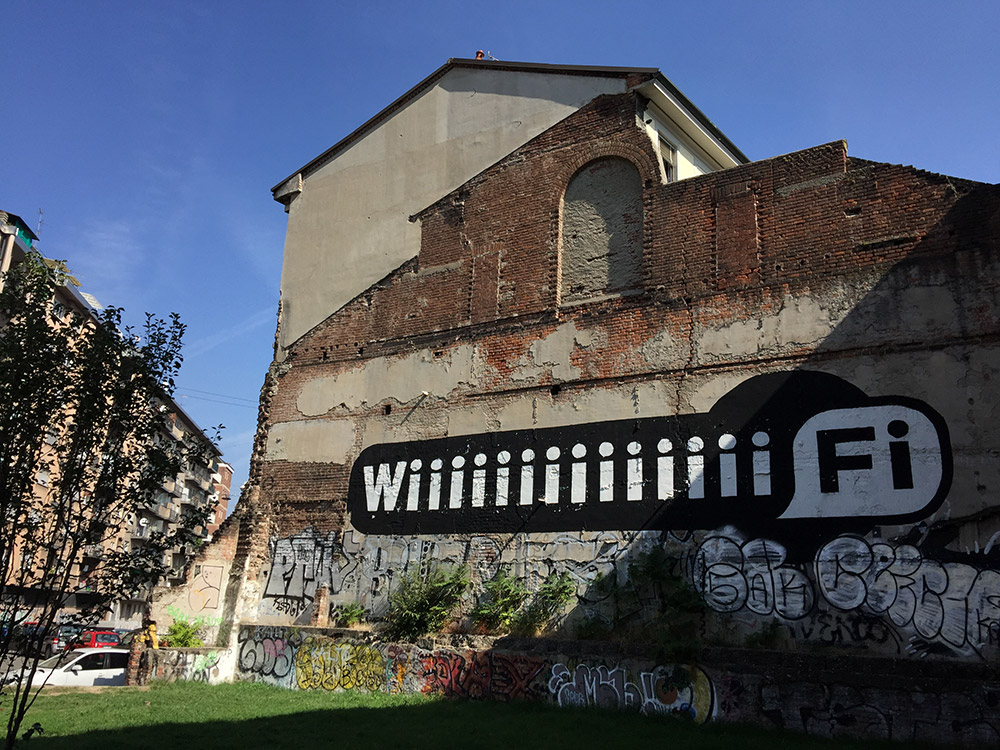
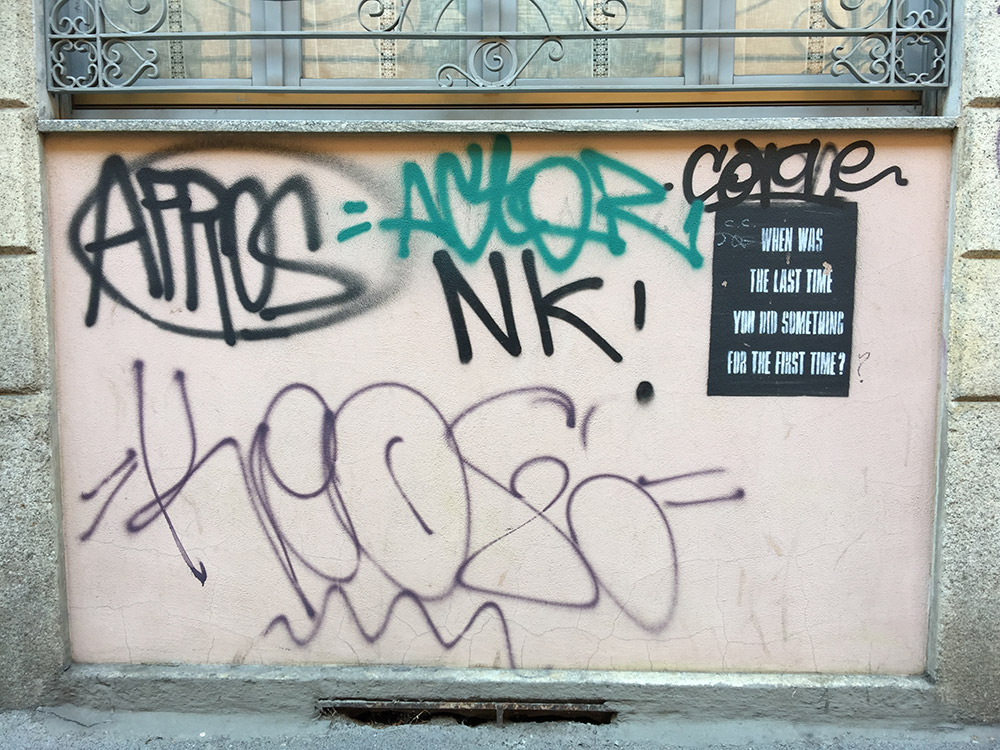
Milano takes graffiti to an all-new level, both in a good way… and bad.
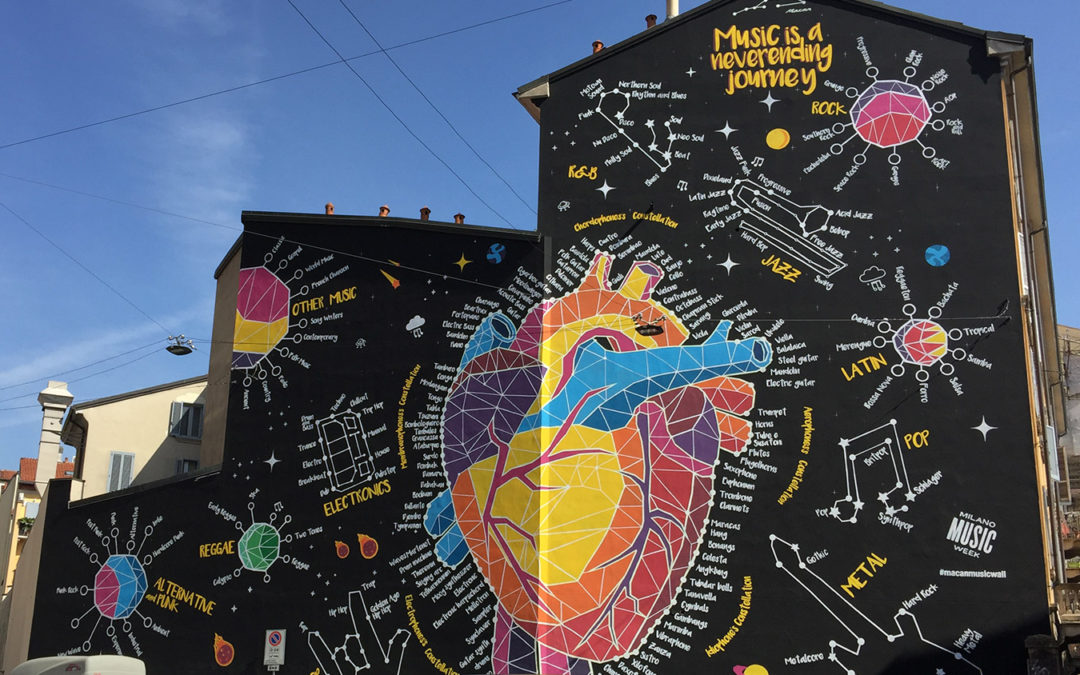
Music Heart Graffiti. Big, bold, bright and imaginative.
POP Bridge over the Naviglio Pavese (Canal).
Graffiti on an antifa-occupied apartment building.
Blue and heart graffiti.
WiFi Graffiti.
Good question: “When was the last time you did something for the first time?”
When driving my car, I go just about the same route every time: the shortest, most efficient path between points A and B: Home, to Post Office, to Bank, to Grocery, to Home. Same old, same old. Bo-ring!
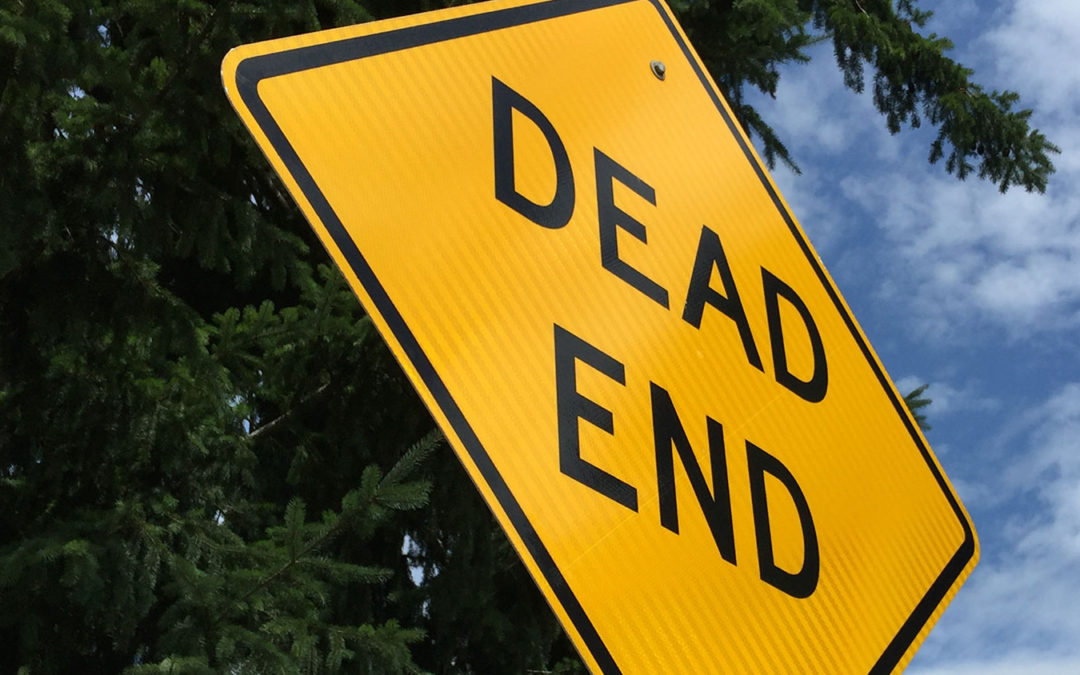
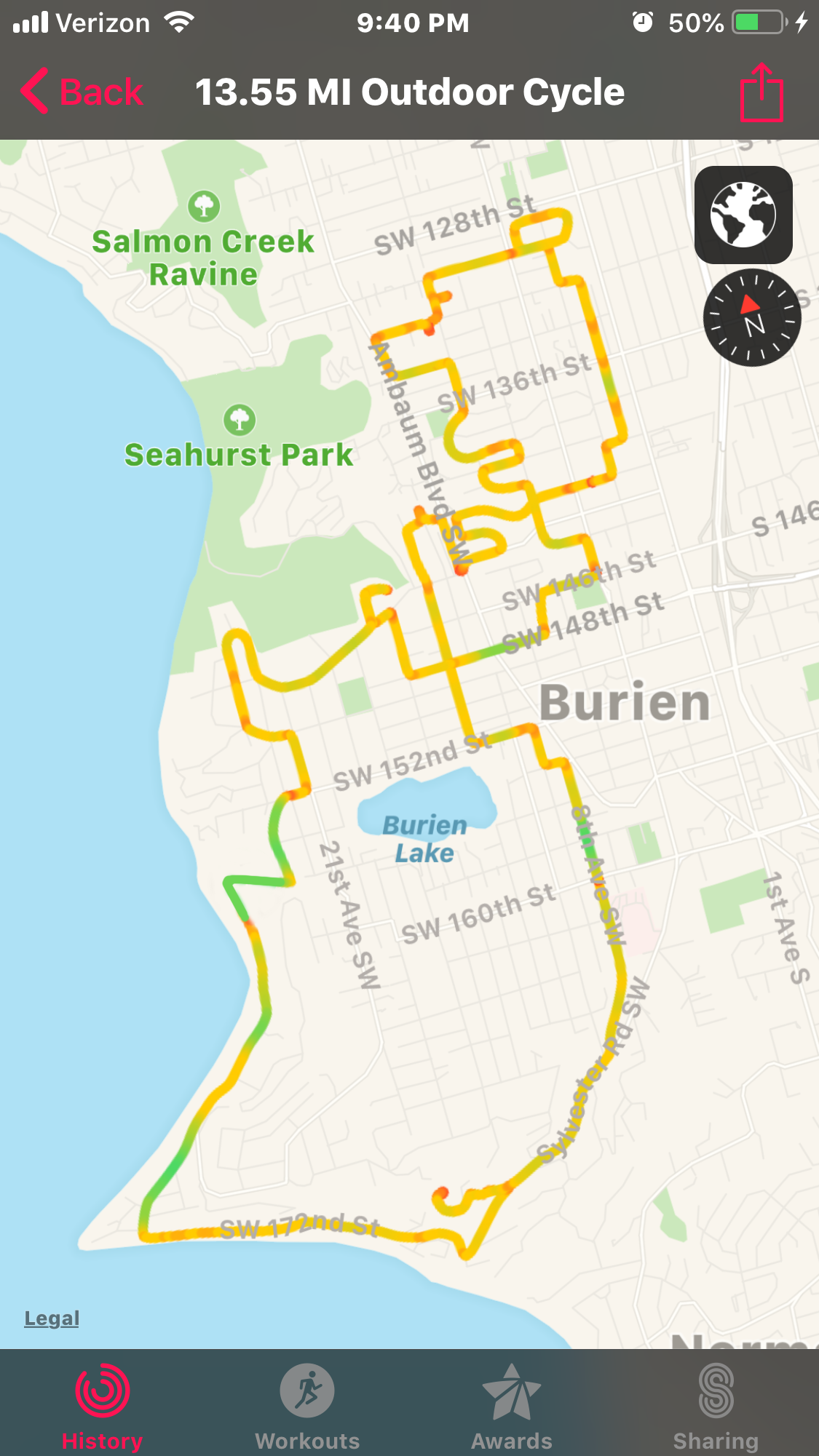
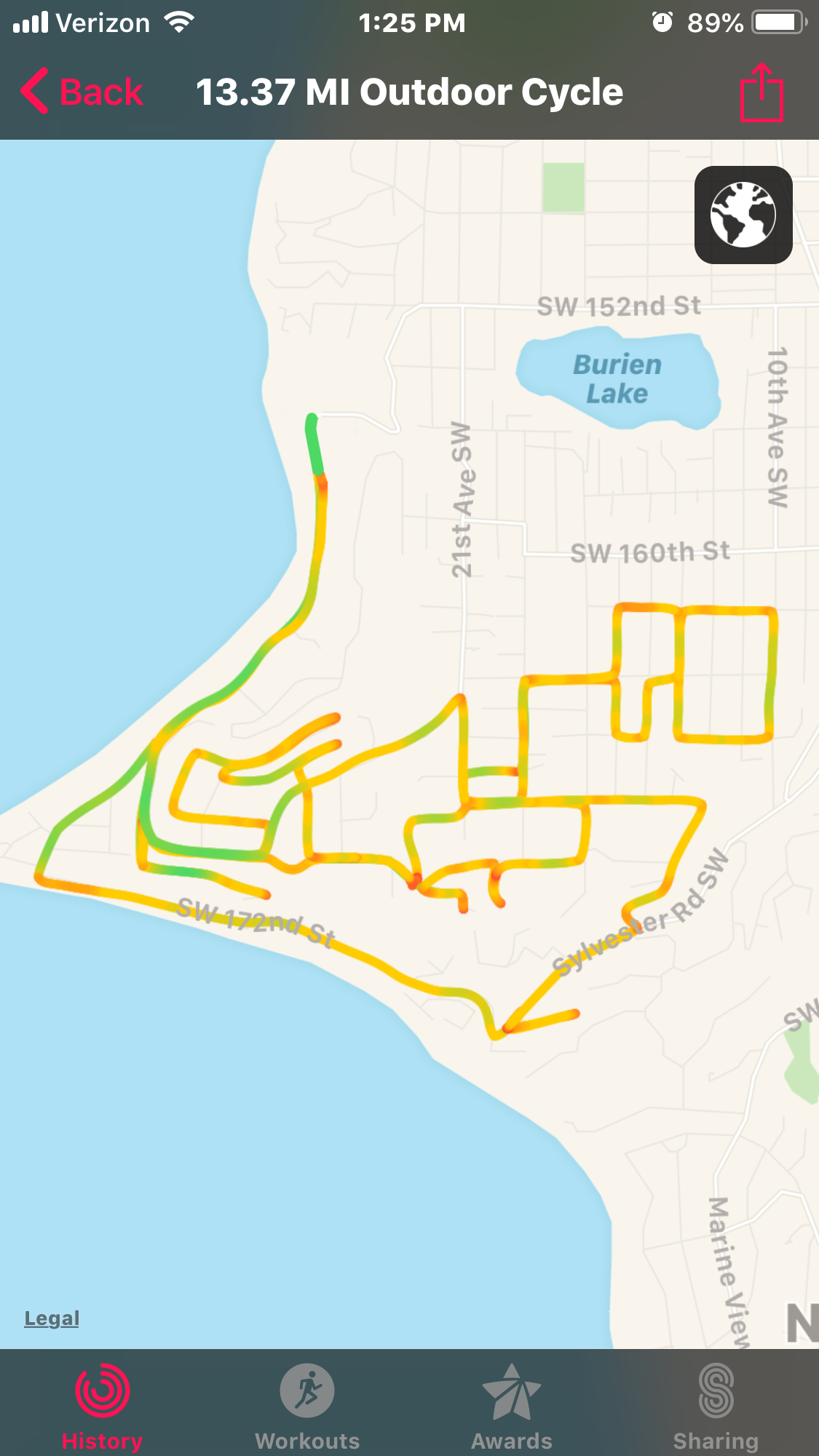
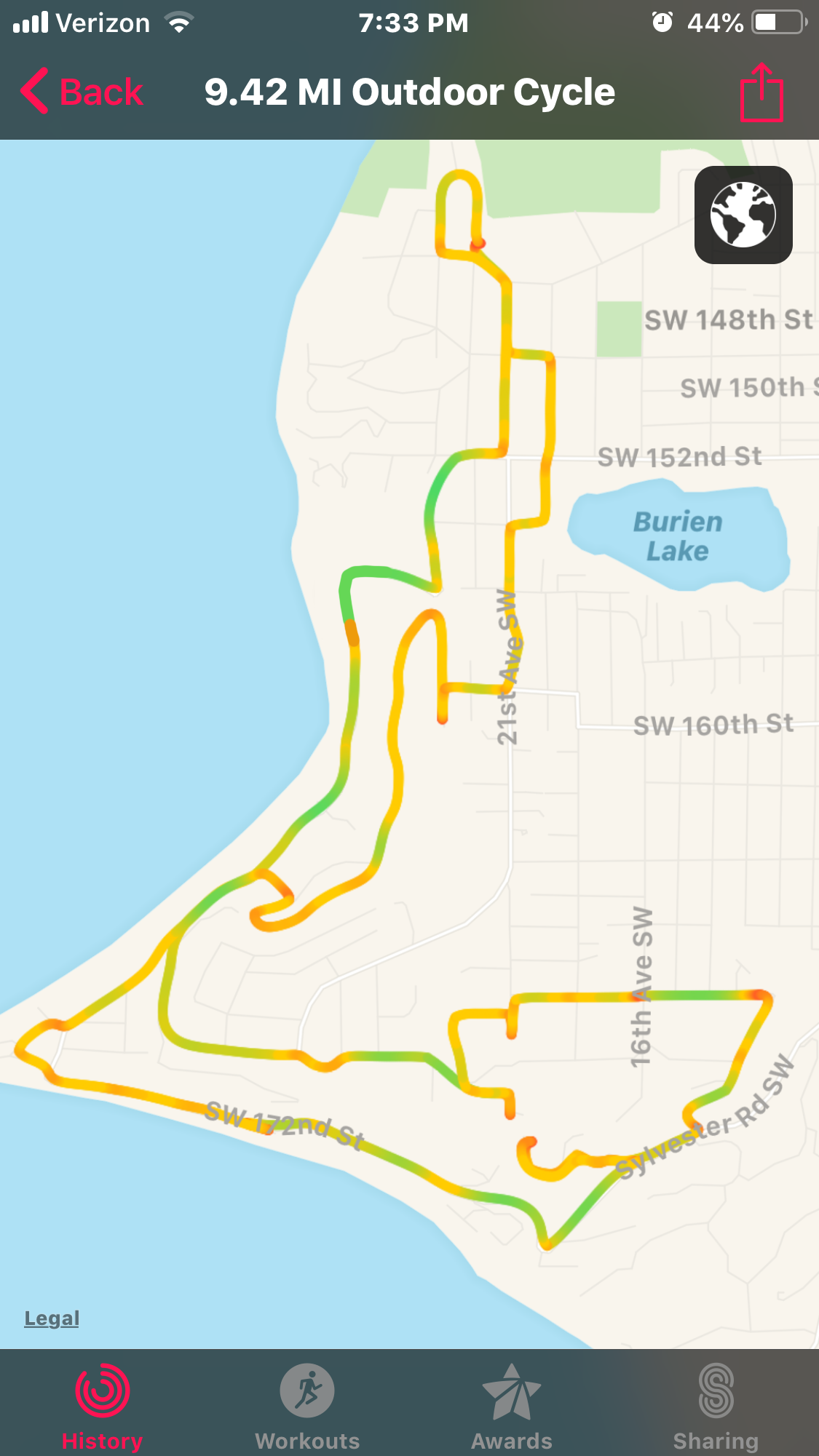
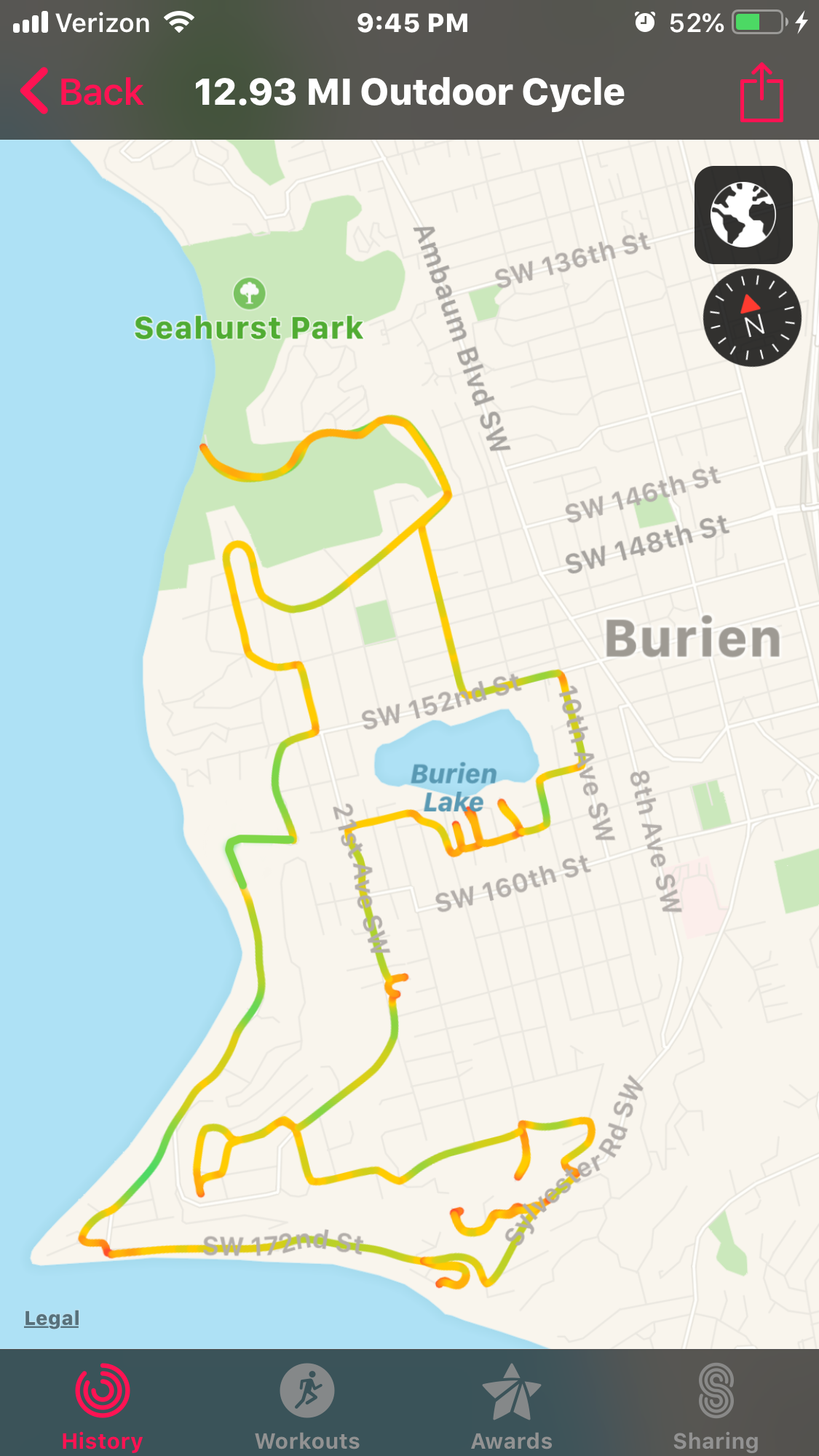
But on my bike, I notice that I’m going different routes every time! I GREW UP HERE in Burien (just south of Seattle) and yet I find myself on streets that I’ve NEVER been on before. On my bike I have a greater sense of discovery and exploration. I seek out the steepest hills I can find. I specifically veer onto every Dead End I encounter just to see “what’s down there”. I turn onto roads I’ve never turned onto before. I’ve discovered all sorts of great neighborhoods and fabulous houses.
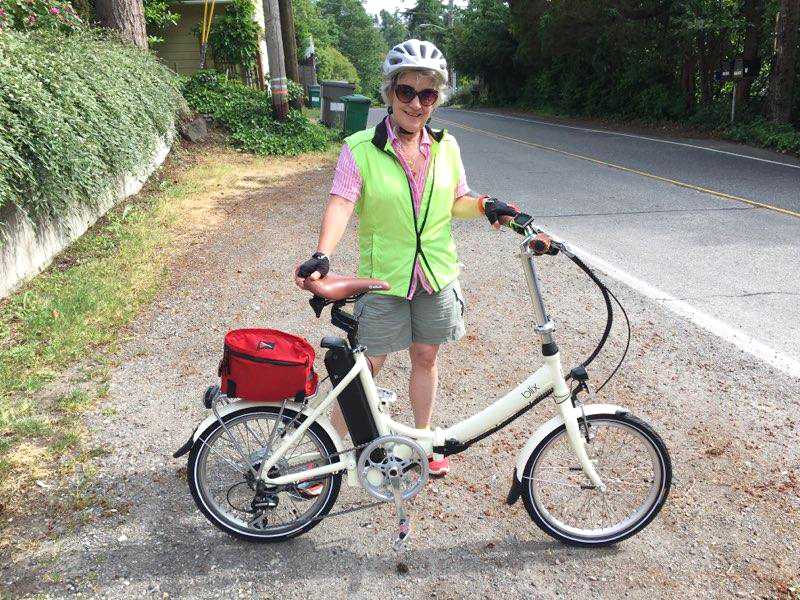
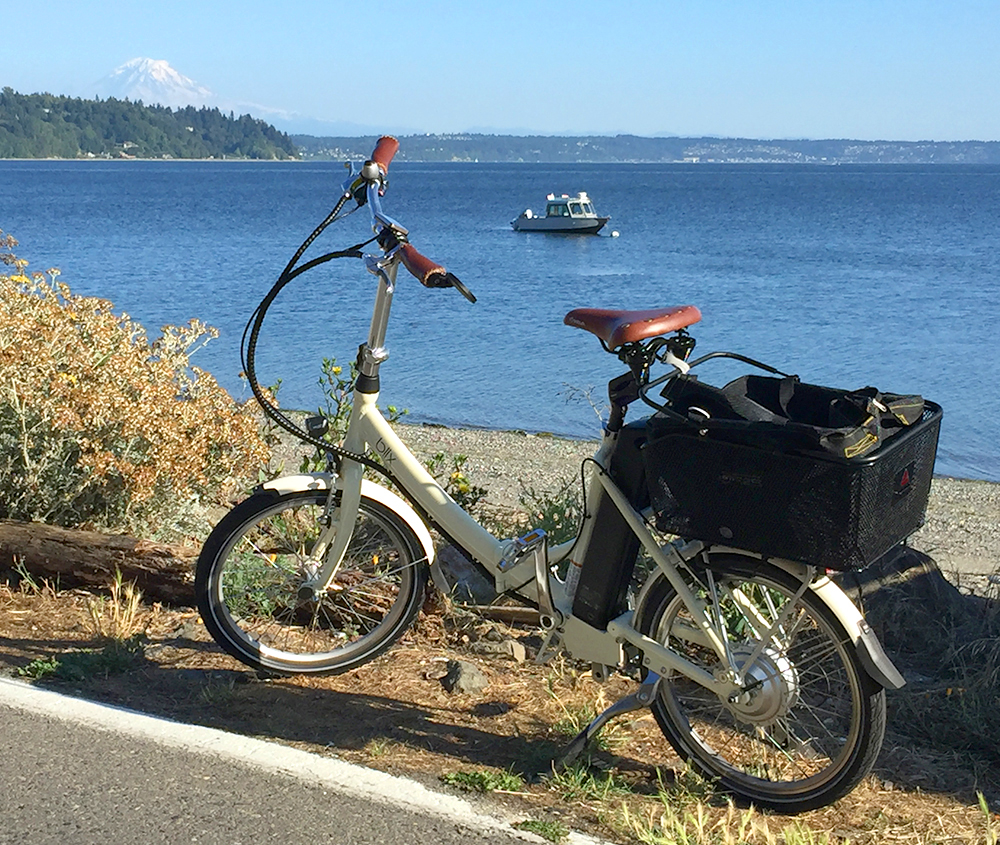
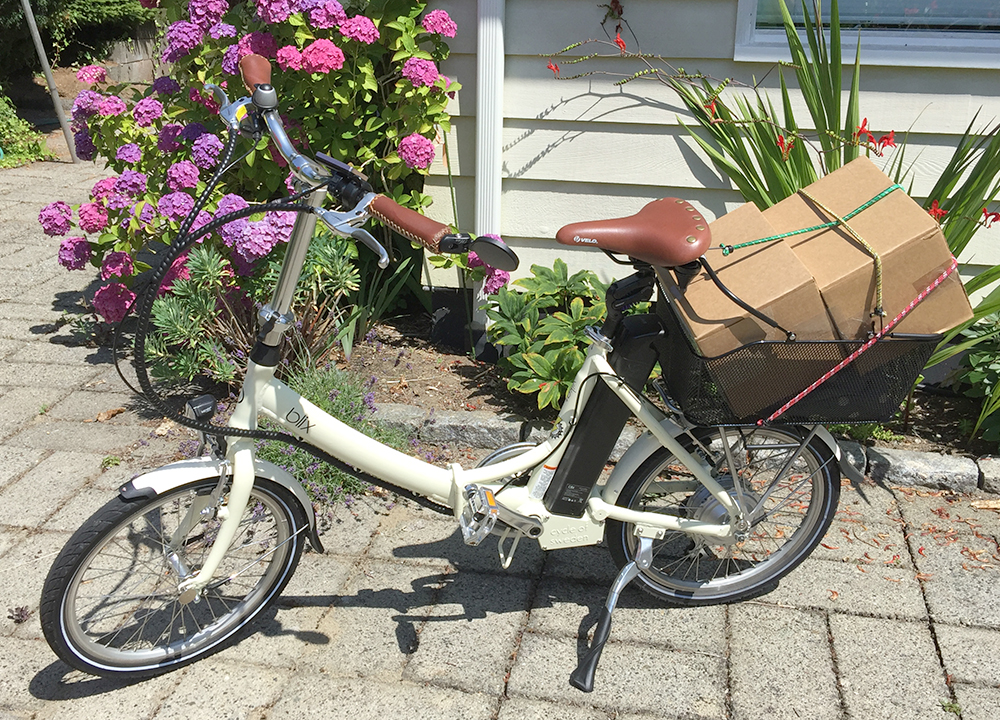
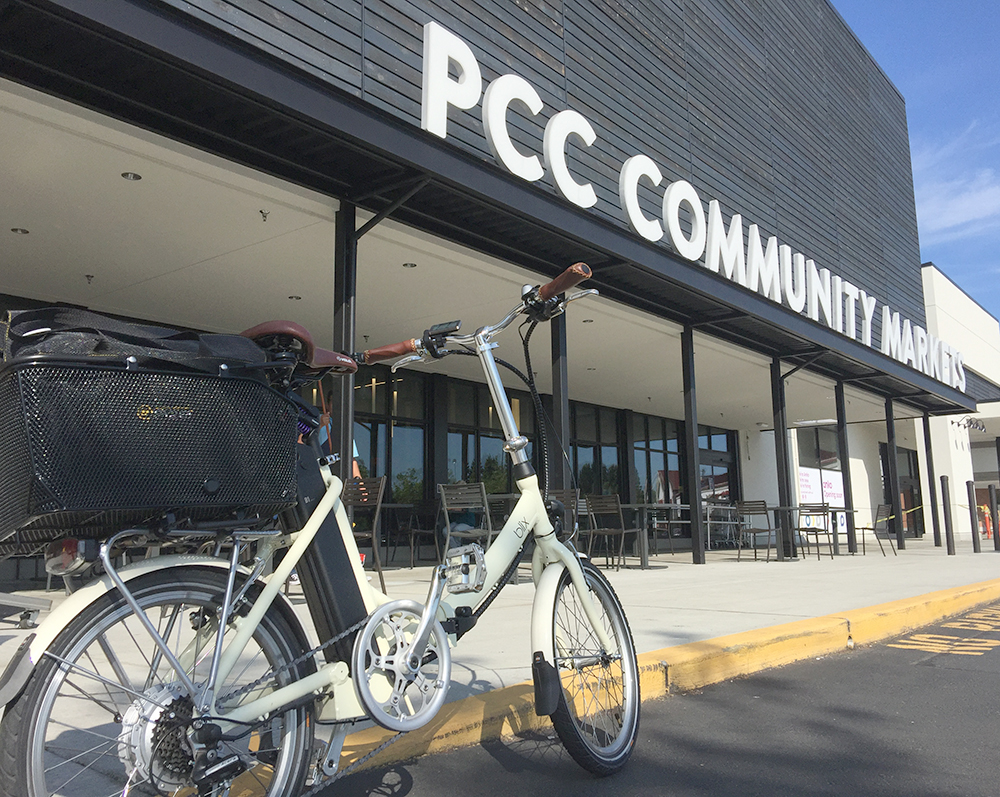
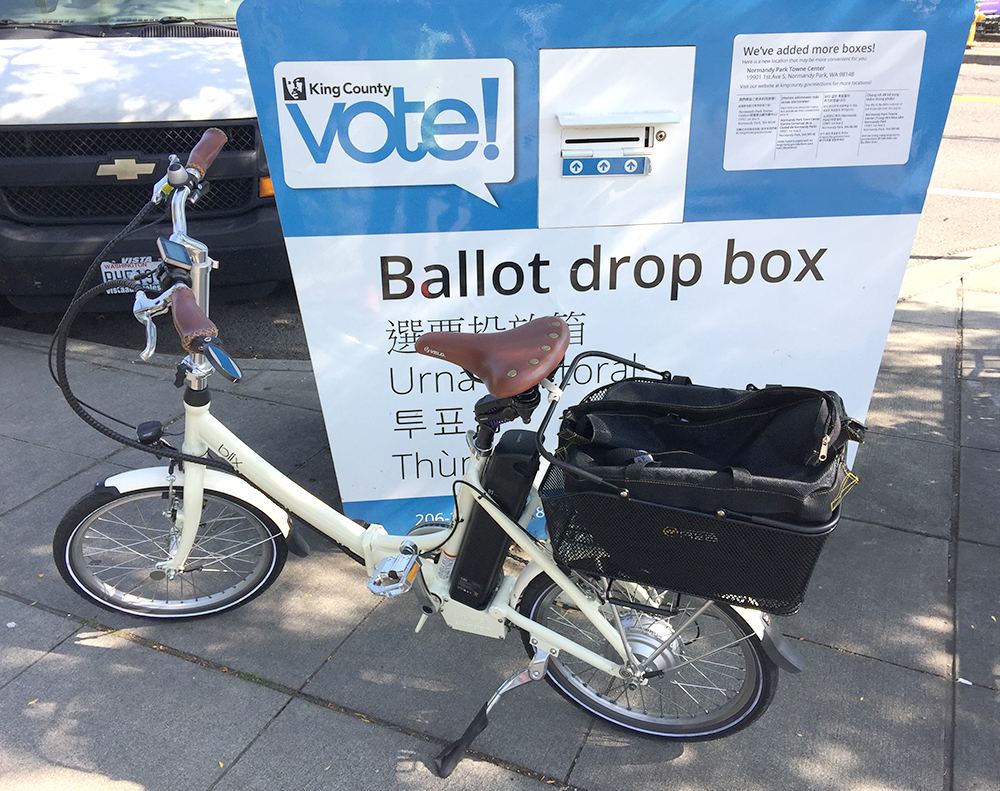
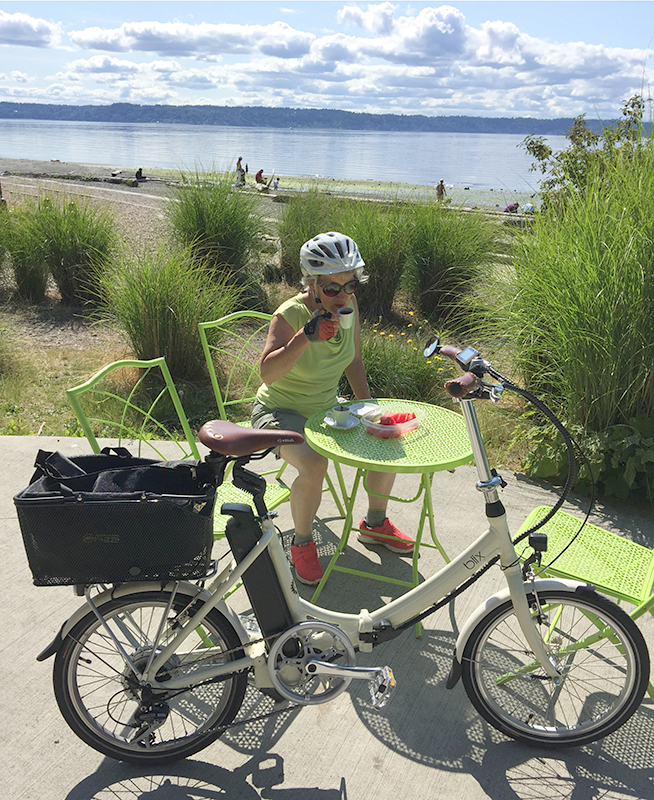
I bought a Blix Vika+ E-Bike (Class 2—electric, pedal-assist with throttle, step-through, foldable, 20″ wheels) on May 31, and started riding the next day. In the three months since, I’ve logged 550 miles mostly toodling around Burien, with a few cruises through neighboring Normandy Park and Des Moines. I’m not exaggerating when I say that my Blix Vika has changed my life. Really.
When I’m on my bike, it’s a sensual experience. I smell the fragrant blackberries and conifers warmed on summer days. I can smell that the tide is out as I approach Three Tree Point. I hear the birds sing. I greet other cyclists. I stop to talk to neighbors and strangers along the way… That doesn’t happen when in my car.
Crazy, Random Routes of Dead Ends and Discovery
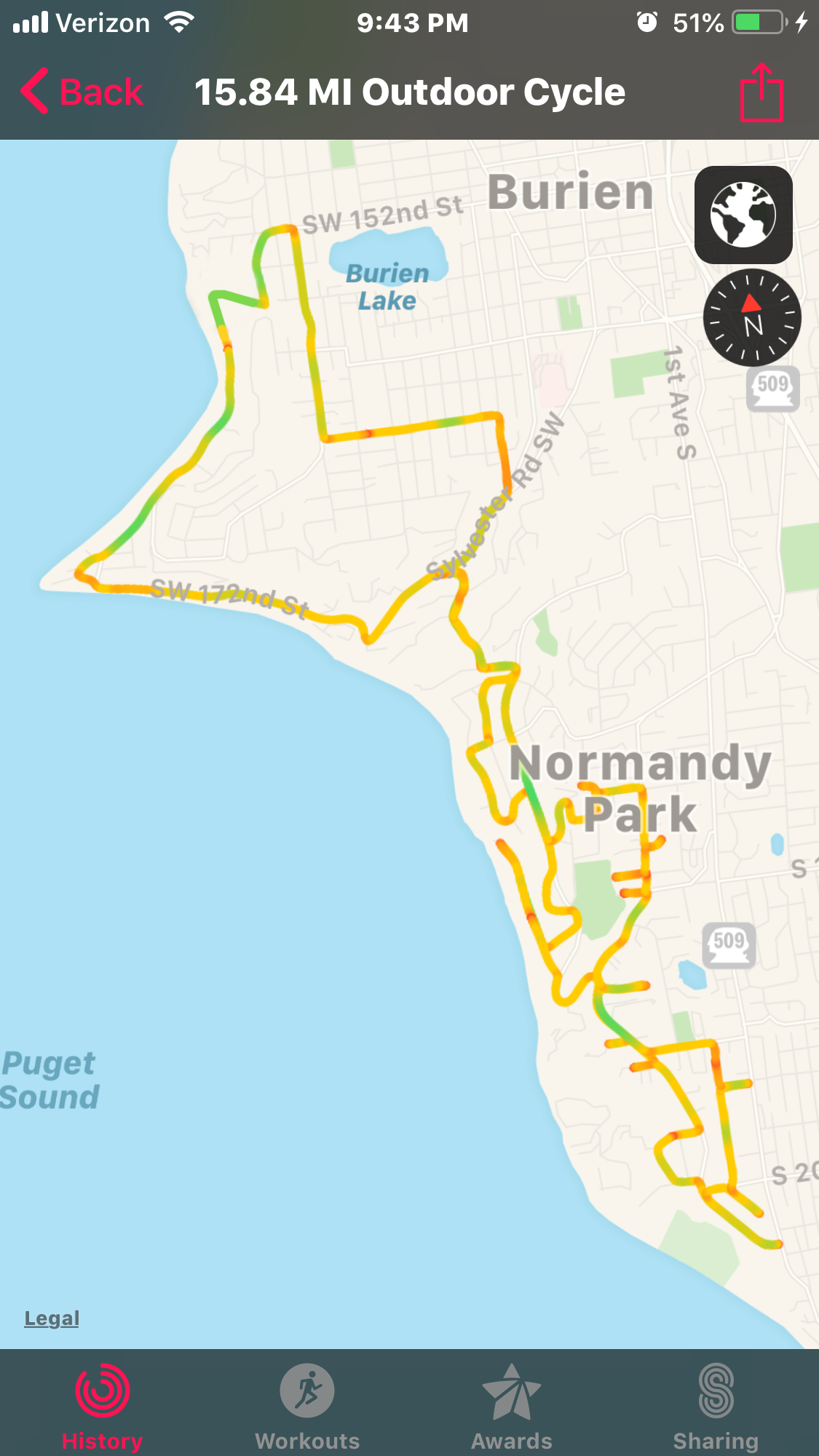
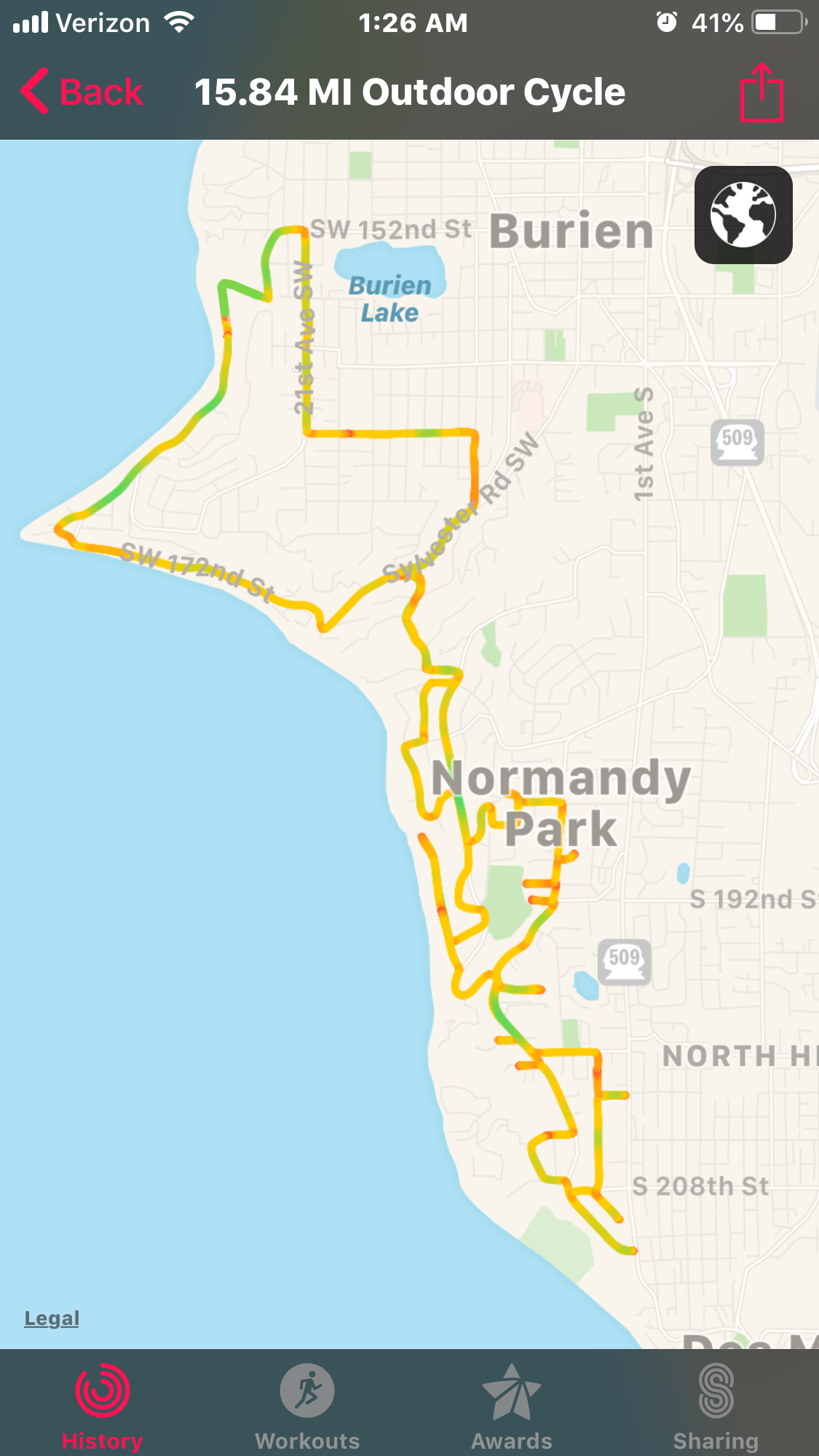
Look at some of the wild and wandering routes I’ve traveled just out of curiosity. I would never do this in my car. What a great way to get to know my City of Burien. (In the maps below, green paths show where I went fast—downhill—and yellow/orange/red are where I went slow—uphill and stop lights.)
I feel like a kid again.
In the past, I loved being a cyclist on a standard bike… but I also live on a very steep hill in a very hilly area (up to 16% Grade). From the bottom of my steep driveway, I either had to go immediately right up the slope, OR down-down-down to the Point, then up-up-up to town at the top. I could do it… until two years ago my knee said, “Nope. Sorry. Not doing this anymore.” One day I rode home one-legged: I pedaled with my right leg while my left leg hung off to the side, limp-cycling home.
Now, instead of driving my car for the roughly 4-mile round trip to the Post Office, Grocery and back, I’m riding my e-bike nearly every day for those errands. And I extend my route just to add exercise, fresh air and exploration each time.
On my e-bike: I feel like a kid again. I’m on my bike almost every day. I’m whistling and singing the whole time. Tra-la-la. And my knee is happy. I scoot right up the meanest hills I can find (and we’ve got HILLS here). When I wake up in the morning I ask myself when and where my ride will be for that day.
Maybe you have fond memories of cycling, but it’s been ages since you’ve been on a bike… maybe you’re out of shape and overweight… maybe your body parts are revolting… maybe the hills are really onerous… I urge you to go check out an electric bike. E-bikes make cycling so feasible. Like I said, it’s changed my life, and it’s brought some simple joy into my every day.
Matera, Basilicata, at the “instep” of the “the boot” of Italy. It’s been on my list for several years since I saw an article and my jaw dropped. Now, having visited, I’m still agog and without...
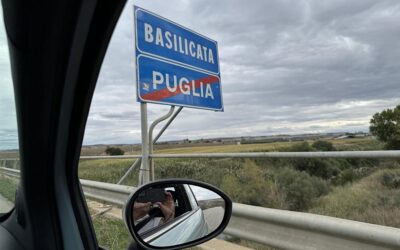
We left Puglia (Apulia in English) and headed to our next destination in the region of Basilicata: Matera. We stopped to see a couple of castles, in Barletta and Andria, (there are castles at every...
For my birthday several days ago, I REALLY, REALLY wanted to dip my toes into the Ionian Sea at the tippy tippy tip of the “heel of the boot” of Italy. That meant driving from Bari, south along the...
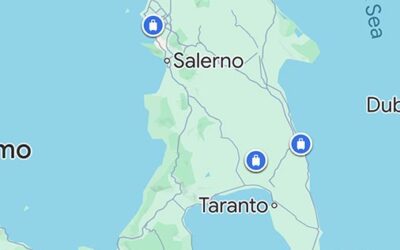
This is a southern Italy tour for me, to include the regions of Puglia (Bari, Polignano a Mare, Santa Maria di Leuca, Barletta, Cerignola), Basilicata (Matera), Campania (Napoli). Sardegna will...
Flying into Milano yesterday evening, (after a very long day of cancelled and delayed flights) I felt emotional and got a little teary-eyed. This is my seventeenth year of making this journey, coming back for a month or more to see friends, visit new and treasured places, and eat some of my favorite dishes as well as venture untried regional specialities.
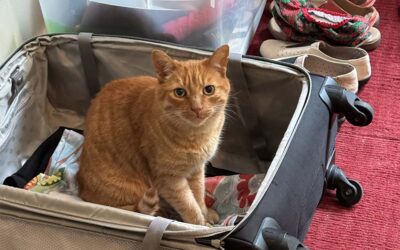
Uh oh. Tango sees the suitcases wide open on the floor. Something’s up. “Take me with you!” He pleads. No, the Kitty Cat is not coming along, but he’ll be well-loved while I’m away eating Italian...
Merging my multiple loves for expression, I have pulled from my 15 years of travel and 60,000 photos in Italy, and combined them with graphic overlays for one-of-a-kind monoprints. Milan, Florence,...
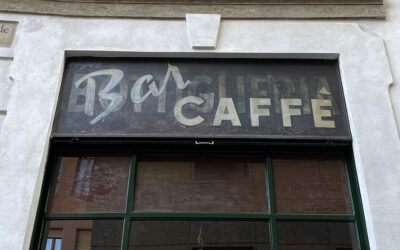
My Designer/Artist's eye thrills at the strong visuals of signage – old and new – graphic elements and street art that I find in Milan and beyond. Whether polished, "high design", antique lettering,...
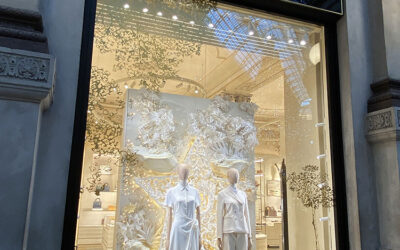
Milan – one of the fashion capitals of the world – has some knock-out, incredible, no-concept-or-cost-barred window displays! Walk along Via Monte Napoleone and Via della Spiga, the posh shopping...
When a photo of this little building popped up on the Milano per Sempre Facebook page, I thought, “I’ve got to go see that!” The age and “flavor” of the Trattoria Villetta Bar caught my eye.
In one of the fashion capitals of the world, what better sight is there to see than a show of eighteenth century clothing, and modern-day clothing it inspired. The show at Palazzo Morando is titled “Sette Cento” – literally “seven hundred”, but referring to the 1700s, thus the eighteenth century.
Journal Entry: Wednesday, 12 September 2018 – Milan
Did I really just arrive in my home-away-from-home, Milan, this morning?! Here I am again. And it all feels so easy and familiar. Not that there is nothing new or no challenge. There is still much to see, explore, discover, learn. This place stretches me differently than Burien and Seattle. AND it’s a time entirely for me. (This is my 11th year of coming here.)
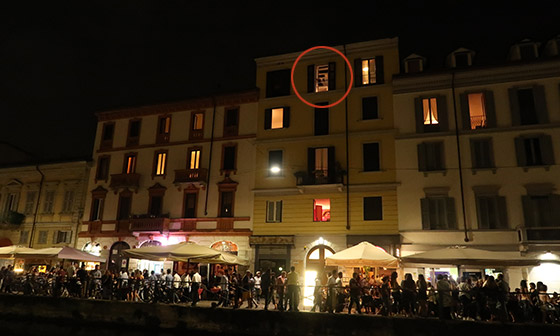
My apartment on the 5th floor, (circled), above the Naviglio night life.
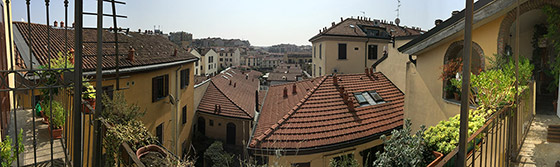
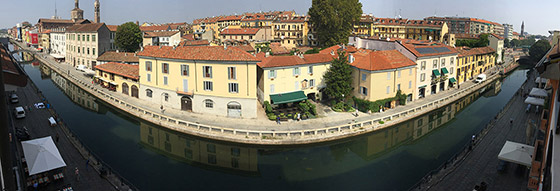
I’m in a 5th floor walkup apartment*, no elevator. 90 Steps up to the front door. The entrance looks out over inner courtyards, gold-hued stucco, tile rooftops. Inside, there is an opening window from floor to ceiling that looks directly down onto the Naviglio Grande (the Grand Canal) and it’s changing bustle. The white noise of wine-fueled conversation during the evening aperitivo is oddly comfortable. *(The Italians call it the 4th floor; the ground floor is floor zero.)
The view to the south from the apartment entry door.
The view to the north from the floor-to-ceiling windows overlooking the Naviglio Grande.
Other than celebrating my birthday in 3 days, and honoring Patti on the 2nd anniversary of her death, and having 2 girlfriends come here for 2 weeks… I don’t have a big, new goal or purpose for this trip. It’s just that I can’t not have my time in Italia, for whatever it is to me.
Journal Entry: Friday, 14 September 2018 – Milan, 8:30 a.m.
Sitting canalside, way up high, listening to morning sounds of church and cyclists’ bells, deliveries on cobblestone, traffic, sidewalk conversations. The city awakens.
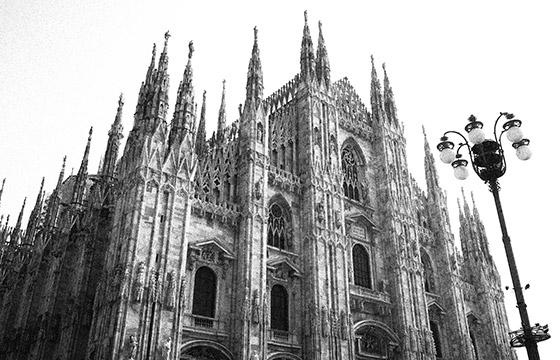
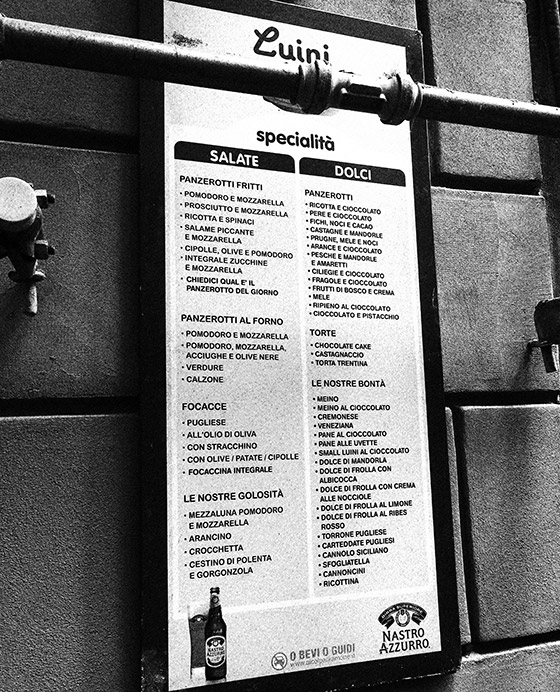
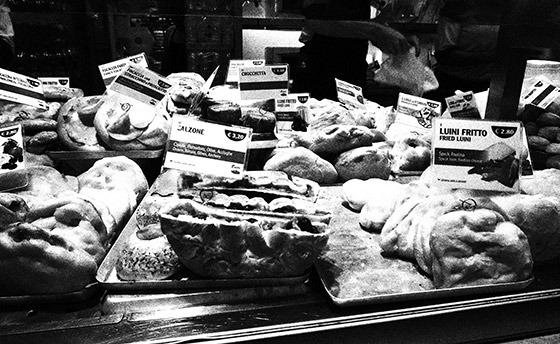
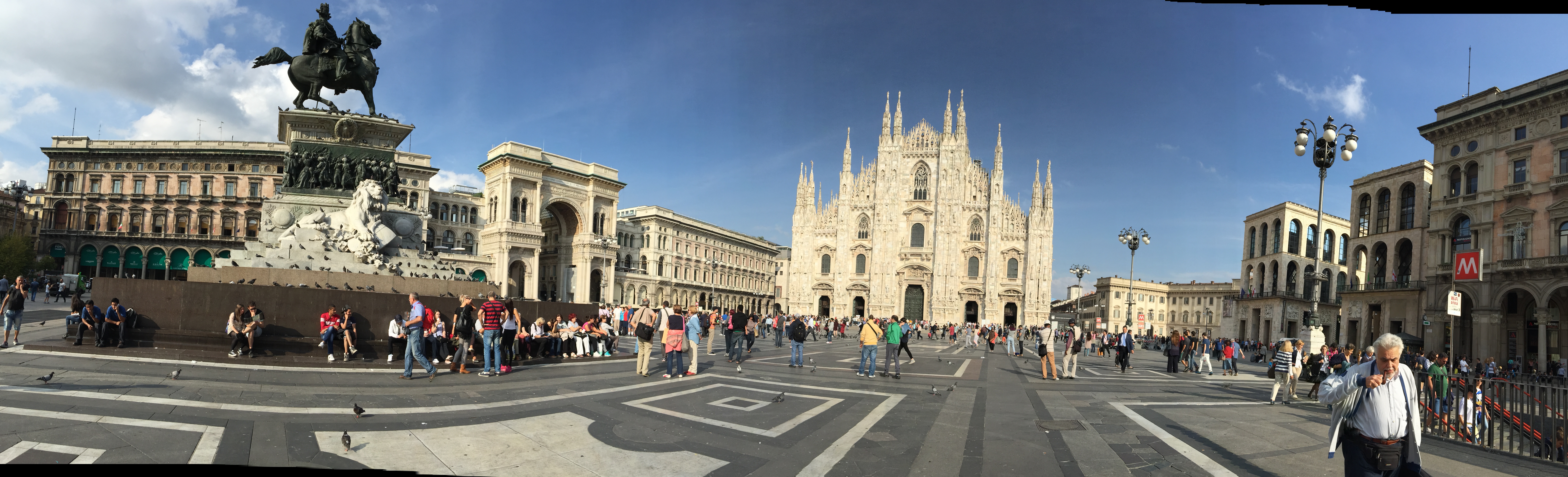
Yesterday, I made my pilgrimage into the center of town to the Duomo (Cathedral) di Milano – which I love – and then strolled around through the adjacent Galleria and to Luini’s for a Panzerotto. Just being here with ease and familiarity… Feeling nestled in as much as a foreigner can.
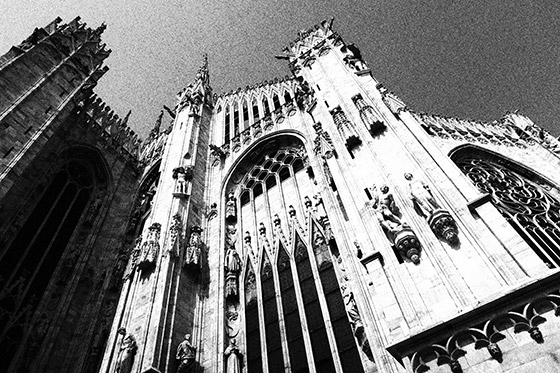
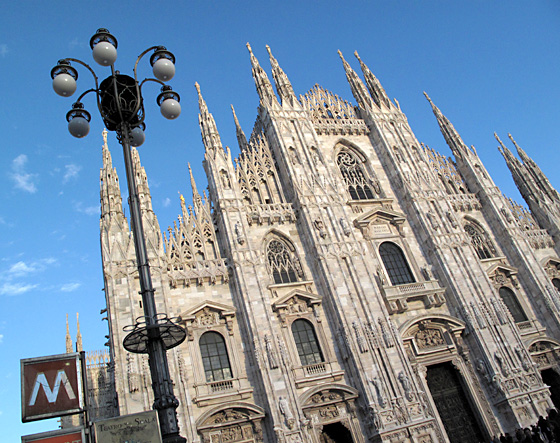
The Duomo di Milano
Near the southeast corner of the Duomo, there is a sculpture of a disemboweled man. I suppose the sculptures and paintings were meant to inspire the illiterate masses to live according to the Church’s tenets… or suffer the consequences.
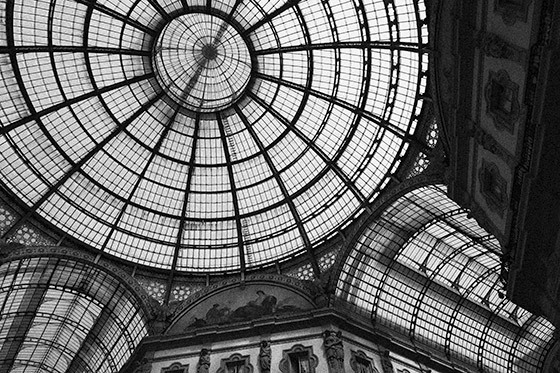
The domed, glass roof of the Galleria.
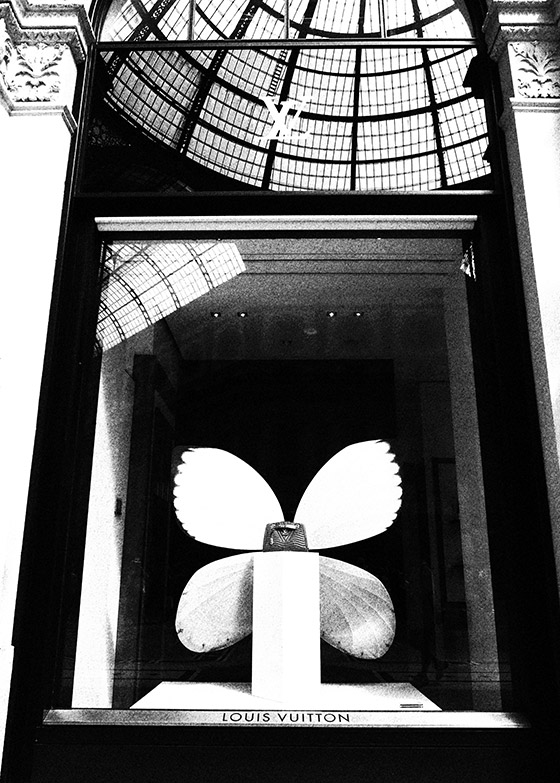
One of the Louis Vuitton window displays in the Galleria.
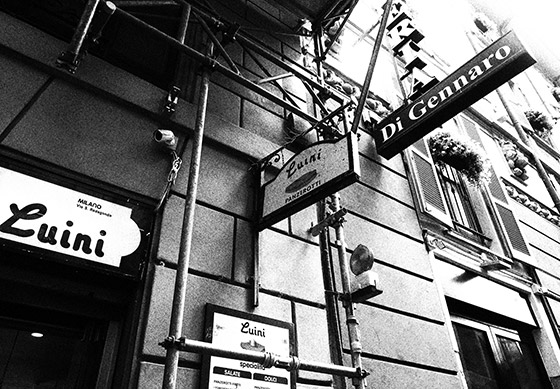
Luini’s was established in 1888 and is a popular spot with locals and those that stumble upon it, tucked onto a side street just north of the Duomo. They sell Panzerotti: stuffed, deep-fried (or baked) hot pockets. Lots of filling options!
Along the Naviglio Grande (Grand Canal) the San Cristoforo dragon boats and kayaks cruise through every day, to the beat of a drummer to keep time, occasionally accompanied by the church bells. (CanottieriSanCristoforo.it)
Journal Entry: Thursday, 20 September 2018 – Milan
Days have been hot and humid, but have turned delicious, from 75 – 80 degrees and a freshness from a few nighttime showers.
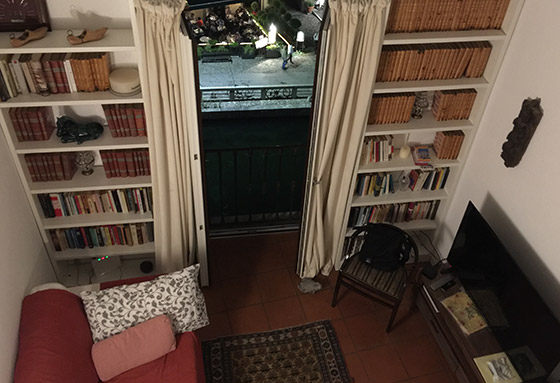
View from the sleeping loft, down into the living room and beyond, to the Naviglio night life.
It is rather dreamy that I “get” to do this. But really, there’s no “getting” involved. I have made and do make different choices and I’ve structured my life so that I can spend some of it here in an entirely different place and mode.
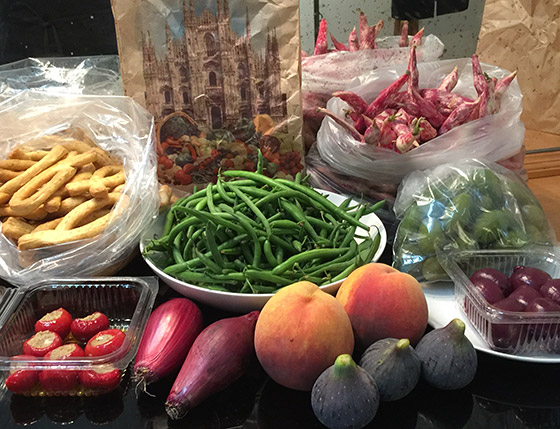
My Farmer’s Market Purchases: Clockwise, from upper left: Taralli with black pepper, produce bag with the Duomo on it, Borlotti beans, castelvetrano olives, pickled onions, turkish figs, yellow peaches, onions, tuna stuffed red peppers, green string beans.
This feeds me, and it pushes me. Foreign country, language, customs. And Milan. An international seat of design, which gives it such contrast and stark visual appeal. The old history, side-by-side with clean, high design, honed and spare. I thrill at Milan. Every city could take a lesson from its well-defined branding and identity.
The recycling trucks start along the Naviglio Grande at about 6:00 in the morning. Since the Naviglio is such a restaurant and drinking hot spot, there are thousands of bottles to be collected. The sound they make when dumped is such a crashing clamor to wake up to!
Journal Entry: Saturday, 22 September 2018 – Milan
Warm day. The Naviglio is in a relaxed stroll. A street musician is playing his guitar along the canal, out in front of the elementary school. The white noise of conversation at outdoor, umbrella-covered cafè tables drifts up to my open window, high above. I marvel that this is possible. That I can pack my bags, bring my work and step into this life for a period. Remarkable.
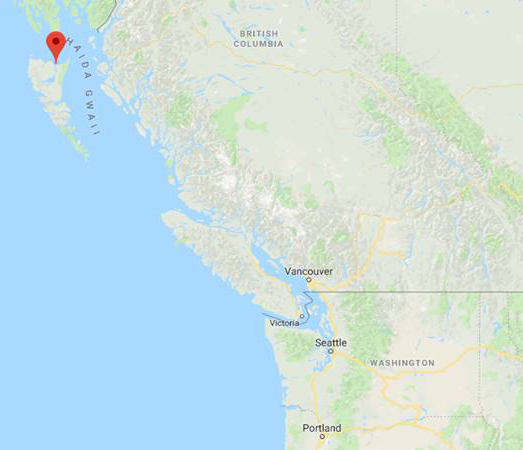
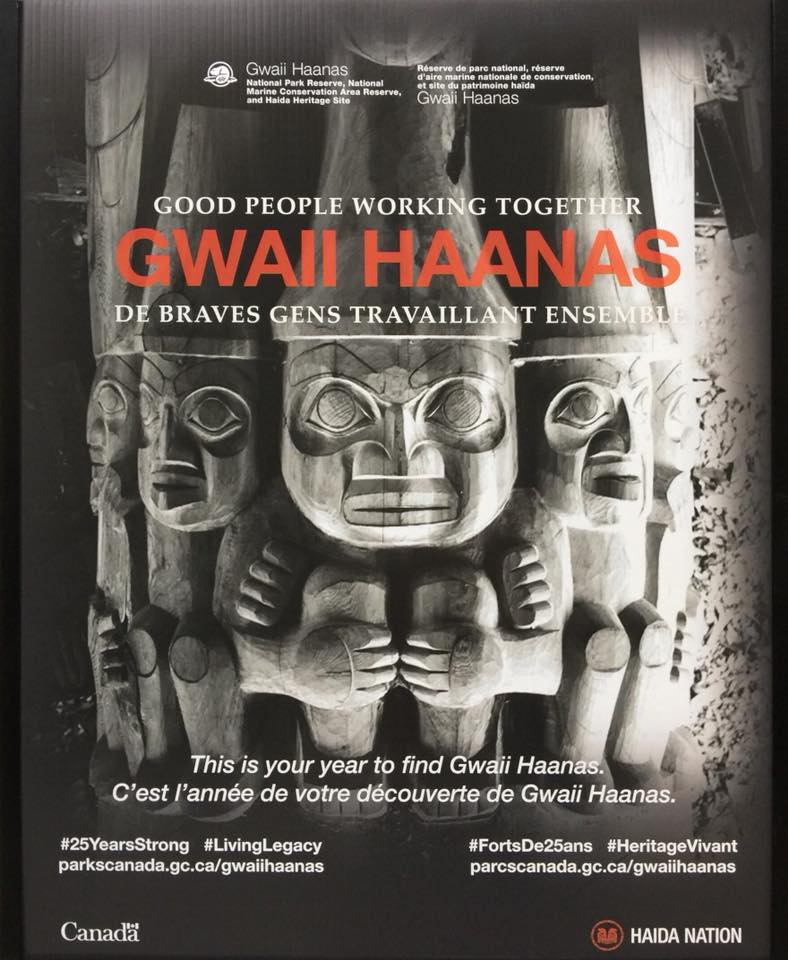
Haida Gwaii. You can’t get there on a whim. It’s neither quick, nor easy… nor inexpensive. But it IS stirring and complicated, rich and layered. Full of history and feeling. This year marked the 25th year since my first visit there. (In the 90s it was a yearly trek.) The people – Merle, Knud and their family – and the place, stick with me. It had been 7 years since my last visit. This trip was long overdue.
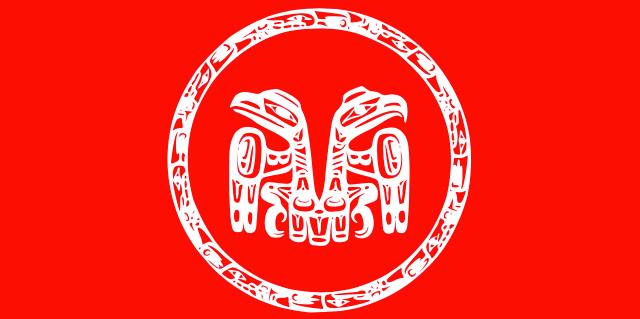
Haida Gwaii, for many years, had been called the Queen Charlotte Islands, though the Haida had never signed a treaty with Canada! In 2010 the cluster of 150+ islands officially reclaimed their traditional name of “Haida Gwaii” as part of the Haida Gwaii Reconciliation Act. Here’s the flag of the Council of the Haida Nation, depicting the Raven and Eagle Clans. (I’m connected, through Merle, to the Ravens.) https://en.wikipedia.org/wiki/Haida_Gwaii
The following is a gathering of Facebook posts during my time there this year, bringing them all together in one place. Travel with me for the week.
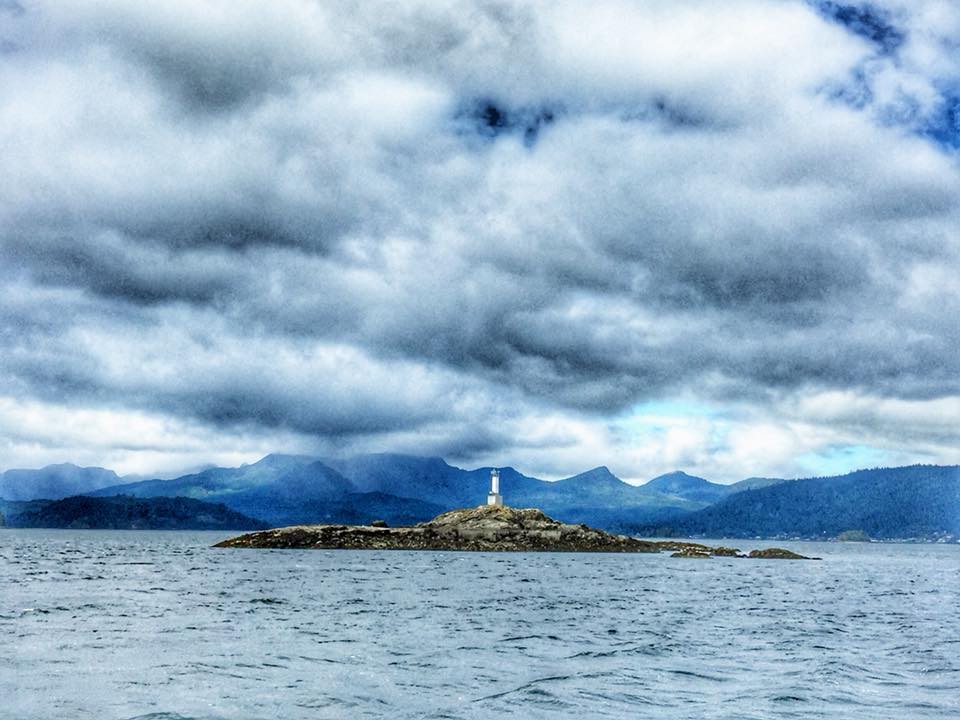
Haida Gwaii is waaaaay up there. On a clear day, you can see Alaska right there on the horizon.
(Click on any photo for a larger view.)
July 26, 2018 – Vancouver to Old Massett, Haida Gwaii
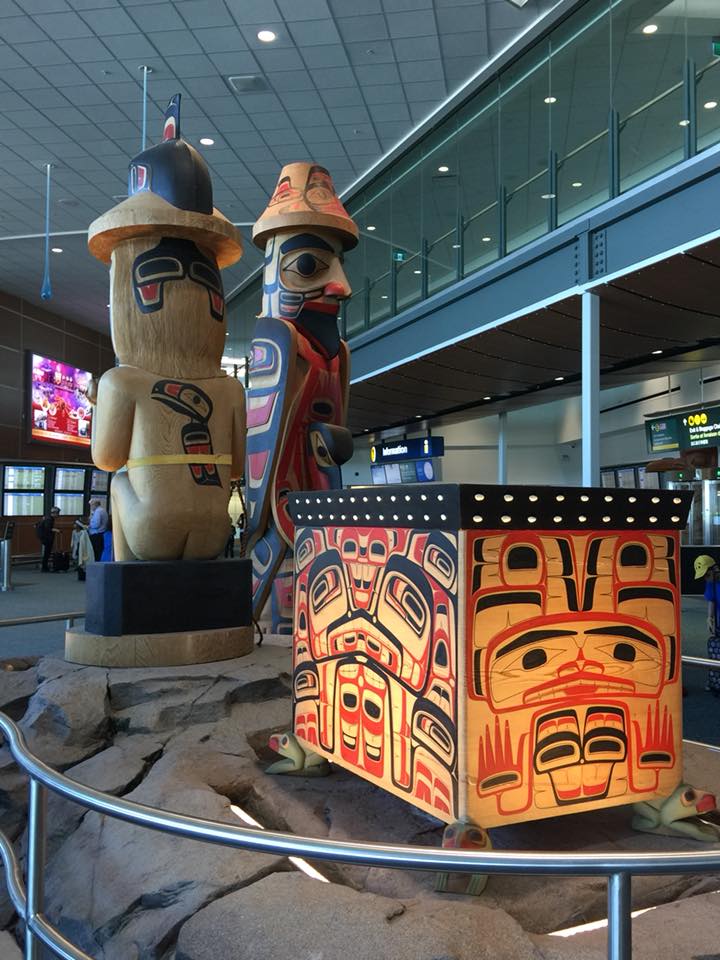
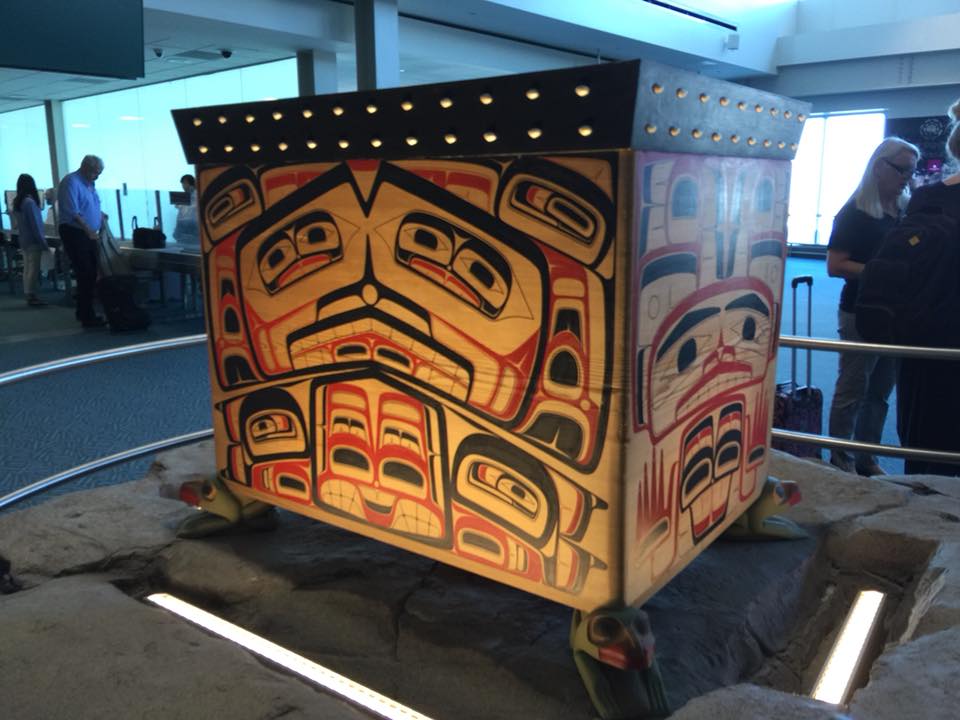
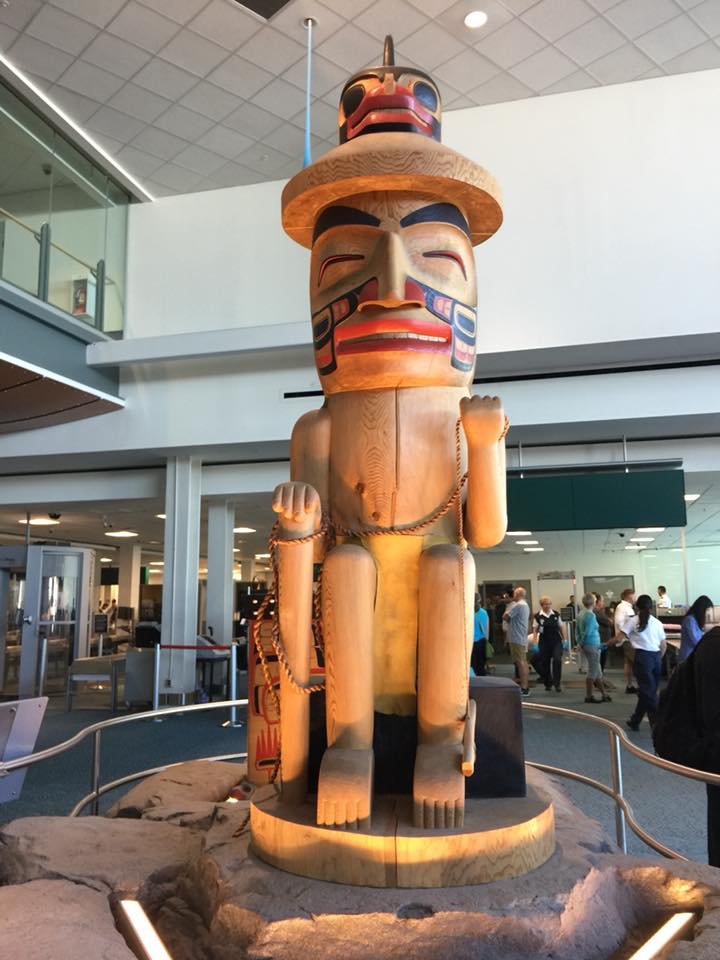
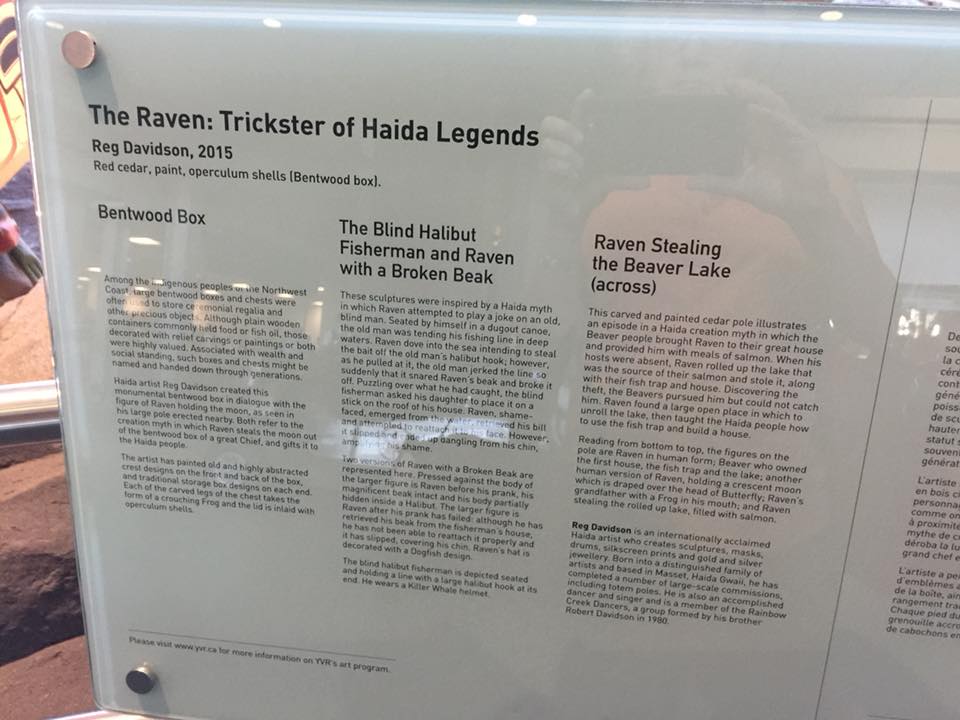
Vancouver B.C. Airport is filled with regional First Nations’ art (including work by Merle’s nephew, Reg Davidson). Such rich and refined artistic heritage!
4:15 PM. Been at the Vancouver airport since about 10:00 this morning. The flight over to the island was supposed to have left at 1:10. We boarded and deplaned TWICE. Allegedly, we’ll now fly out at 6:00. Hopefully they will still have an evening shuttle ferry between the islands. Merle and her husband, elders, will have driven an hour and a half and waited 6 hours for my arrival. I’m fine. I just feel bad about their discomfort and inconvenience.
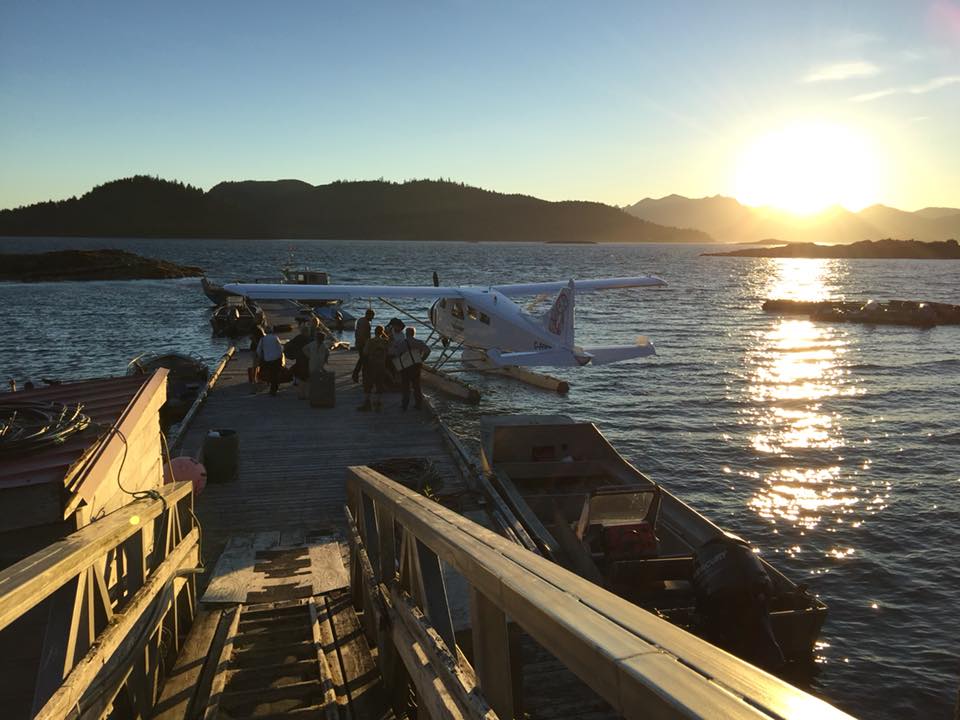
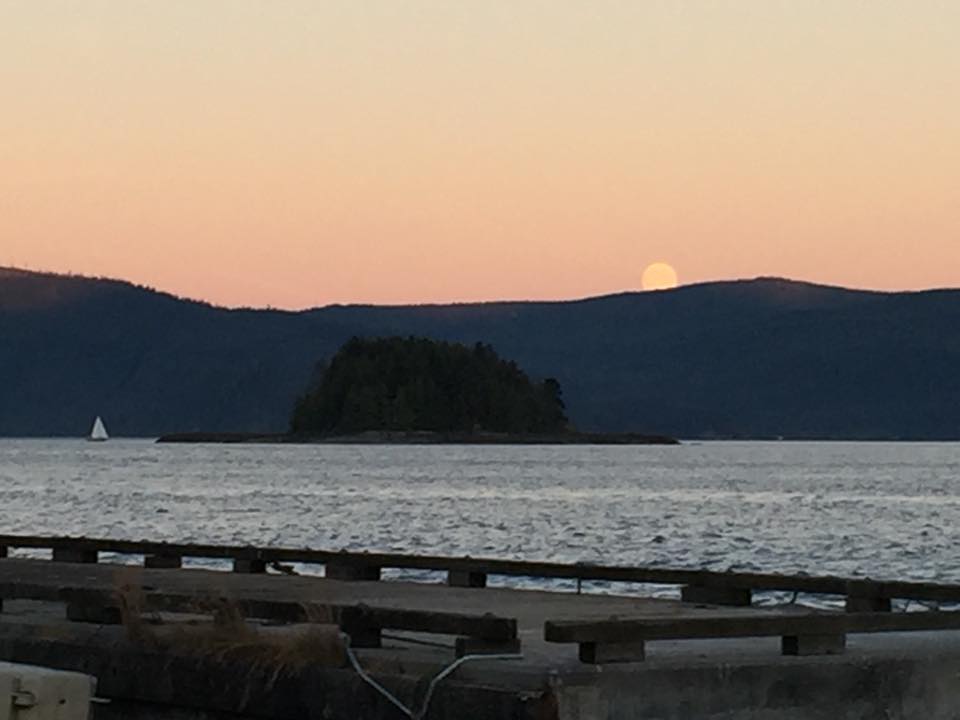
11:15 PM. JUST got home to Merle and Knud’s. We finally flew out of Vancouver at about 6:15 or 6:30. Got to Sandspit on Moresby Island at 8:15. Yes, the ferry north to Graham Island was done for the night. But, typical of small communities, one kind soul ran two shuttle loads of people to the boat dock, and another loaded us up and ferried us over in his boat, leaving from the floatplane dock. Merle and Knud had long since gone home and their son Andy was there waiting to drive me home. The moon was full and coming over the horizon and the light in the sky had dimmed fully just before we got to Old Massett.
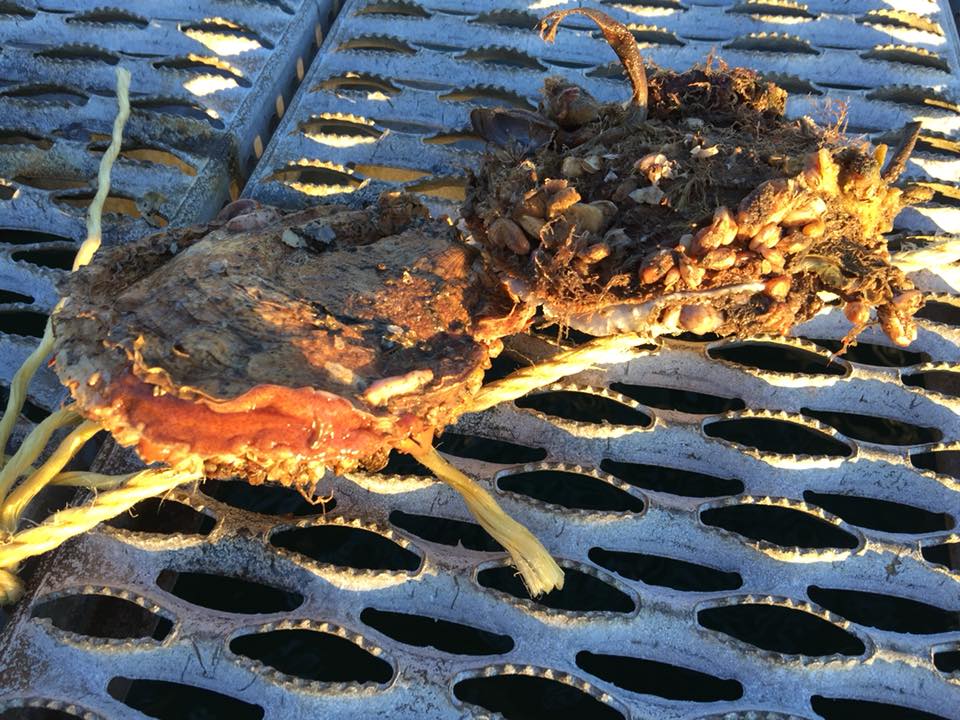
Abalone in the shell, just off the dock.
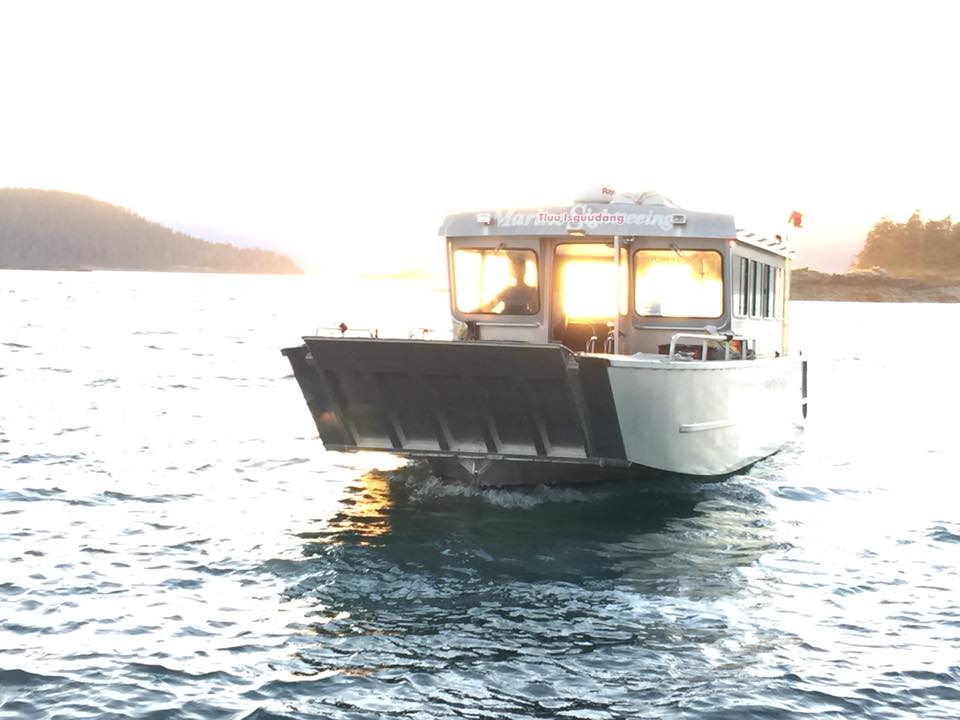
The boat to take us from Moresby Island north to Graham Island.
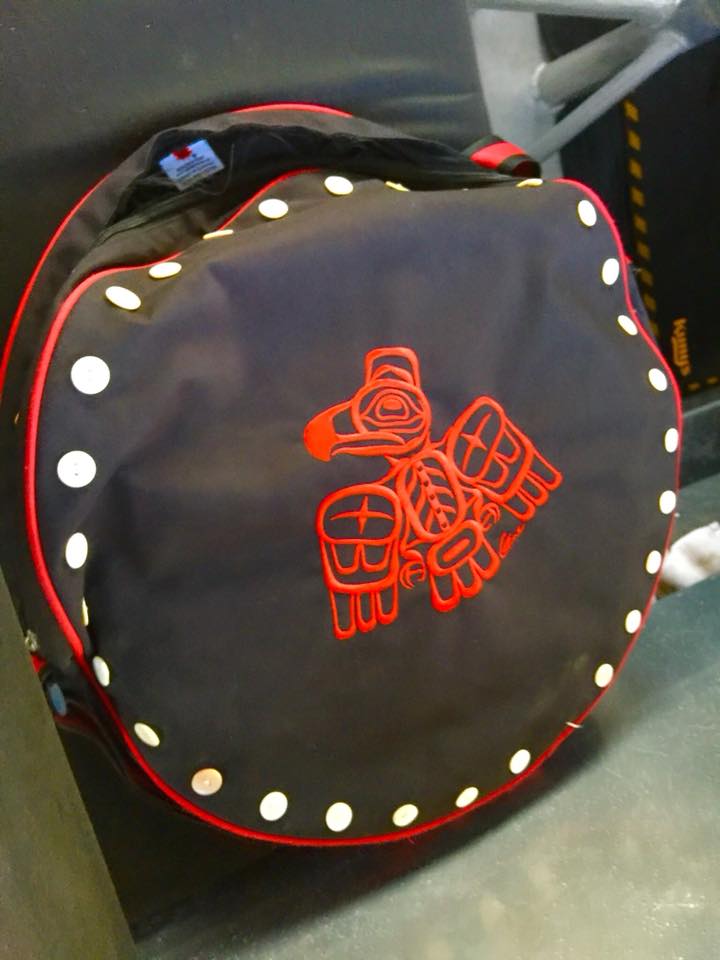
A drum cover sitting on the seat in front of me on the boat.
July 27, 2018 – Food Fish in Old Massett
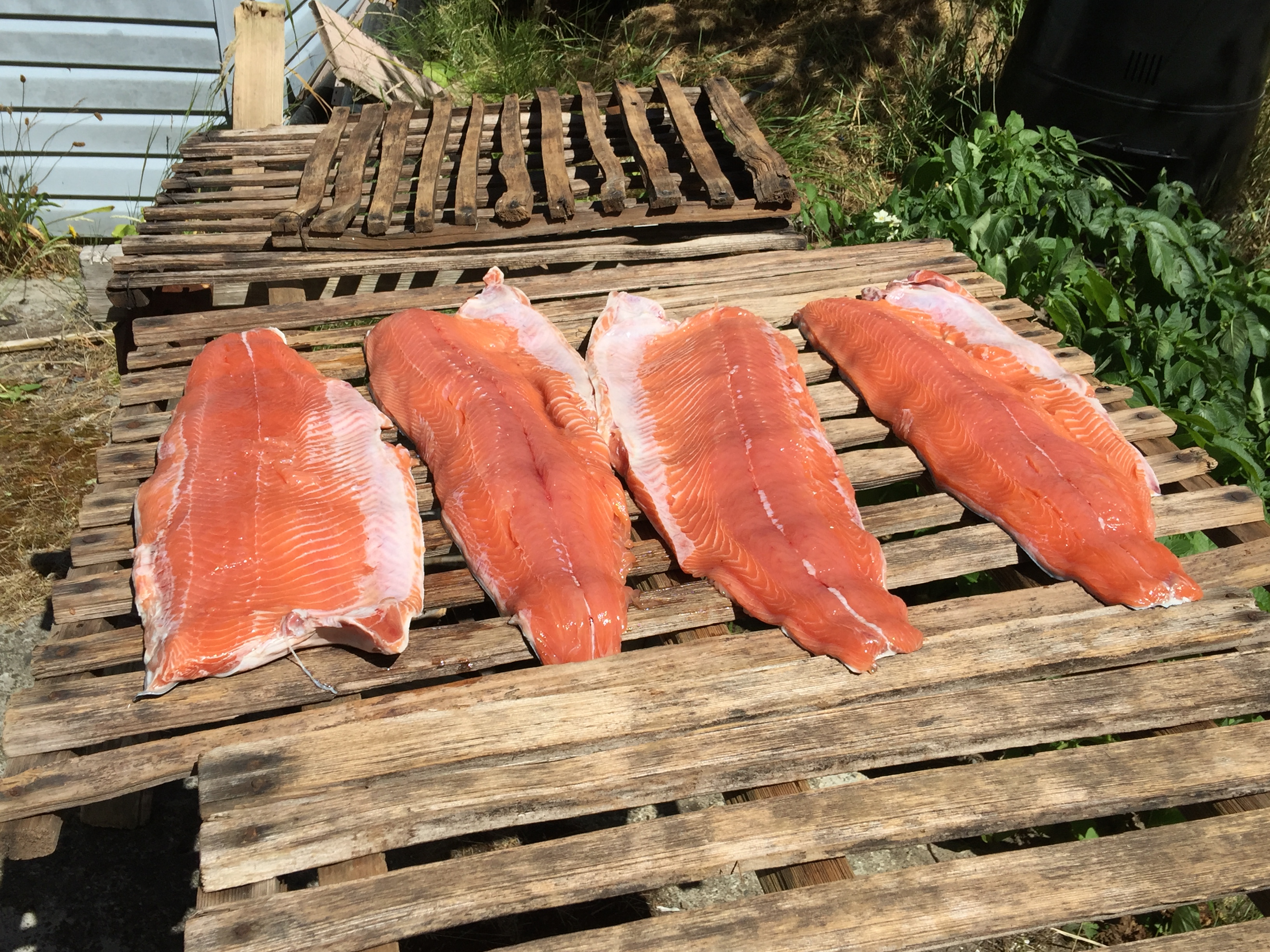
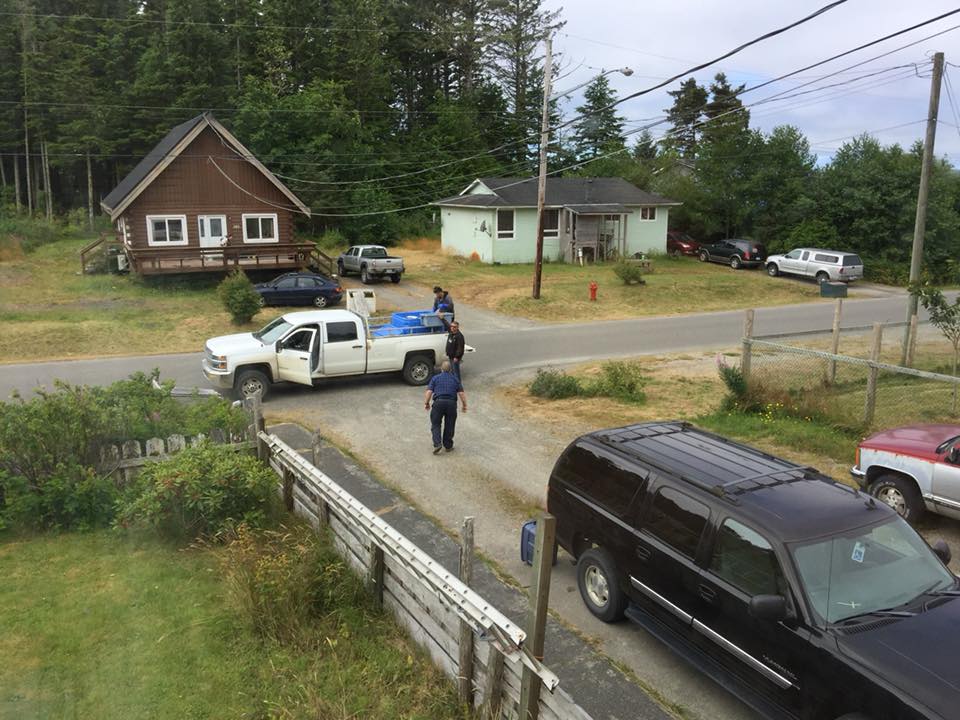
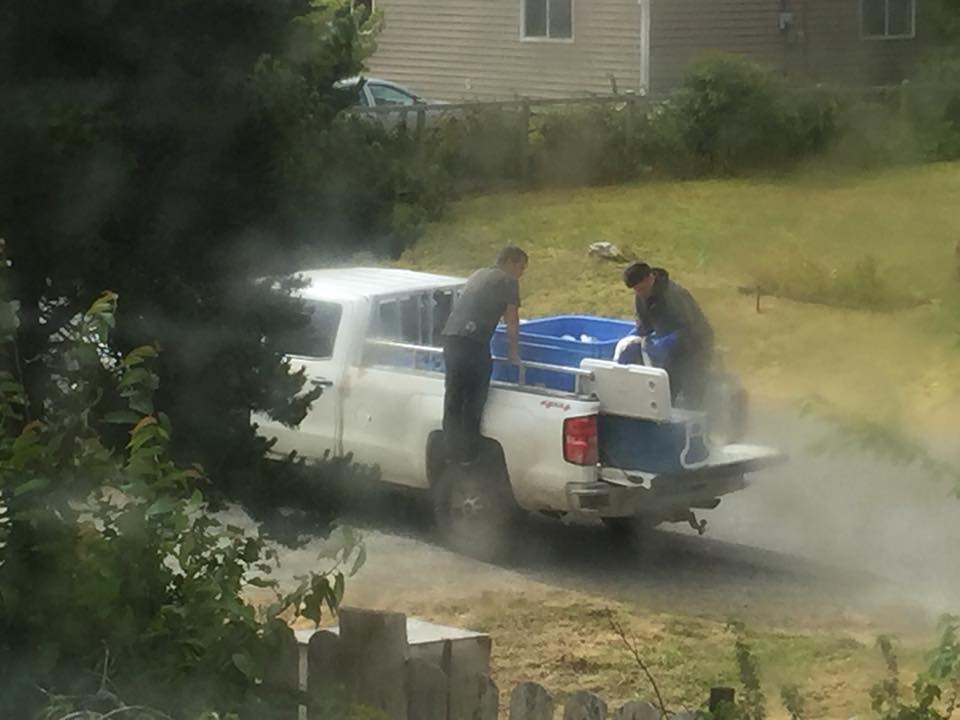
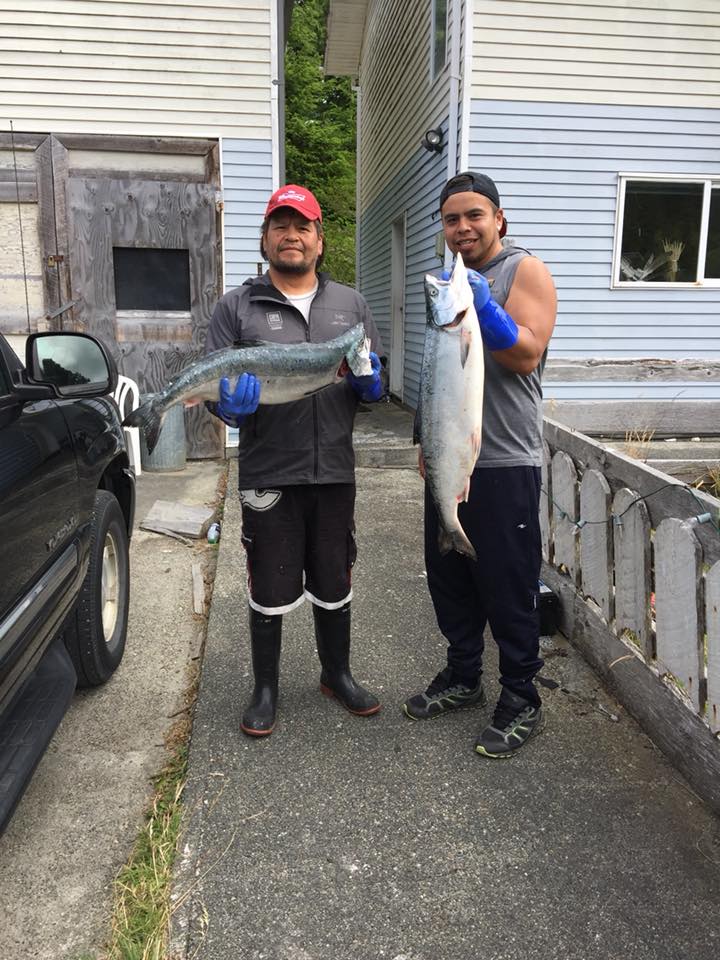
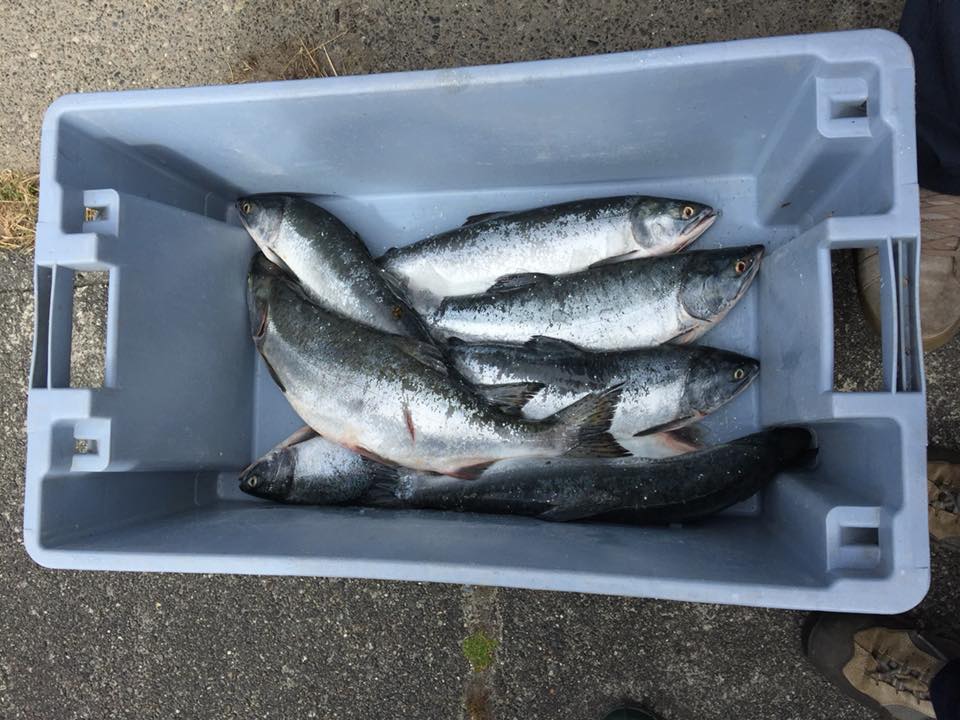
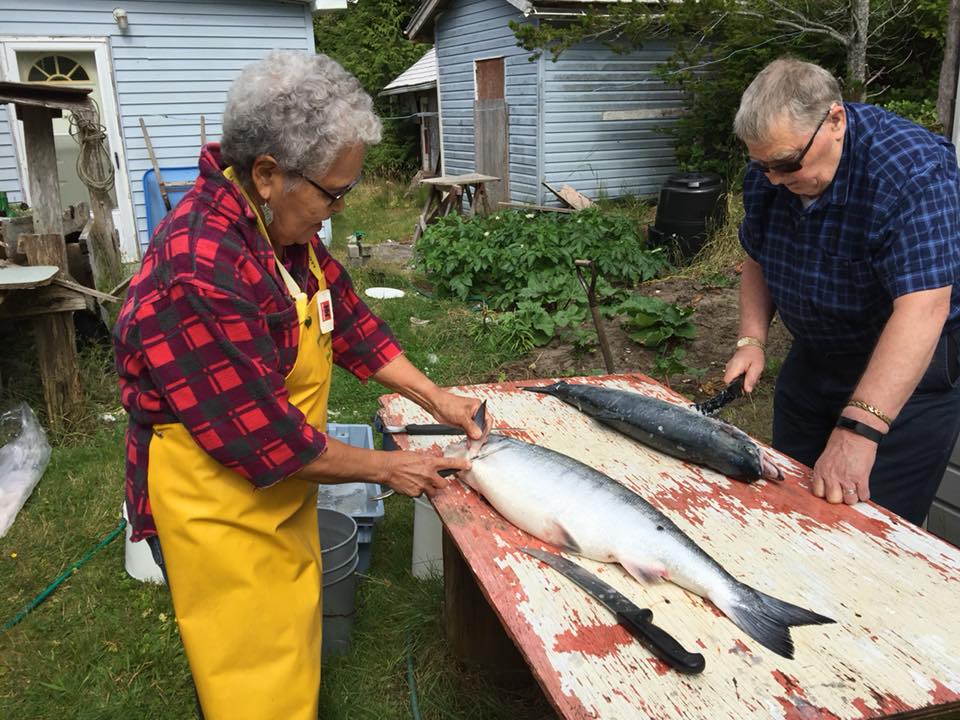
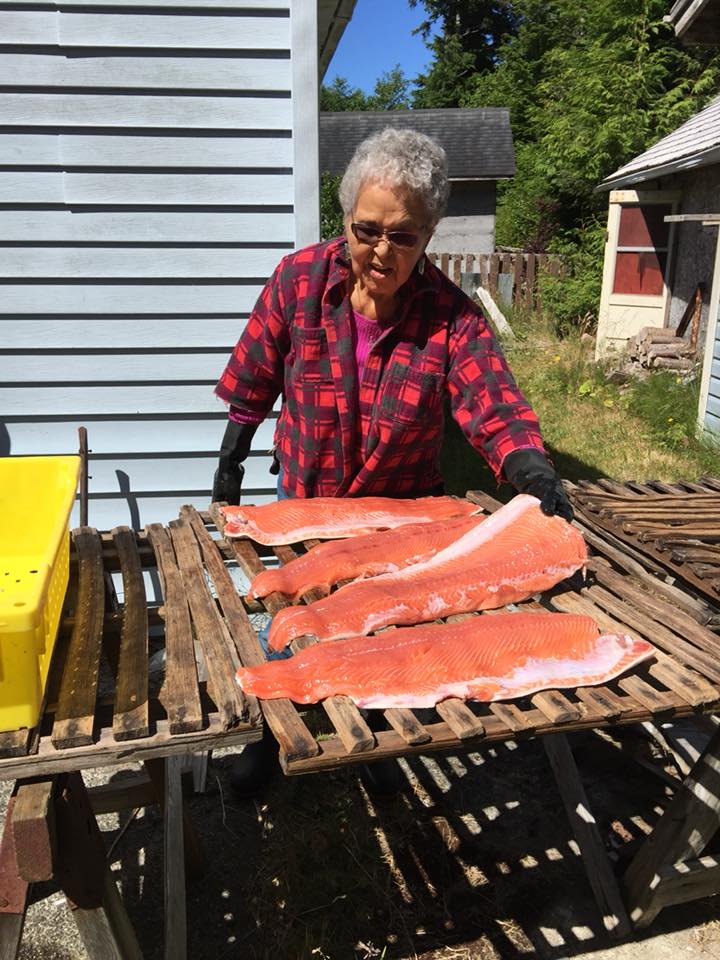
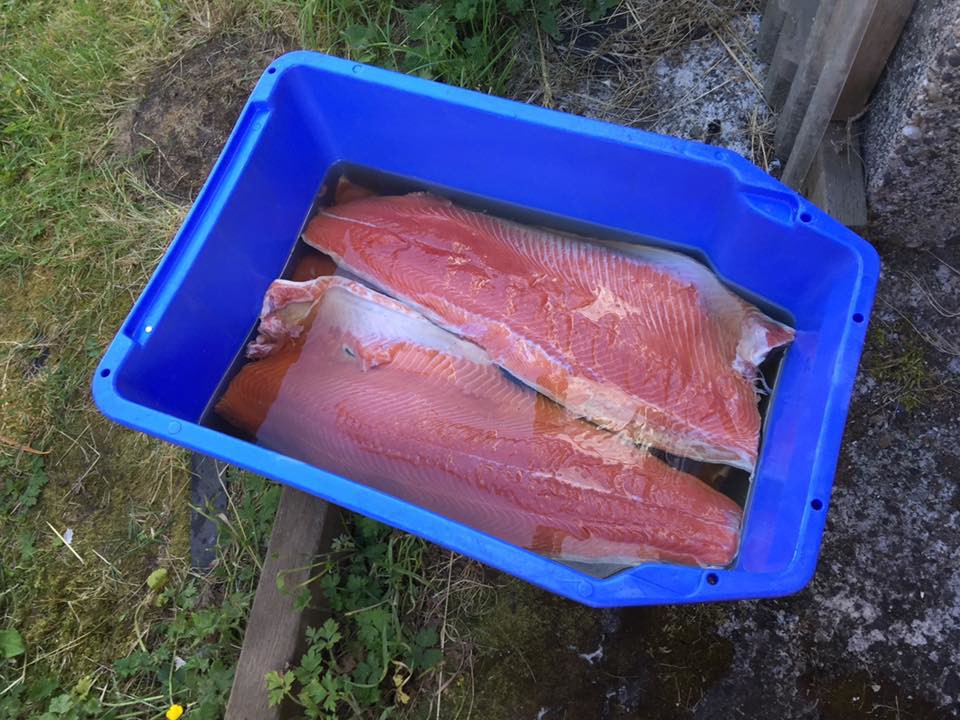
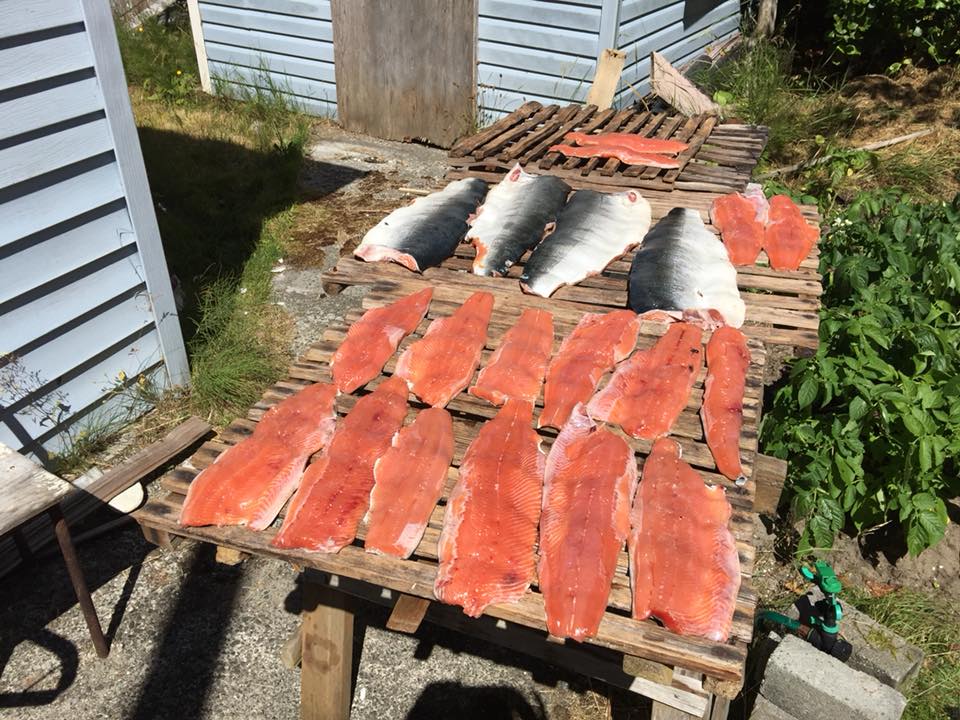
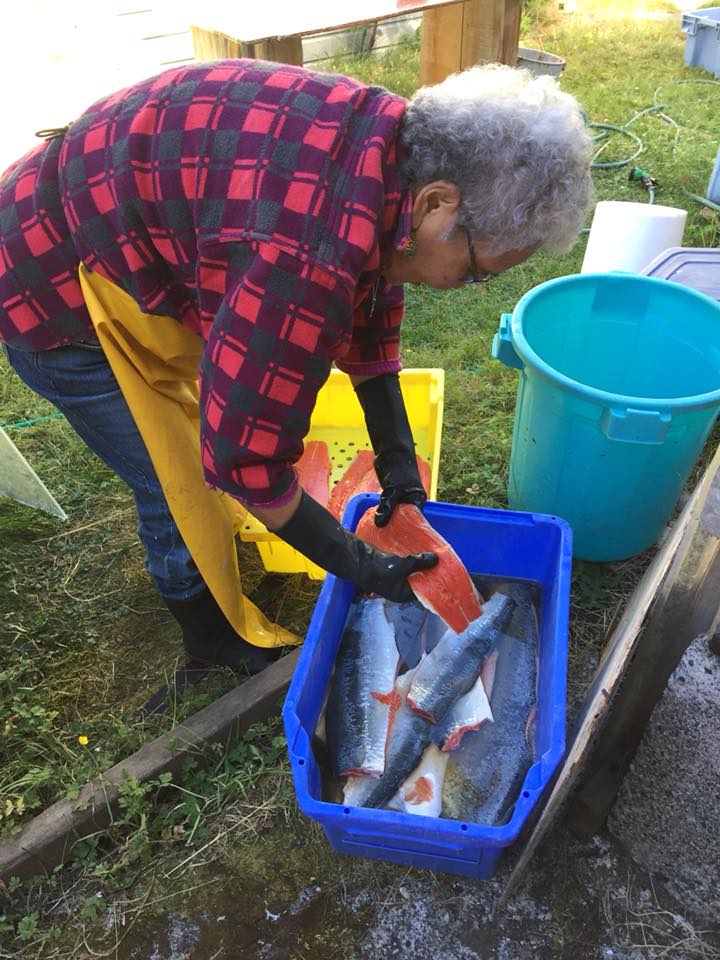
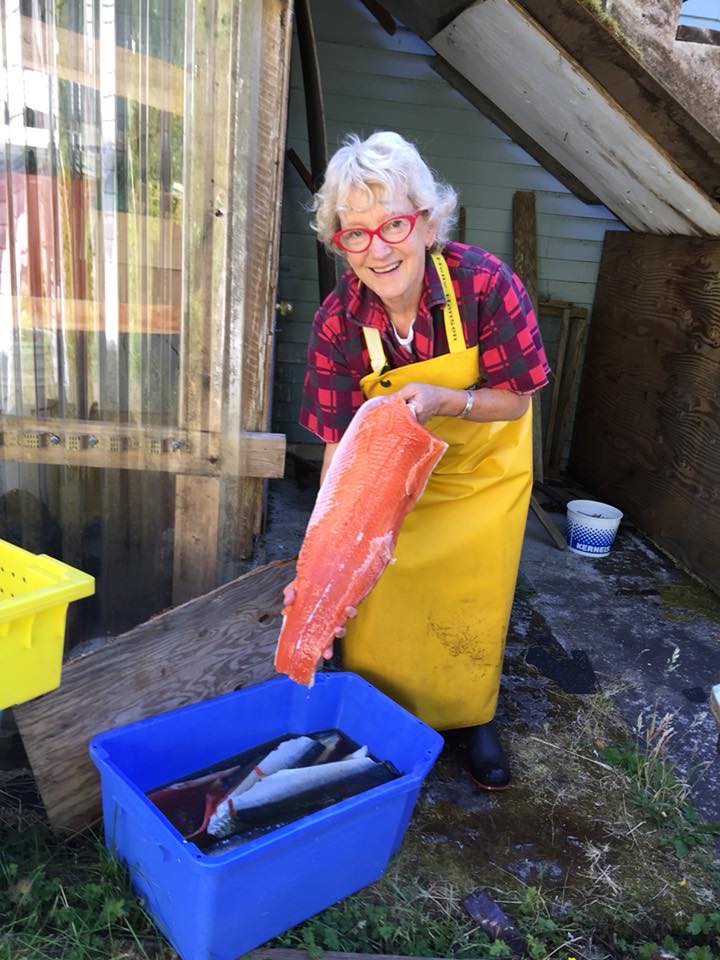
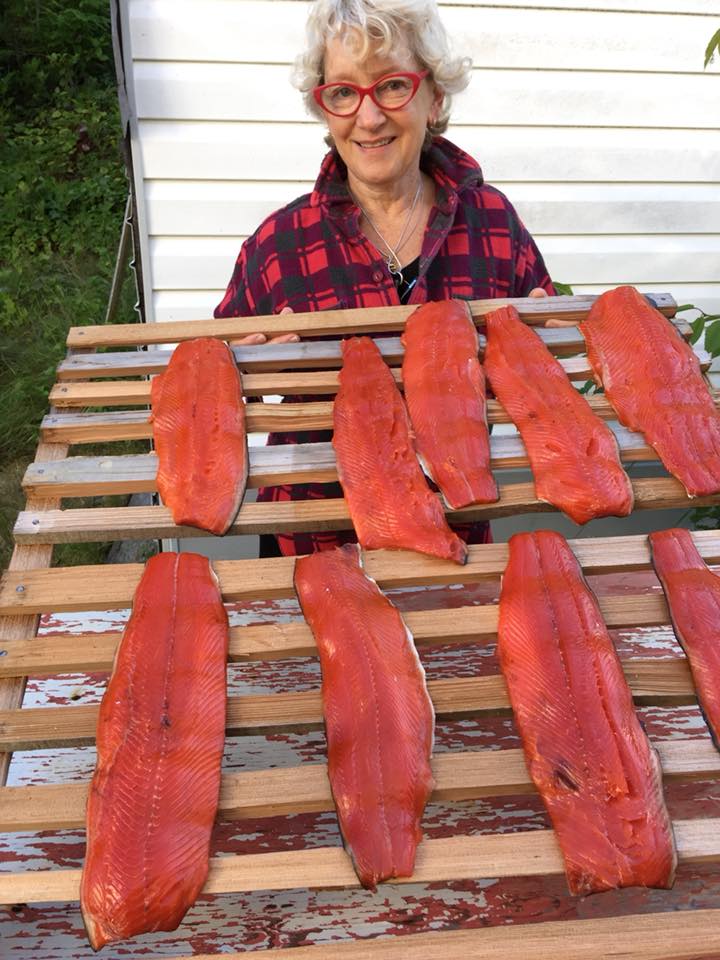
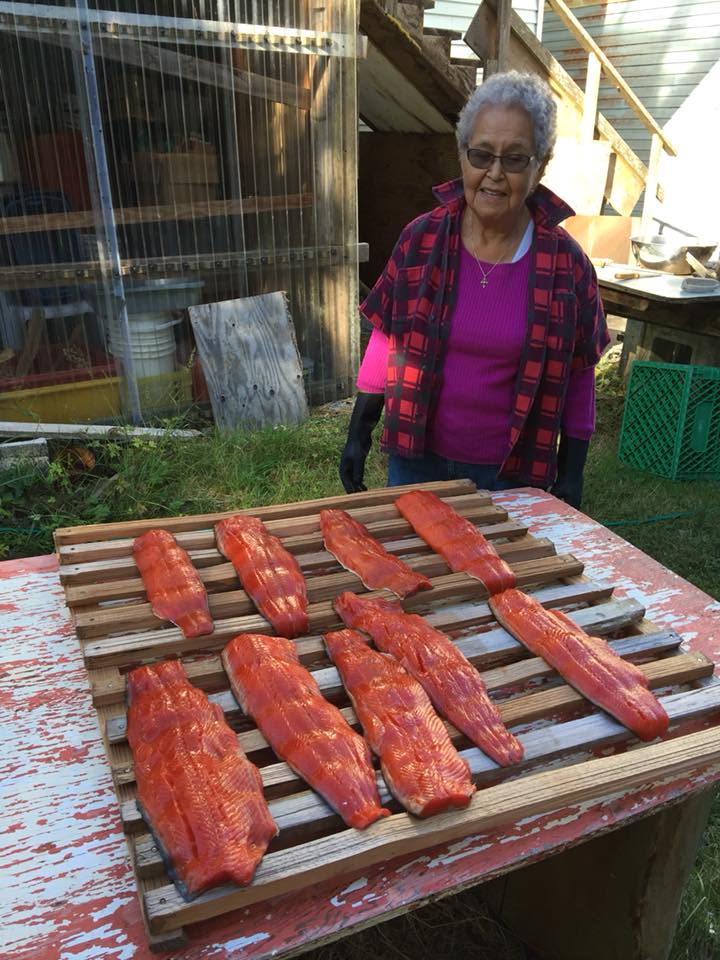
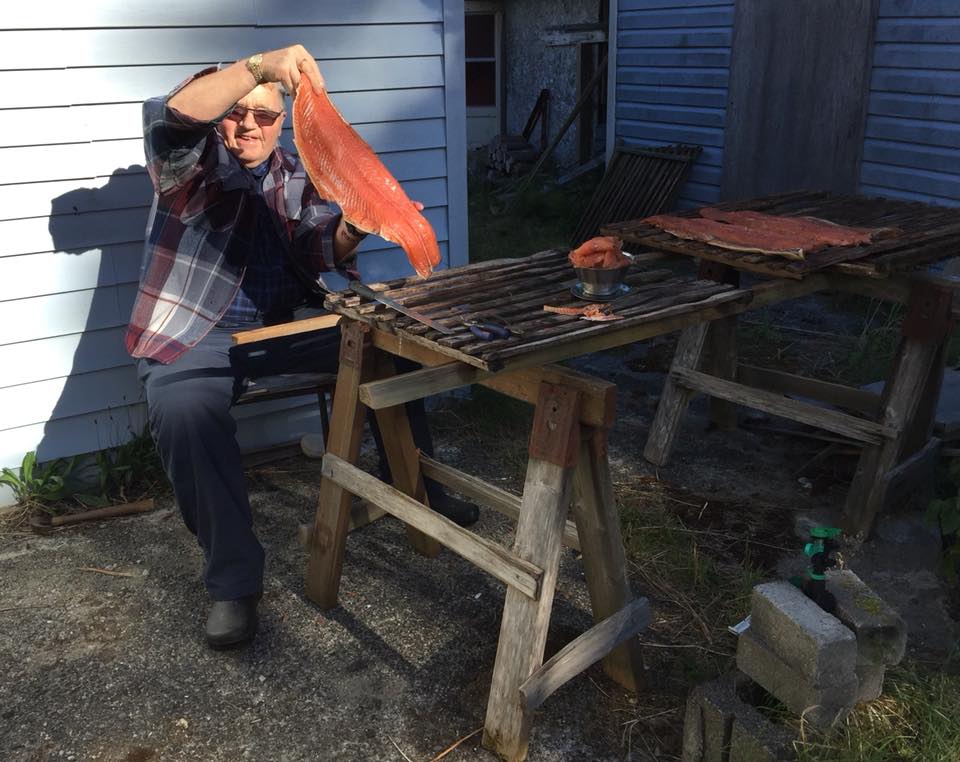
King salmon: it’s what’s for dinner. Local Haida commercial fishermen drove through the Haida village this morning at 11:30, distributing salmon. They dropped off 2 “springs” (Kings) and 8 pinks to us. By 1:30, we had them cleaned, brined and laid out in the sun, getting ready to go into the smokehouse. I’m guarding against ravens stealing, while Merle and Knud go to cut fresh alder. The smoked pinks will go to feed the elders this winter.
Delivering fish to those in the village.
Scale. Gut. Filet. Smoke.
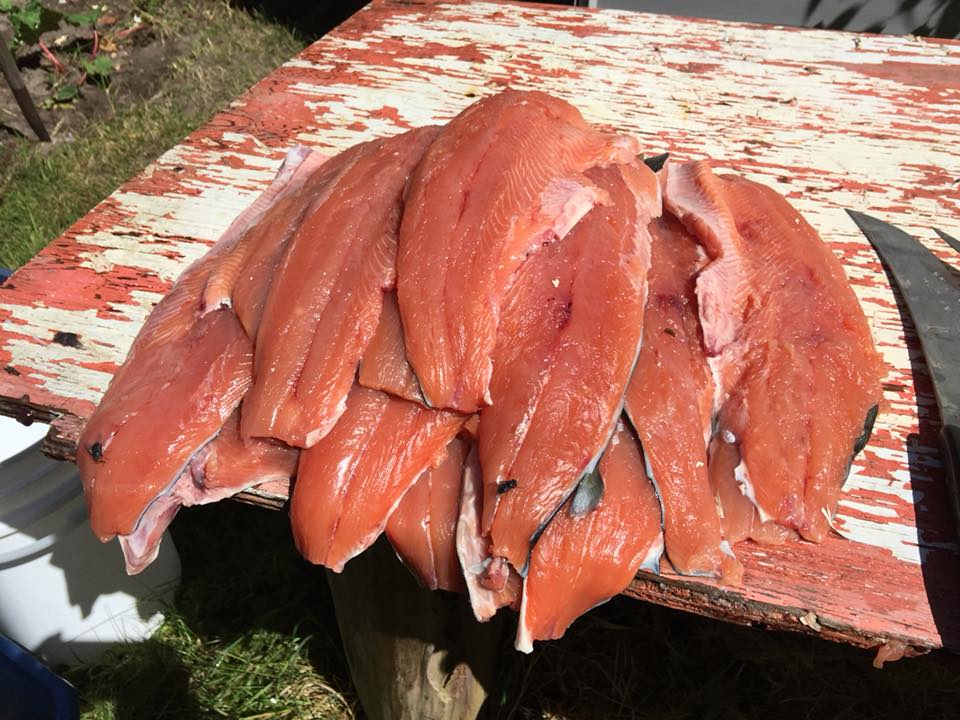
A mess of fish.
In the brine. Water. Brown Sugar… and enough salt to float a potato.
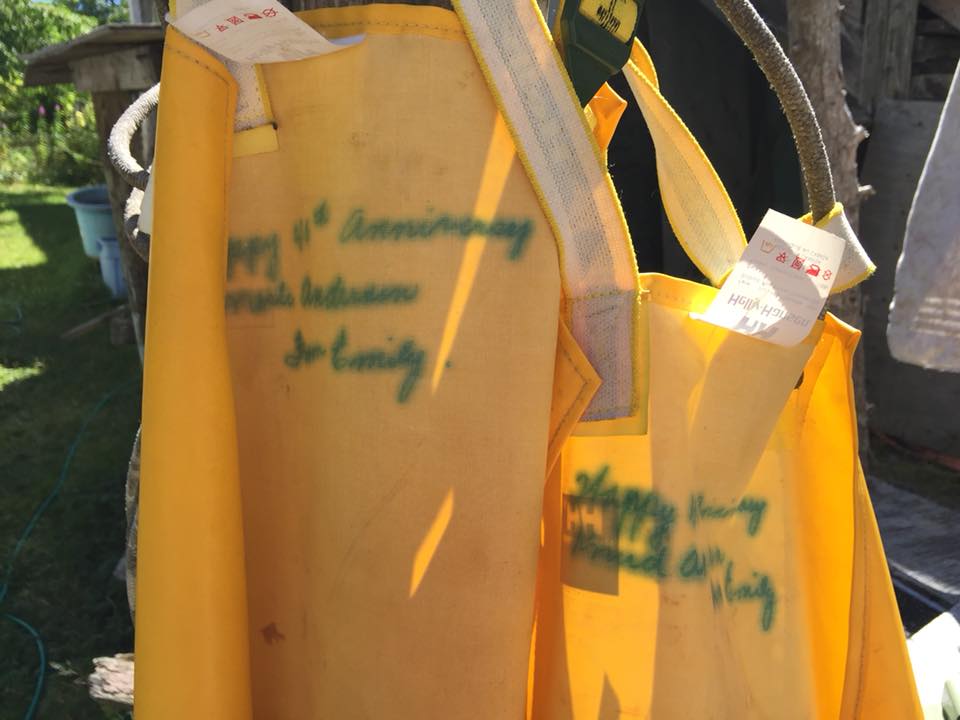
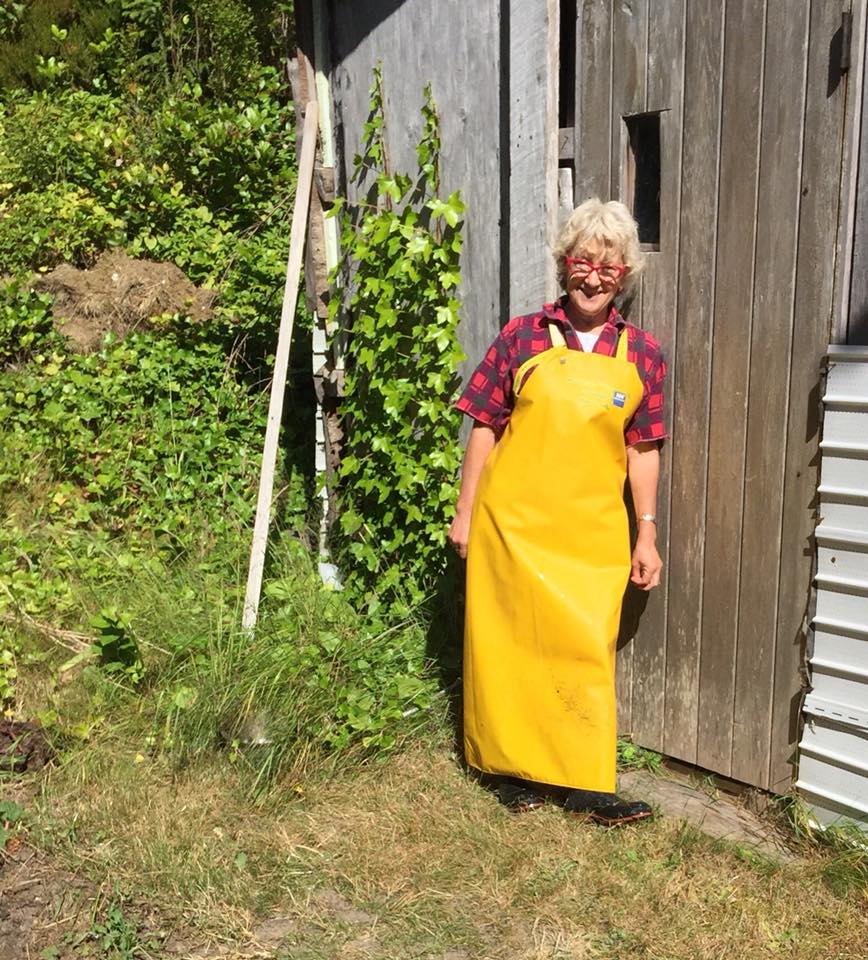
Fish-Cleaning aprons from Merle’s sister, Emily. They were anniversary gifts to Merle and Knud.
How do flies know so quickly when there’s fresh meat to be had?! (I’ll give you one guess what my hands smell like.)
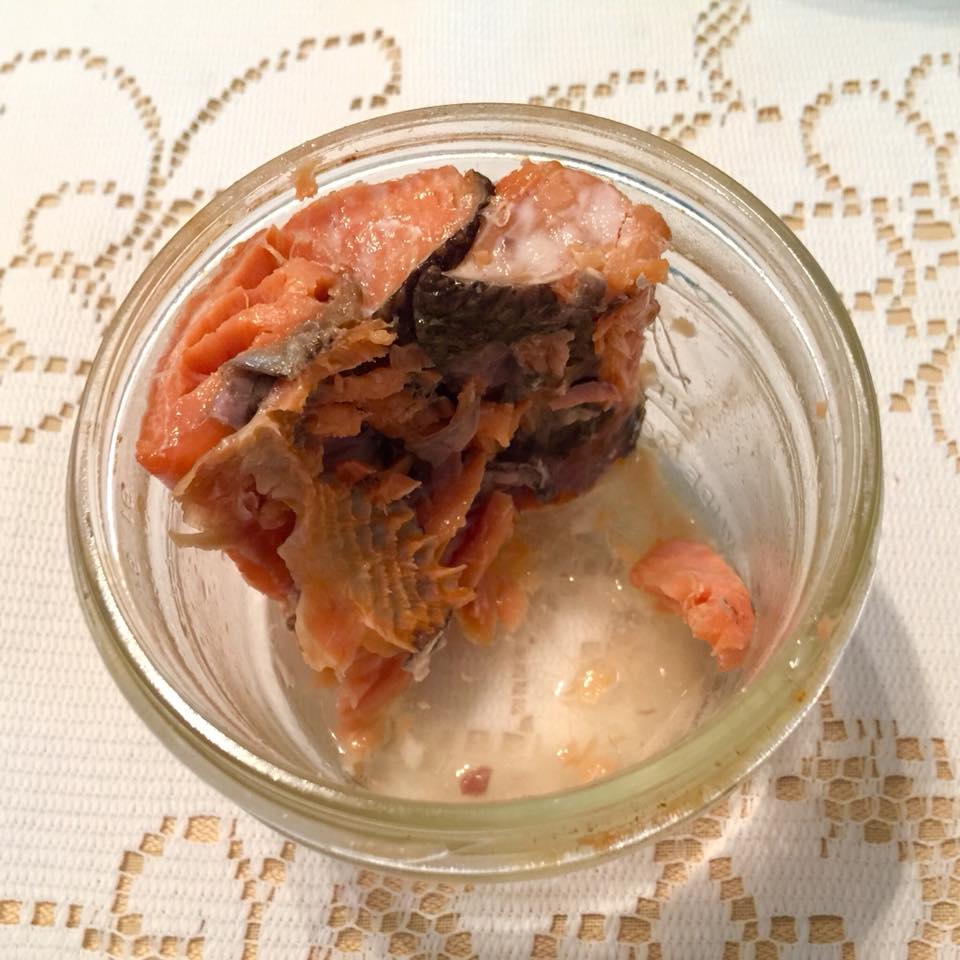
Home-canned smoked sockeye for lunch. And guess what’s for dinner…
July 27, 2018 – Round Two
We were just given more fish: 6 Sockeyes and 1 big King. So we cleaned them and they’re in the brine.
July 27, 2018 RECAP
What a day! The Haida commercial fishermen drove through the village giving out salmon. We got 2 kings and 8 pinks at 11:30 am. We had them scaled, gutted, filleted, brined and in the smoke house by 1:30. Just as we finished cleaning up, they came by with more salmon! This time 6 sockeye and 1 king.
We decided to have lunch first: home-canned, smoked sockeye and Knud’s homemade rye bread. We put the fish bones on to simmer and went out to clean the next batch of fish.
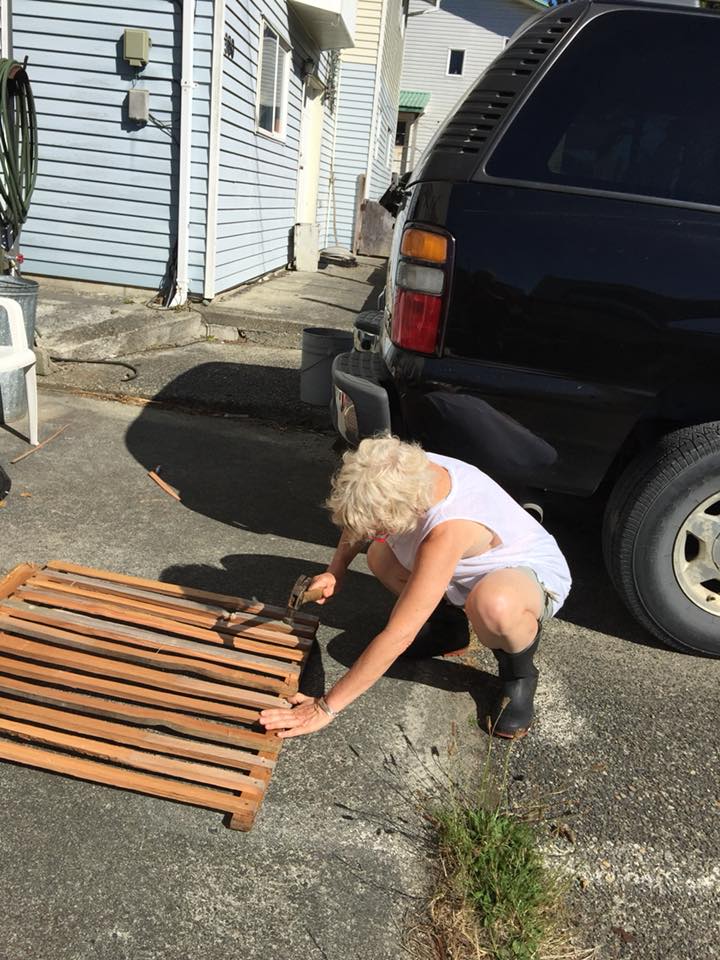
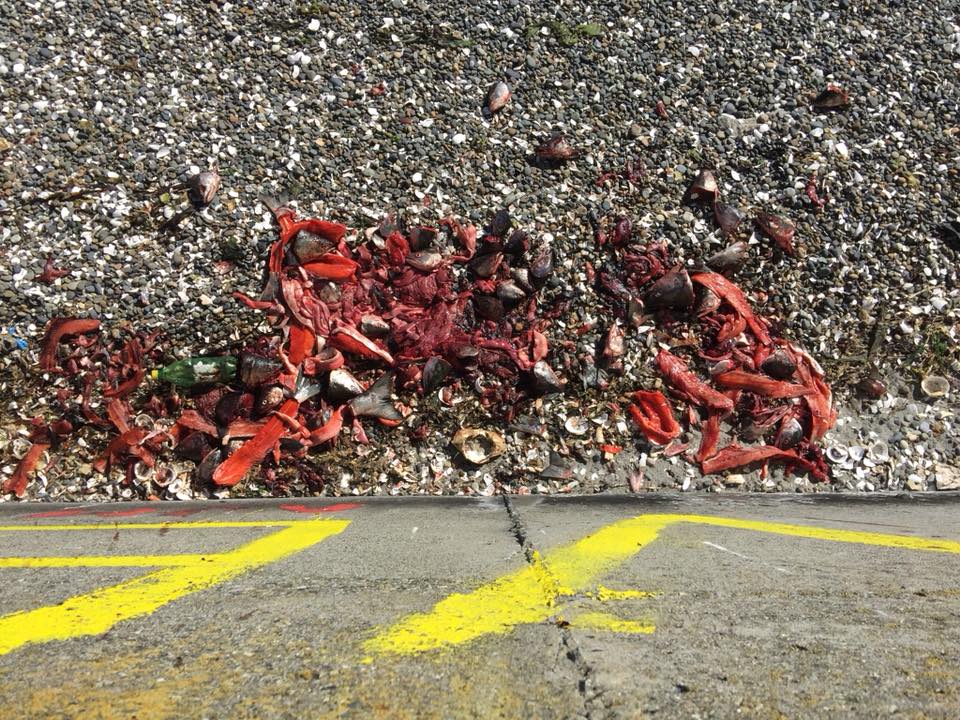
We needed one more cedar rack for the smoke house, so I built that from split planks. Before dinner, we took all the fish guts, bones and trimmings to the sea wall and threw them over. The eagles will get what they can before the tide comes in and washes it all away.
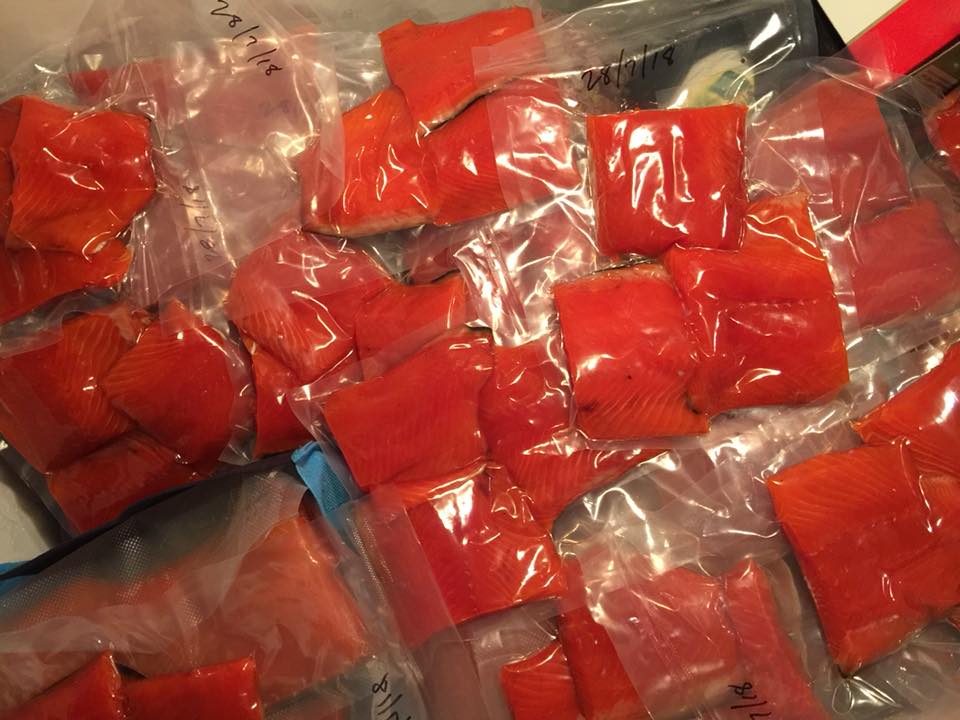
For dinner, I made salmon chowder with the bone broth after Merle and I picked the bones clean. Tomorrow we’ll vacuum pack the smoked pinks for the elders in the village during winter, and the rest of it for family. We’ll have salmon melts on rye bread for lunch and barbecued salmon for dinner.
(Most people go to lie on sunny, sandy beaches for their vacations. Ha! I go where I need rubber boots, rain gear and a fish cleaning apron.) This trip marks my 25th anniversary of coming to Masset. ❤️
We needed another rack for the smokehouse. Knud split the wood and I tacked it together (since I can get down to the ground more easily than he can… I’m already halfway there!
The whole village has been tossing fish guts and scraps over the seawall. Eagles will get what they can before the tide comes in.
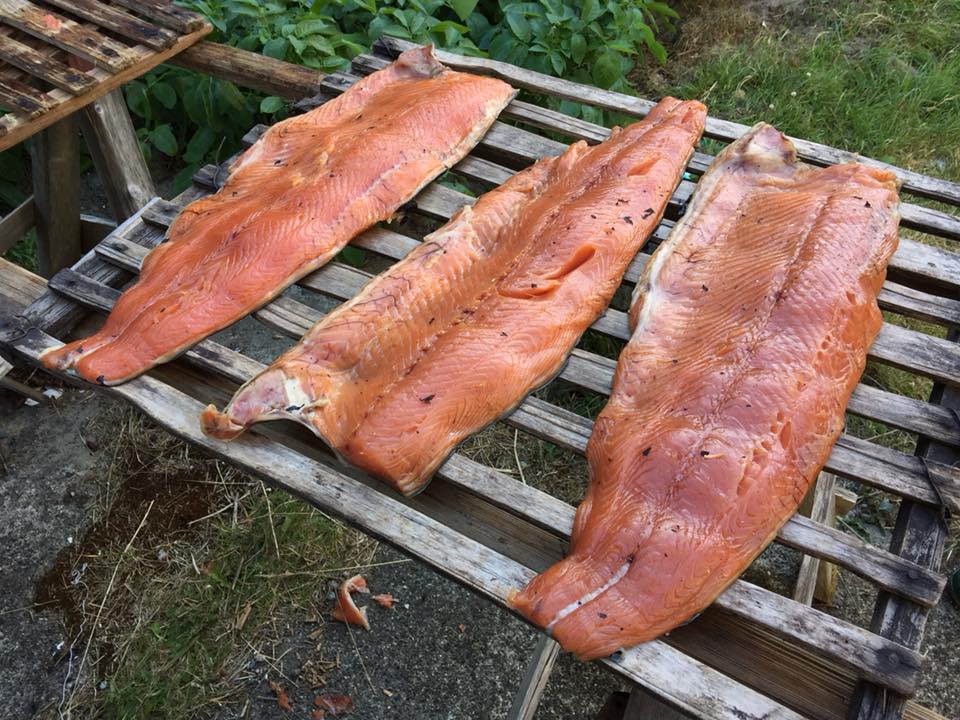
Sockeye and king just out of the smoker. Now we’re pulling lateral bones and prepping for vacuum packing and the freezer. Sunny, north wind morning.
Freezer full of fish for the winter. Look at that COLOR!!!
July 28, 2018
Walking around the Village of Old Massett…
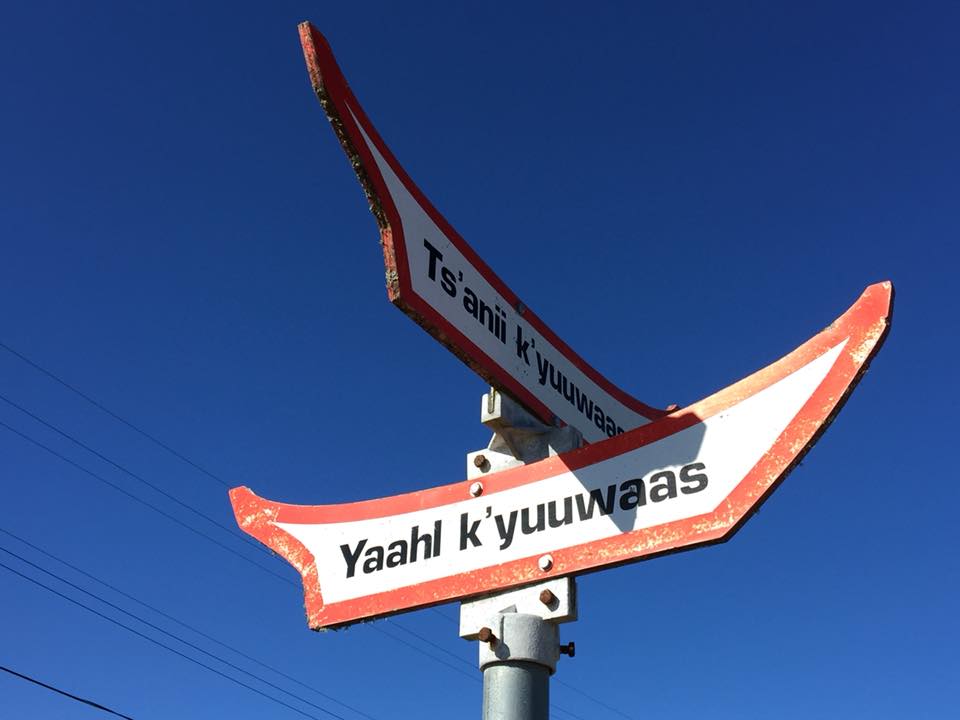
Street signs in the Haida Village of Old Massett.
July 29, 2018
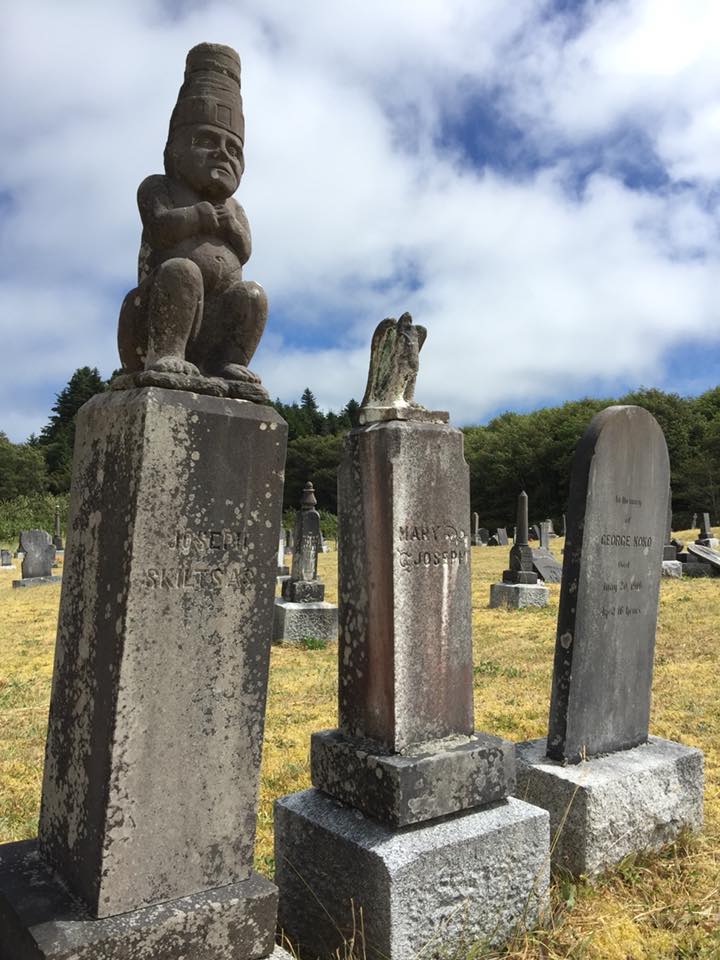
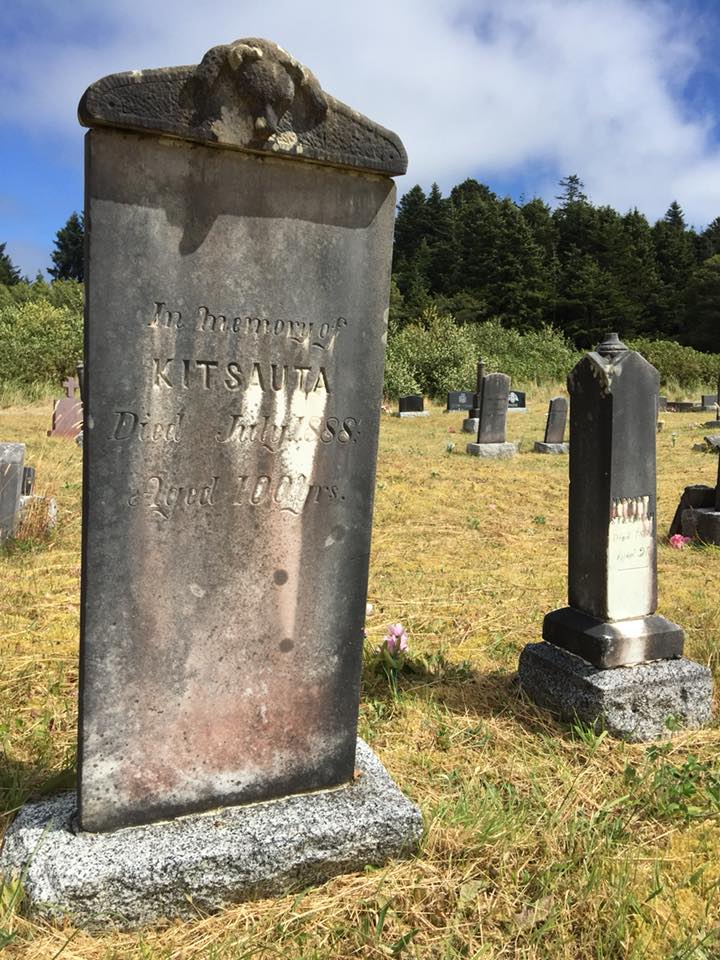
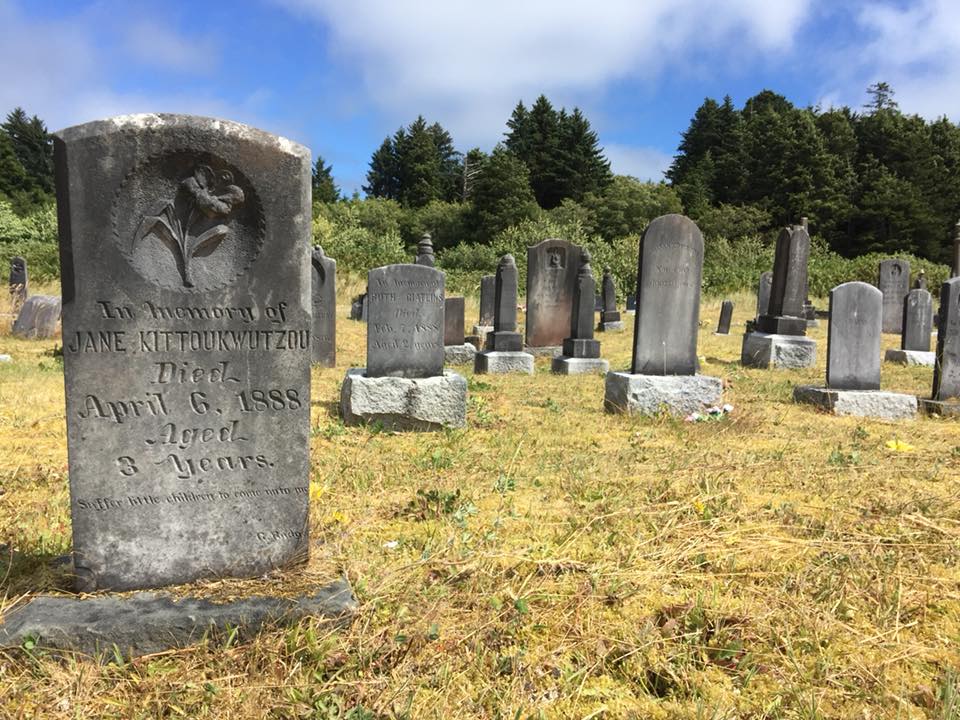
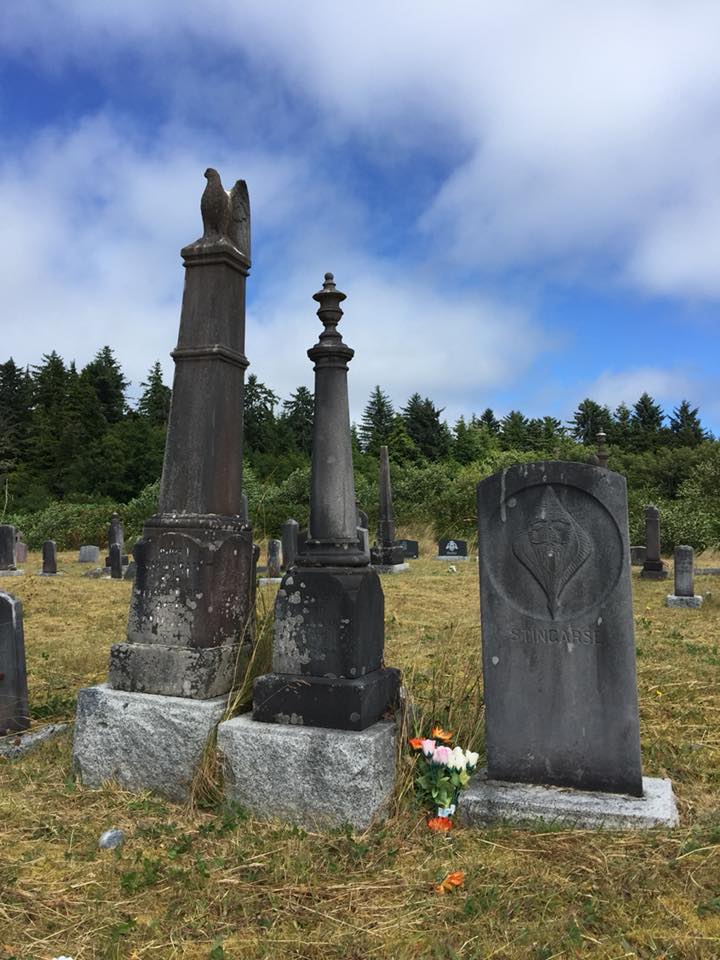
Wandering around the old cemetery here in the Village of Old Massett, I find gravestones of whole families wiped out by smallpox. I imagine the sorrow throughout town in those years.
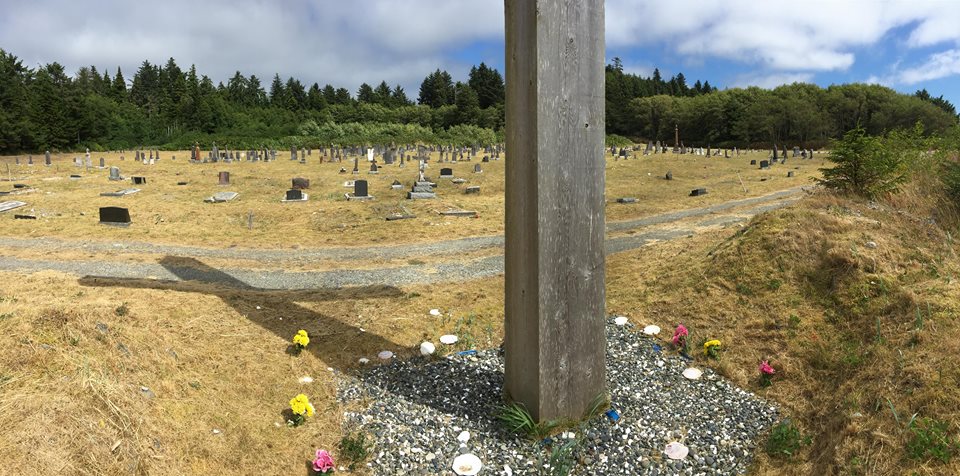
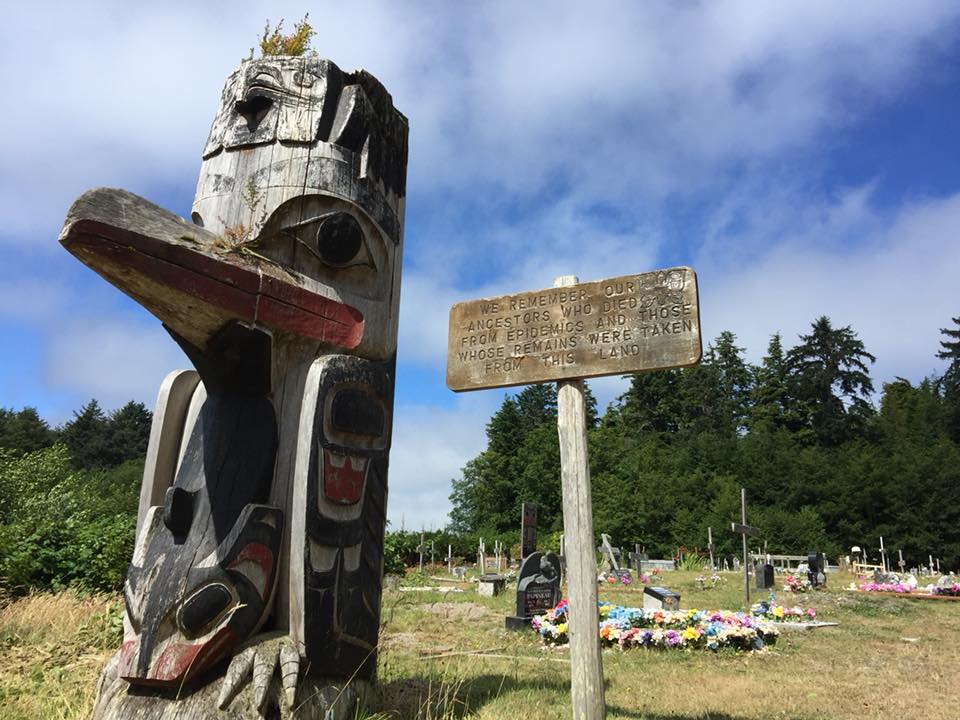
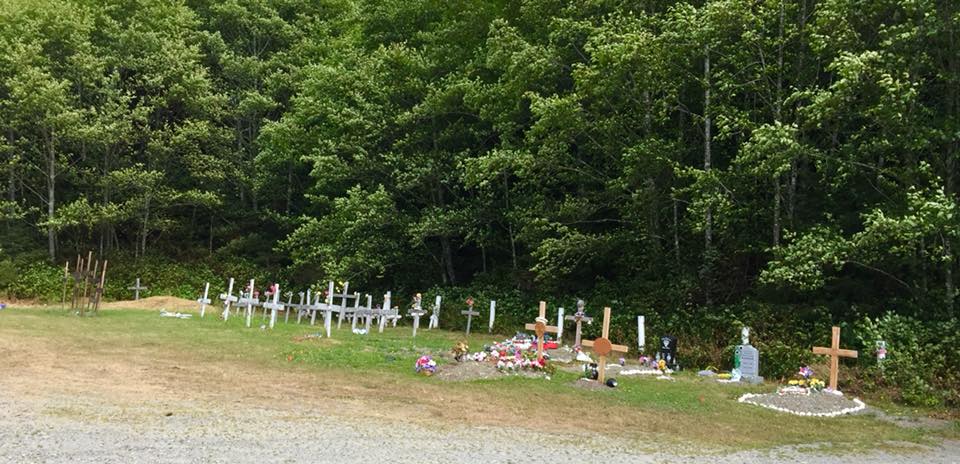
In the new cemetery, there’s a section for repatriated remains.
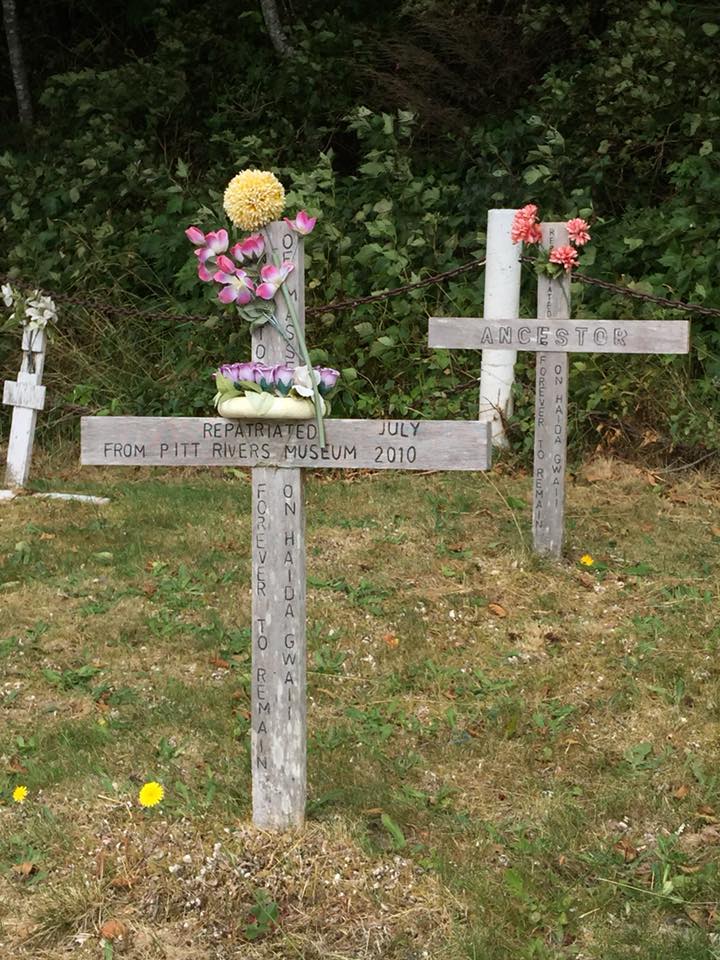
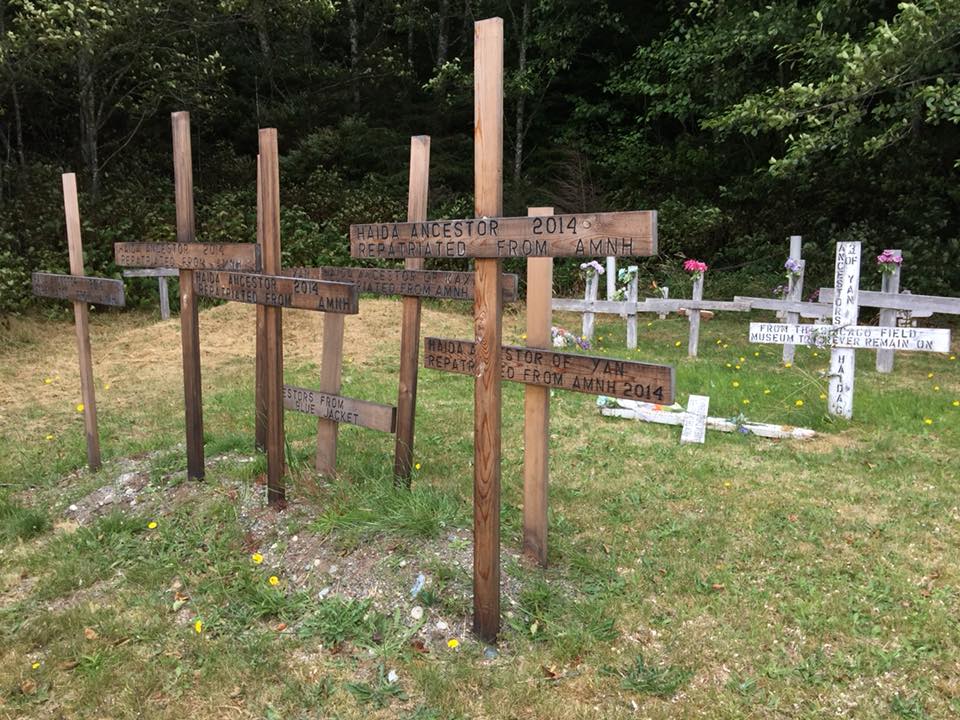
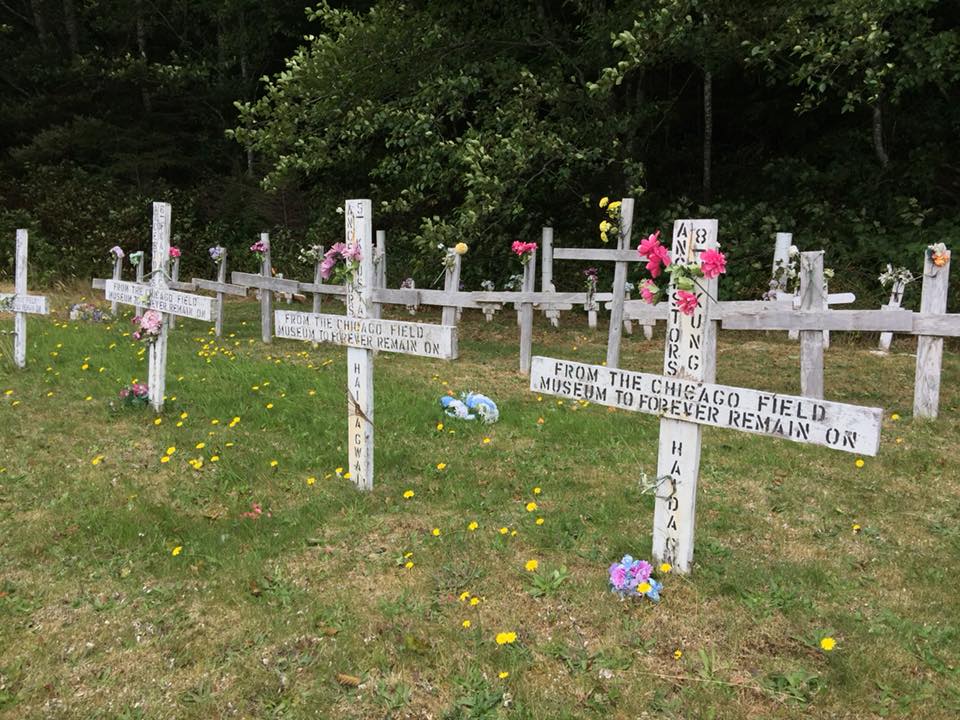
Cemetery for Repatriated Remains
Anthropologists used to steal all sorts of bodily, funerary and memorial remains from local, indigenous peoples. (All over the world!) They did this under the guise of research and historic preservation. Thankfully, in 1990, the Native American Graves Protection and Repatriation Act (NAGPRA) was enacted. Remains have come home to Haida Gwaii and been reburied as recently as 2014.
These are the graves of the repatriated remains.
Repatriated in 2010 from the Pitt Rivers Museum in Oxford, England.
Repatriated in 2014 from the American Museum of Natural History, New York, New York.
Repatriated from the Field Museum in Chicago, Illinois.
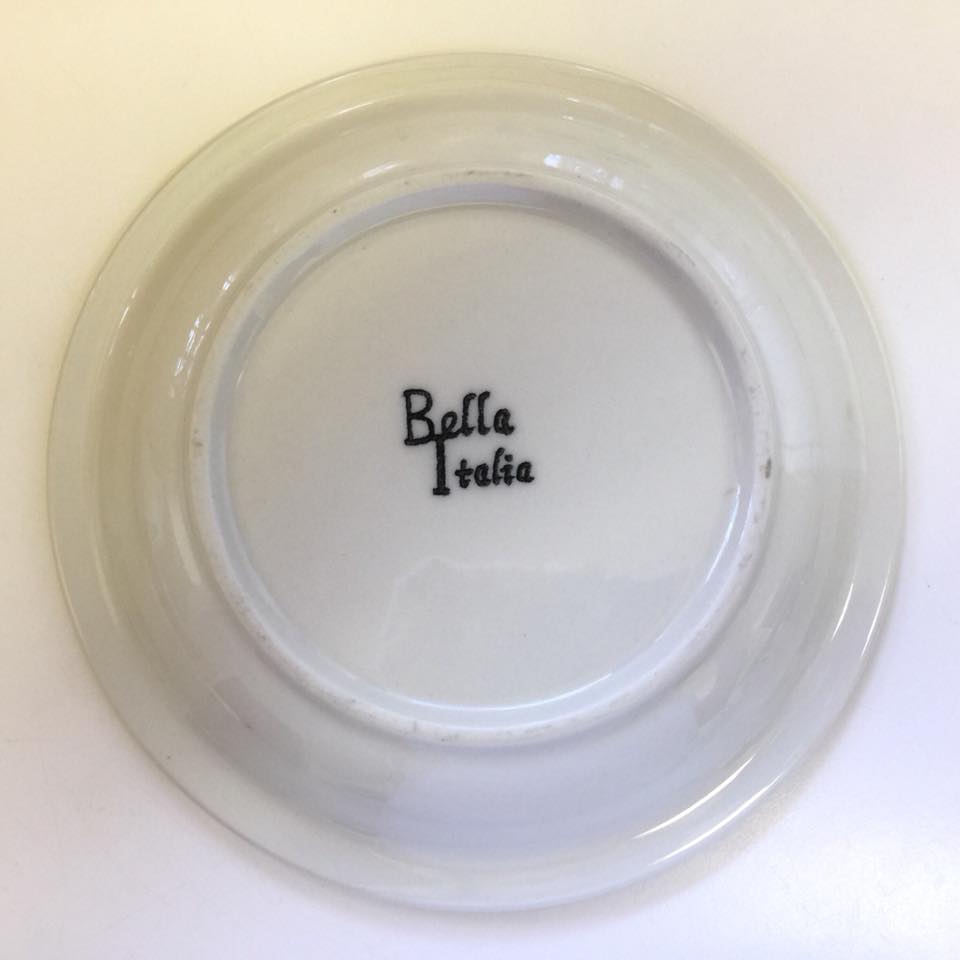
While washing dishes after the post-church service luncheon, I smiled when I saw the bottom of one of the plates. “Beautiful Italy.”
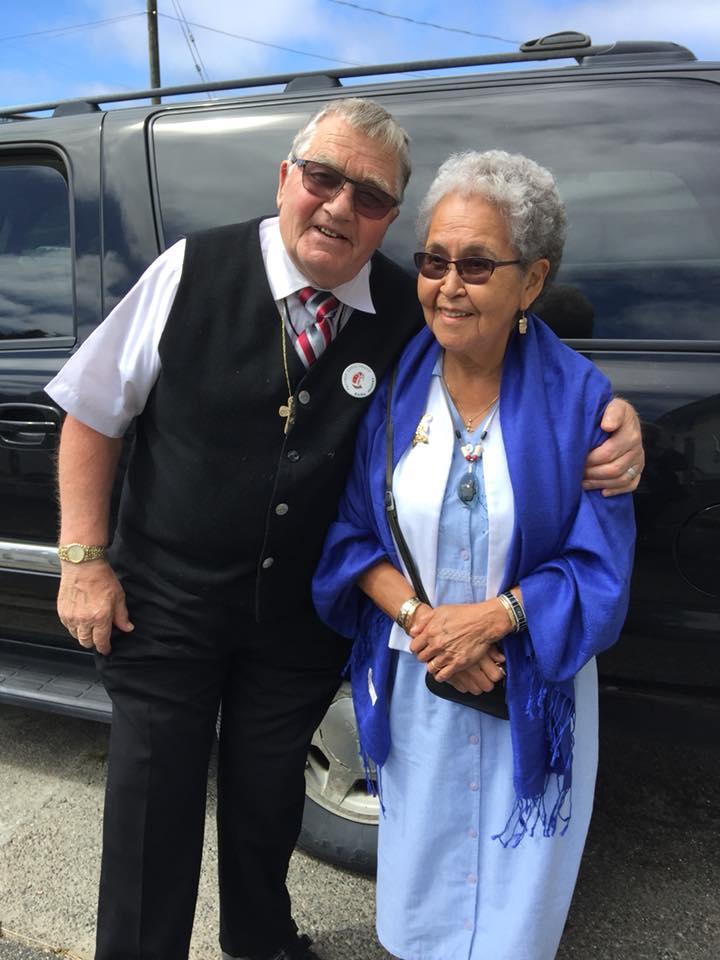
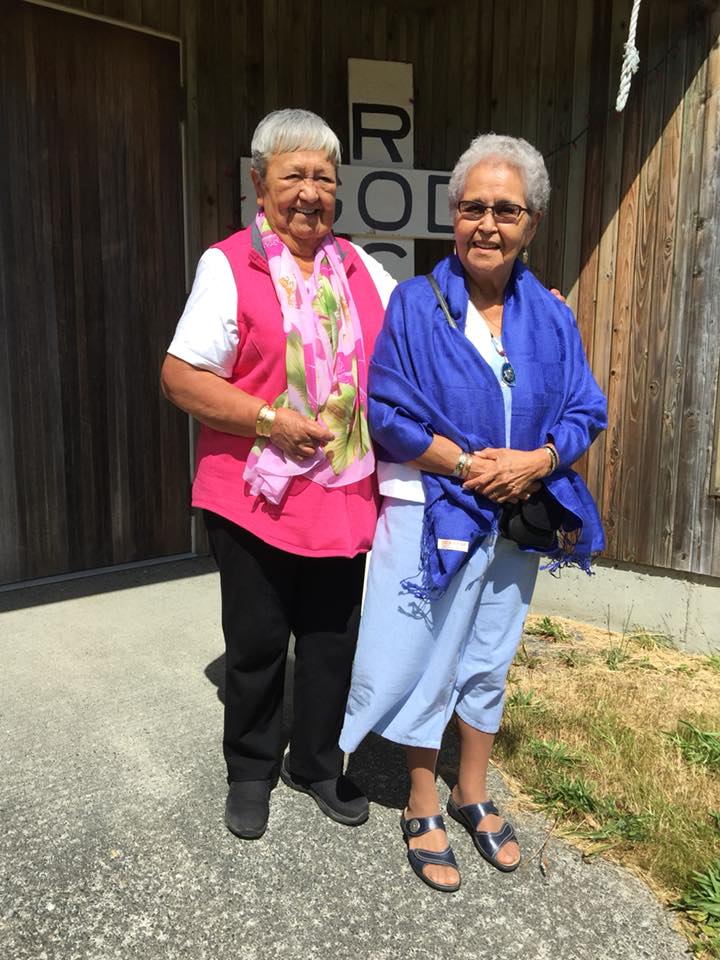
Merle is always so elegant.
July 30, 2018
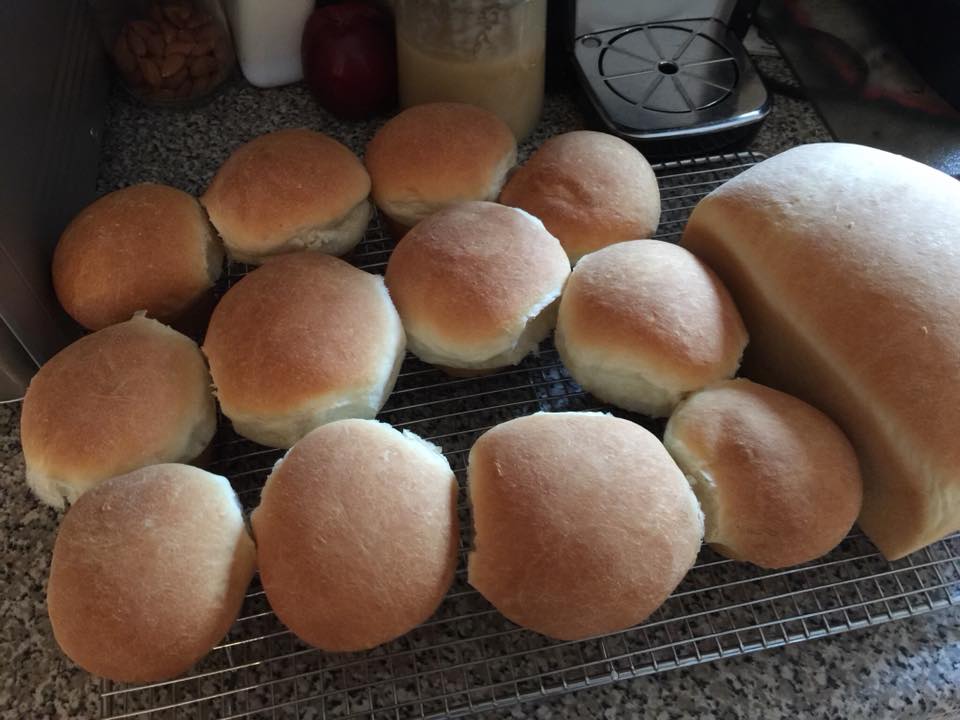
I got up at 8:00 this morning and Merle already had buns and a loaf of bread in the oven!
My Haida brothers, nephews and niece. (One brother missing, plus a sister and another niece and nephew)
Kaden, Tanner, Peter, Andy.
Me and Julia.
July 31, 2018
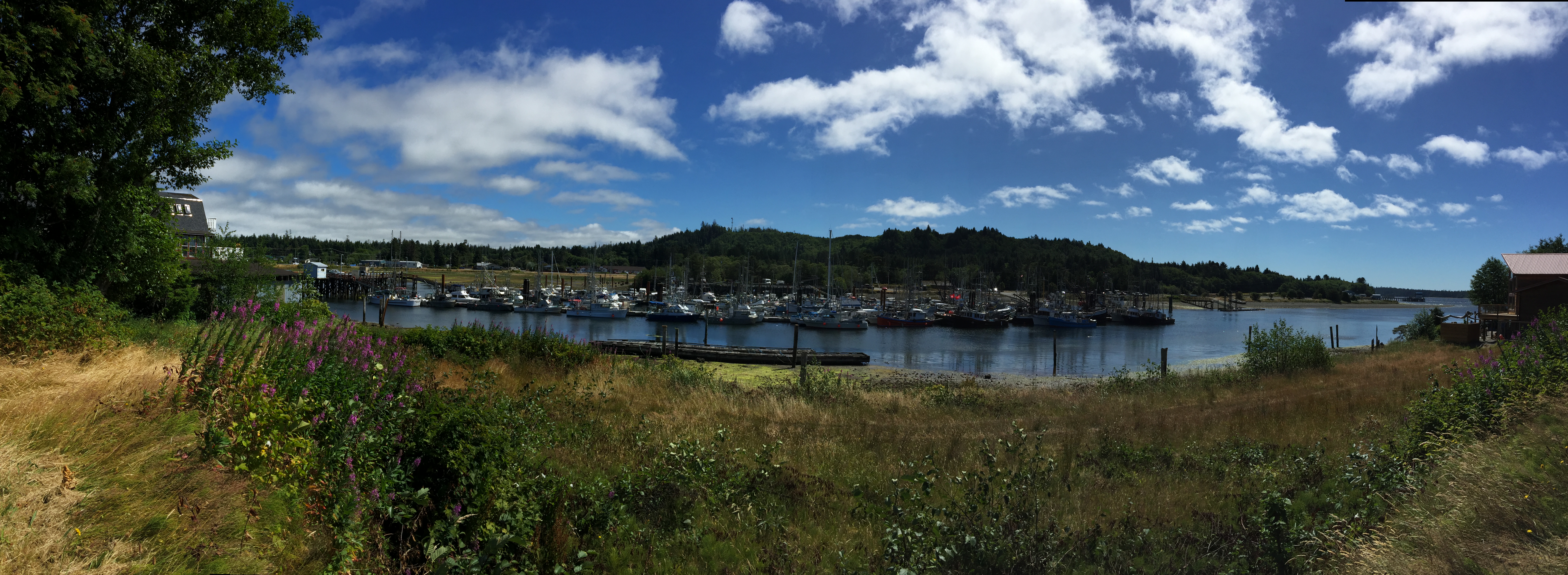
This was the fishing shack we bought in New Masset 25 years ago. It needed to be bulldozed then!!! It’s gone now. We used to sit at the dinner table with binoculars and watch the fishermen come in, seeing what they had caught. Wonderful view looking out to the docks.
(Click on this panorama for a larger image of the marina view.)
July 31, 2018 – Northeast to Tow Hill
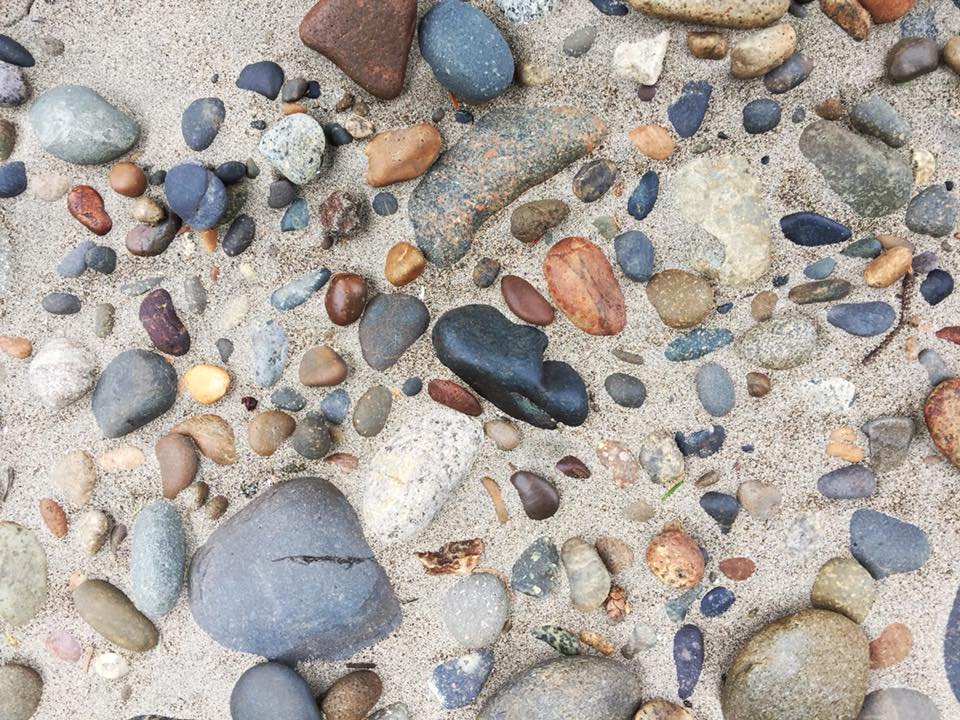
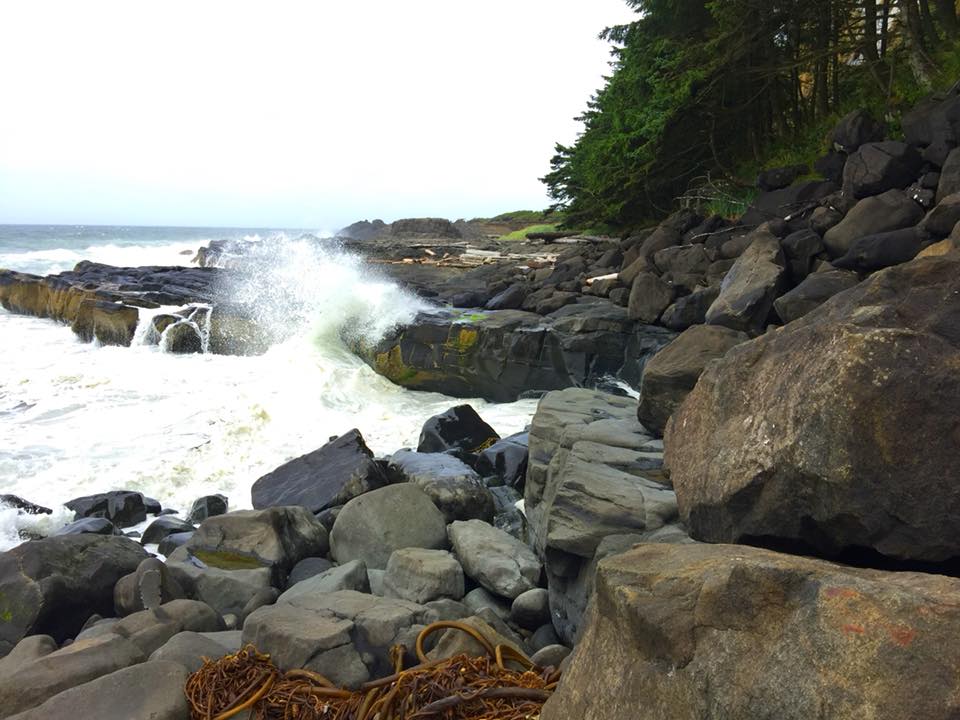
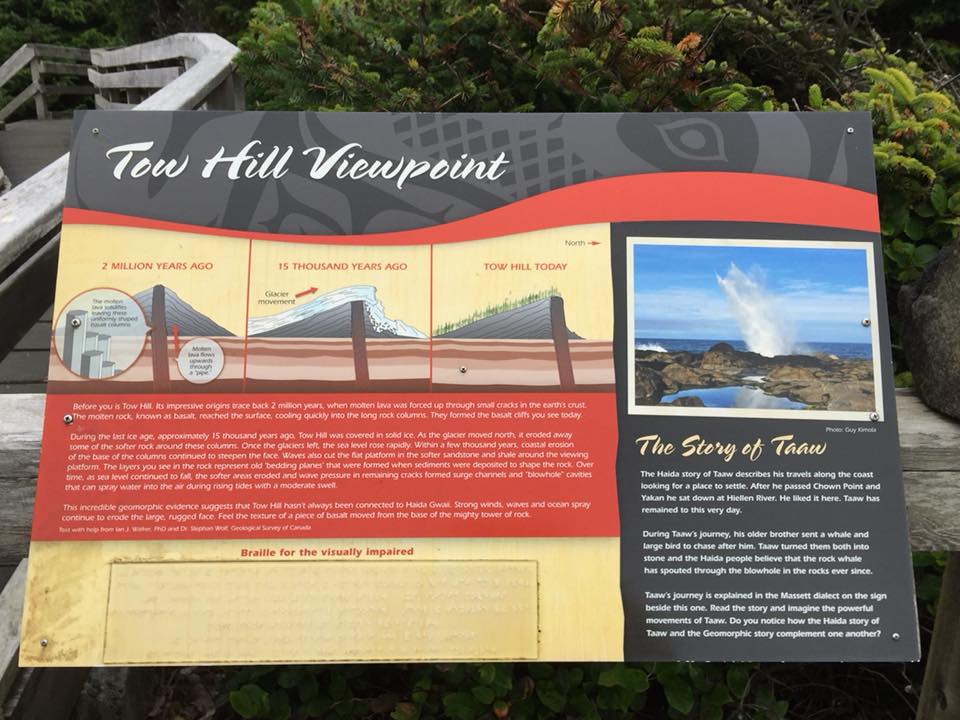
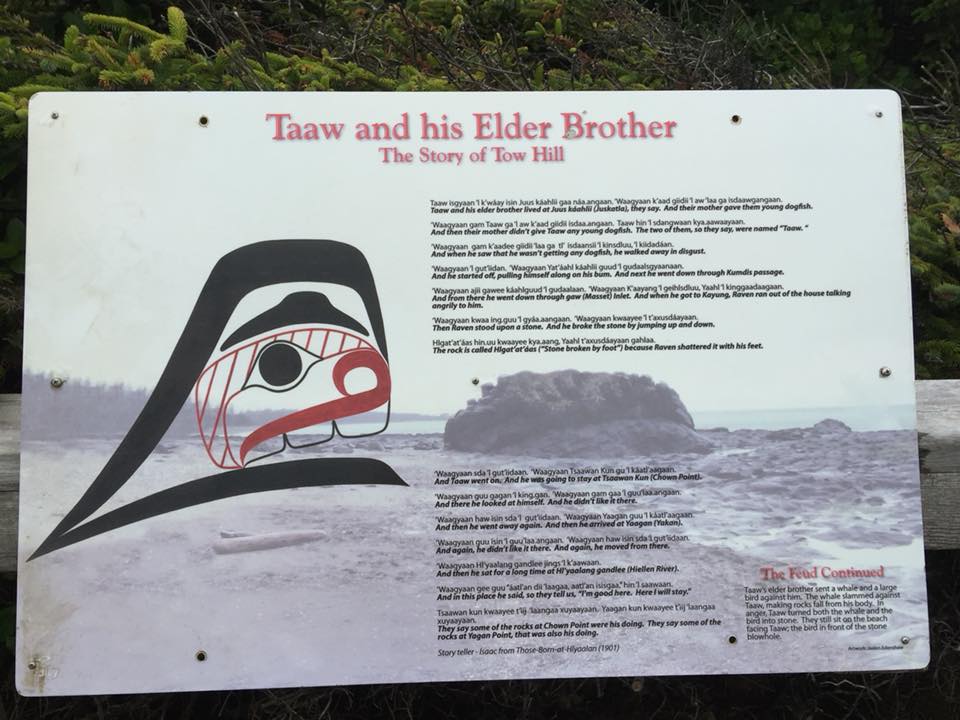
Clambered out today to the base of Tow Hill and the Blow Hole at Naikoon Provincial Park, at north beach… one of my favorite beaches in the world (pebbles!).
In the distance, the path leading up to the top of Tow Hill.
There’s a boardwalk from the parking area all the way out to The Blow Hole at Tow Hill, ideal for all folks, especially Knud with his walker.
This is the tumble of rocks (at the right) that I clambered over to get to my favorite spot. The tide was coming in, so I had to keep an eye on it so as not to get trapped! (Seven years ago I saw bear dung on those rocks as I crossed.)
August 1, 2018
Around Old Massett and New Masset today…
(Click on the panorama below for a larger view of this wooded lot in Old Massett.)
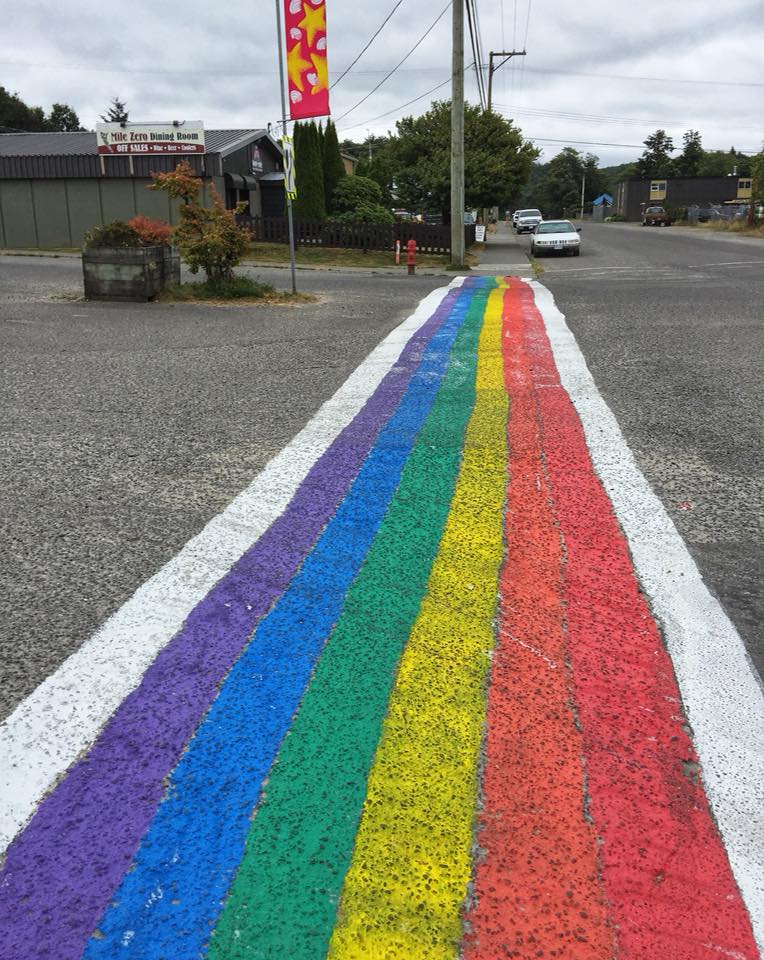
Pride in New Masset.
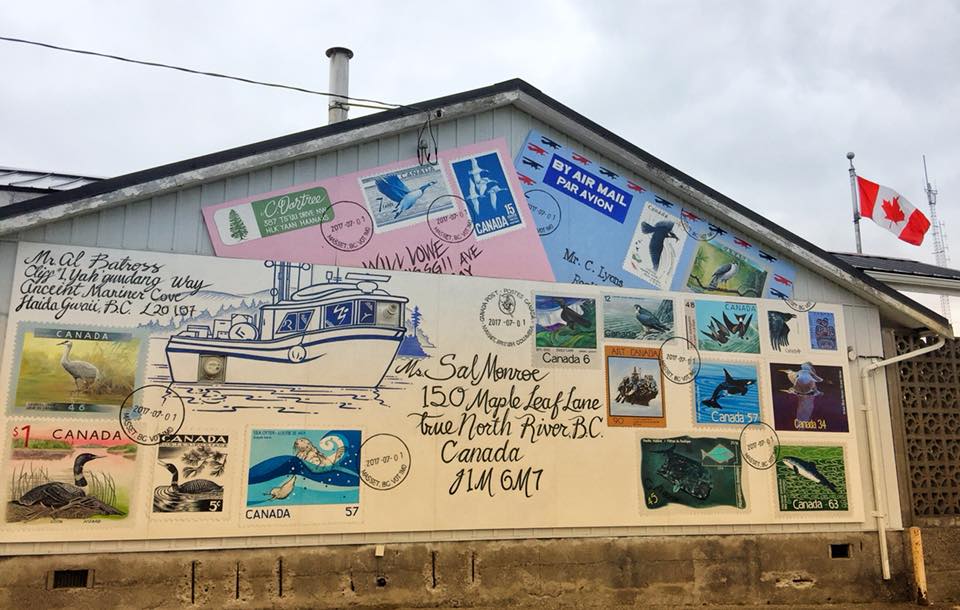
South side of the post office in New Masset.
August 2, 2018 – Returning Home
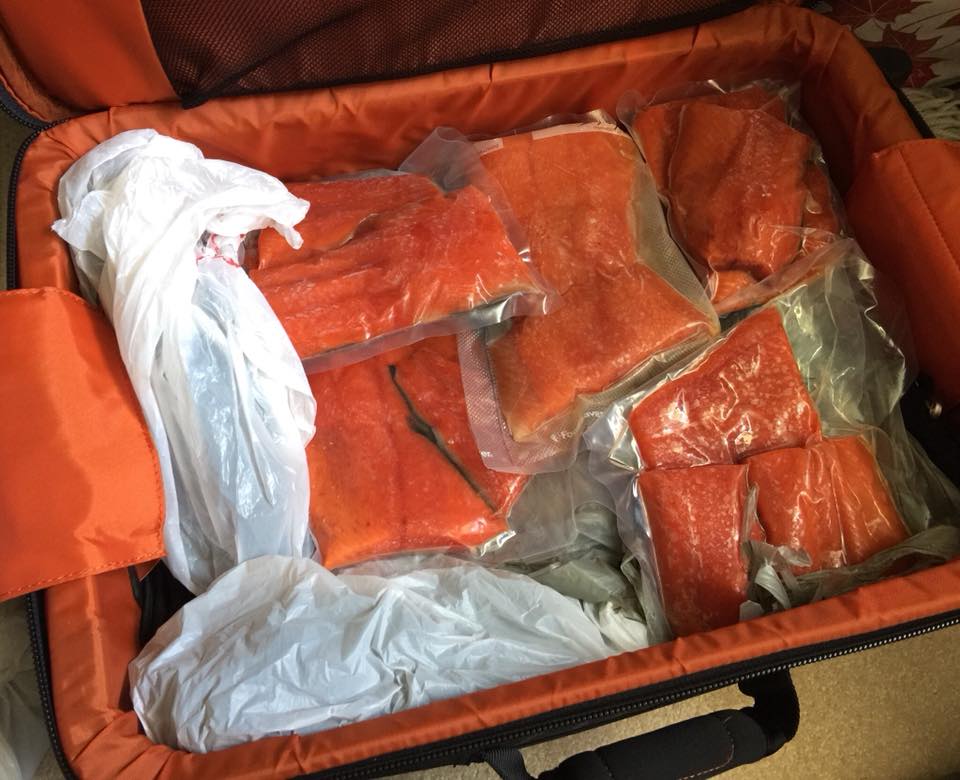
Salmon’s coming home. (It matches my suitcase.)
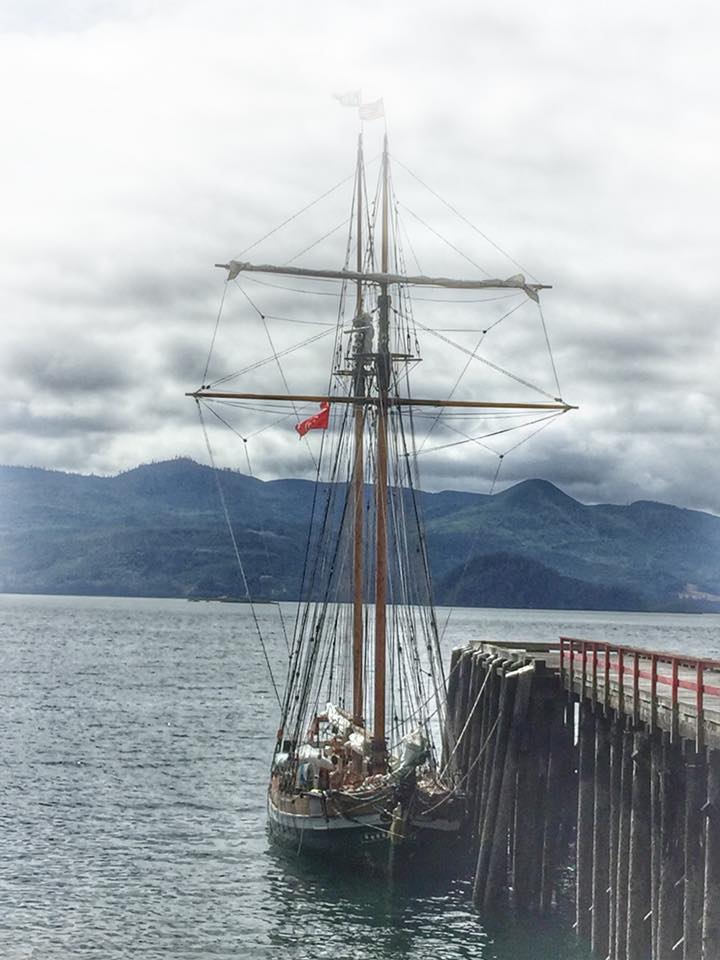
At the Skidegate ferry dock, waiting to cross south over to Moresby Island. This sailing ship is flying the flag of the Haida Nation.
Midway along the ferry ride from Graham Island, at the north, to Moresby Island, at the south.
Journal Entry. 1 Gennaio 2017 (January 1, 2017) – Milano
Day 3 of a cold that has kept me layin’ low. Enforced rest. Certainly no kicking-up-my-heels last night. By 8:30 p.m. I was yearning for sleep.
New Year’s Eve, 2009/2010 I stayed at home here, writing, as I generally do. I could have gone to the Piazza del Duomo then, for the Italian New Year’s festivities. Instead, I listened to the fireworks outside, while seated at the long table in my home on Via Bordighera.
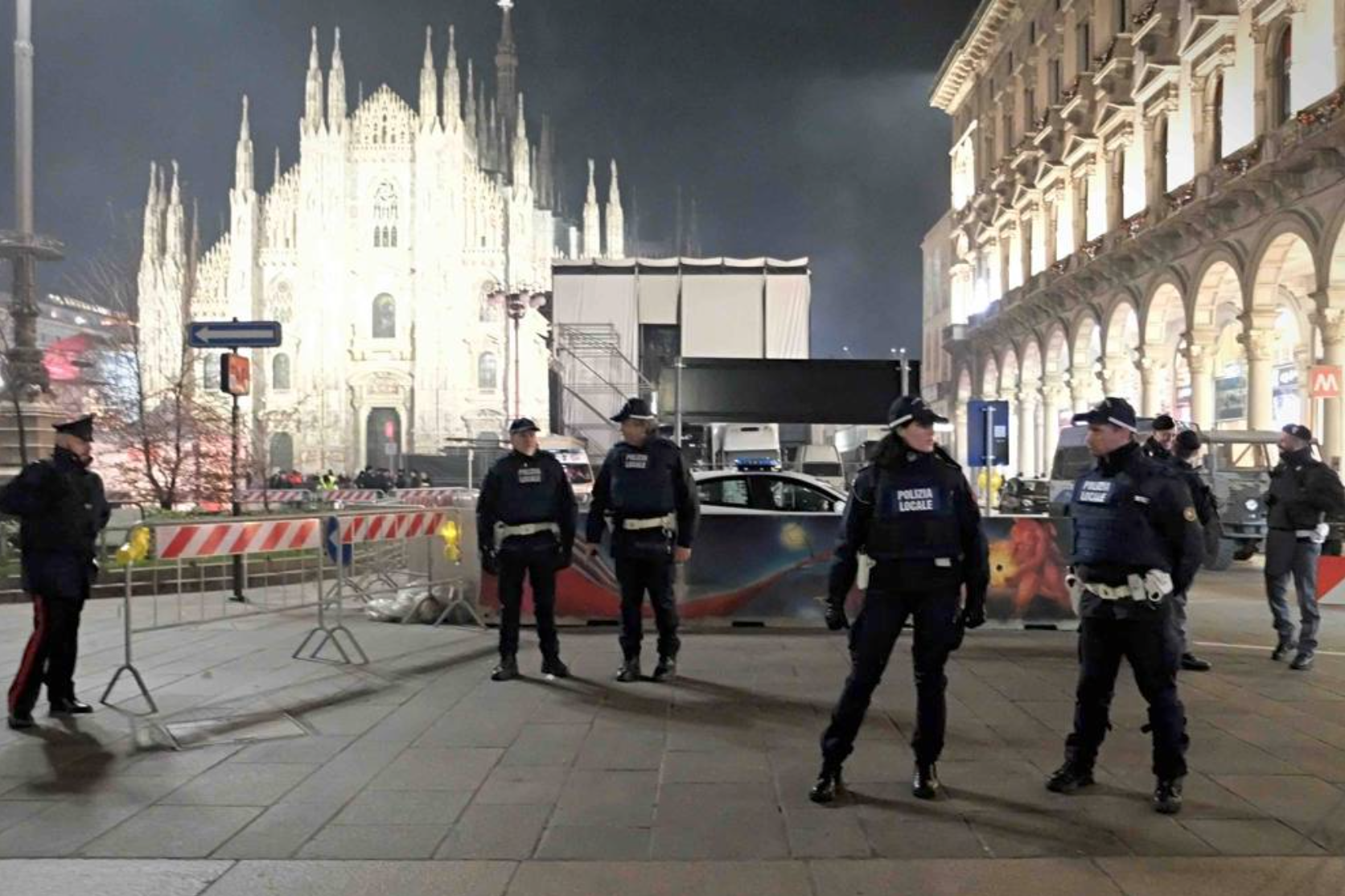
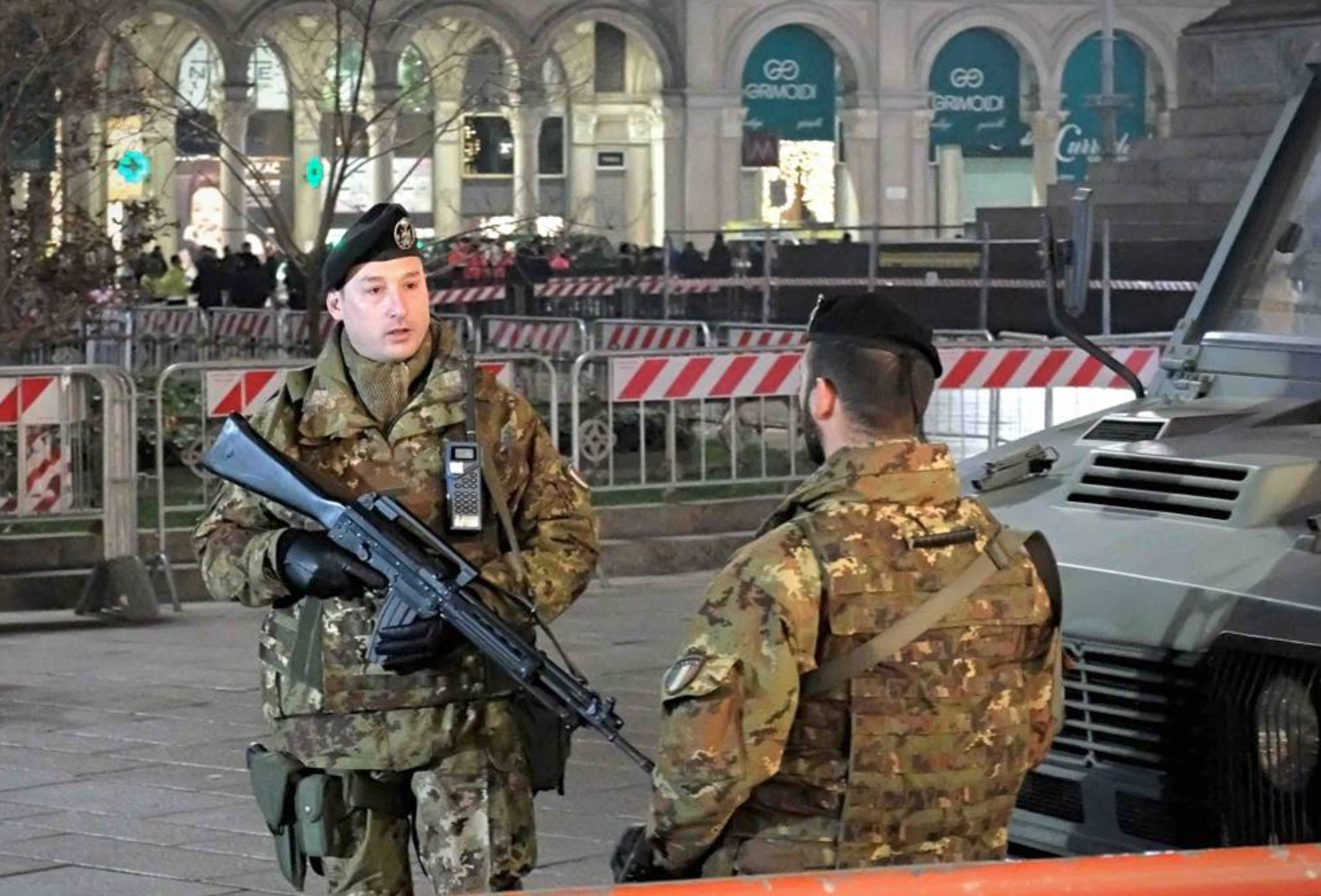
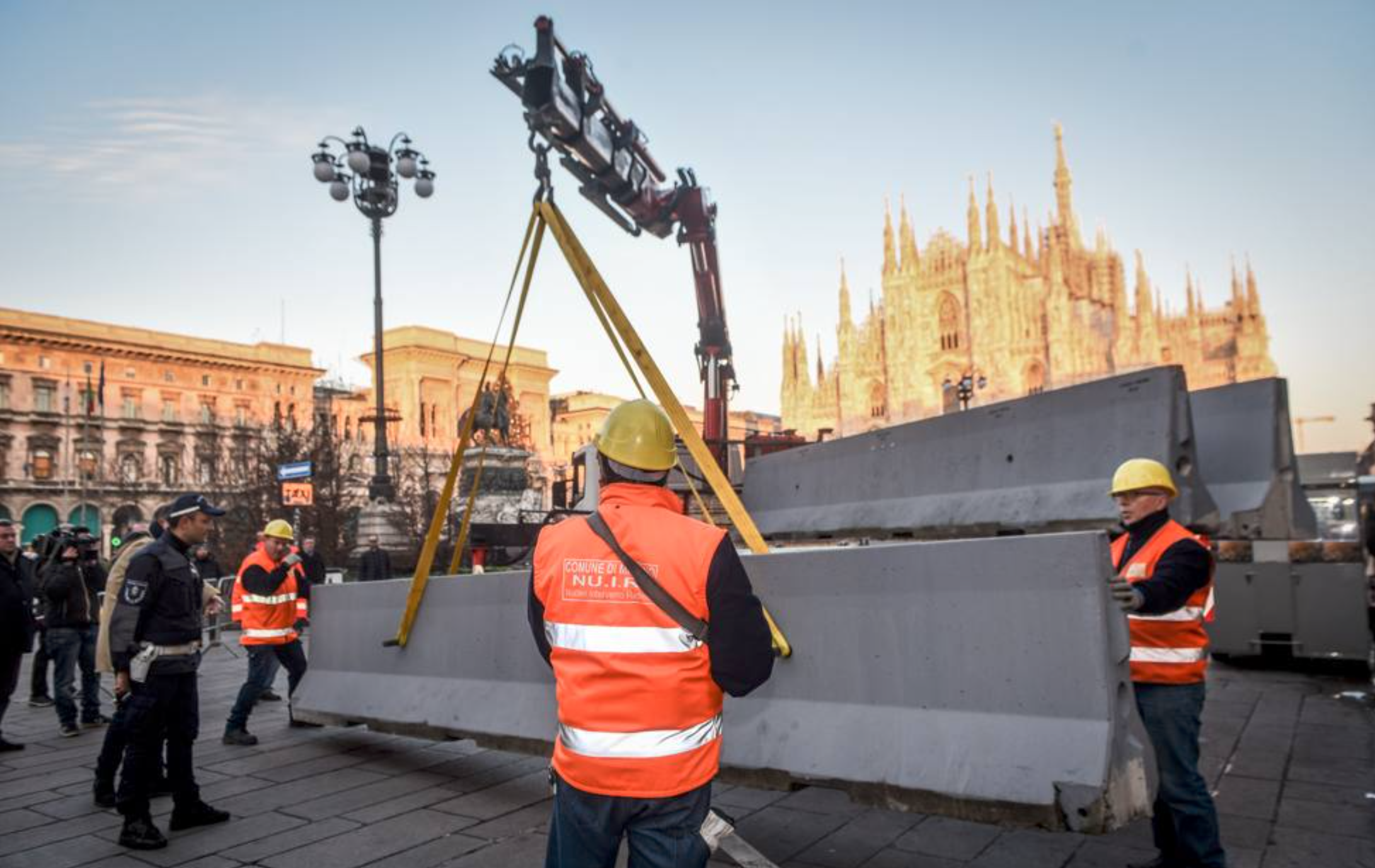
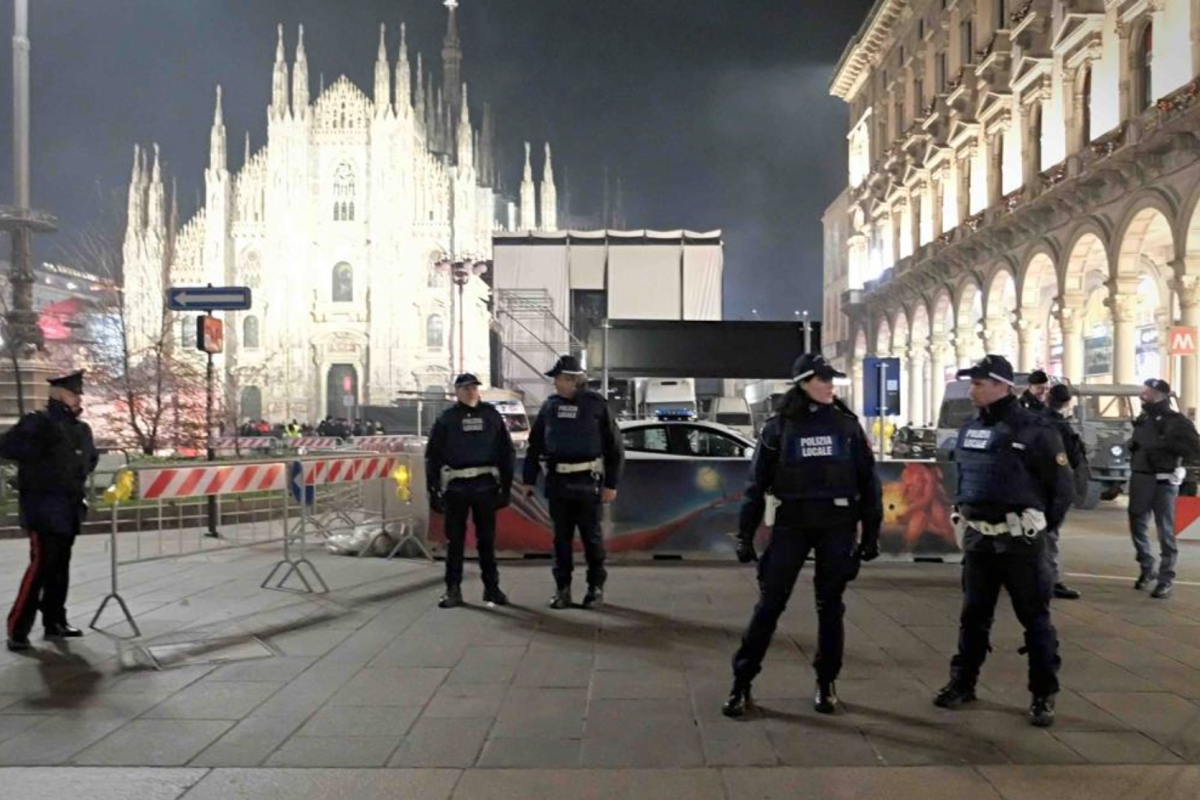
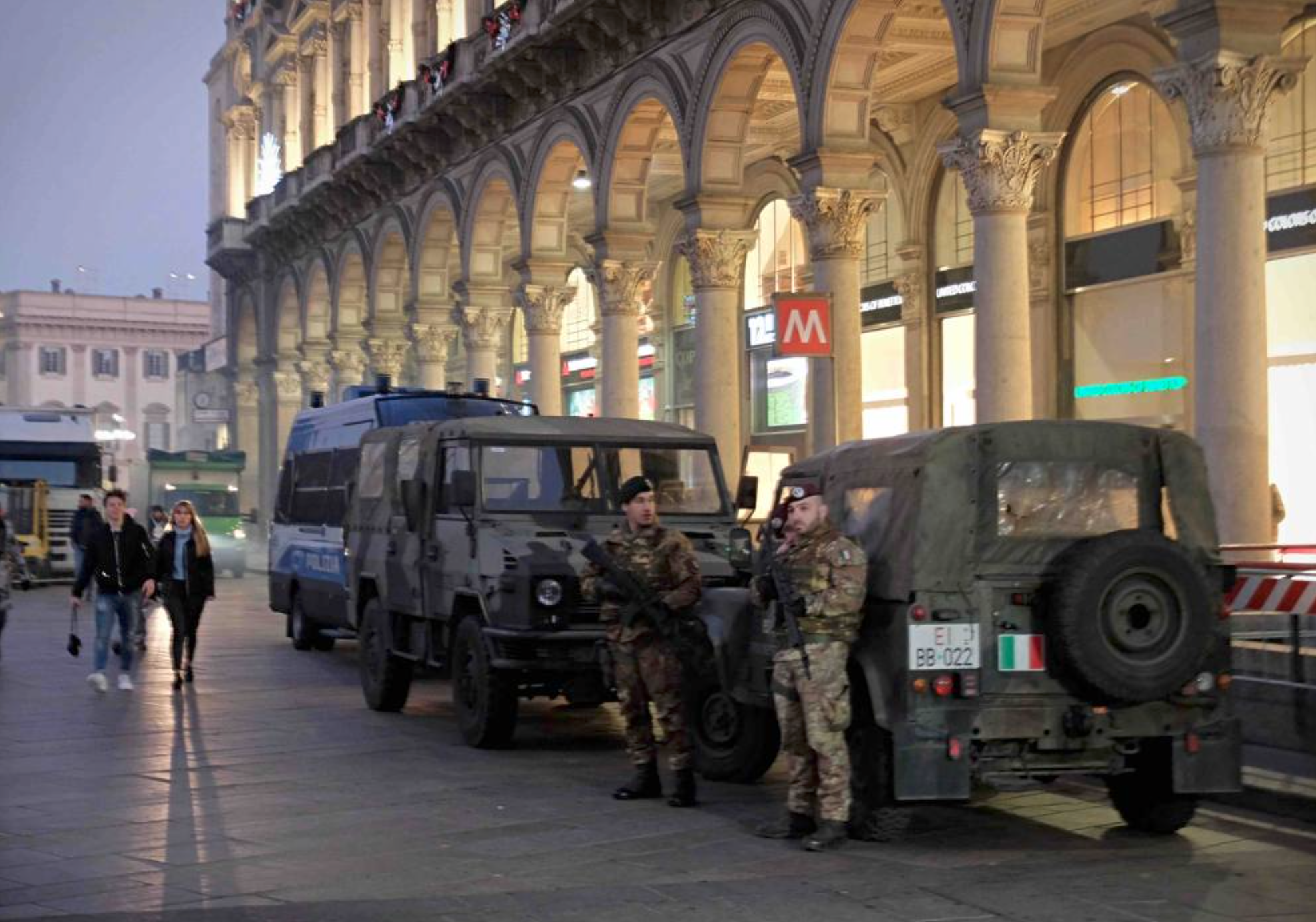
The opportunity for a carefree, celebratory hurrah in front of the Duomo has passed. The reports I see from last night show the beloved cathedral and its perimeter barricaded, armored, protected by police and military with machine guns. All holiday revelers faced searches and long lines to proceed through to the New Year’s concert. The metro stops to the Duomo were closed completely.
It was, in fact, leading up to this as Christmas approached, too. Feeling spirited and festive, Piazza del Duomo visitors enjoyed the advent concerts amidst heavily armed military and barricades.
Last night, lying in bed as midnight approached, I listened to fireworks, but also sounds that could have easily been real bombs. How would I have known? After each explosion, sometimes feeling my bed shake, I listened for sirens – or their absence – and took the pulse by the tone of voices I heard out in the courtyard. I figured that if there were true danger, then sirens and voices would speak of such urgency.
This morning I read in the news reports of mayhem along the Naviglio Pavese, just two blocks away. I guess that some of those ka-booms may have, indeed, been bombs.
It’s come to this: proactive protection of beloved, sacred places; the thought that a loud “bang” could indeed be a bomb; The adjustment to and acceptance of bodily searches; the anticipation of attacks; the realization that every conspicuous, large gathering is potentially a vulnerable target and, therefore, a gut-driven avoidance of such crowds.
Does that mean the terrorists have won? They, who have no regard of life, cultural treasure or community well-being have changed us. They have changed how we think and what we do. Whether they kill any more people or destroy any more cultural heritage sites, or not, they have gotten into our heads.
I looked at New Year’s Eve reports in the Seattle Times and only found beautiful pictures of fireworks emanating from the Space Needle. There was no mention of machine guns or barricades. I guess we still enjoy being in an imaginary bubble there. (We’re more visibly armed against each other than we are against outside threats.)
When here in Europe, sitting so close to the center of a major, international city, I suppose I’m closer to genuine danger than when I’m sitting in my lovely home in Burien, looking out over the water. But I still chose to come. This is the first year (of 9 in a row) when the suspicion of danger, and the armament against it, has been so evident. Much has changed in the world in 9 years.
Many years ago in an Adult-Ed program, a particular exercise guided me in seeing when and how I was influenced by my fears, from the smallest hesitations to the largest decisions. It was eye-opening and a jolt to my view of myself. Since then, I have tried to at least recognize when it’s been fear that’s been constraining my choices. I don’t like to think of my decisions and outlook as being fear-based.
How do we reconcile it all? How do we balance fear and openness? How do we listen to the daily, world news reports and not develop protective callouses? How do we see machine guns and not succumb to the fear they arouse? (And that’s not even talking about the places in the midst of outright war!)
Being right here, right now, has made the world situation undeniable and right-up-in-my-face. The challenge then, is to acknowledge the terrors that exist, be prudently alert, choose openness anyway, then seek out and marvel at the kindnesses that reveal themselves at an individual level. It’s what I must do to keep from cowering, afraid.
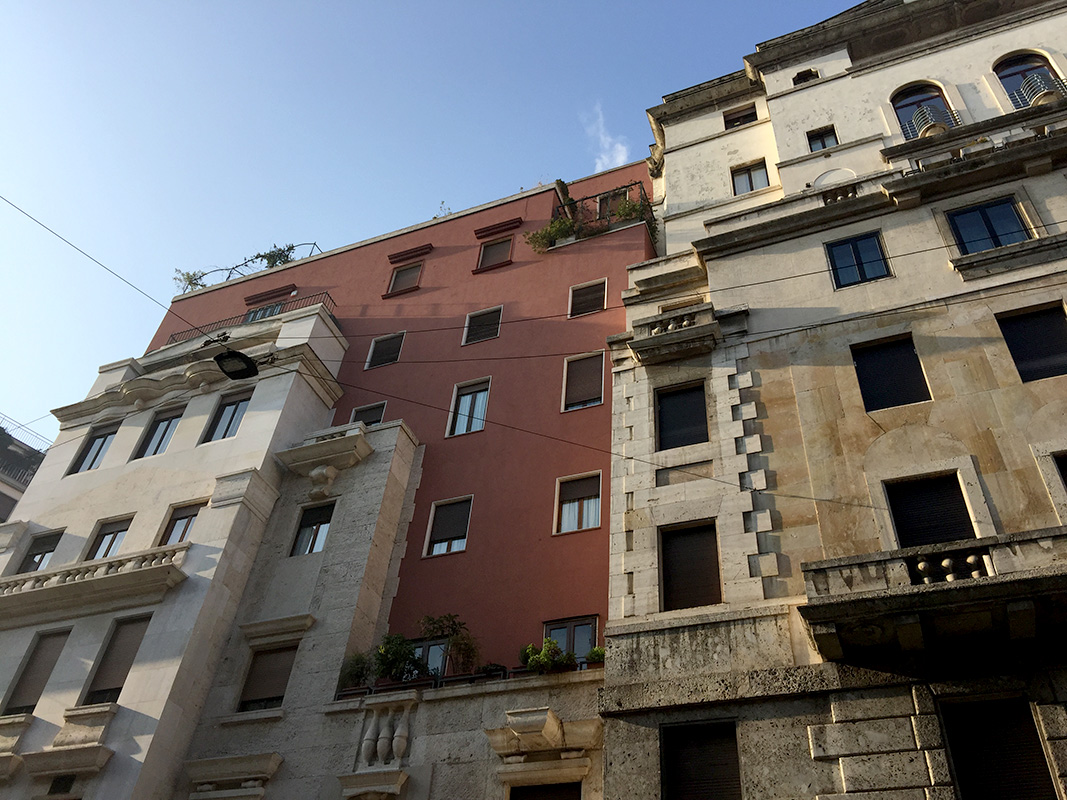
How many times has someone said to me with a sneer, “Oh… Milan. It’s so gray and industrial.” They turn up their noses and dismiss it as merely a place to fly into as they transfer to their “real” destinations.
Yes. Milan is a major international, cosmopolitan city, the financial hub of the country, (also one of the design capitals of the world). Yes, there’s industry. Yes, there’s fog and haze that make the sky leaden-gray in the winter.
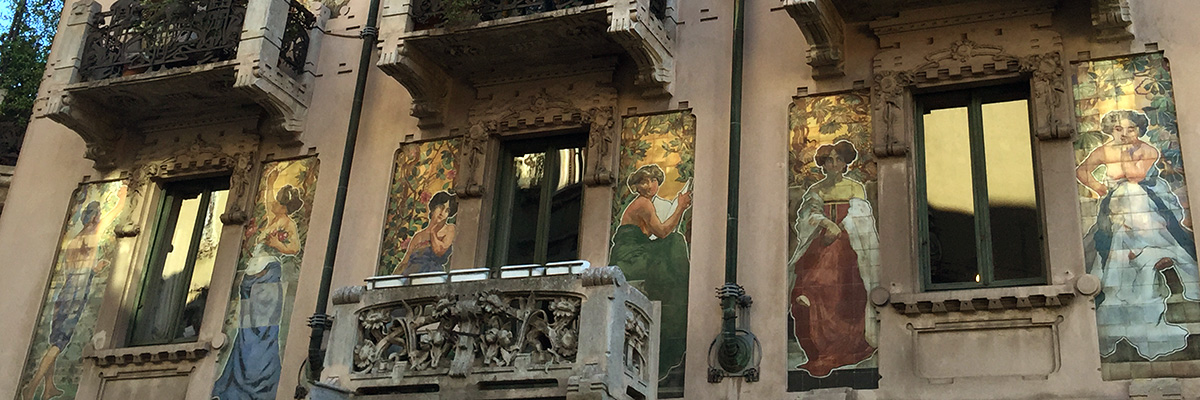
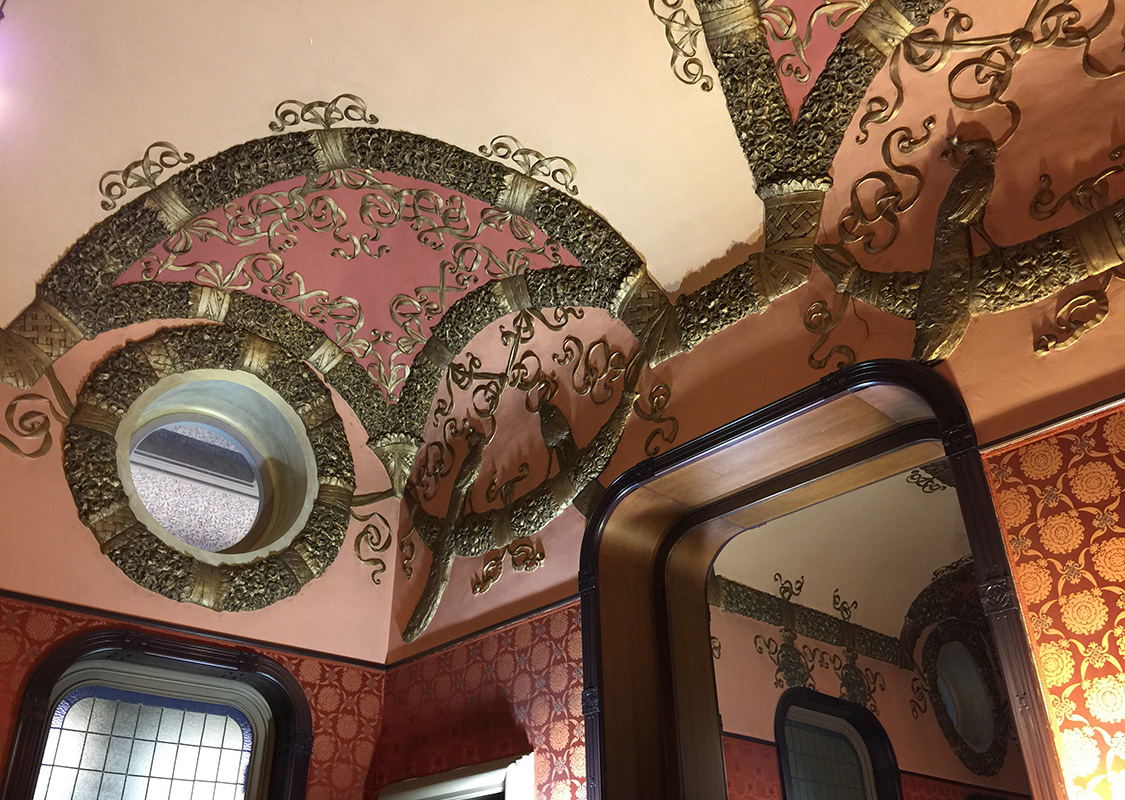
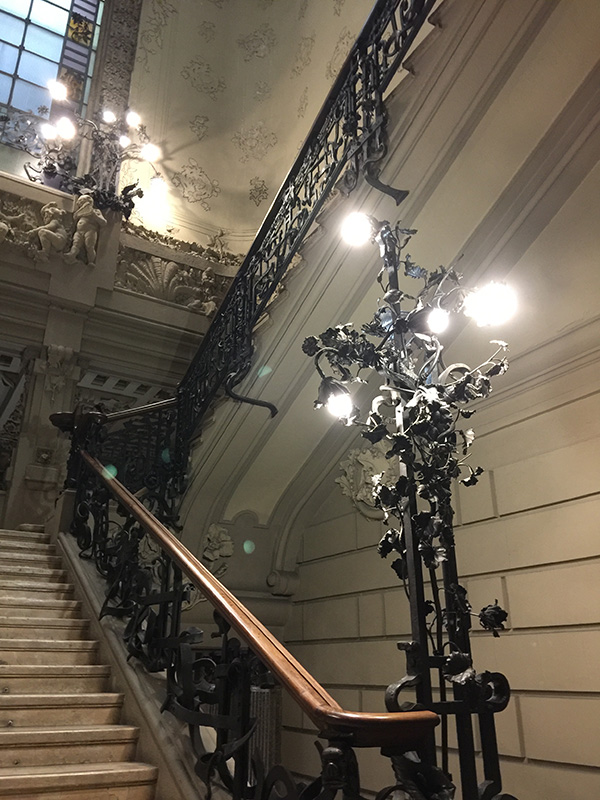
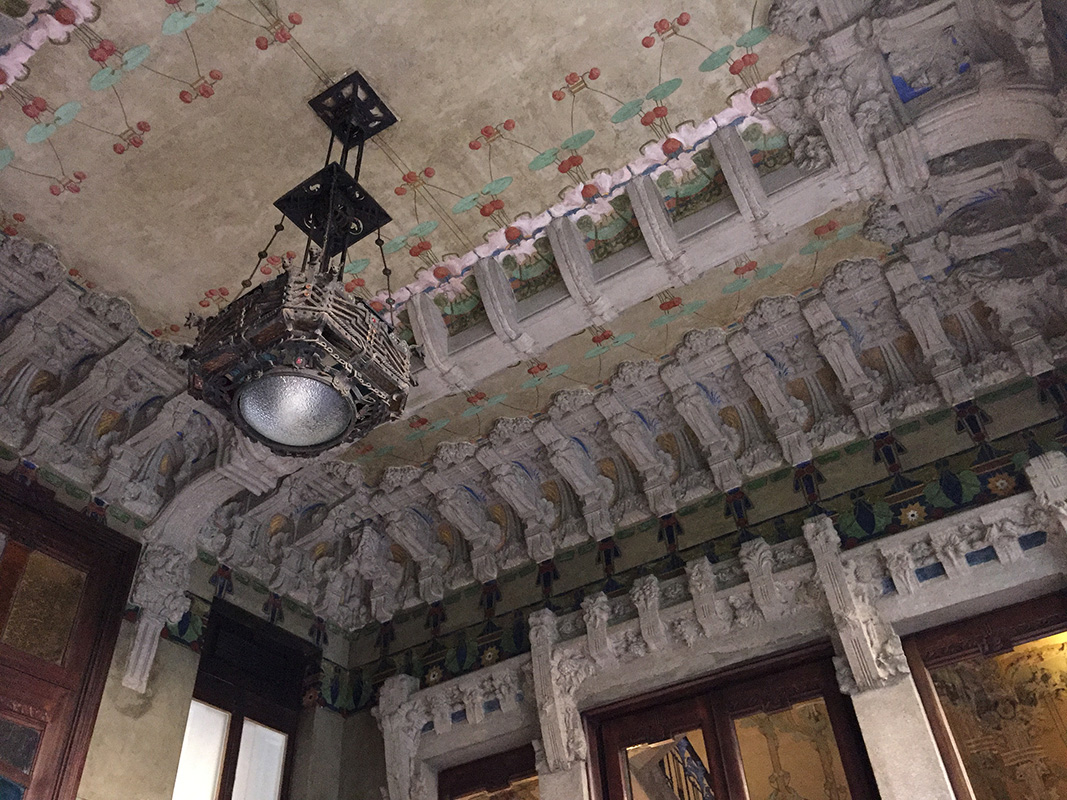
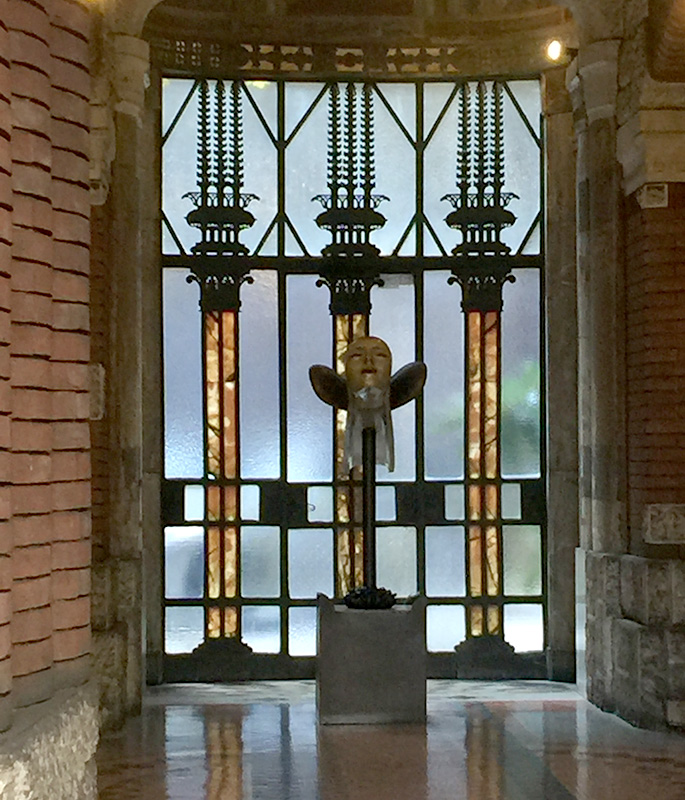
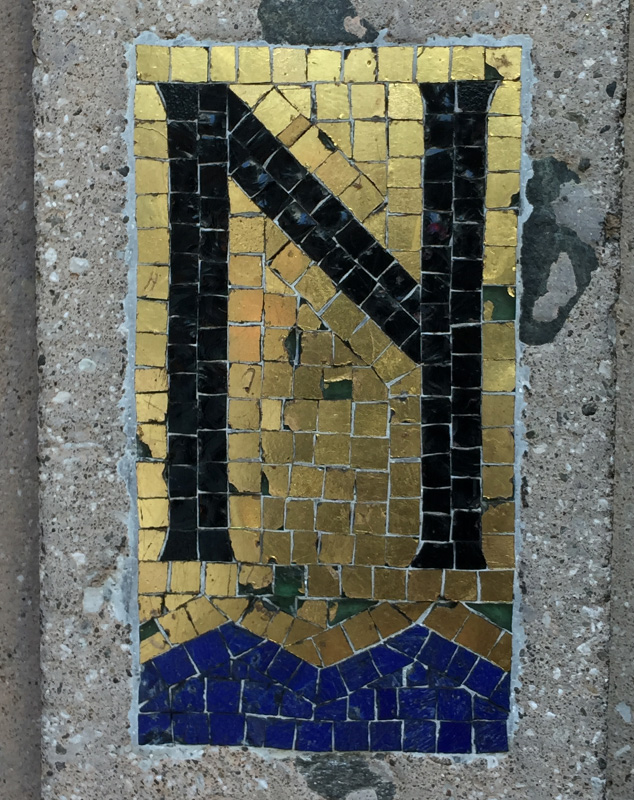
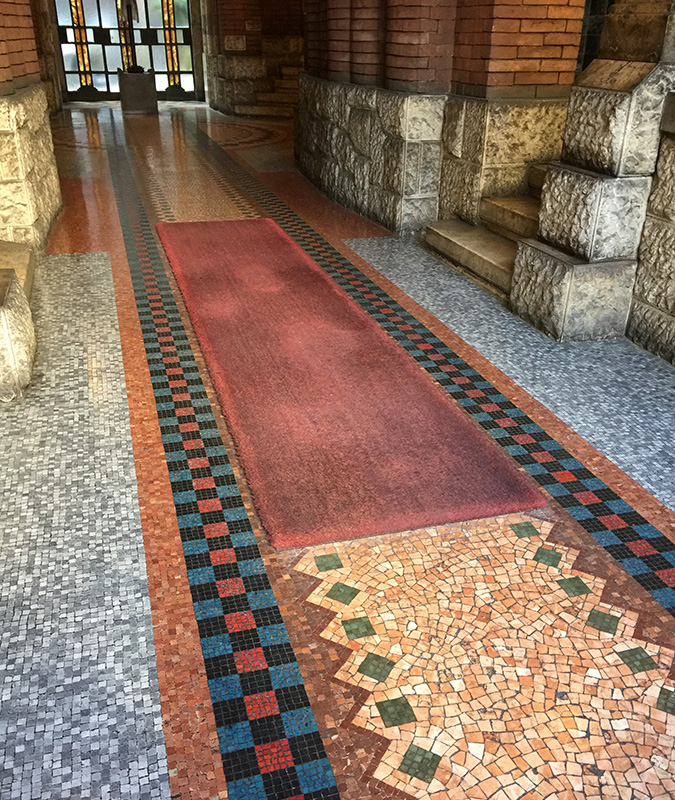
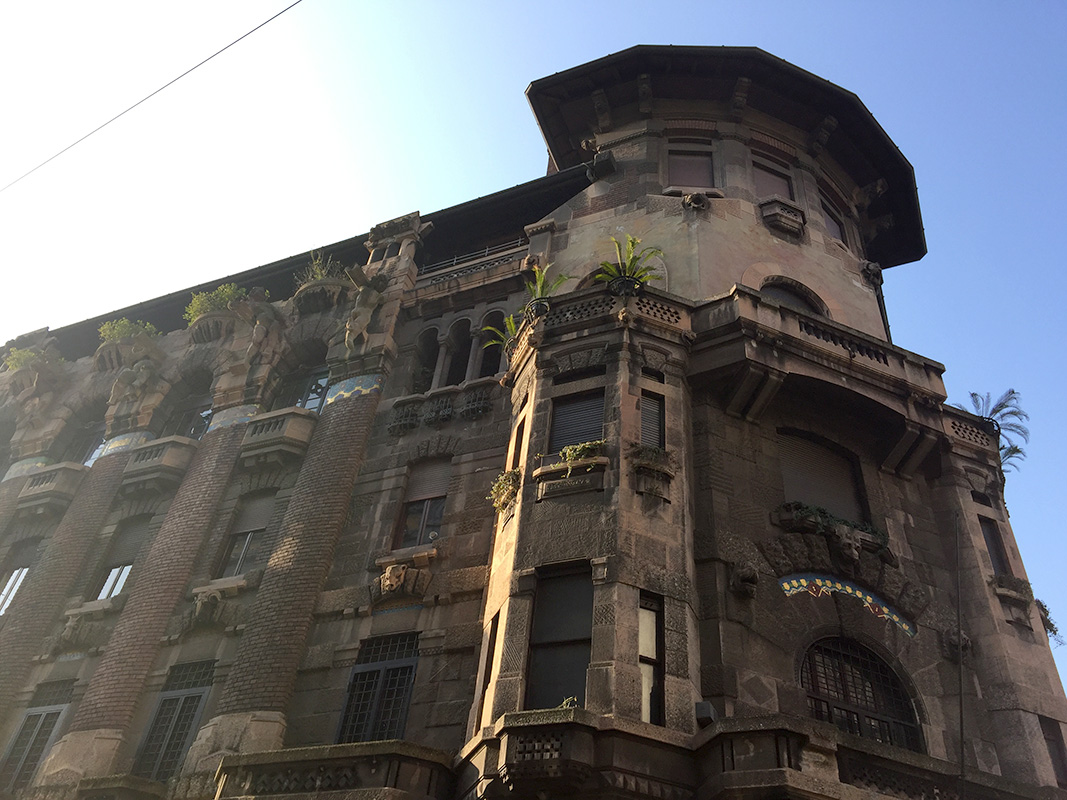
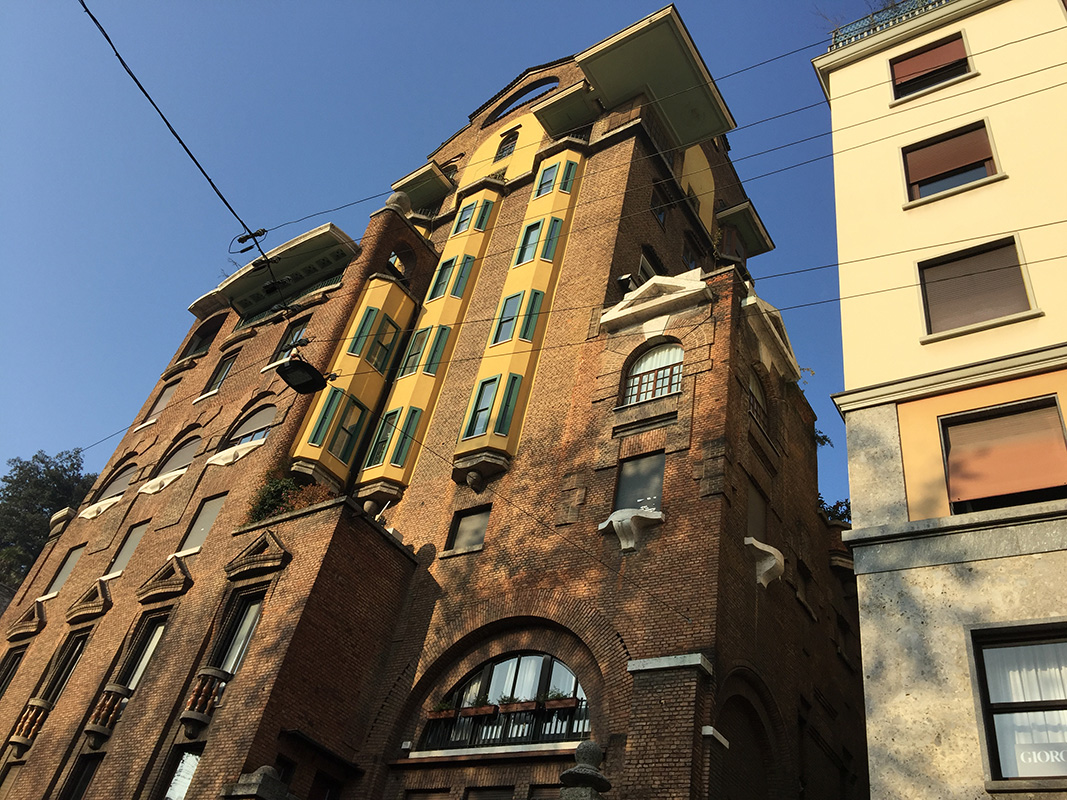
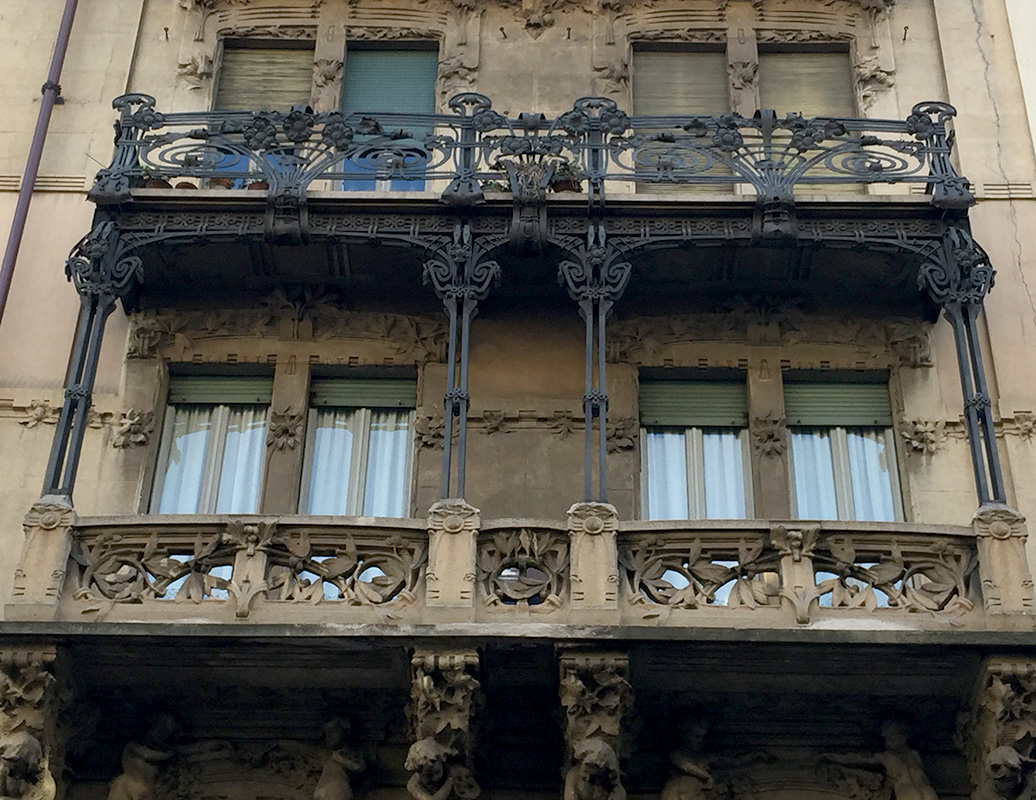
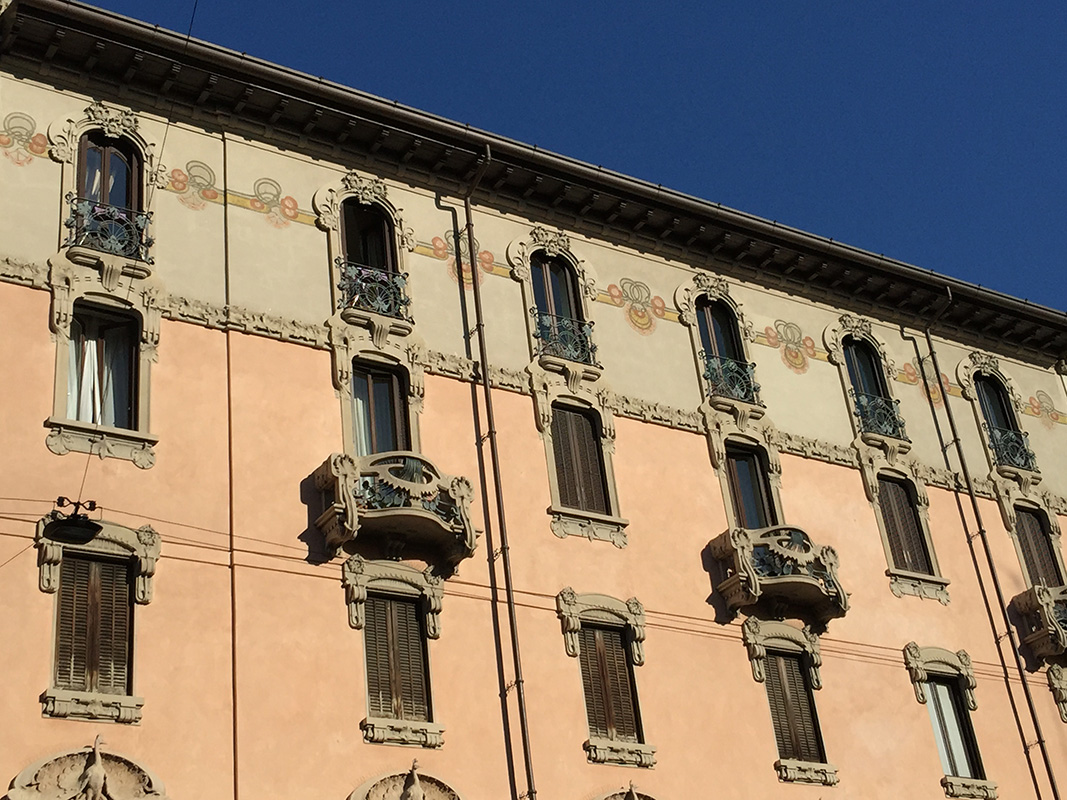
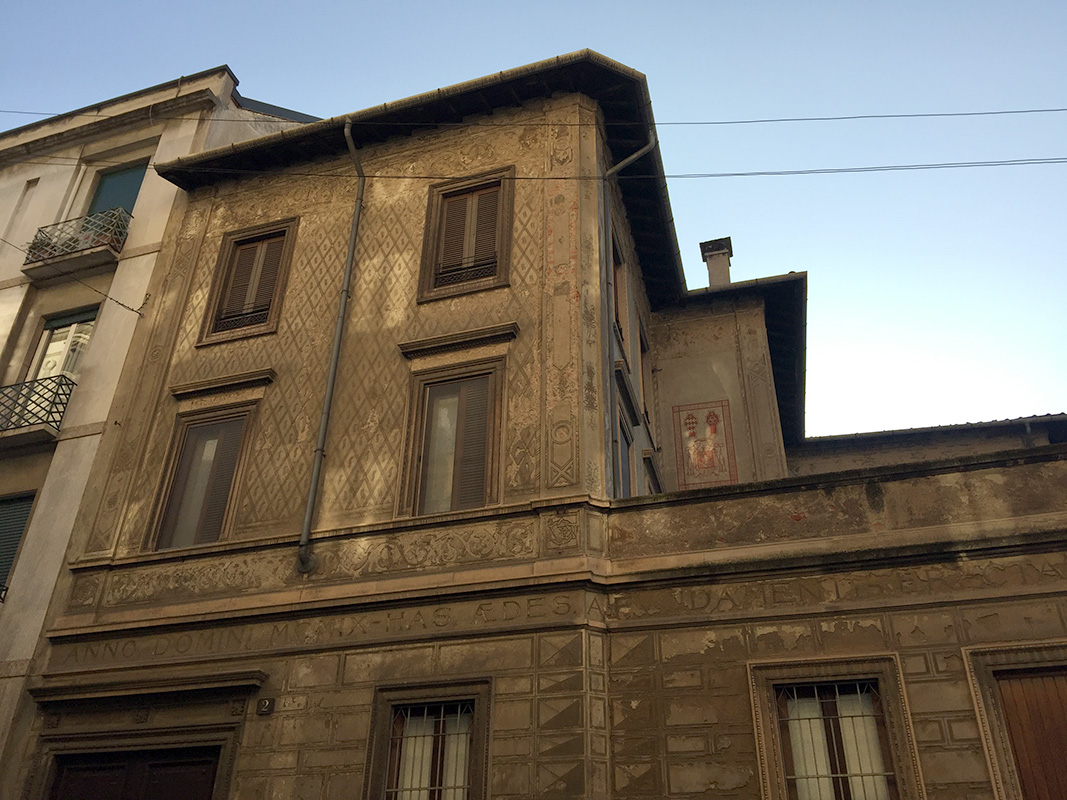
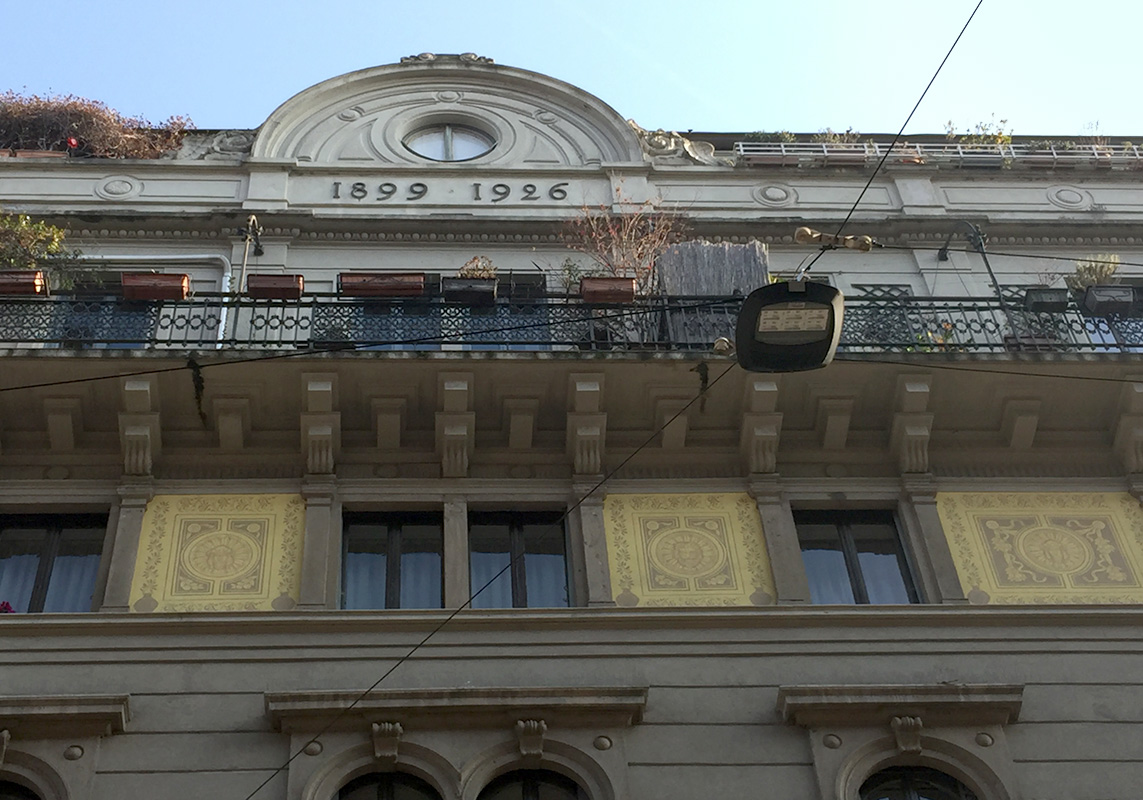
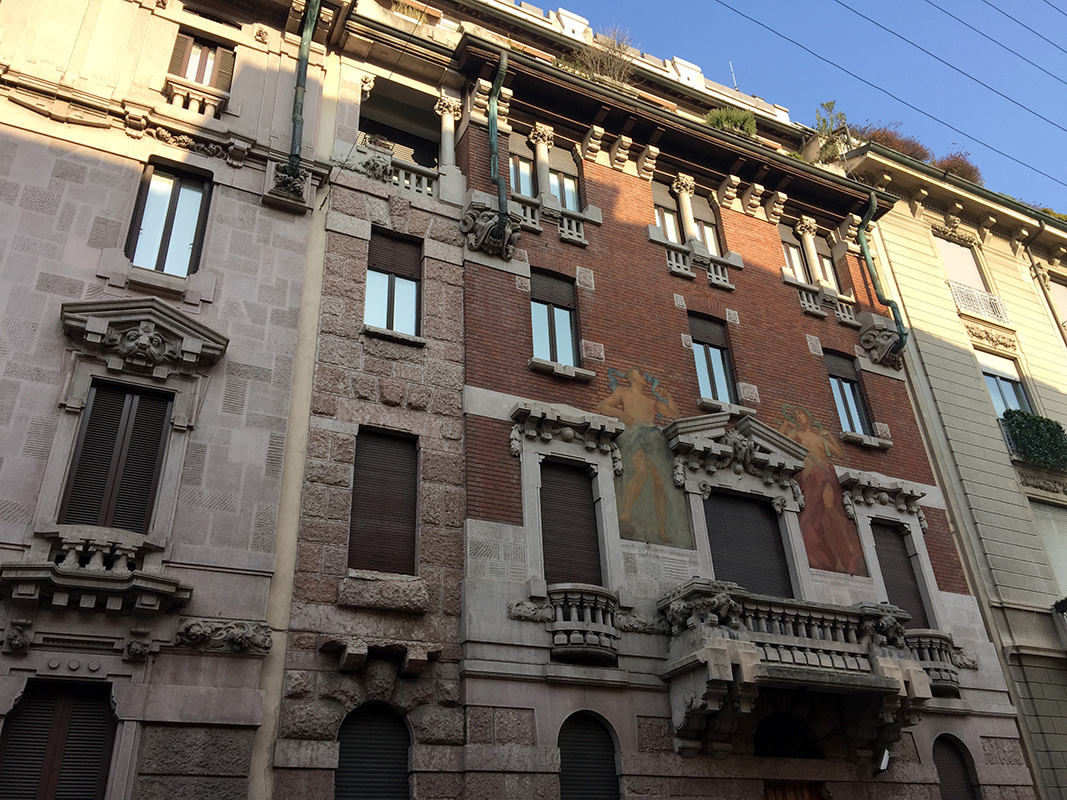
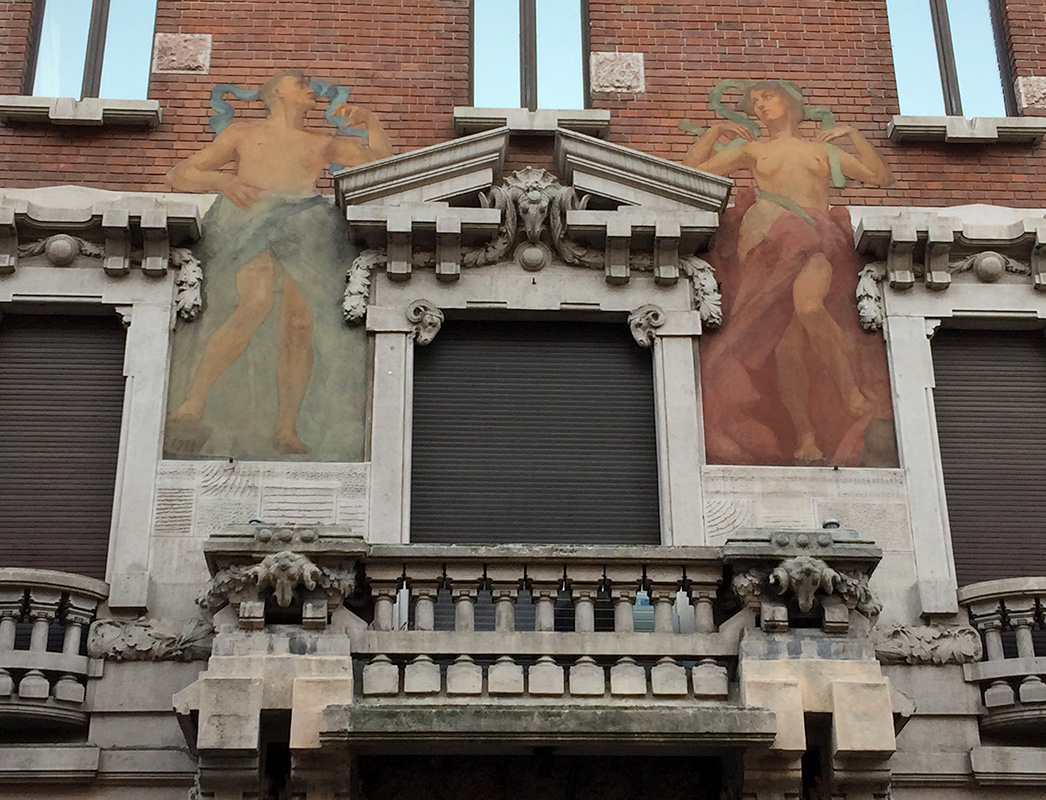
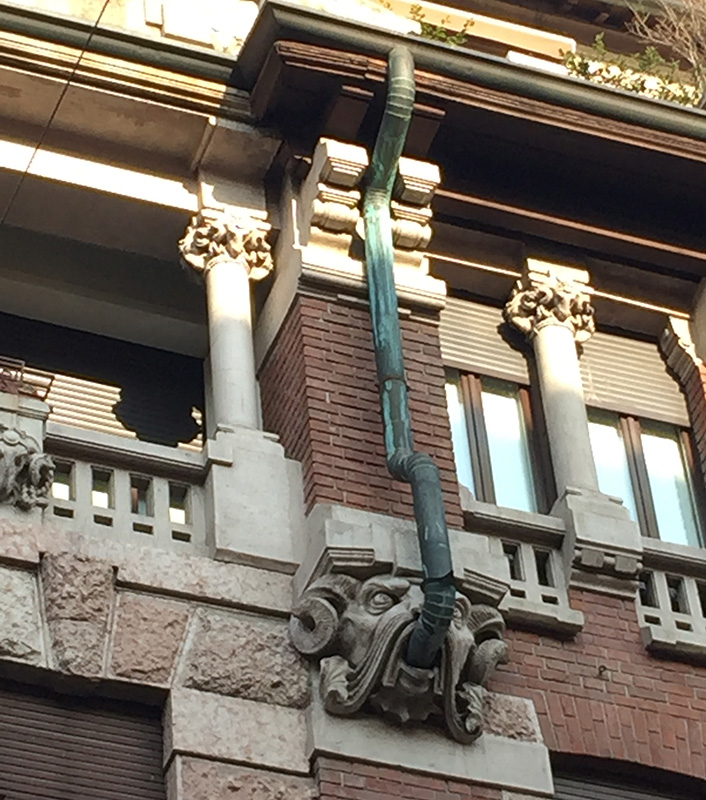
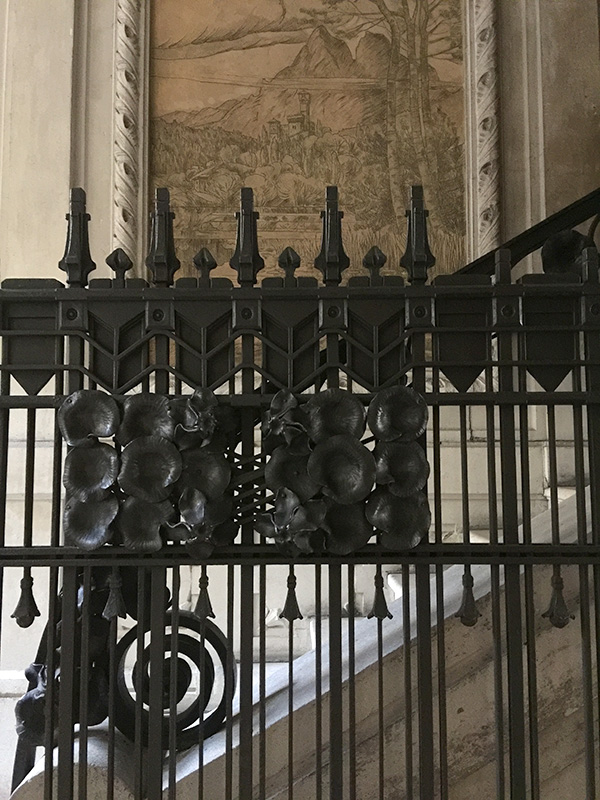
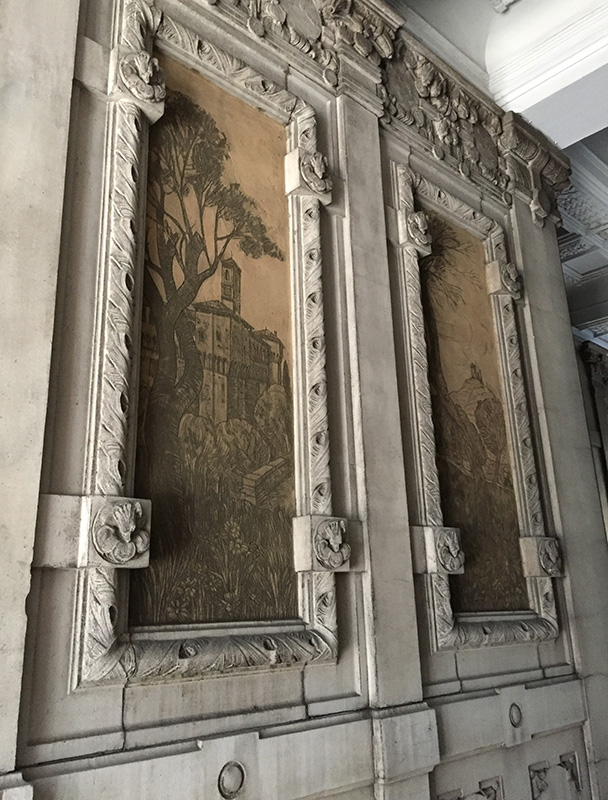
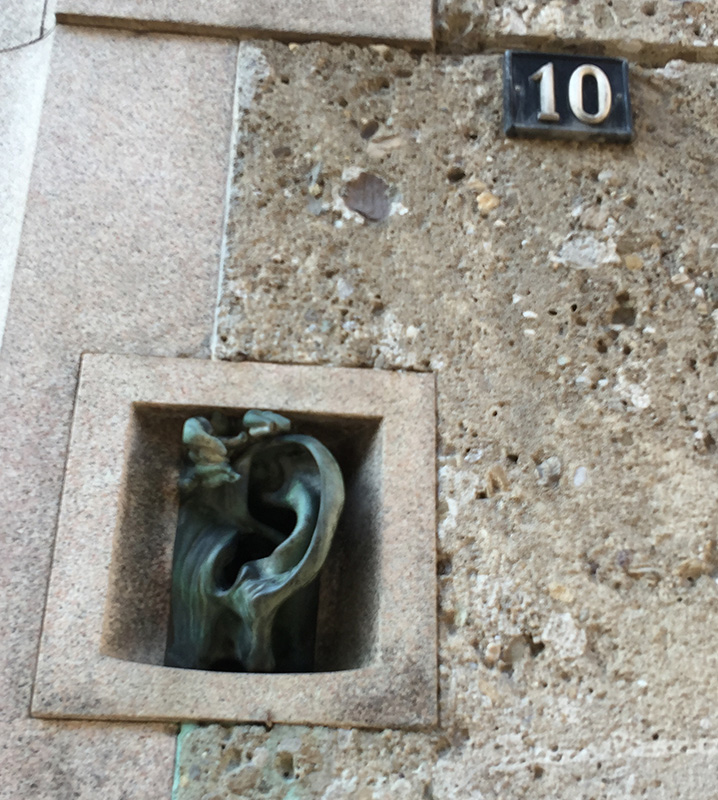
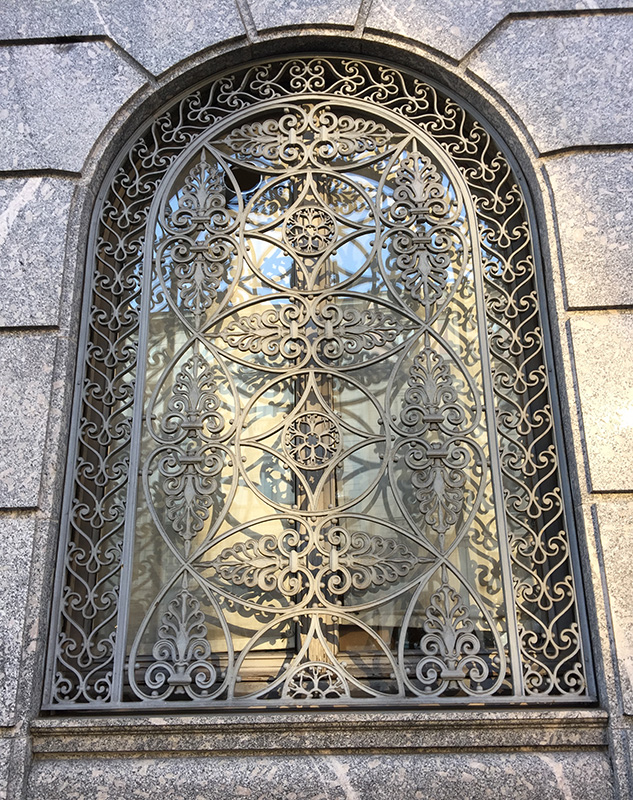
But Milan has so much to intrigue the eye for those willing to look… to really see. Right now, I don’t intend to even begin to list the marvels found here. Rather, I want to toss out visual tidbits to introduce “Liberty.” In this case, we’re not talking about freedom, but rather an aesthetic style corresponding to Art Nouveau, as expressed in architecture built here in Milan during a 15-year period at the start of the 20th century.
I offer these photos to tantalize, to counter the dismissals, to show just a few of the many reasons to make Milan more than just a passing-through sort of place.
Over the weekend, on a chilly, sunny, December morning, I joined a group of 10 locals on a “visita guidata” – a guided tour – of specific grand villas and surrounding neighborhoods in which the Liberty Style is so present. The exterior beauty is visible to any passerby. But being able to have interior tours and to hear history is the glory of being with a trained guide. I will begin at the end of our walking tour. (Click on the photos to enlarge them and enter the slide shows.)
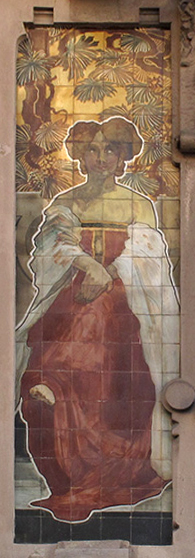
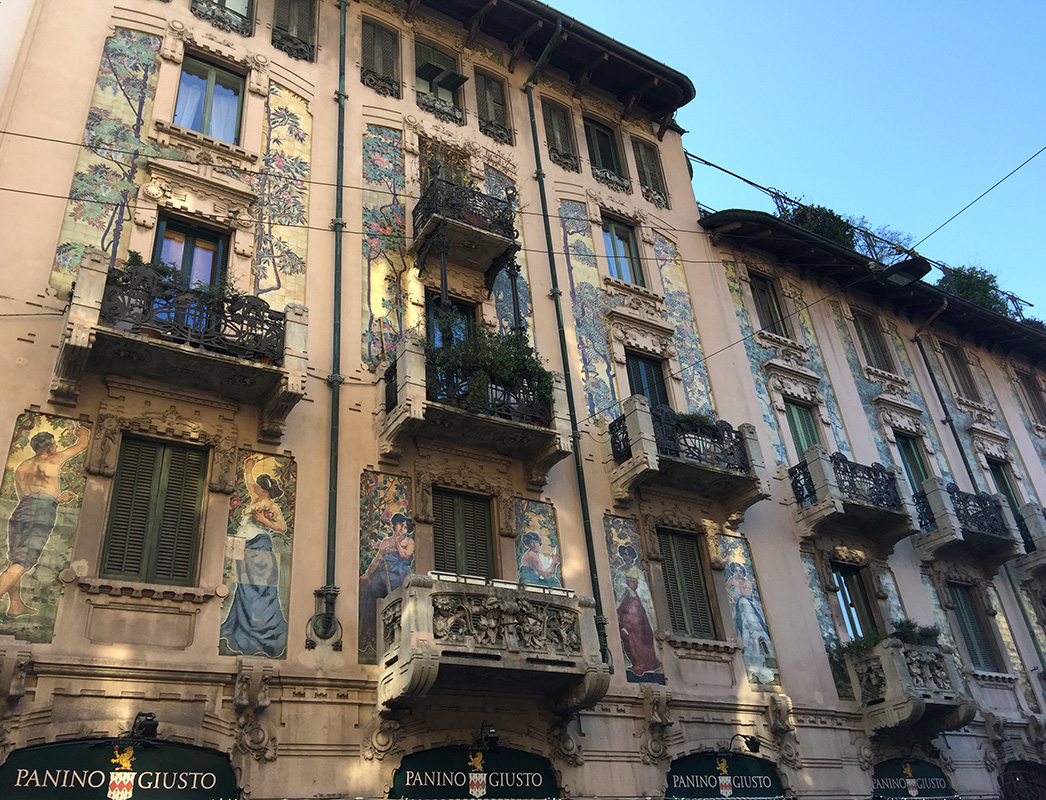
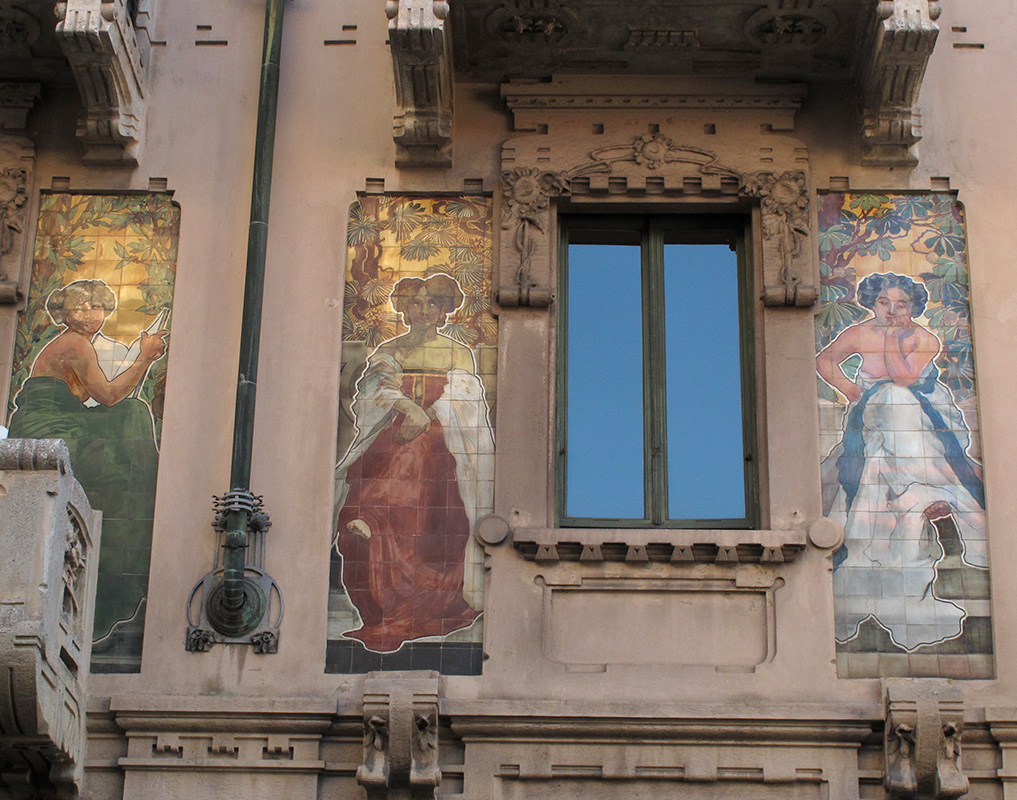
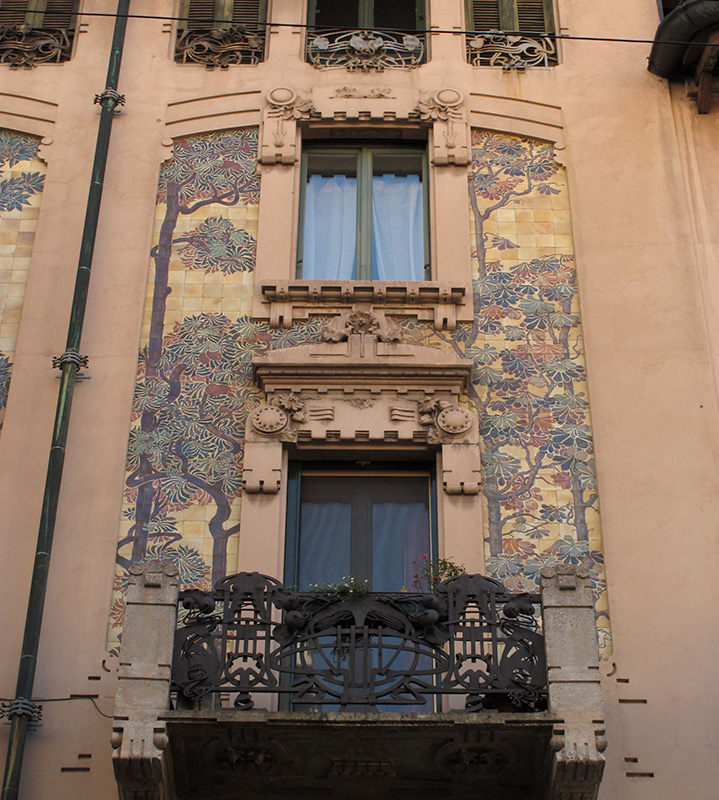
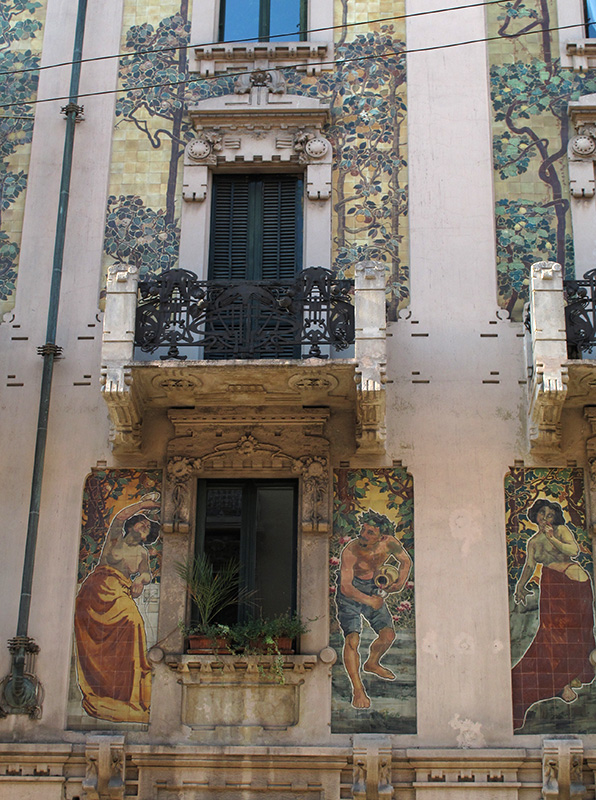
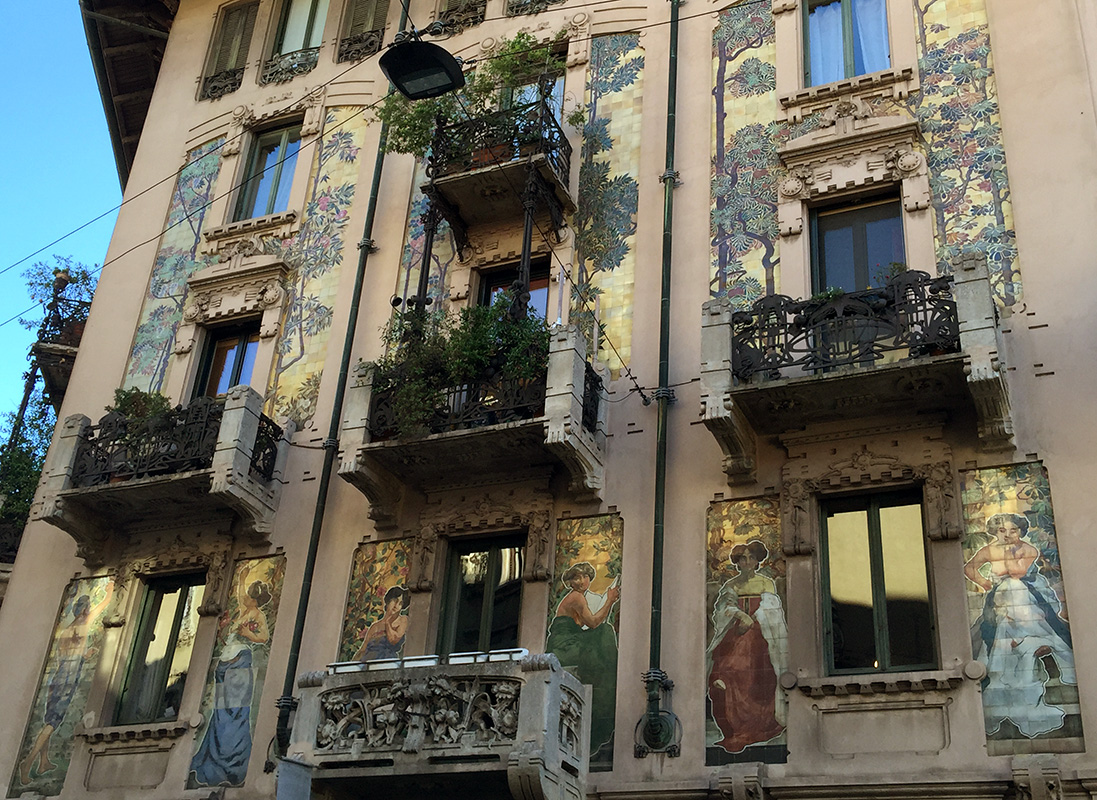
Casa Galimberti – Via Malpighi 3
Of all the buildings and all the ornamentation I’ve seen around town, this one is the most jaw-dropping for me. The figurative ceramic tiles and the wrought iron are swoon-worthy and a must-see for any lover of art, architecture and beauty.
From Wikipedia: Designed by the architect Giovanni Battista Bossi (1864-1924) in 1903–1905 on behalf of Galimberti brothers, is considered one of the most brilliant pieces of Liberty Milan thanks to the covering of a large part of the external facade with ceramic figurative tiles, wrought iron and floral motifs in cement, all designed by Bossi.
Casa Galimberti
Casa Galimberti
Casa Galimberti
Casa Galimberti
Casa Galimberti
Casa Galimberti
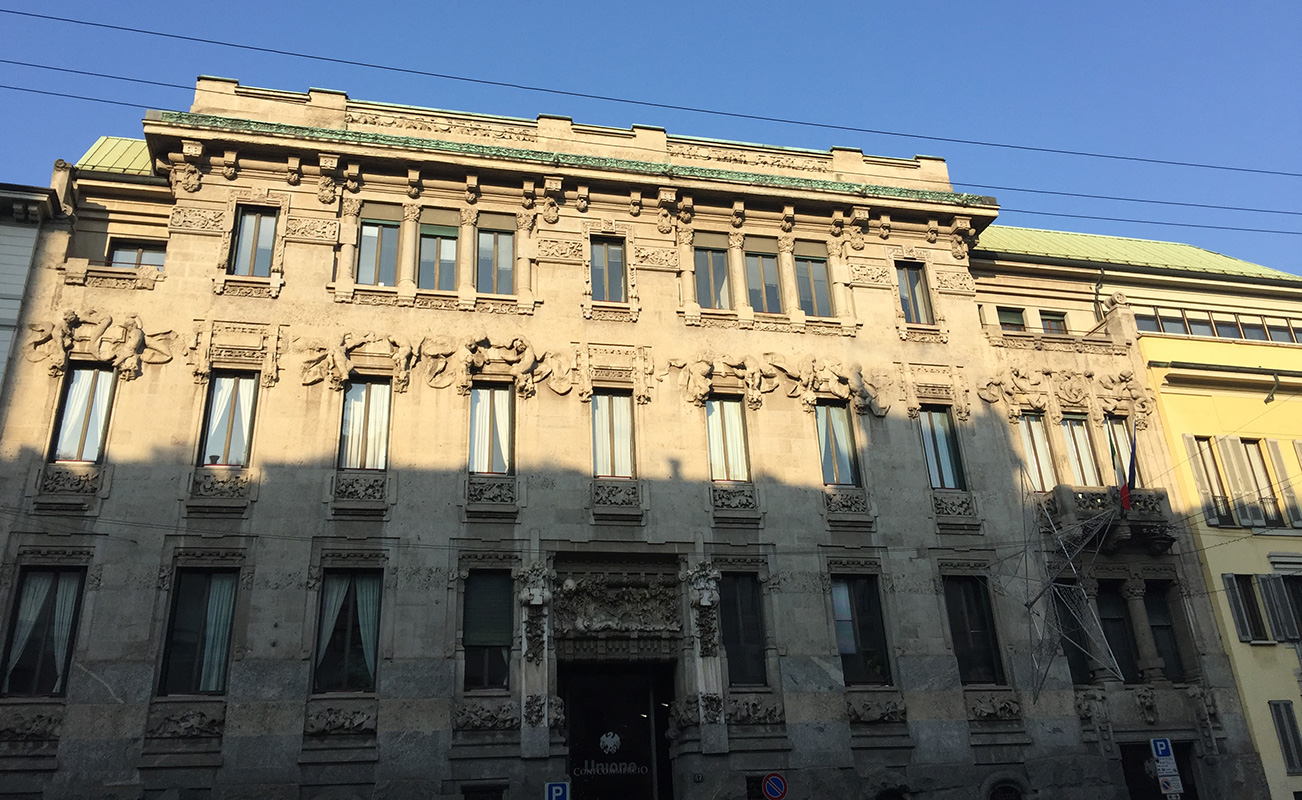
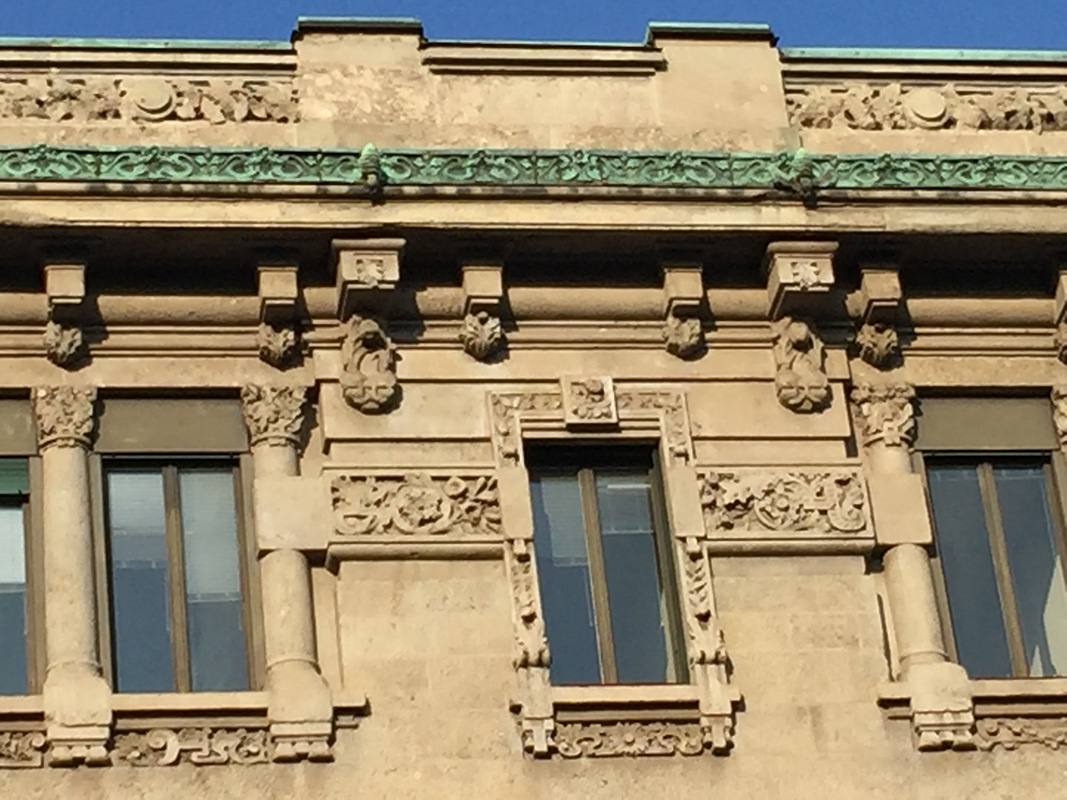
Palazzo Castiglioni – Corso Venezia 47
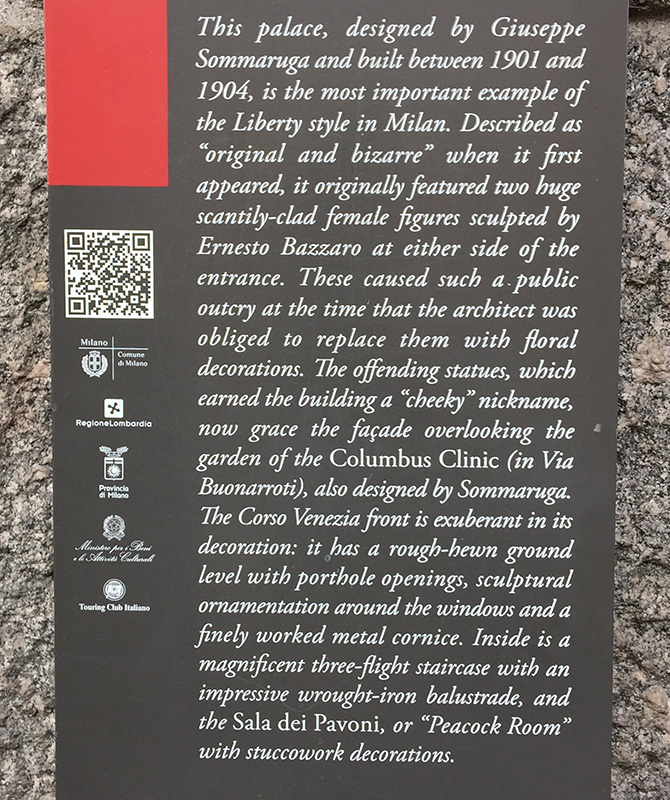
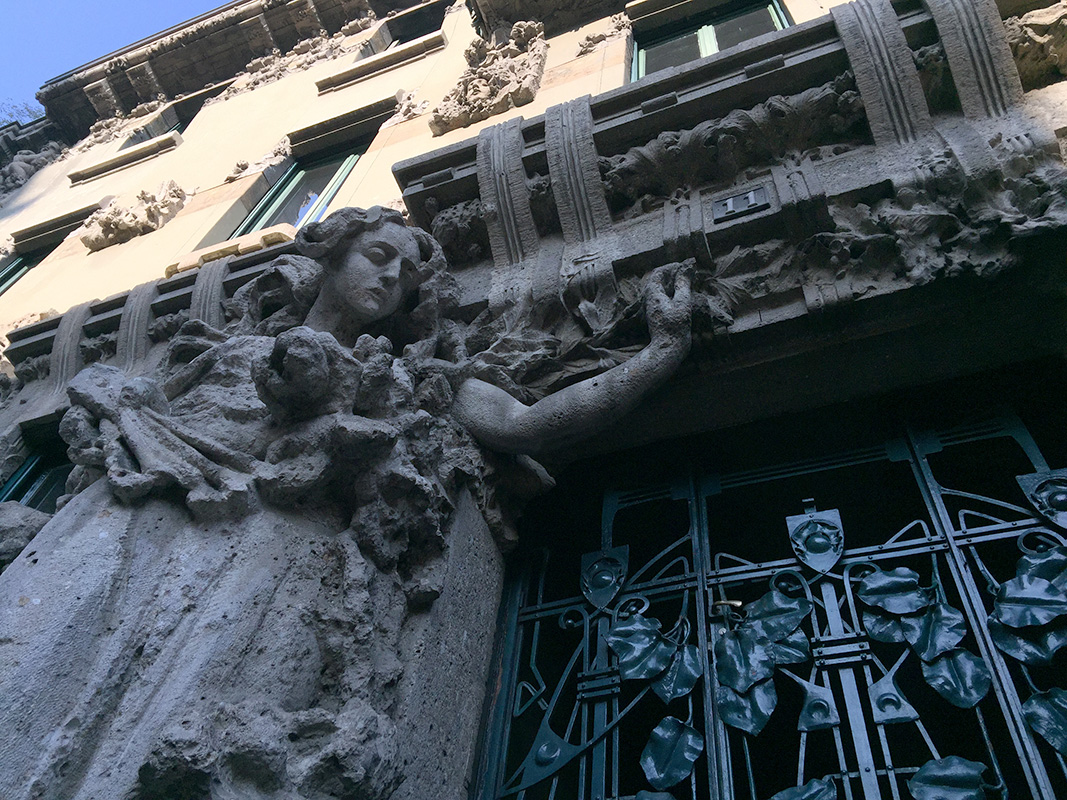
From Wikipedia: Palazzo Castiglioni is an Art Nouveau palace of Milan, northern Italy. It was designed by Giuseppe Sommaruga and built between 1901 and 1903. The rusticated blocks of the basement imitate a natural rocky shape, while the rest of the decorations are inspired by 18th century stuccos. The building is now used as the seat of the Unione Commercianti di Milano (Traders’ Union of Milan).
Palazzo Castiglioni
Palazzo Castiglioni
Palazzo Castiglioni
Palazzo Castiglioni
Palazzo Castiglioni
Palazzo Castiglioni
Palazzo Castiglioni
Palazzo Castiglioni
Palazzo Castiglioni
Palazzo Castiglioni
Palazzo Castiglioni
Palazzo Castiglioni
Casa Campanini – Via Bellini 11
From Wikipedia: Casa Campanini (“House Campanini”) is a prominent Art Nouveau building in Milan, Italy, located at 11, Via Bellini. It was realized between 1903 and 1906 by architect Alfredo Campanini, who later inhabited the building.
A main visual feature of the buildings are the concrete caryatids located at its main entrance, by the sculptor Michele Vedani, which represent an obvious reference to those of Palazzo Castiglioni (by architect Giuseppe Sommaruga), another prominent Art Nouveau building of Milan. The wrought iron gate, designed by Campanini himself and realized by Alessandro Mazzucotelli (a renowned representative of Milanese Art Nuoveau sculpture) is decorated with flower patterns; similar decorations are also found in the internal lift cage, also in iron.
The interior of the palace has a number of polychrome glasses, friezes, and frescos, all in an Art Nouveau style; some of the inner rooms still house the original furniture and pottery. Notable decorations, representing cherries, are found on the ceiling of the internal yard.
The palace was manufactured from 1911 along with the other two buildings in the same area, home Berri-Meregali in via Mozart and the second house Berri-Meregalli Via Barozzi.
The building, with its corner facade, conveys a powerful idea of monumentality accentuated by an exasperated eclecticism with Romanesque elements recognizable in the stones, in brickwork, the arches and in the lodges, which alternate with Gothic and Renaissance mixed languages to new taste liberty in vogue in those years with cherubs carved, frescos and wrought iron of the famous Alessandro Mazzucotelli . In the entrance hall you can admire mosaics and ceilings of Angiolo D’Andrea and Adam Rimoldi and the famous sculpture by Adolfo Wildt the victory of 1919.
Palazzo Berri-Meregalli
Palazzo Berri-Meregalli
Palazzo Berri-Meregalli
Palazzo Berri-Meregalli
More Liberty and Other Beautiful Things Seen Along the Stroll
Wandering around Milan, and Italy itself, feeds my eyes, mind and heart. I relish the creative thoughtfulness put into both broad scale and fine detail. I really LOOK, then take it in, then carry it home with me to let it percolate until it simmers and bubbles into something I set my hand to.
Here are images of other examples of Liberty seen along the guided tour… plus a few other beautiful things I couldn’t resist. Enjoy.
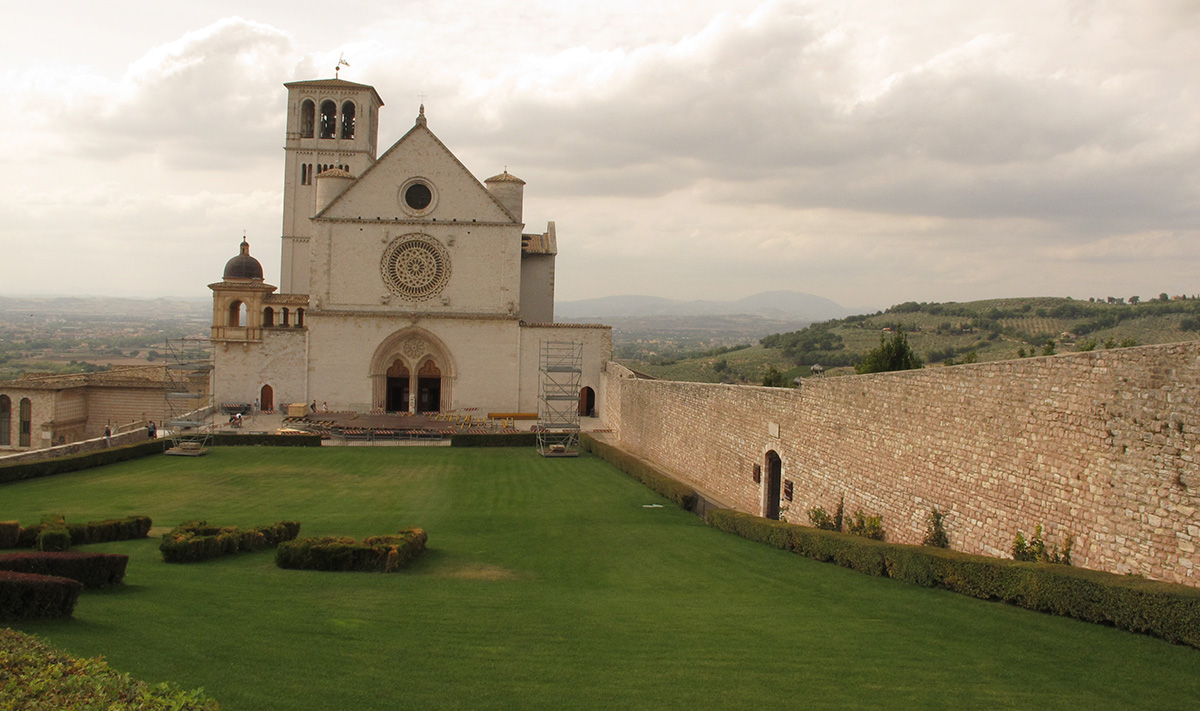
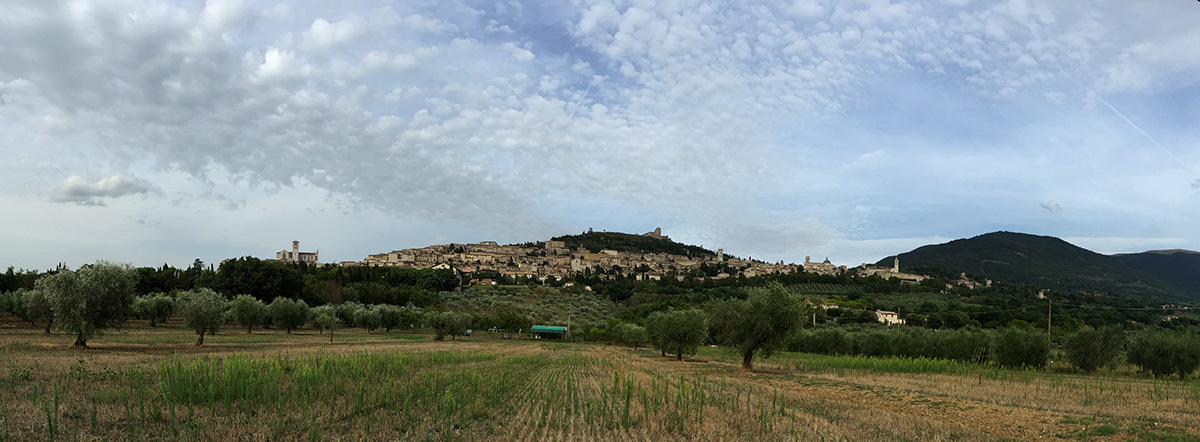
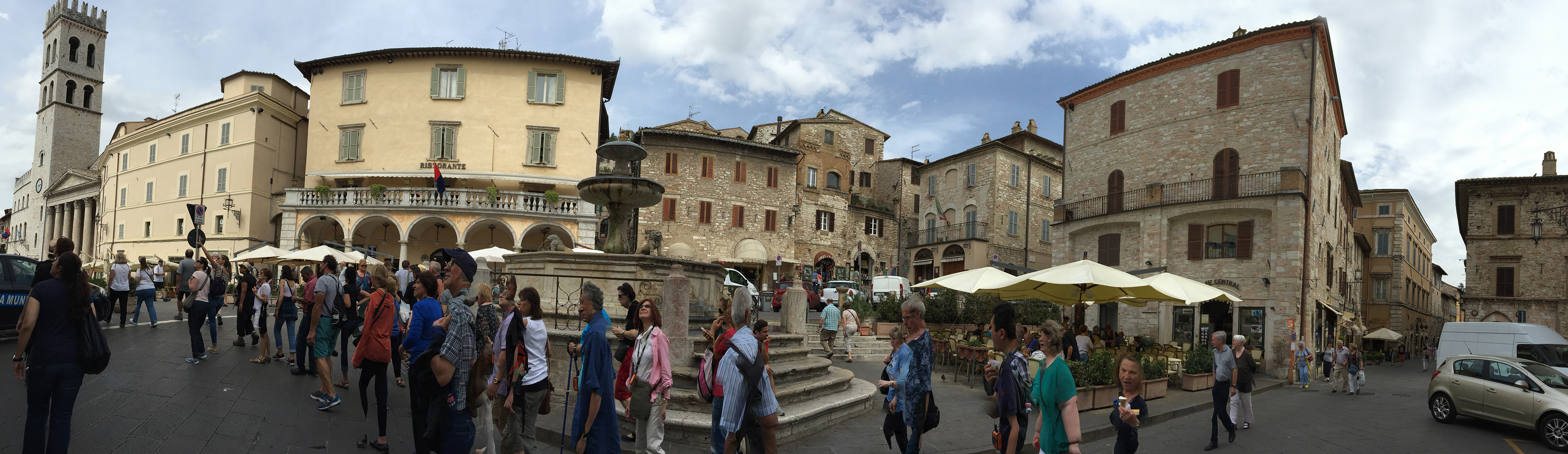
High on a hill is the town of Assisi, home of Giovanni di Pietro di Bernardone, born in 1181, later known as Saint Francis, “San Francesco d’Assisi“. But Francesco, one who relinquished all his worldly goods for a life of poverty and simplicity, would rail at the Assisi of today, the streets of which are lined with shops selling tourist and religious kitsch.
As part of a trip to Umbria, and as one who attended St. Francis of Assisi grade school and church (in Burien, Washington), Assisi was a “must see” for me. I simply had to look past the kitsch.
Lesson number one: “Assisi” is not pronounced “A-SISS-ee”, but is rather “Ah-SEE-zee”. It’s an Italian pronunciation thing.
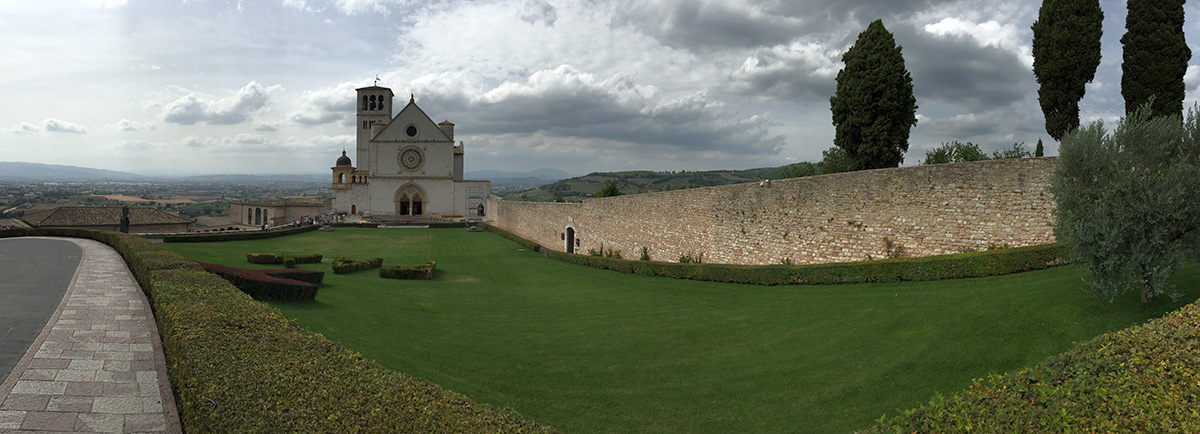
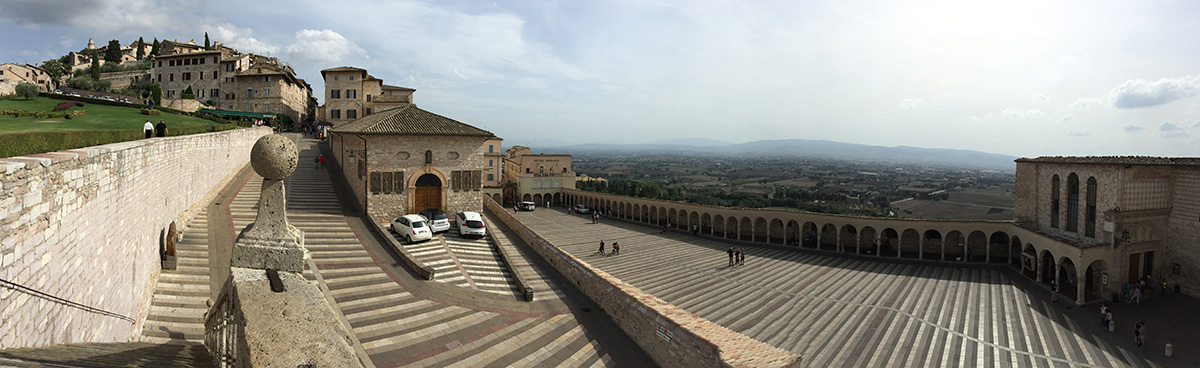
Yes. Go to Assisi. See the beautiful and historic 13th century Basilica of San Francesco and the Basilica of Santa Chiara (St. Clare). Sit in front of the tomb of Francesco with whatever sense of mystery fills your life. Go inward and marvel for a moment. Also relish the lavish decoration of both basilicas (photos were not allowed) and allow it all to inspire you. Some of our world’s great artists lent their vision and talent to the imagery we see there today!
Assisi is a contrast between the devout and the opportunistic, but… with 4 to 5 million visitors a year, can we blame them for responding to the needs and wishes of the throngs?
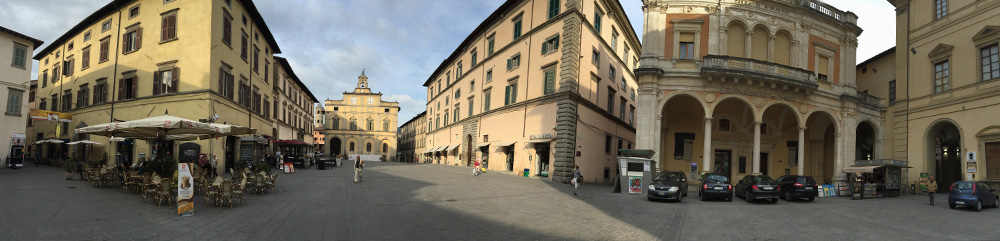
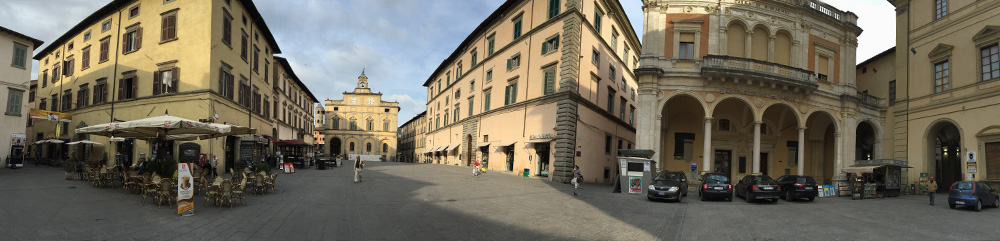
Our first stop on our road trip through Umbria, the region landlocked in the middle of Italy: Città di Castello – City of the Castle. Which “castle” they’re referring to, I’m not quite sure, although the Palazzo Vitelli, built in 1500, sure adds grandeur and beautiful open space to the historic center of town.
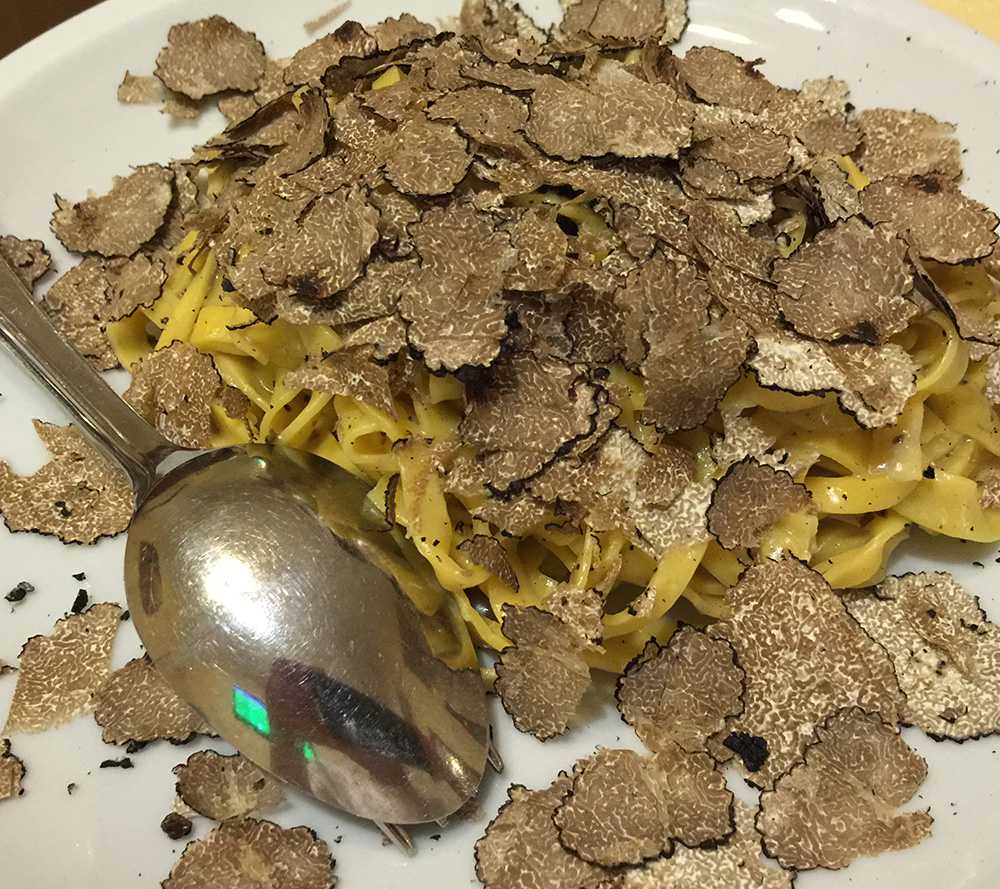
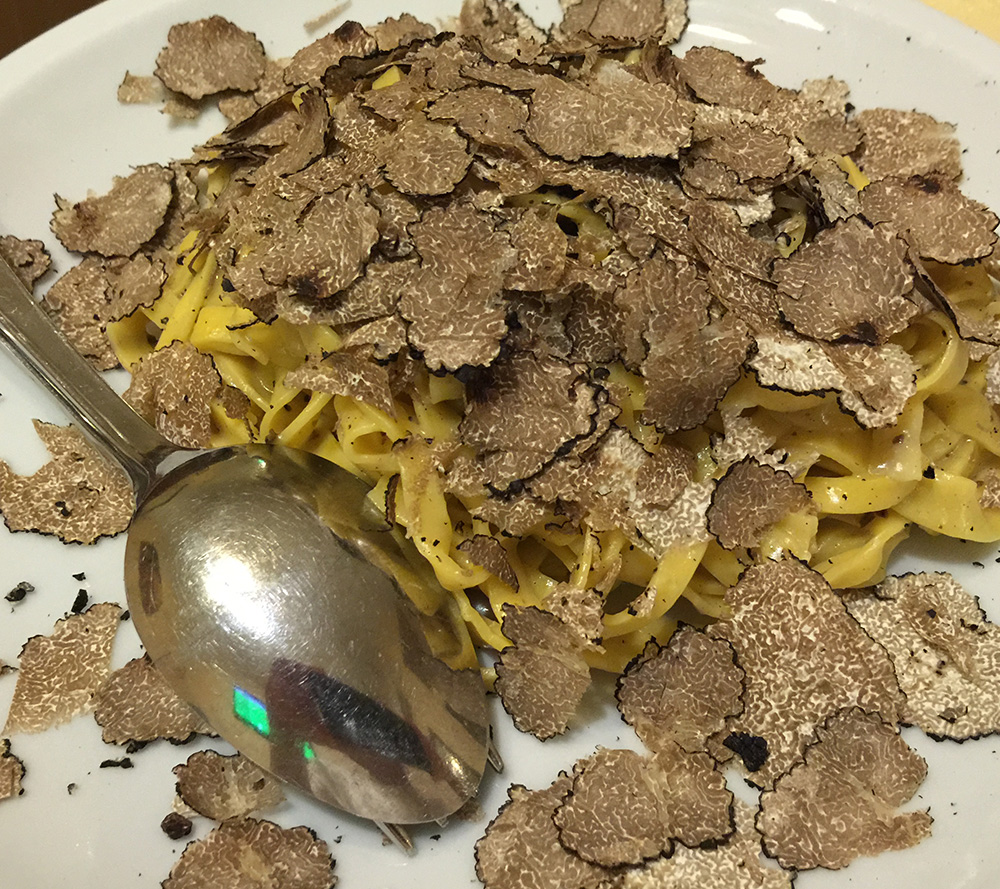
Citta di Castello offers visitors the many marvels they most seek in Italy, but without the throngs of tourists: winding, narrow, cobbled streets day and night, regional Umbrian meals such as black truffle-topped fresh tagliatelle, and surroundings dense with history.
For a beautiful place to stay, contact Elisa at the Residenza Antica Canonica. The 15th century priests’ lodging is perfectly situated next to the Duomo, and the rooms are beautifully appointed.
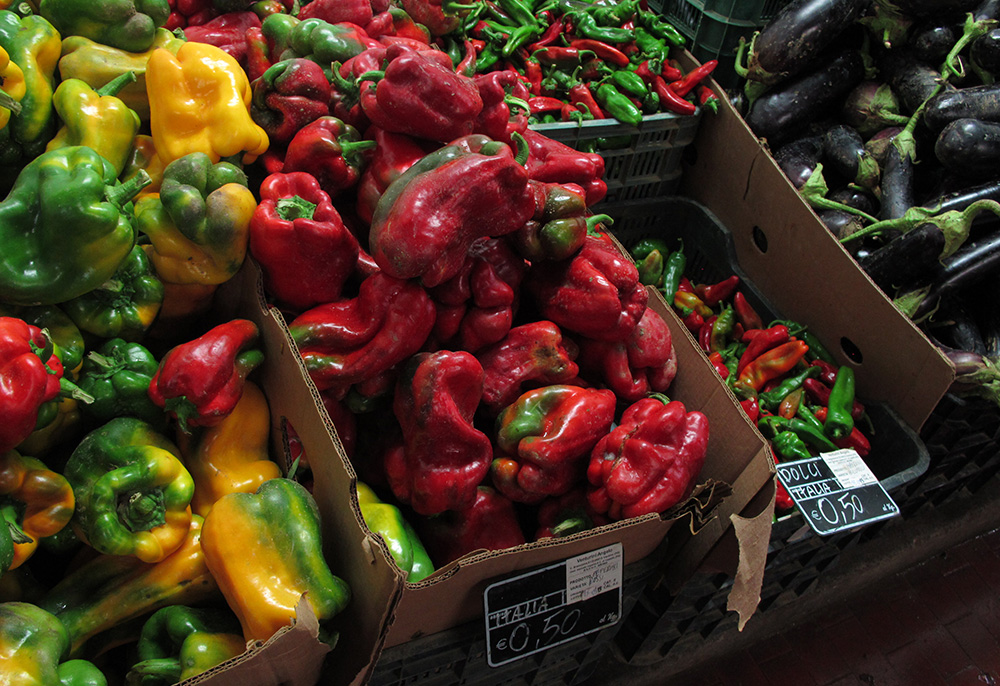
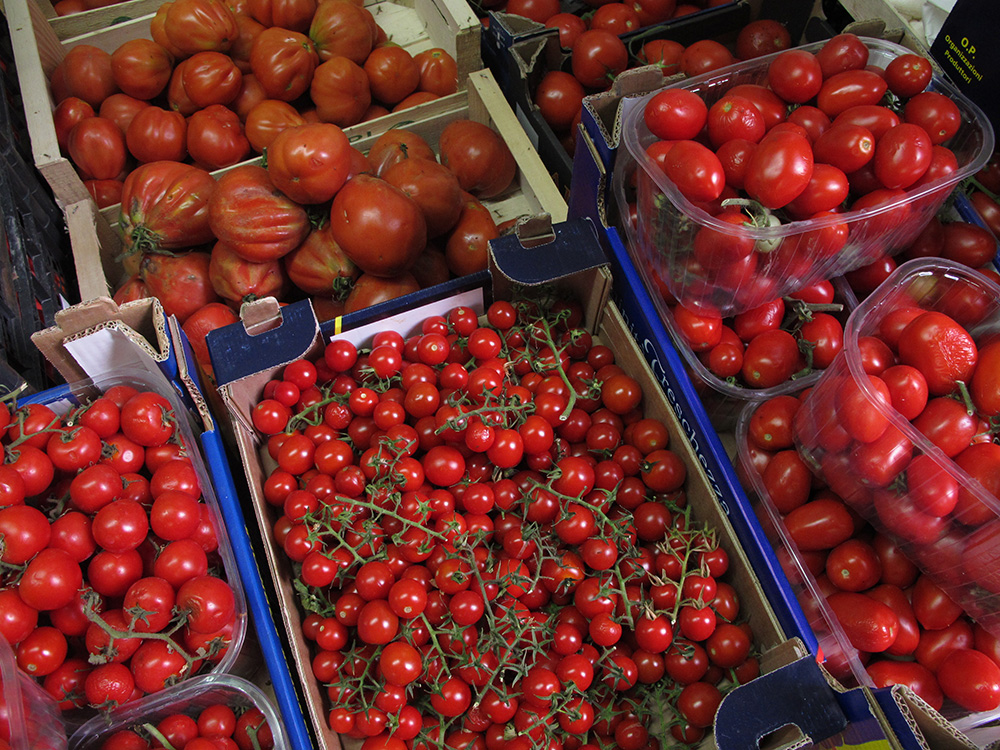
In the morning stroll through town, find the local coffee shop and the produce vendor for some fruit and vegetables to carry with you as you continue on your travels.
When friends start planning their trips to Italy, they immediately think of going to Tuscany – Toscana. And when they ask me about my time in Italy, they often say, “Oh! Like Under the Tuscan Sun! Or Eat, Pray, Love!” No… and no.
I think that the notoriety of those films/books, coupled with the publicity generated by a particular Pacific Northwest local that has made a name for himself through travel, have swayed the perception of Italy and the “right” location of treasures to experience. Thus, Tuscany gets all the attention.
I’ve now been in and through 19 of the 20 regions of Italy and I can tell you that each one is its own sort of gem. Each region has its own food culture, its own medieval, hilltop towns, and its own swoon-inducing beauty. (Sardegna is the last hold-out of the 20 regions. On the list for next year.)
The central piazza in Città di Castello.
So many have said to me, “We ‘did‘ Florence. We ‘did‘ Rome. We ‘did‘ Venice. We ‘did‘ Cinque Terre…” (And only one of those is in Tuscany, by the way.) Each of those places is marvelous beyond belief. Each of those will make you head-over-heels in love with Italy. Yet you can come to Italy, never go to any of those Big Four, and if you’re willing to nestle in and root around, you can come away as enthralled as ever. You can meet people not yet weary of tourist throngs, eat foods specific to a 50 kilometer radius, find lodging in buildings from the 1400s. History, Art, Culture, Foods… and open-hearted folks are scattered from the heel and toe of The Boot in the south, all the way up to the mountainous top of The Boot in the north, (where you have to remind yourself that you’re still in Italy).
Fresh tagliatelle with shaved black truffles in Umbria.
I keep coming back here and to all that Italy offers of itself to me. I have nestled in. I have rooted around. And now this place has roots in me and a part of me is at home here. Now I can’t stay away. I crave the hearts of those that have become dear to me. I crave the foods I can’t find in Seattle. I yearn for the visual details that ignite my artist/designer’s eye. This is the eighth year that I have made this trek and long pause in this foreign country (including one 14 month stint). It has become hardly “foreign” anymore, and more familiar. I’ve “gone deep” and it pleases me.
—
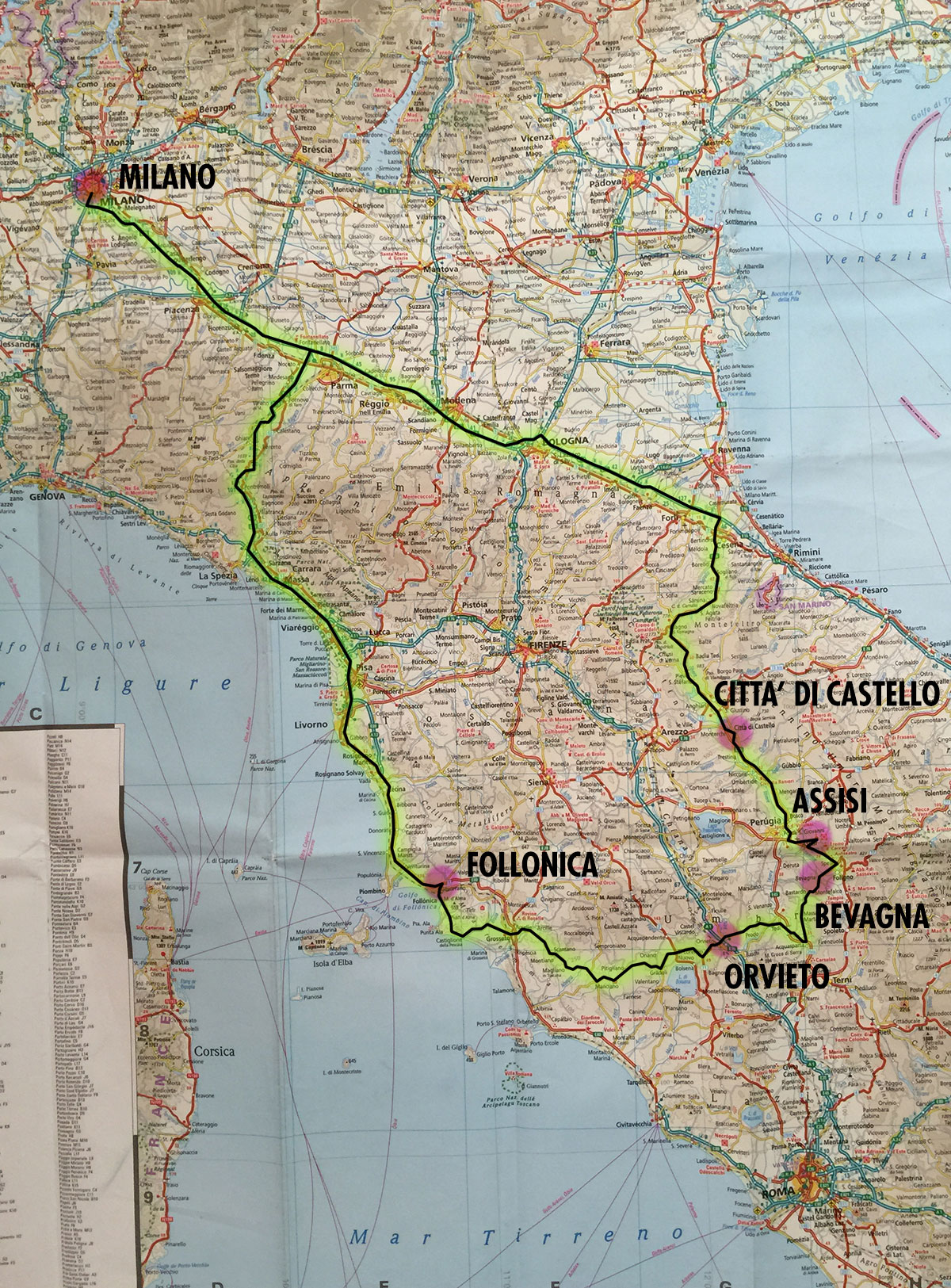
From Milano, eastward almost to the coast of the Adriatic Sea, then south to Città di Castello, Assisi, Bevagna and Orvieto in Umbria, then west to Follónica on the opposite coast, then back up north past Pisa, the exit for le Cinque Terre and back to Milano.
Last week I ventured into the land-locked center of the country to the region of Umbria, with my friend and incredible painter, Loredano Rizzotti. Umbria was region number 19 on my list and we had an itinerary that included Città di Castello, Assisi, Bevagna and Orvieto, ending in the seaside town of Follónica. All I can say is “Go to Umbria!” It’s lovely. There’s MUCH to see and many flavors to savor.
Today was a clear-sky day in Milano after a day, yesterday, of downpours. It’s on the brink of autumn. All was right with the world as I went out to do my grocery shopping one block up the road toward the Duomo. I continue to marvel at my being here, and count my blessings.
Stormy, wild wind and rain last night here in Milano. End of summer, early fall. But I arrived four days ago to a day that was fresh and bright and comfortable. The kind of day that makes one relax into the perfection of the moment. I had returned to my home-away-from-home.
This is the eighth year that I’ve made this “pilgrimage”, here to fill myself up with inspiration through a life so very much unlike that which I lead the rest of the year. Everything is different: my pace, my friends, my menu choices. Milano’s very urban surroundings yield proximity to everything, both an historic and contemporary built environment, the contrast of chaos and beauty. As a visual person, artist and designer, my eyes just can’t get enough of this place, this Italy. Details at every turn spark me. My time here in Italy, making Milano my home, adds to my perspective, shapes me and gives me something to take back to my Burien. I am so well-fed here, in all ways.
Eating Well
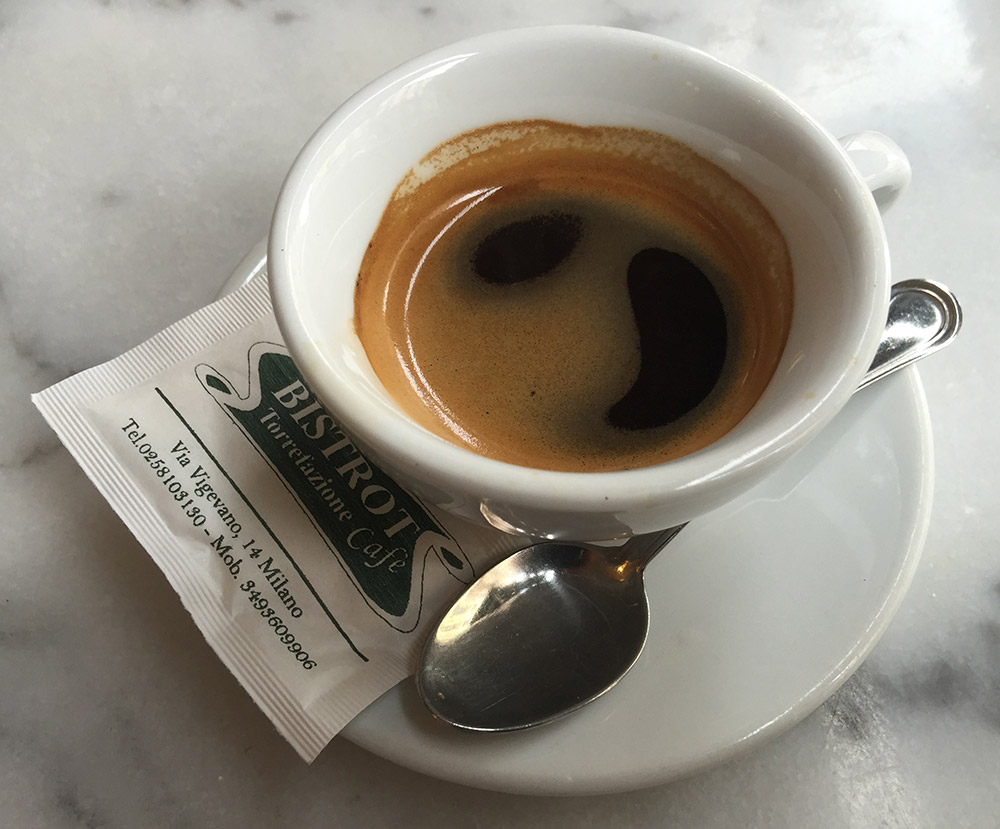
“Un caffè normale” – This is what you get if you order coffee. It’s the beginning of each day and the end of every meal.
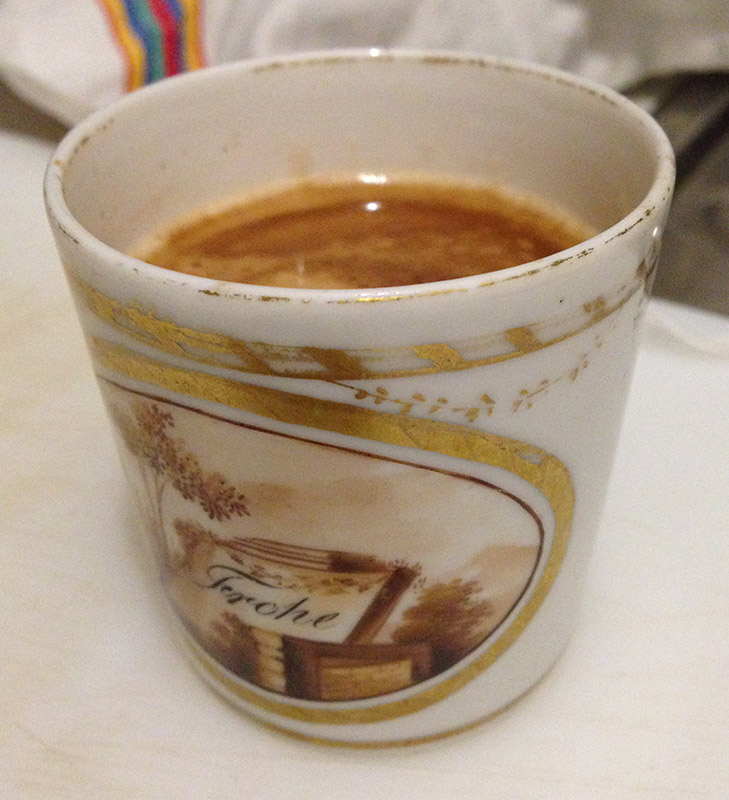
Un caffè in an 1850’s cup.
Carlotta Cafè
The Carlotta Cafè has been a favorite of mine for the last 8 years.
They are dear people that I rush to see when I arrive.
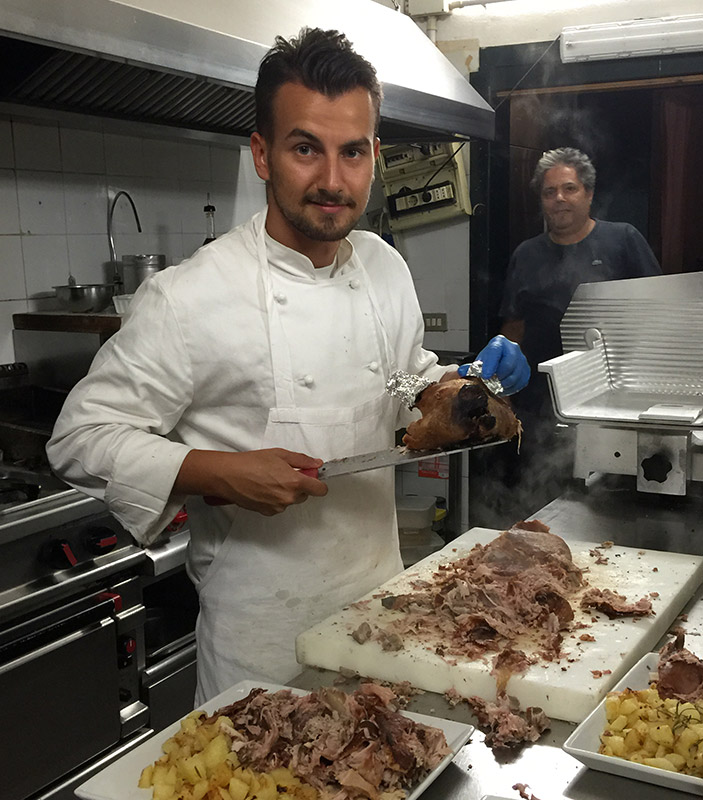
Son, Erik, has learned the family recipes at the Carlotta Cafè, (named after his sister), and carves a whole, roasted pig for a large dinner party. Ninni, Erik’s father, stands in the background.
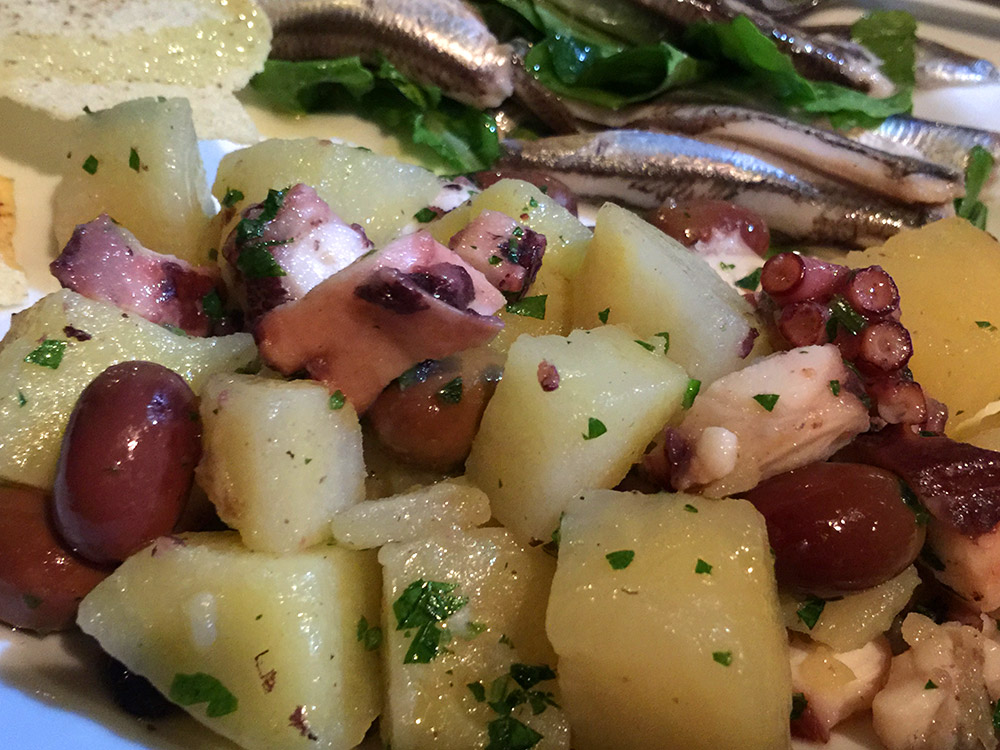
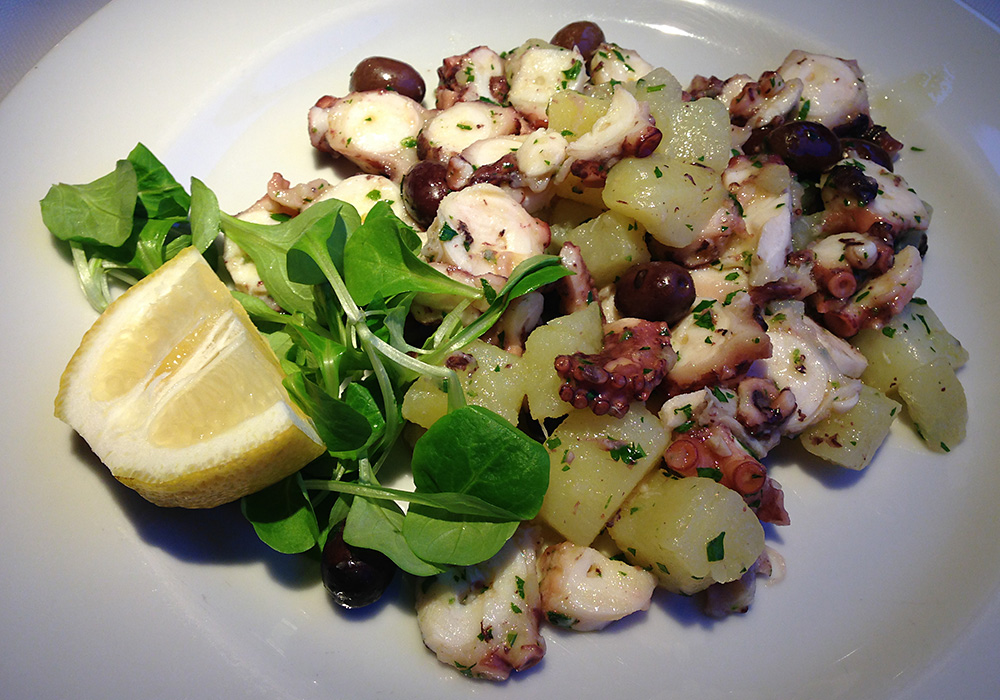
Insalata Tiepida di Piovra e Patate – Warm Salad of Octopus and Potatoes. My favorite! Fresh, marinated anchovies in the background.
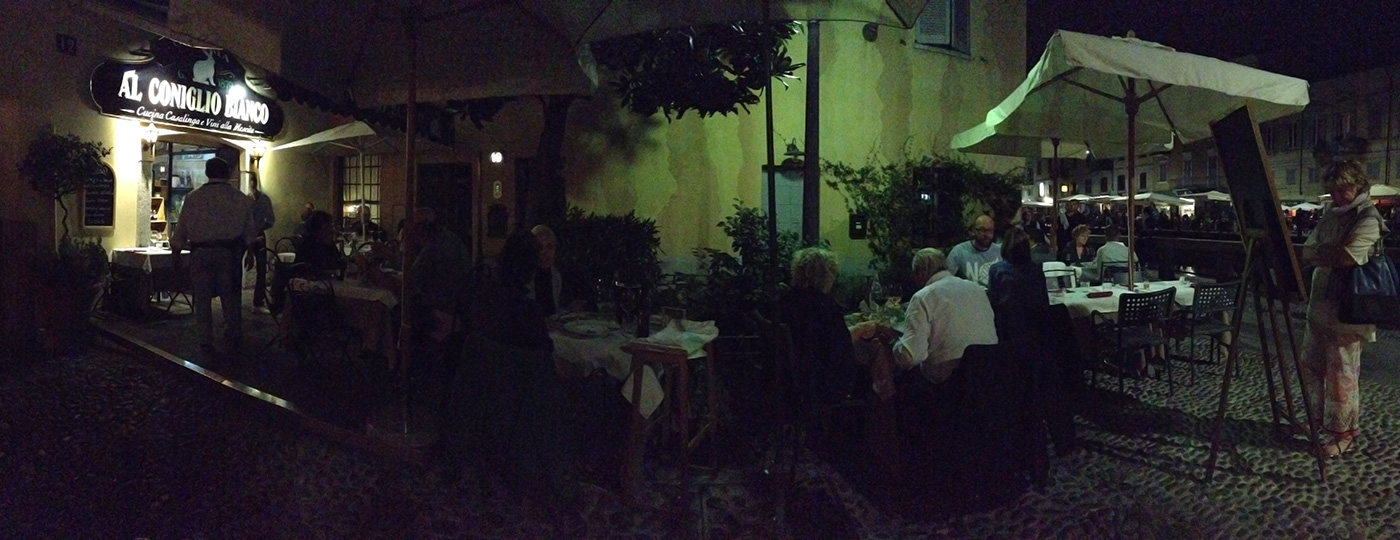
Al Coniglio Bianco – The White Rabbit
A favorite, wonderful place along the Grand Canal – Naviglio Grande – owned by friend, Giampiero, and serving great food and wine: Al Coniglio Bianco.
Al Coniglio Bianco offers seating outside, along the canal, as well as within its intimate, cozy interior.
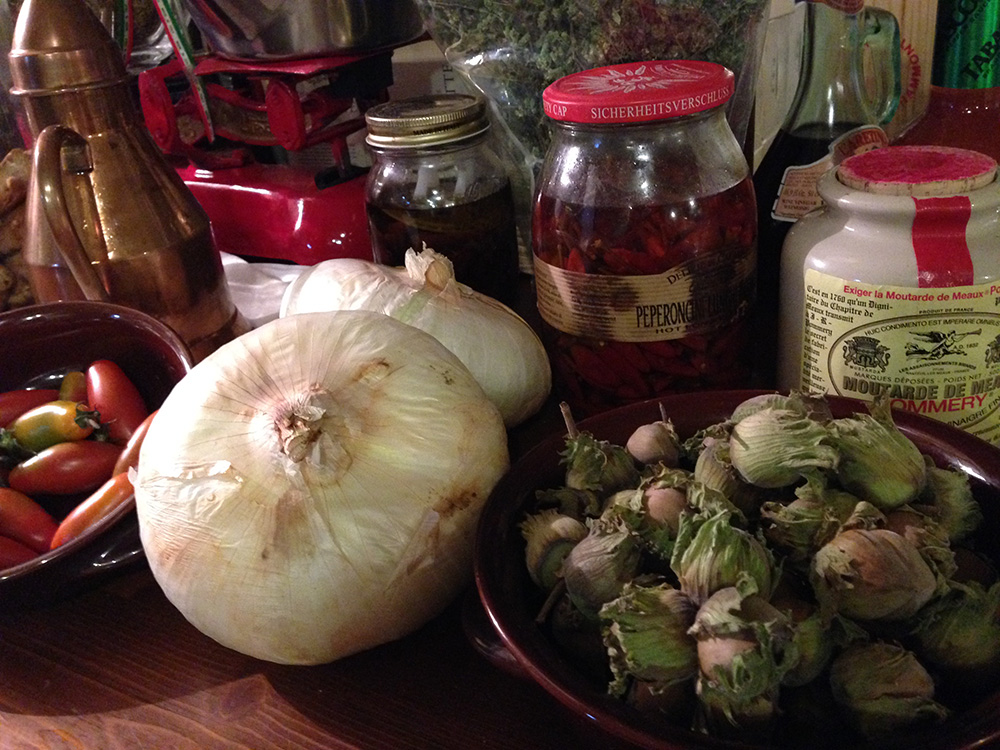
Foodstuffs gathered at Al Coniglio Bianco.
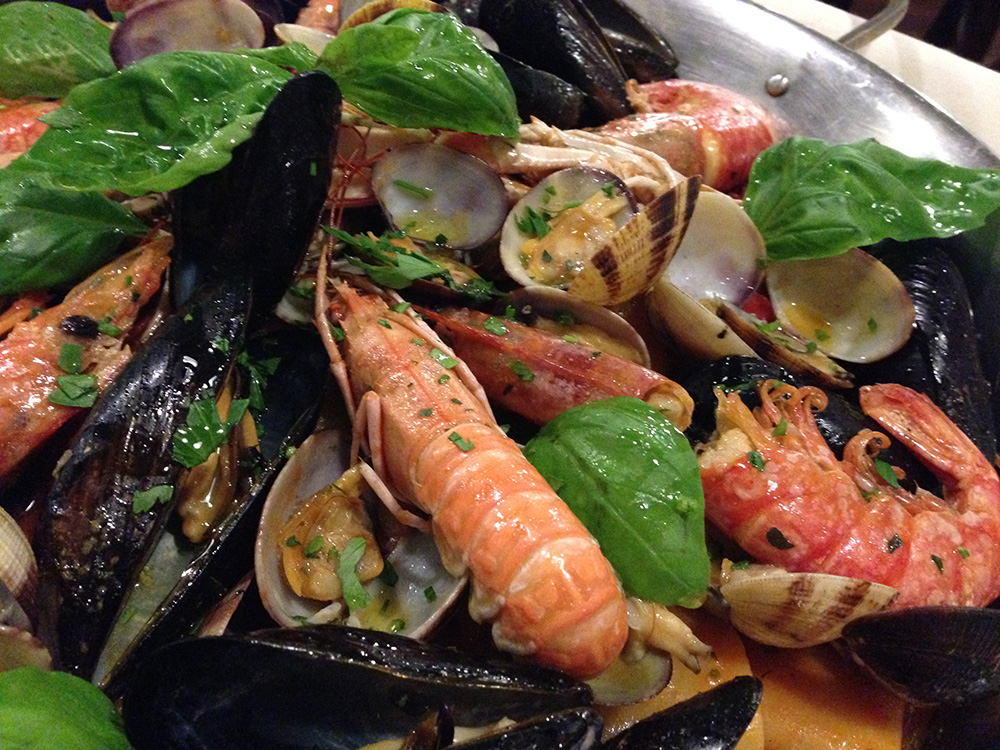
A large skillet of mussels, clams and scampi on paccheri pasta with a simple, fresh tomato sauce. (Frankie’s, in Burien, should take a lesson…)
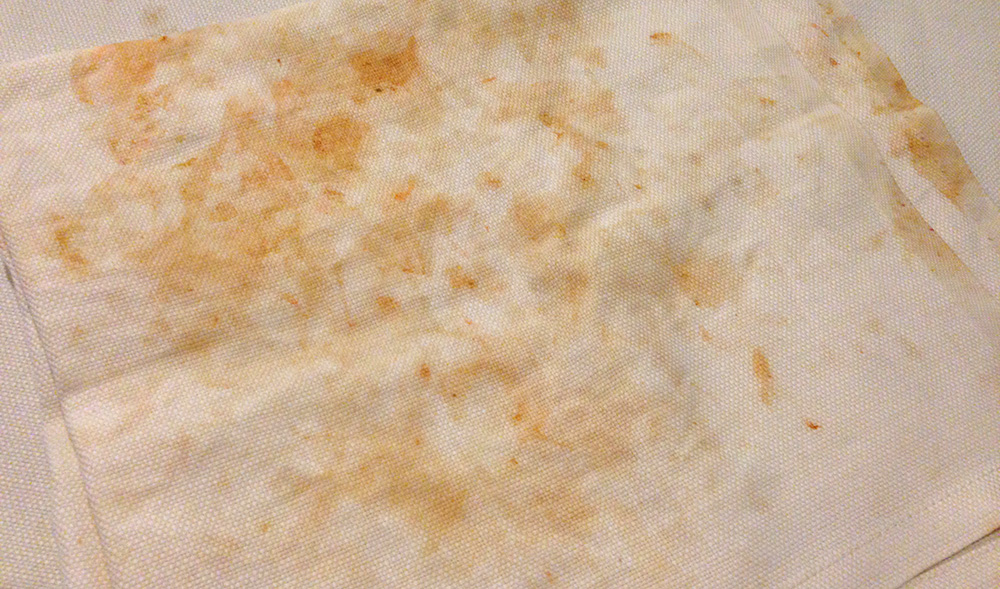
After plucking shellfish and crustaceans in their lovely sauce, the napkin was rather soiled.
Al Pont de Ferr – “At the Iron Bridge”
A wonderful, and unusual, selection of breads on the table at Pont de Ferr.
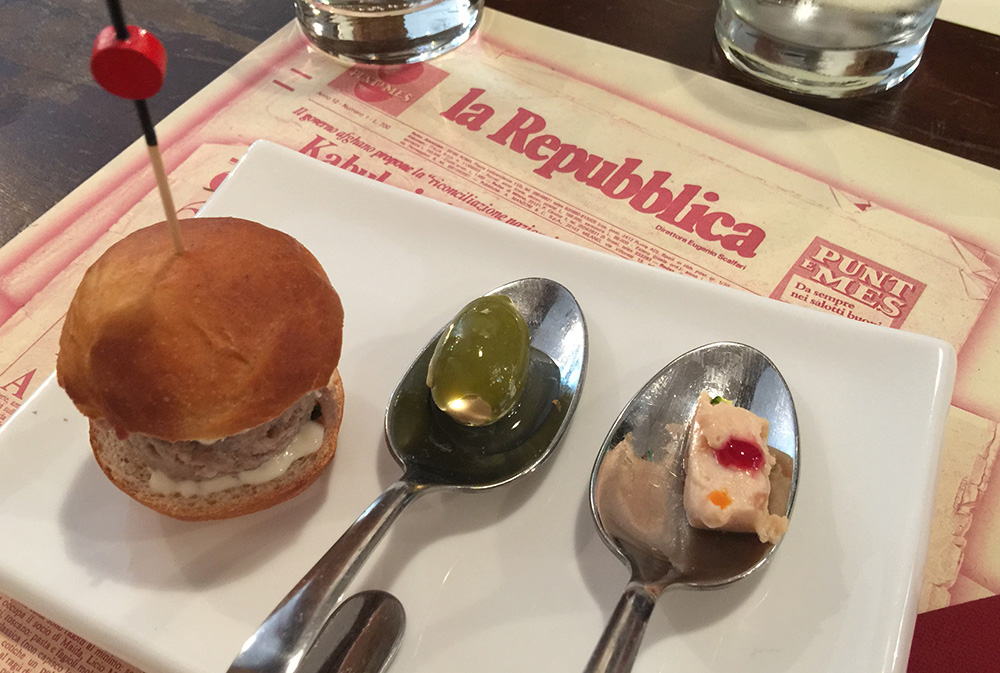
Appetizers of a slider, stuff olive and patè morsel.
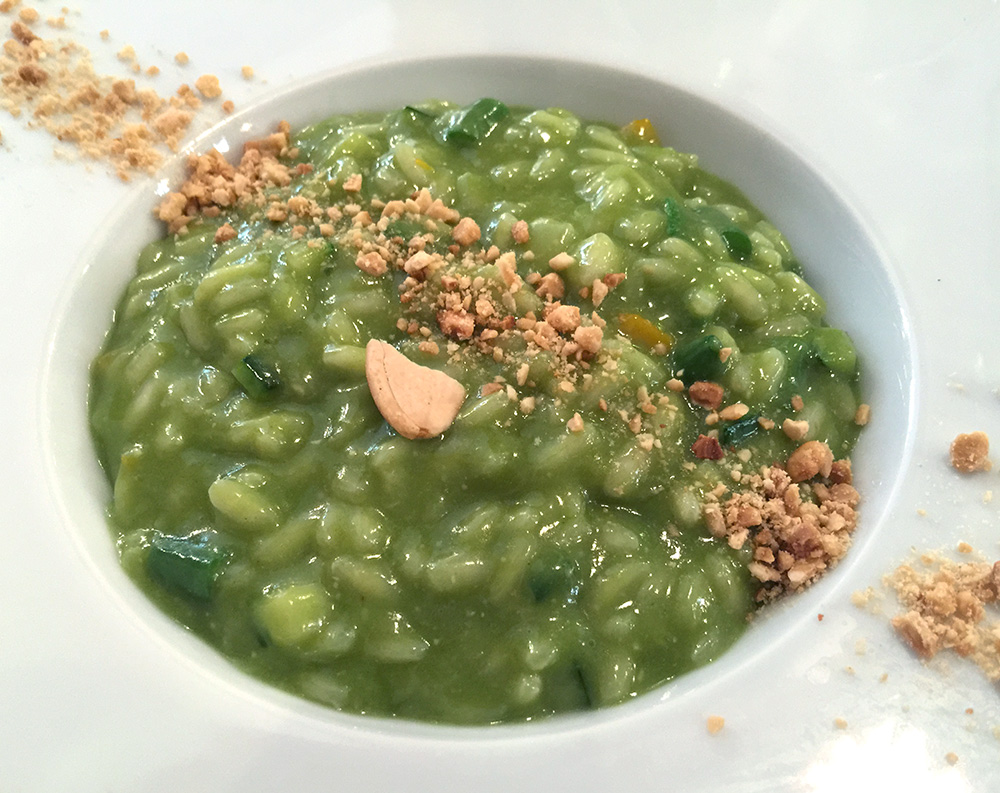
Risotto with pesto and green beans.
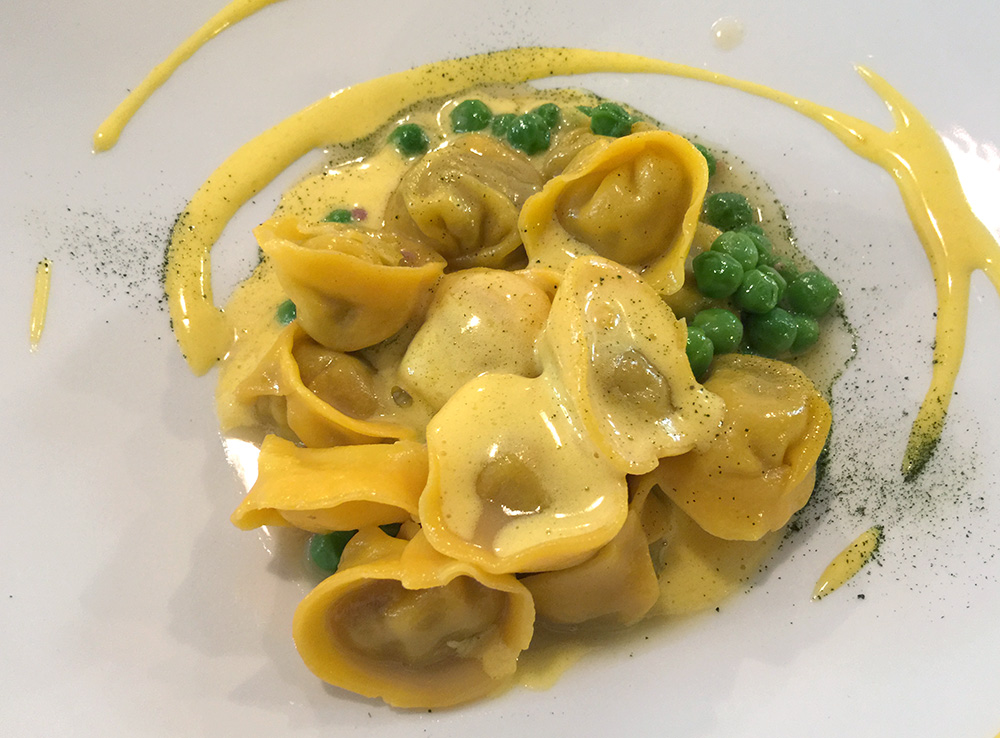
Tortelli with zabaglione and fresh peas.
Part of a mid-day snack: “Nervetti”, a pressed loaf of beef tendons, nerves and cartilage, prepared with onions. (I think it’d be good on pizza.)
Time with Friends
Painter friends along the canal: Luigi Marchesi, Loredano Rizzotti and Renato Giananti.
For the record, “Italian Food” is SO much more than pizza, spaghetti, ravioli and fettucine alfredo. In fact, “fettucine alfredo” doesn’t exist except in the restaurants catering to tourists away from home looking for their favorite edible myth.
Hold your hand up in front of you with your thumb and forefinger a half inch apart. That measures the typical range Americans imagine of the variety of food in Italy. Now, stick your arms straight out to your sides. That’s the REAL measure of the bountiful range of edible deliciousness you’ll encounter in Italy. And that bounty is not at all spread uniformly throughout “the boot”. You can go 50 kilometers and find a completely different food culture. There are some foods you’ll find in one town only.
I urge you. When you answer that call to go explore Italy, please don’t fall back on ordering pizza, spaghetti and ravioli. Sure, they will be good, and not like what you’ve had in America. Rather, find out what the local specialty is and eat it with gusto. And please, whatever you do, don’t seek out that well-known, international hamburger chain. You’ll be in the land of good food! Eat well! You might just find your next, new favorite dish.
In the last month, I stayed in the north of Italy: Milano, Sanremo, Genova, Pavia and small towns scattered in the hills south of Milan. The following photos show a selection of the dishes I ate with great pleasure.
(For contrast, check out “Eating the South” to see some of the foods I enjoyed when I traveled in Sicily, the southern coast and “heel of the boot” in 2011.)
(Click on the first photo to view the images “plate-size” and click through the slide show.)
Sardenara
Sardenara, freshly made by my friend, Sandra. Foccacia dough base with a simple tomato sauce, anchovies, taggiasche olives, capers and a few garlic cloves. Sanremo
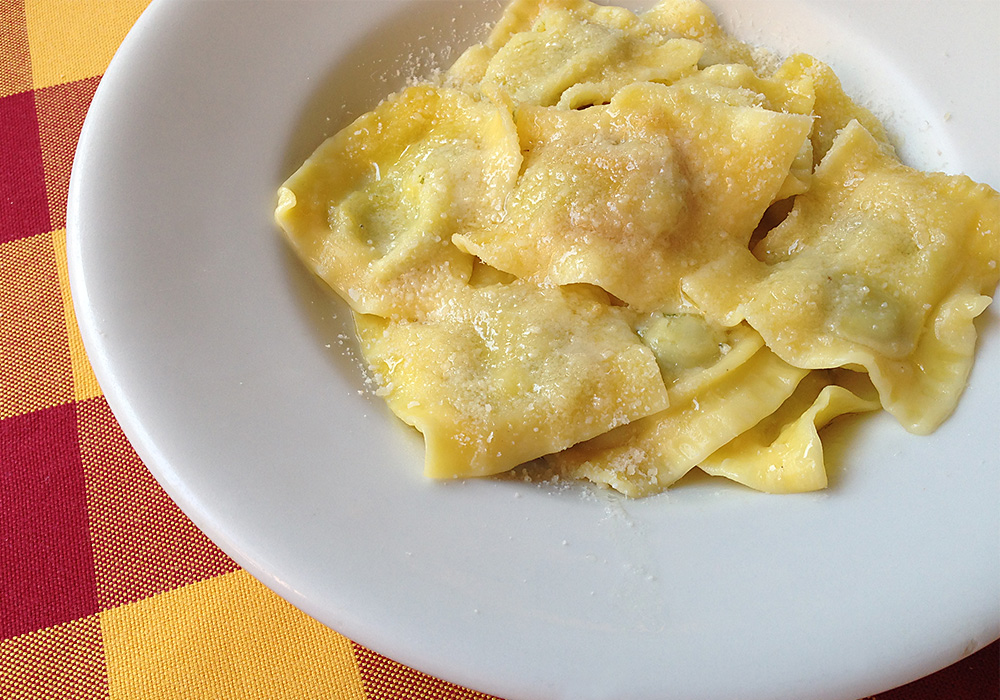
Tortelli di Verdura
Tortelli di Verdura. Trattoria da Pasquale. Parasacco (south of Milano)
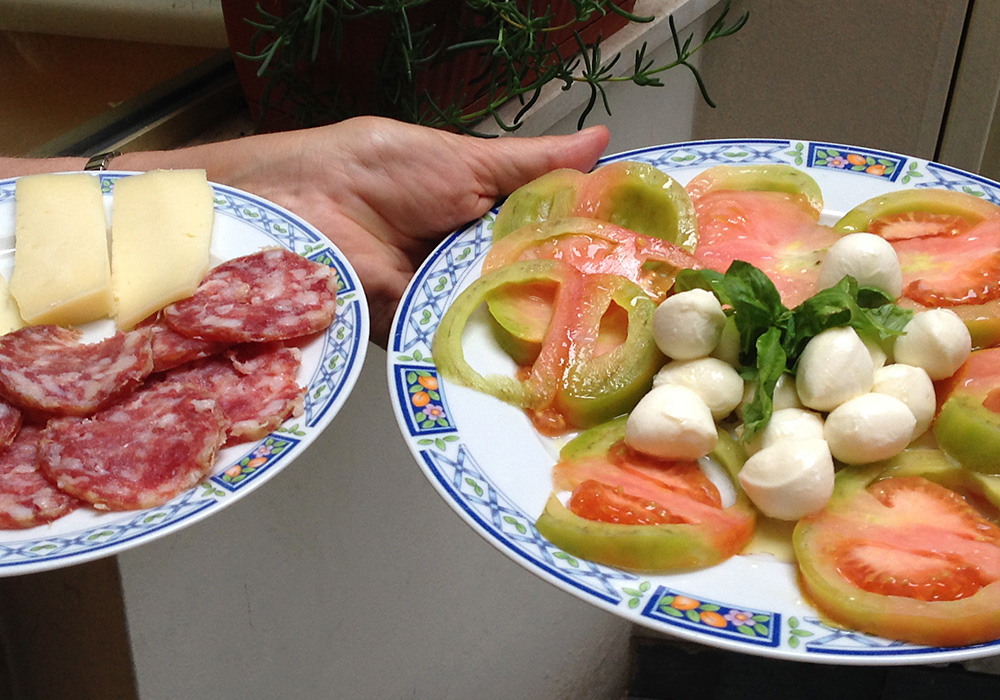
Salumi and caprese
Salumi and cheese plate with caprese. Sanremo
Octopus and potato salad. My favorite!
Warm octopus and potato salad – Insalata di piovra e patate. Carlotta Cafè. Milano
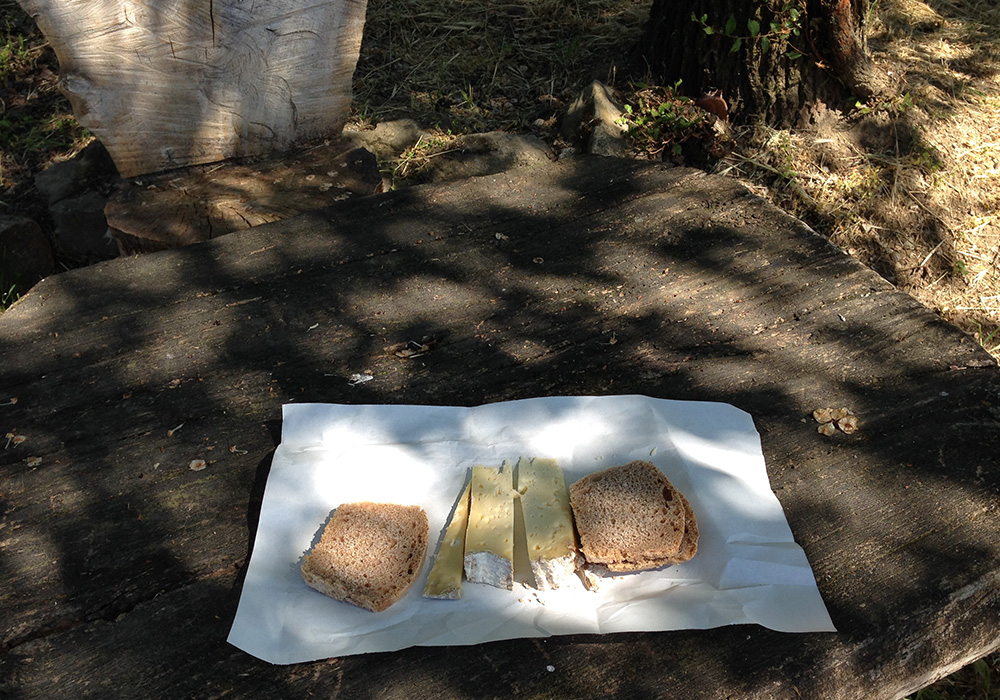
Fresh cheese and bread
High in the hills and hungry near Pizzocorno, we stopped at a cheese maker’s farm and bought a few slices of cheese and bread, to be eaten on a slab of wood as our table. Pizzocorno, Oltrepò Pavese
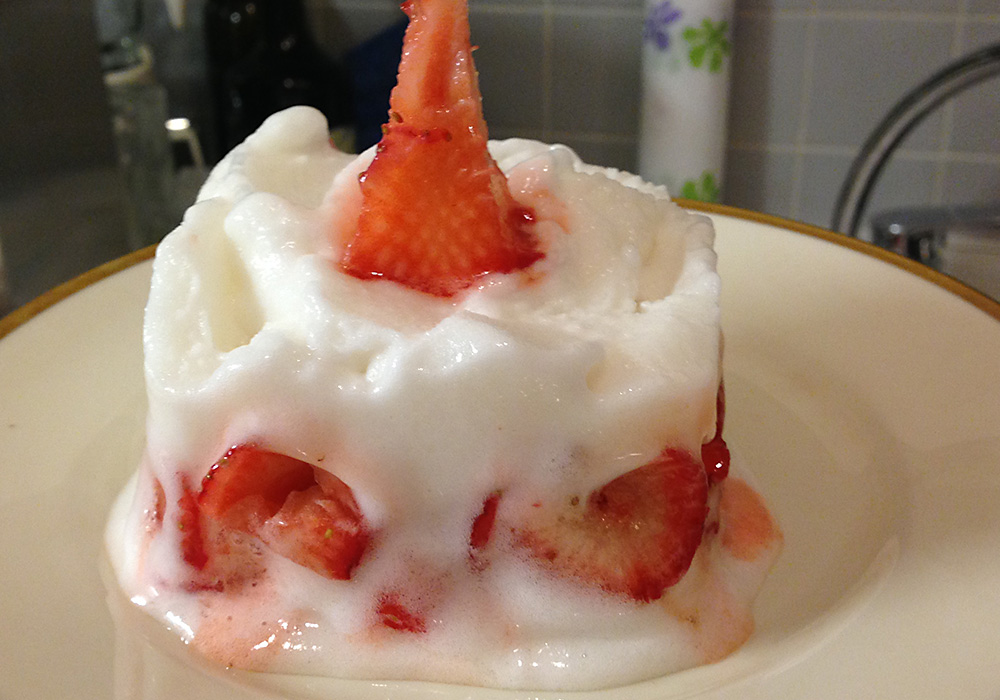
Lemon sorbet with fresh strawberries
Lemon sorbet with fresh strawberries
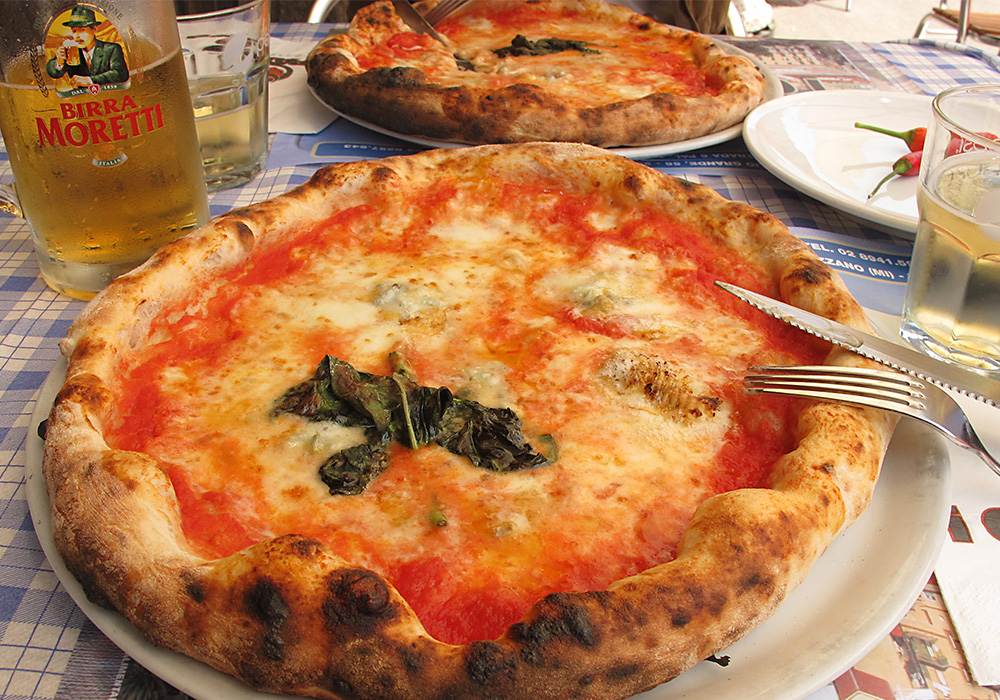
Pizza and beer
Pizza and Birra Moretti along the Grand Canal – Naviglio Grande. Milano
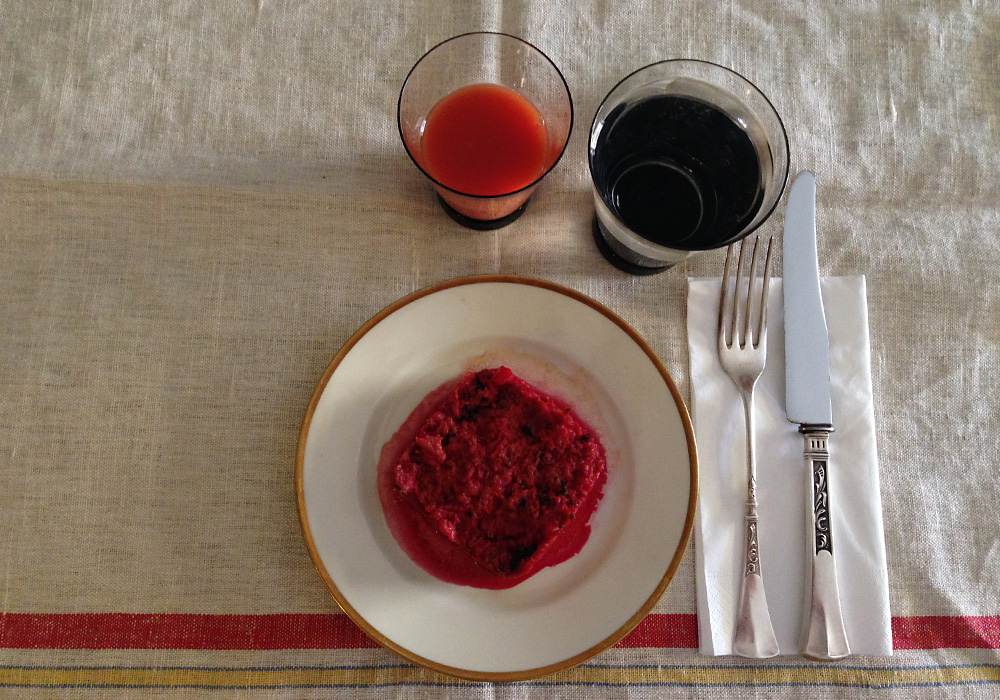
An UN-Italian breakfast
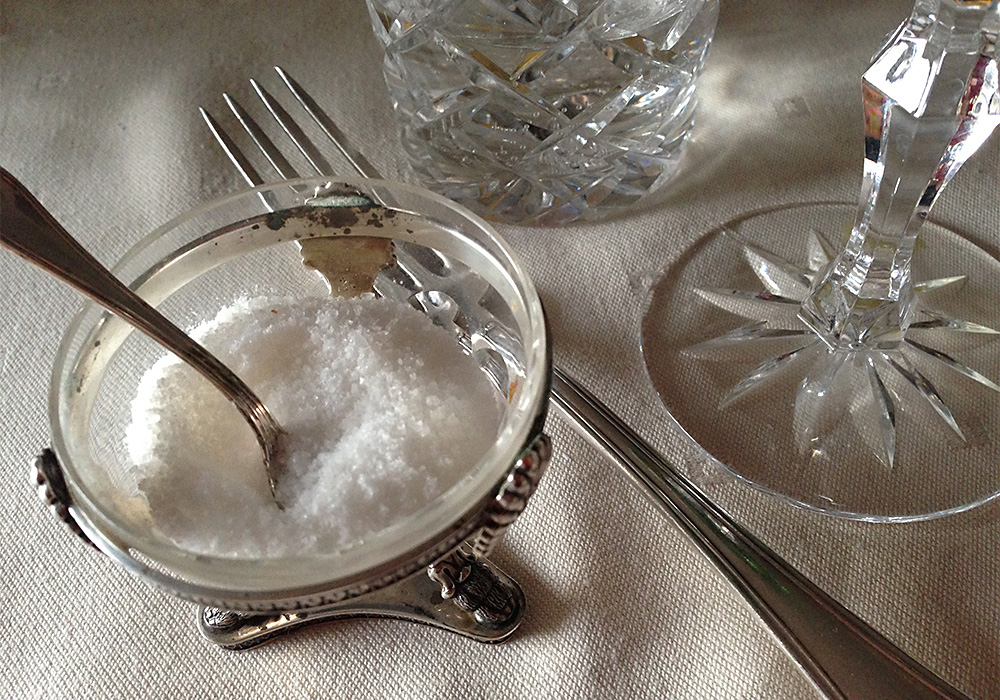
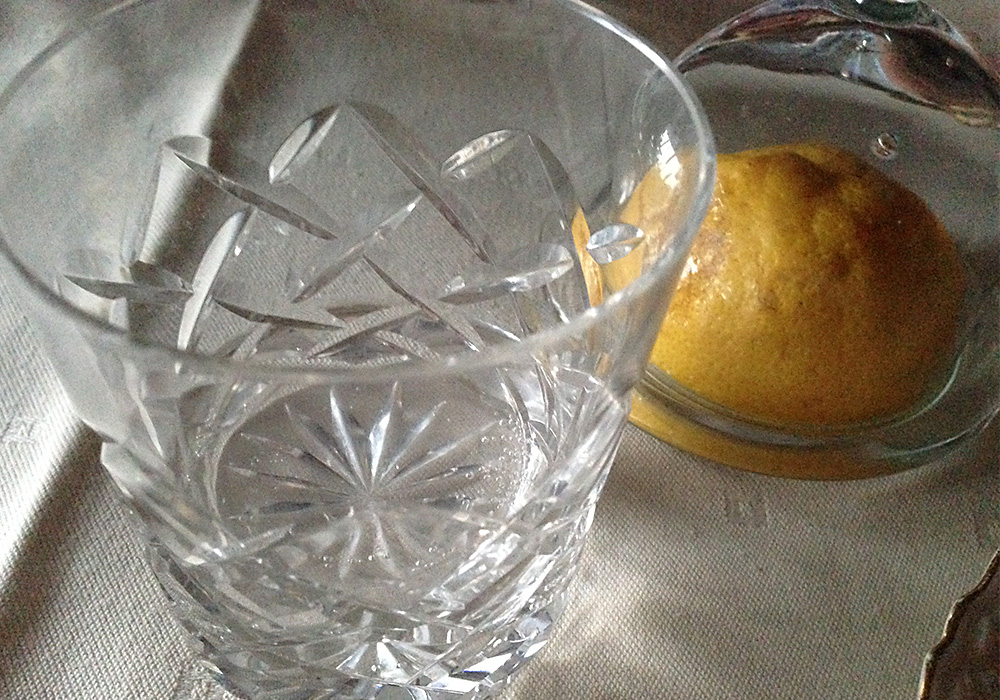
Sauteed zucchini, onion, beets and a little cheese formed and baked. Old silver and linen. Milano
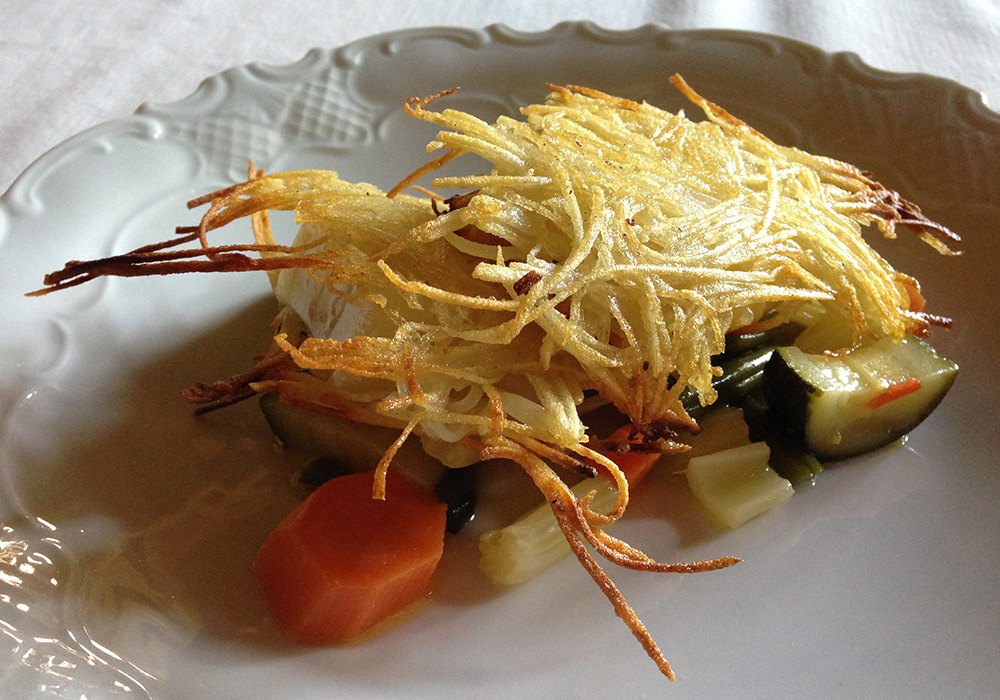
Cheese with potato crust and pickled vegetables
Cheese in a crust of potato threads, with pickled vegetables. – Formaggio salva in crosta di palate con giardiniera. Trattoria Il Postiglione, Rubbiano di Credera
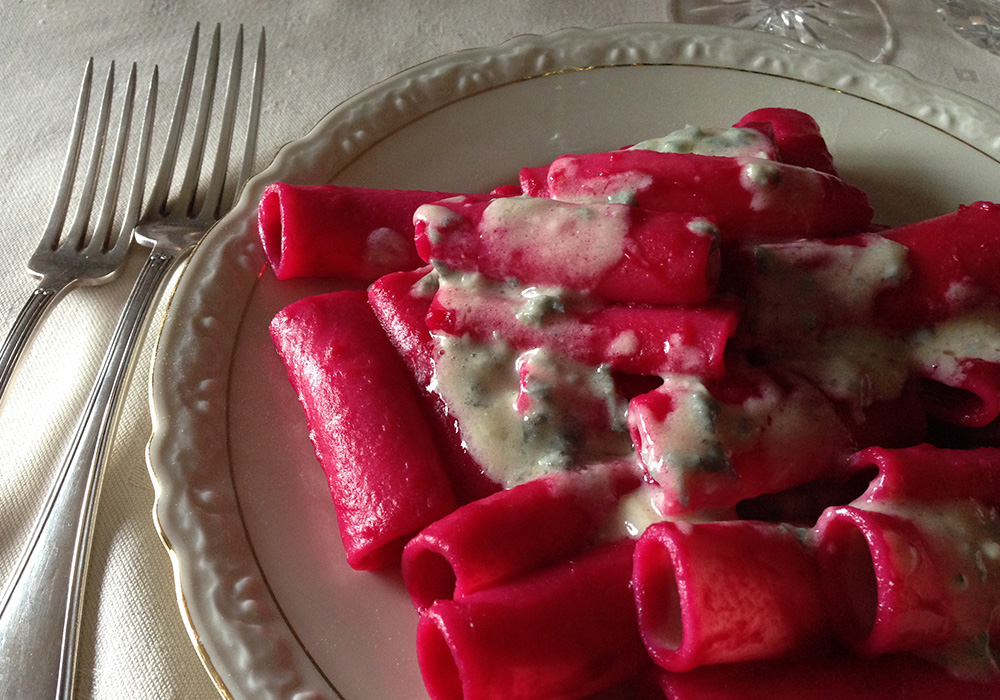
Pasta with beet sauce and gorgonzola cheese
Paccheri pasta with pureed beet sauce and gorgonzola ‘piccante’, cooked by painter, Loredano Rizzotti. Milano
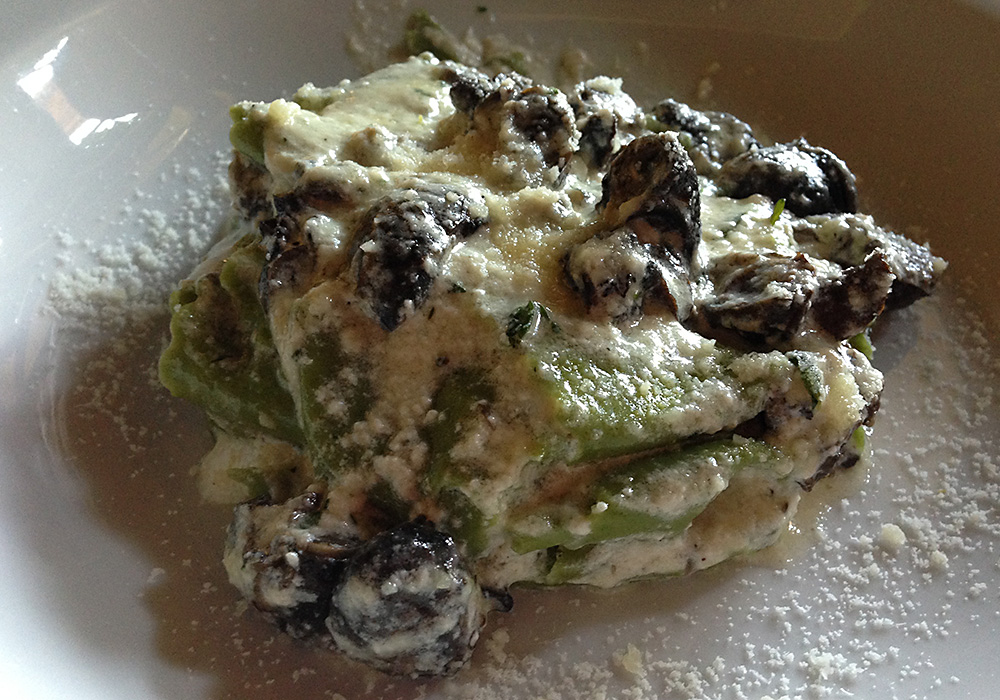
Pasta with snails
House-made tagliatelle pasta with nettles and garlic sweetened with vine snails and mascarpone. Tagliatelle alle ortiche e aglio addolcito con lumache di vigna e mascarpone. Trattoria Il Postiglione, Rubbiano di Credera
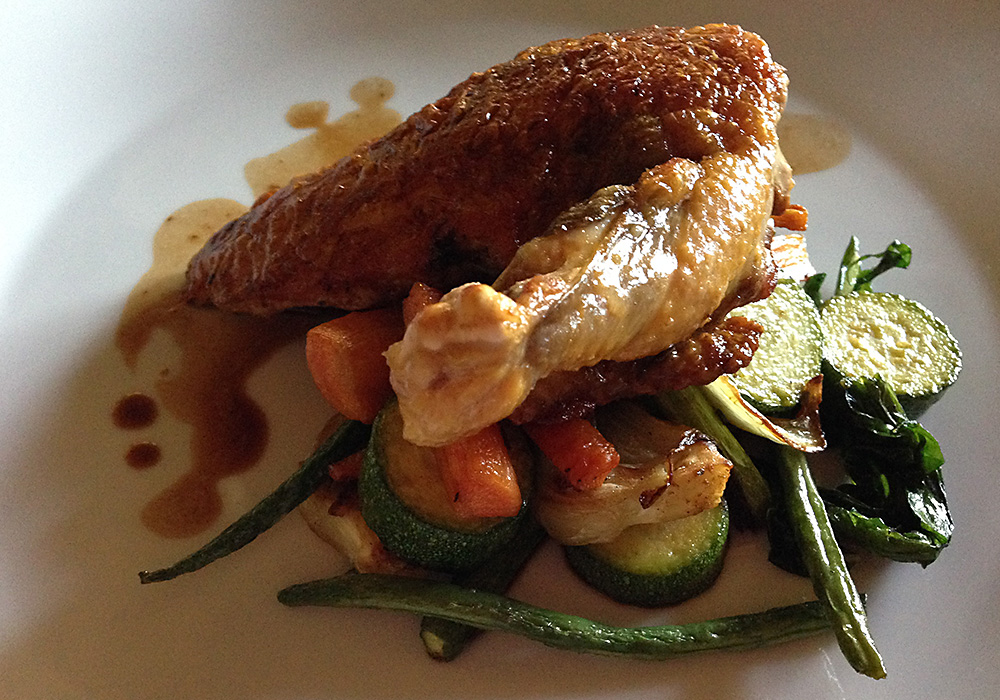
Guinea fowl and garden vegetables
Free-range guinea fowl cooked with black tea, served with garden vegetables. – Faraona ruspante al thè nero con verdure dell’ orto. Trattoria Il Postiglione, Rubbiano di Credera
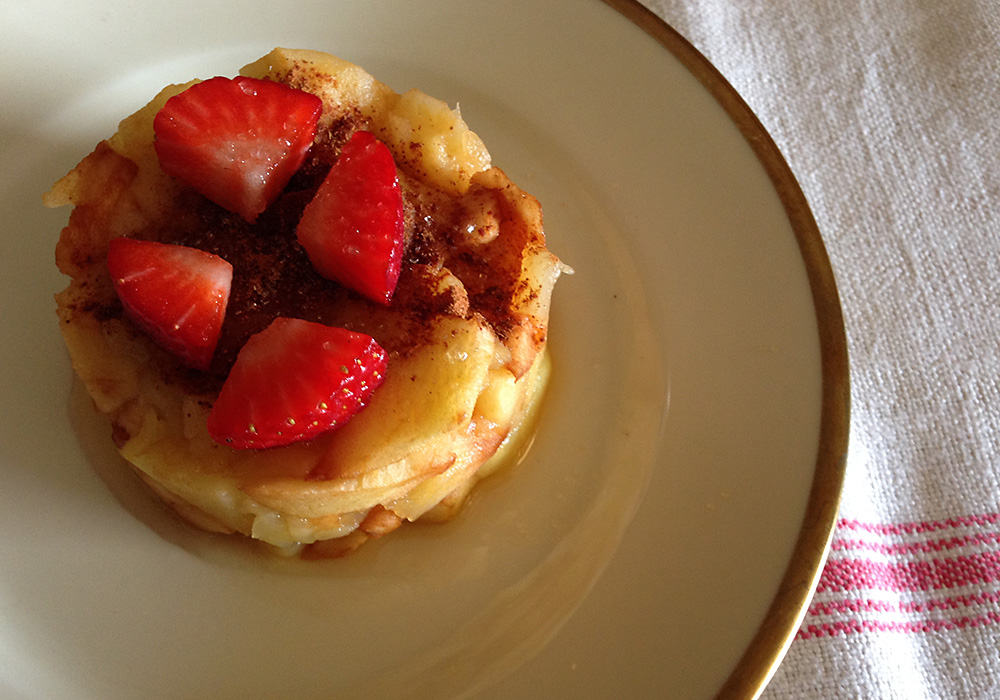
Baked apple with fresh strawberries
Baked apple slices with fresh strawberries and cinnamon. Milano
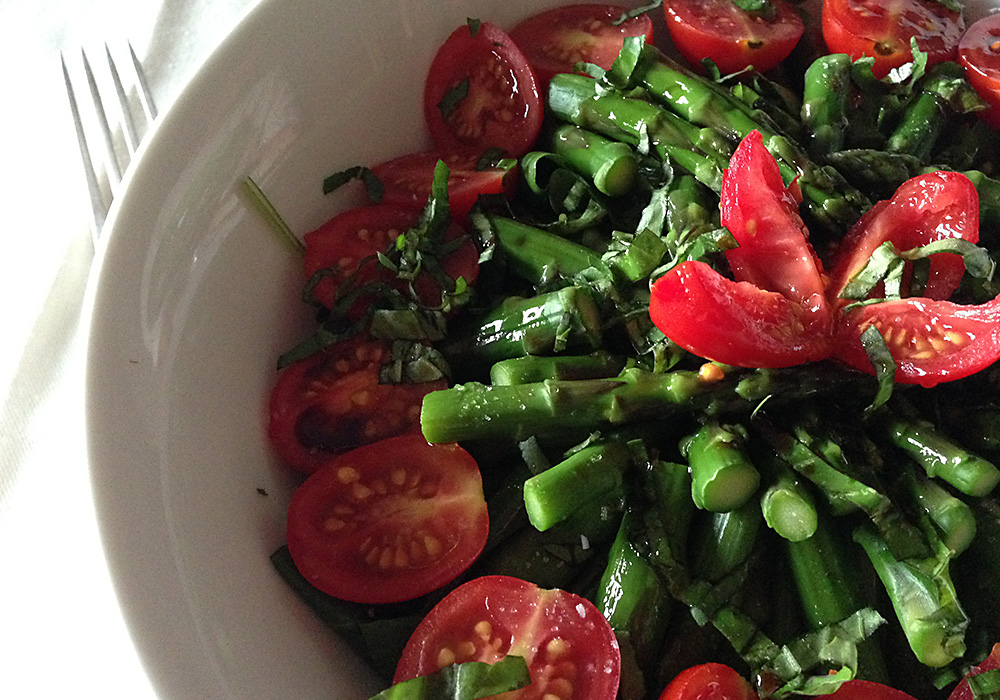
UN-Italian Salad
Not a typical Italian ‘insalatone’ – big salad – with greens, fresh asparagus, tomato and basil. Milano
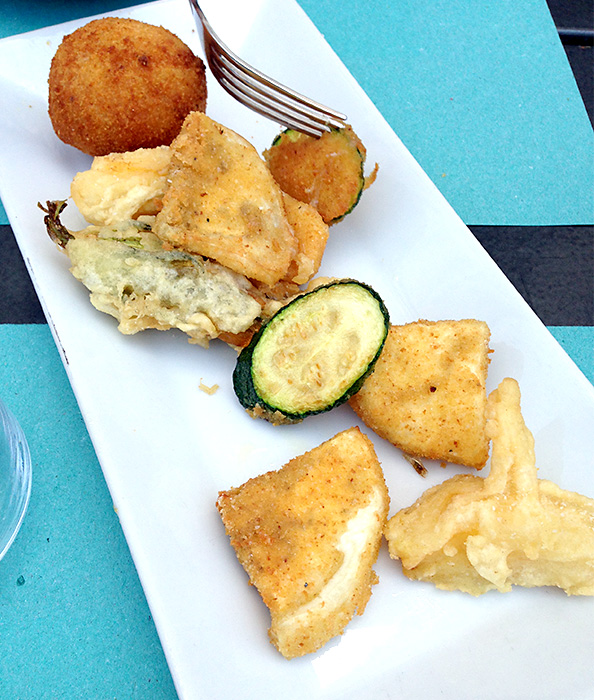
Mixed, fried foods
‘Frito Misto’, a mix of fried foods, including zucchini flowers, fish, arancine (deep fried rice balls). Milano
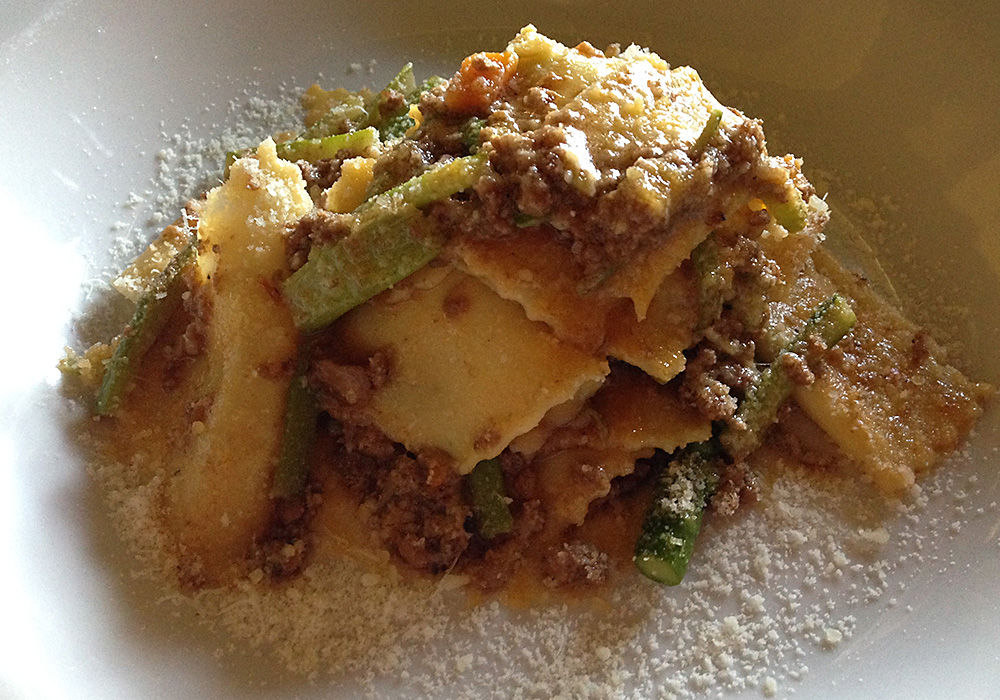
Pasta with meat ragú and asparagus
Egg pasta with white meat sauce and asparagus. – Stracci di pasta all’uova con ragù di carni bianche e asparagi. Trattoria Il Postiglione, Rubbiano di Credera
Lunch table setting
Lunch table setting with Ewa and Loredano. Milano
Lunch table setting
Lunch table setting
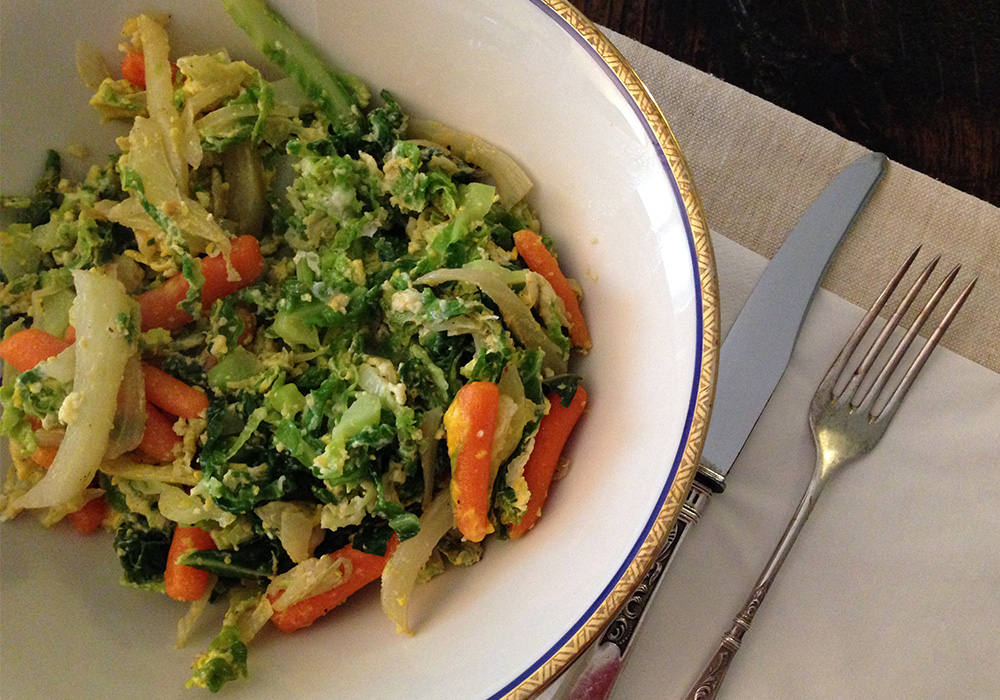
Cabbage, onion, carrot, egg
After going into ‘carb overload’, I craved some veggies with a little protein: cabbage, onion, carrot and egg. Milano
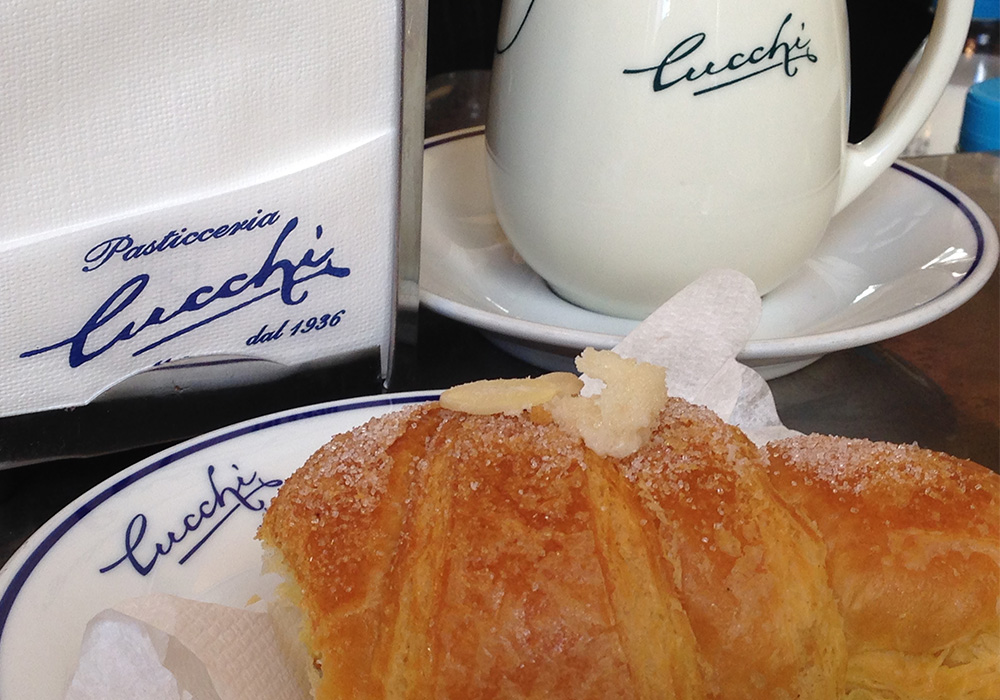
Italian breakfast
This is the typical Italian breakfast: a shot of caffè – ‘espresso’ – and a pastry, often filled with Nutella or some other horribly sweet concoction. (Just can’t do it, myself.) Pasticceria Cucchi. Milano
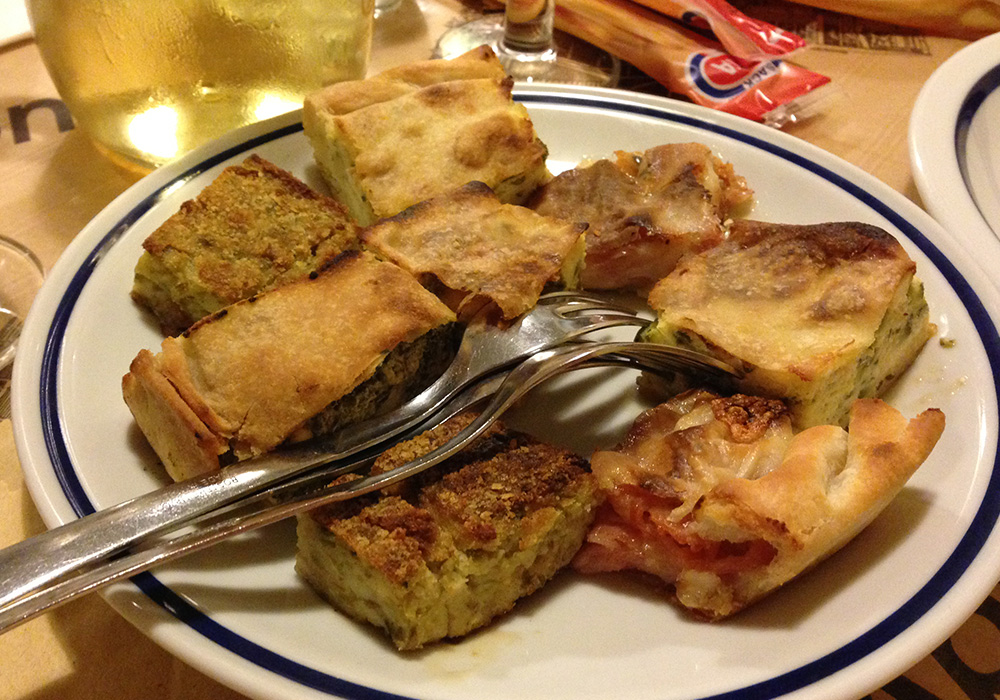
Appetizer bread and veggie tarts
Appetizers of bread and veggie tarts. Genova
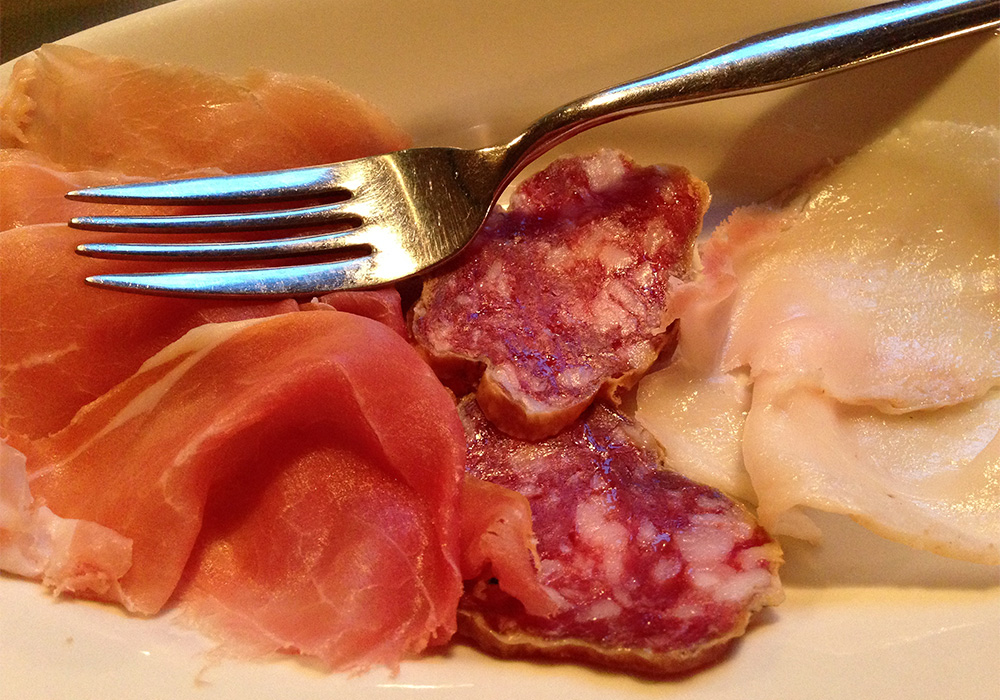
Prosciutto, salame and lardo
Prosciutto, salame and lardo – yes, LARD. Mmm. Try it. Delicious. L’Ustaria di Giùgaton, Pavia
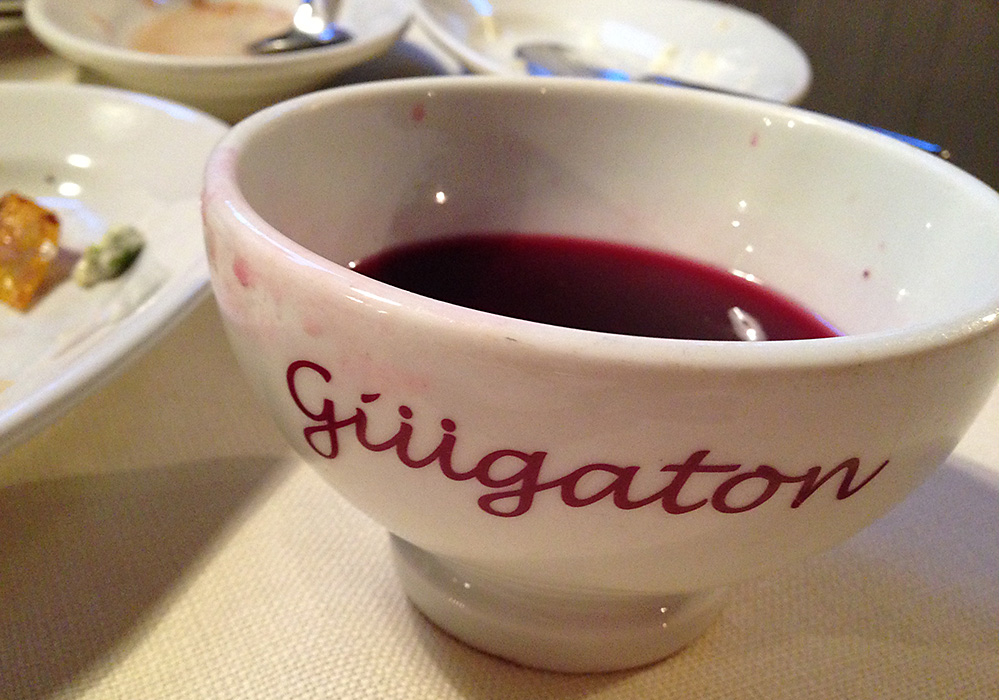
How to drink wine at the Gíügaton
How to drink wine at the Gíügaton. There’s even a way to hold it in your hands. L’Ustaria di Giùgaton, Pavia
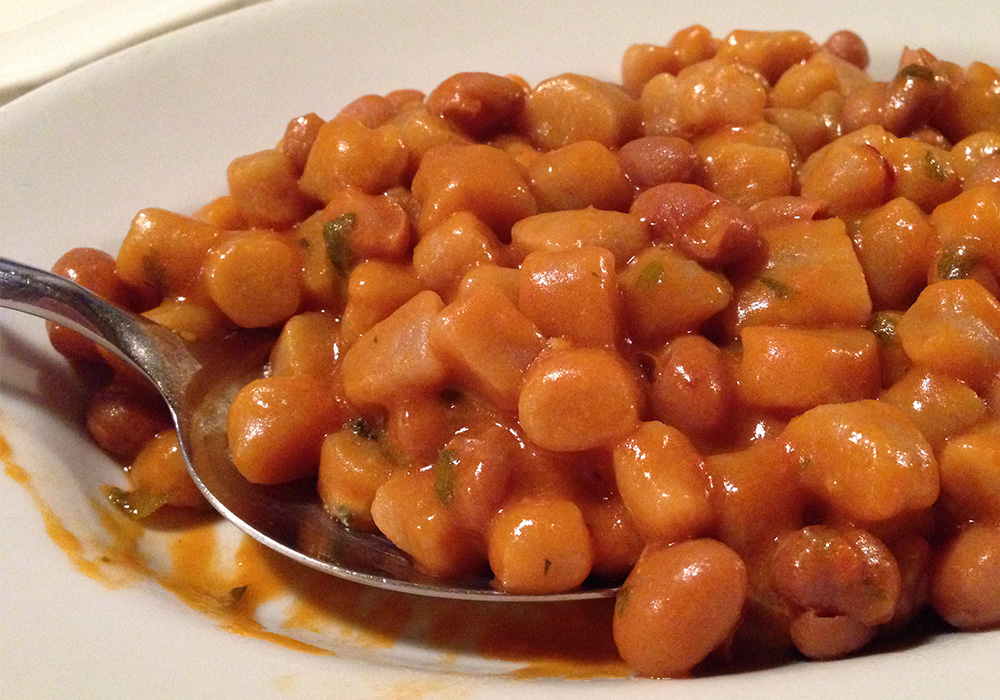
Pisarè
Pisarè – A combination of thumbnail-sized ‘gnocchi’ pasta nubs, beans, tomato and hot pepper. L’Ustaria di Giùgaton, Pavia
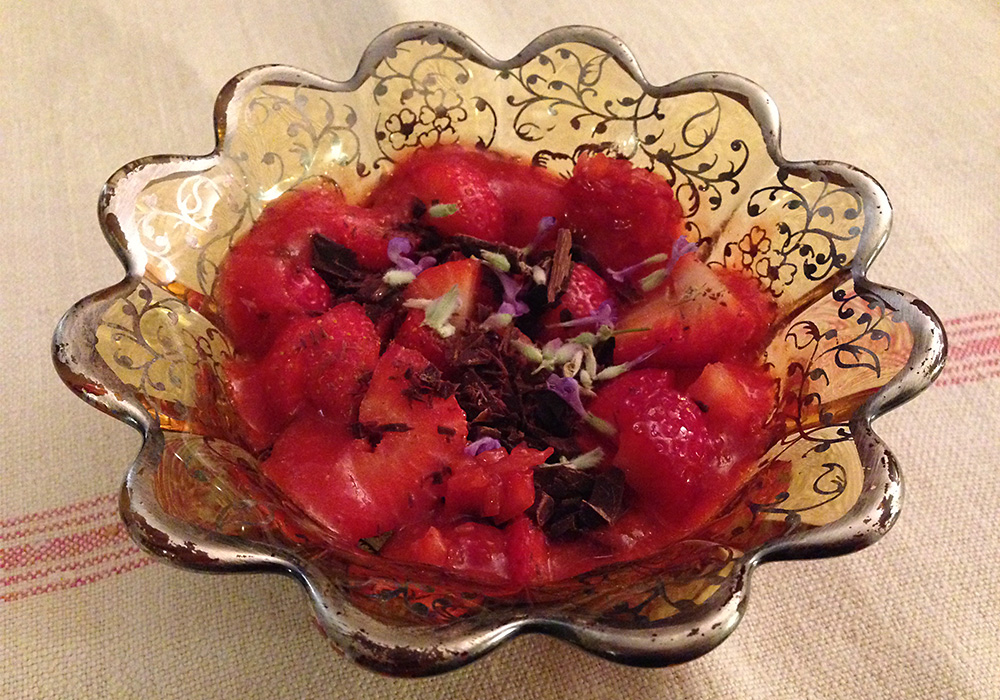
Strawberry macedonia
A very typical Italian dessert is ‘macedonia’, mixed, cut-up fruit. This is fresh strawberries with shaved chocolate and mint flowers, prepared by Loredano. Milano
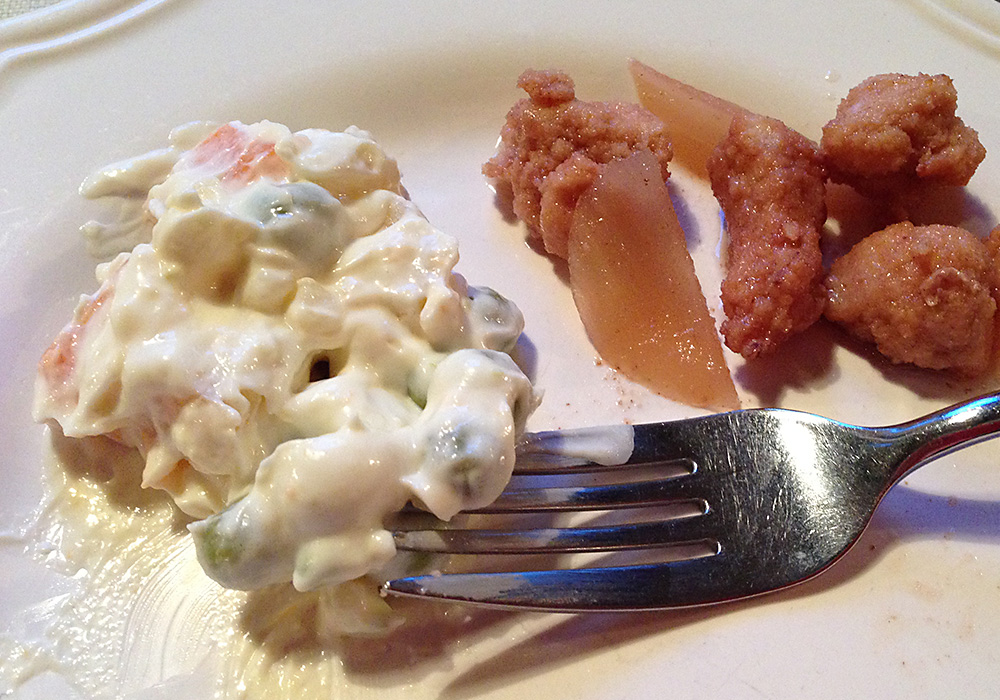
Russian salad with chicken
Russian salad – insalata russa – with a sort of pickled chicken – pollo in carbine. L’Ustaria di Giùgaton, Pavia
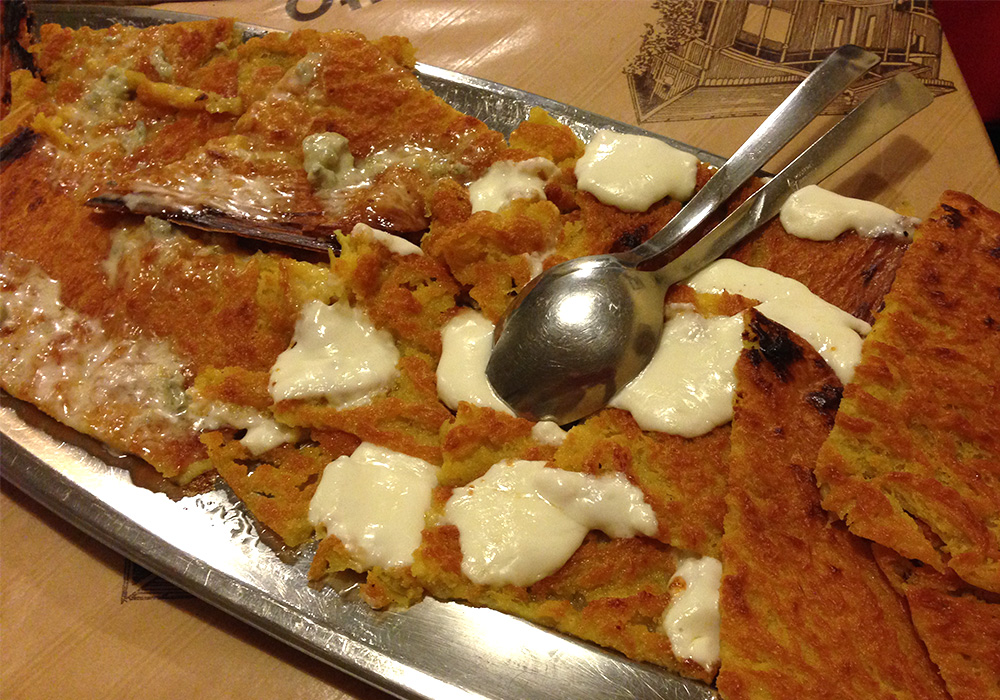
Farinata
Farina – Garbanzo bean flour batter which is spiked with olive oil and salt and baked in a very hot oven. Here served plain and with two different cheeses. Genova
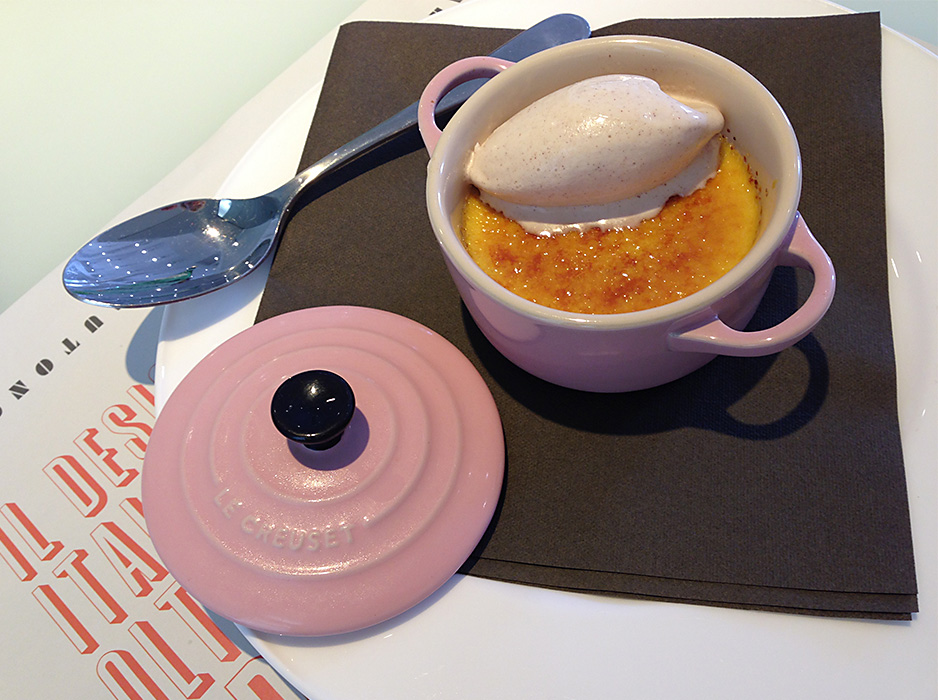
Coffee creme brûlée with cinnamon gelato
Coffee creme brûlée with cinnamon gelato – Creme brulé al caffè con gelato alla canella. Triennale Design Museum. Milano
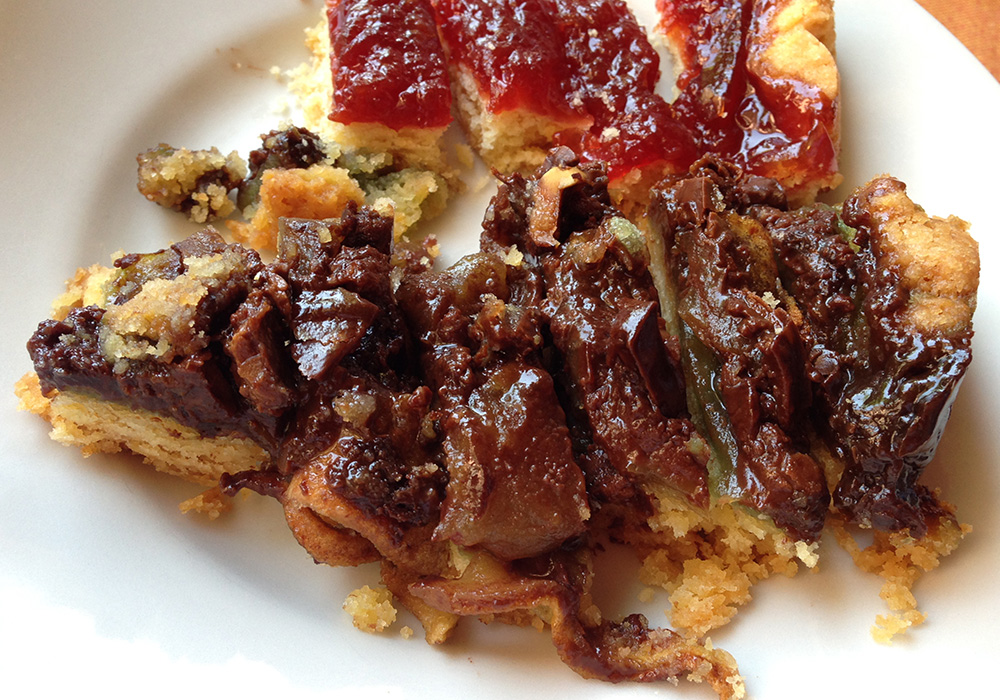
Marmalade and chocolate tarts
Marmalade and chocolate tarts – Trattoria da Pasquale. Parasacco (south of Milano)
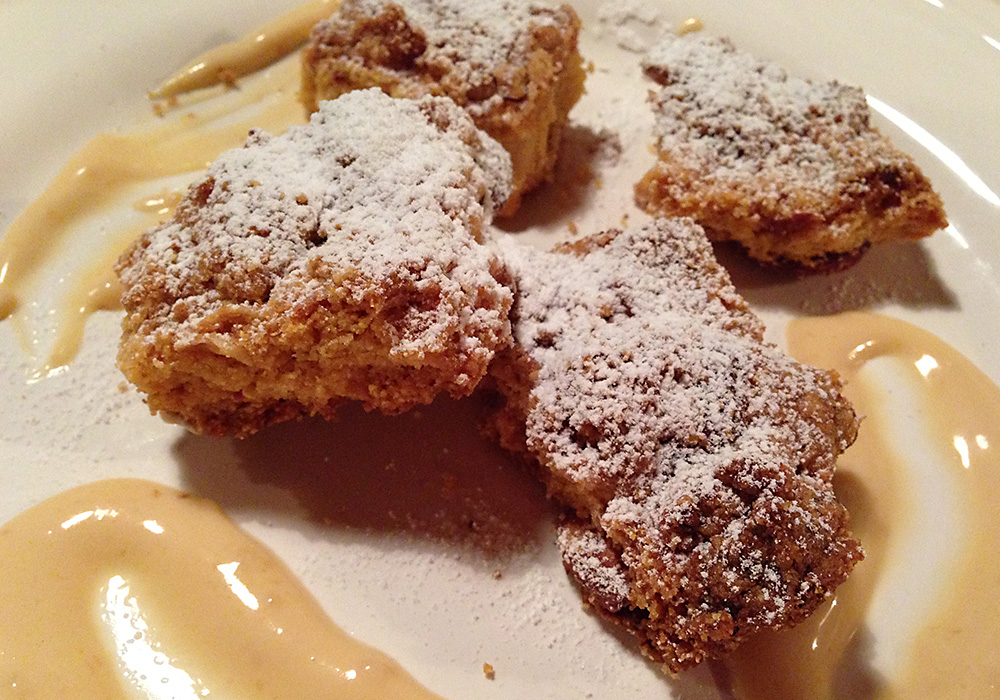
Dolce con zabaglione
Dessert of crunchy, fried, sweet nuggets surrounded by a ‘zabaglione’ sauce. L’Ustaria di Giùgaton, Pavia
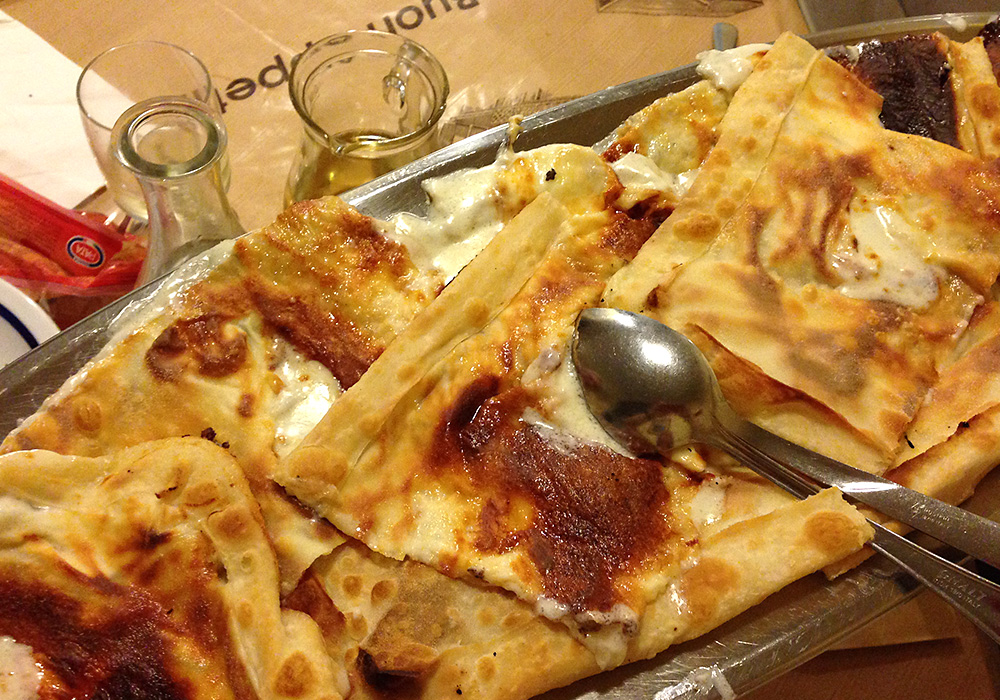
Foccacia di recco
Foccacia di recco – Stracchino cheese trapped in between two, super-thin layers of dough. Genova
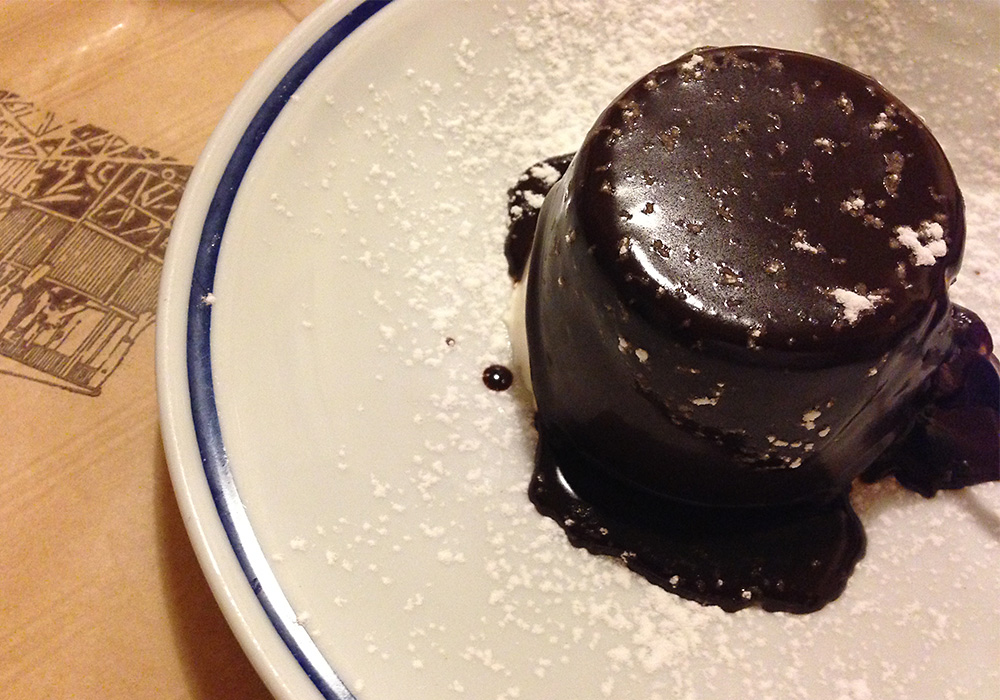
Panna cotta with chocolate
Panna cotta with chocolate sauce. Genova
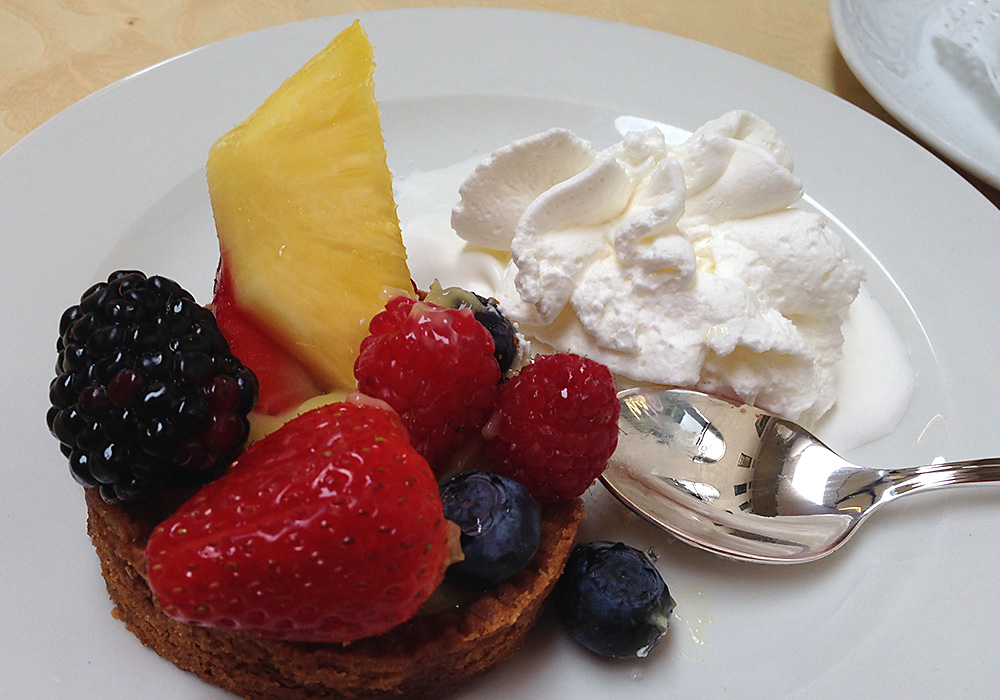
Fruit tart
Fruit tart. Milano
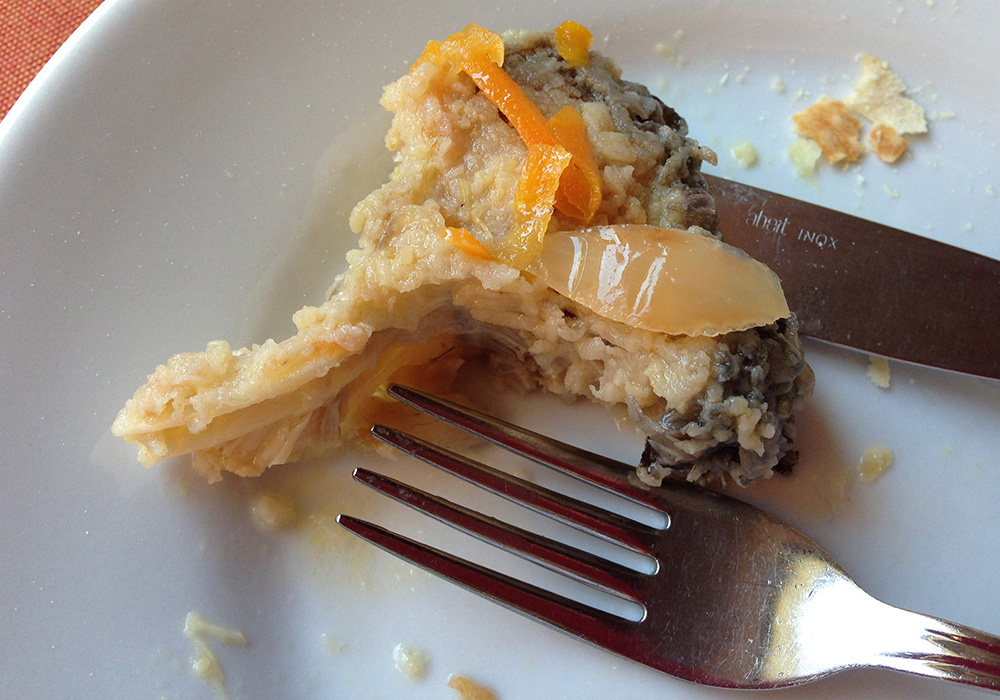
Pickled, fried fish
Pickled fish – Pesce sottaceto. Trattoria da Pasquale. Parasacco (south of Milano
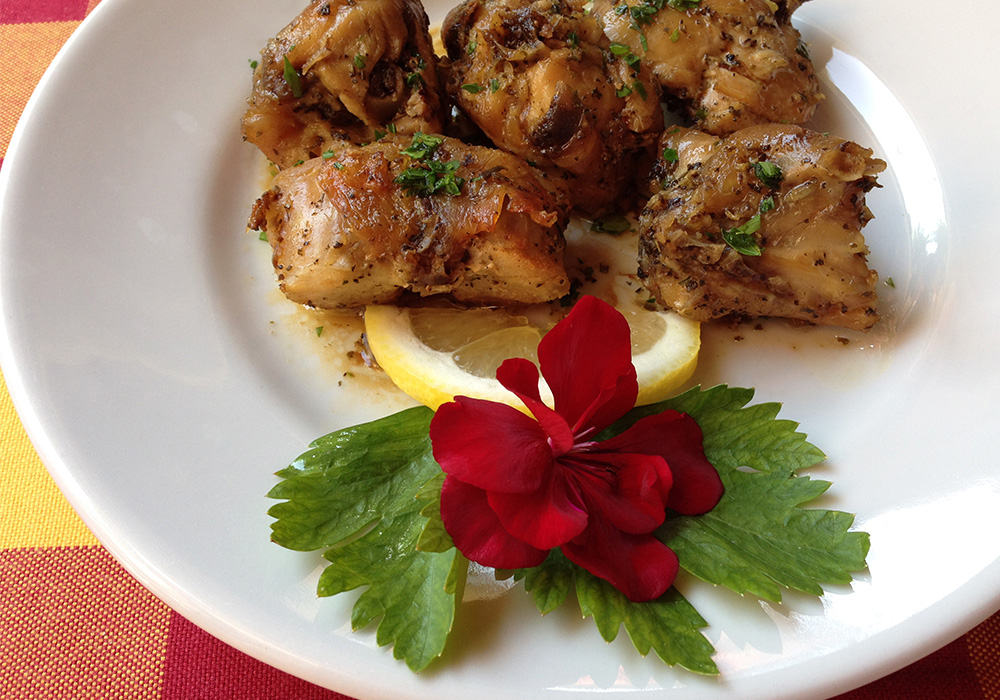
Rabbit with geranium
Rabbit with geranium – Coniglio con geranio. Trattoria da Pasquale. Parasacco (south of Milano)
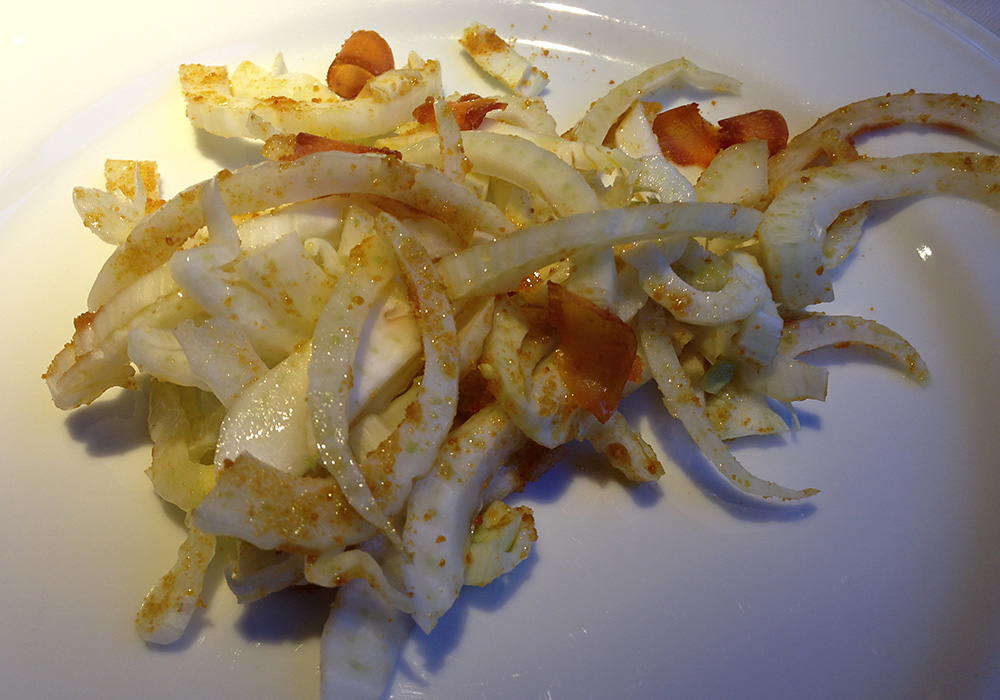
Fennel and ‘bottarga’
Fennel and shaved fish roe – finocchio con bottarga. Carlotta Cafè. Milano
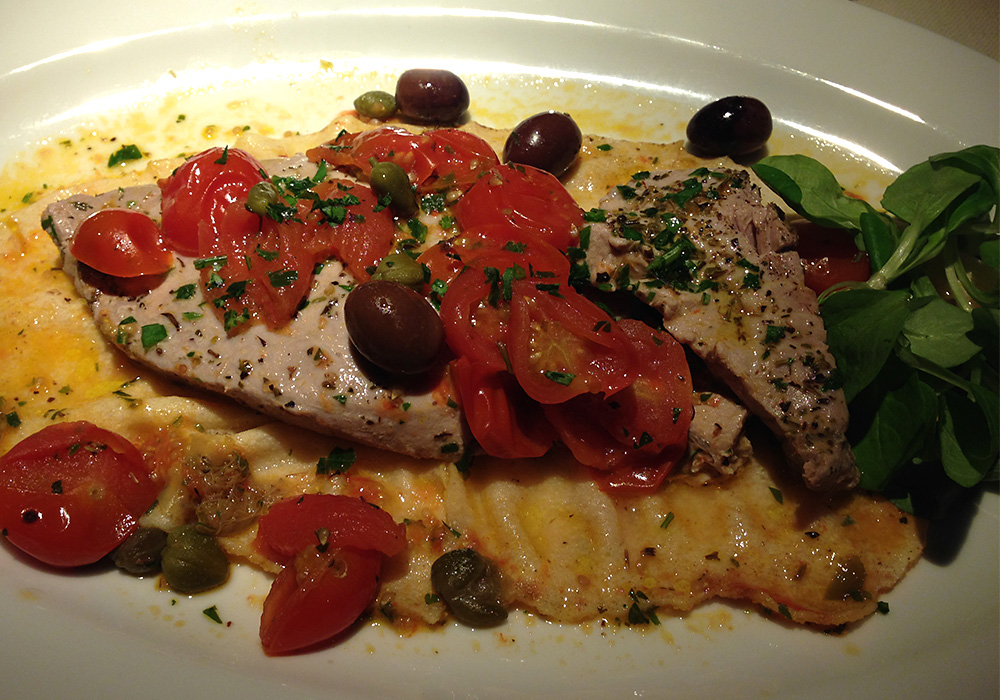
Tuna with tomatoes and taggiasche olives
Tuna with tomatoes and olives – Tonno al’isolana. Carlotta Cafè. Milano
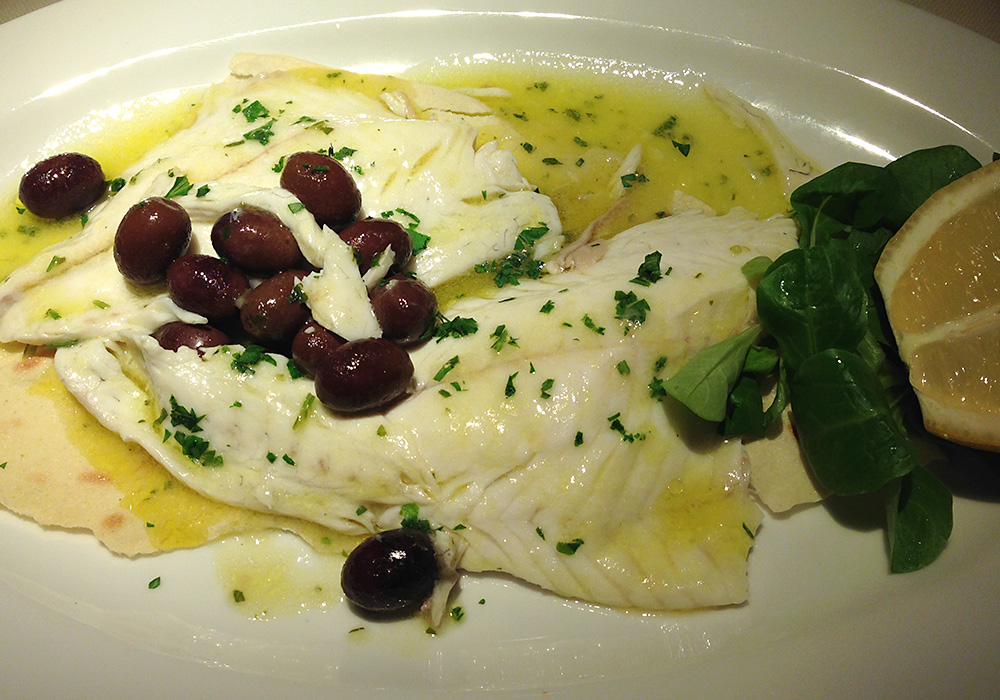
Baked orata with taggiasche olives
Baked orata with taggiasche olives – Orata al forno con olive taggiasche. Carlotta Cafè. Milano
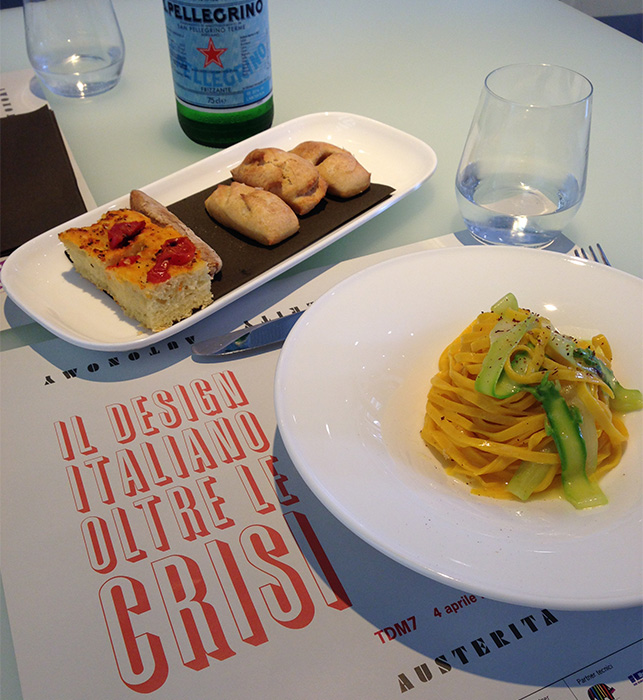
Tagliolino pasta with shaved asparagus
Tagliolino pasta with shaved asparagus – Tagliolino alla vecchia Milano, ‘la version primaverile’. Triennale Design Museum. Milano
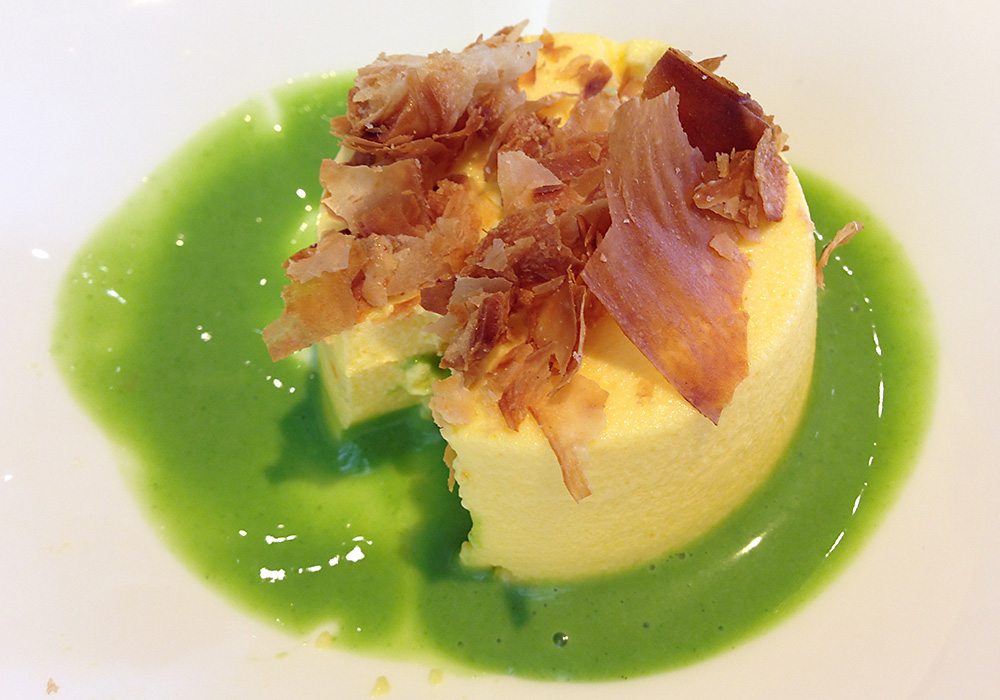
Lime pudding with mint sauce
Lime pudding with mint sauce – Morbida di lime con salsa alla menta. Triennale Design Museum. Milano
Hand-sewn, vintage linen is not enough to help stay cool close to midnight on what was a 95-degree day with high humidity, now the windows closed up tight to keep the mosquitoes out, and a pair of fans pointing straight at me. Choose: be kept awake by the “I’m gonna get you” high whine of the mosquito aloft on fresh air, or the “I’m so hot I’m sweating in the middle of the night” whine amidst the white noise of fans. Nearing midnight, and facing eight hours of pondering the question, I really wrestle with the choice. Cool air sounds so good right now, but I spent all last night battling the little buggers that sampled me from head-to-toe. I could open the windows at any time. But, once open, if even one mosquito’s gotten in, it’s all over for the night’s sleep.
Five days ago the weather decisively did the switcheroo. Following coolly/warmly pleasant, we had a downpour that would have drenched you in 30 seconds. The next day, we awoke to dry pavement, humid air and a change… Summer came like that! Poof. Bingo. No going back… or not until fall sometime.
I may very well open the windows, turn the fans on high to – theoretically – blow the mosquitoes away from my body, and take cover under a cotton sheet and hope for the best. No air conditioning in this student apartment!
Buona notte.
Update: 4:00 a.m.
I wasn’t actually sleeping. The mosquitoes had won. So I got up. I’ll take a siesta later today.
What tour of New York City would be complete without a tour through meat-lover’s shrine, Katz’s Delicatessen, at 205 East Houston Street? Just walk through the door and you’re handed a number. Get in line. Sit down and really fill up, or take it out the door with you. A pastrami sandwich could last several meals on its own, (easily putting you into meat and salt overload).
Granted, we didn’t actually eat there (we had already eaten… Italian), but witnessed a line at the counter, the tables full, a big pastrami sandwich awaiting delivery to its table and plenty of satisfied eaters. It was more of a local, cultural pilgrimage that begged obeisance.
From Katz’s web site:
“It would not have been possible for Katz’s Delicatessen to survive three depressions, numerous recessions, and two World Wars if we weren’t the best in NYC. Since opening in 1888, Katz’s Deli has maintained the tradition of quality that made us a beloved deli among the immigrants who crowded into the Lower East Side one hundred years ago. Generation after generation has stood before the carvers, watching as they skillfully slice a pile of pastrami, turkey, or corned beef by hand. It’s the exceptional taste that has carried our name far beyond NYC. Over the last century, a lot has changed- the skyline, technology- but Katz’s Delicatessen has been a cooking up the same food for 125 years, and will continue for years to come.”
Samples from the neon menu sign:
Tongue on Rye Sandwich $17.45
Knoblewurst on Rye Sandwich $14.95
Pastrami on Rye Sandwich $18.45
Hard Salami on Rye Sandwich $15.25
Chopped Liver Sandwich on Rye $14.25
1/2 Sandwich & Matzoh Ball Soup $16.45
Katz’s Delicatessen
“Known for the best.”
Katz’s Delicatessen
“Send a salami to your boy in the army.” (How about girls, too?)
Katz’s Delicatessen
You could eat for days on this sandwich.
Katz’s Delicatessen
Katz’s, that’s all.
Katz’s Delicatessen
I’ll take a Liver Puff, please (not on the current menu).
My perception of the enormity, diversity, energy and intensity of New York had felt daunting all these years, so I had never gone. “Oh, I can’t just go to New York for a couple of days. How can I even begin to make a dent in seeing it?! Where do I start? What are the “musts”? And all my life I had heard about the “danger” of the city and its subways so there was trepidation built up that prevented me from going. Somehow it was easier for me to move to a foreign country and speak a foreign language, than it was for me to make a trip to New York City.
Enough.
I’ve flown Seattle-to-New York-to-Milan several times, never having ventured out of the JFK airport. This time I decided to stop in New York for 3 days and “dip my big toe in the water” of the city. Kind friends, Alta and Jonah, offered to let me stay in their cozy home with them in Long Island City, Queens. (Alta and I met 2 years ago in Milan through Legacy of Letters.) And dear Richard, another friend, offered to lead me on a whirlwind walking tour of the city; working for the Transit Authority, he’s in a prime position to know some obscure ins and outs of NYC. (He and I met in Sicily 3 years ago.)
It took hours to juggle and finally book 2 separate round trip tickets, and make allowances for all of the added complexity that it would heap on my travel: 1 SEA-NYC-SEA, 1 NYC-MXP-NYC. It really threw a wrench in customs, immigration, baggage handling, security, transfers, etc., but I wanted to see something of New York once-and-for-all! So I gave myself lots of “padding” in the schedule, tried to anticipate the unknowns, and booked it.
The first night, Friday May 9, Alta, Jonah and I went to a neighborhood Mexican restaurant for a bite to eat, then walked to the waterfront Gantry Plaza State Park to look across the east river to the city’s nighttime skyline. Welcome to New York! Shimmering in the fog.
Luminous skyline
Luminous (cell phone) skyline snapshot from across the water, at Long Island City (Queens), Gantry Plaza State Park.
Industrial remnants
At Long Island City
Breakfast with Alta
Alta serves up Macedonia, the Italian term for cut, mixed fruit, usually served for dessert after dinner.
The next day, Saturday May 10, Alta had meetings in town, so we both hopped on the subway and then split up. I was amused as I realized that it was Milan and Paris that prepared me for New York. “Hey! I can do this. It’s familiar to me now!” I wandered, explored, walked, looked. First, I mistakenly went south to the financial district in lower Manhattan (Oops. but that’s how discoveries are made.) I then headed back up north to Central Park and the Metropolitan Museum of Art and the “Charles James: Beyond Fashion” Show. It was so inspiring! I swooned… and ordered the 10 pound book, which awaits me at home.
From MoMA, I just followed my nose south down 5th Avenue, Madison Avenue, Park Avenue… the places I had always heard of. I walked the south edge of the Jackie O Reservoir in Central Park. Merely poked my head in and looked up into the Guggenheim. Found quirky things at streetside. Dodged occasional squalls by ducking into doorways. And came across a window display at Chanel that enchants me still.
I allowed myself to NOT “see all of New York”, which freed me to accept the days as they unfolded without pressure. This was a trip to break the ice.
By the end of the day, and with the sky growing gray, feet tired, ready to sit, ready to write, I was “feelin’ groovy” at the west end of the 59th Street Bridge and found a relaxed place to sit with an open window wall to the street and the storm. I had a bite to eat, a sip to drink and plenty of pages in my journal.
Italian sausage with kraut
Italian sausage with kraut and a little mustard on the steps of the Metropolitan Museum of Art.
Metropolitan Museum of Art
Metropolitan Museum of Art stairway crowd before the squall passed through.
Expressively-dressed woman
Dressing with color and her own sense of flair.
Garbage cans with style
Attractively-designed garbage cans in Central Park.
Guggenheim Museum facade
The broad, sweeping, sculpture of the museum facade.
MO at the Guggenheim
I couldn’t resist.
Wall Street subway stop
Worth riding the subway just to see the mosaics.
59th Street Bridge subway stop
The subway platforms really have a lot of beauty for those willing to see it.
Art 2 Poster
Poster for ART 2: An International Platform on Contemporary Art.
Yet another M
This M scribed into concrete and filling with pebbles.
Grand Central Station
I just had to come up out of the subway and step into Grand Central to shoot a couple pictures, even though it meant paying another fare to get right back into the subway.
Ducking in out of the squall
At the end of the ‘Feelin’ Groovy Bridge’ (59th Street Bridge) for a bite to eat, a sip of wine and some time with my journal.
Copper ribbon text
Innovative window display at Chanel. The artist took thin copper ribbon, about 1/16″ wide, and kinked and twisted it so that it’s shadow wrote out a phrase. The whole thing was about 18″ wide. There were several different phrases rendered.
For the next day, Sunday, I had “signed up” for a brisk, whirlwind walking tour with Richard. He, his father and I had met at a B&B in Palermo, Sicily 3 years ago and had enjoyed exploring Palermo and Monreale together. I was finally taking him up on the offer he made then of a walking tour of New York City. We really beat feet! We started at The Highline in Chelsea, and leisurely walked from end to end. This had been a “must” on my list. (Seattle, take note of the Highline as the Viaduct comes down.) We also touched the West Village, the Abbottega Ristorante, Greenwich Village, SoHo, Little Italy, the Caffè Roma for Gelato, Chinatown, the Lower East Side, Katz’s Deli, the Financial District, the Municipal Building and City Hall. Richard and I walked across the Brooklyn Bridge as the afternoon waned, with plenty of time for photos, and ended in Carroll Gardens for a farewell dinner with Alta and Jonah.
Whirlwind Tour Guide, Richard.
My NYC Whirlwind Tour Guide, Richard, as we strolled the length of the Highline.
Highline New Construction
The Chelsea Highline has attracted new construction, refurbishing of old construction and a revitalized buzz in and about the area.
More Damn Traffic
“Honey, I twisted through more damn traffic today.”
Highline Transition
This is an elegant transition between paved walkways and planting areas up on The Highline. Where can I apply this concept?
Blue-on-Blue along the Highline
This amused my eye.
An M for my collection
Of course I “collect” the letter “M”.
Little Italy
Heading into Little Italy on a lovely day.
Ricotta and mozzarella
Alluvia. Oldest cheese store in America.
Another M
Much like the Metro M in Milano.
Street graphics
Repetition of one poster creates strong pattern and is very eye-catching. I see this in Milan, too.
Sam’s Knitwear
In 1948, Sam arrived in New York from Europe. After years of working odd jobs, he opened up Sam’s Knitwear on Orchard Street on the Lower East Side.
World hats and fragrances
Just love some of the old, long-time shops. How long have they been there?
BIKE is also a four letter word
Bike pile.
Beauty & Essex
Layered, old and new signage.
Iron contrast
Pleasing forms.
Blue-on-Blue at Essex
Ooo, such color!
Old tower. New tower.
Certain contrasts.
Stumble on the unexpected
Inspiring and sage.
Clever
How many people walk past this and chuckle?
Vintage Pepsi-Cola
The vintage Pepsi-Cola sign at the Gantry Plaza State Park in Long Island City, Queens.
Painted out
Random, abstract blocks of gray.
Doing what he loves
Artwork by Mike Tuscia. Doing what he loves in his chapter two.
Revitalization or gentrification?
Revitalization or gentrification or one-and-the-same?
Citizen M
A curious collage.
Across from the Tenement Museum
The view looking up, across the street.
Manhattan Mini Storage Ad
I was told that Manhattan Mini Storage has some clever ads.
Zombie Gnomes
Zombie Gnomes seen on an evening stroll.
Doorway under the Brooklyn Bridge
Is that doorway still in use? Access to the works?
Brooklyn Bridge cables
Looking up through the cables of the Brooklyn Bridge
City view
From the Brooklyn Bridge.
City view from the Brooklyn Bridge
City view from the Brooklyn Bridge, with Richard at right.
Pickle Selection
Left to right: Full sour, half sour and dill. Mmmm.
Farewell dinner
Farewell dinner with Richard, Alta and Jonah.
One arrow points elsewhere
Can you find the one arrow that points elsewhere?
NYC Skyline
From across the East River at Long Island City
Streetside Farewell Lunch
My streetside, farewell lunch of mussels with fennel, celery, garlic, onion in a delicious broth. Alta and I shared conversation and a meal before I caught the Air Train to JFK.
If you’re heading toward Venice (Venezia), veer a little north to the charming town of Treviso (Tray-vee-zo). A canal-town much like Venice, inland and smaller scale, Treviso is not overrun with tourists so you get more of the flavor of small-town Italy. Wander around the walled historic center, grab a bite to eat on the main piazza, stroll the large outdoor markets, watch the locals walk by. It’s simply real life going on at an Italian pace.
For a $4 train ticket, it was just a 20 minute ride north from the Venice Mestre (mainland) train station. Prices for meals and hotels in Treviso are much better than Venice, too!
Journal Entry – 4 June – Treviso Treviso is small and charming, worth an overnight, certainly, from Venice. It’s a model for how citizens can (and should) get around town. There are almost as many bikes as there are cars… maybe there are! And the narrow streets are free-for-all passages… cyclists, pedestrians and motorists going where they will, watchful of the others. Toddlers on training wheels learn to navigate this “system” that seems to lack a system. And somehow it all appears to work. The whole historic center of the city is and “area pedonale” (pedestrian area) and walking/biking certainly seem most efficient for getting around. I’m envious. I want to live in such a place.
In no particular order, here are some photos from my wanderings around Treviso: frescoes, archways and porticos, piazze, signage from long ago, tucked-in waterways, narrow passages and grand promenades, mosaics and layers of history. Take a look and be charmed. Then add it to your next trip in northern Italy.
.
.
.
.
Just the hint of an old meat shop sign, “Macelleria”.
.
.
Look UP, and you’ll see things you might not otherwise notice.
.
What’s left of an old mosaic, protected and accommodated with this walk-around path.
Balcony and sign at the Piazza del Duomo.
.
.
Care for something sweet?
.
Remnants of patterned stucco.
.
.
.
.
Look at the wear on the stone pavers. It speaks of years of passages.
.
.
.
The “Palazzo dei Trecento” after the bombing on 1 April 1944.
The Palazzo was rebuilt/repaired after the bombing. (They apparently continue to work on it; a “lift” held workers up high repairing around the upper windows.)
Caponata! I’ve GOT to figure out a good recipe for this delicious dish!
Notice where they’re trying out different paint colors?
.
.
One of the residences toward the outer edge of the historic center.
.
Monument to the fallen from all the wars.
Everyone by bike.
.
Why don’t WE have beautiful pavement?! (Answer: Cost of labor and liability.)
I wasn’t aware that there’s an “Apple” variety of Bananas.
.
Bike by day. Bike by night.
.
Click on the following panoramas to view them at a larger size.
Canal view from one of the rooms at Hotel Il Focolare, Piazza Ancilotto 4. Ask for room 30, 31 or 34.
.
.
.
.
.
While waiting for the train ride home to Milano, I was standing on platform #6, looking across to the passengers waiting for their train to Bologna.
Countryside, with grapevines, whizzed by my train window, with a lovely going-home sunset.
Early Sunday morning and I’ve opened up the house to the first warm breeze since I arrived two weeks ago. Perhaps it will take the stone chill away so a borrowed, heavy wool sweater is no longer needed inside while I’m working.
Both church bells and sirens are chiming. Always dogs barking and the sound of scooters. Though birds chatter, they’ve paused their reliable early morning song until later.
For the first time on this visit, I am wearing a skimpy top, skirt and sandals as I “take some sun” and write.
This place continues to hold me in a hundred ways. I have no answers regarding its place in my life, but know that every time I leave, a part of me stays behind which begs my return. There is still discovery and enchantment, though very different than when I arrived for the first time in 2008. The biggest difference I find is that being here now moves me in a deeper way. The visual rapture I swoon over will always be here. It’s the relationships, however, that get me on the plane.
Yesterday, while out walking around, I caught a glimpse of the woman that was my Fashion Design instructor in 2008. I ran ahead, called out her name and we stopped to chat, both surprised and pleased to see each other.
Imagine being in a large, international city, halfway around the world from home, and being recognized by and recognizing other people! One-by-one I have created a community for myself with whom I share a wave, a “ciao” and conversation. This is what continues to stir and tug me, prompting each return. This is the magic that makes me marvel.
“Affamata di Sapere” – “Hungry to Know”. That seemed like a meaty phrase around which to create a letterpress printing project. It was last year, in conversation with a friend here, that I had first heard that phrase and it leapt back off the pages of my notebook just two days ago. I knew I wanted to integrate that into a piece.
Last year here in Italy, I traveled with an international group through the Legacy of Letters tour. Part of the program was the group collaboration on a large printed piece that was both poster and booklet. Our creation was rendered under the mastery and guidance of artist/letterpress printer, Lucio Passerini, while at the Tipoteca Italiana Fondazione. At the end of the tour, when farewells were being said, Lucio invited me to collaborate with him on a printed project the next time I was in Milano… which is now.
Two days ago I wrote to him with that phrase and a loose list of words swirling in my head… and no solid concept of the form it would all take. Lucio wrote back and said it would be a “typographic jam session” on-press. I liked that. We’d “wing it” and see where the words took us.
Our collaboration started at 3:00 yesterday with the consideration of the words… weighing, comparing their meanings, similarities and differences. We honed, each adding to and deleting from the list. Then we started brainstorming about design, form and fonts, many times finding that our ideas were mirrored by the other. Those were fun moments.
Letterpress printing boils down to each individual letter being put into place one-at-a-time. We were working with woodtype from the early 1900s, from Lucio’s collection. We composed the words, fussed with the spacing, then surrounded everything by a hundred various, mathematically-calculated pieces of metal until the whole thing created an entire rectangle. It was all then clamped rigid onto the press base, ready to be inked and printed. Lucio’s been doing this for so many years and I enjoyed watching his process, seeing his thoughts made visible as he worked.
We printed for 5 hours, adjusting layout and color on-the-fly. “A touch of red” in the green. “A little taste” of white and blue in the dark gray, aiming for more sophisticated color admixtures. The spring green came off the press first, hung to begin drying, then we printed the word list in its dark gray.
Look at all of the individual pieces to create those three words. And many are so small you can’t see them here.
I hung up the printed proofs then we stood across the room to judge the letterspacing and then make adjustments by adding and removing pieces of wood and metal between each letter. (Our green ink started out much too “lime” for my taste so we made it more of my favorite spring, wasabi green.)
Forty printed sheets were hung from a rack suspended from the ceiling, waiting for the second impression.
Sometimes typos hide when reading things backwards. Do you see the error in the following photo?
We printed a tissue paper proof to determine the best position of the word list, overlaying the “affamata” phrase.
We both smiled when the first, final piece came off the press.
“Hungry to Know. Passion, curiosity, perseverance, vitality, appetite.”
When we finished, we joined Lucio’s dear wife at their home, for a celebratory toast, appetizers and a chat. It was a very good day. Grazie, Lucio!
Here are shots of part of Lucio’s studio/print shop. Note how the light changed between 3:00 and 8:00 p.m. (Click on each one to enlarge the photo.)
Mention a trip to the “Italian Riviera” and one envisions palm trees, beaches, hot sun and relaxation. In fact, Russia had a heat wave that forced the cold polar air south to Italy, so it was very mixed and generally chilly weather along the Ligurian Sea in Italy over the weekend.
When I was living here in Italy for an extended period (June 2009 – July 2010), I rented an apartment from Sandra, who lives in Sanremo. I met her in person 4 months after I had arrived in Milano, when I spoke limited Italian. But she, her husband, Mauro, daughter, Valeria, and I sat and chatted as best we could. At the end of our chat, she invited me to come visit them sometime.
I took the train to go see them in February 2010, after which Sandra said, “You always have a place here with us.” I’ve have now been there five times. A trip to see them has become a requisite “must-do” for me while in Italy.
The four-hour train ride takes us up and over the hills from Milano to the port city of Genova (what Americans call “Genoa”). At that station I had 15 minutes to transfer to the slow train to travel along the Ligurian Sea shoreline, stopping at a half dozen towns along the way until we arrived at Sanremo.
Just a stone’s throw from the border with France and Monaco, Sanremo is a destination for tourists enjoying the lovely setting and climate, the casino, and the yearly musical festival. There are street markets, beach umbrellas for rent, historic centers and gala events. Traffic is chaos and life is beautiful.
Milano had been having a crashing, pouring rain all night and all morning, and I had to walk to the subway station to then get to the train station. I hate having wet feet and imagined having my shoes drenched and cold for 4 hours on the train. So I tied plastic bags onto my feet. So very chic. So high-fashion. (Somehow they got damp anyway.)
It would be fine with me not to see McD’s in my life ever again so it pissed me off to see their ads plastered onto every turnstile at the Milano Centrale train station. Damn. Hate that.
I was standing at the train platform, looking up to the Genovese hills. (Click to enlarge.)
People watching while waiting for the train in Genova. (Click to enlarge.)
We encountered sunshine along the coast, close to Genova and Savona, but then it got grayer and cooler as we approached Sanremo. (Click to enlarge.)
Riding along the sea, so blue in the sunshine. (Click to enlarge.)
Sandra was making her wonderful Ligurian-specific “Sardenara”. It’s “not-quite-pizza”, with anchovies, Ligurian Taggiasche olives, tomato sauce and garlic. (Click to enlarge.)
Sandra, Mauro and Angelo stand on the deck of Angelo and Renata’s new house that’s near completion, right at the Ligurian shoreline. (Click to enlarge.)
Sanremo is known for the flowers it grows for Europe. These are some of the many greenhouses on the hills.
We spent some time watching the Giro d’Italia. The poor cyclists rode amidst snow fields and glaciers in the pouring rain.
In the Sanremo train station waiting to head home. Here’s the automated restroom, coin-operated and self cleaning. I think the whole stall hoses itself down after each use. (Click to enlarge.)
My train compartment fellow travelers for part of the ride from home. A cross-section of the world was represented here and we all enjoyed the varied chat. (Click to enlarge.)
These red-and-white striped chimneys were Dr. Seuss-like against the storm blue sky on the way home.
It’s Sunday night. I arrived on Thursday morning in the middle of a hard, driving rain. Since then, it’s been wet, dry, and gray, with just enough blue to keep my spirits up.
I’ve been piling on every layer I brought with me just to stay warm in my ceramic tile-floor apartment, but I’ve gotten sticky-sweaty when I go out walking about. Deja Vú; this is like last year. (Pretty soon I’ll be complaining about sweating in the muggy heat.)
Yesterday, in the rain, I walked to the subway station, Porta Genova, to meet my friend Ewa, then we walked back here, arm-in-arm for some chatting time. A couple of hours later, I walked her back to the station to, bid adieu, then I walked back home again. By then my shoes – ballerina flats for walking – were drenched.
I really have no active way of drying out my shoes (or clothes). The country turns the radiator heat OFF in April (or thereabouts) so I couldn’t put the shoes on the hot radiator to dry out. There is no clothes dryer, so they can’t be tumbled dry. Without sunshine I can’t find much of a sunny spot in which to perch them. So, I was considering turning the oven on low heat to dry them.
But, just before the next rain shower, a spot of sunny sky persisted long enough to display my shoes on the window ledge* and make my shoes dry-enough and wearable. (Just so you know, it’s not ALL “Under the Tuscan Sun” around here! Besides… I’m not even in Toscana – Tuscany – I’m in Lombardia – Lombardy. Every region is different.)
Glad I brought a long pair of jeans for the first time in 5 years. They’ll keep me warm(er).
In this neighborhood, Saturday is market day. A string of city blocks nearby is blocked off and filled to the brim with produce, fish, cheese, flowers, housewares, clothing… and people. It seems to be when everyone does their big marketing for the week, going home and filling their tiny fridges and cupboards with Italian veggies, fruits and cheese, mediterranean fish, and cheap sundries.
When I was first living here in 2009, it took me a few times to figure out “the system” for buying from the vendors, and then overcome my timidity with my then more-limited Italian. I know the protocol now for waiting in line off to the side, but I still get mixed up over exactly how many green beans come in a kilo… quite a few! Requesting my food in metric amounts is still a guessing game for me.
Then there’s the foxy game the vendors play to upsell a little each time. I ask for 2, they put 3 in my bag. I ask for a half kilo, I go home with somewhere between half and a whole kilo, even though they weigh each order.
And I have yet to find a produce vendor that handles the goods with a gentle touch. It matters with tomatoes, apricots, nespole, plums, figs and others! They use the open produce bag for target practice, flinging each tender fruit toward the bag’s gaping entrance. (Sometimes I’ll observe a vendor for a while and decide not to buy from one that throws the fruit around. It doesn’t leave me many options though.) By the time I walk home with my day’s purchases, I’ve got spoilage already.
All that said, the array not only offers edible delights but a visual one as well. I enjoyed shooting panoramas today to give a sense of the surroundings (those these don’t show the throng of people, nor the clothes and sundries.)
(Click on the photos to see them enlarged.)
Lovely fruits and vegetables.
All sorts of seafood, much of which I’d never seen until I came here.
Olives, canned tuna, pickled foods.
Produce galore.
Breads and rolls.
We need more olives.
Yet more produce.
Olives, pickles foods, dried fruits.
Nuts and olives.
Salted cod, olives, dried foods and others.
More produce, lots of greens.
Many different cheeses and meats.
A meat and cheese vendor.
Today I brought home erbette, rucola, lattuga, fagiolini, pomodori, olive, cipolle, cima di rapa. (leafy greens, arugula, bibb lettuce, green beans, tomatoes, olives, pickled onions, broccoli tops.)
The nightingale is singing in my courtyard and the sun is shining. The air is fresh after yesterday’s downpour and wind. The sound of the canalside traffic comes in through my courtyard windows as the city bustles.
I’m waiting for the shops to reopen after their lunchtime closure, so I can go buy a few fixit supplies.
16 May 2013, 10:00 p.m. – Milano
Arrived “home” to Milano this morning on a pouring-down-rain day. Long travels and lack of sleep over the last few days have left my brain foggy. It’s a wonder I can speak any Italian at all!
Got a few groceries of my favorites: freshly-sliced prosciutto, bresaola, mozzarella di bufalo, smoked provolone, pecorino sardo (meat and cheese theme), plus cherry tomatoes, songino salad greens, Barillo arrabbiata sauce, taggiasche olive oil and balsamic vinegar.
After a good nap, I went to recharge my Italian cell phone, then came home and messed around with getting online. Now I’m all set up and it’s time for a good night’s sleep.
Buona notte.
16 May 2013, 9:25 a.m. – Milano
Milano Malpensa Airport on a pouring-down-rain day. I’m sleeveless as I wait for the train’s departure to go into the city. I have a sweater and coat to put on against the rain, but I’m plenty warm without the, until I get out in it.
I’m beat. Dead-tired from not having slept hardly for 2 nights. My brain is foggy/rummy.
15 May 2013, 5:15 p.m. – JFK Airport, New York
Sitting and waiting at JFK Terminal in NYC and listening to Paul Simon’s “Slip Sliding Away,” on my way back to Milano. I’m excited to return!
It’s been a pause, a respite from one endeavor so I could shift energies and surge headlong into others. I took a break from documentation so that participation could be intense and entire. And it has been.
After the visual lushness of Prague last July, I returned to Milano for just a few days before heading back out for a 12-day whirlwind typographic tour with Legacy of Letters. Our days started early, ended late and were filled in between with letterforms and conversation. These months later, many of us still keep in touch. The lasting connection is a surprise gift.
The tour ended and I returned to Milano to gather my things and my wits, suntanned, thinking in Italian and in the dreamy end-days of goodbye. I had no plan to return to Italy 10 months later and didn’t know when I would.
I’m a veteran of re-entry now, but it still plunges me deep and solo and quiet. It takes a while to get my head together after returning from life off-and-away. It’s as if I’ve been to the moon and back. I hunker down and get private, and very selective.
Really, it takes a couple months to get back in my groove here, not feeling jarred and jolted by contrasts and absences.
In time, I got my momentum back up and strong. I’ve explored snow crystals and cloudscapes. HTML and CSS. Intimate, heartfelt time and public, community time. I have enjoyed satisfying work and creative, personal expression. I took a big bite, savoring flavors both sweet and sour, and filled my belly in these last 10 months.
Yet still I felt a pang at the idea of not tasting Italy, not setting foot along the Naviglio Grande – the Grand Canal. Not sharing meals with friends I cherish there. Italia… Milano… has become a second home for me. My heart and mind have been pierced with a barbed and complex arrow which cannot be removed.
And so I find myself on the eve of departure. I look forward to a “going home”. It’s not the external excitement of a first visit I feel. It’s deep and fundamental; it’s in my gut and my core.
I have crafted a life which twines two places half a world apart. I marvel at it, find it jaw-dropping and am humbled and grateful more than I could ever communicate. It is a “well-wrought life”, as a friend once said.
Just days from now, I will make my pilgrimage to my beloved Duomo of Milano. I will take very late night strolls along the canals. I will ride a bike into the farmland for fresh ricotta, share meals with dear friends, switch to Italian 98% of the time and fill myself with inspiration. My time in Italy is deeply challenging, deeply nourishing, deeply invigorating.
It is an incredible gift to live so full-on, to be so vital, so stimulated.
After a time of their love wrapping halfway around the world, about 7 months ago Jan moved back to the Czech Republic to marry and be with his dear Petula.
Jan had become a much-loved “Burien Boy”, so I gathered mementoes from friends into a “juju bag” of good wishes and hopped a plane from Milano to Praha (Prague) to spend a few days with the two. (July 3 – 6, 2012)
I brought some Italian coffee and Grana Padano cheese for Jan and Petula.
I enjoyed the ultimate hospitality, good friendship and conversation, and a built-in translator, tour guide and driver!
Imagine celebrating the Fourth of July in the former-communist Czech Republic. Jan wore his red-white-and-blue plaid shirt in honor of the day, and we found many stars and stripes along our walking path.
“Thank you, America! On May 6, 1945 the city of Plzen was liberated by the U.S. Army.”
We saw the highlights of their home town, where Jan grew up, Plzen, and drank Pilsener beer. We enjoyed an afternoon looping stroll in Pizek, where they had been living. Drove through country roads and villages. Made a grand tour of Prague, (to my eye, more beautiful than Paris). We fed the ducks, then ducked for cover from a sudden drenching rain.
Jan and Petula saw each other for the first time in person along the John Lennon Wall in Prague. It was only fitting that we shoot a portrait of them there.
What a beautiful backdrop for a photo: the elaborately decorated front doorway of the Italian Consulate in Prague.
It’s Monday in Milano, soon to turn 3:00 pm, the end of the day’s slow start. I’ve been hunkered in the house at the computer, in no rush to go anywhere because there’s been no where to go. Generally, on Monday, places are either closed or don’t open ’til 1:00 or 2:00 or 3:00, give or take an hour or two. Need something? What’s your hurry?!
Listening to music “on shuffle” – likened by one friend to eating whipped cream with mustard – I was hearing Led Zeppelin two minutes ago, and now Spanish classical guitar virtuoso, Felix Mañe Rodriguez is playing something wistful and pensive. A musical mix while paying bills, writing e-mails, eating a chicken & arugula salad and figuring out travel plans.
OK. It’s 3:04. I can go run some errands now. Ciao ciao.
(Annie Lennox and Chinese Traditional Erhu came next in the music list. I guess that really IS a lot like whipped cream with mustard! Love that analogy!)
Saturday morning, 11:30. The church bell just tolled. Birds in the courtyard. A lovely, fresh breeze through the open windows. Sunny and warm. And someone in the neighboring building has been playing scales on a synthesizer keyboard creating the kind of repetitious, monotonous sound that makes me “fuori di testa” – out of my head. But it can’t be changed, and that acceptance allows me to ignore it.
I just got word that they will start today to completely tear out and rebuild my little courtyard. They will leave 5 of the large plants and all else will be removed: the Day Lilies, the delicate, purple “Mouth of the Lion” that I had just photographed, the hidden yellow flower I found, the wild strawberries. Granted, the courtyard is jungle-like, but it’s given me little pleasures. It will also be torn up as my place to enjoy my coffee in the morning, and it will no longer have the privacy afforded by foliage. But I am transient here and will always find my joys. I hope they create a new treasure.
Moments before the gardener returned this afternoon to cut, I made one last bouquet (set with a bowl of fresh figs from this morning’s market).
At 10:15 last night, I stepped out the front gate from the public courtyard of my apartment complex and headed north along the canal for a couple-mile walk.
I crossed over the small foot bridge near my place, then glanced over and noticed a couple of older women sitting out on their second floor balcony, also enjoying the evening.
The place was hoppin’. Milano has turned warm and humid and the evenings are for socializing. It’s the “passeggiata”, the walk through town to see and be seen. It’s the social hour… the pre- or post-meal digestif… the expression of social position… the time to hypothesize, criticize or seal-the-deal… the time to procaim romantic status, whether available or not.
Thousands of people were out strolling with friends, seated at sidewalk tables, riding their bikes or standing at the canal balustrade with a glass of wine or beer, chatting. It’s the thing to do here. It’s part of the day’s fabric in Italy. (Balmy evenings certainly encourage the outdoor visitin’, but I saw this in the middle of winter, too, just without the number of outdoor tables.)
I live in the “Zona Navigli”, the Canal Zone, (approximately where the number 1 is on the map below). (Naviglio means one canal, roughly pronounced “nah-VEE-lio”. Navigli is plural.) Each time I’ve been living/staying in Milano it’s been in this neighborhood. Though the broad area around and including Milano has a series of inter-connected canals – which Leonardo da Vinci played a part in devising – the neighborhood IN the city is referred to as the “Navigli” and includes the triangular area between the Naviglio Grande and the Naviglio Pavese, and areas closely adjoining these two canals.
When I lived here for 14 months, I rode my bike several times a week south along the Naviglio Pavese, then west into the farmland. I’ve been on my bike as far south as Pavia, as far west as Abbiategrasso and as far east at Trezzo Sull’Adda. (Click on the map for a larger view.) Note the locations of Lago (Lake) Maggiore and Lago di Como up north. I’ve been told of bike routes from Milano up to the lakes, but have not been fortunate enough to ride them. “Fiume”, by the way, means river.
The Zona Navigli is a pretty “hip, young, creative” neighborhood, with schools in the area, and one of Milano’s design hub areas. At canalside, one finds art galleries and antique shops, used books stores, gelaterie, pizzarie and every other sort of place to get a bite to eat. It’s also one of Milano’s Happy Hour Aperitivo hot spots. Eight euros will get you a drink and food from the buffet table. (It can be a cheap dinner, but if you want one more glass of wine or beer, you pay the 8 euros again.)
This first video was shot at the junction of the north-south Naviglio Pavese, (along which is located my casa) and the east-west Naviglio Grande. Listen to the voices, the street noise, the general hub-bub. Note, also, that there are two local police officers there if needed.
People have asked me whether I feel safe out walking around so late. Tell me, does it LOOK like danger? I’m appropriately aware and vigilant, but I think the evening crowds are a lot like bees when they’re swarming: they’re not interested in stinging, they only care about following the queen. In this situation, people are just relaxed, talking and people-watching. There are likely some on the prowl for theft or mischief, but I never sense any red flags rising.
Here’s a second video taken just a few feet away from the first, looking at the display case of the pastry shop open late to satisfy a sweet tooth.
This second video shows a 180 degree view, which looks down the Naviglio Grande, then scans the large, stone-paved street. Note the wide flat barge-type tour boat in the middle of the canal.
At the point where I turn around in my walking loop, there’s a building with highly stylized graffiti lettering. It’s been there for a number of years, but still pleases my eye with its character. “No name, no fame. No?”
There are a couple of foot bridges the cross over the Naviglio Grande in this stretch closest to town. In this third video, I’m standing on the second bridge, giving a full look around. By this time it was almost 11:00 pm.
I was amused by the music being broadcast across the canal from the small trattoria on the other side.
As a designer, artist and photographer, I can’t go anywhere without seeing Design, Art and Photography. Nice, France, complies wonderfully by providing a fabulous draw to my eye. The sights are inspiring and stirring. The things that catch my eye are: the signs of former times, contrasts, lush details, old/new, the hand of the maker, classicism/modernism, typographic forms, light/pattern/color/shape.
I spent two brief days in Nice, alternating between wedding celebrations and city explorations. What’s clear is that it didn’t FEEL like Italy. It felt like a different country, though I was only just over the border. Yes, it looked different… but it felt like a different place, too. I’ll have to ponder this more and put it into words during my next visit.
They’re not kidding! When they call it The Coast of Blue – Cote d’Azur – it doesn’t begin to describe the jewel-toned, intensely saturated blue of the shoreline of Nice, France. Beyond-blue waters. Pebbly shores. Picturesque architecture and a richly-visual old-town. There’s much that’s nice in Nice. I could easily go back again.
My travel partner in Nice was Miriam. We were there a week ago for the wedding of our friends, Glenda and Massimo. Miriam was SO patient as I stopped repeatedly to shoot images of the town (on the mornings before and after the wedding). (Grazie, cara.)
In all my international travels – Central America, Asia, Europe – I have been absolutely enamored of the lush, visual patterning of the sidewalks! Why can’t we have beautiful paving in the U.S.!!!? It adds ART to everyday life!
Look at these slabs of stone for the strip between the sidewalk and the roadway! And cupped for water drainage. Beautiful chunks of rock!
In the heart of Nice, in the Messena square, squat 7 figures of nude men, created by Spanish artist, Jaume Plensa. “These seven characters represent seven continents and the communication between the different communities of today’s society.” They light up at night, in various colors. Again, I can’t imagine such a thing in Seattle or Burien.
A little coffee break from sightseeing.
This chocolate shop was enough to make anyone drop their jaw. I did NOT go in.
Imagine THIS piece of art in the middle of Burien’s Town Square! (It would be a stretch for Seattle, let alone Burien!) Titled “La-Tête-au-Carré-de-Sosno” by Sacha Sosno, the 30m-tall sculpture is actually a building.
Hungry for lunch on Sunday, we followed the example of the crowd and each consumed a bucket of 100 steamed mussels. (Click the link to find out HOW to do it!)
Nice was beautiful, lovely, and private on the side streets. As in Venice, stray from the well-worn-path and you’ll avoid the tourists and see the true soul of the place.
Imagine making a cheesy pouch out of fresh mozzarella, then filling it with cream and mozzarella strands. That’s “Burrata“.
“Burro” means “butter”, so it gives you an idea of the fatty, smooth deliciousness of this cheese! Burrata is a fist-sized, creamy cheese ball, and for those that don’t dare indulge themselves with a whole burrata, they can go for a burratina, a smaller, half-fist-sized ball of coat-your-mouth-with-decadence cheese.
I made a plate-sized salad by which to deliver the burrata to my mouth: a bed of arugula, fresh green figs from the street market yesterday morning, sicilian cherry tomatoes, burrata in the middle, a fresh grind of pepper, and everything drizzled with balsamic glaze and olive oil.
(Click on the the photo to see the full, plate-sized view.)
Burrata is a fresh Italian cheese, made from mozzarella and cream. The outer shell is solid mozzarella while the inside contains both mozzarella and cream, giving it an unusual, soft texture. It is also defined by some sources as an outer shell of mozzarella filled with butter or a mixture of butter and sugar. It is usually served fresh, at room temperature. The name “burrata” means “buttered” in Italian.
Happy Father’s Day to my own “Pop”, and to the other men that I know that get to say that they are “Dad”.
Sunday morning, 10:00 a.m. Father’s Day. The sun is bright in my courtyard and I’m out enjoying a CUP of coffee (not a two-sip Italian shot). Since construction workers have been rebuilding the adjoining courtyard 6 days a week, Sunday is the only time for privacy in my garden.
New flowers are blooming here in my secret green space. The hydrangeas have come on with vivid magenta. Daylily flower heads are ready to create their own profusion of bloom. And some delicate flower on 3-foot, leafy plants – that I almost pulled out! – is blooming in clusters around my stone shard patio. I have no idea what they are. (See below.)
The day is early, yet already warm. Outdoor activities should be done early or late today, with a nap in the middle. I hear couples talking, children playing, birds singing in the trees and shrubs, and the street-sweeper truck cleaning the Saturday night debris. Sunday morning with a warm sun; do things before the midday heat.